Category: Uncategorized
Three Buttered Muffins
By Michael Lavers
Featured Art: smokey man by Byron Armacost
Mr. ———, who loved buttered muffins, but durst not eat them
because they disagreed with his stomach, resolved to shoot himself;
and then he eat three buttered muffins for breakfast, before shooting
himself, knowing that he should not be troubled with indigestion.
—Boswell
I want to ask poor Mr. ——— why, if life’s
so bad, he paused to savor them at all? But I
know why. How could the scent that spirals
up the stairs not sway him, for the moment,
to put down the gun, and come, and break
a muffin open, watch the steam spill out?
To wedge fresh butter in each porous hinge?
To want, for once, to live one moment longer:
there are muffins, after all. And here is butter
catching candle-light, sighing its soft glissando
down the spongy muffin-flesh, hinting
that joy, though soft and all-too solvent, still
anoints some moments with its glossy smear:
joy in the mint-flecked ruminations of the cow
at milking time, the greasy fingers of the girl
who sets her pail of white froth down and lies
under the ilex boughs and weeps over some boy,
then in a minute gets back up, and wipes
her cheeks, shakes out her thatch-flecked hair;
not that she knows some pleasure’s only felt
because it ends, that it cannot be held, raised up
like curds of butter that her mother calls forth
from the churning chaos like fermented light.
Not that. She just remembers there are muffins
waiting for her, too, back in the house, and when
they’re gone, maybe some milk. Maybe an apple.
Maybe, since it’s not impossible, some cheese.
Read More
November Elegy
By Michael Lavers
You’re gone, and in the season you loved best,
when lamps go on at six, then five, then four,
and you’d rush to the lake, eager to test
the ice, let down your bait. The coat you wore
for years, scale-stained, hangs in the closet still,
a great dumb fish. You’re not you anymore,
and so won’t need it there, over whatever hill,
out on what lake there is, to stand above
a chiseled hole where lines and snowslush spill
into the green and quiet parlors of
a shadow world, and feel the poor flesh heaving
as the line twangs, tugging at your glove.
To peer down, breathless, changed, but grieving
at the cold hard brilliance of the living.
Read More
The Sisters Jeppard
By George Choundas
My cousin married a woman who was an only child. Her mother had two sisters. These aunts had no children of their own.
The three sisters all treated this woman, my cousin’s wife, as their daughter. In her youth she was dandled and spoiled and trophied. The three sisters were her regents, she their queen. This is all from my cousin. I didn’t know her when she was growing up. Neither did he. They went to the same middle school, my cousin and his wife, but they ran with different sets of kids. They got genuinely acquainted only a couple of years ago, his mother bumping into her mother at Lord & Taylor. He knew the family dynamic from bits and pieces: things she told him, things friends and relatives told him, not being blind.
She grew up to be an engaging person, and thoughtful. This I can report. But also moody, and prone to self-involvement, and fond of spending money and nursing wounds and spending money to nurse wounds. She saw catastrophe in the merest challenges. In all the time I knew her she never asked me a question.
She laughed rarely, never at things I said. Once I suggested she come up with a new origin story for the grandchildren. They would be like, What’s Lorden Tailor?, and she’d be like, A store at the mall, and they’d be like, What’s a mall?, and of course no matter what she said they wouldn’t get it, Retail? What’s a retail?, et cetera, and unless her grandchildren were French absurdists this infinite regression would not satisfy. That’s what I said, French absurdists and infinite regression, and she gave me a look you give orphans with rabies.
Read More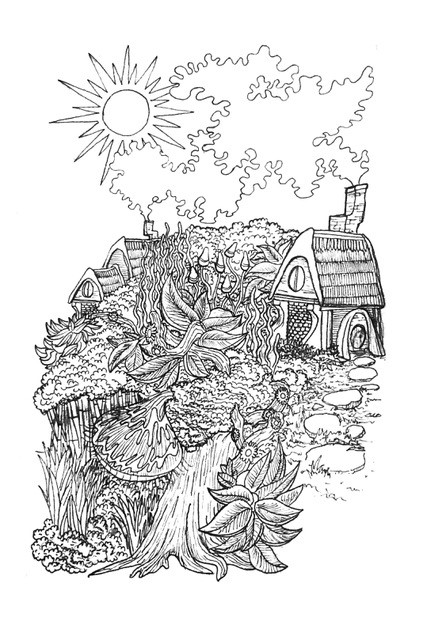
Great
By Emily Blair
Featured Art: Fairy Cottage by Byron Armacost
On Facebook, I call everything great
with multiple exclamation points,
even a meeting. Great used to just mean
very, very large. Incredible, fantastic, amazing,
are the words I use for a poem, a painting,
a robot from outer space.
So what can I say about the cardinal
who makes a perfect landing on the tippy-top
of the bright pink cherry tree next door to my mother’s house.
He sings cheer cheer cheer what what what
as if he were the only personified bird in the world.
He sings cheer-a-dote cheer-a-dote-dote-dote
as if we’ve never heard a song like that
bursting forth from a bright red bird,
turning the air behind him bluer, airier.
This would make a good desktop background
if I had a camera, but I don’t.
My mother puts her arm around me and says,
“We’ll remember.” A mother’s loving wisdom,
more poetry Kryptonite! I mean, obviously, she’s right,
but still you won’t catch me talking about this later,
how for a vertiginous moment we all hold a meeting
like the Superfriends in the Hall of Justice:
the cardinal, the sky, the tree, my mother and me.
The universe depends on us—
the cat hiding in the hedge,
the squirrels scrapping over sunflower seeds,
my mother’s haphazard plantings,
the neighbors who can be seen moving
about their kitchen through the window,
their immaculate lawn, their silver gazing ball
on its pedestal, summing up
the whole shining spectacle.
It’s cheer-a-dote cheer-a-dote-dote-dote
It’s wheet wheet! wheet!!
It’s great.
Read More
Pomegranate
By J.C. Scharl
“My heart is like a pomegranate”
as a simile seems a little simplistic
these days (even the meter beats
too neatly to seem true)
but nonetheless
there’s something to it:
how a pomegranate cracks
and bleeds a little when opened,
no matter how gentle your hands
and how a few seeds spill out
like little dreams, smoldering crimson
as coals around a dark core.
How more seeds cling
to the membrane in a strangled
Fibonacci order, so determined
to hold their place that each
is a little misshapen. How
at the deep recesses of the fruit,
so deep it is nearly the bottom,
there is a bad patch,
the underbelly of a faint bruise
on the outer skin,
where a brown ooze festers,
leaking its slow poison.
Read More
An Answer Without a Question
By Robert Cording
If he were alive, he might have shrugged
and said, things happen for no reason,
but he wasn’t, he was only my son
in a dream, where he found me
sitting in the woods trying to understand
his death. The light looked
as if it were coming from below not above,
rising up out of the ground,
the way darkness first spools around
the trunks of trees and then climbs higher.
I was so happy to be speaking with him,
but, in the middle of what I was saying,
he disappeared. I kept sitting where I was,
as if he’d return again, but I knew
nothing else was going to happen.
When I woke, I had that feeling
I often have when getting into bed
of both dread and the possibility of relief.
I was still partly in the dream, and I felt
he was like a god, utterly removed,
and not knowable any longer.
Shaking, I sat up and tried to focus on
the larches outside feathering the wind,
and a sliver of moon that caught and released
a scrim of fast-moving clouds. I breathed in
the smell of the grass I’d mowed
that afternoon, then rolled toward my wife
whose skin was cool to my touch. Far off
in the woods, I heard the sense-startling
yips and bawls of a pack of coyotes.
All of it came to me in a wave of sensations
impossible to put into words and yet, oddly,
felt like a gift, something like an answer
to a question I could not remember asking him.
Read More
Koi Pond: Failed Meditation
By Robert Cording
I just wanted to sit, shut my eyes,
tilt my face to the sun, and try not to think,
but the koi, insistent, unappeasable,
crowded to my end, the water roiling
with their need, and, when I opened my eyes,
I saw them lift their bulbous heads,
making sounds with their rubbery, barbeled lips
as if they were gasping for air.
When I shut my eyes again
because I did not want to see, I saw
the little outdoor fireplace on my son’s deck,
embers still burning. The October day
had not yet come into being,
the light anomalous, something between
night and morning. Inside, on the floor
of his living room, my son was dead.
His wife had waited with his body
until my wife and I arrived.
We lay next to him, touched his hair,
his forehead, his cheeks, his lips and chin—
and then I heard myself
trying to tell him we were there, we were
with him, we loved him,
but my words were more like moans
than words, every word sounding
its helplessness. When I opened my eyes,
there were the koi, their too-small pond
swirling with color—white, yellow,
black and white, gold, red and white—
all of them entangled, straining against
each other, mouths agape, turning
and turning in their net of water.
Read More
Doves in Morning Fog
By Robert Cording
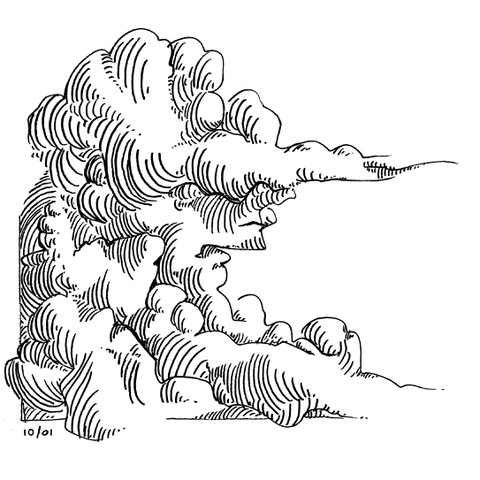
Featured Art: Cloud Head by Byron Armacost
Six A.M. and nothing here but fog
and an impotent sun-god
trying to scissor the fog into pieces,
a little blue patch here, another there.
Then the windows completely misted,
making shadows of whatever
flies by outside. I am sitting with my sorrow
and a cup of tea behind windows
I cannot see through. I’m waiting
to see the pair of doves
I have been listening to as if they are
some type of meditative exercise
to focus myself on the present moment.
I admit, I like being unable to see,
and I like forgetting myself,
if only for a brief time,
taken up by the doves’ call and response—
insistent, relentless—in the live oak
I know is outside my window.
I still cannot see the doves, or the tree,
except for its charcoal-like outlines.
Most likely I am hearing my own sadness
over my son’s death, three years now,
in the doves’ tiresome moans.
But then two palm trees, visible
just this moment, shake out
the morning’s dampness in the first breeze,
as if their raspy rattle can clear my day.
The doves, with their clerical collars
and their who, whoo-whoo, keep up their inquiry,
not letting go of that old question: just who is
sitting here, custodian of an empty mug,
whoever he once was now someone else,
holding on to what is gone, the collared doves
flying off as the fog lifts and another
Florida day, exactly like yesterday, heats up.
Read More
A Fox
By Ted Kooser
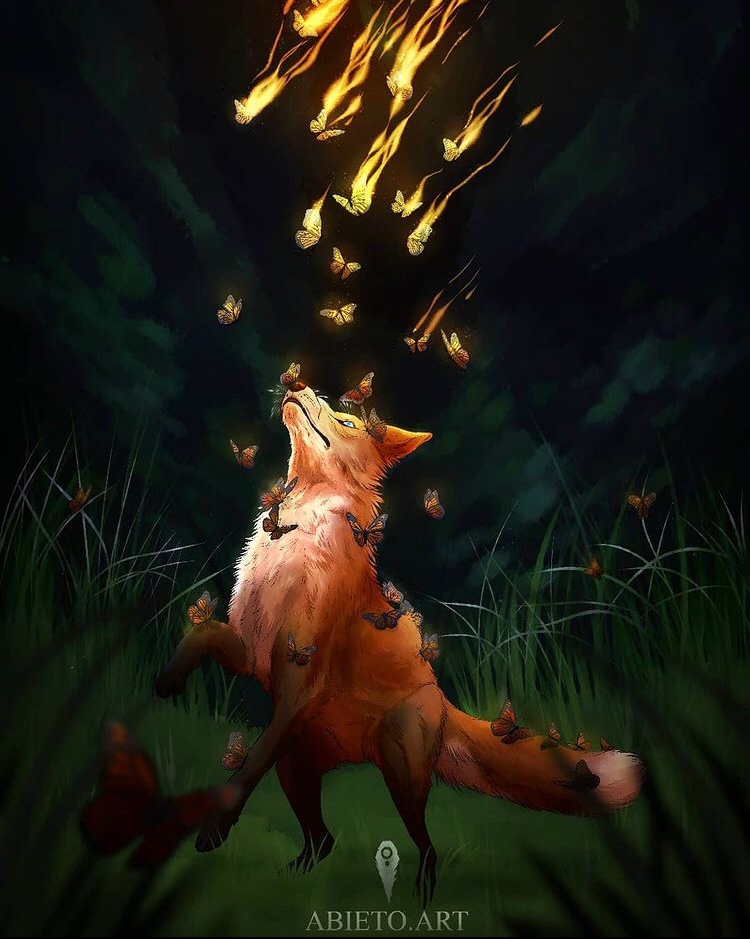
Featured Art: Fox by Emi Olin
I saw a red fox stepping in and out
of the shadows of tall granite stones
in a cemetery’s oldest section, fur
flaring as she entered each patch
of sun, though her feet and the tip
of her tail were too darkened by dew
to be set alight. She was quite small
but in her presence the stones forgot
their names. Above her the canopy
was respectfully opening oak by oak
to light her way, though she offered
no sign that she expected any less.
I couldn’t move for fear she’d stop
and fix me with those eyes that had
already stopped everything there,
the headstones, the plastic flowers,
I, too, now breathless as I watched
her pass along that long, long hall,
a flame reflected in its many doors.
Read More
Everett Avenue Facing East
By David Gullette
I have spent years shying away from this poem
this poem in which I try to capture a single gesture of my father’s—
November 1967—a “berry aneurysm” has exploded in my brother’s skull
so I fly down to Raleigh and spend the night in the room
that became mine after our sister went off to college
Early next morning I hear the front door open
and go to the window
my father is leaving the house
I signal him to wait
We drive straight out Everett for the hospital
unspeaking
as we near Cameron Village the sun
peeks over the roof of Sears
And he takes his right hand off the wheel
and palm up lifts it toward the sun . . .
Even as I watch him I know there is more going on here than
“The world breaks our hearts and the indifferent sun simply
goes on doing what it has to”
More than
“So begins the first day without my younger son”
More than
“My older son is with me, together we bear witness to an iron law”
Dance is the art I know least
but I do love to watch a skilled dancer slowly revolve
and tilt his torso
and lift a hand to make a gesture toward the other dancer across the stage
and if you ask me to tell you what that hand is saying . . .
I was right to dread this poem
Read More

The Unnaming
By Hadara Bar-Nadav
Featured Art: CV VII: Facial Nerve by Emi Olin
My father who named me will never
again call my name in this life
He eats the earth and eats,
silt filling his throat
A little door of light at the head
of his headstone
His name chiseled in and the date
his name ended
Born inside a strange language, not even
his vowels exist
Assemblage of letters one does not speak
like the true name of God
Prayer is a voice worn paper-thin, drifting
across the dirt
The bright word of him—entire
alphabet of loss
Read More
Swamp Lunch
By John Hazard
In Florida’s parks and preserves, the trails are often popular on Sundays, so I’m not surprised to see twenty or more humans standing in a semicircle to stare at something. Soon I see it’s a large wading bird, but I don’t recognize the markings. It’s probably a juvenile with temporarily strange features—maybe a black-crowned night heron? More serious birders would know. Or it could be an immature great blue heron, probably the best-known wading bird, and the adults are elegant creatures indeed. Apparently I’ve caught this youngster in an awkward phase of his development.
Of course, the young heron doesn’t care what his human label is, especially at this moment—he’s just caught a crab and can’t decide how to eat it. He drops his catch, then casually jabs at it, more curious than hungry. Lying on the damp sand, the crab squirms in slow motion. It will do him no good to strain for escape, but he’s right to try, isn’t he? For the sake of nobility, the beauty of struggling against destiny? Although neither creature wanted the encounter, both have accepted their assigned roles. Even the gods, however, can’t make them act with enthusiasm.
Again and again the bird pokes lazily—until his stiletto beak thrusts, then thrusts again, and suddenly he’s a boxer, jabbing and jabbing, in command, prepping for the knockout. He’s finally found his anger. Poke, poke . . . stab.
He dangles the crab at the end of his beak and stares outward like a seer projecting his vision beyond the swamp. Or is he just showing off? He raises the impaled crab skyward, then drops him again and stabs him again, this time running him through. He raises him toward the sky once more, as if to wait for a sign from above, or at least applause from the human audience. The bird acts as if he’s got all day, acts as if stunning the crab has been his manly plan all along and not a random gesture.
Read MoreSaturday
By Ruth Baumann
I drive 45 minutes to send a man
five states away photos of a sunset
over an alligator-speckled wildlife refuge.
He is a bright possibility, & he breaks
the tired in me. We talk about how nice
it is to be so small. I stand & stare
into the high waters as they night-blacken,
think how beautiful it is to not struggle.
Occasionally there’s a vague splash, but nothing
clashes in the water. Nothing happens,
which might be a stand-in for everything
true happening, because as I start to drive home,
darkness folding like a loose tarp over the earth,
I do that thing where I think in love.
Read More
epitaph for time travel
By Amy Bagwell
when after thirty years my father
tells me not a day has gone by when
I have not thought of you I reply:
1. that’s a lot of nots.
2. do you think this is a movie? do you think you’re the star?
3. saying that is like wearing black to a funeral. it doesn’t prove anything.
& he might be speaking again
when I get in my car & back over
my phone on purpose & drive
to one of those nightmare stores
full of bright teeth & paperwork
& devices with new numbers that
fathers don’t have which is unfair
since it was me who called him
after thirty years which is the kicker
Read More
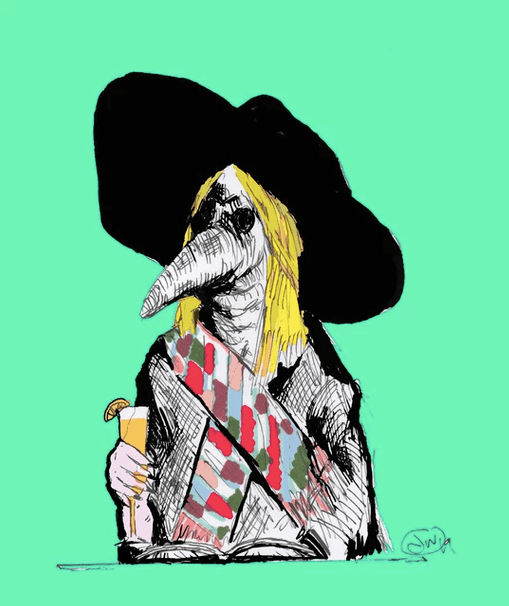
Amends
By Samantha Padgett
Featured Art: Plague Brunchers by Jon Ward
You asked for my forgiveness six months ago
in the parking lot of a Cracker Barrel—
just two sentences scrawled on a 3×5 notecard
you didn’t bother to memorize. Alone
in the kitchen, I drink a four-dollar bottle of rosé
for your eleventh month sober. Outside,
the aluminum bones of my mom’s
wind chimes clatter together
like the beer bottles under my seat
as you drove me to soccer practice.
Read More
Dark Forces
By Tara Orzolek
Apparently there are dark forces that are trying to mess with the cosmos.
I learn that & I learn that a boy I slept with out of pity in college is about to become famous.
I try to not send anything bad through him via the cosmos like brain waves with spikes.
Like a shark attack or something traveling invisible through space-time directly to his well-being.
I try to be good this time.
I try to manage my accounts & wipe myself clean of spam & triple xxx junk.
I try to think good thoughts & procure good karma.
It will reign over me like a rainbow & I will strip naked to soak up all the good things
I get from these good thoughts.
Lower blood pressure & a spot in the afterlife etc.
But I strain to not let some bad molecules slip out & cause chaos.
Cause chaos for what?
Nothing really because he doesn’t remember me or does probably but doesn’t think about me.
The sex was mediocre & although inexperienced I knew it could be better than that.
That it could feel like a bed closing up on you.
Surrounding you from all sides & bulleting liquid pleasure into your brain.
A multicolored injection of happiness.
It was in a sleigh bed.
The ceiling was above the sleigh bed & it was peeling.
I could not see the cosmos from there.
Read More
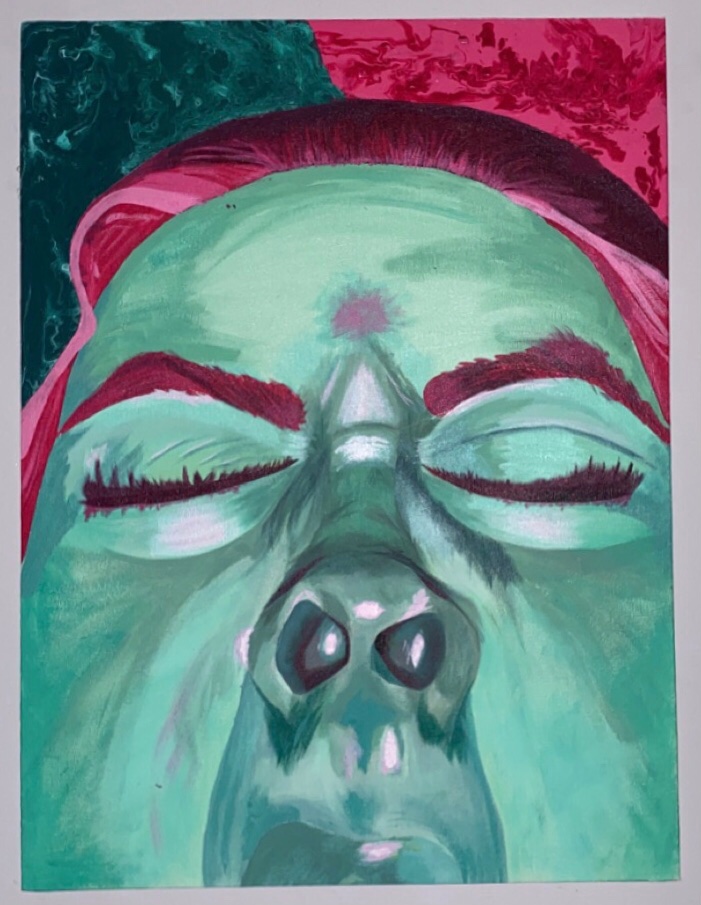
kind of
By Dylan Ecker
Featured Art: Yawn by Ella Johnson
one of those no cardio
kind of days one of those
Crazy On You by Heart
kind of days one of those
why does the word cardioid
look fiercely snackable kind of
days one of those kind of
cadmic kind of cream puff
cloud cover kind of days one
can’t contain one of those
incorrect captcha please try
again incorrect captcha please
click here to complete secure
decryption kind of days one of
those bilk the Mario Kart blue
shell but fall victim to joycon
drift one of those okay wait
a second forgot to articulate
kind of days one of those
you could’ve sworn perfect
haircuts until coming home
crying at sunset wind chimes
recite secrets the car smells
like cardamom you call mom
Hello? I am such cursed crap
comfort me if you can be kind
cool down quit coffee I can’t
even kind of kind of days
Read More
Before He Made Love He Made Light
By David Lerner Schwartz
The reverend kept talking about Christ, how he’d died for this and that. Seated
in the farthest pew, I only thought about the dancer. I both wanted her and
wanted to ruin things. We hadn’t boned yet. Did that make me a sinner or not?
My days were listless—I had just moved to a new city to teach history. I cried
most mornings. After the gym. Something about lifting weights, or hurting. A
release? Or a punishment. I don’t know. I guess people believe we can be saints.
I have blond hair and blue eyes, and when had that hurt anybody? I could
probably at once punch my own face gone and raise an abused kid into a happy
adult. What matters deep inside is a rolling boil.
The campus church was small but beautiful. Since it was an Episcopal high
school, the faculty and students were required to attend each morning. I woke
up early and got into a routine: the gym, a good cry, chapel, class. Toward the
end of the sermon, I studied the old stained-glass skylight behind the cascading
wooden beams. They’d put a mosaic bird in one of the panes for a kid who had
died. Apparently, at his funeral, a swift flew into the church and perched on his
casket. Jesus.
The organ, then the reverend again. He had such a shitty voice. This was a
world of too much talent, so why did he have to sing? He strained when he had
to go high, and his voice had little bass, so it got swallowed by the low notes. We
ended on “Come Down, O Love Divine.” I waited until the third verse, which
was my favorite. The first two were bullshit. My only friend here—Carter, an
English teacher—agreed, and we locked eyes across the sanctuary. “And so the
yearning strong,” I sang, “with which the soul will long, / shall far outpass the
power of human telling.”
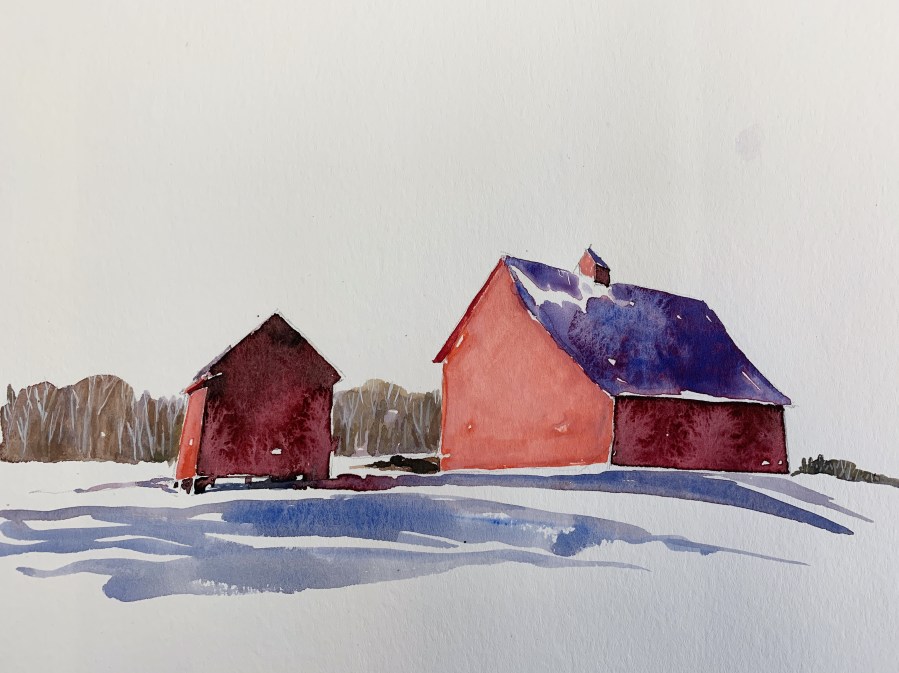
Prairie Box
By Peter Krumbach
Featured Art: North Hero Barns by Pamela Fogg
Sometimes we pretend we are both angels
and phone each other, sitting in the same room,
the doors and windows of our prairie box
open wide, the field crows hopping in.
We step out to the northern porch to fall
asleep on the swing. She reminds me I am no
longer an angel. I remind her of the chic
pet monkey of Frida Kahlo.
We peruse our daily dishonesties. To lie
convincingly, she says, one must hone the craft
of emotional authenticity, the conviction
we spread falsehood to protect the truth.
The day slips on. Before we know it, sweet
wine’s before us. Duck liver on freshly
singed bread. The heavens thunder.
We make marvelous errors.
Read More
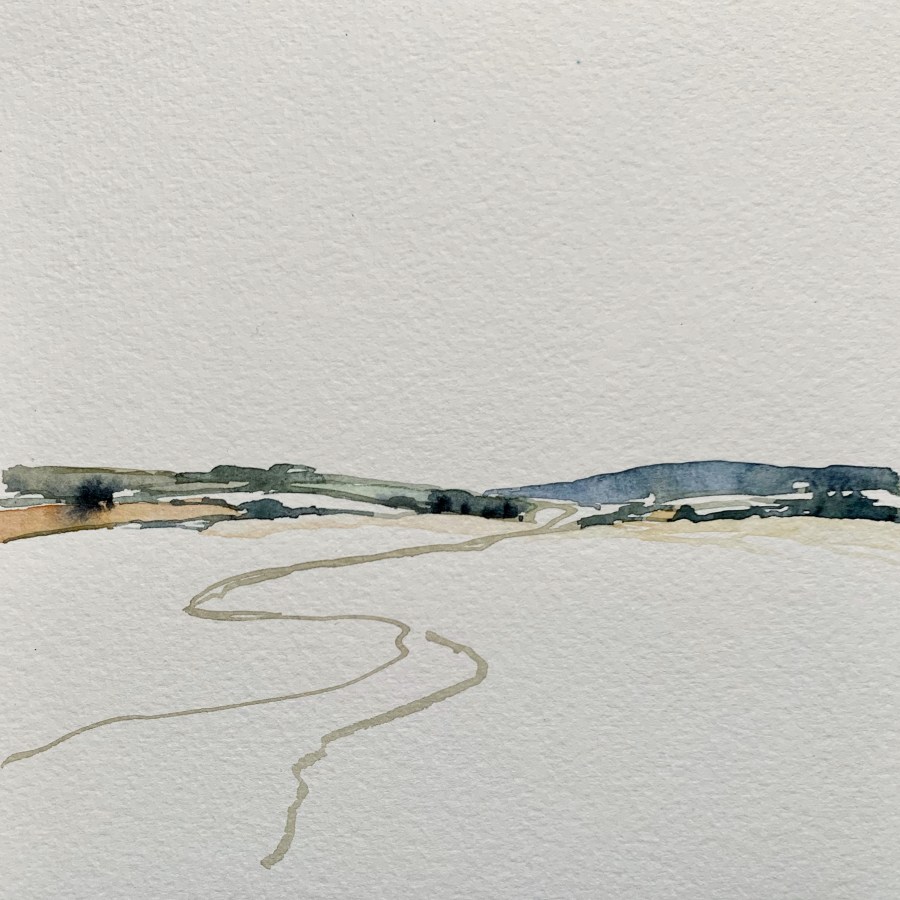
Last Request
By Theresa Burns
Featured Art: The Path by Pamela Fogg
When I’m dying and they come
for the last request, I may pass
on a sumptuous meal, ask instead
to ride the bus down Fifth Avenue
on a day like this one. June sky
a Looney Tunes blue, the skins
of sycamores peeling to fresh.
I’ll start in the nineties, where if I squint
I can be in the 16th arrondissement—
so many mansard roofs sluiced
with pigeon droppings, X-rays in trim
Chanel suits headed out for tea. Let me
ogle the Guggenheim again, imagine
the planets in Klee paintings
tracing ellipses on the hive walls.
In the row ahead: a black pirate-
hatted woman, spitting image of Marianne
Moore, a good witch to have
near the end. Let our driver worry
about four o’clock traffic. And the wait
as we kneel for the wheelchaired
passenger to embark. Me, I’m in no hurry.
Make as many stops as you like. I love
these big dirty windows, the perfect
height of my perch. Look Marianne,
no hands! Only the one writing down
on an envelope—
Be an eye at the end,
not a brain, or a heart.
Just a muscle that records what it’s seeing:
gingko, street lamp, line.
Read More
The Lady Whispering Hush
By Pichchenda Bao
In college, I helped to paint a mural of the bedroom in Goodnight Moon for a local daycare center. “Oooh, a classic,” everyone said. But for me, it was the first time I had ever encountered that whimsical book. One more thing to add to my running list of things I was missing from my childhood. One more thing that put me slightly out-of-sync with my U.S.-born-and-bred peers.
I would like to insist that my childhood was ordinary and suburban. My parents drove me to violin lessons. I was a youth football cheerleader for a season. By the time I was in elementary school and learning how to read, there was ample food on the table, a house with a backyard, and all the attendant comforts that went with such stability. I spoke English well, and so did my parents. But buried under the getting-on of every day, Cambodia and all we lost there throbbed like an unhealed wound.
Still, I don’t remember Cambodia. I was born out of the aftermath of the Khmer Rouge. When I was a few months old, my mother carried me out of the country. She didn’t have to abandon me, she likes to tell people, because I never cried on the journey. We reunited with my father in the refugee camp completely by chance, and eventually arrived in the U.S. with all our belongings stuffed inside a large plastic bag emblazoned with the logo of the resettlement agency.
Read MoreWhen The World’s Worst Readers Met The World’s Worst Children
By Marcia LeBeau
I gave birth to two reluctant readers. Not that they won’t read or don’t like being read to, it’s just that books are a hard sell. From the beginning, my well-loved copy of Beatrix Potter’s Apply Dapply Nursery Rhymes was of no interest to them. Sweet storybooks, classic and contemporary, with simple narratives and obvious morals didn’t hold their attention either. Believe me, I tried.
I could sometimes get a Shel Silverstein poem in under the radar without much backlash and Mo Willems was more than tolerated. Most of the time, though, my sons would slide off my lap and run to something more exciting, like a backhoe pushing gravel from one side of our street to the other. You might think Good Night, Good Night, Construction Site would have done the trick, but no. This was not the cozy, glowing realm of parent-child bonding I had imagined.
While I didn’t want to subscribe to a gender binary, I heard from children’s authors that, most often, the kids who aren’t interested are the boys. The ones who shout out from the back of the bookstore, “Reading is boring!” and bust out their Matchbox cars. I also heard from a librarian that kids don’t know nursery rhymes anymore. None. So, I begrudgingly put poetry on hold, but I wouldn’t give up on storybooks. I just had to go a little further afield than expected.
Read MoreWorth the Wait
By Jared Harél
I don’t remember being read to as a child. My parents were good ones—doting and thoughtful—so perhaps I was, but nothing comes to mind. In fact, I recall only three books in my childhood home, each a disregarded fixture, like doormats or drapes. In the living room, there was a mass-market paperback of The Firm. Its cover depicted some poor suit dangling over marble green, his brown attaché case just out of reach. Upstairs, a cream-colored copy of Men Are From Mars, Women Are From Venus sat on my mom’s nightstand, half-buried beneath coupons and ancient receipts. Lastly, we owned a massive, musty brick of Shakespeare’s Collected Plays I later learned had been there the day we moved in, and which we humored on a shelf above our treasured Nintendo. God knows how I became an English major, let alone a writer. All this is to admit that my true introduction to children’s books came when I finally had kids of my own.
What I found upon arrival was varied to say the least. I’d expected the fantastical: hippos in bow ties, transportation with faces, moral platitudes packaged in bright, garish fonts and delivered by ducklings with an aptitude for end-rhyme couplets. And sure, there was plenty of that. But there were other things too, like the hypnotic lullaby of Goodnight Moon, or the spare, incisive grace of Last Stop On Market Street, as clear and nuanced as a classic blues song. In the latter, as CJ and his nana begin their long bus ride home, I encountered the following lines: “The outside air smelled like freedom, but it also smelled like rain.” This was writing of strangeness and beauty. A children’s book can do that? I vividly recall thinking, till my pajama-clad kids poked my stomach, eager to get a move on, to keep reading.
Read MoreLove for the World: The Poetry of Frog and Toad
By Sunni Brown Wilkinson
In one of his most famous poems, Richard Wilbur writes that “love calls us to the things of this world,” and no children’s literature celebrates the things of this world quite like Arnold Lobel’s charming Frog and Toad series. Beyond its beautiful illustrations and clever humor, the series revels most in a love of what keeps us alive and of language itself. In this way, the Frog and Toad series becomes, in many ways, a gateway to the world of poetry.
Stylistically, the Frog and Toad books, vignettes about two close friends sharing in life’s adventures, mirror poetry more than prose. As books for early readers, they include language that is simple but musical, and the text does not always reach the end of the page but rather breaks at certain words, like a poem. This amplifies the pleasure of reading them aloud (as they should be read), but it also means that, like poetry, each line holds its own weight and carefully wrought cadence.
For example, in the story “Spring,” Frog’s description of Spring reads like a catalogue of the joys of being alive. As Frog tries to rouse Toad from his winter hibernation, grumpy Toad complains about the bright light, to which Frog kindly replies,
Read More“Because they grow up / and forget what they know”: On the Strange Wisdom of Children’s Poetry
By Eric Redfern
A small speckled visitor
wearing crimson cape,
brighter than a cherry,
smaller than a grape.
A polka-dotted someone
walking on my wall,
a black-hooded lady
in a scarlet shawl.
At five years old, I experienced this Joan Walsh Anglund poem as both charming and creepy. The lilting trochees and cheery rhyme scheme told me that to read the poem was to play a friendly game. But the red cape and black hood? These are the sartorial choices of a villain. A villain, not the villain: there were more of them, and by the fifth line my world would blur at its edges, where tiny, spotted, unidentified “someones” almost palpably teemed. Most troubling and fascinating of all, I could not determine if this “lady” was a bug or a woman, small or tall, dangerous or safe. Anthologies have resolved this ambiguity for their readers by titling the poem “Ladybug,” much as Mabel Loomis Todd domesticated Dickinson’s poems with ordinary titles like “The Bee” or “The Humming-Bird.” But in the illustrated book I had, Anglund’s poems were untitled, and the ambiguity strikes me now as appropriate: ladybugs are “good” garden denizens; most are also carnivorous. Reading about the poem’s “speckled visitor,” my mind made something like a 3-D hologram portrait that morphs into a specter as it’s tilted first one way, then another. Haunting each other, both images stayed strange.
Read MoreYou Are What You Read
By Adrienne Su
Since my parents always made room for more books in our Atlanta home, I thought I knew what I was doing when, at six, I decided to be a writer. I wrote my first “poem” soon afterwards, in 1974, and never went back on the decision, producing stories, poems, and attempts at novels. Yet not until college did I write from the perspective of an Asian American speaker. One reason for the delay is surely that children’s books with Asian characters, never mind Asian American characters, were vanishingly scarce. A 2016 study by Angela Christine Moffett, “Exploring Racial Diversity in Caldecott Medal-Winning and Honor Books,” found that of the 332 Caldecott books published between 1939 and 2016, thirteen, or 1%, had Asian or Asian American primary characters. My brother and I recall from our childhood only two picture books with Asian main characters: The Five Chinese Brothers, by Claire Huchet Bishop and illustrated by Kurt Wiese (1938), and Tikki Tikki Tembo by Arlene Mosel and illustrated by Blair Lent (1968) both of which are still in print.
The Five Chinese Brothers, in which the titular characters use superpowers to evade a death sentence, has been criticized for racially caricatured illustrations and the unexplained identicalness of the brothers. Defenders argue that the book evokes nostalgia for many, the art represents a different time, and it’s based on a Chinese folktale.
Read More
Over and Over
By Sarah Green
Featured Art: Sweets by Abby Pennington
“What comes next?” she asked her mother.
I asked my stepdaughter Lizzie today what she likes best about the picture book Over and Over, by Charlotte Zolotow.
“The cover repeats inside,” she said. “And the phrases.” It’s true: the words over and over in this book about seasons and holidays return themselves in the book’s closing sentences, in which the little girl wishes “for it all to happen again”; “and of course, over and over, year after year, it did.” I’ve read this book so many times, both as a child and as a parent, that if I close my eyes, I think I can get the sequence right. Let’s see—snowfall, Valentine’s Day, Easter, summer vacation, Thanksgiving, birthday, Christmas. Did I get it? Let’s check: Oops, forgot Halloween, and Christmas comes after snow, and the child’s birthday is the last scene pictured. Maybe I still need this book to teach me how it really goes.
Read MoreThe Fabric
By Jeff Tigchelaar
But I, I love it when you read to me
And you, you can read me anything.
—Stephin Merritt, “The Book of Love”
“I tried to get lots of poetry ones,” said the mom. She’d been to some thrift stores and library sales. She handed her son a big bag of kids’ books. They were for his children, the mom’s grandkids.
By “poetry ones” the mother meant rhyming ones. By telling her son this, she meant, “I know you’re a poetry person.” By that she meant, “I know you’re somewhat of a snob.”
Ten years later . . .
“Dad. What are you doing? I’m in bed. I’m sleeping in here.”
“Sam. Sorry. I need to write something about kids’ books. I kind of waited a little too long, and they’re kind of starting to lay out the magazine. I just needed some material from your shelves.”
“Nope.”
Read More2021 Summer Exclusive
Featuring work by J.C. Talamantez, Shawn R. Jones, B. Domino, Chrys Tobey, Joe Woodward, John Bargowski, Jackie Craven, Michael Henson, Bridget O’Bernstein, Shannon C. Ward, Michael Leal Garcia, Riley Kross, Bonnie Proudfoot, Mathew Valades, Christopher Nelson, Dwight Livingstone Curtis, Matthew J. Spireng, and Jon Fischer.

Essential Worker
By J.C. Talamantez
Featured art: maternal memories, 2019 by Emma Stefanoff
When you were a girl, you thought about
what kind of woman you would be
how you would differ
from her / her life in hardening hands
the work, an early marriage
then the angry one
her suspect taste in men
that she hung on when there was nothing
left to hang
kept laboring the labor
the men wouldn’t do
It was a long time to undo / the belief
that to be a woman is partial
a life of shadows joining
and sometimes i still feel
like a dog always checking
its masters eyes
You wanted / to be a woman
this is what it is sometimes
Read More

On Our Way Back From the Protest
By Shawn R. Jones
Featured art: Untitled by Mariama Condé
The officer approaches. Keith keeps both hands
on the steering wheel. Clicks his tongue
against his teeth six times—
a tune of feigned assurance.
The trooper walks back to his car.
Keith takes his hands off the wheel.
I am the first to speak. I ask if he thinks
the cop is going to give us a ticket.

A Fist of Weeds
By B. Domino
Featured art: Untitled Collage by Kennedy Cardenas
You’re thirteen when she comes to save you. Your father pulls you outside and says he’s got to talk to you about your mother. What he means is he’s got to talk to you about you because of your mother. Read More
Some Kind of Palace
By Chrys Tobey
My old man cat is, unfortunately, getting old. Kidneys failing.
Asthma. Arthritis. A tongue that won’t go back inside his mouth.
Seizures. The last one made me think he was a goner. But then he blinked
and hobbled around me in circles. Pretty disoriented. My old man
cat has started eating books and this may be due to the fact
that I’ve had my old man cat for seventeen years Read More
I Had an Aunt
By Joe Woodward
Featured art: Soul Released From Captivity by Chloe McLaughlin
I had an aunt
From Apalachicola
Who retired from
The Kash n’ Karry
Her feet hurt and
Something about
Varicose veins
After that she just
Sang Jesus hymns
In the church choir
And worried about
Those fall storms
Coming up in the gulf
She believed in pairs
Of black cat glasses
Her hair curled
In half dollars
And particularly
The 4th of July
When she told me
Once while we ate
Our fried chicken
Don’t write your
Whole life story
At the top of
The Ferris wheel Read More

Sharp Shin
By John Bargowski
Featured art: brittle decay by Zero Jansen
I found it grounded on the road edge
near the town ball fields where my old man
hit pop-ups to me in my little league years.
The bird hopping through snakeroot
and catchfly, dragging a skewed wing
maybe busted by a low dive into a pickup
headed into our burg on the county two-lane.
That hawk always a few steps ahead of me,
raised the hackles on its cocked neck,
turned a pain-crazed dark eye, then clicked
its beak and snissed, flexing talon-spiked
claws whenever I came close enough
to grab it from behind and clamp my hands
over both wings, the way my old man did
the times he slow-climbed the ladder
up to the loft after his shift at the D&J Bar
and culled his prized flock of homers.
Sometimes reaching inside the wire coop
at twilight for a blue ribbon winner
that wouldn’t leave home to wheel over
the ball fields and D&J with the rest
of the team on the day’s last stretch.
An old favorite, whose inner compass
age had scrambled, clutched in those nimble
calloused hands that taught me the gift
of the sacrifice, the grip of the curve.
Read More
Cursing Lessons
By Jackie Craven
Featured art: look, quick by Emma Stefanoff
I am learning to bake curses
the way my mother did
with paprika and clotted cream.
Her recipe book lists fifteen steps
and she’s added three more,
her instructions scrawled
on pages brittle as phyllo dough.
I trace my fingers over every word
and try to understand the significance
of Simmer on Low. I’ve heard
that if you heat a kettle gently,
a frog can’t feel the water boil. But
what to do about the grumble
from the dining room, the hungry command
to hurry up? Nothing my mother served
could please my father,
who poured Tabasco into a slow-cooked stifatho
and called her a stupid cow.
I lean against the round shoulders
of the old refrigerator and listen
to her murmur. I’m grown now
and married and need to know––
When is it time to whisk, when to fold,
when to toss with newts and toads?
Read More
Carousel
By Michael Henson
The Boy had decided, finally, enough was enough. He and his sister were running away. They were with their third set of foster people since the County took them away and these were the worst yet. The parents were weird and the children were mean and Sissy cried herself to sleep every night. Read More
The Secret
By Bridget O’Bernstein
Featured art: Women in Groups by Jesse Lee Kercheval
As a child, I flew alone to California
to spend the summer with my mother’s three sisters.
Aunt Moe made a soup out of bones and covered me
with a canvas blanket in the rock garden.
I played with Aunt Sheila’s cat under the willow for hours.
She walked over with a brush in her hand and said,
You can speak to cats, too? I nodded.
Before I left, Aunt Kate gave me a green velvet book
into which she’d taped a stick of spearmint gum
for my plane ride home.
When I arrived in Brooklyn with my secret,
my father pouted when I wouldn’t share it.
And when I said, It’s private,
his face made a face of such hurt surprise,
like I’d cut him, that I immediately gave it away.
I said, I can speak to cats,
at which point he laughed and went out to the deck
with his coffee, shaking his head.
What a mistake!
To extend to my father
the wonder of my secret, like a rose,
for safekeeping.
I stood there afterward, shocked
at the way I’d invaded myself by sharing it.
Now I had nothing. Read More

The Last Vacation
By Shannon C. Ward
Featured art: Untitled Collage by Kennedy Cardenas
You beat time on my head -Theodore Roethke
Her husband has taken the children swimming.
She tries to speak, but her mouth is filled with coins.
She washes them down with vodka, vomiting.
She knows what it means to dream of sinning.
She’s the mother of four beautiful boys,
and her husband has taken them swimming. Read More
La Malinche, La Llorona, and Cristine Ortiz
By Michael Leal García
On that nightmare afternoon at Plaza Mexico, Aaron never saw the gunman open fire. He just heard a series of pops—something he would only later recognize as gunfire—before Cristine knocked him over, their four-month-old son in his arms. After checking that Lil Aaron was fine—the boy still fast asleep—he felt a weight roll off his legs. There, Cristine lay motionless. Read More

Artist with Newborn
By Riley Kross
Featured art: Jezebel’s Daughters by Chloe McLaughlin
– for Amy
The baby
finally sleeps
so she
paints her
toenails bright
red with
practiced strokes
so later
she can
see her
bare feet
pacing the
dark kitchen
and remember
while breastfeeding
again again
feet propped
remember how
small all
art begins Read More
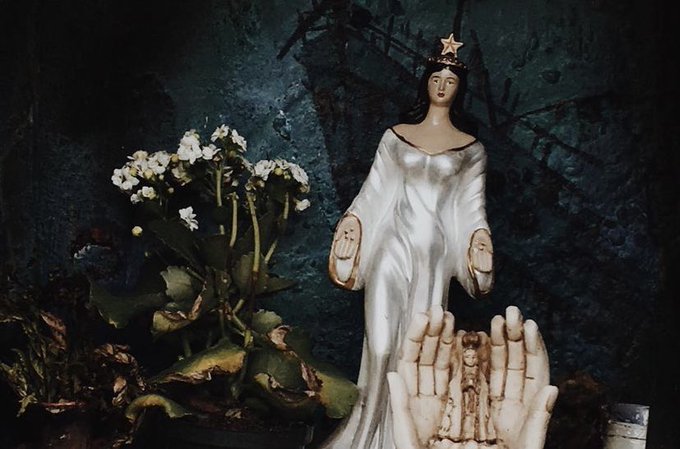
Futility
By Riley Kross
Featured art: Untitled by Sue-Yeon Ryu
– for Fr. Daniel Logan
After the chainsaw, the priest
continued carving up
a small portion of the dogwood stump
with a chisel and pocketknife,
but being only a priest
and not a carpenter,
the task was beyond his expertise.
Still, he sweated and labored
and managed “by God’s grace”
(as priests are prone to say)
to fashion his own rough cross. Read More

Featured art: Untitled by Sue-Yeon Ryu
Superpowers
By Bonnie Proudfoot
If all of my thoughts have been thought before, who was the one
who thought them? Probably it was some stranger, but maybe not,
maybe it was someone I knew or maybe someone I loved so hard
that she is actually a part of me, like my grandmother,
who came by on poker nights, maybe I inhaled her like the smoke
from the tip of her Parliament, or I ate her up like a slice
of her poundcake with lemon drizzle icing. And my superpowers? Read More

Reminiscences
By Matthew Valades
Featured art: Sunflowers by Janet Braden
It became possible to say anything:
that was the delusion. A melting tree,
a painted deer—the books sat useless
as guides to understand such thoughts.
Holes at the elbows quickly drew
attention, but bothering to bother seemed
no longer worth the trouble. With walls
and brooms folks got better acquainted.
A summer of branches joining field
and sky swelled with lost promise.
It was good to stay, that’s how it felt.
People got older and younger. They’d sit
composing elaborate salad plans.
“Forget about tomorrow” became
a common phrase, but few took comfort
in what it meant. Distance fraught
with waiting, a blank consistency,
infused the hours as if each day
had been left on the table to fill the house,
rising through the rooms like steam. Read More
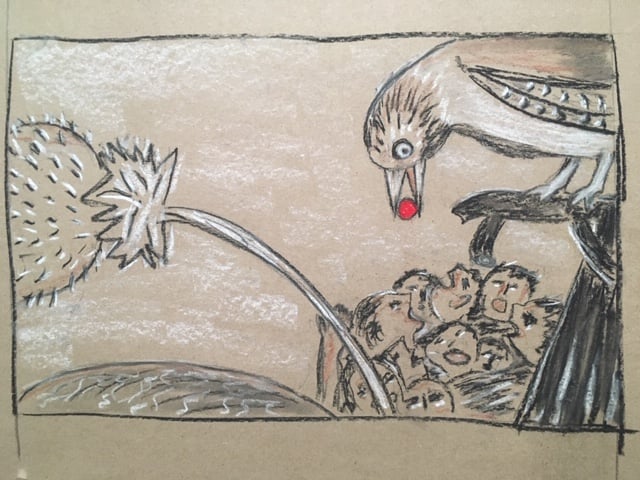
On Seasons
By Christopher Nelson
Featured art: Untitled by Jesse Lee Kercheval
Late May, my favorite time. The false
gromwell glows at field edge, glows
at roadside, and my glowing little boy who holds
a bunch in his fist runs to bring me the gift.
It smells of wet dog—some call it donkey
weed because it smells like them too.
Dense, sort of spiraling, floppy bunch of
unopening blooms wherefrom each sealed
thin white spool protrudes a style like
a ghost moth’s tongue. Grace curve.
Flower-borne spike. I’ve never killed a man.
I haven’t broken a bone of my own or
that of another. Dirty green-white. Stiff-haired.
When my father jabbed a man in the face
at the ball field, his fist so fast,
nearly invisible, yet the man’s
ejected teeth went up into the night sky
and caught the halogen light
and pirouetted slow motion before
getting lost in the red infield dirt
and the general scuffle of men. Part of the
forget-me-not family. Read More
The Stick-Up
By Dwight Livingstone Curtis
I had on Pawn Stars, Man Vs. Wild, and Diners, Drive-Ins, & Dives, which is not a bad lineup for a Tuesday afternoon. Though, I’m not supposed to watch the TV behind the bar, since it means I’m not facing the customers. Even if, for instance, a customer wants to draw my attention to something happening on TV. In that case I’m supposed to look at the far TV, or in the mirror. This way, if someone walks into the bar, I’ll be facing the right direction. McIlhaney feels strongly about this. But there was no one here except me. The only other person working was Arsenio, who was in his car in the parking lot FaceTiming with his daughter. Read More
Gift
By Matthew J. Spireng
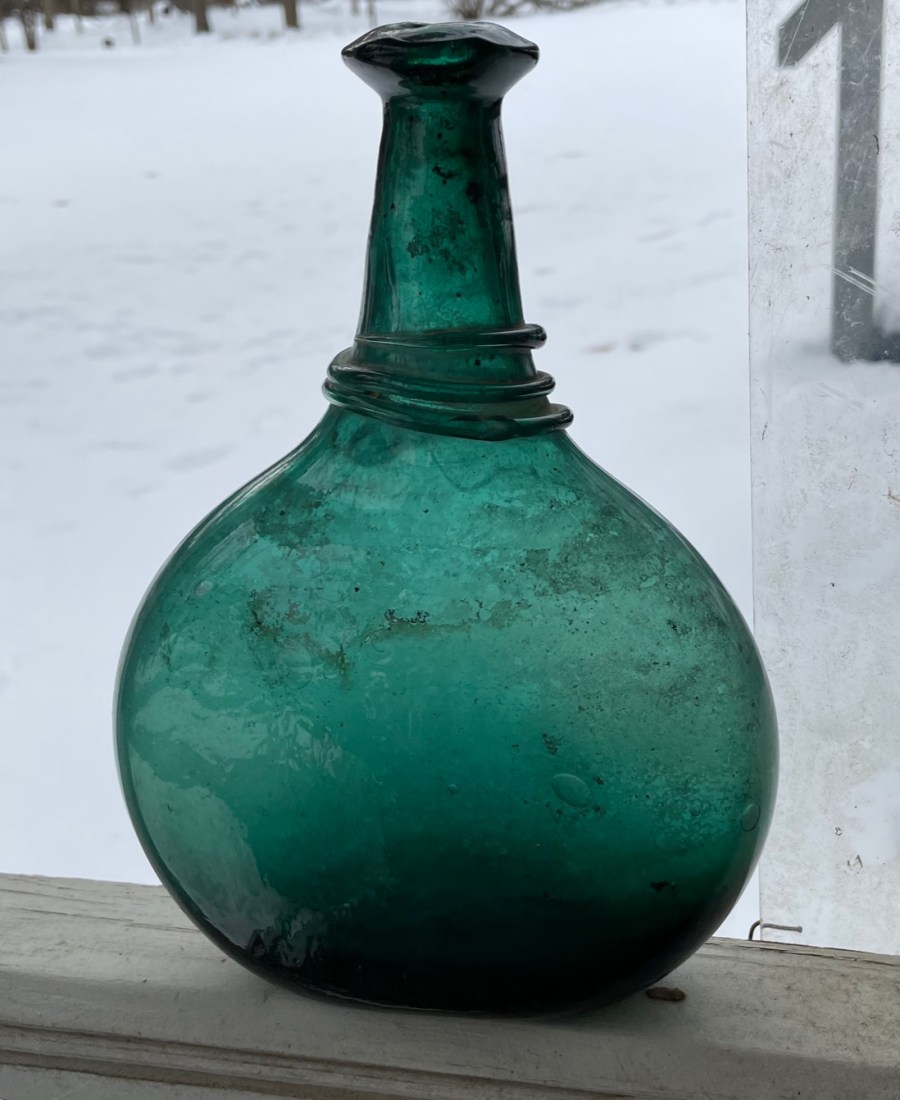
Featured Art: Persian Saddle Flask by Matthew J. Spireng
He had admired it, yes, because
it was beautiful. It was very beautiful, but
he had not admired it because he
wanted it. She had thought otherwise,
though, because as he admired it, he told her,
“Isn’t it beautiful.” Not a question.
And it was for sale. His birthday
was coming. So she thought he admired it
because he wanted it and she bought it
for him. What could he say? A question,
rhetorical. He had admired it, yes,
and still admired it, although now it was his. Read More
Why You’re Going to Eat That Pelican
By Jon Fischer
Your lunch at the French bistro was more essence
and foam and reduction than food, and that pelican
is the size of your remaining hunger. He surely tastes
like the history of the sea and especially the doubloons
nestled in the sand in busted buccaneer sloops. Read More
Review: Jeanne-Marie Osterman’s Shellback

by: Eric Stiefel
Jeanne-Marie Osterman’s debut full-length poetry collection, Shellback (Paloma Press 2021), does the difficult work of using inventive and unflinching verse to deal with a lineage of familial trauma, alternating between the speaker’s father’s wartime experiences in World War II’s pacific theater, the difficulties of a childhood with a father who’s haunted by the war, and her aging father’s final days.
The collection begins with an explanation of its title (“shellback” is a nickname for a veteran sailor who’s been hazed through a violent initiation ceremony after sailing across the equator) and a poem called “Epilogue” (p. 13), which paints a portrait of the speaker’s father during the last days of his life. After opening with the lines “He’s losing his grip / Last Saturday night, / trying to shave for church.” While sitting in the dark, the speaker’s father asks her to read to him: “This is how we talk about death: / He asks me to read / the last part twice / where Sam’s frozen corpse / comes back to life.”
This move sets the stage for the rest of Shellback—a daughter trying desperately to understand the life of the man who raised her, a father who doesn’t know how to explain. Fortunately, Shellback isn’t afraid of dealing with challenging subject matter, whether the speaker is recounting kamikaze attacks her father survived during the war or navigating the indignities of her elderly father’s decline.
Read MoreInterview with Jeanne-Marie Osterman

Eric Stiefel:
I’d like to start by congratulating you on Shellback, which is your first full-length collection of poetry. As a poet who seldom writes so intimately about my personal life, I’m curious to know how you shaped your lived experiences and your father’s wartime memories into such a sharp, multifaceted, character-driven collection of poetry like Shellback. When did you know that these poems would form a book-length project? Did they come to you individually or in groups?
Jeanne-Marie Osterman:
Thanks for your kind words, Eric, and a great question.
My father served in the Navy during World War II, but it wasn’t until he was in his mid-nineties—not many years ago—that he told me he’d fought in the Battle of Okinawa, and that he’d survived a kamikaze attack. I’d just started writing poetry at that time, and was inspired to write a short poem about his revelation. I took it to a workshop and was encouraged by the teacher (Grace Schulman) that I was on to something and to “keep going” with more poems on this topic. And so I did.
When my father told me about the attack, he was in assisted living. I was visiting him a few times a year, from New York City to Everett, Washington, and these visits inspired poems also. We talked about old times, the other residents, how Everett had changed, things we did together when I was a child, and how he felt about facing the end of life. I kept a notebook and started many of the poems after these talks.
Read MoreReview: Adam O. Davis’s Index of Haunted Houses

by Eric Stiefel
Adam O. Davis’s Index of Haunted Houses (Sarabande Books, 2020) explores the spaces that contemporary America has left behind, from abandoned homes from the 18th century to dilapidated motels and empty trainyards. While Adam O. Davis’s debut, hybrid collection of original photography and poetry, Index of Haunted Houses focuses on ghosts and the places where they linger, its spectral figures never appear overtly. Davis leaves their presence to be sensed by readers as they explore the spaces of the poems in this book, which is often filled with white space and possibility.
Most of the photographs depict empty spaces or dilapidated buildings, empty trainyards, crumbling motels, an empty road and an open field with a sign that reads “PRIMITIVE ROAD, CAUTION, USE AT YOUR OWN RISK.” The eerie tone of these black-and-white photographs resonates with the poems in the collection—something in America has been lost, though that something hasn’t truly left us.
Read MoreFree Will
By Daniel Eduardo Ruiz
I will pay for singing lessons
and play the piano. I will
learn Kung Fu, capoeira,
and break dance on the A train.
My magazine will be called
Pangaea and I’ll deliver
a carry-on bag of Café Bustelo
to poets living in Lithuania,
Zimbabwe, Jerusalem, Honduras.
I swear I’ll hold chopsticks correctly
before I’m buried, swear
to bungee jump, skydive,
go fishing because
I’ve never done it. One day
I’ll dunk a basketball—
sooner before later. Kiss
me, I wake up early
on purpose. Someone must
sing to the roosters,
peel the kiwis,
and preheat the oven.
Kiss me—I’m learning
Catalan. I’m getting a credit card
with sky miles and flossing
so my dentist will smile
more. At first, I missed
my car, but after seeing Dracula
I found I sleep sound
on buses. If Bruce Lee
did push-ups with two fingers,
what about me? Why can’t
I karate-chop concrete
slabs? I wasn’t always an apt
jump-roper. I didn’t always
speak English, nor did I like
cheese until my teens. I played
baseball with rocks and sticks,
basketball with a netless hoop,
soccer with a kickball.
The first seven years of my life
I refused to tie my shoes
myself. Now I can cut my own hair,
hold a handstand a few seconds, and
type with ten fingers.
I have whole albums memorized—
Big L and New Order, Kanye West and
Duran Duran—and every minute I’m
witness to the wind, a trained secret
agent. Every day I do
1,000 calf-raises. I’m turning
my body into a sculpture.
Daniel Eduardo Ruiz was born in Bayamón, Puerto Rico, and now studies poetry at the Michener Center for Writers at University of Texas-Austin. A 2016 Fulbright Scholar to Chile, his poems can or will be found in Southern Indiana Review, Juked, The Adroit Journal, and elsewhere.
Originally appeared in NOR 23.
Landfall
By Jeremy Griffin
By the time Nicole arrives at the clinic, the parking lot is already full of folks waiting to drop off their pets before hightailing it out of town, out of the path of the hurricane. All morning she’s been battling that crampy twinge in her hand—dystonia, Dr. Epstein calls this, involuntary muscle contractions—and she hoped that she would be able to spend most of today hiding in her office. A foolish hope, considering that all of the pet-friendly hotels within a 100-mile radius have already sold out. Unlocking the front doors, she marshals a smile as the sleepy-eyed clients slump into the lobby with their cat carriers and their leashed dogs.
Inside, she leaves the receptionist to check everyone in while she goes around the building flicking on lights. In the kennel at the back of the building, she feeds and waters the dozen or so animals already boarding and begins taking the dogs outside one by one. Technically, this is a job for the assistants, but as owner Nicole takes a sheepish sort of pleasure in micromanaging. A canopy of clouds hangs low in the sky, the wind already churning ominously. By tomorrow afternoon, the rains will be here, thick and driving. Initial projections had the hurricane cutting west, into the Gulf of Mexico. Perhaps Nicole shouldn’t have been surprised when the projections abruptly shifted, the storm now expected to hook northeast, right through the Carolinas. That’s her life in a nutshell, isn’t it? A sudden change in trajectory, something to brace for. You’re just feeling sorry for yourself, her mother might scold, caustic old bird that she was, and she would be right. But her mother is long gone, and so who cares if Nicole is feeling a little morose this morning? It’s her clinic, she can feel whatever she wants.
She waits until all the other dogs have been walked before taking out the rottweiler that Animal Control dropped off yesterday. It was found near the air- port, a scrawny female with patchy fur and a missing chunk of ear. Upon being hustled into the van, the animal bit one of the officers on the hand. “Fucker cost me three stitches,” the fellow said when he dropped the dog off, holding up his bandaged hand for Nicole to see.
“Three’s not so bad,” she replied, gently releasing the rottweiler from the restraining pole. When the animal didn’t attack her, just regarded Nicole with a toddler’s look of expectant curiosity, she was both relieved and a little let down: you expect wild things to act wild. “I’ve seen worse.”
The officer, his khaki shirt straining against the bulge of his belly, rubbed his mangled hand, perturbed by the lack of sympathy. “Know what’s better than three? None.”
Unfortunately, the attack means that the dog has to be put down, her head sent to the state CDC office for rabies testing. It’s a cruel catch-22, having to kill a creature to determine if it’s sick, and if the dog’s pleasant demeanor is any indication—tongue lolling friskily, stumpy tail wagging as Nicole slips on the leash—she isn’t. Nevertheless, by state law Nicole has until the end of the day to euthanize the animal and remove the head, a task she’s been putting off until the last minute.
She leads the dog out the back door, around the side of the building, the animal pausing to piss on a clump of weeds, and toward the thicket of trees on the far side of the parking lot. The dog’s ribs are visible through her black fur, but she moves with a merry trot, as though she and Nicole are old friends. As the animal investigates the flowerbeds at the front of the building, Nicole watches the dogwoods rustle in the winds. It’s September, a mild crispness in the air that sets off a pang of longing in her, as if she’s preparing herself for a great loss. Which, in a way, she is. Her retirement from the clinic, from veterinary medicine altogether, is inevitable, despite the fact that she is only forty—the only question is when. That she hasn’t stepped away from the practice already could be construed as reckless, but how do you just walk away from something you’ve worked so diligently to build up? When Nicole took over the clinic from Dr. Farmer six years ago after he quite publicly burnt out (“I’m just ready to start drowning pugs,” she once overheard him grumble to a client), it was a modestly successful practice that, due to the doctor’s cantankerous aversion to advertising, was little known outside of the league of geriatrics to whom he’d spent most of his career catering. Now it’s one of the most high-profile animal clinics in the region, boasting contracts with the sheriff’s department and the police and fire departments (Nicole personally capped all seven of the county’s new drug-sniffing German Shepherds’ teeth with titanium sheaths, the fact of which received a half-page write-up in the Wilmington Star-News). So, what is she supposed to do, just turn her back on the whole thing as if it’s a project she’s grown bored with?
Jessica, one of the techs, strolls across the parking lot to let her know her first appointment is waiting in Room 1. “Jeez, it’s like the end of days out here,” she remarks, gazing up at the darkening sky. Eddies of leaves whirl past them as if running for their lives.
“But concerning that day and hour no one knows, not even the angels of heaven, nor the Son, but the Father only,” Nicole recites. When Jessica narrows her eyes at her quizzically, she says, “Matthew 24:36.”
“I know the verse. I just never took you for a bible scholar. No offense.” Nicole shrugs. “Scholar, no. But I did go to Catholic school.”
“That’ll do it, I guess.”
“You gotta love that Old Testament attitude,” Nicole says. “So doom and gloom.”
“Matthew is in the New Testament.” “Yeah, but it shouldn’t be.”
Jessica futzes with her black ponytail. She wears kitten-patterned scrubs and a silver cross around her neck. Despite her familiarity with the bible, Nicole has never understood the appeal of prayer. Everything has an explanation, that’s just science; no need to bring God into the equation. And yet, there is a contentedness to the believers she knows, the church-goers and the bible thumpers, that she can’t help envying. Like Jessica, they always seem so self-assured, so breezy, as though they long ago resigned themselves to whatever the future has in store for them.
“Also,” Jessica goes on, “Andy called, says he and Marcy and the kids are evacuating, can’t come in this morning.”
“Something tells me we’ll survive.” Nicole expected this, her employees calling out, skittish about the storm. Any other day this would annoy her, but today she doesn’t mind, especially in the case of Andy, a 300-pound assistant who spends most of his shifts out back chainsmoking and who travels in a cloud of men’s body spray and BO. Losing him for the day will probably make things easier for everyone.
“Actually,” Jessica continues, “I was going to see if it was okay if I took off a little early today? I want to get out of town before the traffic gets bad. Do you mind?”
“I guess not.”
“I mean, I can stay if you want.”
“It’s fine, Jessica. The governor’s supposed to issue an evacuation order any- way. You should go.”
“Okay, thank you, Nicole.” She puts a hand on Nicole’s shoulder. The rottweiler sniffs idly at her crotch. “I’ll be praying for you.”
“Let me know how that works out,” Nicole mumbles, immediately regretting it—the girl is just trying to be kind—but Jessica, already turning to go back inside, doesn’t hear.
Living in Wilmington, you get used to hurricanes, or at least you are supposed to. You stock up on food and batteries and hope that your impact windows hold. But this one, Hurricane Florence, feels different. It’s expected to make landfall as a category 4. Nicole can’t help feeling a thorn of resentment over the fact that her clients get to evacuate while she is stuck tending to their pets. But someone has to keep the animals fed, and she isn’t going to stop her stable of vet techs, a few of whom—like Andy—have small children at home, from fleeing town with everyone else. She isn’t that kind of boss.
Actually, she’s still figuring out what kind of boss she is. Before taking over the clinic, she was a partner for ten years, joining straight out of vet school. Sixteen years of experience, more than enough for her to feel like she knows what she is doing, and yet even now she can’t shake the sense that she is faking it, an imposter. A lot of this has to do with the fact that she still looks like she is at least ten years younger, with her compact frame and perky cheekbones and the scattering of freckles across her nose. Most of her friends would kill to be mistaken for a twenty-something, as happens to Nicole regularly. But most of them are stay-at-home moms who peddle Scentsy to keep from dying of boredom. They don’t have to worry about being taken seriously, not like she does. Are you sure you’re old enough to be a doctor? her clients will sometimes say, not necessarily joking, and all Nicole can do is give a bland smile as if to suggest that she too is baffled that anyone would hand over a veterinary degree to a pixie like her.
Then there is this—this, what? Despite its name, Huntington’s seems too complex, too mystifying to be called a disease. Whatever you want to call it, it only compounds the feeling of fraudulence that has characterized her tenure at the clinic, so that it is often hard to determine where her legitimate feelings end and the sickness begins. It makes her wonder if all those years of trying to prove herself were for nothing.
The problems began six months ago. At first, she thought it was just depression, which she’d battled in college, and so she was no stranger to the weary malaise that settled over her like a cloudy film around her brain. Except, there was more to it this time—bouts of crippling anxiety, as though certain death was imminent; flashes of unreasonable rage, often in regard to something innocuous (a dirty bathtub, an offhanded remark from one of her two sons) and which left her feeling guilty and in need of a drink; moments of embarrassing forgetfulness (more than once she ended up sitting through green lights, much to the fury of the drivers behind her, because the notion of going, bizarrely, just didn’t occur to her).
Looking back, it’s surprisingly easy to write these mishaps off as byproducts of the divorce, which took place last spring, instead of the onset of a debilitating sickness. Her brain rebooting itself in the wake of a major life change, that’s all it must be. The truth is that she’s trying her damnedest not to acknowledge the stony realization yawning in the faintest reaches of her mind, that what is happening to her is part of something larger, the same thing that took her mother nearly thirty years before.
In her younger years her mother was spry, crotchety, and sharp-tongued, a nightmare for telemarketers and pushy salesmen. By the end of her life, however, she had degenerated into a shuddering, babbling wreck of a woman wholly dependent upon the staff at the hospice clinic. She couldn’t move on her own or go to the bathroom or even form words, though the nurses re- assured Nicole’s family that despite the mental deterioration caused by the disease she was cognizant, still able to understand most of what they were saying to her. To Nicole, however, this made it seem all the more horrific: her mother was a prisoner in her own malfunctioning body, a passenger trapped on a sinking vessel.
It makes sense, then, that for years Nicole deluded herself about the likelihood of facing the same fate—confronting the truth seemed too immense, like solving a riddle whose only reward was death. Until, that is, the incident with the Great Dane puppy. She was pulling out the intestines of the six-month-old dog one morning during a routine spay, trying to get a better look at the uterus, when her hand twitched. A single flicking motion, momentary, but enough to make her drop the scalpel, slicing the root of the mesenteric artery. For nearly forty-five minutes she struggled to get the bleeding under control while Jessica, who was assisting, looked on, mortified. That the dog didn’t die was a miracle, and in fact Nicole didn’t even tell the owners about the accident. But for days after, it was all she could think about.
Weeks later, at the doctor’s office, listening to Dr. Epstein drone on about mutated chromosomes and dominant genes, all Nicole could do was inwardly berate herself for never getting tested for the gene, in spite of her sister Laurie’s persistence. “Don’t you want to know, just in case?” she’d said. “So you can plan?” No, as a matter of fact, Nicole hadn’t wanted to know. The coin was already flipped the moment she was born—as a woman of science, she told her- self it was only logical to let it fall on its own, without any intervention. What a stupid, immature belief, she can see this now. She’s had her entire life to prepare for the illness, which blessedly passed over Laurie, but what did she do? Bank on the wrong odds, that’s what, allowing herself to be blindsided. Nothing logical about that at all.
Terminal illness, it turns out, can teach you a lot of things, most of which you are better off not knowing. And if Nicole has learned anything from the illness so far, it’s the inadequacy of language. Knowing what her future holds seems to defy words—I’m going to die doesn’t even come close. Very few people get to know what’s in store for them, but the ones who do wish like hell that they didn’t. And so, she’s kept it to herself so far, not even telling Garrett or the boys, because no matter how she formulates the explanation in her head, it never feels like enough.
At noon during her lunch break, as Nicole is prattling around the treatment room working up the courage to euthanize the rottweiler, Garrett saunters in with the pink cat carrier under one arm, Jinx mewling angrily inside. The treatment room is technically off limits to clients, and while Nicole has never given the receptionists instructions to bar him from that part of the building, she just assumed it was implied. No clients and no ex-husbands.
“Who’s this?” he says, motioning toward the dog in her cage. “A stray. Bound for doggie heaven.”
“That’s too bad.” He holds out his palm. “Hey there, pooch.”
The dog gives his hand a tentative sniff through the wires of the cage and then looks up at Nicole, uncertain.
“Going somewhere?” Nicole asks, indicating the carrier.
“Taking Neil and Sean to my dad’s.” Garrett’s father lives in a roomy colonial outside of Atlanta.
“We didn’t talk about that.”
“It’s my week with them. I didn’t have to clear it with you. Besides, don’t you want them as far away from here as possible?”
“You could have at least given me a heads-up.” “I’m giving you one now.”
Nicole sighs. It’s all she can do in the face of his presumptuousness, although he is right, she doesn’t want the boys in town for the storm. Taking the carrier from Garrett, she dumps the cat into one of the empty treatment cages. Jinx takes a swipe at her and cowers behind the litter box, issuing that low feline rumble that to Nicole always sounds like distant thunder.
A lot of things have changed since the divorce last year—Nicole moved out, into a condo near the beach; she only sees her sons every other week (perhaps she should be more distraught over this, but after spending a week as a single parent with a twelve-year-old and a thirteen-year-old, she welcomes the next seven days to recuperate); a good number of her friends have dropped off the face of the earth; and Nicole, no longer required to prepare meals for her family, has packed on ten pounds from her diet of fast food and microwavable meals. But one thing that hasn’t changed is that Garrett continues to bring Jinx to the clinic. Starting over with another doctor, he’s explained, would be a pain in the ass. This is one of the many things that has always annoyed Nicole about her ex-husband, his ability to spin his own laziness into an act of prudence. Not to mention his creepy devotion to the cat, a Maine Coon mix who, from the moment they adopted it, has despised Nicole, always hiding around corners and attacking her ankles. Even now, more than a year after moving out, she still bears scars from the ambushes.
“That cat’s a psycho,” she says.
“He just gets scared in new places. You would, too.”
“This isn’t a new place, Garrett. Seriously, there’s like fifty clinics in this city. You can’t go to one of those?”
“He’s your cat, too.” There is a pouty note in his voice that makes Nicole’s bowels clench. Goddamn Garrett, always going for the heartstrings.
“Not anymore. That’s not how this works.”
He leans against the counter and sighs. A statistics professor at UNC Wilmington, he carries an air of scholarly poise that is both charming and irksome. “I really wish you’d reconsider evacuating,” he says. “This thing is supposed to be devastating.”
“They say that every year.”
“You could come with us. Dad’s place has plenty of room. I know the boys would love it.”
“I appreciate your concern, Garrett, but I can’t. We’re full up with boarders.
And fifty bucks says the storm is downgraded before it hits.”
He shrugs but doesn’t push the issue, though she can see that he wants to, some mild rejoinder about her refusal to accept help, perhaps. Nicole studies him, his thin, angular face and whiskey-colored hair parted down the center. She used to joke, to his annoyance, that he looked like a choirboy. She recalls how, long before the divorce, when Neil and Sean were young, she and Garrett would stock the space under the stairs full of boardgames and snacks and drinks, and the four of them would ride out the hurricanes in cozy comfort playing Battleship and Monopoly. When it was over, they would walk the neighborhood, inspecting the damage, the felled trees and scattered limbs, the pieces of siding ripped from houses like old bandages. There was always some- thing reassuring about the scene, the way it reminded them that they were still here, still standing. The storm had passed, and here they were, survivors.
It’s one of those moments of somber introspection when they both seem to be sizing each other up, probing for ways in, and she is reminded of what drew them together in the first place and, at the same time, why it didn’t last. What might have happened if she had been diagnosed before the divorce? Would they have found a way around their differences? Would Garrett have taken care of her over the course of her illness, or would he have come to resent her for her slow degradation right in front of their sons’ faces? Either way, Nicole suspects she’s better off not knowing. In the back of her head, she can hear her mother’s voice again, the same refrain she hears these days whenever she is around Garrett or the boys: Just tell him. Get it over with.
She is right, of course, but no, Nicole can’t do that to them. It’s her burden, not theirs. For the time being, anyway.
If not now, when?
Soon. It needs to be done, of course she understands this, yes. But how do you drop something like that in someone’s lap, the father of your children no less? While she knows it is unfair to keep Garrett out of the loop, bringing him in feels equally ruthless. As for Neil and Sean, she’s already lost plenty of sleep over that impending conversation. After all, she was witness to her mother’s own slow demise—if anybody knows what that sort of thing does to a kid, it’s her.
“You okay?” he says.
“Yeah,” replies Nicole. “Why?”
“You had a funny look on your face.”
She busies herself with a stack of files on the counter, averting her eyes. “Just zoned out for a minute.”
“You should get some rest. You work too much.”
It’s one of the ongoing points of contention between them, Nicole’s obsession with her work, and while she knows that Garrett isn’t baiting her, she is still bothered by his having ruined the moment. All he had to do was not talk for a little bit, is that so hard? Rolling her eyes and exhaling loudly, she worms her fingers through the wires of the rottweiler’s cage and scratches the furry folds beneath the animal’s jaw.
“Where have I heard that before?” she says.
It wasn’t just the sight of her mother’s contorted form in the wheelchair that made Nicole hate the weekly visits to the hospice clinic when she was young, or the groaning burble of her struggling to speak, or even the arsenal of
crushed-up medications that the nurses had to force down her throat several times a day because she was incapable of swallowing. It was the antiseptic stink of the room, the lifeless fluorescents humming in the hallway where all day long hunched figures in dingy robes shuffled back and forth like spirits. It was the way everything felt only half there, as if it were in the process of vanishing. This wasn’t death, this was something much worse.
“Don’t ever let me end up in a place like that,” she once proclaimed on the drive home from the clinic. How old had she been? Ten maybe, eleven. She wasn’t sure who she was speaking to, her father behind the wheel or Laurie in the passenger’s seat. The subject of hers and Laurie’s genetic dispositions had been broached once or twice—Nicole understood that her chances of her developing the disease all depended on her genes, though she didn’t really know what that entailed—but their father, left alone to raise his two daughters while his wife of twenty years languished in the foul-smelling clinic, hadn’t yet had the stomach to explore the matter in any depth.
“We’ll cross that bridge,” he mumbled.
“I don’t want to die in some gross hospital room,” Nicole said. “I don’t want to have to wear a diaper.”
“You’ll die way before we have to stick you in there,” teased Laurie, who was three years older than Nicole. “Cancer of the butt, that’s what gets you.”
“Whatever. You’re going to get cancer of the face.”
“Would you two stop being so morbid?” her father said, a faint tremor in his voice. “Please?”
“I hate that place,” Nicole groused. “Seriously, if I ever end up like mom, just kill me.”
Jerking the wheel to the right, her father swerved into the parking lot of a pizza restaurant, Nicole and Laurie rocking in their seats. He lurched to a stop and then, twisting around, slapped Nicole across the face. He was a bear of a man, a general contractor, and his hand felt mammoth, the skin of his palm like aged wood. The slap, which resounded like a gunshot, was forceful enough to knock Nicole sideways, her head bonking against the window.
For a couple minutes nobody spoke. The interior of the car felt tiny, stifling. Behind them, traffic whizzed past. Nicole clutched her stinging cheek, her eyes watering, while Laurie gaped at her as if trying to understand what she had just seen. It was the first time their father had ever laid hands on either of them, and from the backseat Nicole could see his face as the realization of what he’d done sank in, his features stiffening and his cheeks deepening in color. She could tell that he wanted to apologize, to undo the moment, but instead he turned back around and, swiping at his misty eyes, gripped the steering wheel like an anxious first-time driver.
“No one’s killing anyone,” he grumbled.
By late afternoon Nicole is down to just a couple of techs, the rest of her staff having either called off or left early. She spends the remainder of the day taking blood samples and clipping claws and administering heartworm meds and expressing anal glands, rattling off the usual instructions to clients: Apply twice daily. Wrap it in a piece of bologna before feeding it to her. Try not to let him lick it. There is a certain rhythm to it all, a kind of logic, that she has always found comforting, especially during her last years with Garrett, when they could hardly stand to be in the same house and all she had to keep her sane, in addition to her children, was her job. Why humans are considered the pinnacle of evolution, she will never understand: animals make sense in ways that people don’t. They don’t lie or bicker with you over a diagnosis or make sloppy attempts at flirting during appointments, as happens to Nicole at least a couple times a month. Sure, animals can be difficult, and over the years she has been mauled by countless frightened pets. But at least that fear is predictable, and more and more a little predictability is all she really wants.
At four o’clock, shortly after the governor’s evacuation order for all the
counties along the coast, she and the techs nail up sheets of plywood over the lobby windows, making the place look condemned. Holding the hammer proves tricky—she has to grip it with only her pointer and middle fingers, her achy pinky and ring fingers curled inward, useless—but they manage to get the job done within a half-hour. When they are finished, Nicole sends them all home. One or two of them extend half-hearted but well-intentioned invitations for her to skip town with their families, all of which she graciously declines. Her condo is far enough away from the beach that flooding shouldn’t be an issue, and she has stockpiled enough cases of bottled water and food to last her several weeks. “I’ll be just fine,” she assures them, and she can see the relief on their faces at her declining their offer.
When it’s just her and the animals left in the building, she trudges reluctantly to- ward the treatment room to finish off the rottweiler. If there is one part of the job she can do without, it’s the euthanizing. Having that kind of control over another living thing has always felt somehow indecent. How many animals has she put down over the years? Hundreds? Thousands? Enough that this one shouldn’t feel any different. But it does. It feels cold-blooded, like it’s her own dog she’s destroying.
Nicole leads the dog from her cage and leashes her up to the eyebolt in the wall. She fills a syringe with pentobarbital and a dash of muscle relaxant and then kneels down to administer the candy-pink concoction, pulling back on the skin of the dog’s leg with her thumb to expose the vein. To her surprise, the rottweiler doesn’t protest, just lets her manhandle her as though she has already accepted her fate, silvery strings of drool dripping from her whiskered jowls. Some animals you can look at and see the contented house pets they might have been in another life, the same way you can tell with certain people that this isn’t the path their life was supposed to take. Maybe the rottweiler could have been a farm dog, wrangling sheep alongside some weathered farmer, sitting on the porch in the evenings with a rope toy, secure in the knowledge that she is accepted and loved. Do animals have an inkling of how differently their lives could have turned out? Would they be any better off for it?
This is what Nicole is thinking as she brings the needle to the animal’s leg, only to find that her hand is too stiff and sore for her to operate the plunger. She tries shifting positions, readjusting her legs beneath her, but she still can’t get her hand to cooperate. Maybe she could switch hands, only she doesn’t trust herself to locate a vein with her left. She tries again, but her fingers won’t move right. As she’s struggling to tighten her grasp, the syringe slips from her sweaty grip and clatters onto the floor, rolling toward Jinx’s cage. As the rottweiler takes a step forward to sniff it, the cat’s paw shoots out with dizzying speed and catches the dog on her nose.
Yelping, she flails backwards, knocking against the cabinets as she paws at her own snout. “Goddammit, Jinx!” Nicole snaps, smacking the cage door, prompting a hiss from the cat. She kneels down in front of the whimpering dog and strokes her head to calm her. “It’s okay,” she murmurs, “you’re okay.” Trembling, the animal allows her to examine the wound. Three scratches, beaded with blood, right down the front of her black muzzle. Grabbing a handful of paper towels, Nicole blots at them.
What’s the point? You were about to kill her anyway.
Yes, but sending the animal off with a bleeding wound feels cruel. Doesn’t every creature deserve some dignity in death?
Do I?
Of course, but deserving something and actually getting it are two very different things.
As she strokes the dog’s fuzzy snout, her thoughts drift back to the day of her mother’s funeral, the reception at the house after the burial. Throngs of black-clad mourners milled around nibbling deviled eggs and chicken salad, chattering in whispery voices. While her father smoked on the back porch, Nicole drifted through the room in a daze, enduring the doleful condolences of neighbors and distant family members. She’s in a better place now. Oh, how she would like to have throttled those people, just wring all of the useless platitudes out of them like the last spurts of water out of an old rag. A better place than with her husband and daughters? she wanted to say. Is that what you mean?
When she’d had more than she could handle, she considered going up- stairs to Laurie’s room, where her sister was hiding out, no doubt getting high, but instead Nicole found herself drifting toward the bathroom. Inside, she looked at herself in the mirror, her prim black dress and globby makeup. Shakily, she brought her hand to her cheek, the same cheek that her father had smacked, and she recalled the hot sting of his palm, the way it had whipped her head around like a weather vane, and how for an instant all her thoughts had scattered.
Then she slapped herself. It was light, as though she were smacking at a mosquito. When she did it again, she did it harder, her head reverberating with the steely energy of a tuning fork. She did it once more, even harder this time, though she found that she didn’t mind the pain—she actually sort of liked it, the way it focused the rabble in her brain into a single point and how, with each successive hit, that point grew finer, her awareness of the world around her shrinking as though she were blacking out, until she was heaving breathlessly over the sink, her cheek the shade of raw meat, her hand throbbing. Mascara ran down her face in rivulets, her lipstick smeared. She looked like a survivor of some great catastrophe, someone who, despite the odds, had managed to thwart disaster.
Why this memory now surfaces, Nicole has no idea—maybe because it was the first time she understood that pain is the only real certainty in the world. In any case, it suddenly makes killing the rottweiler feel unforgivable. She continues blotting at the scratches, until after a few minutes she guides the animal to the back door. Shoulders low, as if she suspects she might be getting led into a trap, the dog follows Nicole outside into the swirling winds. Across the street, sheets of particle board cover the doors of the Stop’N’Go. Even the cars on the highway seem to be scurrying away from danger. Nicole removes the slip-on leash and stands back as though waiting for the dog to go sprinting down the street. When she just continues to stand idle as though waiting for instructions, Nicole shouts, “Go on, get out of here!”
The rottweiler takes a couple startled steps backward but still refuses to flee.
She watches Nicole with trepidation.
“Go on!” she yells again. The dog turns from Nicole and gazes across the parking lot, seeming to weigh her decision. Blowing a sweaty lock of hair out of her face, Nicole clamps her hands on her hips, frustrated. Here she is trying to help the poor dumb mutt, to save her, only you’d think the thing wants to be put to sleep. Shouldn’t freedom be unmistakable? Finally, she gives the dog a swat on her bony rump, and with the lethal swiftness of a snake, the dog’s head whips around, her jaws snapping at Nicole’s hand, missing it by only a couple inches, her black lips curled back to reveal the yellowed cage of her teeth. Nicole jolts backward, nearly losing her balance. A growl like the sound of a whirring machine on the verge of malfunctioning oozes out of the dog’s throat. It’s just a warning—the dog wants Nicole to understand what she is capable of—but she gets the message all the same. So there is something wild in there after all, she thinks as she backs away, hands held up in surrender. Well, of course there is. Don’t all creatures have their limits?
Something has shifted between them, something irreversible. Nicole gets this and she suspects that the dog does as well. After a few moments, understanding that she is no longer wanted here, the rottweiler turns and lopes out toward the front of the building, her overgrown claws clattering on the asphalt. Overhead, the anvil-shaped clouds pulse purple. Tiny droplets stipple the sidewalk. Yet, even despite the winds rocking the trees, there is a brooding stillness about everything, as if the world is bracing itself for some great upheaval. But concerning that day and hour no one knows. Nicole watches the animal once more pause to investigate the flowerbeds before disappearing out of view, into the dawn of the hurricane, never knowing how close she came to extinction.
Jeremy Griffin is the author of the short fiction collections A Last Resort for Desperate People, from SFAU Press, and Oceanography, from Orison Books. His work has appeared in the Alaska Quarterly Review, the Bellevue Literary Review, and Shenandoah. He teaches at Coastal Carolina University, where he serves as fiction editor of Waccamaw: a Journal of Contemporary Literature.
Originally appeared in NOR 29.
Violent Devotions
By Gwen Mullins
Two weeks ago, over a dinner of fried chicken, purple-hull peas, and buttered corn, Red McClendon’s family talked about the girl, Vera Martin, who disappeared one night after she left the Shop-Rite on Sand Mountain. Red’s son Jackson worked part-time as a bagboy at that same store, but he claimed he couldn’t remember if he’d been at work the night the girl went missing.
Red saw the girl’s picture on the news, a curvy young woman with thick, dark hair that hung in braided ropes down her back, her skin smooth and tan as river stone. Something about the way she tilted her head in the news photo- graph reminded him of Rosie, his own daughter. Red did not think too much about Vera Martin’s disappearance at first. He, like most of the folks he knew, assumed she would turn up in one of the trailers pocked with scattershot at the foot of the mountain, strung out on meth, or maybe in a Marietta hotel room with a man old enough to be her father, or her teacher. Red’s own sister ran off with three different boys before she even finished high school.
“Jean Anne always came back, after her money ran out or when she got tired of eating frozen burritos from the Chevron,” Red said.
Red’s wife Loretta pursed her lips, busied herself with grinding pepper over her dinner. She always got quiet when Red brought up the less savory aspects of his past.
“But Vera Martin was a nice girl, from a good family,” Rosie said.
Red blinked as he absorbed the implied insult to his sister, his parents. True, Red’s father was a casual drunk, dead now ten years, his mother a fallen debutante who sucked fentanyl lollipops to ease her supposed migraines. His sister Jean Anne still meandered around the edges of Red’s life, calling only when she needed money.
“I’m sorry, Daddy. I didn’t mean, you know.” Rosie picked crust from her chicken and piled it on the side of her plate. She liked to eat the chicken meat first, the breading after.
Red’s boy Jackson chewed steadily, his meal half-finished even though the rest of the family had barely started eating. Jackson snorted, “Everybody knows Vera Martin’s a whore.”
“She is not. She’s a cheerleader,” Rosie said.
“Exactly.” Butter and corn milk dripped down Jackson’s chin. “Besides, it sounds like she doesn’t want to be found. Bitch like that, she could be halfway to the border with her Mexican boyfriend by now, riding in the back of one of those spic trucks.”
“That’s enough of that, Jackson McClendon,” Red said.
Jackson shrugged, wiped his mouth on a paper towel, and bit into a chicken leg, the salted crust shattering against his strong white teeth.
The kitchen light flickered as the air conditioner clicked on, and Loretta made the old joke, “We know you’re there, Papaw Duncan,” that she always made when the lights dimmed in the house that once belonged to her grandfather. They spoke of other things, and Red felt safe and proud, with his family all around the sturdy kitchen table, the linoleum floor gleaming and the smell of good food in the air.
Red told himself it began only a couple years ago, when Jackson was 16 and Rosie had just turned 14, and their brindle mutt Butterscotch went missing. Butterscotch was a loyal dog, one who yelped and ran in circles each afternoon when Rosie stepped off the school bus. When Loretta cooked, Butterscotch curled behind her in the kitchen, waiting for a scrap of biscuit dough or one of the liver-flavored dog treats Loretta kept in a green ceramic canister next to the flour and corn meal.
In the evenings, Butterscotch tagged along with Red during his after-dinner walks. Sometimes, Red and Butterscotch ambled along the lonely county road until they reached the old Stooksbury farm a mile up the way. Other times, Red preferred to stroll among the trees and meadows of his own property, looking for signs of groundhogs and coyotes while the whippoorwills called to each other in the twilight. Everyone loved Butterscotch’s easy company except Jackson, who claimed the dog’s hide made him sneeze. If she came too near Jackson, he would stomp his foot on the ground and she would skitter away, her stub of a tail clamped tight against her backside.
“What if the coyotes got Butterscotch?” Loretta asked.
Rosie stood on the front porch, calling Butterscotch’s name and shaking the canister of treats.
Loretta continued, “Or she got into some poison? Lydia’s dog almost died after he lapped up spilled antifreeze in their driveway.”
“She’s probably just chasing squirrels in the woods,” Red said.
But the next day, when Butterscotch still had not returned, Red knew something more serious was keeping her away. Butterscotch never disappeared for more than an hour, and she never failed to show up for her nightly bowl of kib- ble. While Jackson slept in and Loretta fretted over her coffee, Red and Rosie set off to find the dog, tramping through the acreage behind the house, calling her name. Red carried his shotgun broken open in his arms as he always did when walking through the woods, ever since one of his cousins was mauled by a bear up near Fontana Dam. The shells in his pocket clanged next to a plastic baggie of dog treats.
A sound like a baby whimpering filtered through the trees. Red said, “You wait here.”
“But, Daddy . . . ”
Red swallowed, made sure his voice would come out steady before he turned to his daughter. “It could be nothing. But wounded animals are unpredictable, and I don’t want you getting hurt.” In truth, Red was afraid of what he would find. He wanted to protect Rosie from seeing her dog with its flesh shredded from tangling with a raccoon or its leg broken in a trap set by a hunter who had no respect for property lines. Rosie pleaded with her big dark eyes, but she stayed behind while Red forged ahead through the underbrush.
When Red saw Butterscotch tied to a pine tree, he wished he had not allowed Rosie to come with him at all. Butterscotch’s gums were caked with blood from chewing at the rope. Her hindquarters drooped away from her body and rested in her own excrement. My poor Butterscotch, he thought. Who would do this to my sweet dog? Red flipped open his pocketknife and sawed at the rope that bound her to the tree. Up close, he could smell Butterscotch’s damp fur, could see the unnatural dip in the middle of her spine. Her tail and back legs lay against the ground as if they had no relation to the rest of her body.
“Daddy, is it her? Is it Butterscotch?” Rosie called.
Red considered lying, telling her it was a rabbit with a chewed-up back leg that had not quite escaped a fox, but before he could make up his mind the dog tried to pull herself up with her front paws, yelped, and fell back to the ground. Rosie came running, calling out for Butterscotch.
She fell to her knees beside Red, her hands held toward the dog, her voice shaking. “Who did this? Who could have done such an awful thing?”
The dog shuddered, whimpered again. Red had no words of comfort for his daughter, no way to explain such cruelty. He had seen something like this a few months prior, when he came across a maimed kitten behind his utility shed. A few months before that, he found the bloodied wings of a sparrow under the bushes along the driveway. His heart clutched and stuttered around the possibilities of who, when, why, just as it had then. Both times, he had written the wounded animals off as the work of coyotes or owls, though he knew such predators were unlikely to abandon their fallen prey quite so readily.
He pushed other possibilities as far from his mind as he could.
“I don’t know, honey. I can’t understand a person who would do something like this.” Red stood, reached into his pocket for shells, loaded the gun.
“Daddy, no! She’ll be okay. We just need to get her to Dr. Murrah. She’ll fix Butterscotch right up. Please don’t hurt her.” Rosie pulled at his arm until Red dropped one of the shells among the pine needles at his feet.
“Rosie, stop it. Listen to me. Butterscotch is hurting. This is the kind of thing she won’t get better from. We have to do the right thing, the merciful thing.”
“Daddy, please,” she whispered through the fist she pressed against her lips. Red hesitated, his eyes sweeping over his sobbing daughter and his wounded dog. “Rosie, honey, you need to move back a ways. You need to be strong, for Butterscotch’s sake.”
Rosie stumbled back toward the wooded path, her shoulders heaving. Red knelt beside Butterscotch. She opened her eyes, licked his hand. “I’m sorry, girl. You were a good dog.”
He wondered if Loretta and Jackson heard the report of the shotgun from the house.
Red pushed back through the underbrush to his daughter, prepared to com- fort her, to still her sobs even while his own heart quaked with grief and loss. His family never allowed pets when he was growing up, and he was surprised how much he had come to rely on Butterscotch’s unconditional affection. Rosie stood straight by a gnarled hemlock, her eyes rimmed red but clear, her hands balled into fists by her side.
“He did this,” she said.
Now, two long years later, Red remembered the dread he felt when he said, “Who?”
“You know,” she said. “I know you can see it, even if Mom doesn’t.”
“Who, Rosie?” Red did not want to speak the words.
“You know.” Rosie lifted her trembling chin.
Red handed her the shotgun, slipped off his canvas work coat, and walked back to drape the jacket over the dog.
Later that day, Red and Rosie returned with a tarp and a shovel to bury Butterscotch in a shady spot not far away from the tree where they had found her. They marked her grave with a heart-shaped stone, planted iris bulbs in the loose dirt so that they would bloom in the spring. Red told Loretta the coyotes got the dog real bad, so he was forced to end her suffering. Butterscotch’s canister of dog treats still sat on the kitchen counter, but they never got another dog, not even when Loretta’s friend Heather offered them first pick from her coonhound’s litter the following spring.
Even when Jackson was a little boy, Red and Loretta argued over how to raise him, when to discipline, what was normal, what was not. The day ten-year- old Jackson slammed a length of firewood against his little sister’s head be- cause she misplaced one of his Matchbox cars, Red grabbed Jackson by the arm and dragged him to his room. Jackson howled and kicked the bedroom door while blood dripped into little Rosie’s eyes and onto the carpet. If Loretta had not been a quick-thinking nurse with a supply of butterfly closures and medi- cal-grade superglue, Rosie might have needed stitches.
After Rosie was patched up and Jackson was permitted to leave his room, the boy made a show of bringing cups of milk to his sister while she lay on the couch watching cartoons. When Jackson leaned over Rosie to adjust her pillow, he whispered something that made her shake her head and push away from him. Red could convince neither Jackson nor Rosie to tell him what he said.
What did Red know about raising a good boy, a good man? It was a miracle he himself had not turned out like his own father. As the children grew, Red doted on Rosie, the baby, while Loretta ran point on raising their son. The coldness in Jackson’s eyes always chilled Red, but he blamed himself for not being able to love his son as much as he should have.
When he was a boy, Red’s uncles took him on hunting trips, picking up some of the slack left by his own father. Red remembered these hunts for the closeness they forged between men and boys in the woods, a closeness that tied him to his family and the land but that no one ever spoke of in living rooms or around kitchen tables. When Jackson was twelve, Red took him on a hunting trip with his old Uncle Frank and some of his McClendon cousins.
“It’s okay if you don’t want to pull the trigger,” Red told Jackson. “It’s hard, especially the first time.”
Red explained that deer were overpopulating the area, and as long as they processed the meat they were doing right by them, helping the remaining deer to survive. This rationale was the same provided to Red by his Uncle Frank when Red was a boy, and it helped him get through his first hunt. Even though tears had filled Red’s eyes when he looked through the scope into the liquid-black eyes of a young buck for the first time, he aimed true, squeezed the trigger. Jackson nodded grimly as Red talked, stayed silent as they waited in the blind in the woods during the last days of the season. But Jackson did not hesitate or cry when the doe was in his sights, had actually smiled just before he squeezed the trigger. When Red showed Jackson how to field-dress the deer, blood streaking his face and arms, Jackson laughed at the sucking, ripping sound of the hide pulling away from sinew and muscle, whistled with unsolemn delight when the steaming, glistening slop of intestines spilled from the deer’s warm carcass. Uncle Frank and the cousins looked sidelong at Jackson, their lips tight, the lonesome cold closeness of men in the woods fractured by Jackson’s mirth.
Red and Loretta hoped Jackson would outgrow his fits of rage, the way he barked and snarled when he did not get his way, like the time he hurled his pet hamster Lolly against the wall after Loretta insisted he clean out the animal’s stinking cage. When Rosie received too much attention, Jackson would slip behind her, whisper something only she could hear until she shook her head and her eyes grew wide with terror. Once, Red thought he heard Jackson whisper, “You smell like a dog’s cunt,” but both kids refused to divulge what Jackson said. Red found that he could not repeat what he thought he heard, so again he let the matter drop.
By the time Jackson was a teenager, it seemed he had matured, calmed down. He projected a steady, unnerving calm that even his teachers commented on. “Such a serious young man,” Ms. Fitzsimmons said, rubbing her hands together and avoiding Red and Loretta’s eyes during the annual parent-teacher conference. “Always so . . . watchful.”
Red hoped that his boy was good, but he did not believe it in his heart. Something tingled at the back of his throat when he observed his handsome blond son, like a nagging sickness he could never quite shake.
The Wednesday before Loretta was scheduled to go out of town for a ladies’ weekend in Gatlinburg, Red came home to a house redolent with braised meat and pine-scented cleaner. Loretta had put a chuck roast in the crockpot that morning, then she spent her day off from the hospital reorganizing the pantry and cleaning the bathrooms. Growing up, Red rarely came home to the smells of cooking, the sparkle of a freshly mopped floor, and he loved Loretta for being, among other things, so different from his own mother, for helping create a home that did not resemble the McClendon house of his youth.
As Red hung his jacket on a peg behind the front door, Loretta announced that hikers had found Vera Martin in a lonely stretch of woods forty miles from the grocery store parking lot where she went missing. One of Loretta’s friends was dating one of the hikers, and she had poured out the lurid details during book club the night before.
“They won’t report everything on the news, especially since Vera is a minor, but what Tracie told us, well, it’s just horrible.” Loretta placed the roast sur- rounded by carrots and potatoes in the center of the table.
Red frowned at the note of casual glee in his wife’s voice at having the inside scoop on such a public occurrence. Loretta was a good woman, but he never cared for the way she relished gossip. That part of her reminded him of the way people whispered about his own family, their eyes bright with information about his father’s stumbling fistfight at the local bar, his sister’s spiral downward from drill team captain to oily-haired delinquent.
Rosie tapped at her phone. Jackson wandered in from his bedroom, his hair tousled from a late afternoon nap. Neither appeared to have heard the news about Vera Martin.
“Rosie, grab that bowl of gravy from the stovetop, will you?” Loretta asked.
Red took stock of his family, his home. The meat steamed on the table and Loretta was wearing that blue top he liked. Rosie had just gotten her driver’s license but still made sure she was home for dinner every night, and with any luck Jackson would be going away to college or perhaps the police academy in the fall. Red thought of his own family suppers, sad affairs that involved heating frozen dinners and eating in front of the TV. Sometimes he made fried bologna sandwiches for himself and Jean Anne while his mother rested and his father poured himself glass after glass of Jim Beam.
He wondered how Vera Martin’s parents were managing after finding their daughter. So many lost days of hoping, of searching. “Could they tell how she died?” he asked.
At this, Rosie looked up from her phone and Jackson swiveled his head to- ward his father. “Who died?” Uncharacteristic interest piqued Jackson’s voice. “Oh, that’s just it.” Loretta’s voice dropped an octave, grew breathy. “Vera
Martin’s alive, but only barely.” A creeping dread filled Red’s belly, and the smell of the roast which made his mouth water when he opened the door now made him feel like gagging. That girl, alive, but in the middle of the woods too far from where other people might be? He drank from his glass of tea, swished the liquid around in his mouth. Rosie must have made the tea, because it was too heavily sugared for his liking. “Was she—” Red paused, picked up his fork, put it back down. “What I mean is, did anyone do anything to her?” Red pushed the image of his whimpering dog and the squashed kitten out of his mind. He avoided his daughter’s gaze.
Everyone at the table except Loretta had gone still, as if they were all holding their breath. No, Red thought. Nothing like that would have happened to Vera Martin, a good girl from a nice family.
When Loretta responded, her voice was normal again, somber. “Nobody raped her or cut her up, if that’s what you mean. She was tied to a tree, out where the Park Service marked off the area for plant regeneration or invasive beetles or something. It’s only luck the hikers found her, since no one is supposed to go out that way.”
“Bats,” Rosie said. Red could feel his daughter’s eyes on him as he jiggled his fork.
“Bats?” Loretta asked.
“We talked about them in Ecology Club. There are bat caves up near Nickajack, and they’re trying to stop the spread of some sort of white fungus. Once one bat gets infected, they can spread their sickness to the whole colony.” Red stopped playing with his silverware. The curling, dark hair that always slipped out of Rosie’s ponytail framed her face, and her neck grew splotched the way it did when she was upset. Or scared. “Remember?” she said. “I told you guys about it last month.”
“Okay, well, bats then,” Loretta said. Red could tell she wanted to get on with her story, tell them the parts that would not be released to the news stations.
Jackson helped himself to the roast, and they all followed suit. Red forced his hands to work, pick up the bowl of green beans, scoop some onto a plate rimmed with goldenrod flowers that Loretta’s grandmother had passed on to them when they married. Rosie drummed her heel against the floor until the table shook and Loretta said, “Goodness, Rosie, sit still.”
Red spooned gravy over his meat, drank more of the saccharine tea. He risked a glance at Jackson, but the boy simply ate, forking roast into his mouth, sopping gravy with a slice of white bread. Red recalled the story of Old Green Eyes, the urban legend about a Union soldier’s ghost who crept up and carried off kids who went parking near the tower in Battlefield Park. It could be anyone, he thought. Some loony from the back side of the mountain who roamed the woods, even the woods behind Red’s house, hurting living things and tying up that girl.
“Could be anyone,” he said, before he realized he was speaking out loud.
“Exactly.” Loretta poured more tea into Red’s glass. “Tracie said when they found her someone had cut off her hair—she had these two long braids—and nailed them to the tree where she was tied.
“Jesus, that poor girl.” Rosie held her body still, but her voice shook.
“There was another thing, something they definitely won’t talk about on the news,” Loretta said. “She was wearing all her clothes, but her sweater was sticky and covered in leaves and pine needles.”
“Was it pine sap or something?” Rosie asked.
Red’s heart ached for his daughter’s innocence, and he wanted to tell Loretta to shut up, stop talking, that discussing Vera Martin’s barely alive state was hardly appropriate dinner table conversation. Gravy coagulated around the beef and carrots on his plate.
“No, honey, it was—” Loretta caught herself, flushed a deep plum. “It was, you know, stuff that comes from a man.”
Rosie tilted her head to one side before understanding bloomed in her eyes.
She dropped her hands to her lap. “I thought you said nobody raped her?” “No, it looks like, they just, you know . . .”
“Loretta, I think that’s enough. There’s a reason they wouldn’t talk about that on the news. It’s not—” Red paused, struggling to find the right word. “It’s not decent.”
“I told you she was a whore,” Jackson said.
His son’s quiet calm, the casual way he spoke about the girl while he chewed his beef, turned Red’s blood cold. The sweetness of the tea coated his teeth, clogged his throat. Loretta stared at her son. Rosie pressed a fist to her lips.
“Son, no,” Red said. His voice cracked.
Rosie slid her plate away, snatched up her phone, stomped away from the table. Jackson mopped the last of the food from his dish with a slice of bread, stacked his plate and utensils in the dishwasher.
“Thanks for dinner, Mom. I was starving.” Jackson grinned, looked sidelong at his parents. “I’ve had such an appetite lately.”
Whatever other news Loretta possessed about Vera Martin she kept to herself for the remainder of the evening. Red poured himself a tumbler of whiskey to wash the taste of sugar and gravy from his mouth. He drained the glass, poured himself another. He rarely drank, and the whiskey gave him a pleasantly detached feeling that allowed him to get through the hours until bedtime.
The whiskey wore off around three in the morning. Red tossed and turned in half-dreams, his stomach roiling. Disfigured birds, maimed animals, the way the color drained from Rosie’s face when Jackson whispered something only she could hear, that girl tied up in the woods. He willed himself fully awake, sat up in bed. Moonlight streamed in through a gap in the curtains and streaked across the bedspread.
Loretta stirred, murmured, “Can’t sleep?”
“I should know better than to drink. It never did sit right with me.”
“There’s more.”
Red rubbed his face, his temples. He stood to look out the window, his back to his wife. The floor was cold against his bare feet. “More what?”
“About that girl, Vera. More that I didn’t say at the table.”
The woods lay still and quiet behind the house. Red loved this land, the way the colors changed in the trees, the smell of earth and pine. After he and Loretta married, he bought the house, along with twenty acres of wooded hills and dormant fields, from her father for an honest price. Ezra, a tough old brimstone preacher with eyes like flint, extracted a promise that if anything ever happened, a divorce or a parting of ways, Red would return the land to Loretta, to the Duncan family. Dirt was like blood, the old man said. It binds you, from one generation to the next.
“Tell me the rest,” Red said.
Loretta took a deep breath. “She stayed alive because whoever took her left the gallon of milk she’d bought at the Shop-Rite in her lap. It was going sour but it was half-drunk. And there were dog biscuits, a pile of them, next to her, like she was some kind of animal. Tracie’s boyfriend Gene thinks that’s why his dog ran over to her.”
Red barely made it to the bathroom before he threw up. Whiskey and tea, half-digested meat, flecks of carrot and potato. He retched until nothing more came out, then spit, rinsed his mouth with water. When he returned to bed, Loretta was sitting up, her arms wrapped around her knees.
“You okay?”
“Yeah. Probably just my ulcer. It acts up sometimes.” Red felt drained, washed out.
“What if the man who did that to Vera Martin is still out there?” Loretta’s hand moved to her throat. “What if something like that happened to Rosie? Gene told Tracie that the girl could hardly talk, that her eyes were all crazy and empty and she curled up in a ball when they cut her loose. He said she couldn’t even tell them who did those things to her.”
Red knew then what must be done. He had known, deep in his marrow, the way things could end, though he fought against the knowledge of what his boy was, what the boy might become, ever since he came upon his son giggling in the woods at a vixen, her vulpine nose sleek and bloody, screaming as she tried to gnaw her mangled leg free from the jagged steel trap that Red had relegated to the back of the shed but neglected to throw away.
“Nothing’s going to happen to Rosie. She’s a good girl. We’re a nice family.”
Loretta lay down, and Red nestled beside her. He rubbed her back until she fell asleep. He prayed for himself, for Vera Martin, for his boy. Prayers for healing, understanding, forgiveness. I’ll wait until Loretta’s in Gatlinburg, he thought. He would get Jackson into some kind of treatment, a program to help boys work through the darkness in their hearts. Surely there was some sort of medicine that could help, some kind of therapy. He would get better. Everyone could heal, could beat back whatever demons lurked inside, with proper treatment.
In the cold light of the morning, Red questioned his own pre-dawn revelations. Whoever hurt Vera Martin really could have been anyone—a hitchhiking vagrant, a passing trucker, an angry ex-boyfriend. Some years prior, the whole town was on high alert after two men pried open a window in Moccasin Bend’s psych ward and disappeared into the surrounding forest. The men were only found when one of them tried to choke a female clerk who refused to sell them a case of Miller High Life unless they presented identification. The police found ropes, two bags of beef jerky, and a video camera in the cave where the men had been hiding.
Thursday passed in a dream, even when Red watched the news reporter standing in front of the site where Vera Martin had been found. No evidence, no clues, but police were investigating. The Martin family requested privacy while their silent daughter recovered. Loretta did not mention the girl’s name again.
Friday morning after Jackson and Rosie left for school, Loretta insisted she would stay behind, that she did not need to go to out of town given all that was going on.
“You’ve been planning this trip for weeks. I’ll take care of things here,” Red said.
“Make sure Rosie doesn’t go out alone, not until they catch whoever took that Martin girl,” Loretta said.
Red clenched his jaw, nodded. “I’ll keep an eye on her. You don’t have to worry about us.”
Red helped Loretta carry her things to her car—a heavy suitcase, a casserole, a pan of brownies, and three bottles of wine for a single weekend trip. Red called in to work, told them he was sick, which was true enough. He certainly felt ill while he searched his son’s bedroom. He checked closet shelves, under the bed, between the mattress and box springs. Red watched enough crime shows to know he should check other places, too—in air vents, the back of Jackson’s dresser, the undersides of drawers, between pages of books, in jacket pockets. He found only crumbled tissues in Jackson’s trash can and a long dark hair stuck to one of Jackson’s plaid flannels. The hair could be Rosie’s, Red thought, caught on the rough material when Loretta tumbled their clothes all together in the wash. He returned to the kitchen, heated his tepid coffee in the microwave. On impulse, he opened the dusty green canister that held Butterscotch’s dog treats.
The canister was empty.
I’m being paranoid, Red told himself. Worried over nothing. Loretta probably threw those dog biscuits out months ago. But there was still that itch at the back of his throat, that dull acid in his belly. I’ll just talk to him, see what he was doing the night the girl went missing. Maybe he didn’t even work at the Shop- Rite that night. Maybe he was out with friends, at a basketball game or a movie. Maybe he was on a date. Red tried to recall who Jackson’s friends were, but it had been years since another kid had come to the house. Jackson talked about girls like he knew them, but he never brought one home. Red realized how little attention he paid to his son’s life, even though he knew all his daughter’s best friends, suspected which boys she had crushes on.
Red walked his land, his hands shoved in his pockets against the cold and his shotgun slung across his back, thinking about how to approach his son, what to do if Jackson laughed in his cool way and stared back at him with his flat eyes. When Red reached Butterscotch’s grave, the iris blossoms were long gone, the leaves brown and folded over. Could he go to the police with a clipping of his son’s hair, ask them to match it against the stickiness on the girl’s shirt? Red imagined collecting Jackson’s hair in a plastic bag, tucking it in his jacket, standing with his hat in his hands at the front desk of the small police station that covered Sand Mountain, and saying . . . what, exactly? Maybe he could call Eliza, the first female sheriff in the tri-county, and explain the situation. He took Eliza to a homecoming dance one year, kissed her once or twice before he met Loretta. He remembered Eliza as a patient girl with coal-dark eyes who missed nothing, but she had long since married and divorced, raised a daughter of her own, a girl about the age of Vera Martin. No, that was no good. What if there were no match? Everyone at the station would know what Red suspected of his own son, blood of his blood. Eliza and the others would whisper about his family just like they had when Red was young. Worse, what if there were a match and Eliza arrested Jackson, put him in cuffs and drove him away? Jackson was 18, an adult. Red knew what happened to good-looking young men, especially sex offenders, in prison. The whole thing would break Loretta’s heart. She would never forgive him for turning their son in, for trusting Eliza with information he could not share with his own wife.
No, he thought. There must be another way. He’d worked so hard to have a good family, a respectable wife and a responsible daughter. As for Jackson, well, all he had was suspicion and doubt and that feeling at the back of his throat.
When the kids came home from school, Red suggested they go out for dinner to the Italian-Greek diner on the ridge. Maybe he could work the conversation around to where they’d all been the night Vera Martin left the Shop-Rite with a gallon of milk.
“I’m sorry, Daddy. I told Brandy I’d come over and watch movies with her,” Rosie said. “Okay if I take your truck?”
Red nodded. “Call me when you get there, and before you leave to come home.”
“Your little friend Brandy’s really filling out,” Jackson said.
Rosie glared at her brother, balled her hands at her sides. “You stay away from us.”
Jackson slunk toward his room. He did not respond to Red’s offer of dinner, and Red was relieved he would not have to sit in a booth at a restaurant, trying to make small talk with his taciturn son while his heart raged against all he needed to understand, would never understand, about his boy’s life. Within minutes, the sound of a video game, some sort of war game played online with a headset, blared from Jackson’s room.
Red made himself a cheese and mayonnaise sandwich, pulled three baby dills from a jar, ate alone at the table. He always forgot how much Loretta filled out a room with her chatter and bustling, how empty the house felt when she was gone, even if the kids were around. When she called to tell him that they were settling in and the cabin boasted a wonderful view of the mountains, he forced cheer into his voice.
“Rosie’s at Brandy’s house, Jackson’s playing that game in his room, so I’m just having a sandwich. I may work on that cedar chest I’ve been meaning to finish this weekend,” he said. Women laughed in the background. Loretta giggled and said she had to go, that she’d call back sometime later, but her cell service was spotty.
Red carried the second half of the sandwich to his shed, stared at the two-by- fours and his miter saw, shuffled his feet in the sawdust. He picked up the plans for the chest, put them back down. Tomorrow, he thought. I’ll work it all out tomorrow. He finished his sandwich in the shed and sat awhile in the cool dusk before he went back to the house. The video game still sounded from Jackson’s room. Red stayed up until Rosie returned home, then he turned out the lights, locked the door. Jackson’s war game droned on.
Red woke before dawn to the sound of irregular thumping. He thought perhaps they were in the midst of a hailstorm before he realized the sounds were coming from inside his own house. It was as if he felt rather than heard the reverberations that jerked him upright in his empty bed after a night of fitful sleep. He was not accustomed to sleeping in the big bed without Loretta’s solid warmth at his side.
When Red bolted from his bedroom in the thinning darkness, his pulse buzzing in his ears, both Rosie and Jackson’s doors were open. He got Rosie, he got my baby girl, Red thought. He ran to his daughter’s room—empty, the covers thrown back, clothes piled on the floor. A clattering noise from across the hall, and then he was embracing Rosie, her hair wild, her face damp.
“Did he hurt you? What was that noise?”
Rosie leaned against him, and Red held tight to her. She felt like she was melting, collapsing. “Rosie?”
“I can’t live with him, Daddy. I’ve got to get out of here.”
Rosie was folding, slipping. He lowered her to the ground, knelt next to her. “What happened?”
“He said that he’d like to do things to Brandy. He seemed so serious, like he really would. He said such terrible things, about what he’d do, and he held me down and I couldn’t get up and, Daddy, I thought he was going to do things to me, too, so I kicked him and chased him out of my room, and, I just can’t, Daddy, not anymore, I can’t stand him.” She sobbed, her head against her knees. Something like grief, but cleaner, washed through Red when he straightened. “Why don’t you get out of here for the day? Go into town with your girlfriends or something to get your mind off things? I’ll handle your brother.”
In Jackson’s room, books were strewn across the floor. One of the thrown books had left a hole in the drywall. Jackson, leaning against his headboard, looked up through his eyelashes and grinned at his father.
“She’s lying,” Jackson said.
The cool quiet of early morning reminded Red of the times he went hunting with his uncles and cousins, of the solidarity of quiet, serious men in the forest. He wished he had been able to share that sense of wonder with his own son, with his own father.
Late Saturday evening, Red smoothed his hand over the woodgrain of the finished chest, shut the hinged lid, and left his shed. The sun dropped behind the mountains and the sky turned the color of placenta, of port wine left in a glass overnight, of swollen hematoma. The color of blood, that’s what it was. Blood in the skies, blood thrumming hot through his veins.
Red felt like he had been awake for days. His shoulders ached from wood-working, his back threatened to seize up, and the sawdust that clung to his unshaven jaw was streaked with dried sweat. If I were a better man, Red told himself, I could’ve yanked my son free, could’ve found some merciful way to set him on the right path before he infected us all. Could’ve put an end to things sooner, at least.
He found Jackson in his bedroom, his headset on and scenes of war splayed across the screen. “Son, let’s take a walk,” he said. Red rubbed his hand across his jaw. Jackson grumbled, but he dropped the controller and tossed his headset on the bed. On their way out, Red grabbed his shotgun, as was his habit.
Gwen Mullins’ work has appeared in The Bitter Southerner, African American Review, Green Mountains Review, The New Guard, descant, and PANK, among other publications. Mullins was the winter 2020-2021 Writer in Residence at the Kerouac Project, and she works as a writing consultant at the University of Tennessee at Chattanooga. She received her MFA from Vermont College of Fine Arts and is working on her second novel as well as a short story collection.
Originally appeared in NOR 29.

In the Morning I Wake Up Feeling Unmoved
By Emily Lee Luan
Featured art: Into Something Rich and Strange by Caleb Sunderhaus
In the morning I wake up
feeling unmoved hardly
particular the house
around me quieted by early
rain I feel hungry and so
I eat I wash my face
measure the relative length
of my hair to my shoulder
Sometimes I let myself feel
exceptional stretch my arms
in open grasses
the suspension lasting only
until dinnertime or upon
learning he once loved a girl
with collarbones just like
mine But today isn’t remarkable
I’ve stopped looking at my
body naked in the mirror or
washing in between my toes
It feels as if nobody has seen
me in days Something in that
makes me want to be object
caught in a window frame
or otherwise violently found
I scatter brightly colored
candies into my palm frame
my hand against the white
of the porcelain sink It makes
so much sense that someone
would love me until it doesn’t Read More

The Mooneyeds
By Sarah Minor
Featured art: American Rural Baroque by Ralph Steiner
The landline clapped as Dinah set the phone in its cradle and saw five new mini-Butterfinger wrappers in the can beneath her desk. There was a drizzle going on in the office parking lot—Giant lake weather. Billy Lloyd the Tobacco King, her Grandad, had finally died. Dinah stared into the gray matter of her cubicle, calling up the blue-frosted window in the fifth-floor bathroom, weighing whether at this hour she could finish an organic cigarette in there before someone noticed her shoes.
Dinah hadn’t spoken to her father in five months and then there he was, Billy Lloyd Jr., pronouncing emphysema, crying blubbery on the phone. Today and tomorrow would be for the examiner. The Lloyds didn’t embalm on account of a fear initiated by Lincoln’s rail-traveling corpse, though most of them had forgotten why by now, and with the heat they wouldn’t want more than three days for a body, even then. If Dinah went, she’d have to fly in the morning through Hotlanta or Dulles to land in time. Read More

Rhizomes
By Tamara Matthews
Featured art: Golden Egg by Maddy McFadden
I didn’t want to start a fire.
I didn’t want to walk out the door with the letter that morning either. I didn’t want to shut off Ken’s 5:45 AM alarm and find his side of the bed empty. I didn’t want the lingering cologne in the bathroom and the trail of beard tips tapped from a razor along the sink’s edge. But what I wanted was beside the point.
This is how we lived during our separation, coming and going through the house we still shared. Ken avoided me, and I tracked his traces like a botanist searching for a rare species of plant. I tracked him to the coat rack where his bomber jacket was missing, and there he disappeared, destination unknown. Read More
Sevens
By Deborah Thompson
I.
“Watch out for the number seven,” my mother tells me at the start of my recent visit to her Florida apartment; I’ve just mentioned that I will soon turn 57. “You know sevens are big in our family, right?”
I’m still getting used to how old my mother has gotten. A chaos of cross-hatched wrinkles nest her graying eyes. She’s convinced those wrinkles were caused by her cataract surgery, but more likely she just wasn’t able to see them before. She huddles in her powder blue bathrobe even though it’s 80 degrees outside and she doesn’t use the air conditioner. She’s been wearing the same robe since I was in high school, the blue now paler and more powdery. Because of the arthritis in her fingers, she can no longer button it, so she does without.
“Sevens? Big?” I ask. “What do you mean?” Am I witnessing my 82-year-old mother’s fall into dementia? Without her dentures, she slurs her words, which doesn’t reassure me. I know, though that when she says something nutty, it’s often because she’s now nearly deaf. Not hearing a question properly, she makes up her own question and then answers it. This time, however, she’s watching my over-enunciating lips and guesses correctly. Read More

No Most of the Time
By Nick Reading
Featured art: A Rat in Its Natural Habitat by Ellie Sinclair
Your son’s hand is in the shark bowl again
so you say no. Your daughter wears the potty
as a hat. Say no. He lists feces on the wall.
She rehearses a song about it all complete
with refrain. No. You say no when pots
and pans become soldiers’ helmets
assaulted by whisks and wooden spoons.
No to everything else for dinner and yes
to pigs in a blanket and ice cream baths.
And no more, Can we afford it? Read More

To Do
By James Lough
Featured art: Yin and Yang by Mariama Condé
It seems I’m to blame for my three-year-old son’s conversion to religion. It begins around five o’clock on a warm autumn afternoon at an open window. I am bent over, tidying up his Thomas the Tank Engine pieces scattered on the rug. Simon is standing at the tall, open window, a window hung low in the wall, its sill even with his knees. He’s watching the low, golden light play off the grass. Outside the window is a twenty-five foot drop. He presses his little palms against the screen and leans in for a closer look.
I panic and shout. “Simon Simon no no no get back!” Read More
Güerita
By Julian Robles
Featured art: Disappearance at Sea II by Tacita Dean
for Esperanza Duque
I came to Guerrero because they told me my father had been here, once when he was my age, and later, when he fled. But we came to Pie de la Cuesta for Tía Juana. I couldn’t tell her no while she was sitting there with her blouse still unbuttoned down to her waist, and those lines folded sideways through her armpits. The right side had been more complicated during surgery, so the scar splayed from her chest almost to her back. Seeing me dressed for the beach all week reminded her of what she had lost years before: Pie de la Cuesta, a needle of coastline only she remembered. Adán drove us here so she could show me. And now we were here and Tía Juana was far behind us, alone, almost buried in the sand. Read More

Love and Homeostasis
By Jessica Fiorillo
Featured art: Shame, and Then by Maddy McFadden
The fever itself wasn’t serious. It came on as a subtle achiness, a stiffness of the limbs when I’d push off the couch or rise up from bed after a broken sleep. I took my temperature and it was normal, maybe up a half degree. I kept trying to rotate my eyes down to the thermometer’s window, just enough to catch the reading before it beeped. I thought about a story I’d read about the decreasing temperature of human bodies. That the average of 98.6 degrees Fahrenheit was set 170 years ago when bodies ran warmer and California was becoming the 31st American state.
I wondered if my half degree was actually a full degree higher than my usual set point. I tried to remember the last time I took a reading, when I wasn’t feeling my body shift. But that’s the thing about temperatures – you only take them when you suspect that something’s wrong. Often, there probably is. Read More

First Night at Super Paradise
By Laura Linart
Featured Art: some quiet morning in Athens, OH by Sue-Yeon Ryu
Give me a lesson in planetary frisson. Snake
like a vine running up my nervous system.
Provoke me. Ask, even as you trace the length
of my thigh, Isn’t it surreal that we’re here?
Isn’t it surreal? Suspended in heaven,
we’ve got front row seats to the ocean.
We spend time like billionaires. We dance
in slow motion. There’s an angel spinning EDM.
I’m under hypnosis. Take the first bite. Taste
the strobe light. Feel the beat begin to fall.
Down here, gravity loves us. The crowd pulses
in its thrall. Temporal rhythm, room spinning,
my back against the wall. It’s so crude
how my body wants you, animal after all.
Read More
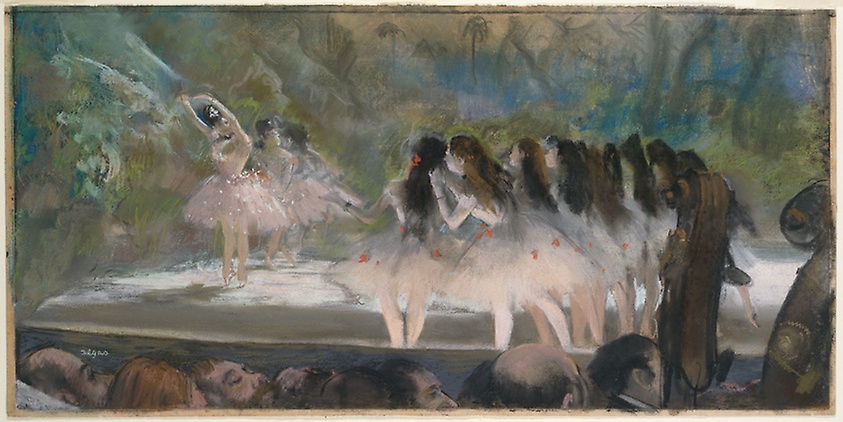
The Last Innocent Moment
By Janine Kovac
Featured Art: Ballet at the Paris Opéra by Edgar Degas
Today we are a cozy family of three—Daddy, Mama, and daughter. We are taking a road trip from our home in Oakland, California to a town called King City so Daddy can perform his signature role as the Sugar Plum Fairy cavalier. It’s our last trip together before the twins are born and Chiara-Noelle has told me in her three-year-old way that she is not pleased about this pregnancy. She wanted a sister, not two brothers and she can’t understand why we can’t just make what’s growing inside me be something else. Read More

The Terms of Agreement
By Patrick J. Murphy
Featured art: Untitled by Sue-Yeon Ryu
It was getting late and her grandson Buddy wasn’t back, so Vera decided to brave the heat and go with Alicia to find him. She’d wanted to talk to her daughter in private, anyway, but when she stepped outside, though the sun was low, the light still bounced with a glaring intensity off the pale houses, the plastered walls. Vera felt her skin growing damp, the small shock as the heat hit her body. It just took time to adapt to a Florida retirement, she thought, and remembered Little Rock and the parks along the river, the evening fireflies above deep grass.
It irritated her that Alicia, walking placidly beside her, didn’t seem to mind the climate, or much of anything else. Her daughter was overweight and wore long, black, wrinkled cotton dresses. Her left ear was pierced in five places, and she sometimes wore a silver ring through her right eyebrow. She was making a statement, she said, and didn’t care what anyone thought.
“Then why bother making a statement?” Vera asked once, only to meet with an uncomprehending stare.
Read More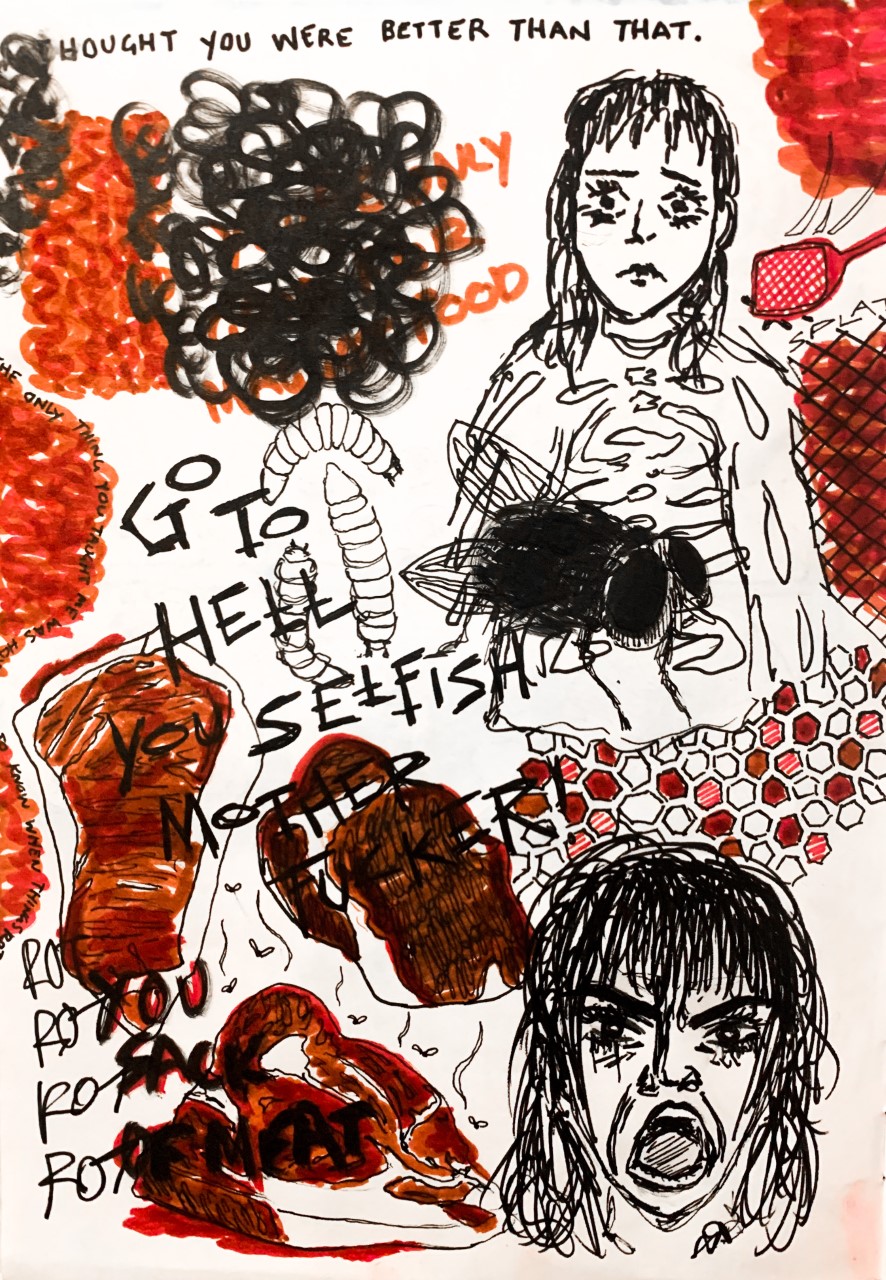
Beef Jerky That Makes People Sad
By Mari Casey
I enrolled my boyfriend in a beef jerky of the month club
one Christmas. In January, we broke up, and it was
a horrible breakup that still hurts a little, years beyond.
In February, when notice came that his jerky had again been shipped,
I cancelled it. It was the type of breakup where the kindest thing we could do
was leave each other alone forever. We hadn’t been very kind. I wanted to change.
In March, I got another shipping notice, tracked to his front door,
but my card had not been charged. I called
and was assured that no more jerky would be sent. Read More
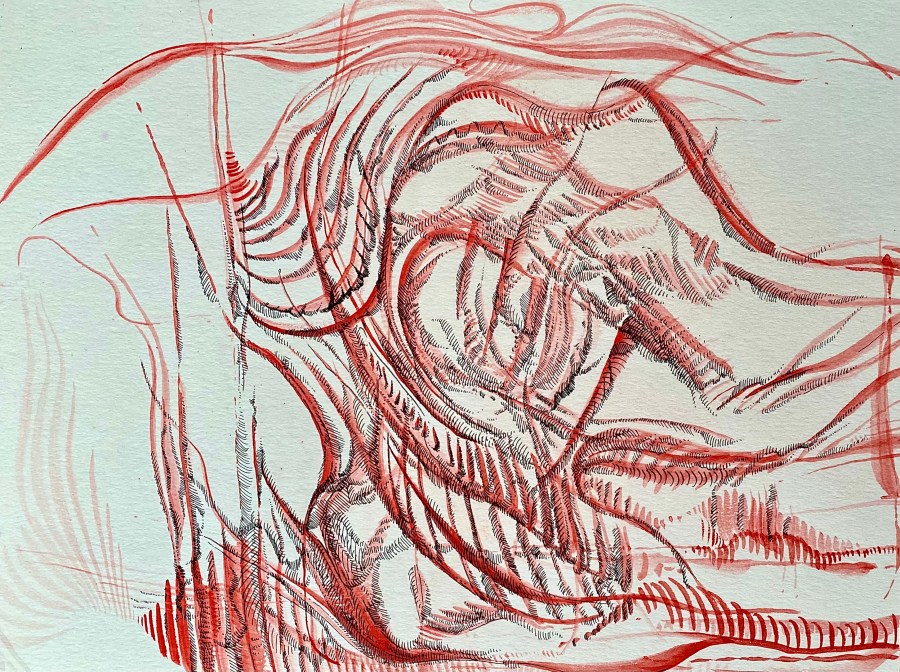
suggestion box feedback from lovers/boyfriends/partners on how to improve myself, that I never asked for, and I know who you are because I recognise your handwriting
By Paula Harris
Featured art: Untitled by Felicity Gunn
we don’t have anything in common
what if you grew your hair long?
what if we went running every morning at 6?
you could be nicer, you could be less judgmental
what if you got a degree?
yeah, you should definitely get a degree
we don’t have anything in common
you look better when you don’t weigh as much
can you talk a bit softer?
calm down
you’d be better with bigger breasts Read More
In the Winter of my Sixty-Seventh Year
By Susan Browne
Featured Art: pass with care by Gina Gidaro
I feel the cold more
I stay in bed longer
To linger in my dreams
Where I’m young
& falling in & out of love
I couldn’t imagine then
Being this old only old people
Are this old
Looking at my friends I wonder
Wow do I look like that
Today I wore my new beanie
With the silver-grey pom-pom
& took a walk in the fog
I thought I looked cute in that hat
But nobody noticed maybe a squirrel
Although he didn’t say anything
When was the last time I got a compliment
Now it’s mostly someone pointing out
I have food stuck in my teeth
Did my teeth grow they seem bigger
& so do my feet everything’s larger
Except my lips lipstick smudges
Outside the lines or travels to my teeth
Then there’s my neck
The wattle an unfortunate word
& should have never been invented
These winter months are like open coffins
For frail oldsters to fall in
I once had a student who believed
We can be any age we want
In the afterlife
I’m desperate to be fifty
Six was also a good year
I saw snow for the first time
At my great-uncle’s house in Schenectady
My sister & I stood at the window
I can still remember the thrill
Of a first time a marvel
Life would be full of firsts
I met my first love in winter
He was a hoodlum
& way too old for me seventeen I was fifteen
I could tell he’d had sex or something close to it
He had a burning building in his eyes
He wore a black leather jacket so cool & greasy
Matched his hair he broke up with me
Although there wasn’t much to break
All we’d done was sit together on the bus
Breathing on each other
It was my first broken heart
I walked in the rain
Listening to “Wichita Lineman”
On my transistor radio
I need you more than want you
Which confused me but I felt it
All over my body
& that was a first too
O world of marvels
I’m entering antiquity for the first time
Ruined columns sun-blasted walls
Dusty rubble wind-blown husks
I’m wintering there is nothing wrong with it
A deep field of silence
The grass grown over & now the snow
Read More
New Ohio Review 28 (originally published, November 2020)
Newohioreview.org is archiving previous editions as they originally appeared. We are pairing the pieces with curated art work, as well as select audio recordings. In collaboration with our past contributors, we are happy to (re)-present this outstanding work.
Issue 28 compiled by Brandon Bowers, Sarah Hecker, Maeve Hurley, and Ellery Pollard.
New Ohio Review Issue 28 (Originally printed Fall 2020)
Newohioreview.org is archiving previous editions as they originally appeared. We are pairing the pieces with curated art work, as well as select audio recordings. In collaboration with our past contributors, we are happy to (re)-present this outstanding work.

The Time Traveller Chooses an Arrival Point
By Emily Blair
Featured Art: Yliaster (Paracelsus) by Marsden Hartley
Before it all goes wrong. Before the bell is rung. Before the ship has sailed.
Before the perfect storm begins to brew. Before the term perfect storm goes
viral. Before anything goes viral. Before the fall. Before the crash. After
effective sanitation, before Ronald Reagan. Before that sixth grade school
photo is taken. Before one friend’s accident, another’s illness. Before the first
massacre or environmental disaster. Before the first loss of liberty. Before
the prequels. Before the sequels. Before the remakes. Before guns. Definitely
before Columbus. After your son learns to say he loves you. After the
invention of childhood. Before the police state. Before the nation state. Before
the interstate. After modern medicine. After modern art. After animated GIFs.
After the discovery of fire, of penicillin, of Spandex. After you meet the love
of your life, but before you meet your first miserable boyfriend. After the
Internet, but before we become information. Before your cousin dies, before
your classmate dies, before anyone anywhere dies. It’s important to avoid your
grandfather, and also the Middle Ages. Remember the Nineties sucked, and
so did the Eighties. Maybe that moment when the dog stole pancakes off your
plate. Your parents laughing as the card table shook. Just after the Big Bang.
Read More
Broken
By John Glowney
Featured Art: Niagara Falls by John Henry Twachtman
Break it, you own it. Honestly,
though, it was always broken,
which is the whole point, that is to say,
when this world first whirled
and popped into existence
out of nothing’s sticky grasp,
the ur-broken thing, when it had wings
that glinted wildly in the suffused
and charged plasma, when it cascaded off
the cliff of itself
a mountain waterfall in native sunlight;
when the newly minted
honeybees, still smoking a little from
the tiny forges that made their immaculate
and fragile bodies, shook the pollen dust
of a violet, left a telltale film
on the velvety atoms of air,
when the first honeybees
so insisted upon new life they went
flower to flower—back when this world wanted
to be called Volcano of the Lilies,
not Rage Monster or Resentful Lover, not Plague Addict or
Reservoir of Ashes, even then, broken, yet fresh
with new blooms,
it was yours.
Read More
The Other Big Bang
By Mason Wray
Featured Art: Peach Bloom by Alice Pike Barney
An equal and opposite burst expanding
from the same particle but in reverse.
Where peaches unripen in the family orchard.
A mom-and-pop deli replaces the condos on Second Ave.
OutKast never breaks up. They only get back together.
My sister is getting smaller by the day
her outfits like pastel pythons swallowing a doe.
In the other big bang, we start
with all the knowledge we’ll ever know
then forget it piece by piece.
So even after my grandmother’s brain
stitches itself whole, vanquishes the plaque
that shows up like coffee stains in scans,
still she becomes more unknowing by the day.
But we all become naïve with her. Everyone
communes over fears of growing young:
how we’ll tie our shoes, cross the road alone.
I am planning an expedition. One day I hope
to have never known you yet.
Read More
Gone
By Jennifer Burd
Featured Art: Zinnias by H. Lyman Saÿen
While I was away the world
went on without me—
a spider completed its web
under my plant stand,
dust from an unseen wind
settled in all the hard-to-reach places,
light drifted across the walls.
The ceiling fan dipped its oars
in stillness. Zinnias in the vase
went from Technicolor
to hand-painted antique postcard hues.
The world’s bad news got worse,
the good news, better than expected.
Letters and bills fought for room
in the mailbox. Mold helped itself
to the food I hadn’t eaten,
and a late rose bloomed in the garden.
I watched myself considering each thing,
thinking, this is how it will be.
Read More

Ruthless
By Emily Lee Luan
Winner, New Ohio Review Poetry Contest: selected by Ada Limón
Featured Art: The Dance by George Grey Barnard
My friend lowers his foot into the stony
runoff from the mountain, lets out a burst
of frantic laughter. This, I think, is a happiness.
When I don’t feel pain, is it joy that pours
in? A hollow vessel glows to be filled.
無 , my father taught me, is tangible—
an emptiness held. It means nothing, or to not have,
which implies there was something to be had
in the first place. It negates other characters:
無心 , “without heart”;
無情 , “without feeling”;
heartless, ruthless, pitiless.
Is the vacant heart so ruthless?
The ancient pictogram for 無 shows a person
with something dangling in each hand. Nothingness
the image of yourself with what you once had,
what you could have. And the figure is dancing,
as if to say nothingness is a feeling, maybe even
a happiness—dancing with what is gone from you.
When I ask myself what am I missing? I think
of how much I loved to dance, arms awash
with air, the outline of loss leaping on the wall.
Read More

I Was Startled It Was Death
By David O’Connell
Featured Art: Figure with Guitar II by Henry Fitch Taylor
I was startled it was death
I’d been singing all morning
under my breath, scrambling
the eggs, steeping Earl Grey
for breakfast with my wife, death
I’d been carrying like a jingle
or Top 40 chorus, its melody
infinitely catchy, insistent,
vaguely parasitic, its lyrics
surfing rhythm, slotted into
rhyme, over and over, a half
hour or more, all Saturday
ahead of us, the morning sun
shining when Julie protested
with a quick laugh, though
wincing too—no, please,
I just got that out of my head.
Read More

Love Song
By David O’Connell
Featured Art: Morning Haze by Leonard Ochtman
Oh, that’s right—because I’m going to die.
Sometimes I forget. More often than not.
And then, that’s right! I’m going to,
sometime. Because . . . I’m going to. Forgetting,
but only sometimes, that’s how this works
more than not. And then we wake to snow,
*
quite unexpected, the whole neighborhood quite,
you know. And you say to me, yes, that’s right,
cream, two sugars. Sometimes I forget. Or
these days, more often, because, you know,
that’s how this works. And now I remember
we’re going to. Both of us. And there’s the car
*
snowed under, looking so unlike itself. It takes
an easy faith to see it. What it truly is. I believe
this morning the whole neighborhood is a fact
refuting last night’s forecast. I’m predicting
this icicle by evening will stretch down past
the window, which reminds me—yes, that’s right,
*
last night, 2 or 3 a.m., I woke to the whole house
moaning in the wind. And I felt warmer beside you
surrounded by this sound, our house, and maybe
the whole neighborhood, the neighborhood houses
and the neighborhood trees all moaning. It was snowing,
but I didn’t know. Sometimes, I forget this
*
is how it is with us. Just as I, at times, forget
I, we, are going to, you know. They’re saying now
more is on the way by evening. It almost hurts
to look out there’s so much sun. I’m going out
to prove the car’s still here. You remind me,
yes, of course, coffee. How could I ever forget?
Read More
We’re Thinking of the Black Hole at the Center of the Galaxy
By David O’Connell
Featured Art: Children at Play by Jean-Francis Auburtin
leaning back in our lawn chairs, the August constellations
crowded by a crush of stars, the Milky Way in soft focus
like a glamour shot. A couple and a couple at the end of the day
watching our kids zip sparklers back and forth across the lawn
like satellites or meteors. It’d been a story in the paper,
evidence of a supermassive black hole, and so we throw it back
like tequila shots and wade past our depth—me, deflecting
to Kubrick’s Star Gate sequence, those long light smears
on Bowman’s helmet, Julie, pulling both cords of her sweatshirt
taut, saying our bodies would be stretched to angel hair
if we were yanked into that hole. Then Janet’s telling us
how she imagines this supermassive black hole is like the hole
at the end of a vacuum cleaner. And right now—Saturday evening,
our kids growing restless, minutes from boredom, then, maybe,
those nudging arguments of who found who, who was safe,
and for us, at least, the hour’s drive home, I-95 congested
by the night-shift roadwork just beginning, Julie and I
talking quietly in front, reviewing the evening, overwhelmed
by the obvious, how we’ve all changed, how we won’t ever
be as young as we were, our daughter, grass-stained,
her hair wild with static, slouching down in the backseat
pretending to sleep as she listens in just as I did at seven,
those long drives to Maine, picking up things half-understood
in the language of grownups—this black hole, says Janet,
is Hoovering up stars and planets like so many pretzel crumbs
ground into the shag. We’re full. Everything off the grill
is hitting the spot. And Mark, back to Kubrick’s Star Child,
is leaning in to share his fanboy theories of what it all means,
though I’m not listening, not really, because it seems right,
that vacuum, because I, too, have plucked stray fuzz clinging
half in, half out of the attachment’s rim—and yes, this is how
it feels, year-by-year, to be drawn to the irresistible thing.
Read More

The Names You Choose
By Nicole VanderLinden
Winner, New Ohio Review Fiction Contest: selected by Lauren Groff
Featured Art: Beach Scene by James Hamilton
Vanessa had wanted the luau, something extravagant—never mind that we were a moon away from our original budget. But that was Vanessa, always doubling down. She swam in mountain lakes; she was the only person I knew who’d been arrested for playing chicken. “We’re in Maui,” she said, letting geography make its case. “It’d be fun for the kids.”
This wasn’t all true, because our youngest, Chloe, dreamed of puréed bananas. She was barely a toddler. She’d never tasted salt, and bubble baths made her shriek. It was the other kid my wife had been alluding to, the child of our concern, our Anna.
Vanessa bought tickets to the luau. I was suggestible—there were so many things I was trying to save then, money the least precious among them. We returned to the cool of our room by three so we could shower and put calamine lotion on our burns, our sun-chapped faces. Vanessa took Chloe with her and got dressed in the bathroom, where she’d laid out various makeup cases and where the tub had jets, and I waited for Anna, who was twelve and who, when she was ready, spun for me in a white sundress lined in eyelet lace.
At the luau, we inched toward the entrance on the resort grounds, entertainers beating drums and offering drinks made with canned pineapple juice. Chloe sat on her mother’s hip with her wild, straight-up ponytail and gave everyone her skeptical face, the one that prefaced an opinion you couldn’t predict. “Drum,” she said seriously, as if naming objects for the first time. “Drink.” Anna had put on a dark hoodie, though it was still hot, and shuffled ahead of us all.
Read More
Force of Habit
By Kathleen Winter
Featured Art: Girl Arranging Her Hair by Abbott Handerson Thayer
The woman in the Oldsmobile was awfully young
to have a kid, her kid would have said, if she’d had
a voice not just a body jittery inside her precious cotton
dress with ducks stitched in the smocked bodice
flat across her washboard chest. A woman’s hand
was every bit as flat when she had to slap somebody’s
face, so it wasn’t best sometimes to have a voice in case
you asked the woman one too many times how Seguin
was different from Saigon or where the dad had
gone or who was gonna fix the swing or when can we
get a collie or what’s the matter with twirling a lock
of hair around your index finger all day long it felt
so smooth & cool spooled round your finger &
released & caught & wound again, secured.
What’s wrong with messing with this living little
bit of you, a darling little thing. You couldn’t stop it
even if you wanted to.
Read More
What Is There To Do in Akron, Ohio?
By Darius Simpson
Featured Art: Open Lock, Akron, Ohio by James Henry Moser
complain about the weather. wait five minutes
watch the boys you grew up with outgrow you
bury your cousin. go sledding on the tallest hill you can find
keep a family warm until their son thaws out of prison
ice skate between the skyscrapers downtown
inherit an emergency exit sign from your father
spray-paint your best friend’s brother on a t-shirt
daydream your way through a semester-long funeral
watch jeans and sleeves and family portraits unravel
play soccer with the black boys who almost evaporated
with the icicles. kick it outside with the skeletons
from your childhood. go to columbus and pretend
to be a grown-up. spend a weekend at kalahari resort
and call it a vacation. go back home. leave. shoot dice
with the dead boys playing dress up. stay long enough
to become a tourist attraction in a city nobody stops in
mount bikes and ride until the sun dribbles
out of the sky’s mouth. wade through the oatmeal july makes
of morning air. swim in a public pool where everyone
is drowning and no one knows how to survive
what happened last month. stop runnin in and out unless
you got somethin’ on the gas bill. seal yourself with cold air
while the trees melt. bet the boy down the street, who’ll have
the best first day fit. come out amid orange leaves lookin fresher
than all the food in a five-mile radius of granny’s house.
eat jojos from rizzi’s on sunday after pastor guilt trips you
on your way past the pulpit. dream about a city
where headstones don’t show up to dinner unannounced
where fried chicken isn’t on speed dial and diabetes
isn’t the family heirloom. where grief isn’t so molasses
root for lebron in whatever he’s wearing. become
an athlete as a way out of corner sales. never escape.
start a pickup game that never ends. rake leaves
with a rusted afro pick your older brother left you in his will.
let the leaf bags melt into the chimney on the side of the house.
play basketball with the ghosts who don’t know what year it is
volunteer at your local funeral home. open a cemetery
across the street from the playground. mow green.
cut ties with your grass-seller. survive the summer.
Read More
It Was As If We Were on Vacation
By Jen Ashburn
Featured Art: Sunset, Oxford by George Elbert Burr
I was driving. The sky was pink with sunrise or sunset.
The road banked left. We drove straight—through the guardrail
and over a valley with gray houses stacked on a hillside.
You were so calm. I didn’t understand at first that we would die.
This was much worse than forgetting to pay the phone bill.
Then you were driving. The car soared. We looked out the windows.
Around the houses, people trimmed hedges and hung laundry.
You changed gears. I don’t remember the landing. I think
there was music. We held hands. I’ve never understood
forgiveness, but this is what it must feel like.
Read More
Self-Imposed Exile
By Lucas Cardona
Featured Art: Tongue amulet in the form of a cicada (hanchan) by Unknown
My limp body lulls through the hot, humid days
like a lukewarm dog’s tongue hanging off the edge
of time, begging for disaster, for that rotten stench
of nostalgia to drift away & be buried in the brain’s
contemporary fiascoes. Night after night,
caught gaping out the window in the same chilled,
sterile room. Only the shadows of bats flitter into
view, and the dark, lush limbs of American elm trees
groping toward evidence of further tangibility
with a desperation akin to worship. Something in me
must cherish the sound of cicadas feeding off each other
in their suburban, summertime mania, like the soulless,
asinine chorus of a fraternity chant. The girl at the
7-Eleven in the purple hijab restocks the Cheetos
and the world goes on devouring itself for no other reason
than something must be devoured if we are to continue
loving one another in this crudely selective fashion.
It’s terrible but it’s true, all heartache inevitably
resolves in that surreptitious method pain can only
accomplish with the brain’s private blessing.
I know now what I did, I did to destroy you.
I know, too, that I’m the one who’s destroyed.
But somehow that still feels like forgiveness.
Read More
Invisible Bodies
By Aza Pace
Featured Art: (Children Swimming) by Unknown
Meanwhile, plastic particles
burrow in the Arctic snow
and in the sea’s deep trenches,
its legion bellies.
Meanwhile, a galaxy bursts
across my cervix—bad cells
someone will slice off
with electric wire as I sleep.
There is nothing untouched
in the whole furious world.
But the water today
in Galveston is blue,
with not a hint of tar.
In each wave, hermit crabs
and no bottle caps.
Babies in life jackets
tumble and squeal in the surf
while an older child bobs
out to the first sandbar
to fish. Meanwhile,
I think—I’m happy.
Under my tongue
sit the names of children
I will not make.
I roll them over and over
and love them.
Read More

Daughter Poem
By Lisa Dordal
Featured Art: The Artist’s Daughter by H. Lyman Saÿen
Sometimes I see her pressing her palms
against a windowpane in a house that is real
the way a house in a dream is real
until you start to describe it and all you can say is:
it was this house, only it wasn’t. It’s winter
and she likes to feel the cold entering her body.
Or it’s summer and it’s heat she’s after.
She wasn’t born, so she can’t die.
Sometimes there is a window but no girl,
and I am the one walking toward it.
Sometimes I see her peering in—
forehead against the screen of our back door—
or running ahead of me on a path that is real
the way a path in a dream is real, saying:
this way, this way.
Read More

A Coyote Runs Down Michigan Avenue
By Sara Ryan
Featured Art: “The Bridge: Nocturne (Nocturne: Queensboro Bridge)” by Julien Alden Weir
and she is a phantom. gray blur on
gray pavement. green lights flicker
their rhythmic patterns. in the right building,
at the right angle, she becomes one
thousand coyotes shimmering in glass.
she screams and Chicago screams
back. howls. scavenges the oily corners
of the train stations. the river gulps
through its channels and feeds the lake.
she is a wild thing. she crosses high bridges.
she becomes the color blue. she becomes
the color blood. the city is haunted
now. by the trees. by women, their mouths
full—bulging, really—with fur. she is one
of the lucky ones. she runs unjailed without
worry for traffic, turn signals, speed limits.
ghosts wearing masks yell from
their windows. they’re warning her.
they’re warning her.
Read More
Circumstances of Disappearance
By Sara Ryan
it is easy enough to say it: I want
to be an orange
harvest moon. cantaloupe sky, people
driving into the dark
country just to see. bitten
by mosquitoes. burrs
clinging to milky ankles.
that dappled moon
photographers click
the long exposure for. those pains-
taking details. every wrinkle
on my face. I am not
sure when I stopped believing
that I was beautiful, but I did
& there is no going back.
I want & the wanting
just becomes easier. my body
swallows it up until my bones sing
with the stuff. I want to be a puddle
with a world living inside.
slick that never dries up,
pooling in the craters
of uneven parking lots. forever
wet & weeping things.
I want to be the small sliver
of metal in my mother’s finger.
the scorched wall
of my father’s aortic valve.
I want to be blood—
its intricate, deliberate maze.
I want to be a planet &
a canyon. splinter & a tear
in the sky. I will admit it:
sometimes I just want
to hear my name out loud.
Read More
Chickens in Your Backyard
By Miriam Flock
They come, like the dishwasher, with the house.
“No trouble,” swears the seller, and—presto change-o—
for handfuls of Layena every morning,
the pair of hens trade one or two brown eggs.
The chick, if we approach with proper coos,
will let itself be stroked. This we learned
from our new bible, Chickens in Your Backyard.
Like neighbors of a different faith, we practice
tolerance, let them grub among the bulbs,
ignore the way their droppings singe the mulch.
Meanwhile, we are intent on our own nesting.
My husband paints the nursery; I quilt
a golden goose with pockets shaped like eggs.
We hardly register the added squawking
from the coop or look for more than tribute
when we rob the nesting boxes. Then
one dawn, I’m roused by what can only be
a cock-a-doodle-doo. And in the breaking light,
our chick-turned-rooster struts, ruffed as Raleigh,
shaking his noble scarlet comb. What waits
inside me to astonish like this male?
Such sudden majesty, sudden red.
Read More
Live From the Met
By Miriam Flock
Not the baby but the baby’s clothes defeat me—
the cunning socks, the piles of onesies.
A descant to the washer’s thrum, the strains
of Pagliacci drift in from the study,
dislodging a memory: a stormy weekend
stranded at my cousin’s, the window wells filling
with snow like the heaps of dirty laundry
my aunt was sorting in the other room.
Around us spread the scraps of paper dolls
we’d wangled in the market, peeled now,
and finished like our tangerines.
We’d tired of mimicking Corelli
whose whooping rose above the drone of the dryer
where my aunt and uncle’s shirts embraced.
“There isn’t anything to do,” I whined
until my aunt emerged, a bar of Naptha
gripped in her raw hand. What struck me
was not her slap, nor even the stunned giggle
before my cousin got hers like a portion,
but the tenor’s voice dissolving in sobs,
and the Clorox, smelling as a perfume might,
if she had splashed it against her wrist.
Read More
Another Refugee Poem
By Pichchenda Bao
This poem has already been written.
The nausea, familiar.
You’ve been left, bobbing
bereft, in water, watching
flames eat home and hearth.
Or vicariously felt
that dread suck of time
elongating the slim barrel of a gun.
You’ve picked your steps
through a landscape of corpses,
fumbled through each level of grief.
This poem, your companion.
But who will read this poem?
Not the ones with the guns.
Nor the ones cheering them on
or silently assenting
to their menace.
Not even the ones who are carrying
their children away from their fears
toward your fears
of what you know
about this country.
This poem does not
traffic in saviors.
I’m Only Dancing
By Chris Ketchum
At ten, I meet myself in the mirror of my sister’s vanity, squeezed into the tiny
corset of her pale blue dress, Cinderella’s image printed on the breast like a
brooch. My little-boy pecs puff out like cleavage. The tulle skirt brushes against
my thighs, rising above the knee, billowing around my Fruit of the Looms as I
prance down the staircase to the dining room where my mother lights a candle
before dinner. She laughs to see me skip across the hardwood floor, turning and
twirling on the ball of my socked foot—and when she does, I know I want to
keep her laughing. I’m not sure why, but I speak in a higher voice, with a lisp,
and she laughs harder, and as I’m preening, brushing my cheeks with the back
of my hand, leaping into the air like the hippos in Fantasia, I notice the tears—
how they run down the corner of her nose, wetting her upper lip. I don’t know
why she’s crying—maybe I’m really that funny. So I keep dancing.
Read More

