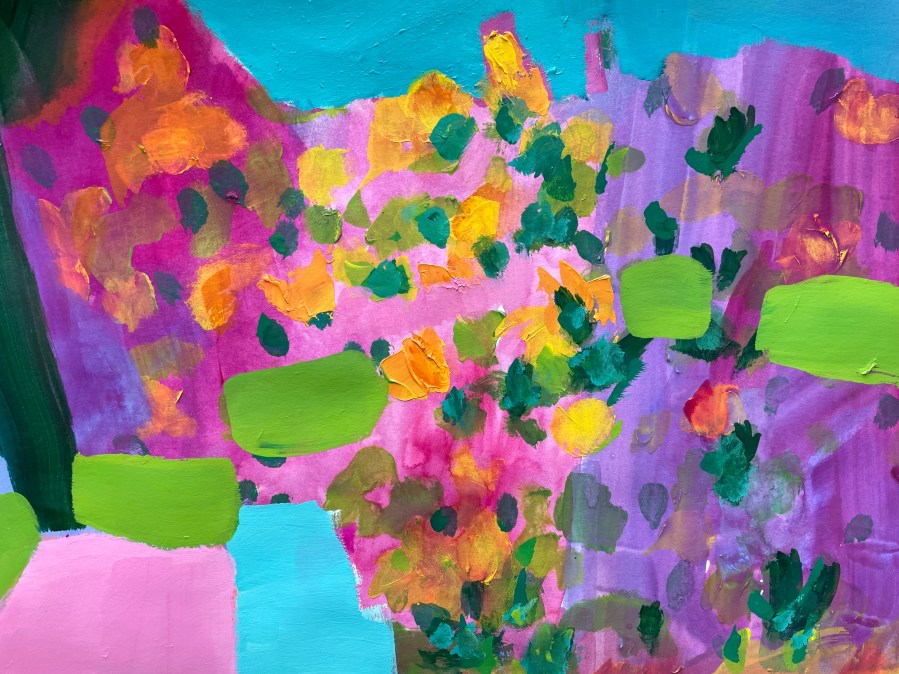
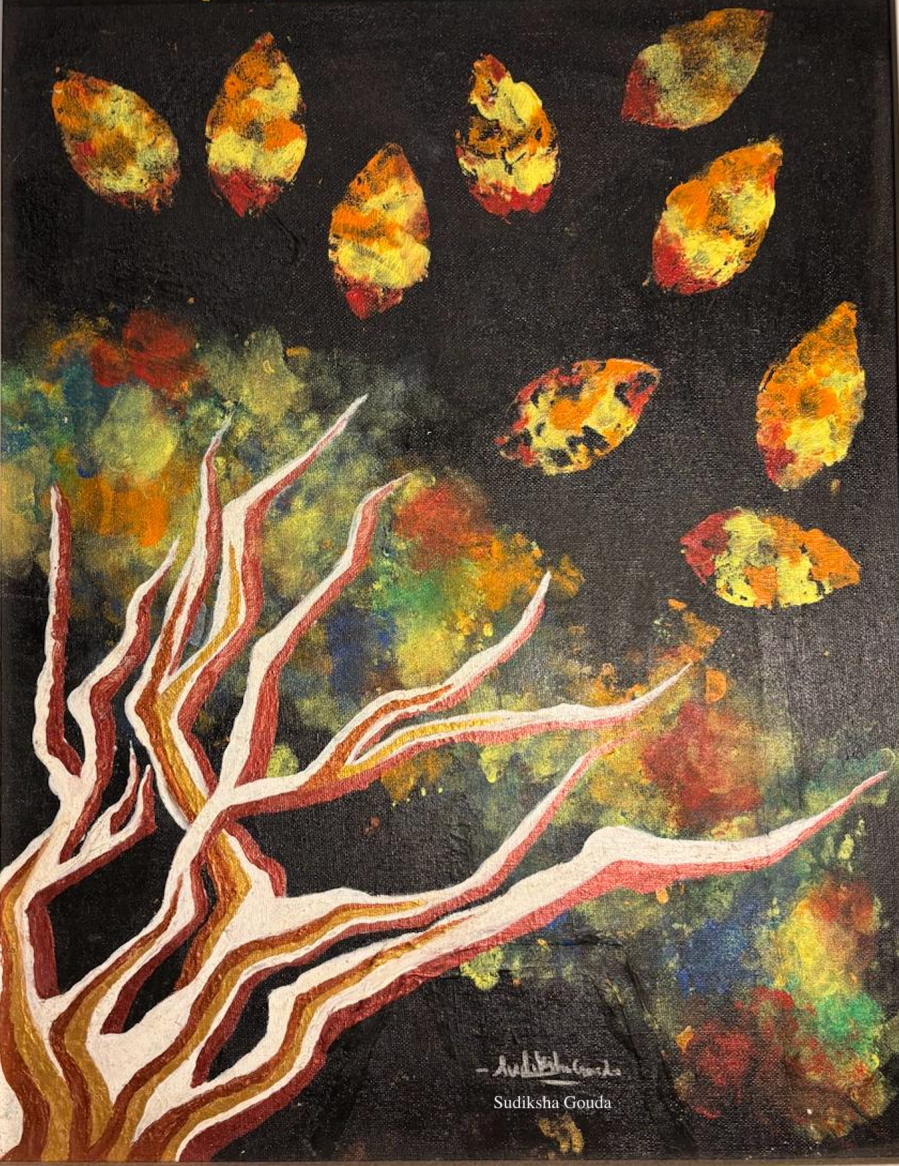
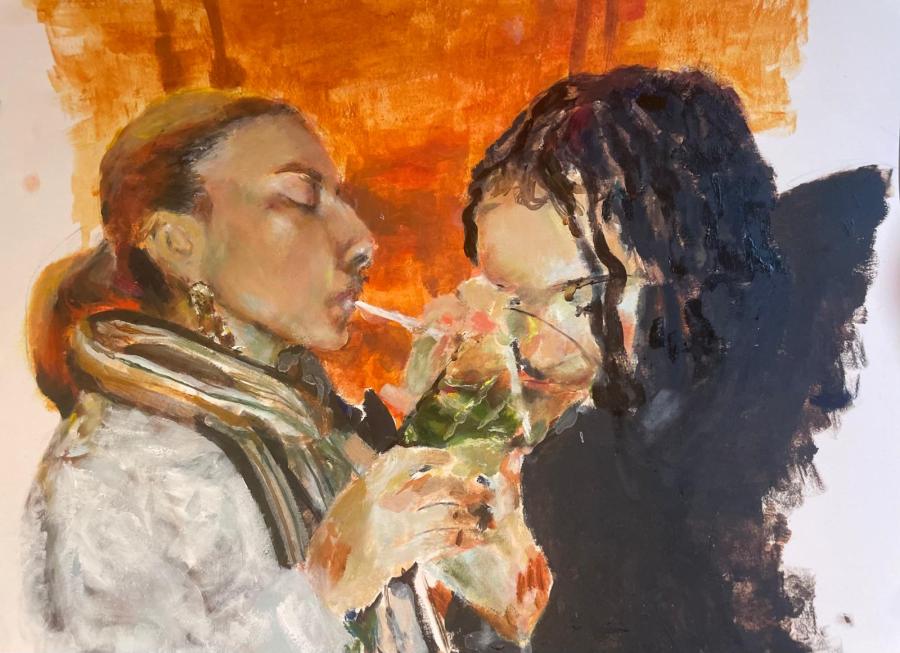
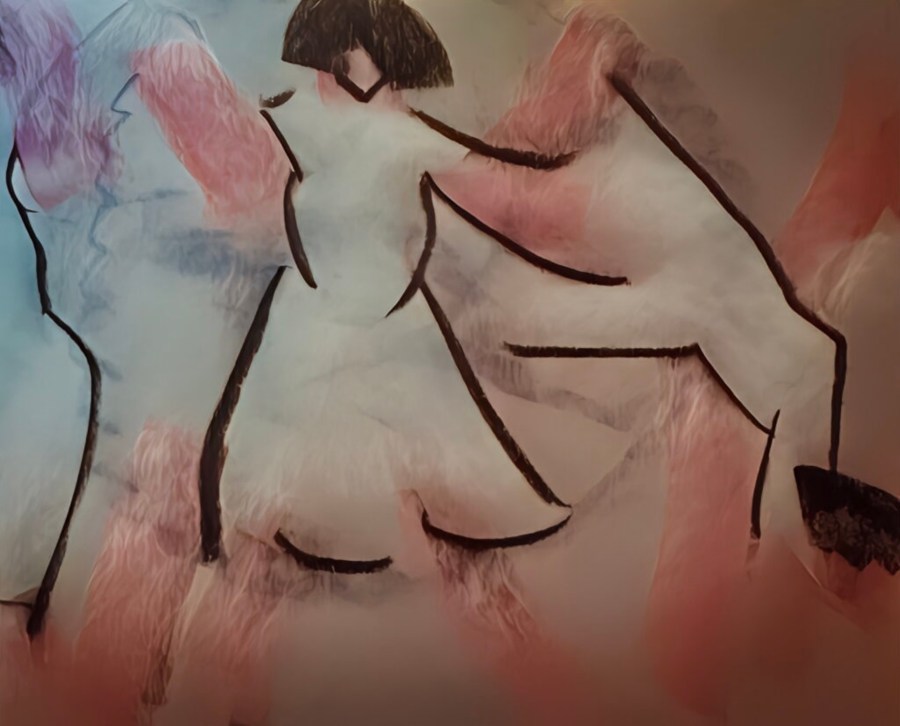
Our print issues appear in the fall and spring, and issue 36 was released in November. It is available for purchase now. Portions of our last issue (35) can be read online here. We also feature online editions in June and December.
i’m doing this because i’m wondering if i’m paying enough attention to my own life. i can’t even get my own molars to stop leaving toothprints in my tastebuds so i make myself stop and examine my fingers and find i’ve picked new shapes into their folds. i’ve colored myself outside the lines. there were once people i called my entire world and now i don’t even know which timezone they’re in—i only ever studied the architecture of others, not the geography—and all i know about that version of myself is that she did not know how to pay attention to most things, which is not very much to know about someone. i know less about her than i know about what it’s like to throw up a veggie burger in the sink at rehab. i know less about what she saw in each of her lovers than i know about yeast infections. now i’m not saying i’m an expert; i’m saying the fields are always changing sides like the illinois–penn state game that went into nonuple overtime. my finger remembers better the feel of a door slamming on its eight-year-old marrow than it does its first engagement ring. the only thing i can remember was the obvious flaw he pointed out. you see, i’ve memorized the dry scratchy floral chokehold scent of a diaper pail better than i can recall the man i was going to marry and even the version of me before that remembers my loose flaking fingernail like a pocket trinket. it’s funny though, even now, when i think of him, i think of his hair, his glasses, his hands—and then i’m back to myself.
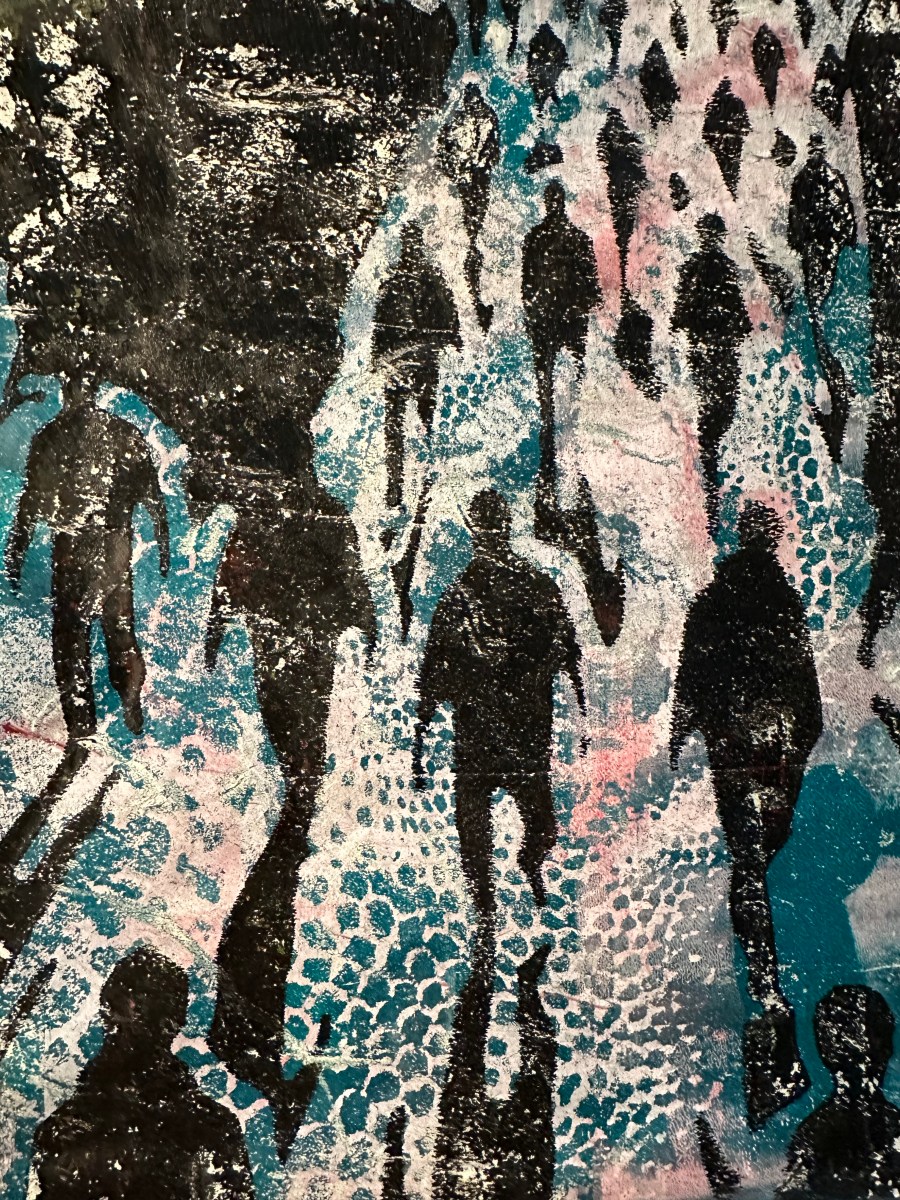
By Mark Anthony Cayanan Featured Art: “Event Horizon” by Mallory Stowe
Guess manageable despair arrives on time today, my soul cracking when sunlight sharpens my migraine. I listen to Wilco and amplify my unoriginal sadness. The U-Bahn stalls at Ullsteinstraße and now I’m sure I’m going to be alone forever, and it’s oh so important, this intimate history between my earbuds and my feelings. It wouldn’t be so bad, being somewhat lonely, mostly ordinary, if I could soundtrack my life. I’d stare at rows of bottled wieners while mumbling invented lyrics. And I’m still mostly male and so adjust myself in the aisle, my ball cap and sullen face, chili & lime chips, cheap IPAs. I self-checkout to avoid talking. I bring my own bag. Pleasure never lasts, you know, but pleasure does. And how embarrassing, to be unloved. I hum every longing home.
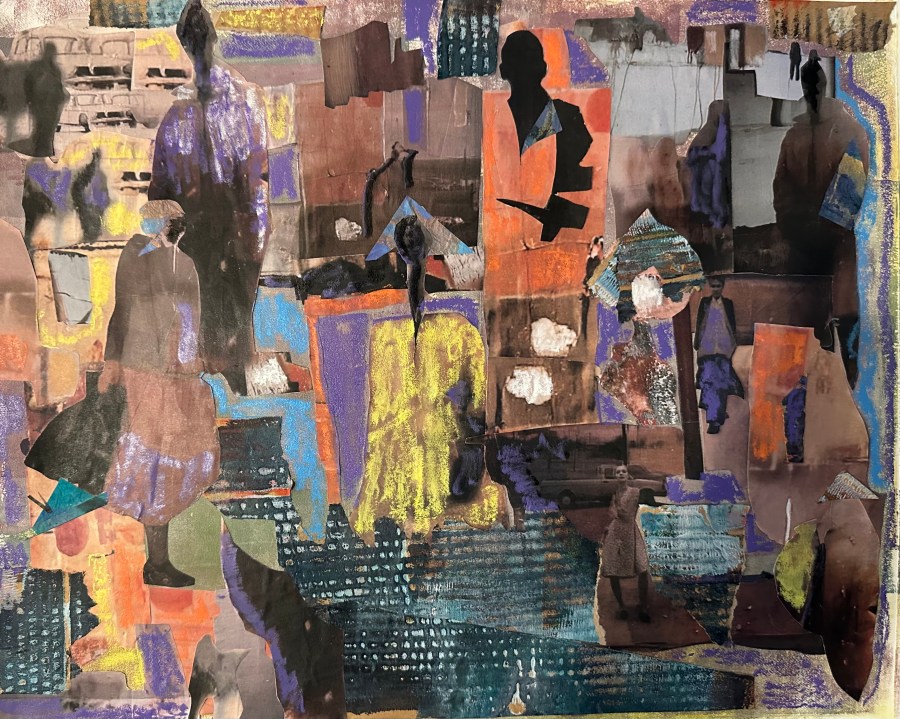
By Richie Zaborowske Featured Art: “Frills” by Alex Brice
Afraid that her husband Clint would find out, Debra began withdrawing cash out of their savings account and hiding the money in a wool sock in her underwear drawer. She got herself a divorce lawyer, a good one from one of those law firms with three last names. After searching around online, she found a landlord who, after she placed two months’ rent down as a deposit, didn’t ask too many questions. Then, when she finally had everything in place, when the only thing left was for her to find the courage to tell Clint she was leaving, on his way home from happy hour at Smitty’s Tap, Clint blew a stop sign and rammed his Ford F-150 into the side of a milk truck.
A police officer told her about the accident. Knocking on her door as Debra was dumping a pot of spaghetti noodles into a colander in the kitchen sink. Clint had never been to jail. But he was no stranger to law enforcement. So, she wasn’t exactly surprised when she opened the door and a police officer was standing on her porch.
“Your husband’s been in a wreck,” the officer said, in one breath, as if he had been running. The officer was young; cropped haircut, big ears. Haltingly, he explained that Clint was in a coma. Showed her a picture of the scene on his phone; the side of Clint’s truck crumpled like tinfoil; a blast of glass strewn across the road.
My students wear the name Nirvana and don’t know the band. I didn’t know Kurt Cobain chose the name for its pretty sound and, when I was younger, revered him as a tortured genius until my brother found my mother unconscious and all the medicine bottles empty. They say he didn’t want the band’s name to sound angry. One of my students who loves his Nirvana shirt lost his mother. He stands and shouts at everyone and no one and pushes out the classroom door. Despite my mother becoming a self-avowed Buddhist who listens to Thích Nhất Hạnh audiobooks and smokes marijuana for chronic nausea and pain, I still know little of Nirvana beyond what I’ve gleaned from a few movies and books: transcendent detachment, cosmic oneness, unbeing. And yet, with what little I knew, after the bell rang, after the students moved through the long hallways that shook then stilled as they emptied of their laughter, I looked for him. I did. I looked for that boy.
This plot of ground facing the gaze of unrelenting California sun is dedicated to the living presence of Charlotte Elizabeth Williams who laid down in South Carolina, before boycotted busses with a son still in her stomach, was forced to move with her husband and children to Hawaii, lost that husband to Vietnam, flew back across the Pacific with her sons to become the second black family in a Sacramento suburb, surviving a stalker who stabbed her seventeen times and scarred the hands she used to drag the abusive second husband onto the lawn, pull the knife from his back, defend from him the family who, on her single salary, she ensured saw plays, ballets, foreign shores, afforded new clothes for new schools—knowing enough of the old school to keep five black boys from trouble, to fight against the expectations of pale neighbors, against the recklessness of their youth, against driving I-80 ninety miles an hour and the dour white face that sounds the siren.
She often spoke of God, prayed daily, became a Senior Olympian as if to hint at a dignity deities and mountains alone can achieve, and in her final days attained a holiness we can only call human, as her body was still here, when she began traveling in that other world, and—
if you can bring nothing to where she sleeps but your body, rotten with its easy living, keep out.
I shrink the size of the image. Now I feel that it reveals too much, even though that was precisely my intention when I photographed my grandmother. It is her daughter, who died when I was only 5 years old, who I wanted to find through this face. For a while I’ve started searching for my mother and decided to start with hers. I wanted to get as close as possible to this person who, to me, is distant and silent.
I’ve never known the name of the city where she was born, who her parents were, or how old she was when she emigrated to Brazil. I don’t know what it was like for her to raise six Brazilian children, all born in a Japanese colony where she lived and worked for 40 years. We’ve exchanged a few words, especially about her second daughter. I think about this silence and wonder whether it is the generations, the languages, the apprehension, or the loss that separates us.
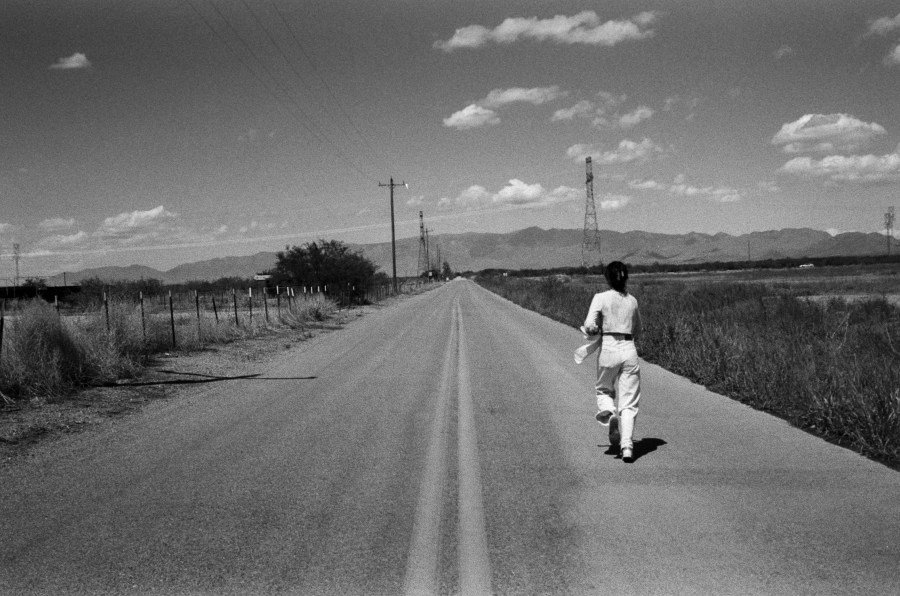
By Allisa Cherry Featured Art: “Lily, Out of Breath” by Mallory Stowe
I startle a deer mouse squirreling straw into a pile of burlap. It freezes then returns to its instinctive labor caring for its litter of pups–still deaf and blind. Each as small and pink as a baby’s toe. How miniscule my reflection must be, turned upside-down in the gloss of its dark eye. At the beginning of the war in Ukraine a woman approached a Russian soldier, gave him a handful of seeds, and told him to carry them in his pocket so when he died on Ukrainian soil at least sunflowers would grow where he fell. At least. No matter how great the devastation, it requires a small act of resistance for scale. Consider those moments Roland Hayes stood in a resolute silence while members of the Nazi party booed and cursed his blackness. Alone under a spotlight on stage in a concert hall buzzing with hatred. And still his throat softened and a song—Du Bist die Ruh—rose from his throat until every fascist heart had been stroked by the finger of its beauty. But I have never been brave. I’ve only ever waited out the clock in those moments when I was afraid. So, when my older sister asked me —the apostate daughter—to help her dress my mother’s dead body in her temple robes, tie the fig leaf apron, fasten her bonnet and veil, I couldn’t take in the tenderness of her heresy all at once. Instead, I narrowed my focus to the industry of my fingers, half expecting them to snap into flames as I pushed each pearl button through its braided hoop.
By Sarah Suhr Featured Art: “Aria” by Mallory Stowe
for Patty
you broke your mother’s ribcage trying to revive her bones like a goldfinch do not cry daughter oh wisp of breath she speaks from beyond her tomb keep chrysanthemums & coneflowers in each corner of our house & console your father with a nightcap westerns & puzzles still he cries each year that passes & you oh daughter carry bouquets & his weight across threshold after threshold till he can no longer hold a spoon to his mouth so you petal chowder to his tongue & every swallow is a strangulation that stones your heart to silence you no longer know where your fingertips end & his begin if the sun has risen or descended oh daughter are you in darkness or light he says this is it i am done after dialysis & within days his head wilts cold into your palms you clear his books from your shelf & reshelve poetry found in a storage unit your hands hold a collection called reclamation but you can’t recall how it came to you
We’re three bites into not-quite-Christmas pie when my mother breaks into the epic tale of Dad leaving her for another woman. Sometimes it’s a blonde, sometimes a spurious redhead, depending on how inspiration moves the teller. Like all great oral epics, it’s founded on a myth. My father’s been dead almost four years. The other woman he left my mother for was an inoperable brain tumor. But who wants to hear that?
“All those sexy young dental hygienists, and in the end? He leaves me for a patient.” Mom wags her fork like a finger, emphasizing, demanding attention, making just one point more. “This little Puerto Rican with big fake tits and fake blonde hair and two impacted molars. Consuela. And would you believe the worst part?”
My husband wears the Jesuit-school poker face I envy so, eyebrows raised as if he’s just been told some modestly interesting fact. Eddie, approximately 2.4 years old, is busy experimenting with whipped cream between his fingers, and my sister Judy, who drove Mom the two days from Miami, still looks a little dazed. But Larry from work hangs on Mom’s every word.
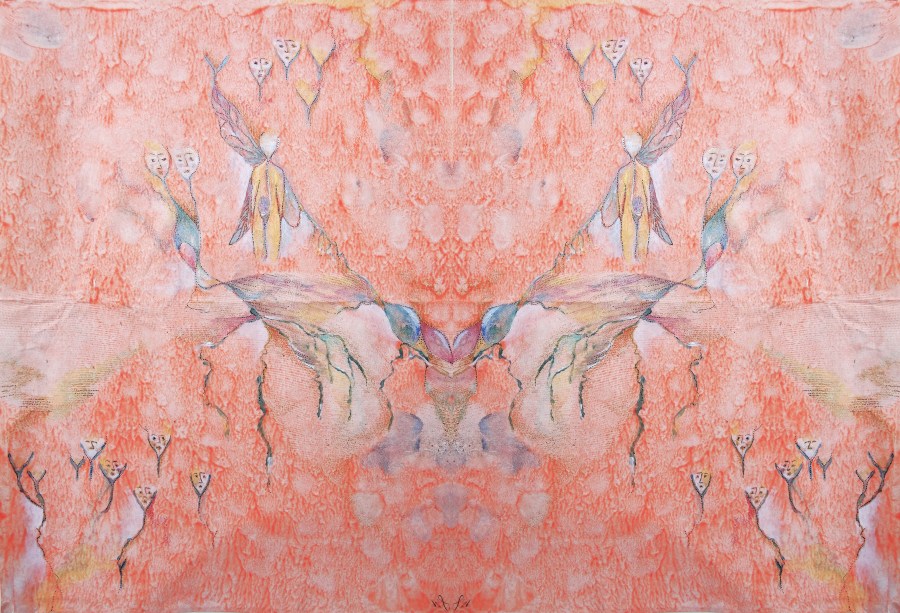
By Madeline Simms Featured Art: “Eye of Horus” by Ryan Davis
It is a Wednesday when I ask for help in the kitchen, a Tuesday night for my mother. Winter flirts with spring as she sends a photo of the Monkey Bread recipe across the Atlantic. It reaches me and my dry bones in the wet grey of Ireland. I am looking for anything sweet—
She sends a good night text when I send Good morning, alongside a picture of Rian and Jonah climbing over my groggy body. We laugh countries apart. Day or night, it is winter-dark wherever we are. I send her a video of the boys licking my face as if they are dogs, and we laugh counties apart. Our well-wishing is a promise of rising, be it the sun, the bread. I think of the day ahead of me filled with Hot Wheels, dropping off the boys at school, picking them up, snacks, spills, a likely tear or two—author unknown.
During the past few months as an au pair, I’ve grown closer to my mother. She sends me suggestions for sneaking veggies onto the boys’ picky tongues, fun games to fill our long days together. I can’t help but wonder if she feels this too, comradery despite the distance.
You can only know a particle’s speed or its location—never both at once.
But Saturday Night Fever isn’t science, and mom and dad were “Stayin’ Alive” late in marriage learning to cha-cha-cha quickstep, waltz, and foxtrot. Except no one at dancehalls played that then—only disco. So, in the living room, they would argue, practicing their Walk and Latin Hustle. By all rights these kids back in ’49 didn’t stand a chance. A baby in her senior year. He, un-scouted by the pros. Their young lives falling into steady beats— car loan, home loan, work, kids, and getting old. Did they love each other? There are questions— painful—for which no one seeks an answer, only theories: How he stepped butter smooth. How she horse-stomped backward, skipped the record. How all those years they remained in motion. Physics never factored in the Bee Gees, or counted on my parents . . . five—six—seven— eight. She drops blind. And there. He catches her.
His mom and I are slow to form attachments. (We have met your kind before—juniper on pulse points, malt-conditioned hair.) But if you are his last last drink, then welcome to the family. We’ll receive your gifts beneath the tree, set white meat on your plate. There will be no politics at dinner, and I’ll fight to forget you as the Danube— a frothy current pushing those swan-boat kill-me pills across his lips, which landed, by grace, hapless, like a drift of cygnets tickling his gut. If you swear you are his last last drink, then I will pay a cantor and a priest. Father you, as I have failed to father him. Take you at the elbow. wedding march you as my dire daughter, and let him lift the veil.
By Anna Sheffer Featured Art: “The Bride” by Alex Brice
The buffalo’s tail swished. Clumps of sod mashed around in its mouth. Dana watched through the sliding glass door, safely hidden behind the curtains. If she wasn’t so afraid, it would have been funny, spying on this creature demolishing their yard as if it were an inconsiderate neighbor. But the welcome pamphlet had said these animals were unpredictable—not to be approached under any circumstance—so she was on hold with the nature preserve, listening to jazz flute riffs while wrapped in the curtains she had bought less than a month ago.
Libby materialized, round four-year-old stomach protruding in front of her. A plastic horse figurine dangled by its mane from her closed fist. “Mommy, what are you doing?” She had been playing quietly in front of the TV just minutes ago; why couldn’t she go back to whatever she’d been up to?
Before Dana could reply, Libby peeked around the curtain and let out a delighted squeal. “Look, mommy, a buffafwo! Did you see it?”
Mark was two years younger. He was 10 to my 12. But Mark had a hoop with a chain net, the post planted right in his backyard, its slick metal gleaming among his mother’s azaleas and lilyturfs. It didn’t matter that on our block two years meant two lifetimes. We were fast friends anyway. Had to be. The park wasn’t too far but it was farther than I wanted. Besides, his mother made the best sweet tea and gave us all we could swallow. That summer I honed my skills. I’d finally have the chops to take Jimmy Blake to the hole the next season. That was my only thought at the top of the key. Then the next season started and I was 42 and living in another state, married for going on 13 years, father to a daughter who just celebrated her 10th birthday, her smile gleaming among three bouquets of assorted flowers adorning the dining room for the occasion. I can’t even remember what Jimmy Blake looked like. The new season will start up soon with or without him. With no Mark nearby, I’ll air up an old ball in the shed, head for the park.
By Jessica Jo Staricka Featured Art: “Nope” by Alex Brice
One night twenty years later, among cardboard boxes fuzzy with dust in the basement of my mom’s final house, I find a tennis racket. I’m puzzled. We never played tennis. Maybe the racket was trash left behind by a previous renter that we accidentally packed and brought with us on one of our many moves. Maybe Gladys and I begged a dollar off our mom to buy it at a garage sale and made up our own game pitching pinecones to each other in one of the back yards.
But when I pick it up, its exact heft and balance rush me out of this basement and twenty years back, to the perfume of white pines and the prick of their needles through the holes in my sneakers, to the gravel yards and dandelion lawns and empty horse corrals and collapsing barns of the half-dozen ramshackle farmhouses we rented growing up, to their living rooms on summer nights, where Twins games played on TV, where I tinkered with salvaged arts and crafts, where my sister Gladys played an out-of-tune piano if the house happened to come with one, and where a bat appeared in the corner of the ceiling.
“Fie on the witch!” cried a merry girl, As they rounded the point where Goody Cole Sat by her door with her wheel atwirl, A bent and blear-eyed poor old soul. —from “Wreck of Rivermouth” by John Greenleaf Whittier
By Matt Miller Featured Art: “Close Up – Spatial Neighborhoods” by Alex Brice
The world will work to twirl girls into witches, or they will twirl themselves into witches, or they will twirl and turn away from the witch they could be, would be if not for the world saying no, the world saying that their lives are their own fault. Goody Cole, the witch of Hampton, walks the marshes, haunts the dune grasses, watches the ships from the granite perch above the Atlantic shoreline of Little Boars’ Head. She is looking for her name.
“I can’t back,” my father said and so I thought this was a story about my father. In the old stories, every father is an ogre, an ogre of absence or an ogre of presence. Today he was present and being pulled out into the Atlantic, borne upon his own currents.
By Derek Jon Dickinson Featured Art: “Grass Pathway” by Madelyn Bartolone
I lift myself, pinch my hat, splash some coins against my debt. Crusts of dried swallows in the emptied pint-glass. Outside, the moon is a wooden button through its slit of Gaelic wool. The pub is a cask of fermenting voices, windows oily with yellow light; night melting inside me, like a given kiss, or warm wobble of whiskey. South—my soles scuffed with work, clicking the dew-glistening cobble, the brook-straddling bridge; water, fragile as flute-glass, tinkling the stone sluice. Moonlight stitching the fraying salmon; lidless eyes, cold as premonition; tails pulsing like sunken sails. The coming car-light snips me like scissors from the black pitch night, its red taillights trailing-off as errant sparks. Home—wafts of sweet peat-smoke, a tune rolling around like a marble in my mouth. With sun-chipped hands, I work the turf-stove’s iron latch; strip-off my clothes, naked as a wet salmon, strumming the sheets upstream; thumb denting the clay slab of my wife’s hip.
By Anna Davis Abel Featured Art: “Self-Portrait” by Rachel Hall
“You’ve got to be feeling better!”
Kim, the nurse practitioner I see every month, beams at me from across her desk, framed by a fortress of file folders and half-drained pens. A congealed yellow mass perches in the corner of the tabletop, leering at me like an inside joke I no longer find funny. This is what ten pounds of fat looks like! she’d said once, jiggling it between her hands. You’ve lost four of these!
“I do feel better,” I lie, curling my lips into the smile I know she loves.
I am her only eating disorder patient—a peculiar case in a weight loss clinic that masquerades as a wellness program. They market health here, but the waiting room tells a different story: anxious bodies perch on plastic chairs, flipping through pamphlets promising transformation. The air smells faintly of antiseptic and desperation.
“You’re a real success story, Anna,” Kim says, slipping the reading glasses from atop her head. Her fingers dance over the laptop keys, scrolling, scrolling—pausing. A satisfied hum. “Looks like we’re only twelve pounds away from your BMI goal! And how long has it been since a binge?”
I smoothed the dress across my chest as the Pride Parade smiled, danced, and sang its way past San Francisco City Hall. It was the kind of summer day the world paints the Bay: seventy degrees, a kissing breeze, and not a cloud in sight. Parents carried children on their shoulders to watch the floats pass by. Would it be easier for them, knowing what they could be, or are we moving backwards through the decadence of our time?
Violet cheered the Chicanx parade group passing twirling, smiling, holding hands. Her outfit alternated pink-black, nails and denim skirt, fishnets, scales of silver eyeshadow, six-foot-two, a neon angel in combat boots. We were in the MFA program together at Saint Mary’s College, in East Bay. She was a good friend and a great Dungeon Master. I was glad she had offered to come with me: it was my first Pride.
Entering the Civic Center I took in the panorama pink and plural. There were booths all along the Civic Center selling stickers, candy, cock rings, clothes. The crowd was making its way toward the main stage where drag queens smiled scarlet to the heartbeat drum of the stereo bass. A masc voice called out to us as we passed by.
I feel small at the bottom of the gray-blue staircase, the one where she didn’t die, even when I visit it in my memory.
Even when I visit it in my memory, the duplex where she tried to die, I can never reach the top of that staircase.
The light hits the blood on the floor, (why can’t God see the staircase?) and my childhood cat has escaped, like she knew what was coming.
And in my memory I have escaped because I know what is coming. But memory is not reality and the reality is this: there was blood on the windowsill.
Memory is whichever wine goes down the easiest. Reality is the staircase, the windowsill. In a duplex on Orange Street, there’s blood all the way up the stairs.
In a duplex on Orange Street, I never move from the bottom of the stairs. Maybe God sees me. Maybe he doesn’t. But in my memory, I never go up.
I keep my head bowed. My blood is like wine. I never, ever grow up. I stay small at the bottom of the gray-blue staircase.
This morning in January, the men on the street were wheeling one of the Wise Men into a truck, on a dolly, just like that.
And I remember two weeks ago, Christmas Eve, a man in front of the Nativity almost backed into my car and his immediate anger was infuriating, his middle finger, as if it were my fault for being where I had been all along, and I wanted to do something but remembered danger, saw his son’s eyes watching me from the backseat.
His anger flashes in my mind while the men wrap God in bubble wrap, banging his head against the roof of the truck, how it probably dissipated after a minute or two, then maybe regret for this display on Christmas Eve, the severe eyes of Christ, and maybe a drop or two of anger left over, or only quiet sacredness.
A man drops a lamb on the sidewalk. The sky threatens to break open. And the child was scared. And the child was scared.
Give me the plaster eyes of an angel, the eyes of anyone who might stop the car and see this, horns honking now, see this birth of Christ, St. Gabriel delivered the news to always look where we are not wanted, to await our annunciation as virgins and sheep among the teeth of Shepherds, holy men, good men, packing up their religion, sweeping dust and myrrh and the shattered bodies of those who will continue to go unnamed.
They had barely finished the introductions when he asked about the war. The endgame, the likely victor, things no Ukrainian cared to discuss with strangers.
‘I wish I knew,’ she said. Usually that was enough.
‘But what do you think?’
She managed to keep her tone level. ‘I try not to think. But I’ll do a good job here regardless.’
She didn’t like his smile any more than she liked his question. But she did want the job. A friend who was still in Kyiv had spotted the ad online. These things are almost never advertised, so Olena emailed right away with her CV.
If I could have it I knew I would have all I didn’t have and everything I wanted.
It was a key to the city of dreams, a hacker’s code in a hackneyed spy film, a sleek black rectangle of plastic with no limit I could slip into my back pocket.
I wasn’t wrong. I found it. Doors did open and chairs were gestured free. I saw carpets roll out in strangers’ eyes.
They flock like moths to artificial light. It tickles me, how they brush their tattered wings on my glass skin, fiends for the bright, willing even to die—
I can make anyone tell me everything I want to hear for a night.
Hate bras? This is the bra for you. I can’t gatekeep. I hadn’t worn a bra in years but this changed me. Are you a member of the Itty Bitty Titty Club (IBTC)? Well it’s here finally, a bra made for small cups. No more gapping. I threw all my old bras in the trash when I tried this on. I just ordered four more. Have you been wearing the wrong size since you were ten and your mother wrapped you up with her measuring tape, told you to stand still, straight? We’ll tell you your True Size. Take this quick quiz and give us your email. We’ll send you emails till you buy a bra from us or die. What do you mean you want to unsubscribe? This is our best offer, only one time. I used to believe wireless bras couldn’t work for big boobs like mine. That was until I tried—I can’t gatekeep. This one is for my girls who are blessed in the chest. This year we’re kicking underwire to the curb. This year we’re breaking up with cup spillage. This year we’re saying no to uniboob and constant pain. Listen, you need to see this for yourself. My bestie asked if I’d gotten a boob job. I’ve never had cleavage before this bra. This bra is magic. Watch how it disappears under my tee. Watch how it makes my back fat disappear. Does your size fluctuate throughout your cycle? Girl, mine too. Girl, this one is for you. Stop what you’re doing now and listen up. These straps won’t slip or dig into your skin branding you with crimson marks that take forever to fade. So easy to adjust! This is the very bra Taylor Swift wore rehearsing for the Eras Tour. It improves your posture and your mental health. I can’t gatekeep. I quit therapy after wearing this for a day. My boyfriend asked if I’d started a new anti-depressant. Ladies, this is not a normal bra. It feels like I’m wearing a cloud. It feels like I’m floating on an innertube with my bestie back when we were still too young for bras. I fall asleep in it. Work out in it. I’ve updated my will to request they bury me in it. Because this is heaven: no more gapping, no uniboob, no endless, lonely ache so subtle you stop noticing it till it’s gone. These pads can be removed for customized cleavage. This is my new “have to leave the house” bra. This is my new “have to turn the Zoom camera on” bra. This is my new “have to drag myself from bed although what’s the point really” bra. Its band never rides up. My ride-or-die. You’ll wear it the store. Wear it to work. The gym. To make dinner, to load the dishwasher. To Swiffer the floor and vacuum the rug, scroll through a feed of wedding anniversaries and new babies, cocktails on beaches, the friends you meant to keep up with and men you once turned down looking happy, check Facebook Memories. Girl, you can stop scrolling. I can’t gatekeep: this is the first bra I don’t take off as soon I get home. This is it for me. This is the support I’ve been needing. Oh my God, this changes everything.
Thank you. I appreciate it. Thank you. You’re too kind. Thanks so much, everyone. <GESTURE TO CROWD>. There’s an excitement in the air tonight. Can you feel it? Let’s give it up one more time for our amazing speakers, shall we? Let them hear it, folks!
<LET APPLAUSE DIE DOWN>
You know, people ask me why I started Vernonox. They come up to me in the lobby, they recognize me at bars, in airports. People all over the world stop me on the street and say “Michael— Michael D. Powers—why did you start Vernonox?” I tell them there are three reasons.
My fourteen-year-old daughter lounges atop the Queen-sized bed wearing pink nylon hiking shorts, woolen socks, and nothing else. Torso, out. Boobs, out. I’d been in the bathroom for three minutes and now, somehow, this. Arms folded behind her head, she smiles, a sly tilt in her expression that signals danger. My husband faces the wall of the cramped hotel room, his back to her, like she ordered him to stand in the corner. Whatever this is, he’s losing. Lately, we’re all losing.
Jake pivots to me. “Try to convince her that wearing a shirt in front of her father isn’t too much to ask.” As though he’s the only one being victimized here.
Emma studies her nails like a Cartel boss deciding our fate. “You don’t have a shirt on. You never have a shirt on. Why should I have to wear a shirt when it’s hot out? You have nipples, do you not?” Her father is, indeed, shirtless.
By Amy Miller Featured Art: “Pony Up” by Alex Brice
I wonder if she says a prayer before she bustles into the room, all smiles and sweet accented English, tongue a rolling horse in a field of Russian consonants. My feet
or scalp or inner thigh might pronounce a sentence on my life: she incants asymmetry, border, color in three rounds, four, the marketeer’s or pastor’s chant.
She’s here-and-now, no penance crap to pay, no questions of the beach, my tans, my youth, for everybody’s sinned already, way too late to rein those horses in. Truth:
I did my praying driving here. Lord, let her eye be ruthless. Thorough. Bored.
When I relocated from Los Angeles to Denver, some of my physician competitors thought I was foolish. I opened my new clinic in Cherry Creek, fitting out the office with clouded glass, marble floors, hammered copper light fixtures, and every other top-of-the-line finish I could think of. Coming from Beverly Hills gave me a marketing advantage right off the bat—the rich suburbanites and the Cherry Creek locals all wanted to know how things were done out there, who I’d treated, and so on. I became a regular at the Denver bars with the wealthiest clientele and had a standing lunch reservation on Fridays at Hillstone; I even befriended a bartender there who, for a small kickback, would gently recommend that some of his regulars come see me. The divorced women in their forties and fifties were the best targets. My practice grew quickly enough that, within five years, I was in the process of setting up a satellite clinic in Aspen and was making plans to relocate there full-time before my fifty-fifth birthday. Five years there, I figured, then retire by sixty.
I was thinking about that, the life I’d envisioned in Aspen, midway through my hearing in front of the Colorado Medical Board. I had a feeling they were going to revoke my license even before one of them asked me if I thought my actions were consistent with the Hippocratic Oath. Given that the guy who asked was one of the nine board members without an MD, I wanted to ask him what he knew about taking the oath.
Today will be a paradise if I Can manage to control the many hells I’m made of. If I misidentify The buzzers, flashing lights and warning bells Haphazardly erupting here and there Inside my skull, my soil, my sin, my sex, I’ll pay the price—which means that everywhere I go I’ll be nowhere, a circumflex Over myself. Not quick, just dead. No good, Just bad. No song not noise. All kisses stone And any kindnesses misunderstood As counterfeit. All indicators show Too much vibration in the system now— Reach up and flip the switch and shut it down.
The threadbare jacket that I wear is made of Woven catastrophe. The car I drive Is powered by a liquid I’m afraid of (Fluid Apocalypse). There is a sound I’ve Heard now and then, soft buzz, a background hum Of slow disaster . . . and disaster is The word that means the stars have come undone, So I can’t sail among them with Osiris At death, as planned, so while I live I’ll try To drink each tall cool glass of loss, cooled more By colder cubes of void, and force-feed pies Of difficulty with misfortune’s fork, And be a boss of shock, a bird of woe, A watching fly upon a wall of bone.
By Kent Nelson Featured Art: “Close Up – Spatial Neighborhoods” by Alex Brice
Henry shoved his drift boat from the trailer into the river, unhitched the winch line, and wedged the anchor into a crack in the cement ramp. He drove his Tundra and boat trailer up the ramp to the parking lot. He’d already loaded his gear into the boat—fishing rod, all-time favorite foods, stove, lantern, camping crap. He put his parking permit on the dash, locked the cab, and pocketed the key—no sense letting people steal what his daughter could use. He’d sent Catherine the spare key and a note that said the truck was at the Spring Creek put-in on the South Fork of the Snake River, which, given his habits, wonts, and desires, was the place he loved most in the world.
The note went out in the mail Wednesday morning, August 17th, from Idaho Falls. Catherine wouldn’t get it in L.A. until at least Friday or Saturday, if she checked her mail, but probably Monday. The truck wasn’t going anywhere without a driver.
Jesus never looked so jittery— jacked up on caffeine and testosterone, sporting a backyard haircut and home-sewn mask. I walked the same two-and-a-half-mile circuit every day: up Sunrise to McCombs, McCombs to Radnor, Radnor to Wingate, Wingate to Antioch, Antioch to the Bi-Rite grocery and Our Lady of Guadalupe and back down Sunrise again. The blue blooms of the hydrangeas and the pink blooms of the dogwoods came and went. I played “Losing My Religion” on repeat. I voted. I went to bed each night with yesterday’s cold coffee ringing the coffee table. I crucified time.
In my dream they want to wash you, lather you up and rinse away all grit, all gravel gathered in the quick of your claws, brush the dust, the dirt from your fur, snip off the prickles, pluck the brambles tangled in the black of your belly, sweep the violets violently from your ears.
But you— wolf-minded ever— slip their grip, dive tooth first into the woods’ waking whoop, your brain’s blue furnace alive, alight with the genius of your idea:
to weld yourself to the world’s wild welter— to burrow, frog-mad, in morning’s muddy unending, cling deathless, tough as kudzu, to hours, minutes, days— a tick on the skin of time.
Dew-footed you fly through thick and thistle, to chase the needle-eyed dawn— you the burr, life the fur.
By Hannah Smith Featured Art: “1000 Miles From Nowhere” by Mallory Stowe
You can say a prairie fits into a plain, but not the other way around. Like a square and a rectangle, I’ve been looking for boundaries, sharp corners
I might tuck myself into. The plain is both a noun and an adjective, a landscape and a modifier to mean common. I’ve been called a common woman: a forgetful blonde girl
in a bluebonnet pasture who must’ve been asking for it. An ask can also be a prayer, with the added expectation of an answer. If I can fit myself into small spaces,
on a molecular level, I might see my compounds in soil chemistry. Wildflower is synonymous with weed, and that’s an issue with differing opinions of beauty. Weeds restore
over-exposed soils, fertilize degraded spreads. You can’t construct a new ecosystem, but you can repair one that’s breaking. I’m building another bionetwork that’s anything
but ordinary. Some day soon, I’ll find myself in a prairie patch along the floodplains. A sewing needle in hand, and a bucket of rain-ripe compost.
Around the last week of April in 1944, farmers around the country received a letter from the DeKalb Ag seed company.
Twelve common kernels of corn would mean nothing to you, but the kernels in this envelope are far from being common. In fact, they are special seed kernels of a new DeKalb hybrid variety. […] Put them in safe keeping until you plant corn. This seed will produce a hybrid which neither you nor your neighbors have ever seen.
Stapled to the letter was a small envelope containing twelve seeds.
* * *
A seed is an embryo. Every farmer and gardener since the Mesopotamians chose seeds to save and replant the following year. This allowed people to stop roaming around looking for food in the wild. We passed seeds from hand to hand every year in a chain of nearly 450 generations. Parents and grandparents died, but the seeds continued. If the seed was lost, we were lost.
By Kim Farrar Featured Art: “Greenhouse” by Mallory Stowe
What is your name’s botanical source? I see mangroves and root forests whenever I pronounce it. Tell me about your superpowers. Tell me about being small and frightened. What do you stare at to disappear? Describe the sound of a push broom on stairs. Describe your hair.
Do you draw those hatch marks on your notebook as a nervous habit or is it a trapdoor to your mind’s netherworld? I like to pretend my brain is a landscape with silt, snow drifts, and an aurora borealis. I like cartoons where a lion sees a man’s head turn into a giant ham steak. I love it when the aroma becomes a beckoning finger.
What three adjectives would your friends use to describe you? Use a thesaurus. Use it like a Ouija board, run your divining fingers down the page. Feel the grain. Instead of answering—let’s call out fun words to say, like schlep or kerfuffle.
What is your favorite book? Why? I’ll confess my least favorite book: Wuthering Heights. There. I said it. I didn’t read it once in high school and twice in college. Heathcliff was a candy bar.
What is your dream job? Mine is describing the universe in mathematical formulas. What about staring? So undervalued in today’s marketplace.
What qualities are most important to be a successful student? This is a trick question because our hope is the same: to get some credit in the face of our limited choices. None of the above is never, rarely, sometimes, often, always the best answer.
The patent for the fire hydrant was lost in a fire.
There is a convincing theory that Frederick Graff, Sr. invented this life-saving device in 1801. He was the Chief Engineer of the Philadelphia Water Works. He came up with the idea of replacing wood pipes with an iron pipe system. He developed 37 other waterworks throughout the United States. He served the city of Philadelphia for 42 years and a stone gazebo with a bust of him was erected at Fairmount Water Works. It seems only natural that he would be the person who invented the fire hydrant. But the proof went up in flames along with 9,957 other patents and 7,000 patent models in 1836 when the U.S. Patent Office burned to the ground. At first, the Post Office was suspected of arson. It shared the building with the Patent Office and was already under investigation for awarding dishonest mail contracts. Rumors spread that they started the fire to destroy evidence. But, since the Post Office managed to save all their documents, investigators decided it was more likely an accident caused by someone improperly storing hot ashes in a box in the basement.
There was an attempt to recover these patents by getting duplicates from the original inventors, but this process was slow-moving and expensive. The endeavor was abandoned in 1849. Only 2,845 of the lost 9,957 patent records were restored.
In Elizabeth Fisher’s 1970 story, “A Wall Around Her,” published in Aphra (Volume 4, Number 4), the main character pounds on the locked door of a house where she’s rented a room. As she waits for someone to respond, she is overcome by crushing loneliness and futility. “I never was in, never was and never will be, always outside, always trying to get in, beating with my fists, pleading, ‘Let me in. Let me in.’ Why don’t I just give up the struggle, stop trying to reach people, to be a human being.”
Elizabeth Fisher was a writer, editor, translator, publisher, teacher and feminist, but these days, she is best known—and unknown, it turns out—for sparking Ursula K. Le Guin’s 1986 essay, “The Carrier Bag Theory of Fiction,” republished after Le Guin’s death as a tiny book (Ignota, 2019). It’s safe to say that now, thousands of people have seen her name in print—Le Guin names her right there in her resurging essay, along with a partial title of Fisher’s book, Woman’s Creation (though the publication date is wrong)—in which she puts forth “The Carrier Bag Theory of Evolution.”Since Le Guin’s essay was reprinted, new writings about her essay have proliferated. Nearly all mention Fisher. But people don’t seem to know anything about her. There’s all this stuff out there about carrier bags and Ursula Le Guin, but what about Elizabeth Fisher? What about her life?
sharpen knives with their teeth, adjust their shawls to hide their tails and make tiny feather quilts to keep the birds warm. They char quail eggs with their breath, serve them on bone China with sucking candies, then ask if you’re certain you turned the stove off before you left the house Their closets are filled with carpets and spice, bolts of silk and roast chicken. Their medicine chests are stuffed with opium, hemlock and baby aspirin In response to most questions they say— Turn it, turn it, for all is in it, and for this it is said their price is far above pearls
By Maria Dylan Himmelman Featured Image: “Through the al-Nil” by Ryan Davis
In January 1896, The Word Committee conducts its annual séance in order to pull from Beyond the year’s new words The Committee head channels Ape-man and Guttersnipe; the vice, Unicycle and Firebug There is some discussion of Béarnaise Sauce and Beef-Steak Tomato before all agree on Actuary. There are not yet words for what happens next, a small boy in the gloom chasing rats through the alley, a torch burping smoke like shots on the battlefield, the music of breaking glass. There’s no sense really in calculating the odds. It’s already dark outside
When encountering a new poetic voice, especially one that reaches me in translation, I often find myself flipping frequently between the main text and the notes section in the back of the book, grasping for purchase. Once the poems have drawn me in, I want more. I’m nosy and I desire at least some of the crucial details about this person: what was their childhood like? Why does the image of an orange slice keep reappearing? What is this geopolitical conflict, not obvious to a twenty-first century American reader, that they’re referencing in certain poems? While endnotes in academic texts can be dry, I find the notes in volumes of poetry can often be juicy, giving little peeks behind the curtain.
For this reason, I am enthusiastic about the format that Christina Cook has created in Roaming the Labyrinth with Marie-Claire Bancquart (Aim Higher, 2025), and I’d be happy to see other works in translation adopt such a structure. Roaming the Labyrinth essentially takes the notes section, expands it, and plops it into the main text. The poems are nested in between prose sections offering analysis, context, and personal reflection. (The book also has actual endnotes with helpful material.) Through this unique structure, we get a rare glimpse into the translator-poet relationship, in this case a friendship that lasted many years, until Bancquart’s death in 2019. We come to understand certain choices that Cook made in her translations, and we get a true portrait of the remarkable, generous writer at the center of the text (labyrinth). What’s more, we are privy to a conversation between the translations and Cook’s own poetry, as she includes a handful of her poems that were shaped by her relationship with Bancquart.
Bill Hollands’s debut collection, Mangrove (published by ELJ Editions, 2025), takes readers through poems of nostalgia, grief, and family, primarily set against the lush backdrop of Florida. Raised in Miami, Hollands paints vivid images not only of the Floridian environment, but also the losses that he has faced. Hollands’s poetry also teems with references to the famous faces of his youth, all while he explores those personal memories. Combining this grief, and references to bygone 70s TV, Mangrove is a moving reflection on a queer life lived to the fullest. In tender and reflective poems, it guides readers through personal transformation and transformations in our televised culture.
From the beginning of his collection, it’s clear how large an impact both television and the natural environment had on Hollands as a child. Recurring images of verdant plant life alongside references to stars from the 60s through the 80s paint the picture of a childhood perched at a sliding glass door between the light of the outdoors and the glow of the television screen. The collection evokes feelings of nostalgia for that late-twentieth century moment—in all its velvet.
In the first section, Hollands dwells on a queer childhood, artfully reminiscing on a time full of new experiences and personal hardships. The second section focuses on Hollands’s family as he ponders the loss of several loved ones with bittersweet remembrance. Finally, the third section reflects on Hollands’s life as a whole, touching on emotion-filled moments from both his childhood and present-day life as a partner, parent, and teacher.
Cassie Burkhardt’s collection, Dear Boobs (Bottlecap Press, 2025), is a linked collection of well-crafted poems that deal with motherhood and a longing for love. Despite its comical title, Burkhardt’s poems take the reader into the life of a mother trying to get through the day while simultaneously raising her children and maintaining her own sense of self. The tone of many of these swings from chaotic, poetic maximalism to peaceful wisdom, mimicking the rhythms of the speaker’s domestic life. We learn from the poems that Burkhardt is the mother of three kids with her husband, a brain surgeon, and that she’s worried about becoming invisible.
Each poem deals with its own individual, episodic-like story, jumping between images of the speaker herself, her husband, or her kids—Burkhardt’s good at showcasing a feeling of daily life passing by, as she also wrestles with self-doubt, the joy of motherhood, and the excitement of circus school—a hobby she has picked up to reclaim some sense of herself as an individual. Burkhardt’s skill is in knitting together the various styles that arise from describing these activities. She comes across as a disheveled, excitable, bold person—a full human being!—as she addresses what it means to be a mother (and more).
Candace Walsh’s Iridescent Pigeons (Yellow Arrow Publishing, 2024) pulses along the spectral tide of memory, braiding the intimate with the mundane, creating a textured meditation on love, familial bonds, and personal reclamation. Her language weaves everyday objects from lemons, dogs, seaweed into a resonant web of at-once connections and separations, echoing Gerard Manley Hopkins’ sensuous attention to form and rhythm: “Glory be to goddesses of heft— / The plush, broad, soft, round, thick.” Walsh’s adroit application of stylistic devices, with an ear keyed for language, illuminates the “sensuous beauty of everyday life” through a lexicon that recalls the lyrical introspection of Woolf’s The Waves and Bishop’s careful rendering of the physical: “I split the lemons crosswise twice, packed salt into the creases, / and stuffed them in the jar until their blood became their brine.”
In the book, Walsh ranges from the cento and Sapphic stanzas to free verse, showing a marriage of form and emotional breadth. This reconciliation of form and freedom allows the collection’s overarching themes to come out more clearly; each poem inhabits spaces of queer eros, domesticity, and the unresolved. In poems like “Bowed Beauty” the lyrical voice works with the corporeal as Walsh channels Hopkins’ “Pied Beauty,” creating an ode to the fullness and shape of bodies, capturing a feverish excitement that resists society’s prescribed containment: “When we could finally pounce, / how hot it surged, / or hardly stirred—so deeply stilled. / We know how much it costs / to cut it off. I’d rather clean up blood.”
In a blend of magical realism and surrealist technique, Craig Bernardini’s intrepid short-story collection, 12 OXEN UNDER THE SEA (New American Press, 2025), masterfully meshes domestic concerns with the absurd. In twelve idiosyncratic narratives, Bernardini contemplates death, isolation, parenting, sea creatures, guys named Carl, marital tensions, trauma, and the supernatural. Each story successfully asks us to suspend our disbelief as we encounter: a grieving father turning aquatic in his son’s pond and finding his previously dead wife in its depths; an extravagant hotel continually catching fire for increasingly arcane reasons; a revival house’s playing of Rachmaninoff causing phantasmagoric hallucinations. Or, in 16th century England, the occupant of an inn has his furnishings move due to an inexplicable poltergeist-like disturbance.
What makes Bernardini’s writing so effective is his ability to deftly make the uncanny a part of our world. His literary realms are absurdist, but only to a point. While the stories can be nonsensical, normal rules still apply—there are still bowling balls, bikes, and breakfasts. A child in a Manhattan Italian restaurant can burst into an eternal flame, but the characters themselves still order chicory salad from a menu. But even so, his worlds are not simple and tangible with only one odd thing jarring us. His stories never hinge on that single anomaly, and they hardly ever have a pat conclusion. Almost every time, we are still left in a joyously ambivalent place, thinking, “What just happened??”
George Choundas’s short story collection I Think I’ll Stay Here Forever, winner of the 2025 Press 53 Award for Short Fiction, explores the uncanny ways we navigate loss, hardship, and change. Across twelve stories packed with molasses ships, fighting roosters, and persnickety aunts, Choundas explores the way we don’t necessarily have a complete fix on our identities. He’s a mesmerizing storyteller of our growing and shifting experiences.
Halfway through the collection we have the joy of reading “The Sisters Jeppard,” a story previously published by New Ohio Review. In that story, the narrator talks about their cousin’s first and second wives and develops that idea of unfixed identity. The first wife was loved very deeply by her mother and two aunts, otherwise described as “the three sisters.” The narrator seems almost judgmental of the care and attention the three sisters gave the first wife, describing her “upbringing” as “so different from how the hard world handles a person.” The first wife tragically passes away and, following her death, the narrator discusses the death of other loved ones that they’re seemingly much closer to, such as their cousin and the cousin’s second wife, who becomes her best friend. The family relationships are complicated, almost ornate, and Choundas wants us to get enmeshed in the strange way connection builds and grief lingers. After losing all these people, the narrator thinks back and reflects on the three sisters’ love with a new perspective:
Samantha Edmonds’s newest short-story collection A Preponderance of Starry Beings tackles the tensions between childhood egocentrism and the vastness of the worlds—both literal and metaphorical—beyond us. As children, the egocentrism stage is pivotal for our development, shaping how we understand our place in the world through our own limited perceptions. Yet the suggestion that something might exist beyond our physical planet allows some children to grasp, however faintly, that the world extends far past their immediate experiences and the boundaries of their own bodies. In space, they are merely singular specks of dust among the ever-expanding cosmos. A Preponderance of Starry Beings gives its readers a chance to realize how deeply connected we all are to the boundless unknown of the universe, and Edmonds’s characters, whether on Earth or elsewhere, act as a bridge between the ordinary and the extraordinary, showing how even mundane experiences can carry an otherworldly resonance that links us to the larger cosmos.
Some of Edmonds’s stories are explicit in their relationship between normal everyday domesticity and galactic happenings, such as “The Adventures of Starboy and Earthgirl,” which follows two girls in the late 90s, their passion for all things Spock and Captain Kirk, and their love for each other. Other stories are more subtle about the cosmos connection, such as the impressively linked pieces that feature Ruth Emerson, a late-adolescent character Edmonds returns to multiple times, whose eyes are pointed toward heaven, but whose faith in a larger purpose is tested. Edmonds’s collection as a whole transforms the infinite landscape of space into a mirror for human emotion, demonstrating that no matter how small or isolated we may feel, our identities and experiences are inextricably linked. Whether her stories are about queer coming-of-age or spiritual unraveling, Edmonds shows us that connection (like starlight) travels faster than we could ever imagine, seeming to reach even those who believe they are completely alone.