Horn
by Robert Pinsky
Originally published in New Ohio Review Issue #7
This is the golden trophy. The true addiction.
Steel springs, pearl facings, fibers and leathers, all
Mounted on the body tarnished from neck to bell.
The master, a Legend, a “righteous addict,” pauses
While walking past a bar, to listen, says: Listen—
Listen what that cat in there is doing. Some figure,
Some hook, breathy honk, sharp nine or weird
Rhythm this one hack journeyman hornman had going.
Listen, says the Dante of bop, to what he’s working.
Breath tempered in its chamber by hide pads
As desires and demands swarm through the deft axe
In the fixed attention of that one practitioner:
Professional calluses and habits of his righteous
Teacher, his optician. The crazed matriarch, hexed
Architect of his making. Polished and punished by use,
The horn: flawed and severe, it nestles in plush,
The hard case contoured to cradle the engraved
Hook-shape of Normandy brass, keys from seashells
In the Mekong, reed from Belize. Listen. Labor:
Do all the altered scales in the woodshed. Persist,
You practiced addict, devotee, slave of Dante
Like Dante himself a slave, whose name they say
Is short for Durante, meaning Persistent—listen,
Bondsman of the tool—you honker, toker, toiler.
I Want to Talk About You
by Angie Estes
Originally published in New Ohio Review Issue #7
when starlings swell over Otmoor, east of Oxford, as the afternoon
light starts to fade. Fifty flocks of fifteen to twenty starlings, riffraff
who have spent the day foraging in fields and gardens suddenly rise
like a blanket tossed into the sky, a revelling that molts sorrows to roost
rows, roost rows to sorrows as they soar through aerial corridors and swerve
into the shape of a cowl that lengthens to a woolen scarf wrapping
and wrapping, nothing at the center but throat: thousands of single black notes
surge into a memory called melody, the lovers damned but driven on
by violent winds in the cold season when starlings’ wings bear them
along in broad and crowded ranks, extended cadenzas to pieces that
never get played, brochure for the flared tip that begins with the tongue
and lips of the embouchure wrapping the saxophone’s slurred
howl, scrawled signature of the sky. Thousands fly but never collide
in their pre-roost ritual, Dante’s long list of God’s works excited
raked left and right over leafless branches of trees until they
drop like the bodies of suicides, draped on thorns of the wild
thickets their cast-off souls become, unable to rise the way a wave
nearing shore will crest, something on the tip of its tongue
thrown back before it breaks and splays, starlings laid down
like the wave’s rain of sand or words falling
out of a sentence: art slings, we called them, grass lint, snarl gist, gnarls
sit. Art slings them this way, last grins, art slings swell, rove
over, red rover, red rover, send artlings right over, artlings
rove, moor to swell, write Otmoor all over
after John Coltrane
Misterioso
by Sydney Lea
Originally published in New Ohio Review Issue #8
John Ore stood up his bass and Frankie Dunlop laid his sticks on the snare.
They walked offstage but Monk stayed on hunch-shouldered and with one finger
hit a note and stared at his keyboard a long long time, then another
and stared and another and stared, not rising to whirl as he often would do
when he played this club or any other. He didn’t smile as usual,
benign, whenever he danced like that. He wore his African beanie—
I mean no disrespect, Lord knows, just don’t know what you’d call it—
his face beneath it both blank and rapt. I was rapt myself as I’d been
for the whole first set and in fact for years even then, but for other reasons.
I believed he was speaking to me somehow, that he knew my inmost sorrows,
my expectations. Of course I guess a lot of people thought so.
I was looking for eloquent mystery in those odd plinkings, which may
have been there,
though if so, it wasn’t for me to fathom. With the noise of chatter and movement,
I couldn’t have heard my heart lubdub but did. The last set ended,
he sat the same way after, playing lone notes as if contemplating
just where each came from. Right there in front of you! I thought. Who knew
that in front of him too lay those interludes of speechlessness,
his piano hushed, till he died like anyone else? I don’t want to riff
on what I dreamed Monk meant to my life, so small and young, comprising
only things that any man that age is bound to go through.
I don’t want a poem all full of lyric triteness, smoke-softened light
that glanced off bottles behind the bar, the sorrowful looks of his sidemen
as they left him—which may have been only quizzical. It was 1963.
I won’t go into history today, or politics,
or whatever else might make something grander than they truly are of my
thoughts.
There was only Monk. There was sound then quiet.
______
Sydney Lea’s thirteenth collection, Here, will be published in September (Four Way Books)
Piano Lesson
by Gregory Djanikian
Originally published in New Ohio Review Issue #7
My teacher is looking at me sadly
as if with the large droopy eyes
of a basset hound.
I’m stumbling through “Naima”
transcribed for piano,
my fingers tripping badly over
the minor 3rds, the flat nines.
On his face, such longing,
as if it’s the end of jazz,
we’re saying farewell.
I’m ready to start from the top
playing all the changes, the repeats,
and he’s holding his head in his hands,
swiveling slowly in his chair.
The song is full of smoke and aching,
like a woman in a shiny dress
walking through a dark hallway
haunting the man she’s loved.
I can already feel the nostalgia in it
for what has never happened.
There are so many gray clouds here
I should play “Blue Skies,”
or “Mountain Greenery,” their upswings
rising like colorful balloons.
Now I see my teacher lying on his couch,
cupping his forehead in his palm.
It must be raining in his heart
for a love of something so perfect
there’s no place to find it
not in this room anyway
where I’m bent over the keys,
the rapturous jazz
just out of my reach
and my teacher is closing his eyes
and I’m closing mine
and we both might be imagining
Coltrane behind us breathing into his tenor
a song of love and departure
so fluent it feels like rain
falling into a lake
and maybe whatever is lovely
and improbable is always floating away
down a rivulet of dreams
where my body is falling
and my hands are reaching out,
and I am almost touching
something like water, like silk.
______
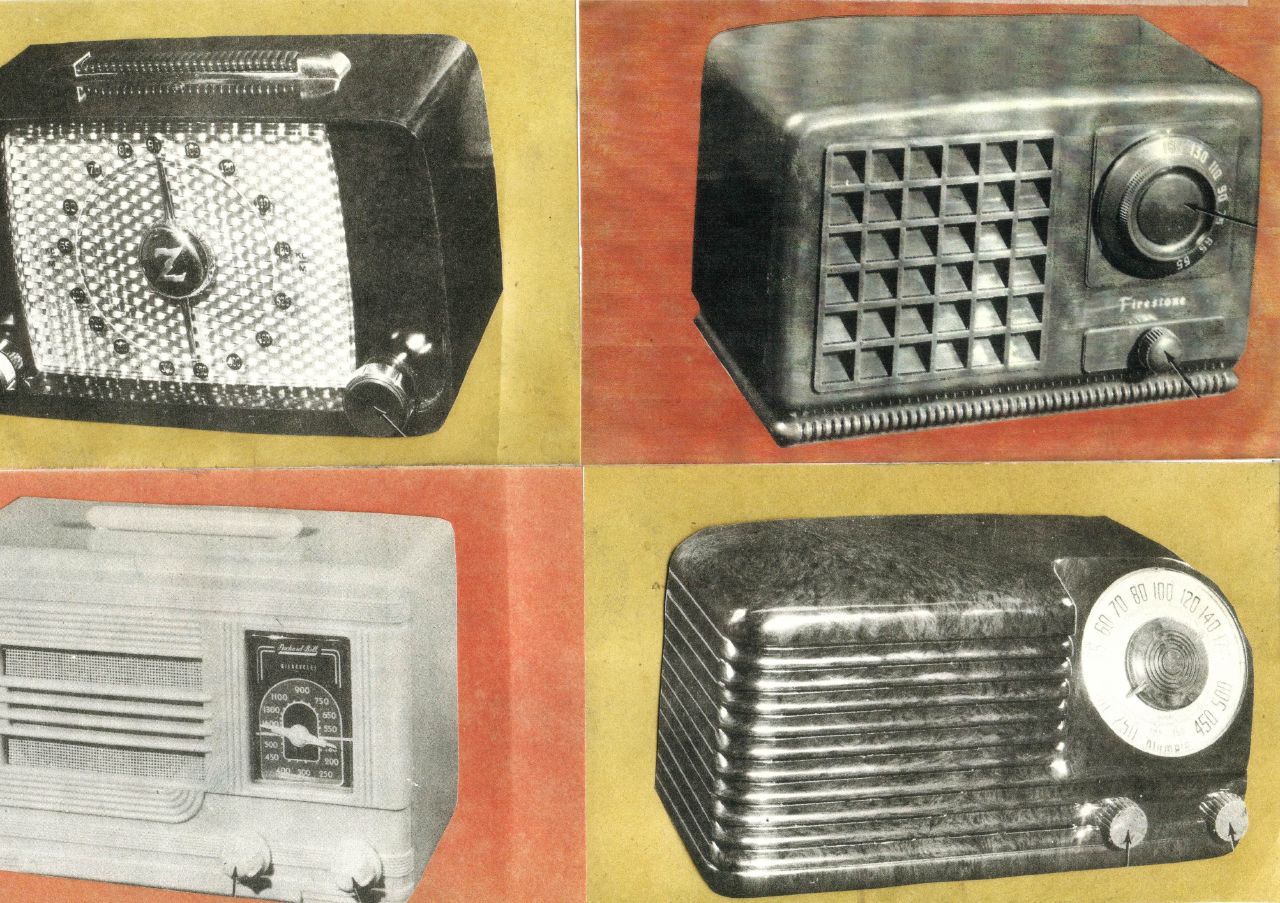
Artwork: “Dead Man’s Shoes” and “Radio chess grid,” by Jeff Kallet
 New Ohio Review