Widowhood (with Clouds and Fish)

By Bridget Bell
Featured Art: “Two of a Kind” by Ana Prundaru

The next morning, the sky stitches itself back
into its routine arrangement of blue, and this,
too, is a type 

of betrayal. The absurd nonchalance of
cumulus clouds. Their fluff a fuck you of
evaporated rain, and how dare 

the bluegill gather in the dock’s shadow, dumb
mouths falling open and closed, with something
like blood in the seams 

of their gills. And there, too, in the lake’s reflection, those ridiculous
clouds, so the slim fish bodies flash through the water and sky, flaunting
their life from every visible angle.


Read More

Wilt

By Kathleen Rooney
Featured Art: “Spring Returns and So Do I” by Leo Arkus

Usages tilt and words can wither, but they don’t get torn down like buildings do. 

O archaic present tense second-person singular of will, of what wilt thy obsolescence consist? 

To lose turgor from lack of water. To become limp or to languish. O language, if thou wilt not do as I insist, I shall shrivel and droop out of dry brown anguish. 

Words whose referents no longer exist—place them in a room painted pale museum green, cool and clean, a calming space, filled with monstera, dieffenbachia, and schefflera, their leaves a-flap like floppy disks. 

Modern humans suffer from what botanists call plant blindness, moving through life insensate to vegetation, failing to recognize plants at all other than something we might eat. 

“Salad bar” originates in 1940 in American English, “fern bar” in the late 1960s. Do lettuce leaves look more appealing behind sneezeguards? Do ferns thrive in light cast by ersatz Tiffany lamps? 

The flowers upturn their ferocious faces. Would that I could catch what I need from the sky. 

Wilt Chamberlain’s full first name was “Wilton,” but his high school classmates called him “Wilt the Stilt.” Seven-foot-one is tall, but that’s nothing to a tree. He claimed to have had sex with over 20,000 women (despite being “shy”). You’d never catch a tree trying to brag about that. 

At my elementary school, we put on A Midsummer Night’s Dream, abridged considerably. I laughed backstage at my friend Bryn, playing Bottom, declaiming at Titania: “Out of this wood do not desire to go. / Thou shalt remain here whether thou wilt or no.” 

WILT as acronym—What I’m Listening To: Mort Garson’s 1976 album Mother Earth’s Plantasia: “warm earth music for plants . . . and the people who love them.” Soothing, tuneful Moog instrumentals. 

Unlike certain humans I could name, no plant has ever said anything to spoil my mood. 

What’s happening down there beneath the soil? Calibrate your sense of time to plant growth. 

The dreams of plants unfurl with the slow force of a thousand forests. 

In The Brothers Karamazov, Dostoevsky writes, “The centripetal force on our planet is still fearfully strong, Alyosha. I have a longing for life, and I go on living in spite of logic. Though I may not believe in the order of the universe, yet I love the sticky little leaves as they open in spring.”

Irish Nocturne

By Derek Jon Dickinson
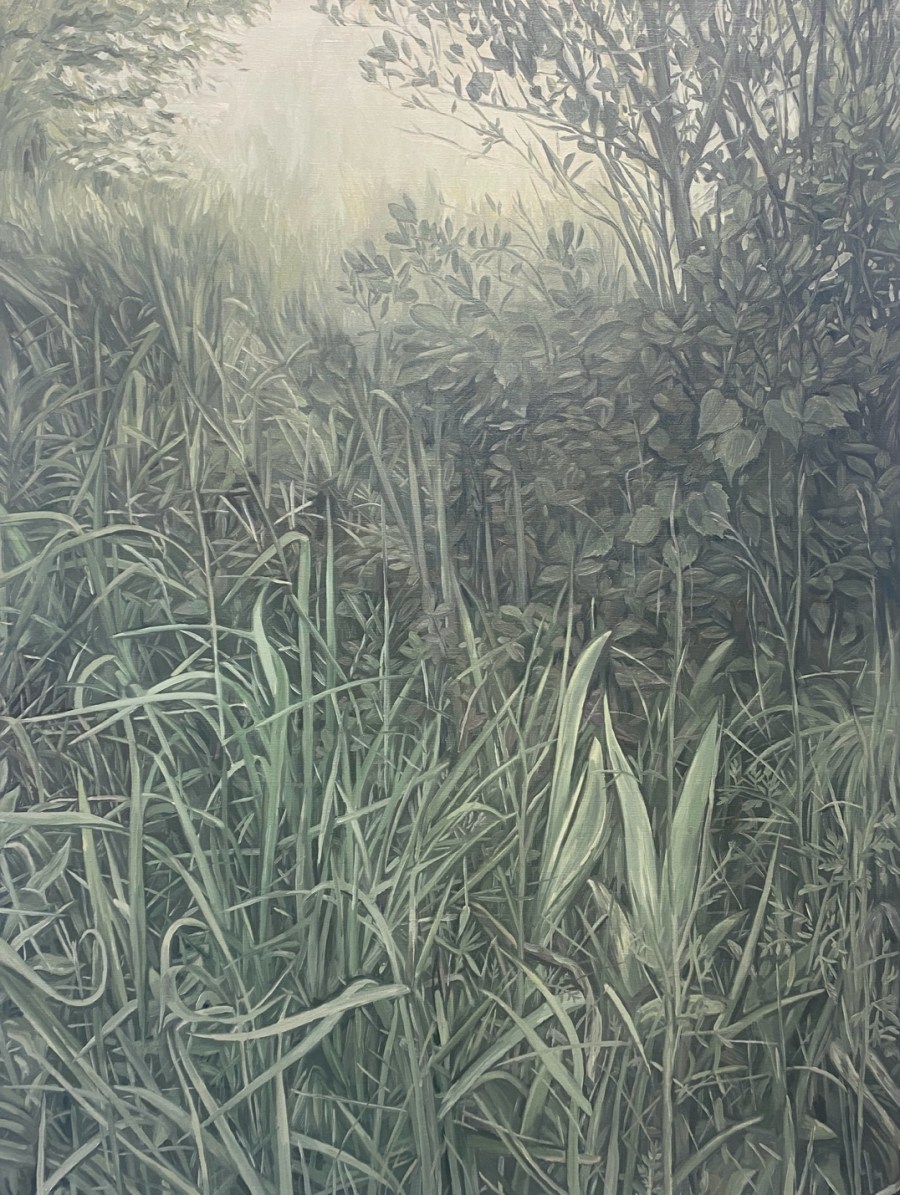
Featured Art: “Grass Pathway” by Madelyn Bartolone

I lift myself, pinch my hat, splash some coins against my debt. Crusts of dried swallows in the emptied pint-glass. Outside, the moon is a wooden button through its slit of Gaelic wool. The pub is a cask of fermenting voices, windows oily with yellow light; night melting inside me, like a given kiss, or warm wobble of whiskey. South—my soles scuffed with work, clicking the dew-glistening cobble, the brook-straddling bridge; water, fragile as flute-glass, tinkling the stone sluice. Moonlight stitching the fraying salmon; lidless eyes, cold as premonition; tails pulsing like sunken sails. The coming car-light snips me like scissors from the black pitch night, its red taillights trailing-off as errant sparks. Home—wafts of sweet peat-smoke, a tune rolling around like a marble in my mouth. With sun-chipped hands, I work the turf-stove’s iron latch; strip-off my clothes, naked as a wet salmon, strumming the sheets upstream; thumb denting the clay slab of my wife’s hip. 


Read More

Elegy

By S.J. Stover

In my dream they want to wash you, 
lather you up and rinse away  
all grit, all gravel gathered  
in the quick of your claws, 
brush the dust, the dirt  
from your fur, snip off 
the prickles, pluck the brambles  
tangled in the black of your belly,  
sweep the violets violently from your ears.  

But you— 
wolf-minded ever— 
slip their grip, dive tooth first 
into the woods’ waking whoop, 
your brain’s blue furnace  
alive, alight 
with the genius of your idea:  

to weld yourself to the world’s wild welter— 
to burrow, frog-mad, 
in morning’s muddy unending,  
cling deathless, tough as kudzu,  
to hours, minutes, days—  
a tick on the skin of time.  

Dew-footed you fly 
through thick and thistle,  
to chase the needle-eyed dawn— 
you the burr, life the fur. 


Read More

Ichetucknee

By J.D. McGee

Featured Art: Stephen Reichert, Untitled, 2013-2014. Oil on canvas, 12″ x 12″. “Cirlce” series.

Archaeological exploration has discovered the site of a 17th century Spanish mission, San Martin de Timucua, next to a short tributary connecting Fig Springs to the Ichetucknee River.
Florida Dept. of State

i.
In needy dawn’s tabula rasa, shred
through breaches in the birch like candleflame
refracted, flung through flashed glass and calms,
as Ichetucknee disrobes habits of mist,
I splash the slim canoe, a floating pew.

The mind creates liturgical vestments;
they vex, featherless chicks pecking for feed.
A broken heart paddles strangely: it bleeds
blood, needs blood. It begs, a feckless and cracked
flask that prays for shape of spring water

ii.
Although the spring is just a thing. It flows
from aquifer, hyaline through bedrock pits.
The parable of trees on the banks preach the chase
of sun and soil; the verse of dragonflies
incants the atom need to procreate and feed.

If it was only just the heron’s sweep,
the otter’s slip, indignant turtle glare,
quiescent flow, supplicant fawn and doe.
This hush, is it within or without me?
Is it scrub jay songs or songs of myself?

iii.
We sat in plastic circles, yellow rooms,
desperate to deserve salvation, told
to find a Higher Power. Fine. But, God,
what grace for nicotine thumbs, DT feet?
Alone, breakfast:
       I once was lost but now

Am found.
    They sang in church when I was young.
Was the hymn an echo, my voice right now,
or welled from other springs? A coffee trick,
perhaps, compelled halation through the blinds,
wrought mosaics inlaid with my cracked glass.

iv.
It may be how, like mouths open to pray,
the stream invokes river, or a wood stork
sainting; it may have been the want of me,
the open wound or suckling, skies precise
and rare as sapphire, oak monk robes of moss.

It may have been wonder, childlike awe,
primordial immanence in my tear ducts;
or, maybe just the child who needs to know,
who breathes dreaming into the world he floats.

What befell may have already been there:
in my bowels, in clear imagined depths
where mullet twine like a child’s friendship braid.
The child’s ease for tears: it may be these springs
are my tears, maybe the tears of angels;

maybe, there is no other god for me.

v.
If I could speak, articulate, shape words;
or, I’m just cursed, repeating all I’ve heard,
a mouthpiece forever, slowed to stone and root.
What self beyond reflection? Stare and yearn,
burnt and burning, to waste away and drown?

I fall into the mirror, the boreal shock,
and deep in the headspring’s gaped mouth I see
a blackness stretched back, but a rush of life,
flawless as the first breath, sharp as a spring sunrise,
bored into bedrock, black, back, the spring of myself.


Read More

Landscape with the Fall of Icarus

By Susan Cohen

Featured Art: Stephen Reichert, Untitled, 2012. Oil on canvas, 12″ x 12″. “Cirlce” series.

       after Brueghel the Elder and W.H. Auden

We know what the father did,
aimed too high.

And the son dared too much,
while the ploughman and his stout horse
just got on with business.

But what about the ocean,
Brueghel’s dull green sea, spread
flat as a bolt of fabric?

A few spits of foam
around the boy who cannonballed
headfirst, legs askew,
poor zapped mosquito. A shrug
of polite ripples
and the water takes him in
without the protest of a splash—
Brueghel’s brush applied like a narcotic
to smooth the waves.

They did get it wrong
sometimes, the masters.
Even a painted ocean
can only take so much.

We know now what our ambition
does to seascapes—empties them
of coral and of coho,
fills them with glacial melt
and sends the waters raging.


Read More

Of A Million Earths

By Susan Browne

One million earths could fit inside the sun
The thought of a million earths

makes me want to be a bee falling asleep inside a flower
It’s a fact: sometimes while gathering nectar bees get tired

& put their three pairs of legs over their five eyes
to block the sun which is halfway through its journey

of ten billion years
My mother loved sunsets at the beach

I remember once in Santa Barbara
our chairs close together on the sand

There’s no way to fact-check this
or that we chewed Juicy Fruit gum

& talked about things we’d never shared before
or that I kept looking at the freckles

on her knees because they made me
feel peaceful as a bee dreaming inside a dahlia

A billion years since that day with my mother
or seems like it

Her middle name was Marie
I brought a boombox to the church to play Ave Maria

A cold morning although the sun was shining
on the only known planet in the universe where life exists.


Read More

In the Midst of It

By Gregory Djanikian

Featured Art: “Titania Dreaming” by Mateo Galvano

The woodpeckers are making holes
in the eaves of my house,
destroying some small part of it
while I count the wood chips
falling from the sky.

Isn’t it lovely that the natural world
can be so companionable,
keeping me frazzled and deeply alert?

Yesterday afternoon, the sky turned gray
as if it were going to thunder and rain
though it never did,
what a turnaround.

Sometimes it’s all you need,
a little reprieve, a surprise
to make you think
it’s not all ruthless
even as the shots ring out
in the heart of the city.

It’s the life we’re given
the pulpit managers say,
some of us having more life than others.

The woodpeckers are still at it,
doing what they are born to do
and I’m throwing tennis balls at them,
I’m squirting a jet stream
of water from my hose.

They disappear, then cheerfully come back.
There’s no manual that says
everything will stay as it is.

Look at the sky.
It’s as clear as day.

In another hour,
I might have to bolt the doors and windows
against the hurricane onrush of all that keeps me weathering away

from those long expansive afternoons
when I was young
and the wind was a feather in my hair.


Read More

The Cardinal

By Billy Collins

They say a child might grow up to be an artist
if his sandcastle means nothing
until he brings his mother over for a look.

I’m that way with my wife.
Little things that happen don’t mean much
until I report back from the front.

I ran into Rick from the gift shop.
The post office flag is at half-mast.
I counted the cars on a freight train.

Who else in the world would put up
with such froth before it dissolves in the surf?

But early this morning
while I was alone in the pool,
a Vatican-red cardinal flashed down
from the big magnolia
and landed on the deck
right next to where I was standing in the water.

Here was an event worth mentioning,
but I decided that I would keep this one to myself.
I alone would harbor and possess it.

Then I went back to watching the bird
pecking now at the edge of the garden
with the usual swivel-headed wariness of a bird.

I was an unobserved observer
of this private moment,
with only my head above the water,
at very close range for man and bird,
considering my large head and lack of feathers.

A sudden rustling in the magnolia
revealed the vigilant gray-and-pink female,
the mate with whom he shared his life,

but I wouldn’t share this with my wife,
not in the kitchen or in bed,
nor would I disclose it as she made toast
or worked the Sunday crossword.
Indeed, I would take the two cardinals to my grave.

It was just then that she appeared
in a billowing yellow nightgown
carrying two steaming cups of coffee,
and before she could hand one to me,
of course, I began to tell her all about the cardinals,

he pecking in the garden,
she flitting from branch to branch in the tree,
as if we were the male and female birds,
she with the coffee and me in the pool,

leaving me to make sure I divulged
every aspect of the experience,
including the foolish part
about my plan to keep it all a secret,
and that really dumb thing about the grave.


Read More

Keats

By Robert Cording

After my son died in October, I lived
with Keats’ Autumn in my head—
not the relish of lingering summer warmth
in mid-fall, but his one-line imperative:
Think not of the songs of spring.
I watched summer’s hummingbirds
fly off, then the gold of finches turn
dull green. But I couldn’t live with
the music of fall. I heard only those
first words—think not—which I did very well.
How much more Keats had demanded
of himself. And how many more falls I had
yet to undergo before I could hear,
just outside my door, hedge crickets sing.


Read More

Driveway Toad

By Rob Cording

A year after my brother died,
I told my daughter about
the toad that once lived
in the hollowed-out knot
of an apple tree
in the center of my childhood
driveway. My brothers and I
liked to visit it after school,
but the tree came down
in a snowstorm, and my parents
graveled-over that spot.
When my daughter
asked what happened
to the toad, I explained that
it probably moved
under a rock, or to the woodpile
along the side of the house. “Or,”
she responded, “it died.”
Then, she skipped into the house
and left me outside.


Read More

Old Black Water

By Dion O’Reilly

Suzie, I want to tell you
how frequently I pass the apartment
behind the supermarket
where we street-danced
to the Doobie Brothers,

light shifting as the fog
lifted, front-yard roses
iridescent in the salt-gray
seaside morning.

You died, what, ten years ago?
Not at once, really, though pills
took you quickly. It began, I think,
when we were children: without
knowing why, we wanted out

of that rural beauty—the narrow
valley and gleaming stream,
summers spent diving off
crumbling cliffs, as if nearness
to death was the closest
we came to leaving

your stepdad’s beery fingers,
my Mother who loved
to touch the sweaty chests
of her daughters’ teenage lovers.

Nowadays, everything
is a different kind of dangerous:
rain stays away. June mist
sucks away too soon,
sunlight breaks through
before it should.

What I want to say, Suzie,
is a moment, gone
fifty years, is just a moment,
but you’re still here, unfleshed
in brightness—elfin, jittery, wan—

our arms looped as we turn
tight circles, round and round,
your eyes locked on mine.


Read More

Tree Service

By Ted Kooser

Featured Art: “White Deer” by Amy Nichols, Scott Brooks, and Wendy Minor Viny (Passion Works Studio)

But for the big empty section of sky
that he pieces together, branch by branch,
building a forever of light, his work
is all disassembly, in deafening noise,
today from a cup at the end of a boom
that bounces a little, swinging this way
and that as if trying to catch water
dripping out of a ceiling. He’s taking
apart, from the top down, a sick sixty-foot
ash, first cutting away its outer parts,
feather-light as they fall, each reaching
as if to high-five the branches below,
a helper picking them up by their ends
and dragging them to a big gluttonous
chipper that drags them in, screaming
and flailing. Bobbing lower and lower,
the man in the cup, his saw buzzing,
leans out to unstack the heavy spools
of the trunk, reaching to tip them away
to drop with an emphatic thunk
on the litter of twigs and dead leaves
on the lawn, the cup bouncing lower
and lower, spool after spool, the boom
telescoping back into itself and then
finding its place on top of the truck,
as now he climbs out, lifting one leg
then the other, both whole and unsevered,
and backs down the steps, stretches,
pulls off his gloves in the vast silence
that, suddenly, everything’s part of,
those few of us watching feeling as if
we’ve taken too deep a breath of the sky.


Read More

Transitioning Glasses 

By Lauren Camp

Featured Art by Mitzi Klaiber

When I come in after shoveling
that last round of snow—an exquisite parliament
of low-slung brightness
even in its groaning down toward the ground,
I see my sister
has texted QUICK
THING. So easy to send such airy
unplanned balloons. The ordinary
flakes saunter down, will not let go, the white
weather not yet leaving its filthy
will with car tracks and time. I am her
shelter. The snow falls as spheres.
I like being inside now watching it.
I think of the weight of it, the pile-up
as it further neatens. The white at its best
is a blur. My eyesight is off. It has been two years
and seven months since I peered
through one of those devices that brush
eyelashes. I haven’t heard a doctor
circle those disks and ask this one
or that one, this one or that. What I see
is another day, the wind sucking about.
A coyote walks behind the junipers
And now its shadow has become an action.
The snow comes down, side by side.
I am hardly paying attention;
my eye no longer holds what it touches.
There is so much noise in life.
As children, my sister and I played tag
during sermons. I could go on
about how her notes bother me.
The snowflakes are an arm’s length off.
It could be the only thing I do:
answering her, filling the white void
in my hand. Everything comes from further up.
When I respond I can talk now,
I am saying no one realizes
love without feeling this urgency. 


Read More

In Which I Compare My Brain Surgery to a Slope Mine

By Evan Gurney

Featured Art by Greg Rounds

Mine and mill have done their work,
the ridge face once lush with fir
and poplar now cleared of airy timber,
the brow slashed and bored, a strip
of railroad curling like a scar up
the mountain to the excavation’s cavity,
sealed now but still marking its territory,
still leaving its lasting impression.

Hidden from sight, a subterranean labyrinth
of crosscuts line like stitches the shaft
that slopes down and in through folds
and plunges to the precious stope
that engineers surveyed, prospected,
and, finally, removed entire, hoisting out
the bituminous ore, leaving behind a sump
that time and age will fill once more.


Read More

Leave rocks here

By Georgina McKay Lodge

Featured Art by Glenna Parry

Annoyed at rocks
in shoes
in laundry
in little piles at dinner,
she has placed a box
in the hall.

            -> Leave rocks here

Hold my rock,
her son says
when they are out,
and squats down
to select another.

            Be my rock

The smooth
pebbles,
dove-colored,
worn to wisdom,
she will gladly
carry home, but

his favorite find is
the jagged
saw-toothed
ugly rock,

scraped knee
stung by a bee
broken-armed
heart-choked rock.

Of course
she will carry that one too;
to the end of the world
she would carry it.


Read More

What It Looks Like

By Emily Wheeler

Featured Art by Glenna Parry

Returning from emptying 
compost out back,
I’m stopped 
by a praying mantis.
Don’t you look fabulous,

I hear my mother’s voice,
Dressed to kill and
to blend in, with just
a flash of emerald 
on your lower wing. 

I hear her say, 
Your feelers, are they new,
or are you parting 
them differently?  
Also, great figure!

I see her swooning
over its eyes that pop 
without any makeup,
and the way its face 
comes to a point 

at its delicate chin: 
really quite special.
To me, the mantis 
just stares, nods, 
possibly politely.

My mother appreciates
many kinds of beauty
and the bug’s elegant 
plus alluring look
but I know

its brown egg sac 
is hard as cement to protect 
the eggs from heat, cold, 
even the occasional maternal 
appetite for its young.


Read More

Horses in a Field

By Emily Blair

I am reading my book manuscript to my mother
in her backyard. She tells me that was probably a catbird
I saw earlier. She tells me bleach is the real way
to get stains out of grout. The narrative urge is a strong one,
she says. She had an invisible horse, but never said
she wanted to be one. On that last point, we disagree.
Perhaps it was only a feeling I had
when we were watching horses in a field. That blurring of beings.
Like the colors in a Vuillard painting. A dress turning into
a table or an orchard. My college painting teacher said edges
are important, but never explained how best to create them.
I wanted us to be old ladies together, I say to my mother,
meaning me and her. Now we know it isn’t going to happen.
But she says she was dreading it—she didn’t want to be here
to see me grow old. We decide death comes too soon,
in the second section of my manuscript—
And speaking of death, how can the deck chair cushions
still have a cat hair side, I ask her,
now that the cats have been dead for years.
Because we’re disgusting old people, she replies
with a laugh, meaning herself and my stepfather.
Though the truth is I’m the sloppy one. This redbud tree
is a new redbud tree and I didn’t even notice.
I didn’t notice the new flowers she potted either, lined up
with their brilliant blossoms, waiting
to be put on the front porch. It’s all one to me:
the backyard, the flowers, my mother, me.
How can any of it exist without the rest?
We agree that I’ve written too many poems,
and they don’t go together.


Read More

Twenty-pound flower

By Mike Santora

Featured Art: I Will Be Gone, But Not Forever by John Sabraw

O Rafflesia, why so down
in the canopy?
Let’s see anything else
toil for nine months
in the Sumatran jungle and come out
smelling like a rose.
You, cater the tree shrew cotillion.
Just ask the sly monks in Thailand.
Whether your medicine is gospel
can be argued in a lab until
pencils snap,
but in peninsular Malaysia,
you clot the bloodbath
after another girl handles
a birth by herself.                        
           Where were the roses then?
I know that I am petal-less
but what are you doing
for the next Millenia?
You could have me,
if you’d have me.
After I’ve died,
you can attach yourself to my breast.
I’d like to wear my last parasite
on the outside, like a corsage.    
   Or is it that you
       are wearing me,
               and it’s my turn
to live something
              like a flower?


Read More

Garage sale bible opened to the Book of Genesis

By Mike Santora

But for me it’s on the swelling
lip of Lake Maracaibo,
in an august before Augusts
where the old lightning
astonished the coast
and made us.

You and me and the New World
warblers, the tyrant flycatchers,
and all lucky thirteen species
of true vireos.

Yesterday, they sang
that it’s okay,
it’s okay.
Grief and grind are so close
in soul and bones.
And as they sang
the rain was just the earth
reading our alluvial fortune.
Look at us, so confident
in our station —
young diamonds in Islay,
unworked Spanish jet.


Read More

I Want to Explain

By Justin Rigamonti

how it felt to see the city worker
sawing off her branches, though

pronouns aren’t the way. Not her
not bound by any human

construct. How alien they
seem to us, anyone who stands

outside our understanding. Except
she didn’t, the willow, flanked

as she was by two soaring columns
of our city’s green steel bridge.

But even green is construct—as if one word
could capture both bridge

and the luster of her leaves.
A single strand still clings to the human

discourse she endangered when
wind-weary, rain-weary, addled

by the warming climate, she tipped
into electrical wires. I wish

I’d been there in the dark. I wish
I’d stood with her between the cold

pillars and pressed my hands against
time. Told the soil to keep on

holding. Told the wind 
to stop for a moment, or blow 

backwards. But the wind can’t
hear me, can’t understand,

and you might never feel 
what I felt about her personhood.

That she was a person—as much
as you or me or the dog

sprawled out between my feet.
Our world is made of people,

and why not her? Not her, no—
but there she was, every night 

for over sixty years, lifting her 
desires like a feathered lantern:

more light and dark, more rain and sun, 
more sparrows, robins, 

people in her branches.


Read More

Scavengers

By Mark Neely

I could do without these turkey buzzards
hunched like crash victims
                      on the water tower’s whitewashed railing

                                                       red skulls

             poking from the ratty blankets
             of their wings. A county over

two taxidermied buzzards hang
from another tower. Their sickly talons
sway in the breeze—

            the only thing we’ve found that really works
            says the mayor in the local paper.

September. Heat rises in shimmery waves
from the asphalt. The black holes of their eyes
trail me as I sweat through a sluggish run.
They don’t stir, don’t so much as turn their heads.

                                    A few frayed feathers shiver against the sky.

                                                Remember newspapers? They were useful
                                                when we lived with the delusion
                                                we might need each other—under city
                                                bridges the destitute spread
                                                them over heating grates.

             I’m guessing water towers will last longer
             and vultures, who only eat the dead. I read somewhere
             their stomach acids allow them to ingest
             meat so rotten it would kill another animal. Like poets

                                                 I said, though no one else was there.

I’m always reading things, storing them away
for later. I’m always
chasing down my youth. So far he’s unimpressed.
He prances along in sleek shoes, pays me about as much
mind as groups of jostling teenagers pay me on the street.

             I fear these old birds
             have a thing or two to say, like grandmothers
             warbling behind screen doors. One drops

                                    flaps twice, rides a thermal
                                    traces three wobbly ovals
                                    over the train tracks where the road crumbles
                                    into gravel. I remember the lines
                                    from “At the Fishhouses,” about the seal who visits

                                                       evening after evening

              a playful opening
              in the vast, inhospitable sea.

              He shrugs off Bishop’s silly hymns, vanishes,
              reemerges elsewhere, making it clear
              he’s in his element. Here

streets run down toward the river, houses shrink
their porches falling in
until they finally collapse. My buzzard veers
over the dog groomer’s, the green-shingled nursing home
the Bahá’í temple—no more than a rundown ranch house—
then swoops high above the dentist’s billboard, a fearsome maw
of gleaming teeth. Earlier, Son House came on the radio:

                        woke up this morning feeling so sick and bad
                        thinking ‘bout the good times I once had had

I could see him banging his foot
on the juke joint floor, then withering
in a seedy hospital.

                                           Well, we got that over with,
                                           my mother-in-law likes to say
                                           after the parade winds down
                                           or the last guest pulls away.

You like to run? she asked me once, baffled
by any exercise that isn’t useful. I like to have run
I answered, stealing a line from a novelist I heard once, talking
about his labors, the endless straining for the right word

as opposed to the almost right one, which Mark Twain said
was the difference between the lightning bug
and the lighting. A few cars flash in the distance
as I cross over onto the greenway, a gray path
winding along the river like Ariadne’s thread—

                                    she helped a man who didn’t love her
                                    find his way. Sound familiar?

              Sometimes I catch myself
              wishing the day would end. Or try to leap
              whole years, even as they spool away.

                                             We used to call this human nature.

Bishop thought of knowledge
as a kind of suffering
a dark expanse
we can only skirt the edges of…

                                    Inside the tower’s globe, an ocean
                                    waits for another emergency—
                                    metallic, unthinkably heavy
                                                        drawn impossibly into the sky.

            One morning I watched three buzzards
            huddled by the road, tearing at the pink entrails of a possum
            knocked into the ditch as it scuttled through the night.

                                                Curious, bathed in blood
                                                incapable of mercy, they bowed like monks
                                                over the body.

As they tore at the animal, one fixed me
in her stare.

                                   Look here, she seemed to say.

            I wanted to conflate carrion
            and carry, to imagine an airy chariot
            ascending from the corpse.


A delivery truck rattled around the corner
and startled the birds into flight, where they joined the host
swirling above.

                                   Carnal, of course
                                   is the word I was looking for—


Read More
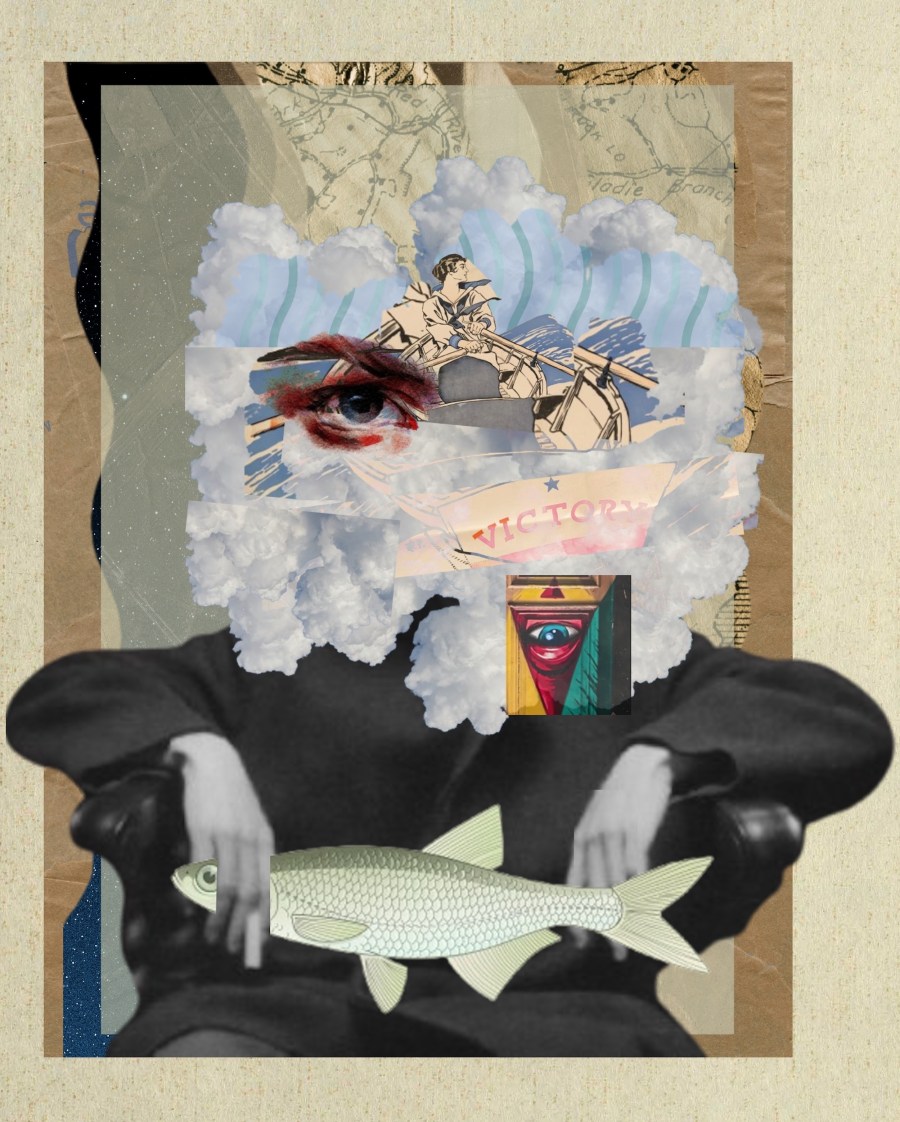
To Save a Life

Co-Winner of the Movable / New Ohio Review Writing Contest

by Kari Gunter-Seymour

Featured Art: Aperture, by John Schriner

We did what we could,
hid the bottles, drove what
was left of him deep
into the yawning hollow,
built a campfire, drank water
from a long-handled gourd,
a galvanized bucket.

We set up tents for triage,
counted his breaths, worried
over irregular heartbeats,
sweats, persistent vomiting,
his jacked up adrenal system.

We waited. Listened for a canvas
zipper in the night, each long slow
pull a call to duty, our legs folding
over duct taped camp stools,
tucked tight around the fire,
his gut-punch stories, stenched
in blood and munitions,
overpowering the woodsmoke’s
curling carbons.

Read More

The Natural World

by Chris Crockett

Featured Art: Cosmic Eye, by John Schriner

The moon rises
to the left of the kitchen sink.

I go outside to check on
the world’s artistry:

Moths and stars;
bats whose blind ping-pings

pinpoint insects,
accurate as an adding machine.

Horses are head down in the soup
of flooded grass fields;

All day long
they solve their hunger.

Everything partners and trades
nutrients. Billions

unseen in the black roots.
Inaudible hum.

My fingers keep time
to a barely comprehended

background beat.


Read More
Evergreen Oak

By Marie-Claire Bancquart
Translated from French by Claire Eder and Marie Moulin-Salles

Standing before these thick trunks that sow our wrinkles
in windbreak

standing before these leaves that persist
in the fuzzy gray-green of a caterpillar
complementary to our bloods

I uprise a contradictory forest

A tree
where the cool flow of water would saturate the sap
with a transience that we would find habitable.

I invent a species:
the short-lived live oak
so pleasing to say, it must exist somewhere.

Read More
What We Did at the End of the World

By Sunni Brown Wilkinson

We played charades to words we’d forgotten. We made a fire of them with our hands.
We wrote songs on the piano, gave them names like “Fox and Mouse” and “Lightning Chase.”
We watched our parakeets dance in front of their tiny yellow-framed mirror.
We watched them sleep, three on a perch, with their quick beaks tucked in.
We made bread. The top cracked open and we peeled it back and spread butter on
and ate it. We didn’t wear shoes. We wrapped ourselves in scarves.
We opened birthday cards to listen to the music hiding
behind the plastic button. We opened and closed, opened and closed until the songs grew tinny.
We gathered snail shells from the garden. 47. We saw one naked at the base of the daisies.
We made music with ice and water and glasses. We hummed under the covers at night.
We waved tree branches like arms. We waved at the stars. We waved at our silent neighbors.
We taped song lyrics to doors. We swept the fuzz from the rugs
into piles of gray hair. We lifted them carefully when they huddled together like a nest.
We listened at the door of an uncracked egg.
We watched the quail scurry across the street, that one feather on their heads quivering
in the wind like the feathers of great ladies in the movies we watched at night.
We dreamed of the sea untangling its wide blue braids.
We opened our mouths in the morning and salt leaked out.
We called each other dear and laughed at words like rudbeckia. We planted
rudbeckia. We danced like it. We wore yellow too.
Just before we flew away, we were mirrors. That deep. That true.


Read More

Reading the Ancients

By Matthew Tuckner

What Sappho calls 
the desiremind or the couragesoul  
I call the swirling Chesapeake Bay 
of my brain and sure
you could call the tugboat 
trawling through the brackish waters 
desire and yes 
you could call the striped bass 
sourcing speed from the tugboat’s wake 
courage and sure 
you could call the crushed beer can 
scything the surf the mind and yes
the soul looks like a blue crab
when I close my eyes to picture it 
aquamarine claw    olive-green shell
I can’t quite place 
the bird tipping its beak into the bay
to capture an absent worm 
absent because fields 
of eelgrass are emptied daily 
by giant pesticidal blooms 
heaps of dead fish 
falling upwards
towards the surface 
but in placing the bird
a red knot    a piping plover
one could easily mistake it for 
the faculties of the soul 
particularly the appetites
so many Plato doesn’t even bother
to tally them though he does
warn of their penchant for battle
the appetites who are hard to see 
when they stand still 
like the piping plover for whom 
they are often mistaken 
yes I’ve been out combing
the waters for a new bird 
one whose bright rusty throat 
and striped back better represent
those flightier emotions
not even Sappho 
has the words for 
is it the tundra swan 
with ass upended and neck submerged
searching for the eelgrass
that isn’t there 
the tundra swan that birdwatchers 
who don’t know better
call suicidal ideation 
maybe the tawny-throated dotterel
is the one for me 
if I cover my left eye 
and squint my right the bird looks like 
the dysmorphia that keeps me 
out of the view of most mirrors
just look at this dotterel
can’t you see the pointed beak
that just screams 
I want to be your worst best friend
a voice that sings
come breach that little bay
of yours come tie the sky together with
us birds a pointed beak that’s just dying 
to be the Orpheus
to your Eurydice the kind of bird
that wants to kickstart
your katabasis a word
that if I’m reading the Greek correctly
can be widely defined as a descent 
of any kind such as moving downhill 
the sinking of the sun
a military retreat 
clinical depression
a trip to the underworld
or a journey to the coast


Read More
Virginity

By Zuzanna Ginczanka
Translated from the Polish by Joanna Trzeciak Huss

Featured Image: Untitled by Tanner Pearson

We…
A frenzy of hazel trees, disheveled by rain,
a scented nutty buttery crush.
Cows give birth in the humid air
in barns, blazing like stars.
O, ripe currants and lush grains
Sapid to overbrimming.
O, she-wolves feeding their young,
their eyes sweet like lilies.
Sap drips like apiary honey.
Goat udders sag like pumpkins.
The white milk flows like eternity
in the temples of maternal bosoms.

And we…
…in cubes of peach wallpaper
like steel thermoses
hermetic beyond contemplation
entangled up to our necks in dresses
conduct
proper
conversations.


Read More

Process

By Zuzanna Ginczanka
Translated from the Polish by Joanna Trzeciak Huss

Featured Image: Untitled by Tanner Pearson

1
In the beginning was heaven and earth:
black tallow and blue oxygen—
and fawns
beside nimble stags
and God, soft, white as linen.

2
Cretaceous
Jurassic
Triassic
The earth layers in strata—
The Miocene advances by tank — a majestic conquest.
There is a separation between water
and the land of ferns and birches
—and God sees that it is good when Genesis dawns.
Nitrogen brews in magma,
magma congeals into rock
mountain
thrusts
upon mountain
in a thunderous, cosmic mounting
The Carboniferous enriches the earth with bituminous pulp.
—and He sees that it is good
for moist amphibians and stars.
Iron pulses like blood
Phosphorus hardens into tibia——
— and with singing air, God whistles into pipes of crater.

3
In the beginning was heaven and earth:
and fawn
and tawny stags
but then things took a different course:
and
flesh
was made
word.

4
Back then, a lone rhododendron trembled before a fragrant angel,
horsetails tall as New York creaked and clattered.
Now daisies wilt
in town squares
in Konin, Brest, and Równe
and at night
policemen
and their spouses
make love.


Read More

To Love Love the Beloved

By Rachel A. Hicks

Featured Image: Pride by Ellery Pollard

When I die, no fly will buzz,
no bird will crow, no man
will cry. Or maybe when I die,
every man will cry

and say, “There goes the love
of my life—a beauty—if only
she had known.” Women
will hate me stealing

their men’s hearts even in death,
for taking over their dinner conversations
after they’ve carefully prepared
the pink-orange ham loaf.

Forks & spoons—the men will swear
to see my eyes—my teeth will show
up in all the fine china. My legs prance
through the women’s heads

as they look at the octopus waving
its arms, wrapping its tentacles
around another. Dirty salt water
will turn red with their fury

as their husbands say, “She was such a beauty.
If only she had had eight arms.” A constellation
will form in the shape of my face & planets with
my thumbprints will be discovered.

When I die, don’t send me roses
because I am now the dirt, I am the plant,
I am the seed that sits in the crook of your skull, always
reminding you what it’s like to call a place home.


Read More

My Daughters Sometimes Dress as Ladybugs

By Brian Simoneau

Featured Image: Untitled by Tanner Pearson

and I hope they won’t
outgrow it—little heroes
flitting leaf to leaf
in their polka-dotted suits
of armor, their vicious
pursuit of the feasting
pest that destroys what
beauty these days still lives.


Read More

Futility

By Riley Kross

Featured art: Untitled by Sue-Yeon Ryu

                                          – for Fr. Daniel Logan

After the chainsaw, the priest
continued carving up

a small portion of the dogwood stump

with a chisel and pocketknife,

but being only a priest

and not a carpenter,

the task was beyond his expertise.

Still, he sweated and labored

and managed “by God’s grace”

(as priests are prone to say)

to fashion his own rough cross. Read More

On Seasons

By Christopher Nelson

Featured art: Untitled by Jesse Lee Kercheval

Late May, my favorite time. The false
gromwell glows at field edge, glows
at roadside, and my glowing little boy who holds
a bunch in his fist runs to bring me the gift.
It smells of wet dog—some call it donkey
weed because it smells like them too.
Dense, sort of spiraling, floppy bunch of
unopening blooms wherefrom each sealed
thin white spool protrudes a style like
a ghost moth’s tongue. Grace curve.
Flower-borne spike. I’ve never killed a man.
I haven’t broken a bone of my own or
that of another. Dirty green-white. Stiff-haired.
When my father jabbed a man in the face
at the ball field, his fist so fast,
nearly invisible, yet the man’s
ejected teeth went up into the night sky
and caught the halogen light
and pirouetted slow motion before
getting lost in the red infield dirt
and the general scuffle of men. Part of the
forget-me-not family. Read More

Why You’re Going to Eat That Pelican

By Jon Fischer

Your lunch at the French bistro was more essence

and foam and reduction than food, and that pelican

is the size of your remaining hunger.  He surely tastes

like the history of the sea and especially the doubloons

nestled in the sand in busted buccaneer sloops. Read More

The Time Traveller Chooses an Arrival Point

By Emily Blair

Featured Art: Yliaster (Paracelsus) by Marsden Hartley

Before it all goes wrong. Before the bell is rung. Before the ship has sailed.
Before the perfect storm begins to brew. Before the term perfect storm goes
viral. Before anything goes viral. Before the fall. Before the crash. After
effective sanitation, before Ronald Reagan. Before that sixth grade school
photo is taken. Before one friend’s accident, another’s illness. Before the first
massacre or environmental disaster. Before the first loss of liberty. Before
the prequels. Before the sequels. Before the remakes. Before guns. Definitely
before Columbus. After your son learns to say he loves you. After the
invention of childhood. Before the police state. Before the nation state. Before
the interstate. After modern medicine. After modern art. After animated GIFs.
After the discovery of fire, of penicillin, of Spandex. After you meet the love
of your life, but before you meet your first miserable boyfriend. After the
Internet, but before we become information. Before your cousin dies, before
your classmate dies, before anyone anywhere dies. It’s important to avoid your
grandfather, and also the Middle Ages. Remember the Nineties sucked, and
so did the Eighties. Maybe that moment when the dog stole pancakes off your
plate. Your parents laughing as the card table shook. Just after the Big Bang.


Read More

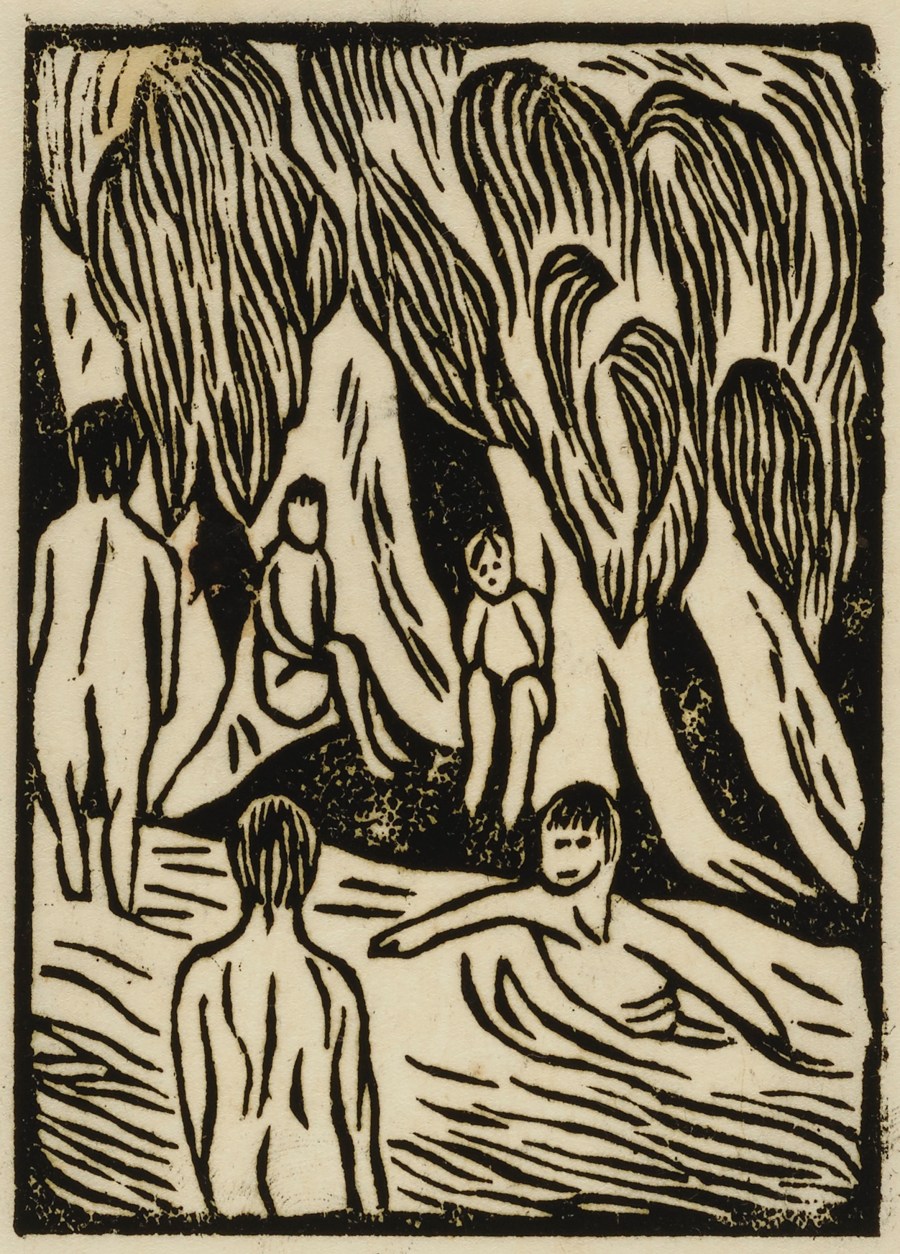
Invisible Bodies

By Aza Pace

Featured Art: (Children Swimming) by Unknown

Meanwhile, plastic particles
burrow in the Arctic snow

and in the sea’s deep trenches,
its legion bellies.

Meanwhile, a galaxy bursts
across my cervix—bad cells

someone will slice off
with electric wire as I sleep.

There is nothing untouched
in the whole furious world.

But the water today
in Galveston is blue,

with not a hint of tar.
In each wave, hermit crabs

and no bottle caps.
Babies in life jackets

tumble and squeal in the surf
while an older child bobs

out to the first sandbar
to fish. Meanwhile,

I think—I’m happy.
Under my tongue

sit the names of children
I will not make.

I roll them over and over
and love them.


Read More

(R)egret

By Danusha Laméris

I see the word egret, but read, instead,
                regret. A trick of the mind. Its reversals. One,
a white slash, rising from the marsh. The other

a stone, strapped to the heart. The way I’ve carried
                all the would-haves, all the ifs. Each alternate
exhausts. The egret wades in the dark water,

seeking fish. The heart, constancy. I doubt the egret
               has regrets. Hatch, fledge, breed, hunt.
And besides, a lovely name that comes from French.

“Aigrette,” for brush, after the long feathers
               that stream down its back. How do its legs,
bent reversed, move ahead? Who wouldn’t want

to walk like that? There are days I step
               outside my body, arise, fly over the field
of my life, and glimpse—not error—but river,

rock, and oak, a wide expanse. Here and there
               a meadow, dry grass dotted with—could
they be poppies?—some bright-blurred, orange flame.


Read More

The Elks at the Watering Hole

By Steve Myers

Sundays they’d meander down from surrounding hills
                                                                                                  to the watering hole
just south of French Creek, where it joins the Allegheny, maybe twenty,
thirty on a good day in summer, the fog in no hurry to lift off the river,
& if I were visiting,
                                 my father-in-law would take me along, because
this was the rhythm of Venango County men, week after week, season
on season, for the members who hadn’t lost wives to dementia, cancer,
or a cheating heart,
                                    a chance to get away from the women, bullshit, maybe
win some money in the big drawing,

                                                                 the Iron City flowing & Wild Turkey,
not yet noon, a thumb-flicked Zippo, cover clicking back, scratchy rachet
of the wheel, flame-sputter, flame, head bowing, a face
                                                                                                  sudden, illuminated,
the long fhhhhhhhhhhh, with smoke stream, & a story would begin:

an Army jeep bouncing into a bombed-out Rhineland town, & in an old church
cellar, great shattered wine casks, you drank as you sloshed through it, dark,
fuck-cold;
                   someone’s uncle down the Mon Valley, the Gold Gloves boxer
who lost an arm; a lieutenant’s first whorehouse.
                                                                                       That was the talk,
and everything was Eddie, almost whispered, a shibboleth:
duck boots, fly rods, the Eddie Bauer Ford Bronco—Elks Masonic
to the nth degree.

                                 Laugh, move among them, wear the flannel, stand them
a round—still, I carried the scent of a distant country. One slight shift
of wind & heads would lift, the circle tighten.


Read More

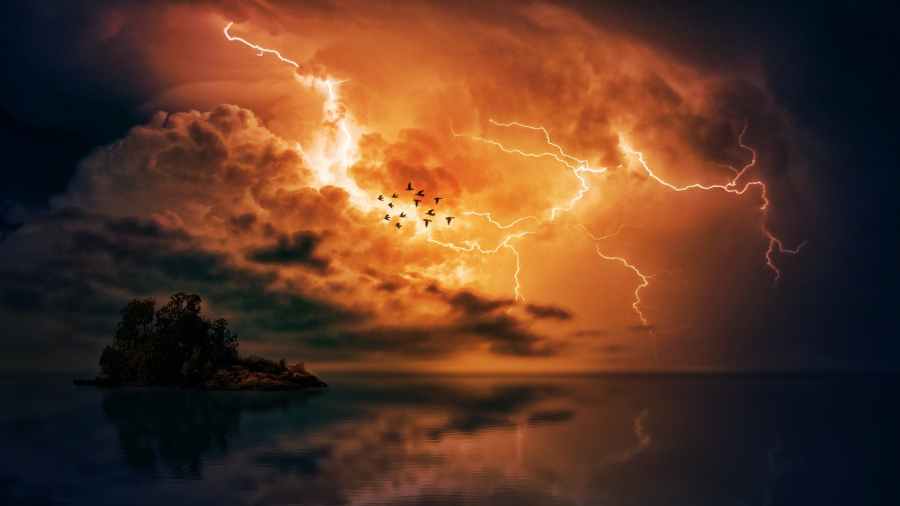
Fulminate

By Kimberly Johnson

Featured Art: Lightning coming from the Sky by Johannes Plenio

I saw you coming from a mile away,
               Thunder. You play
       Coy, sly your pretty in winks

Around the cumulus, but up close what colors
               You show, all shazam
       And tantrum while the Wham-bam

On the wireless crackles with static. What the swagger
               Are you after?
       Whose the heart you do not stagger

When you rattle through the bracken, knocking
               Branches at the casement?
       I betook me to the basement

When you batted first your lashes, flashed
               Your distant
       Dazzle—I’ve been whiplashed

By your type before: you come on easy
               But want me on my knees,
       Want to flutter my transformers

And shut off all my lights. You throw a glam show
               And then you blow
       Along to the next hapless,

Leaving blank fuzz across the radio dial—
               No tune, no storm
       Warning, no Thank you ma’am.


Read More

Fusion

By Kimberly Johnson

Featured Art: Water Bubbles by Pixabay

Oh, my quantum soul—restive, sizzling
               In its nimbus
       Of need. How it dizzies

In the orbit of another’s passing
               Fancy, fickle
       As it flirts its vacant shells

Hey there sexy fella can you fill
               My spinning empties
       With your any loose electrons?

How in relentless ciphers it scrawls
               On any bathroom wall
       My atomic number.

It is a light element, an errant
               Sphere with strong wants:
       Come Lover, let’s charge ourselves

A spark, a star, a dark and secret
               Supernova, let
       Us cleave ourselves: attract,

Repel, attract, repel, let us fall
               In common gravity,
       By which I mean love, and then fall

Out.


Read More

tree with ice, under amber light

By James Lineberger

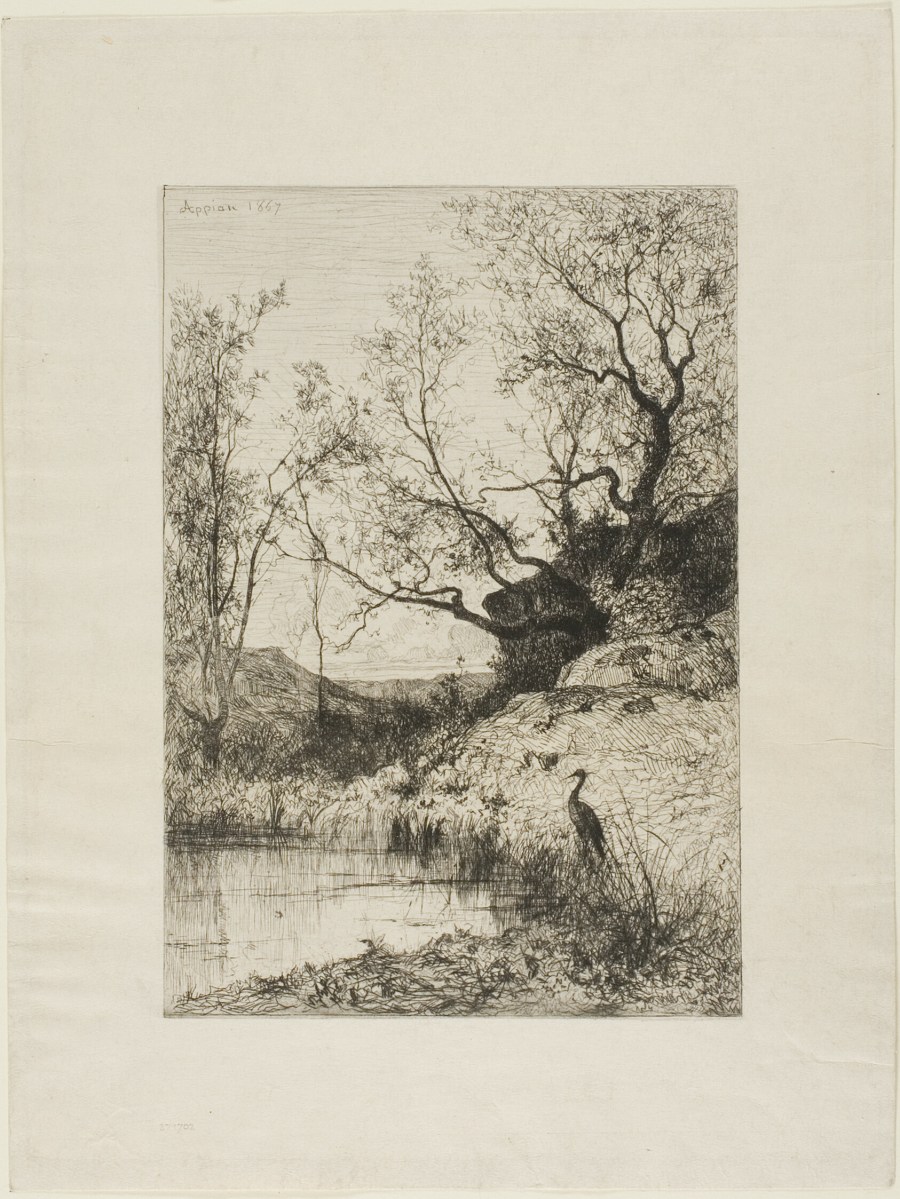
Featured Art: A Pond Near Rousillon by Adolphe Appian

it glows in frozen streaks
each of its feathered limbs curved gently upward
and i find myself pausing
at the edge of the drive
to stand very still in the needles of rain
as if anchored here too
stretching my arms overhead
like some arthritic unpainted mime
not because i need to make
a statement about anything
just that every now and then
like the silent unfolding wings of the tree
something stirs within me trying to say
it believes


Read More

North River Shad, c. 1910

By Lindsay Atnip

Featured Art: Green Fish About to Eat the Fish Hook Wall Art by The Lazy Artist Gallery

William Merritt Chase painted numerous versions of fish still
lifes, many of which were quickly purchased by museums across
the country. Because of the popularity of these works, the artist
worried that he would be remembered only “as a painter of fish.”
—placard, Art Institute of Chicago

The real thing rots. Corrupts,
               Decays, time-lapses, hollow to holes.

But yours—immortal, silver-scaled, so round
               (Why should its roundness be wrenching?)

               Realer than the real.

You were afraid this was what they’d remember you for.
               Afraid—as if there were somehow more than this.

Here one sees, forever, how it could fill the hand—
               How it would feel, filling one’s hand.

               One could do worse than be a painter of fishes.


Read More

Polar Bear

By George Bilgere
Winner, Editors’ Prize in Poetry: selected by J. Allyn Rosser

Featured Art: Mounted Model of a Polar Bear from United States National Museum Photographic Laboratory

A father died heroically in some Alaskan park
while trying to save his kids from a polar bear.

Long ago, when his mother gave birth
one summer afternoon in Bakersfield, California,
could anyone have prophesied,
as in an old myth, that the baby crying
at her breast would one day be killed
and partially eaten by a polar bear?

Has anyone from Bakersfield, California been killed
and partially eaten by a polar bear? Yet her son
was. He looked up from making camp,
pitching the tent or lighting his Coleman stove,
and there it was, white and immense. His fate.

And he died heroically and was partially eaten.

Of course, the bear had to be killed. The rangers shot it,
which makes sense. You can’t have polar bears
running around in the wilderness!
The wilderness is a place for dads and kids
and Coleman stoves. Polar bears just . . .
they just kind of ruin the whole thing.

As for the bear, it didn’t die heroically.
It just got shot and fell over
and was sent to a lab for testing.


Read More

Currency of Survival

By Natalie Taylor

Featured Art: Scott Catalogue USA PC7 from National Postal Museum

A half-eaten waffle, syrup-logged in a plastic takeout container,
       dropped in the middle of the street. Bald man in a blue truck slows down,
cranes his head out the window to get a closer look. Suited folk

coming home from church swerve. It’s finally cool enough, after 37 days of dry heat,
       to turn off the air conditioning, open windows.
Hooting and hollering from the apartments as someone on TV scores a touchdown.

Last night a friend came over. She has 16 pets, most of them rescue animals:
       dogs, cats, rabbits, and ducks. She installed a heated pond in a spare bedroom. She’s worried
about how to transport them when she moves to Maine as a climate refugee.

A grandmother and grandkids carrying leftovers in Styrofoam walk past
       the waffle. Dark feathers brush across the storm-swift sky.
A car drives over it, wheels straddling the soggy breakfast. Something exciting happens in the game:

Yeah! Then clapping. My friend with 16 pets has no hope life on earth will get better.
       If you think we have an immigration crisis now, wait until Mumbai is uninhabitable,
she says. Everyone on the planet is moving to Canada.

I think of a fable where a rich man buries a bag of gold
       in the middle of the road and covers it with a boulder. Then he watches.
Some people are angry. Some ignore it and walk around it. Only one boy

thinks to move the stone. My friend thinks that by 2050 the high desert will be too hot to survive.
       We’ll run out of water. She thinks we are hurtling ourselves out of
the habitable zone. But I think of pyramids and vaccines and walking on the moon.

Humans adapt. Imagine, all of us trying to fit in the northernmost region
       of North America
. She thinks it’s impossible because
the rich are already buying up all the land and building homes there.

A girl in a striped shirt and red pants walks a dog with an upcurled
       toffee-colored tail. The dog stops to sniff as thunder growls across the valley.
Four teenagers on bicycles. Another couple with three dogs, hair and fur rising

in gusts. Wind rhythms the chimes, thunder drums closer
       and the first sweet slaps of rain hit burnt tips of leaves, brown grass, dried lily stalks.
Smell of wet cement. Soon, a miniature river bounces in the gutter.

Clatter of rain drowns out the game. A neighbor checking his mail—leopard-print kimono
       sticking to his long legs, arms waving wildly to shoo the storm, yelling out as if in pain—
bends to pick up the waffle. Raindrops plinking like millions of silver coins.


Read More

Leaf Light

By Emily Tuszynska

Featured Art: Forest by Arnold William Brunner

We live in green
depths of trees
planted by those
who grew old
and died or moved
away our children
play in yards theirs left
behind and sleep
in rooms that held two
or even three until
they grew our children too
are growing in summer
we box outgrown
clothes repaint
the walls new tiles
for the bath new
shingles the trees
don’t seem to change
though of course
they must the backyard
beech and oaks
that will outlast us
casting a deeper
shade the front yard
holly reaching farther
over the drive we pull in
and out of always
in a rush someone
running back for what
they forgot the trees
keep some other kind
of time spend whole
seasons taking in
their sustenance
strange food
without substance
every summer a feast
of light


Read More

Someone Threw Down a Wildflower Garden in an Empty Lot in Newark

By Theresa Burns

Featured Art: Flowers in a Vase by Odilon Redon

And now, instead of staring at the weeds
and broken bottles from the train platform,
we’re taking in a scene from a Monet.
Asters, cosmos, little yellow fists
of something. All random and confetti.
I’m half expecting a lady in a high-waist
dress and bonnet to appear on a diagonal
stroll through its splendor, pausing
with her parasol so we can selfie with her.
Maybe she’ll hop aboard the light rail
to the Amtrak station, get off in D.C.,
step back into the painting she escaped from.
Who was the genius who thought of this?
What meadow-in-a-can Samaritan
got sick of passing the four-acre eyesore
on the way to work? Shook pity into blossom.
To whom do I write my thank you?
Mayor, surveyor, county clerk, church lady.
Who marched down to city hall, begged
anyone who would listen?

Read More

The World We Wanted Shone So Briefly

By Gail Martin

Featured Art: Cicadas by Scott Brooks and Wendy Minor Viny

Real life was finally about to begin.

Remember the romance of the silver cigarette case

in college? The integrity of your firstborn’s eyelashes?


We discarded alternate destinies like tired cards

in the Flinch deck.  We were only looking forward.


Of course, like the teeth of beavers and horses, there

are parts of the past that never stop growing.

Garage – tree house – vacant lot kinds of cruelty–

how we took turns being mean.


And later, some serrated evenings, dinners

of bluster and recoil, dodge. Flowers sent

or not sent to someone’s funeral.


Mostly there are the years you watch

your neighbors’ cars slide in and out of their garage.

Between blue herons and tumors, you change

the sheets.


We were all surprised to find ourselves old

but really the signs were everywhere, and we

acknowledge we’d been told. Name one

important thing that has not already happened.


Read More

The Helms Man

By Kathryn Jordan

Featured Art: Creative Abundance Flower by Wendy Minor Viny

The Helms Man, we called him. I mean the man in white

baker’s trousers who drove the Helms Bakery van

around our bright California cul-de-sacs and streets —

coastal hills carved to asphalt, tract, and pink ice

plant that we broke open to write on sidewalks.


He drove slowly down our block, stopping to open

wide temptation’s door, inviting adolescent girls in

to view his wares:  jelly and glazed doughnuts,

cinnamon twists, sparkling crystal sugar.  We ponied

up quarters for paper bags of treats, to be consumed

out of sight of perfect mothers, lying out in lawn chairs,

all Coppertone and Tab gleam, who gave us Teen Magazine,

left us to banana and milk diets, vertical stripes, and scales.


Left us to ripe womanhood and the gaze of men,

to shape and flavor we could never taste ourselves. 

To motherhood and stretching of skin, joint loosening,

the joy of being food.  Then cronehood with arroyo

of wrinkle, slump of breast, lump of belly.


Each one alone now sees herself in hollow mirror,

flattened chest, belly bulge assessed, while outside

the window, teenage girls parade in short cutoffs,

long legs supple and smooth.  And our long-gone

mothers watch us watch them.  We, who still hear

the van coming and run, hurry, to be ready, radiant

and thin for the helmsman, just turning the corner.


Read More

Walker County Rites

By Cheyenne Taylor

Featured Art: Flea by Jason Douglas and Wendy Minor

One average night you catch yourself 
combing summer’s stour through your hair,

cutting the moon like fruit with a pocketknife.
The night undoes the hooks behind her back

for you, white freckles tossed across her skin.
Before the massless hoots of barred owls hail

you back to camp—your wet, unbaptized body
bruised by testing instinct—you’re convinced

that something’s watching. Fatwood fatigues. 
You loom up to the fire, trusting heat. You say

I sort-of think, and I would like to pray,
and marvel at the coal barge hauling

light between banks. When someone thanks
the Lord for camp potatoes, aluminum foil,

rootstalks spread for tortoises, a mammal howls,
and you want all the earthly knowledges.

You steel yourself with whiskey for the river.
You plant yourself ashore and eat the dirt.


Read More

Self-Portrait as Minor Prophet

By Craig Van Rooyen

Not the one who foretells 
our city become a jackals’ haunt 
or our silver turned to dross.

Rather, the one who needs a grocery list
from his wife with the precise level of yogurt fat 
underlined and the aisle number

for the hypo-allergenic soap
so he will not wander, masked, into 
the floral section to be with orchids,

their double stems of moth wings 
looking nothing like fields stripped by foreigners 
or hands hinged in prayer.

Woe to you with more than 10 items
in express checkout, he may think.
Woe to you who do not stand six feet apart.

But he does not proclaim their downfall
or predict their cattle slaughtered, their
gardens trampled underfoot. 

I have seen enough buying and selling by now 
to know I am a product, packaged 
for someone else’s comfort, and to know

in this too I will fail. The truth is, my people, 
we were always sheltered alone 
and for mysterious reasons never knew it. 

After 24 years with one woman
I still wonder with whom I will awake:
Sword or plowshare; flint horse hoof

or threshing floor, wasteland or vineyard
where grape skins crack from the pressure
of flesh and juice answering sun.

Read More

The Universe is Just One of Those Things That Happens from Time to Time

By Jacob Griffin Hall

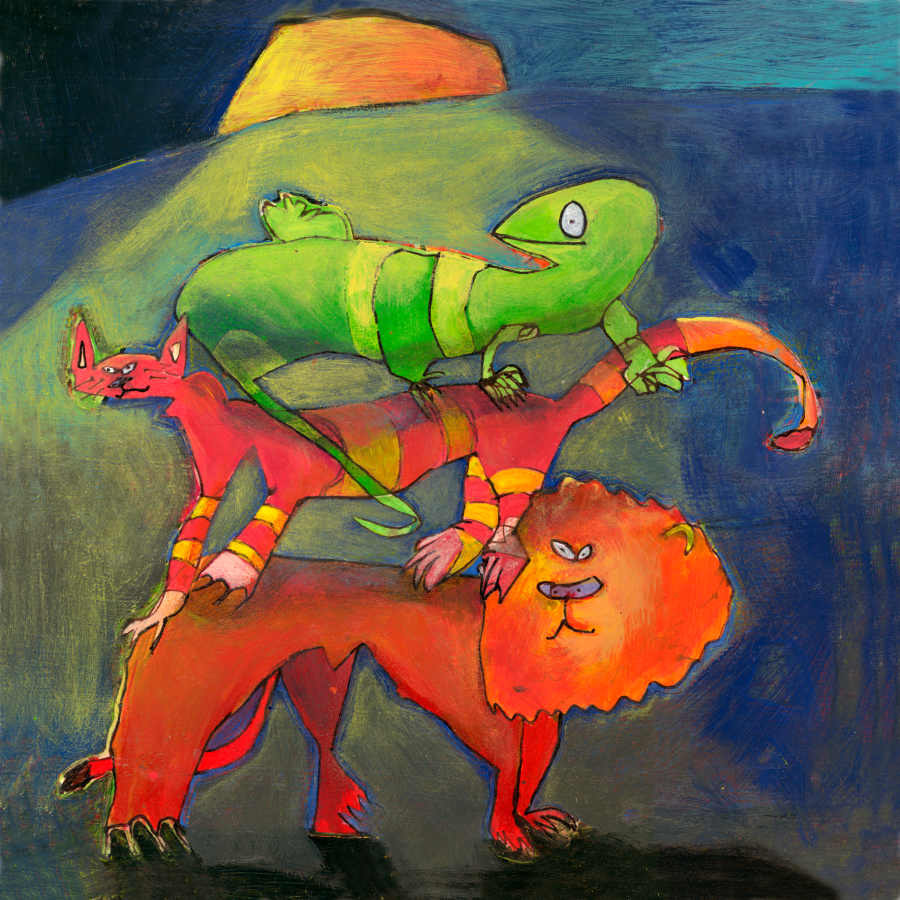
Featured Art: Stacked Animals by Jonathan Salzman

I deposit my tired universe of bones
beside the farmhouse. Discrete, the butterfly weed
with its leaves tapered to a soft point
leans against the lower stem of a coneflower.
I eat sweet bread and strawberries
and stare into the pocket of oaks dawdling
at the far edge of the field. I draw rings in the clouds
with my outstretched finger, the posture
not unlike accusation, the hair erect at the brush
of a spider against an exposed ankle. The only choice
is how far to carry a burden. I’ve known
the most ordinary people, autumn, untamed piles
of burning leaves. I’ve watched from a safe distance
and disregarded the intensity with which I scratched
my wrist, the skin slick and glinting
beneath a series of similar suns. I’ve negotiated
my right to fathom the bodies of insects.
It’s going well so far. I’ve given up
chocolate bars and late nights and thoughts
of making my life a metaphor. Still the coneflower
is nimble atop its spread of fibrous root.
I wait for the sun to stain the clouds
that shade of rattled yellow that announces evening,
the low light, a thing I know but still need to parse.


Read More

Someone Threw Down a Wildflower Garden in an Empty Lot in Newark

By Theresa Burns

Featured Art by Robert Jacob Gordon

And now, instead of staring at the weeds
and broken bottles from the train platform,
we’re taking in a scene from a Monet.
Asters, cosmos, little yellow fists
of something. All random and confetti.
I’m half expecting a lady in a high-waist
dress and bonnet to appear on a diagonal
stroll through its splendor, pausing
with her parasol so we can selfie with her.
Maybe she’ll hop aboard the light rail
to the Amtrak station, get off in D.C.,
step back into the painting she escaped from.
Who was the genius who thought of this?
What meadow-in-a-can Samaritan
got sick of passing the four-acre eyesore
on the way to work? Shook pity into blossom.
To whom do I write my thank you?
Mayor, surveyor, county clerk, church lady.
Who marched down to city hall, begged
anyone who would listen?


Read More

I propose we worship the mud dauber

By Jessica Pierce

Featured Art: by Pieter Holsteyn

The female in particular seems worthy.
She carries mud in her jaws to make her nest
one mouthful at a time, setting up
in a crevice or a corner. One egg,
one chamber. One egg, one chamber.
It’s better to keep them apart, as larvae don’t
know the difference between food and
a brother or a sister. They aren’t wicked,
just young and hungry. She has pirate
wasps to battle—they want her young
to feed their own offspring—and she does this
alone, drinking flower nectar to keep
herself going. Let’s just try

and see what happens when we raise up
this winged thing who will hover by your feet
without attacking. Covered with dense golden
hair and sometimes described as singing while
she works, all she wants is bits of damp dirt.
She has a slender thorax and two thin
sets of wings to carry her and
her earth. She is exactly strong enough
for what she needs to do. She doesn’t burn
or proclaim or fill your head with visions
as she hunts crab spiders and orb
weavers and black widows. Yes, let’s ask

her to pray for us as she stings
a black widow, brings it to its knees,
and sets off to feed her children,
singing as she holds up the world.


Read More

Learning

By Kelly Michels

Featured Art from rawpixel.com

A new cure is invented every day,
along with a new disease
because every miracle needs a disaster
to survive, and there is no shortage
of disaster, the sparrows have learned
to eat anything under the slash-and-burn
of the sun, and the children have learned
how to weave plastic buttercups into bracelets
between the alphabet and spoonfuls of NyQuil
their mothers give them before bed
where they dream of the swish of scar tissue
behind their teacher’s glass eye.

We tell them: There is horror. There is pain.
There are people wedged between bullets
and mud floors, between cracked river ice
and broken elevator shafts. But not here.
Never here.

Now, we sit still as an Eames chair, and the children
will never know the bridge of a song the rain spells
out in the sand on an October morning.
It is safer behind closed doors and windows, safer
where the wheat and ragweed and daisies
can kill no one.

We tell them: We have seen the grim amoeba of lake water,
the blizzard of ocean waves lashing against the curved spine
of coast, the blue-eyed grass raising itself like a rash toward
the swollen ache of sun, the sting of salt, grazing the long arm
of a bluff. We have lived it. We know better now.
We have knelt at the rim of a cliff and looked down.
We have fallen, felt the pulse of the sea pull at our hair
and it was not kind.

Child, put your ear to the conch shell and listen.
This is enough.


Read More

The Pasture Ponds

By John Bargowski

Featured Art by Kieran Osborn

You know the spot, that sharp left
off the county road to Hope

that passes the roadside shrine her
classmates built to our youngest,

the blank stones that mark the old
Presbyterian graveyard,

then on past the last rusted knob
of safety rail

where a graveled lane cuts through
swampy woods.

The pair of wood drake decoys
Hubert anchored to the bottom

riding out every weather on the big pond,
the splotch of white on their sides

that catches in our high beams
as we round the curve.

The twiggy wrack of alder and sumac
clipping the sideviews

as we pass through streaks of moonlight
burnishing the shields

on the skeletoned ruins of our friend’s
red Massey Ferg.

A place we’ve gone to many times
trying to nudge the season ahead,

we crack open the side window, crank
the heater up a couple notches,

sit with the lights clicked shut, side
by side in the front seat,

strain for the first callers crawled free
from March mud, the hyla crucifer,

no bigger than a fingertip, noted in our
dog-eared Peterson’s for shrill voices

that rise then fall, and those dark little crosses
they carry on their backs.


Read More

Tackle

By John Bargowski

Featured Art: by Teerasak Anantanon

Weeks after the cops cut Bill down
and the squad sheeted his body,

bore it out to the street, his mother
leaned over her sill and called us

upstairs to share the flies he’d wrapped
and knotted, labeled

with names we could never
have dreamed up, and arranged

in small wooden boxes next to coils
of tapered leader and packs

of hooks barbed along their shanks,
the button-down shirts

and bank teller suits in his closet
screeched and swayed

on their hangers when she elbowed
her way in for the split bamboo pole

he’d hand-rubbed to a gloss
and mounted with a reel cranked

full of line, nothing we could ever use
when we biked down

to the Hudson piers and bait-fished
for river eels and tommycod,

but we took it all, every piece
of tackle we could carry down

to the stoop to divvy up among us—
his canvas vest, his shoulder bag,

spools of waxed line, the bamboo poles,
his hip waders and creel,

and those boxes of flies—
the Zebra Midge and Gray Ghost,

his Black Woolly Bugger,
Pale Morning Dun.


Read More

Morning Commute with Revenant

By James McKee

Featured Art by Courtney Bennett

You know how it is: going in to work,

Who looks at anything? You’re late, it’s cold,

hot, raining, no buses again, whatever.

You’re long past fighting this fast-forward blur,

pure A-to-B time, better numbed than bored.

But then the street-views you sluice through slow and lock:

some old warehouse abutting a blacktop lot.

high up this soot-caked chainlink fence

that nets, for no one else, blank swaths of sky,

there juts forth a sawn-off sumac branch,

em dash black and cocked at ten-to-three.

See it first, since you must, as a quenched torch,

a club hanging half-swung,

or someone’s bony forearm thrust through the mesh,

lopped at wrist and elbow, and left as a warning.

Fine. But you’re not one to confuse

fancied-up musings with the truth:

one hapless stick is all the chainsaw left

the day someone decided

this tree—a weed that wedged upwards from

the cracks its seed happened among,

that rose against the traffic-ravaged air,

that pierced that fence and knuckled this pavement up—

had to come down.

Rough cobblestones plug the square yard

where its raw stump once weathered anvil-hard;

no doubt the sheared-off roots still grip

deep undertiers of pipe and stone.

A passing siren’s wave-crest flushes you

back in the churning surf of city noise,

but by now it’s too late:

you’ve gone and glimpsed that voided silhouette,

you’ve heard, in its tousling leaves’ soundless hiss,

another of those random sidewalk elegies

work alone can dismiss

And not because it isn’t true,

because it is.


Read More

An Unordered List of the Not-Beautiful

By Katie Pyontek

Featured Art by Courtney Bennett

Beauty depends on magnitude and order.
Hence a very small life cannot be beautiful,
for the view of it is confused.

 — Aristotle

Not the green bellies of hummingbirds, not

one set of wired bones shown behind glass.

Not the plump folds of tardigrades, not quarks,

not marbles on carpet, not pinhole stars.

Not the improbable orderliness

of ants, not feverfew or curls of hair,

not quick love notes left out on the counter.

Not a dozen kumquats, not an average

of six minutes. Not the intricate coils

of a snail’s shell, inching down the sidewalk.


Read More

Hurricane, 3rd Day

By Melissa Studdard

We hid in the belly of porcelain. The world 
sang sirens overlapping, the sound of wind

taking gates from the hinge. That whistling, yes.
Whistling and whipping, the world the cry 

of a cow caught in the spin of a twister and lifted. 
Water creeping to the back door like a thief. 

It wanted the jewels of our eyes.

In the house next door, a woman breastfed 
another woman’s baby, the thin-sweet milk.

Across the street, a man wrote social security numbers
on his kids’ arms with a Sharpie—a game, he said. 

And in our tub we held the news in our palms:

forty dogs from a kennel rescued by boat, a guy
on paddleboard heaving toddlers from a window, one

by one. And trapped across town, a shop full
of bakers sleeping on flour sacks, baking all day—

they slept and baked, slept and sprinkled.
For whoever might need. Not even sampling

or licking a finger. Once, I thought humankind 
brutal and nature benign—foolish child

with my frog in a box, my holey lid. 
Once, before, I asked to be delivered.

O sugar-hungry God, the world 
has been dredged and is waiting.


Read More

Told You So

By Craig Bernardini

If I had a choice
between being wrong
and the world dying—
you know, the oceans
turning into lemon juice, the air
to Lysol, the forests
cinder, tundra
swamp, shipping lanes
jammed with dead
polar bears, Manhattan
a gondola, the world,
a Gondwana of dengue—
I would, of course, choose
the latter.
And maybe, just maybe,
clinging to the last
antenna of the last
skyscraper to be swallowed
by the waves, pointing
my big fat finger
at the dead world,
and at all the mother-
fuckers who did it,
shouting, Told you so,
Told you so—maybe,
as the water was closing
over my mouth, I’d understand
how we got into this mess
in the first place.


Read More

A History of Clouds

By Christopher Brean Murray

You can think while walking, running,
washing the dishes, reading, grocery shopping,
or sleeping. Driving across Nevada at night
breeds thoughts—they leap from sagebrush
like jackrabbits into your high beams.
Most people can’t think while writing.
They have ideas, yes, but not thoughts.
Anyone can snatch an old idea out of the dust
and show it around. Trying to think
will invariably prohibit thought. I thought
of writing this poem while driving to work
this morning. I made sure not to
think about it much. The wind swayed
a stoplight until it turned green.
A man in a yellow tank top leaned
into the window of a parked car.
It was not yet 8 a.m. Wisps of cloud
coursed though the sky over Houston.
Someone should compile a book
called A History of Clouds. It could be,
among other things, an anthology
of descriptions of clouds, from novels,
from the love letters of exiled princes.
Shakespeare’s “pestilent congregation
of vapors” speech would appear, as would
Mayakovsky’s “A Cloud in Trousers.”
Clouds aren’t mentioned much in the Bible.
God did, however, call to Moses from inside
a cloud. Enoch speaks of “the locked reservoirs
from which the winds are distributed.”
Crane’s “To the Cloud Juggler” and
Stevens’ “Sea Surface Full of Clouds”—
and that passage from Gogol where
a cloud slithers over Nevsky Prospect.
It stretches and coils and becomes an intestine
embracing the anxious protagonist until we realize
he’s being suffocated by his thoughts.
Somewhere Rilke speaks of “vast, ruined
kingdoms of cloud.” That, from the love letter
of another exiled prince.


Read More

A History of Clouds, film by Caitlin Morgan

Christopher Brean Murray’s poems have appeared or are forthcoming in Colorado Review, Copper Nickel, Epoch, jubilat, Pleiades, Plume, and Quarterly West. He lives in Houston.

Caitlin Morgan is an independent filmmaker. She splits her time between New York City and Michigan.


Poem for the Peony

By Mary Jo Firth Gillett

                                                                                    Not one is dissatisfied, not one is demented
                                                                                             with the mania of owning things,
                                                                                   . . . Not one is respectable or unhappy over
                                                                                             the whole earth.
                                                                                                                                 —Walt Whitman

Peonies open their untutored hearts as if to write
a treatise on passion.

The raw and sensuous peony was mentor
to Marilyn and Mae.

A magnum opus,
the peony bloom unfolds, page upon page.

The peony, one with water, knows nothing
of river.

Oscar Wilde admired the peony:
“Nothing succeeds like excess.”’

Does the opening peony write odes to the ant
or vice versa?

Martha Graham, Josephine Baker, even Elvis,
studied the moves of peony blossoms in the wind.

In the presence of the peony, fake flowers—
plastic or silk—
wither.

The dawdling schoolboy presents a peony blossom.
“Tardy” is expunged from the dictionary.


Read More

Without Pain

By Kelly Michels

“Swing in the Right Direction with OxyContin”
—marketing slogan from Purdue Pharma

All day the rain spills onto the backyard deck.
The narcoleptic hours, darkened and dim, rewind and nod off.

My mother walks five miles to the emergency room on a Sunday.
She complains of a toothache, tells the doctors she needs something

to get by. It is predicted the temperature will rise 30 degrees in the next
twelve hours, then drop 20 more tomorrow, which means more talk

of global warming or the next ice age, more waiting for the Earth’s
fever to break like a sick child.

On television, people are dancing in a field of wildflowers.
The sun hits their faces, their pupils confetti.

A man appears in a lab jacket, claims he has found the cure for all pain.
He crushes the flowers, alkaloids running white across his chin.

You too can be like them, he says. And maybe we can.
But then, without pain—

What will the monks chant? What shrouded
music, what raspy voice will rise from the A.M.

radio, move like heat lightning against our spines?
Who will hear our minareted cries, our tangled

whispering, lowered breath pleading with
the moon? What hand will rock us

to sleep, float through our hair
like bath water, bring us to our knees,

lift our awkward heads
toward the frayed dawn?


Read More

Monarch

By Kathleen Radigan

Featured Art: Actaeon Nude by Jean Antoine Watteau

In the garden I cup a hand
before you, strain my wrist,
willing you to perch.

A nearby woman grips her cane.
“Young lady. If you touch them,
they die.”

Born again from a gauze
coffin, you’re blackwinged,
fragile on a wax leaf.

In the heat
of a weeklong life
you batter between

fluorescents and dahlias, legs
thinner than wires,
and float over tendriled

chrysanthemum heads.
Tease everything—hands,
canes, stem, with a feathery

suggestion. I want
to chew you.
Taste the metallic

powder of each wing.
If only to become
so beautiful

that being
touched just once
would kill me.


Read More

The Clipper Ship

By Ted Kooser

Featured Art: Early Morning After a Storm at Sea by Winslow Homer

There was a cheaply framed clipper flying in full sail
over the sofa, and it leaned just a little into the glass
as if to look down on me lying there bored, and it carried
more sail than anything in Iowa. It looked as if some boy
had broken a lot of white cups and saucers and stacked up
the pieces, just so, so they wouldn’t fall off of the sill
of that window that opened onto a faraway sea, a sea
that the ship had only recently ripped open, revealing
the world’s white cotton lining. That overstuffed sofa
was heavy and brown like a barge, and it smelled like
the one suit in my grandfather’s closet, an angry blue
like the sea in the picture, and as I lay there, climbing
the main mast’s springy rigging onto a lofty spar
where I could look down on myself, I could see the sofa
slowly sinking, the carpet all patterned with flotsam
slapping against it, and I wondered, as one might wonder,
if the ship would ever arrive in time to save me, or if I,
hanging high in the rigging, would simply wave it on.


Read More

Cedar Waxwing, Late November

By John Hazard

Featured Art: Flying magpies by Watanabe Seitei

In the crook of a bare maple branch
a lone cedar waxwing sits. I thought
they went south, but I guess not all, not yet.

There are big blue holes in the clouds today
and only a moderate chill, a day to be sociable—
and waxwings tend toward groups.

But there he sits, no berry calling him,
nor women, nor daring flights among thickets.
His high-pitched note is mute.

The breast of the cedar waxwing looks softer
than anything I’ve seen. No one’s discerned
a single feather etched in the fuzz

of his tan-gold-gray. That black mask
is a clown’s toy, more dandy than bandit.
Small orange beads dangle on his wingtips,

and look how the buff-gray tail concludes
in black and lemony stripes. But what good
is all that art on the eve of winter, this bird left

with his choice to stay put, and only me
to impress? I’ve heard that waxwings in courtship
pass fruit and bugs back and forth. They dance

and finish with a gentle touching of beaks.
Maybe my lone bird is lookout for his tribe,
or decoy—their offering to any hawk he can’t deceive.

December’s shouldering in, and here we are,
me wondering, him staring. His feathers fluff
in a bit of wind. Some twigs fall. We see each other.


Read More

Yesterday, Northern Michigan, Interstate 75

By John Hazard

Featured Art: Historic window detail, Port Huron, Michigan by Carol M. Highsmith

Four times today the bee has banged
his head against my window.
He wants erotic pollen and thinks
he smells it here, the indoor side of glass.

These days people say madness
is expecting something new
from old behavior. So this must be
a lunatic bee—bad wiring or bad parents,
the bad apple, the not-our-kind-of
bee. In the corner of my eye,
like a floater, but more sudden,
he breaks left and attacks the window,
throbbing with what he must have.

Yesterday in northern Michigan the blue sky
unzipped itself and let a swallow fall, fast,
beak first, so straight it seemed
he’d aimed for asphalt, saw a bug there,
had to have it. The bird bounced once,
twenty yards ahead. I had to steer
a little left to clear the body.

This May’s been cool and wet, such a daily, fresh
dawn breath that the season and the trees
did not expect it. Only crazy animals expect,

like bees, or a swallow lit gold in morning sun,
heading for his usual spot on a white pine branch
only two lanes east, where the world was
what he remembered and desired.


Read More

A Brief History of Hunger

By Mary Jo Firth Gillett

Up from the mire of the primordial soup
came one-celled, tiny cavernous bits
whose innards knew a hollow ache only cured
when their shape-shifting borders engulfed
smaller bits, and came a world more complicated,
the paramecium with its oral groove,
the surprising planaria—nick its frontispiece
and the split becomes two hungry heads!—
then came, as ever, competition begetting variation,
to move or not to move, that was the question—
whether it was more propitious to see
with eyes multitudinous or on stalks or both,
whether it was better to be safely anchored,
waiting in camouflage, or to mount an assault,
evolution’s choices simple, almost biblical—seek
and ye shall find or lurk with bait in the hope that all
will come to him who waits, and then came
specialized beaks and teeth, fanciful horns
and coloration prompting procreation,
as well as a multitude of eating adaptations—
the water bird’s fused nostrils, air sacs in head and neck
to absorb impact as the feathered darts, pillaging
angels, plummet—and came homo sapiens with a myriad
of tastes and ways to cook—sear and braise, sauté
and soufflé, pickle and brine—came table manners, the urge
to gorge, to purge, came sorbet and gourmet, foods
delectable and indigestible, epicurean delights, food fights,
and all the ravenous mouths of tomorrow and tomorrow.


Read More

Mitigation

By Craig van Rooyen

Featured Art: by Romina Farías

Somehow it’s good to know
the wildfires have not touched the face
of our local TV anchor
delivering her lines
with a touch of sadness that never approaches
despair, even as her bangs cascade
onto her forehead like evening clouds
descending the Coast Range.
I think of her in her dressing room
before she offers her face to us
the one that will help us fall asleep
while a line of flames somewhere far away
descends the ridge and licks into a kitchen,
melting the refrigerator magnets,
popping cans of spray oil, and setting
the dog out back to howling, jerking
against its chain.
I see her in front of the mirror,
surrendering to the ministrations of tiny brushes— 
a makeup artist leaning in like a lover.
Foundation first, an A-side attack
on brow furrows and laugh lines.
Then concealer to suppress the advance
of crow’s feet into the Botox buffer zone.
Within a half-hour, the spread of creases
and fissures 95% contained.
The brushes flit across her face
like prayer flags, and I can almost smell
the warm breath of the girl who sticks out
the tip of her tongue, leaning close
to line the boundary
where the fullness of a lower lip
begins its concave plunge
into smooth white chin.
Our TV anchor practicing her lines,
mastering her face.
We need to love her for this.
For the way she shows us how to keep
a chin from trembling, an eye from twitching
even while the chained dog
curls in on itself in the burning.


Read More

Stick Season

By Sydney Lea

-For Peter Gilbert

The one that precedes my season is the one that always shows
in those quaint calendar photographs, the one that brings the tourists
to a scene that is sumptuous, granted—exorbitant on the sidehills,
most of the leaves incandescent, drifting or plunging downward
to scuttle along the roadbeds like little creatures reluctant
to be seen, yet wanting us to notice them after all.

But give me this: middle November, season of sticks,
of stubborn oak and beech leaves, umber and dun, which rattle
in gusts that smell so elemental they stab your heart.
The trees—the other, unclothed ones—are standing there,
gaunt but dignified, and you can look straight through them
to the contours of the mountains, stark, perhaps, but lovely

in their apparent constancy. That gap-toothed barn
houses space alone since its owner died. Do you remember
Studebakers? That’s one over there, a pickup truck,
flat-footed among the sumacs. Painted green way back,
these days it has taken the hue of these later leaves I love.
Old age has changed the mountains too. They’re rounder now

than once, worn smoother. Everything is for a time.


Read More

Good for What Ails You

By Elton Glaser

Featured Art: Winter, Monadock by Abbott Handerson Thayer

                                                                                                  He too would live: like the rats among the ruins,
                                                                                                     but nonetheless alive.
                                                                                                                                  —Antal Szerb, trans. Len Rix

It’s the first fresh day
After a winter so hard
I disappeared inside myself,

Nothing out there but cardinals
Like drops of blood against
The creamy desecrations of the snow.

Ah, there’s the shit we need,
And the shit we don’t need,
And the shit we end up with.

I seem to be returning to
Some form of infantile intelligence,
On the sloppy side of the brain:

Mumblings over the oatmeal, nights
Broken by clumsy sleep, hands
At the mercy of small machines.

We come out of nowhere, and we go
Into nowhere. Should I stick
My fingers in my wounds,

Like a good little Dutch boy?

Even in the barren precincts
Of the cold, there must be love,

Though love does not travel well—
It needs its own terroir,
A discipline of flinty soil where

The roots struggle, where they work
Hard in the hot sun, until
Deprivation makes the fruit sweet.

And what wine will I have?
Here, at the open edge of things,
I’m like a spruce that hugs itself

Against the ice and the night wind.
But sometimes there’s comfort
In the certainties of burlap, and more

Sure footing on grit than marble gives.
And even a thin sun feels warm
After three dead months deep below zero.


Read More

Before the Storm

By Christopher Kempf

Selected as runner-up for the 2015 New Ohio Review Poetry Contest by Robert Pinsky

Featured Art: Storm Clouds by John Henry Twachtman

Birds fled. The city fell
quiet. Across
the night the neighbors raised
their glasses & together, gathered
on our porches, forms
in a Japanese landscape, we stared
up. Or was it
Turner the sky resembled? How every
late seascape became
for him, given
to opium & with his father’s
death, depression, a tempest
of motion & color. Clouds
roiling. The oils
of his tiny boats bleeding
out. Only,
he knew, the frame’s gilt edge
splits beauty from terror. Airplanes,
that night, climbed
from the city & steeply, fleeing
too the ruinous
wall of rain, banked
south. Schools, a step
ahead of the looming cataclysm,
closed. Newscasters
leaned forward into the wind & we, raising
our own glasses to the neighbors
drank. Dark
& Stormies. Sazeracs. We imagined
the city flooding. Mudslides
on Foothill Parkway. Prospero, fallen
from his dukedom, does it
all for pleasure he says, every
shipwrecked Milanese aristocrat, every
extravagant clipper cast
up in the pitch & tumult his rough
magic fashioned. That,
we know, is mostly
what the groundlings came for. To fancy
a world they would never see struck
low, & so
close, sometimes, as to feel even
on their faces the great
king’s spit. There is,
in catastrophe, a satisfaction
exceeding sex, psychologists
believe. Before
the storm the city
bristled. Bells
tolled. Before
the last helicopters cleared
Saigon, operatives
burned in a rooftop incinerator
the state’s documents. We watched
from our porches the planes
shudder & mount. On Merritt
Lake, the pelicans, frenzied,
fed.


Read More

The Lake

By Billy Collins

Featured Image: Lumber Schooners at Evening on Penobscot Bay by Fitz Henry Lane, 1863
Courtesy National Gallery of Art, Washington

As usual, it was easy to accept the lake
and its surroundings,
to take at face value the colonies of reeds
along the shore, a little platoon of ducks,
a turtle sunning itself on a limb half submerged,
and the big surface of the lake itself,
the water sometimes glassy, other times ruffled.

Why, Henry David Thoreau or anyone
even vaguely familiar with the role
of the picturesque in American
landscape painting of the 19th century
would feel perfectly at home in its presence.

And that is why I felt so relieved
to discover in the midst of all this
a note of skepticism,
a touch of whimsy,
or call it a bit of Dadaist playfulness;
and if not a remark worthy of Oscar Wilde
then surely a sign of the human was apparent

in the casual fuck-you attitude
so perfectly expressed by the anhinga
that was drying its extended wings
in the morning breeze
while perched on a decoy of a Canada goose.


Read More

Harping

By Judy Rowe Michaels

Featured Image: Cattleya Orchid and Three Hummingbirds by Martin Johnson Heade, 1871
Courtesy National Gallery of Art, Washington

While most of us are grieving

something—cold spring lost child dead-end
lyrics that won’t resolve,

the spadefoot toad, who bears
a gold lyre-mark on her back,
is crazy-busy with what science calls

explosive breeding. Rain says Go,
and up from culvert cistern over porch and patio across roads
the fraught migration of spadefeet slowly breaches
our borders to breed in our ponds.

Flood of toadlets in just three weeks, pop pop,
with tiny golden harps, how will this
end? We run them down
coming or going, then pronounce them
rare, so we

love them, make posters, poems—
      (Old moss-grown pond—a
      toad jumps in to breed pop pop
      poppoppoppoppop)

We can’t say they’re unnatural, or blame
the job rate bad schools gang wars (unprotected
sex?), but tiny golden harps

seem suspect artsy irresponsible un-American.
All night trill thrills,

while most of us are grieving.


Read More

My Life with Pines

By Tom Wayman

                                                                     1
In the glow of a fluorescent, I sit leaning
over a table to sort through parts of
a jigsaw puzzle, working hard to recreate
a picture displayed
on the box I purchased
while outside
great pines have moved in the darkness
down the ridge to surround my house, many of the trees
taller than the roof. A fierce wind
causes the pine trunks to sway, their limbs
churning the dark in wild
and pitiless gestures.

                                                                     2
Pines thrive in arid soil, mostly sand,
little else will grow in. These trees regard cedars
who love the damp, who must be surrounded by relatives,

as gloomy, phlegmatic,
timid. Cedars, according to pines, are simple-minded
about safety, suffusing themselves with water

as protection from fire. Cedars might as well be,
pines jeer, a fern. Whereas pines
only reproduce in the heart of a blaze,
their cones needing the insatiable rage of flames
to climax, open, release.

                                                                     3
No matter how many nights, months, decades
I pore over my jigsaw
the one piece that remains to be found
is a pine.


Read More

Pythagoras

By Bruce Bond

Featured Art: Broken and Restored Multiplication by Suzanne Duchamp

Somewhere beneath the crematorium
of stars, the mystery and the boredom,
the vacuum that every space abhors,
you might stop to listen to no one there
and hear the words of a dead man, a Greek,
who measured nights in increments of music.
The sky then was a calliope of numbers
whose tune was everywhere and therefore far
away as dead men are. No such thing
as solitude among them. It takes a string
of intervals on heaven’s monochord
to pull the sounds from one another, the choir
of which must be silent, surmised, and yet
each ghost note dies into the next to hear it.


Read More

If You See Something

By Billy Collins

Featured Art: Dove in Flight by Pablo Picasso

On my morning walk along a cinder path
that follows the shore of a lake,
I saw a good-size, solitary rabbit,

seven mourning doves who rose to the top of a fence
at my approach,

two anhingas, one drying his extended wings
like a pope on a balcony,
the other not doing anything at all,

also, a loud bird who refused to identify himself,

then ten young ducks in a huddle
by the vegetation near the water,
some sleeping, others preening their feathers,
all not quite old enough to be on their own,

oh, and a squirrel who headed up a tree
when he heard me coming down the path.

Read More

The House

By Brian Swann

Featured Art: The House on the Edge of the Village by Théophile-Alexandre Steinlen

Leaves twitch. A wren flits. A rope between trees sags. By the well-head a few stranded dandelions. Rain opens stones so they shine. A crow calls with the voice of a hammer. The rain stops. The sun enters with the voice of a crow. Heat turns day to distraction and the trapped mind wilts. A hawk calls and small mammals dive for cover. Sky goes carillon, dwindles, cooling off until the moon fills windows and stains rooms. A door swings and things go strange as if they had to. If you hear a voice you hear a voice. I walk through the empty house, carefully, a cat’s whisker. When I get to the top floor, over the moonlit roofs I can see the prison and the small zoo. They must be able to see me here where I’m training the self to lose itself, the way the stream ignores the stream.


Read More

Snorkeling

By Allison Funk

Featured Art: Solar Effect in the Clouds-Ocean by Gustave Le Gray

What if, late in my life,
an old love returned?
I might get carried away

as I did my first time in that otherworld
ablaze with coney
and neon blue tang,

soundless except for the resonance
of my breath, a hypnotic
one-two, now/then, why not

me, you. I must have seen
the stoplight parrotfish
beam red from a grotto,

but, heedless, sped up,
flippers propelling me over coral
resembling Gaudí’s Sagrada Familia

still unfinished after a hundred years.
Remembering my past,
I circled the remains

of countless marine animals.
Fragile memorials, yes,
but not harmless I’d learn:

the thousand mouths of the reef
that open out of hunger,
alive to the careless swimmer

who comes too close.
One who, succumbing to the pull
of the beautiful, swims out

so far she finds herself at the mercy
of surf that flings her
against the stinging ridge.

Cells meeting cells, tentacles, flesh,
she’s left with the mark
of a fiery ring that burns longer

than a slap. Weeks. Months.
A tattoo that may never fade
from the soft underside of her arm.


Read More

Recitations

By J. Estanislao Lopez

Featured Art: The Petite Creuse River by Claude Monet

  1. The Mountain Recites a Poem

     The enunciation of one syllable
     lasts two thousand years.

     The only mode it knows:
     confessional. All it has witnessed,

     condensed into a single line.
     We’ve compiled the research,

     and can say with some certainty
     that the first word is Above.

     2. The River Recites a Poem

     Obsessed with revision, the river
     never completes a line. No one

     attends its readings anymore
     as they go on for months.

     Each phrase spills out, then
     is sucked back in and altered. This

     continues until, by the merciful
     winter, the river is shushed.

     3. The Sky Recites a Poem

     The first experimentalist, the sky
     reduces every image to abstraction.

     Soap dispenser becomes Absolution.
     Mandolin string becomes Disquietude.

     Its diction of emptiness surrounds the reader
     until he is extinguished—This isn’t murder.

     This is nothing but the semblance
     of control.


Read More

Animals

By Brock Guthrie

Featured Art: Leg in Hammock by Edward Weston

One is what one looks at—well, at least partially. —Joseph Brodsky

All morning in my hammock burning
a tight one, poised with pencil and notebook
and seven-week beard, I look to the pines
outside my cabin, seeking inspiration
from the birds and the squirrels
whose singing and foraging, whose
exclamations, no, arguments, reflect
my inner my inner my inner . . .
and every so often my cousin Ricky returns
from hunting rabbits on my four-wheeler
to tell me he’s thought of a new way
to beat off: Anywhere around here to buy
watermelons? Even his camo flannel
can’t conceal that Superdome belly
and I hate to think how long
since anyone’s seen his diminutive dangle
so I tell him in all seriousness, my sympathy
sincere, You might be on to something,
but after he tokes and rides away
I get inspired, realize I should’ve said
Go drive around these country roads, man,
look for signs!
and even Ricky would’ve
nodded with a look of feigned profundity
like he’s posing for an author photo
but I let that moment go

Read More

Clear and Cold

By Lisa Ampleman

Featured Image: “The Red Kerchief” by Claude Monet

Though already setting,
the sun in late afternoon

in late December revels
in its power—how it,

though meager, can set
red-brick façades ablaze,

glorify an oak’s moss—
the only green thing—

and later sear far clouds
deep purple, more sky

exposed because the trees
are bare. Meager, too,

what you could give
me, what you called fondness—

but I let it dazzle me for a time.
And, though the room

is darkening, the last light
brightens the metallic edge

of the window screen
before it goes.


Read More

Pelicans

By Robert Cording

Featured Image: “Australian Pelican” by Elizabeth Gould

Last evening, another sunset party:
drinks, laughs, ironies, hidden desires.
All of us tanned and glowing, we exchanged
jokes and gossip, fresh and stale, self-conscious
that something larger was missing
when we turned to best watches, shoes, cigars.

So much time is lost trying to agitate
the envies of others and monitor one’s own—
the thought that crossed my mind as I watched
six pelicans rise and fall with the water’s flux.
The winds had quieted, and just before the sun plunged
below the sea, the pelicans rose in a wind-hung line

and flew off, silent as a council of gods
in the pinkish sky. Palm trees scratched
their cuneiform shadows on the sand.
I wanted to say something about the pelicans,
who I knew, for no known reason, choose to live
their lives as near total mutes, as if they’d decided

simply to be done with the fecklessness of speaking,
but I kept quiet, the light draining from the sky,
the others going inside. I felt like a child in hiding,
alone on the deck, made fearful and alive
by the darkened Gulf, the stretch of beach
now entirely empty, the palm trees,

the sliver of moon rising directly opposite
of where the sun had set. If I had been called
to come in, I would have kept silent.


Read More

When It’s That Time for Piranhas

by Michael Derrick Hudson

Featured image: Utagawa Hiroshige. Swallow and Wisteria, mid-1840s. The Metropolitan Museum of Art.

Everything has already blossomed: my neighbor’s wisteria
has gone hog-wild across the ragged frontier of
our mutual fence, the soft green tendrils
of it violating international borders

and breaking treaties. Achtung! So let me tell you about

my neighbor’s wife: she’s delicious! And every morning
I hear all the birds in Fort Wayne, Indiana, go

Yippee-yee! Yippee-yee! Which is how spring jibber-jabbers
while her husband blows the leafy detritus

off their depilated lawn. Something’s missing. I want to be
indigenous with her, something somehow prehistoric—

I want her in Brazil. I want a quiver full of spindly arrows
to fetch our breakfast’s blue-tailed skink or

supper’s three-toed sloth. I want ritual scarification, coherent
rites of passage. I want grandpa’s thighbone
whittled down to a splinter

and dangling around my neck.
I want to help her stitch banana leaves, scorch
grubs against a rock. I want her to smile at me like a jaguar,

each incisor filed to a point. I want poisonous frogs, seashell
currency, enemies who make sense, a copper
plug through my lip. I want

a shameless squat. I want mumbo-jumbo witches to shun and
screeching ghosts to appease. I want her to take me

down to the river where we’ll knot and
inch our way across. I want her to trust me to be the lookout

for piranhas. I want to know when it’s that time for piranhas.


Read More

In the Season of Early Dark

by Elton Glaser

Feature image: Claude Monet. Rocks at Port-Goulphar, Belle-Île, 1886. The Art Institute of Chicago.

1
The wind sassy and half mad,
The clouds knocked up with rain—
Another feral afternoon in the Midwest,
Fall, and the trees like Salome, ready
To ask, when the last leaf drops,
For my unresisting head.

2
I’m going to spring all the little traps
Set by silence
And call it mercy. I’m going to let loose
Every thought caught by its hind legs
And screaming for release.
Out of the jaws and sharp teeth,
The tongue comes, loving
The taste of its own blood, gush of words
Hurt into eloquence.

3
Gray day. Raincoat weather.
Raw wound that would weep over me,
Nasty stuff from so deep inside
It could make the scarecrows gag
Among the stooks and stubble.
Whatever I did to deserve this,
I deserve it.

4
All the numbers add up—
Mortgages, body count, Lincoln pennies
In a plaster pig my grandfather gave me.
And the years, too, though no one
Knows how many, not the saints,
Not the drugged and corrupt. I have these
Fingers to figure with. They tell me
The end is always at hand.

5
Misbegotten month
Rushing from bluster to bare bark.
The geese get out of town.
Even the seedy weeds die back,
Brittle slippage of the unloved.
I stack firewood against the stone wall
And plant the last tulips, bonemeal
In their shallow holes. Lights rise
From the windows and fall
On the dark grass, so black
My footprints sink down to the roots.


Read More

A Mile In

By Julie Hanson

Selected as winner of the 2011 New Ohio Review Poetry Contest by Nancy Eimers

Feature image: Claude Lorrain. View of Delphi with a Procession, 1673. The Art Institute of Chicago.

The snow had been with us for awhile
and was dingy and not well lit.
But the sun promised to come out.
The light fog lifting
against the skinny tree trunks
and the grounded limbs they’d lost
and the thick, half-detached vines
would lift off,
dissolved, by the end of our walk.
We’d taken the footbridge
across the creek and followed the bend
away from traffic and toward the west ridge.
We’d gone a mile in,
to where usually I begin to listen to
our progress in the twigs and gravel of the path,
and past this, and past my own
periodic reminders to the dog
to the short, uncomplicated songs
of winter birds. And there,
near the spill of rocks in the creek
where the fog was still passing through branches
and a little farther and to the right
where a stretch of tall grasses
received a wide gift
of sunlight and several cows,
the air that stood still
between the trees and shimmered
over the grasses filled with sound—
a big voice moving through
a hundred thousand habitats—
and it said, “Attention in this area.
The following is a regular monthly
test of the Outdoor Warning System . . .”
It spoke from the west first,
sounding closer than it could be.
And it spoke from the southeast next.
“This is a test,” it said, “only a . . .
“This is a test . . . ” it began again
from somewhere else.
The dog returned to me, cowering.
I’d wondered before
without much curiosity,
where were those speakers housed,
were they towered, did they revolve?
Ordinarily heard in the yard
while I stood pinning laundry to the line,
the broadcast soon plunged and sank
into the noise of passing cars
and blown and rolling garbage cans
and faded like the little ringing
that emanates from construction sites.
But here, it seemed full minutes long
before my breath was back again in my chest,
and my dog’s breath,
steady and rough, was back in hers,
when the voice had left the air
between the trees, as had the fog.
At last a bird sounded from a twig.
At last a squirrel came down
and sent the dog. And then,
made up of other sounds
I could not have singled out,
a normalcy rolled in.
Infinitesimal bits is all it was
—quick beaks breaking up the peat,
the slow collision of a leaf landing, scooting
half an inch along a big flat rock,
a splat of excrement in white,
a flinch, a flap, a flick. But as it came it felt
to be a counter-vigilance. Or like
the sound of consciousness. The is.


Read More

A Giant Bird

By Kevin Prufer

Its great heart pounded like the distant sea
wounding itself against the cliffs.

+

We lived in its shade.

Sometimes, my daughter ran her fingers along that part of the breast
that swagged low over our camp.

It’s beautiful, she said, smoothing a feather’s twig-like barbs,
gazing past our mountain toward the burning cities.

+

What kind of bird is it?
                Some feathers were tawny, others tinged a perfect white.
Is it a sparrow?
                It may be a sparrow.
Is it an owl?
                I can’t see its face.
An eagle? I think it’s an eagle.
                                We often played this game.

Read More

Feeling Sorry for Myself While Standing Before the Stegosaurus at the Natural History Museum in London

By Michael Derrick Hudson

Oh yes my friend, I’ve been there; the insects battering at
the armored lids of your yellowish eyes

the moment you pecked your way out of that rotten shell
and dug out from your sandpit nets . . .

And I’ve experienced the thud thud thud of your days,
the indigestible monotony

of everything’s spiny orangy-green husk. How the sun
gets daily whiter and hotter and just

a little bit closer. The week spent gobbling down your

own weight’s worth of whatever. One stumpy
footprint after another, tracking the trackless, squelching

across last night’s marsh into a volcano-spattered today
hip-deep in ash and yawning

a muzzleful of sulfur. Swishing through stiff fronds,

we drag an unbearable load of tombstones on our back
and a fat lugubrious tail, shit-smutched and

spiked. The flattening of the razor grass. The forgotten
clutch of eggs. Our shrill yaps

and groans. That tiny gray walnut
for a brain and the fat black tongue tough as a bootsole . . .

They’ve explained us away a dozen times: some passing
meteorite or anther, the rat-like mammals

eating our pitiful young, all kinds
of new weather. Issueless, but far too stupid to be forlorn,

we trundle along the pink quartz shore
to sip at the lukewarm edge of yet another evaporating sea.


Read More

Disintegration of Purpose at Cocoa Beach, Florida (Part 1)

By Michael Derrick Hudson

A pelican divebombs the same shimmery-shammery silver stripe
of the horizon. The pale yellow and presumably

bloodless crabs scuttle to their holes, terrified by my shadow

all over again. Again! They’ll never figure it out,
but of course every moment for them is nothing but the fretful

expectation of imminent death. They’re expendable. Fecund.

Edible. Fuck ’em. So where’s my hero? My old conquistador
my Castilian grandee terrible with purpose . . .

Señor! Over here, por favor! But what if he did come, feverish

and bedraggled, this Spaniard wading hip-deep through the surf
cumbered by his mildewed ruffles

and waterlogged boots, in silver salt-pitted
spurs and a rust-bucket helmet? He’d spout nonsense, bragging

about the usual claptrap: solid gold wigwams, diamonds bigger
than pumpkins and an obsidian-eyed princess

festooned with raccoon tails. There’d be those outrageous lies,

poison darts tinking off his armor while tramping the Everglades
and living these five hundred years fetched

off death’s front stoop by a few quavering, toothless sips from

the Fountain of Youth. With the point of his cutlass he’d scratch
the beach with treasure maps and schemes, telling tales

of the cannon-shattered fo’c’sle and those desolate, bone-littered
passageways. I’d put up with it for as long

as I could. ¡Hola! History stops here, Señor! Everything does!

Read More

Tree Talk

By Claire Bateman

Featured Image: Trees by Maurice Prendergast 1918

Everywhere in town you hear:
“The forest’s on the move again”—
our forest!
Not ours, exactly,
but we feel it to be so,
since its visitation
ensnares our limbs
as, at every crosswalk,
neighbors duck and flinch,
weaving carefully through, apparently,
nothing at all—
forgive me, I’ve neglected to describe
our forest’s unparalleled clarity
from pine-tips to underbrush,
its streams, its spiders,
its (presumably) spotted fawns
tremulous, poised for flight—
“Our transparent forest,”
I should have said!
Impossible, of course,
to hide, to hunt, to lose one’s way!
Thus, we are reduced
to uneasy picnics in a vitreous shade
not wholly without shimmer.
Then, just as we’ve begun to settle in,
discerning where to place our feet,
grope for berries,
seek out the heaviness of honeycomb,
with a rustle and groan,
it’s gone,
having abandoned us
to elsewhere bear

its rough and leafy patronage,
its boughs of varying heft,
which our clumsy passings-through
had forced back till they rebounded,
scoring our faces
even as they sprinkled us
with resin-dew
(or, in that woods’ itinerant winter,
mild scatterings of unseen snow).


Read More

A Pocket Introduction to Our Universe

By Claire Bateman

Featured Image: The Throne of Saturn by Elihu Vedder 1883-1884

What does our universe most like to do?

To contort without any warning
into nothing but corners,
an awkward though not unbeautiful
configuration.

Of what elements is our universe composed?

The first is distance,
of which there are innumerable varieties,
such as the chromatic stutter between
forethought and aftertaste,
and the measureless span between
the transparent and the merely translucent.

The second is otherness,
that of the other
and that of the self,
reciprocal and ever-escalating glories.

What holds things together and apart?

The strong and weak gravitational forces.
Scar tissue.
The Great Universal Loneliness,
from which not even the material realm
has been excluded.

What are some of the forces that pass through flesh and bone?

Neutrinos.
X-rays.
Invisibility itself passes through the body
in immense, inarticulate storms.

Read More

November

By Richard Cecil

Featured Art: Stacks of Wheat (End of Summer) by Claude Monet

November is the time between conviction
and sentencing, when you’re still out on bail.
You’re sort of free, pending the rejection
of your appeal, but you are bound for jail.
There’s no point pleading that your weren’t guilty
of stealing pleasure from warm summer air—
you were caught, grinning, on camera. The penalty
is ninety days in winter’s prison. Unfair!
I only did what everybody does
when tempted irresistibly to strip
wool socks and parkas off and take a dip
in summer heat. You can’t tell bees, “don’t buzz.”
November shrugs in answer to your pleas:
Ninety days for you. Death for the bees.


Read More

Yet

By Eric Torgersen

Featured Art: The Enchanted Mesa by William Henry Holmes

a voice I haven’t sung from yet
—Bruce Springsteen

Hang him from a tree he hasn’t hung from yet.
Fling him off a bridge no one’s been flung from yet.

Send succor, in whatever dark disguise:
a hornet’s nest he’s not gone running, stung, from yet.

He’d have it be a tower, not a steeple—
the height in him no bell has rung from yet.

Early fall, and not one branch the wind
has not stripped every leaf that clung from yet.

Recess. Winter. Second or third grade.
A frozen pipe he hasn’t freed his tongue from yet.

The drought seems endless. Spring. No drop of rain.
Just parched soil no shoot has sprung from yet.

Find it in some corner of the workshop,
some damp rag no last drop has been wrung from yet?

Probe the dank recesses of the cellar—
not one cask he hasn’t yanked the bung from yet.

Not by wit or rhetoric alone
will Eric find a voice he hasn’t sung from yet.


Read More

Horse, Alone, November

By Joyce Peseroff

Featured Art: Prancing Horse by Jean Louis André Théodore Géricault

She’s teaching him
no harm will slither up his legs
like chilly steam above a pond at night,
or plummet from almost leafless trees
when she saddles his pasture-mate
and they swish between the pointed firs
into spectral woods. Left behind,
alone, he paces the golden perimeter
of fence post and electric wire,
a fragment of eternity falling
red on his rolling shoulder
when he jars the ground beneath
the gnomon in a field
a single maple makes.


Read More

Indoor Municipal Pool

By Alan Shapiro

The circulating disinfectants
make it an unearthly blue
or earth’s blue seen from space,
or what pooled from the steaming
of the planet’s first condensing.
In which case the pumps
and filters could be thermal
vents, and the tiny comet trail
of bubbles rising from the vents
could hold within it—if it isn’t it
already—the first blind chance,
if not the promise of
the hint of the beginning
of what at long last would
emerge into the eye which
being mostly water sees
only water signaling to itself
beyond itself in accidental
wormy quiverings over
the sea floor of the ceiling.


Read More

New World

By David Baker

—Yellow gingkoes, awash on the sidewalks.
But we can’t have them. Blue sky like a just-
thrown vase. Bright plain blue side still glowing.
Autumn air. Warm as a bath. We can’t say so.
We did not see the horses nuzzling
in the field, in the muddy pen, in the big acres
hidden by trees in the middle of the financial city,
nor whisper through a night in a booth. In
a room. In no hurry atop sheets of many gone loves.
This was not us, nor will be, nor ever will I
forget you when the broken histories are
told. Expenditure and loss. Collateral and gift.
. . . no where shall Wee Be known. How
many leaves. How much wind in the new world—.


Read More

Sparrow

By George Bilgere

On the bricks of the patio
A sparrow is struggling with a used tampon
It half-flew, half-dragged here
From a dumpster across the street.

The tampon resembles a wounded rat.
Those of us enjoying our coffee
And New York Times in the spring morning
Pretend to ignore it.

But all the suns in all the galaxies,
And all the planets around our own paltry star,
Are turning on the same invisible pulleys
That drive the sparrow
To build a cozy little crib
In the eaves under somebody’s gutters,

And to find, sooner the better,
Another sparrow who hears
The same music of the spheres.

You can’t argue with that.

And though some of us on the patio might believe
That what the sparrow is wrestling with
Is the blight man was born for,
The curse Adam fell for,

For the bird
It’s an engineering problem: the tampon’s
Too stubbornly stitched together
For a tiny beak to tear apart,

And too heavy
With human blood to carry off
Into the blue air of the future.


Read More

A Moment

By Wisława Szymborska
Translated from the Polish by Joanna Trzeciak

I’m walking on the slope of a hill newly green.
Grass, small flowers in the grass,
just as in a children’s book.
Hazy sky, already turning blue.
A view of other hills spreads out in silence.

As if there had been no Cambrians or Siluries here,
rocks growling at one another,
upthrust abysses, no fiery nights
nor days in clouds of darkness.

As if no plains had moved through here
in feverish delirium,
in icy shivers.

As if only elsewhere had the seas been churning,
tearing apart the edges of the horizon.

It is nine-thirty local time.
Everything is in its place and in genial accord.
In the valley, the small stream as a small stream.
The path as a path from always to ever.

Woods in the guise of woods world without end amen,
and on high, birds in flight as birds in flight.

As far as the eye can see a moment reigns here.
One of those earthly moments
implored to linger.


Read More

The Puddle

By Wisława Szymborska
Translated from the Polish by Joanna Trzeciak

I remember well this childhood fear of mine.
I’d step around puddles,
especially the fresh ones, just after it rained.
For one of them might be bottomless,
even if it looked like all the rest.

One step and it would swallow me whole,
I would start ascending downward
and even deeper down,
toward the reflected clouds
and maybe even farther.

Then the puddle would dry,
closing over me,
trapping me forever—but where—
and with a scream that cannot reach the surface.

Only later did I come to understand:
not all misadventures
fit within the rules of nature
and even if they wanted to,
they could not happen.


Read More