The World We Wanted Shone So Briefly

By Gail Martin

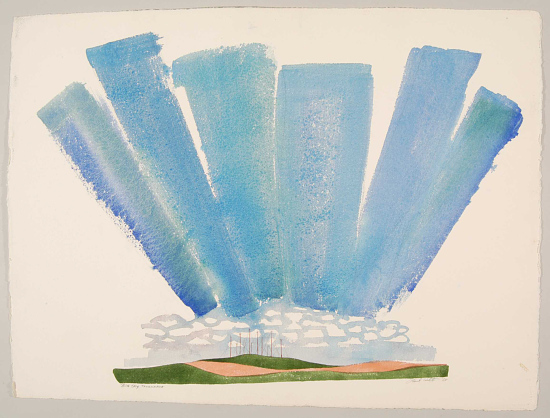
Featured Art: Cicadas by Scott Brooks and Wendy Minor Viny

Real life was finally about to begin.

Remember the romance of the silver cigarette case

in college? The integrity of your firstborn’s eyelashes?


We discarded alternate destinies like tired cards

in the Flinch deck.  We were only looking forward.


Of course, like the teeth of beavers and horses, there

are parts of the past that never stop growing.

Garage – tree house – vacant lot kinds of cruelty–

how we took turns being mean.


And later, some serrated evenings, dinners

of bluster and recoil, dodge. Flowers sent

or not sent to someone’s funeral.


Mostly there are the years you watch

your neighbors’ cars slide in and out of their garage.

Between blue herons and tumors, you change

the sheets.


We were all surprised to find ourselves old

but really the signs were everywhere, and we

acknowledge we’d been told. Name one

important thing that has not already happened.


Read More

The Helms Man

By Kathryn Jordan

Featured Art: Creative Abundance Flower by Wendy Minor Viny

The Helms Man, we called him. I mean the man in white

baker’s trousers who drove the Helms Bakery van

around our bright California cul-de-sacs and streets —

coastal hills carved to asphalt, tract, and pink ice

plant that we broke open to write on sidewalks.


He drove slowly down our block, stopping to open

wide temptation’s door, inviting adolescent girls in

to view his wares:  jelly and glazed doughnuts,

cinnamon twists, sparkling crystal sugar.  We ponied

up quarters for paper bags of treats, to be consumed

out of sight of perfect mothers, lying out in lawn chairs,

all Coppertone and Tab gleam, who gave us Teen Magazine,

left us to banana and milk diets, vertical stripes, and scales.


Left us to ripe womanhood and the gaze of men,

to shape and flavor we could never taste ourselves. 

To motherhood and stretching of skin, joint loosening,

the joy of being food.  Then cronehood with arroyo

of wrinkle, slump of breast, lump of belly.


Each one alone now sees herself in hollow mirror,

flattened chest, belly bulge assessed, while outside

the window, teenage girls parade in short cutoffs,

long legs supple and smooth.  And our long-gone

mothers watch us watch them.  We, who still hear

the van coming and run, hurry, to be ready, radiant

and thin for the helmsman, just turning the corner.


Read More

Walker County Rites

By Cheyenne Taylor

Featured Art: Flea by Jason Douglas and Wendy Minor

One average night you catch yourself 
combing summer’s stour through your hair,

cutting the moon like fruit with a pocketknife.
The night undoes the hooks behind her back

for you, white freckles tossed across her skin.
Before the massless hoots of barred owls hail

you back to camp—your wet, unbaptized body
bruised by testing instinct—you’re convinced

that something’s watching. Fatwood fatigues. 
You loom up to the fire, trusting heat. You say

I sort-of think, and I would like to pray,
and marvel at the coal barge hauling

light between banks. When someone thanks
the Lord for camp potatoes, aluminum foil,

rootstalks spread for tortoises, a mammal howls,
and you want all the earthly knowledges.

You steel yourself with whiskey for the river.
You plant yourself ashore and eat the dirt.


Read More

Self-Portrait as Minor Prophet

By Craig Van Rooyen

Not the one who foretells 
our city become a jackals’ haunt 
or our silver turned to dross.

Rather, the one who needs a grocery list
from his wife with the precise level of yogurt fat 
underlined and the aisle number

for the hypo-allergenic soap
so he will not wander, masked, into 
the floral section to be with orchids,

their double stems of moth wings 
looking nothing like fields stripped by foreigners 
or hands hinged in prayer.

Woe to you with more than 10 items
in express checkout, he may think.
Woe to you who do not stand six feet apart.

But he does not proclaim their downfall
or predict their cattle slaughtered, their
gardens trampled underfoot. 

I have seen enough buying and selling by now 
to know I am a product, packaged 
for someone else’s comfort, and to know

in this too I will fail. The truth is, my people, 
we were always sheltered alone 
and for mysterious reasons never knew it. 

After 24 years with one woman
I still wonder with whom I will awake:
Sword or plowshare; flint horse hoof

or threshing floor, wasteland or vineyard
where grape skins crack from the pressure
of flesh and juice answering sun.

Read More

The Universe is Just One of Those Things That Happens from Time to Time

By Jacob Griffin Hall

Featured Art: Stacked Animals by Jonathan Salzman

I deposit my tired universe of bones
beside the farmhouse. Discrete, the butterfly weed
with its leaves tapered to a soft point
leans against the lower stem of a coneflower.
I eat sweet bread and strawberries
and stare into the pocket of oaks dawdling
at the far edge of the field. I draw rings in the clouds
with my outstretched finger, the posture
not unlike accusation, the hair erect at the brush
of a spider against an exposed ankle. The only choice
is how far to carry a burden. I’ve known
the most ordinary people, autumn, untamed piles
of burning leaves. I’ve watched from a safe distance
and disregarded the intensity with which I scratched
my wrist, the skin slick and glinting
beneath a series of similar suns. I’ve negotiated
my right to fathom the bodies of insects.
It’s going well so far. I’ve given up
chocolate bars and late nights and thoughts
of making my life a metaphor. Still the coneflower
is nimble atop its spread of fibrous root.
I wait for the sun to stain the clouds
that shade of rattled yellow that announces evening,
the low light, a thing I know but still need to parse.


Read More

Someone Threw Down a Wildflower Garden in an Empty Lot in Newark

By Theresa Burns

Featured Art by Robert Jacob Gordon

And now, instead of staring at the weeds
and broken bottles from the train platform,
we’re taking in a scene from a Monet.
Asters, cosmos, little yellow fists
of something. All random and confetti.
I’m half expecting a lady in a high-waist
dress and bonnet to appear on a diagonal
stroll through its splendor, pausing
with her parasol so we can selfie with her.
Maybe she’ll hop aboard the light rail
to the Amtrak station, get off in D.C.,
step back into the painting she escaped from.
Who was the genius who thought of this?
What meadow-in-a-can Samaritan
got sick of passing the four-acre eyesore
on the way to work? Shook pity into blossom.
To whom do I write my thank you?
Mayor, surveyor, county clerk, church lady.
Who marched down to city hall, begged
anyone who would listen?


Read More

I propose we worship the mud dauber

By Jessica Pierce

Featured Art: by Pieter Holsteyn

The female in particular seems worthy.
She carries mud in her jaws to make her nest
one mouthful at a time, setting up
in a crevice or a corner. One egg,
one chamber. One egg, one chamber.
It’s better to keep them apart, as larvae don’t
know the difference between food and
a brother or a sister. They aren’t wicked,
just young and hungry. She has pirate
wasps to battle—they want her young
to feed their own offspring—and she does this
alone, drinking flower nectar to keep
herself going. Let’s just try

and see what happens when we raise up
this winged thing who will hover by your feet
without attacking. Covered with dense golden
hair and sometimes described as singing while
she works, all she wants is bits of damp dirt.
She has a slender thorax and two thin
sets of wings to carry her and
her earth. She is exactly strong enough
for what she needs to do. She doesn’t burn
or proclaim or fill your head with visions
as she hunts crab spiders and orb
weavers and black widows. Yes, let’s ask

her to pray for us as she stings
a black widow, brings it to its knees,
and sets off to feed her children,
singing as she holds up the world.


Read More

Learning

By Kelly Michels

Featured Art from rawpixel.com

A new cure is invented every day,
along with a new disease
because every miracle needs a disaster
to survive, and there is no shortage
of disaster, the sparrows have learned
to eat anything under the slash-and-burn
of the sun, and the children have learned
how to weave plastic buttercups into bracelets
between the alphabet and spoonfuls of NyQuil
their mothers give them before bed
where they dream of the swish of scar tissue
behind their teacher’s glass eye.

We tell them: There is horror. There is pain.
There are people wedged between bullets
and mud floors, between cracked river ice
and broken elevator shafts. But not here.
Never here.

Now, we sit still as an Eames chair, and the children
will never know the bridge of a song the rain spells
out in the sand on an October morning.
It is safer behind closed doors and windows, safer
where the wheat and ragweed and daisies
can kill no one.

We tell them: We have seen the grim amoeba of lake water,
the blizzard of ocean waves lashing against the curved spine
of coast, the blue-eyed grass raising itself like a rash toward
the swollen ache of sun, the sting of salt, grazing the long arm
of a bluff. We have lived it. We know better now.
We have knelt at the rim of a cliff and looked down.
We have fallen, felt the pulse of the sea pull at our hair
and it was not kind.

Child, put your ear to the conch shell and listen.
This is enough.


Read More

The Pasture Ponds

By John Bargowski

Featured Art by Kieran Osborn

You know the spot, that sharp left
off the county road to Hope

that passes the roadside shrine her
classmates built to our youngest,

the blank stones that mark the old
Presbyterian graveyard,

then on past the last rusted knob
of safety rail

where a graveled lane cuts through
swampy woods.

The pair of wood drake decoys
Hubert anchored to the bottom

riding out every weather on the big pond,
the splotch of white on their sides

that catches in our high beams
as we round the curve.

The twiggy wrack of alder and sumac
clipping the sideviews

as we pass through streaks of moonlight
burnishing the shields

on the skeletoned ruins of our friend’s
red Massey Ferg.

A place we’ve gone to many times
trying to nudge the season ahead,

we crack open the side window, crank
the heater up a couple notches,

sit with the lights clicked shut, side
by side in the front seat,

strain for the first callers crawled free
from March mud, the hyla crucifer,

no bigger than a fingertip, noted in our
dog-eared Peterson’s for shrill voices

that rise then fall, and those dark little crosses
they carry on their backs.


Read More

Tackle

By John Bargowski

Featured Art: by Teerasak Anantanon

Weeks after the cops cut Bill down
and the squad sheeted his body,

bore it out to the street, his mother
leaned over her sill and called us

upstairs to share the flies he’d wrapped
and knotted, labeled

with names we could never
have dreamed up, and arranged

in small wooden boxes next to coils
of tapered leader and packs

of hooks barbed along their shanks,
the button-down shirts

and bank teller suits in his closet
screeched and swayed

on their hangers when she elbowed
her way in for the split bamboo pole

he’d hand-rubbed to a gloss
and mounted with a reel cranked

full of line, nothing we could ever use
when we biked down

to the Hudson piers and bait-fished
for river eels and tommycod,

but we took it all, every piece
of tackle we could carry down

to the stoop to divvy up among us—
his canvas vest, his shoulder bag,

spools of waxed line, the bamboo poles,
his hip waders and creel,

and those boxes of flies—
the Zebra Midge and Gray Ghost,

his Black Woolly Bugger,
Pale Morning Dun.


Read More

Morning Commute with Revenant

By James McKee

Featured Art by Courtney Bennett

You know how it is: going in to work,

Who looks at anything? You’re late, it’s cold,

hot, raining, no buses again, whatever.

You’re long past fighting this fast-forward blur,

pure A-to-B time, better numbed than bored.

But then the street-views you sluice through slow and lock:

some old warehouse abutting a blacktop lot.

high up this soot-caked chainlink fence

that nets, for no one else, blank swaths of sky,

there juts forth a sawn-off sumac branch,

em dash black and cocked at ten-to-three.

See it first, since you must, as a quenched torch,

a club hanging half-swung,

or someone’s bony forearm thrust through the mesh,

lopped at wrist and elbow, and left as a warning.

Fine. But you’re not one to confuse

fancied-up musings with the truth:

one hapless stick is all the chainsaw left

the day someone decided

this tree—a weed that wedged upwards from

the cracks its seed happened among,

that rose against the traffic-ravaged air,

that pierced that fence and knuckled this pavement up—

had to come down.

Rough cobblestones plug the square yard

where its raw stump once weathered anvil-hard;

no doubt the sheared-off roots still grip

deep undertiers of pipe and stone.

A passing siren’s wave-crest flushes you

back in the churning surf of city noise,

but by now it’s too late:

you’ve gone and glimpsed that voided silhouette,

you’ve heard, in its tousling leaves’ soundless hiss,

another of those random sidewalk elegies

work alone can dismiss

And not because it isn’t true,

because it is.


Read More

An Unordered List of the Not-Beautiful

By Katie Pyontek

Featured Art by Courtney Bennett

Beauty depends on magnitude and order.
Hence a very small life cannot be beautiful,
for the view of it is confused.

 — Aristotle

Not the green bellies of hummingbirds, not

one set of wired bones shown behind glass.

Not the plump folds of tardigrades, not quarks,

not marbles on carpet, not pinhole stars.

Not the improbable orderliness

of ants, not feverfew or curls of hair,

not quick love notes left out on the counter.

Not a dozen kumquats, not an average

of six minutes. Not the intricate coils

of a snail’s shell, inching down the sidewalk.


Read More

Hurricane, 3rd Day

By Melissa Studdard

We hid in the belly of porcelain. The world 
sang sirens overlapping, the sound of wind

taking gates from the hinge. That whistling, yes.
Whistling and whipping, the world the cry 

of a cow caught in the spin of a twister and lifted. 
Water creeping to the back door like a thief. 

It wanted the jewels of our eyes.

In the house next door, a woman breastfed 
another woman’s baby, the thin-sweet milk.

Across the street, a man wrote social security numbers
on his kids’ arms with a Sharpie—a game, he said. 

And in our tub we held the news in our palms:

forty dogs from a kennel rescued by boat, a guy
on paddleboard heaving toddlers from a window, one

by one. And trapped across town, a shop full
of bakers sleeping on flour sacks, baking all day—

they slept and baked, slept and sprinkled.
For whoever might need. Not even sampling

or licking a finger. Once, I thought humankind 
brutal and nature benign—foolish child

with my frog in a box, my holey lid. 
Once, before, I asked to be delivered.

O sugar-hungry God, the world 
has been dredged and is waiting.


Read More

Told You So

By Craig Bernardini

If I had a choice
between being wrong
and the world dying—
you know, the oceans
turning into lemon juice, the air
to Lysol, the forests
cinder, tundra
swamp, shipping lanes
jammed with dead
polar bears, Manhattan
a gondola, the world,
a Gondwana of dengue—
I would, of course, choose
the latter.
And maybe, just maybe,
clinging to the last
antenna of the last
skyscraper to be swallowed
by the waves, pointing
my big fat finger
at the dead world,
and at all the mother-
fuckers who did it,
shouting, Told you so,
Told you so—maybe,
as the water was closing
over my mouth, I’d understand
how we got into this mess
in the first place.


Read More

A History of Clouds

By Christopher Brean Murray

You can think while walking, running,
washing the dishes, reading, grocery shopping,
or sleeping. Driving across Nevada at night
breeds thoughts—they leap from sagebrush
like jackrabbits into your high beams.
Most people can’t think while writing.
They have ideas, yes, but not thoughts.
Anyone can snatch an old idea out of the dust
and show it around. Trying to think
will invariably prohibit thought. I thought
of writing this poem while driving to work
this morning. I made sure not to
think about it much. The wind swayed
a stoplight until it turned green.
A man in a yellow tank top leaned
into the window of a parked car.
It was not yet 8 a.m. Wisps of cloud
coursed though the sky over Houston.
Someone should compile a book
called A History of Clouds. It could be,
among other things, an anthology
of descriptions of clouds, from novels,
from the love letters of exiled princes.
Shakespeare’s “pestilent congregation
of vapors” speech would appear, as would
Mayakovsky’s “A Cloud in Trousers.”
Clouds aren’t mentioned much in the Bible.
God did, however, call to Moses from inside
a cloud. Enoch speaks of “the locked reservoirs
from which the winds are distributed.”
Crane’s “To the Cloud Juggler” and
Stevens’ “Sea Surface Full of Clouds”—
and that passage from Gogol where
a cloud slithers over Nevsky Prospect.
It stretches and coils and becomes an intestine
embracing the anxious protagonist until we realize
he’s being suffocated by his thoughts.
Somewhere Rilke speaks of “vast, ruined
kingdoms of cloud.” That, from the love letter
of another exiled prince.


Read More

A History of Clouds, film by Caitlin Morgan

Christopher Brean Murray’s poems have appeared or are forthcoming in Colorado Review, Copper Nickel, Epoch, jubilat, Pleiades, Plume, and Quarterly West. He lives in Houston.

Caitlin Morgan is an independent filmmaker. She splits her time between New York City and Michigan.


Poem for the Peony

By Mary Jo Firth Gillett

                                                                                    Not one is dissatisfied, not one is demented
                                                                                             with the mania of owning things,
                                                                                   . . . Not one is respectable or unhappy over
                                                                                             the whole earth.
                                                                                                                                 —Walt Whitman

Peonies open their untutored hearts as if to write
a treatise on passion.

The raw and sensuous peony was mentor
to Marilyn and Mae.

A magnum opus,
the peony bloom unfolds, page upon page.

The peony, one with water, knows nothing
of river.

Oscar Wilde admired the peony:
“Nothing succeeds like excess.”’

Does the opening peony write odes to the ant
or vice versa?

Martha Graham, Josephine Baker, even Elvis,
studied the moves of peony blossoms in the wind.

In the presence of the peony, fake flowers—
plastic or silk—
wither.

The dawdling schoolboy presents a peony blossom.
“Tardy” is expunged from the dictionary.


Read More

Without Pain

By Kelly Michels

“Swing in the Right Direction with OxyContin”
—marketing slogan from Purdue Pharma

All day the rain spills onto the backyard deck.
The narcoleptic hours, darkened and dim, rewind and nod off.

My mother walks five miles to the emergency room on a Sunday.
She complains of a toothache, tells the doctors she needs something

to get by. It is predicted the temperature will rise 30 degrees in the next
twelve hours, then drop 20 more tomorrow, which means more talk

of global warming or the next ice age, more waiting for the Earth’s
fever to break like a sick child.

On television, people are dancing in a field of wildflowers.
The sun hits their faces, their pupils confetti.

A man appears in a lab jacket, claims he has found the cure for all pain.
He crushes the flowers, alkaloids running white across his chin.

You too can be like them, he says. And maybe we can.
But then, without pain—

What will the monks chant? What shrouded
music, what raspy voice will rise from the A.M.

radio, move like heat lightning against our spines?
Who will hear our minareted cries, our tangled

whispering, lowered breath pleading with
the moon? What hand will rock us

to sleep, float through our hair
like bath water, bring us to our knees,

lift our awkward heads
toward the frayed dawn?


Read More

Monarch

By Kathleen Radigan

Featured Art: Actaeon Nude by Jean Antoine Watteau

In the garden I cup a hand
before you, strain my wrist,
willing you to perch.

A nearby woman grips her cane.
“Young lady. If you touch them,
they die.”

Born again from a gauze
coffin, you’re blackwinged,
fragile on a wax leaf.

In the heat
of a weeklong life
you batter between

fluorescents and dahlias, legs
thinner than wires,
and float over tendriled

chrysanthemum heads.
Tease everything—hands,
canes, stem, with a feathery

suggestion. I want
to chew you.
Taste the metallic

powder of each wing.
If only to become
so beautiful

that being
touched just once
would kill me.


Read More

The Clipper Ship

By Ted Kooser

Featured Art: Early Morning After a Storm at Sea by Winslow Homer

There was a cheaply framed clipper flying in full sail
over the sofa, and it leaned just a little into the glass
as if to look down on me lying there bored, and it carried
more sail than anything in Iowa. It looked as if some boy
had broken a lot of white cups and saucers and stacked up
the pieces, just so, so they wouldn’t fall off of the sill
of that window that opened onto a faraway sea, a sea
that the ship had only recently ripped open, revealing
the world’s white cotton lining. That overstuffed sofa
was heavy and brown like a barge, and it smelled like
the one suit in my grandfather’s closet, an angry blue
like the sea in the picture, and as I lay there, climbing
the main mast’s springy rigging onto a lofty spar
where I could look down on myself, I could see the sofa
slowly sinking, the carpet all patterned with flotsam
slapping against it, and I wondered, as one might wonder,
if the ship would ever arrive in time to save me, or if I,
hanging high in the rigging, would simply wave it on.


Read More

Cedar Waxwing, Late November

By John Hazard

Featured Art: Flying magpies by Watanabe Seitei

In the crook of a bare maple branch
a lone cedar waxwing sits. I thought
they went south, but I guess not all, not yet.

There are big blue holes in the clouds today
and only a moderate chill, a day to be sociable—
and waxwings tend toward groups.

But there he sits, no berry calling him,
nor women, nor daring flights among thickets.
His high-pitched note is mute.

The breast of the cedar waxwing looks softer
than anything I’ve seen. No one’s discerned
a single feather etched in the fuzz

of his tan-gold-gray. That black mask
is a clown’s toy, more dandy than bandit.
Small orange beads dangle on his wingtips,

and look how the buff-gray tail concludes
in black and lemony stripes. But what good
is all that art on the eve of winter, this bird left

with his choice to stay put, and only me
to impress? I’ve heard that waxwings in courtship
pass fruit and bugs back and forth. They dance

and finish with a gentle touching of beaks.
Maybe my lone bird is lookout for his tribe,
or decoy—their offering to any hawk he can’t deceive.

December’s shouldering in, and here we are,
me wondering, him staring. His feathers fluff
in a bit of wind. Some twigs fall. We see each other.


Read More

Yesterday, Northern Michigan, Interstate 75

By John Hazard

Featured Art: Historic window detail, Port Huron, Michigan by Carol M. Highsmith

Four times today the bee has banged
his head against my window.
He wants erotic pollen and thinks
he smells it here, the indoor side of glass.

These days people say madness
is expecting something new
from old behavior. So this must be
a lunatic bee—bad wiring or bad parents,
the bad apple, the not-our-kind-of
bee. In the corner of my eye,
like a floater, but more sudden,
he breaks left and attacks the window,
throbbing with what he must have.

Yesterday in northern Michigan the blue sky
unzipped itself and let a swallow fall, fast,
beak first, so straight it seemed
he’d aimed for asphalt, saw a bug there,
had to have it. The bird bounced once,
twenty yards ahead. I had to steer
a little left to clear the body.

This May’s been cool and wet, such a daily, fresh
dawn breath that the season and the trees
did not expect it. Only crazy animals expect,

like bees, or a swallow lit gold in morning sun,
heading for his usual spot on a white pine branch
only two lanes east, where the world was
what he remembered and desired.


Read More

A Brief History of Hunger

By Mary Jo Firth Gillett

Up from the mire of the primordial soup
came one-celled, tiny cavernous bits
whose innards knew a hollow ache only cured
when their shape-shifting borders engulfed
smaller bits, and came a world more complicated,
the paramecium with its oral groove,
the surprising planaria—nick its frontispiece
and the split becomes two hungry heads!—
then came, as ever, competition begetting variation,
to move or not to move, that was the question—
whether it was more propitious to see
with eyes multitudinous or on stalks or both,
whether it was better to be safely anchored,
waiting in camouflage, or to mount an assault,
evolution’s choices simple, almost biblical—seek
and ye shall find or lurk with bait in the hope that all
will come to him who waits, and then came
specialized beaks and teeth, fanciful horns
and coloration prompting procreation,
as well as a multitude of eating adaptations—
the water bird’s fused nostrils, air sacs in head and neck
to absorb impact as the feathered darts, pillaging
angels, plummet—and came homo sapiens with a myriad
of tastes and ways to cook—sear and braise, sauté
and soufflé, pickle and brine—came table manners, the urge
to gorge, to purge, came sorbet and gourmet, foods
delectable and indigestible, epicurean delights, food fights,
and all the ravenous mouths of tomorrow and tomorrow.


Read More

Mitigation

By Craig van Rooyen

Featured Art: by Romina Farías

Somehow it’s good to know
the wildfires have not touched the face
of our local TV anchor
delivering her lines
with a touch of sadness that never approaches
despair, even as her bangs cascade
onto her forehead like evening clouds
descending the Coast Range.
I think of her in her dressing room
before she offers her face to us
the one that will help us fall asleep
while a line of flames somewhere far away
descends the ridge and licks into a kitchen,
melting the refrigerator magnets,
popping cans of spray oil, and setting
the dog out back to howling, jerking
against its chain.
I see her in front of the mirror,
surrendering to the ministrations of tiny brushes— 
a makeup artist leaning in like a lover.
Foundation first, an A-side attack
on brow furrows and laugh lines.
Then concealer to suppress the advance
of crow’s feet into the Botox buffer zone.
Within a half-hour, the spread of creases
and fissures 95% contained.
The brushes flit across her face
like prayer flags, and I can almost smell
the warm breath of the girl who sticks out
the tip of her tongue, leaning close
to line the boundary
where the fullness of a lower lip
begins its concave plunge
into smooth white chin.
Our TV anchor practicing her lines,
mastering her face.
We need to love her for this.
For the way she shows us how to keep
a chin from trembling, an eye from twitching
even while the chained dog
curls in on itself in the burning.


Read More

Stick Season

By Sydney Lea

-For Peter Gilbert

The one that precedes my season is the one that always shows
in those quaint calendar photographs, the one that brings the tourists
to a scene that is sumptuous, granted—exorbitant on the sidehills,
most of the leaves incandescent, drifting or plunging downward
to scuttle along the roadbeds like little creatures reluctant
to be seen, yet wanting us to notice them after all.

But give me this: middle November, season of sticks,
of stubborn oak and beech leaves, umber and dun, which rattle
in gusts that smell so elemental they stab your heart.
The trees—the other, unclothed ones—are standing there,
gaunt but dignified, and you can look straight through them
to the contours of the mountains, stark, perhaps, but lovely

in their apparent constancy. That gap-toothed barn
houses space alone since its owner died. Do you remember
Studebakers? That’s one over there, a pickup truck,
flat-footed among the sumacs. Painted green way back,
these days it has taken the hue of these later leaves I love.
Old age has changed the mountains too. They’re rounder now

than once, worn smoother. Everything is for a time.


Read More

Good for What Ails You

By Elton Glaser

Featured Art: Winter, Monadock by Abbott Handerson Thayer

                                                                                                  He too would live: like the rats among the ruins,
                                                                                                     but nonetheless alive.
                                                                                                                                  —Antal Szerb, trans. Len Rix

It’s the first fresh day
After a winter so hard
I disappeared inside myself,

Nothing out there but cardinals
Like drops of blood against
The creamy desecrations of the snow.

Ah, there’s the shit we need,
And the shit we don’t need,
And the shit we end up with.

I seem to be returning to
Some form of infantile intelligence,
On the sloppy side of the brain:

Mumblings over the oatmeal, nights
Broken by clumsy sleep, hands
At the mercy of small machines.

We come out of nowhere, and we go
Into nowhere. Should I stick
My fingers in my wounds,

Like a good little Dutch boy?

Even in the barren precincts
Of the cold, there must be love,

Though love does not travel well—
It needs its own terroir,
A discipline of flinty soil where

The roots struggle, where they work
Hard in the hot sun, until
Deprivation makes the fruit sweet.

And what wine will I have?
Here, at the open edge of things,
I’m like a spruce that hugs itself

Against the ice and the night wind.
But sometimes there’s comfort
In the certainties of burlap, and more

Sure footing on grit than marble gives.
And even a thin sun feels warm
After three dead months deep below zero.


Read More

Before the Storm

By Christopher Kempf

Selected as runner-up for the 2015 New Ohio Review Poetry Contest by Robert Pinsky

Featured Art: Storm Clouds by John Henry Twachtman

Birds fled. The city fell
quiet. Across
the night the neighbors raised
their glasses & together, gathered
on our porches, forms
in a Japanese landscape, we stared
up. Or was it
Turner the sky resembled? How every
late seascape became
for him, given
to opium & with his father’s
death, depression, a tempest
of motion & color. Clouds
roiling. The oils
of his tiny boats bleeding
out. Only,
he knew, the frame’s gilt edge
splits beauty from terror. Airplanes,
that night, climbed
from the city & steeply, fleeing
too the ruinous
wall of rain, banked
south. Schools, a step
ahead of the looming cataclysm,
closed. Newscasters
leaned forward into the wind & we, raising
our own glasses to the neighbors
drank. Dark
& Stormies. Sazeracs. We imagined
the city flooding. Mudslides
on Foothill Parkway. Prospero, fallen
from his dukedom, does it
all for pleasure he says, every
shipwrecked Milanese aristocrat, every
extravagant clipper cast
up in the pitch & tumult his rough
magic fashioned. That,
we know, is mostly
what the groundlings came for. To fancy
a world they would never see struck
low, & so
close, sometimes, as to feel even
on their faces the great
king’s spit. There is,
in catastrophe, a satisfaction
exceeding sex, psychologists
believe. Before
the storm the city
bristled. Bells
tolled. Before
the last helicopters cleared
Saigon, operatives
burned in a rooftop incinerator
the state’s documents. We watched
from our porches the planes
shudder & mount. On Merritt
Lake, the pelicans, frenzied,
fed.


Read More

The Lake

By Billy Collins

Featured Image: Lumber Schooners at Evening on Penobscot Bay by Fitz Henry Lane, 1863
Courtesy National Gallery of Art, Washington

As usual, it was easy to accept the lake
and its surroundings,
to take at face value the colonies of reeds
along the shore, a little platoon of ducks,
a turtle sunning itself on a limb half submerged,
and the big surface of the lake itself,
the water sometimes glassy, other times ruffled.

Why, Henry David Thoreau or anyone
even vaguely familiar with the role
of the picturesque in American
landscape painting of the 19th century
would feel perfectly at home in its presence.

And that is why I felt so relieved
to discover in the midst of all this
a note of skepticism,
a touch of whimsy,
or call it a bit of Dadaist playfulness;
and if not a remark worthy of Oscar Wilde
then surely a sign of the human was apparent

in the casual fuck-you attitude
so perfectly expressed by the anhinga
that was drying its extended wings
in the morning breeze
while perched on a decoy of a Canada goose.


Read More

Harping

By Judy Rowe Michaels

Featured Image: Cattleya Orchid and Three Hummingbirds by Martin Johnson Heade, 1871
Courtesy National Gallery of Art, Washington

While most of us are grieving

something—cold spring lost child dead-end
lyrics that won’t resolve,

the spadefoot toad, who bears
a gold lyre-mark on her back,
is crazy-busy with what science calls

explosive breeding. Rain says Go,
and up from culvert cistern over porch and patio across roads
the fraught migration of spadefeet slowly breaches
our borders to breed in our ponds.

Flood of toadlets in just three weeks, pop pop,
with tiny golden harps, how will this
end? We run them down
coming or going, then pronounce them
rare, so we

love them, make posters, poems—
      (Old moss-grown pond—a
      toad jumps in to breed pop pop
      poppoppoppoppop)

We can’t say they’re unnatural, or blame
the job rate bad schools gang wars (unprotected
sex?), but tiny golden harps

seem suspect artsy irresponsible un-American.
All night trill thrills,

while most of us are grieving.


Read More

My Life with Pines

By Tom Wayman

                                                                     1
In the glow of a fluorescent, I sit leaning
over a table to sort through parts of
a jigsaw puzzle, working hard to recreate
a picture displayed
on the box I purchased
while outside
great pines have moved in the darkness
down the ridge to surround my house, many of the trees
taller than the roof. A fierce wind
causes the pine trunks to sway, their limbs
churning the dark in wild
and pitiless gestures.

                                                                     2
Pines thrive in arid soil, mostly sand,
little else will grow in. These trees regard cedars
who love the damp, who must be surrounded by relatives,

as gloomy, phlegmatic,
timid. Cedars, according to pines, are simple-minded
about safety, suffusing themselves with water

as protection from fire. Cedars might as well be,
pines jeer, a fern. Whereas pines
only reproduce in the heart of a blaze,
their cones needing the insatiable rage of flames
to climax, open, release.

                                                                     3
No matter how many nights, months, decades
I pore over my jigsaw
the one piece that remains to be found
is a pine.


Read More

Pythagoras

By Bruce Bond

Featured Art: Broken and Restored Multiplication by Suzanne Duchamp

Somewhere beneath the crematorium
of stars, the mystery and the boredom,
the vacuum that every space abhors,
you might stop to listen to no one there
and hear the words of a dead man, a Greek,
who measured nights in increments of music.
The sky then was a calliope of numbers
whose tune was everywhere and therefore far
away as dead men are. No such thing
as solitude among them. It takes a string
of intervals on heaven’s monochord
to pull the sounds from one another, the choir
of which must be silent, surmised, and yet
each ghost note dies into the next to hear it.


Read More

If You See Something

By Billy Collins

Featured Art: Dove in Flight by Pablo Picasso

On my morning walk along a cinder path
that follows the shore of a lake,
I saw a good-size, solitary rabbit,

seven mourning doves who rose to the top of a fence
at my approach,

two anhingas, one drying his extended wings
like a pope on a balcony,
the other not doing anything at all,

also, a loud bird who refused to identify himself,

then ten young ducks in a huddle
by the vegetation near the water,
some sleeping, others preening their feathers,
all not quite old enough to be on their own,

oh, and a squirrel who headed up a tree
when he heard me coming down the path.

Read More

The House

By Brian Swann

Featured Art: The House on the Edge of the Village by Théophile-Alexandre Steinlen

Leaves twitch. A wren flits. A rope between trees sags. By the well-head a few stranded dandelions. Rain opens stones so they shine. A crow calls with the voice of a hammer. The rain stops. The sun enters with the voice of a crow. Heat turns day to distraction and the trapped mind wilts. A hawk calls and small mammals dive for cover. Sky goes carillon, dwindles, cooling off until the moon fills windows and stains rooms. A door swings and things go strange as if they had to. If you hear a voice you hear a voice. I walk through the empty house, carefully, a cat’s whisker. When I get to the top floor, over the moonlit roofs I can see the prison and the small zoo. They must be able to see me here where I’m training the self to lose itself, the way the stream ignores the stream.


Read More

Snorkeling

By Allison Funk

Featured Art: Solar Effect in the Clouds-Ocean by Gustave Le Gray

What if, late in my life,
an old love returned?
I might get carried away

as I did my first time in that otherworld
ablaze with coney
and neon blue tang,

soundless except for the resonance
of my breath, a hypnotic
one-two, now/then, why not

me, you. I must have seen
the stoplight parrotfish
beam red from a grotto,

but, heedless, sped up,
flippers propelling me over coral
resembling Gaudí’s Sagrada Familia

still unfinished after a hundred years.
Remembering my past,
I circled the remains

of countless marine animals.
Fragile memorials, yes,
but not harmless I’d learn:

the thousand mouths of the reef
that open out of hunger,
alive to the careless swimmer

who comes too close.
One who, succumbing to the pull
of the beautiful, swims out

so far she finds herself at the mercy
of surf that flings her
against the stinging ridge.

Cells meeting cells, tentacles, flesh,
she’s left with the mark
of a fiery ring that burns longer

than a slap. Weeks. Months.
A tattoo that may never fade
from the soft underside of her arm.


Read More

Recitations

By J. Estanislao Lopez

Featured Art: The Petite Creuse River by Claude Monet

  1. The Mountain Recites a Poem

     The enunciation of one syllable
     lasts two thousand years.

     The only mode it knows:
     confessional. All it has witnessed,

     condensed into a single line.
     We’ve compiled the research,

     and can say with some certainty
     that the first word is Above.

     2. The River Recites a Poem

     Obsessed with revision, the river
     never completes a line. No one

     attends its readings anymore
     as they go on for months.

     Each phrase spills out, then
     is sucked back in and altered. This

     continues until, by the merciful
     winter, the river is shushed.

     3. The Sky Recites a Poem

     The first experimentalist, the sky
     reduces every image to abstraction.

     Soap dispenser becomes Absolution.
     Mandolin string becomes Disquietude.

     Its diction of emptiness surrounds the reader
     until he is extinguished—This isn’t murder.

     This is nothing but the semblance
     of control.


Read More

Animals

By Brock Guthrie

Featured Art: Leg in Hammock by Edward Weston

One is what one looks at—well, at least partially. —Joseph Brodsky

All morning in my hammock burning
a tight one, poised with pencil and notebook
and seven-week beard, I look to the pines
outside my cabin, seeking inspiration
from the birds and the squirrels
whose singing and foraging, whose
exclamations, no, arguments, reflect
my inner my inner my inner . . .
and every so often my cousin Ricky returns
from hunting rabbits on my four-wheeler
to tell me he’s thought of a new way
to beat off: Anywhere around here to buy
watermelons? Even his camo flannel
can’t conceal that Superdome belly
and I hate to think how long
since anyone’s seen his diminutive dangle
so I tell him in all seriousness, my sympathy
sincere, You might be on to something,
but after he tokes and rides away
I get inspired, realize I should’ve said
Go drive around these country roads, man,
look for signs!
and even Ricky would’ve
nodded with a look of feigned profundity
like he’s posing for an author photo
but I let that moment go

Read More

Clear and Cold

By Lisa Ampleman

Featured Image: “The Red Kerchief” by Claude Monet

Though already setting,
the sun in late afternoon

in late December revels
in its power—how it,

though meager, can set
red-brick façades ablaze,

glorify an oak’s moss—
the only green thing—

and later sear far clouds
deep purple, more sky

exposed because the trees
are bare. Meager, too,

what you could give
me, what you called fondness—

but I let it dazzle me for a time.
And, though the room

is darkening, the last light
brightens the metallic edge

of the window screen
before it goes.


Read More

Pelicans

By Robert Cording

Featured Image: “Australian Pelican” by Elizabeth Gould

Last evening, another sunset party:
drinks, laughs, ironies, hidden desires.
All of us tanned and glowing, we exchanged
jokes and gossip, fresh and stale, self-conscious
that something larger was missing
when we turned to best watches, shoes, cigars.

So much time is lost trying to agitate
the envies of others and monitor one’s own—
the thought that crossed my mind as I watched
six pelicans rise and fall with the water’s flux.
The winds had quieted, and just before the sun plunged
below the sea, the pelicans rose in a wind-hung line

and flew off, silent as a council of gods
in the pinkish sky. Palm trees scratched
their cuneiform shadows on the sand.
I wanted to say something about the pelicans,
who I knew, for no known reason, choose to live
their lives as near total mutes, as if they’d decided

simply to be done with the fecklessness of speaking,
but I kept quiet, the light draining from the sky,
the others going inside. I felt like a child in hiding,
alone on the deck, made fearful and alive
by the darkened Gulf, the stretch of beach
now entirely empty, the palm trees,

the sliver of moon rising directly opposite
of where the sun had set. If I had been called
to come in, I would have kept silent.


Read More

When It’s That Time for Piranhas

by Michael Derrick Hudson

Featured image: Utagawa Hiroshige. Swallow and Wisteria, mid-1840s. The Metropolitan Museum of Art.

Everything has already blossomed: my neighbor’s wisteria
has gone hog-wild across the ragged frontier of
our mutual fence, the soft green tendrils
of it violating international borders

and breaking treaties. Achtung! So let me tell you about

my neighbor’s wife: she’s delicious! And every morning
I hear all the birds in Fort Wayne, Indiana, go

Yippee-yee! Yippee-yee! Which is how spring jibber-jabbers
while her husband blows the leafy detritus

off their depilated lawn. Something’s missing. I want to be
indigenous with her, something somehow prehistoric—

I want her in Brazil. I want a quiver full of spindly arrows
to fetch our breakfast’s blue-tailed skink or

supper’s three-toed sloth. I want ritual scarification, coherent
rites of passage. I want grandpa’s thighbone
whittled down to a splinter

and dangling around my neck.
I want to help her stitch banana leaves, scorch
grubs against a rock. I want her to smile at me like a jaguar,

each incisor filed to a point. I want poisonous frogs, seashell
currency, enemies who make sense, a copper
plug through my lip. I want

a shameless squat. I want mumbo-jumbo witches to shun and
screeching ghosts to appease. I want her to take me

down to the river where we’ll knot and
inch our way across. I want her to trust me to be the lookout

for piranhas. I want to know when it’s that time for piranhas.


Read More

In the Season of Early Dark

by Elton Glaser

Feature image: Claude Monet. Rocks at Port-Goulphar, Belle-Île, 1886. The Art Institute of Chicago.

1
The wind sassy and half mad,
The clouds knocked up with rain—
Another feral afternoon in the Midwest,
Fall, and the trees like Salome, ready
To ask, when the last leaf drops,
For my unresisting head.

2
I’m going to spring all the little traps
Set by silence
And call it mercy. I’m going to let loose
Every thought caught by its hind legs
And screaming for release.
Out of the jaws and sharp teeth,
The tongue comes, loving
The taste of its own blood, gush of words
Hurt into eloquence.

3
Gray day. Raincoat weather.
Raw wound that would weep over me,
Nasty stuff from so deep inside
It could make the scarecrows gag
Among the stooks and stubble.
Whatever I did to deserve this,
I deserve it.

4
All the numbers add up—
Mortgages, body count, Lincoln pennies
In a plaster pig my grandfather gave me.
And the years, too, though no one
Knows how many, not the saints,
Not the drugged and corrupt. I have these
Fingers to figure with. They tell me
The end is always at hand.

5
Misbegotten month
Rushing from bluster to bare bark.
The geese get out of town.
Even the seedy weeds die back,
Brittle slippage of the unloved.
I stack firewood against the stone wall
And plant the last tulips, bonemeal
In their shallow holes. Lights rise
From the windows and fall
On the dark grass, so black
My footprints sink down to the roots.


Read More

A Mile In

By Julie Hanson

Selected as winner of the 2011 New Ohio Review Poetry Contest by Nancy Eimers

Feature image: Claude Lorrain. View of Delphi with a Procession, 1673. The Art Institute of Chicago.

The snow had been with us for awhile
and was dingy and not well lit.
But the sun promised to come out.
The light fog lifting
against the skinny tree trunks
and the grounded limbs they’d lost
and the thick, half-detached vines
would lift off,
dissolved, by the end of our walk.
We’d taken the footbridge
across the creek and followed the bend
away from traffic and toward the west ridge.
We’d gone a mile in,
to where usually I begin to listen to
our progress in the twigs and gravel of the path,
and past this, and past my own
periodic reminders to the dog
to the short, uncomplicated songs
of winter birds. And there,
near the spill of rocks in the creek
where the fog was still passing through branches
and a little farther and to the right
where a stretch of tall grasses
received a wide gift
of sunlight and several cows,
the air that stood still
between the trees and shimmered
over the grasses filled with sound—
a big voice moving through
a hundred thousand habitats—
and it said, “Attention in this area.
The following is a regular monthly
test of the Outdoor Warning System . . .”
It spoke from the west first,
sounding closer than it could be.
And it spoke from the southeast next.
“This is a test,” it said, “only a . . .
“This is a test . . . ” it began again
from somewhere else.
The dog returned to me, cowering.
I’d wondered before
without much curiosity,
where were those speakers housed,
were they towered, did they revolve?
Ordinarily heard in the yard
while I stood pinning laundry to the line,
the broadcast soon plunged and sank
into the noise of passing cars
and blown and rolling garbage cans
and faded like the little ringing
that emanates from construction sites.
But here, it seemed full minutes long
before my breath was back again in my chest,
and my dog’s breath,
steady and rough, was back in hers,
when the voice had left the air
between the trees, as had the fog.
At last a bird sounded from a twig.
At last a squirrel came down
and sent the dog. And then,
made up of other sounds
I could not have singled out,
a normalcy rolled in.
Infinitesimal bits is all it was
—quick beaks breaking up the peat,
the slow collision of a leaf landing, scooting
half an inch along a big flat rock,
a splat of excrement in white,
a flinch, a flap, a flick. But as it came it felt
to be a counter-vigilance. Or like
the sound of consciousness. The is.


Read More

A Giant Bird

By Kevin Prufer

Its great heart pounded like the distant sea
wounding itself against the cliffs.

+

We lived in its shade.

Sometimes, my daughter ran her fingers along that part of the breast
that swagged low over our camp.

It’s beautiful, she said, smoothing a feather’s twig-like barbs,
gazing past our mountain toward the burning cities.

+

What kind of bird is it?
                Some feathers were tawny, others tinged a perfect white.
Is it a sparrow?
                It may be a sparrow.
Is it an owl?
                I can’t see its face.
An eagle? I think it’s an eagle.
                                We often played this game.

Read More

Feeling Sorry for Myself While Standing Before the Stegosaurus at the Natural History Museum in London

By Michael Derrick Hudson

Oh yes my friend, I’ve been there; the insects battering at
the armored lids of your yellowish eyes

the moment you pecked your way out of that rotten shell
and dug out from your sandpit nets . . .

And I’ve experienced the thud thud thud of your days,
the indigestible monotony

of everything’s spiny orangy-green husk. How the sun
gets daily whiter and hotter and just

a little bit closer. The week spent gobbling down your

own weight’s worth of whatever. One stumpy
footprint after another, tracking the trackless, squelching

across last night’s marsh into a volcano-spattered today
hip-deep in ash and yawning

a muzzleful of sulfur. Swishing through stiff fronds,

we drag an unbearable load of tombstones on our back
and a fat lugubrious tail, shit-smutched and

spiked. The flattening of the razor grass. The forgotten
clutch of eggs. Our shrill yaps

and groans. That tiny gray walnut
for a brain and the fat black tongue tough as a bootsole . . .

They’ve explained us away a dozen times: some passing
meteorite or anther, the rat-like mammals

eating our pitiful young, all kinds
of new weather. Issueless, but far too stupid to be forlorn,

we trundle along the pink quartz shore
to sip at the lukewarm edge of yet another evaporating sea.


Read More

Disintegration of Purpose at Cocoa Beach, Florida (Part 1)

By Michael Derrick Hudson

A pelican divebombs the same shimmery-shammery silver stripe
of the horizon. The pale yellow and presumably

bloodless crabs scuttle to their holes, terrified by my shadow

all over again. Again! They’ll never figure it out,
but of course every moment for them is nothing but the fretful

expectation of imminent death. They’re expendable. Fecund.

Edible. Fuck ’em. So where’s my hero? My old conquistador
my Castilian grandee terrible with purpose . . .

Señor! Over here, por favor! But what if he did come, feverish

and bedraggled, this Spaniard wading hip-deep through the surf
cumbered by his mildewed ruffles

and waterlogged boots, in silver salt-pitted
spurs and a rust-bucket helmet? He’d spout nonsense, bragging

about the usual claptrap: solid gold wigwams, diamonds bigger
than pumpkins and an obsidian-eyed princess

festooned with raccoon tails. There’d be those outrageous lies,

poison darts tinking off his armor while tramping the Everglades
and living these five hundred years fetched

off death’s front stoop by a few quavering, toothless sips from

the Fountain of Youth. With the point of his cutlass he’d scratch
the beach with treasure maps and schemes, telling tales

of the cannon-shattered fo’c’sle and those desolate, bone-littered
passageways. I’d put up with it for as long

as I could. ¡Hola! History stops here, Señor! Everything does!

Read More

Tree Talk

By Claire Bateman

Featured Image: Trees by Maurice Prendergast 1918

Everywhere in town you hear:
“The forest’s on the move again”—
our forest!
Not ours, exactly,
but we feel it to be so,
since its visitation
ensnares our limbs
as, at every crosswalk,
neighbors duck and flinch,
weaving carefully through, apparently,
nothing at all—
forgive me, I’ve neglected to describe
our forest’s unparalleled clarity
from pine-tips to underbrush,
its streams, its spiders,
its (presumably) spotted fawns
tremulous, poised for flight—
“Our transparent forest,”
I should have said!
Impossible, of course,
to hide, to hunt, to lose one’s way!
Thus, we are reduced
to uneasy picnics in a vitreous shade
not wholly without shimmer.
Then, just as we’ve begun to settle in,
discerning where to place our feet,
grope for berries,
seek out the heaviness of honeycomb,
with a rustle and groan,
it’s gone,
having abandoned us
to elsewhere bear

its rough and leafy patronage,
its boughs of varying heft,
which our clumsy passings-through
had forced back till they rebounded,
scoring our faces
even as they sprinkled us
with resin-dew
(or, in that woods’ itinerant winter,
mild scatterings of unseen snow).


Read More

A Pocket Introduction to Our Universe

By Claire Bateman

Featured Image: The Throne of Saturn by Elihu Vedder 1883-1884

What does our universe most like to do?

To contort without any warning
into nothing but corners,
an awkward though not unbeautiful
configuration.

Of what elements is our universe composed?

The first is distance,
of which there are innumerable varieties,
such as the chromatic stutter between
forethought and aftertaste,
and the measureless span between
the transparent and the merely translucent.

The second is otherness,
that of the other
and that of the self,
reciprocal and ever-escalating glories.

What holds things together and apart?

The strong and weak gravitational forces.
Scar tissue.
The Great Universal Loneliness,
from which not even the material realm
has been excluded.

What are some of the forces that pass through flesh and bone?

Neutrinos.
X-rays.
Invisibility itself passes through the body
in immense, inarticulate storms.

Read More