Irgendwo, Nirgendwo

By Dave Madden

Featured Art: Abstract Landscape by H. Lyman Saÿen

They sit like lumps at the kitchen table covered by a worn and graying cloth, milkdregs ghosting the glass of two tumblers. Their four feet dangle inches above the floor as Opa sucks his horehound. They can hear it slopping around, see it burrowing there behind his potato jowls. They smell the burnt-tire funk of it. It’s July and the brothers are long enough out of school that their stretched and empty afternoons have become kind of boring, they say. Nowadays, the two are mostly bored. Opa’s fat hand claps the table. He tongues his candy to the far end of the mouth and cries nonsense. There is no mostly, he tells them. No kind of. Either you are bored or you are not and if you are it is only you who is to blame. From the other room come the strangled words of their mother shouting at her mother. Opa nudges the boys out to the front porch. There he lowers his flanks onto a teak rocker. There’s an oomph and a curse and the old man begins to teach the boys a game.

Read More
Late January Protest Against The Betrayers of The Dream

By David Rivard

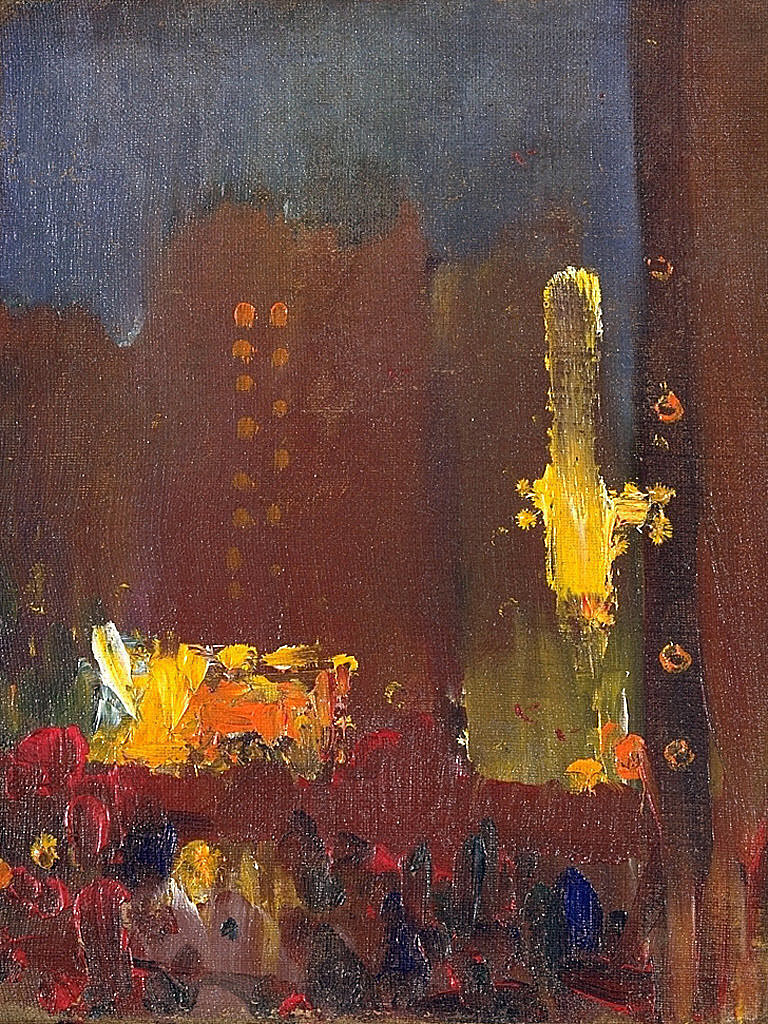
Featured Art: New York Street, 1902 by Childe Hassam

In his leather snap cap & undertaker’s suit of
shiny polyester black, one of those resisters
of the transmitted order—an aging Marxist lost boy—
alarm all over his shyly determined, axe-sharp face,
tho a shadow falls upon that face, a gloom
cast by the screen flash of corporations gaming
the go-flo of dollars & broadband—he stands
with umbrella outside Starbucks & silently
hands out pamphlets, shucked by cold tourists.
Does he have set rounds at subway stations
and parks full of volatile sleepwalkers? Maybe
he haunts the doorway of Filene’s at tag end
of Presidents’ Day sales? Does he have a day
job? wife or boyfriend? For change of pace
does he sit in his kitchen obsessively scanning
the box scores of road trip double-headers?
Or is he always thinking how the world should
be honorable, justice at hand?—like my old
teacher in the dim Boston University lecture hall
Howard Zinn—your life, he said, drives
history—you can’t be neutral on a moving train—
he died yesterday at 87 but left with his view
still alive & intact of liberation possible for all.


Read More

Scooter

By David Rivard

Featured Art: City at Night by Arthur B. Carles

Phil Rizzuto, shortstop, the Yankees’
Scooter & play-by-play announcer & The Money Store’s
man of a certifiably trustworthy nature,
but invented for me first in war stories told
by my father—
on a South Pacific island naval air station
maybe it’d be fun to put Scooter
in the game, brass thinks
a sports star visitor to war zone
great theater of operations P.R.—
but basketball, not
civilization-beating baseball, basketball
my father’s game—
“I could take him,
he couldn’t get by
me”: sayeth Norman
Rivard, testimony of
a former All-State point guard
1942 season Mass state champs
team captain
Durfee High School Fall River;
his torpedoed destroyer sunk
by a two-man Japanese sub
(a sake brewers’ assistant & an Imperial War College ensign?),
a few days earlier their suicide mission
had sent my father
to the base, rescued
just in time for Scooter’s morale boosting
visit, the two together on an asphalt court
in cosmic time Holy Cow!
an immortal, lucky accident—
but will, pride, intensity
count more for Norman—“don’t depend on luck
OK, why don’t you just apply yourself?”
my father’s question, frustrated by
his distracted, blurry
son—
apply yourself, stay on track,
stick to it, that’s the thing,
you’ll adhere
successfully to whatever you want
(not sure I know what the wanting is for even now),
you can be
an architect, trial lawyer, oncologist, surveyor,
if only you apply yourself—
like a wing decal on the model
of a Mustang P-51 Fighter
or whiskey dried in a glass-sized ring
on a liquor cart?—
skim the ear wax off your eardrums,
Dad—here is your poet, & here
is your poem.


Read More

At a Pet Shop

By Tom Whalen

Featured Art: Red Parrot on the Branch of a Tree by Ito Jakuchu

When the parrot took the cracker I offered, it said:

“Thank you, my friend. You’re the first person to give me anything to eat in decades. There is no a priori order of things. I thought I had been living the good life, but what did I know? The poet fell sick, traveled to the capital, needed words, painted his curtains bright green. A sumptuous village girl threatened me with a cheap lighter. Night after night watching the corpses of rodents turn to bone. I remember when my mother took me to the city, remember how her perfume gave me a high. After that it took me years to find a mate. Night work. Elocution lessons. A treatise on Gorgias’ Encomium of Helen. I kept to the plan I started with. Death is not an experience, food is.”

Then it fell from its perch with a thump, and from its beak an ant exited soaked in the parrot’s blood.


Read More

probity

By Michael Casey

Featured Art: Bathers 1890/94 by Paul Cézanne

with a singular total probity
he fantasizes about women in our building
the actual social interaction is nil
or rather minimal and centers around coffee lines
the young coffee lady
at the corner stand he calls Casmira
her real name is Dishwava
but he doesn’t like that name
Diswaba the deck he says
and the large-hair customer at the IHS stand
he calls Ingrid
and the willowy customer on the HR floor
he names Karen
you can imagine his surprise when
he found out Karen’s real name is Karen
subconsciously now he thinks
there’s a mind connection
the world yet a more beautiful place
there are single women in our office
attractive and even affable
why don’t you pay some attention to them
I ask he says he read somewhere
how an in-office relationship
is bad very bad
if one is looking for happiness


Read More

this is it

By Michael Casey

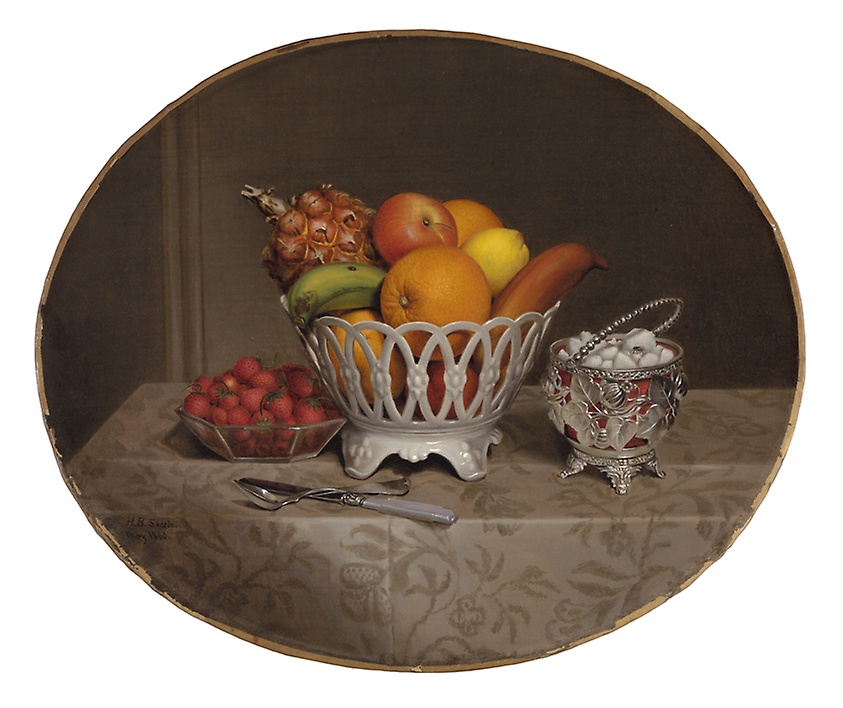
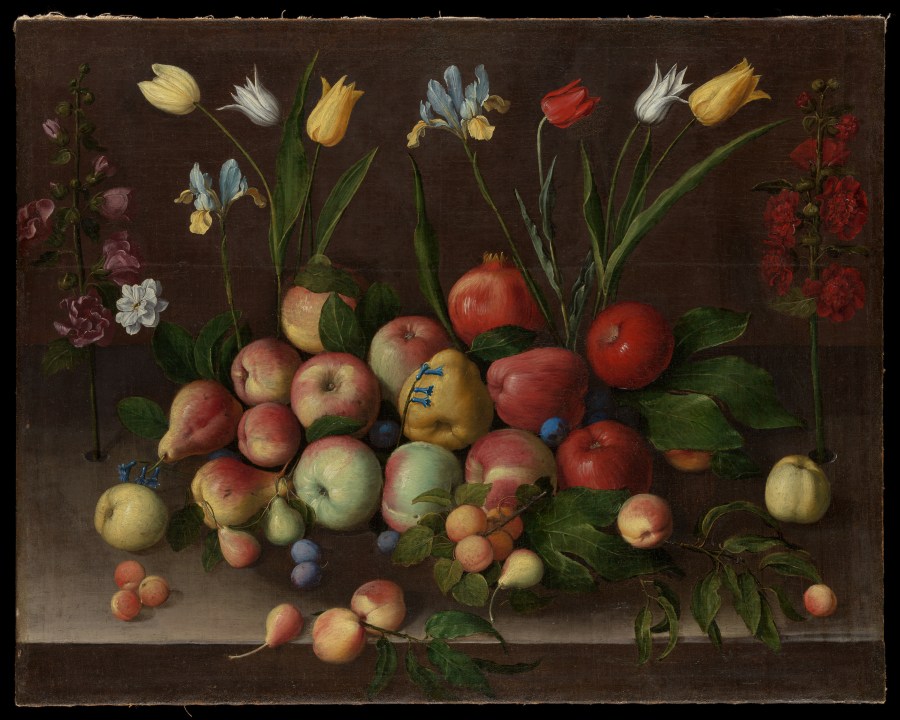
Featured Art: Fruit Piece by Hannah Brown Skeele

about the new guy?
this is the thing
he misappropriates
as in you’ve seen
my banana-label collection
stickers on bananas
I have the original collection
that exists in the office
he saw what I was doing
and he copies it
he has a collection now
and I assure you
it is not as extensive
as egregious
as mine
although I am wondering how
he got so many different Ecuadors
but how can you be civil
with someone essentially a thief
other than that he’s all right


Read More

for Claude Monet

By Michael Casey

Featured Art: Water Lilies by Claude Monet

I mean the excitement level
was just about in negative numbers
as my sister’s basketball team
lost its seventh straight
and after it
the girls are jumping up and down
in total glee
genuine happihappihappiness
the reason? they broke the magic number
ten in the losing score
they didn’t actually break it
but they finally made it to that number
no sense of perspective
in art too you have to see
my sister’s painting
of the flour mill with water wheel
the central subject of which is a frog
amidst the water lilies


Read More

My Lovers #1-5, or Why I Hate Kenny Rogers

By Donna Baier Stein

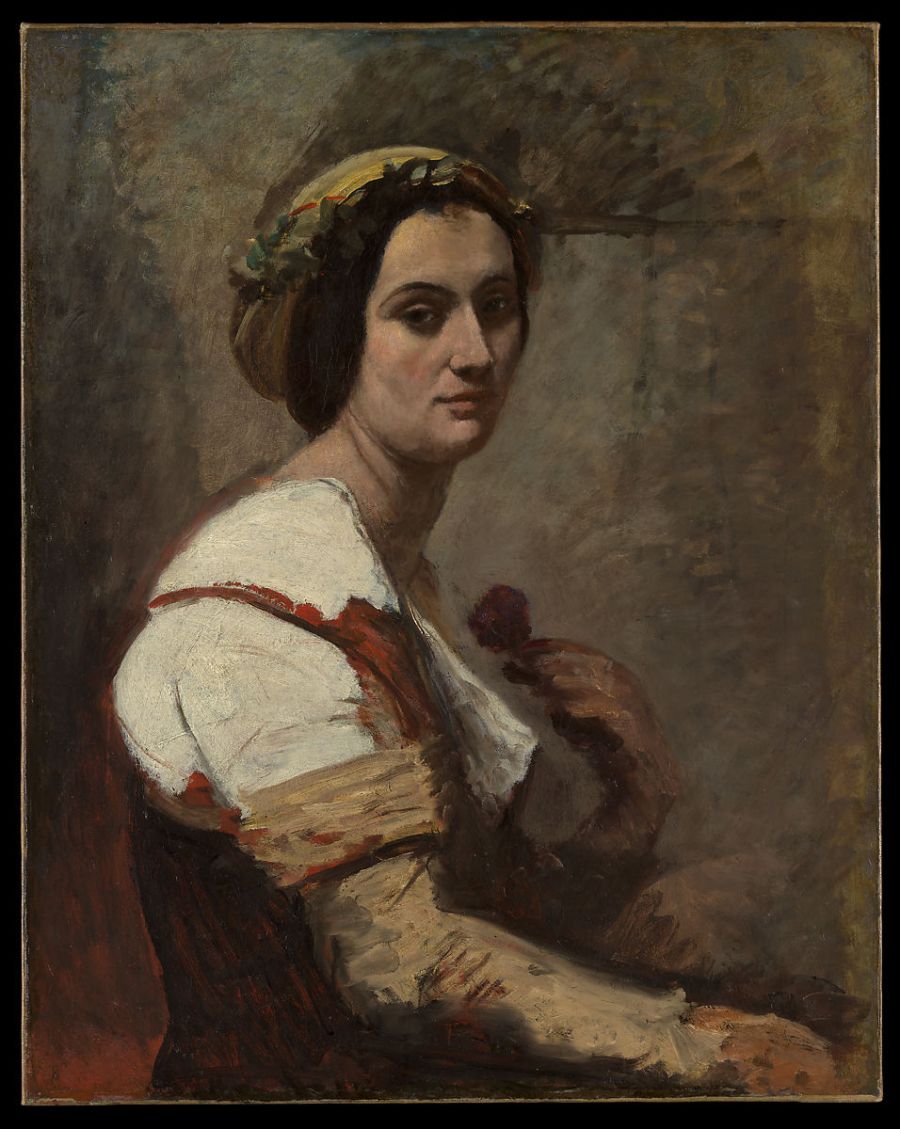
Featured Art: Sibylle by Camille Corot

What follows is by way of explaining what happened last Sunday, when I had more of a brush with sex than I’ve had in the five years since my divorce. What follows may explain my disappointment.

You see, the first man I fell in love with turned out to be gay and hanged himself from a tree along Highway 1 in California.

The second left me when I got pregnant. He was much shorter than me but had lovely lips and gentle eyes.

The third seemed promising: great sex, red-gold hair, tall. We met in a magical way. At a certain time on a certain day of the week, we passed each other going opposite directions on the campus of the University of Kansas. This was the sidewalk near the Student Union, which was burned down by hippies in 1972. I may have known one of the people who did it but I’m not positive about that. If it was the person I’m thinking of, he’s now an executive at an insurance company in Florida, with two kids.

Read More

Rats

By Rosanna Warren

Featured Art: Augustus Saint Gaudens II (Saint Gaudens and his model) by Anders Zorn

As if you rose out of your coffin—as if
my heart was your coffin—you rose
yesterday in the sapphire faceted light
of syringes, hospital sheets, and toxic Niagara mist
you painted into a glossy forever.
I felt again your weight upon me
that Manhattan night in our quasi-childhood.
You moved lovelessly upon me, almost angry—
anger I almost allowed myself to know—
as we lay on a borrowed floor trying to make
what might be called love. You broke
each spell. The way Proust discovered love
in captured rats squealing as the hat pin probed
their vital organs. I was a slow student, I learned
dumbly, blindly. And graduated
to my own destructions. The white rats scamper
through your landscapes of pill bottles and blood,
chopped trees and massacred Adirondack deer
and I dream of knocking all the books off my shelf
so that in the light breaking from those pages
I might behold, not hold, your broken face.


Read More

The Skirts and Blouses are Hatched

By  Tam Lin Neville

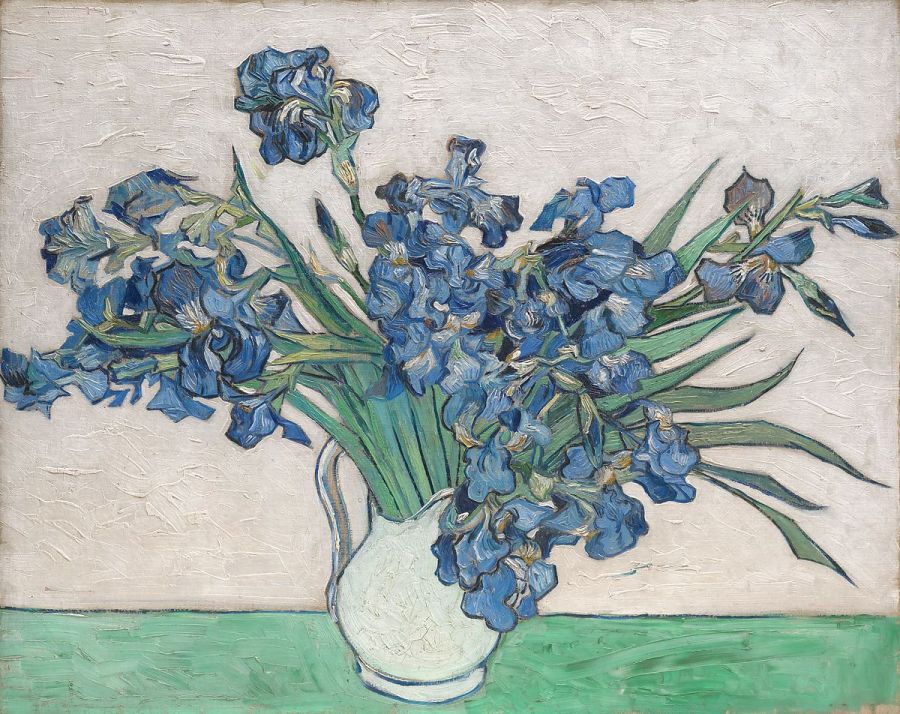
Featured Art: Irises by Van Gogh

My mother had been failing for several years, slowly, but minimized the signs. We, her five grown children, were not to worry or be diverted from our lives. When it came, the time of her dying seemed to open of its own accord, its span neither too short nor too long. We had several weeks to talk, to tie up loose ends before the illness closed in and became a kind of weather we could no longer work around. On December 14, l997 she died at home in the company of her children and grandchildren. Snow was falling in Keene Valley, the small town in the Adirondack Mountains where she had lived for thirty-five years.

Emily Neville, my mother, was a well-known writer for young adults, and my relationship with her, as the oldest, a daughter, and also a writer, is complicated. Sometimes it seems like a difficult poem I have memorized but don’t yet understand. During her lifetime I was wary of such a strong, capable figure so close to me. My Aunt Mary, the sibling closest to my mother in age, once remarked, “As a child there was no point in doing anything—Emily could always do it better.” But she was a gentle person with no heavy-handed ways an oldest child could legitimately dispute, though I did resist her increasingly as I entered my teens. Since she was almost universally liked and respected my opposition put me at odds, not only with my mother, but with everyone I knew.

Read More

Delivering Christmas Dinner to My Daughter, Second Shift Charge Nurse on the Alzheimer Floor

By  John Bargowski

  There’s no easy way in, or out,
warned the LPN who buzzed us past
the locked double doors,
  led me and my wife down the corridor
to the nurses’ station
  where a handsome man, tall,
and maybe sixty, wrung
his hands while he stood over
our daughter’s desk
repeating her name—
  the way we had at her birth
when we were listening in it
for the ring of a bell—
  begging her to walk him back
to school because he feared
the bullies who’d tripped him
and washed his face with snow
when he’d delivered papers
on his Ferry Street route,
  and before our daughter uncovered
the steaming dish we’d brought,
  she took his hand,
walked him around the floor
past wandering patients
and whirring machines
  then back to his room
to help him search for his galoshes
and gather his school books
  while his wife stood outside his door
reading the little wishes
in the greeting cards
taped to his tinseled
and holiday-lighted door frame,
  the hem of her velvet pants
dripping and salt-stained
from the parking lot slop,
  her Gloria hair-clip
with streaking star
and tarnished angel’s trumpet
blowing silvery notes
sideways through the frizz
  coming loose from her perm.


Read More

Up on Blocks

By Jim Daniels

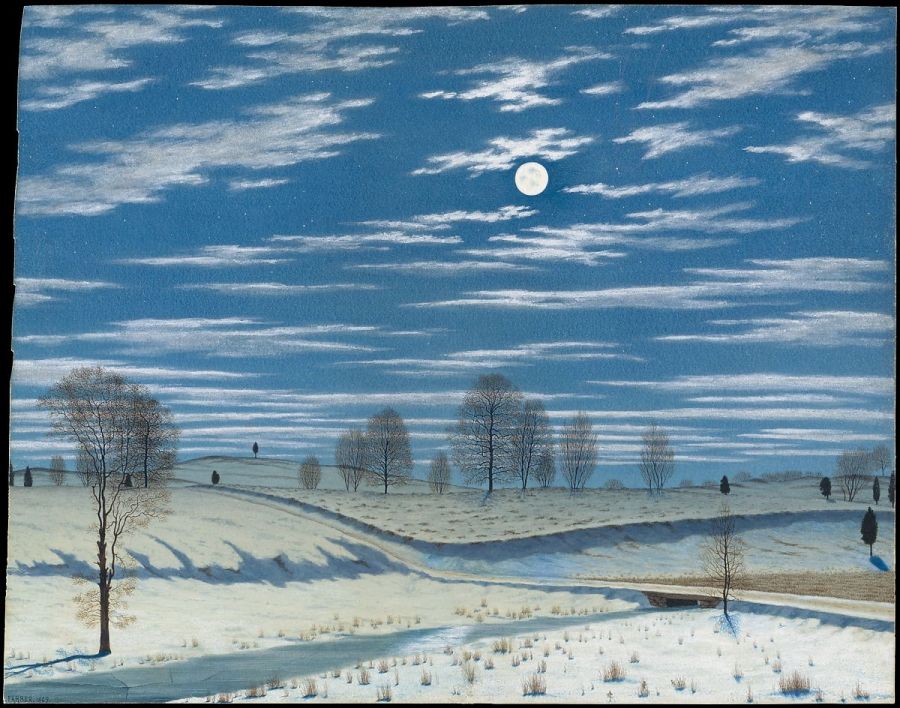
Featured Art: Winter Scene in Moonlight by Henry Farrer

His father limping
from his stroke,
throwing his lunch pail
into the back of his pickup
like some stubborn, gimpy
shot putter, then driving off
to the job they gave him
after his rehab: steering
a hi-lo through the greasy plant

after Danny died

one day recovering on the porch
he hollered for the ice-cream man
to stop, then bought us all popsicles

after Danny died

because his son—Vietnam—and so, and so.
He had a cough that could maul a lion
but he wouldn’t stop smoking

after Danny died

Read More

The House

By Brian Swann

Featured Art: The House on the Edge of the Village by Théophile-Alexandre Steinlen

Leaves twitch. A wren flits. A rope between trees sags. By the well-head a few stranded dandelions. Rain opens stones so they shine. A crow calls with the voice of a hammer. The rain stops. The sun enters with the voice of a crow. Heat turns day to distraction and the trapped mind wilts. A hawk calls and small mammals dive for cover. Sky goes carillon, dwindles, cooling off until the moon fills windows and stains rooms. A door swings and things go strange as if they had to. If you hear a voice you hear a voice. I walk through the empty house, carefully, a cat’s whisker. When I get to the top floor, over the moonlit roofs I can see the prison and the small zoo. They must be able to see me here where I’m training the self to lose itself, the way the stream ignores the stream.


Read More

The Novel

By Brian Swann

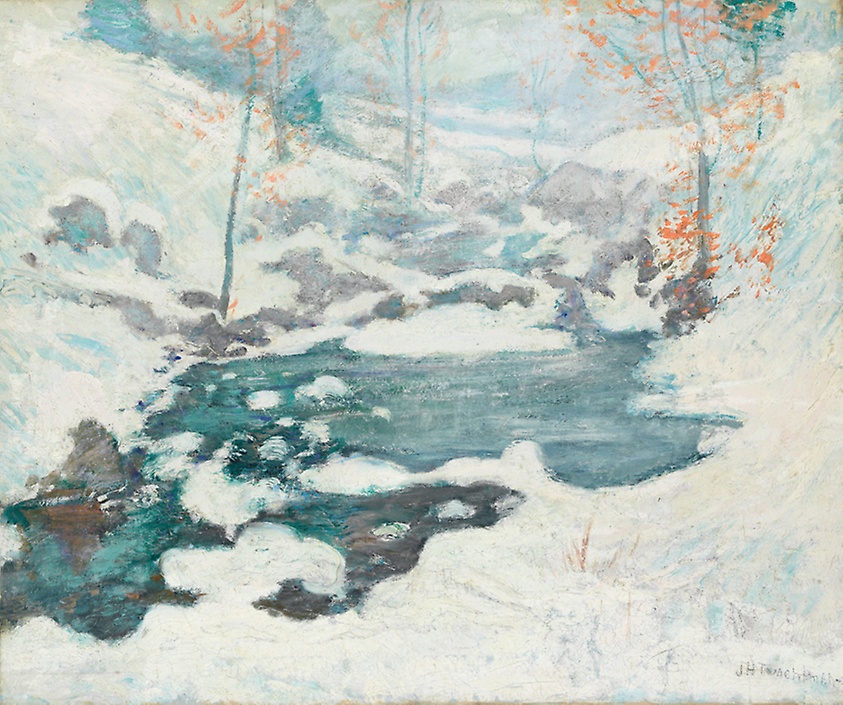
Featured Art: Icebound by John Henry Twachtman

In the novel I’m writing there are no people, no “characters.” And if you expect a plot you’ll be sorely disappointed. There’s little to count on and precious little to critique. Beautiful language is absent; there is almost no language of any sort so you won’t see any reviews praising its style or humanity. In my novel, each place is the same as any other place so there can be no confusion about where you are. The novel builds to no denouement because there is no nouement. And there are no epiphanies unless the reader realizes that not having one is something of an epiphany in itself. Symbols are everywhere these days so there are none in my novel. The storyline consists simply of turning a page which can be thought of as a narrative in itself. If the novel has more than a page this could present something of a problem. And if you’re looking for something that passes for wisdom this isn’t the place, though I do think I have retained a sense of adventure simply as a consequence of sequence. So here goes, though my novel, unlike any other novel I can think of, is very short so as not to test the reader’s powers of concentration and patience. As I said, there are no characters. The world is overpopulated as it is, so why make matters worse? Perhaps I should stop right here. There may be too many people, but there are certainly too few trees.


Read More

All Eyes

By Billy Collins

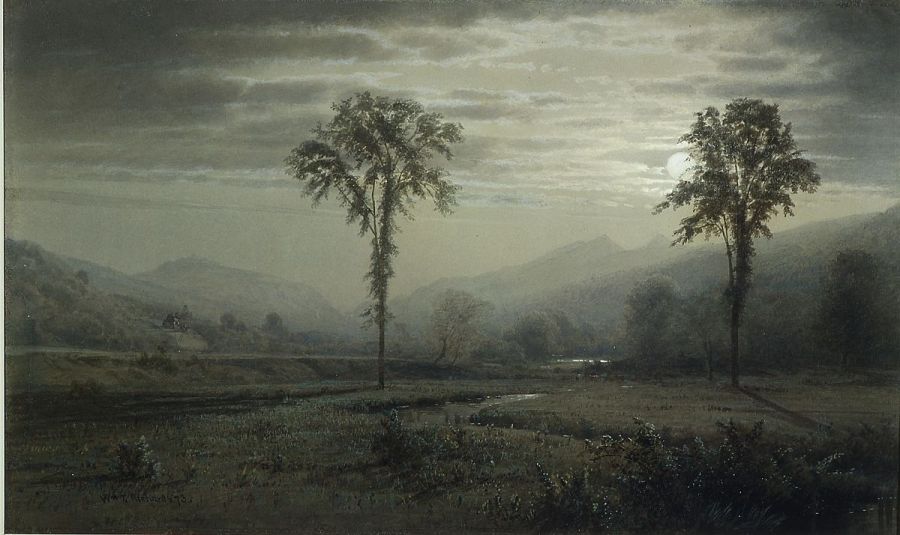
Featured Art: Moonlight on Mount Lafayette, New Hampshire by William Trost Richards

Just because I’m dead now doesn’t mean
I don’t exist any more.
All those eulogies and the obituary
in the corner of the newspaper
made me feel more vibrant than ever.

I’m here in some fashion,
maybe like a gust of wind
that disturbs the upper leaves,
or blows a hat around a corner,
or disperses a little cloud of mayflies over a stream.

What I like best about this
is you realizing you can no longer
get away with the things you used to
when it would be ten o’clock at night
and I wouldn’t know where you were.

I’m all ears, you liked to say
when you couldn’t bother listening.
And now I’m all eyes,
looking in every direction,
with one eye always open just for you.


Read More

Divinity

By Billy Collins

Featured Art: The Cock Sparrow by George Edwards

Up to this point
I had assumed that He and I
had little or nothing in common

but one morning as I sat
in a blue Adirondack chair
in the middle of an expanse of lawn

though I seemed only
to be staring into space,
I realized that I, too,

had my eye on a sparrow,
who hopped around a little
in the grass then hurriedly flew away.


Read More

Close Call

By Tamara Dean

Featured Art: Willows and White Poplars by Jean Baptiste Camille Corot

In the shower she takes a swig of beer, sets the bottle on the edge of the tub, and begins prying leeches, flat and large as house keys, from her cold toes, the top of her foot, her ankle. She places three in a line next to the bottle, where they lie motionless, though alive. Thinned blood threads over her feet. When she and Neil moved to the country four years ago, miles downriver from his family’s farm, he taught her to peel off leeches rather than douse them with salt, which he said might make them vomit and spread disease.

An hour ago, when she capsized, she didn’t feel the leeches take hold. She was alone. It was dusk. She looked up to greet a pair of bats when the kayak teetered, hit a tree recently fallen from the riverbank, and flipped. After a long moment, she surfaced. Sputtering, dog paddling, adrenaline-jarred, skin-tightened, throat splicing eddies, heels churning mud. She held the kayak and wrestled   to free it from the current and the willow it was pinned against. She imagined herself the puny accident bystander who suddenly has the strength to pull a giant, unconscious passenger from the wreckage. Even so, she worked half an hour to bring the kayak ashore, roll and empty it. Near dark, she returned for the paddle. More splashing, spitting, gulping, sinking in mud. More leeches latching on.

Read More

What Forever Means

By Maria Nazos

For some lovers, it’s two parallel lines inked smoothly through time
by God’s hand, until he can’t keep his wrist steady,

or his pen dries up, so one of you runs out of color. One partner tries to pencil
the other back to life,

reads a story from her youth while she lies half-awake, as
a somber hospice hovers.

For others forever is two lives chiming together then ending, just days apart,
softly as a bell with a broken tongue—

Your once dashing father’s end came with him shrinking into your couch beside
your mother, unable to speak aside

from a blurred whisper, “Alice, take me home. I want to die at home.” There’s
a woman whose husband

tenderly pulls back her robe like a curtain opened to caress her twin mastectomy
scars.

So, what does “forever” mean to us? Could it mean you at seventy and I at fifty
taking your blood

pressure, counting your pills? Or myself still nubile (never having been good)
leaving you for a younger man

whose hands are a poem. Forever could be you now: past middle age yet handsome
enough to make women gape,

leaving me for the blonde postmistress and her convertible and I (never good as
we’ve established) driving you to her.

But could forever be us in twenty years, trundling our cart down the supermarket’s
bright aisles, still bonding over our dislike

for designer croutons, still arguing over generic versus organic eggs? At night
still floating in bed, a tangle of limbs and torsos?

Me still asking you for permission I don’t need to cry into the confessional
screen of your chest,

while the sheets sail us into the smooth waves of sleep. Holding my waist like a
mast, you struggle

against the day’s siren song that sings so loud it drowns out the question so I
can’t ask you about forever, but instead

just allow it to linger in our air.


Read More

Memo

By Todd Hearon

Featured Art: Northeaster by Winslow Homer

We have to remember the stakes are merciless.
It takes more to get out of this life than what you put into it.

That didn’t come out right. It takes more
to get out of this life more than—

It takes a goddamned lot to get out of this life.

Nobody ever said it was going to be anything better
than a round of poker on the raft of the Medusa.

It’s not who wins the game that counts.
Nobody wins. It’s who gets out least lost.

Read More

No Try, Only Do

By Alan Rossi

Featured Art: Forêt de Compiègne by Berthe Morisot

I gave Saul a room. Two years prior, he had left me for Utah. He left me for the wild, for backcountry slopes. He wanted to be in glossy magazines and have his ponytail flowing out behind him in pictures, carving some mountain, dropping through powder. He spoke like this, dropping through powder. I tried to tell myself I couldn’t be too mad: he paid more attention to skis and skiing forums than he did to me. In Utah, he grew his hair long and beautiful and got in some of those magazines, though mainly he just put up pictures of himself on the Internet. I know, I looked at them all, wondering if he was thinking of me when he was hiking up the slopes, skis on his back, or whether he might get a distant glimpse of our life together when he was on top of one of those mountains and looked east. He was gone for two years, but to me it seemed a lot longer. I often thought about all the other girls he probably had sex with and how people probably loved him and how he was living this wild, free life, and I was still in East Tennessee with my brother and mother and the probably comparatively lame Blue Ridge. So when I found out he was coming back because he had seriously injured himself and could no longer carve or ride or hike or otherwise put his health in danger in backcountry powder, I was happy and told him he had a room waiting. I wanted him to come back in the same state he had left me in: miserable and alone.

Read More

Reciprocal

By James Davis May

Featured Art: Woman’s Head by Albert Besnard

She says, I think you think too much
when you talk dirty.

They are, in fact,
having sex when she says this—
he’s above her and had just kissed
the inside of her ankle, which now rests
on his shoulder. He asks what she means.

I mean, you’re too, I don’t know,
exact, like you’re trying to not sound stupid
even though that’s what you should sound like—
you shouldn’t be thinking.

                                           He slows down,
almost stops but doesn’t.
It’s the sort of comment, he thinks,
that would make a passionate person
stop and leave the room, then the house,
viciously dressing while cursing.
He doesn’t want to and isn’t even
that hurt, more perplexed, really:
how does one make a conscious effort
to become unconscious?

Read More

The Star of “Interstate”

By Chard deNiord

Featured Art: Afterglow by Jonas Lie

The clouds were curtains that parted onto the show
of sky above the scar of 89.
Oh, the big blue screen of autumn days
and score that featured mainly strings.
                                                                    Oh,
the epic Something, Then Nothing that opened as
a matinee but played into the night
on a single reel inside the room that housed
the machine.
                     I drove with one eye open and the other
closed.
           I couldn’t tell if the things I was seeing—
broken line, blinking light, leaping
deer—were live or frozen frames.
                                                           Were on
the road or in my mind, into which
I’d also driven at a dangerous speed.
I was bearing down in the passing lane inside
the theater of my Chevrolet.
                                                      I was seeing
myself through the lens of a windshield in the opposite
lane.
I could smell the sky with the windows closed.
I could hear her voice from every cloud, “Come home,
my love. Come home.”
                                           I believed there was still a way,
despite my fame as the man who flies, to return
as myself some day and give her the keys.


Read More

Crimes of the Video Age

By Bradley Bazzle

Selected as runner-up for the 2013 New Ohio Review Fiction Contest by Stuart Dybek

Featured Art: Decorative Study: Satyr by Aubrey Vincent Beardsley

In the spring of 1985, Ben lived with his friend Marco in a second-floor apartment near the college where they were sophomores. For fun they watched girls sunbathe down in the small back yard across the alley. They kept a potted ficus by the window to obscure their faces.

One day, while they were staring at the girls through the ficus leaves, Marco said he had an idea. He went down the hall and came back holding the VHS camcorder Ben got for Christmas and kept beneath his bed.

Marco said they should use the camcorder to film the girls. “That way we can watch them on the VCR at night,” he said, “when it’s more fun to watch sexy stuff.”

“No way,” Ben said.

“But we can pause it and look really hard.” Marco described in loving detail the way the girls’ bikini bottoms pinched their thighs and the way their breasts drooped to the sides when they lay on their backs.

Ben liked that stuff too, but he wondered if filming the girls didn’t make him and Marco weirdos. Instead of explaining this to Marco he said, “Don’t touch my stuff. Camcorders are expensive.”

Read More

Kodachrome

By Mark Cox

Featured Art: The Madame B Album by Marie-Blanche Hennelle Fournier

We don’t show these family slides much,
in part, because the projector overheats,
but also because we miss my father’s litanies
of the dead and their diseases:
congestive heart failure; cirrhosis; even gangrene—
their ravaged, cancer-eaten, over-stressed organs
recalled in official diagnoses,
each dry account closing
while the next was ratcheted into place,
dad pressing the remote control
as if it were the release button on a bomb sight.

To counterbalance, we kids attend less
to people than to things: the Coleman cooler
intact after twenty-seven years;
the spangled (barely) red felt stockings
in which we still stuff memory cards and batteries;
the untouched Hai Karate cologne; the flight jacket
Mom’s threatened for fifty-five years to toss.
It’s funny, self-deprecatory, even vaguely reassuring
until we get to the chilling reverse family portrait
in which we sat on the same couch
we’re now watching from,
looking forward to ourselves, some new upholstery,
and a smaller dog at our feet. There’s just
enough time for a last inside joke, for recognizing
the hard candy in its dish, pretending to spit out
the piece now diminishing in my mouth,
before the tone is torqued flush with our mortality.

Read More

Alcohol

By Mark Cox

In this faded family photo—
Horton, Kansas, ’36—
they are just two farmhands in overalls,
kept, by a bowed velvet cordon,
from some gala event. Except it’s a rattlesnake
strung between them,
five, perhaps six feet in length
and thick as my young father’s outstretched arms.
One might think his pride, that is,
anticipation of us,
would dictate looking at the camera,
but he seems to be eyeing
the slick, intricate patterns of risk
now relaxed in his hand.
Then again, given his uneasy, strained half-smile,
he could be checking my grandfather’s grip,
the snake so freshly dead,
making sure any reflex is under control—
suspecting the undulant weight of it,
that he could never really let go.


Read More

No Picnic in the Afterlife

By Mark Cox

Featured Art: Neith by Jean-François Champollion

                                    When I’m feeling down about the human condition, that is, my
                                    human condition, I consider all the crappy jobs I could have had
                                    in another life. An executioner, say, or worse, the one to cart the
                                    bodies away—there are more difficult things than poetry, aren’t
                                    there, I remind myself, what if I’d been a mummy maker, with
                                    a desiccation degree, that would be no cakewalk, mummifica-
                                    tion was an industry, thousands of ibises and sacred cats, bulls
                                    even—those whoppers took 40 days in the sun to dry and speak-
                                    ing of meat, sacred or no, the smell was awful (those long days
                                    under the blood-orange Egyptian sun, you never got used to it,
                                    when you went home your wife refused to make love with you),
                                    but it was an important job, this populating the afterlives of oth-
                                    ers, providing guard animals, and pets, not to mention massive
                                    quantities of foodstuffs, none of which could you sneak home,
                                    the guards always patting you down, Ra forbid your old lady
                                    should be grateful enough to give an inch or you should live even
                                    a little of the afterlife you made for others. No, it is your lot to
                                    cater that picnic in paradise, never to partake of it, you have to
                                    be committed, as I tell my students, it is a way of life. The priests,
                                    they did the people, they didn’t really get it, what it entails to
                                    mummify a goddamn bull or 15-foot crocodile—they were fuck-
                                    ing huge—and the baboons, you had to yank their canines, house-
                                    break them dentally, before putting them down. No, it is no small
                                    job to populate the afterlife, it takes a brutal tenderness, atten-
                                    tion to life’s cruel details, all that moisture in which we live, the
                                    very lubricant of our mobility, drawn out molecule by molecule,
                                    though we didn’t think so micro then, and there you were lacing
                                    up your sandals, grabbing some rice cakes and dates for lunch,
                                    leaving for work, which, though worse than poetry, as fates go,
                                    could have been truly horrific—you could be quarrying stone for
                                    temples (long hours on barges, mosquitoes big as dung beetles, no
                                    hazard pay)—No, you had your own role to slave over, supply-
                                    ing pharaohs and courtesans a kind of Noah’s ark of totems and
                                    sacrifices, right down to the royal cock fights, so who could blame
                                    you for amusing yourself with the occasional mummy joke—the
                                    kitten placed in the sarcophagus of a lion, an ibis in a crocodile,
                                    a fish inside the ibis, a scarab inside the fish. It got you through
                                    those long-ass days while the sweat was drawn out of you gram
                                    by gram or iota by iota or however by whatever they measured it,
                                    and for what? What was waiting at home? A woman who couldn’t
                                    bear the stink of death on you, who probably spent most of her
                                    day rubbing olive oil into some noble’s feet, and so you get home
                                    and heave yourself down on a grass mat and say there just has to
                                    be a better way than this, than this life I am living and your wife
                                    says quit your bitching, this once, I’ll get the oil, and here you are,
                                    back in your hut of baked mud and palm thatching, your staff
                                    and sandals propped by the front door and it is cooler here out
                                    of the sun, out of the way, a moment’s pause, an eddy in the Nile,
                                    and it doesn’t matter if your sweetheart has been anointing other
                                    men’s feet or polishing their silver till her hands blackened, or
                                    the Papyrus Monthly won’t publish your work—you are together
                                    now, in this life, in this moment and the sleeping baby has your
                                    nose and the over-pounded, unleavened, tooth-shattering bread
                                    is warm, so quit your whining, you could be humping pyramid
                                    blocks through sandstorms, you’ve got it good, you can’t even
                                    smell yourself anymore, you are golden, here, have a fig.


Read More

Doing Demolition Work Again

By  Jamie Thomas

Featured Art: Road in Etten by Vincent Van Gogh

What’s your next book going to be called,
Demolition Work Still Sucks But Here I Am Again?

—John (on the job site)

There is no larger truth here
that has found me helping
John and Ken again,
to tear out the master bathroom
of this wealthy couple in Washington Twp.,
except that work, hard labor, has overtaken me again—
no matter how many tricks I’ve used
to throw it off the scent—
and I am not at all happy about it,
and I am not all that used to it, my blood
on the shards of tile and grout
we’re prying from the shower.

But luckily there is this bucket for me
to sit on while we take lunch in silence.
My silence says I’ll be back to my classroom
in a couple more days; theirs says
the next job is tomorrow.
Together they say There is nothing waiting for us
there, on the other side
of a back-spasming day of work
except a paycheck—and the fact
that though we wake to another day
of the same grueling, tired sentence,
wake in fact we do.


Read More

Ichor

By David Wojahn

Featured Art: The Pearls of Aphrodite, 1907 by Herbert James Draper

              From the clear vein a stream immortal flow’d
              Such streams as issues from a wounded god.
              Pure emanation! Uncorrupted flood,
              Unlike our gross, diseas’d terrestrial blood…
              
                             – Pope’s Iliad, Book 5

Diomedes in his rampage cuts a hundred Trojans
      Down into the dust, a bulldozer
              Knocking over pines for another subdivision.

He is chainsaw, IED, a six-foot spinning razor,
      An Ugly Customer. In a helmet topped with boar-bristle,
              He’s hacking men to bits, his sword a red blur

& then he spies his prey, already spread-eagled,
      For a fellow Greek has flung his spear into the hipbone
              Of Prince Aeneas himself; its point burrows to marrow.

Spurting arterial blood, face against the dust, Aeneas moans
      & the blackness, Death’s imperious Stygian
              cloud, inevitable now, settles everywhere over him.

What can you do then but call out to mother, begging
      to die in her arms? Diomedes strides forward in his fury.
              This is what he came here for—to finish off a prince.

Read More

Ambassador of the Dead

By George Kalogeris

Selected as runner-up of the 2013 New Ohio Review Poetry Contest by Barbara Hamby

Featured Art: The Artist in His Studio by James McNeill Whistler

My parents were never crazy about Cavafy—
They didn’t know much about poetry, at all,
And barely had time to read anything but the papers;

Though sometimes a poem they liked would appear in their
Beloved Hellenic Voice. (A poem that was always
In rhyming stanzas, and deeply nostalgic.) Or else

I’d show them one of the Modern Greek poets that I
Was trying to translate, and ask for their advice
About a line. “Is this for school?” they’d say.

My parents were never crazy about Cavafy—
To them he was too refined, too ALEX-AN-
DRIAN, and they were only peasants, xhoríates.

And there was no Ithaka for them to go back to.
When I’d beg them to read the Greek, they’d balk when they got
To his purist kátharévousa diction—they just

Couldn’t stomach its formalist starch. His poems were never
Demotic enough, never trapέzeiká:
Songs to be sung across the kitchen table.

And if I read them Elytis, Odysseus Elytis
Too was too elitist to trust, too drunk
On the island sun of his own Ionian vision.

To people for whom elevation meant being raised
In the steepening shadows of Peloponnesos.
(“The great Odysseus,” my father would chide.)

And if Yannis Ritsos spoke their working-class language,
And his poems weren’t hard to follow, still, once they heard
That Ritsos was Marxist that’s all they needed to know.

Read More

Like a Struck Tuning Fork: On Translating Sound in Tranströmer’s “The Station”

By Patty Crane

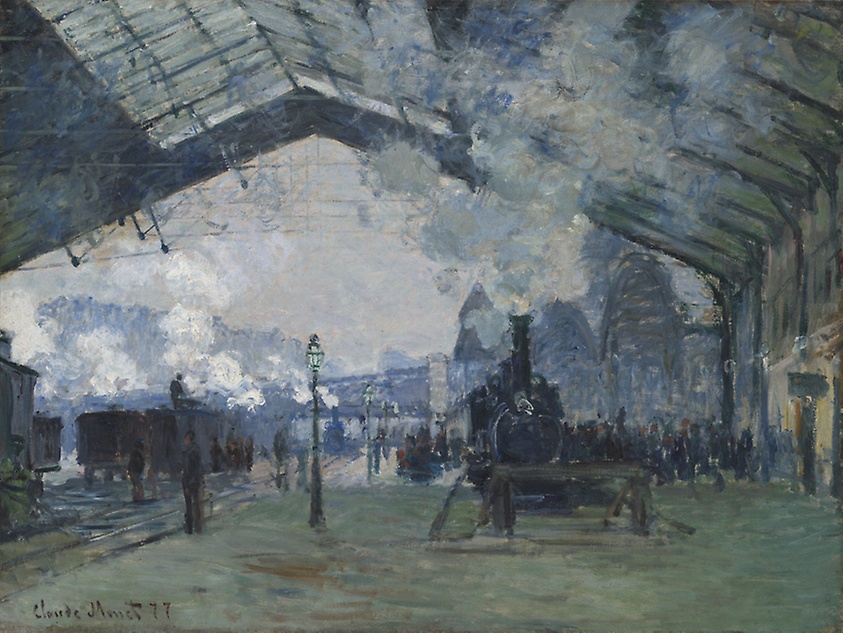
Featured Art: Arrival of the Normandy Train, Gare Saint-Lazare by Claude Monet

                                              The Station
              A train has rolled in. Car after car stands here,
              but no doors are opening, no one’s getting off or on.
              Are there any doors at all? Inside, it’s teeming
              with closed-in people milling back and forth.
              They’re staring out through the unyielding windows.
              And outside, a man walks along the train with a maul.
              He’s hitting the wheels, a faint ringing. Except right here!          7
              Here the sound swells unbelievably: a lightningstroke,                8
              a cathedral bell tolling, a round-the-world sound                        9
              that lifts the whole train and the region’s wet stones.                10
              Everything’s singing! You’ll remember this. Travel on!

In Tomas Tranströmer’s poem, “The Station,” from his ninth poetry collection, The Wild Market Square (1983), the ordinary scene of a train at the platform becomes a metaphor for something far from ordinary. The sound of the struck wheel widens beyond this singular everyday experience to contain the great mystery that surrounds our existence, a mysteriousness that, for a brief instant, feels as accessible as it does out of reach. This brings to mind Robert Bly’s often-cited remark about Tranströmer’s poems being “mysterious because the images have travelled a long way to get there.” “They are a sort of railway station,” he says. And quite literally so in “The Station,” where images arrive from vastly different points of origin and briefly stand together in the same place.

Read More

On Translating Choctaw Poems

By Marcia Haag

Featured Art: Sunset on the Sea by John Frederick Kensett 

The challenges of translating from one language to another are well discussed and lamented. These challenges increase when poetry is involved: not only must the meaning emerge, but the product must sound like something that could count as a poem. When working in a native American language, these problems are, frankly, insuperable, but we are not thereby let off the hook. I am a linguist and scholar of the Choctaw language who comes to translation indirectly.

It is not clear that native Americans composed much poetry. (How would we know? What’s the difference between a war chant and a poem?) One group that, to my reckoning, clearly composed lyrical poetry was the Uto-Aztecans. The southern tribes, the Mixteca, had writing, after all, and we have a bit of the stupendous lyrical literature that was left unburned when the Spanish chose to rid humanity of indigenous cultural artifacts.

Read More

Sense and Serendipity: The Masochistic Art of Translating Surrealism

By Mark Polizzotti

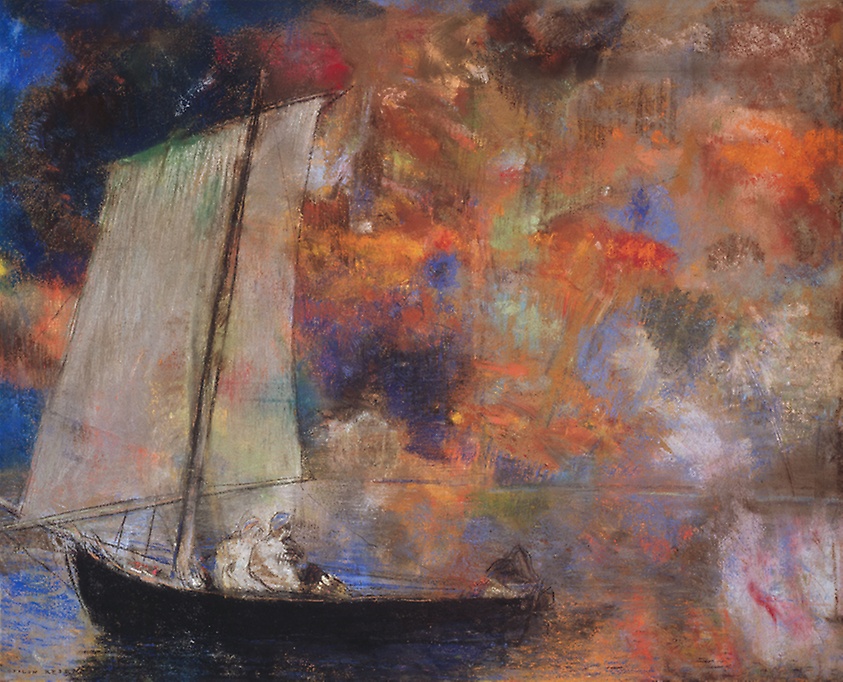
Featured Art: Flower Clouds by Odilon Redon

Surrealism was an art of serendipity. Its aesthetic and philosophy revolve around such elements as surprise, chance, marvel, and what the French call la trouvaille, the discovery, the treasure happened upon. André Breton argued repeatedly that the point of automatic writing—Surrealism’s first and most celebrated tool— was to provide Surrealism not with an exciting new literary technique but with a method of research, a doorway into unexploited mental processes that were within everyone’s reach. As he rather cheekily put it in the first Manifesto, “Language has been given to man so that he may make Surrealist use of it.”

The thing about serendipity, of course, is that it implies a fair amount of spontaneity and blind luck. You can’t plan chance occurrences. It’s one thing if you’re sitting at your favorite café table, paper at the ready and pen poised to take flight. It’s quite another if you’re trying to recreate, in another language, someone else’s experience of that flight, and this is where translation and automatic writing begin speaking at cross-purposes. The trick here, in other words, is that we’re dealing with a text composed (supposedly, at least) in a trance-like flow, in which one word or phrase begets the next, begets the next. The first challenge is to make the translation sound as if it was composed in the same way, but there’s more to it than that: there’s also a psychological element. The mental process that might generate a flux of words in French is rarely the same as the process in English.

Read More

Finding the Just Name: On Translating Ismailov

By Robert Chandler

Featured Art: The Sea by Gustave Courbet

One of the most difficult works I have translated from Russian is Hamid Ismailov’s The Railway. This novel has a huge geographical sweep, taking in not only most of Soviet Central Asia, but also Iran, Afghanistan and parts of European Russia and western Europe. It incorporates a great deal of twentieth-century political and cultural history. It comprises many separate stories, often linked together only tangentially. It is full of unfamiliar real-life detail—Soviet, Muslim, and (most bewilderingly of all) Muslim-with-a-Soviet-veneer-to-make-it-acceptable-to-the-authorities. And there are at least 137 different characters. How could I make all this not only comprehensible to people from another world but also interesting and enjoyable for them? One approach would be to simplify. The publishers of the French translation omitted about half the chapters, leaving out everything that did not relate to the story of the novel’s central family. I have no doubt that this stripped-down version has its merits, but this is not the way I wanted to go myself. The Railway is exuberant and Rabelaisian, full of slogans, spells and curses; Hamid (the author and I are close friends, so I shall refer to him by his first name) is deeply aware of the power of fantasy, of the way words beget words and stories beget stories, of the power of language to create reality. I did not want to sacrifice this exuberance.

Read More

On Translating Thai Artist Wisut Ponnimit from Japanese to English

By Matthew Chozick

Featured Art: Head of a Woman with Bent Head by André Derain

                        Tuk-tuks, manga as literature, onomatopoeia, Valentine’s Day

My wife and I climb with light luggage into the back of a three-wheeled Thai taxi, a tuk-tuk. As we drive off, city lights and a pink sunset blend marvelously together. Our tuk-tuk weaves through traffic as I see a gold adorned Buddhist pavilion, a Burmese-Mexican burrito restaurant, and then a Yamaha motorcycle dealership. It is, incidentally, from the land of Yamaha that we have just arrived by airplane.

Far away from our home in Tokyo, I’ll spend the week finishing an English translation for Wisut Ponnimit, Japan’s celebrated Thai author and illustrator. Wisut, who learned Japanese as an adult and now writes in the language, happens to be holding a joint art exhibition in Bangkok with Tokyo-based photographer Kotori Kawashima. Before attending the gallery show and conferencing with Wisut, there are a few difficulties to resolve with translating his manga book, Him Her That.

Read More

The Stones and the Earth: On translating Wiesław Myśliwski’s Stone Upon Stone

By Bill Johnston

Featured Art: Alpine Scene by Gustave Doré

Wiesław Myśliwski’s magisterial 1984 novel of Polish village life Stone Upon Stone (Kamień na kamieniu) is a text in which language plays a central role. The entire novel reads like a magnificent sustained spoken monologue; Myśliwski’s gift for conveying the pithy, unsentimental wisdom of peasant language is apparent in every sentence, and it is language, not story, that ultimately drives the narrative and makes the book the masterpiece it is.

In the more than five-hundred pages of this astounding book, no word is more central than ziemia. Yet at the same time, no word is more untranslatable into English—despite the fact that ziemia is a seemingly ordinary, everyday word. The problem is that ziemia, unremarkable as it is, occupies the semantic space of several equally ordinary, overlapping notions in English. Foremost among these English meanings are: earth, in meanings such as that of one of the four classical elements, contrasted with air, water, and fire (it is, for example, the name of our planet in Polish); land, as in something one can farm, and that is measured in acres—it also appears in Polish in phrases such as “homeland” and “promised land,” and in this meaning is used in a phrase like “on land” to contrast with “on the sea”; ground, for instance in a phrase such as “lying on the ground” or “the ground under one’s feet”; and soil, the actual material in which one grows things.

Read More

On Translating C.P. Cavafy’s “Come, O King of the Lacedaimonians”

By George Economou

Featured Art: Green and Blue: The Dancer by James McNeill Whistler

                         Άγε, ω βασιλεύ Λακεδαιμονίων

           Δεν καταδέχονταν η Κρατησίκλεια
           ο κόσμος να την δει να κλαίει και να θρηνεί·
           και μεγαλοπρεπής εβάδιζε και σιωπηλή.
           Τίποτε δεν απόδειχνε η ατάραχη μορφή της
           απ’ τον καϋμό και τα τυράννια της.
           Μα όσο και νάναι μια στιγμή δεν βάσταξε·
           και πριν στο άθλιο πλοίο μπει να πάει στην Aλεξάνδρεια,
           πήρε τον υιό της στον ναό του Ποσειδώνος,
           και μόνοι σαν βρεθήκαν τον αγκάλιασε
           και τον ασπάζονταν, «διαλγούντα», λέγει
           ο Πλούταρχος, «και συντεταραγμένον».
           Όμως ο δυνατός της χαρακτήρ επάσχισε·
           και συνελθούσα η θαυμασία γυναίκα
           είπε στον Κλεομένη «Άγε, ω βασιλεύ
           Λακεδαιμονίων, όπως, επάν έξω
           γενώμεθα, μηδείς ίδη δακρύοντας
           ημάς μηδέ ανάξιόν τι της Σπάρτης
           ποιούντας. Τούτο γαρ εφ’ ημίν μόνον·
           αι τύχαι δε, όπως αν ο δαίμων διδώ, πάρεισι.»

           Και μες στο πλοίο μπήκε, πηαίνοντας προς το «διδώ».

                         Come, O King of the Lacedaimonians

           Cratisicleia did not deign to allow
           the people to see her weeping and grieving;
           she walked in stately silence.
           Her serene demeanor revealed
           nothing of her sorrow and her torments.
           But even so, for a moment she couldn’t contain herself;
           and before she boarded the hateful ship for Alexandria,
           she took her son to Poseidon’s temple,
           and when they were alone she embraced him
           and kissed him, who was “suffering grievous pain,” says
           Plutarch, “in a state of conturbation.”
           But her strong character fought back;
           and regaining her self-composure, the magnificent woman
           said to Cleomenes, “Come, O King of the
           Lacedaimonians, when we come out
           of here, let no one see us weeping
           or acting in any way unworthy
           of Sparta. For this alone is in our power;
           our fortune will be only what the god might give.”

           And she boarded the ship, heading for that “might give.”

Read More

The Homophonic Imagination: On Translating Modern Greek Poetry

By Karen Van Dyck

Featured art: Two Pupils in Greek Dress by Thomas Eakins

When I translated Jenny Mastoraki’s prose poem “The Unfortunate Brides” (1983) I drew on the beat and even the syllabic count of the Greek to create a rhythm that was legible, but new in English:

               . . . the way a roóster lights up Hádes, or a gílded jaw the speéchless night,
               a beást jángling on the rún, and the ríder búbbles up góld.

For Anglophone readers, the four phrases make up a recognizable stanza, though somewhat unusual with two long beats in the first two phrases and three shorter, faster ones in the last two. Newness arose not simply from the surreal imagery, but from the sound on which it rode.

To focus on the sound of the source text is to run counter to the dominant translation strategy, which focuses on meaning. This is true more generally, but also in the case of Modern Greek poetry. Translations such as those by Edmund Keeley and Phillip Sherrard introduced the poetry of C. P. Cavafy, George Sef-eris, Odysseas Elytes and Yannis Ritsos in an idiom that reads easily in English and makes the living tradition of myth and history readily available to an Anglophone audience.

Read More

New Ohio Review Issue 13 (Originally printed Spring 2013)

Newohioreview.org is archiving previous editions as they originally appeared. We are pairing the pieces with curated art work, as well as select audio recordings. In collaboration with our past contributors, we are happy to (re)-present this outstanding work.

Issue 13 compiled by Will Bower.

Not Ready for Our Close-Up

By Elton Glaser

Featured Art: Portrait of Jeanne Wenz by Henri de Toulouse-Lautrec

So here we are, helpless among the infinities,
Like noonday devils with the midnight blues.

It’s no use looking for clues in the cradle or the cave.
They’re having none of it down at the U, the cranky professors

And the poets won’t tuck us in with milk and macaroons,
With the sleepy rise and fall of blanket verse.

The mind makes its way among the mazes, inconsolable, quick,
The cross-eyed love child of amnesia fucked by adrenaline.

We might as well steal some Etruscan tear jars for the soulwater.
We might as well scrape a pig’s ear to flavor the beans.

It’s going to be a long night of gossip among the isolatoes,
Candles writhing their light against the slippery walls.


Read More

Namaste

By George Bilgere

Featured Art: Madame François Buron by Jacques-Louis David

The slender, balding fellow
walking out of the yoga center
with his neatly rolled up yoga mat
and seraphic, post-yoga glow
probably thinks he is superior to me
as I clump down the sidewalk with my poor posture
and relatively limited spinal flexibility, my failure
to think deeply, if at all, about my breathing.

Which is fine. He’s entitled to his opinion.

However, what he doesn’t realize
is that I live on the same street as he does
and I happen to know, from walking past his house
on garbage day, that he makes no effort whatsoever
to recycle. Newspapers, bottles, plastic containers—
the things you’re supposed to put in the blue bag—
he just sticks in the white bag, along with the coffee grounds
and cantaloupe halves and the rest of the so-called “wet” trash.
Even beer cans are in there (a cheap, off-brand beer, I might add).

I guess saving the planet isn’t that important to him,
compared with mastering Down Dog or Up Dog or whatever.

So here he is feeling superior to me,
whereas in fact I am the more evolved being,
and I give him a glance of cool, skeptical appraisal
which I hope conveys this.


Read More

Snorkeling

By Allison Funk

Featured Art: Solar Effect in the Clouds-Ocean by Gustave Le Gray

What if, late in my life,
an old love returned?
I might get carried away

as I did my first time in that otherworld
ablaze with coney
and neon blue tang,

soundless except for the resonance
of my breath, a hypnotic
one-two, now/then, why not

me, you. I must have seen
the stoplight parrotfish
beam red from a grotto,

but, heedless, sped up,
flippers propelling me over coral
resembling Gaudí’s Sagrada Familia

still unfinished after a hundred years.
Remembering my past,
I circled the remains

of countless marine animals.
Fragile memorials, yes,
but not harmless I’d learn:

the thousand mouths of the reef
that open out of hunger,
alive to the careless swimmer

who comes too close.
One who, succumbing to the pull
of the beautiful, swims out

so far she finds herself at the mercy
of surf that flings her
against the stinging ridge.

Cells meeting cells, tentacles, flesh,
she’s left with the mark
of a fiery ring that burns longer

than a slap. Weeks. Months.
A tattoo that may never fade
from the soft underside of her arm.


Read More

June

By Michael Bazzett

Featured Art: The Sick Child I by Edvard Munch

Stray hair is pulled from the lapel of her favorite
wool coat years later in a secondhand shop, drawn
free in a quick, definitive gesture that could only
be called thoughtless. It settles on the worn carpet
while another woman’s hand holds the hanger and
drapes the coat across her chest—she eyes it

in the mirror with an air of cold appraisal, breath
rising and falling, her chest plumbed with valves
pulsing mindlessly, the forgotten hair underfoot
still holding the map and code of everything
another woman was: the face with the furrowed brow
that could fold and break into a lightning smile,
a woman with a knack for contentment and
quick anger that dispersed as clouds over hills.

An arm slips in and she feels the cool silk lining
on her bare skin. It is June. She does not need a coat
but her mind craves autumn and being wrapped
in well-wrought layers. She slips the other arm in
and hugs herself, snugging the coat to her waist,
wrapping it like a kimono, Yes, she thinks, seeing
an older version of herself walking through a park—
the image comes suddenly, like rain from nowhere.


Read More

Nothing

By Lawrence Raab

Featured Art: Georgia O’Keeffe—Hands and Thimble by Alfred Stieglitz

Why not believe death is also nothing?
—Dean Young

Sometimes nothing’s a glass
waiting to be filled, and sometimes

it’s sleep without dreams, a blank slate
no one gets to leave a message on,

that sheet of water boys skip stones across
to watch them vanish. And sometimes

nothing’s only a word that can hide
what it means inside what it means.

But when I’ve seen death it’s looked
like betrayal, like life taking back

what it promised, slowly picking
our friends apart until nothing

must feel like an answer, and death
slips into the room pretending to care.

Did it brush by me just now,
did it mean to touch my hand?


Read More

The Nod

By Kenneth Hart

Featured Art: Bar-room Scene by William Sidney Mount

Guys like us, we nod to each other
when we pass on the street at night.
We get that things are okay at the moment.
The Nod says, you-don’t-mess-with-me,
I-don’t-mess-with-you. That’s how it is
with guys like us, because the world is a bad place—
that we get—and we get that guys like us
have something to do with it.
But not tonight: you’re black, I’m white, we’re both
black or white, whatever, we’re cool,
nobody’s going to throw hands,
—who said anything about throwing hands?
Because it’s not a look, nobody says
“What are you lookin’ at, dipshit?”
No. The Nod reflects and respects
and steers clear of trouble. It says
we acknowledge our mutual suspicion,
which masks our fear
(we both get that The Nod is part mask).
The Nod: Okay bud, I’d drag you out
of a burning building, you’d pick me up
if I fell off a barstool, cool, we know that,
just don’t ask anything of me right now
unless it’s some kind of fucking emergency.
I’m on my way somewhere.


Read More

Couples

By Kenneth Hart

Featured Art: Underworld Scene with a Man and Woman Enthroned and Death Standing Guard by Robert Caney

Couples who fight in front of you.
Couples who call each other every hour.
Couples who show up early.
Couples who are business partners.

Couples who say “Absolutely.”
Couples who met in rehab.
Couples who sleep with other couples.
Couples who make out in front of you.

Couples who have been divorced more than twice.
Couples who should get divorced.
Couples who say they are not a couple.
Cocaine couples.

Couples who stop having sex.
Couples who tell you they stopped having sex.
Couples who think you don’t already know.
Couples who say “Absolutely.”

Couples you’re related to.
Couples who leave the television on.
Couples who wear matching t-shirts.
Football couples.

Couples who have “an arrangement.”
Couples who finish each other’s sentences.
Couples who have no one else to argue with.
Couples who never argue.

Couples who cancel each other’s vote.
Couples who speak the language of couples.
Couples with nicknames for each other.
Dog show couples.

Couples who stop calling now that they’re a couple.
Couples who start calling.
Couples who die within a month of each other.
Oh look, honey, at ourselves.


Read More

Never Better

By Mark Kraushaar

Featured Art: Kalaat el Hosn (Castle of the Knights, Syria) by Louis De Clercq

On the phone tonight
it’s my ex-wife asking how I am.
I’m fine, thanks, you?
Well, she’s fine too: new place,
friends, job, cousin, pet: perfect.
But now she’s back on her friends again,
friends, food, movies, books and I think,
She sat where I’m sitting now,
I remember, looked out
at the back yard, the neighbor’s car,
the sapling maple at the curb.
She’d have used this plate,
that glass, this chair.
She’s still talking and I like her voice—
politics, work, winter weather—except
there’s this private inside silence going on
and maybe it’s mine but I think it’s hers, or,
it’s a kind of leaning forward through the phone
meaning if we could talk the way we
used to talk we’d know better
where to go and what to do
when we arrive.
We’re quiet
and I can hear her
hear me hear this silence
fill with implication and we’re still.


Read More

Earning a Title

By Jaclyn Dwyer

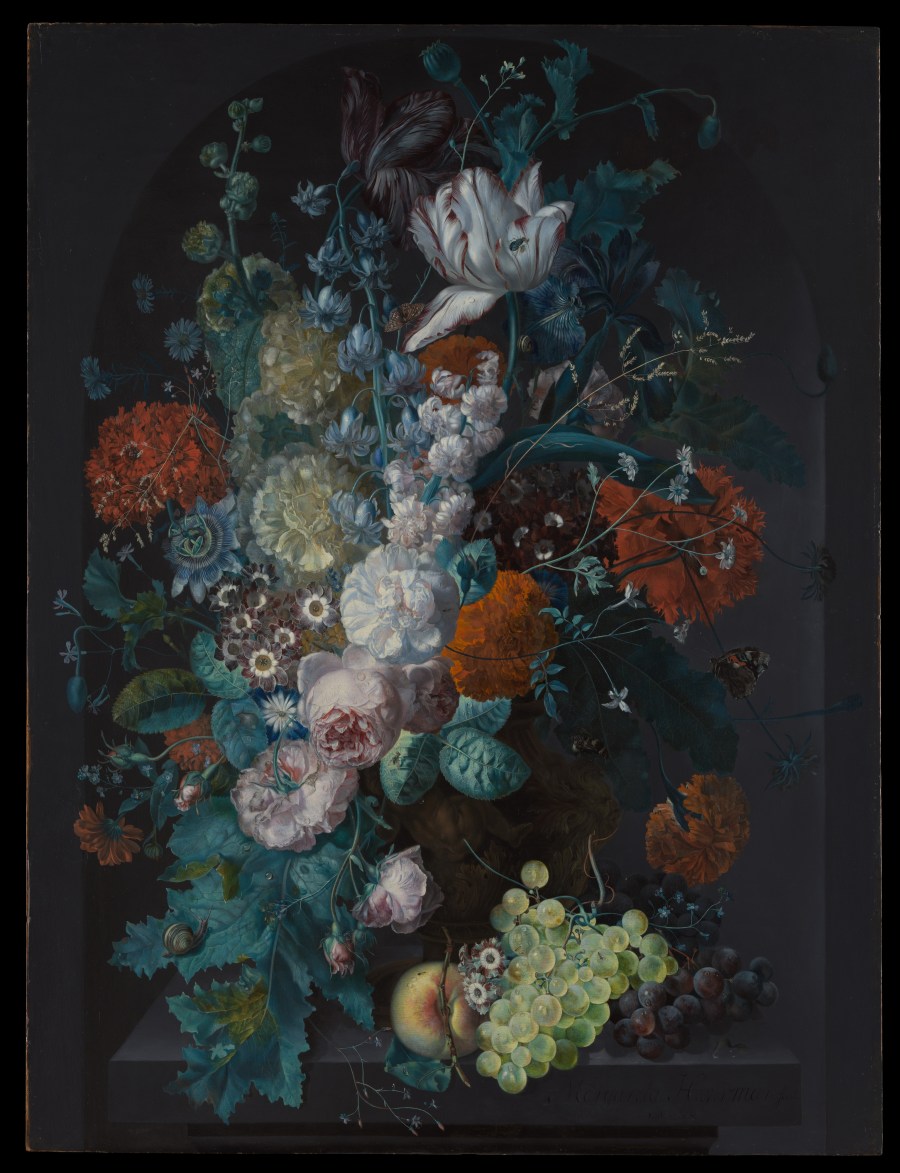
Featured Art: Bouquet of Spring Flowers in a Terracotta Vase by Jan van Huysum

Your ex is a skinny girl. Skinny like sex-
starved cats, like tigers in Thailand teased
with soccer balls in plastic wrap. Your ex
is a crushed mustard seed. She stains our sheets,
cowers in soft earth, and runs from every room
I enter, wind teasing a tail. Your ex is a sieve,
a fallen kite, Cyrillic G, a flattened hook. You
ask if I love you. I answer, I do. Do you forgive
me? I do. Do you forgive her? I say I do, practicing
for what comes next, for the question she never got
asked. Will you? Do you take? The path to proving
my nubility is through humility. When she mocks
me on the Internet, pokes fun in posts, I laugh too.
Did I say nubile? I mean nobility. Really, I do.


Read More

The Rules of the Game

By Simon Barker

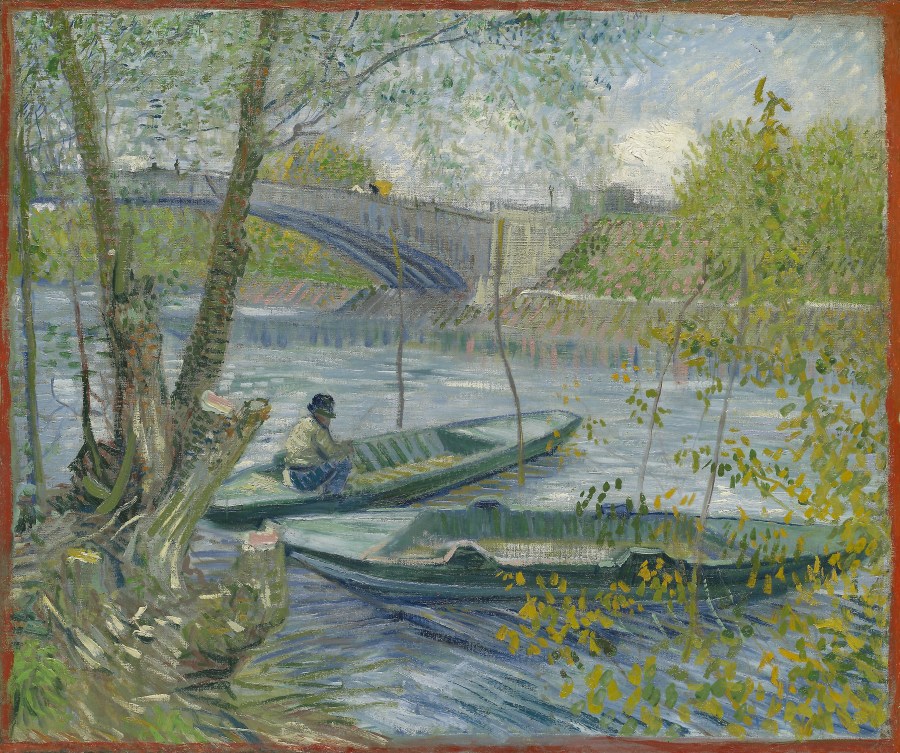
Featured Art: Fishing in Spring, the Pont de Clichy (Asnières) by Vincent van Gogh

I was eating tagliatelle napolitana and drinking imitation Chablis when I remembered that I was supposed to be looking at a house. I said to the others,  “I have to go and look at a house.” “We’ll order veal scaloppine,” they said. “We’ll wait for you.” Veal scaloppine was what you ordered at the Mussolini after tagliatelle napoli. The only other thing was grilled liver but Wendy didn’t like the blood so we never ordered it when she was there. Wendy and David had been married for about a year. Wendy was dark-eyed and beautiful and I was in love with her because she was utterly vivacious and she put up with me even though I was an idiot.

I was carrying a map of Sydney but I still got lost on my way to the house. That was one of the habits that made Wendy say, affectionately, “Richard! You’re an idiot!” The house turned out to be across the road from a vacant television factory. When I knocked on the red front door I could hear a cat miaowing. Julie answered in the big, nerdy glasses she wore for studying. She said, “Hi, come in. Watch out for the cat shit, don’t step in it.” But it was too late and I had to leave my sandshoes on top of the steps. The reason there was cat shit was that everyone thought it was Drew’s job to pick it up seeing as the cat belonged to him but Drew was always out. He played the recorder in a medieval band. Julie began by showing me Drew’s room, which was the one at the front. She said, “This’s quite a good room, except when you’re fucking because then people in the lounge can hear everything,” and I thought well, that wouldn’t bother me since I’m not doing any fucking, but I didn’t say so. In any case Drew wasn’t the one moving out so Julie took me to Toby’s room, which was upstairs at the back and not much bigger than the double bed that was covered in Toby’s black satin sheets. Toby’s girlfriend was the sort who was used to black satin. She was the reason he was moving, along with the disco up the street.

Read More

Sweet Spot

By Ange Mlinko

“Sweet Spot” is not available online, but is available for purchase as a part of New Ohio Review Issue 13, which can be purchased here.

Wheels

By Ann Harleman

Featured Art: Car 2F-77-77 by Alfred Stieglitz

1961: ’61 Chevy Impala Convertible

Eddie was the only Catholic boy I knew with a car of his own. It was black with a red top and a sweeping red stripe along each side—a car that swaggered. My mother, impressed in spite of herself (she drove an old Ford coupe the color of cement), made me promise to stay off the Schuylkill Expressway and never to ride with the top down. I agreed, but only because it was December.

Mercy Girls—I was a scholarship student at an all-girls high school, the Academy of the Sisters of Mercy—weren’t allowed to have boys pick us up at school. Not that we would’ve wanted to, since we also weren’t allowed to wear lipstick or jewelry or nail polish, and our uniforms remained deeply dowdy even after we’d rolled up the navy-blue pleated skirts at the waist and unbuttoned the top two buttons on the white cotton blouses. So my first chance to show off Eddie’s car to my friends was at the Junior Class formal, just before Christmas.

Read More

Short Lists on a Diagnosis

By Aran Donovan

Featured Art: A City Park by William Merritt Chase

Ever so rare: the robin’s egg that’s fallen
at the doorstep, as yet untouched by ants
or useless knowledge. A letter mailed from France,
its certain words predestined. New snow, appalling
last spring on cars, mailboxes. Quite rare: the pollen
of narcissus but more rare the bees that dance
their distance. The choreography of plants,
shadow of leaves. St. Francis granting pardon.
More common: construction on the way to work,
the broken earth and open pipe. The trite
condolence of a friend. Misunderstandings
on the phone. The removal of your blouse and skirt
for the new doctor. How it’s come back in spite
of all you’d hoped, your vain and human plannings.


Read More

A Simple Request

By Patricia Corbus

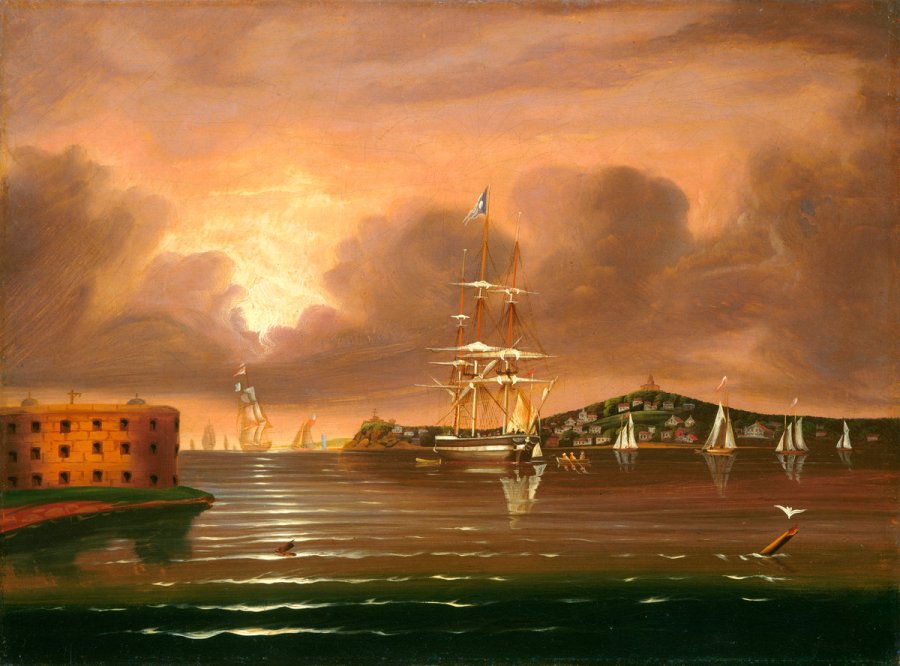
Featured Art: Threatening Sky, Bay of New York by Thomas Chambers

                                                                                                —for Wes

Here I am, still drowning in the world,
   while you are opening Dame Simplicity’s closet—

   and I say, Be good to him, Simple Goodness,
Air and water, expand for him! Moon, be a smiling
              china plate for him to leap over!

       In the cupboard where cups wait quietly
and beautiful old words are folded in flannel cloths:

Mother, Father, Long-suffering, Beloved, Forgiveness—

Lay him down in simple peace, homely pleasures,
       between jars filled with feathers and shells—
near Grandmother’s broom that sweeps so clean.

What aromatic, wild poultice crushed to the breast
                         soothes and heals all?—

                        It is the essence of Brother
overpowering me with some stinging nettle of sweetness—

Whatever sunset door you go through, hold open for me.


Read More
Fault Line

By Margot Singer

Featured Art: Rain Sculpture, Salt Creek Cañon, Utah by William H. Bell

It’s the end of summer and the neighbors have gathered in Evan’s yard, young mothers with babies lounging in the shade on the front porch, older kids racing around the lawn, the men clustered by the grill in back. It is dry and hot, not yet Labor Day, but across the street the upper leaves on the maple in front of Natalie’s house, that precocious tree, are already tinged with red. Natalie wishes it were May again, not August. She longs for the promise of summer rippling outward like the surface of a pool.

Inside, another group of women has pulled up chairs around the kitchen table, mothers Natalie recognizes from around the neighborhood but doesn’t really know, the wives of Evan’s friends. Natalie is still the newcomer, the outsider, Evan’s new girlfriend. The women are bent forward in conversation, a closed set.

“Oh my heck,” one of them is saying. “Here? Really?” She has dark hair with bangs and long-lashed eyes, like a doll’s.

Another woman waves her hand. “It’s public information. Just Google Megan’s Law, you’ll see.”

Read More

Night Party

By Fay Dillof

“Night Party” is not available online, but is available for purchase as a part of New Ohio Review Issue 13, which can be purchased here.

The Difference Between Us

By Jill Osier

Featured Art: St. Paul’s Choir by Wenceslaus Hollar

Some of my favorite memories of us never even happened.

Like when we sang the “Hallelujah Chorus.” I’m alto, you’re baritone, and it’s
a community choir, maybe a department Christmas party. Maybe we’re at your
alma mater for the holiday concert and can’t help but join in from our seats.

Wherever it is, we know our parts, every word, not realizing we’ve learned them
over the years, overhearing the song in stores and restaurants, doing dishes,
driving home.

And the reason I know this is a memory, that this is not just a fantasy, is because
what I remember most is not the music, not even the sound of our voices. Harmony,
surprisingly, has nothing to do with this.

What I remember and see again and again as they keep playing the song these
weeks of December, is how just your eyes turn, your gaze sliding slowly to the
side to meet my eyes, which are above my mouth, which is singing the exact
words you’re forming with yours—

and this is where memory turns on me, where nostalgia bares its blade: you look
forward again, a motion of such care, such carefulness, like when one’s trying
not to spill. Pure recovery.


Read More

Keyring

By Maura Stanton

Featured Art: And I Saw an Angel Come Down from Heaven, Having the Key of the Bottomless Pit and a Great Chain in His Hand, plate 8 of 12 by Odilon Redon

The keys that disappeared opened what locks?
Upturning every drawer in my old desk,

crawling about the floor with a flashlight,
searching the front walk and the ruined garden,

retracing my steps, retracing my thoughts,
I understand I’ve lost more keys than just

the useful ones that opened my front door.
I’ve lost a set of phantom keys to things

I meant to keep, return to at my leisure.
A demon out of the void snatched them up

so now I’ll never open my lost diary,
or turn the tumbler in my London flat

with a practiced flick, a lock I couldn’t work
without help from the bear-like landlord.

“It’s a Yale lock!” he’d roar. Wasn’t I a Yank?
And now they’ve all vanished, keys to padlocks

clamped on lockers, keys to rusted stick-shifts,
answer keys to the questions I got wrong,

keys to smoky rooms of sex and wine,
keys to old friends’ doors that shall never

open again, and the spare set of keys
to my mother’s house in another state,

empty now except for the pacing cat
waiting for paramedics to bring her back.


Read More

Jonah

By Maura Stanton

Featured Art: Stowing Sail by Winslow Homer

Whoops! He was afraid this was going to happen. He’s been sucked up. The strong wind pulls him in against the stiff fringe of the brush attachment, where he gasps and tangles with bits of debris, strands of hair, crumbs, dust bunnies, specks, soot, and flecks of dander. The brush is swiped across the carpet, freeing him from the tough indifferent bristles. He flies up the silver tube, but since he’s heavier than the rest of the grime, he gets to catch his breath at the bend, pinned against the cold metal until he’s slapped free by a dancing paper clip. Swoop! Suck! Up he goes into the flexible plastic hose. Now and then he catches on the accordion folds, but the air is warmer now, and he feels himself being pulled closer and closer to the engine thrumming in the center. Why, this isn’t so bad. He almost feels excited as he approaches his destination, the special paper bag fitted inside the machine where all the dirt in the house congregates. And then he’s in! He’s dragged through the opening. It’s all over. There’s nothing to do but make a cozy nest in the mound of familiar filth.


Read More

2 Fuzzy Bees

By Maura Stanton

Featured Art: A Gentleman Who Wanted to Study the Habits of Bees too Closely, plate 6 from Pastorales by Honoré Victorin Daumier

“La créateur est pessimiste, la création ambitieuse,
donc optimiste.” —René Char

Because I feared I’d only make a mess
Sticking yellow pom-poms onto black ones,
Or bungle wings as I tried to shape the white
Pipe-cleaners into an outline of flight,
I never opened this kit I got one Christmas
In my stocking—a joke from my sister:
Create A Critter. Since I’m cleaning house
I could throw it away. But all I need
To make 2 Fuzzy Bees are glue and scissors.
Everything’s here—the velvet-tipped feelers,
Button noses, and eyes with moving pupils.
Ages 6 and Up—well, that’s me, isn’t it?
And as an Adult, too, I can Supervise
Myself. So why do I still hesitate?
If I make a bad bee I can toss it out.
Look at this package. The cellophane’s intact,
Directions printed on the cardboard backing.
Even the little loose eyes seem to twinkle
Inviting me to stick them to the heads
Where they belong. Yes, they’re Choking Hazards,
But I’m alone right now, no cats or babies,
And the dining room table is cleared of junk.
And so I do it. Soon my Fuzzy Bees
Are finished, bouncing on their wire legs,
Looking up at me, cute as their photos,
Ready to begin their lives as . . . what?
What have I done? I’ve given them existence.
Their wings will never lift them to the sky,
Their red noses will never scent a rose,
But look at them! Ambitious, optimistic.


Read More

The Lady from TV Is Coming

By Sabrina Jaszi

Featured Art: Dance of the Trojans by Henri Fantin-Latour

Every Sunday my daughter calls from California. “Church today, Mom,” she says, not a question: a truth. Every Sunday I mimic her tone. “DanceCraze at the Lautner Center,” I say, and every Sunday Angelie lets out a tunnel of sigh, long, and black at the edges. Today is like every Sunday. At Messler High this week, I’m teaching orbits: the sun, the moon, and the Earth all moving around each other in perfectly predictable ways. I feel like telling my daughter about it, but I don’t have time. DanceCraze starts at eleven. Usually it’s free, except for next week, when the lady from TV is coming.

Today, as always, Robert snorts as I pass him in my tights and sneakers. I walk the six blocks to the Lautner Center and push through its double doors just a couple minutes early, in time to get my spot in the back but after the chitchat. The clock on the wall is ticking toward eleven and everyone starts marching in place. Lila C. is up on stage between the two droopy flags, with the emergency exit behind her. The crowd today is about one-half oldies, one-quarter hoochies, and the rest children and miscellaneous. Miscellaneous, that’s me.

Read More

1974: The Raspberries

By Campbell McGrath

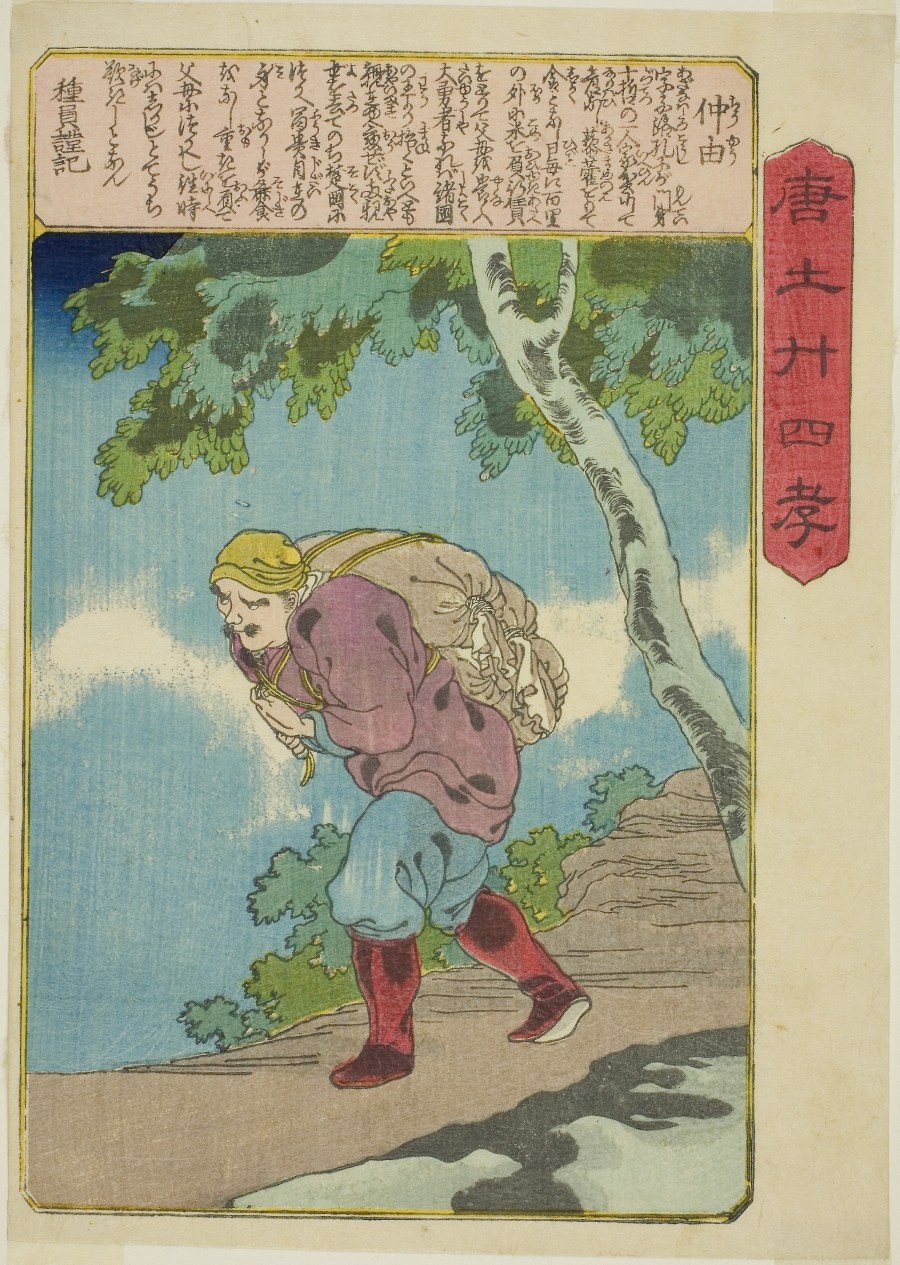
Featured Art: Jung You (Chu Yu), from the series “Twenty-four Paragons of Filial Piety in China (Morokoshi nijushiko)” by Utagawa Kuniyoshi

If it’s true, as they teach in elementary school,
that ours is a secular republic, not gods but men
do our temples and sacred monuments adorn,
then how to explain the immediacy with which I recall
my baptism into the cult of American identity,
my consecration as a democratic individual,
the very first things I bought at a store by myself—
a cherry Slurpee in a collectible plastic superhero cup
and a pack of baseball cards, hoping to find Bob Gibson.
This was at the 7-Eleven on Porter Street,
and soon the five-and-dime on Wisconsin Avenue
cycled into orbit, musty aisles of G.C. Murphy & Co.
where I might spend my allowance on plastic soldiers,
a balsa wood airplane, a rabbit’s foot keychain,
trinkets of no intrinsic worth ennobled by commerce,
aglimmer with the foxfire of mercantile significance,
toys of thought that blazed in the imagination
every step walking home. Not to jingle pocket change,
not to carry a crumpled dollar bill was to drift untethered
from the enormous comfort and safety of the system,
like the astronaut who crosses Hal in 2001: A Space Odyssey,
like a Stone Age tribe wandering into civilization
from some last unmapped Amazonian tributary.

Read More

Recitations

By J. Estanislao Lopez

Featured Art: The Petite Creuse River by Claude Monet

  1. The Mountain Recites a Poem

     The enunciation of one syllable
     lasts two thousand years.

     The only mode it knows:
     confessional. All it has witnessed,

     condensed into a single line.
     We’ve compiled the research,

     and can say with some certainty
     that the first word is Above.

     2. The River Recites a Poem

     Obsessed with revision, the river
     never completes a line. No one

     attends its readings anymore
     as they go on for months.

     Each phrase spills out, then
     is sucked back in and altered. This

     continues until, by the merciful
     winter, the river is shushed.

     3. The Sky Recites a Poem

     The first experimentalist, the sky
     reduces every image to abstraction.

     Soap dispenser becomes Absolution.
     Mandolin string becomes Disquietude.

     Its diction of emptiness surrounds the reader
     until he is extinguished—This isn’t murder.

     This is nothing but the semblance
     of control.


Read More

The Call

By Michael Chitwood

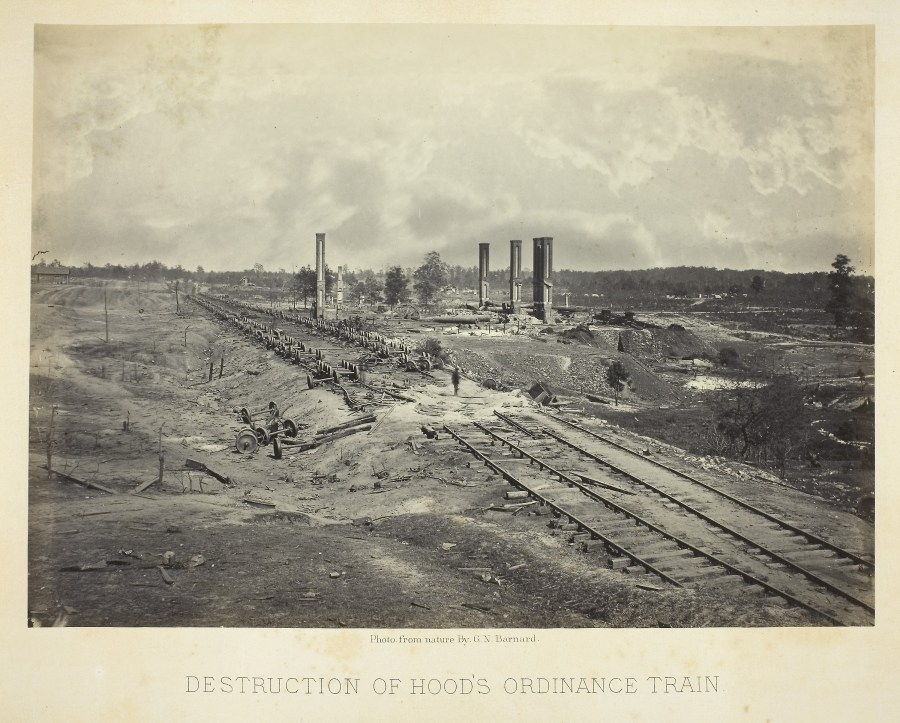
Featured Art: Destruction of Hood’s Ordinance Train by George N. Barnard

There was the rumor
of a deep night/early morning
secret train that a crew
had to be called in for
and they got double time
for their trouble. Big money.
They cleared the tracks for it,
put everything on the side rails,
even the coal cars that were priority.
And when it left the yard
it was only three cars
with a puller and a pusher
so it was jimmy-john scooting
before it was out of sight.
Everyone had a theory.
Some millionaire had a coupe
shipped to Norfolk from Europe
and wanted it in New York by the weekend.
Or the government needed a rocket
pronto to Fort Meade. Or gold—
gold was always a good bet.
No one ever knew for sure
or knew anyone who had been on the crew,
but when the call came,
and it would come, it would,
why sure, sure, you’d go,
that kind of money and all.


Read More

But it Moves

By D.J. Thielke

Featured Art: Ely Cathedral: Galilee Porch from Nave by Frederick H. Evans

Science is nothing to be scared of, I promise my eighth-graders. Science, I say, is what gives us words for what the earth, the universe, already know in a language of cells and change.

They are busy copying my name off the board.

I tell them to think about time, think about how we talk about the abstract idea of it like something physical: a road we’re traveling on. The road of life, we say. Moving past something, leaving it behind; or stepping into the future, looking forward to something. The future is ahead, the past behind, this is how we place ourselves.

But, I say, earlier cultures spoke about time as a road that you walked backwards on. They faced the past, its landscape visible and familiar, while taking tentative, shaky steps into the unknown behind them. The future, a darkness over the shoulder they had to carefully, fearfully move toward.

My students are quiet for a moment.

Then one says, So, life is a highway?

Read More

Title Search for the Italian Ashbery Book

By Damiano Abeni

Featured Art: Tetards (Pollards) by Vincent van Gogh

[The following poem (and its Italian translation) reflect the actual search for the title of a selection of poems by John Ashbery published in a bilingual edition in Italy, and it reproduces the structure of Ashbery’s “Title Search,” from And the Stars Were Shining. The book was eventually published under the title Un mondo che non può essere migliore (A World that Cannot Be Better), translated by Damiano Abeni and Moira Egan, with an introduction by Joseph Harrison (Luca Sossella Editore: Rome, Italy, 2008). The translators thought it was aptly Ashberian that the final book title had not been considered in this search, and that it was derived from a poem not included in the Italian selection: “…while you, in this nether world that could not be better / Waken each morning to the exact value of what you did and said, which remains” (“Definition of Blue,” in The Double Dream of Spring).]

Read More
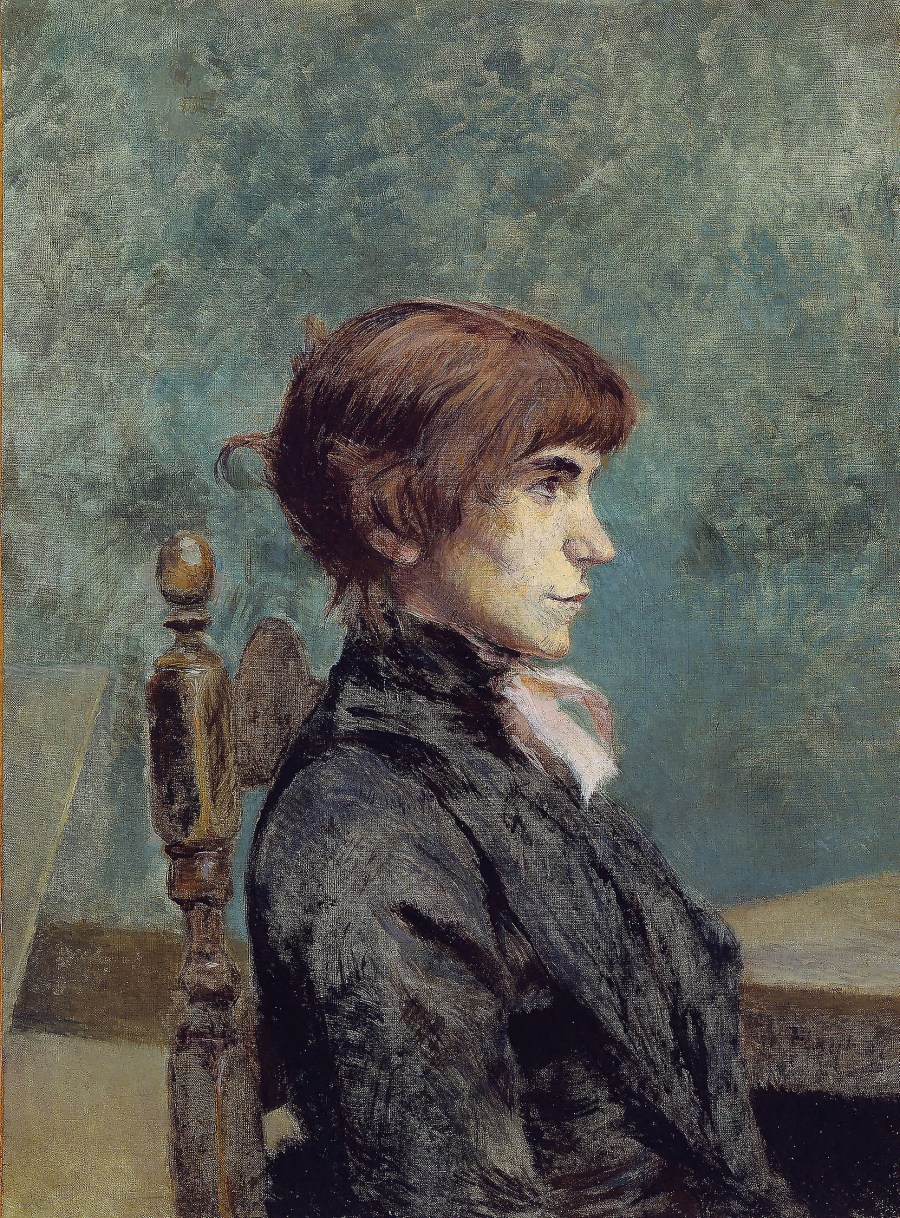
Feature: Translation Cruxes

Featured Art: Beata Beatrix by Dante Gabriel Rossetti

We asked the distinguished translators listed below to
write about any particularly thorny passages they had
wrestled with, as well as the solutions they came up
with. Their responses follow.

David Ferry
Lydia Davis
Damiano Abeni
Moira Egan
Rosamund Bartlett
George Kalogeris
Joanna Trzeciak
Geoffrey Brock

On Translating Strand and Ashbery

By Damiano Abeni and Moira Egan

Featured Art: Italian Coast Scene with Ruined Tower by Thomas Cole

A few years ago Damiano published the Italian version of 89 Clouds by Mark Strand (ACA Galleries, New York, 1999; 89 Nuvole, Edizioni L’Obliquo, Brescia, Italy, 2003). Some of these one-liners are quite straightforward, but some are really tough to translate. For instance, Cloud # 25 reads: “A cloud without you is only a clod.” Damiano’s main inspiration when translating comes from the approach Glenn Gould had when interpreting a musical score. Rather than focusing on the literal meaning of each word, he tried to play the same game the author was playing, to imitate his wittiness and to leave a trace of the strong cloud/clod alliteration. What came out, when back-translated, would sound something like “A cloud without part of you is almost nothing,” and here is how it looks in Italian: Una nuvola senza parte di voi è quasi nulla.

Read More
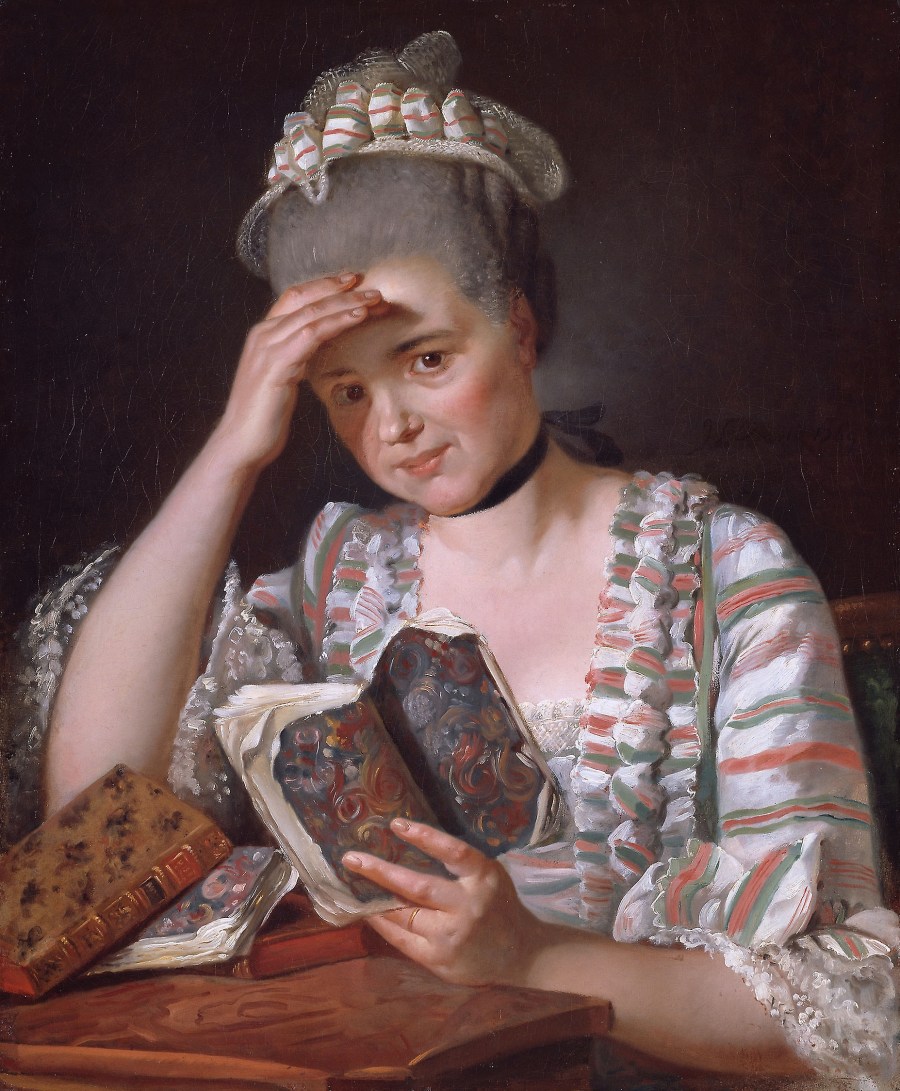
On Translating Tolstoy

By Rosamund Bartlett

Featured Art: Spring by Eduard Willmann, after Eduard Marak

In chapter fourteen of the eighth and final part of Anna Karenina, some five thousand words before the end of the novel, Tolstoy produces one of his inimitable, participle-laden, congested sentences about the behaviour of bees in Levin’s apiary:

                 In front of the entrances to the hives sparkling bees and drones danced
                 before his eyes as they circled and bumped into each other on one spot,
                  and amongst them, continually plying the same route to the blossoming
                 lime trees in the wood and back towards the hives, flew worker bees with
                 their spoils and in pursuit of their spoils.

                 Перед летками ульев рябили в глазах кружащиеся и толкущиеся
                 на одном месте, играющие пчелы и трутни, и среди их, все в
                 одном направлении, туда, в лес на цветущую липу, и назад, к
                 ульям, пролетали рабочие пчелы с взяткой и за взяткой.

It is one of those sentences which exemplifies the challenges posed by Tolstoy’s often tortuous but majestic prose in Anna Karenina—a novel he found hard to write due to profound spiritual crisis welling up inside him in the 1870s.

Read More
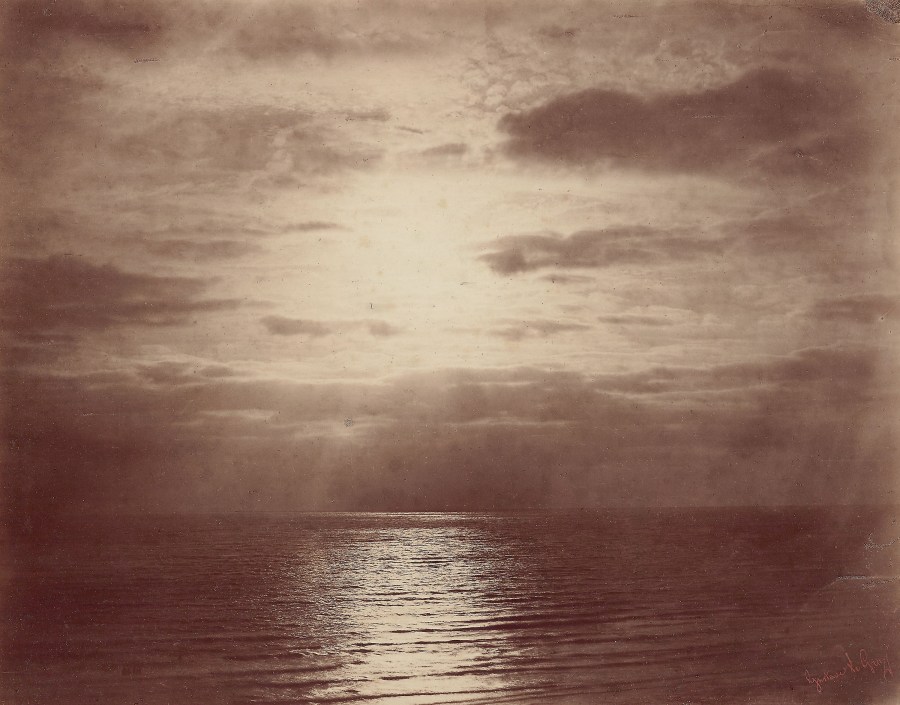
On Translating Cavafy

By George Kalogeris

Featured Art: The Trojans pulling the wooden horse into the city by Giulio Bonasone

          THE TROJANS

          As long as our efforts, no matter how hard we try,
          Are doomed to fail, we’re like the people of Troy.

          Just when the tide is finally turning for us
          And our confidence swells, as if we were ready to face

          Whatever comes our way, Achilles turns up
          Shouting bloody murder, and crushes our hope

          With one swift leap from the trench. We’re like the Trojans.
          No matter what we do, this always happens–

          Though right till the very end we still believe
          We still might win, if only by being brave

          And not giving in. But once we go out to meet
          Our fate, behind our back it bolts the gate.

          Even at the eleventh hour, we truly
          Believe the gods are with us, defending Troy.

          But as soon as we resolve to make a stand
          That daring spirit dissolves, like a phantom friend.

          Now it’s our worst nightmare, but there we are,
          Outside the city walls, running for dear

          Life as the sweat pours down, though our legs feel frozen.
          Already it’s time to start the lamentation.

          And then, high up on the ancient parapets,
          Priam and Hecuba weep, weeping for us.

Read More

On Translating Szymborska

By Joanna Trzeciak

Featured Art: New York Sky Line, Dark Buildings by Childe Hassam

I got into translation early in life, but instead of playing the field I have tended to go steady and stay with one poet for a long time. My first was Wislawa Szymborska, a Polish poet whom I have translated since the early nineties. Szymborska’s poetry, rife with wit, graceful and deeply humane, has earned her the Nobel Prize, a permanent place in the pantheon of poetry, and admirers such as Woody Allen. Her response to the world is rendered in one of her poems as one of “rapture and despair.”

In the 2002 collection Miracle Fair, I intimated six themes under which her poems might be clustered. One of them is our relation as human beings to animate and inanimate nature. Our attitudes toward other sentient beings is central to poems such as “Tarsier,” “Monkey,” “Seen from Above,” and “Birds Returning.” When it comes to the inanimate world she has devoted entire poems to the contemplation of water, rock, clouds, and sky. Or if not “sky” then perhaps “heavens”? Or maybe “heaven”? The Polish word is niebo [pronounced NYEH boh]. Here we start.

Read More
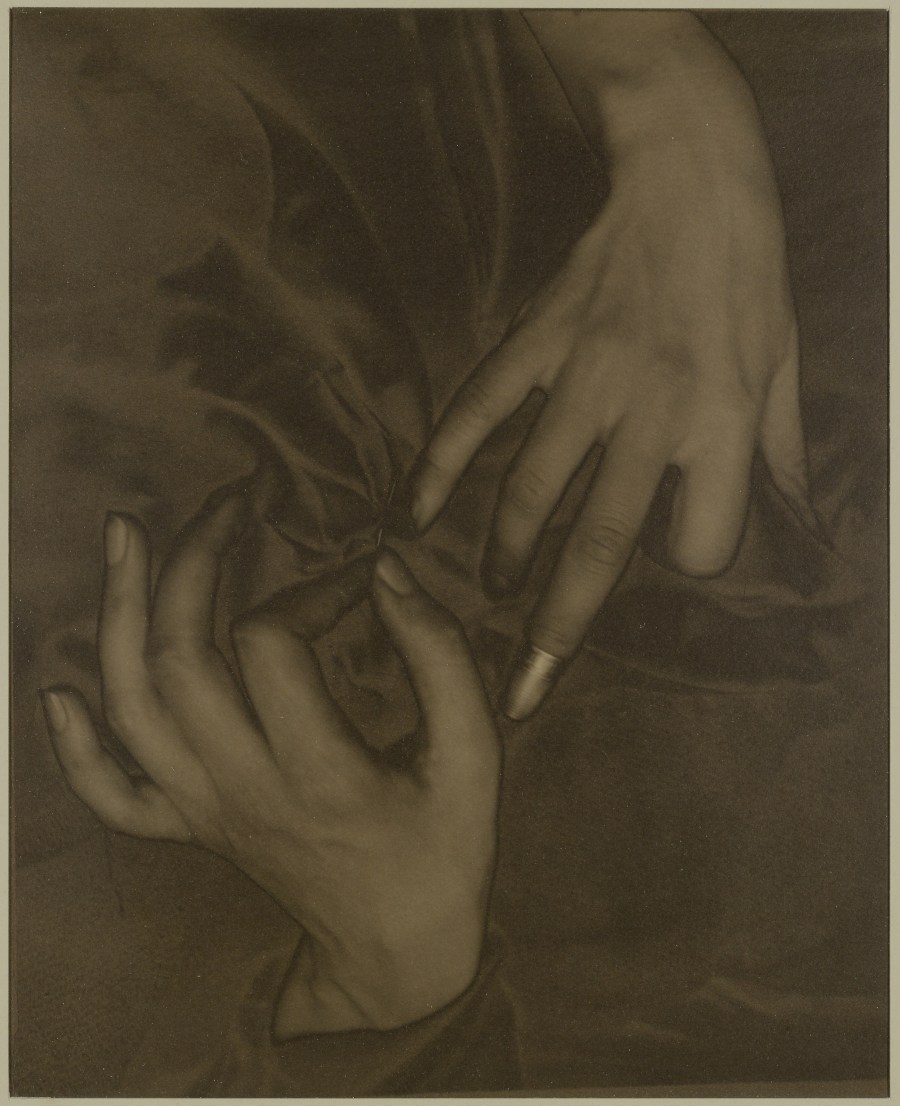
On Translating Eco

By Geoffrey Brock

Featured Art: Handkerchief by Oriental Print Works

Despite the Italian adage traduttore/traditore, which equates translation with betrayal, nearly all translators I know claim fidelity as their goal (while also admitting the impossibility of perfect fidelity); it was certainly my goal as I set out to translate Umberto Eco’s 2005 novel, The Mysterious Flame of Queen Loana. But what does “fidelity” mean to literary translators? Faithful to whom or what? There is less agreement on that score. The question is complex even with regard to what might be called vanilla prose; it’s deeply vexed with regard to most poetry or any prose that features puns or other word-play, or that contrasts its language with that of one of its dialects, or that relies on allusions that would be clear to source-language readers but opaque or even misleading to others—and so on. In such cases, liberties will often be taken at the expense of semantic fidelity but in the service of broader and arguably more important fidelities. In this piece, I will look at three such cases from Eco’s novel.
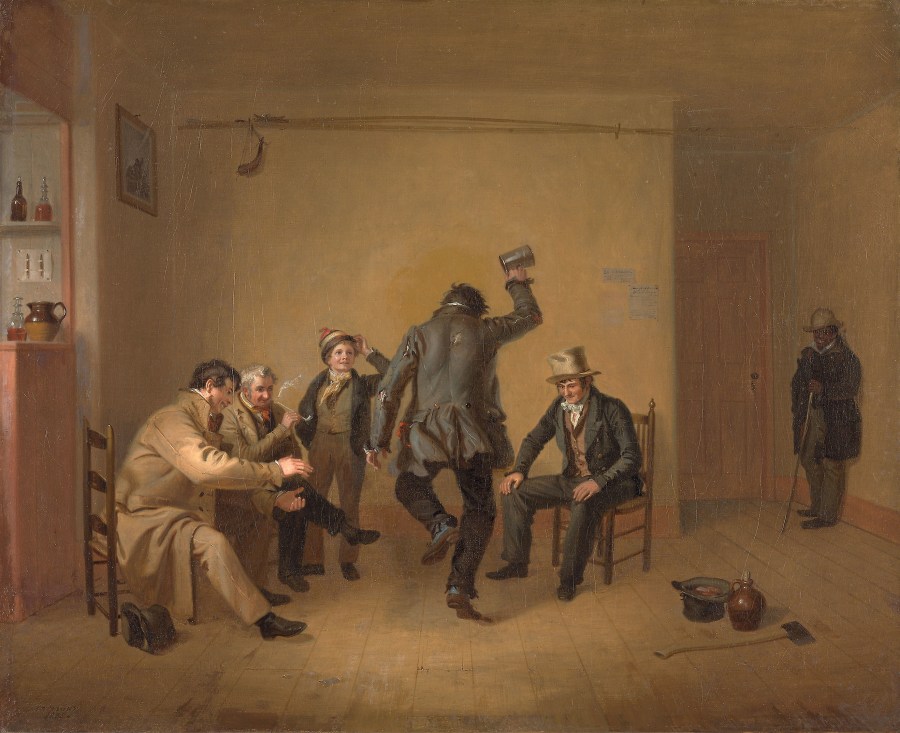
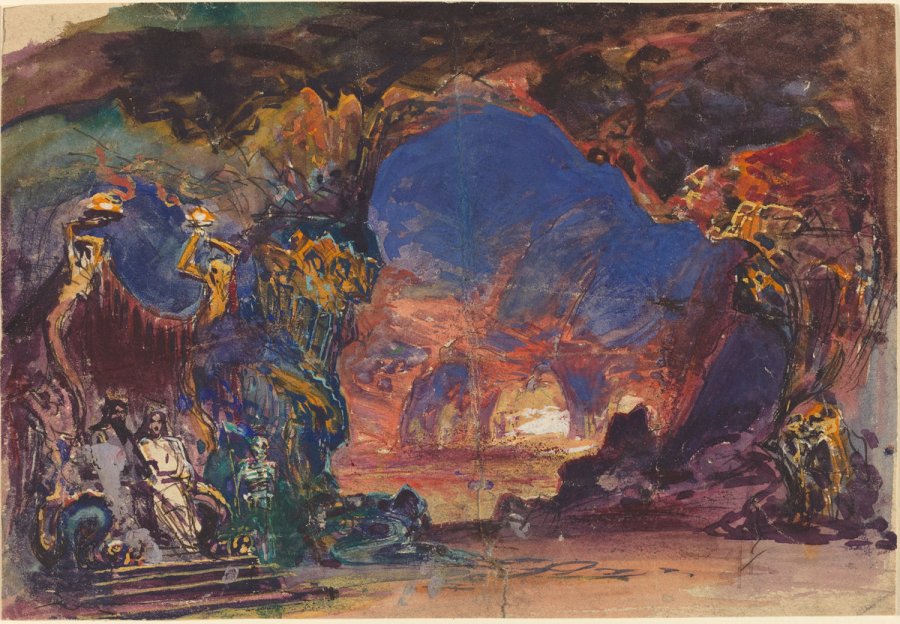
Read More

New Ohio Review Issue 12 (Originally printed Fall 2012)

Newohioreview.org is archiving previous editions as they originally appeared. We are pairing the pieces with curated art work, as well as select audio recordings. In collaboration with our past contributors, we are happy to (re)-present this outstanding work.

Issue 12 compiled by Natalie Dupre.

Rituals

By Suzanne Carey

Featured Art: Lorette with a Cup of Coffee by Henri Matisse

After my swim, I sit at a small table at Peet’s
with my medium sugar-free, low-fat, vanilla freddo
that the barista started as I walked in.
I push the whipped cream deep into the cup and worry

about my daughter, who drives
a perilously small car on the freeway,
and my son in New Orleans, too poor to drive,
whose illness frightens me most of all.

My father worried about us until the day he died.
When I came home from college, he insisted
I take the dog or my ten-year-old brother with me
when I drove at night. At eighty-six, he called me daily

from the nursing home to make sure I was okay.
I remember how my mother savored
half a nickel-box of licorice bits and a single cigarette
as she read each evening, waiting for us to come home,

and years later, how she devoured the Hershey bars
and Cokes Dad brought her every afternoon,
long after she had forgotten us all.


Read More

My Father’s New Woman

By Fleda Brown

Featured Art: Fruit and Flowers by Orsola Maddalena Caccia

My father has a new woman. He’s 93, the old one is worn out.
They used to hold hands and watch TV in his Independent Living
cottage, but now there is the new one, to hold hands. The old
one is in Assisted Living not 50 feet away but barely able
to lift herself to her walker. He sits in her room after dinner,
her mind wandering in and out. What if she escapes
and comes over while my father is “taking a nap”
with this new one? My mother is two miles away beneath
her stone, relieved. I bring artificial flowers to her with my sister,
who likes to do that when we visit. I am not much for
demonstration. I would just stand there and say, oh, mother,
he’s at it again. And she’d say, I am sleeping, don’t bother me
with him anymore. And we’d commune in that way that knows
well enough what we’re not saying. And I’d be lamenting
my self-righteous silence in the past, my smart-aleck-motherjust-
go-to-a-therapist talk. What I should have said was, was,
was, oh, it was like a tower of blocks. Pull one out and all
would fall. She would get a divorce and a job and marry some
balding man like her father, who would be my ersatz father
and would take her dancing and let her wear her hair
the way she wanted, and she would cut it short and get it
permed and life would quiet down and my father, to her, would
morph into the handsome and funny Harvard Man he was
in the old days, the way he posed her for his camera, tilting
her head to the light with his devouring-passion fingertips
and her days would begin to feel like a succession
of pale slates to scribble on and erase before the new husband
came home from work, while my father would spin off
after whoever would “put up with him,” as he says,
and would follow his new one around carrying her groceries
and complaining that she spends too much, but biting his tongue
and thinking how soon she would let him, well, you know,
and I would be, what? The same as now, writing this down
so that none of the shifting and sifting could get away
cleanly without at least this small consequence.


Read More

If Only I’d Met You Earlier

By Adrienne Su

Featured Art: A Vase of Flowers by Margareta Haverman

We’re at it again. It’s hard not to rewrite
the years, though we couldn’t have known
they were wrong, if they were. Life
isn’t longer than it is, so off we go,

picturing how it might have happened,
though one of us would have been taken,
or both, and one of us lived up north, one
by the warmest sea. We had no common

travel destinations, we rarely read
the same books, there wasn’t one same
friend, and either might have fled
if it started to matter. Apologies, if made,

might not have been accepted. In truth
we could only have met on the street,
on one of your trips to the city. We’d both
have held back. The courage to speak

would’ve yielded “Excuse me,” no more,
all vision cordoned off by the sun.
So we might as well indulge in the words
for their sound: You would’ve been the one.


Read More

In the Second Month of Parched Land

By Daiva Markelis

Featured Art: Stroll with Balloons by Hughie Lee Smith

We came across the camels every time we picnicked that merciless autumn, huge herds grazing on sparse vegetation. Camel comes from jamal, the Arabic root word for beauty. From a distance they did look lovely, their curvy silhouettes mimicking the contours of the dunes. Up close, however, they seemed slightly ridiculous, like bad female impersonators, batting their Scarlett O’Hara lashes to keep the sand out of their eyes, their long necks sloping toward us, then coyly withdrawing.

That we saw them so near the city surprised us. We’d heard stories of naive Westerners who’d driven for hours looking for adventure—for camels—and then stopped to explore the landscape with their pitifully small water bottles, supplemented, in some cases, by flasks of 100-proof siddiqi. Some were lost in the Empty Quarter, the largest desert in the world, never to be heard from again. I wrote a friend: If I were to start a literary journal here, I’d call it The Empty Quarterly.

Sometimes we’d see a row of black tents with goats tethered to a nearby post. Once, an old Bedouin waved a gnarled hand back and forth like a weathered stick. I thought we were in trouble, trespassing on his property, but as he ambled closer all he said, in a slow, proud English, was “See my camels.” He invited my husband into the largest of the tents. I waited in the air-conditioned Mazda, fiddling with the radio. Masculine voices jabbered in endless variations of the little Arabic I knew: Assalamu alaikum wa rahmatullah, Allah akbar, Inshalla. The sounds seemed to emanate from deep down the throat, a rush of rough and phlegmy h’s, a conspiracy of k’s.

Read More

The Circus Lion’s Lament

By Michael Derrick Hudson

Featured Art: Circus Clown and Dancer by Marc Chagall

So what happened? I used to be a lion, crashing
the herd and yanking down stampeding

zebras on the hoof. Days spent pissing hot gold

across the Serengeti! The ground gone tawny
with my scat! Those long afternoons

of fly-blown torpor, those gristly jawfuls of prey

and those after-fuck yawns. At night, snoozing
into my paws, I’d twitch and thump

the muscular scourge of my dreaming tail . . .

But Emily the Elephant jerks my chain, suggests
my ferocious howls lack plausibility

or conviction. O how I howl! I can rend the air

with lost prerogatives! Demolish the audience
with has-been imperium! I worry

and tooth the Ringmaster’s splintery stool. Dolts

applaud. Clowns in a jalopy lampoon
terror, hitched to their posse of sidekick knuckle-

draggers waddling away in diapers and tuxedos . . .

Come night, I’ll sniff the corners for what’s left
of my petrified stink, the proof

I somehow still exist. Breakfast’s tossed in at six.


Read More

Animals

By Brock Guthrie

Featured Art: Leg in Hammock by Edward Weston

One is what one looks at—well, at least partially. —Joseph Brodsky

All morning in my hammock burning
a tight one, poised with pencil and notebook
and seven-week beard, I look to the pines
outside my cabin, seeking inspiration
from the birds and the squirrels
whose singing and foraging, whose
exclamations, no, arguments, reflect
my inner my inner my inner . . .
and every so often my cousin Ricky returns
from hunting rabbits on my four-wheeler
to tell me he’s thought of a new way
to beat off: Anywhere around here to buy
watermelons? Even his camo flannel
can’t conceal that Superdome belly
and I hate to think how long
since anyone’s seen his diminutive dangle
so I tell him in all seriousness, my sympathy
sincere, You might be on to something,
but after he tokes and rides away
I get inspired, realize I should’ve said
Go drive around these country roads, man,
look for signs!
and even Ricky would’ve
nodded with a look of feigned profundity
like he’s posing for an author photo
but I let that moment go

Read More

Appropriate Interjection

By Brock Guthrie

Featured Art: Painting with Troika by Wassily Kandinsky

Seven in the morning laying insulation
and wiring electric with a friend and his friend
who make money building houses.
Laying insulation at seven on Saturday
because of a promise made the night before
at the bar, where the ambition to learn
something about house circuitry
appeared like a blown fuse. This pink shit
makes you itch. Not so with my friend here—
he’s worked with this stuff so long
he sleeps on it, wakes up
throws a piece in the toaster, eats it slowly
with cream cheese and coffee. Shouldn’t we
be wearing respirators or something?
How the hell should I know?
But this is good. This kind of work
is good for me—re-callous these grandma hands
I’ve grown. Like back in those summers
when I tar-sealed blacktop
on ninety-five-degree early mornings. “And then
in the afternoons,” I tell them. On break
we smoke a joint in front of the site, drink
water, sit there in silence. Silent like that
until I start to count breaths. And wonder
what happened to last night’s beer brotherhood.
But then I recognize the similarity
between our collective awareness
and the object of our unfocused gazes:
Margaret’s Creek, running muddy and a little high
along the other side of the road.
I could try to articulate this thought—
it might break the silence. Then again it might
make more, and I want to work with these guys
on future jobs, so instead I tell them how
I once caught a five-pound largemouth
a quarter-mile up this creek
that jerked so hard in my grip
she stuck two of the treble hook barbs
from the top-water Rapala I caught her with
into my thumb, how I tried for an hour
to loosen them from the nerve, feeling it
in my front teeth, fish in the water, gone,
how I had to push the points
clear through the side of my thumb
and clip the barbs with rusty wire cutters.
“Sure,” I add, “there’s good fishing in this creek
if you know the good holes.”
Then my friend’s friend holds out his left thumb,
a nubby little thing, tells us about an accident
he had with a circular saw.


Read More

Play it by Ear

By Claudia Peirce

Featured Art: The Big Red Ball by Ellen Lanyon

Recently I’ve become a “regular” at an especially sub-standard diner called Sam’s World. Although I have no special fondness for the soggy potatoes, greasy burgers or limp lettuce leaves they dish up, Sam’s World is within walking distance. This is important because I have no car and my apartment has no kitchen. There is an old, barely functioning refrigerator in the narrow hallway between the bathroom and the only other room. I don’t hold out much hope for this refrigerator since I can’t bring myself to defrost it. A solid block of ice has formed over the opening to the freezer, and at some point I expect the whole thing will just blow up.

One day I might be out of debt and able to afford an apartment larger than one hundred and fifty square feet. Then again, I may not. When I consider the size of my indebtedness I realize I could quite easily be dead before I pay it off.

Anyway, it’s Tuesday evening at Sam’s World; I’m not very hungry but am in need of comfort so I decide to skip actual food and have ice cream and coffee.

BUM fired me today but then he changed his mind. He said I didn’t really have to leave but if I wanted to it would be all right. Then he went back to our mail-sorting session as if nothing unusual had occurred. I would guess an episode like that does not bode well for job security.

Read More

Fidelity

By William Lychack

Sent to visit one summer, Charlie and me, eight or nine years old, our mother putting us on a train in Providence, our father waiting on a platform in Detroit, pigeon murmur of loudspeakers in the station, man carrying our bags out into late afternoon light, click of boot heels across the concrete of parking garage, three of us riding out of the city in that old Impala of his, car floating big and
loose as a motorboat in the dusk, radial drone of road and traffic under everything, burgers and fries in Flint, gas station in Saginaw, another hour to Grayling, Portage Lake, and the fishing cabin with our father at last.

Read More

Return of the Media Five

By Maya Sonenburg

Second Prize, New Ohio Review Fiction Contest
selected by Charles Baxter

Featured Art: The Eventuality of Destiny by Giorgio de Chirico

I am this heart, this brain, only these, right now—no other. This is what Susan (that’s her name now) tells herself every morning upon waking. She opens her eyes and sees the flaking ceiling above her, sees the wash of sunlight coming through leaves. She touches her chest, feels her heart beating steadily—no rush of fear—and exhales. She’s alone. She touches her head, hair just starting to gray and she’s not bothering to color it. “This can be my new disguise,” she thinks, “my new self.” One of the million selves she’s been in the last twenty-odd years. She rubs her eyes and before she can silence herself again, she remembers days when she thought more, remembered more: a million legs all running toward the Pentagon or induction center or federal courthouse. Flowers in the barrel of a gun. A Viet Cong flag. Giant puppets of Kissinger, Nixon, McNamara. Or their heads atop the bodies of gigantic hawks, perched among the blackened trees of a burned landscape. Bring the war home. A placard of a napalmed child. If people see, they will join us and this atrocity will have to stop. A million hands waving. A million arms, fists raised in salute. They were the million legs and hands of her—her legs and hands—the million-limbed body of resistance, then revolution. Why does she allow these things to come back to her today? Because it’s spring and her curtains are the color of a daffodil she handed to a child once at a demonstration? She remembers when the remembered voices were always with her, singing off-key but loudly together. She never felt alone. But then suddenly she was alone, amputated from everyone and everything she knew. Most mornings she silences these memories of memories, she manages to.

Read More

Timeline

By Amy Pickworth

Featured Art: Chrysanthemums by Pierre-Auguste Renoir

1880: John Stine proposes to his dead wife’s sister, Eliza. He is a farmer, about forty, she is a spinster midwife. She accepts, telling him, “I will marry you for the sake of the children, but I will never sleep with you.”

This sounds strange—would she have said sleep with in the nineteenth century?—but these are my grandmother’s words. It is 1993 and we are sitting in her house, which smells like cigarettes and meat. The curtains are drawn. Her second husband has been dead for fifteen years. She hasn’t gone blind yet.


1962: The Orlons sing Baby baby when you do the Twist, never never do you get yourself kissed.

Teenagers everywhere Watusi in response.


Read More

The Hittite

By Alex Myers

Featured Art: Trees Against the Sky by Alfred Hutty

In the spring of the year, the time when kings go out to battle, David sent Joab with
his officers and all Israel with him; they ravaged the Ammonites, and besieged Rabbah. But David remained at Jerusalem. (2 Samuel 11:1)

11:6

He was halfway to Ramstein, the dust of Afghanistan still on his boots, when it finally hit him: home. In April no less. The cherry blossoms would be spinning down from their trees, sweet, light, floating. It was a military jet—noisy, hard, and sidewise—that took him to Germany, him in his camis, sand still hidden in the folds, hardly believing he was out of the desert. Four months into his first deployment to Afghanistan and, after the training and orientation at central command near Kabul, he’d spent his months out in the mountains, riding Humvees along what they called the main corridor, though it was pockmarked and potholed and barely paved, and humping alongside mules to little villages. Escorting the arrival of humanitarian aid, waiting while some brain from intel, some secret squirrel, interrogated the village elder.

Read More

The Down

By Molly Ficek

Featured Art: Bath of Venus by Sir Edward Burne-Jones

My mother is immersed in membrane when I find her. Eggs cover her body, some cracked and spilling their spoils, some whole, resting on her belly, her breasts. White flecks of eggshells gravel her skin and the runnings of yellow yolks have dried, look like the peelings of a summer burn. Her head is underneath this mess when I look over the side of the tub.

“Mom?”

She surfaces, wipes film back into her hair, the glossy middle of the egg from her cheek. She blinks.

“What are you doing?” I ask.

She looks at me as if it’s quite obvious, which I guess it is. She is taking a bath in chicken eggs, dozens and dozens of them.

“I heard it’s good for your skin,” she says.

“Um…for your hair, maybe. Egg whites are supposed to be good for your hair.”

“Hmm,” she says, inhales a big gulp of air, and sloshes down under the eggs, the water beneath them. She waves her hand up at me. Eggs spill over the sides of the tub and drop onto the bathroom floor, cracking open.

Read More

Craigslist

By Maya Jewell Zeller

Selected as winner of the 2012 New Ohio Review Poetry Contest by Billy Collins

Featured art: Morning, Interior by Maximilien Luce

It’s all there—the stuff
no one wants to say is theirs anymore,
the single-slate pool table, the six-person
tent, a complete professional tattoo set
complete with analog power supply.

And my father’s 1988 Corvette.
He is no longer sad
to see it go, though he does lament,
my mother tells me, that young people
these days no longer want something like it.
They want a car with good
mileage, something they can take
a child to preschool in, cart around
the six-person tent.

Read More