May My Enemy Be Overcome By His Own Glitter

By Laura Paul Watson

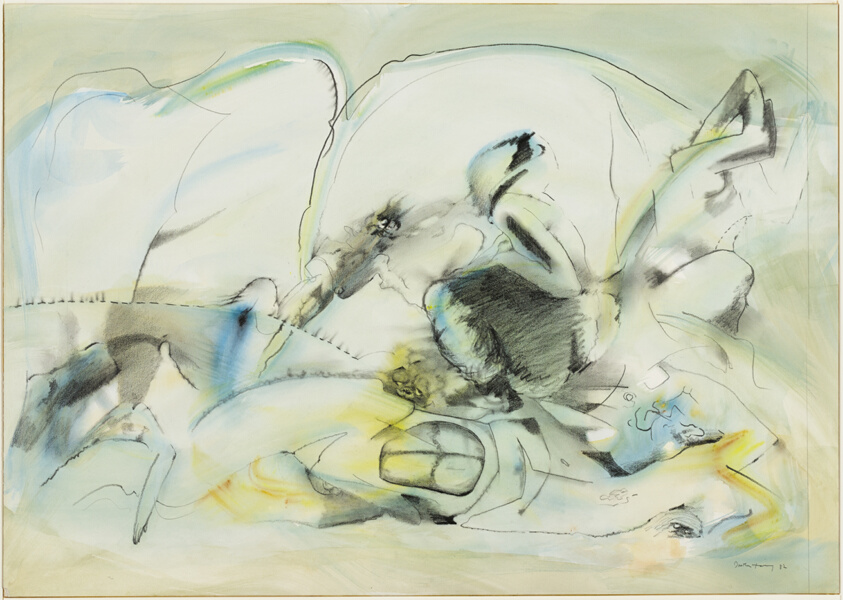
Featured Art: Glittering the Being by Roberto Matta

May he wake to an empty house.
May every pleasure
be interrupted. May every wheel squeak.
When he reaches the front of the line
may he return to the end of it
and may everyone before him
pay by personal check.
May he receive a thousand e-mails a day,
none of them personal, every one of them personal. 
May he go nowhere in metaphor
but travel everywhere by bus.
May every road be under construction.
May he lose the last page of every book.
May he find no pillow in the field.
May he find no field.
When faced with stone, may he see only stone.
Because he is narrow, may he hold
no one but himself.
There is power in forgiveness.
There is power in withholding it.
May he have the life he wished for me.
May every way be the dark way home.


Read More

Google Map

By Connie Zumpf

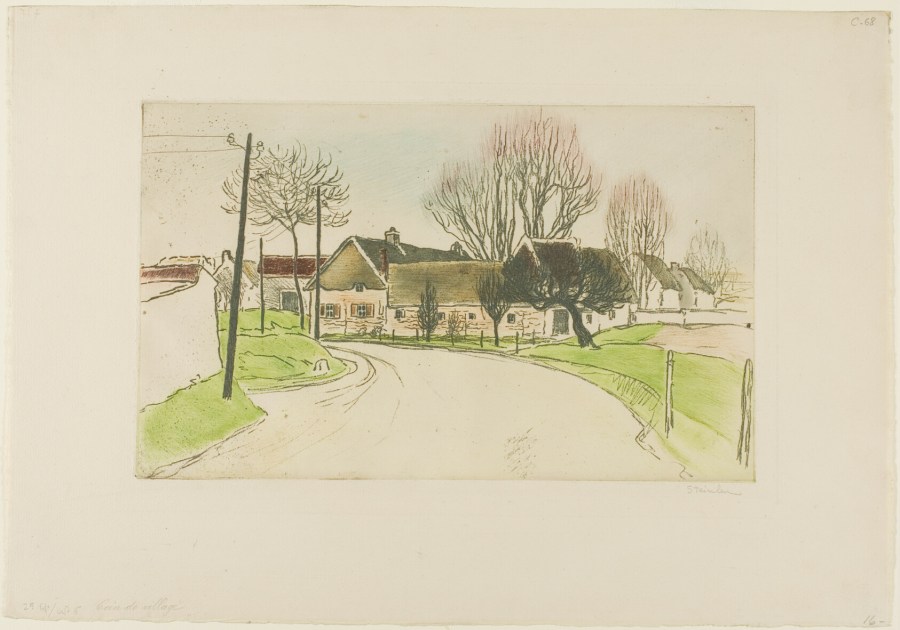
Featured Art: The House on the Edge of the Village by Théophile-Alexandre Steinlen

Today I Googlemapped your address
hoping to catch a glimpse of you.
You weren’t in the picture,

but must have been home because
your truck sat in the driveway.
It all looked calm and still—I was glad

to see the grass had been mowed
and the weeds kept at bay. I rotated
the street view to the little park

just north of your house, the one
where we walked through withered leaves
last November. You weren’t there either.

Of course I know that’s not how it works;
the satellite photo was snapped a few
years ago, a scene from your life that may

no longer be true, a moment
just now opened for me, but long ago
over for you. It’s like staring up

at the Orion Nebula at night,
its light carrying sparks of cosmic news
from 1500 years ago. Here on Earth,

the Roman Empire was crumbling
and Arthur reigned as Britain’s king,
if he ever existed at all. We only know

outer space as it was, just as I can only
measure distance and time
from the us I knew

to who we’ve become. And now
I sit in front of my window
like a God-eye peering in

on your life, hoping
to catch you from a satellite view
at some yesterday-moment

when you were nowhere in sight.


Read More

Strangers I Think I Know

By Connie Zumpf

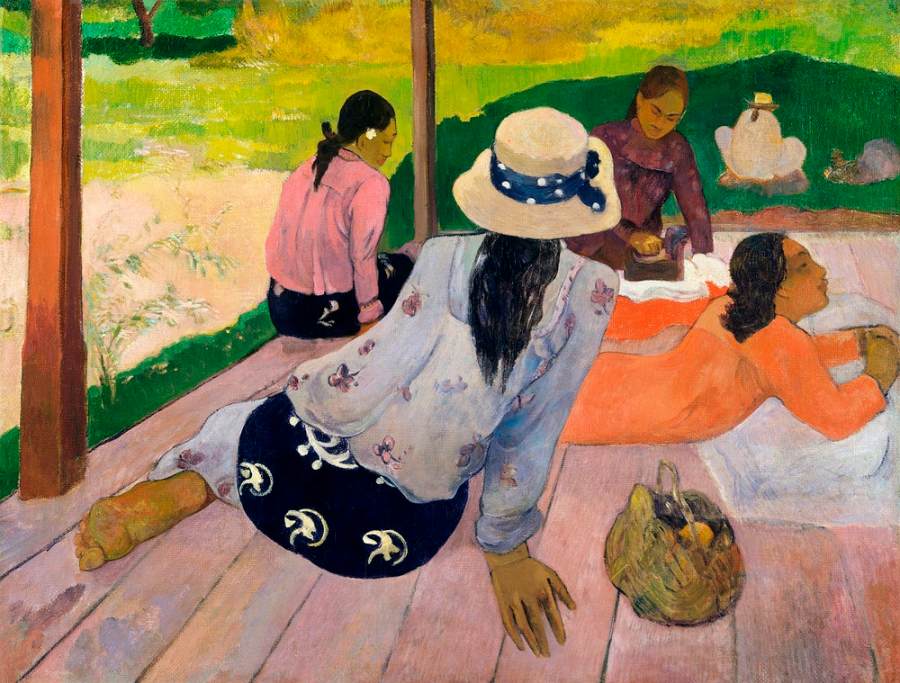
Featured Art: The Siesta by Paul Gauguin

A woman steps off a bus or a train,
and something about her—
the way she holds her shoulders,
that straight-on walk—
swings my head around.

I am here, not over there. But maybe
there’s an occasional breach
where the skin of time thins,
and I glimpse unlived versions
of myself on a crowded street,
or through bookshelves in a library.

Where do lives go
when they peel off in parallel?

I could be the ghost of a small girl
who drowned, now hovering
like an imp over her mother’s life.

Or a woman married, now forty years,
a circle of pale skin under her ring,
eyes dimmed from years
of looking away—

some might-have-been me is a doctor
who teaches psychology and practices
Tai Chi alone on the beach.

Or is this an alternate life I’m in—
my real self’s hologram,
crept in under the tent flap while

embodied me pulls tankards of ale
in a pub in Dublin, relieved
she left Denver and loving her life
as an expat part-time bartender?

Read More

Roland Raccoon

By Karin Lin-Greenberg

Featured Art: Girl by Egon Schiele

Ms. Gardner had not been in support of the plan to drag Roland Raccoon to every middle school science class, but the principal said they’d paid Margery Martin a flat fee for the school visit, and it would be a waste if every student at Grisham Middle School did not have the opportunity to visit with Roland. Ms. Gardner was certain the eighth graders in her sixth period class were too old to learn life lessons about kindness and compassion and giving everyone and everything a chance from a twelve-year-old blind raccoon that was also deaf in one ear. “But he loves to be sung to,” Margery Martin had informed the class, adding, “in his good ear.” She cradled Roland in her lap as if he were a baby.

Margery leaned down, put her lips unsavorily close to Roland’s ear, and sang something that might have been Frank Sinatra. The boys who were sitting against a bookshelf near the rear of the classroom, as far away from Margery as they were allowed, snickered, and Ms. Gardner heard the word “rabies” whispered several times. Margery was in her seventies, wore a baggy sweatshirt with a large cartoon raccoon’s face on it, pink elastic-waist pants, and thick-soled orthopedic shoes. Perhaps the fifth graders might find something charming in her, might think she was similar in some way to their beloved grandmothers, but the eighth graders were surely too jaded to believe that spending an hour sitting cross-legged on the floor surrounding a woman crooning to a raccoon splayed on her lap was a good use of their time. There were twenty-four of them in a semi-circle on the floor. Well, twenty-three of them cross-legged on the ground and then Julia Fredericks in a wheelchair. During the summer, she’d been in a boating accident when she’d gone to visit her cousins on Long Island, and her legs had been crushed. Doctors were unsure if she would walk again. Some of the girls in the class treated Julia as if she were their wounded pet, making sure to follow her everywhere, offering to help her at all times, even when it was clear that she did not need help. These girls were well-intentioned, even though they were mostly unhelpful and in Julia’s way. Julia had been remarkably patient with the girls fussing over her, and Ms. Gardner had thought of nominating Julia for Eighth Grade Student of the Year for this patience and for her resilience in the face of adversity, but she was afraid others would believe Julia’s nomination (and likely win) to be the result of teachers feeling sorry for her.

Read More

Not the Wolf but the Dog

By Jacqueline Berger

Featured Art: Two Human Beings. The Lovely Ones by Edvard Munch

Not the zebra but the horse;
not buffalo but cows,
maybe camels,
who traded the wild for the stable,
a stall lined in straw,
the house with wee gables and eaves,
their name over the door—
Biscuit, Coco. Snowball, Ranger.
Traded the hunt for the daily bowl and dish,
predators for owners, collar and leash;
agreed to be a tool—plow or cart
or confidant—to breed in captivity.

So when the man in the elevator
at the Venetian holding his cardboard
tray of coffees and muffins
heading back to his room
says to no one in particular,
but most likely to the other man,
the three of us strangers,
I better get something in return for this, 
he means fetching breakfast
so his wife can sleep,
I better get something for all of this, 
gesturing with his head,
meaning the hotel, the dinners and shows,
I think about women
who prowl the midnight streets
in their staggering heels,
breasts like missiles
because they’d rather be feral than kept.
And about men who gave up
wilding to name their offspring,
their known code continuing on forever.

I’m carrying my own tray
of coffees and muffins,
will soon press the card against the lock,
open the room, rip off my clothes,
throw back the three hundred
thread-count sheets, waking
my husband. He’s met someone new
and now wants both
of his lives at once.
He can sleep later. These untamed
weeks, we’re savaging,
flesh against flesh, ravishing
our marriage.

Read More

Another Version of My Confession

By Lara Egger

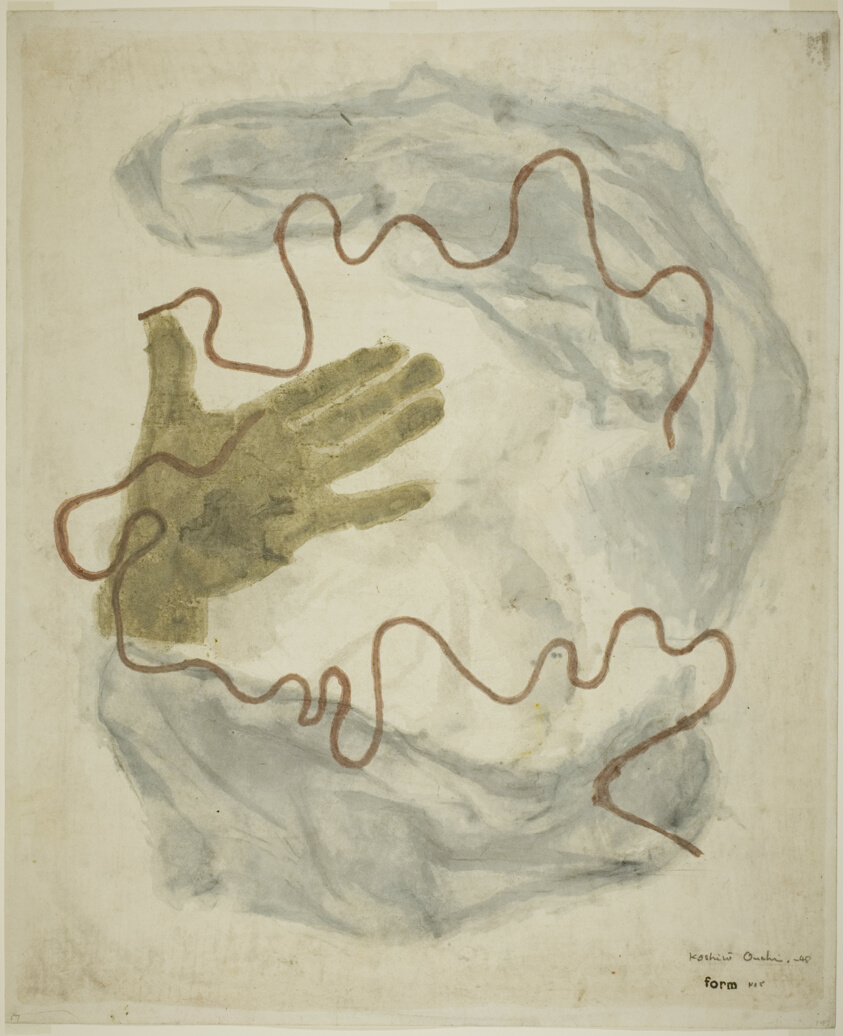
Featured Art: Form No. 5: Affection for Shapeless Things by Onchi Koshiro

My affection is a tabloid on sale at register three.
Citing moral reservations, the produce section

prefers not to get involved. Even the usually forgiving
cauliflower thinks my choices are questionable.

Have you noticed how some days the rush-hour light
makes the world look as if it’s snorkeling?

Stalled in the desperation of the strip-mall parking lot,
I tally my indiscretions, dog-eared romances

steadily expiring like glove-compartment coupons.
What would have been saved had I not agreed to love them?

Some nights my affection petrifies the lake,
a hush of ice tempering what lies beneath, and others,

a storm invites the water to trouble freely.
The clocks will be turned forward and then back.

Darkness falling, yet another way to describe twilight,
another way, dusk. Will you still think I’m a terrible person

if I tell you I meet emptiness everywhere and my heart
slips easily into its pockets? Up and down the supermarket aisles,

past cold-shouldered Kleenex and tight-lipped Lean Cuisines,
past the chorus of deli cuts chanting its condemnation: my affection

is a tabloid on sale at register three. When the night manager closes up
he pulls last week’s scandal from the rack—old stock

but his wife likes to read them. I write Catastrophe’s name
in steam on the shower door. I offer to give him a ride home.


Read More

Day Residue in Winter

By Wes Civilz

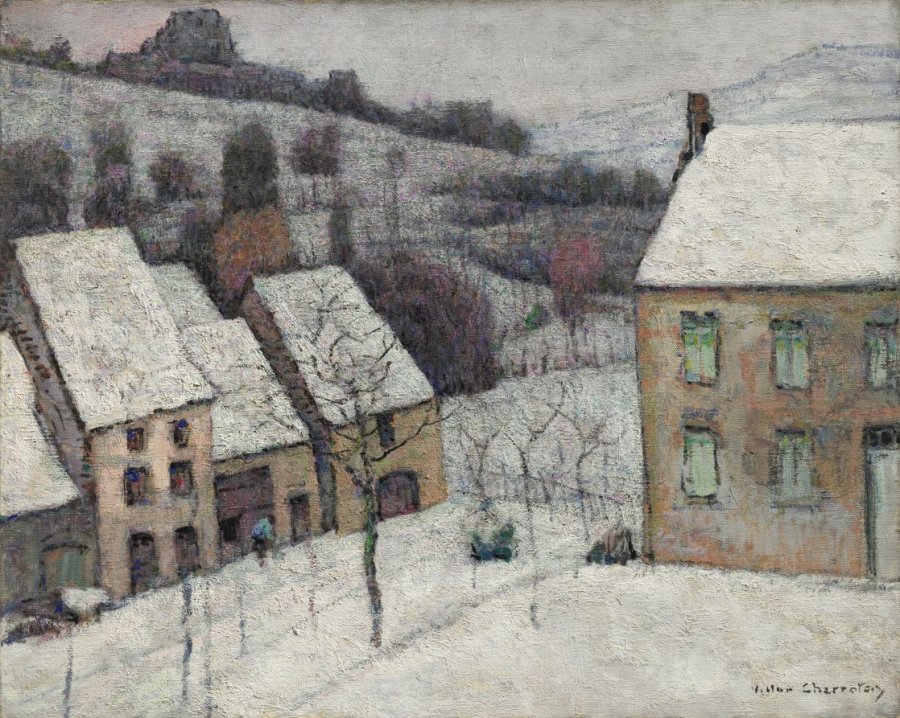
Featured Art: Murol in the Snow by Victor Charreton

« For three days, no coffee;
               there were headaches »

« On the fourth day, I have coffee again »
« My frozen intelligence melts open,
               sizzling with otherworldly light,
               but two hours later a slight sadness
               and a fading of the perfect coffee feeling »
« Then comes a desire for beer »
« Then a quick feeling that now
               is a moment I could be bored,
               if I was a person who got bored,
               but I am not »
« It is, however, too early in the day for beer
               so I do the dishes, and observe that soap bubbles
               are sly jokes told by the goddess of spheres »

« I drive to the dump, aka, the transfer station,
               where I will transfer the waste of my life
               into a cavernous compactor »
« (Other, more privileged things get to be recycled) »
« I behold the shapes of packaging
               that held the things that I used—
               that I used up »
« They are not lacking in beauty if looked at correctly:
               plastic casing with two bulb shapes for headphones;
               wax paper in the shape of a soap bar;
               browning skin of a banana »
« Someone else will worry about them now »

Read More

Of a Burrito de Buche

By Patrick Mainelli

Featured Art: Committed to Tradition (Uberlieferung verpflichtet) by Monika Baer

I’m not drinking anymore. It’s not a court-ordered thing or medical imperative. I didn’t crash a car or assault a neighbor or luridly graze my cousin’s leg at the reception of her wedding. No one has ever even told me to “take it easy there” as I poured three, four, five fingers of scotch over ice. As a drunk, I’m purely congenial. Maybe I’ve tipped over a plate of food here and there, fallen asleep on the toilet once or twice, sung in competing volume with the Midnight Mass choir, but who hasn’t? After a nightful of drinks I am more inclined to turn embarrassingly casual with my affections than to become anything close to mean or combative.

So this is a self-imposed drought. Denial might be the word.

The shit thing is it’s July. Beer’s favorite month. Because after mowing a lawn or trimming a tree there is no reward like the reward of beer, and because to swim in the lake, to rest tired and near-naked on the shore, and to not drink a beer feels an affront to God’s finer generosities—July demands a beer.

Read More

Dragonflies

By Danusha Laméris

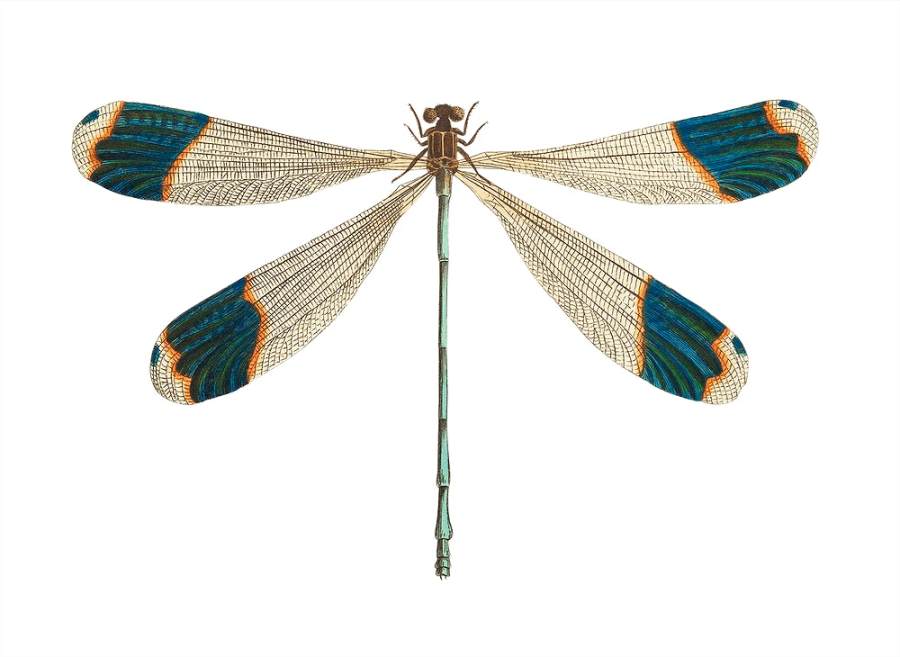
Featured Art: Blue-tipped Dragonfly illustration from The Naturalist’s Miscellany by George Shaw

I wish you could see them: two thin blue needles
hovering above a bed of loosestrife and clover,
slivers of electricity, humming, almost invisible—
a glimmer of azure against the hillside. How
do their bodies hold the requisite organs?
Never mind the pull that makes them want
to wend their forms together this way. A tangle
of wires working themselves into union
this Sunday afternoon. Which, come to think of it,
is something I’d like to do with you, the portion
of desire I carry that much greater—as are the consequences
of crossing over into that lush country of dry grass
and end-of-summer weeds, where, if we weren’t
otherwise attached, we could make the most
of our own fleshly burden, lay it down
on the soft earth, its fine dust and buried flint,
the scattered flecks of fool’s gold.
Don’t you want to? Doesn’t it seem unfair
to be outdone by these mere fragments?
Almost more air than matter? But timing,
after all, is everything. And it looks like
I’ll have to appease myself with this tableau:
these two writhing out their little ecstasy
in broad daylight, coming together and then apart
and then together again, as if they had all day.
Which, given the brevity of their lives,
is quite a decadent expanse. Let’s try
and be happy for them, living into their late hours
with such abandon, while we are still
relatively young, the gift of want
stretched out before us, limitless and absolute.


Read More

The Problem

By Grant Clauser

Featured Art: Sketch for Beach Scene by Joaquín Sorolla y Bastida

The town decided
that blowing up the body
was the best way to move it,
but the only explosives expert
was a groundskeeper
who’d planted mines in the war.
Still, people set up beach chairs
and umbrellas on the dune
to watch. When it blew,
slabs the size of picnic tables
crushed cars a quarter mile away.
One man was killed by a bone shard
through the heart.
Another still walks with a limp
from the impact of blubber.

For days the town pretended
this had all been the plan, everything
was good, but then under cover
of night, we rented front loaders
from the neighboring towns,
buried what we could and burned
the rest in smoky mounds
that choked us when the wind
blew in from the ocean.
The beach was unusable all summer.


Read More

Here’s the Plan

By Patrick Meeds

Featured Art: Jacques and Berthe Lipchitz by Amedeo Modigliani

                                                                  —For Amy Dickinson

                                     You be a rubber bullet, and I’ll be fireworks
on TV. You dismantle your prejudices, and I’ll acquaint myself
with all the latest fads. You drag the river, I’ll manage expectations.
You shake your head and say yes, I’ll nod my head and say no.
I’ll call you Texas, and you can call me Nancy.

                                                                 Practical and precise, we
will compile a list of things we will need. Warm clothes
and synchronized watches. Miniature technology and hand-drawn
maps. Invisible ink and antique stationery. The music of Django
Reinhardt and a list of all the patron saints.

                                                                                    Things we will avoid?
Strict adherence to dogma and barbed-wire fences. Left-handed
compliments and uncomfortable shoes. Complex algorithms
and attempts at perpetual motion. Sing-alongs and potluck suppers.

                                                                   We will travel by train under
assumed identities and ride facing backwards. We will explain
ourselves to no one. Let’s be clear about one thing, reinvention
is the key. Look, there’s an abandoned car with a tree growing
through it. There’s an old bathtub with flowers planted in it.
There’s a fence made of old bicycle frames. There’s a car with an
antenna fashioned from an old coat hanger. These things were
one thing, now they are another.


Read More

My Younger Self Attempts Breakdancing at the Sadie Hawkins Dance

By Kerry James Evans

Featured Art: Dryland Farming #24, Monegros County, Aragon, Spain by Edward Burtynsky

I spin like an adolescent bottle
pointing in empty directions,

the colors of the divided gym
spiraling like one of Mrs. Peters’

chemistry experiments, the blurry
girls staring, the boys huddled together

like cows in a thunderstorm.
A minute ago, I’d sensed the movement,

two Samanthas on their way to our side
with their rare request.

Would you like to . . . ?
But I wasn’t waiting. I’d have my say first.

Now, I listen for the beat to drop
and I pose, balancing

all my weight on my left hand,
each leg a limp karate kick.

I move as a squid flees
a cameraman’s light,

arms crawling like
honeysuckle along a trellis.

If I love my body,
if any of us love our bodies,

we don’t know it yet.
What I do know?

Read More

Wings of Wind

By Eliot Fintushel

Featured Art: West Wind by Duncan Grant

“He goes on wings of wind,” is what a psalm says, one of the psalms. Another one says, “Happy is he who shall grab your babies and hurl them against a rock.” When I try to explain these scriptures to Miriam and Cassie, they look at me like I’m stupid. Do you call that a friend? In the Jesus times, friends even kissed each other on the lips for hello—Miriam would be caught dead first. Cassie, okay, actually, even on the lips, which I am going to tell you about it, except for the fact that she is damned to Hell.

Like, I’m the one who is stupid! This is what the Bible says about sinners like Miriam and Cassie: “They have their reward.” Namely, shit.

Miriam wears this, like, Nazi dirndl, which she thinks is cool, with her curly once-upon-a-time blonde hair and with sunglasses with red rims, and she looks like melted cheese with a worm in it, but she walks like she thinks she is a beauty queen, you know, with, like, her one heel right in front of, like, the toe of her other foot, in a straight line, supposedly, except that it’s crooked!

Read More

Creed for Atheists

By Matthew Buckley Smith

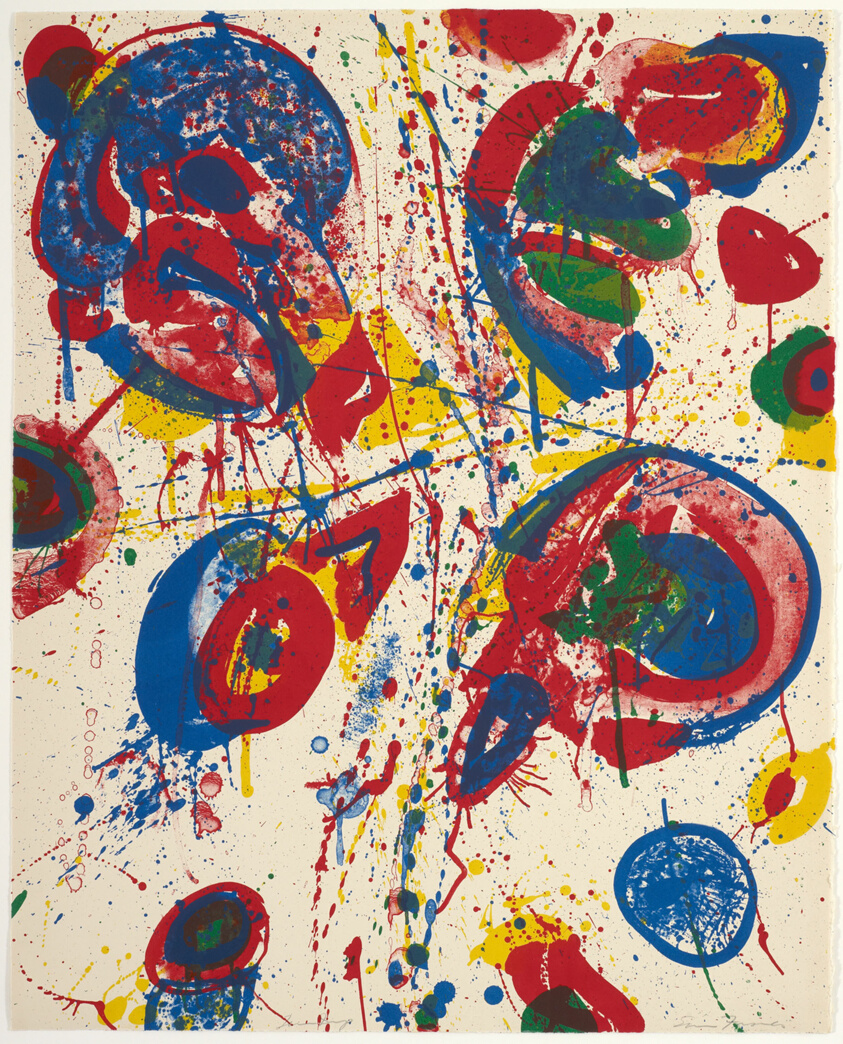
Featured Art: Bright Nothing by Sam Francis

     Let us not speak of God
As if He were the nightmare of a naughty child,
     Or a white lie for a widow,
Or a conscript’s consolation on the battlefield.
     Let us instead be awed
By the nothingness we’ve chosen not to be awed by,
     The shade whose earthly shadow
We’re standing in, the lie cast by a happy lie.
     The face we turn away,
Let us turn it toward the others, let us find them out,
     The ones who know the way
A sure thing looks when rounded with a little doubt,
     The same ones every day
Who, kneeling all together in a common room,
     Pray for their pets and pray
As well for us, their company in a common doom.
     Let’s take no satisfaction,
But concentrate on what we say when we say no:
     That dead we are the same,
That time falls fast across the fading light like snow,
     That man is an anxious motion
Of matter upon matter, liquor upon tongue,
     The neurotransmitter’s flame
Upon the dendrite’s kindling—bright, and not for long.


Read More

The Spiritual Exercises

By Lisa Ampleman

Everyone on television is apologizing.
      I’m sorry I kissed your sister. I’m sorry
I sold the dog. 
We watch, each with our own

TV screen we walk or run toward. The treadmills’
      wheels whine louder and louder.
In the strength training area, a man grunts

and drops a heavy weight. I wish I hadn’t eaten
      so many foods with high fructose corn syrup.
I’m sorry I got you addicted to sugar.

On one wall-mounted TV, two men in an octagon
      with netted sides try to kick each other
in the face. When one pins the other,

he moves gradually, pulling the loser’s arm
      further up, maximum pain. The other
struggles to buck him off. It makes me feel sick.

There are two minutes left in the round.
      I’m sorry I voted against you. I didn’t come here
to make friends. A few men shout

as they play hoops on a half court,
      but the rest of us are silent and alone
in our movement. We must contort our bodies

to give them fitness, here in the kingdom
      of calisthenics, our feet dully hitting
the treads. I’m useless; I can’t get rid of

this stack of Sears Catalogs
      or this broken walking cane. I’m sorry

that the house is full of trash.

“Exercises,” too, Ignatius called
      the spiritual retreats that “have
as their purpose the conquest of self.”

Read More

The Jesus Bus

By Melissa Studdard

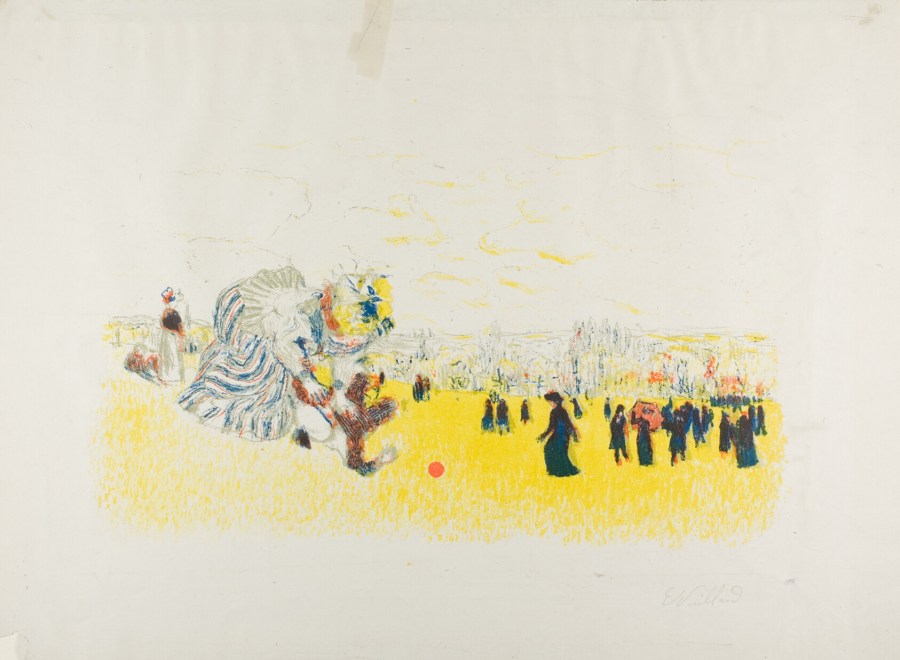
Featured Art: Children’s Games by Édouard Jean Vuillard

came early, sputtering and spilling
Kumbaya from the windows,
the little punks inside eating a breakfast
of Pop Rocks and candy cigarettes left over from Halloween
and hiding the wrappers in the creases
between seatback and seat. I never sang
but floated instead in my own world of thought.
All you had to do was look at an issue
of National Geographic to know everything
was extraordinary and people’s bones were full of stars.
Cecil, the driver, got his neighbors
to help paint the Jesus bus into a roll of Lifesavers candies—
all bright and vertically striped—green, yellow, red, and orange, 
Lifesaver in perfect white script across a strip of blue. Cecil,
tenderhearted conveyor of children to the terrible glory of New
Light Baptist Church, Cecil, who after nearly hitting a squirrel,
had to pull to the side of the highway to pray. Who could blame him
for not understanding that the grace he sought was already on his bus,
packed into forty-two little sugar-smacking bodies?
And hadn’t I once killed a frog by trying to save it?
Spilled it hard on the sidewalk like the spoils of an egg?
If the sky had ruptured above me, I would have cleaned up the clouds
and apologized for the mess. But the rebel gods kept
hanging around me like Woodstock hippies, so I dared some revival
to happen with the Christ frog. I was six and still
decades away from translating the voices tiptoeing through my mind.
Everywhere I went, I looked for spiderwebs with secret messages.
Maybe there was a pig to save. And when the bus backfired,
I thought I saw an afterlife emerge. Weeks later,
when I awoke screaming the fourth night in a row, I wanted
my parents to tell me it was possible for us to be alive
without hurting each other. I wasn’t dreaming of squirrels
or frogs. Just the Sunday School lesson on wartime and atheism:
how the good of us, when commanded by soldiers,
refused to stomp on a picture of Jesus
and so had their heads chopped off,
how I too should be willing at all costs
to keep my feet clean of my lord.
I was a good girl and learned my lessons well.
From others’ non-Christian necks would grow something
as secular and boring
as heads. But from my neck, an endless field,
and in that field,
congregations upon congregations of daisies—
all of them wearing the sad face of night.


Read More

Fez Postcard / Call to Prayer

By Jacqueline Osherow

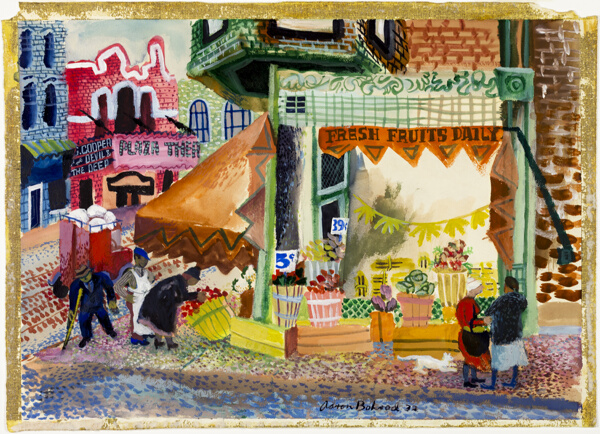
Featured Art: North Avenue Market by Aaron Bohrod

A jeweler holds a magnet to his silver
to prove its purity (there’s no pull)

A seller wraps a package for a buyer
who’s never quite assented to the sale

A flash and then another as a weaver
shuttles spun agave silk through wool

and then a blast of sound / a change of air
at once the market’s hustle-bustle trivial

Allahu akbar, Allahu akbar
even if business does go on as usual.

The world seems to refine itself, each color
more acute, each syllable, each smell:

the sharp scent of cedar where a carpenter
planes and sands an ornate floral grille

cumin laced with cardamom and coriander
(the spice seller’s stall) rose petal, fennel

or orange blossom just pressed to attar
escaping from a shapely crystal vial

Allahu akbar, Allahu akbar
every vista turns devotional:

the gorgeous rows of vats for dyeing leather
(for yellow, saffron, for red, poppy flower,

spearmint mixed with indigo for teal)
are bright-robed worshippers who’ve joined to kneel

in unison and chant Allahu akbar
God is great and powerful

as stragglers head to fountains to splash water
on hands and feet and face and then unroll

the mats they keep with them, each a small
but resolutely holy house of prayer.

Read More

Blessed Is He

By Jeff Tigchelaar

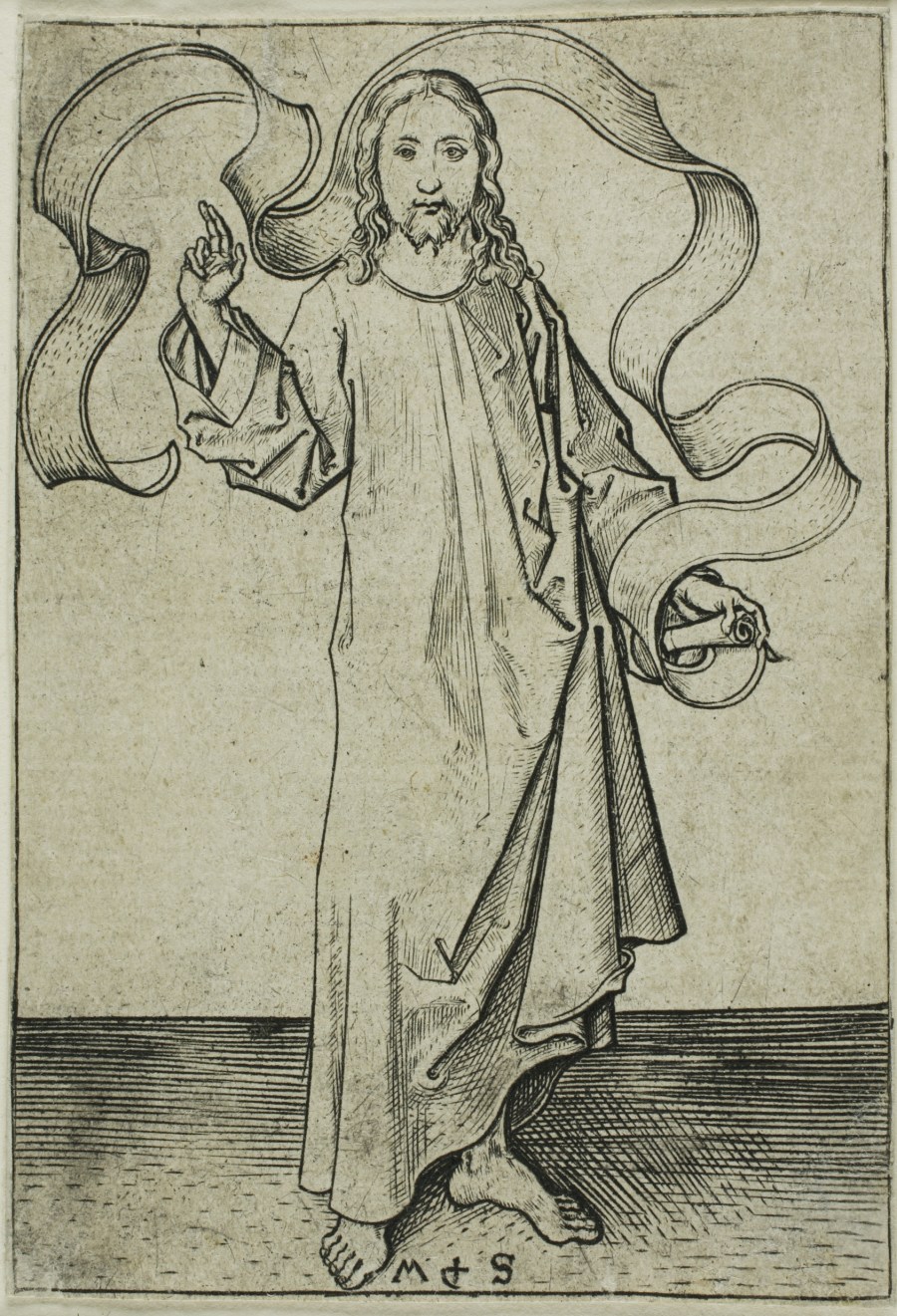
Featured Art: Christ Blessing by Martin Schongauer

How am I?
Blessed. Blessed. I am
just blessed. God is good. Not afraid
to brag on God. Brag all day
on Big Man. My fiancée
just graduated. Junior college right across the street.
Four point O. See? God. He’s good. I’m looking
for work. The other day who do
I happen to meet
but the owner of Huntington Steel.
If that’s not God right there.
You can’t tell me that’s not a God Thing.
He’s workin’ it. Every day. Everywhere. I’m going
to Israel, by the way. Jerusalem. Judah. Judah, you know,
was Jacob’s fourth son. Now
Moses, though—God didn’t let just anybody
bury Moses. Dude was holy. An angel
had to put old Moses in the ground. Archangel Michael.
Jude 9. Look it up. Good Book.
Moses was so holy. Up there
two weeks with God on that mountain.
Gettin’ those Commandments. No Moses, no tablets.
Moses got blessed like nobody’s business.
Love me some Ten Commandments, though.
Love me some Shalt Nots and Covets. Don’t Covets.
God bless Moses. I’m just
blessed to be able to tell you about Moses. Share that
Word with you today. The man was like God’s Number Three.
Maybe Two. Right behind Jesus. Blessed as hell.
I’m about to be blessed with that steel job, though.
Think how hard Moses would work that. Mr. Bulrushes.
Mr. Burning Bush. Mr. Hold Up That Rod,
Throw Down That Staff . . . but now he’s dead and can’t
so I’m the man. Work my ass off get that good reward.

Read More

This Is a .50-Caliber Wound

By Jeff Tigchelaar

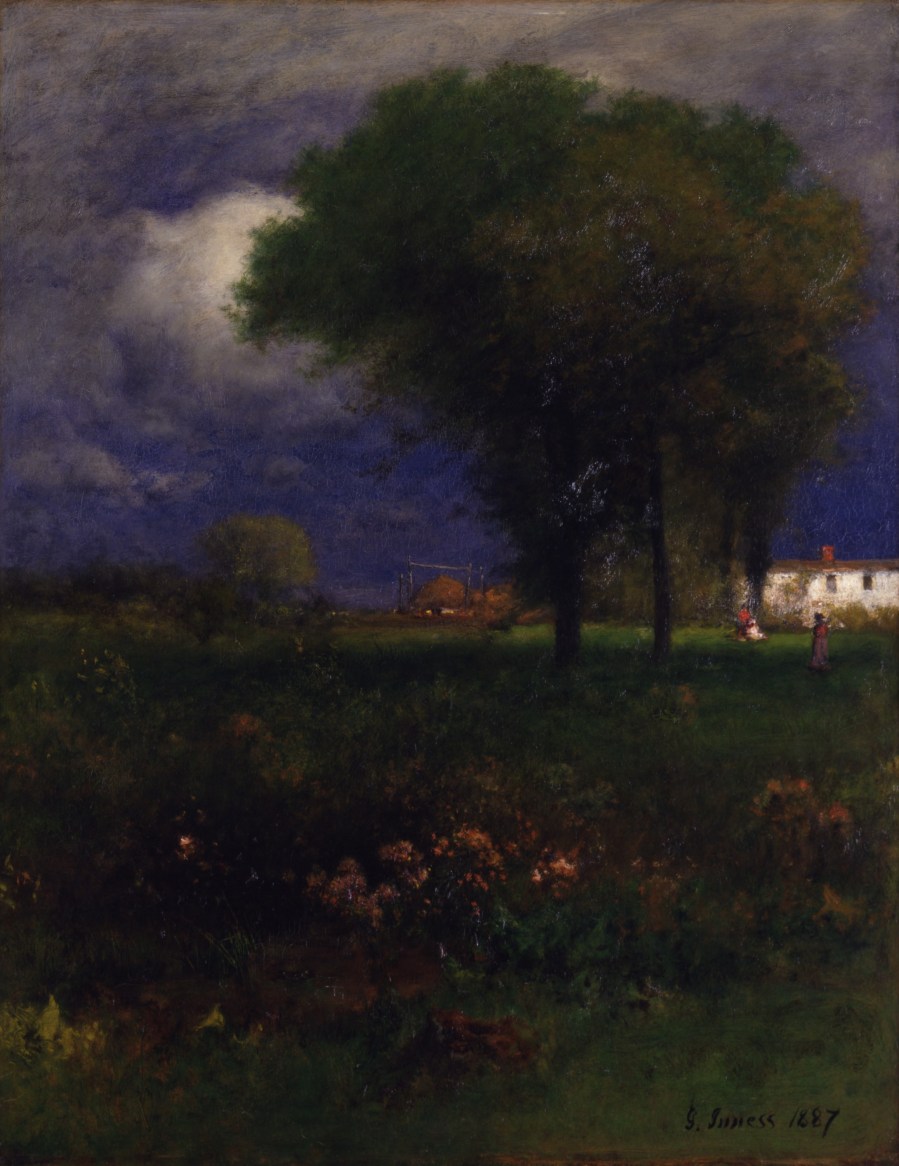
Featured Art: The Lonely Farm, Nantucket by George Inness

Knee surgery? Hell no
I didn’t have knee surgery.
That’s a .50-caliber wound.
I got bullet holes
up and down this leg.
Running through rice paddies.
                 Never mind that.
I need people to work. Know anybody?
People don’t want
to work no more. I need people
to throw hay. People can’t
throw hay no more.
Hundred-thirty-eight-pound bales, all day
out in the sun. It’s good work. If you’re strong. I pay
twelve-thirteen dollars an hour
so spread the word. The silt
in the air’s a bitch to deal with, though.
Especially if you’re not used to it. I’m used to it
and still it gives me fits. I got to cough
and puke it out and believe me, it takes a while.
                                   Purple Heart?
No. No I didn’t get one. It’s complicated. I wasn’t that
“good” a soldier, we’ll say.
Purple hearts are for . . .
Never mind. It’s just—it’s not worth it.
Never worth it. Especially today. Kids
come back fucked.
I’d never go. I’d stay,
work the family farm.
That’s where I am. Now.
I’ve got five brothers, four sisters,
and we keep about three guys full-time.
And my dad keeps timberwolves.
Gets ’em from a friend of his in Canada.
We got so many deer out there—we shoot
about ten a year for jerky. I only come into town
to donate plasma. I hate the city.
And I hate people, to be honest.
                 Know anybody
up for throwing hay, though—
send ’em my way.
I need people.


Read More

Reverse Sculpture

By Richard Dey

Featured Art: Untitled by Richard M. Loving

As the stone shrinks, the form expands.
—Michaelangelo

It’s like sculpting in reverse,
       learning about love:
Here’s a Maiden or Aphrodite or Venus,
       naked and polished
or is it the Doryphorus or David or . . .
Isn’t s/he nice? The Ideal in spirit and form?
       Miss or Mister Universe!

Then, in reverse, as you learn
about the apple of your eye
       in revelations you can hardly believe,
       (marble with veins like that!
       granite with such cracks!),
the stone chipped away chips back
       chip by chip, and chunk by chunk,
       all superfluous fugitives reuniting,
and not without the dusty air re-ringing
               with the tap-tapping of
       chisel and mallet, point and hammer,

refilling all the subtle negative spaces
that defined the planes and rhythms—
       mound and hollow, ridgeline and gap—
and the warmth that passed
       from the sculptor’s hands into the work,
all his perseverance, passes back . . .
until before you grandly stands, unhewn
and cold, a breathless, glacial block of stone,
       Lovelessness now reappointed
whose last words (whispered
       with chiseled lips lastly parted) were,
“Darling, are you disappointed?”


Read More

Arrangement in Gray and Black

By Laurie Rosenblatt

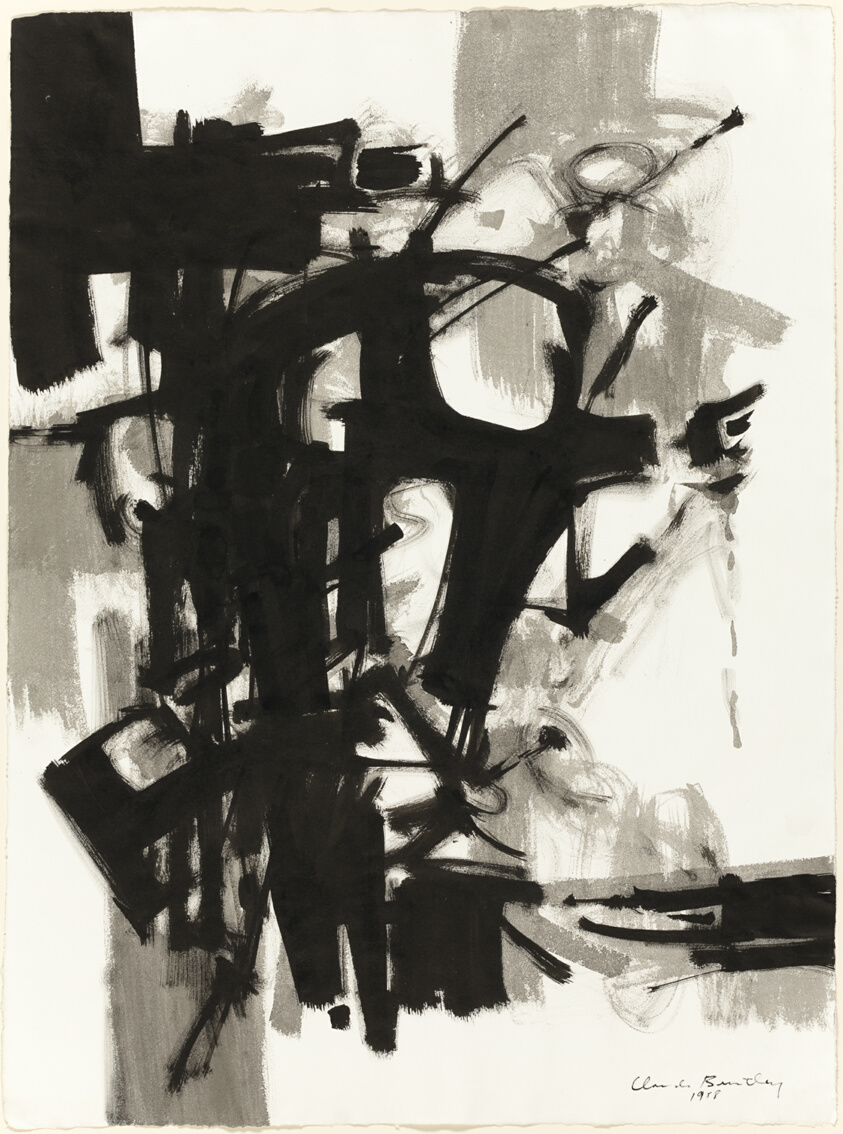
Featured Art: Composition with Black and Gray by Claude Ronald Bentley

In the straight-backed chair
for hours for hours after
a drug-stilled night for hours
after dream-hungry sleep she sits
in the straight-backed chair
unmoving for night
after night after leaning spent
against the steel surface
of sleep after staying by habit
on the right side of the bed
as if as if—

although some time does go missing

as if an owl passed like a ghost
its wing-beats deepening the silence
before the milkweed
from that half-dreaming
streams away.

And because the skin knows
after the brain does
and the reptile brain knows
after the self
the arm believes and reaches palm held out flat
seeking that other skin
and animal comfort.

Because the palm is capable
because a limb if lost may still feel
and because it feels may find grass-itch,
wind-brush, the love-mad path of fingers,
and pain. Because this is so

the palm believes
and finds the ghost it seeks
but the streaming milkweed
is carried away by the sun
that leaps onto the bed
and sinks its claws in.

Then dream-hungry she sits
on the straight-backed chair a
figure in gray and black.


Read More

Ye Are of More Value than Many Sparrows

By Elton Glaser

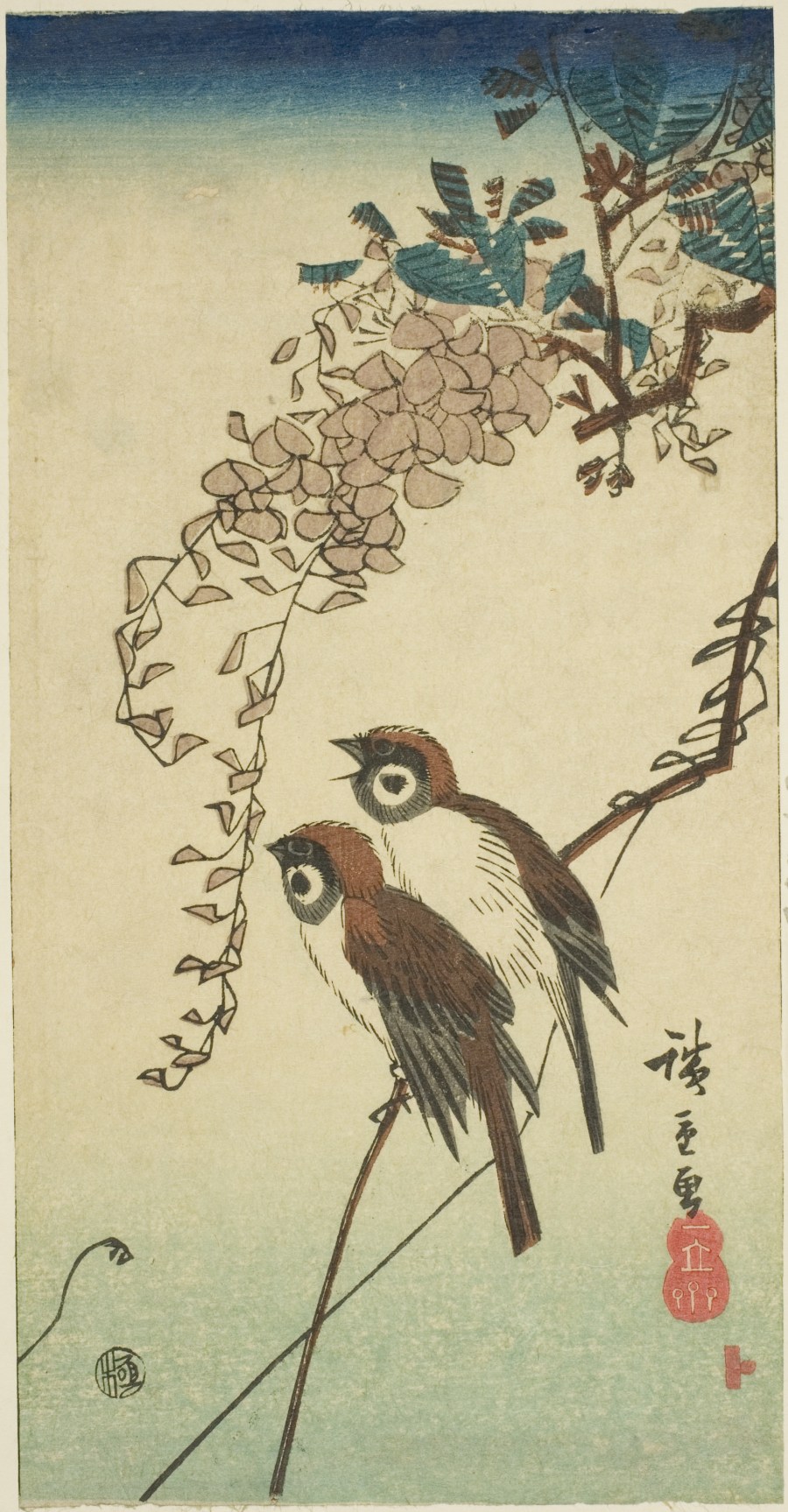
Featured Art: Sparrows and wisteria by Utagawa Hiroshige

Luke 12:7

How many sparrows are enough? I can’t tell
If there are more this afternoon than yesterday.

And if there’s one missing, or two, or eight,
What does it matter? All I know is

They are not so many since I took the feeders down
After your death. They came for the seeds

Your kind hands set out. I give them nothing.
Now, if they come, they come only

For reasons of their own, these quick birds
Dowdy in their grays and browns, and leave behind

That whistle and trill, or the echo of it,
Singing not for me, but for the moment’s pleasure

Of lifting their wings in warm air, alive
To the light. And in their easy glide and sweep,

Oblivious of anything but song, I find myself
A listener outside the choir, and still

Inside those memories of the missing kindness
That drew them here, however many, however few.


Read More

Haunting Houses

By Jacqueline Doyle

Featured Art: The Customs House at Varengeville by Claude Monet

In the movie I’m watching with my husband, “A Ghost Story,” a woman lies in bed with a lover and tells him a story. “When I was little and we used to move all the time, I’d write these notes and I would fold them up really small. And I would hide them.” “What’d they say?” he asks. “They’re just things I wanted to remember,” she says, “so that if I ever wanted to go back, there’d be a piece of me there waiting.”

*

We were in elementary school when my best friend moved out of the red house on the lake. She was moving hundreds of miles away, the rooms had been emptied, and we ran all over the house leaving tiny notes about our enduring friendship. There was a door in the upstairs-hall ceiling with a ladder to the attic, where we tucked notes in hidden spaces under the eaves. There was a small door allowing access to the bathroom pipes on the second floor. A dark basement with several rooms and pipes on the ceiling. Our footsteps echoed as we ran up and down stairs.

*

Read More

April 21st

By Billy Collins

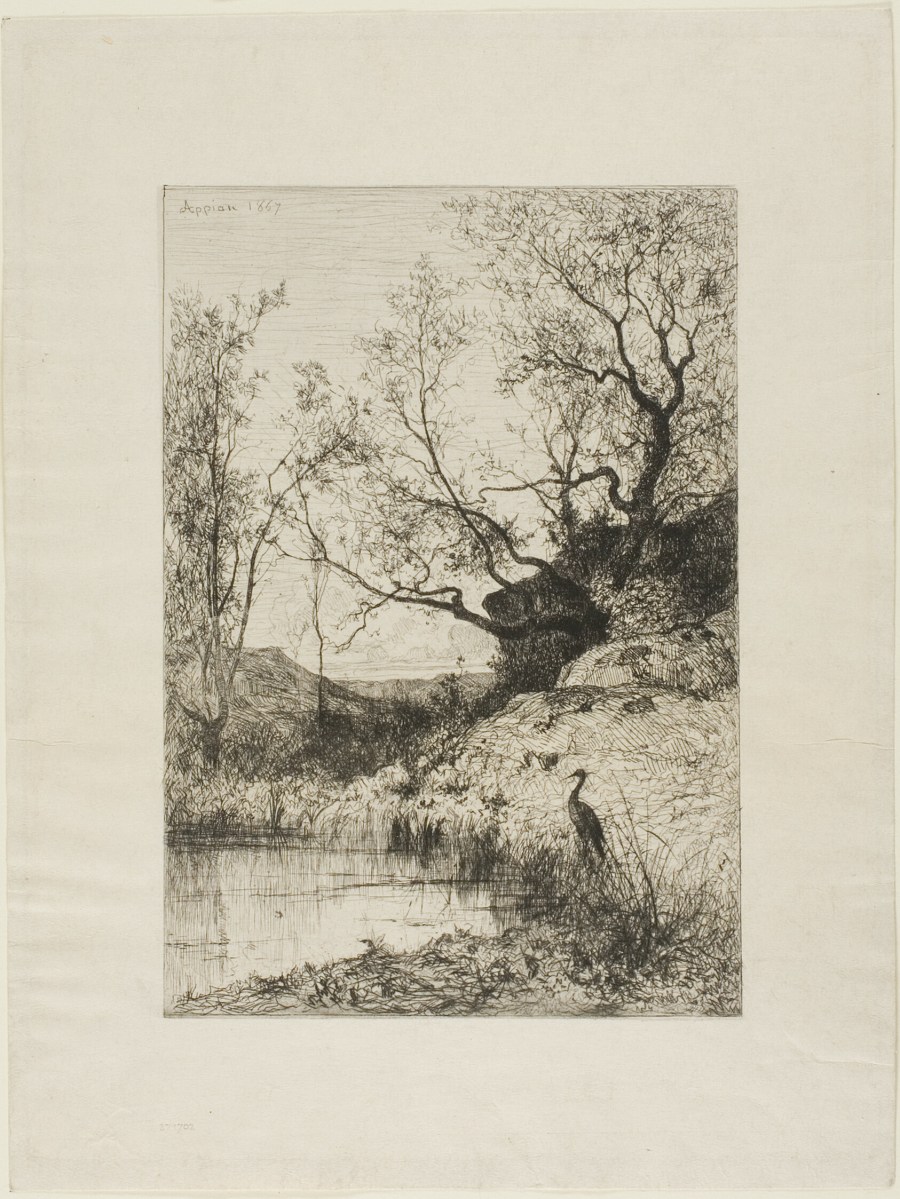
Featured Art: A Pond Near Rousillon by Adolphe Appian

It’s the birthday of John Muir and Charlotte Brontë,
born just 18 years apart,
she in Yorkshire and he somewhere in Scotland,
both in their basinets under the same gray clouds,
but then their lives diverge so radically
you might begin to question the claims of astrologers,
if you haven’t had the sense to do that already.

Muir heads off to Wisconsin (with his parents I guess),
whereas Charlotte is placed in a nearby boarding school.
Muir then stomps all over North America,
exulting in Nature and writing it all down,
while Charlotte stays mostly indoors composing poems
with her sisters, Emily and Anne.
He leaves us Picturesque California, she Jane Eyre.

I don’t have much on my calendar for today,
another April 21st featuring a walk around the lake,
then boxing up the cat and driving her to the vet.
It’s overwhelming to think of all the things
I’m not doing today, including being born.
But I will say that my life, maybe like yours,
falls somewhere between John Muir’s and Charlotte Brontë’s.

My morning walk takes under an hour,
but I do pay attention to the water and the birds,
and here I am writing a poem, just like the Brontë sisters. Muir was blinded for a spell,
Charlotte married then died still pregnant,
and I’ve had the same headache for more than a month.
And if that’s what ends up killing me,

would someone please slide this poem
into a side pocket of the coat they bury me in?
Until then, let us picture John Muir
on a windy mountaintop in Oregon
waving in the direction of the coastal dunes,
while Charlotte Brontë lifts her head
from her morning prayers, recalling that it’s her birthday.


Read More

The Card Players

By Billy Collins

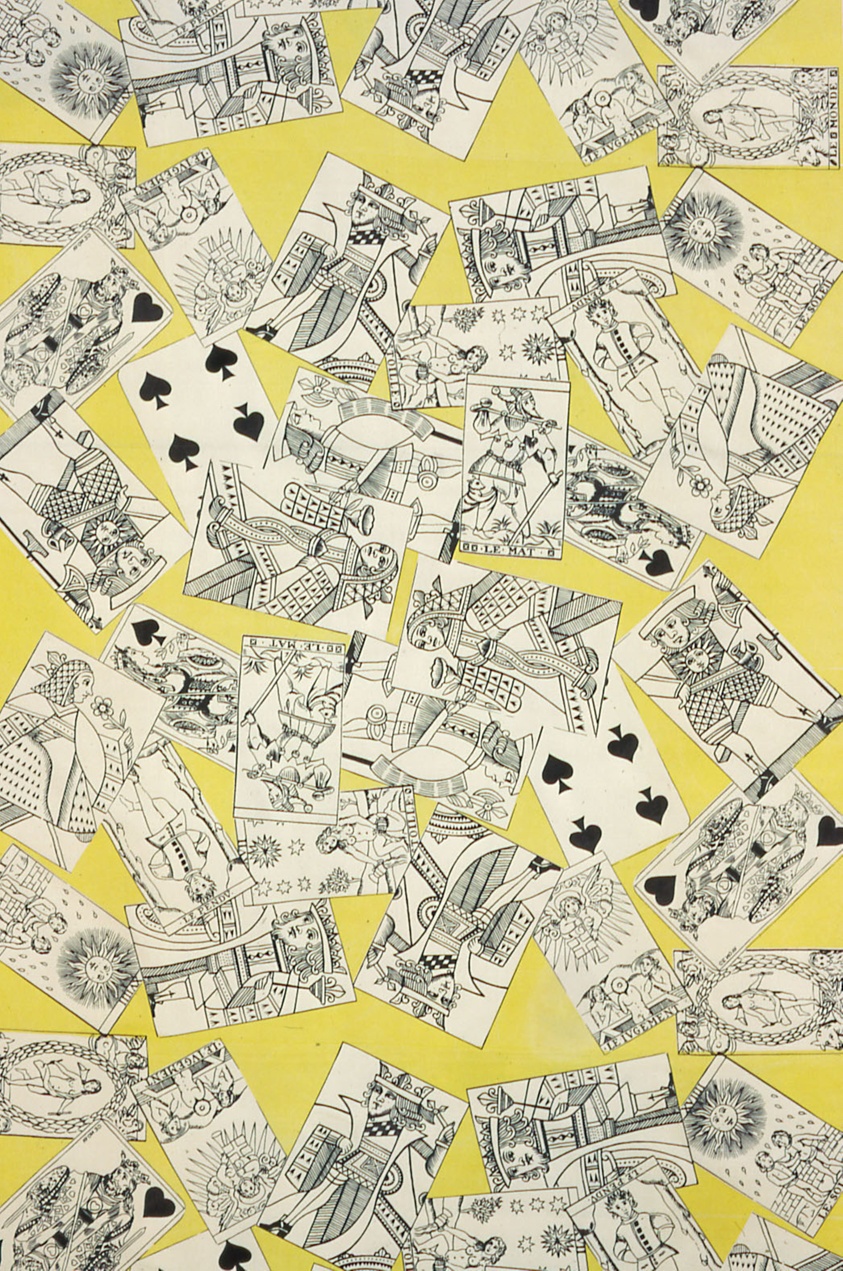
Featured Art: Playing Card by Piero Fornasetti

I’m glad Cezanne was not here in Key West
to set up an easel and paint
the card game I was in last night,
unless he was really good at depicting despondency.

Cezanne once said that a single carrot,
if painted in a completely fresh way,
would be enough to set off a revolution.
I’ll bet he was sitting in a café that day

where such observations are usually made,
but if I had been sitting in that café
across from Cezanne I would have quipped
“Maybe if Bugs Bunny were in charge of things,”

and I would have described in a fresh way
how the famous rabbit might be portrayed
pointing the mob to the Bastille with a carrot.

Beer and chips and more beer and chips
were served at the poker table,
but no carrot soup, a staple on every menu
in the bunny rabbit stories of Beatrix Potter

and a dish that would have warmed me
inside and out the way a good soup does
and made me feel much better
about losing all my money and then some.

But at least now I have found the answer
to the old question of who would you invite
to your ideal dinner party:
Paul Cezanne, Bugs Bunny, Beatrix Potter,

and okay, maybe at the last minute, Gore Vidal.


Read More

Made-up Saints

By Claire Scott

Wile E. Coyote free-falling from a cliff,
Sylvester flattened by an iron safe,
scads of sodden Kleenex at my side.

I put my name on a waitlist for mercy
(a light-year long).
I murmur worn mantras,
send prayers to made-up saints:

Saint Jackson of bankruptcy,
Saint Tiffany of clogged toilets,
Saint Lester of shapeless days
& tedious tomorrows,
Saint Elmer of the toss-and-turn.

Someone else dreams my dreams at night.

Am I missing the point
or was it never there?
A diver yanks a rope,
a wrestler taps out.
I tip over my King.
Checkmate.


Read More

Aubade with Looney Tunes

By Matthew Luzitano

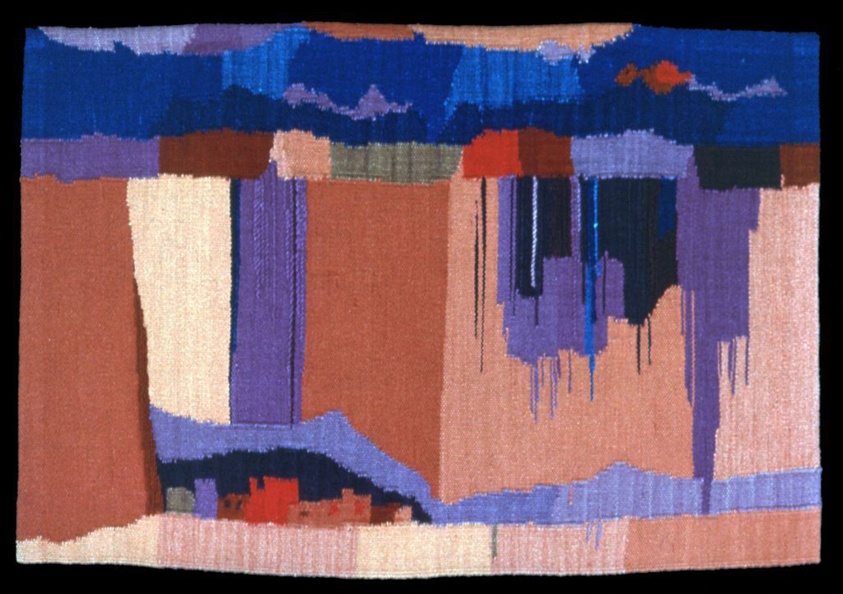
Featured Art: Chelly Canyon by Alice Kagawa Parrott

Your love is a tunnel
painted on a canyon wall.
My love is an Acme,
ripped open despite

certain failure. The TV,
at least, is turned on,
and you say, “Well, that makes
one of us.” Years of this bickering—

can’t Bugs and Daffy
just kiss already? Instead,
the duck marches into the glade
of a dozen cocked rifles.

Why does desire keep ending
in violence? The cat catches
white paint and the skunk
tears apart Paris after her.

You want more thrills? Let’s run
over something in the road.
If the two of us follow the sunset
off a cliff but never look down

are we really falling? In this episode,
lover is a word that means
two people embracing
the same stick of dynamite.


Read More

Tightrope

By William Fargason

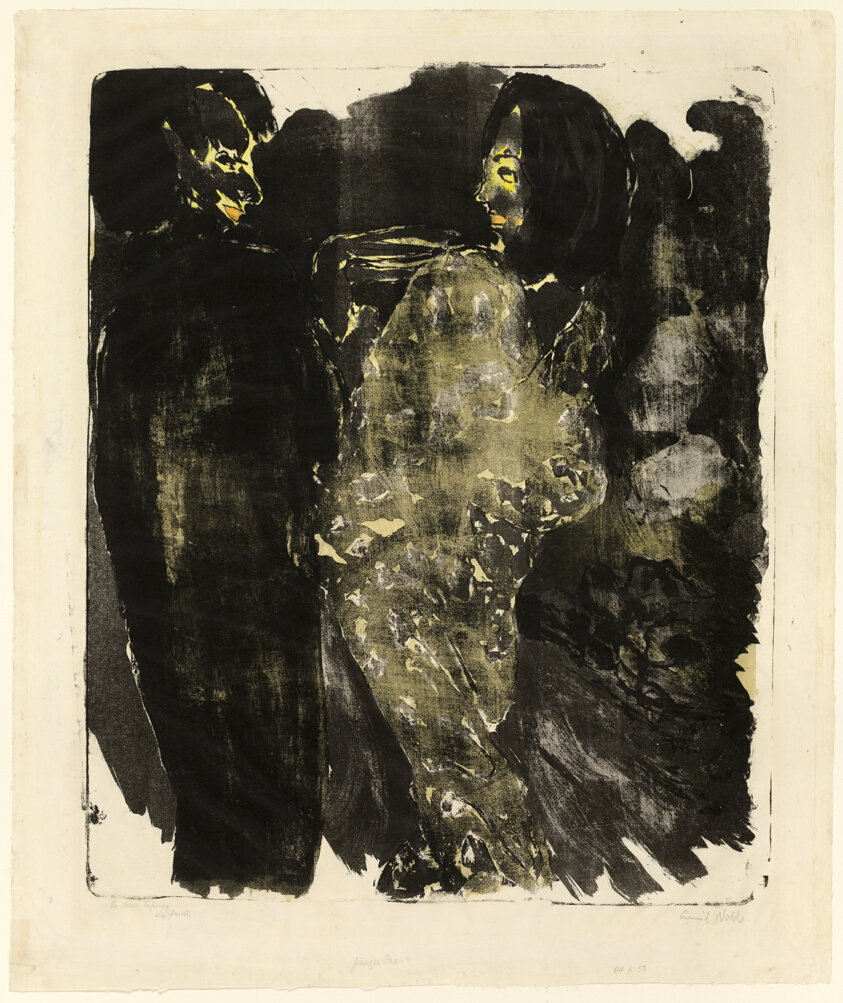
Featured Art: Young Couple by Emil Nolde

On the TV, a man is attempting
to cross the Grand Canyon by walking
on a tightrope. He holds
a large pole to balance himself,
slippered feet cupped around
the two-inch metal wire. What poise,
balance. We are watching this together
because you’ve driven over
to pick me up for dinner, but neither
of us will turn off the TV
or stand up. By now, we are invested
in the outcome. You pull closer

to me on the couch. Will he make it
across? Will the cameras keep rolling
if not? His family waits on the other
side of the canyon. Your hand
on my leg tightens when the wind
picks up, causes the man to bend
down, pivot the pole to regain balance.
I can smell the perfume you’re wearing
because we are going to a nice place
for once, that French restaurant
with all the candles. Your neck smells of lilacs,
or pancakes burning. I can never tell.

I know you won’t leave him
for me—and the man is halfway across
by now, the wind pushing against him,
forcing him to pause again—but I can
hope. I kiss your cheek. You smile.
Ten minutes of him moving one foot
at a time, holding his weight
against the wire, 1500 feet up
in the air, no safety net. You ask if
your car will be towed if you parked on
the street. I don’t think so. But we have
to leave for our reservation, we are
going to be late. I turn off the TV.
Looking back, how terrible
it might have been if you loved me.


Read More

Loose Ends

By Gregory Djanikian

Featured Art: Starry Night and the Astronauts by Alma Thomas

I’ve been pacing the afternoon
like a high-wire walker
from room to room
counting the steps.

Dear Flying Wallendas,
help me reach out across the canyon
of lost connections.
Philippe Petit, speak to me
as if I were your balancing pole.

The letters I’ve written—
let them send me back a sign
they’ve been thumbed.
Let the numbers I’ve called
redial themselves till sun-up.

It’s the neighbor’s pickup driving away
pinging gravel with its tires,
it’s the geese barking the end of summer
that’s got me wishing for binoculars.

The fall leaves are floating down
as if they had something important
to say to the ground.

It’s been Sunday here all week.
I’m holding out for big-box deliveries.
I’m waiting in my soft-soled shoes
for the dog to bark.

Someone, come knock on my door.
Let’s see who’s inside.


Read More

The Blue Goodness

By Maureen McGranaghan

Franklin ducks into the janitor’s closet and mutters into the iPod Greg bought him. The Goodness is here. It is definitely here. Last night, the blue tarp stopped flapping, and it got very quiet. Then the Goodness filled the whole house like heat from the radiators. Greg and Kate stopped fighting and went to sleep. Now it is everywhere: The Blue Goodness

Franklin hears his name on the intercom. He is being called to Mr. Volpe’s office, so he puts his iPod in his pocket and emerges from the closet.

Mr. Volpe greets him, fiddling with his watch chain and rubbing the bald spot on his head. His voice sounds like rocks grinding against each other. Franklin thinks about the rocks when he speaks. How many?

“Your brother—is he sick?” Mr. Volpe asks.

Four rocks. Small. “Yes. He is. He has walking pneumonia.”

“Tell him to get an excuse.”

“Okay.”

“Have your mom write an excuse.”

Kate won’t do this because she says Roger deserves to have the book thrown at him, but Franklin says, “I’ll tell her.”

Read More

Judgement Call

By James Lineberger

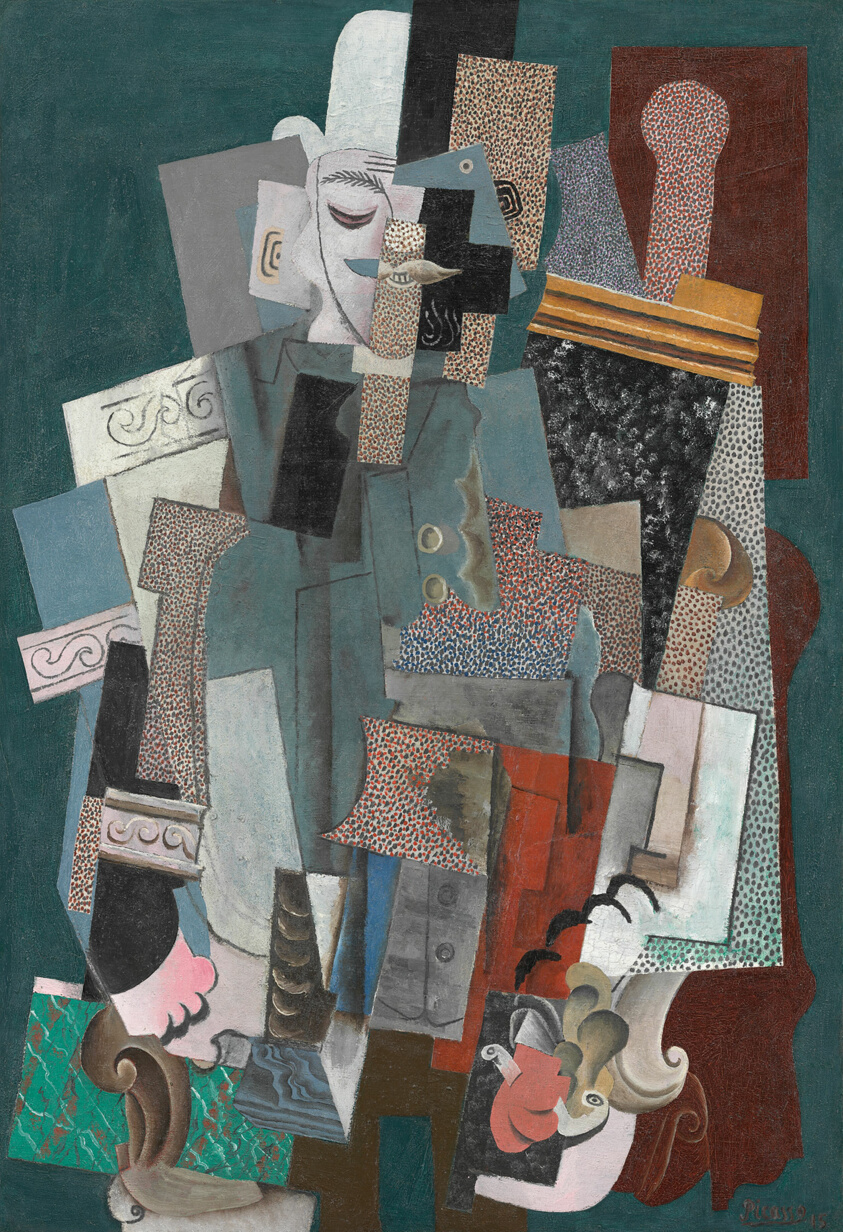
Featured Art: Man with a Pipe by Pablo Picasso

I don’t know why you won’t show
your face maybe you
don’t know how maybe there’s some
rule about it
or you might be still sleeping or lost
somewhere in
between but if that’s the case
then why do you send these butterflies
to land on Barbara’s
arm and make her candle lights
switch on all
by themselves at four a.m.
and Robert said just yesterday
that you pop
up now and then in his dreams hands
in your pockets
leaning against a wall
and when he asks you what
it’s like you shrug and say it’s
okay which
is all right with me I don’t care how
much you share
with everybody else but unless
you mean to shut me out altogether
then isn’t it about
time we decided on something for
ourselves because
the way it is now I close my eyes
and I can’t even make
out your features your face is just a blank
like somebody wearing
a fencing mask or else I’ll try
to call you up

Read More

In the Gas Station Bathroom With My New Son

By Amy O’Reilly

Someone scratched out the C so it reads “Baby hanging Station.”
What isn’t conspiring to kill Baby?
Pillow. Blanket. Mother’s sleeping body like an island
resort battened down for the wet season,
the beds stripped of their festive linens,
clink of glasses beneath the bar while outside
the storm rages.

Motherhood turns out to be
less spot the warning signs,
more choose which ones to heed—

Like this floating table, its baby-sized crater
inundated with other tiny humans’ feces.
Beneath the black safety strap
my son looks sacrificial,
like he’s about to be experimented on.
Even when I’ve chosen right I have surely chosen wrong.


Read More

Guardian

By Rebecca Haas

Featured Art: Angel by Luc Tuymans

The station wagon’s engine’s going faulty. We’re driving 20 mph on the right side of the highway, half in the slow lane, half on the shoulder. Mom’s got both hands clenched on the steering wheel, leaning over the dashboard like she’s urging the car forward with sheer will. The car moves in rhythmic gasps, pausing in between the surges, catching its breath. Mom whispers, quiet so the little ones can’t hear. Bad, bad, bad. This is baaaaaad.

She turns to me and says, “I’ve got the gas pedal pushed all the way to the floor.” Like, can you believe this shit?

We’re just outside of Gainesville, Florida, headed back home to Cincinnati. For ten years—since my brother Kevin was born—we’ve gone on a family vacation to Florida. Mom said it’d be no different this summer, even after the divorce. But we didn’t go to the coast, where we used to go when Dad was with us. We went to Central Florida, to Ocala, where Mom’s sister Florence lives.

“You’re batshit crazy driving four kids down to Florida by yourself,” Flo said.

The air coming in the car windows feels like steam from a hot shower and smells like Kevin’s farts. Sweat has my bare thighs glued to the pleather front seat. The baby’s asleep on a quilt in the way back. My sister Kate is sprawled out on her stomach over most of the back seat, reading Mom’s book, Flowers in the Attic, which she shouldn’t be reading because she’s only eight. Behind me, Kevin is squished against the door so no part of his body will touch Kate’s skin, his feet dancing a jig on the back of my seat.

Read More

No One Dies in Fiction Anymore

By Kaj Tanaka

Featured Art: Heart of Darkness by Sean Scully

I. Sherman Alexie

Once again last night, a dead woman appeared to me. She spoke my name and asked me to help her back into the world of the living. She said she was so close to me; it would only take a small caress and she would be flesh and blood again. I didn’t move. Her face hung over my bed until the dream resolved itself, and I was awake again, and this morning was gray and cold just like yesterday morning and the morning before.

This morning, I heard our neighbors’ little daughter crying in the room above us amid the crashing of furniture while her parents fought. The crying and the fighting were so loud my wife wondered if we should call the police—we decided not to, and then my wife left for work, and the fighting died down. I texted my wife to let her know things were quiet again. She texted me “okay.”

Today, I read Sherman Alexie’s poem “How to Write the Great American Indian Novel” for the first time. I have spent the last three years of my life writing a novel about the time I spent living on an Indian reservation in South Dakota, and when I read Sherman Alexie’s poem, I realized that what I had written, while true, was not useful. No one needed my novel, and I was stupid to think anyone did in the first place. I should have known a year ago when one of my Lakota friends ended our relationship because of this novel—when he heard what it was about, when I told him. We’d been drinking out in the bad-lands; the sun was coming up, and I asked for his approval—“blessing” I think I said. He threw an empty bottle at me. He told me I was selling him out just like all white people do eventually, which is pretty much what Sherman Alexie was saying also. And the next day, we were hungover, and we pretended to have blacked out the entire incident. Even so, we have not spoken since.

Read More

At the Outpatient Clinic

By Andrea Hollander

Featured Art: Free Clinic by Jacob Lawrence

The young woman in the maroon hat
is tapping her left foot as she stares
into her empty lap. She’s kept her coat on,
its collar of fake fur buttoned at her throat.
The woman’s face is pale—blanched is the word
I was about to use, but my mother’s name was Blanche
and I don’t want to think of her, the way at the end
she grew so white and thin, her hair so black
I thought someone had rinsed it with ink. She lay so flat
beneath those hospital sheets, I thought at first
the bed empty, that they had taken her away.

Now a man I didn’t see before gawks at me,
his eyes earnest, green, and stern like my father’s.
“Angela,” he says. “No,” I say, but he keeps staring.
I’m saved when his name is called,
and he turns his head the way my mother did
that last time when I stood at the foot of her bed,
her name on a blue card inserted
into the slot beside the door.
She stirred when she heard my voice,
then turned away.

My mother’s head of ink-black hair
on that bleached white pillow,
her name typed out in block letters
on one of those little blue cards.
What do they do with them
afterwards?


Read More

And Later I Will Forget About the Bread

By Andrea Hollander

Featured Art: From the Kitchen by Ruth Levy

I try to stop glancing at the clock, try
to focus instead on the task at hand, dusting
my palms with flour, lifting the round ball
of dough from the board, slapping it down again.

My son is driving home, his first solo trip,
his teenage eyes partially, I hope, fixed
on the highway’s center line.

From my kitchen radio, Vivaldi’s The Four Seasons.
I can never tell which one, the way I never remember
what Daylight Savings is supposed to save us.

I knead the dough to the music,
pick up the sluggish ball, slap it down,
push the heel of my hand into it,
fold it, pick it up, slap it down.

When my son was born he nearly died.
Now the clock declares him
five minutes late, then ten.

I place the dough into the ceramic bowl
he gave me for my birthday
and cover it with a damp cotton cloth.

The music moves from one season to the next,
the strings vibrant now and airy.
Twelve minutes late, says the clock.

The dough will surely rise. And spring
will come, then summer. But only
if the car pulls into the driveway,
his house key clicks in the lock.


Read More

This Is How It Will Feel

By Jennifer Watkins

Featured Art: Woman and Child by Mary Cassatt

At three years old, you will sit beside me in a rusty Ford as we head south on I-95. The air conditioning will blow lukewarm air, and you will feel hot and sticky. From the carrier in the backseat, our cat will growl long and low. Looking out of the passenger window, you will see stacks of steel lattice speed by, connected by strands of drooping lines. Through the back windshield, a shrinking ribbon of asphalt, lengthening and disappearing into the horizon. After many hours, the dirt will turn from brown to orange.

“I want my daddy,” you will say.

“Daddy’s staying in Maryland,” I will reply.

A few weeks later, after boxes have been unpacked in the Georgia apartment complex called Cherry Tree Hill, a card will arrive in the mail. Tearing open the envelope, you will find a photograph of your father. He’ll be sitting in a leather office chair, smiling for his daughter’s benefit and wearing neatly pressed blues. You will clutch the picture to your chest, pressing your cheek against its sharp edges. You will kiss the photo over and over. I will tell you to stop.

“You’ll ruin it,” I’ll say.

I will hold you as you cry, and you will hear my heart beat as you lie against my chest. At three years old, you will learn: your mother is flesh and blood. Your father is envelopes and stamps.

Read More

Local News

By Christopher Kempf

                   Or dearest theater.
                                                      Aren’t we
all, the premise is, for one
                                    half hour, in tight zoom, suitable
for history? The Lyndhurst couple
         married, this weekend, at the bagel shop
                                                on Central. Who met
               among the jams & pumpernickels.
                                                                           The suspect
who fled the Chevron holdup
                                                on horseback.


                                          Athens, for instance,
was less its democracy—solemn
                  ecclesia, Plato
                                            bent to his parchment—than
the price of goat’s milk in the Way
                                         of Sheepherders. Ahead


           at five—teens
     skipping sleep. Teens
                                        at St. Cecilia’s filling the boot
                            for Alzheimer’s. Teens trend-
                                 huffing. Behind the co-hosts
the city poses on its screen. Sunset
                                       flashes. For a minute
  our sundry lesser dramas—our bodies
            pulled from retention ponds, holiday
                                              toy lineups—form
a single American skyline. Small nation
           of lotto & weather radar.
                                             The ecclesia—they


did so, they believed, to banish
                       the idea of distance—prohibited
                                  star-gazing, so faithful
       they were to the stage
                                         & polis.


                                                      At Taco Bell
yesterday, two men
                     pulled knives on each other because,
            they said, of a woman. One
                                 drove off with her. The other
sacked Troy. We take you
         live, now, to Friday’s parade route. We
                                    will stay with this story
      as it evolves.


Read More

These People

By Anele Rubin

Featured Art: Green Park by Dorothea Tanning

These people strolling through the park
with baby carriages and frisbees
have no idea
my sister choked to death
on a sausage
after being released
from a mental hospital down south
but they may know I’ve been crying
and wonder what I’m writing
in my little yellow book
sitting in the grass next to the only dandelion
left in the park
with my big black dog
whose fur is shaven on one side
and they may notice
I’m wearing yesterday’s clothes
and my gray hair hasn’t been combed lately,
but maybe not,
because a young woman with a child
stops before me,
asks where the duck pond is
and waits, smiling,
as I explain the best route
and her little girl
looks right in my face,
asks if she can pet my dog
and what his name is, says
he’s pretty.


Read More

Timeless Beauty

By Brian Hall

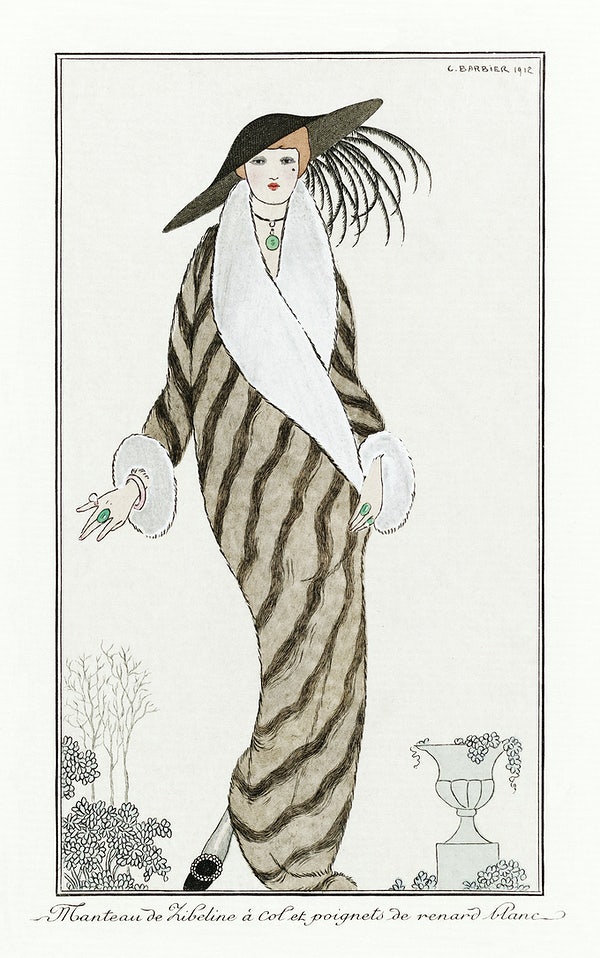
Featured Art: Costumes Parisiens by Manteau de Zibelin

What does she tell me, wind?
—Louis Aragon

My grandmother is a Louis Vuitton model.
Though she will never see the streets
of Île Saint-Louis or pose
along the Seine clutching a Monogram
Canvas Petite Malle iPhone case,
she does drift through grainy nostalgia
like Sora Choi; she does stare beyond
the moment like Sasha Lane, who yearns
to wear soigné dresses and be admired
near rue de la Femme-sans-Tête.

My grandmother is a flâneuse of Youngstown,
shuffling near the faded edges.
In the middle of the road,
she stops traffic because she is
elegance: the wind rippling
her white robe around her as she looks
over her shoulder, gazing
at an audience—drivers, police,
grandchildren, and daughters—
she no longer understands
and at the seasons forever lost.


Read More

Black Sesame

By Adrienne Su

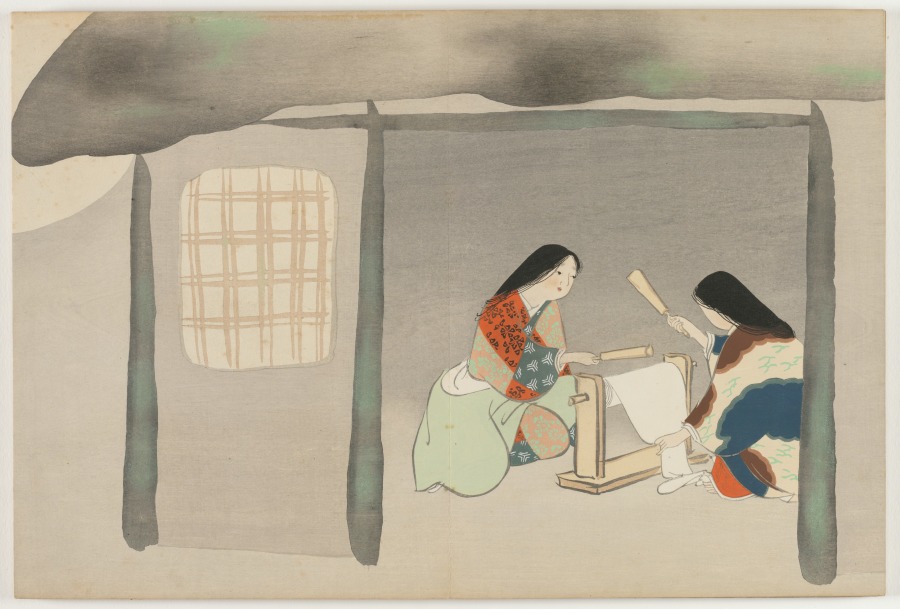
Featured Art: Flowers of a Hundred Worlds (Momoyogusa): Fulling Silk (Uchiginu) by Kamisaka Sekka 

Had I stayed in touch with black sesame,
much would have turned out differently.

For years I forgot the late nights with my mother,
the small bowls of hot sweetened water,

porcelain spoons, and white dumplings
with almost-black black-sesame filling

dwelling somewhere between dessert
and snack, erasing the not-quite hunger

that holds off sleep. At that hour
their strangeness didn’t register:

no one else could see them; the notion
of soup as dessert could be taken

for granted; the lack of an English
name caused no confusion. Packaged,

frozen, easy to heat, they could be served
within minutes of craving, all records

of indulgence swept away as quickly.
Perhaps it was this simplicity,

decades later, that made me feel at peace
in a void. It didn’t feel like sacrifice

to forgo a confection
I had left to oblivion.

What finally reminded me
that I had made myself lonely

was black sesame’s coming into fashion—
cakes, gelato, pastry—the recognition

a mild punch to the abdomen
like that moment in a museum

when a terracotta soldier, a Frida Kahlo,
or an archaic torso of Apollo

turns what you thought was satiety
into a quest for family.


Read More

The News of Touch

By Craig van Rooyen

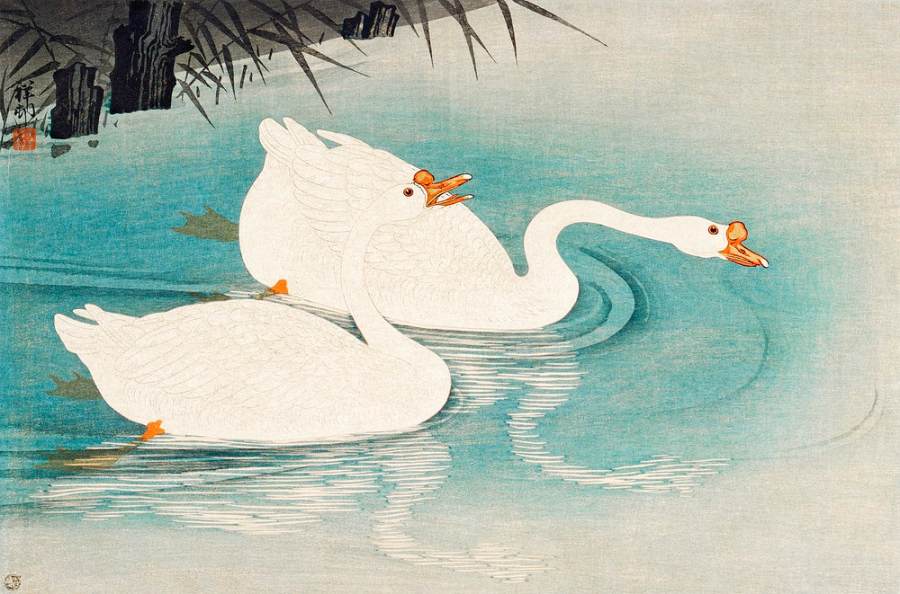
Featured Art: Geese amid Reeds by Ohara Koson

Since his illness, my father feeds
the crook-necked goose every day.
He walks to the pond on diabetic feet,
careful as the path pitches and rolls under him
like a swinging bridge.
He wears suspenders over sloped shoulders,
the shirt tucked over a sagging belly.
Of course he would share with me,
if I didn’t stay away. There’s enough seed
in his bag for both of us. But I’d rather pull weeds
two towns over than see his shaking.
They greet him with a mighty honking,
wings flapping and dripping with light,
then surround him, hoarse with need.
A preacher, he is used to feeling loved
for what he has in his pocket for the flock.
But his pulpit days are long over.
He pulls out his bag of seed
and teeters toward the water’s edge.
A tremor shakes his hand
and the seed spills beneath
writhing necks and thrashing wings.
When the honking stops and the birds leave,
he goes down on one knee, though it costs him.
There is enough seed left to cover a palm.
His good hand steadies the other, and he waits
for the crook-necked gander. Alone also,
the bird finally appears from bulrushes.
This is their agreement:
my father will save a shaking handful
for the crook-necked goose, and in return
the goose will touch him,
pushing its bill across his palm, nuzzling
his fingers long after the grain is gone.


Read More

A Small Prayer

By Craig van Rooyen

Featured Art: Ce fut un religieux mystère by Maurice Denis

—After Ada Limon

Behind the rotting fence in their first house,
my mom and dad are eating canned mushroom soup
over buttered toast in a one-bedroom Kentucky clapboard
where a turntable spins the same Bill Gaither Trio record,
“Because He Lives,” until they go almost mad
with their stained Formica floor and overflowing toilet
and their longing for heaven, and I love them so.
She is crying at the stove because today
she crashed the rusted Dodge Dart and he has no way
to drive the circuit of his churches in the morning—
preaching at each about the Second Coming
and how to get right with Jesus. I want to offer
her a beer, but there I am in her womb,
kicking to be noticed among their other troubles
and, in any event, she has never had a drink.
He is thinking about his sermon,
the one that will end in an altar call because
he knows people need to walk toward something together
after they have walked away from each other all week long.
First the white church, then the black one across town.
And my father is going to save the country, and then the world
by baptizing its citizens one by dripping one.
Nights, they watch the news on a black-and-white
Magnavox, wrestling with the rabbit ears
to see, through the snow of static
what the world is becoming, believing
it will end in the best way possible.
During the week, she delivers babies
in her starched white uniform, knowing,
in these last days, they will never die.
Years later, some might say their hope
was not a hope, or was not the right kind of hope,
but rather a sort of escape from the reality of their time,
but I want to tell you some hope is better than none.
Look at them there, on their knees, praying
their small prayer. Not for the healing
of the nation, or for an end to the war,
but something more manageable, more
imaginable—for a car to start, for something
in its crushed innards to turn over and catch fire.


Read More

Feature: Gems of the 21st

Editors’ Note:

If, at the turn of the 22nd century, there is still such a thing as an anthology. If readers of poetry continue to entertain the sometimes troublesome idea that ten or twenty poems can reflect whole movements, schools, trends. If the looking-back literati—skeptical of Automaticism, 2101’s prevailing poetic tendency—seek some sense of our long-gone zeitgeist . . . If all that. Then what poems will be read as representative of the early 21st century? Say, from 2001 to 2018?

We asked some of our collaborators to take their best guess.

We suggested that, first, they consider poems that are great own their own—devastating, voicy, gut-busting. But, second, we wanted to hear about poems that address the Big Issues—or what might be remembered as the Big Issues—of our day.

Adrienne Su, Emily Mohn-Slate, Anders Carlson-Wee, Tony Hoagland, Chiyuma Elliott, Keith Kopka, Veronica Schuder, and Mario Chard took up the challenge. Here are their choices:

                                        “The Woman in the Moon,” by Carol Ann Duffy • “The Kind of Man
                                        I Am at the DMV,” by Stacey Waite • “Among the Prophets” and
                                        “Breakers, before the Feds shut it down,” by Essy Stone • “Statue
                                        of Liberty,” by Ann Killough • “Since You Ask,” by Carl Phillips •
                                        “Epithalamion Ex Post Facto” by Joshua Bell • “A Small Gesture of
                                        Gratitude,” by Mark Bibbins • “Another Poem on Blue,” by Claire
                                        Bateman • “Love at Thirty-Two Degrees,” by Katherine Larson •
                                        “Look,” by Solmaz Sharif

These are poems, to borrow from Mario Chard’s title, that see the present deeply. They’re some of the Gems of the 21st.


Art Is Long, Planets Short: The Lasting Power of Carol Ann Duffy’s “The Woman in the Moon”

By Adrienne Su

I have mixed feelings about my belief that Carol Ann Duffy’s “The Woman in the Moon” is likely to endure well into and beyond the 21st century. The happy side is aesthetic: it has disciplined quatrains, playful alliteration, inconspicuous rhymes, and a cascade of clear images that are of the immortal kind. Its metrical dexterity nods to centuries of poetic convention, and while free verse has been more popular than formal for some time now, contemporary poets of enduring power, like Duffy, readily deploy elements of unfree verse even when not writing in strict forms, making poems as musically precise as they are creative and intellectual—the point of poetry. The reason I am unhappy that the poem is likely to be representative of this era is thematic. It’s a piece about patriarchal power and the destruction of the planet, and its message is urgent.

“The Woman in the Moon” in the poem speaks in place of the archetypal “man in the moon,” recasting that character as a woman who is irritated by the human assumption that this figure of legend must be male. In the wry voice of your most opinionated aunt (who always turns out to be right), she tells the inhabitants of Earth—addressed as “Darlings”—her thoughts on observing them through the ages. Affectionate and annoyed, she sympathizes with their struggles (our struggles) yet bemoans their abuse (our abuse) of the planet; and the poem’s final sentence laments its destruction. Along the way, the speaker shows herself to be a force not only of nurturing watchfulness but also of literary mastery. She is not only talking; she’s writing to us, it seems, and this woman in the moon is not just any writer. She is demonstrably a poet.

Read More

“Gender’s Tidy Little Story”: On Stacey Waite’s “The Kind of Man I Am at the DMV”

by Emily Mohn-Slate

On July 1, 2016, Mississippi HB 1523 was signed into law.  One of its provisions states, “Male (man) or female (woman) refer to an individual’s immutable biological sex as objectively determined by anatomy and genetics at time of birth.” This bill codifies discrimination toward anyone whose gender does not  fit the sex they were assigned at birth. How can a poem best speak to HB 1523, and to our daily lives as gendered beings?

Stacey Waite’s “The Kind of Man I Am at the DMV” (Butch Geography, Tupelo Press, 2013) dives headfirst into this question as the speaker encounters a boy in a Midwestern DMV:

Read More

What Essy Stone Done to Us

By Anders Carlson-Wee

Essy Stone: write it down if you have to, but don’t forget the name. Her poetry  is voice-driven, deeply rooted in place, narrative in all the best ways, and tough as fuck. It’s also weirdly inviting. Many of her poems are dramatic monologues, addressing the reader directly, and her work is musically deft, grotesque, grotesquely funny, and a total pleasure to read. Sitting in a café the other day, I found myself smiling while rereading her debut collection What It Done to Us; I handed the book to a friend, who burst out laughing within seconds. The collection was selected by Gary Copeland as winner of the 2016 Idaho Prize and published by Lost Horse Press in 2017. (Get yourself a copy.)

Stone builds much of her thematic tension through cinching together seemingly disparate forces: God and domestic violence; the Devil and homesickness; Christian testimonials and hotel blowjobs. In “Among  the Prophets,” which was originally published in The New Yorker, she takes on religion, sex, deception, poverty, small-town life, Southern conservatism, the KKK, and what it’s like to love and hate a father who wishes his daughter were a son. It’s a prose poem that paints a portrait of the speaker’s dad, who, people say, is “possessed by the spirit of King Saul.” Stone makes clear that the gossipers are “in town,” and with those two words, she quickly positions the speaker and her family outside the town, in the country, the outskirts. The poem goes on to describe the speaker’s father like this:

Read More

“Arch-Talk” and the Postmodern Gall of Josh Bell and Mark Bibbins

By Keith Kopka

The term “postmodern” is tossed around a lot in the 21st century and has become an enigmatic umbrella. Visual art, architecture, television, and online media have all embraced the idea of the postmodern, and poetry is no exception. However, because of our culture’s ontological zeal to define things, postmodernism can often feel like a catchall. Any rough poetic beast that questions the formal order or unhinges its jaw around an “accepted” version of discourse has everyone running to sound the postmodern alarm bell.

But what does this label really mean for the poems to which we assign it? And what are the characteristics of successful postmodern poems that help them to stand out against the backdrop of modernity? Perhaps the lack of definitive answers to these questions is part of the used-car-salesman charm that is post-modernity. Still, this doesn’t stop writers from engaging with our cultural landscape to create voices and arguments in their work that would have seemed unlikely only twenty-five years ago.

However one feels about the idea of defining things by their temporal relationship to “modernity,” what can’t be denied is that this idea, despite all the debate, has become a quintessential aspect of the 21st century, and the poems that are the gems of this age handle their postmodern baggage with skill and grace. Two examples of this are Josh Bell’s “Epithalamion Ex Post Facto” (No Planets Strike, 2008) and Mark Bibbins’s “A Small Gesture of Gratitude” (They Don’t Kill You Because They’re Hungry, They Kill You Because They’re Full,  2014). Doing more than simply rejecting the cultural hierarchies constructed by poets like Pound and Eliot, these poems, with their expert craftsmanship, leap between disparate thought and cultural interrogation: the poems play tennis with our expectations about what a poem should be.

Read More

The Present Deeply: The 21st-Century Love Poem

By Mario Chard

All the poems in new films set in the future are still the old poems. It means our visionaries of film are still looking to the past and not the present for lasting texts. And perhaps that says more about canonical texts needing time to rise above or drown in sand like Shelley’s “Ozymandias” (the poem turned 200 this past January). But it also says something about the need for forums like this feature—space to speculate on those 21st-century poems bound to last. Here are two that I prophesy will make the list—Katherine Larson’s “Love at Thirty-Two Degrees” and Solmaz Sharif’s “Look.” Prophecy, I once heard a theologian say, is not about glimpsing the future. True prophecy is about seeing the present deeply.

First, the past (briefly): Shelley died four years after “Ozymandias” was published: 1822. That same year, Matthew Arnold was born—and so goes the cosmic balance. But today, Arnold’s most anthologized poem, “Dover Beach” (it turned 150 last year), more closely resembles Ozymandias the statue reduced to “trunkless legs of stone” than it resembles “Ozymandias” the poem. One reason why: Arnold follows his famous thesis that “The Sea of Faith / Was once, too, at the full” but is now “withdrawing” and “retreating” with a sentimental turn he’d telegraphed earlier: “Ah, love, let us be true / To one another!” In this poem of existential desperation, where two stand “as on a darkling plain” over which “ignorant armies clash by night,” the poet turns dramatically back to his love. But although the line and its move to stay destruction by the declaration of love are memorable, it can also read as a prop, a staged expression of passion to make a poetic point. But is there something else that troubles us?

Read More

New Ohio Review Issue 22. Originally printed Fall 2017.

Newohioreview.org is archiving previous editions as they originally appeared. We are pairing the pieces with curated art work, as well as select audio recordings. In collaboration with our past contributors, we are happy to (re)-present this outstanding work.

Issue 22 compiled by Ali Nowac

Delectable Hazards at the Animal Dive

By Michael Chaney

By the time the cow set down the samosas, covering the spot where he’d earlier hooved his name, Fox seemed different to Pig.

“Simply marvelous,” Pig said with an air, trying to play it off.

Fox coughed. “May I have more water?” Annoyance puckered her auburn snout.

“Not a problem,” said the cow. “Mind if I brag about our wines?”

“Please do, darling.” Fox had a lovey-dovey way of talking. To Pig, she was not so different from the elegant junk in herringbone patterns on the walls: bugles, radios, troughs, collars, toys, and white puffy gloves. Read More

Hilltop Cemetery

The poem, “Hilltop Cemetery” by Brendan Cooney, originally appeared in NOR 22. It became the inspiration for this short film, by Bridie Jackson.


The Burden of Humans

By Michael Lavers

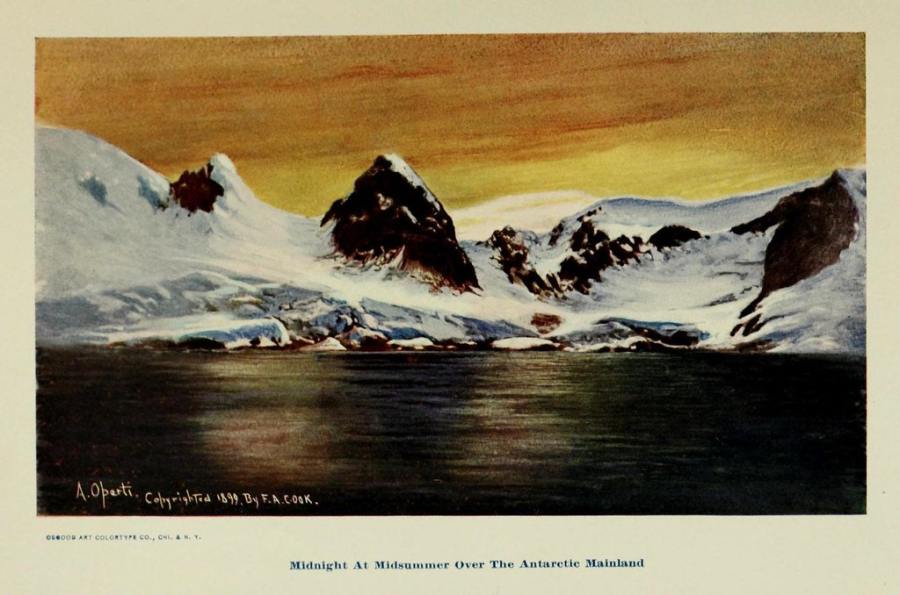
Featured Art: Midnight at Midsummer Over the Antarctic Mainland by Frederick A. Cook

The grass just has to wave, the birds just have
to sing. The grapes don’t wonder what light is;
the light just lights them, and the grapes grape back.
The golden oaks just shed their summer dresses
on the lawn—but you? You have to read
Spinoza in the garden while the light
is good. You have to keep your focus as
the motorcycles scream out of the purple hills.
You have to sweat, and laugh, and weatherproof
the bedroom windows, and remember
names and dates, the town where your parents met—
Milk River or Swan Hills?—and when they died,
you have to sweep the kitchen floor and then
define the good, the true, the beautiful,
or try, because azaleas can’t see themselves,
the squirrels are busy, and the ferns have closed.
The frost tattoos its sermon on the rose,
but in a language only you can read;
you have to know that all things pass and perish,
and that what you’ve said is finite, but continue—
as if grand exceptions might be made—
raking the leaves, stacking the wood, hoping
the child falls asleep against your chest,
hoping the blizzard swerves, knowing the wreckage
of the present will be gathered but
not soon, and not by you, because you’re in it,
there somewhere, under the sheet of snow.


Read More

I’m Trying to Write a Joyful Poem

By Emily Mohn-Slate

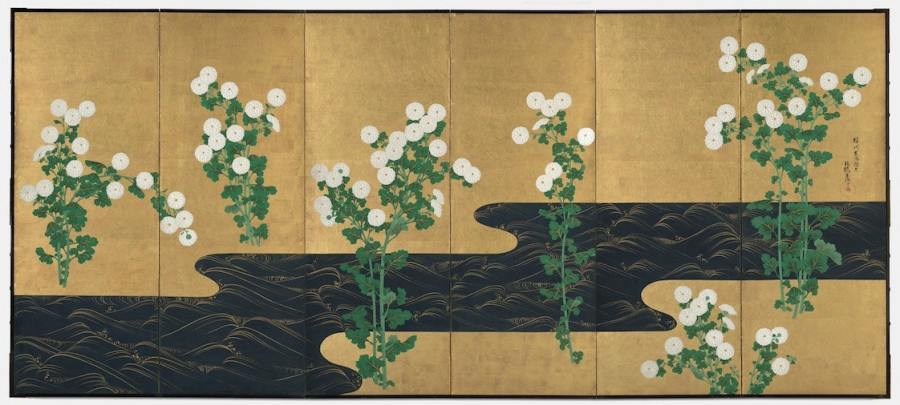
Featured Art: Chrysanthemums by a Stream by Followers of Ogata Korin

after reading Ross Gay’s new book,
which makes me feel light
and giddy, like maybe
a world in which figs fall
from a city sky is possible,
but my poem becomes
about the collapse of long
love, how even the brightest
glint in the eye
becomes shadow eventually.
My son dances across
the room in a red
cowboy hat, he asks me
to chase him,
but the girl in the documentary
I watch lives in a landfill
outside Moscow—
she drinks water from
dirty milk jugs and—
why does joy always slide
into darkness?
My son laughs, his eight teeth
new and white, shining in the sun
while I tickle his belly.
Joy must be at least
as complicated as sorrow,
which is one reason
I hate those posed pictures
people take before
weddings, before babies,
hands clasped over the woman’s
belly—cupping warm skin
thinking they know
what’s inside.

Read More

First Train Ride Together: Northeast Corridor

By Linda Bamber

Featured Art: Restoration work at the Reading Terminal and Market in the mid-1990s by Carol M. Highsmith

A procession of blessings
like incoming waves crowned with gold

like the beaches and marshes we passed
coming home

         and another and another
         as the light deepened and graced it all:

the water views, of course,
with shrink-wrapped boats in the marinas
and boat-lifts waiting in the cold;

but the train-side heaps of junk as well
the disappearing big box stores
the grimy buildings from another time.
Oh, see

the ice upheaved in inlets
both churning and silent at once!
         and,
in intermittent moors and swales,

the high wooden platforms
the legislature appropriated funds for

         duly topped with messy nests
the ospreys built last year.

If the birds aren’t grateful
for such civic thoughtfulness
I am

on their behalf. Thanks

to whom it may concern
for that; and for
the loveliness-conferring light out there
beyond your face. You
in the window seat turned toward me;

your face, and then Connecticut in glory.


Read More

Zenyatta

By Grady Chambers

Featured Art: French Knight, 14th Century, by Paul Mercuri

              Breeders’ Cup, November 2010

In a different life she wins.
In a different November in Kentucky she leans
into the last curve of the brown-combed track
as she passes the thick of the field. In that one,
in a bar far away, in our lucky coats
and muddy white sneakers, we rise
with the televised crowd as she quickens
at the flick of the jockey, as the grandstand churns
at the distance beginning to close, as the line comes closer.

And we know it as her rider leans forward,
as Zenyatta knows it in her legs
as the horse before her turns
and knows it’s over, the brown mane flying by
in a whip of color and dust, as the stands become a flicker
of white tickets, as her name is spoken skyward like a chant.

Read More

Ending the Poem

By Theresa Burns

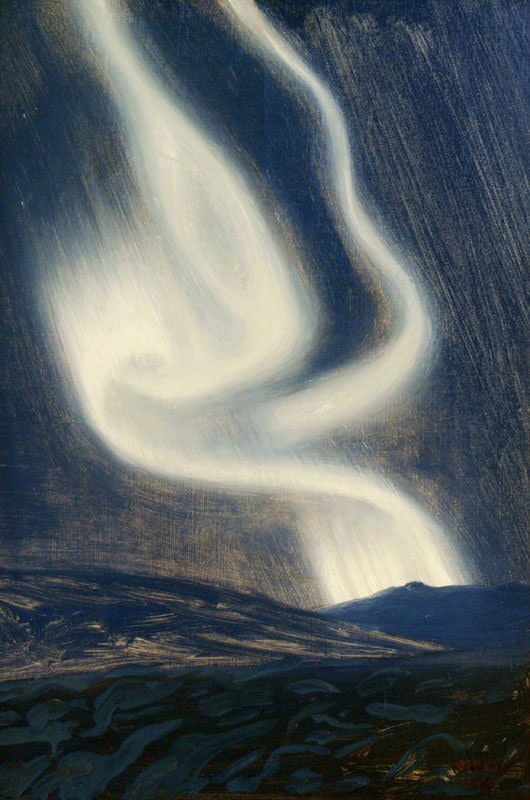
Featured Art: Northern Lights over Iceland by Harald Moltke

Never on light or love.
Never, I’m told, on one of those
Poetry words like keening or wept.
Tears of any kind, in fact,
Are out, and even a rueful
Smile reads smug in the last line.
No small animals, or small
Hands, or anything especially
Beneficent. Don’t even think about
Children or old people. Or teenagers,
Lest they drive the poem
Into a ditch two blocks from home.
Nothing delicious or bitter.
Forget kisses and comeuppance,
As easily as you forget umbrellas
At parties; it’s not worth going back.
Don’t get moral. Nothing’s black
Or white in the end. Never
On silence. Or birdsong. Ever.
And the silence that utterly shadows
The yard at the end of birdsong?
I doubt it. Don’t be certain
About anything. Ask a question,
Leave a crumb, chase the tail
Of something down a black hole.
Just don’t make it black.
Make it that color at the throats
Of poppies, a kind of blue-gray black
Like crushed velvet. And feel it
Going down.


Read More

Gentleman Caller

By Elton Glaser 

So this is death come walking, looking mighty fine,
Him with a firm stride and a dragon-headed cane,
Dandy with diamonds in his smile, all howdy-do
And sweet potato pie, him strutting right up
To your own front door, that big stick knocking
On the frame and tapping his spats, making
The neighbors stare and the dogs back down,
Him idling under the hum of the porch light,
Spreading his shine wherever he pleases, sounding
A little cocky when he calls your name—

And what’s your mama gonna do about that?


Read More

Clean For Him the Ashes

By David E. Yee
Winner, New Ohio Review Fiction Contest selected by Colm Tóibín

Featured Art: The Burning of the Houses of Lords and Commons, 16 October 1834 by Joseph Mallord William Turner

I remember watching the Cotton family’s kitchen burn, felt only a ripple of urgency. Knew it was the kitchen because the houses on this stretch are all the same split-levels built north of Ellicott City, the semi-rural bit just past 70—two main avenues laced together by branches of side streets, neighborhoods pocketed along them. I kept waiting for the flames to reach out like arms through the windows, but there were just these little tips of orange licking the gutter. Our plots were far enough apart that the heat didn’t warp my siding, but the pungent smell of that old wood burning, the paint peeling, felt toxic, jarred me from an otherwise peaceful Monday night.

Firefighters got it out in five. I had my face in the blinds, shifted to see the Cottons—father, mother, two boys—standing shoeless in the grass. It was warm for a September evening, but they huddled, heads tipped skyward as the tail of the smoke crept up past the alder trees lining our backyards. The Chief handed Mr. Cotton a phone, and he just stared at it like he was waiting for a call, didn’t dial, gave it back to the Chief when he was done talking to his crew. The crowd of neighbors gathered on the opposite curb began to thin as the trucks pulled away, and I went back to dusting my living room.

Read More

Waitress in an All-Night Diner, West Virginia

By Rebecca Baggett

Featured Art: A small portion of the Fanny Bennett Hemlock Grove on one side of Spruce Knob, West Virginia. Old Mammoth Road by Carol M. Highsmith

Angels visit sometimes, close to dawn.
They cluster by the door, seem to scan the cars
as they turn in, as if waiting for something—
what, she doesn’t have a clue.

She’s forty-three, a bad cough (first cigarette
at fourteen), two divorces, a dragonfly tattoo
on her left shoulder blade. Tumble
of chestnut curls—not a gray hair yet—
imprisoned in a net, magnificent when released.
Terrible feet. She hasn’t told a soul
about the angels, not even her sister,
who knows everything else worth telling.

They aren’t as glorious as she’d imagined.
Their wings, in particular—tight-folded
against their backs—surprise her by their drabness,
dusty-brown as the sparrows that hop around
the parking lot and gorge on stale biscuits
she crumbles on her break. The angels’ eyes—
washed-out blues and greens with strange,
cat-like pupil-slits—track her as she winds
through tables, a pot of coffee in each hand,
or delivers platters heaped with pancakes, sausages,
fries.
                       Why me? she wonders,
her back tickling under their eerie gaze,
but can’t imagine. Until the night the boy—
he can’t be more than boy yet—plunges
through the door, white as biscuit dough
except two spots, fever-red, high on either cheek.
The pistol he grips trembling with every
shuddering breath.

The cook’s whistling an old Alabama tune
she almost recognizes. The trucker
in the back booth drops his toast, lunges
to his feet. The pistol wavers toward him,
and then the angel by the door lifts its hand
to beckon her. She feels her lips curl
into the smile she offers worn-out mothers,
fractious teens, men who look as though
they can’t endure another night alone.
Yanks off the net. Shakes down her waterfall
of hair. Takes the first step
toward whatever’s come to her.


Read More

Bag Lady Muse

By Rebecca Baggett 

My muse is an old bag lady,
who turns up every morning, grocery cart
heaped with rubber boots, starfish,
hula hoops, ruby vases, tattered children’s
books, ballet slippers, rhinestone pins,
and a fur stole with a fox head at one end,
expecting me to make a poem.

What am I supposed to do
with all this random crap?
I ask.
Did I mention that one wheel
of her cart is catawampus, so it makes
a loud kerchunk kerchunk
as she maneuvers it up my drive
and into my living room, where she
insists on parking?

She shrugs, slumps into the recliner,
lights a cigarette.
                                   It’s your life,
lamb. I’m just collecting it.


Read More

Laundromat

By Ted Kooser

Although it’s abandoned at two in the morning,
an empty white carton of buzzing fluorescence,
there’s always the feeling that someone was there
until only a moment before you walked in,
someone who reached up and popped a soap bubble
of fragrance, the last shimmer of color afloat
in this otherwise colorless storefront, then strolled past
the choir of top-loaders and opened their lids,
leaving them open, each of them holding its breath
before singing, two dollars in quarters per song.


Read More

The Clipper Ship

By Ted Kooser

Featured Art: Early Morning After a Storm at Sea by Winslow Homer

There was a cheaply framed clipper flying in full sail
over the sofa, and it leaned just a little into the glass
as if to look down on me lying there bored, and it carried
more sail than anything in Iowa. It looked as if some boy
had broken a lot of white cups and saucers and stacked up
the pieces, just so, so they wouldn’t fall off of the sill
of that window that opened onto a faraway sea, a sea
that the ship had only recently ripped open, revealing
the world’s white cotton lining. That overstuffed sofa
was heavy and brown like a barge, and it smelled like
the one suit in my grandfather’s closet, an angry blue
like the sea in the picture, and as I lay there, climbing
the main mast’s springy rigging onto a lofty spar
where I could look down on myself, I could see the sofa
slowly sinking, the carpet all patterned with flotsam
slapping against it, and I wondered, as one might wonder,
if the ship would ever arrive in time to save me, or if I,
hanging high in the rigging, would simply wave it on.


Read More

Hilltop Cemetery

By Brendan Cooney

Featured Art: River Village in a Rainstorm by Lu Wenying

How many of you said,
“How I prayed for the day to pass quickly.”

How many said,
“I didn’t care about the result
even if I did achieve it.”

How many of you said,
“I dreamed of making them like me,
if only for my elevation of thought
and unmistakable wit.”

How many of you said,
“I was ridiculously exaggerating the facts,
but how could I help it?”

How many said,
“I could not control myself and
was already shaking with fever.”

Who said,
“Then followed three years of gloomy memories.”

Did anyone say,
“If it’s gonna be shame, bring it;
if it’s gonna be disgrace, I’ll take it;
if it’s gonna be degradation, welcome;
the worse it is, the better.”

How many of you said,
“Strangeness is not a vice.”

How many said,
“I needed a friend, so much.”


Read More

Delectable Hazards at the Animal Dive

By Michael Chaney

Featured Art: Chinese painting featuring two birds on a flowering tree branch

By the time the cow set down the samosas, covering the spot where he’d earlier hooved his name, Fox seemed different to Pig.

“Simply marvelous,” Pig said with an air, trying to play it off.

Fox coughed. “May I have more water?” Annoyance puckered her auburn snout.

“Not a problem,” said the cow. “Mind if I brag about our wines?”

“Please do, darling.” Fox had a lovey-dovey way of talking. To Pig, she was not so different from the elegant junk in herringbone patterns on the walls: bugles, radios, troughs, collars, toys, and white puffy gloves.

“I don’t drink,” Fox said, touching the waiter’s hoof. It was gentle. His bell never so much as whispered as she did it. Anyone else would have gotten a bray from all four of his stomachs, Pig was thinking, distracted by the samosas. Their crispy folds smuggled the aroma of mudzhki, the kind Pig’s grandsow used to make with cabbage and sweet layings. Read More

Experiment. Kathryn Cowles. Metal, treadmill, buttons, psychiatrists, the artist. 2014

By Kathryn Cowles

Featured Art: Hawkin’s Machine for writing and drawing

I must be present in the gallery
7 hours a day 7 days a week
with 25 minutes for lunch.
Water is always available to me in a tube
extended from the ceiling.
I have bolted to the wall and floor behind me
long, thin iron spikes like the ones
in the dungeon of the castle in the film
with the handsome anthropologist
when the floor breaks away and he falls
and his length of rope, hastily tied
around his middle
is just shorter than
the distance to
the longest of the long spikes.
The psychologists in the corner
in the white coats and with their clipboards
are part of the art piece,
though they fancy themselves to be
conducting an experiment.

The children who visit the gallery
are often cruel, though in the way
a winter is cruel, without intention.
They have visited the natural history museum
where a button lights up a portion
of the exhibit on
quadrupeds of the Sierra.
They are merely experimenting with cause and effect.
So they push each button in turn
just to try them out
and I am glad when they leave.
Most people only push up to 3
and then laugh uncomfortably and push 1 again.
Some people never go past 1.

Read More

Heart 2. Kathryn Cowles. Mixed media (tuning forks, megaphones, windmill, catapult, volcano, bathtub, confettied heart, tissue-paper flowers, flamethrowers, pianos, etc.) 2014

By Kathryn Cowles 

after The Way Things Go, by Peter Fischli
and David Weiss

I give the boot on a stick a push.
                                                          The boot circles round and kicks the light switch on, which, as the open bulb grows hot, melts the balloon full of red red paint, which drips down to fill up the glass precariously balanced until it tips over and breaks, tripping a wire on its way down,
                                                                                                                            and the wire sends a spoon attached to a little weighted car down a ramp, and the spoon hits against strategically placed tuning forks in different notes as it travels down, and the tuning forks are each pointed toward a red and white megaphone set at full volume, and the megaphones serve to amplify the little 12-note tune that I can’t get out of my head,
           and when the spoon car gets to the bottom of the ramp, it smacks into a striped target, which knocks a red bowling ball onto an oversized inflated black plastic bag, which releases its air into a long silver tube in a burst, causing the white canvas windmill at the other end of the tube to turn, which tips the wooden seesaw structure so that it releases its 1,000 one-inch rubber balls in various shades of red and pink and gray and black down a 25-foot wooden plank, and then into a metal chute, where they line up and twist and turn their way, roller-coaster-like, to the bottom of the track, picking up speed all the while,
                                                                                                                                                                   and at the bottom, they split into two tracks and collect in two separate tubs attached to two separate strings that will only pull once enough balls have accumulated in the tubs, given enough weight, one string attached to a trip wire attached to an oversized match, which quickly strikes against its measure of sandpaper and lights on fire, and the other string attached to the safety catch of a tightened, loaded bow above it,
                                                                                                                                                                   and the string slowly, slowly, as the waiting match burns down, as the tub fills with one-inch balls, slowly pulls at the safety catch until it, quite suddenly,
                                                                releases, letting loose the paraffin-soaked arrow, which passes through the flame of the oversized match and lights up as it shoots just feet above the heads of the seated spectators in the outdoor garden of the art museum, over, across the open space, grazing on the other side of the crowd a wick attached to the paraffin-soaked cardboard mannequin,
                                                                                                                                        which bursts into a flame that lights all the attached oversized sparklers from their shortened bases, and they burn in reverse, outward, and the mannequin sags, and the mannequin gets infinitesimally lighter, as the sparklers drop their ash to the ground and as the chemicals react and burn away, so that the enormous and sensitive scale holding the sparklered mannequin on one side becomes outweighed by the enormous pile of inflated red balloons on the platform on the other side of the scale and slowly lifts into the air,
                                                                                                                               and a metal ball rolls in a track along the edge of the platform and catches in a pocket on one end of a wooden plank,
                                                                                                                                                        causing the giant catapult full of red-dyed baking soda on the other end of the wooden plank to fling its contents in the air and, upon hitting the vat of red-dyed vinegar in the center of the giant papier-mâché model of a volcano, to bubble up over the edge and through a rugged papier-mâché channel painted to look like rock on the side of the volcano,
                            and the fake lava flows into a water wheel, which turns and turns, and the turning untwists a 50-foot length of rope from around a pole high above the crowd, out on the end of a crane,
                                                                                                                                                                    and the pole is attached to the side of a bathtub full of confetti made from hole-punching-to-pieces every letter or postcard you ever sent me every photograph I have of you every scrap of film every original thing every only-copy-that-exists and that might hurt to lose,
                                                                                         and the bathtub turns,
                                                                                                   and turns on its pole,
                                                                                                                       and upends its contents onto the crowd
as 12 pianos each tuned to a single note drop in succession,
                                                                                                         a literal kind of surround
sound,
          playing the little tune I can’t get out of my head,
                                                                                           as confetti cannons shoot red
tissue-paper flowers into the air,
                                                    as the tissue-paper flowers pass through the blaze
of the four flamethrowers, strategically placed,
                                                                                    as they light one after the other and burn completely to ash before landing gently and harmlessly alongside the confetti on the heads and shoulders of the crowd in the art museum garden 50 feet below.


Read More
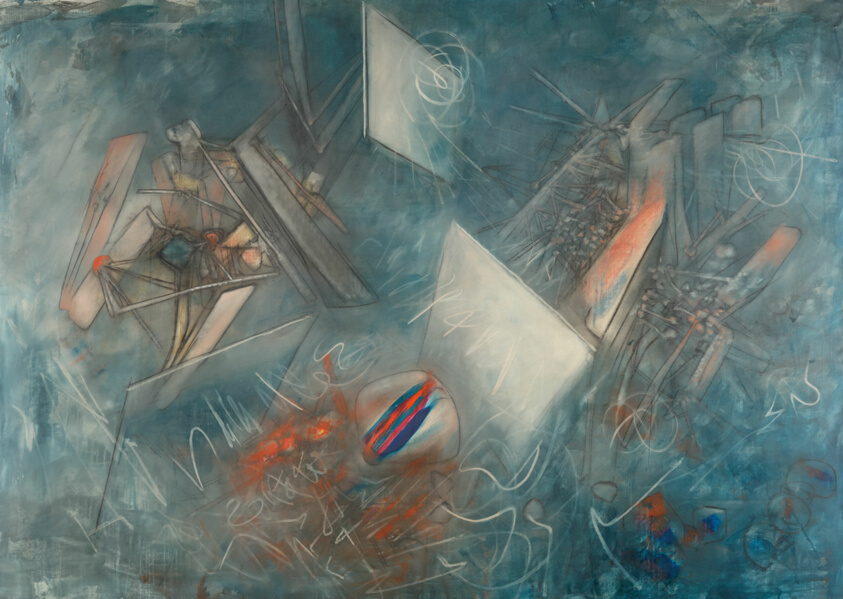
Cedar Waxwing, Late November

By John Hazard

Featured Art: Flying magpies by Watanabe Seitei

In the crook of a bare maple branch
a lone cedar waxwing sits. I thought
they went south, but I guess not all, not yet.

There are big blue holes in the clouds today
and only a moderate chill, a day to be sociable—
and waxwings tend toward groups.

But there he sits, no berry calling him,
nor women, nor daring flights among thickets.
His high-pitched note is mute.

The breast of the cedar waxwing looks softer
than anything I’ve seen. No one’s discerned
a single feather etched in the fuzz

of his tan-gold-gray. That black mask
is a clown’s toy, more dandy than bandit.
Small orange beads dangle on his wingtips,

and look how the buff-gray tail concludes
in black and lemony stripes. But what good
is all that art on the eve of winter, this bird left

with his choice to stay put, and only me
to impress? I’ve heard that waxwings in courtship
pass fruit and bugs back and forth. They dance

and finish with a gentle touching of beaks.
Maybe my lone bird is lookout for his tribe,
or decoy—their offering to any hawk he can’t deceive.

December’s shouldering in, and here we are,
me wondering, him staring. His feathers fluff
in a bit of wind. Some twigs fall. We see each other.


Read More

Topology

By Christine Gosnay

The universe expands understandably
because of its many edges, twisting

Its edges are everywhere and everywhere
are its edges

The cracked dial on the gas hob is the edge,
the blind kitten’s black ear,

All the earth’s hotbeaten glass, the belt
around my father’s neck,

And so forth, such as the limits of plotted expressions
and the cores of galaxies.

Edges. Tearing, however,
isn’t allowed.

It means that when I pull nothing out from the soft center
where my stomach, pale and useful, longs,

Pulling as if at a doll’s string to say ache
in a bright, unrecognizable voice,

I move my mind by the hand from the dark blue room
where it is thinking-feeling

Toward the edge of the blank graph
where it does its knowing-thinking,

A place where, like honey, time passes down glass
in delightful, jagged spiros,

sensibly different,
undifferently arranged.

Understandably, in this way, because of the infinite corners
where, shot with longing, longing springs,

I discover myself holding a small yellow book of mathematics
in one hand,

the fullness of my sunlit skin in the other.


Read More

Yesterday, Northern Michigan, Interstate 75

By John Hazard

Featured Art: Historic window detail, Port Huron, Michigan by Carol M. Highsmith

Four times today the bee has banged
his head against my window.
He wants erotic pollen and thinks
he smells it here, the indoor side of glass.

These days people say madness
is expecting something new
from old behavior. So this must be
a lunatic bee—bad wiring or bad parents,
the bad apple, the not-our-kind-of
bee. In the corner of my eye,
like a floater, but more sudden,
he breaks left and attacks the window,
throbbing with what he must have.

Yesterday in northern Michigan the blue sky
unzipped itself and let a swallow fall, fast,
beak first, so straight it seemed
he’d aimed for asphalt, saw a bug there,
had to have it. The bird bounced once,
twenty yards ahead. I had to steer
a little left to clear the body.

This May’s been cool and wet, such a daily, fresh
dawn breath that the season and the trees
did not expect it. Only crazy animals expect,

like bees, or a swallow lit gold in morning sun,
heading for his usual spot on a white pine branch
only two lanes east, where the world was
what he remembered and desired.


Read More

My Lifelong Relationship with God

By Julie Hanson 

Featured Art: blurred photo of a church in a remote area

We have not spoken for nearly thirty years.
It’s difficult to remember the precise moment when something stops.
I tried to quit smoking so many times, for example,
that I don’t know the date of my success.
I still like the same sensations I did as a girl in the 1950s.
Sun on my shoulder, a breeze on the nape of my neck.
Pulling the cotton laces of canvas shoes tight to tie them.
Losing myself in the thicket of a book.
The way my torso and limbs and neck feel after swimming.
Stirring with a wooden spoon. Hearing the wooden spoon
against the side of the bowl. Yards that invite a body
to run down the hill. Things that fit together.

Some did not want it to unfold as it did, but I came to be nonetheless.
We needn’t grow quiet now.
We all have had plans that are cancelled and plans that are not.
We all know that what disappoints isn’t always due to us.
If replacing God with another phrase would work, I would do it.
It would not be love, however. It would not be God is Love.
God is Love is like trying to climb up a string instead of a ladder.
When I count my blessings, and they are many,
I consider them as much or as little my fault as anyone else’s.
That it rains today, that I wrote something down,
that I was born in June when we have peas and lettuce
in the garden. If we have planted them. If we know how to do that.
If the yard has a garden. If a yard with a garden appealed
to our younger selves. If the groundhog has not found a way in.
If the owl in the oak does its work.


Read More

The Getaway

By Rebecca McClanahan

Featured Art: Haverstraw Bay by Sanford Robinson Gifford

“Is that our car?” my mother asks. She has rolled her walker over to the window and is pointing to the Buick LeSabre parked outside their condo. I keep it there so that Dad can see it from his recliner, where he spends most of his days and evenings. He hasn’t driven for several years and never will again, but he likes knowing the car is there, likes sitting in the co-pilot seat when I take them for doctor appointments or Sunday drives. The Buick has rarely moved from the space in the three years since my husband and I relocated them from Indiana, to a condo twenty feet from our own. But each day is a new day for my mother; thus, the question, which she will keep asking until I answer.

“Yes, Mother. That’s your car.”

“Mine?” Her brown eyes light up, her eyebrows lift.

“Yours and Dad’s.”

“Dad’s?”

“Paul’s, I mean.” Lately I’ve been trying to break my lifelong habit of calling my dad “Dad.” “Dad” only encourages her confusion: that her husband is her father, or sometimes her grandfather. No matter that her father has been dead nearly thirty years and her grandfather, over seventy. She still sometimes sets a place for them at the table, and worries when they’re late for dinner.

Read More

Laundry

By Robert Cording

Featured Art: The Bathing Hour, Chester, Nova Scotia by William James Glackens

This morning, doing the laundry,
smoothing collars and shirt plackets
before placing it all in the dryer,
I saw the ghost of my recently dead mother,
her red-capillaried face looking on
approvingly in the steam.

I didn’t expect to see her,
and some of this must be pretend,
but she was there, making a place for herself
over by the baskets, in the light
that fell through the windows
at an angle that never seemed to change.

We got to talking—who doesn’t want
to talk with the dead again
when it’s morning and mostly sunny?—
about the telephone pole in our old backyard,
and the sound of the pulleys and ropes
that carried the wash in and out.

I was lingering over the way a drying sheet
took in a breeze and released it
as if it were breathing,
but my mother chattered away non-stop,
moving as she always did, from topic
to topic without transition,

only pausing here and there to punctuate
with one of her sayings—
Doing the wash makes you happy.
It says you can begin again.
And unlike when she was alive
that seemed true. As the light’s angle

sharpened, none of our mistakes,
our fights or failures, the old
argument about Dad—or even
the ridiculous, proper way
to fold a bottom sheet—held us back
as we finished the first load of darks.

And by the time she held a shirt
by the shoulders, folded it in thirds,
then flipped the bottom half under the top
and laid it in the pile for the living,
I was whistling, caught up entirely
in the rhythm and pace of our task.


Read More

At Milward Funeral Home, Lexington, KY

By Jeff Worley

Featured Art: Bloemenzee by Theo van Hoytema

Someone has to identify the body.
The funeral facilitator, Jeanne,
gestures me into the room and clicks
the door shut behind me.

You finally got your wish,
I say to my mother.
She’s wearing a shade of lipstick
that unbecomes her, a subtle peach
she would have hated. Her face
is her face and of course is not,
her hair parted in the middle,
a new look. Her hands, composed
across her sternum, are the color
of parchment, skin thin as vellum.

I don’t stroke her arm. I don’t kiss
her forehead, as I thought I would.
Instead, I wonder, oddly, if the funeral
people use the same gorgeous quilt
that covers my mother now,
with its sunbursts and bluebirds,
for everybody.

When I think I have stayed long enough,
Brahms trailing off in the corners,
Jeanne is sitting outside the door,
her long fingers forming a steeple.
I want to say to her I have no idea
who that is, I’m sorry, but levity
isn’t encouraged here. Although
I would only be speaking the truth:
Alzheimer’s riddled her brain
and sucked the marrow from her spirit;
she became a stranger and a stranger
to herself. What else was there to do
but believe along with her that Hoss
and his Bonanza brothers were indeed
aliens from another planet, that Pat Sajak
was “in on it,” along with everyone else
who came and went in Mom’s room,
stealing her clothes, her makeup,
the nursing home grand conspiracy . . .

I’m sorry it’s taking me so long,
Mom said in a rare lucid moment
last week, and I had nothing to say,
and I tugged the blanket snugly
under her chin, and I handed her
the plastic cup full of water which
she waved away.


Read More

The Last Father Poem

By William Varner

Featured Art: Design for a Heart-shaped Box by Noritake Factory

Only the spittle
of AM radio in your car
those few times we met,
a swinging air freshener,
cigarettes little twisted
arms in the ashtray.
The waitress in the diner
brought coffee
and checked on us
too many times,
her apron the color
of the dried mustard
near the cap.
And I’ve forgotten
where the cemetery is,
on which street I looked away
as Amish buggies slowed,
and the men took off their black hats,
held them to their chests,
and gave a short, sharp nod.


Read More

Meditation On My 44th Birthday

By Jason Irwin

Before going for a walk, I open the day’s newspaper.
NASA releases detailed photos of Charon,
Pluto’s largest moon. In a marketplace in Diyala Province, Iraq,
a suicide bomber kills one hundred and twenty.
On this day in 1959, Billie Holiday died
handcuffed to her hospital bed. My horoscope
tells me I will be extremely serious and earnest
in my emotions, that I will suffer
from the ailments of birds.

                                        Hard to believe half of my life
is just some thing that used to be.

On my walk I stop at the corner of Maple
and Elm, watch the sun sink behind the station,
I think about Charon, orbiting Pluto, and the Charon
who ferried the souls of the dead to the underworld. Maybe
he delivered the people killed in the marketplace,
or Lady Day. Instead of a coin for passage
she sang Baby why stop and cling to some fading
thing that used to be. Her lilting voice trailing off
as they reached the far shore.


Read More

46 Years Old

By Karen Skolfied 

Featured Art: Pine Tree by Giovanni Segantini

I’m not really sure how I got to 46.
If I think about it, I could probably
come up with a dozen years, two dozen
if I include sleep or staring into space
and one more year with worrying
about the wild flax and campion
which never once needed me to do
more than mow around them.
The rest of it, who knows.
I don’t have a smartphone.
I don’t do a ton of zesting.
I will admit, there were some books
along the way and a few parking tickets.
I voted. Oh, how I voted. Tracy, I’d say,
tell me who’s running for school board
and how to vote. And she’d tell me—
that took up more of the 46 years than
you’d think. Good grief, Tracy, I’d say.
Just write down their initials for me.
Write it on my hand, so I won’t forget.
I am not writing on your hand, she’d say.
So I wrote her in as a candidate,
just so she’d have something to do
in the cordage of her own years.
The time spent touching Heather’s
bobbleheads—that adds up. Breaking down
cardboard boxes for my father-in-law.
This still won’t sum to 46, even with all
the pretzels and the time asking waiters
for mustard in a ketchup world.
Okay, the sporting events. Sometimes,
woooo, the cheering, and other times
all the play’s at your net and third period
goes on forever. More than a smidge
of my 46 years has been spent in ice rinks.
Is no one interested in clearing the zone?
The whistle works both ways, ref!
Yeah, I might have yelled that more
than once. How long does this guy
think I have, waiting for a good call?


Read More

Lunatic, Time

By Rachel Rinehart 

Featured Art: Trees on a Rocky Hillside by Asher Brown Durand

Sometimes, seeking desperately the measure
of her weeks, she dresses now for church
on Tuesdays or Saturdays, slides sideways
into the slick interior of the Oldsmobile.

So familiar the route, the car seems to know it,
nosing its gentle way like some peculiar
land-bound fish, and she leans in its belly
as it makes its one wide turn before the church.

But dim, the sanctuary withholds its promise.
She sits in the pew, hymnal poised, waiting
for the organ to thunder out
of its immaculate, peepless slumber.

Churchgoers flit in her periphery,
but she cannot fix them. The long dead
lingering beside her flee when she turns
to greet them. Even the eyes of Christ

flash impenetrable in the soft flush
of stained glass. Lunatic, time loops and tangles,
doubles back on itself. Somewhere in the hours
the pastor appears, or the woman

who fills the candles. They call up her son
to collect her. Behind the scrim at her windows
she baffles in the horrors of her dotage.
Someone has moved her husband’s truck.

It has been only days and decades since he slumped
dead against the dash in a hay-flecked shirt.
The chicken coop, too, is missing, the pasture fence.
Vagrant memory, like livestock loosed over the plain.

Always night obliterates. In the morning
she will gather her pocketbook and go again
to church, searching still for some low-lit beacon
to mark her faltering way toward the long home.


Read More

Sometimes the Mother Eats Her Young

By Rachel Cochran
Winner, New Ohio Review Nonfiction Contest selected by Phillip Lopate

I. Snakes

My parents divorce when I’m five, maybe six, at which point Mom takes the three of us and leaves the state, sardine-packs the whole (broken) family unit into the spare room of her parents’ place in Dallas, where she learns a new routine. Works at an ice cream shop. Avoids the kitchen phone when Dad calls each Saturday morning at 9:00. Cries most nights. (We learn to sleep over it.) She dates around, first a guy named Laslie, who takes us to the rodeo, and whose apartment I walk into one day to find that he’s napping naked on the couch. It’s the first naked man I’ve ever seen in person, and it strikes me that the space between his legs looks strangely melted, folded, mottled pink like ground meat. There’s another guy named Andy, the recently divorced brother of my grandparents’ across-the-street neighbor. Andy takes us to a theme park, gives us a day full of sweat and sky and sticky candy. Days later, in the toy aisle of a Family Dollar, my sister shakes a Magic 8-Ball, still in its packaging, and asks it, “Is Mom going to marry Laslie?”

Don’t count on it.

“Is Mom going to marry Andy?”

It is certain.

She marries Andy when he asks, and we follow him down to the Gulf, pile into a spare room at his parents’ place this time, even smaller than the first one (We learn to take up less space.)

Read More

There Was a Young Woman With Cancer

By Susan Blackwell Ramsey

Featured Art: In the Spirit of Hoffmann by Paul Klee

With each remission she’d take it up again,
her search for proof her great love Edward Lear
was influenced by the Irish poet Mangan,
and while we weeded she would bend my ear
with her latest evidence: an owl here,
elsewhere a pussycat or a beard, a wren.
I was polite, but it was pretty thin.
There was one word, though,
some nonsense confabulation that occurred
in Mangan first, so odd that it could not
be accident. Then cancer, like a weed
we’d missed, some snapped-off root or dormant seed.
The last cure killed her. I would give a lot
to be able to recall that word.


Read More

Ode to Texting

By Susan Blackwell Ramsey

Featured Art: Gray landline telephone on a wooden wall by Markus Spiske

Blowdart,
breath-message,
needle so fine
you penetrate even
the defensive hide
of sons,
excite reply.

In yourself
innocent,
language gnat,
midge,
mosquito,
but driving
distracted herds
over death cliffs.

The phone call
is a drunk uncle
barging in,
uninvited,
to slump
on the sofa,

and even e-mail
is a volume
of Trollope
for an elevator ride,
while you
are a wife’s light hand
on the sleeve
mid-party,
two words
barely suspending
the conversation.

Read More

And Another Thing

By Gregory Djanikian

Featured Art: Still Life with Violin by William Harnett

Such dislike for the woman who’s come late
to the concert making our whole row rise just
as the tenor sax hits its high E-flat and now
she’s sitting next to me and texting—my god!—
during the drummer’s lithe percussive
rhythms which are not my rhythms judging
by my heavy foot beats and my fingers
bending into little arcs of stone and I’m thinking
of some way to annihilate her phone invisibly
maybe with a squint of my eye and how lovely
to imagine the stark O of her mouth
her pretty hands holding nothing but the air
I allow her to breathe O most merciful zapper
that I’ve become father-confessor for all her sins
committed impending unthought-of
her stubborn knees bent to the spectacle
of my very unblind justice which I’d like to take
on tour now-and-then accosting scofflaws
speedsters unholy maître d’s smug
people of all sorts and let’s not forget
the dry cleaner who’s ruined my favorite shirt
through some occult chemical mishap
and of course this woman sitting next to me
whose soft knit-covered ribs I’m trying hard
not to jab my elbow into but she’s smiling now
as if she’d rather be here than anywhere else
riffing with the pianist moving her hips in time

and okay, maybe her lateness wasn’t her fault
maybe her husband needed a significant operation
maybe it was poor Aunt Lavinia texting her
that the vicious dog she heard at the door
was really her own little Shnoozy,
and shouldn’t I maybe introduce myself to her
say what a grand concert this has been judging
from the thunderous standing ovation
everyone’s giving the band including me

though didn’t the set-list seem so short
did they at least play “Splenectomy Blues”
or “Dry Bone Breakdown” and why are we
all filing out when there’s so much more
to be mulled over like an old song of the heart
you’ve carried with you a long time
but can barely hear above all the noise.


Read More

You Are My Sunshine

By Alpay Ulku

Featured Art: Landscape by Paul Nash

We’re in the Taqueria Uptown. People are eating, or gazing out of windows, or talking to each other. The food is delicious and the coffee hot and fresh. A man walks in with a cheap guitar and pleads for our attention, then fumbles through three mangled songs.

You can hear the pain in his voice. If he were drowning in Lake Michigan, he would flail and grab the lifeguard in a bear hug.

How much do we owe this guy, who’s interrupted us at dinner? What is it we owe each other? Nothing at all?

Bless you all, I hope I’ve brought some sunshine to our lives. He looks around. All that playing has made me hungry for a nice steak taco.

Everyone tenses and ignores him.

It’s my dream to be a paid musician.

A jornalero says something in Spanish. The waitress shrugs and writes the order.

Could I have a side of sour cream with that? he asks her. You see, the peppers burn my mouth. He looks over to the jornalero. My mouth is very soft and sensitive.

The jornalero ducks his head, embarrassed and a little pissed. He nods okay.

It’s terrible to be so lonely, he says to no one in particular.

The waitress has laugh lines around her eyes, she likes to laugh. But her face is neutral now. She brings him the sour cream in a saucer with a plastic spoon, and the taco.

Everyone is hoping that nothing more is going to happen next.


Read More

On Rereading Madame Bovary at Forty

By Erin Redfern

Featured Art: The Book of Light by Odilon Redon

Finally we got to read a book
with a woman’s name––your name.
One of the greats, our teacher said.

At fifteen I could not scorn
your far-flung, dark-horse longings.
I saw in you a girl like me seeking

something big as love.
I didn’t know you were Gustave’s
femme mâché, surrogate

for bourgeois greed, excuse
for risqué docudrama,
trumped-up thing riffling open

for anyone’s leisure.
And did he put some body
English on you! Your dainty

feet, your frothy knickers,
your India-ink eyes––
wordless telegraphs

vaulting everyone’s crumbling
moral breastwork.
He made you, mistress,

delectable, then grilled you
over an open flame
of quick trysts and heartbreak.

Read More

Happiness

By Daniel Arias-Gomez

Sometimes it sneaks up on me, as I look out the window
of a bus, for example, and see a woman in huaraches running
in the rain—her right arm waving, her left
hand pulling a boy, a backpack bumping
against his shoulders. The woman opens
her mouth, but I only hear rain
against the glass—a black braid lashes
her neck, and from her arm
dangle two mesh bags with a plaid pattern
woven out of strands of plastic and filled with vegetables, beans, rice. My mother
used those same bags when we went to the market on Sundays. One day
she bought me a bag all for myself, the same
as hers but smaller, in which I dropped
tangerines, peanuts, mazapanes, as I followed her
through market stalls. The bus driver sees
the woman and the boy in time
and stops—her face loosens, and she smiles,
and her smile takes in all the rain
and all the mud on the street and on her huaraches, and she turns
to the boy and says
something to him,
and he smiles back.


Read More

A Brief History of Hunger

By Mary Jo Firth Gillett

Up from the mire of the primordial soup
came one-celled, tiny cavernous bits
whose innards knew a hollow ache only cured
when their shape-shifting borders engulfed
smaller bits, and came a world more complicated,
the paramecium with its oral groove,
the surprising planaria—nick its frontispiece
and the split becomes two hungry heads!—
then came, as ever, competition begetting variation,
to move or not to move, that was the question—
whether it was more propitious to see
with eyes multitudinous or on stalks or both,
whether it was better to be safely anchored,
waiting in camouflage, or to mount an assault,
evolution’s choices simple, almost biblical—seek
and ye shall find or lurk with bait in the hope that all
will come to him who waits, and then came
specialized beaks and teeth, fanciful horns
and coloration prompting procreation,
as well as a multitude of eating adaptations—
the water bird’s fused nostrils, air sacs in head and neck
to absorb impact as the feathered darts, pillaging
angels, plummet—and came homo sapiens with a myriad
of tastes and ways to cook—sear and braise, sauté
and soufflé, pickle and brine—came table manners, the urge
to gorge, to purge, came sorbet and gourmet, foods
delectable and indigestible, epicurean delights, food fights,
and all the ravenous mouths of tomorrow and tomorrow.


Read More
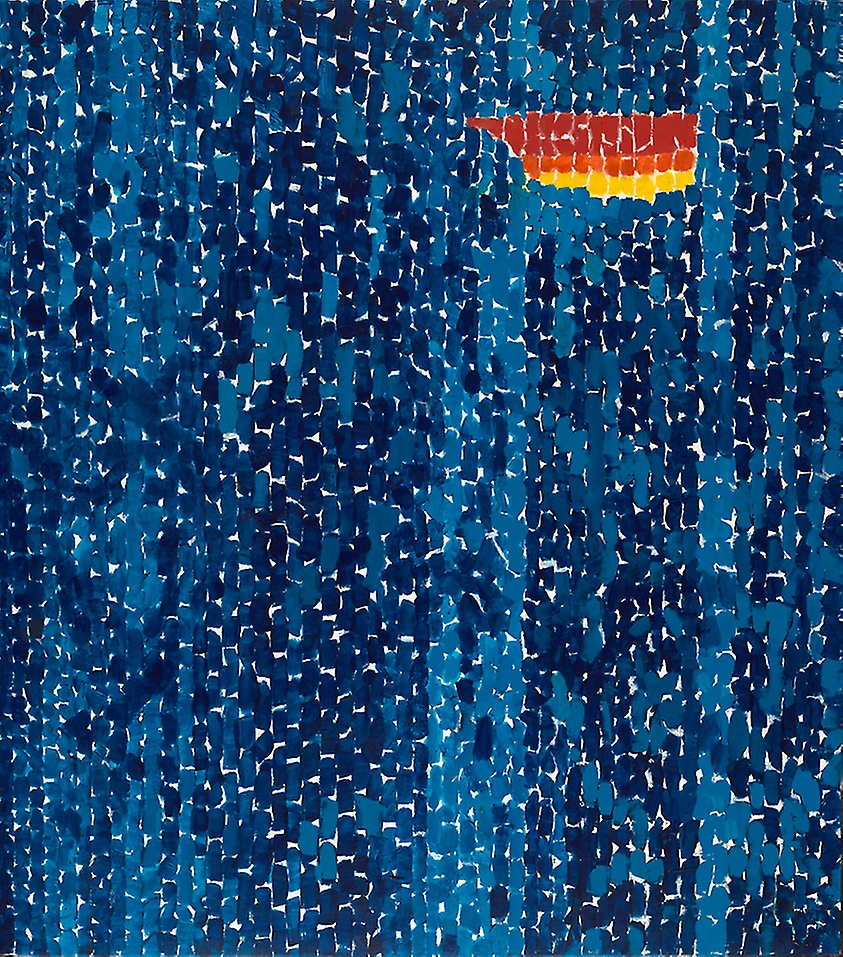
The Oregon Trail

By Corey Van Landingham

Featured Art: Wooden fence with two black buffaloes by Markus Spiske

When my first boyfriend’s mother died of breast cancer, I spoke with him on the cordless, from the bathtub, trying to console him. He was calm in his grief, and I broke his heart soon after. A cruelty only vaguely acceptable at fourteen. A week before we had snuck out, in the middle of the night, and driven up the snaking mountain roads of southern Oregon. Toward what? Toward something. We could feel a pull all around us, the silence in the woods, the ghosts of the Shasta people passing below our windows.

What did we know of love? Across the screen, in the dark computer labs of our youth where we played The Oregon Trail on our soon-to-be-extinct Apple II computers, love was entering in the names of those you wanted to take with you, west, toward the promised land. We could all begin a new life together, if we purchased the right supplies. Unless we were in a particularly harsh environment, we knew to conduct a brief funeral. Here lies Laura. We wrote epitaphs across the virtual tombstones before continuing down the trail.

Read More

Evening With Little Comfort

By Caitlin Vance

Featured Art: Heron in snow by Ohara Koson

8 p.m. and an even-ing out of the world’s darkness
I’d like to escape. I take comfort in headlights,

phone screens, a busy lawyer’s lamp still on
through the office window. Small resistances

to night’s tyranny. I take comfort in a heavy glass
filled with ice which catches glimmers of light

like wedding rings. There’s comfort in walking down the sidewalk
where matches flicker and last season’s tinsel hangs

on tree branches in a shop window, there’s comfort
in the glitter painted on the eyelids of a drunk woman,

and the voices of strangers saying look at that moon.
At home I lure a firefly in through my window.

My green-eyed cat chases it and scrapes her teeth
against its little light-bulb tail, so all that’s left

to flicker are her eyes and mine and not
the firefly’s tiny dead eyes, gone dark.

My cat goes to sleep. I climb into bed, lower
my eyelids, burn out my last little lamps, surrender.


Read More

Where the Stars Are Hived

By James Lineberger 
Winner, New Ohio Review Poetry Contest selected by Rosanna Warren

Featured Art: Beautiful woman portrait from Messiah by Samuel Johnson, LL.D

That Saturday, when The ABC’s
of Beekeeping arrived UPS,
he was already a very sick man, survivor
of several major surgeries, all of which were
successful, within limits, but what
could they do, all those
doctors and technicians, to halt the inevitable, which
he knew, of course, we all do, even in those
moments of temporary triumph
when we feel we have won something or other, when
that dratted parathyroid thing
gets plucked and dropped in the bucket, the scar artfully
hidden in a crease of skin, or the triple bypass pains have subsided
and become one of those historical blips
on the mind-screen, these and all the others
will have taken their toll, but when the book arrived
he was nonetheless grateful, knowing full well
he would never get around to the bees or a score
of other projects, but the pride was still there, and some
stubborn sense of accomplishment
that had nothing to do with the rest of his life, the marriages,
the lawyers, the pre-nuptials, and the money,
the money, all that goddamn money, and what did it mean,
any of it, next to this hillside filled with row
upon row of Silver Queen, and the praying mantids
and ladybugs, the chalcid wasps and the pungent
scent of the marigolds, how to speak
of these things or make anyone understand that the garden
is not a weapon against Death,
but a doorway to invite her in, a private place
where they can talk undisturbed
with a growing closeness and affection he never
dreamed possible,
he and this little girl in her denim coveralls with
the bear appliqué and the bottoms
rolled up, the way she holds his fingers in her tiny hand, and her shining face,
upturned, her lips parted in a daughter’s trusting smile.


Read More
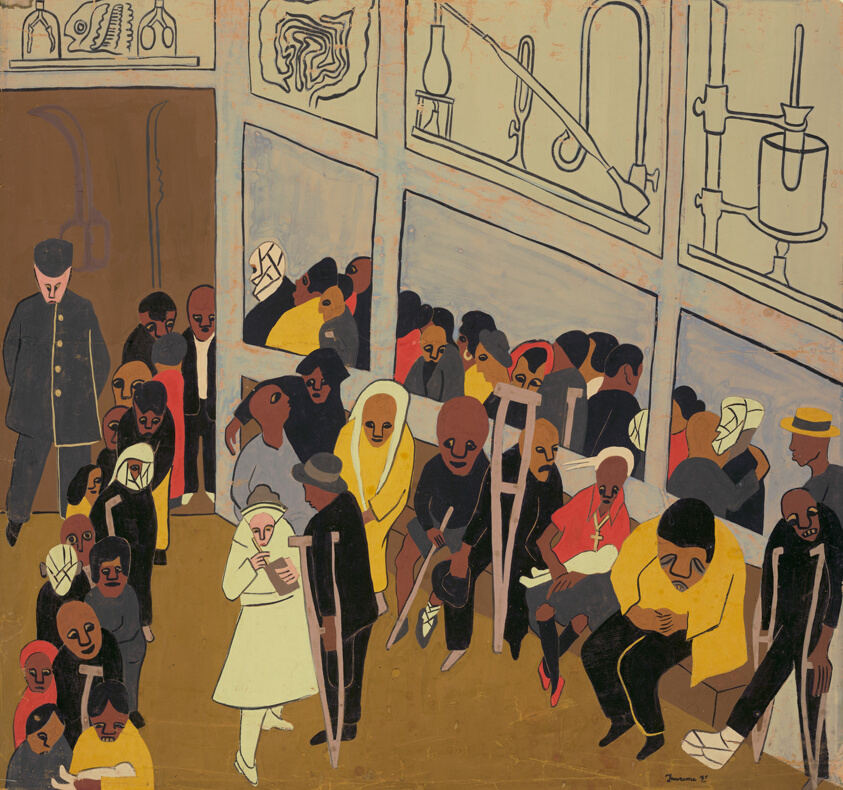
Convocation

By James Lineberger

Featured Art: Hot air balloon by James Nisbet & Co.

Perhaps you’ll find it strange
you no longer appear in my dreams,
but on the other hand
it may serve
to fuel your belief that I never loved you
at all, that we were little
more than a scattering of pixels
in the ether,
the kind of momentary disturbance
a thrush will make
stabbing its bill into the leaves
and tossing them
about in search of food, shaking its head
to clear away the debris
and take whatever sustenance the god of thrushes
has promised
before the world settles back again,
asleep in the wake of a need
more primal than heaven and hell;
yet even when I think of us in that sense, as only
the leftovers at some Olympian event where we were not guests,
but mere canapés, nibbled at
and tossed aside,
left in the dead grass for worms to eat,
still it seems that even
birds and grubs, yea, our very comminuted dust, are cursed
with the memory
of a time when nothing could ever
go wrong,
and we knew all the words to every song.


Read More

My Mother’s Neck

By Sarah Suhr

Trailer parks as a winding tire swing,
              as Zigzags and a one-dollar wine cooler.
                             Trailer parks as an ice cube in sweet tea.

Trailer parks as a drunk dad on a dirt bike,
              and that chunk of flesh gone from his head.
                             Trailer parks as a shatter, as a fist, as a scream.

Black–Camaro trailer parks.
              Black Sabbath, black leash.
                             Ticks-on-the-dog trailer parks.

Fingers-in-a-pussy trailer parks.
              Good-Lord-Grant-us-Grace trailer parks.
                             Trailer parks as Dad who called me shithead.

Naked-Barbie trailer parks,
              Moon-Pies and Welch’s Grape Soda.
                             I’m sorry, I’m sorry trailer parks.

Fish-smoker trailer parks.
              Pot-in-a-closet trailer parks.
                             An aluminum shed full of porn.

Trailer parks as loose underwear,
              lawn mattresses, CoverGirl.
                             Trailer parks as half a box of tree ornaments,

as a repossessed Ford Taurus (cream),
              as a shatter, a fist, a scream.
                             Trailer parks as cans of peas.

Piss-in-a-5-gallon-bucket trailer parks,
              cinderblocks and plywood.
                             Trailer parks as three shredded tires.

I’m sorry, I’m sorry trailer parks.
              Wild poppies growing alongside weeds,
                             and that police photo of Mom’s choked neck.

Unpaid-propane-bill, cold-water trailer parks.
              Trailer parks as a grip, a gasp, a little hand on a loaded gun.

                             A-phone-call-from-jail trailer parks.


Read More

Maintenance

By David Gullette

Listen,
            while you were over ogling ogives and trefoils,
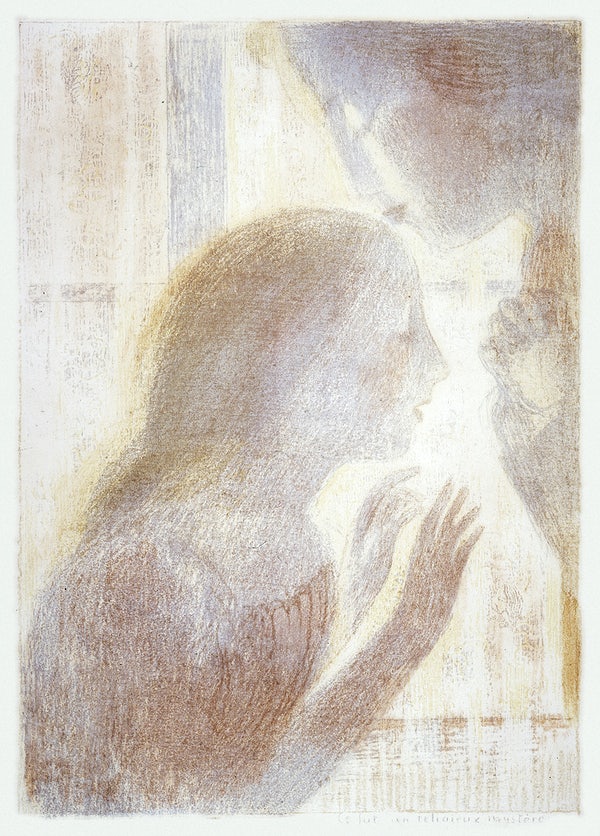
                                                                                           chancels and bays,
the things you left behind were quietly giving up,
flying to pieces, falling apart almost together.
            That grinding whine up front you thought was brakes failing?
It was, but that’s not all:
            the last shred of resistance is gone from the shocks,
            every bump is now like the thump of a flawed heart,
but that’s not all:
            the tires have gone slick and bland in your absence,
            unevenly worn like the martyr that marries a slob,
wait, there’s more:
             not only can’t you stop at will, you can’t get started,
             the juice is dead
             some slackness in belt or disc
            something not flowing
            the black box caked with inertia.
Listen,
            you cried at the Royal Wedding and swallowed the cream,
meanwhile the tube lost its sight: snow, garbled snow in its face
            and a twisting of speech unknown in Babel, O
things have been going to pot,
            the paint peeling off your house,
            leprous, obscene, what about that?
The food has vanished under the weed,
the path has forgotten where in the world it was headed,
the mower that might begin to set things aright
is all smoke and flame and missing parts,
shorn of its function.
            Maybe you thought as you turned away toward exotic joys
            the objects you’d secretly started to hate
            would await your return unchanged
            loyal and fixed in their whatness?
You forgot the revenge of decay, you forgot
how even immobile things, unloved, blindly careen and plummet,
how care is a constant curing,
our bulletin first last and always: Aid.

Okay
            you’re back: the fat and languor are through.
The wind has shifted to pelt what’s left of the garden.
Strange birds are swarming the shorter days.
            You dreamed and the world dissolved
            but already the perfumes of distant sugars
            begin to escape from your larder,
            and you open your eyes to the list of your derelictions,
            whelmed with the staggering costs of restitution.
It is time you accept your share in the damage
and spend what needs to be spent.
Repair.


Read More