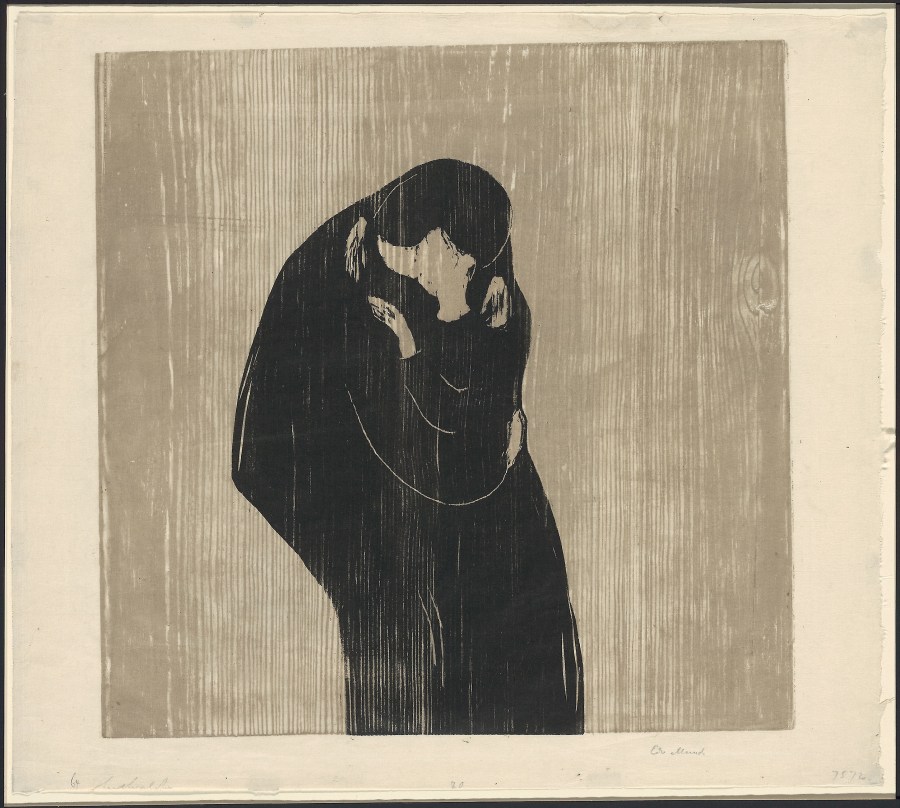
The Fool’s Vow

By Joshua Boettiger

Sibylle gave a toast at our wedding—
May your beloved always be like a stranger to you.
So we practiced, took turns being the hitchhiker.
It was a turn-on, but it was also a risk—
strangers can be so cruel.

I know a man who says, I don’t know,
to every question he is asked, even questions
he knows the answer to (especially those).
It’s not like I’m ignorant.
I know that every six seconds
another word is dropped from the lexicon.
I know there are tables that mark the tides—
High, then low, then high, then low.
I’d like to be that weatherman.

But better than that would be
standing here at roadside’s bend

as you come around the turn
holding the wheel with one hand,
shocked by the suddenness of me.

I remember the first day of kindergarten
crying outside the door of the classroom
in my mother’s arms. I don’t know
what we are going to learn
, I wailed.
Shhh, she said. That’s why you’re here.
No one knows.

You and I took the fool’s vow—
better to believe
than to be left flat-footed
when the ram’s horn blasts.

But this, too, is a strategy.


Read More

Bourbon Street, Deuces Wild

By Kathleen Loe
Featured Art: “Pat (she/they)” by Jemma Leigh Roe

Back to Mr. B’s with husband number three,
the low, bistro light releasing everyone’s week
into spicy seafood and high spirits. We’re parked
at the glossy mahogany bar getting lacquered,
two righteous triangles of gin biting
our lips and tongues with the urgency of teenagers
in the backseat of some dad’s Buick. We’ve come to love
the soigné bartender’s deft way
with our placemats—his glissando of ivory
linen atop the bar like piano keys
playing for supper—listen! A sizzling Satchmo riff
of barbecued shrimp, burnished
and golden with enough butter to get arrested.
Garlic sharp as Lenny Bruce, juices escaping
down the uneven highways of our faces,
seams deepened by the bad beats
and misses of the past, but here in the middle
of the delicious din of a full house
in the French Quarter on Friday night,
I can still feel . . . lucky. Have I been
finally dealt a royal flush or is it just the gin?
I want it to be him, this tender man, stealing
the last olive from his cocktail into mine, a small
almost silly kindness you could build a future on.
I’m all in, again.


Read More

I Learned the Small-Town Stuff

By Kathleen Loe

of trading okra for clear-eyed bass,
passed through Miss Judy’s truck window
still smelling like lake,

and of nicknames and namesakes like when Bubba’s
shut down on the blunt edge of town, the new guy
reopened as Wuz Bubba’s—what Mama called

a honky-tonk, shifting her cigarette and Scotch
for a quick spin around the kitchen with my father—
who had switched on the Glenn Miller Band

in his head. Her immaculate manicure in his
rough rancher hands, rougher with the cornmeal
and bits of fried catfish—their inspiration making us all

a little tipsy, sweeping us up in the abundance
and supper had to simmer itself for a minute.
Is it fair to say it was a setup?

All their barefoot jitterbugging and kissing
in the kitchen, late-night laughing to the light riff
of ice tinkling in their drinks. It looked . . . so easy

that rowing away from the mirror-surface
of their marriage, not without its dark spots,
its chipped silvering of drink and debt.

I never saw the mists rising—risky water
has its warnings—but tipped rock-blind over
and over the lusty falls. Still, they danced

at all three of my weddings, shimmering
in beautiful new clothes, holding
their flutes high, determined bubbles rising

behind their eyes, tired from smiling at everyone, again.


Read More

Pinball Wizard

By Gregory Lobas

Well, I was never going to get a letter sweater for it,
    was I? But, hey, I did have a song
written just for me.
    Did I say song? I meant Rock Anthem.
      Oh, wait. Did I say Rock Anthem? I meant

           >> ROCK OPERA <<

        No, I wasn’t a deaf, dumb, and blind kid,
            but I didn’t let that stop me.
          I could sure play a mean pinball.
              I could time the flippers,
            ignite the rocket ship.
 When the target lit up with concentric flashing circles,
            I smacked the bull’s-eye,
  popped the silver ball right into the dragon’s mouth.

        So naturally, I figured
  everything else would pretty much fall into place.
           Right?

But when I first heard you laugh
    the dingers dinged
in my amyg dadah-dala
  the ca-chunkers of my pituuuuuuitary
ca-chunked,
    and spinwheels spun
  in my cerebubblegum.

That whole medial forebrain bundle thingy lit up
   like a midway on the Fourth of July.

Aglow in the spectrum
    of anomalous propagations,
  uncontrollable situations,
        disjointed inspirations,
  you played me
        like a double-ball,
  bonus round of “Carnival Night.”

    So yes, I guess
  I do believe
in love at first sight.


Read More

Deference

By Rebecca Foust
Featured Art: “Clare (she/her)” by Jemma Leigh Roe

in deference & abject homage
     to your late
     & i mean a lifetime-late
     barrage of attention
i have forsworn   underwear
     ever wearing it   i hope   again
& all manner of constricting things
     shoes early bedtimes chores
     obligatory wearing of rings
     & more deadlines than i care to count
i can’t help myself & that’s the point
     i could not erase you if i would
     & i never would

here i am dejected   low
here i am   hatching crazy plans
     to blow town  or  up  everything
here i am living half my life   below
     the ground  or am Lear
     wild upon the moors   wearing
     nothing   but a heather crown

here i am most abjectly yours
     writing what i’d rather say & do
     always in deference to
     flown-away   stupidly-squandered time
& always    Love—to you


Read More

Deadhead the Marigolds

By Bridget Bell

I am forever bending toward you like
the marigold starters packed onto
these plastic trays curve 

toward the windows. I save my SSRI
bottles. Pack them full of the papery
seeds from the deadheaded 

wasted petals, pulled off at their narrow necks and
even these stupid flowers
know they need warmth to survive. You say you are trying 

but when you pass through the
door arch—the one I’m leaning
into (as if to hold me up)— 

you do not brush against me so it feels like you
are lying, like you’ve passed through this tight
space, not only without touching me 

but with an avoidance of touch. I
turn the plastic trays so the
seedlings curve away 

from the sun—and tomorrow when I check
they will lean again toward the window—
all the back and forth 

buttresses their stems into strong green
spines, so I know they will be okay when
they are left outside and exposed for the
first time to all the brutal elements.


Read More

For My Husband Out Too Far

By Chelsea Rathburn

My mother calls about another death,
this one a neighbor I haven’t met who took
his paddleboard out at dawn and never came home,
body and board found drifting a day later.
Given his age, we guess a heart attack,
but when my parents drop off a casserole,
his widow explains he died by suicide
in the place he loved. She says it matter-of-factly,
their teenage daughter standing behind her
as my parents fumble their condolences. 
She thought they were through the worst of it, she says,
and hearing the story of strangers’ pain I think
maybe ours will never end, or maybe this
is how it will end for us, just when I think
we’re safe. The ebb and flood of your depression
determines the rhythms of our days,
for whenever I think we’ll never sink
so deep again, your face becomes a mask
and I become someone who says, Your father
is having one of his spells
, as if you’re a wizard,
or cursed. I’ve told you how my grandfather
thought that his epilepsy was a sign of Satan,
and how my grandmother, watching him preach,
her eye trained on the pulpit, would leap to her feet
when she saw a seizure coming, speaking in tongues
as if the Holy Spirit moved her, since that
alone would keep the congregation from seeing
what she saw. Love oh love, can love be enough
to save us, can I be life vest and vessel and breath?


Read More

The Uncertainty Principle

By Rodd Whelpley

You can only know a particle’s speed 
or its location—never both at once. 

But Saturday Night Fever isn’t science, 
and mom and dad were “Stayin’ Alive” 
late in marriage learning to cha-cha-cha 
quickstep, waltz, and foxtrot.
                     Except no one    
at dancehalls played that then—only disco. 
So, in the living room, they would argue, 
practicing their Walk and Latin Hustle. 
By all rights these kids back in ’49 
didn’t stand a chance. A baby in her 
senior year. He, un-scouted by the pros.   
Their young lives falling into steady beats— 
car loan, home loan, work, kids, and getting old. 
Did they love each other?
                                                 There are questions—  
painful—for which no one seeks an answer,  
only theories: How he stepped butter smooth. 
How she horse-stomped backward, skipped the record. 
How all those years they remained in motion. 
Physics never factored in the Bee Gees, 
or counted on my parents . . . five—six—seven— 
eight. She drops blind. And there. He catches her.   


Read More

A Space Unfilled

By Theresa Burns

There is no great beauty without some strangeness in the proportion.
   —Edgar Allen Poe 

I heard this the first time from my high school boyfriend, 
who became my college boyfriend when he hitchhiked 

from Long Island to Boston a week after I’d left, 
found me in Mary Ann’s on Comm Ave with friends I was 

 starting to make. And I was both happy and annoyed 
Paul had come, and the next morning he said it— 

I’d cut my classes to lie with him on the quad, 
infatuated with his blue-jean eyes, his Martin guitar, 

and he told me the gap in my front teeth, though strange, 
had an element of beauty. And I believed him then.      

It was the Eighties—Lauren Hutten was hot, and Les Blank 
made a movie about the mystique of gap-toothed women, 

and every guy I dated since would mention that movie, 
remark on that gap, which made me more self-conscious, 

but if I threatened to have it fixed, they’d say don’t. 
We adored Patti Smith then, with her heroin-thin arms, 

and the old man voice of Neil Young, more alley cat 
than honey, and I began to see what Paul understood, 

that in every kind of beauty, there is a strangeness,  
a mistake. Years later, a friend told me, 

Paul became a junkie, and died of a blood clot 
that mostly junkies got.     I thought of him last week— 

the man behind wanted me to make a right on red, 
except there was traffic coming, and he got out of his car                    

to yell at me directly, swearing and spitting, my kids 
in the back seat. And then he said it— 

Why don’t you get your ugly teeth fixed, lady? 


Read More

Excerpts from Falling in Love

By Bridget Bell

The snow folded a halcyon hush over Jersey City, and I
could still make a map of all the places where we fell in
love, the snow in high drifts on the sidewalks 

where I’d later find my lost keys, shiny and heavy,
a brass-toothed life on display in a wet circle of
leftover blizzard skin: 

the bar, the press, the P.O. Box, car, apartment.
Praise the lord. I wouldn’t have to tell my bosses.
We laughed at my luck 

back then when we could still laugh at things
like that because there is so much promise in
the opening. 

Barely off the main trail, we tore off our pants could
not waste the time it would take 
to cut deeper into the Pine Barrens, and later, more laughter, 

a tick on my ass. This started with two
barstools dragged close, my knee pressed into
your knee, the pull so steel-strong 

as my fingers swam beneath a shield of sticky counter to find
your fingers. And up against the steering wheel, my old car
parked at a scenic Utah lookout, 

and after each bar shift,
I fought sleep, drove north out of the city to crash next to you
on a blowup mattress in the basement


Read More

MY WIFE, IN HER ELEMENT

By Jeff Worley

Featured Art: Stephen Reichert, Untitled, 2012. Oil on canvas, 12″ x 12″. “Cirlce” series.

(for Linda’s birthday, 9/5/2023)

You were a human otter,
who loved to roll and roll
in every body of water you found
waiting. Friend’s backyard pool,
Cave Run Lake (an easy walk
from our cabin), tumultuous waves
off Ambergris, all there for you.
               In Kokkari, 1981,
the Greek boys watched
every step you took from the frothy
Med because you hadn’t bothered
with a swimsuit, flinging beads
of turquoise water from the tips
of your raven hair. You laughed,
sputtering water, nearly breathless,
smiling at me taking this shot with the Nikon
from our Daisy Duck beach towel.
               Does life
get any better than this? Not for me,
I thought then. Not for me, I think now.

 (for Linda Kraus Worley, 1950–2021)


Read More

Small Project

By William Wenthe

Two autumns ago, after our home
had broken up, my child and I
were left in a rugged way. If I were to paint it
with tempera on wet gesso, on a wall
in some palace chamber, it would be
a man carrying his daughter
who is holding a lantern for him.
This autumn we are settling in
to a new house; but that same pain—as if
the season, not us, were remembering it—
comes prying. Today, the same day
I begin the pills I’ve asked
the doctor for, whatever space
in the mind they might afford, I’m starting
a small project, a simple rack
for my daughter’s closet. It’s a habit
of making things, passed to me
by my father, but scant measure
to the skills of the man who made
a perfectly scaled four-poster bed
for a sister’s doll, as well as the life-size
bedroom where for years I slept.

Looking for a layer against
the season’s first chill, I reach for
a folded sweater on the high shelf
of my closet, one I’ve never worn before.
Though it’s thoroughly worn: shot-gunned by moths,
a ragged suture I sewed where the V-neck meets
the breastbone. It was twenty years ago,
this time of year, beginning
of the season for sweaters,
my father died. How strange now
to feel this sweater he wore, one
that I remember him in, cling to me
tight as old clothes I’ve outgrown.

Still I keep it on,
something I’ll work within
like this house where we now live,
with room for the two of us, but
small enough we have to imagine hard
how best it can be filled. Which is why
I’ve sawn a white pine board,
and will sand it, varnish, sand again;
and measure and drill, to fix the hooks
to hang the jackets, hoodies, and her prized
cow-print pajamas, now floor-strewn
like debris flown from the bed of a pickup.
She may or may not pick up
on the idea, also passed down, that one small thing
works into another, larger one: a jacket
on a hook, a hook on a board, fastened
to a wall holding up a roof, enclosing
the ongoing, unfinished project
of a house. The work, the daily intentions—
and the luck (all the apartments shelled
to ruins by one-eyed missiles)—the luck
to even have any of this—
careless, rich, flamboyant chance.


Read More

The Registry

By Dustin Faulstick

They had been together ten years when they decided to get on the registry. They had been to a wedding over Labor Day weekend and realized that all of their stuff was shit. They decided, as anyone would, that they might as well collect what they deserved. It started as an adventure. One of them wanted a knife holder. One of them wanted a blender. They had always both wanted a cast-iron skillet. It went on like this until one of them wanted a kitchen organizer. We don’t need a kitchen organizer; we’re not toddlers, one of them said. That one removed the kitchen organizer from the registry. The other one removed the down comforter from the registry: it was a tit-for-tat. It went on like this. Occasionally an item was added, but mostly items were removed: the electric drill; the waffle maker; the geometric-patterned area rug, one of those coffee cups that keeps itself warm. Once there was nothing in the registry, they started in on the stuff they already owned: a broken-down bicycle, a Don Quixote-themed fork-and-spoon wall decoration, a plastic Adirondack chair held together by duct tape. This, too, became a      tit-for-tat: an Ikea shelf from one of their sister’s college dormitories, license plates from the states where they used to live, their hospice plants on life support. It went on like this until there was nothing left. 


Read More

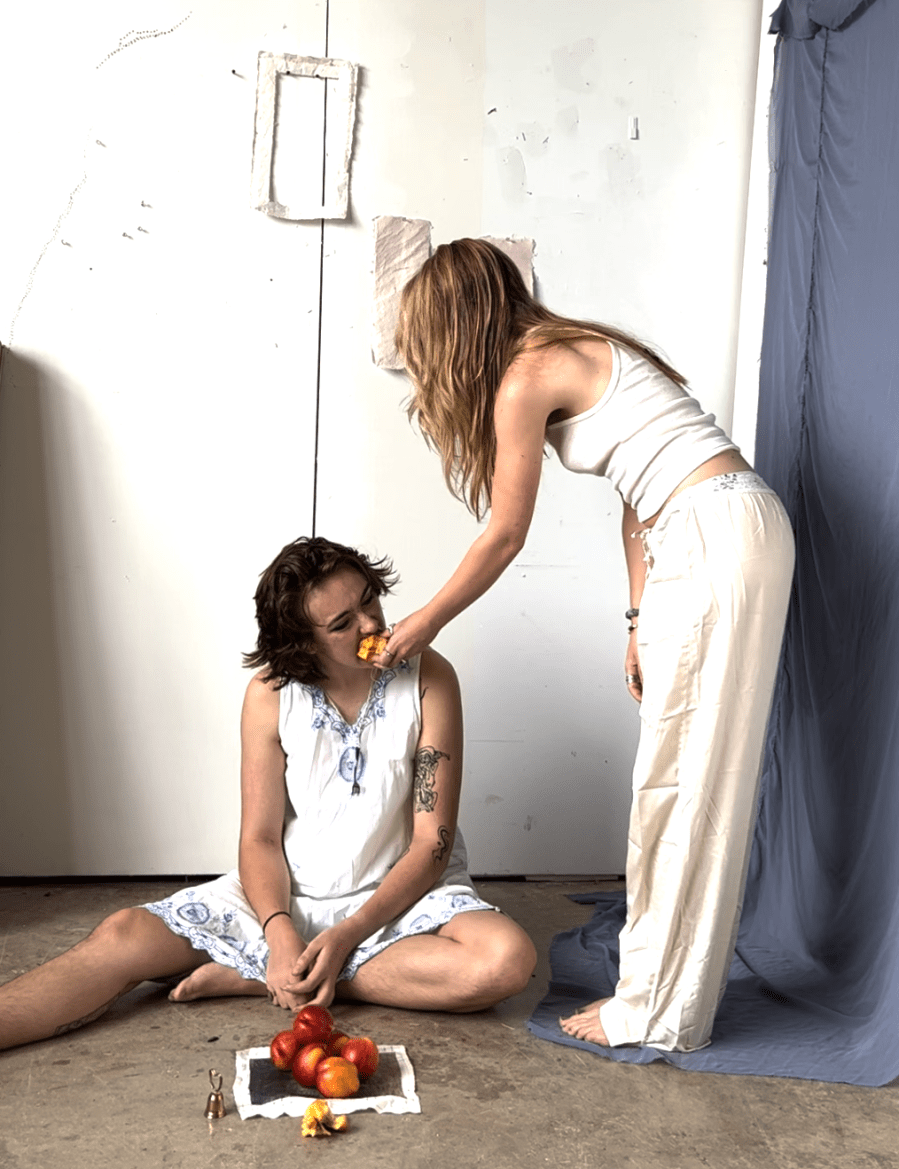
PORTRAIT OF LUCI (ON FRIDAY NIGHT)

By Johnny Cate

Featured Art: Still from “feed me stone fruits”, by Zelda Thayer Hansen,acollaborative performance with Isabella DeRose

She’s driving buzzed
but the PSAs call that drunk.
Soft swerve under a gibbous moon
ripe as a white bleb
ready to pop, subs banging
College Dropout. Baby blue
cardigan over a hot pink bra—
call it cotton candy Bubblicious,
messy pony strobing
in the passing streetlights.
Crimson lip’s been her thing
since something like eighth grade,
and in the dash-glow
it’s the deepest red imaginable,
catching the light as she raps
every word to every verse.
This is pretty girl privilege shit,
sweater riding up the small
of her back shit, black
and white rattlesnake boot shit.
If all beauty is truth and truth
beauty, her body’s sola
scriptura—spritzed with
“God is a Woman”, the latest
Ariana Grande eau de parfum.
The right tire grazes the rumble strip:
kiss of death but it’s a butterfly,
a literal vibe, and subtly
the whole car shudders, touched. 


Read More

Baby Shower 

By Annie Schumacher

Featured Art by Jordyn Roderick

We drive six hours to a San Diego swimming pool.  
A padded bikini top adorns a deer  
trophy, buoys balance on the mantle.  

Blue balloons, stuffed pheasants  
in a fishing net. I place a gift bag 
on a blue tablecloth. After rehab,  

my brother smiles with ease,  
skewering meat on the other side 
of a screen door. Star spangled   

diaper cake, blue M&Ms in a wide- 
mouthed jar, gun safe in the bedroom.  
Kitchen towels from Camp Pendleton. 

Proud USMC Wife, Proud Mother,  
Proud Unborn Baby, Proud Australian Shepherds.  
My hair in the frosting,  

my hair in the fishing net.  
I follow the nameless dogs  
through blue wrapping tissue, 

decide on divorce with 
a paper plate in my hand.  
The baby, a murmur,  

folded in his mother.  
He will be named after a type of metal.  


Read More

Just

By Charlene Fix

I don’t remember her name.
It was Adrienne.
She lived with her parents
in an apartment on Cedar,
the road that split school districts.
So when she threw a party,
she invited kids from both.
Feeling shy in her crowded
living room, I sat on Mark
Shore’s lap while he sat on
the lap of a comfy chair.
We laughed and laughed,
my giddiness netting me
two new boyfriends I didn’t
want or seek and whose interest
waned anyway as soon as they
found I was fun only when
perched on Mark Shore’s lap.
I loved abstractly then, all in
my head, divorced romantically
from anyone real. Mark and I
were just friends, with all of
just’s implications. So we remain,
though he passed away a while ago.
That night I felt protected on his lap
where I could gaze upon the social sea
secure, even when he worked
his arm up the back of my blouse,
until his hand emerged at my collar
waving to those in the room
and, in this ebb-time, to you.


Read More

The Cardinal

By Billy Collins

They say a child might grow up to be an artist
if his sandcastle means nothing
until he brings his mother over for a look.

I’m that way with my wife.
Little things that happen don’t mean much
until I report back from the front.

I ran into Rick from the gift shop.
The post office flag is at half-mast.
I counted the cars on a freight train.

Who else in the world would put up
with such froth before it dissolves in the surf?

But early this morning
while I was alone in the pool,
a Vatican-red cardinal flashed down
from the big magnolia
and landed on the deck
right next to where I was standing in the water.

Here was an event worth mentioning,
but I decided that I would keep this one to myself.
I alone would harbor and possess it.

Then I went back to watching the bird
pecking now at the edge of the garden
with the usual swivel-headed wariness of a bird.

I was an unobserved observer
of this private moment,
with only my head above the water,
at very close range for man and bird,
considering my large head and lack of feathers.

A sudden rustling in the magnolia
revealed the vigilant gray-and-pink female,
the mate with whom he shared his life,

but I wouldn’t share this with my wife,
not in the kitchen or in bed,
nor would I disclose it as she made toast
or worked the Sunday crossword.
Indeed, I would take the two cardinals to my grave.

It was just then that she appeared
in a billowing yellow nightgown
carrying two steaming cups of coffee,
and before she could hand one to me,
of course, I began to tell her all about the cardinals,

he pecking in the garden,
she flitting from branch to branch in the tree,
as if we were the male and female birds,
she with the coffee and me in the pool,

leaving me to make sure I divulged
every aspect of the experience,
including the foolish part
about my plan to keep it all a secret,
and that really dumb thing about the grave.


Read More

LinkedIn Said Your Dad Visited My Profile

By Chrys Tobey

Maybe he wanted to ask about our cats
and dog. Maybe he was curious about how many
colleges I now teach for, curious about my job prospects
as a poet in a pandemic. I didn’t send him a message—
didn’t tell him I saw you on the beach this summer
walking with your new partner, didn’t tell him how
you looked somewhat happy, how I felt excited for you—
I almost ran up to say hi, but I was in my bathing suit
and it was our anniversary, or what would have been
our anniversary, anyway. Maybe I should write
your dad, I’m okay. I don’t know if he would care that our
old man cat is dying, that I give him IV fluids, or that I finally fell
in love with someone, but she broke like the coffee
cup I once threw on the kitchen floor in front of you.
Perhaps he’d like to know that I had a biopsy in my vagina
and even though I felt like a plank of wood was on my chest
with someone standing on it while I waited for the results,
it came back fine. I could share how some days
I feel this sadness that can make it difficult
to bake a potato or how, once, I almost burned your ear
with a wax candle or how I still think about the time
you gave me a bag of socks with grips on the bottom
because I kept falling down our bedroom stairs.
You were so afraid I’d break my leg or hit my head
or worse, especially after I bruised my butt purple,
but love, I knew then what I’d tell your dad now—I’ll be all right.


Read More

Alcobaça in Autumn

By Patricia Colleen Murphy

I’m one five-euro monastery away
from skipping our port tour on the Douro

to bury my head in a novel. It’s the point
of the trip where Do you need a tissue?

means Blow your goddamn nose!
and no one’s had a decent BM since PHL.

The weather is so 13th century. We’re
on vacation. Would it kill you to kiss me?

I think of the monks in the cloister
dusting the coat-of-arms.

If I’m going to make you fall in love again
should I start by telling you that I came from

a difficult family, that I once dated
an All-Star from the Cincinnati Reds?

By now we’re seventeen years in. I’ll wear
a dress and you’ll wear a tie. I’ll lie

close to you, even when you’re asleep,
because I love so much to soft-tickle your skin.

I think of the monks in the chapter house
still as baroque statues. The monks in the refectory

whose black robe-sleeves dip into their mushy salt cod.
They who spend night after night in rows.


Read More

Pockets

By Stephanie Staab

I hate you now, of course, but still there are times when I’m hungry
for a certain kind of calm.

Coffee didn’t keep you awake, gin didn’t get you drunk.
You were watertight against bodily concerns, especially love.

I’ll fall in love with the bank clerk if she sorts the bills in a pleasing way.
A bus driver, if he asks why I’m always on the 6:16.

I’m all hearts, no other organs. My heart purifies toxins from a glass of champagne.
My heart sheds its lining once a month. It searches strangers’ faces in a crowd.

So, if we meet again that way, in a throng
there’s something I’ve been wanting to ask you.

It’s yellow. It creeps.
I have a hair in my mouth when I try to say it.

I want to know what greeting you would choose for a chance
encounter on the street in a random city. What sign of peace.

I would stand ill-mannered while you decide
no tilt forward, no arm outstretched, no demure offering of a cheek.

A nod? A handshake? Perhaps you’d place a hand over your heart and bow.
This, the tenderest in the lexicon of human gestures.

What I really want to know is this:

What is in your pockets now?
Who cuts your hair?


Read More

A word

By Eben E. B. Bein

for 天野 

I am sitting on a lozenge-shaped couch
in the waiting area of a Cartier,
wrinkling my nose at the etched perfume
and the fake-looking straight couple
on the #CartierStoriesByYou poster,
sending you snaps of the Panthère collection
with hammy voiceovers and there is no reason I,
who have never and will never again enter a Cartier,
should be so completely myself except I know
you will say yes.
                             And being so sure makes me
nervous since you bought the band yourself
years ago, convinced you would never meet someone,
and just this morning handed it to me:
Engrave something. Nine characters or less.
Surprise me
. And to make matters worse, I,
who have vacillated for decades on a word,
knew instantly what it would be.

Yes. You’ve got me
so diamond clear, so fit to burst, so chest
full of yes compressions that when the sales associate
messes up your pronouns a third time
I just give a watery thanks and duck out

onto the street where actual people are,
and two of them, maybe a couple,
are laughing, like, with their actual bellies
at what must have been a stupid joke
and I didn’t hear a word of it but
now I’m laughing as well as crying,
so completely at yes with myself,
walking home so fast I’m almost running
because I can’t wait to tell you about it.


Read More

Sleep Singing

By Sara Fetherolf

            You bring up
a detuned garble like a dear bone
unearthed from the garden
of your 2am sleep, upright
in bed, keyed
to your dream,
looking straight beyond
me as you sing.

            All spring
with your wah wah and distortion
pedal, I’ve heard you playing
the Stormy Monday
Blues in other rooms.
I have eavesdropped
on the breaks, counted up
the bills to your lord-have-mercies.

            If one of us
gets snake-bit, then,
it better be me. You’ll descend
with a five-bar
earworm to spring me from
the subterranean territories, blaze
trails through the lightless
pomegranate groves. No

god of death could fail to find
your full-throated tenor
convincing.
            Your skin
in the dark is a lyre
string I touch to stop
resonating, and you

look back, confused
in the new silence, then drop
to sleep. And I come
tumbling after, down that long
chute, the future, where
we wait in the aftermath
of your song (tears
on the cheeks of Spring) and know

it was perfect, and fear
what’s gone is gone.


Read More

The Museum of Death

By Sara Fetherolf

A week after our wedding,
in New Orleans, on our long way

to California, when the afternoon

turned thunderstorm (salt & river
& old stone smell &

the dripping awnings we ran under),

we came upon the door
to the museum. I wanted to see

the Victorian death masks, hair lockets, embalmer’s tools,

obituary clippings. I imagined
a museum of ordinary,

sentimental tchotchkes for marking loss.

I imagined shadowboxes full
of letters with laced black borders, penning in

the old grief. I wasn’t expecting

the serial killer memorabilia (a Gacy
clown painting, the sagging prison panties

Aileen Wuornos wore), crime scene photographs,

car-crash snuff films, blood green-white
in the dusty filmstrip light.

I walked through the displays, viewing

a type of death I had somehow not seen
coming, hearing your footfall

in the next exhibit room. I like the idea

there are many versions of us,
spread through many universes, and dying

in one sends our consciousness rocketing back

to a universe where the death never
happened, our still-living

variations drawing our dead

selves in like iron filings
to a magnet—meaning every near accident

or pollutant worrying the lungs, every bad fall, childhood

illness, &c.—it all
simply concentrates us, makes us more

ourselves than ever, the one who has survived

everything, flickering
against the dust. But I began to see

(walking the rows where I could lift

a black velvet curtain to look
at executions, botched surgeries, the Black Dahlia)

how one day I would rocket back

to somewhere you are not—more myself
than ever, and you more

yourself elsewhere, a partition in between.

Last week we had fed
each other cake, which ahead of time

we had not quite agreed to do. I’d joked, then,

how one of us will have to feed the other
someday, maybe, anyway, so might as well

practice in a gleaming still-young summer,

and I was angry, almost, that I had to worry now
about your universe slipping off

from mine. Honestly, I was still angry about it,

that honeymoon afternoon
in the museum of death,

where the murder photos glowed, rainlit

and old already, each of them holding someone
who, if I’m right, was still alive

in the universe where they are the one

who goes on forever. Maybe they were
even then in New Orleans, in that

rainstorm, having their fortune

read or browsing these walls that wee missing
their image. Before that day, I had

mostly felt, if not invincible, ready at least

to see what would happen next. And now
here I wasn’t. And outside the rain

had stopped like a watch. And never again

would the streets shine in that precise way.


Read More

I Look for You

By Jen McClanaghan

Featured Art: “In the Garden” by Tina Moore, Tiffany Grubb, Alexis Rhinehart, Casey Collins, and Wendy Minor Viny (Passion Works Studio)

I look for you in travel plazas.
In claw machines. In corn husks, crank
shafts, coils and pumps, in funnels.
I look for you at breakfast
and again at dusk. I look in
weather, in dust, in bird song, in barking.
In the magnetic field of the wildflower.
In sockets, in closets, in strangers.
In Spanish, in rain’s silver fringe.
In the hawks that land to look at me.
In the splinter that entered my thumb
from a drawer that belonged to you,
could it be? I hold the cheap pens
in your purse. I spend money on shoes
to make myself feel like you.
I dreamt you were on my deck
with your eyes closed.
In your dresses I fold
for someone else, I see how tiny you were.
I watched the intern take your pulse
and wondered if he was shy or right
when he said you were gone.
On the form for your flight from ICU
to morgue to mortician to oven, to me,
I guessed you were a hundred pounds,
so light you could be made of helium.
You could be made of air
and be everywhere.
Of a world made of so many unlikely things,
of the mongoose’s ability to kill
the cobra, of consciousness,
of time before the beginning,
before the two of us, of death, I see you
enter the light above my shoulder
and read what I’ve written.
All this for you. This alphabet
you shed in June, this word
and the next and this final sentence
a fence of roses that can only be you.


Read More

My Soul Refuses to Write Itself

By Veronica Kornberg

Cuddles under the fake fur blanket. No ideas only things, things.

Runs beside the car, a moon-faced dog refusing to be left behind.

Twig or light? What scratches at the window?

Woman-shaped room inside a violin, full of resin dust and a voice from a well.

That one note held and held, then quivered silence. Both true.

Hard bench under the big-leaf maple. The yellow carpet.

Stands my hair on end, electrical.

Slogs up the asphalt hill, sweat beads in the small of the back.

Props up its feet in the chapel ruins.

Says Oh love, bring prosciutto and melon, sauvignon blanc.


Read More

Go, Went, Gone

By Sara T. Baker

Communication, never our forte:
in the ER, I tell you you will be admitted
upstairs for observation. You let out
an anguished cry worthy of the London stage—
This is it, Sara, I’m going upstairs!
Your forefinger points up as you give me that knowing eye.
It takes me a minute. Not that upstairs!
But you swear, this is it, your curtain call,
your swan song, the end of your road,
your bucket kicked. Still, once on that heavenly
floor, you cow the nurses, charm the doctor,
vacuum up every last crumb
of hamburger and fries.


Years later, on your actual deathbed,
you turn red-rimmed eyes to me, barely
managing to mouth, I have to go!
You can go, Mom, we rush to assure you.
Leaning over, I whisper, We’ll be okay.
Your face gathers into the shadow of a glare
as you try to swing your legs out of bed.
The toilet, you gasp, not having the strength
to say you idiot. But we can’t let you out of bed;
we’ve become de facto jailers, your most private
functions now public property, input and output
duly recorded, your dignity the last casualty
of this war. You give no easy victory
to thieving death; not used to losing,
you snatch back the breath we think
has left you. Laboring for days,
your sunken chest rises again and again,
while we, your children, fall around
you, exhausted. Then you are gone,
giving us the slip at the devil’s hour.
As we wash your cooling body,
your hazel eyes pop open like a doll’s,
as if you want to see, as if to insist
you are still a part of things.


Read More

Annual Business Trip

By Michael Pontacoloni

We skitter about the hotel lobby,
high-ceilinged and dim and full

of surprising trees lime-bright in the wide fan
of so nice to see you again and yes let’s.

Strings of light over 7th Avenue. Fingertips
on my forearm. My first cigarette in a year.

After dinner a pair of dolphins splash in the bay.
Midnight at the marina we spirit a manatee

from a floating plastic bag, our eyes
break into the cabin of a motor yacht,

and I forget that it’s snowing a foot back home
in Hartford. Surely my girlfriend

has worn my sweatpants all weekend,
double-checked the door locks, boiled a pot of tea.

And surely Sunday morning she’ll take down
the plastic clock above the kitchen sink

to skip an hour ahead, surely find the palm cross
hidden behind it, dry little relic of prevention

kept anywhere I live, folds cracking and the newly
splintered edge sharp enough to split a fingertip,

which it will, minutes after I get home
and feel in the dark to prove it’s still there.


Read More

My Darling, You Aren’t Mine

By Becca J. R. Lachman

but in this moment, from your ginger head dipped
            toward the song of the faucet to your pinked
glossy landscape showing off its recent growth rings,
            what could I be but yours? “To bring up”—

that’s what fostering can mean. And it’s like this: a poem
            I knew by heart once, framed or carried in the wallets of priests and
au pairs and waitresses dared “let the soft animal of your body /
            love what it loves.” It was written as a simple exercise, not as any
lifeline—meant to show a friend how a breath can choose

to break open or rest at the end of a line. Just think
            what that means for any of us: our beginning can
be what we need to keep swimming,   or
            our bodies themselves can turn
                                             into dry land.


Read More

100% illuminated: Or, Nine lines with nine syllables for Luna

By Becca J. R. Lachman

Tonight, the Pink Moon marks nine months of
you + us, keeps us all awake with
its bright tunnel of a face. On the
couch, a last-ditch effort, you stretch your
torso over mine, and I feel you
soften, your snore against my neck, hand
fluttering. It’s the closest we’ll get
to any quickening, my feet cold
without a blanket, the furnace on.


Read More

Reading Shackleton During My Husband’s Cancer Treatment

By Michele Bombardier

Selected as winner of the 2024 NORward Prize for Poetry by a panel of previous poetry contributors

After tucking in the kids, we tucked in the house—
dishes, laundry, prepping the next day’s meals.
When the hush finally settled, we’d get in bed
read Endurance out loud to each other.

                         The ship became trapped in ice
the night before his surgery. All that week I tried
to get back from the hospital in time to kiss the boys
but I failed. I sat on their beds, watched them sleep.
The day we got the pathology report,

                         the men, running low on food, put down their dogs.
Radiation all summer. The boys played soccer.
The oncologist told him to join a gym, get a trainer,
go hard because she was going off-label,
tripling the usual dose.

                         They threw everything overboard, but the ship sank anyway.
Anemia turned his skin yellow-gray. His body
became smooth as a seal. I watched
as he denied fatigue, struggled to untie his shoes,
get up the stairs.

                         Shackleton split the crew, sought help: everyone survived.
After we finished the book, we never opened it again.
I wonder where it went. Years it sat on the bedside table
under the clock: last thing we saw at night,
first thing every morning.


Read More

Arizona Snow Globe

By Dan Wriggins

I needed two thousand dollars by Friday.
You deadheaded a daisy. I googled
precipitously. You beat the welcome mat.
I had a related question. You wore a hat in a place
where it was considered not the vibe
to wear hats. I choked
on the billowing dust. You buttered a bone
surgeon. I listened to a song you said was money.
You drew five cards (unlucky)
in a row. I dug my heels into the belly
of the mule. You ladled bathwater.
I couldn’t get the mule to move. You tied a sheet
bend in our yo-yo string. I chased a chicken
under a canoe. You had a serious moment
on the tilt-a-whirl. I rearranged
according to aura. Green, indigo, black. You re-
heated soup. I smoked one
down to the filter. You waltzed
with failure in your mind. I possessed a drunk
driver. You roadkill.
I tried pouring coffee on the music.
Why not at least try? You looked at me
like a stalled motorboat.
I asked how many copies we could move
and how fast. You synthesized
a boring diamond. I signed petition
after pathetic petition. You shook
a snow globe. I proposed posting up under a tree
until the whole thing blew over. “Darling,”
you said, “I don’t have the keys to that
apartment.” I focused on a hubcap.
You bought a falafel truck
because apparently Jesus had
a falafel truck, and we can always inch
closer. Everything I did to make you happy.
Everything you did. You chucked a stick in the river
and it floated around.


Read More

How to Remove a Hot Sauce Stain

By Dan Wriggins

Featured Art by Beth Klaus

First, remove yourself
from the plane entirely.
I’ve heard about drugs that can help,
societies one can join.
Some people move to Maine and jar things.
There’s a Sun Ra movie
where Sun Ra plays the piano
so hot the club burns down.
A guy from my high school started tracking eagles.
I knew a woman who said
she meditated for an hour a day,
sometimes two. Megan
from Wisconsin. You had so many kinds
of hot sauce. Sambal.
Cholula. Dave’s Five Alarm. Habanero
from Hell. Meggy, my days are so long,
and I think only of you


Read More

Remedies

By Mickie Kennedy

I

The surgeon wants me
to remove my prostate.
The upside: my life.
The downside: no more
erections, unless I take
a TriMix penile injection,
used by porn stars
for ten-hour shoots.
I do not feel
like a porn star.
Diapers for a year
if I’m lucky,
for a life if I’m not.
Also for a life:
arid orgasms.
The upside: no more
messes. The downside:
no more messes.

II

Reddit-strangers want me
basic: every day,
I’m swallowing seven
teaspoons of baking soda
to vault my pH
above eight. Cancer
struggles to survive,
they say, in a basic
environment. I shit
a dozen times a day.
I piss on a plastic strip
and it changes color,
almost like a game.
I live on the toilet
but still, that’s a life.

III

The Happy Prostate
Facebook Group
wants me on everything—
milk thistle, black
seed oil, broccoli sprouts
I grow myself,
sea moss, boron,
tudca twice a day,
a dog dewormer
even though I’m not
a dog, mangosteen,
hibiscus tea, soursop
leaves, and never more
than twenty pits
of bitter apricot,
unless I need
to end things early
(a drop of cyanide
in every pit).

IV

The oncologist wants me
to annihilate my prostate
with targeted blasts
of radiation.
CyberKnife.
Sounds like something
Guy Fieri would hawk
on late-night TV.
This is everything
you need, he says,
trimming his frosted tips
with a glowing scalpel.

V

Randy wants me cumming every day, a frenzy
before the famine.

With the patience of an attentive nurse,
he helps me arrive,

his finger curling towards the place
my prostate takes me—
a brief obliteration.

Maybe if I touch the cancer,
he says, it’ll leave.

My stupid, silly man.
It doesn’t work like that.
But even when there’s nothing left to touch,

I would let him touch me there.


Read More

Jam Sandwich

By Patrick Kindig

I plunge my hand into my husband’s gut
& squeeze. He giggles, doubles over

like an uncovered pill bug.
He has never had a gut before. We

are both taking pleasure in it,
this soft appendage extending

his silhouette. Of course, he is also
taking some shame. Once,

his stomach was ribbed & rigid
like a Victorian corset. Unlike me,

he never knew his body
to grow unexpectedly, never fingered

an expanding love handle. Now
he has. Now

we take turns touching his tum
& laughing like young mothers, delighted

to discover a new fold in the baby’s
arm. Sometimes

we press our bellies together
& jiggle them. For some reason,

we call this the jam
sandwich.
Who knows why.

All I know is it makes me feel
like a child, doing something silly

& a little naughty, joystruck
by all our bodies can be.


Read More

To Be Stevie Nicks Cool

By Jennifer Martelli

So many men love my friend:
her boyfriend and both ex-husbands build her a three-season porch,
all cedarwood and teak. Pine needles from her backyard

cover the almost-floor. I tell her she is sexual,
like Stevie Nicks. People can smell it like golden beer. They smell my indifference—
it smells like a New England Timber Rattlesnake, all scales,

black-tinged-gold, like a hole. I learned today in a crossword
that Venus has no moons. That was the down clue,
What Venus lacks that Earth has: _ _ _ _ _:

five letters—O and O—filled in already. She sends me
a video of the three men and their equipment: saws, nails, drills,
hammers, planes, pulleys, rope,

planks of wood, aromatic as a closet, some tool
with claws on both ends they toss back and forth, way too hot.


Read More

Coworker

By Kate Hubbard

You were spinning a top on the bar the night we met at happy hour. We had known each other for years. You gave me a poinsettia for Christmas once and I gave it away, left it in my mother’s picture window so she could end every phone call asking about the boy who gave me that nice flower.

I fell down your stairs. I lost myself in the gaze of your oak trees. I fell in and out of your bed when I wasn’t falling in and out of the Italian tenor’s bed. I met you over and over in the street crossing to the deli. I saw you in the parking lot. I forgot you when the gulls squawked, when my feet were sandy, when I took my lunch in bed.

I forgot you when it rained and the gutters overflowed. You sang to the fax machine. You counted your cigarette breaks. You tipped your hat and loitered by my window. I wore blue when you’d remember it. I drank apple ginger tea with my feet in a desk drawer.

I’d stamp your letters. I’d throw out the tenor’s bills. I was mistress of the postage meter. We’d muse about the smell of death in the walls, the drop ins in the drop ceiling. Some nights I’d roller skate around the file cabinets, overtime under the exit lights. You never let the coffee get cold.

You caught a deer mouse in a file folder. I caught a field mouse in an envelope box and sat by the train tracks watching the hawks pick off the chipmunks. I wore a green dress so the forest swallowed everything but my eyes. I told my mother I’d never love you.


Read More

No One Wants To See Mourning Doves Fucking

By Patrick Kindig

yet here we are, watching
one gray dove fleece & fluster
another. We watch the pecan tree

shiver, shaken alive by
fluttering wings, those grim birds
bumping uglies. For ugly they are

& ugly the thing they are
doing: no slow caresses, all
rough tumbling & the touching

of fronts. In between:
the sad, low call that tells us
it is mourning doves doing it,

even when they vanish
among the clumps of green pollen
& pecan leaves. There is something

awful about it, something
profane, the way, the day we received
the ashes of our dog, two weeks

dead, we cried on the couch
& I laid my head in my husband’s lap
& suddenly there was something

moving there, pressed against
my ear, & when I opened his fly
the dog was still there, still sitting

in his urn in the middle
of the coffee table, waiting
for a permanent place, watching all.


Read More

Leave rocks here

By Georgina McKay Lodge

Featured Art by Glenna Parry

Annoyed at rocks
in shoes
in laundry
in little piles at dinner,
she has placed a box
in the hall.

            -> Leave rocks here

Hold my rock,
her son says
when they are out,
and squats down
to select another.

            Be my rock

The smooth
pebbles,
dove-colored,
worn to wisdom,
she will gladly
carry home, but

his favorite find is
the jagged
saw-toothed
ugly rock,

scraped knee
stung by a bee
broken-armed
heart-choked rock.

Of course
she will carry that one too;
to the end of the world
she would carry it.


Read More

College Days

By Rob Cording

Featured Art by Stephen Rounthwaite

Outside, a few gray snowflakes fell,
a truck rumbled onto 290, and the cold
seeped through our windows.
Our landlord had rigged our thermostat
so we couldn’t turn up the heat.
But that day, the four of us nailed a bag of ice
to the wall over the sensor, and when
the heat kicked on, we let it pump
until we’d shed our sweatshirts and flannels.
Leaning back on our futon, we shared a joint,
invincible in our underwear and T-shirts, laughing
and laughing. Twenty years ago now,
before we knew loss and grief, when we sang along
to our DVD of The Last Waltz and didn’t notice
the steady drip of the ice melting.


Read More

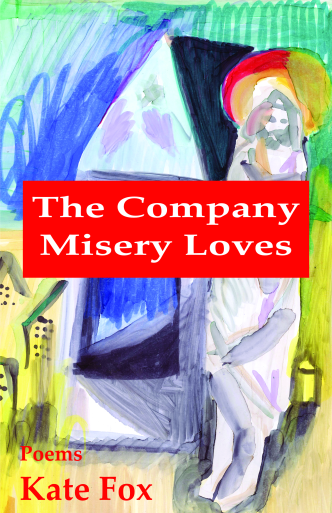
Insight and Echo: A Review of Kate Fox’s The Company Misery Loves

By Rose M. Smith

Within the first few lines of Kate Fox’s latest collection The Company Misery Loves (Sheila-Na-Gig 2024), we embark on a journey to consider the role of inevitability in shaping how we face or embrace life’s absolutes. In language that shimmers on the page, she becomes stage director, tour guide, host as we follow her lead over a marvelous succession of former landscapes.  We are invited in turn to believe and to suspend our former belief, to hear the author’s voice and the voices this author has shared so insightfully that one wonders when each poem’s speaker visited her bedside, pulled back the veil, guided her hand over the page.

Poems from the poet’s thoughts of home invite us with visceral, concrete images into each moment. Such is the craft at work in this collection that bids us to see “that oil mixed with rain / in a hubcap is beautiful, which it is / because you own it,” and long years later to walk the land under great emotional weight and behold “as the entry shawls itself / in brilliant leaves, and the mountain beside me / pulls the sun’s deep brim down over its eyes” as though even the land feels the loss of things past.

Just when you think you know what sort of work will be encountered throughout, Fox introduces us to beautifully dimensional voices such as Mary Shelley, Josephine Peary (wife of the admiral), and Kathleen Scott (widow of the Antarctic explorer), whose voice becomes a masterful device to illuminate us regarding Scott’s expedition and those of George Mallory. This present Kathleen Scott handles with alacrity having been mistaken for the wife of Ernest Shackleton as well as how she might have sculpted Mallory had she not found “Everest / holding fast its own.” This author threads much sound insight and fact into these historical poems without ever drifting out of poetic voice—there again, as with us at the beginning, empowering Scott with agency to recount or rewrite history as she pleases. And it pleases.

With misery in the title, yes, there is loss in this book—loss not shared for loss’ sake but because its inclusion is essential. The losses are here, but the art and beauty of this work is not diminished by what is inevitable for us all. These poems stare into the face of that inevitable and seem to say “this, too can be beautiful.” To repeat Jane Ann Fuller’s words, “This poetry is flawless.” Here is where I must confess exceptional bias. Having begun reading The Company Misery Loves, I was pleased to find this collection includes some of my favorite works by Kate Fox. Finally, I get to share my excitement at how deftly she also wraps biblical icons in humor and contemporary sensibility. Poems from Fox’s book The Lazarus Method retell age-old stories with brilliance. In our varied experiences, there are poems remembered because they were assigned or were the subject of debate. There are poems we witness in live readings that echo the poet’s voice inside us for days. Then there are poems that are remembered because they refuse to be forgotten. The Company Misery Loves draws us into the unforgettable like “human branches reaching armless / toward their maker.”


Read More

Love is a Kingdom of Obsidian

By Andrew Hemmert

So now my neighbor’s twelve-foot skeletons are all-season haunts,
this February morning holding huge pink balloon hearts
and grimacing against the freezing fog. I like them
this way, memento mori-ing my Tuesday commute,
though who really needs to be reminded of their own death
these days? In the shed we found a mouse corpse hollowed out
by weather and time. The body otherwise left intact—
a kingdom of obsidian abandoned in a jungle.
Love, I think, is a kingdom of obsidian I have
thus far refused to abandon to death’s jungle, though there
of course is time for everything to go wrong, or more wrong,
or wrong enough. Ice on the road, another driver running
the red, the sky a white sheet over my body. Until then
the skeleton in me is offering you its balloon heart.


Read More

Sneaking Out to Play House with Ana

By: JC Andrews

the day gathers up     in a blonde     geometry     and we     drive out
    to turn     phantom on DeSalvo’s dock     because we can     because
DeSalvo went dead     and left his pond unattended     so we come     here
    and watch     the moonback     like maybe     it might turn around
and make us     real to somebody     sometimes I wish     I could throw
    her up     in the air     and watch her     spin forever     she’s like
yawning     during the pledge     and missing     indivisible     or picking
    scabs during     catechism     you see     I am stupid as the weather
when she says     Please     like a field waving itself     into the blade     when
    she rubs     her thumb     in circles     in the middle of my palm     I am
honest to god     adjacent to me or     ajar     there is no halo     like leaving
    yourself     ajar     you become a room     so danced     it thumps violet
or you become ready     for another room to enter     you back     she is
    a room too     asking me     if this is alright     like she can’t see
my face     already decided     under this light     we call our space juice
    because we     drink it     we pray for no spoon     in the persimmon
we sit down scared     like substitute teachers     we learn     how to love
    with one hand     and we scrape our backs     on this wood like     we’re
rubbing off velvet     or making     the muscles in our traps     to fight
    and we know     this house     is a gift     even if     invisibled


Read More

Margins

By Marie-Claire Bancquart
Translated from French by Claire Eder and Marie Moulin-Salles

Eating the apple
I eat enigma
and I glimpse us in the mirror the apple and me
inaccurate and profound.

Something trembles inside us with mouths
of saps and metals.

Long trees
go out from us toward the suburbs of the horizon.

Is it us
at the center?

Or the center of the drift?


Featured Art: Reflection, by John Schriner

Read More

Pill

By Louise Robertson

                 Sometimes I,   
                            I mean you,
                I mean I,
are
           like an advil stuck
in a pocket of my/your throat

           and I/you wonder if I,
                       I mean you,
           I mean I,

                       am dissolving there—
                                   easing the ligaments,
                       except the body

isn’t eased, nor ligaments
             hushed and I can still feel you,
I mean me,

                                    I mean you
                       there in the neck
                                   waiting, in fact,

hard as a choke.


Read More

On the Inadvisability of Good Decisions

By Louise Robertson

Featured Image: Knowledge 2 by Sam Warren

I regret my good decisions while
staring at digital timestamps within
the carpeted walls
of my assigned cubicle as November
darkens to evening right after lunch.
I regret them as I climb
into the hybrid and track its mileage.
On an after-work walk,
plastic bags, candy wrappers, and
beer cans sprawl.
I decide to corral
strips of wild sheeting
massed into a wig of see-through hair.
A slippery ooze
crawls onto my hands.
I should have fucked that guy.
I should have broken my heart
over him and kept breaking those gears
—a clockwork that spends almost
all of its time junked
just for those
two moments everyday,
when it is exactly right.


Read More

I Said Maybe

By Allie Hoback

Featured Image: Untitled by Tanner Pearson

I can’t stop listening to your dumb wonderwall cover
that I asked for as a joke. I don’t know what you did
to make it sound all distant and a little haunted
but I want to projectile vomit when you giggle through the reverb
miss a chord and sing alltheroadsanananasomething.
Why do people hate this song and why do people only
ever play it on acoustic, it’s so good on electric or maybe
I just like you—oh fuck, do I like you? During sex I asked
how long you had wanted to do this for and you said
within the first ten minutes of meeting you and I said same
if not even longer, maybe before I met you, does that make sense?
Am I making sense? Should I seek professional help
if a fucking joke cover of wonderwall makes me want to grin
at every blank-faced stranger in a gas station, makes me want to stitch
your name into my underwear, makes me want to backflip
into the Atlantic Ocean where you are treading water—
and I don’t think that anybody feels the way I do about you now.


Read More
Cocooned

By Maud Welch

Featured Image: Before I Leave by Tanner Pearson

There’s a split down the center
            of your upper lip, like the crack
of a window on that first warm-
            blooded day of spring, when 

cherry blossoms sprinkle back
            broken pavement and we feel
able bodied to birth sticky children
            of our own on training wheels –

Read More

How to Choose a Mattress

By Leslie Morris

Featured Image: Forget the Flowers by Tanner Pearson

Twenty-six years have passed since you tried
out mattresses at Macy’s, hands folded over
your chests as if laid out for a viewing. No,
that was not how you lay on a mattress at home.
You had read in the paper that couples who rated
their marriages “satisfying,” slept spooning
and those who rated their marriages “highly satisfying”
slept spooning with their hands cupping their spouse’s
breast or penis, so nightly you wrapped your hand around
his sturdy cock believing that you secured a happy marriage
in your grasp. But after googling “how to” diagrams
of spooning on the web, you’ve learned that as the smaller spoon
you should have been the spoonee all those years.
So now you are shopping for mattresses by yourself
and the sleep expert at Slumberland wants to upsell you
a queen even though you are still weepy and lost
in your own trough within a double, a sinkhole
of busted continuous coils. He asks how you sleep.
Badly. You need something supportive, he says,
but with plenty of give. Yes, absolutely!
Memory foam, he says. Oh God, no. Knock me out
on horsehair or kapok, sheep fleece or pea shucks.
Give me a nightcap of nepenthe. Certainly not memory.


Read More

Poem for Paul Who Never Forgets My Birthday Even Though I Never Remember His

By Alyssandra Tobin

paul says                                careful with the benzos  
& I’m like                                                  I think of you
whenever                 my therapist brings em up      &
he’s like aww                     dunno if sweet’s the word                     
but it’s nice                                        to be thought of   

okay    sure     let everyone see  my cute belly     let
everyone know                    I covet some people I’m
supposed to hate                       paul’s stupid meth’d
out calls unbearable       his empty bottles his days
& months       wild-eyed                  & away

once                                we wore each others jeans  
his tiny gold waist                   in my teen girl pants 
now    on the phone                      he says what’s up
ya fuckin guinea!           he teaches me to play iron
man      he gives me that   ninth step apology  that
making                                  of meandering amends   

me     so  scared  of  dying                &  him  always                                     
chest deep in it                          I sit so quietly       a
very good dog                        in her dim little room      
but he            gives me cocky courage                  he
gives me  warm love        that boston street salt
kinda love              that let’s never brawl kinda love    
that I’ll kiss your dirt love          that I’ll help you lie
to chicks love       that mall parking lot love      that
if I’m a blight                     you’re a blight kinda love    
that noogie     that cackle      that snakebite     that
augur        that    yeah                          I’ll call you on
your bullshit pastures               if you call me when
my dumb pig jumps her sty         off to somewhere
cleaner than both                    our loud green yards


Read More

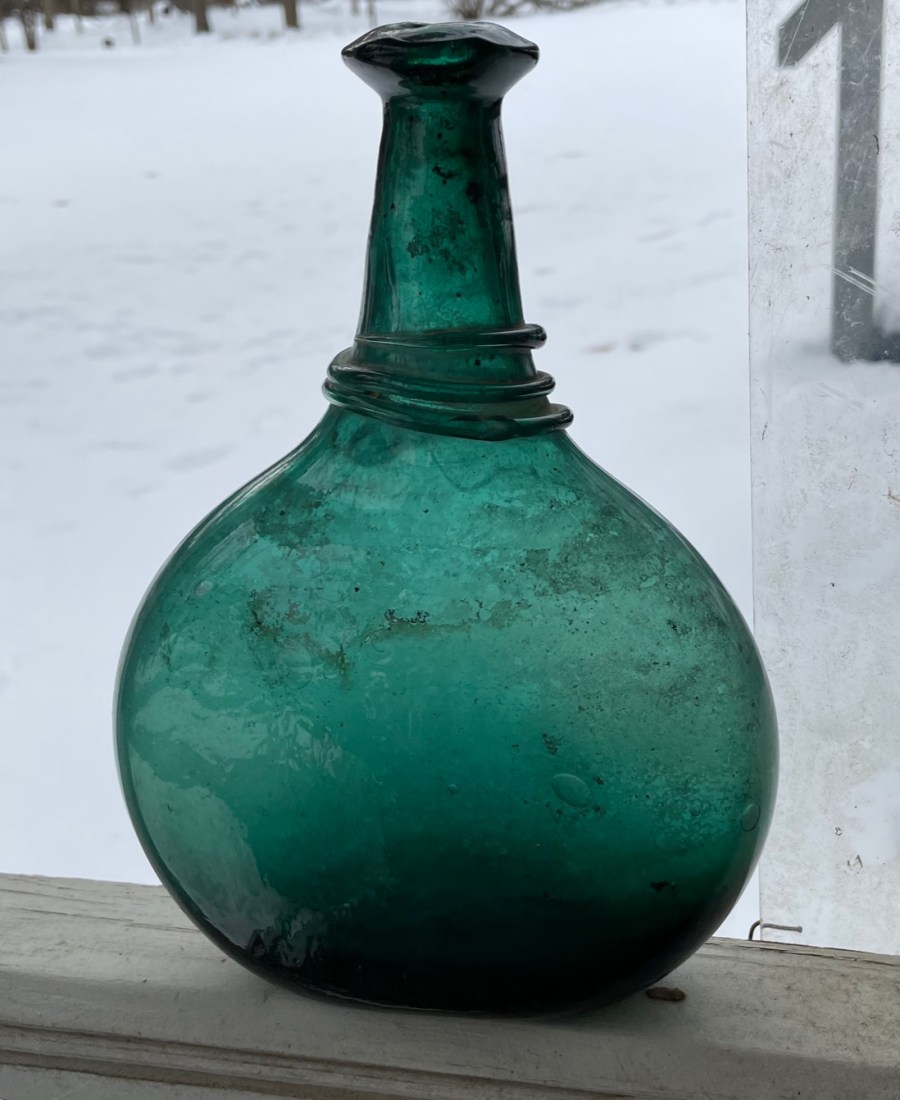
Gift

By Matthew J. Spireng

Featured Art: Persian Saddle Flask by Matthew J. Spireng

He had admired it, yes, because

it was beautiful. It was very beautiful, but

he had not admired it because he

wanted it. She had thought otherwise,

though, because as he admired it, he told her,

“Isn’t it beautiful.” Not a question.

And it was for sale. His birthday

was coming. So she thought he admired it

because he wanted it and she bought it

for him. What could he say? A question,

rhetorical. He had admired it, yes,

and still admired it, although now it was his. Read More

In the Morning I Wake Up Feeling Unmoved

By Emily Lee Luan

Featured art: Into Something Rich and Strange by Caleb Sunderhaus

   In the morning I wake up
feeling unmoved   hardly
   particular   the house

around me quieted by early
   rain   I feel hungry and so
I eat   I wash  my face

   measure the relative length
of my hair    to my shoulder
   Sometimes I let myself  feel

exceptional   stretch my arms
   in open   grasses   
the suspension lasting only

   until dinnertime   or upon
learning he once loved a girl
   with collarbones   just like

mine   But today isn’t remarkable  
   I’ve stopped looking at my
body   naked in the mirror or

   washing in between my toes
It feels as if nobody   has seen
   me in days   Something in that

makes me want  to be   object
   caught in a window frame
or otherwise  violently   found

   I scatter brightly colored
candies into my palm   frame
   my hand  against the white

of the porcelain sink   It makes
   so much sense  that someone
would love me  until it    doesn’t Read More
First Night at Super Paradise

By Laura Linart

Featured Art: some quiet morning in Athens, OH by Sue-Yeon Ryu

Give me a lesson in planetary frisson. Snake
like a vine running up my nervous system.

Provoke me. Ask, even as you trace the length
of my thigh, Isn’t it surreal that we’re here?

Isn’t it surreal? Suspended in heaven,
we’ve got front row seats to the ocean.

We spend time like billionaires. We dance
in slow motion. There’s an angel spinning EDM.

I’m under hypnosis. Take the first bite. Taste
the strobe light. Feel the beat begin to fall.

Down here, gravity loves us. The crowd pulses
in its thrall. Temporal rhythm, room spinning,

my back against the wall. It’s so crude
how my body wants you, animal after all.


Read More

Beef Jerky That Makes People Sad

By Mari Casey

I enrolled my boyfriend in a beef jerky of the month club
one Christmas. In January, we broke up, and it was
a horrible breakup that still hurts a little, years beyond.

In February, when notice came that his jerky had again been shipped,
I cancelled it. It was the type of breakup where the kindest thing we could do
was leave each other alone forever. We hadn’t been very kind. I wanted to change.

In March, I got another shipping notice, tracked to his front door,
but my card had not been charged. I called
and was assured that no more jerky would be sent. Read More
suggestion box feedback from lovers/boyfriends/partners on how to improve myself, that I never asked for, and I know who you are because I recognise your handwriting

By Paula Harris

Featured art: Untitled by Felicity Gunn

we don’t have anything in common

what if you grew your hair long?

what if we went running every morning at 6?

you could be nicer, you could be less judgmental

what if you got a degree?
yeah, you should definitely get a degree

we don’t have anything in common

you look better when you don’t weigh as much

can you talk a bit softer?

calm down

you’d be better with bigger breasts Read More

In the Winter of my Sixty-Seventh Year

By Susan Browne

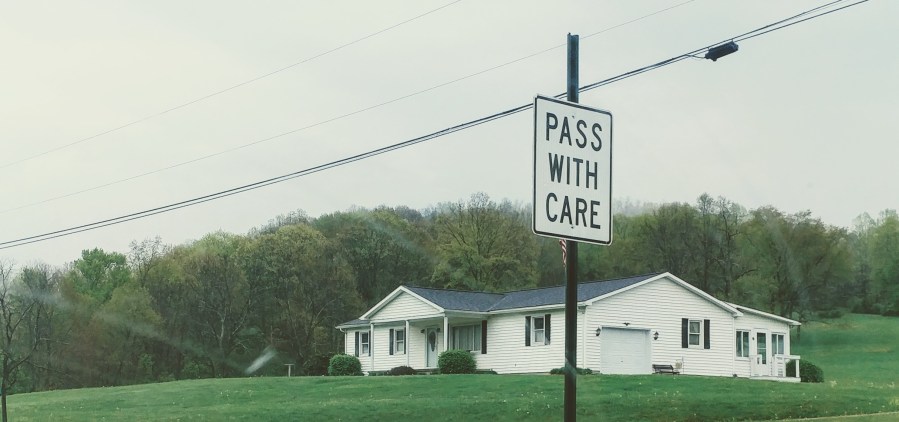
Featured Art: pass with care by Gina Gidaro

I feel the cold more
I stay in bed longer
To linger in my dreams 
Where I’m young
& falling in & out of love
I couldn’t imagine then
Being this old     only old people
Are this old
Looking at my friends I wonder
Wow do I look like that
Today I wore my new beanie
With the silver-grey pom-pom
& took a walk in the fog
I thought I looked cute in that hat
But nobody noticed     maybe a squirrel
Although he didn’t say anything
When was the last time I got a compliment
Now it’s mostly someone pointing out
I have food stuck in my teeth
Did my teeth grow     they seem bigger
& so do my feet     everything’s larger
Except my lips     lipstick smudges
Outside the lines or travels to my teeth
Then there’s my neck
The wattle     an unfortunate word
& should have never been invented
These winter months are like open coffins
For frail oldsters to fall in
I once had a student who believed
We can be any age we want
In the afterlife
I’m desperate to be fifty    
Six was also a good year
I saw snow for the first time
At my great-uncle’s house in Schenectady
My sister & I stood at the window
I can still remember the thrill
Of a first time     a marvel
Life would be full of firsts
I met my first love in winter
He was a hoodlum 
& way too old for me     seventeen     I was fifteen
I could tell he’d had sex or something close to it
He had a burning building in his eyes
He wore a black leather jacket     so cool & greasy
Matched his hair     he broke up with me
Although there wasn’t much to break    
All we’d done was sit together on the bus
Breathing on each other
It was my first broken heart
I walked in the rain
Listening to “Wichita Lineman”
On my transistor radio
I need you more than want you
Which confused me but I felt it
All over my body    
& that was a first too    
O world of marvels
I’m entering antiquity for the first time
Ruined columns     sun-blasted walls
Dusty rubble     wind-blown husks
I’m wintering     there is nothing wrong with it
A deep field of silence
The grass grown over & now the snow


Read More
Love Song

By David O’Connell

Featured Art: Morning Haze by Leonard Ochtman

Oh, that’s right—because I’m going to die.
Sometimes I forget. More often than not.
And then, that’s right! I’m going to,
sometime. Because . . . I’m going to. Forgetting,
but only sometimes, that’s how this works
more than not. And then we wake to snow,
                              *

quite unexpected, the whole neighborhood quite,
you know. And you say to me, yes, that’s right,
cream, two sugars. Sometimes I forget. Or
these days, more often, because, you know,
that’s how this works. And now I remember
we’re going to. Both of us. And there’s the car

                              *

snowed under, looking so unlike itself. It takes
an easy faith to see it. What it truly is. I believe
this morning the whole neighborhood is a fact
refuting last night’s forecast. I’m predicting
this icicle by evening will stretch down past
the window, which reminds me—yes, that’s right,

                              *

last night, 2 or 3 a.m., I woke to the whole house
moaning in the wind. And I felt warmer beside you
surrounded by this sound, our house, and maybe
the whole neighborhood, the neighborhood houses
and the neighborhood trees all moaning. It was snowing,
but I didn’t know. Sometimes, I forget this

                              *

is how it is with us. Just as I, at times, forget
I, we, are going to, you know. They’re saying now
more is on the way by evening. It almost hurts
to look out there’s so much sun. I’m going out
to prove the car’s still here. You remind me,
yes, of course, coffee. How could I ever forget?


Read More

Thursday Night, DivorceCare

By Jana-Lee Germaine

Featured Art: Faceless ballerina resting on floor with shade by Khoa Võ

Next to the Lost and Found,
our church basement folding chair circle.
Ten of us, week to week, scratch
words in workbooks, read copies
of How to Survive the Loss of a Love.

We pass or fail stages of grief.
Video clips from the other side:
a smiling blonde manages
her checking account, living debt-free;
gray men navigate dating and children.

Stories cycle in Share Time:
Billy the missionary served 25 years
with Kazakhstani orphans—
one day, home on furlough,
his wife drove to Walmart, never returned.

Dan’s wife ran off with the superintendent,
and Sharon’s husband left her at Denny’s
eating Moons Over My Hammy.
She hasn’t had an egg since.
I don’t know why, they said.
Blame always a stick to be thrown.

Not your fault, we agreed.
But maybe the fault was mine,
the unsupportive wife, the wastrel.
I drove 1700 miles, and still his voice,
obscured by barroom backnoise,

Insufferable woman, come home.
Each week I shift seats
on the circle’s farthest curve.
I’ve lost the knack for talking,
afraid the other eyes will shinny up my face
then flick away.

At Trader Joe’s, before group,
while cashiers flip French bread
into paper bags like a magic trick,
I practice words.
How to say I’ve left him,
that he was mean to me.
So I will be believed.


Read More

The Measuring

By Veronica Corpuz

Featured Art: Vintage notebook among photo cameras on table by Rachel Claire

A married life is measured:
each grain of rice, coffee bean, and tea leaf,

ice cubes crackling in a glass of water upon the nightstand,
even the pinheads of steamed broccoli,

every hour of sleep lost when the baby is born
each hour you slept in before him,

the time you say, I am going to remember this walk forever
the neon color of lichen after a long, hard winter,

how your son wobbles, falls down,
how you swoop him off the ground.

Until you walk into the Social Security office,
until you see the words printed in dot matrix—

the date your marriage begins, the date your spouse dies—
until you see what you did not know declared in writing,

then, you have new language for this feeling—
how your heart has become a singularity:

Your marriage has ended in death.


Read More

Knife and Salt

By Justin Hunt

Featured Art: by Markus Spiske

At sundown, we sit at our garden’s edge,
speak of thinkers and their theories—

what’s real, if something follows
this life, the ways of knowing

the little we know. An owl swoops
the creek below, swift as death. I shift

in my lawn chair, pick at my knee—
an old wound I won’t let heal.

Do you wonder, I ask, if Descartes
ever said, I feel pain, therefore I am?

You sigh, run your eyes to a remnant
of light in the oak above—as if,

in your drift, you could re-enter the time
of our son, inhale his dusky scent.

I honor your silence. But what I feel,
what I know, what I want to say is,

we have no choice but to watch
September settle on our garden.

And look! All these tomatoes
that cling to withered vines—blushes

of green and carmine, waxen wines
and yellows, the swollen heirlooms.

When the next one falls, my love,
I’ll pick it up, fetch us a knife and salt.


Read More

Palacios

By Mark Alan Williams

Featured Art: by Katie Manning

We buy hot dogs at a gas station
of broken pumps and eat them
on the pier, watching ratty shrimpers
limp in for new bandages,
sit there in the cold for hours,
thinking sunset will fill the bay
with the blood of the Brazos,
do something holy to us.

This is after Ganado,
and Victoria, and Refugio,
and Point Comfort, and Blessing.

We’re newlyweds,
willing to burn fuel on skywriting
if it can make marriage
feel less like living in Houston.

Sunset hangs around
like a towel that won’t dry,
and when we tire of waiting,
we leave the dim, fuming galaxy
of refineries for home,
bright and deadly as a hospital
circled by ambulances, the music off.


Read More

Late-Season Outdoor Wedding

by Chelsea B. DesAutels

Featured Art: “Panel No. 1” (Leaning on a Parapet) by Georges Seurat

The night before, we’d eaten fried walleye

with tartar sauce in a big white tent and passed

the quaich filled with Irish whiskey to our loved ones

who sipped and said blessings. There was music.

You played guitar. I went to bed early, happy.

You joined me later, happy. The next morning,

we woke to snow and gray skies. All morning long,

I cried and heaved and my mother and bridesmaids

whispered, afraid I was having my doubts. I wasn’t.

I was rupturing—a violent fissure between

my wanting to be good at loving and wanting

everything, like a river island suddenly shorn

from the bank and flooded by ice melt. Over my dress,

I wore a fur stole that I’d found two summers earlier

in a roadside antique store. We’d been road-tripping

through the northwoods, you behind the wheel,

me gazing out the window at Lake Superior, a body

displaced by thousands of shipwrecks.


Read More

If French Kissing Was As Good As Promised, Shouldn’t I Be Happy By Now?

by Emmy Newman

Featured Art: Southern France by Simona Aizicovici


I am accidentally thinking

about snail sex when we start. Mouths open.

Tongues. When snails have sex

there is a slightly gruesome amount of suction.

First, a tingling graze of eye stalk on eye stalk.

Then a lack of movement. Wet flesh. Fireworks. Read More

Elegy with Two Portraits

By Dan Clark

Featured Art: “Basa de Maya” by Madara Mason

The priest swings a thurible. Incense,

swirling and nebulous, encircles the cremation urn.

A few feet away, a husband weeps.

He’s not thinking how Oregon came to fill the ocean

of itself, how island arcs docked like icebergs

against the Idaho shore, where Mesohippus,

diminutive proto-horse, grazed beneath the juniper.

He’s not considering how Oregon drifted through

several versions of itself—savanna, jungle, desert—

then settled for a time as a placid, inland lake.

Instead, he’s remembering forty years ago,

a dance floor, a promise emerging,

all red-haired and smile, in the same way Da Vinci

painted Ginevra, young woman in three-quarter view,

whose eyes engaged like none before,

the part of her braided hair revealing noble forehead,

the background a green halo of juniper.

And he’s not considering how the continent

has yet to finish arranging itself—Pacific plate

subducting from the west, Sierras

pressing north, rotating Oregon like a cogged wheel.

Yet he finds himself in the second pew, rearranging:

how that red-haired promise faded into

the drinking, the stolen meds, the swerving

between fallen arms of railroad crossings,

this version of her unrecognizable

like Willem de Kooning’s Woman I,

full-frontal view: terrible, Paleolithic,

brandishing eyes of knives, breasts challenging,

margin of her body dissolving into background.

The priest swings incense, swirling and nebulous.

Twenty miles above Earth, Hubble steadies its gaze

the way he studies the pink of his thumbnail.

He watches himself in the pew,

feels himself disappearing—

he cannot hold the red-shifts steady, cannot keep

the margins from dissolving to ground.


Read More

After Hours

By Maria Nazos

Featured Art: “Illusion of My Studio” by Yan Sun

When I exited the stall, she was standing at the sink.

I knew her best from one night at the bar, when she’d said

my ex was handsome. Then asked whether I’d mind if she

called him later that night. I’d pressed my lips together

and said, go ahead, certain she held an unspoken malice

which young women carry into small towns. I’d moved

to the Cape to escape from my talent for tearing through

love, only to follow a trail of broken glass into every bar.

Only to find every fisherman with a penchant for failed

marriages and pot, and myself, again,

staying up too long and late.

As I stood beside her in the bathroom, washing my hands,

I thought of another night when she’d told me, as if casually

draping a dark blouse across a stool, that her father had just died.

I’d squeezed her hand. She pushed her blonde hair off her face,

said, that’s okay. But I’d seen her at the bar every night since,

drinking with a red-haired fisherman who’d tried to strangle

his ex. I shook my hands dry. Tear my shirt, she urged, interrupting

my reverie. Why? I asked. Did she want to show off

her seashell-curved cleavage or simply feel something

besides her heart splitting down the middle?

Read More

Mexican Standoff

By Dylan Loring

This summer afternoon on the blacktop
of an elementary school playground
Steve and Rachel have their guns pointed at each other,
as tends to happen every once in a while
between two people who have dated for months,

that is, until Chet shows up brandishing his revolver at Steve,
causing Rachel to complete the triangle by shifting her gun
toward Chet, at which point, Steve says, “Well lookie here.
Seems like we have ourselves a Mexican standoff!”
which makes Rachel say, “Wuh? None of us are Mexicans.”

“I could call my bud, Raul, if you put your guns away,” Chet says.
“That would ruin our Mexican standoff!” Steve says.
“Adding a Mexican to our Mexican standoff
would ruin our Mexican standoff?” Rachel asks.
“Have you ever even been to Mexico?” Chet asks.

“A Mexican standoff,” Steve says, “occurs when each person
in a given vicinity has both a gun pointed at himself
and his gun pointed at someone else.”
“Or herself and her,” Rachel adds.
“Sounds to me like a gun deadlock

or a James Bond-high-stakes-poker-thingy,” Chet says.
“Mexican standoff is just what it’s called,” Steve says.
“I could sure go for some Mexican food
after this . . . Mexican standoff,” Rachel says.
“Are you sure it’s called a Mexican standoff?” Chet asks.

“It sure sounds either made-up or racist or both.”
“It’s not racist, it’s just what we call it,” Steve says.
“You mean like how we call the Washington Redskins
the Washington Redskins? Because that’s still racist
even though it’s the name of our local football team,” Rachel says.

“Go Redskins!” Chet adds. Chet is an avid football fan.
“The Mexican part of the Mexican standoff
is literally the least important part,” Steve says.
“You probably mean figuratively.
People almost never mean literally,” Chet says.

Read More

You Are My Sunshine

By Bobbie Jean Huff

Let me begin by offering my condolences, I said,
holding out my hand. She shook out her umbrella
and placed it open, just beside the altar. They thought
it was an ulcer, she said. They gave him some tablets.
Did he have any special requests? I asked. Favorite
hymns? Or something for Communion, like maybe
Water Music? He was worse by Christmas, she said.
He couldn’t manage the pumpkin pie. He always loved
my pumpkin pie. The King of Love is nice, I said. I
opened the book to page 64. As an alternate to Crimond,
you know. Most people don’t recognize it as the 23rd
Psalm. In January his feet turned black, she said. Toe by
toe. It took exactly ten days. The shadow of a branch
moved slowly back and forth behind the stained glass.
I thought: When I get home I’ll check my toes. Will
there be Communion? I asked, finally.

The last three days he started to hiccup, she said.
He wouldn’t take any water. It never stopped, the
hiccupping. Not once, not one minute until he went. I
could play Pachelbel’s Canon. That’s very popular now.
There’s no reason it can’t work at funerals as well as
weddings. At the very end, she said—then stopped, her
eyes squeezed shut behind her glasses—as if the
rejected water, each wretched hiccup, and every
blackened toe formed a chain she could use to haul
herself back to September, when she would claim
him, finally whole again.
She reached for her umbrella and frowned. Play
what you like, she said. He was never fond of music.
Not hymns, anyhow. Only once in fifty-three years
did I catch him singing. You are My Sunshine, I
believe it was.


Read More

I Go Back to Mykonos 1976

By Maria Nazos

Featured Art: “Mykonos” by Maria Karalyos

                                                                             —after Sharon Olds’ “I Go Back to May 1937”

By the third martini, he’ll ask her to marry him.
She’s a tourist, he’s a captain, home by chance.
I stand at the window, watching. I want to walk
into that bar, order an ouzo, and tell them
that, together, they’ll create a new generation
of pain. I want to tell him to court the island girl,
the one who, forty years later, will see him, run
to the restroom, and return with a fresh coat
of lipstick. I want to tell my young mother,
in the words of the great North American philosopher,
Pamela Anderson, “Never get married on vacation.”
But this is long before Pam and Tommy Lee, before
I existed. Before Reagan reigned over his long line of wreckage,
and couples shot themselves, together, in their cars. The Vietnam War
has ended, but here I am standing
at the window, watching while they meet,
both oblivious of wars they’ll wage. They’ll move
from Greece back to the Midwest—she’ll drink, alone,
in her kitchen. He’ll return to the island every chance
he gets. When he’s back in Illinois, he’ll stare
into the aquarium and long for water. She’ll look
at him, frozen, behind her highball glass. Still, I stay
at the window of the bar, wanting to use Pam’s biting wit.
But this is long before Baywatch, and they’re gazing at the
bay. I tap the glass like Morse code. Sealed in
my own tank of silence, I say, Please let go.
But as they take each other’s hands, I softly touch
the pane and turn away. Because they, too, have the right
to plunge. Even if they’ll swim out too deep:
holding onto each other until death.


Read More

Thief

By Owen McLeod

Every Thursday, on his way to therapy,
he drives past the house of the woman
he’s having an affair with. What interests
his therapist isn’t the sin, which she views
as a symptom, but the root. So they dig,
or seem to, and today he talks about his wife—
how, before they take a trip, she makes him
connect those timers to lamps in certain rooms,
and how much this annoys him, even though
it didn’t used to. As if their belongings were
of value. As if an automatic light might stop
an addict from breaking in.
                                                  As if the thief,
awake beside her, had not already come and gone.


Read More

In Dog Dreams

by Karla K. Morton
Featured Art: 

I run,
palms like paws on the earth,
muscles, long and sinew.

I smell wet clover,
the musk of home,
cooking meat.

I do not think about tomorrow
or yesterday,
but I remember the cactus
and the snake,
and the music of your voice
even when language fails.

And when I wake, I roll
to the nest of your shoulder.

Your arm does not reminisce
when it first wrapped my waist,
yet it comes to me;
heals even as you sleep.

I feel the peace of gravity;
the subtle spin of planet;
the rise of the mountain.

In Dog Dreams,
I have known no other hand;
no other time
when I wasn’t yours,
or you, mine.

Whoop! you call in the deepening forest.
Whoop! my descant back.

Read More

Confirmation

By John McCarthy

You taught me how hands could be laid, how they could touch
     a head and heal, but all of those hands eventually fell limp
like a field bent by threshing or a lit match dropped in water. Once,
     we used to dance in The Corner Tavern’s neon light
where the pickup exhaust wafted inside like harvest dust.
     Life in the Midwest is like one long goodbye because it is the same
every day, and I didn’t realize you had left until there was nothing
     but hard work and long days ending with the wind’s silent dirge
that sounds like trying not to die but always dies in smaller ways—
     screen doors that slam closed but don’t shut all the way
because the house has settled and the roof is warping from the sky
     boiling over with thunder and rain. I wake up now to the flashing
falling from the gutters and the water dripping through the holes
     in the ceiling. All I do is recall your voice like a prayer thrashing
my skull that mines the night begging our fathers our fathers
     our fathers in prayer, but they are off begging other women
in other towns. This town is not the memory I want, but I know
     how sadness works. It’s like a kettle-bottom collapsing onto
the details of every thought. I shouldn’t have, but I stayed in town
     to try and keep what I love alive, but no that never works. We were
a long time ago and a long time ago is too hard to get back.
     The last time we talked you said, We will end up like our mothers
waiting for nothing. Then you didn’t come back. No. Not ever.


Read More

If Your Spouse Dies First

By Stephanie Johnson

Featured Art: Lady Lilith by Dante Rossetti

Option One

              Move to a different country.
              Take a new spouse.
              Make beautiful different-country babies
              with soft, different-country hair

and only speak your old-country language
late at night in between dreams.
Your new husband will ask the following morning
who this person is; you keep repeating his name.

              Oh, you say, in your new language.
              Don’t worry about it. Just an old friend.

Option Two

Build a house. Bake your late spouse’s remains
into the walls. Like the spectrophiliac Amethyst Realm,
feel paranormal hands on your legs and back
as you rub yourself on the corners of the foyer.

              Moan the name
              your ears haven’t heard
              since you reopened the coffin
              and saw silver bones.

Option Three

              Meet a woman with dark hair
              and patience longer than yours.
              Tell her a lie:
              you’ve never done this before.

                             She’ll grin and say, “Sure you haven’t.”
                            Later, in her shower, pressed against
                            the pink tile wall, you can’t help but notice
                            she uses his same shampoo.

Read More

Trouble

By Danusha Laméris

Featured Art: by Clara Peeters

He’d wanted the persimmons
and asked her for them, but when
she gave him the brown paper bag,
brimming over, he was taken
aback. Did he really need that many?
Still, he brought them home
to his wife, and soon
there were persimmons ripening
on the kitchen counters, lining
the windowsills. Each day,
growing more and more succulent
until the air was thick
and sweet with their scent.
At breakfast, he’d break one open
with his spoon—the skin supple
and ready to give—stir it into
his hot cereal. Indescribable,
the taste. And a texture he might
have described as sea creature
meets manna from heaven. When
he ate one, he thought of her.
And when he saw her, he thought
of the persimmons. When her arm
brushed, just barely, against his,
did he imagine they both felt
the same quickening? In myth,
fruit is usually the beginning
of disaster. And the way
they made themselves so obvious—
an almost audible orange
against the white walls—
made him wish he’d never asked
her for them, didn’t have to
smell them sugaring the air
with ruin, as he sat there,
face lowered to the bowl, spooning
the soft pulp into his mouth.


Read More