When Time Slows Down

By Lawrence Raab

Now I’m lying in a narrow hospital bed,
waiting for the first tests to come back,
raising the cup of apple juice to my lips,
then setting it back on the table
very carefully. I’ve been watching
a large round clock, so much like

the clocks in the schoolrooms
of childhood, where the big hand clicked
loudly as another minute was forced into place.
Was it fourth grade or fifth?

Read More

The Road

By Lee Ann Dalton

I left, not looking back. I was afraid.
I left the things he bought me, just in case.
I had to close my eyes to find the road.

I carried names and numbers, tucked inside
a pocket in my purse, and not much else
to leave and not look back. I was afraid

of corners, entryways, store windows, hid
and dodged whole neighborhoods, memory’s curse.
I had to close my eyes to feel the road.

Nights, phone off, lights on, I stood guard
on the balcony, wrapped in please. Worse
than leaving, is not looking back. I was afraid

he’d come slash my tires, stage his suicide
or mine, since I refused to witness his.
Sometimes I closed my eyes to see the road.

I’m still ashamed to say how much I lied
to make him step away, give me the keys
so I could leave, not look back though I was afraid.
I closed my eyes to walk the open road.


Read More

Intercession

By Jennifer Leonard*

When, years later, I learn Kevin Miller,
the boy who grew up next door, is in jail
for drugs and a stolen car and a gun,
I think of eighth grade:
Kevin with his buck teeth and buzz cut
always getting into fights, Kevin suspended
once for carving the F-word into a church pew
during Wednesday Mass, then again
for slinging walnuts against the windshield
of Mrs. Sabatino’s car.
And that one time, on the field at the end
of the street, where the boys gathered after school
to pick teams, Mark McGarity said,
We don’t want the retard,
meaning my brother—
and Kevin said, What the fuck, man,
and Mark said, Well then prove he can catch a ball,
and when Kevin shrugged and said Fine,
and told my brother to go out for a pass,
and my brother did, but did not catch the ball—
when it bounced twice off the ground,
and my brother looked down at his sneakers,
and Mark told Kevin, Yeah dude, there’s no way,
and all the other boys stood
in a sort of ring, and waited for someone
to hurt someone else—
but instead, Kevin thumped my brother
on the back and said, Let’s go. And my brother—
who may not ever be able to memorize equations
or read, but knows when a man risks himself
for another—
he followed Kevin home to our back yard,
where Kevin threw my brother the football,
and though the ball passed again and again
through my brother’s hands,
Kevin kept throwing, telling my brother
where to move and when, and I can picture, now,
my brother’s face so serious and filled
with concentration—
and Kevin, throwing until their shadows
fell long over the yard.


Read More

Pavlov’s Dog

By Derek JG Williams

I chase my shadow all morning. The neighbors watch
from between drawn curtains.

I tear up clumps of lawn until my blood churns how it does
when the bell rings. I sit in the sun and pant.

Next time I’ll lunge for his throat. But the bell sounds
and I love him still. When I run away, it’s to nowhere

special. There’s a certain slant of moon
I seek. It changes the angle of my longing.

Hunger is the pain I can’t be free of—when I’m sitting
in the sun I love him.

I’m never free. I’ll lunge for his throat. The neighbors will say
I told you so.


Read More

Photograph Albums

By George Kalogeris

“We finally got all of our family photos
Onto our home computer,” Quentin was saying,
Just as we entered the Asian fusion place.

And that’s when it hit me: all those leather albums
With their matted pages and bristly hides,
In their mundane way as archly ceremonial

As the Golden Dragon preening against
The restaurant window. All those cumbersome tomes,
In a decade or so defunct as the dinosaur.

But once their images have all been scanned,
Why should it matter? By then the cherished snapshots
Will have all gone into the world of light—

Or at least into cyberspace. Ancestral faces
That once unfurled from trays of salty water
As dark as Lethe, and then were pinned on strings,

Ex-voto like, and left to dry, will seem
A little less spooky-stern without the shades
Of their twentieth century negatives to haunt us.

And pantheons of illumination so vast
They promised we’d see ourselves reflected in
Their image forever—Olympus, Polaroid, Kodak—

Will shrink to the candle-watt stature of household gods:
Preservers of birthday parties and graduations,
Penátes of pointed hats and obnoxious horns.

Read More

For My 1st Ex-Lover to Die

By Francesca Bell

I heard this morning my old lover died, and I cannot say I loved him, though I may have said it at the time, cannot say he was a good person or lover or anything other than a man who called me in the small hours, driving back roads drunk in his Ferrari, when I was 23 and he was 50, who bought me books and a Lalique clock that’s been broken 20 years, who was the dumbest smart person I ever knew, crying in his car at 4 in the morning, wearing a coyote skin coat that reached to his shoes, and I didn’t want his money or his cocaine or to be his 7th wife, and I’ve seldom thought of him except to remember a dark animal crossing his driveway at night, and the 2 staircases in his grand house, going up, going down, and how I held him, deep in my body, and he made a small, sad sound.


Read More

Dialing The Dead

By Mark Kraushaar

I’d never call.
First of all, I’d be intruding, and besides
I can see my dead friend with all his dead friends
even now, translucent, weightless, winging
through a cloud or sitting in a circle
on some creaky, folding chairs—
Hello, my name is Peter and I’ve
been dead ten years, car wreck.
Hello my name is Edith and I’ve
been dead a week, pneumonia.
Hello, my name is Frank and I’ve been . . . .

Oh, I know they’d all be friendly but even
dialing later when I guess he’d be alone
I’d have too many questions:
If you’re nowhere now and nothing
is this the same as everywhere and everything?
And, Peter, do you sleep in heaven?
Do you eat up there?
What’s the weather anyway?
And that tenderness of heart we try so hard
to keep a secret: in heaven we’re
wide open, aren’t we?
Stay in touch.
No, don’t.


Read More

Last Call

By Penny Zang

Each night, after work, we changed our names. We were trying on new identities, seeing which ones fit. Serena and I would throw off our aprons and get undressed in the car, wiggling into tight black pants and shirts thin as napkins. Sometimes we wore red lipstick, sometimes eye glitter. Then we’d find a new bar with the same tattered barstools we were used to balancing on, the same veil of smoke and low light that felt like home. To the men who approached us, we turned into different girls, ones who knew how to charm even without the promise of making a tip.

Our new names were decided on the spot, never the same name twice. They were names we’d once used for our baby dolls, names we’d wished our moms had given us: Isabel, Deanna, Lily. Everything else came later—our stories, our new personalities—fueled by beer and tequila, a practiced game of improvisation. Sometimes men invited us home or out to their car. Sometimes the night just fizzled and we’d stumble out to the street in the wrong direction, too lost to even know it. We’d stop to eat greasy pizza and compare notes, our throbbing feet the only part of us that wanted to give up.

Read More

Sitting in a Simulated Living Space at the Seattle Ikea

By Abby E. Murray

Finalist, New Ohio Review Poetry Contest

To sit in a simulated living space at Ikea
is to know what sand knows
as it rests inside the oyster.
This is how you might arrange your life
if you were to start from scratch:
a newer, better version of yourself applied
coat by coat, beginning with lamplight
from the simulated living room.
The man who lives here has never killed.
There is no American camouflage drying
over the backs of his kitchen chairs,
no battle studies on the coffee table.
He travels without a weapon,
hangs photographs of the Taj Mahal,
the Eiffel Tower above the sofa.
The woman who lives here has no need
for prescriptions or self-help:
her mirror cabinet holds a pump
for lotion and a rose-colored water glass,
her nightstand is stacked with hardcovers
on Swedish architecture. The cat who lives here
has been declawed, the dog rehomed.
There are no parking tickets in the breadbox,
no parakeets shrilling over newspaper
in the decorative cage by the desk.
When you finish your dollar coffee
and exit through the simulated front door,
join other shoppers with chapsticks
in their purses and Kleenex and receipts,
with T-shirts that say Florida Keys 2003
and unopened Nicorette blisters in their pockets,
you will wish you could say this place
is not enough for you, that you are better off
in the harsh light of the parking garage,
a light that shows your skin beneath your skin,
the color of your past self,
pale in places, flushed in others.


Read More

The Game

By Steven Cramer

Let me clarify some things about the game.
First rule: think about the game, you’ve lost.
No tiles, cards, currency, whirling dials: all pieces

are included, space has been cleared at the table.
Join in. Your turn. Kids learn the game in school
corridors, score it in red along their forearms,

new staves on old. It doesn’t end when the day ends:
race for the stairs, dodging the geeks and slow kids,
thunder of fists on lockers, last push to the streets.

The old hands they become play all night, by daylight
a winner still in doubt. Friction Ridge, Lake of Enclosure,
Dot and Spur: its variants can wear a pencil to its nub.

Wedded to the game, couples bop to the Heart-Flip,
the Mind-Winder, later to lie on sheets deliberately
left blank. Who invented the game? Who made up

the jokes passed from laugh to laugh? Black suit
for weddings, same for the funeral. In between, quick
as a nail sparks an Ohio Blue Tip, it fixes in its sights

the boy who puffs, walks; leaves in a down of frost
crushed beneath his feet. At the ridge he’ll climb,
sun warms the girl expecting him, curve of her hand

moist to take him. When he comes, the game beats
in his heartbeat thumped by the wallop of her heart
beating against his; and like a spider tumor, spins

webs in his brain, in love now with how it’s played.


Read More

A Theory of Violence

By Jennifer Perrine

Selected as runner-up of the 2014 New Ohio Review Poetry Contest by Alan Shapiro

In the museum of sex, the video loops
its cycle of common bonobo behavior:
penis fencing, genital rubbing, whole groups

engaged in frenzied pairs, their grinds and shrieks
playing for the edification of each patron
passing through the room. We all summon

our best poker faces. One woman speaks
softly, reads from the sign that describes
all the various partner combinations,

the multitude of positions, how relations
lower aggression, increase bonding within tribes.
We linger over this way of making peace,

wonder to each other if we would cease
our litany of guns, bombs, missile strikes
if we spent more time in wild embrace.

The exhibit doesn’t mention our other cousins,
chimpanzees, who form border patrols, chase
strangers in their midst, leave mangled bodies as lessons.
That’s the story we already know

and want to forget through the release
of these erotic halls, where we seek the thrill, the bliss

of these animals who hold us captive
while we lament what traits we’ve found adaptive.


Read More

Embarrassment: from baraço (halter)

By Jennifer Perrine

Selected as runner-up for the 2014 New Ohio Review Poetry Contest by Alan Shapiro

All he found when he came looking for us was the home my mother wanted to leave behind: newspapers stacked knee-deep in the hallways, every corner redolent of cat piss, linoleum caked with dried mud and dust, tangles of hair matted to the tub, dried scabs of meals coating plates and bowls piled high in the sink, on counters. Everywhere: the stink, the rot and mold, the great heaps of unwashed clothes, all the filth my mother never let anyone see. No friends allowed inside. Even her dates didn’t get in the door. She spent her nights at their dubious dens, leaving me alone to toss hamburger wrappers and soda cups on the living room floor, our one trashcan so full I couldn’t empty it. My father, finding all this mess, assumed the worst, took photos, jotted notes, thinking the house had been ransacked, that we’d been robbed, killed or kidnapped, though police assured him there were no signs of struggle. How she’d let the house go, he couldn’t imagine. Before the divorce, I heard her shout: I’m no one’s maid. Years later, when my father asks how we lived in such squalor, I tell him I never noticed at the time, though once I did: My best friend, Heather, and I were playing outside when a sudden shower drove us to huddle under the eaves. Soaked, I took pity, opened the door, disobeying my mother’s one rule. Inside, Heather didn’t ask questions about the mildew, the crumpled paper bags she had to brush aside to sit. She refused the towel I handed her to undo the work of the rain. I saw it then: tatty, gray, stained. Heather left, and later, when my mother found the couch still wet, I told the truth. Her face flushed; I tried to bolt. She reined me in with one hand, unfastened her belt. If they see this, they’ll take you from me, she screamed through the volley of blows. My back grew a rope of welts. They’ll call me unfit. Is that what you want? I tell my father none of this, judge it best not to show him the last bits of how his ex fell apart once they were unhitched. I don’t say how I, too, was the mess, tether she yearned to slip, so she could careen unimpeded through life, how I held tight as she zoomed away, raced toward a place where she’d be no one’s mother, no one’s wife.


Read More

Envy

By Patricia Horvath

The sign on the door says: Children Under 18 Not Admitted to the Chemotherapy Suite Under Any Circumstances.

They call it a suite, this room at St. Luke’s Roosevelt Hospital where chemotherapy is administered, as though its occupants were members of some elite group, which in a sense I suppose they are. For reasons that elude me, the chemotherapy suite is located on the same floor as maternity services, and the elevator is often crowded with an odd mix of cancer patients and pregnant women. The cancer patients are generally hairless, elderly, their skin ashy, their bones prominent. The pregnant women are all flesh and smiles.

On Jeff’s first day of chemo, three months earlier, a couple made out during the entire ride to the eleventh floor. Teenagers practically, they wore tight jeans, cropped vinyl jackets. Her back hard against the elevator rail, her distended belly pressed into her partner. They made little moaning noises as they kissed. I tried to give Jeff my “What the fuck is this?” look, but he was too preoccupied—or maybe too polite—to notice. The other passengers looked away. I watched them not watching and then I stared at the floor.

Read More

Seafood

By Amanda Williamsen

           Baltimore, Maryland

My uncle calls from the wharf; his freighter is in;
he’s walked to the nearest food and I find him
in a crab shack at a table by the window.
Waitresses carry crabs on trays, whole piles of them—
stiff, blue, dead—and the restaurant patter crackles
with the brittle speech of small mallets on their shells.
Elena, his wife—she’s from Colombia, my age—
wants a divorce. She’s living in Miami
with some Cuban, he says; she’s got his TV and his car.
When his crabs come, I order grilled cheese,
tell him about karma, how I’ve removed myself
from the chain of suffering and he says, shit,
picks up a crab and whacks it squarely on the back.
He tells me about winters on Superior, ice boats
cracking a path through December until the solid freeze
of January, how he shoveled iron ore from the hold
until the red dust rose in clouds from his clothing,
rinsed from his body in the shower like a gallon of blood;
and before that, how he went to Vietnam while my father
went to college, how he bombed the jungle beneath him
without ever looking down while my father dropped
out of college without ever looking ahead;
and before that, before the war, how the two of them
hit a tree one night while driving on River Road.
You’d have thought we wanted to be that tree, he says.
It broke the car, broke seven of his ribs, nearly broke
my father’s heart but in the end it just broke his spleen
and ripped him open from shoulder to hip.
My great aunt—the whole family tells the story now—
came from Kansas and prayed him back from the dead.

Read More

Crisis on Infinite Earths, Issues 1-12

By Bethany Schultz Hurst

I. I’m at a poetry convention and wish I were at Comic Con. Everyone is wearing boring T-shirts.

When I give the lady my name, she prints it wrong onto the name tag. I spell it and she gets it wrong again. Let’s be honest: it’s still my fault.

II.
Japanese tsunami debris
is starting to wash up
on the Pacific shore. At first,
they trace back the soccer balls,

motorcycles, return them
to their owners. That won’t last.

Read More

Coins for the Ferryman

By David Denny

Marlene and Ralph walked up Kaanapali Beach about half a mile from their hotel. They sat in a corner of an outdoor restaurant with a floor of sand. Each of the small, round tables was shaded by an umbrella made of palm leaves. A row of tropical greenery, punctuated with orange and red hibiscus, separated the restaurant from the boardwalk. They could hear the waves hitting the sand about forty feet away. 

Marlene slipped off her sandals and wiggled her toes in the cool sand as she looked over the menu. Mahi was her new favorite; however, she’d eaten it two days in a row and thought she should try something else. Up next to the bar, a local singer was nearing the end of his lunchtime set. He took a slug of water, traded his guitar for a ukulele, and began crooning the popular island version of “Somewhere Over the Rainbow.” Marlene wasn’t all that hungry. A shrimp cocktail and a Diet Coke might do the trick. Her husband had his cell phone out on the table in front of him, checking their reservation for the dinner cruise out of Lahaina harbor. He had decided before he left the hotel that he would order a burger; he was tired of fish already. 

Read More

Whatever I Might Say

By Sydney Lea

Though to touch its flame would surely be as painful as when it burned brighter, the candle’s low now. On the table, just prior to guttering after dinner, it vaguely illuminates friends.

The glow takes me to Creston MacArthur, one son’s and one grandson’s namesake, and to our many evenings as a campfire ebbed. Just now I’m remembering a particular night, the two of us seated next to a favorite river, swapping stories. His were better.

A bleakness sinks into me despite the patent pleasures of this later interlude with other people I care for and admire. I’ve long savored their camaraderie, their conversation, their gifts for wit. The lateness of the hour has turned our talk to rote murmuring, something like the water of that river, which always flows right below my consciousness.

I should do more now than merely prattle with these good companions, just as I should have said more to Creston, gone almost forty years, and perhaps he to me. Or maybe not: deep in the woods, barred owls started to chatter that night. “Like a good pack of hounds,” Creston said, and that woodsy locution seemed perfect, seemed pinpoint accurate.

Still I’m unsettled. It’s as though I were looking on these people here, on my children, on my children’s children, on my past—I’m looking from above. Having failed to put the right words together, I’ve risen over our group like smoke. The chill in my spirit has something to do with feeling removed, and feeling removed because I’m tongue-tied, tongue-tied for fear that any speech of mine will sound formulaic.

It’s late. The guests will leave. The candle’s wick whispers. I must hope I’ve found a way of being with loved ones that’s better than any talk I could grope for, than any I craved as those old fires grayed, a way that bespoke me better than whatever I may have said, whatever I might say now.


Read More

The Pain Suit

By Claire Bateman

If you happen to live in a broad and open place,
you can watch as it comes flying in your direction—

not really a suit, of course, just the mask and gloves,
though considering its effect, the term is apt.

You can’t hope it’s hunting some stranger, since everyone knows
that it’s visible only to its destined bearer;

you can’t clutch at bystanders, seeking a human shield,
since it passes through every obstruction without even slowing.

It’s probably best to become a city-dweller,
surrounded by walls, oblivious to its approach,

unless you’re one of the those fools who step forward to meet it,
flexing their fingers to feel for the cleanest fit.


Read More

Tropospheric

By Claire Bateman

For all the times
we’ve checked the weather,

why won’t it reciprocate,
inquiring into our condition,
our immediate and long-term forecasts?

Is it oblivious, incurious,
self-absorbed?

Maybe it can’t distinguish us
from other natural features—
the wind gap, the echo hall.

Maybe it can’t perceive us,
not even as spaces
between the spaces,

though its least breath is epic,
having passed through
each of us

as we labor to articulate
all that we’re determined
to withhold.


Read More

Purchase

By Claire Bateman

At last the heirloom china rides
cupboardless, exposed and free
upon Suspension™.

Books float alphabuoyantly unshelved
upon Suspension™.

Bartenders slide their brews
frictionless
along Suspension™.

At the Louvre,
tourists circumnavigate
the Mona Lisa
enthroned in sheerness now
upon Suspension ™.

Even the lowly toothbrush
rests its bristles, moist,
upon Suspension™.

And though we still shape
our shirts on hangers
as in days of yore,

now we’re free to set them dangling
everywhere,

just as we arrange our limbs
to sleep upon transparency

anywhere.

Nevertheless,
we can’t agree:

is there less
or more clutter
since we unanimously opted
for Suspension™?


Read More

Tutti Frutti for Me

By Andrea Simon

I’m watching The Adventures of Ozzie and Harriet on the giant Admiral 21-inch console television, and I can’t wait for the commercial to raid the freezer and see if there’s any ice cream. My father, mother, and sister are in the living room; and it’s no use asking them because my father would not answer me, my sister would order me to bring her a bowl of whatever I find, and my mother would say that I should look myself if I want anything that badly. Besides, what I’m longing for does not exist in this small Brooklyn apartment. I need to find tutti frutti ice cream, and the only flavors my mother buys are butter pecan for my father and chocolate for my sister. Every time I tell my mother that I don’t have the same taste as my sister, she seems surprised and says, “Why, I thought chocolate was your favorite.” I always answer her with the truth, “I love vanilla.” But it may as well be tutti frutti because she never listens to me.

The reason I’m crazy with the tutti frutti is because in the show, the Nelsons see a story in the newspaper about a police sergeant who was keeping a lost boy happy with a large tutti frutti cone, entertaining him until his parents showed up. This is the one night the Nelsons decided to forgo dessert in order to cut down on calories. Ricky, the troublemaker, wants tutti frutti badly. Darning socks, wearing a high-necked sweater with a double strand of pearls, Harriet Nelson says, “I haven’t tasted tutti frutti in years.”

Read More

Feature: Should Poems Tell the Truth?

By Lawrence Raab

Mid-way through my freshman year at college, my roommate, Roger, asked if I would read a poem he’d written and tell him what I thought. I was pleased to be considered a literary person whose opinion might be valued. And my roommate, who would major in geology, had previously shown no interest in poetry. “Of course,” I said.

The subject of the poem was the death of Roger’s father, and I felt a small shock in reading it, since no one I knew had yet lost a parent. Unfortunately, Roger’s poem was a very bad poem. I don’t now remember the various ways in which it failed, but there seemed no doubt in my mind. Given the subject, however, what kind of criticism would be appropriate or bearable?

I began by expressing my condolences, and Roger interrupted quickly to say, No, his father hadn’t really died. That was just the subject of the poem. “But you can’t do that!” I exclaimed. Perhaps I didn’t actually exclaim, or even say it directly. But it was what I felt. This was wrong, a violation of some rule or code. You couldn’t do it, or you shouldn’t.

Read More

Feature: Where Are You Really From? Reading and Writing Place and Experience

By Adrienne Su

Maxine Kumin’s poem “Encounter in August” describes a standoff between gardener and black bear over a crop of beans:

                                Inside the tepee that admits
                                sunlight to the underpart
                                he stands eating my Kentucky Wonders.
                                Downs pod after pod, spilling the beans,
                                the ones I’d saved for shelling out
                                this winter, thinking soup
                                when he’d gone deep, denned up.

The speaker stands ten feet from the bear and watches him devour her beans. The bear doesn’t notice her while he polishes off the season’s yield. The danger to the gardener goes unstated; mainly, we feel her indignation and loss. The encounter ends with the bear’s oblivious departure and the speaker’s effort to make peace with what has happened:

                                At last he goes the way the skunk
                                does, supreme egoist, ambling
                                into the woodlot on all fours
                                leaving my trellis flat and beanless
                                and yet I find the trade-off fair:
                                beans and more beans for this hour of bear.

Read More

Feature: A Brief Response

By Louise Glück

Frankly, I have no idea why this should be any sort of problem. I love discovering that a reality, or what I experienced as a reality, is invented, that a world has been contrived to provide context for a set of perceptions, or for a voice that is almost by definition other than the poet’s in some way. Pretty much nothing I write is literally true, and very little is borrowed from someone else’s stories, which seems to me immoral. A voice presents itself and around that voice events form. I love this in fiction and assume it In poetry. Otherwise we’d all be hopelessly limited.


Read More

Feature: Telling the Truth in Poetry

By Carl Dennis

All good poems must be truthful, but the truthfulness they embody is not that of accuracy to historical fact but fidelity to what might be called the facts of the human condition. In the service of discovering and expressing fundamental attitudes toward life, poetry is allowed, with some qualifications, a license similar to that accorded to fiction and drama: the freedom to substitute imagined materials for those it finds ready-made in the world. Poetic license means that William Wordsworth would have been free to write a poem about meeting a leech-gatherer even if he had never met one in the flesh, that Matthew Arnold would have been free to write a poem about standing on the beach at Dover with his sweetheart without ever having been to Dover, that Robert Frost would have been free to write a poem about picking apples even if he had never picked apples, if, say, a bone spur in his left foot had made it too painful for him to use a ladder. The demands of the poem itself are allowed to take precedence over any demand for strict autobiographical accuracy.

Read More

Feature: “Father”

By Michael Ryan

Like almost every other MFA graduate then and since, I couldn’t get a teaching job in 1972 after I earned my degree. My teachers—Marvin Bell and Donald Justice—kindly offered to let me stay and work on The Iowa Review if I enrolled in the PhD program and thereby qualified for graduate student support. So I did. The magazine was staffed mostly by workshop students like me and to entertain ourselves we tacked on the office bulletin board particularly psychotic submission cover letters. My favorite was a five-page letter handwritten in red ink whose salutation was “Fuck you, Iowa Review Pig” and went on from there with further compliments about the quality of our magazine and our excellent judgment concerning previous submissions that we had declined to publish. I’d go into the office a couple afternoons a week and screen poems. There were a mountain of them (the magazine was already getting thousands of submissions a year). After a few weeks of this, I developed the skill to reject poems based on cover letters ranging from the aforementioned “Fuck you, Iowa Review Pig” to “I enclose some Christmas verses my pastor enjoyed so much.”

I still remember opening an envelope that contained no cover letter at all and this poem:

Read More

New Ohio Review Issue 15 (Originally published in Spring 2014)

Newohioreview.org is archiving previous editions as they originally appeared. We are pairing the pieces with curated art work, as well as select audio recordings. In collaboration with our past contributors, we are happy to (re)-present this outstanding work.

Issue 15 compiled by Jade Braden.

Fear of the Bird Migration

By Darren Morris

Featured Art: Bird by Peter Takal

I was attempting
the old familiar,
the regular slog,
when I slipped into
missing her again,
the child my wife and I
would never have.
Sometimes she was
a girl and sometimes
a boy. But like heaven,
I held her there
in my mind, a place
of light where nothing
is done, but all is felt.
She was a multitude.
The great uncapturable
plasm of love. Often
she was only
a finch’s thin line across
a rice-paper sky, tearing
through all stations of life.
The way she might
have worn her hair,
or adorned the surprising aspect
of surface-self for appeal.
Or how the supremacy
of personality might emerge,
wriggling out as it does.
Or the first run-in with
terrible, terrible sexuality.

Read More

Cups

By Cecilia Pinto

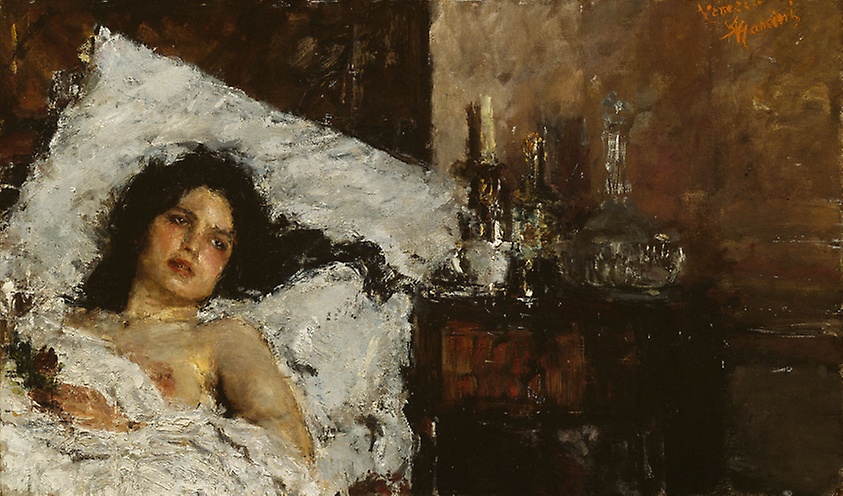
Featured Art: Resting by Antonio Mancini

Many years ago I watched a documentary about people with mental illness. One of the patients presented was a young woman who had been institutionalized. Despite being an adult physically, she acted like a little girl and lived in a room filled with dolls. She wanted more than anything to be spanked because she equated this with love. No one would comply with her request which made her desperate and upset.

I have remembered this.


In another documentary I learned of a girl who had been kept in severe isolation and abused for most of her young life. Her deprivation left her sensitive to light and without language. Partial rehabilitation was achieved but it was noted that the girl felt it absolutely necessary to keep multiple glasses of liquids in her room.

When I think about the first young woman, I see her story line in a candy-colored palette, baby pinks, blues and soft yellows. The curtains billow, the bedclothes pool, there are fat, dancing animals with little eyes.

The second girl’s images are black, white and gray. The girl moves through her story like an animated charcoal drawing; sketchy, vibrating lines, electric black hair, skittering movements. I think of black crows flapping into the sky, the glint in their eyes, the glint in the water in all the glasses. She carries glasses of water in front of her as if she is a priestess.

Read More

My Keats Year

By James Davis May

Featured Art: Tea Party with Open Pottery by Seymour Rosofsky

Shouldn’t it be I’m disappointed by (or because of) and not in you?

We were watching Stellar’s jays—I didn’t know their names then,
I addressed the first one as “Monsieur Mohawk”—watch us,
or watch our meal rather. I don’t know if birds feel disappointment,
but as they flitted around the perimeter of the patio
with an odd combination of aggression and timidity,
their feet on the sun-bleached railing
making sounds like a hand searching a filled drawer
for something that’s not in the drawer,
the diminishment of cereal must have been processed
as the bird-equivalent of disappointment.

When I picked up Chelsea’s bowl and took it inside to the sink,
I thought of California (it was my first time in the state),
and then of Robinson Jeffers,
and then of the time Jeffers realized
he was older than Keats when Keats died, and then I realized
I was older than Jeffers when he realized this.

He was taking firewood back to his house and had to walk over a very narrow
bridge, one that his dog seemed reluctant to cross again. So he left the bundle,
carried the dog over, and then went back for the wood when he was hit by his
age, and then the “insignificance” of what he had written.

And yet we say, “I’m disappointed with myself,”
which sounds redundant.

The woman eating dinner with us the night before told us there was no age she
wanted to go back to. Someone pointed out that she was still young.


Read More

Mystery Object

By Sarah Galvin

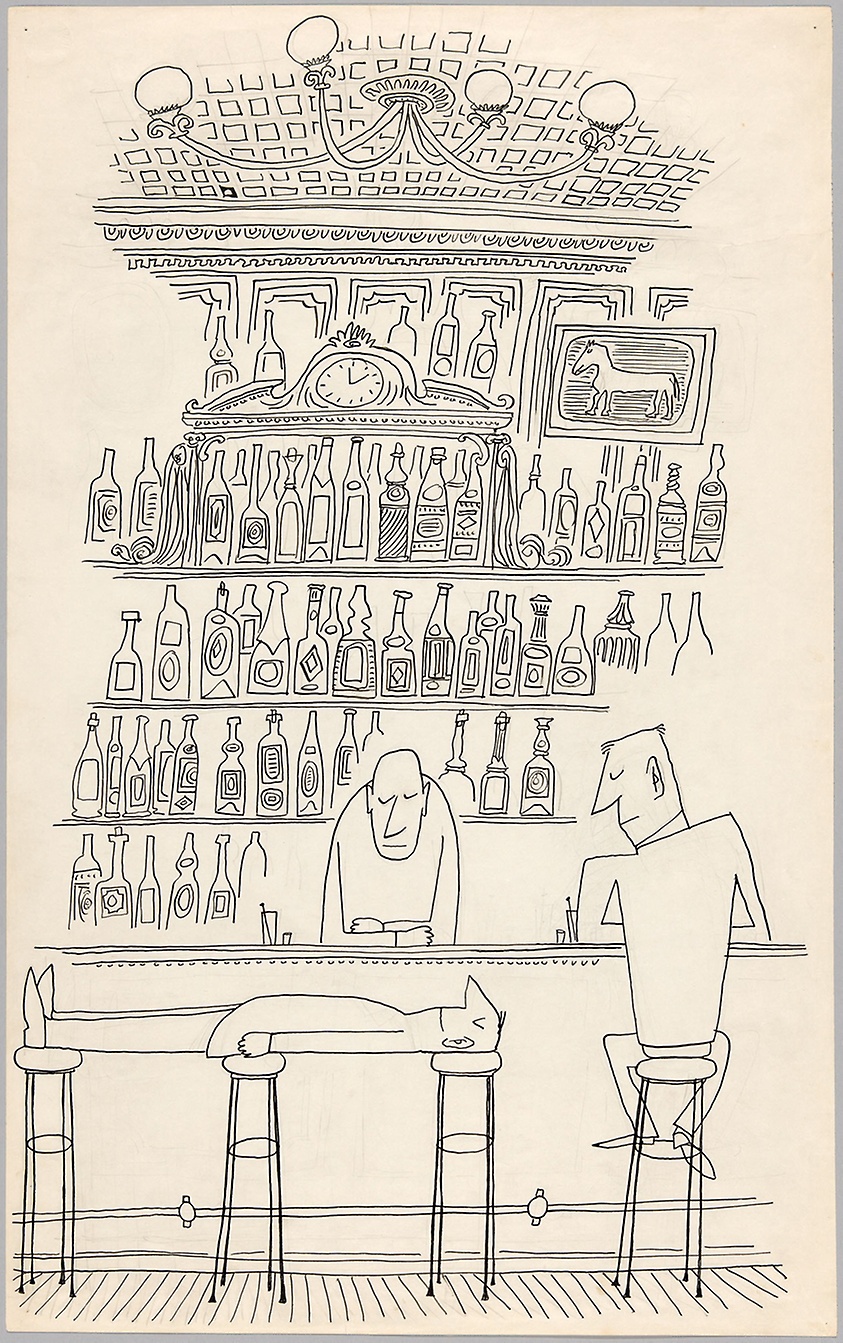
Featured Art: The Art of Living by Saul Steinberg

You come out of the room where everyone is doing karaoke
and ask why I’m ignoring you.
I want to say something that suggests I’ve endured
some exotic, indescribable torture

but a completely mundane thing has happened,
which is you have stopped loving me.
So, even though your body is here, you are gone
and bodies are becoming less like a procession of individuals
than a texture like wet cement, but also like words that say,
“Why would you subscribe to such a mystery object”

and I think, it’s funny the cement forms words, especially these words
but something isn’t right about the word “subscribe” in this context
and I can’t tell if the sentence is a question or a statement—
Why is there no punctuation?
I want to run, but I’m already travelling in every direction at once.


Read More

The Darkest Part of the Cloud

By Jessica Langan-Pack

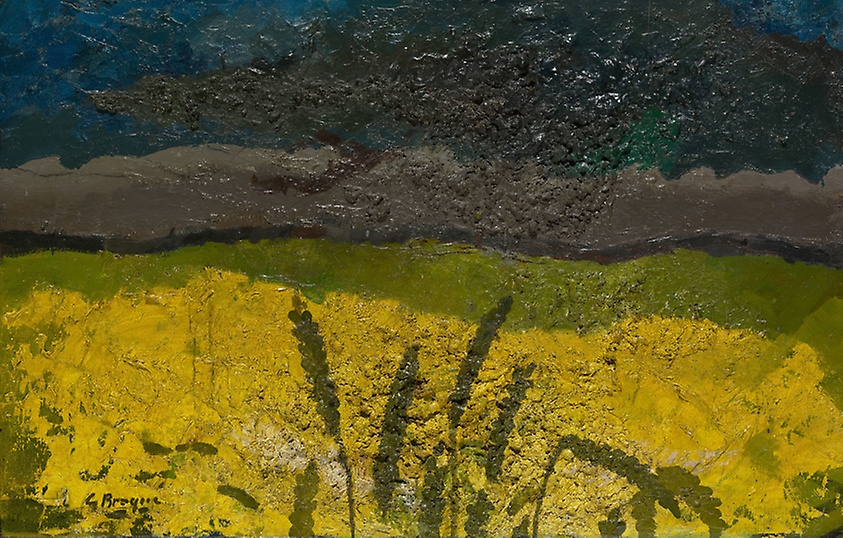
Featured Art: Wheatfield by Georges Braque

My daughter is nine, and she has recently grown taller and lost most of her softness. Now she’s a thin and delicate thing with very straight, very smooth hair that she wears in bangs across her forehead. She is afraid of bees. She is afraid of forest fires, and of strangers, and of a book she read called The Face on the Milk Carton, which is about a little girl who sees her own face on a missing children poster. She is articulate and serious and very imaginative. When she finds out, at the beginning of her summer vacation, that her father is losing his memory, not slowly, or gracefully, but at a possibly alarming rate, what she decides to do is remember everything.

“So that you can tell him?” I ask her. For a few weeks I have been thinking of my head as an empty room of some kind, and sometimes my voice reverberates off its walls. We are sitting in the kitchen eating cereal.

She shrugs. “Just so I don’t forget.” She is at a stage where she has trouble differentiating between other people, real or fictitious, and herself. I wonder if she is afraid of losing her own memory.

Read More

The Professional

By Michael Bazzett

She arrived in a dark suit and a mask-like smile, explaining
her services in a manner so polished it almost put us off.
This is my specialty, she soothed. Both mind and house
will be empty as a mountain wind once I’m done. I sensed
she’d said those words before. We sat at the kitchen table,
you and I, looking at one another, hoping the other felt more
certain, more assured. Once we signed, it would take years
before we acknowledged our mistake. She’d left the whole day
open, and could begin immediately. Was there perhaps a guest
room where she could change? Her assistant arrived with
a black duffel, fresh white towels, and a stainless-steel basin.

I didn’t know the basin would be so big, I murmured. We looked
at one another uncomfortably. It is not always a clean process,
she reassured. You do understand, once I’m sequestered, it is
very important that I not be disturbed. We nodded. She closed
the door with an audible click. For the first few hours, it seemed
okay. Her assistant sat out in the van, with the windows down,
reading. We sat in the living room and tried to do the same,
ignoring the sounds coming from the guest room, sighs that
sharpened into cries. When a few faces started disappearing
in the photographs above the piano, you leapt to your feet.
This isn’t right, you said. These things shouldn’t be removed.

But what about the pain? I asked. Don’t you want it gone?
No, you said, pointing to the image of a child, suddenly frantic.
The eyes had faded to nothing. From forehead to cheekbone
was just smooth skin. I ran to the window. The van was gone,
as was the tire-swing that had been there an hour earlier. I looked
and saw the elm losing its limbs, one by one. Maybe we can still
get some of our money back, I said. And then you said: I want her
gone. The assistant had sealed the door shut with tape. It came
off with a spattering sound, and the shrieks from inside paused.
Then the voice came, a strangled croak as I opened the door
and saw her, smaller than I remembered, perched on the dresser,
her suit pooled on the floor beneath her. Her face had become
a sort of beak, hinged open and hissing. But it was the children
that were upsetting, sitting in a circle at her feet, quietly singing.


Read More

Fastball Shy

By Mike Schneider

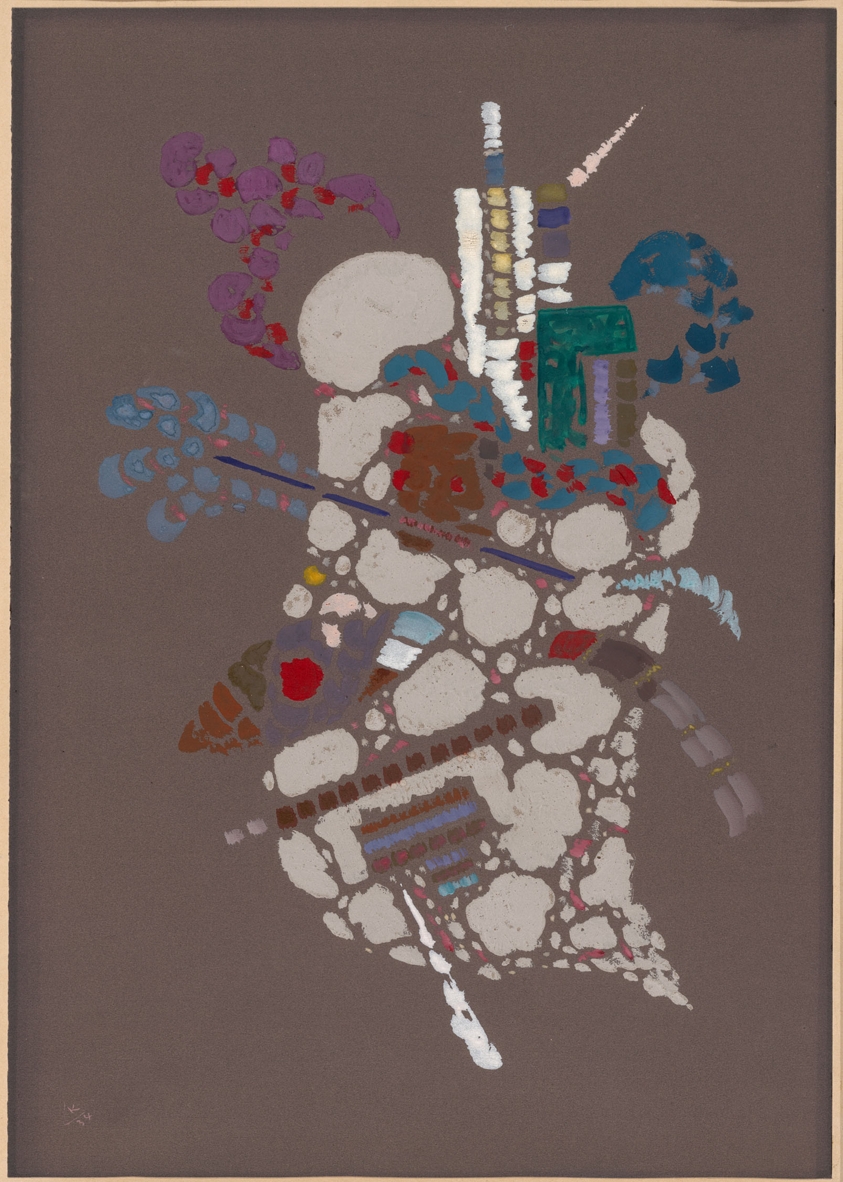
Featured Art: Gray Spots by Vasily Kandinsky

Hot roller to the shortstop,
me—lean machine
of summer, scuffling
in ballfield yellow dirt.
Off like a hound I go
with my three-finger
Warren Spahn, neatsfoot-
oiled cowhide glove
to gobble that scorched
grounder & fire it
across the diamond
to Tub McMullin’s
fat-handed mitt at First.
Little League? Shit.
This is ultimate Big Time.
        Who knew that stitched
leather ball could baffle
hand & eye? Wild
chance, wicked hop,
they said, nasty chop
direct to the cartilaged
bulge of my Adam’s Apple
dropped me flat, washed
me in starlight. Nerve
& muscle inscribed
with solid-state physics,
I learned to flinch & never
could unlearn that secret.
One rainy afternoon
on Heckman’s front porch
we unraveled it, yards
& yards of yarn down
to the inscrutable rubber
pill, unforgiving hard
center of the world.


Read More

Still Listening

By Robert Cording

Featured Art: Confusion of Christmas by Julia Thecla

I. Hospice Jumble

The Jumble in the paper too hard for him to read,
my mother suggested we make up our own: Dear,

she said to her husband, your first word is life.
Reduced to words we jumbled, he joked file

it. My brother offered another, mean,
thinking perhaps of his diabetes, a name

like cancer to our family. Then, lamp,
lit at his bedside, and the one palm

visible outside his one windowed room.
My father got them quickly, the last, moor,

said with all the sadness of being far from shore . . .
A grandchild solved that one—horse,

she blurted, noticing that he had left
us for a while. By his bed, my mother felt

his hands and face and eyes. Bob, please,
she said, but he was already asleep,

snoring, not dead. My mother sighed, O God.
My brother, in the spirit still, said dog. Read More

My Dead Father Remembers My Birthday

By Lesley Wheeler

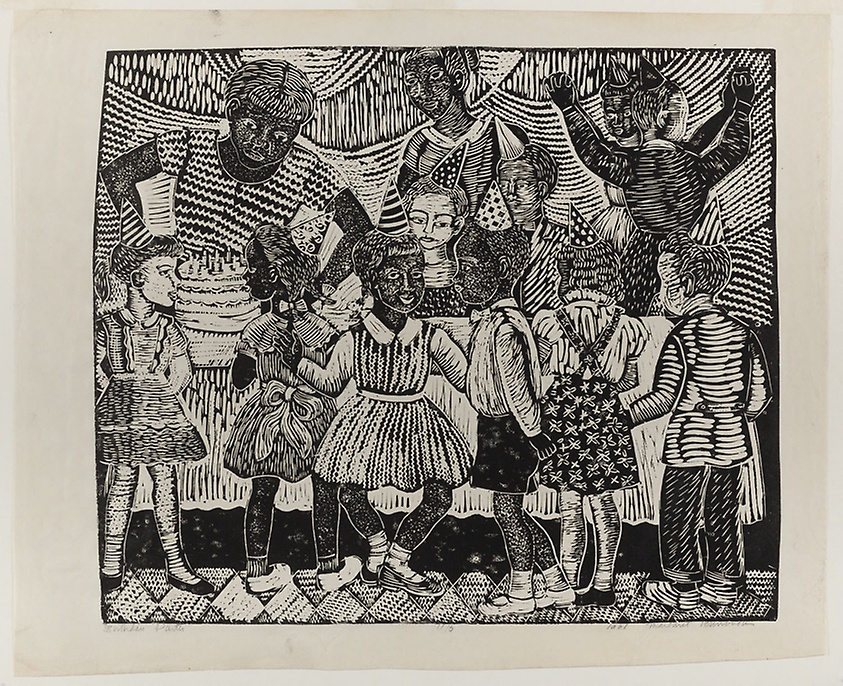
Featured Art: Birthday Party by Margaret Burroughs

Dream-phone rang and I thought: that’s exactly
his voice. I haven’t forgotten. Then: but I could
forget, because he’s dead. Hi, sorry it’s been so long,
but I was sick and the doctors messed everything up.

He made that shrug-noise, dismissive but pained,
meaning he’s lying or leaving something out.
It’s snowing here, and then a click, click, over the line,
and a neutral woman’s voice, slightly officious:
This recording was intercepted. If you wish to replay
this message, dial this number now,
and she recited
a blizzard of digits while I flailed
for a pen then found myself tangled in blankets.
The window a bruise beginning to fade.

Here mist wreathes the trunks. In a few months
snow will crisp the grass, insulate and numb the oaks
with feathery layers that would soak and freeze
a human being. When and where is he? Snug,
maybe, watching weather through double panes.
Or wanting to be. I heard a bead of doubt
suspended in his voice, a cool guess he’d missed
something, before my operator intervened,
reason declaring: This is memory. The line is cut.


Read More

A Toast in Cancun

By Charles Haverty

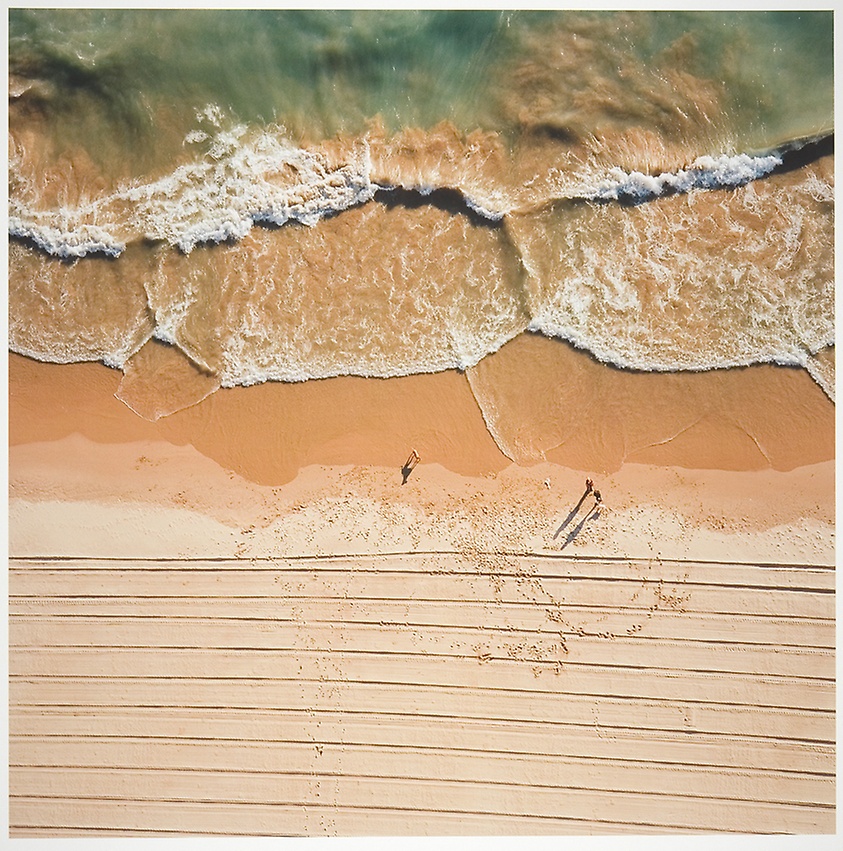
Featured Art: Oak Street Beach, Chicago by Terry Evans

Everyone in his new life warned Ferris not to go to Cancun. They said Cancun was to drinking what Las Vegas was to gambling. “They even drink in the swimming pools,” his sponsor Leonard told him. “No shit. They belly up to the bar right there in the water.” He’d been sober for four months, a week, and three days, but Caitlin was his only sister and he her only brother and this was her wedding. So there he stood, sweating on the beach in the wrong suit, the darkest figure in the sand-colored crowd. With the ceremony behind him, only the reception, the night, and a taxi ride to the airport separated Ferris from the plane that would carry him back to Indiana and his quiet, normal life.

It was five o’clock, with two hours to kill before the beachside reception, and as guests blew soap bubbles in lieu of throwing rice, he felt an arm encircle his waist, his father’s arm, steering him back through the bubbles toward the empty rows of white chairs. His father was a well-kept man of fifty-nine, youthful and perpetually tan, and though he’d been all smiles walking Caitlin down the makeshift aisle, he looked ashen now, diminished. “We need to talk,” he said. “Not here. Alone. Mano a mano.” They agreed to meet poolside once his father was through posing for photos with the wedding party. He took hold of Ferris’s sleeve. “Don’t fail me, Son,” he said, and that Son frightened Ferris more than anything. As he followed the concrete path that ran alongside the beach, the urge to drink, to counteract his renewed sense of dread, was near irresistible. He had to call Leonard.

Read More

Patina

By Mark Cox

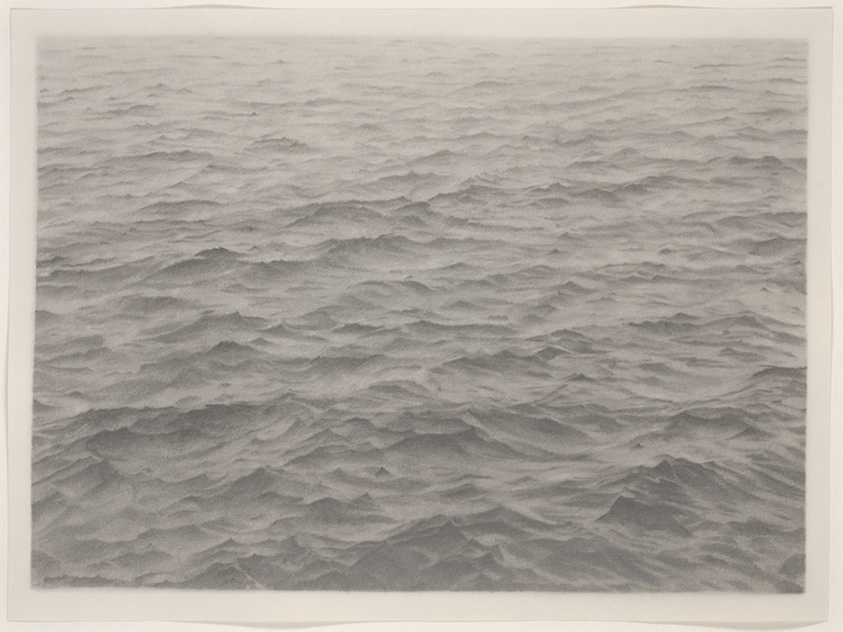
Featured Art: Untitled by Vija Clemins

In your prime, shape presents itself first,
the angle and curve of one thing,
the size of something else,
or the way her hair flows volcanically

along each subtle slope and swell.
It is crazed, intense, super-heated,
even the soles of your boots feel sticky,

because she’s entered you, you know this,
she charts the very map of your blood,
and that eyelid twitch you have going,
they’ll claim is stress and dehydration,

but it’s her, pal, all her, she floods places
you’ve never named in yourself,
she proffers the pulse, the duende, the élan,
that jackhammer of lust
outside the Fiesta Ware outlet. . . .

But one day, it just happens,
a man’s eyes cloud and change,
you don’t feel with the same ardor
the way she moves, her confident posture,

no, suddenly it is color you notice,
the grays, the yellows, the bruised surfaces
tinged with a silver-green, almost a tarnish,
as if her skin were a metal,

and not such a precious one, either,
more like pewter or the common alloys
of soot-smudged medieval artisans,
something to be re-shaped, hammered thin,
become useful and used.

Read More
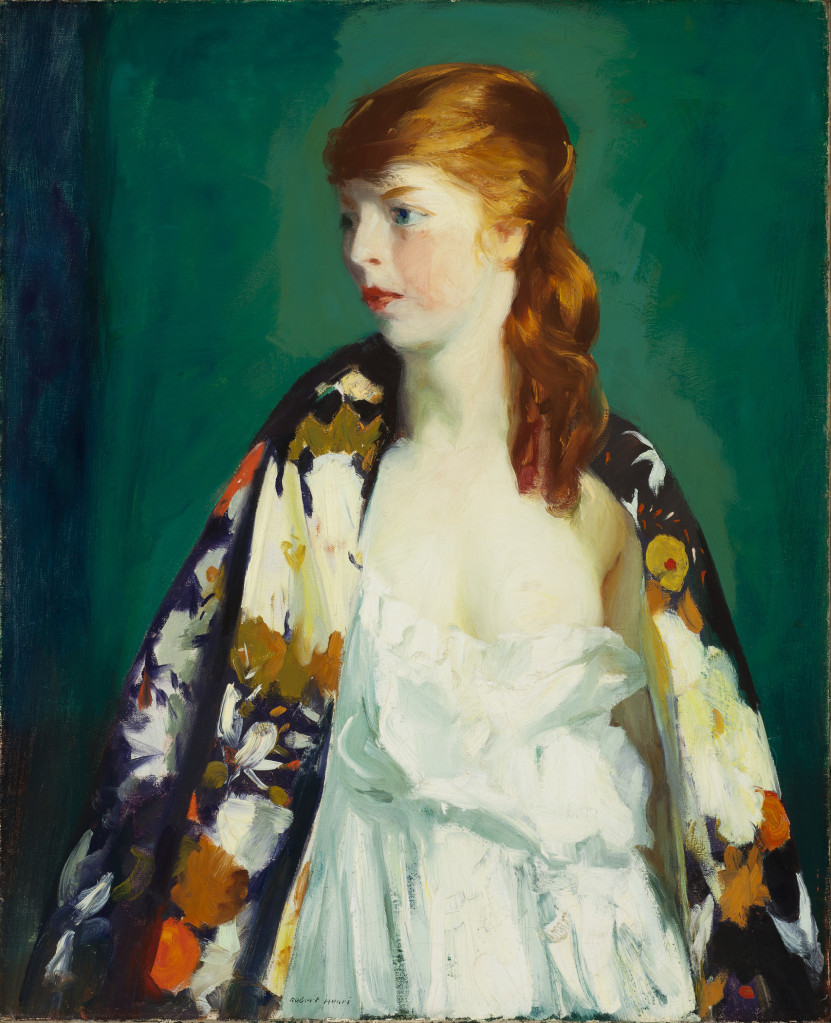
Finality

By Mark Cox

Featured Art: Jonny Dunn’s Sandwich Shop, Paducah, Kentucky by Walker Evans

She did not fit her body anymore—
she was lost inside it—
not like some punished child
wincing in the corner of a vast room—
not, either, like a ring fitted snug in its box—
more like the single yellow pill
in her white medicine cup—
that’s how she was, waiting—
carving precise cubes
from a thin lamb chop, chewing
with such listless fatigue,
I feared she might never finish,
and so pretended that by looking away
I was preserving her dignity.

Chewing and swallowing—
that’s how I remember her—
not as a face or even sequence of faces,
but as a complex montage,
a simultaneous superimposition
of every face she’d worn since birth. Read More
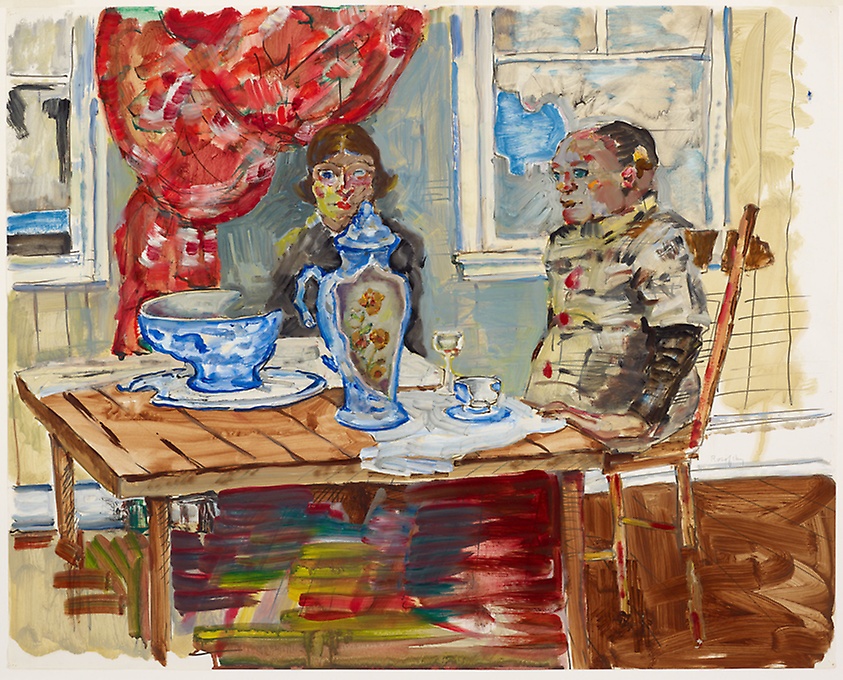
A Distant Relative

By Ryan Meany

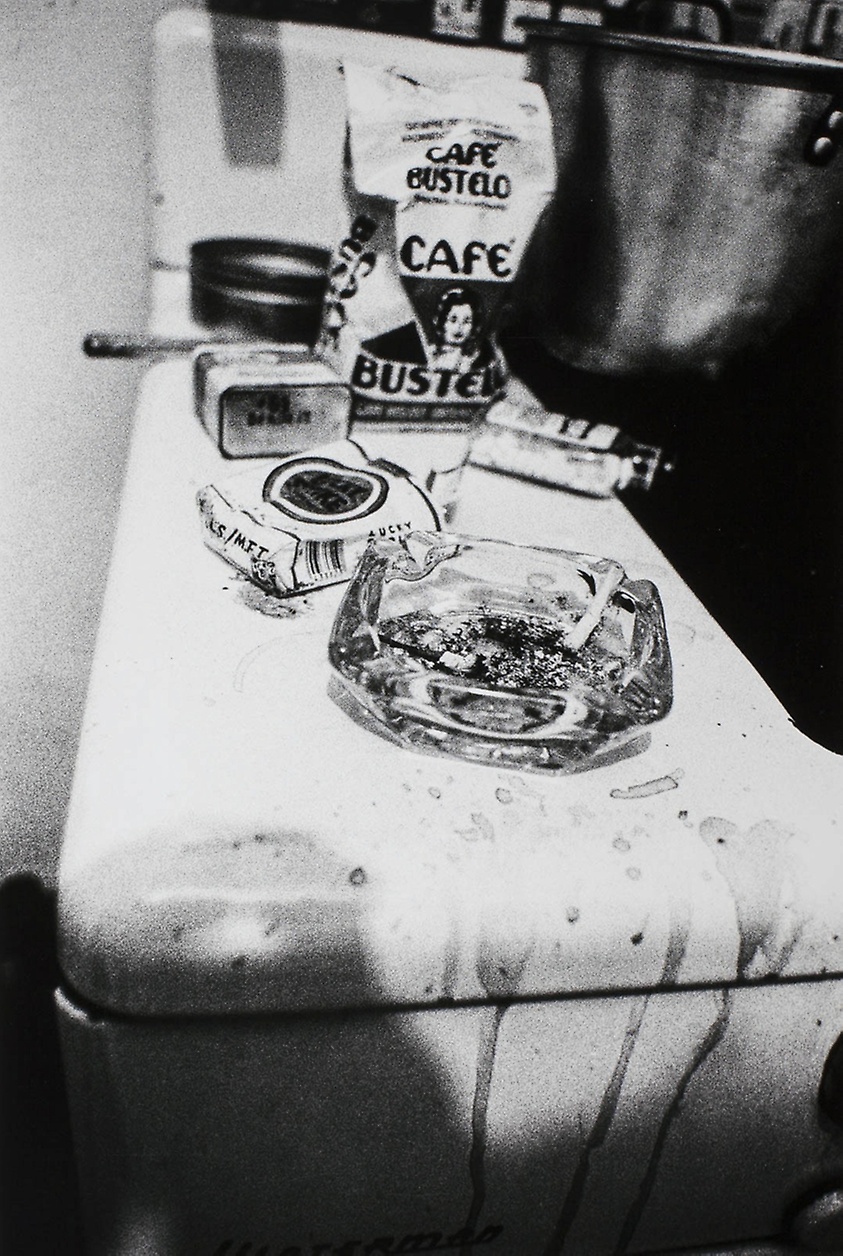
Featured Art: Coffee and Cigarettes by Ken Schles

Mom called Friday to say Linda died.
At least two people I don’t like at work
I know better than Aunt Linda. I carried her
casket yesterday, because my grandmother asked,
along with younger cousins, strangers I recognize from childhood,
tough men I see only as the children they were
in bony faces, stubble. The babies they were
they’ve locked up deep: Dusty on military disability
with three kids, and Billy, who used to be Little Billy,
with a court date for driving 137. My grandmother
looked like a Treasure Troll in tired skin, white broken
hair refusing to go down. When I hugged her the life in her was small
as a niece, her lineage drained out all around her. She reminded me
I was her first grandbaby in that smoky Southern Baptist
vibrato. A few days before, on Sunday, when I’d come to her house,
she talked like she’d long ago forgiven me for mostly staying away
for twenty years. I was glad she didn’t know the trouble I’ve caused, especially
because I doubt she’d love me less. My senior picture hung in her living room
as if I were as important as all these grandkids and great grandkids
who wondered who I was. Soon she’ll be dead and I won’t be so important.
So many people took turns holding her
the funeral seemed to be hers. I had no right to want to save her
from thinking, when I was helping to carry her daughter’s body,
that I’d soon be carrying her body, as I’d carried my grandfather’s body
just a couple years before, which was actually six years before.
We were not sad that, to time, we were like grass
under the feet of pallbearers. I was sad because
the time I had in common with this side of the family
we’d mostly forgotten, another thing my grandmother would die knowing.
The last time I saw Aunt Linda was outside the hospital
in the courtyard for smoking. I was there visiting someone
who’d mixed Vicodin and vodka to find out who cared. I can’t remember
why Aunt Linda was there, her heart or her brain. Her brain
would cause the most trouble later, a popped vessel, then
another, the top of her skull removed, screams
from the headaches and so many drugs, according to my grandmother
as we smoked outside Sunday morning. She’s at peace,
I said. Already we were down to our last words.

Read More