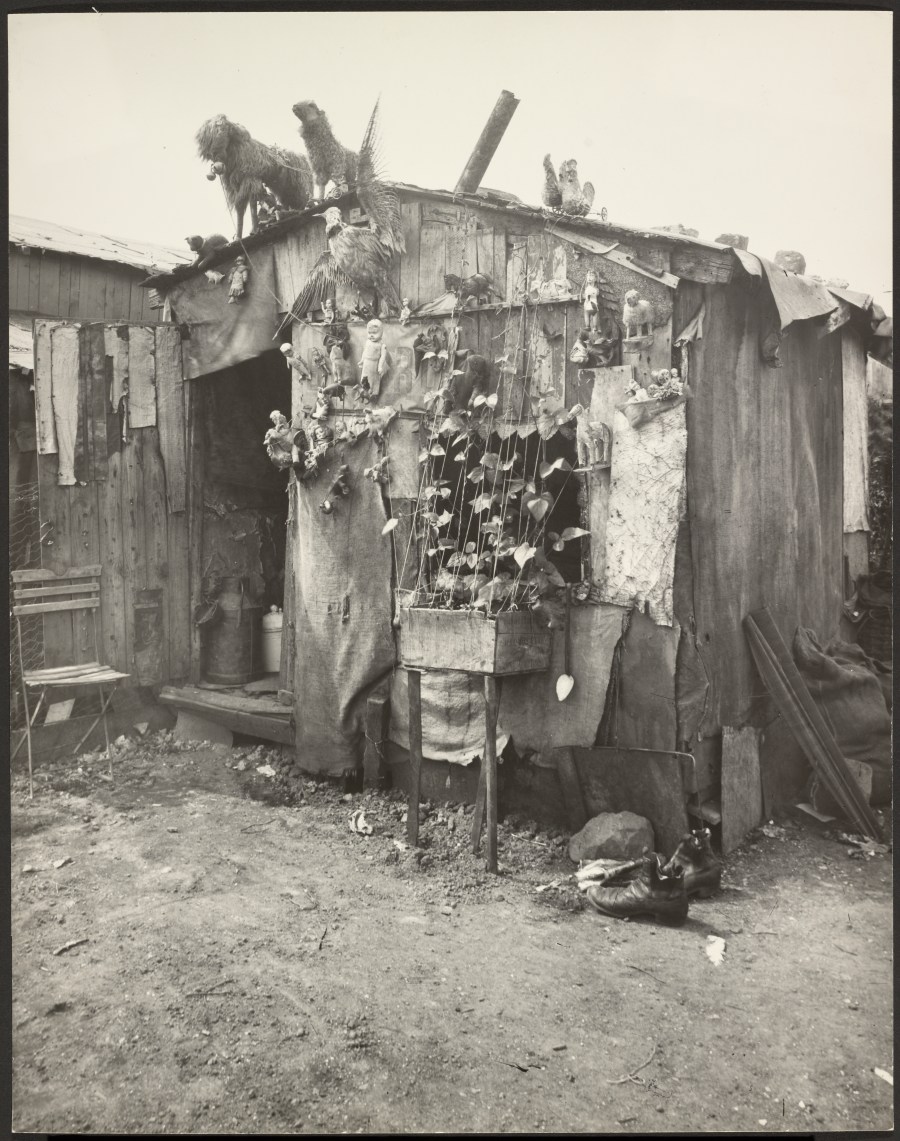
Anti-Confessional

By Catherine Stearns

Featured Art: Girl in a Blue Dress, c. 1891 by Philip Wilson Steer

In one photo, she’s wearing a sapphire blue dress,
a black cloche posed rakishly over one eye,
a corsage of pink rosebuds around her wrist.
On the back it says JB & RPS, the man
in shadow next to her. This was before the war,
before they reinstated the marriage bar
and she lost her job when she married my father.

One hot summer night, maybe five years after he died—
we’d stripped down to our underwear to play Scrabble—
I asked her about grad school and her fifth-floor walk-up
with Mary Maud, about eating oysters at the Grand Central
Oyster House every Sunday, and the gold lighter engraved
in the Tiffany font at the back of her jewelry box, and I asked her
if she’d ever slept with anyone besides my dad.

She took an extra long sip of her G&T and told me to
mind my own business. Then reached over
to put her X on a Triple Word.


Read More

Exile Queen

By Bethany Schultz Hurst

the trees
                  flaunting their flowers                      after a while
their blooms will die and then
swell into a fruit             and I submit to you                 dear viewer
               this process is not monstrous

we’ve spent too much time

at night watching these shows where the queens
               keep making bad choices
like torching the city with their pet dragons
               or with sickly green fire
                              lit in tunnels underneath                  because they are mothers

they love their children too much or is it

                                 not enough         the flowers this spring
are ridiculous              on the way into the theater alone in broad daylight
               for some comic book sequel                I can’t stop
shoving my face           into the showy pink organs
               of the parking lot trees

at night I’ve been balancing like a knife on my side
of the couch            the bed because I’m
too tired already to have anyone really
                                               touch me

Read More

Juvenile Federation of Genetically Modified Youth

by Joseph Rakowski
Featured Art: National Defense by William Tasker


My daughter was just 10 years old when she arrested me. She broke down the door to the bathroom and caught me in the tub using her neuro-banger headset. She placed the tip of her Dodo Taser just above the water, and declared I was in violation of rule one and two of the Constitution for Lost Adults, enacted six months ago by the Juvenile Federation of Genetically Modified Youth. This meant, she had nailed me for illegally using her headset to browse Appearance-Exchange, a restricted social media site that was no longer accessible to anyone over the age of 18—adultsRead More

reCAPTCHA

by Jiordan Castle
Featured Art: Dry Brook by Jervis McEntee


Read by the author.

 A week to go &

still no word

on where they’re

sending him

this time. If you

search my father’s

first name, last

name, sex, &

race in a

federal inmate

database, you’ll see Read More

“Uber” and “Alexa”

by Ruth Bardon
Featured Art: Street Cart by Egon Schiele


Uber

The silent dot on the screen

moves and stops and starts again,

an ant sniffing out my scent,


determined to find me,

ambassador of an omniscient eye

that never looks away,

Read More

The Uber Diaries

by Kyle Minor
Essay originally published in New Ohio Review Issue 24
Featured Art: Evacuation by Corran Brownlee


Indianapolis, Indiana. Somewhere near Keystone Avenue and 62nd Street my iPhone pings. A college student from Hyderabad, India. He is pleased when I tell him he’s my first customer. He tips me two dollars.

*

I pick up my second customer in front of a bar in Broad Ripple. He gets in the front seat. His hair is grown to thigh length, and he is on some kind of party drug that makes him want to touch things.

“Please stop rubbing my arm,” I say. He apologizes.

Near Rocky Ripple, he takes off his shoes and socks and rubs his bare feet on the windshield.

His feet leave little rabbit marks. He is a large man with very tiny feet. When I drop him off at the donut shop, he doesn’t leave a tip. Read More

Landscape with iPhone

by Emily Mohn-Slate
Originally published in New Ohio Review Issue 25
Featured Art: Walk Behind the Beach Huts by Barbara Peirson


I don’t want to tweet this thought that comes to me

as I’m changing my daughter’s diaper—don’t want to pull my phone

out of my pocket—my phone is growing a tree right now

with an app called “Forest” that rewards me for not looking

at my phone—and what I want is for a thought to enter,

Read More

Poems About Facebook

Featured Art: The Toilers of the Sea by Albert Pinkham Ryder


Facebook Sonnet

by Tanya Grae
Originally published in New Ohio Review Issue 21

Someone thinks I’m beautiful again

& likes posts of my day, comments.

I stifle smiles & feel uncontainable—

bungeed off ether & the interplay. Read More

Recovery

by Max Bell
Story originally published in New Ohio Review Issue 25
Featured Art: Recharge by Corran Brownlee


Two Weeks 

Lisa left when the droid arrived. There was no period of transition, no time for Richard to adjust. After she signed for it, she carried it into the living room, set it down in front of him on the worn shag, and began saying her goodbye. Like the stitches in his hip, she was disappearing, dissolving in front of him. He did not, however, rejoice in the knowledge of her impending absence. Read More

2019 Summer Exclusive

Featuring stories by Barbara Ganley, Kate Wisel, Laura Jok, and Alan Sincic: an essay by Kay Gram; poems by Francesca Bell, Dan Clark, Janice N. Harrington, Matt Prater, James McKee, Kathryn Jordan, Adam Tavel, Jacqueline Balderrama, Katie Pynotek, Maria Nazos, and Kerry James Evans. With art by Madara Mason and others.

Flight Lessons

By Barbara Ganley

Featured Art: “Holy Holy Holy” by Yan Sun

Because it’s Thursday, nearing five o’clock, Lucie is well into a doozie of a headache. Every week at this time little Jenny Baker hands her one as they sit side by side in the dining room and Jenny busily tortures the piano. She’s a narrow slip of a thing with a distracting, gum-baring smile made stranger today by a drift of tiny metallic stars sweeping across her cheeks like cosmic freckles.

Her orange high tops smack the stool’s taloned feet bapbap as she bludgeons the keys in an apparent heavy-metal version of “Long Long Ago.”

The piano, old and patient, takes it. Lucie, who is neither of those things, says, “A bit slower and softer now. See if you can find the melancholy.”

She uses her hands to play a phantom keyboard floating in the air. She must look ridiculous. “Sing the words if you like. I find that helps.” She is ridiculous.

Jenny, clearly having the same thought, grins at the keys, speeds up and hammers away. She doesn’t sing. She never sings.

What ten-year-old doesn’t sing?

But of course Lucie is confusing children with birds, Jenny with Bacchus, her grandfather’s sidekick and belter of sea shanty and Broadway schmaltz. Since moving back home, she has learned far more about thirty-year-old African grey parrots than about ten-year-old humans. Prefers them, too, if truth be told, even if they do bite. Lucie understands that people would find that small of her. But this ten-year-old human next to her couldn’t care less. A look of near madness flashes across the girl’s starry face. Her thin hair switches about her neck like an agitated tail. She’s seeing herself onstage, adoring fans at her feet. Next she’ll be peeling the stars from her face and tossing them to the crowd.

Read More

Just Like All the Girls

By Francesca Bell

Featured Art: “The Sea of Memory and Forgetfulness” by Madara Mason

I always knew

a man waited for me somewhere
with hands that fit the particular curves
of my treacherous body.

Whether I watched for him or not.
Whether I believed.

Sometimes, in dreams, he entered me from above,
like a coffin lowered slowly into a grave.

Sometimes he held me hard from behind.

The hills scorched golden each summer.
My hair was streaked the color of dried-dead grass.

People said I was lucky to have it.

Every year, moths fluttered
against the trees’ dark trunks as I passed,
like scraps of parchment.

An infestation that maybe would, maybe would not, kill the oaks.

I dared myself to wonder
around which bend
would he find me.

Wherever I looked were signs.

The steep ridge, a gray fox hunting
at the slough’s edge, V of geese going over.

World of enchantment,
and I wandered precarious,

my steps disturbing the air,
their small sound like beads
counting out prayers.

Read More

Elegy with Two Portraits

By Dan Clark

Featured Art: “Basa de Maya” by Madara Mason

The priest swings a thurible. Incense,

swirling and nebulous, encircles the cremation urn.

A few feet away, a husband weeps.

He’s not thinking how Oregon came to fill the ocean

of itself, how island arcs docked like icebergs

against the Idaho shore, where Mesohippus,

diminutive proto-horse, grazed beneath the juniper.

He’s not considering how Oregon drifted through

several versions of itself—savanna, jungle, desert—

then settled for a time as a placid, inland lake.

Instead, he’s remembering forty years ago,

a dance floor, a promise emerging,

all red-haired and smile, in the same way Da Vinci

painted Ginevra, young woman in three-quarter view,

whose eyes engaged like none before,

the part of her braided hair revealing noble forehead,

the background a green halo of juniper.

And he’s not considering how the continent

has yet to finish arranging itself—Pacific plate

subducting from the west, Sierras

pressing north, rotating Oregon like a cogged wheel.

Yet he finds himself in the second pew, rearranging:

how that red-haired promise faded into

the drinking, the stolen meds, the swerving

between fallen arms of railroad crossings,

this version of her unrecognizable

like Willem de Kooning’s Woman I,

full-frontal view: terrible, Paleolithic,

brandishing eyes of knives, breasts challenging,

margin of her body dissolving into background.

The priest swings incense, swirling and nebulous.

Twenty miles above Earth, Hubble steadies its gaze

the way he studies the pink of his thumbnail.

He watches himself in the pew,

feels himself disappearing—

he cannot hold the red-shifts steady, cannot keep

the margins from dissolving to ground.


Read More

SKIN

By Janice N. Harrington

Featured Art: “Squall” by Madara Mason

My skin, my confessor, my cubicle,

scrivener, touch screen, touch-collector.

Frame and shawl and portmanteau. Wait,

wait, don’t go. The sun’s too high,

too hot. You’ll burn for sure.

On my face, this scattered Braille.

Read what my cheek says; all those

cuts on my hands, read those too.

And that vowel in the small of my back,

say it, repeat after me.

A door for out, a door for in,

I’m in my skin, within, within. Without?

You mean without your skin?

The skin against my thigh says

warm, dry, soft, weight of, knows

silken and kerseymere, says here.

Says, yes. Says, no.

It whispers with its electric tongue, release

and absence. But absence is always worse.

It’s the one that leaves the scar.

Skin-clock, tick-tock, tick-tock.

A scar, a scurry, I wouldn’t worry.

We’re only skin scenes, skin-scapes,

little dioramas with clever apes,

a skin, akin, pretense, pretend.

Let me ask again, your skin or mine?


Read More

Wind & Sand & Stars

By Matt Prater

Featured Art: “Bull and Bird” by Madara Mason

There was a roaming troubadour in the years of maille & sword

who lunched on wild strawberries,

communing with the Lord.

But his creed was not dogmatic, & he didn’t bow the knee;

so found himself impaled by a roaming soldier, eventually,

when he would not sing the praises

of the ravenous Crusades. He held G-d

was the father of Muhammad & the Moors,

so went to Heaven softly, whispering amor.


There was a normal generation, for a while, between the wars–

chicken paprika & the Bauhaus & the post-impressionists.

None of life is automatic. France was big and France was grand

& France could claim Picasso. But France still didn’t stand.

But France survived, I can hear France say.

(J’ai vu le cinema verité, mais j’ai aussi vu que J’accuse!)

And that may be. But from what I know,

I am searching for Charles de Gaulles.

You can see it as I can see it. Something old was about to fall.


There is an awkward silence every time we talk.

The pattern seems half-broken. The thread is gone.

We tiptoe around each other. We are raw. We might come to blows

if we said what the other was thinking, or half

of what we know. There’s a cat on my warm porch,

sleeping so soundly I thought it had died. de Saint-Exupery,

perhaps, wrote his book Le Petit Prince, in the calm before

the end of things, during a summer slow as this.


Read More

Stage Four

By Kate Wisel

Featured Art: “Neurons, No. 3” by Madara Mason

What I did was held my hand out like a gun and sprayed. I was supposed to be wiping down tables. But there was something about walking through the pink mist, I can’t tell you the feeling. That clinical smell that clung to my neck like antiseptic perfume. At that time and that time only, I liked doing the opposite of what I was told.

I was breathing in the rinsed air when this guy wandered in and crouched down at the end of the bar. He was in a white blouse with one of those dog-chain gang-rape necklaces gleaming down his neck. I watched him, a bold move that made him turn to me as he tapped his combat boot on the leg of the stool.

“What are you doing?” he said. I set the cleaner down.

“What are you wearing?” I came back with. I contemplated his soft-spoken British accent, his inflection so authentic I thought I could hear it in a voiceover. He just sat there looking like someone from the past, like Steven Tyler, the pouty-lipped version from my mom’s old and broken records. I started wiping beer puddles with a stiff rag across the laminate, afraid I might actually get in trouble this time.

“Tell me, who’s in charge here?” the guy said.

I glanced at my boss, the manager of Bukowski Tavern, this nice kid named Larry who sat on a bar stool by the door. Not to check ID’s but strictly just to stare out the window like a lapdog. His hair was going prematurely wispy and he kept one leg on the floor with the visible outline of his penis through his gray sweatpants. I grimaced.

Read More

Morning Commute with Revenant

By James McKee

Featured Art by Courtney Bennett

You know how it is: going in to work,

Who looks at anything? You’re late, it’s cold,

hot, raining, no buses again, whatever.

You’re long past fighting this fast-forward blur,

pure A-to-B time, better numbed than bored.

But then the street-views you sluice through slow and lock:

some old warehouse abutting a blacktop lot.

high up this soot-caked chainlink fence

that nets, for no one else, blank swaths of sky,

there juts forth a sawn-off sumac branch,

em dash black and cocked at ten-to-three.

See it first, since you must, as a quenched torch,

a club hanging half-swung,

or someone’s bony forearm thrust through the mesh,

lopped at wrist and elbow, and left as a warning.

Fine. But you’re not one to confuse

fancied-up musings with the truth:

one hapless stick is all the chainsaw left

the day someone decided

this tree—a weed that wedged upwards from

the cracks its seed happened among,

that rose against the traffic-ravaged air,

that pierced that fence and knuckled this pavement up—

had to come down.

Rough cobblestones plug the square yard

where its raw stump once weathered anvil-hard;

no doubt the sheared-off roots still grip

deep undertiers of pipe and stone.

A passing siren’s wave-crest flushes you

back in the churning surf of city noise,

but by now it’s too late:

you’ve gone and glimpsed that voided silhouette,

you’ve heard, in its tousling leaves’ soundless hiss,

another of those random sidewalk elegies

work alone can dismiss

And not because it isn’t true,

because it is.


Read More

Holding On Is [ ]

By Kay Gram

Featured Art: “Cradle of Kleptocracy” by Madara Mason

[arms & legs]


Be my arms and legs. You’re strong. You can do it! Mom would say. Mom’s body was small, fragile, needed time to move, moved differently than other bodies. I always thought she was beautiful. She was—blonde, blue eyed, narrow nose, all symmetrical. Mom had a determined presence that demanded respect and she had mastered the performance of a Eurocentric female beauty. Outfits were planned, makeup was worn, perfume was sprayed. We were late to everything. Sometimes she fell down.

* * *

Mom was diagnosed with Limb Girdle Muscular Dystrophy, a rare and incurable neuromuscular disease, when she was thirty and pregnant with me. In our life together, she wasn’t able to lift heavy objects, things like pots or pans or dog food bags, her own body. She couldn’t run or dance or move very fast. She used a brown wooden cane, shiny wood, golden handle. When walking was too much, a wheelchair. I was her arms and legs. Elle was her arms and legs. We were good at being Mom’s limbs. Sometimes she held onto us when she walked and we took turns pushing her wheelchair. When she fell, we helped her back up. We loved Mom, her body, went to her for comfort, to cry, to laugh, for attention. Who could listen better? Care more about our days, our lives, our futures. Of course I miss her. She haunts me. Or her pain does.

* * *

  Read More

Northern Flicker

By Kathryn Jordan

Featured Art: “Bird Notes” by Madara Mason

It hits the window like a woman being thrown

against a wall. “Must have been an owl,”

I say to my grown girl emerging

from her part of the house. “An owl? 

Could that happen?” she asks. She takes

a torch into the dark alley while I remain

in my well-lit living room, protesting,

“I don’t want to know if it is or not: 

I mean, how could I save an owl?” 

Because of course it would come down to me.

The next day, a beautiful bird lies dead—

a Northern Flicker, red spot at its throat, white

and black speckled breast, wings limned in gold

rust—a color I can see when the creature

rests limp and quiet in my two cupped hands.

We bury its loveliness under a glass dome

in the garden to keep it from being torn apart

by ravening crows. She offers prayers and

suddenly I’m looking down the wrong end

of binoculars at my daughter, who announced

when she was six, “There’s no way to leave

this world until we die.” “Yes, I think you’re right,”

I agreed, trying to calibrate words to her age. 

“It’s like a trap,” she said, then.

Twenty years later, at home for her own protection,

she says it again. “Choosing safety over my dreams;

it’s like a trap.” I recorded my child’s words back then

because they hit my heart just as a woodpecker

might, if, flying fast, it couldn’t see, didn’t know,

it was being pulled into its own reflection.


Read More

Subject Matter Experts

By Laura Jok

Featured Art: “Untitled” by Elizabeth Boch

You are twenty-six. Donald Trump is running for president. The company that you consider your current employer sees you as more of a friend. The insurance plan that you bought for yourself is hilarious. There is a hole in your back molar about which you are not thinking, which is growing, about which you are not thinking, and you are in love with a stranger who can always be replaced, should he turn out to be a disappointment. You teach other people how to do their jobs like you are some kind of expert.

A lowly contractor, you design employee training programs for companies too apathetic to do it themselves. You produce modules: scripted lesson plans, slides. You shoot instructional videos, for which you lure desperate actors. When resources are scarce, you narrate the training, play it back and edit. It does not sound like you: more like someone who knows what to do. You fall into this habit of talking to yourself.

The name of your company is an acronym that no longer stands for anything. In India, where the parent company is based, it is illegal to call anything unaffiliated with the government “national.” About this point in particular, the Indian government is exceptionally litigious. The closet between the green room and your cubicle is filled with worn-out fatigues left over from the last contract with the U.S. Army. When the bigwigs are on a call with Mumbai, you rub the fabric between your fingers. It is not synthetic. It is the real thing.

You used to be a promising costume designer: made it to Off-Broadway, became too disaffected to continue. It isn’t that you weren’t as good as you hoped. It is that no one is as good as you imagined.

The subject matter experts provided by the clients dodge your calls and lie to you. One is in the hospital recovering from a massive coronary and is under no circumstances to be disturbed. Another asks that you arrange your content acquisition calls around his daily psychotherapy sessions. A third prefers to communicate by copying and pasting chunks of text from Wikipedia into the bodies of emails. Every SME wants only one thing: to retire. To get rid of you, they need only pretend that what you are asking for does not exist.

Read More

Bacon

By Alan Sincic

Featured Art: “My Blue Garden” by Madara Mason

“Look at you, boy.” Cochrane gave his junk another shake, stuffed it back into his Levi’s. “You trying to tell me you could lift—we’re not even talking carry here—lift a quarter ton of bacon?”

“I been training,” said Barnett. The pudgy frame, the warble in the voice, the baby-fat of the face all pocked with rivets: we nobody believed he was old as he said he was. Fifteen? Sixteen maybe?

“Training?” said Cochrane.

“Dynamic Tension,” said Barnett, parsing out the syllables in the verberant tones of a preacher.

We laughed. We pictured the ads in the back pages of Gun Molls and Flying Aces and Popular Mechanics. Charles Atlas. The guy in the skivvies with the strapping chest and the husky, solid fighting muscles that every man should have.

“You mean bacon in a barrel,” said Joe from behind a tree, “so you could roll it.”

No sirree. No,” said Barnett. He rocked from side to side, careful not to back-splash off the azalea and onto his bare feet. “We’re not talking about a barrel. Like I said. We’re talking about bacon. Bacon by the slab. Four hundred pounds.”

Read More

Construction Paper Flags Tacked to a Primary School Bulletin Board

By Adam Tavel

Featured Art: “Noise in the System” by Madara Mason

for my sons

This one has concentric frames
that on close inspection are
pink strips of floss. This one
swims inside itself, three shades
of blue. This one’s stripes
are dead calligraphy: R.I.P. Abuela,
R.I.P. Cousin Juan. This one grows
bored and morphs into a sketch
of a cartoon baseball twirling
its handlebar mustache.
This one begs God Bless. This one
has sticker pistols saying BANG.
This one’s wrists wear broken chains.
This one is lost inside the glitz
of caked-on glitter gold. This one
is impasto red on red that bled
on everything it touched. This one
has forty macaroni stars
and this one has the husk
of a dragonfly where stars
should be, its glue-gobbed wings
unstitching from the corpse.


Read More

Now in Color

By Jacqueline Balderrama

Featured Art by Courtney Bennett

the migratory patterns of sheartail and warbler continue back and forth

       and on foot—the grey wolf,

                                                       the armadillo,

                                                                              the coyote.

Now paper, now papel—we learn to listen in different ways,

             at night, hear the floor vents empty their chamber of words,

and again, they ask for the source of me

                                                                    as if water could stop

                                                                    or would.

Now the agents dress us in the terms of their casting calls—

               anonymous beneath the sombrero, or fiery latina, or gardener, or alien, or drug lord.

Now Maria Montez, Katy Jurado, Rita Hayworth speak back to the funny mirror,

             which reflects them only as cut tulips.

And my mother shakes her head for the childhood dog the neighbors took in

then abandoned in the desert.

Now the wildfires on the San Bernardino Mountains

             when families at night set out lawn chairs to watch the flames.

And a man on the news electrifies his fences and shows the camera large photos

                                                                     of bodies he’s found beneath his trees.

Now a prayer to Mother Cabrini, patron saint of immigrants.

Now the radio is breathless . . .

The television like an escape portal streams color through undraped windows,

but inside we are still here

fumbling to turn on the light or floating down in our chairs,

          wishing the room to unleash its plum, its marigold, the blue of our jeans, the white walls

          covered with frames, wishing too that everyone had been there with us.

Now we separate monstrous shadows from the broomsticks, the coils of rope, the strangers,

             assuring ourselves that somehow we can still have good days.

Somewhere prickly poppies are blooming and want to.


Read More

An Unordered List of the Not-Beautiful

By Katie Pyontek

Featured Art by Courtney Bennett

Beauty depends on magnitude and order.
Hence a very small life cannot be beautiful,
for the view of it is confused.

 — Aristotle

Not the green bellies of hummingbirds, not

one set of wired bones shown behind glass.

Not the plump folds of tardigrades, not quarks,

not marbles on carpet, not pinhole stars.

Not the improbable orderliness

of ants, not feverfew or curls of hair,

not quick love notes left out on the counter.

Not a dozen kumquats, not an average

of six minutes. Not the intricate coils

of a snail’s shell, inching down the sidewalk.


Read More

After Hours

By Maria Nazos

Featured Art: “Illusion of My Studio” by Yan Sun

When I exited the stall, she was standing at the sink.

I knew her best from one night at the bar, when she’d said

my ex was handsome. Then asked whether I’d mind if she

called him later that night. I’d pressed my lips together

and said, go ahead, certain she held an unspoken malice

which young women carry into small towns. I’d moved

to the Cape to escape from my talent for tearing through

love, only to follow a trail of broken glass into every bar.

Only to find every fisherman with a penchant for failed

marriages and pot, and myself, again,

staying up too long and late.

As I stood beside her in the bathroom, washing my hands,

I thought of another night when she’d told me, as if casually

draping a dark blouse across a stool, that her father had just died.

I’d squeezed her hand. She pushed her blonde hair off her face,

said, that’s okay. But I’d seen her at the bar every night since,

drinking with a red-haired fisherman who’d tried to strangle

his ex. I shook my hands dry. Tear my shirt, she urged, interrupting

my reverie. Why? I asked. Did she want to show off

her seashell-curved cleavage or simply feel something

besides her heart splitting down the middle?

Read More

Heat Index

By Kerry James Evans

Featured Art: “Ursa Major” by Madara Mason

Summer, but not cantaloupe-ripe summer,

not tomato-ripe, not watermelon-ripe,

not making love with the windows open,

riding downtown at midnight

with the top down, radio blaring

another teenage pop sensation

too-bland-to-be-offensive summer.

No, it’s burnt sod, thunderstorm summer.

Don’t lie to me! It’s a World Cup summer.

Don’t lie to yourself, Son. Get up

and drink that Dr Pepper. Another

bullets in the street summer.

Another blood-hot, angry Apollo

chasing the ice cream truck with a buck

for a Popsicle kind of summer.

When the walk gives way to dandelions,

gives way to Charlie Chaplin,

then Charlie Murphy walks into Tick Tock Tavern,

and what? Want a punch line, Punk?

You’re only smiling because you’re scared.

The kind of summer that makes you

beg for winter kind of summer.

That fear-riddled mangy dog summer,

and don’t the butterfly weed

smell like petunias to a dirty-minded Monarch?

Go on and tip your crown into the lake.

Read More

The Poetics of Blues

Featuring interviews with Kiese Laymon, Tyehimba Jess, and Derrick Harriell, as well as new poems by Angela Narciso Torres and Eleanor Kedney. Plus, Blues poems, essays, and a story from the NOR archives.

Perpetual Reckoning: An Interview With Kiese Laymon

“For me the blues is the perpetual reckoning with what should be agony, but finding ways of making that reckoning pleasurable. The agony and the pleasure exist right up next to one another. The question is how do we most effectively hold ourselves together through the pain, through the suffering, and through the agony? My history in this country teaches me that you have to do it through art. That doesn’t mean the art that gets sold. But the art of talking. The art of listening. The art of making sounds. The art of rhythmically manipulating repetition, which I think was really at the core of the blues.” – Kiese Laymon

Interview conducted by Josh-Wade Ferguson

Read More

Obsession, Desperation, and Curiosity: A Conversation on the Poetics of Blues with Tyehimba Jess and Derrick Harriell

“And that’s what you’re talking about when you’re talking about the essence of the blues and its relativity to what we’re doing today. Because we’re working in the tradition of the literature, right? That’s inseparable from that stream. That was the literature we had before we could read and write. And once we were allowed to read and write without the force of death being put upon us, all that imaging went right into the literature. And that’s the connection between African American literature and the blues. So there is no separation between the two.” – Tyehimba Jess

Interview Conducted by E.M. Tran

Read More

From the Archive: Jazz and the Blues in Poetry

Horn

by Robert Pinsky

Originally published in New Ohio Review Issue #7

This is the golden trophy. The true addiction.
Steel springs, pearl facings, fibers and leathers, all
Mounted on the body tarnished from neck to bell.

The master, a Legend, a “righteous addict,” pauses
While walking past a bar, to listen, says: Listen—
Listen what that cat in there is doing. Some figure,

Some hook, breathy honk, sharp nine or weird
Rhythm this one hack journeyman hornman had going.
Listen, says the Dante of bop, to what he’s working.

Read More

Harmonica

by Eleanor Kedney

When it was clear my brother
wouldn’t kick his drug addiction
and return to all the things he was great at—
baseball, tennis, downhill skiing—
he still played the harmonica.

Once, at a summer wedding, in the lull
between the toasts and dessert
he took the band’s mic,
tossed his curly hair to one side,
and put the blues harp deep in his mouth—
puckered lips, blocked tongue,
the bending sound like a train
going through a tunnel.

My mother stood and clapped.
That’s Peter, she kept
saying.
That’s Peter.

                                   His eyes closed
to everyone in the room.
“Not Fade Away” took all his breath
to play.

Read More

From the Archive: “Influence” and “Homer and Jazz”

Both essays originally published in New Ohio Review Issue #7

Influence 

by Sydney Lea 

Those who know me know that I’ve long been deeply in love with what Roland Kirk called “Black Classical Music,”

especially of that era whose great practitioners include Monk, Rollins, Davis, Jackson, Roach, among others;

and I’m frequently and unsurprisingly asked about the influence of jazz on my poetry.

Read More

Pantoum With Lines From Lucille Clifton’s Memoir

by Angela Narciso Torres

It’s a long time after, and I just wanted to know.
What was it like on the boat?
I wonder what became of our Mama?
And they would just rock and rock.

What was it like on the boat?
Oh slavery, slavery, my Daddy would say.
And they would just rock and rock.
Even the good parts was awful.

Oh slavery, slavery, my Daddy would say.
In history, even the lies are true.
Even the good parts was awful.
She walked from New Orleans to Virginia. Eight years old.

In history, even the lies are true.
Slavery was terrible but we fooled them.
She walked from New Orleans to Virginia. Eight years old.
We come out of it better than they did.

Slavery was terrible but we fooled them.
Don’t let nobody tell you them old people was dumb.
We come out of it better than they did.
Things don’t fall apart. Things hold.

Don’t let nobody tell you them old people was dumb.
Our lives are more than the days in them.
Things don’t fall apart. Things hold.
I only wanted to find out about these things.

Our lives are more than the days in them.
I wonder what became of our Mama?
I only wanted to find out about these things.
It’s a long after, and I just wanted to know.

Read More

From the Archive: “Audition”

by Leslie Rodd

Originally published in New Ohio Review Issue #20

San Francisco, 1969

Outside the jazz club where I’ve been audience, player, and piano tuner over the years, it’s quiet at this sunstruck ten o’clock, and I have a shivery thought of a guitar and a girl that began inside my head last night. No rocking, no rhythm, no foot-stomping or window-shaking. Only the fifty measured strides I’ve counted from the corner where the 30 Stockton dropped me off, past the police station to the alley, the dip in the pavement and the sloping rise, the manhole cover to my left, yes, here it is, the last of my landmarks, reassuring me I’m in the right place. A thought of a girl, who used to make my music glow.

Read More

2018 Winter Exclusive

Featuring stories by Caro Claire Burke, Daniel Paul, Jonathan Durbin, Frankie Barnet, and Gunnar Jaeck, and poems by Kateri Kosek, David O’Connell, Christopher Brean Murray, Dylan Loring, Lance Larsen, Cody Wilson, and Susan Ramsey.

Dark Matter

By Caro Claire Burke

1.

The mother and father received the news on a Friday afternoon and were in the car driving south an hour later. They drove until midnight, then checked into a Courtyard Marriott for five hours before hopping back onto the road at dawn to cover the last hundred miles. They were silent in the car, which was strange: in their twenty years of marriage, they had never run out of things to talk about. There were, of course, things to talk about now—perhaps more than ever before—but neither the mother nor the father could find the words to start the conversation. By the time they navigated through the college town and parked at the police station where their son was held, they were both exhausted, irritable, and fit to burst with all the questions they’d swallowed on the way down.

The police officer behind the desk looked up as the entrance bells went off. “You must be the boy’s parents.”

The father stepped forward to shake the police officer’s hand. “That we are. Where is he?”

The officer was jovial to a fault. “Just down the hall a ways.” He turned toward a door in the back and waved an arm at them to follow. But the mother and father were silent, almost frozen, and at that silence the police officer turned around, his hand on the doorknob. “Hey, now,” he said. “Now’s not the time for that. Your boy is pretty shook up. He could use some support. Between you and me, these cases happen all the time. My guess? Your boy will be out of here in no time, clean record and everything.”

Read More

2018 Summer Exclusive

Featuring stories by Mari Christmas, Scott Koenig, LaTanya McQueen, JH Bond, Tamar Jacobs, and Traci Sauce, and poems by Mark Williams and James Lineberger.

A Non-Orientable Surface

By Mari Christmas

My husband manages a cheap hotel off the interstate five days a week, and every Wednesday night he visits the community center pool. Some days I meet him there. I like to watch him push the water around. It helps with the arthritis, he says, sculling the surface, making frog legs. He believes I deserve an office job, something that allows me to move between cities while wearing a thin blouse. We hardly speak. This is because of all the guilt. I look out across the pool. Children shiver in wrinkled suits, sucking their hair. Inside, it is airless, hazy, the windows fogged. The water a dark tangle of rope. Even though I cannot see him, I know he is there.

*

After swimming my husband will stay in his small room, equipped with a desk and a plastic lamp, and berate his romantic Romanian pen pal over the phone. He feels the need to give important looks, to demonstrate his rigor over a crowded table, and so forth, even internationally. “If you piss in the corner, I piss in the corner,” he tells her, speaking in English. For two bars of chocolate a month she puts up with all of that. He refuses to learn her language, as he cannot be bothered with the gender of specifics.

Tonight, he comes into the kitchen with the phone saying he wants a son, one he will name Atilla. Atilla? I think. Like Atilla the Hun? I marvel at my attraction to this bareheaded man, whose age has a secure density to it, like a landmark, and how this makes me feel intimately bound to him. “Something that does not weaken the spirit. Nothing that gives him an ironic existence,” he explains to his girlfriend, and then retreats down the hall, padding softly, his shirt untucked. Through the walls I hear him say the name ennobles mankind and something about plundering a northern province. He is never done. He talks and talks. Another blind Milton dictating to his poor daughter. The top of my head says, at least they’re not sleeping together, but I no longer believe in any of that.

Read More

Special Days

By Scott Koenig

It’s so bright even though the blinds are closed. Streaks of white light gash the wall. The wall Dad painted blue last month. Your favorite color is red but you like blue, too. There’s the humming of lawnmowers in the distance. Open those blinds.

Out there it’s green everywhere.  Up above, it’s blue. There’s a white car in your driveway, too. Not our car, you think. Whose car is that. Green grass down here, around the strange little white car, and blue sky up there. The colors are so pure it kind of hurts.  It’s nice, though. Do your eyes hurt? You could open the window to smell the grass but Dad got mad last time. Up on the hill where green turns into blue are big brown houses. If you squint they look like blobs of oatmeal raisin cookie dough when Mom lines them up on a baking sheet. And between the houses are thin lanes of grass where the older kids go sledding on snow days. The older kids with the colorful backpacks and the best Pokemon cards. Andy said one of the Meyer boys had three holographic Charizards. There’s no way. You aren’t allowed to go sledding on the hill yet. You just got allowed to ride your bike up to the black mailbox. The green mailbox after that is too high, too far up the hill, too dangerous, Mom always says. You know you can do it but you aren’t allowed.  But soon you’ll be allowed to go all the way up – to the top of the hill. Then back down super fast into the coldy sack. Like how the older kids do.

The man across the street is bent over by a bush, the man whose house is white and black and pointy and looks like a castle. He’s bent over by a bush using those big shiny scissors. The scary ones. The kind Dad uses a lot. Is Dad outside?  Look down into your part of the green.  Dad isn’t in your part of the green yet. Maybe later. There’s still the humming. Humming is an outside activity, Mom always says. Sometimes she hums but she does it quieter than you. And mostly outside. Her humming is nicer than lawnmower humming. Especially because when there’s a bunch of different lawnmowers all at once it sounds like buzzing. Like bugs, kind of.

Read More

Bit

By LaTanya McQueen

Because of her own curiosity she said yes when he asked her to put the bit on him. The bit, or gag, was an iron mask shaped like half a moon with a hook that went around the front of a person’s head. A spiked collar connected to the mask through a lock at the back of the neck.

He collected historical artifacts like these, the iron bit and scold’s bridle women were once punished with wearing, the shackles and chains forced upon slaves, items all from a not-too-distant era. When she asked him why, he told her he had a fascination for history long forgotten.

“Forgotten?” she asked and he shrugged in response.

She was used to men wanting things like this from her, to be blindfolded with her wrists cuffed and legs tied. She’d been expecting a day to come when he’d ask her if she would wear the bit, because hadn’t their relationship been leading up to this? Men, both white and black alike, were always asking in various ways to put her in this position, one of servitude, of serving. They wanted her on her back with her legs spread, body motionless, a mouth open only for moaning or what he’d force in. So many of them held this secret desire within themselves but eventually, with time, they always found a way to tell her.

She picked the bit up. As she felt its weight, she imagined what her fore-bearers must have experienced as the iron was fastened on. “Where did you get this?”

“eBay,” he said. The simplicity of his answer made her laugh. She asked him if it was real.

“I think so. Go ahead. Put it on,” he urged, and she did.

Read More
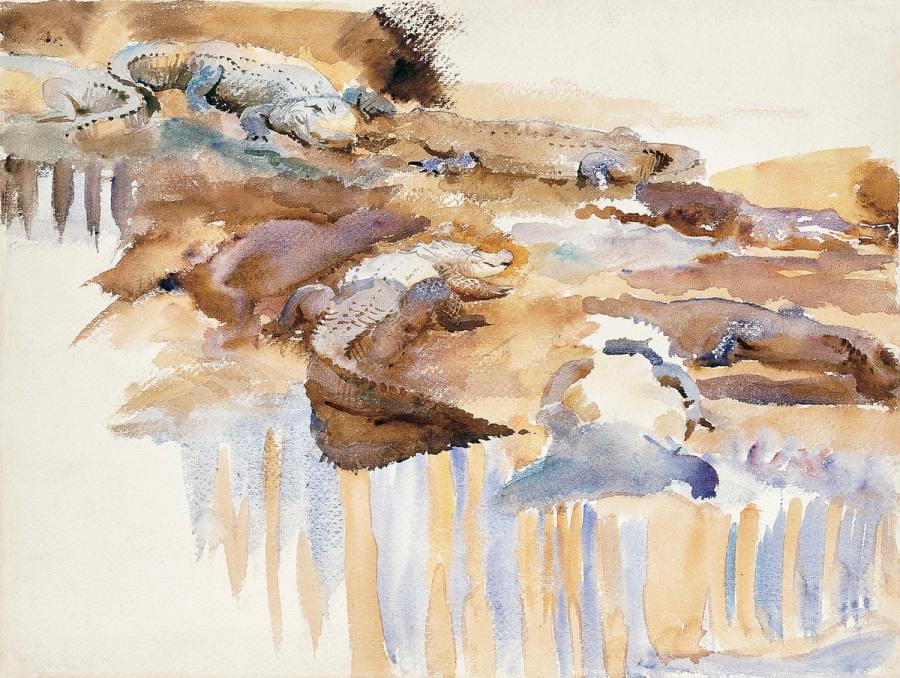
Roses and Begonias; Or, Things That Can Crush You

By J.H. Bond

We’re in a bathroom at McDonald’s and it smells like pee and I’m helping my dad put his makeup on. It’s his eyebrows that he struggles the most with. They’re supposed to arc like dark rainbows high up on his forehead. He can’t do them in the mirror—they look like mountains.

“Get ’em even, Mitchell,” Dad tells me, as he kneels down, eye-level.

I’m always drawing pictures. Now I’m drawing one on my dad. His real eyebrows are gone, lost under a mask of white. I give him some new ones with a makeup pencil, then paint the tip of his nose bright red.

He pulls on his stockings. Zips up his yellow-gold jumpsuit. I hand him his giant shoes and ask how come they’re so big. Goofy factor, he says.

He fits on his wig and it blazes like fire.

“How do I look?” he asks me.

“Like a clown,” I say.

*

Dad’s got three parties this afternoon. I count eight kids at the first and I don’t know any of them. Dad’s trying to make a wiener dog balloon and I’m at a table in the corner, drawing pictures of the motel I’ve been living in with my mom.

I sort of hate the kids Dad entertains. He gives this boy with braces the wiener dog balloon and a freckle-faced girl a turtle. They’re all cracking up and happy like Dad’s a good clown, but he’s not. Every time he tries to juggle he splatters an egg. Kids laugh, but still. He can’t do tricks. He doesn’t tell jokes. He just falls down and spills stuff, and slips in the stuff he spilled.

Read More

Sidekicks

By JP Gritton

I guess you’re wondering how I ended up with a woman like Syrena, in the first place. Truth is, it’s Mike’s fault. He’s the one to blame. Or to thank, I don’t know which. It was Mike Corliss who turned to me on this too-hot afternoon beginning of September. The four of us ought to go out sometime. Double Dutch, I mean. And I remember him smiling at me while my guts turned somersaults.  He was a different man those days, full of piss and vinegar. He had a smart mouth on him, and he wasn’t afraid to use it either, which is why Laughton Starbuck kind of had it out for Mike.

“Where’s your protective eyewear, Corliss?”

“My protective eyewear?”

“That’s what I asked you.”

“My protective eyewear’s protecting the dashboard of Sheldon Cooper’s truck. That’s where I left it this morning.”

Sheldon, he used to call me, ’cause he knew it got on my nerves. To everybody else I was Shelley.

I was just a journeyman carpenter back then. I drove Lij’s truck to work and home every day, give my best friend Mike Corliss a ride. Half the time, he’d forget something on the dash: that blue bandana, that pack of smokes, that pair of goggles.

I guess I looked up to Mike, who was a couple years older than me and besides that had a way about him. He told a story better than anybody I know, though you never knew how much was true and how much he’d half-made up. He told me how a honeybee flies through the rain, missing every drop. He told me nobody’d ever saw a giant squid, but even so scientists know they exist ’cause sometimes, he said, a whale or a shark will wash up on the beach, a great big bite took out of it.

Read More

At Bay

By Tamar Jacobs

I was chopping peppers when Ronnie came home. I’d been thinking to go to Safeway to see if there were any open bags of candy I could take from, or maybe walk down to the water to feed my birds, but then I saw him and all those ideas went up like smoke from my head. I hadn’t seen him in two years. He got out of the car and stepped into the sun, one whole big part of his skin a new lake of blue. I saw later up close it was all made of little tattoos lifting and blending together, but from behind my side of the kitchen window that day, it looked like he’d been afflicted with some kind of blue sickness. Down his arm and up his neck and some up on his forehead right above his eyebrows and a little trickle from just one eye. He’d gone away, got dipped in color and come back. I found this extraordinary and mysterious, and it kept me up at night thinking about it, touching my own skin wondering what it might feel like to go blue.

After Ms. Eva got done bumping into everything around her with her car like always when she parks, and they slammed their doors closed and went inside her house, I squeezed my eyes shut and chopped as fast as I could, felt tiny sharp prickles of cold pepper water punching into my fingers. I could not look down, because if I did the pepper water became the licking tongues of snakes trying to kiss me away from my knife, trying to slither out from under the blade I was hacking on them with. But as hard as I could I refused to see and they gave up moving and I heard Ms. Rose roll over the loud spring on the couch and I tried even harder because I could not let her hear me chopping in a crazy-sounding way or she would know I’d been skipping pills again. I would not feel sorry about those snakes. Would not, would not, no, I told myself.

I would not then, but when I sleep, I can’t stay as careful about my thoughts as when I am awake. That night while I slept feelings began to creep in about those snakes I killed. They were just being themselves. Being snakes. And there I had been chopping them to pieces trying to pretend I thought they were peppers.

Read More

マ I 克 (ma-i-ke)

By Warren Decker

Mike came to Japan because he was tired of being Mike. He was the only guy in the dorm who would never take lime Jell-O vodka shots, and would get mad if his roommate woke him up— stumbling drunk through the door, and turning on the florescent light, before passing out snoring in the lower bunk, fully clothed, wearing shoes filthy with mud and wet grass clippings from the university lawns. Mike would climb down from his top bunk and turn off the light but he could never get back to sleep, and his morning study routine would be disrupted.

Mike preferred Chinese characters to people, specifically the kanji characters used in Japan. He had already worked his way through the bright red “First 500 Kanji Workbook,” and was halfway through the light blue “500-1000 Kanji Workbook,” while some of the other freshmen were still struggling with the phonetic hiragana characters. His teachers praised his diligence, but for Mike it was very simple: he preferred Chinese characters to his roommate but he also preferred Chinese characters to Mike. If he spent an hour carefully memorizing the stroke order of a kanji like 鬱, then Mike—with all his doubts, his unfounded sadnesses, and fears—would be somewhere far away.

In his junior year, he arrived at Kyoto University as マイク (ma-i-ku). When people spoke, he could quickly associate the syllables of sound with a specific kanji, and decipher the meaning within a few seconds. The other exchange students were still fumbling around with “ohayo gozaimasu.” Within a month マイク had lost his virginity in his single-occupancy dorm room with Reika, an English major, who wore huge sunglasses and had long hair that was dyed a dark shade of reddish-brown.

Read More

The Red Bird

This story originally appeared in New Ohio Review 8. Here, Joanne Serling, author of the new novel, Good Neighbors, reads for our NOR Audio feature.

Illustration by Devan Murphy.


First Date

By James Lineberger

In the sixth grade I asked
Sissy Morgan
if she would go to the picture show with me
on what was supposed to be
my first date but when I said it her eyes got wide
and her mouth fell open and she just backed off till she ran into
a chair and had to sit down and didn’t say a word.

But during recess I could see her at the swings
giggling and whispering to her girl friends
and all of them staring at me
but if it was a trick or what I didn’t know
cause while I was waiting for the school bus
she came up to me and said
well all right but she would not go to
the Paramount which all
they showed was double-feature westerns with people like
Sonny Tufts or Charles Starrett
and if there was anything she could not abide it was Charles Starrett doing
The Durango Kid.

But when I told mama she said not
to worry because
we could go see Forever Amber at the Visulite
with Linda Darnell and Cornel Wilde
which was kind of like Gone With The Wind mama said
and the name was because of the color
of her eyes which ought to be just the kind
of story that a little girl would go for
and what we will do
mama said was I will drive y’all to the Visulite
and meet you out front again when
it is over.

Read More
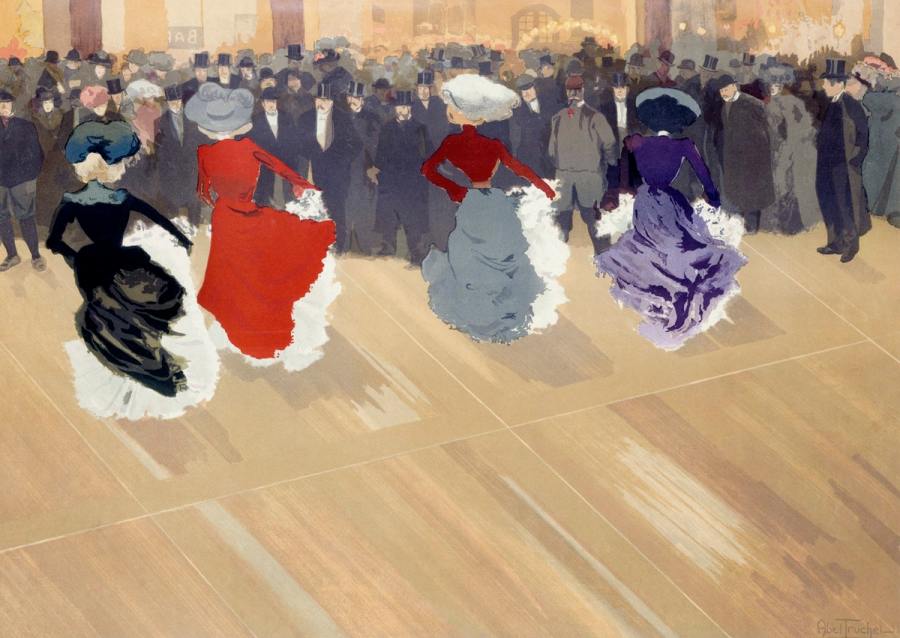
Hurricane, 3rd Day

By Melissa Studdard

We hid in the belly of porcelain. The world 
sang sirens overlapping, the sound of wind

taking gates from the hinge. That whistling, yes.
Whistling and whipping, the world the cry 

of a cow caught in the spin of a twister and lifted. 
Water creeping to the back door like a thief. 

It wanted the jewels of our eyes.

In the house next door, a woman breastfed 
another woman’s baby, the thin-sweet milk.

Across the street, a man wrote social security numbers
on his kids’ arms with a Sharpie—a game, he said. 

And in our tub we held the news in our palms:

forty dogs from a kennel rescued by boat, a guy
on paddleboard heaving toddlers from a window, one

by one. And trapped across town, a shop full
of bakers sleeping on flour sacks, baking all day—

they slept and baked, slept and sprinkled.
For whoever might need. Not even sampling

or licking a finger. Once, I thought humankind 
brutal and nature benign—foolish child

with my frog in a box, my holey lid. 
Once, before, I asked to be delivered.

O sugar-hungry God, the world 
has been dredged and is waiting.


Read More
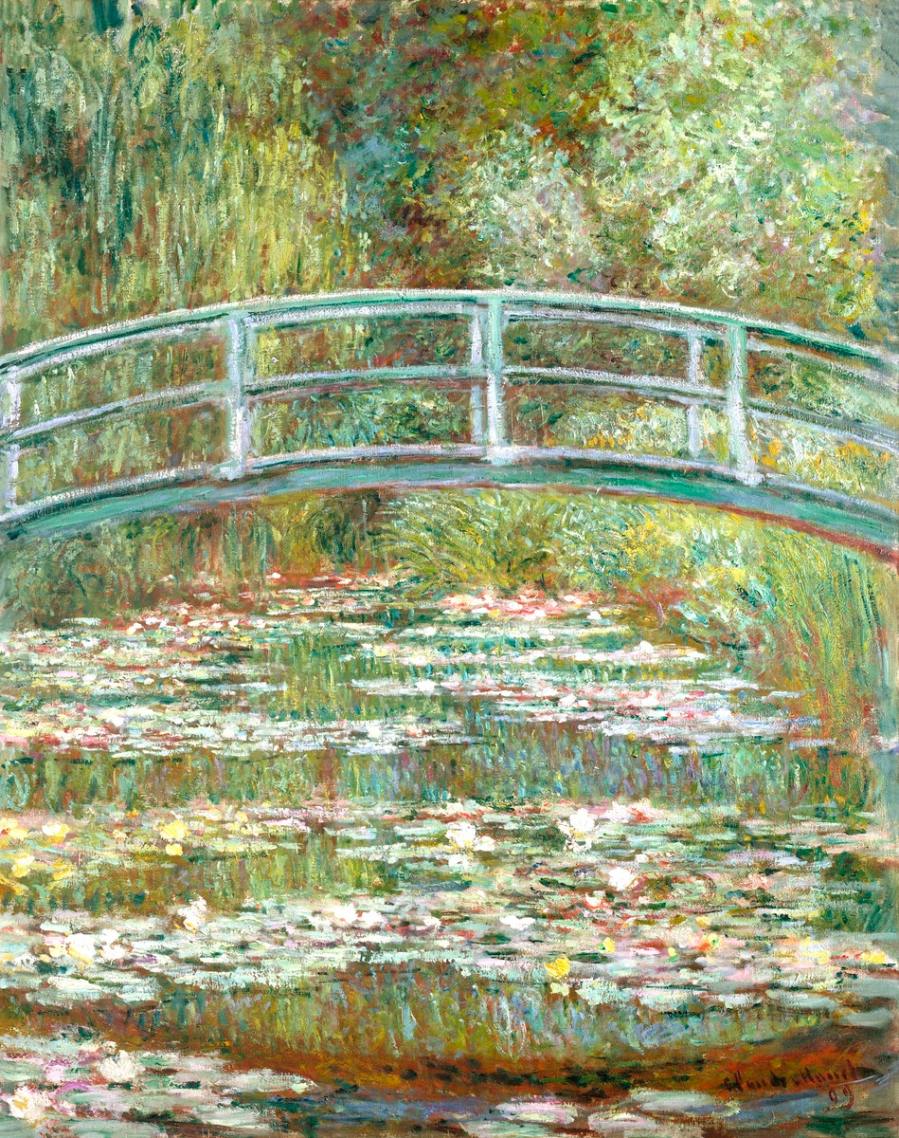
Love Story in an Alternate Universe in Which Small Talk Is Answered Honestly and in Detail

By Daniel Paul

I run into her on the street. We haven’t seen each other in a few years. “The weather is really nice today, especially for winter,” I say.

“I know,” she says. “It’s been so gray and depressing lately that I’ve been thinking a lot about how much I hate living here. Or at least I hope I hate living here. Otherwise it means that I just hate living in general.”

“No,” I reassure her. “I’m sure you just hate living here; this city is terrible.”
“I feel a bit better today,” she continues, “though it’s probably only warmer outside because of climate change, which makes me feel like enjoying a day like this is stealing joy directly from future generations . . . which I guess is okay, because I don’t want to have children: babies look like aliens, and I can’t even keep a houseplant alive; honestly, sometimes I don’t even want to keep the plant alive; I’d rather lord over it with my power to decide its fate, though that’s probably just a way of rationalizing the fact that even if I did want to keep a plant alive—to feel like I was contributing to the cycle of life and warmth even if just in my living room—I’m sure I would fail somehow and it would die anyway.”

Read More

Surfacing

By Kateri Kosek

When copyediting the small-town monthly, things press in.

Chair yoga. Croquet. Bears that pull laundry off clotheslines.

Someone following GPS drives onto the dam,
slips off the narrow bridge.

Someone unscrews his neighbor’s porch light, gets caught on surveillance.
He said the light was annoying at night but promised to stop doing it.

(Why live here, if you can’t see the stars?)

Fire alarms.

Unattended fires.

Every month more news of the lake’s battle with Eurasian milfoil—
who will come to study it, to harvest it, to keep the lake from clogging up.
How to keep it from fragmenting, spreading.

(I don’t know Eurasian milfoil from the next lake weed
but I’ve given up worrying about them.
I swim on the surface, don’t put my feet down.)

I learn:  the cereus plant, a desert native, blooms just one night a year
and has an exquisite scent.

Spider wasps encase their prey in mud; their larvae
eat spiders for a week then spin a silk cocoon to spend the winter in.

Petrichor is a husband-wife duo who will be exploring the sound world
of the musical instrument digital interface.

More importantly, it’s the word for the smell of the forest just after it rains.

The school is closing (hardly any school-age children!).
The historical house is holding a swanky fundraiser.
Guests will have a marvelous time while enjoying the stunning poolside views.

Read More

Parliament Lights

By Jonathan Durbin

It is too early to be up when the girl rises to pack. Winter rain taps the window but otherwise outside the street is silent and dark. No joggers or dog walkers or idling delivery trucks. No cars, not yet. No sign of Mike Lavoie.

The girl wishes for a cigarette but there isn’t time enough to smoke. She isn’t allowed anyway. There is no smoking in the shelter, the boy made that clear. If she smokes there they’ll be forced out and then where will they stay? Her mother’s? Nowhere is safe. Not anymore. The boy rolls onto her side of the bed, his hair thick with night grease, and mutters into her pillow. It sounds like You know better.

Their luggage lies open on the rug at the foot of the bed. The girl and the boy agreed to take just the one suitcase. Any more luggage and they’d be weighed down, that’s what he said. They might have to leave the shelter in a hurry. But the suitcase is half-full and they’ve barely the things they’d want for a long weekend. A fraction of their socks, a sampling of their underwear. A small quota of tees and jeans and hooded sweatshirts. Her things and his things thrown together, mixed up inside.

They argued about this last night, like they argued about it the night before and the night before that too. The girl cannot imagine how they will pack everything into a space so small. Fear of mistakes has led her to dither and ask the boy’s opinion about silly things. Which Nalgene bottle he prefers. If they should buy instant coffee or grounds. If it’s all right for her to bring whiskey.

Stop worrying, he has told her again and again. The shelter is equipped to last a long time. Months, maybe a year. Mike Lavoie has stocked it with tins of tuna and bags of salt-cured pork, iodine tablets and a generator and fresh batteries for flashlights. Oxygen canisters and Ibuprofen and cases of disinfectant wipes. Two motorcycles with full tanks of gas, and all the bullets and rifles they’ll need to hunt or defend the land.

Read More