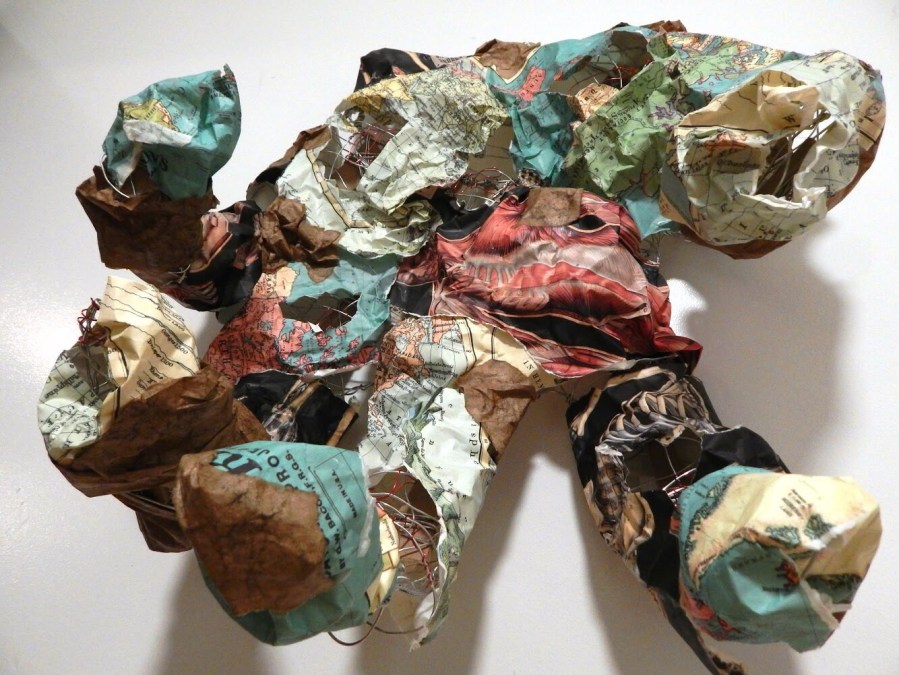
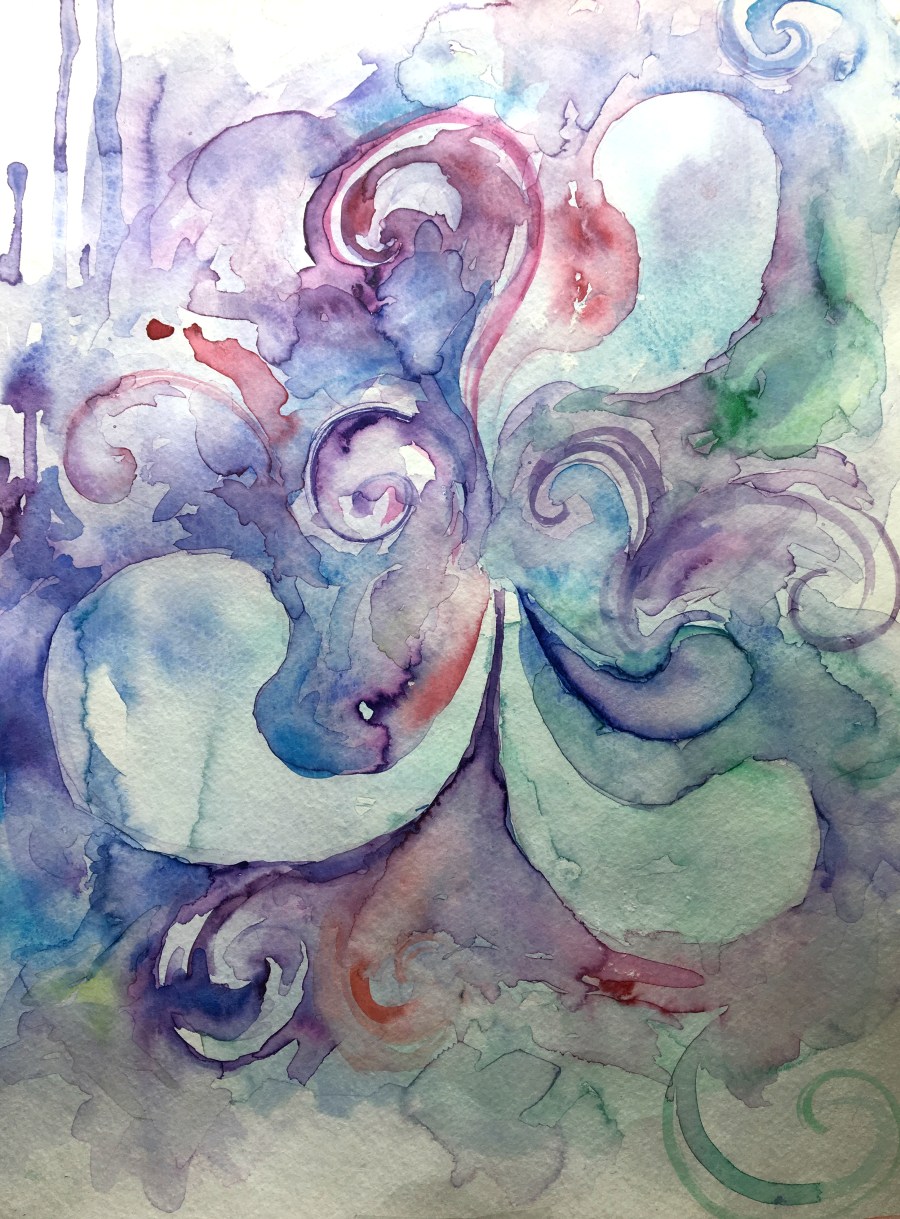
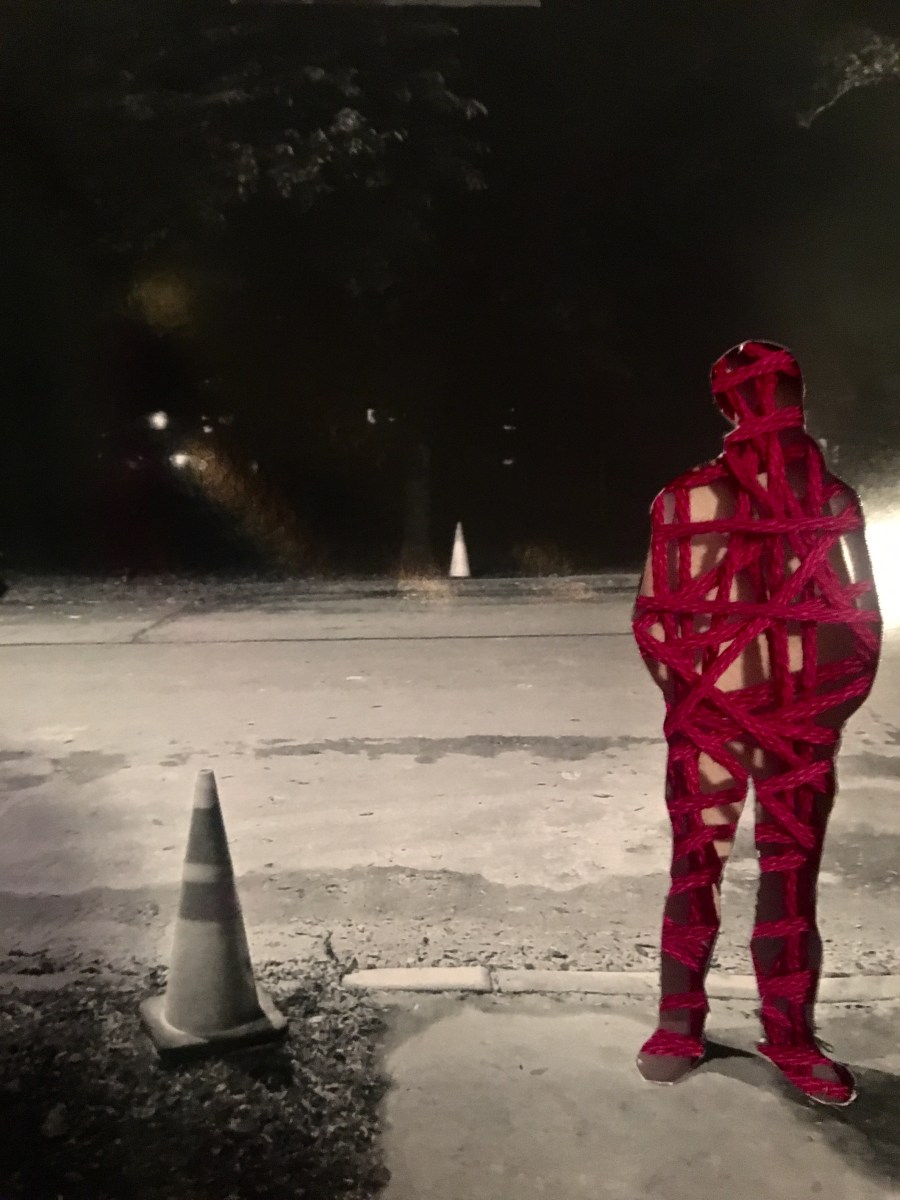
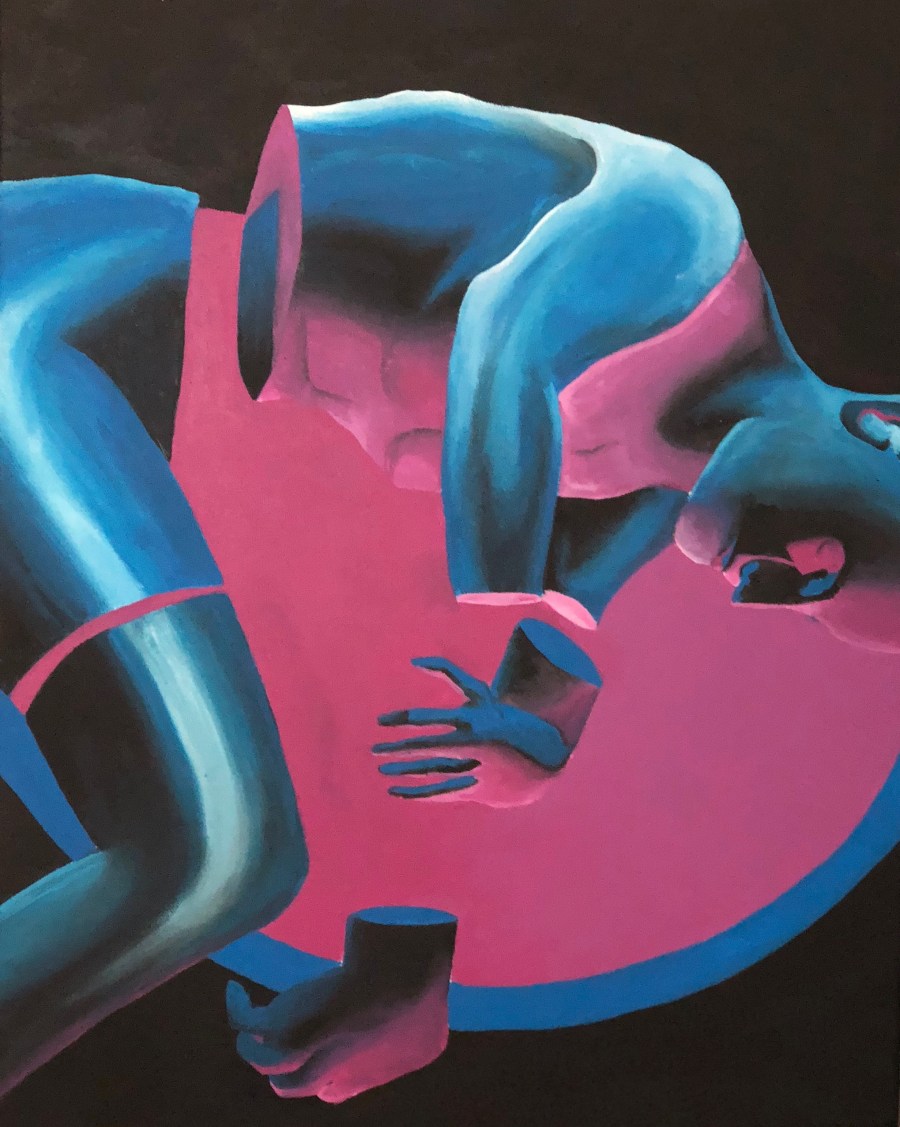
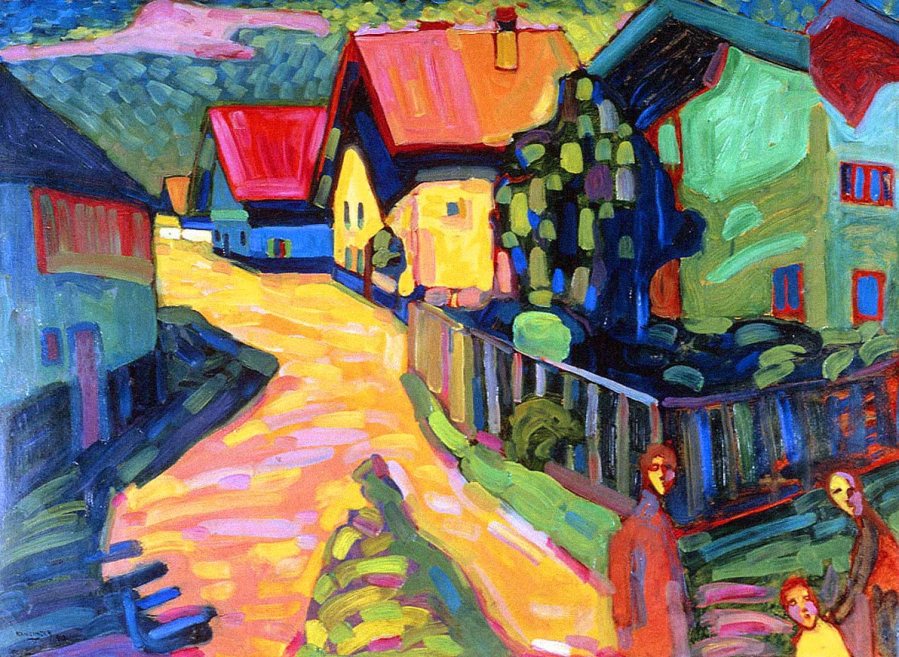
Featured Art: “Noise in the System” by Madara Mason
for my sons
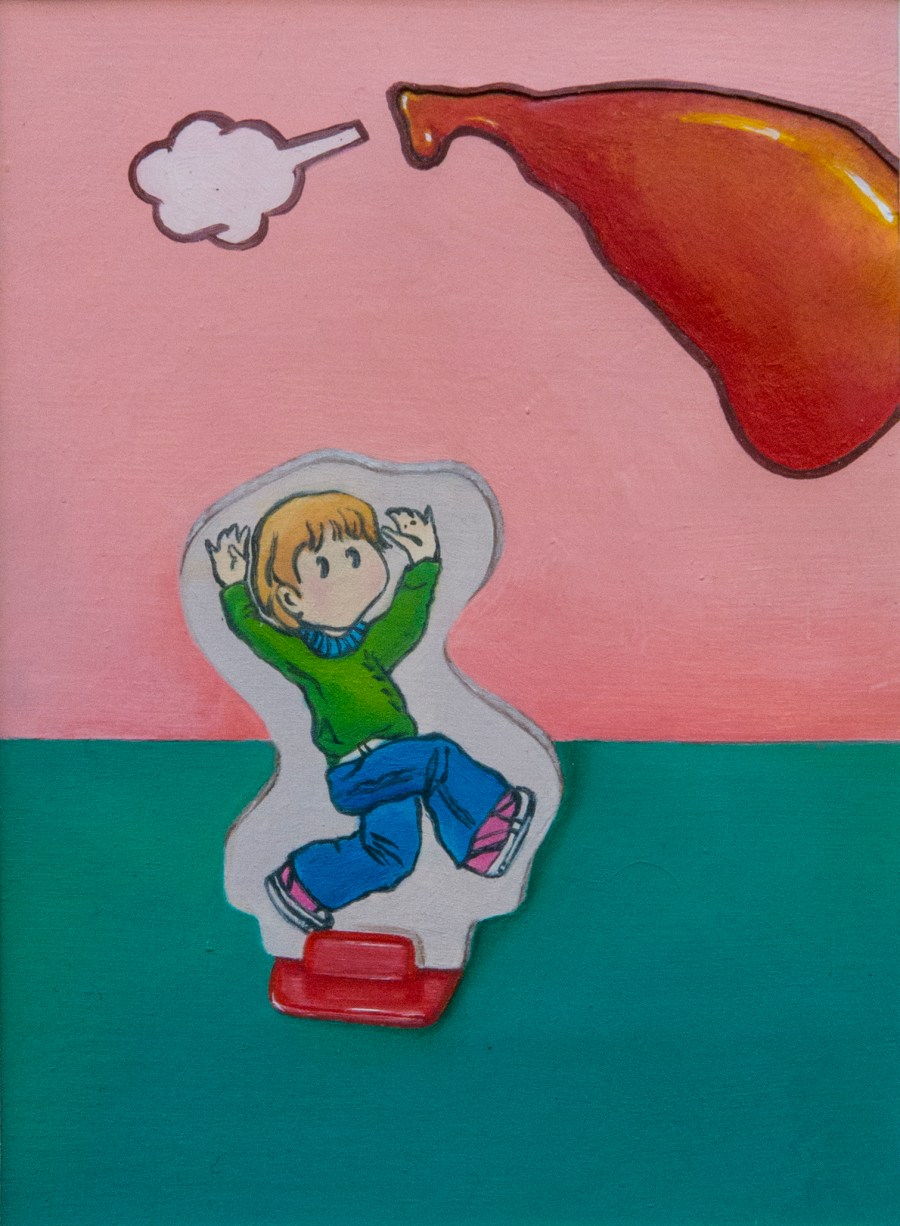
This one has concentric frames that on close inspection are pink strips of floss. This one swims inside itself, three shades of blue. This one’s stripes are dead calligraphy: R.I.P. Abuela, R.I.P. Cousin Juan. This one grows bored and morphs into a sketch of a cartoon baseball twirling its handlebar mustache. This one begs God Bless. This one has sticker pistols saying BANG. This one’s wrists wear broken chains. This one is lost inside the glitz of caked-on glitter gold. This one is impasto red on red that bled on everything it touched. This one has forty macaroni stars and this one has the husk of a dragonfly where stars should be, its glue-gobbed wings unstitching from the corpse.
Featuring interviews with Kiese Laymon, Tyehimba Jess, and Derrick Harriell, as well as new poems by Angela Narciso Torres and Eleanor Kedney. Plus, Blues poems, essays, and a story from the NOR archives.
“For me the blues is the perpetual reckoning with what should be agony, but finding ways of making that reckoning pleasurable. The agony and the pleasure exist right up next to one another. The question is how do we most effectively hold ourselves together through the pain, through the suffering, and through the agony? My history in this country teaches me that you have to do it through art. That doesn’t mean the art that gets sold. But the art of talking. The art of listening. The art of making sounds. The art of rhythmically manipulating repetition, which I think was really at the core of the blues.” – Kiese Laymon
“And that’s what you’re talking about when you’re talking about the essence of the blues and its relativity to what we’re doing today. Because we’re working in the tradition of the literature, right? That’s inseparable from that stream. That was the literature we had before we could read and write. And once we were allowed to read and write without the force of death being put upon us, all that imaging went right into the literature. And that’s the connection between African American literature and the blues. So there is no separation between the two.” – Tyehimba Jess
This is the golden trophy. The true addiction. Steel springs, pearl facings, fibers and leathers, all Mounted on the body tarnished from neck to bell.
The master, a Legend, a “righteous addict,” pauses While walking past a bar, to listen, says: Listen— Listen what that cat in there is doing. Some figure,
Some hook, breathy honk, sharp nine or weird Rhythm this one hack journeyman hornman had going. Listen, says the Dante of bop, to what he’s working.
When it was clear my brother
wouldn’t kick his drug addiction
and return to all the things he was great at—
baseball, tennis, downhill skiing—
he still played the harmonica.
Once, at a summer wedding, in the lull
between the toasts and dessert
he took the band’s mic,
tossed his curly hair to one side,
and put the blues harp deep in his mouth—
puckered lips, blocked tongue,
the bending sound like a train
going through a tunnel.
My mother stood and clapped. That’s Peter, she kept
saying. That’s Peter.
His eyes closed
to everyone in the room.
“Not Fade Away” took all his breath
to play.
It’s a long time after, and I just wanted to know. What was it like on the boat? I wonder what became of our Mama? And they would just rock and rock.
What was it like on the boat? Oh slavery, slavery, my Daddy would say. And they would just rock and rock. Even the good parts was awful.
Oh slavery, slavery, my Daddy would say. In history, even the lies are true. Even the good parts was awful. She walked from New Orleans to Virginia. Eight years old.
In history, even the lies are true. Slavery was terrible but we fooled them. She walked from New Orleans to Virginia. Eight years old. We come out of it better than they did.
Slavery was terrible but we fooled them. Don’t let nobody tell you them old people was dumb. We come out of it better than they did. Things don’t fall apart. Things hold.
Don’t let nobody tell you them old people was dumb. Our lives are more than the days in them. Things don’t fall apart. Things hold. I only wanted to find out about these things.
Our lives are more than the days in them. I wonder what became of our Mama? I only wanted to find out about these things. It’s a long after, and I just wanted to know.
Outside the jazz club where I’ve been audience, player, and piano tuner over the years, it’s quiet at this sunstruck ten o’clock, and I have a shivery thought of a guitar and a girl that began inside my head last night. No rocking, no rhythm, no foot-stomping or window-shaking. Only the fifty measured strides I’ve counted from the corner where the 30 Stockton dropped me off, past the police station to the alley, the dip in the pavement and the sloping rise, the manhole cover to my left, yes, here it is, the last of my landmarks, reassuring me I’m in the right place. A thought of a girl, who used to make my music glow.
Featuring stories by Caro Claire Burke, Daniel Paul, Jonathan Durbin, Frankie Barnet, and Gunnar Jaeck, and poems by Kateri Kosek, David O’Connell, Christopher Brean Murray, Dylan Loring, Lance Larsen, Cody Wilson, and Susan Ramsey.
The mother and father received the news on a Friday afternoon and were in the car driving south an hour later. They drove until midnight, then checked into a Courtyard Marriott for five hours before hopping back onto the road at dawn to cover the last hundred miles. They were silent in the car, which was strange: in their twenty years of marriage, they had never run out of things to talk about. There were, of course, things to talk about now—perhaps more than ever before—but neither the mother nor the father could find the words to start the conversation. By the time they navigated through the college town and parked at the police station where their son was held, they were both exhausted, irritable, and fit to burst with all the questions they’d swallowed on the way down.
The police officer behind the desk looked up as the entrance bells went off. “You must be the boy’s parents.”
The father stepped forward to shake the police officer’s hand. “That we are. Where is he?”
The officer was jovial to a fault. “Just down the hall a ways.” He turned toward a door in the back and waved an arm at them to follow. But the mother and father were silent, almost frozen, and at that silence the police officer turned around, his hand on the doorknob. “Hey, now,” he said. “Now’s not the time for that. Your boy is pretty shook up. He could use some support. Between you and me, these cases happen all the time. My guess? Your boy will be out of here in no time, clean record and everything.”
Featuring stories by Mari Christmas, Scott Koenig, LaTanya McQueen, JH Bond, Tamar Jacobs, and Traci Sauce, and poems by Mark Williams and James Lineberger.
My husband manages a cheap hotel off the interstate five days a week, and every Wednesday night he visits the community center pool. Some days I meet him there. I like to watch him push the water around. It helps with the arthritis, he says, sculling the surface, making frog legs. He believes I deserve an office job, something that allows me to move between cities while wearing a thin blouse. We hardly speak. This is because of all the guilt. I look out across the pool. Children shiver in wrinkled suits, sucking their hair. Inside, it is airless, hazy, the windows fogged. The water a dark tangle of rope. Even though I cannot see him, I know he is there.
*
After swimming my husband will stay in his small room, equipped with a desk and a plastic lamp, and berate his romantic Romanian pen pal over the phone. He feels the need to give important looks, to demonstrate his rigor over a crowded table, and so forth, even internationally. “If you piss in the corner, I piss in the corner,” he tells her, speaking in English. For two bars of chocolate a month she puts up with all of that. He refuses to learn her language, as he cannot be bothered with the gender of specifics.
Tonight, he comes into the kitchen with the phone saying he wants a son, one he will name Atilla. Atilla? I think. Like Atilla the Hun? I marvel at my attraction to this bareheaded man, whose age has a secure density to it, like a landmark, and how this makes me feel intimately bound to him. “Something that does not weaken the spirit. Nothing that gives him an ironic existence,” he explains to his girlfriend, and then retreats down the hall, padding softly, his shirt untucked. Through the walls I hear him say the name ennobles mankind and something about plundering a northern province. He is never done. He talks and talks. Another blind Milton dictating to his poor daughter. The top of my head says, at least they’re not sleeping together, but I no longer believe in any of that.
It’s so bright even though the blinds are closed. Streaks of white light gash the wall. The wall Dad painted blue last month. Your favorite color is red but you like blue, too. There’s the humming of lawnmowers in the distance. Open those blinds.
Out there it’s green everywhere. Up above, it’s blue. There’s a white car in your driveway, too. Not our car, you think. Whose car is that. Green grass down here, around the strange little white car, and blue sky up there. The colors are so pure it kind of hurts. It’s nice, though. Do your eyes hurt? You could open the window to smell the grass but Dad got mad last time. Up on the hill where green turns into blue are big brown houses. If you squint they look like blobs of oatmeal raisin cookie dough when Mom lines them up on a baking sheet. And between the houses are thin lanes of grass where the older kids go sledding on snow days. The older kids with the colorful backpacks and the best Pokemon cards. Andy said one of the Meyer boys had three holographic Charizards. There’s no way. You aren’t allowed to go sledding on the hill yet. You just got allowed to ride your bike up to the black mailbox. The green mailbox after that is too high, too far up the hill, too dangerous, Mom always says. You know you can do it but you aren’t allowed. But soon you’ll be allowed to go all the way up – to the top of the hill. Then back down super fast into the coldy sack. Like how the older kids do.
The man across the street is bent over by a bush, the man whose house is white and black and pointy and looks like a castle. He’s bent over by a bush using those big shiny scissors. The scary ones. The kind Dad uses a lot. Is Dad outside? Look down into your part of the green. Dad isn’t in your part of the green yet. Maybe later. There’s still the humming. Humming is an outside activity, Mom always says. Sometimes she hums but she does it quieter than you. And mostly outside. Her humming is nicer than lawnmower humming. Especially because when there’s a bunch of different lawnmowers all at once it sounds like buzzing. Like bugs, kind of.
Because of her own curiosity she said yes when he asked her to put the bit on him. The bit, or gag, was an iron mask shaped like half a moon with a hook that went around the front of a person’s head. A spiked collar connected to the mask through a lock at the back of the neck.
He collected historical artifacts like these, the iron bit and scold’s bridle women were once punished with wearing, the shackles and chains forced upon slaves, items all from a not-too-distant era. When she asked him why, he told her he had a fascination for history long forgotten.
“Forgotten?” she asked and he shrugged in response.
She was used to men wanting things like this from her, to be blindfolded with her wrists cuffed and legs tied. She’d been expecting a day to come when he’d ask her if she would wear the bit, because hadn’t their relationship been leading up to this? Men, both white and black alike, were always asking in various ways to put her in this position, one of servitude, of serving. They wanted her on her back with her legs spread, body motionless, a mouth open only for moaning or what he’d force in. So many of them held this secret desire within themselves but eventually, with time, they always found a way to tell her.
She picked the bit up. As she felt its weight, she imagined what her fore-bearers must have experienced as the iron was fastened on. “Where did you get this?”
“eBay,” he said. The simplicity of his answer made her laugh. She asked him if it was real.
“I think so. Go ahead. Put it on,” he urged, and she did.
We’re in a bathroom at McDonald’s and it smells like pee and I’m helping my dad put his makeup on. It’s his eyebrows that he struggles the most with. They’re supposed to arc like dark rainbows high up on his forehead. He can’t do them in the mirror—they look like mountains.
“Get ’em even, Mitchell,” Dad tells me, as he kneels down, eye-level.
I’m always drawing pictures. Now I’m drawing one on my dad. His real eyebrows are gone, lost under a mask of white. I give him some new ones with a makeup pencil, then paint the tip of his nose bright red.
He pulls on his stockings. Zips up his yellow-gold jumpsuit. I hand him his giant shoes and ask how come they’re so big. Goofy factor, he says.
He fits on his wig and it blazes like fire.
“How do I look?” he asks me.
“Like a clown,” I say.
*
Dad’s got three parties this afternoon. I count eight kids at the first and I don’t know any of them. Dad’s trying to make a wiener dog balloon and I’m at a table in the corner, drawing pictures of the motel I’ve been living in with my mom.
I sort of hate the kids Dad entertains. He gives this boy with braces the wiener dog balloon and a freckle-faced girl a turtle. They’re all cracking up and happy like Dad’s a good clown, but he’s not. Every time he tries to juggle he splatters an egg. Kids laugh, but still. He can’t do tricks. He doesn’t tell jokes. He just falls down and spills stuff, and slips in the stuff he spilled.
I guess you’re wondering how I ended up with a woman like Syrena, in the first place. Truth is, it’s Mike’s fault. He’s the one to blame. Or to thank, I don’t know which. It was Mike Corliss who turned to me on this too-hot afternoon beginning of September. The four of us ought to go out sometime. Double Dutch, I mean. And I remember him smiling at me while my guts turned somersaults. He was a different man those days, full of piss and vinegar. He had a smart mouth on him, and he wasn’t afraid to use it either, which is why Laughton Starbuck kind of had it out for Mike.
“Where’s your protective eyewear, Corliss?”
“My protective eyewear?”
“That’s what I asked you.”
“My protective eyewear’s protecting the dashboard of Sheldon Cooper’s truck. That’s where I left it this morning.”
Sheldon, he used to call me, ’cause he knew it got on my nerves. To everybody else I was Shelley.
I was just a journeyman carpenter back then. I drove Lij’s truck to work and home every day, give my best friend Mike Corliss a ride. Half the time, he’d forget something on the dash: that blue bandana, that pack of smokes, that pair of goggles.
I guess I looked up to Mike, who was a couple years older than me and besides that had a way about him. He told a story better than anybody I know, though you never knew how much was true and how much he’d half-made up. He told me how a honeybee flies through the rain, missing every drop. He told me nobody’d ever saw a giant squid, but even so scientists know they exist ’cause sometimes, he said, a whale or a shark will wash up on the beach, a great big bite took out of it.
I was chopping peppers when Ronnie came home. I’d been thinking to go to Safeway to see if there were any open bags of candy I could take from, or maybe walk down to the water to feed my birds, but then I saw him and all those ideas went up like smoke from my head. I hadn’t seen him in two years. He got out of the car and stepped into the sun, one whole big part of his skin a new lake of blue. I saw later up close it was all made of little tattoos lifting and blending together, but from behind my side of the kitchen window that day, it looked like he’d been afflicted with some kind of blue sickness. Down his arm and up his neck and some up on his forehead right above his eyebrows and a little trickle from just one eye. He’d gone away, got dipped in color and come back. I found this extraordinary and mysterious, and it kept me up at night thinking about it, touching my own skin wondering what it might feel like to go blue.
After Ms. Eva got done bumping into everything around her with her car like always when she parks, and they slammed their doors closed and went inside her house, I squeezed my eyes shut and chopped as fast as I could, felt tiny sharp prickles of cold pepper water punching into my fingers. I could not look down, because if I did the pepper water became the licking tongues of snakes trying to kiss me away from my knife, trying to slither out from under the blade I was hacking on them with. But as hard as I could I refused to see and they gave up moving and I heard Ms. Rose roll over the loud spring on the couch and I tried even harder because I could not let her hear me chopping in a crazy-sounding way or she would know I’d been skipping pills again. I would not feel sorry about those snakes. Would not, would not, no, I told myself.
I would not then, but when I sleep, I can’t stay as careful about my thoughts as when I am awake. That night while I slept feelings began to creep in about those snakes I killed. They were just being themselves. Being snakes. And there I had been chopping them to pieces trying to pretend I thought they were peppers.
Mike came to Japan because he was tired of being Mike. He was the only guy in the dorm who would never take lime Jell-O vodka shots, and would get mad if his roommate woke him up— stumbling drunk through the door, and turning on the florescent light, before passing out snoring in the lower bunk, fully clothed, wearing shoes filthy with mud and wet grass clippings from the university lawns. Mike would climb down from his top bunk and turn off the light but he could never get back to sleep, and his morning study routine would be disrupted.
Mike preferred Chinese characters to people, specifically the kanji characters used in Japan. He had already worked his way through the bright red “First 500 Kanji Workbook,” and was halfway through the light blue “500-1000 Kanji Workbook,” while some of the other freshmen were still struggling with the phonetic hiragana characters. His teachers praised his diligence, but for Mike it was very simple: he preferred Chinese characters to his roommate but he also preferred Chinese characters to Mike. If he spent an hour carefully memorizing the stroke order of a kanji like 鬱, then Mike—with all his doubts, his unfounded sadnesses, and fears—would be somewhere far away.
In his junior year, he arrived at Kyoto University as マイク (ma-i-ku). When people spoke, he could quickly associate the syllables of sound with a specific kanji, and decipher the meaning within a few seconds. The other exchange students were still fumbling around with “ohayo gozaimasu.” Within a month マイク had lost his virginity in his single-occupancy dorm room with Reika, an English major, who wore huge sunglasses and had long hair that was dyed a dark shade of reddish-brown.
In the sixth grade I asked Sissy Morgan if she would go to the picture show with me on what was supposed to be my first date but when I said it her eyes got wide and her mouth fell open and she just backed off till she ran into a chair and had to sit down and didn’t say a word.
But during recess I could see her at the swings giggling and whispering to her girl friends and all of them staring at me but if it was a trick or what I didn’t know cause while I was waiting for the school bus she came up to me and said well all right but she would not go to the Paramount which all they showed was double-feature westerns with people like Sonny Tufts or Charles Starrett and if there was anything she could not abide it was Charles Starrett doing The Durango Kid.
But when I told mama she said not to worry because we could go see Forever Amber at the Visulite with Linda Darnell and Cornel Wilde which was kind of like Gone With The Wind mama said and the name was because of the color of her eyes which ought to be just the kind of story that a little girl would go for and what we will do mama said was I will drive y’all to the Visulite and meet you out front again when it is over.
I run into her on the street. We haven’t seen each other in a few years. “The weather is really nice today, especially for winter,” I say.
“I know,” she says. “It’s been so gray and depressing lately that I’ve been thinking a lot about how much I hate living here. Or at least I hope I hate living here. Otherwise it means that I just hate living in general.”
“No,” I reassure her. “I’m sure you just hate living here; this city is terrible.”
“I feel a bit better today,” she continues, “though it’s probably only warmer outside because of climate change, which makes me feel like enjoying a day like this is stealing joy directly from future generations . . . which I guess is okay, because I don’t want to have children: babies look like aliens, and I can’t even keep a houseplant alive; honestly, sometimes I don’t even want to keep the plant alive; I’d rather lord over it with my power to decide its fate, though that’s probably just a way of rationalizing the fact that even if I did want to keep a plant alive—to feel like I was contributing to the cycle of life and warmth even if just in my living room—I’m sure I would fail somehow and it would die anyway.”
When copyediting the small-town monthly, things press in.
Chair yoga. Croquet. Bears that pull laundry off clotheslines.
Someone following GPS drives onto the dam, slips off the narrow bridge.
Someone unscrews his neighbor’s porch light, gets caught on surveillance. He said the light was annoying at night but promised to stop doing it.
(Why live here, if you can’t see the stars?)
Fire alarms.
Unattended fires.
Every month more news of the lake’s battle with Eurasian milfoil— who will come to study it, to harvest it, to keep the lake from clogging up. How to keep it from fragmenting, spreading.
(I don’t know Eurasian milfoil from the next lake weed but I’ve given up worrying about them. I swim on the surface, don’t put my feet down.)
I learn: the cereus plant, a desert native, blooms just one night a year and has an exquisite scent.
Spider wasps encase their prey in mud; their larvae eat spiders for a week then spin a silk cocoon to spend the winter in.
Petrichor is a husband-wife duo who will be exploring the sound world of the musical instrument digital interface.
More importantly, it’s the word for the smell of the forest just after it rains.
The school is closing (hardly any school-age children!). The historical house is holding a swanky fundraiser. Guests will have a marvelous timewhile enjoying the stunning poolside views.
It is too early to be up when the girl rises to pack. Winter rain taps the window but otherwise outside the street is silent and dark. No joggers or dog walkers or idling delivery trucks. No cars, not yet. No sign of Mike Lavoie.
The girl wishes for a cigarette but there isn’t time enough to smoke. She isn’t allowed anyway. There is no smoking in the shelter, the boy made that clear. If she smokes there they’ll be forced out and then where will they stay? Her mother’s? Nowhere is safe. Not anymore. The boy rolls onto her side of the bed, his hair thick with night grease, and mutters into her pillow. It sounds like You know better.
Their luggage lies open on the rug at the foot of the bed. The girl and the boy agreed to take just the one suitcase. Any more luggage and they’d be weighed down, that’s what he said. They might have to leave the shelter in a hurry. But the suitcase is half-full and they’ve barely the things they’d want for a long weekend. A fraction of their socks, a sampling of their underwear. A small quota of tees and jeans and hooded sweatshirts. Her things and his things thrown together, mixed up inside.
They argued about this last night, like they argued about it the night before and the night before that too. The girl cannot imagine how they will pack everything into a space so small. Fear of mistakes has led her to dither and ask the boy’s opinion about silly things. Which Nalgene bottle he prefers. If they should buy instant coffee or grounds. If it’s all right for her to bring whiskey.
Stop worrying, he has told her again and again. The shelter is equipped to last a long time. Months, maybe a year. Mike Lavoie has stocked it with tins of tuna and bags of salt-cured pork, iodine tablets and a generator and fresh batteries for flashlights. Oxygen canisters and Ibuprofen and cases of disinfectant wipes. Two motorcycles with full tanks of gas, and all the bullets and rifles they’ll need to hunt or defend the land.
If I had a choice between being wrong and the world dying— you know, the oceans turning into lemon juice, the air to Lysol, the forests cinder, tundra swamp, shipping lanes jammed with dead polar bears, Manhattan a gondola, the world, a Gondwana of dengue— I would, of course, choose the latter. And maybe, just maybe, clinging to the last antenna of the last skyscraper to be swallowed by the waves, pointing my big fat finger at the dead world, and at all the mother- fuckers who did it, shouting, Told you so, Told you so—maybe, as the water was closing over my mouth, I’d understand how we got into this mess in the first place.
Today on the back-roads, where Connecticut and Massachusetts bleed together unnoticed— the large, gangly silhouettes of two llamas weaving across the road ahead of me, not where they are supposed to be, where I always pass them, stoic and shaggy amid a spread of crumbling outbuildings.
A young woman has stopped. She gets out of the car and I stop too, and more llamas rush out from the broken gate, ears erect like horns on their pert pedestal heads.
I wonder for a moment, could they hurt us? These animals we usually see standing still, chewing dumbly while we gawk? We forget their long legs, forget they can move.
But they head for the field and there’s something exhilarating about their sudden temporary glory, the larger world asserting itself in the form of llamas on the loose, llamas spreading through a whitened February field and no one around who can stop them. I should mention, I had been crying.
Starting for the door of the farmhouse, I hear someone coming out. Fucking cocksuckers, he drawls, this older man we can’t see, as if the llamas plotted this breakout on a regular basis. Jesus Christ Almighty— adding a new dimension to my image of the cluttered farmyard, hushed and exotic, too much to take in though I always slow down, riveted as I am now, but I drive away and leave him to it, lifted.
Walking in the West Village, I stop at the park on Clarkson Street to watch some little league baseball. I lean against the chain-link fence and am grateful for how its curves accept my weight without comment or judgment (as I imagine the inside of a whale might). A man is standing near me; he speaks in easy platitudes, and I nod along, not so much because I agree with him—for example, he says the weather is perfect, and all I can think of is how one of the clouds looks like you and the other looks like Nixon and how I’m in no state to rank omens in terms of their relative inscrutability—but rather because I really like nodding: as with launching a satellite, once you’ve done the work of getting your head to the top of its apogee there is a pleasing feeling of submission to a higher power in letting gravity complete the act. The man, who I decide to name Bubba (because I have never met a Bubba and fear if I do not take this opportunity, I never will) tells me that its been a crazy year for the team, though I don’t know which team he is referring to (one is in blue, the other green, and I wonder if I’m the only one who is bothered by the fact that the team whose shirts do not have piped collars is the one sponsored by a local plumbing concern).
It’s been a crazy year for all of us, I say, unsure of what a “sane year” would look like.
Oh yes, he answers, lots of ups and downs for the squad.
Don’t I know it? I say, and with each nod I become more emotional about the (no doubt unjust) obstacles that the team has faced as they have tried to do nothing more than live their lives and play some baseball on Saturday afternoons.
Bubba does not look at me as he speaks, keeping his eye on the field (and I wonder if he is actually talking to someone on his other side instead of me, and, by extension, what percentage of the conversations I’ve ever had did not actually require my involvement). He says that the team has struggled with fundamentals.
You can think while walking, running, washing the dishes, reading, grocery shopping, or sleeping. Driving across Nevada at night breeds thoughts—they leap from sagebrush like jackrabbits into your high beams. Most people can’t think while writing. They have ideas, yes, but not thoughts. Anyone can snatch an old idea out of the dust and show it around. Trying to think will invariably prohibit thought. I thought of writing this poem while driving to work this morning. I made sure not to think about it much. The wind swayed a stoplight until it turned green. A man in a yellow tank top leaned into the window of a parked car. It was not yet 8 a.m. Wisps of cloud coursed though the sky over Houston. Someone should compile a book called A History of Clouds. It could be, among other things, an anthology of descriptions of clouds, from novels, from the love letters of exiled princes. Shakespeare’s “pestilent congregation of vapors” speech would appear, as would Mayakovsky’s “A Cloud in Trousers.” Clouds aren’t mentioned much in the Bible. God did, however, call to Moses from inside a cloud. Enoch speaks of “the locked reservoirs from which the winds are distributed.” Crane’s “To the Cloud Juggler” and Stevens’ “Sea Surface Full of Clouds”— and that passage from Gogol where a cloud slithers over Nevsky Prospect. It stretches and coils and becomes an intestine embracing the anxious protagonist until we realize he’s being suffocated by his thoughts. Somewhere Rilke speaks of “vast, ruined kingdoms of cloud.” That, from the love letter of another exiled prince.
Christopher Brean Murray’s poems have appeared or are forthcoming in Colorado Review, Copper Nickel, Epoch, jubilat, Pleiades, Plume, and Quarterly West. He lives in Houston.
Caitlin Morgan is an independent filmmaker. She splits her time between New York City and Michigan.
This summer afternoon on the blacktop of an elementary school playground Steve and Rachel have their guns pointed at each other, as tends to happen every once in a while between two people who have dated for months,
that is, until Chet shows up brandishing his revolver at Steve, causing Rachel to complete the triangle by shifting her gun toward Chet, at which point, Steve says, “Well lookie here. Seems like we have ourselves a Mexican standoff!” which makes Rachel say, “Wuh? None of us are Mexicans.”
“I could call my bud, Raul, if you put your guns away,” Chet says. “That would ruin our Mexican standoff!” Steve says. “Adding a Mexican to our Mexican standoff would ruin our Mexican standoff?” Rachel asks. “Have you ever even been to Mexico?” Chet asks.
“A Mexican standoff,” Steve says, “occurs when each person in a given vicinity has both a gun pointed at himself and his gun pointed at someone else.” “Or herself and her,” Rachel adds. “Sounds to me like a gun deadlock
or a James Bond-high-stakes-poker-thingy,” Chet says. “Mexican standoff is just what it’s called,” Steve says. “I could sure go for some Mexican food after this . . . Mexican standoff,” Rachel says. “Are you sure it’s called a Mexican standoff?” Chet asks.
“It sure sounds either made-up or racist or both.” “It’s not racist, it’s just what we call it,” Steve says. “You mean like how we call the Washington Redskins the Washington Redskins? Because that’s still racist even though it’s the name of our local football team,” Rachel says.
“Go Redskins!” Chet adds. Chet is an avid football fan. “The Mexican part of the Mexican standoff is literally the least important part,” Steve says. “You probably mean figuratively. People almost never mean literally,” Chet says.
Conception, gamete meeting gamete, cells dividing and differentiating. Who wants to imagine themselves coming into the world this way? Instead think of your parents as amateurs lying down in the enchanted dark and rising up as seasoned weavers of light. Picture fire, with sparks flying off. One was lucky enough to catch—and now pulses inside you. Listen to yourself breathe.
2
Like a rolling billiard ball we touch the world one green millisecond at a time.
3
A good story possesses its own magnetic north, to which every vibrating sentence must point.
4
To live is to doubt.
5
At the exit of the Paris catacombs, which houses the remains of six million sleepers, the guard looked me over, then fanned a flashlight into my backpack: Any bones, any bones? No, I said, then smuggled my skeleton into the morning.
6
Should I read Descartes or listen to Motown? Depends whether I want to interrogate my doubts or slap them on my feet and dance them under the table.
7
The young are young. The old are young and old at the same time. You have to be old to know this—that’s the problem.
All throughout my girlhood it was my primary ambition to be as dumb as possible. My father was a professor of mathematics who attempted to teach me algebra at age nine and preached discipline and rationality above all else. My mother was a reform Hutterite who cut her own hair. He once bought her a Costco membership for Christmas and she went only once, finding the experience gluttonous.
I had a best friend in this youth, a girl named Kelly who lived down the block. At her home I tried many foods for the first time: sushi, avocado, specialty cheese. I once saw her parents dancing without any music playing on my way to the bathroom while she and I watched It Takes Two in the basement.
Yet still, despite these differences in our home lives, Kelly shared my dream: to be weightless from a lack of knowledge. To float up and up and up. Away and free.
Our favorite thing to do together was to play a game in which we imitated two girls from our grade at school who were so dumb it was impossible. Their names were Stacey and Sasha. In addition to being idiots they were also sluts, a not uncommon pairing Kelly and I both coveted. “Like, totally,” we’d say, pretending to be them. “Like, oh my gaaaawd.” “Like, like, literally like.”
During the summer between ninth and tenth grade, Kelly and I walked through the river valley playing our game (“So oh my God, what did you, like, do last night?” “So I like literally boned Matt G. soooo bad!”) when we spotted an injured rabbit just off the path and decided to pick it up. Dumb, right? Just the kind of thing we, as them, loved to do.
“He could be, like, our baby.”
“Let’s take him home, like, literally.”
“Oh my God, because I’m pregnant, like, from boning all the time.”
“Totally pregnant, and I don’t literally know who did it to me.”
Knowing everything fades—youth, love—doesn’t excuse using red lake in a painting you plan to sell. Red lake is the bad boyfriend of pigments; red lake invented ghosting. That bastard Whistler would use it, take the money, then ignore the outraged complaints that rained down later when the red faded away without a trace. Colors that don’t last are called fugitive.
So many ways to make pigment—dirt, rocks, bugs plucked from cactus and crushed. If pigment, then art. We so want to believe that art preserves. Oh, over the centuries art may lose a nose, an arm or two. “Very fragile, penises,” Alice Neil said, sitting below the statue, but the medium itself, the stone, the paint, shouldn’t be the agent that betrays.
Some betrayals are worse than others. Poor Seurat, with his complicated theory of optics, where the brain blends tiny dots of color. Its demonstration, his La Grande Jatte masterpiece, used, for its intensity, zinc yellow. Within a few years it faded to dull ochre, passion to affection to indifference. By that time, mercifully, Seurat was dead.
Pigments that last may come from minerals ground to powder. Lapis lazuli, only found in the mountains of Afghanistan, is expensive, cinnabar can poison you with mercury. Other pigments, red lake, for one, are organic and we know the problem there all too well, don’t we, being organic ourselves.
Seurat didn’t know, and Whistler didn’t care. But Van Gogh? Paintings of iris and of roses, three of each, those six paintings the whole exhibit. White roses on a blue tablecloth, blue iris against a white wall. Yet that tablecloth, that wall, were pink, the roses shot with red, the iris were purple. The red lake is gone. Surely he didn’t know? But there’s a letter: “Paintings fade like flowers,” he wrote to Theo. “All the more reason to boldly use them too raw, time will only soften them too much.” Where is your first love today? Your second?
Two men watched fireworks from a rooftop on the night that the alien landed. One man was Scott, who had inherited the house from his father, who had built it with his own hands and, according to his will, had been buried in its basement. Scott thought that was kind of weird, but those were the man’s last wishes, and last wishes are what they are. The other was Lucas, who had brought over the cooler full of Duvel, which the alien’s landing pod incinerated. After the alien slithered, skittered, or shivered out of the pod (it depended on which section of the alien’s body was exiting the hatch), the pod lifted off on its own and zoomed back up into the boom, crackle, and hiss.
Scott and Lucas backed up until they reached the edge of the roof. The alien waved feelers and glowed red from sucking orifices as it came closer. Scott had a feeling that the alien wanted to communicate, but its appearance was so terrifying he couldn’t think of anything to say. Lucas had some ideas of things to say but also thought the alien might be dangerous. Like, just look what it did to the beer.
Here was first contact with intelligent life from beyond our world, the most important event that had ever happened to anyone ever in the entire history of everything, but both men kind of wished it was other than it was. The alien sensed this telepathically, and obliged them by skithivering down from the roof into the attic, where it wove a cocoon for itself. Scott and Lucas climbed down the ladder after it.
The cocoon hung from the ceiling and throbbed accommodating shades of blue and turquoise with calm, floral scents. When it was done, the cocoon split open, unraveling to the floor like a spilt flag, and when the last alien folds fell away, a man Scott remembered from the war stood before them.
It is better to write of laughter than of tears, for laughter is the property of man. François Rabelais
Monday
I’m stumped. A man angel with a giant halo is talking to a woman angel with an average halo. They appear to be a few feet apart, but since they’re standing in the clouds, they could be miles apart, in which case they are giant angels and the man giant angel has a ginormous halo and the woman giant angel only has a giant halo. Either way, I have no idea what the man angel is saying, but I have six-and-a-half days to figure it out.
Possibly, cartoonist, Will McPhail, had an idea when he drew the angels for this week’s contest: #526. Or maybe he was Sullivan in search of a Gilbert. I thought I was a Gilbert when, in response to #520, Corey Pandolph’s drawing of a banana peel slumped on a psychiatrist’s couch, I had the psychiatrist saying,
Depression, heart palpitations, fatigue? You could be low in potassium.
Still, you have to hand it to first place winner, Michelle Deschenes of Fort Collins, Colorado, who wrote,
It’s normal to feel empty after a split.
Tuesday
He never used one word when ten would do …
is what I’d write if someone were to draw my tombstone. I can see why everyone might think the angels got me thinking about my tombstone, but I’ve been thinking about my tombstone ever since the banana peel in #520 when, before I came up with
Depression, heart palpitations, fatigue? et cetera,
For the past hour, Alli had been sitting against the small oak, her eighteen-month-old son latched to her breast. His molars had finally—thank God—broken through, and now he suckled, cheeks sticky and eyes lolling with pleasure. Alli had hoped another mom would show up. Jeannie was off visiting her parents in Vancouver and Clay, well he was just plain off, so she hadn’t had an adult conversation in days. She wanted someone, anyone, to gab with about the impossibility of lost sleep, errant husbands, and teething. But there were only the crows, waddling around the rim of a garbage can, diving in for pizza crusts then flying off across the playground to the giant cedar.
Alli’s daughter, Tavia, looked at the birds from under her floppy sunhat, and then dumped a handful of sand onto an accumulating pile, patted it down. Alli mimed eating, mumbled yum-yum as she had been since they’d arrived. “Do you like it Mommy?” Without waiting for an answer, Tavia ran back to the production center beneath the slide.
Jack continued suckling. Both breasts were drained and she’d become a giant pacifier. His eyelids fluttered and his blond feathery hair stuck to his forehead, ear crusted with milk and peanut butter. She picked at it, and he swatted her, still sucking hard. Enjoy them while they’re young, people said, but she couldn’t wait to toss these days onto the slag heap of motherhood.
Newohioreview.org is archiving previous editions as they originally appeared. We are pairing the pieces with curated art work, as well as select audio recordings. In collaboration with our past contributors, we are happy to (re)-present this outstanding work.
Not one is dissatisfied, not one is demented with the mania of owning things, . . . Not one is respectable or unhappy over the whole earth. —Walt Whitman
Peonies open their untutored hearts as if to write a treatise on passion.
The raw and sensuous peony was mentor to Marilyn and Mae.
A magnum opus, the peony bloom unfolds, page upon page.
The peony, one with water, knows nothing of river.
Oscar Wilde admired the peony: “Nothing succeeds like excess.”’
Does the opening peony write odes to the ant or vice versa?
Martha Graham, Josephine Baker, even Elvis, studied the moves of peony blossoms in the wind.
In the presence of the peony, fake flowers— plastic or silk— wither.
The dawdling schoolboy presents a peony blossom. “Tardy” is expunged from the dictionary.
I don’t want to tweet this thought that comes to me as I’m changing my daughter’s diaper—don’t want to pull my phone out of my pocket—my phone is growing a tree right now with an app called “Forest” that rewards me for not looking at my phone—and what I want is for a thought to enter,
to hold it in my head, spin the words over and around until they’re smooth, but I should tweet soon, I haven’t tweeted in days, and now my daughter needs me to be here with her. Still, I want to hold a thought like an orange, peel it in pieces, which I can’t do while I’m circling
a Band-Aid around her finger either, kissing her hand, swiping the notification, scrolling, scrolling—Mama, watch me! Look at me! I’m looking but my phone is a hot siren in my pocket, I touch it but—my digital tree: its roots are thickening now, its pixel flowers
blooming, white petals, yellow center—I want to watch my daughter learn to hold a crayon—three fingers making a little house, a splotch of pine, her mind unfolding. And where is my thought? It slipped out the window
of my daughter’s new house, its comet tail vanishing. What distracted animals we are—wanting loud, wanting now. But how do I ignore all the shine when it arrives? Can’t it be enough to be alive with my daughter in our dry winter skins in April, surviving until we slip
our feet sockless into sandals, when I can witness, thinking or not, her giant puddle-jumps, her whoops of joy? Yes. And I will grow this tree in my pocket, and I will look at her. I will.
Featured Art: Nude Figures by Cape Creus by Salvador Dalí
Circling above bare limbs, like Dalí’s wild and articulate capes, black wings undulate. Raucous hundreds settle and splat their stench. A murder of crows, a give-a-fuck mob, stirs the air above ash and oak and hackberry, milling and loud with news: day heralds, unwelcomed Cassandras. Dawn light pinched by a crow’s beak, pieces of light falling everywhere, bright meat that the crow pecks, strips away.
The crows know my neighbor’s face. Knowledgeable birds, they know the way I hurry each morning, the way my eyes try to read their dark signs: articulate smoke, curtains of a confession booth. Blessing? Pardon? Mercy? The stories say that crows suffer scorched wings, that they are cursed for stealing from the gods. But the stories, as always, err, wind-running, wings wide, a-glide on a slide of air, black bodies, bituminous-black, cosmos-black rising to soar. There is no damnation in their dizzying speed, the break-wing improvisations of their flight. God–blessed and black, their sharp notes strike my skull like hailstones or chunks of sky, dark bodies that lift my eyes and scorn gravity, a lesser law.
Heads thrown back after one bubbly sip—the young in soft drink commercials seem as lavishly happy as lottery winners. They look the way we imagine ourselves on the stages of our dreams—glamorous, anointed, spotlit—our luck about to spill into graciousness.
And even in ads for walk-in bathtubs, incontinence pull-ups, stair chairs, dementia care, the actors don’t merely grin and bear it, but almost chortle, like Cheshire cats who just swallowed these amazing canaries, though the old they represent are more like expiring birds.
But the worst soft pitch: the “personal” Christmas pictures taken in the dementia wing of my father’s “retirement home.” In another life, his face would say This is ridiculous, even if he played along, and sat in the appointed armchair by the tree, and hugged the enormous white teddy bear prop, as instructed. But he is in this current life, and guilelessly presses his warm cheek against the bear’s fuzzy one, and stabilizes the bear’s plump feet with his free hand, as if they were a child’s.
Lisa left when the droid arrived. There was no period of transition, no time for Richard to adjust. After she signed for it, she carried it into the living room, set it down in front of him on the worn shag, and began saying her goodbye. Like the stitches in his hip, she was disappearing, dissolving in front of him. He did not, however, rejoice in the knowledge of her impending absence.
“Dad, my Auto is outside. I’d stay longer, but I don’t know when another car will be in range, and I can’t miss my flight again.”
Looking up at her from his plush recliner, Richard wondered whether she’d ever felt as he did now, abandoned, marooned. Her first day of kindergarten? When he and Martha dropped her off at State? There were no tears from her then, and there wouldn’t be any now. Even at her mother’s funeral, Lisa hadn’t cried. Richard studied the vacant, inscrutable face looking down at him and realized that he might’ve been responsible for her reserve. There was rarely a day that Martha hadn’t pushed him to show more affection, to verbalize his emotions rather than fuming when people couldn’t infer them from his purposeful subtleties. Now, though he desperately wanted to, he knew he could not ask her to return that which he had never given.
“You’re not going to set it up?” he said.
The droid wasn’t in a box, though it was equally rectangular. Bulky, at least two-feet tall, it looked like the computer hard drives Richard remembered using at the plant in the late Nineties. The light-gray plastic casing probably housed the same metal, wires, and plastic. But there were no wheels he could see, no hands or feet. How would it move? How would it help him move again?
On the narrow side of the droid’s face, the one where Richard might’ve once inserted a CD, there was a black circle in the upper-left corner. Opaque and recessed like a Magic 8 Ball window, the ring stared at him. There was no out- line or indent on the right side to suggest that the manufacturer had forgotten another eye. Still, Richard felt a part was missing.
The form asked, “What is your favorite past time?” So I wrote how I loved the 1947 Technicolor American comedy classic Life with Father. Whereas home to me as a kid felt like the morning after a trip to the emergency room, William Powell’s brood lived on the brink of a joy omnipresent in the wealthy brownstones of Gay Nineties New York, and in Meet Me in St. Louis, which opens on Mary Astor and Marjorie Main making ketchup, Judy Garland’s face in repose always seemed baffled by love. And who knew ketchup could be made?
Then, I peeked and saw my neighbor’d written “tennis.” The guy on the other side, “tailgating.” I noted that the question before was favorite color, the one after, what would you do with an unexpected day off. (Blue, by the way. And, of course, watch whatever’s on Turner Classic Movies.)
Suddenly, I was tired. I longed for the time before I was ever asked this question. I crossed out my answer and drew an arrow to the bottom where I wrote
“When I was twenty and my body was a blossom trembling to shake itself from the vine.”
Each night I keep trying to say something specific before sleep, something about time or the horizon. How time unwinds like a copperhead or the fear of a copperhead or the spaces between hay bales, under porch steps. I try to say something about the ash of memory, a farmhouse firm in my mind and burned to the ground of my childhood, standing and consumed every moment. About the distance light travels from the glacier-crumpled Southern Ohio hills to the shadowed valley bottoms. The horizon that weighs down the eye, reduces the world to a hollow, a creek, a hardwood canopy, ivy overcoming ancient leaning barns, a half-sunk Ford Pinto and the speckled blue of a robin’s egg in the grass. I want to say something of men talking under a great sugar maple in the late summer dark, a mud dauber tapping against a window, my mother speaking her mother’s name. In my dream the words are exactly the thing itself: time, horizon, copperhead, dark, robin’s egg in grass, my mother, at last, a revelation.
Featured Art: Science Instructing Industry by Kenyon Cox
Place into our mouths this day the coolness of ice cubes from a heavy-bottomed glass, the burn of bourbon on our barely parted lips, pursed as if to receive a glowing Kentucky coal that our grandfathers shoveled in their youth into stoves 5 o’clock each new morning before the barn chores.
Grant us strength to willingly undress, to lie down naked and limp and freckled and biopsy-scarred along the shoulder blade and hernia-scarred at the pubic line and ashamed for what has been taken and unashamed of what we have made.
And let her not fear my hand, the stiffening knuckles or the clumsy sandpaper ends of my fingers, as it rises to touch her neck or cheek. And let me not fear the look on her face as she turns away.
In April, the nice man with the nice smile looked straight at her and said, Desire. It’s a matter of having no desire. He said, This must be the most delicious pastrami sandwich I’ve ever eaten. Come here and see these drawings. This looks like the house I used to own. Two dry gin martinis, up, with a twist. What the hell, let’s share the panna cotta. Those new earrings are just right on you. Also, I forgot to say I’ve met another woman. It’s only forty blocks back to the hotel and such a lovely day, let’s walk and window shop. There’s still some time before you catch your train. It’s not about you, you’re a nice person. It’s about desire for you. I haven’t any.
May I call you endeavor? May I call you gingerly? I haven your sleek and luminous ovation. My ardent of the mercenary, I’ll infinite the wrangle, hovering and turbulent, for you. Sublime citadel, listen to this intricate as it teems. Let’s muse your decipher like a serene, a voracious. Let’s just connoisseur. Is this an awry between us or a crusade? Say era. Say epoch. I gather handfuls of the panoramas and the culminate: Say yes. I will comb your legendary, straighten your desolate. My mouth staminas ever ever for your succumb. Don’t you hear the fluster, that sweet forfeit? You still phenomenon me. Together, we phenomena.
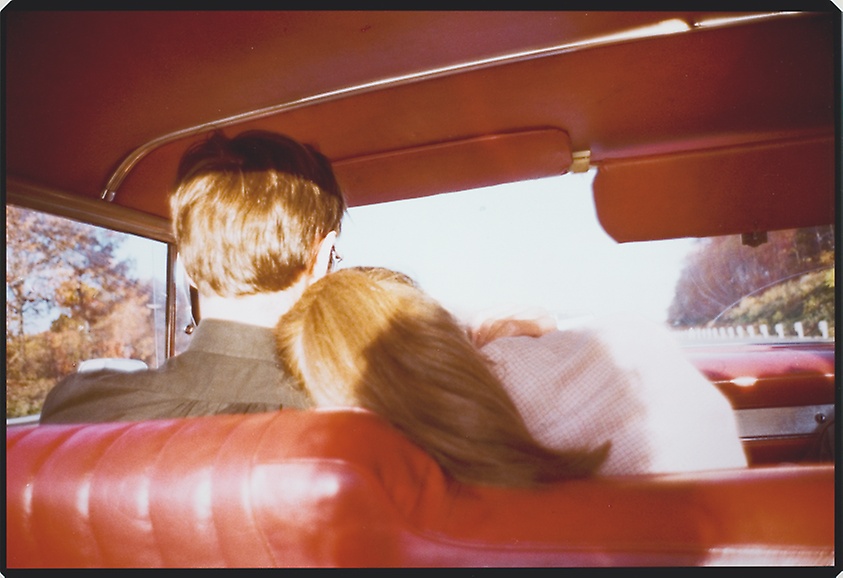
Featured Art: Kim and Mark in the Red Car by Nan Goldin
The repeated syllable in Toyota Yaris The “ya ya” at the heart of Toyota Yaris The 2 y’s that feel like 5 y’s and I’m far too wise to fall for the sound of it The roll around in your mouth of it The rounding of your mouth like the slow slope of the roof of it Toyota Yaris The squat hunched hood and the back half with the hatchback The silhouette like the cat arching its back Toyota Yaris The dash Toyota Yaris, the seat Toyota Yaris No part of the whole, no part of the car not Yaris The eighty thousand miles and counting, and counting The tires that ride round the edge of a dime Spin a donut so tight it’s a Hostess Donette By the grace of the artist who made the car Have Toyota will Yaris I didn’t know what my life was lacking, wasn’t looking for an answer to the what-is-my-problem, but one night I waltzed onto the lot and the rest as they say is Yaris To name the world is to change it wrote Freire and I am changed, enchanted by the chant of it You, Toyota, you toy, Toyota You, toy Toyota, yada yada Toyota Yaris. This is not sponsored content, it’s an incantation, a thanksgiving prayer Because a group of men at a table in a room invented a phrase that invented a feeling I think I really love you, you Toyota Yaris And how is it that that is a feeling that is?
Featured Art: Johnny Dunn’s Sandwhich Shop by Walker Evans
You want to go back is the name of your car, the make, the model, the name you give the swaying trees, the rustle of leaves before a thunderstorm as sun gives way to clouds and quiet falls on a meadow of grass and clover. You want to go back and ask the question. Or you dream it. Or it’s a movie with Walter Huston, the rumor of a movie at MGM, killed before shooting began. Nothing was written down, no minutes of the meetings, nothing but a few scraps of papyrus, of vellum, of cuneiform carved into stone, baffling translators. Or typed on onion skin, brittle and cracked in a box in the basement of the first house you ever bought, along with a fund-raising letter from Dwight Eisenhower, then president of Columbia University, and a water-stained circular from the Bulletin of Atomic Scientists warning of the danger of a full-scale atomic war. The temperature is dropping, the wind is erratic, swift and then calm. You want to go back.
Winner, Editors’ Prize for Prose, selected by Dinty W. Moore
He is standing there in a spattered white lab coat, holding up a bunch of carrots. I am standing here in the doorway, hoping I’ve come to the right place.
“You must be Jane,” he says. “Guess who these are for?”
From a few feet away, I notice his eyes. They are brown—so brown that I cannot see his pupils. I keep looking at his eyes, trying to nd them, trying to make certain that it is me, here, that he is looking at. His gaze makes me aware that I am actually a person standing here, in this spot—a person with a name, which is Jane, which he knows. I am not used to feeling seen. I am used to feeling invisible. It is unnerving—blinding even—to be seen by a person whose pupils I cannot see, a person who knows my name.
I am young, although I do not know it. Twenty-one. I confuse feeling seen, and this odd feeling of being blinded, for love.
“Yes,” I say. “I’m Jane.”
*
The job is feeding lab rabbits and washing beakers in the college biology labs. It is my third job this summer, on account of an argument with my mother. For the past four summers, I have worked at one of the jobs she got me. She is a legal secretary for the state of Oklahoma, and she likes to get me typing jobs. Since the summer I was seventeen, I have gone along with this. I can live at home and make more money there than waitressing or busing tables. I save the money to pay for the college, which is in Connecticut and expensive, even with the scholarship. I am not sure I deserve the college, so typing has seemed like a kind of penance. But it is beginning to feel dangerous. I will graduate in another year. I sense relief rising in my mother like a prayer. Finally, I will come home for good and she can get me on with the state. I will be a secretary, not for the summer but for life.
Featured Art: On the Shore by William Trost Richards
One of the abounding miracles of life on Earth is that somewhere at this moment a couple is sitting in their backyard drinking alcohol together. The lawn might be manicured or it might be overgrown with Devil’s Trumpet and Lantana weeds. The backyard might belong to one of their elderly parents who is lying in a darkened back room watching television as the couple imbibes India Pale Ale and mulberry wine. Though maybe it’s ethanol, because they just got news they can’t have children. Or cartons of coconut water because they just came back from the gym. Regardless of what they are swallowing and whether or not the backyard smells of cut grass, Asian barbeque, or the pheromones of raccoons, together they are watching the stars enter the sky one by one, like teeth rising up into the gums of a toddler as the crying of mosquitoes and horseflies being electrocuted in the iridescent bug zapper over-occupies the atmosphere. To the point that when the man says Freud would find the above metaphorical reference to teeth sexual, the woman can’t quite hear him. Instead she is contemplating the exacting way the man lifts the brown beer bottle to his mouth, as if he is heralding hound dogs through a horn; and about the way he opened his car door last week for the neighbor woman with olive skin and tattoos around her ankles, because she said her car wouldn’t start and she needed a ride into town to return an overdue library book and to euthanize her ferret.
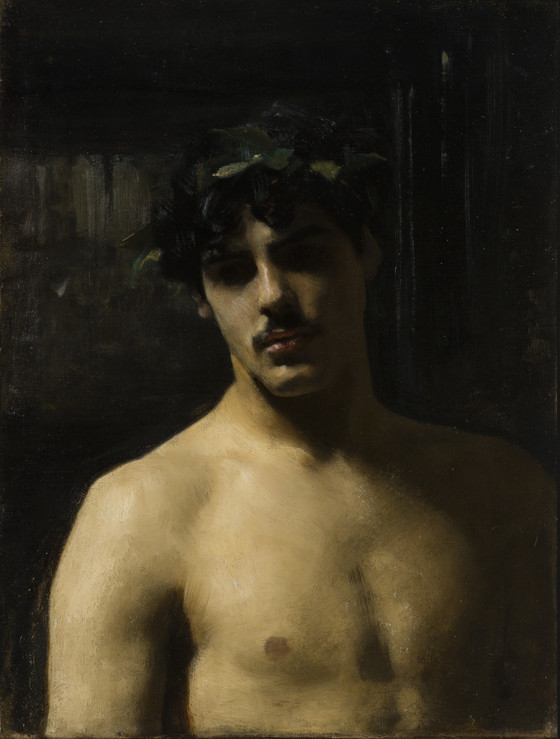
Featured Art: Man Wearing Laurels by John Singer Sargent
What if I were not a shallow person. Did not need an Arapaho blanket swaddled around me in order to sleep less fitfully. Did not need honey in my mouth. Or a handsome man to motivate me to shower.
What if we were all made of light. What if I was able to mimic an aviary bird, could hide all signs of sickness, did not spend hours making rubber band balls. We are all made of light. Yet we still make excuses for our egos’ devastations. Such as my mother preferred her polo ponies over me.
What if the seesaw were to come unhinged. And your dog bit you in the femoral artery while you were teaching your child to ride a bike. What if I did not need opiates to talk to you, could dress in a color-coordinated manner. What if I were backseat enough to never need to say another word.
After a year of rehab and therapy, the country western singer went back to writing songs; but he had changed.
Lyrics like, “Good Boundaries Make a Better Kind of Friend,” and, “When You Say Bye, I Feel So Violated”
—they simply didn’t have the punch of his best work.
*****
In New York, Famous Joe’s Pizza Parlor on Travis Street is suing Joe’s Famous Pizza on East Ninth Ave for stealing its name.
The battle rapidly grows vicious. The courtroom smells of melted, burning cheese.
If he wins, Famous Joe says that his attorney will get free slices for life.
*****
“Jesus had a great career,” says one of the students, on Monday morning, reading out loud from his assignment; then, sensing an uneasy silence, “Well, but he was famous, wasn’t he?”
*****
The mountain climber who actually made it to the summit, the place so many of his friends had failed to reach, got one great photograph, plus permanent damage to nerves in his nose and his ears, both hands and feet.
*****
“If I hadn’t dropped out of cooking school,” says Gretchen, happily, “I would never have mastered my Sunday morning waffles for screaming kids, which I believe will be my greatest legacy.”
*****
Why don’t you tell me about your life for a change? Did you carry it carefully, like a brimful cup of water, bound for a particular flower?
Or did you keep accidentally turning around to look at something else, and slosh it all over the place, like me?
Featured Art: Crouching Woman by Ferdinand Victor Eugene Delacroix
Sweetheart, if I suddenly flop over in the mall one afternoon while taking my old-person-style exercise and my teeth are chattering like castanets, and my skull is going nok nonk nok on the terra cotta tiles of the well-swept mall floor;
my tongue stuck out, my eyes rolled up in my head— Don’t worry, baby, we knew this kind of excitement might possibly occur, and that’s not me in there anyway—
I’m already flying backwards, high and fast into the big arcades and spaces of my green life where I made and gave away and traded sentences with people I loved that made us all laugh and rise up in unpredictable torrents of fuchsia.
Dial 911, or crouch down by the body if you want— but sweetheart, the main point I’m making here is: don’t worry don’t worry don’t worry:
Those wild birds will never be returning to any roost in this world. They’re loose, and gone, and free as oxygen.
Don’t despair there, under the frosted glass skylight, in front of the Ethiopian restaurant with the going-out-of-business sign.
Because sweetheart, this life is a born escape artist, a migrating fever, a convict tattooed in invisible ink, without mercy or nostalgia.
It came down to eat a lot of red licorice and to adore you imperfectly, and to stare at the big silent moon as hard as it could,
then to swoop out just before closing time right under the arm of the security guard who pulls down the big metal grate and snaps shut the lock in its hasp
as if it, or he, could ever imagine anything that could prevent anything.
Featured Art: Breton Girls Dancing Pont Aven by Paul Gauguin
All this passing on going on, almost as if it were contagious. Words you’ve recently learned spill easily from your lips: Wenckebach, biliary, Cetuximab, granuloma, the new bright colors of life. Just when you were getting bored with the pinks, purples, and greens on offer for almost seven decades,
you’d happily now trade blasts and plasma cells for brown or black or tan. But as surely and hard as you know how many platelets it takes to sustain life, you know that more new words will show up soon. Months ago you learned that “consistent with” means you have it, and, last week, that “refractory” means the treatment has quit working.
Now that you realize you’ll never learn Swedish, in secret and as a joke (to surprise your daughter-in-law with at dinner time), you understand it’s not that you’re running out of brain cells, you’re running out of time. You can’t learn sjuka and middag while you’re learning leukopenia and transampullary.
You never expected this. You never thought it would come to this! (That’s the funny part. Has it ever not been there?) Wake up and you will see it even now, gliding merrily in your direction, not even bothering to look you in the eye, as if you are the last thing on its mind—and if
you squint you will notice it gather a little speed (the teensiest of fuck-you’s), like a sailboat in languid waters a moment after the wind has shifted.
Let me begin by offering my condolences, I said, holding out my hand. She shook out her umbrella and placed it open, just beside the altar. They thought it was an ulcer, she said. They gave him some tablets. Did he have any special requests? I asked. Favorite hymns? Or something for Communion, like maybe Water Music? He was worse by Christmas, she said. He couldn’t manage the pumpkin pie. He always loved my pumpkin pie. The King of Love is nice, I said. I opened the book to page 64. As an alternate to Crimond, you know. Most people don’t recognize it as the 23rd Psalm. In January his feet turned black, she said. Toe by toe. It took exactly ten days. The shadow of a branch moved slowly back and forth behind the stained glass. I thought: When I get home I’ll check my toes. Will there be Communion? I asked, finally.
The last three days he started to hiccup, she said. He wouldn’t take any water. It never stopped, the hiccupping. Not once, not one minute until he went. I could play Pachelbel’s Canon. That’s very popular now. There’s no reason it can’t work at funerals as well as weddings. At the very end, she said—then stopped, her eyes squeezed shut behind her glasses—as if the rejected water, each wretched hiccup, and every blackened toe formed a chain she could use to haul herself back to September, when she would claim him, finally whole again. She reached for her umbrella and frowned. Play what you like, she said. He was never fond of music. Not hymns, anyhow. Only once in fifty-three years did I catch him singing. You are My Sunshine, I believe it was.
His kid doesn’t want a smartphone. His fourteen-year-old flute-playing boy is saying, “Nah, I don’t really need one.” Mitch’s wife Shelley says, “No one’s forcing you, honey.” She beams. The boy beams. Mitch feels a faint nausea. There’s something wrong with his kid, who still likes Legos and watches network TV and keeps his room clean and calls his two nerd friends on the landline.
“Well, that’s fine,” says Mitch. For some reason, he’s pitched his voice like an actor from a 1950s movie. He tries it again: “That’s just fine, son!” He’s speaking like a man wearing a fedora, a man carrying a briefcase. But nobody seems to notice. “So what do you want for Christmas?”
His kid, Ernie, frowns as if Mitch has just asked him to poke a kitten in the eye. “I can’t think of anything at the moment,” he says. “Can I go practice flute now?”
“Yes!” says Shelley. She rises from the sofa and kisses Ernie on the ear. “I’ll let you know when dinner’s ready. I’m making your favorite.”
“Brussels sprouts?” he asks brightly. “And Salisbury steak?”
“You bet,” she says. When Ernie has disappeared down the hall, she turns to Mitch. “Don’t force him to grow up before he’s ready.”
Mitch knows better than to argue, but he can tell that his thoughts—not grow up, just join the 21st century like a normal kid!—might as well be floating above his head like a comic book bubble. Not that Ernie would get such a reference, because he doesn’t read comic books, either.
“Okay,” he says, but Shelley has stomped down the hall to prepare the kid’s Brussels sprouts.
Featured Art: Ancient Roman Ruins by Giovanni Paolo Panini
–Rome
1.
My father fills a syringe with insulin, pushes the needle through his shirt into belly skin, looks through the window at his dying lawn. He writes a note to me: Summer’s early here, bud. Your mom’s still on me to lay off the Snickers. She means well, of course. The oak tree’s about to go—groans all night long. Caravaggio is one of my favorites. A sensitive scoundrel. Go see Conversion On The Road To Damascus. All is of Grace, Dad.
2.
Four lions stick out hollow tongues in the middle of Piazza del Popolo. Each tongue spews water—spilling down stepped plinths into four collection pools whose surfaces are mildly disturbed but never overflow. With their perspective of stone, the lions have remained unmoved for 200 years. How, I wonder, can they gaze without weeping at the sun-burned stoner strumming a distorted “Stairway To Heaven.” I stumble from one to another, dropping coins until my pockets are empty.
3.
When he baptized me, my father’s robe floated up around him like the wings of a manta ray, revealing the soft skin of his shins to the believers. We stood in a glass tank, with nothing to hide. He covered my eyes with a handkerchief, dipped me backwards into new life. I trusted his strong arms more than God.
4.
Fountains fill my photographs: pissing cherubs, horses with fish tails. Granite seashells emerge amid glistening mermaids— breasts taut in the exquisite way stone has of lying about flesh and time.
The nice teachers at the kindergarten open house point out the Unifix cubes and color game; they are professional in their analysis of play. Later at Lainy’s party the operators of Jump ’N Bounce just look away while the kids wrestle into an idyllic sense of self. A mother tells me, hushed, how one November morning Jason’s father parked the car and blew his head off. Then it’s time for cake. The kids are sweaty, tumbling over each other for a spot at the table. I search Jason’s face for a sign, a scar, but don’t find it—he’s waving a noisemaker in Sean’s face, his mother chatting pleasantly in the corner. Cue the birthday music. Next day, we’re late, and I walk my distressed son into school. “We might miss the eggs hatching!” he yells, bounding down the stairs. The class is huddled around the incubator, the glow from the heat lamp flushing their faces. This must be a rite of passage, watching a chick’s birth surrounded by friends. It’s on the docket, tailored to the lesson plan, deemed developmentally appropriate. It’s March, after all, when the world glosses over its losses.
I sit, Sister Mary, among the other relics in the Mission courtyard— a cracked vat for boiling blubber into lamp butter, a wood-wheeled cart to haul bear carcass to the butcher. Underneath the bricks, all the smallpox bones. And these three bells, Sister Mary, named Joy, Sorrow, and Gloria. What am I to do when they toll? Cast before I was born, each sings to me in a different key: G, E minor, and Chumash. Joy weighs 279 pounds and wakes roosting starlings, launches them from the parched oak tree, black leaves falling upward. Sorrow makes the wooden Indian in front of Founders Smoke & Tobacco weep. Gloria, Sister Mary, makes me shake. Sounding wilder as I grow old and tame, they ring in three tongues: red, wildfire, and October. Three bells, Sister Mary, three roads back. And one says you are the green-eyed devil. And one says the bears are gone. But one says, Glory, you are here, open your green eyes. There is a fountain, Sister Mary, a fountain not deep or wide, and into it tourists toss coins bearing the heads of our fathers, white and solemn and gone. A fountain with a bear and a girl and three fish all bronzed and greening from the air. Water spews from the paw of the bear, and the fish leap on their metal spindles, always inches above the troubled waters, and the little bronzed girl sees nothing with her blank Chumash eyes—not the fish, the white fathers tumbling head over tails, or me on my bench in the sun sipping from a bagged can while three bells toll their braided song. We are nothing to her, because she is long gone. And what am I to do? Bells tolling my guilt, solitude, privilege, joy. One, Sister Mary, sings the beauty of milkweed tufts blown down dry creek beds. One whispers to me the forgotten dreams of steelhead trout, and the sins of the fathers visited unto the third and fourth generation. And one orders my fingerprints pressed onto the black wings of starlings. And I can’t tell, anymore, Sister Mary, one from the other
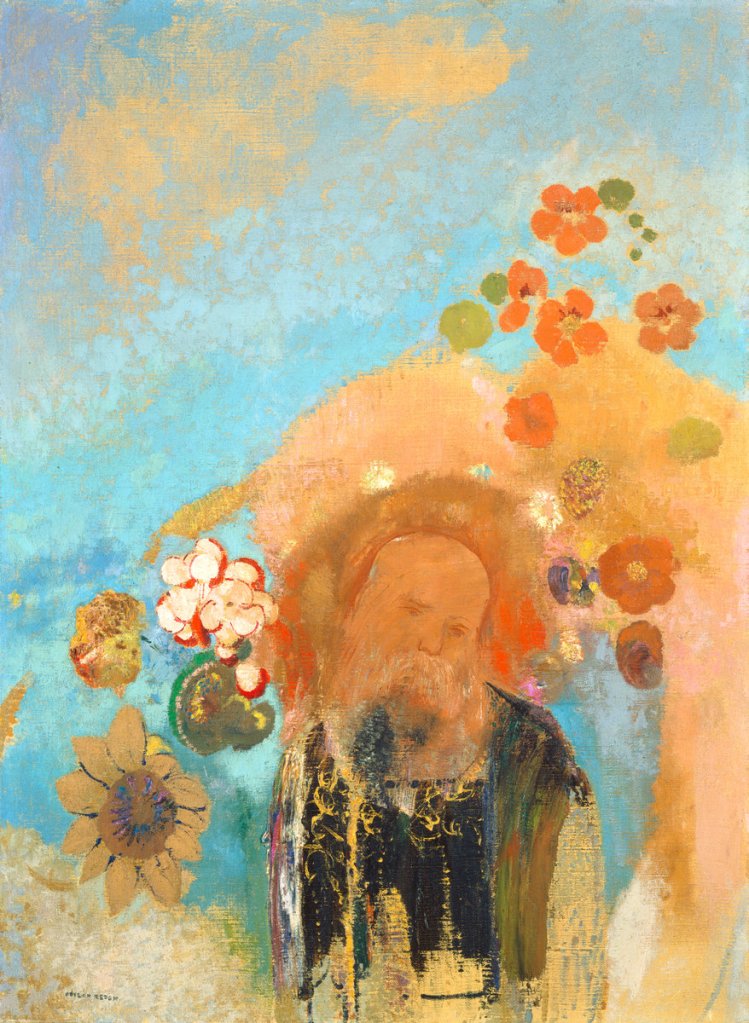
Featured Art: Evocation of Roussel by Odilon Redon
The letter came back from the post office so mangled it was as if the mailman had plucked it out of my box before being jumped by a clot of street thugs. Then, still carrying his mail bag, stumbled into a bar because it was the third time this year that he’d gotten jumped in my neighborhood, and why do guys gotta pick on him just because he’s short (under five-six don’t make a man, his father always said). Then drank scotch and soda until the bartender made him stop, walked the dimming summer streets in search of his truck, slept in a doorway, woke up and vomited into his mailbag, found his truck and skulked home to his wife, who had sent all four children to the neighbors and was waiting up in yesterday’s clothes, with a suitcase and a left hook brewing. Because she hated the late hours the USPS forced him to carry, and by “late hours” they both know she meant his cheating with the tiny Castilian woman two zip codes over, and this thought that poisoned her days now propelled her to stomp on his mailbag and kick it off the porch for all that the mailbag stood for: the overtime, the philandering, the childless Castilian with the twenty-two inch waist. But then when she saw his face with his eyebrows tipped and sorry, and she knew that he hadn’t been sneaking around, but had gotten into trouble, she sat him down, fed him coffee, and washed his wounds before sending him back out for his morning shift, because they both needed him to keep this job (there was a pension attached, she had secretly started divorce proceedings, was hungry for the alimony). And so he got back to work and wiped off the fouled, wretched letters in his bag, feeding them through the system before getting called into the supervisor’s, and because the letter was wet, it got mangled in the maw of a sorting machine, the address smeared and clotty, the stamp curled and dystonic, and three weeks later, once the mailman was off probation, the letter came back to him, smelling like machine oil and vomit, clawed and shredded, stamped “Return to Sender,” and he shoved it back in my mailbox with bite marks from the beast that had mauled it, this letter to my father on his deathbed, explaining why I wouldn’t be going to see him.
As my father hands me a bouquet of roses dyed the shade of a dozen sinking suns, my mother grasps his steady arm, teetering. Her body has begun its slow revenge for what it begrudged all along, and she’s afraid to walk since her last fall, which snapped her hip in half. My father is tired of holding her up. He scolds, Just take it. Her hand shakes as she holds the iPhone to get a photo of me in my mortarboard and hood. Let go and take it, he says, and she tries a one-handed snapshot, her trembling arm still looped through his.
I stitch a smile across my face. The phone flashes. As she grips his wrist, I can hear him in Greek, the language reserved for anger and, once, for sex. The language they speak and still think I don’t understand. Can I live this way, Tia? he asks.
I clutch my bouquet to my chest, trying to pretend these flowers aren’t lopped off at the stems. Trying to move into the next phase of realization that love is unsteady on its feet. That two people can resent each other, but care for their daughter and each other enough to stay put. Refusing to wilt into that place I’d go as a child—when I’d hear their fights and retreat to the backyard to play with cats, praying to make something else of myself, however small—I stand tall. How can I live like this? he says to her again. Still, I’m posing, smiling into the face of their slow decline. And all three of us trying, best we can, to hold each other shakily, and steadily upright.
By the third martini, he’ll ask her to marry him. She’s a tourist, he’s a captain, home by chance. I stand at the window, watching. I want to walk into that bar, order an ouzo, and tell them that, together, they’ll create a new generation of pain. I want to tell him to court the island girl, the one who, forty years later, will see him, run to the restroom, and return with a fresh coat of lipstick. I want to tell my young mother, in the words of the great North American philosopher, Pamela Anderson, “Never get married on vacation.” But this is long before Pam and Tommy Lee, before I existed. Before Reagan reigned over his long line of wreckage, and couples shot themselves, together, in their cars. The Vietnam War has ended, but here I am standing at the window, watching while they meet, both oblivious of wars they’ll wage. They’ll move from Greece back to the Midwest—she’ll drink, alone, in her kitchen. He’ll return to the island every chance he gets. When he’s back in Illinois, he’ll stare into the aquarium and long for water. She’ll look at him, frozen, behind her highball glass. Still, I stay at the window of the bar, wanting to use Pam’s biting wit. But this is long before Baywatch, and they’re gazing at the bay. I tap the glass like Morse code. Sealed in my own tank of silence, I say, Please let go. But as they take each other’s hands, I softly touch the pane and turn away. Because they, too, have the right to plunge. Even if they’ll swim out too deep: holding onto each other until death.
I was one of those kids that spent a lot of time on the internet. Chat rooms, message boards. ASL, S2R, and some gender tricks too. That stuff was normal in the Nineties. And it was all good clean fun until I fell in with some gun nuts when I was fifteen years old, the type of people that encrypt shit. Way down in the web. Amateur blacksmiths and whatnot. I got so into it I ended up putting together a makeshift muzzle loader out of Schedule 80 piping, cold American steel, something I saw on the blacksmithing forum. I tried it in the basement but it didn’t work so I got a slightly bigger ball bearing for ammunition, about the size of a marble. I took it to the backyard, propped it on some dunnage, put a flame to the fuse. And by god, it worked. There was this huge discharge, a cloud of smoke. It shot wildly though. Fucking hit my kid brother square in the leg. He was clear across the yard. Dad came running from the house. There was so much blood that none of it seemed real and after Dad stopped the bleeding he came at me and that’s the deepest fear I’ve ever felt.
But that all happened fifteen years ago. I’m an adult now, turned thirty recently. Lacey’s my girlfriend these days. We met at a support group for those that’ve been injured by firearms: Tuesday night, St. Vincent de Paul, where I was the only one whose wound wasn’t visible. It’s like Lacey says: “Pretty baby’s hurt on the inside.” When she was ten years old she was making herself a necklace out of scrap—a little bit of twine, whatever else—then she found the perfect final piece, this shiny gold thing. All it needed was to be flattened. She grabbed a hammer and that was that. It was a live .22 round. Went off in her face. Took a half-dozen surgeries to put her back together. As a result she’s permanently blind in the right eye, with a spiderweb of ice covering the whole thing; little scars that don’t look like much until they’re pressed together.
In Denver all days end standing up packed like dried fish dry-humping each other on the H Line. Some passengers in their drunken wobble or even in their haze of sobriety pull down hard on the rubber handles, the ones meant for standing, the ones that swing dumbly above our heads. They think this action stops the locomotive but the train is automated, stopping itself at Broadway then Osage, Lincoln Blvd. Since the train, as it always does, stops— the travelers learn to keep tugging & I can’t help but think this is how prayer works. Like when I prayed to a god I don’t believe in that your morphine drip might soothe the wounds that chemotherapy would not & how I swear it worked sometimes but didn’t others & yet in my drunken sobriety I believe that it was me who eased your pain, that it was my failed pleas that bleached your blood.
Featured Art: Seated Youth Writing in Book by Raffaello Sanzio
This all began because Mother was making tortillas. This all began with mothers and kitchens. We live in Crowley, Colorado, or maybe Rocky Ford, Colorado, a place where there are not a lot of doctors. We live in a place where there are always mothers in kitchens and daughters who wait nearby to watch their mothers watch the tortillas.
The year is 1949 or 1950 or 1951. I am nine or ten or eleven and not allowed to touch the stove. We have a wood-burning stove with a large at surface for cooking. I stand on the pile of wood at the edge of the stove to see the tortillas. I like to stand close to watch Mother. Father has a habit of kissing me on the back of the neck and I fall. It is the middle of winter and water from the well is cold.
I want to be like Mother. I have a rolling pin Father made me, small enough to fit inside my hands. Father is always making things with his hands. He makes things for me out of wood. Father has a habit of kissing me on the back of the neck. I am the youngest of nine and they say I am his favorite.
Mother hands me a small mound of dough and I flatten it with my rolling pin. I watch Mother put dough on the stove. I stand on the pile of wood at the edge to see the tortillas. I stand close to watch Mother place dough, perfectly round, on the stove. I am not allowed to touch the stove. Father has a habit of kissing me on the back of the neck and I fall.
I can hear the sound of my hands sizzling on the stove. My hands sound like a stick of butter in a frying pan. We have a wood-burning stove, with a large at surface for cooking. I like to stand close to watch Mother watch the tortillas.
Manuel relayed buckets of moist earth to the concrete stairwell. It was Héctor’s job to hoist the buckets up and ferry them over to the dumpster. They had to work quickly to keep the buckets moving or the Bangladeshi contractor, a slight man with a beard, would start yelling at them, “Taratari koro.”
The workers down below had broken up the existing basement floor of the six-story building with jackhammers and then used pickaxes to pry out the concrete. Now they were excavating eight to ten feet of earth to increase the height of the basement.
Héctor was grateful to work in the open air instead of underground like a mole with the thick damp air and the artificial light from lamps. It was also safer up here. The men in the basement would dig themselves into three-foot-square holes up to eight-feet deep and there weren’t even any planks of wood to brace the sides. Suddenly someone would look up to see the sides crumbling in on him. He suspected that the contractors didn’t know what they were doing. It was only a matter of time before a worker was buried alive.
Still, it was regular work, something Héctor hadn’t had in a while. He had spent several months going to the parada on Roosevelt Avenue, getting picked up occasionally for one- or two-day stints in demolition or renovation. He found this job through Jesús, a slim Oaxaqueño, always clean shaven with dimples and a broad smile. Jesús used to talk big on the corner about his influence in the construction world. The men would rib him. “So why are you here at the parada, dumbass?” It didn’t bother Jesús.
Featured Art: Hollywood Africans by Jean-Michel Basquiat
The person who took this picture took it well above the parking lot across the street. “Malted Milk with Ice Cream” cost five cents once. Leroy’s on the corner sold “knishes frankfurters and root beer,” and the cars and everyone stopped moving for a moment so this proof could be snapped of the way a few things stood at the corner of Essex and Delancey sometime between the Fall of Rome and now. Which is also falling.
In the upper-right-hand reaches of the shot, a line of laundry sags out of a tenement window. The other end seems suspended in air, like everything else, both in and out of the window, the photo, the cowl of dust that wraps the earth in its own heat. Damn, said Napoleon, and he turned his horse and started back across the steppe toward Josephine.
The half dozen newly planted trees lined up in their iron jackets along Essex were leafless, so winter must have been on its way, in or out, we can’t tell. The little lie the picture tells is that, though everything is about to change, it brought life to a halt, so someone could open the door, now, and let in a large whack of dust and noise, the kind they make no room for in pictures, passing them on to the woman in the next booth who is giving, maybe the air, maybe her mother, a colorfully athletic lesson in Spanglish, involving, from what little I can make out, most of what we call history, as it’s apt to look when the future gets here, and “that fucker Reynaldo.” I have no idea what Reynaldo’s crime is, but, if you are listening, Reynaldo, get over here, quick, if you don’t want to be history.
Every Thursday, on his way to therapy, he drives past the house of the woman he’s having an affair with. What interests his therapist isn’t the sin, which she views as a symptom, but the root. So they dig, or seem to, and today he talks about his wife— how, before they take a trip, she makes him connect those timers to lamps in certain rooms, and how much this annoys him, even though it didn’t used to. As if their belongings were of value. As if an automatic light might stop an addict from breaking in. As if the thief, awake beside her, had not already come and gone.
You taught me how hands could be laid, how they could touch a head and heal, but all of those hands eventually fell limp like a field bent by threshing or a lit match dropped in water. Once, we used to dance in The Corner Tavern’s neon light where the pickup exhaust wafted inside like harvest dust. Life in the Midwest is like one long goodbye because it is the same every day, and I didn’t realize you had left until there was nothing but hard work and long days ending with the wind’s silent dirge that sounds like trying not to die but always dies in smaller ways— screen doors that slam closed but don’t shut all the way because the house has settled and the roof is warping from the sky boiling over with thunder and rain. I wake up now to the flashing falling from the gutters and the water dripping through the holes in the ceiling. All I do is recall your voice like a prayer thrashing my skull that mines the night begging our fathers our fathers our fathers in prayer, but they are off begging other women in other towns. This town is not the memory I want, but I know how sadness works. It’s like a kettle-bottom collapsing onto the details of every thought. I shouldn’t have, but I stayed in town to try and keep what I love alive, but no that never works. We were a long time ago and a long time ago is too hard to get back. The last time we talked you said, We will end up like our mothers— waiting for nothing. Then you didn’t come back. No. Not ever.
Featured Art: Murnau Street with Women by Wassily Kandinsky
She took him as one would take a deep breath or a second chance, though some days she doubted her own judgment, as when his silence held them hostage at the dinner table or rode with them like a soldier sent to notify the next of kin.
She wondered then if she could ever know him beyond the familiar stirrup of his collarbone, moles forming a perfect Cassiopeia on his back, fingers tying intricate knots in monofilament line. And what could he possibly know of her? Dust, a whirling skirt,
between the windmill and the barn? Scent of juniper, wild onion beside the garden shed? Her mother’s curls pinned tightly against her scalp, or her father’s glacier blue eyes gone milky with forgetting? How could these mean anything to anyone but her, divorced as they were
from the lazy swing of the pendulum? And what of those other lives smoldering now under dry grass? Their stars are still there, she tells herself, even in daylight. Even at night, their suns continue to circle and burn in a world of space and time. We all should be so lucky.