
Category: Uncategorized


Heat Index
By Kerry James Evans
Featured Art: “Ursa Major” by Madara Mason
Summer, but not cantaloupe-ripe summer,
not tomato-ripe, not watermelon-ripe,
not making love with the windows open,
riding downtown at midnight
with the top down, radio blaring
another teenage pop sensation
too-bland-to-be-offensive summer.
No, it’s burnt sod, thunderstorm summer.
Don’t lie to me! It’s a World Cup summer.
Don’t lie to yourself, Son. Get up
and drink that Dr Pepper. Another
bullets in the street summer.
Another blood-hot, angry Apollo
chasing the ice cream truck with a buck
for a Popsicle kind of summer.
When the walk gives way to dandelions,
gives way to Charlie Chaplin,
then Charlie Murphy walks into Tick Tock Tavern,
and what? Want a punch line, Punk?
You’re only smiling because you’re scared.
The kind of summer that makes you
beg for winter kind of summer.
That fear-riddled mangy dog summer,
and don’t the butterfly weed
smell like petunias to a dirty-minded Monarch?
Go on and tip your crown into the lake.
Read MoreThe Poetics of Blues
Featuring interviews with Kiese Laymon, Tyehimba Jess, and Derrick Harriell, as well as new poems by Angela Narciso Torres and Eleanor Kedney. Plus, Blues poems, essays, and a story from the NOR archives.
Perpetual Reckoning: An Interview With Kiese Laymon
“For me the blues is the perpetual reckoning with what should be agony, but finding ways of making that reckoning pleasurable. The agony and the pleasure exist right up next to one another. The question is how do we most effectively hold ourselves together through the pain, through the suffering, and through the agony? My history in this country teaches me that you have to do it through art. That doesn’t mean the art that gets sold. But the art of talking. The art of listening. The art of making sounds. The art of rhythmically manipulating repetition, which I think was really at the core of the blues.” – Kiese Laymon
Interview conducted by Josh-Wade Ferguson
Read More
Harmonica
by Eleanor Kedney
When it was clear my brother
wouldn’t kick his drug addiction
and return to all the things he was great at—
baseball, tennis, downhill skiing—
he still played the harmonica.
Once, at a summer wedding, in the lull
between the toasts and dessert
he took the band’s mic,
tossed his curly hair to one side,
and put the blues harp deep in his mouth—
puckered lips, blocked tongue,
the bending sound like a train
going through a tunnel.
My mother stood and clapped.
That’s Peter, she kept
saying. That’s Peter.
His eyes closed
to everyone in the room.
“Not Fade Away” took all his breath
to play.
Pantoum With Lines From Lucille Clifton’s Memoir
by Angela Narciso Torres
It’s a long time after, and I just wanted to know.
What was it like on the boat?
I wonder what became of our Mama?
And they would just rock and rock.
What was it like on the boat?
Oh slavery, slavery, my Daddy would say.
And they would just rock and rock.
Even the good parts was awful.
Oh slavery, slavery, my Daddy would say.
In history, even the lies are true.
Even the good parts was awful.
She walked from New Orleans to Virginia. Eight years old.
In history, even the lies are true.
Slavery was terrible but we fooled them.
She walked from New Orleans to Virginia. Eight years old.
We come out of it better than they did.
Slavery was terrible but we fooled them.
Don’t let nobody tell you them old people was dumb.
We come out of it better than they did.
Things don’t fall apart. Things hold.
Don’t let nobody tell you them old people was dumb.
Our lives are more than the days in them.
Things don’t fall apart. Things hold.
I only wanted to find out about these things.
Our lives are more than the days in them.
I wonder what became of our Mama?
I only wanted to find out about these things.
It’s a long after, and I just wanted to know.
From the Archive: “Audition”
by Leslie Rodd
Originally published in New Ohio Review Issue #20
San Francisco, 1969
Outside the jazz club where I’ve been audience, player, and piano tuner over the years, it’s quiet at this sunstruck ten o’clock, and I have a shivery thought of a guitar and a girl that began inside my head last night. No rocking, no rhythm, no foot-stomping or window-shaking. Only the fifty measured strides I’ve counted from the corner where the 30 Stockton dropped me off, past the police station to the alley, the dip in the pavement and the sloping rise, the manhole cover to my left, yes, here it is, the last of my landmarks, reassuring me I’m in the right place. A thought of a girl, who used to make my music glow.
2018 Winter Exclusive
Featuring stories by Caro Claire Burke, Daniel Paul, Jonathan Durbin, Frankie Barnet, and Gunnar Jaeck, and poems by Kateri Kosek, David O’Connell, Christopher Brean Murray, Dylan Loring, Lance Larsen, Cody Wilson, and Susan Ramsey.
Dark Matter
By Caro Claire Burke
1.
The mother and father received the news on a Friday afternoon and were in the car driving south an hour later. They drove until midnight, then checked into a Courtyard Marriott for five hours before hopping back onto the road at dawn to cover the last hundred miles. They were silent in the car, which was strange: in their twenty years of marriage, they had never run out of things to talk about. There were, of course, things to talk about now—perhaps more than ever before—but neither the mother nor the father could find the words to start the conversation. By the time they navigated through the college town and parked at the police station where their son was held, they were both exhausted, irritable, and fit to burst with all the questions they’d swallowed on the way down.
The police officer behind the desk looked up as the entrance bells went off. “You must be the boy’s parents.”
The father stepped forward to shake the police officer’s hand. “That we are. Where is he?”
The officer was jovial to a fault. “Just down the hall a ways.” He turned toward a door in the back and waved an arm at them to follow. But the mother and father were silent, almost frozen, and at that silence the police officer turned around, his hand on the doorknob. “Hey, now,” he said. “Now’s not the time for that. Your boy is pretty shook up. He could use some support. Between you and me, these cases happen all the time. My guess? Your boy will be out of here in no time, clean record and everything.”
Read More2018 Summer Exclusive
Featuring stories by Mari Christmas, Scott Koenig, LaTanya McQueen, JH Bond, Tamar Jacobs, and Traci Sauce, and poems by Mark Williams and James Lineberger.

The Red Bird
This story originally appeared in New Ohio Review 8. Here, Joanne Serling, author of the new novel, Good Neighbors, reads for our NOR Audio feature.
Illustration by Devan Murphy.
Hurricane, 3rd Day
By Melissa Studdard
We hid in the belly of porcelain. The world
sang sirens overlapping, the sound of wind
taking gates from the hinge. That whistling, yes.
Whistling and whipping, the world the cry
of a cow caught in the spin of a twister and lifted.
Water creeping to the back door like a thief.
It wanted the jewels of our eyes.
In the house next door, a woman breastfed
another woman’s baby, the thin-sweet milk.
Across the street, a man wrote social security numbers
on his kids’ arms with a Sharpie—a game, he said.
And in our tub we held the news in our palms:
forty dogs from a kennel rescued by boat, a guy
on paddleboard heaving toddlers from a window, one
by one. And trapped across town, a shop full
of bakers sleeping on flour sacks, baking all day—
they slept and baked, slept and sprinkled.
For whoever might need. Not even sampling
or licking a finger. Once, I thought humankind
brutal and nature benign—foolish child
with my frog in a box, my holey lid.
Once, before, I asked to be delivered.
O sugar-hungry God, the world
has been dredged and is waiting.
Read More

Love Story in an Alternate Universe in Which Small Talk Is Answered Honestly and in Detail
By Daniel Paul
I run into her on the street. We haven’t seen each other in a few years. “The weather is really nice today, especially for winter,” I say.
“I know,” she says. “It’s been so gray and depressing lately that I’ve been thinking a lot about how much I hate living here. Or at least I hope I hate living here. Otherwise it means that I just hate living in general.”
“No,” I reassure her. “I’m sure you just hate living here; this city is terrible.”
“I feel a bit better today,” she continues, “though it’s probably only warmer outside because of climate change, which makes me feel like enjoying a day like this is stealing joy directly from future generations . . . which I guess is okay, because I don’t want to have children: babies look like aliens, and I can’t even keep a houseplant alive; honestly, sometimes I don’t even want to keep the plant alive; I’d rather lord over it with my power to decide its fate, though that’s probably just a way of rationalizing the fact that even if I did want to keep a plant alive—to feel like I was contributing to the cycle of life and warmth even if just in my living room—I’m sure I would fail somehow and it would die anyway.”
Read More
Surfacing
By Kateri Kosek
When copyediting the small-town monthly, things press in.
Chair yoga. Croquet. Bears that pull laundry off clotheslines.
Someone following GPS drives onto the dam,
slips off the narrow bridge.
Someone unscrews his neighbor’s porch light, gets caught on surveillance.
He said the light was annoying at night but promised to stop doing it.
(Why live here, if you can’t see the stars?)
Fire alarms.
Unattended fires.
Every month more news of the lake’s battle with Eurasian milfoil—
who will come to study it, to harvest it, to keep the lake from clogging up.
How to keep it from fragmenting, spreading.
(I don’t know Eurasian milfoil from the next lake weed
but I’ve given up worrying about them.
I swim on the surface, don’t put my feet down.)
I learn: the cereus plant, a desert native, blooms just one night a year
and has an exquisite scent.
Spider wasps encase their prey in mud; their larvae
eat spiders for a week then spin a silk cocoon to spend the winter in.
Petrichor is a husband-wife duo who will be exploring the sound world
of the musical instrument digital interface.
More importantly, it’s the word for the smell of the forest just after it rains.
The school is closing (hardly any school-age children!).
The historical house is holding a swanky fundraiser.
Guests will have a marvelous time while enjoying the stunning poolside views.

Parliament Lights
By Jonathan Durbin
It is too early to be up when the girl rises to pack. Winter rain taps the window but otherwise outside the street is silent and dark. No joggers or dog walkers or idling delivery trucks. No cars, not yet. No sign of Mike Lavoie.
The girl wishes for a cigarette but there isn’t time enough to smoke. She isn’t allowed anyway. There is no smoking in the shelter, the boy made that clear. If she smokes there they’ll be forced out and then where will they stay? Her mother’s? Nowhere is safe. Not anymore. The boy rolls onto her side of the bed, his hair thick with night grease, and mutters into her pillow. It sounds like You know better.
Their luggage lies open on the rug at the foot of the bed. The girl and the boy agreed to take just the one suitcase. Any more luggage and they’d be weighed down, that’s what he said. They might have to leave the shelter in a hurry. But the suitcase is half-full and they’ve barely the things they’d want for a long weekend. A fraction of their socks, a sampling of their underwear. A small quota of tees and jeans and hooded sweatshirts. Her things and his things thrown together, mixed up inside.
They argued about this last night, like they argued about it the night before and the night before that too. The girl cannot imagine how they will pack everything into a space so small. Fear of mistakes has led her to dither and ask the boy’s opinion about silly things. Which Nalgene bottle he prefers. If they should buy instant coffee or grounds. If it’s all right for her to bring whiskey.
Stop worrying, he has told her again and again. The shelter is equipped to last a long time. Months, maybe a year. Mike Lavoie has stocked it with tins of tuna and bags of salt-cured pork, iodine tablets and a generator and fresh batteries for flashlights. Oxygen canisters and Ibuprofen and cases of disinfectant wipes. Two motorcycles with full tanks of gas, and all the bullets and rifles they’ll need to hunt or defend the land.
Read More
Told You So
By Craig Bernardini
If I had a choice
between being wrong
and the world dying—
you know, the oceans
turning into lemon juice, the air
to Lysol, the forests
cinder, tundra
swamp, shipping lanes
jammed with dead
polar bears, Manhattan
a gondola, the world,
a Gondwana of dengue—
I would, of course, choose
the latter.
And maybe, just maybe,
clinging to the last
antenna of the last
skyscraper to be swallowed
by the waves, pointing
my big fat finger
at the dead world,
and at all the mother-
fuckers who did it,
shouting, Told you so,
Told you so—maybe,
as the water was closing
over my mouth, I’d understand
how we got into this mess
in the first place.
Read More

In the Borderlands
By Kateri Kosek
Today on the back-roads, where Connecticut
and Massachusetts bleed together unnoticed—
the large, gangly silhouettes of two llamas
weaving across the road ahead of me, not
where they are supposed to be, where I always
pass them, stoic and shaggy amid a spread
of crumbling outbuildings.
A young woman has stopped.
She gets out of the car and I stop too,
and more llamas rush out from the broken gate,
ears erect like horns on their pert pedestal heads.
I wonder for a moment, could they hurt us?
These animals we usually see standing still,
chewing dumbly while we gawk?
We forget their long legs, forget
they can move.
But they head for the field
and there’s something exhilarating
about their sudden temporary glory,
the larger world asserting itself
in the form of llamas on the loose, llamas
spreading through a whitened February field
and no one around who can stop them.
I should mention, I had been crying.
Starting for the door of the farmhouse,
I hear someone coming out.
Fucking cocksuckers, he drawls, this older man
we can’t see, as if the llamas plotted this breakout
on a regular basis. Jesus Christ Almighty—
adding a new dimension to my image of the cluttered
farmyard, hushed and exotic, too much to take in
though I always slow down, riveted
as I am now, but I drive away
and leave him to it, lifted.
Read More
National Pastime
By Daniel Paul
Walking in the West Village, I stop at the park on Clarkson Street to watch some little league baseball. I lean against the chain-link fence and am grateful for how its curves accept my weight without comment or judgment (as I imagine the inside of a whale might). A man is standing near me; he speaks in easy platitudes, and I nod along, not so much because I agree with him—for example, he says the weather is perfect, and all I can think of is how one of the clouds looks like you and the other looks like Nixon and how I’m in no state to rank omens in terms of their relative inscrutability—but rather because I really like nodding: as with launching a satellite, once you’ve done the work of getting your head to the top of its apogee there is a pleasing feeling of submission to a higher power in letting gravity complete the act. The man, who I decide to name Bubba (because I have never met a Bubba and fear if I do not take this opportunity, I never will) tells me that its been a crazy year for the team, though I don’t know which team he is referring to (one is in blue, the other green, and I wonder if I’m the only one who is bothered by the fact that the team whose shirts do not have piped collars is the one sponsored by a local plumbing concern).
It’s been a crazy year for all of us, I say, unsure of what a “sane year” would look like.
Oh yes, he answers, lots of ups and downs for the squad.
Don’t I know it? I say, and with each nod I become more emotional about the (no doubt unjust) obstacles that the team has faced as they have tried to do nothing more than live their lives and play some baseball on Saturday afternoons.
Bubba does not look at me as he speaks, keeping his eye on the field (and I wonder if he is actually talking to someone on his other side instead of me, and, by extension, what percentage of the conversations I’ve ever had did not actually require my involvement). He says that the team has struggled with fundamentals.
Read MoreEuropeans Wrapping Knickknacks
By David Kirby
The Roots of Phobia Lie in History
By David O’Connell
I hate their tiny hands, the silent-screen-villains’ way they have
of rubbing them together, chest-high, as they squat on countertop
or wall and stare me down with gas-mask goggle eyes.
Hate how they materialize from clear blue sky to picnic, to garbage,
to shit. It’s their disregard. Their monotonous, dull thudding—wings
to window—so persistent that it bullies my attention. As does
that intermittent buzz, somewhere in the house, taunting me to try
and stalk it down. In swarms, if possible, I hate them more. Despise
their ganged-up arrogance, the lazy way they rise—helicopters
from midtown—when I approach each mutilated victim of the cat.
But it’s more than that. If not a full-blown phobia, my aversion’s
on the spectrum. And I believe them, those psychiatrists
who guess true phobic hate (blistered, crippling) may indicate
that terror’s being leeched from something other than experience,
that, right now, somewhere in my genome’s mud, there lies
a clutch of rusting drums leaking grim ancestral memories: flies
inside the suppurating wound, flies on the gangrene rot, flies
alighting on the child too weak—or worse—to brush them off.
And if that’s true, wouldn’t it account for why I sweat
when I catch sight of one upon my pillow or hear its stuttering hum?
No. Not entirely. Terror’s well delves deeper. Its waters seep
from hollows in the Id infested with the blind, albino worms of nightmare.
And more than suffering, more even than the thought of the loved body’s
eventual decay, its stench a honey drawing clouds of flies to mate
and lay those eggs that, hours after death, make cold skin pulse,
then writhe—more than this, it’s what comes after that fuels phobia.
A History of Clouds
By Christopher Brean Murray
You can think while walking, running,
washing the dishes, reading, grocery shopping,
or sleeping. Driving across Nevada at night
breeds thoughts—they leap from sagebrush
like jackrabbits into your high beams.
Most people can’t think while writing.
They have ideas, yes, but not thoughts.
Anyone can snatch an old idea out of the dust
and show it around. Trying to think
will invariably prohibit thought. I thought
of writing this poem while driving to work
this morning. I made sure not to
think about it much. The wind swayed
a stoplight until it turned green.
A man in a yellow tank top leaned
into the window of a parked car.
It was not yet 8 a.m. Wisps of cloud
coursed though the sky over Houston.
Someone should compile a book
called A History of Clouds. It could be,
among other things, an anthology
of descriptions of clouds, from novels,
from the love letters of exiled princes.
Shakespeare’s “pestilent congregation
of vapors” speech would appear, as would
Mayakovsky’s “A Cloud in Trousers.”
Clouds aren’t mentioned much in the Bible.
God did, however, call to Moses from inside
a cloud. Enoch speaks of “the locked reservoirs
from which the winds are distributed.”
Crane’s “To the Cloud Juggler” and
Stevens’ “Sea Surface Full of Clouds”—
and that passage from Gogol where
a cloud slithers over Nevsky Prospect.
It stretches and coils and becomes an intestine
embracing the anxious protagonist until we realize
he’s being suffocated by his thoughts.
Somewhere Rilke speaks of “vast, ruined
kingdoms of cloud.” That, from the love letter
of another exiled prince.
Read More
A History of Clouds, film by Caitlin Morgan
Christopher Brean Murray’s poems have appeared or are forthcoming in Colorado Review, Copper Nickel, Epoch, jubilat, Pleiades, Plume, and Quarterly West. He lives in Houston.
Caitlin Morgan is an independent filmmaker. She splits her time between New York City and Michigan.
Mexican Standoff
By Dylan Loring
This summer afternoon on the blacktop
of an elementary school playground
Steve and Rachel have their guns pointed at each other,
as tends to happen every once in a while
between two people who have dated for months,
that is, until Chet shows up brandishing his revolver at Steve,
causing Rachel to complete the triangle by shifting her gun
toward Chet, at which point, Steve says, “Well lookie here.
Seems like we have ourselves a Mexican standoff!”
which makes Rachel say, “Wuh? None of us are Mexicans.”
“I could call my bud, Raul, if you put your guns away,” Chet says.
“That would ruin our Mexican standoff!” Steve says.
“Adding a Mexican to our Mexican standoff
would ruin our Mexican standoff?” Rachel asks.
“Have you ever even been to Mexico?” Chet asks.
“A Mexican standoff,” Steve says, “occurs when each person
in a given vicinity has both a gun pointed at himself
and his gun pointed at someone else.”
“Or herself and her,” Rachel adds.
“Sounds to me like a gun deadlock
or a James Bond-high-stakes-poker-thingy,” Chet says.
“Mexican standoff is just what it’s called,” Steve says.
“I could sure go for some Mexican food
after this . . . Mexican standoff,” Rachel says.
“Are you sure it’s called a Mexican standoff?” Chet asks.
“It sure sounds either made-up or racist or both.”
“It’s not racist, it’s just what we call it,” Steve says.
“You mean like how we call the Washington Redskins
the Washington Redskins? Because that’s still racist
even though it’s the name of our local football team,” Rachel says.
“Go Redskins!” Chet adds. Chet is an avid football fan.
“The Mexican part of the Mexican standoff
is literally the least important part,” Steve says.
“You probably mean figuratively.
People almost never mean literally,” Chet says.
Aphorisms for a Lonely Planet
By Lance Larsen
1
Conception, gamete meeting gamete, cells dividing and differentiating. Who wants to imagine themselves coming into the world this way? Instead think of your parents as amateurs lying down in the enchanted dark and rising up as seasoned weavers of light. Picture fire, with sparks flying off. One was lucky enough to catch—and now pulses inside you. Listen to yourself breathe.
2
Like a rolling billiard ball we touch the world one green millisecond at a time.
3
A good story possesses its own magnetic north, to which every vibrating sentence must point.
4
To live is to doubt.
5
At the exit of the Paris catacombs, which houses the remains of six million sleepers, the guard looked me over, then fanned a flashlight into my backpack: Any bones, any bones? No, I said, then smuggled my skeleton into the morning.
6
Should I read Descartes or listen to Motown? Depends whether I want to interrogate my doubts or slap them on my feet and dance them under the table.
7
The young are young. The old are young and old at the same time. You have to be old to know this—that’s the problem.
8
Seek labor which both tires and renews.
Read MoreBox in a Closet
By Faith Shearin

Slutty Rush
By Frankie Barnet
All throughout my girlhood it was my primary ambition to be as dumb as possible. My father was a professor of mathematics who attempted to teach me algebra at age nine and preached discipline and rationality above all else. My mother was a reform Hutterite who cut her own hair. He once bought her a Costco membership for Christmas and she went only once, finding the experience gluttonous.
I had a best friend in this youth, a girl named Kelly who lived down the block. At her home I tried many foods for the first time: sushi, avocado, specialty cheese. I once saw her parents dancing without any music playing on my way to the bathroom while she and I watched It Takes Two in the basement.
Yet still, despite these differences in our home lives, Kelly shared my dream: to be weightless from a lack of knowledge. To float up and up and up. Away and free.
Our favorite thing to do together was to play a game in which we imitated two girls from our grade at school who were so dumb it was impossible. Their names were Stacey and Sasha. In addition to being idiots they were also sluts, a not uncommon pairing Kelly and I both coveted. “Like, totally,” we’d say, pretending to be them. “Like, oh my gaaaawd.” “Like, like, literally like.”
During the summer between ninth and tenth grade, Kelly and I walked through the river valley playing our game (“So oh my God, what did you, like, do last night?” “So I like literally boned Matt G. soooo bad!”) when we spotted an injured rabbit just off the path and decided to pick it up. Dumb, right? Just the kind of thing we, as them, loved to do.
“He could be, like, our baby.”
“Let’s take him home, like, literally.”
“Oh my God, because I’m pregnant, like, from boning all the time.”
“Totally pregnant, and I don’t literally know who did it to me.”
Read MoreASL on Memory
By Cody Wilson
Here is the sign for remember:
With one thumb, pull a line
from the spool in your forehead and set to tether
on the cleat of your other thumb.
Now the hull of your head can stay
docked to this thought.
Here is forget:
Wipe your forehead with fingers
—the sign of relief—then pull
them into your palm.
Except your thumb. That sticks up,
like there is something good about this.
(Click “Read More” to see this poem signed by Kirsten Pribula)
Read More
from Real Things
By Nicole Hebdon
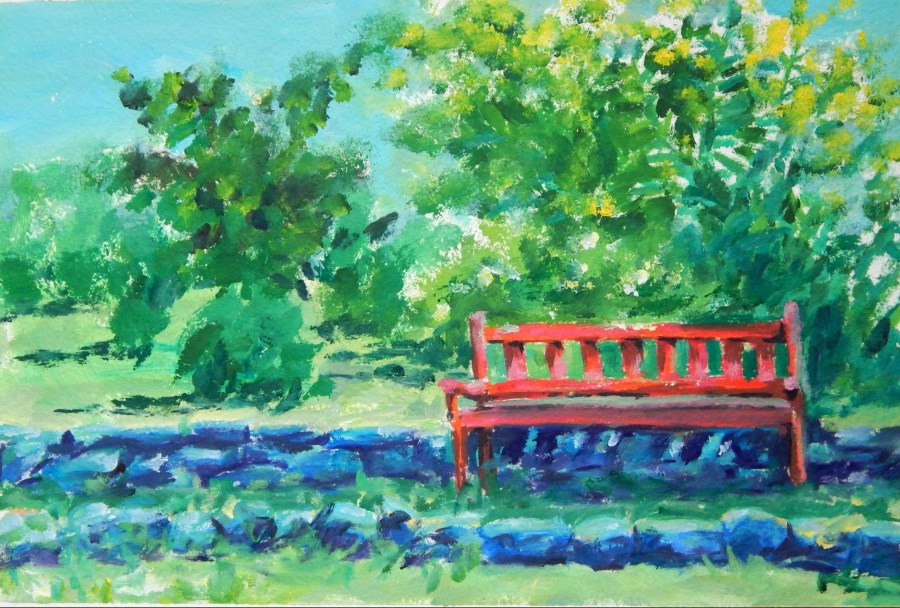
Fugitive
By Susan Blackwell Ramsey
Knowing everything fades—youth, love—doesn’t excuse
using red lake in a painting you plan to sell.
Red lake is the bad boyfriend of pigments;
red lake invented ghosting. That bastard Whistler
would use it, take the money, then ignore
the outraged complaints that rained down later
when the red faded away without a trace.
Colors that don’t last are called fugitive.
So many ways to make pigment—dirt, rocks, bugs
plucked from cactus and crushed. If pigment, then art.
We so want to believe that art preserves.
Oh, over the centuries art may lose a nose,
an arm or two. “Very fragile, penises,”
Alice Neil said, sitting below the statue,
but the medium itself, the stone, the paint,
shouldn’t be the agent that betrays.
Some betrayals are worse than others. Poor Seurat,
with his complicated theory of optics,
where the brain blends tiny dots of color.
Its demonstration, his La Grande Jatte masterpiece,
used, for its intensity, zinc yellow.
Within a few years it faded to dull ochre,
passion to affection to indifference.
By that time, mercifully, Seurat was dead.
Pigments that last may come from minerals
ground to powder. Lapis lazuli,
only found in the mountains of Afghanistan,
is expensive, cinnabar can poison you
with mercury. Other pigments, red lake, for one,
are organic and we know the problem there
all too well, don’t we, being organic ourselves.
Seurat didn’t know, and Whistler didn’t care.
But Van Gogh? Paintings of iris and of roses,
three of each, those six paintings the whole exhibit.
White roses on a blue tablecloth, blue iris
against a white wall. Yet that tablecloth,
that wall, were pink, the roses shot with red,
the iris were purple. The red lake is gone.
Surely he didn’t know? But there’s a letter:
“Paintings fade like flowers,” he wrote to Theo.
“All the more reason to boldly use them too raw,
time will only soften them too much.”
Where is your first love today? Your second?
Read More
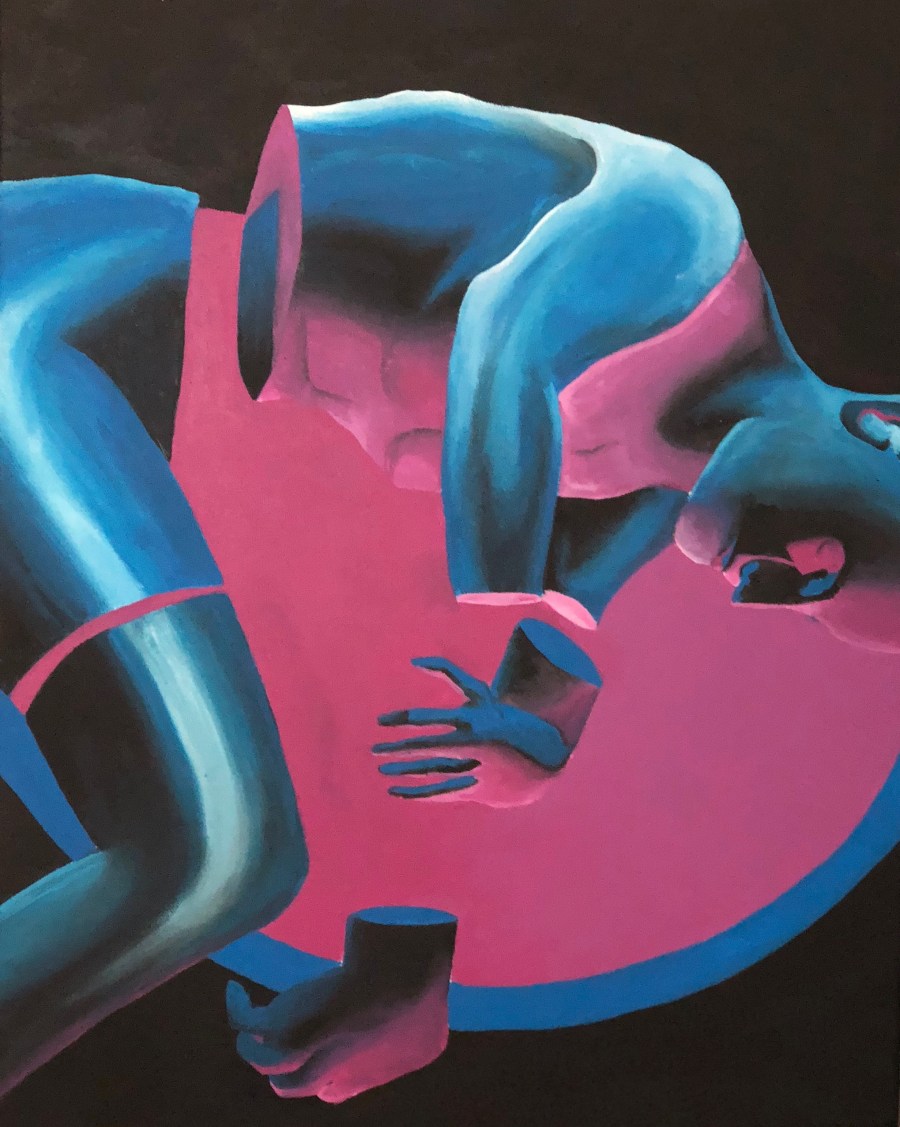
Lower
By Gunnar Jaeck
Featured Art by Emma Hamilton
Two men watched fireworks from a rooftop on the night that the alien landed. One man was Scott, who had inherited the house from his father, who had built it with his own hands and, according to his will, had been buried in its basement. Scott thought that was kind of weird, but those were the man’s last wishes, and last wishes are what they are. The other was Lucas, who had brought over the cooler full of Duvel, which the alien’s landing pod incinerated. After the alien slithered, skittered, or shivered out of the pod (it depended on which section of the alien’s body was exiting the hatch), the pod lifted off on its own and zoomed back up into the boom, crackle, and hiss.
Scott and Lucas backed up until they reached the edge of the roof. The alien waved feelers and glowed red from sucking orifices as it came closer. Scott had a feeling that the alien wanted to communicate, but its appearance was so terrifying he couldn’t think of anything to say. Lucas had some ideas of things to say but also thought the alien might be dangerous. Like, just look what it did to the beer.
Here was first contact with intelligent life from beyond our world, the most important event that had ever happened to anyone ever in the entire history of everything, but both men kind of wished it was other than it was. The alien sensed this telepathically, and obliged them by skithivering down from the roof into the attic, where it wove a cocoon for itself. Scott and Lucas climbed down the ladder after it.
The cocoon hung from the ceiling and throbbed accommodating shades of blue and turquoise with calm, floral scents. When it was done, the cocoon split open, unraveling to the floor like a spilt flag, and when the last alien folds fell away, a man Scott remembered from the war stood before them.
Read More
The New Yorker Cartoon Caption Contest
By Mark Williams
It is better to write of laughter than of tears,
for laughter is the property of man.
François Rabelais
Monday
I’m stumped. A man angel with a giant halo
is talking to a woman angel with an average halo.
They appear to be a few feet apart,
but since they’re standing in the clouds,
they could be miles apart, in which case
they are giant angels and the man giant angel
has a ginormous halo and the woman giant angel
only has a giant halo. Either way,
I have no idea what the man angel is saying,
but I have six-and-a-half days to figure it out.
Possibly, cartoonist, Will McPhail, had an idea
when he drew the angels for this week’s contest: #526.
Or maybe he was Sullivan in search of a Gilbert.
I thought I was a Gilbert when, in response to #520,
Corey Pandolph’s drawing of a banana peel
slumped on a psychiatrist’s couch,
I had the psychiatrist saying,
Depression, heart palpitations, fatigue?
You could be low in potassium.
Still, you have to hand it to first place winner, Michelle Deschenes
of Fort Collins, Colorado, who wrote,
It’s normal to feel empty after a split.
Tuesday
He never used one word when ten would do …
is what I’d write if someone were to draw my tombstone.
I can see why everyone might think
the angels got me thinking about my tombstone,
but I’ve been thinking about my tombstone
ever since the banana peel in #520 when,
before I came up with
Depression, heart palpitations, fatigue? et cetera,
Read MoreNew Ohio Review Issue 25 (Originally Published Spring 2019)
Newohioreview.org is archiving previous editions as they originally appeared. We are pairing the pieces with curated art work, as well as select audio recordings. In collaboration with our past contributors, we are happy to (re)-present this outstanding work.
Issue 25 compiled by Nate Wilder Hervey

Work in Progress
By Lance Larsen
Featured Art: “Holy Family with Saint John the Baptist” by Perino del Vaga
Use what’s handy color pencil shavings
dirt maybe bug parts cat hair also saliva
lots of it no paint or collage nothing
modern just a smudgy finger on textured
paper grind the colors in or swoosh
them around like a muskrat in mud
no pattern at first till wet scratches
turn chance into sky fear into a face
yours and not yours call this turmoil time
and materials call this a case of falling
feelingly if stuck have your beloved spit
on the dry parts pop failures in the oven
let divinity simmer let the making
unmake you every doubt an inky wing
Read More
Compost
By Lance Larsen
I sing the dreck we make a feculent muck
of saving the kingdom come of clipped
grass whirligig leaves and deadheaded
daylilies Parrot Moon kissing Primal Scream
all mixed with the god forbid of kitchen scraps
corn cobs like the chewed legs of pigs
tomatoes sluicy with vegetal roe the mosh-pit
hair of pineapples topped and here a scatter
of artichoke leaves like a dismembered
armadillo fortune cookies minus the fortune
enough cat kibble to punctuate Ezekiel
sumpy cantaloupes ripe as betrayal
not to mention spent tissues sopped in sneezes
and nosebleeds Sunday papers fat
with want ads and exposés here an au pair
who tutors trig and scrubs bidets here a hung
jury jiggered by bribes all of it layered
with bales of peat trucked from Alberta bogs
each week I turn it each week I lift my pitchfork
to decay the ripeness almost intestinal
I’m making a bed for Osiris all things reeky
folded together stars falling nightly
from myth into loam in the shaded heat
of this plot a pair of salamanders twining
striped with fire moist as adultery
steam rising with what is buried like plumes
of heat escaping the dead how do I channel
such desire now I kneel and now
I warm my hands in this funk solstice
and dross offal and equinox if only
this sweet god of rot would hold her breath
if only she’d stop panting my name
Read More
No blueprint,
By Mary Jo Firth Gillett
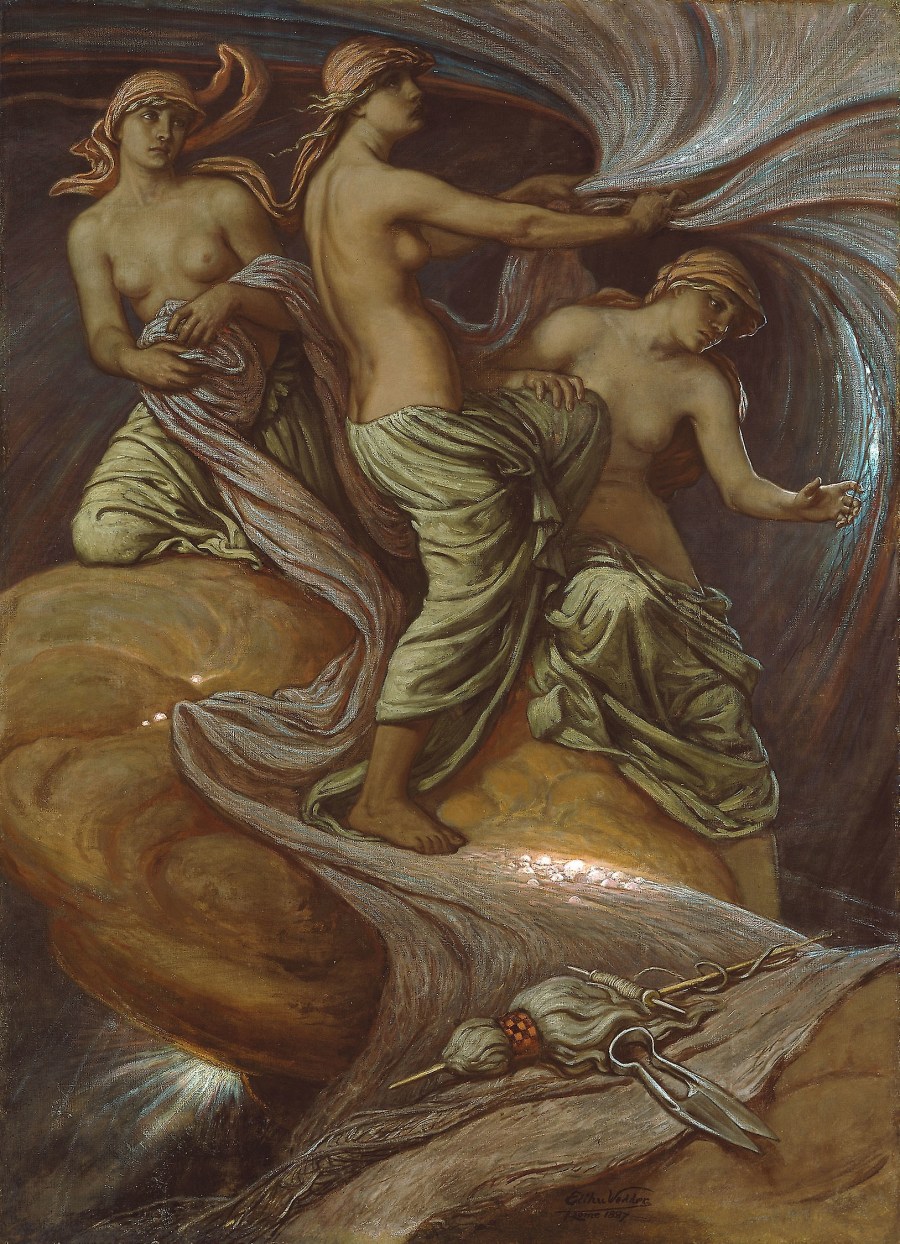
Featured Art: “Fates Gathering in the Stars” by Elihu Vedder
no plan, no agenda, rather call it pulse and impulse,
zest and precipice, the mind mindful as a volcano
spilling over, or the sometimes bliss of the fisherman
dropping a line into the waters, the welters, the winds
of whatever may come from the twist and coil
of gray matter and what matter that it’s pure delusion
or that it’s—print it!—sensate escape, if it be a stay
against the onslaught of despot, tsunami, flight
of refugee, of sanity—and yes, print it flounder
in murky water, not the fish but struggle for the lure
flash and shimmer just out of reach. Or else shift
the metaphor to the heart, a steed wild for wilderness,
bucking the known reigns, the towers of Babel,
confusion of tongues. Print it hard but true,
the what’s-the-matter sudden matters of health,
the sharp word given or received, and who cares
what garb—bathrobe, hip boot—in this dream state
dangling on the edge of disaster, of paradise, each letter
a bodily sound held in the mouth, each spark a jumble
of luck and pluck, both zoo and zoom, design bucking
certain decline, a dive into the deep Sargasso of eel,
whale, syllable, tangle of seaweed, wrangle of word.
Read More
Poem for the Peony
By Mary Jo Firth Gillett
Not one is dissatisfied, not one is demented
with the mania of owning things,
. . . Not one is respectable or unhappy over
the whole earth.
—Walt Whitman
Peonies open their untutored hearts as if to write
a treatise on passion.
The raw and sensuous peony was mentor
to Marilyn and Mae.
A magnum opus,
the peony bloom unfolds, page upon page.
The peony, one with water, knows nothing
of river.
Oscar Wilde admired the peony:
“Nothing succeeds like excess.”’
Does the opening peony write odes to the ant
or vice versa?
Martha Graham, Josephine Baker, even Elvis,
studied the moves of peony blossoms in the wind.
In the presence of the peony, fake flowers—
plastic or silk—
wither.
The dawdling schoolboy presents a peony blossom.
“Tardy” is expunged from the dictionary.
Read More

Landscape with iPhone
By Emily Mohn-Slate
Featured Art: The Sick Child by Edvard Munch
I don’t want to tweet this thought that comes to me as I’m
changing my daughter’s diaper—don’t want to pull my phone
out of my pocket—my phone is growing a tree right now
with an app called “Forest” that rewards me for not looking
at my phone—and what I want is for a thought to enter,
to hold it in my head, spin the words over and around
until they’re smooth, but I should tweet soon, I haven’t tweeted
in days, and now my daughter needs me to be here with her. Still,
I want to hold a thought like an orange, peel it in pieces,
which I can’t do while I’m circling
a Band-Aid around her finger either, kissing her hand, swiping
the notification, scrolling, scrolling—Mama, watch me! Look at me!
I’m looking but my phone is a hot siren in my pocket, I touch it
but—my digital tree: its roots are thickening now, its pixel flowers
blooming, white petals, yellow center—I want to watch
my daughter learn to hold a crayon—three fingers making
a little house, a splotch of pine, her mind unfolding.
And where is my thought? It slipped out the window
of my daughter’s new house, its comet tail vanishing.
What distracted animals we are—wanting loud, wanting now.
But how do I ignore all the shine when it arrives?
Can’t it be enough to be alive with my daughter
in our dry winter skins in April, surviving until we slip
our feet sockless into sandals, when I can witness,
thinking or not, her giant puddle-jumps, her
whoops of joy? Yes. And I will grow this tree
in my pocket, and I will look at her. I will.
Read More

Roost
By Janice N. Harrington
Featured Art: Nude Figures by Cape Creus by Salvador Dalí
Circling above bare limbs, like Dalí’s wild and articulate capes,
black wings undulate. Raucous hundreds settle and splat
their stench. A murder of crows, a give-a-fuck mob,
stirs the air above ash and oak and hackberry, milling
and loud with news: day heralds, unwelcomed Cassandras.
Dawn light pinched by a crow’s beak, pieces of light falling
everywhere, bright meat that the crow pecks, strips away.
The crows know my neighbor’s face. Knowledgeable birds,
they know the way I hurry each morning, the way my eyes try
to read their dark signs: articulate smoke, curtains
of a confession booth. Blessing? Pardon? Mercy?
The stories say that crows suffer scorched wings, that they
are cursed for stealing from the gods. But the stories, as always, err,
wind-running, wings wide, a-glide on a slide of air,
black bodies, bituminous-black, cosmos-black rising to soar.
There is no damnation in their dizzying speed, the break-wing
improvisations of their flight. God–blessed and black,
their sharp notes strike my skull like hailstones or chunks
of sky, dark bodies that lift my eyes and scorn gravity, a lesser law.
Read More
Recovery
By Max Bell
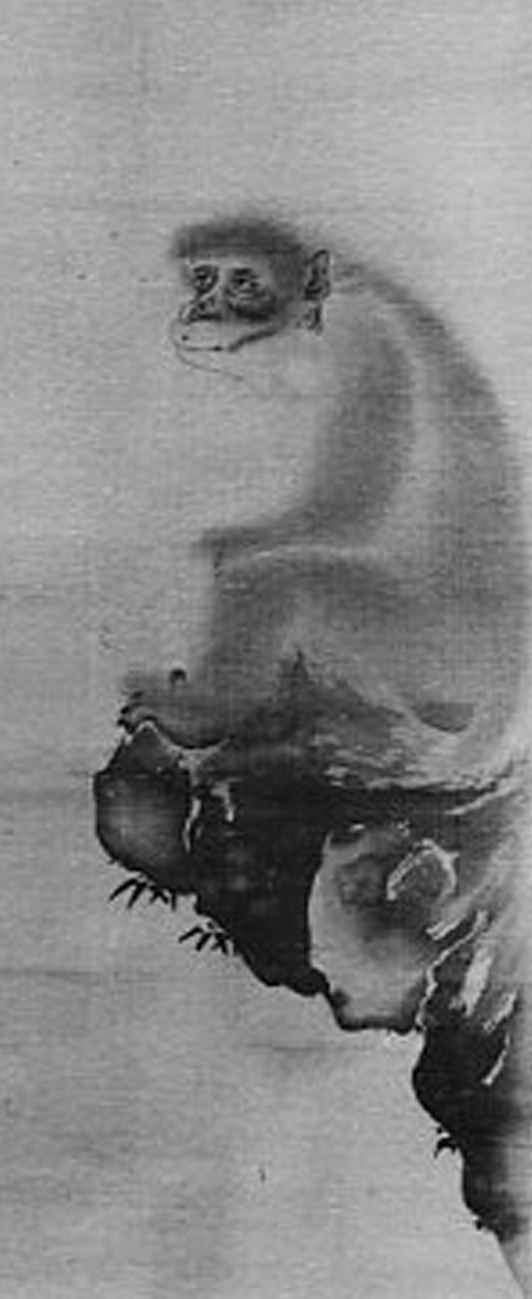
Featured Art: Monkey by Anonymous
Two Weeks
Lisa left when the droid arrived. There was no period of transition, no time for Richard to adjust. After she signed for it, she carried it into the living room, set it down in front of him on the worn shag, and began saying her goodbye. Like the stitches in his hip, she was disappearing, dissolving in front of him. He did not, however, rejoice in the knowledge of her impending absence.
“Dad, my Auto is outside. I’d stay longer, but I don’t know when another car will be in range, and I can’t miss my flight again.”
Looking up at her from his plush recliner, Richard wondered whether she’d ever felt as he did now, abandoned, marooned. Her first day of kindergarten? When he and Martha dropped her off at State? There were no tears from her then, and there wouldn’t be any now. Even at her mother’s funeral, Lisa hadn’t cried. Richard studied the vacant, inscrutable face looking down at him and realized that he might’ve been responsible for her reserve. There was rarely a day that Martha hadn’t pushed him to show more affection, to verbalize his emotions rather than fuming when people couldn’t infer them from his purposeful subtleties. Now, though he desperately wanted to, he knew he could not ask her to return that which he had never given.
“You’re not going to set it up?” he said.
The droid wasn’t in a box, though it was equally rectangular. Bulky, at least two-feet tall, it looked like the computer hard drives Richard remembered using at the plant in the late Nineties. The light-gray plastic casing probably housed the same metal, wires, and plastic. But there were no wheels he could see, no hands or feet. How would it move? How would it help him move again?
On the narrow side of the droid’s face, the one where Richard might’ve once inserted a CD, there was a black circle in the upper-left corner. Opaque and recessed like a Magic 8 Ball window, the ring stared at him. There was no out- line or indent on the right side to suggest that the manufacturer had forgotten another eye. Still, Richard felt a part was missing.
Read More
Selling
By Judy Kronenfeld
Featured Art: Unfinished Monster by Hugh Laidman
Heads thrown back after one
bubbly sip—the young in soft drink commercials
seem as lavishly happy
as lottery winners. They look
the way we imagine ourselves
on the stages of our dreams—glamorous,
anointed, spotlit—our luck about to spill
into graciousness.
And even in ads for walk-in bathtubs,
incontinence pull-ups, stair chairs,
dementia care, the actors don’t merely grin
and bear it, but almost chortle,
like Cheshire cats who just
swallowed these amazing canaries,
though the old they represent
are more like expiring birds.
But the worst soft pitch: the “personal” Christmas
pictures taken in the dementia wing
of my father’s “retirement home.”
In another life, his face would say
This is ridiculous, even if he played along,
and sat in the appointed armchair
by the tree, and hugged the enormous white
teddy bear prop, as instructed.
But he is in this current life,
and guilelessly presses his warm cheek
against the bear’s fuzzy one,
and stabilizes the bear’s plump feet
with his free hand, as if they were a child’s.
Read More
What is your favorite past time?
By Robert Danberg
The form asked, “What is your favorite past time?”
So I wrote how I loved the 1947 Technicolor American comedy classic
Life with Father.
Whereas home to me as a kid felt like the morning after a trip to the emergency room,
William Powell’s brood lived on the brink of a joy omnipresent
in the wealthy brownstones of Gay Nineties New York,
and in Meet Me in St. Louis, which opens
on Mary Astor and Marjorie Main making ketchup,
Judy Garland’s face in repose always seemed baffled by love.
And who knew ketchup could be made?
Then, I peeked and saw my neighbor’d written “tennis.”
The guy on the other side, “tailgating.”
I noted that the question before was favorite color,
the one after, what would you do with an unexpected day off.
(Blue, by the way. And, of course, watch whatever’s on Turner Classic Movies.)
Suddenly, I was tired.
I longed for the time before I was ever asked this question.
I crossed out my answer and drew an arrow to the bottom where I wrote
“When I was twenty and my body was a blossom
trembling to shake itself from the vine.”
Read More
My Life Is Like This
By John Mark Ballenger
Each night I keep trying to say something
specific before sleep, something about time
or the horizon. How time unwinds
like a copperhead or the fear
of a copperhead or the spaces between
hay bales, under porch steps.
I try to say something
about the ash of memory, a farmhouse
firm in my mind and burned to the ground
of my childhood, standing and consumed
every moment.
About the distance light
travels from the glacier-crumpled
Southern Ohio hills to the shadowed
valley bottoms. The horizon
that weighs down the eye, reduces the world
to a hollow, a creek, a hardwood canopy,
ivy overcoming ancient leaning barns,
a half-sunk Ford Pinto and the speckled blue
of a robin’s egg in the grass. I want to say
something of men talking under a great
sugar maple in the late summer dark, a mud dauber
tapping against a window, my mother speaking
her mother’s name.
In my dream the words are exactly
the thing itself: time, horizon, copperhead, dark, robin’s
egg in grass, my mother, at last, a revelation.
Read More
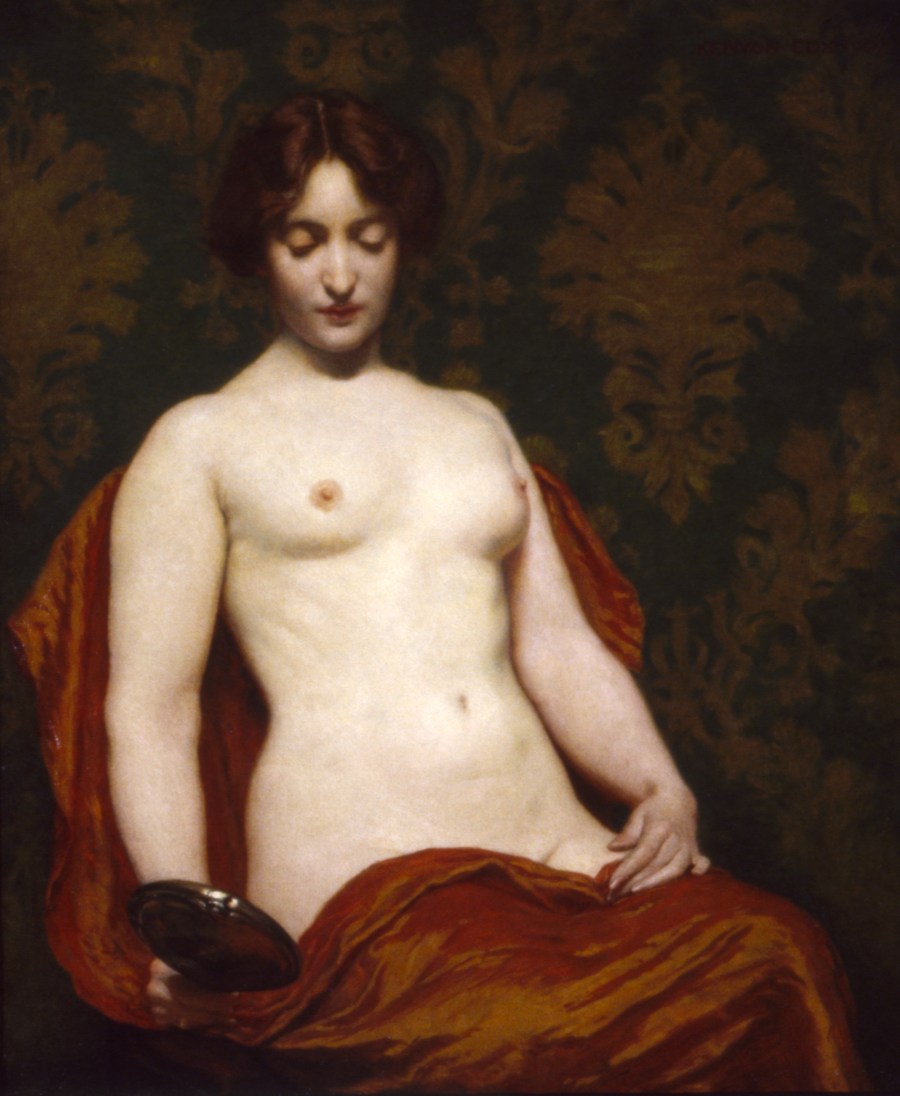
Marriage Prayer
By John Mark Ballenger
Featured Art: Science Instructing Industry by Kenyon Cox
Place into our mouths this day the coolness
of ice cubes from a heavy-bottomed glass, the burn
of bourbon on our barely parted lips,
pursed
as if to receive a glowing Kentucky coal
that our grandfathers shoveled
in their youth into stoves 5 o’clock
each new morning before the barn chores.
Grant us strength to willingly undress,
to lie down naked and limp and freckled
and biopsy-scarred along the
shoulder blade
and hernia-scarred at the pubic line
and ashamed for what has been taken
and unashamed of what we have made.
And let her not fear my hand,
the stiffening knuckles or the clumsy
sandpaper ends of my fingers, as it rises
to touch her neck or cheek. And let me not
fear the look on her face
as she turns away.
Read More
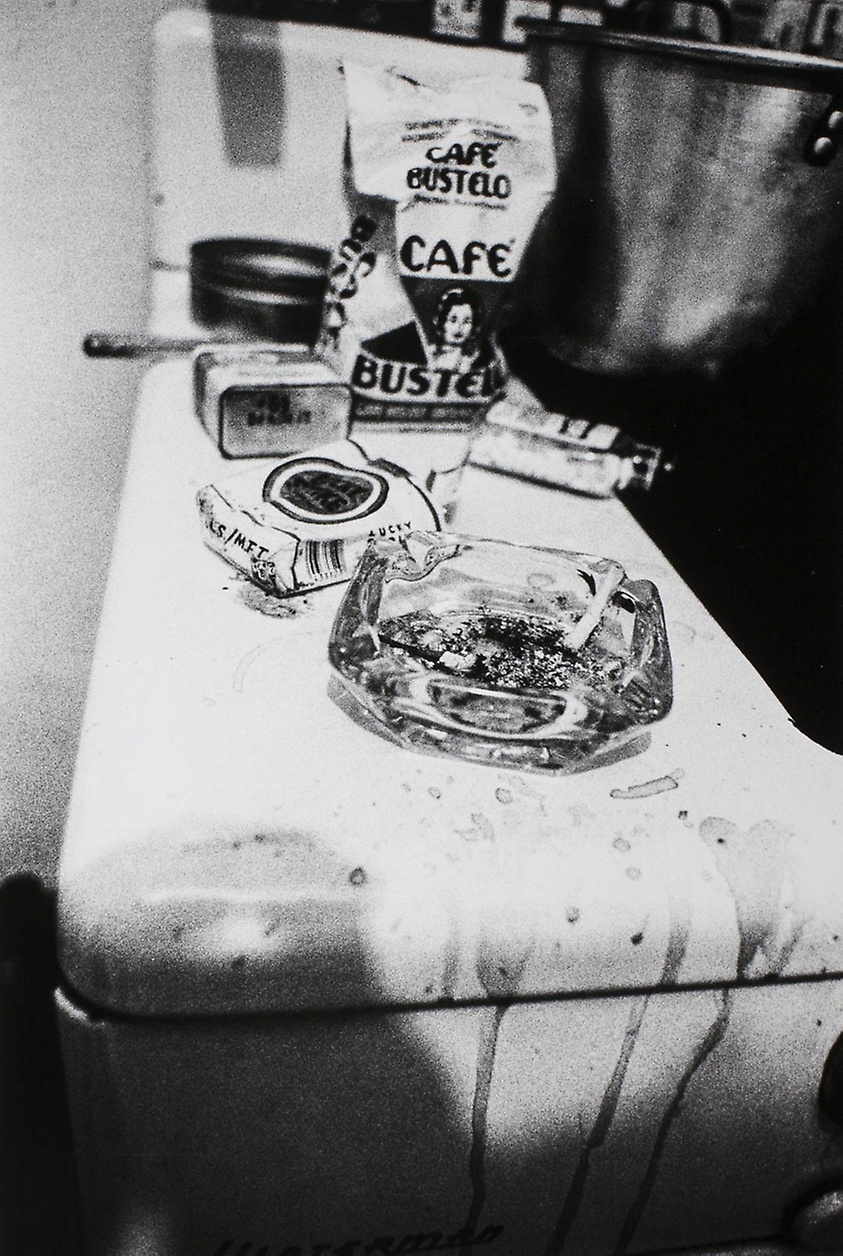
Manhattan Afternoon
By Ansie Baird
Featured Art: Cigarettes by Ken Schles
In April, the nice man with the nice smile
looked straight at her and said, Desire.
It’s a matter of having no desire.
He said, This must be the most delicious
pastrami sandwich I’ve ever eaten.
Come here and see these drawings.
This looks like the house I used to own.
Two dry gin martinis, up, with a twist.
What the hell, let’s share the panna cotta.
Those new earrings are just right
on you. Also, I forgot to say I’ve met
another woman. It’s only forty blocks
back to the hotel and such a lovely day,
let’s walk and window shop. There’s still
some time before you catch your train.
It’s not about you, you’re a nice person.
It’s about desire for you. I haven’t any.
Read More
Portrait of Love as Failed Vocabulary Quiz
By Kristin Robertson
May I call you endeavor? May I call you
gingerly? I haven your sleek and luminous
ovation. My ardent of the mercenary, I’ll infinite
the wrangle, hovering and turbulent, for you.
Sublime citadel, listen to this intricate as it
teems. Let’s muse your decipher like a serene,
a voracious. Let’s just connoisseur. Is this
an awry between us or a crusade? Say era.
Say epoch. I gather handfuls of the panoramas
and the culminate: Say yes. I will comb your
legendary, straighten your desolate. My mouth
staminas ever ever for your succumb. Don’t you
hear the fluster, that sweet forfeit? You still
phenomenon me. Together, we phenomena.
Read More
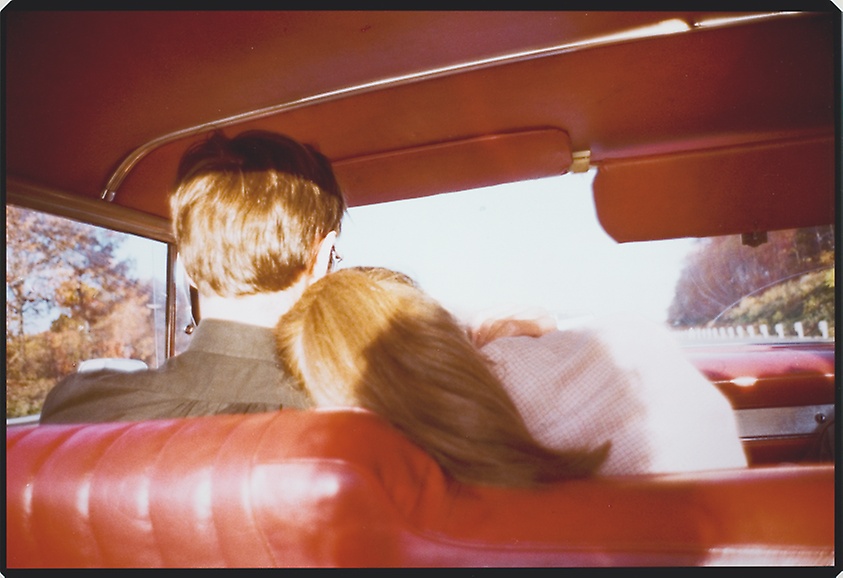
Toyota Yaris
By Dan J. Vice
Featured Art: Kim and Mark in the Red Car by Nan Goldin
The repeated syllable in Toyota Yaris
The “ya ya” at the heart of Toyota Yaris
The 2 y’s that feel like 5 y’s
and I’m far too wise to fall
for the sound of it
The roll around in your mouth of it
The rounding of your mouth like the slow slope of the roof of it
Toyota Yaris
The squat hunched hood and the back half with the hatchback
The silhouette like the cat arching its back Toyota Yaris
The dash Toyota Yaris, the seat Toyota Yaris
No part of the whole, no part of the car not Yaris
The eighty thousand miles and counting, and counting
The tires that ride round the edge of a dime
Spin a donut so tight it’s a Hostess Donette
By the grace of the artist who made the car
Have Toyota will Yaris
I didn’t know what my life was lacking, wasn’t looking
for an answer to the what-is-my-problem, but one night I waltzed
onto the lot and the rest as they say is Yaris
To name the world is to change it wrote Freire
and I am changed, enchanted by the chant of it
You, Toyota, you toy, Toyota
You, toy Toyota, yada yada
Toyota Yaris. This is not
sponsored content, it’s
an incantation, a thanksgiving prayer
Because a group of men at a table in a room
invented a phrase that invented a feeling
I think I really love you, you Toyota Yaris
And how is it that that is a feeling that is?
Read More

You Want to Go Back
By Fleming Meeks
Featured Art: Johnny Dunn’s Sandwhich Shop by Walker Evans
You want to go back is the name of your car,
the make, the model, the name you give the swaying trees,
the rustle of leaves before a thunderstorm
as sun gives way to clouds and quiet falls
on a meadow of grass and clover.
You want to go back and ask the question.
Or you dream it. Or it’s a movie with Walter Huston,
the rumor of a movie at MGM, killed
before shooting began. Nothing was written down,
no minutes of the meetings, nothing
but a few scraps of papyrus, of vellum, of cuneiform
carved into stone, baffling translators.
Or typed on onion skin, brittle and cracked
in a box in the basement of the first house
you ever bought, along with a fund-raising letter
from Dwight Eisenhower, then president
of Columbia University, and a water-stained circular
from the Bulletin of Atomic Scientists warning
of the danger of a full-scale atomic war.
The temperature is dropping, the wind is erratic,
swift and then calm. You want to go back.
Read More
Rabbit Summer
By Jane Marcellus
Winner, Editors’ Prize for Prose, selected by Dinty W. Moore
He is standing there in a spattered white lab coat, holding up a bunch of carrots. I am standing here in the doorway, hoping I’ve come to the right place.
“You must be Jane,” he says. “Guess who these are for?”
From a few feet away, I notice his eyes. They are brown—so brown that I cannot see his pupils. I keep looking at his eyes, trying to nd them, trying to make certain that it is me, here, that he is looking at. His gaze makes me aware that I am actually a person standing here, in this spot—a person with a name, which is Jane, which he knows. I am not used to feeling seen. I am used to feeling invisible. It is unnerving—blinding even—to be seen by a person whose pupils I cannot see, a person who knows my name.
I am young, although I do not know it. Twenty-one. I confuse feeling seen, and this odd feeling of being blinded, for love.
“Yes,” I say. “I’m Jane.”
*
The job is feeding lab rabbits and washing beakers in the college biology labs. It is my third job this summer, on account of an argument with my mother. For the past four summers, I have worked at one of the jobs she got me. She is a legal secretary for the state of Oklahoma, and she likes to get me typing jobs. Since the summer I was seventeen, I have gone along with this. I can live at home and make more money there than waitressing or busing tables. I save the money to pay for the college, which is in Connecticut and expensive, even with the scholarship. I am not sure I deserve the college, so typing has seemed like a kind of penance. But it is beginning to feel dangerous. I will graduate in another year. I sense relief rising in my mother like a prayer. Finally, I will come home for good and she can get me on with the state. I will be a secretary, not for the summer but for life.
Read More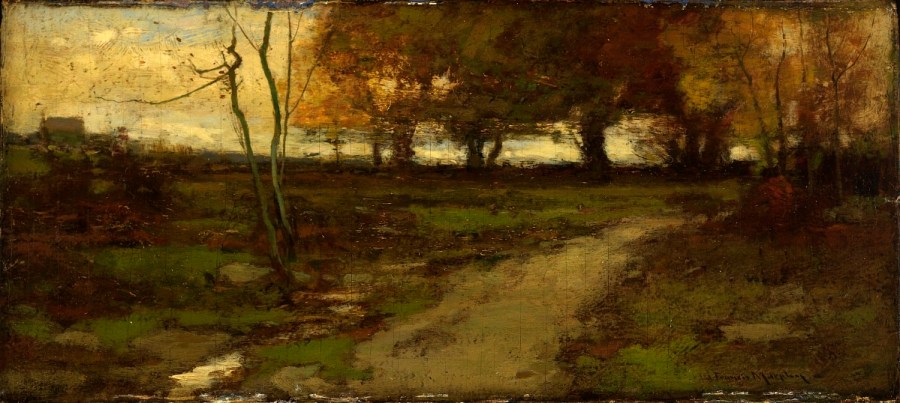
Miracle of Life
By Joanne Dominique Dwyer
Featured Art: On the Shore by William Trost Richards
One of the abounding miracles of life on Earth
is that somewhere at this moment a couple
is sitting in their backyard drinking alcohol together.
The lawn might be manicured or it might be overgrown
with Devil’s Trumpet and Lantana weeds.
The backyard might belong to one of their elderly parents
who is lying in a darkened back room watching television
as the couple imbibes India Pale Ale and mulberry wine.
Though maybe it’s ethanol, because they just got
news they can’t have children.
Or cartons of coconut water because
they just came back from the gym.
Regardless of what they are swallowing
and whether or not the backyard smells of cut grass,
Asian barbeque, or the pheromones of raccoons,
together they are watching the stars enter the sky one by one,
like teeth rising up into the gums of a toddler
as the crying of mosquitoes and horseflies
being electrocuted in the iridescent bug zapper
over-occupies the atmosphere.
To the point that when the man says
Freud would find the above metaphorical reference
to teeth sexual, the woman can’t quite hear him.
Instead she is contemplating the exacting way the man
lifts the brown beer bottle to his mouth, as if he is heralding
hound dogs through a horn; and about the way he
opened his car door last week for the neighbor woman
with olive skin and tattoos around her ankles,
because she said her car wouldn’t start
and she needed a ride into town
to return an overdue library book
and to euthanize her ferret.
Read More
Shallow Person
By Joanne Dominique Dwyer
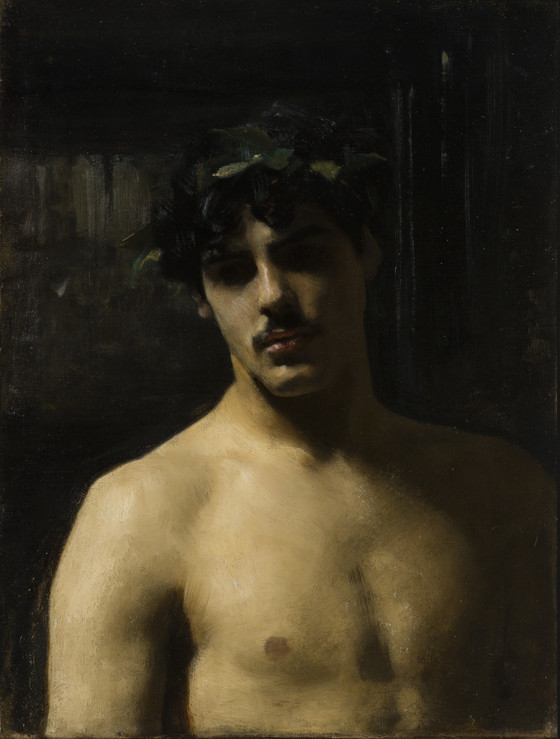
Featured Art: Man Wearing Laurels by John Singer Sargent
What if I were not a shallow person.
Did not need an Arapaho blanket swaddled
around me in order to sleep less fitfully.
Did not need honey in my mouth.
Or a handsome man
to motivate me to shower.
What if we were all made of light.
What if I was able to mimic an aviary bird,
could hide all signs of sickness,
did not spend hours making rubber band balls.
We are all made of light.
Yet we still make excuses for our egos’ devastations.
Such as my mother preferred her polo ponies over me.
What if the seesaw were to come unhinged.
And your dog bit you in the femoral artery
while you were teaching your child to ride a bike.
What if I did not need opiates to talk to you,
could dress in a color-coordinated manner.
What if I were backseat enough
to never need to say another word.

Success
By Tony Hoagland
Featured Art: Space Riders by Tom O’Hara
After a year of rehab and therapy, the country western singer
went back to writing songs; but he had changed.
Lyrics like, “Good Boundaries Make a Better Kind of Friend,”
and, “When You Say Bye, I Feel So Violated”
—they simply didn’t have the punch of his best work.
*****
In New York, Famous Joe’s Pizza Parlor on Travis Street
is suing Joe’s Famous Pizza on East Ninth Ave for stealing its name.
The battle rapidly grows vicious. The courtroom smells
of melted, burning cheese.
If he wins, Famous Joe says that his attorney will get free slices for life.
*****
“Jesus had a great career,” says one of the students, on Monday morning,
reading out loud from his assignment;
then, sensing an uneasy silence, “Well, but he was famous, wasn’t he?”
*****
The mountain climber who actually made it to the summit,
the place so many of his friends had failed to reach,
got one great photograph, plus permanent damage
to nerves in his nose and his ears, both hands and feet.
*****
“If I hadn’t dropped out of cooking school,” says Gretchen, happily,
“I would never have mastered my
Sunday morning waffles for screaming kids,
which I believe will be my greatest legacy.”
*****
Why don’t you tell me about your life for a change?
Did you carry it carefully, like a brimful cup of water,
bound for a particular flower?
Or did you keep accidentally turning around
to look at something else,
and slosh it all over the place, like me?
Read More

Sunday at the Mall
By Tony Hoagland
Featured Art: Crouching Woman by Ferdinand Victor Eugene Delacroix
Sweetheart, if I suddenly flop over in the mall one afternoon
while taking my old-person-style exercise
and my teeth are chattering like castanets,
and my skull is going nok nonk nok on the terra cotta tiles
of the well-swept mall floor;
my tongue stuck out, my eyes rolled up in my head—
Don’t worry, baby, we knew this kind of excitement
might possibly occur,
and that’s not me in there anyway—
I’m already flying backwards, high and fast
into the big arcades and spaces of my green life
where I made and gave away and traded sentences with people I loved
that made us all laugh and rise up in
unpredictable torrents of fuchsia.
Dial 911, or crouch down by the body if you want—
but sweetheart, the main point I’m making here is:
don’t worry don’t worry don’t worry:
Those wild birds will never be returning
to any roost in this world.
They’re loose, and gone, and free as oxygen.
Don’t despair there, under the frosted glass skylight,
in front of the Ethiopian restaurant
with the going-out-of-business sign.
Because sweetheart, this life
is a born escape artist,
a migrating fever,
a convict tattooed in invisible ink,
without mercy or nostalgia.
It came down to eat a lot of red licorice
and to adore you imperfectly,
and to stare at the big silent moon
as hard as it could,
then to swoop out just before closing time
right under the arm of the security guard
who pulls down the big metal grate
and snaps shut the lock in its hasp
as if it, or he, could ever imagine
anything that could prevent anything.
Read More

Learning Swedish in Secret as a Joke
By Bobbie Jean Huff
Featured Art: Breton Girls Dancing Pont Aven by Paul Gauguin
All this passing on going on, almost
as if it were contagious. Words you’ve recently learned
spill easily from your lips:
Wenckebach, biliary, Cetuximab, granuloma,
the new bright colors of life. Just when
you were getting bored with the
pinks, purples, and greens on offer
for almost seven decades,
you’d happily now trade blasts and plasma cells for
brown or black or tan. But as surely
and hard as you know how many platelets it takes
to sustain life, you know that
more new words will show up soon.
Months ago you learned that “consistent with” means
you have it, and, last week, that “refractory” means
the treatment has quit working.
Now that you realize you’ll never learn Swedish,
in secret and as a joke
(to surprise your daughter-in-law with at dinner time),
you understand it’s not that you’re running out of
brain cells,
you’re running out of time.
You can’t learn sjuka and middag while you’re learning
leukopenia and transampullary.
You never expected this.
You never thought it would come to this!
(That’s the funny part. Has it ever not been there?)
Wake up and
you will see it even now,
gliding merrily in your direction,
not even bothering to look you in the eye,
as if you are the last thing on its mind—and if
you squint you will notice it gather a little speed
(the teensiest of fuck-you’s),
like a sailboat in languid waters
a moment after the wind has shifted.
Read More
You Are My Sunshine
By Bobbie Jean Huff
Let me begin by offering my condolences, I said,
holding out my hand. She shook out her umbrella
and placed it open, just beside the altar. They thought
it was an ulcer, she said. They gave him some tablets.
Did he have any special requests? I asked. Favorite
hymns? Or something for Communion, like maybe
Water Music? He was worse by Christmas, she said.
He couldn’t manage the pumpkin pie. He always loved
my pumpkin pie. The King of Love is nice, I said. I
opened the book to page 64. As an alternate to Crimond,
you know. Most people don’t recognize it as the 23rd
Psalm. In January his feet turned black, she said. Toe by
toe. It took exactly ten days. The shadow of a branch
moved slowly back and forth behind the stained glass.
I thought: When I get home I’ll check my toes. Will
there be Communion? I asked, finally.
The last three days he started to hiccup, she said.
He wouldn’t take any water. It never stopped, the
hiccupping. Not once, not one minute until he went. I
could play Pachelbel’s Canon. That’s very popular now.
There’s no reason it can’t work at funerals as well as
weddings. At the very end, she said—then stopped, her
eyes squeezed shut behind her glasses—as if the
rejected water, each wretched hiccup, and every
blackened toe formed a chain she could use to haul
herself back to September, when she would claim
him, finally whole again.
She reached for her umbrella and frowned. Play
what you like, she said. He was never fond of music.
Not hymns, anyhow. Only once in fifty-three years
did I catch him singing. You are My Sunshine, I
believe it was.
Read More
Devil’s Advocate
By Becky Hagenston
His kid doesn’t want a smartphone. His fourteen-year-old flute-playing boy is saying, “Nah, I don’t really need one.” Mitch’s wife Shelley says, “No one’s forcing you, honey.” She beams. The boy beams. Mitch feels a faint nausea. There’s something wrong with his kid, who still likes Legos and watches network TV and keeps his room clean and calls his two nerd friends on the landline.
“Well, that’s fine,” says Mitch. For some reason, he’s pitched his voice like an actor from a 1950s movie. He tries it again: “That’s just fine, son!” He’s speaking like a man wearing a fedora, a man carrying a briefcase. But nobody seems to notice. “So what do you want for Christmas?”
His kid, Ernie, frowns as if Mitch has just asked him to poke a kitten in the eye. “I can’t think of anything at the moment,” he says. “Can I go practice flute now?”
“Yes!” says Shelley. She rises from the sofa and kisses Ernie on the ear. “I’ll let you know when dinner’s ready. I’m making your favorite.”
“Brussels sprouts?” he asks brightly. “And Salisbury steak?”
“You bet,” she says. When Ernie has disappeared down the hall, she turns to Mitch. “Don’t force him to grow up before he’s ready.”
Mitch knows better than to argue, but he can tell that his thoughts—not grow up, just join the 21st century like a normal kid!—might as well be floating above his head like a comic book bubble. Not that Ernie would get such a reference, because he doesn’t read comic books, either.
“Okay,” he says, but Shelley has stomped down the hall to prepare the kid’s Brussels sprouts.
Read More
Spring
By Lauren Shapiro
Featured Art: The Cock Sparrow by George Edwards
The nice teachers at the kindergarten open house
point out the Unifix cubes and color game;
they are professional in their analysis of play. Later
at Lainy’s party the operators of Jump ’N Bounce
just look away while the kids wrestle into an idyllic
sense of self. A mother tells me, hushed, how
one November morning Jason’s father parked the car
and blew his head off. Then it’s time for cake.
The kids are sweaty, tumbling over each other
for a spot at the table. I search Jason’s face
for a sign, a scar, but don’t find it—he’s waving
a noisemaker in Sean’s face, his mother chatting
pleasantly in the corner. Cue the birthday music.
Next day, we’re late, and I walk my distressed son
into school. “We might miss the eggs hatching!” he yells,
bounding down the stairs. The class is huddled
around the incubator, the glow from the heat lamp
flushing their faces. This must be a rite of passage,
watching a chick’s birth surrounded by friends.
It’s on the docket, tailored to the lesson plan, deemed
developmentally appropriate. It’s March, after all,
when the world glosses over its losses.
Read More

Poem Beginning with “My Father”
By Craig van Rooyen
Featured Art: Ancient Roman Ruins by Giovanni Paolo Panini
–Rome
1.
My father fills a syringe with insulin,
pushes the needle through his shirt into belly skin,
looks through the window at his dying lawn.
He writes a note to me: Summer’s early here, bud.
Your mom’s still on me to lay off the Snickers.
She means well, of course.
The oak tree’s about to go—groans all night long.
Caravaggio is one of my favorites. A sensitive scoundrel.
Go see Conversion On The Road To Damascus.
All is of Grace, Dad.
2.
Four lions stick out hollow tongues
in the middle of Piazza del Popolo.
Each tongue spews water—spilling down
stepped plinths into four collection pools
whose surfaces are mildly disturbed
but never overflow. With their perspective of stone,
the lions have remained unmoved for 200 years.
How, I wonder, can they gaze without weeping
at the sun-burned stoner strumming a distorted
“Stairway To Heaven.”
I stumble from one to another,
dropping coins until my pockets are empty.
3.
When he baptized me, my father’s robe floated
up around him like the wings of a manta ray,
revealing the soft skin of his shins to the believers.
We stood in a glass tank, with nothing to hide.
He covered my eyes with a handkerchief,
dipped me backwards into new life.
I trusted his strong arms
more than God.
4.
Fountains fill my photographs: pissing cherubs,
horses with fish tails. Granite seashells emerge
amid glistening mermaids—
breasts taut in the exquisite way
stone has of lying about flesh and time.
Three Bells
By Craig van Rooyen
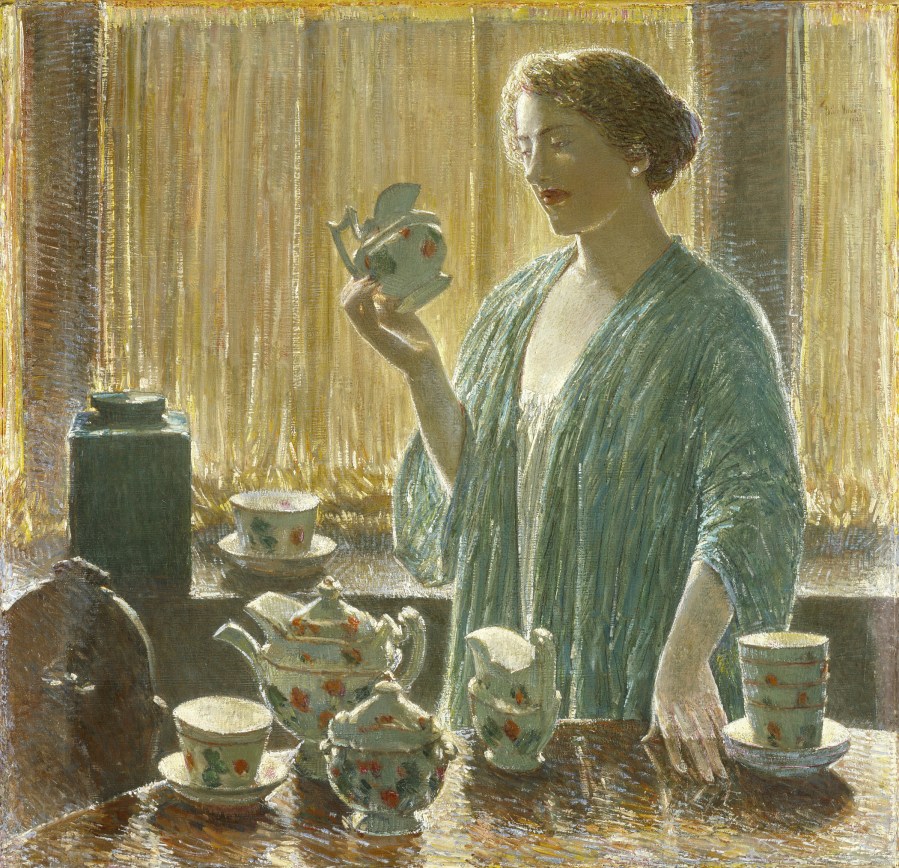
Featured Art: Strawberry Tea Set by Childe Hassam
—after “Seven Marys,” by Li-Young Lee
I sit, Sister Mary, among the other relics
in the Mission courtyard—
a cracked vat for boiling blubber
into lamp butter,
a wood-wheeled cart to haul
bear carcass to the butcher.
Underneath the bricks,
all the smallpox bones.
And these three bells, Sister Mary,
named Joy, Sorrow, and Gloria.
What am I to do when they toll?
Cast before I was born, each sings
to me in a different key: G, E minor,
and Chumash. Joy weighs 279 pounds
and wakes roosting starlings,
launches them from the parched oak tree,
black leaves falling upward.
Sorrow makes the wooden Indian
in front of Founders Smoke & Tobacco weep.
Gloria, Sister Mary, makes me shake.
Sounding wilder as I grow old and tame,
they ring in three tongues:
red, wildfire, and October.
Three bells, Sister Mary, three roads back.
And one says you are the green-eyed devil.
And one says the bears are gone.
But one says, Glory, you are here,
open your green eyes.
There is a fountain, Sister Mary,
a fountain not deep or wide, and into it
tourists toss coins bearing the heads
of our fathers, white and solemn and gone.
A fountain with a bear and a girl and three fish
all bronzed and greening from the air.
Water spews from the paw of the bear,
and the fish leap on their metal spindles, always
inches above the troubled waters,
and the little bronzed girl sees nothing
with her blank Chumash eyes—not the fish,
the white fathers tumbling head over tails,
or me on my bench in the sun sipping
from a bagged can while three bells toll
their braided song. We are nothing to her,
because she is long gone.
And what am I to do?
Bells tolling my guilt, solitude, privilege, joy.
One, Sister Mary, sings the beauty of milkweed tufts
blown down dry creek beds.
One whispers to me the forgotten dreams
of steelhead trout, and the sins of the fathers
visited unto the third and fourth generation.
And one orders my fingerprints pressed
onto the black wings of starlings.
And I can’t tell, anymore, Sister Mary,
one from the other
Read More
Mailing a Letter
By Dawn Davies
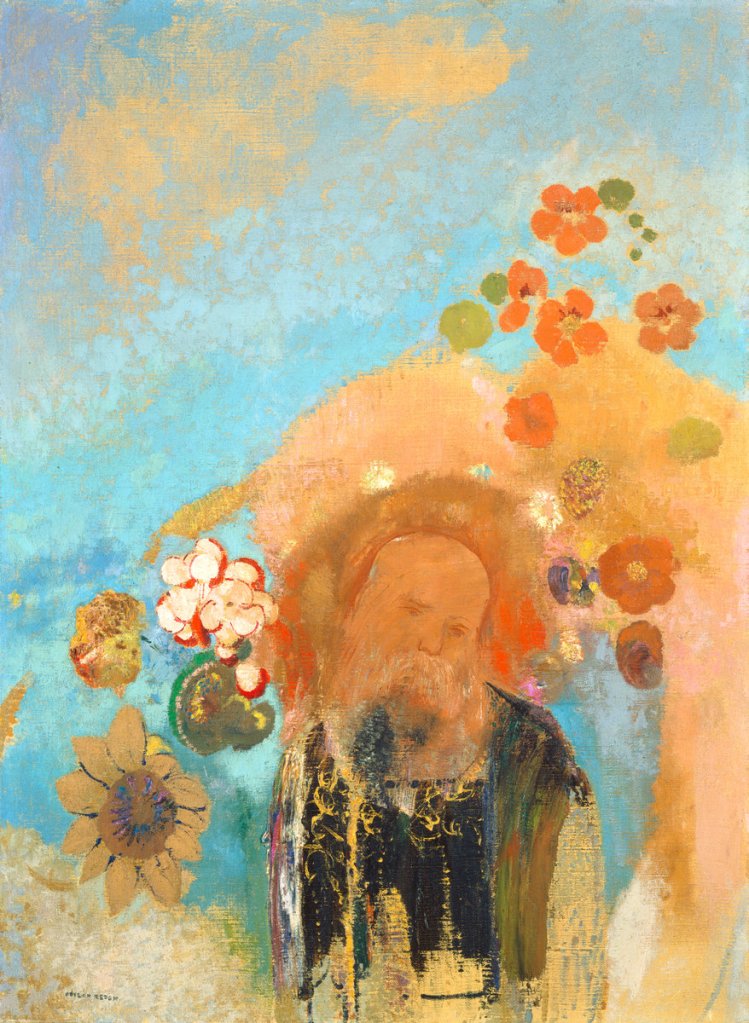
Featured Art: Evocation of Roussel by Odilon Redon
The letter came back from the post office so mangled
it was as if the mailman had plucked it out of my box
before being jumped by a clot of street thugs.
Then, still carrying his mail bag, stumbled into a bar
because it was the third time this year that he’d gotten jumped
in my neighborhood, and why do guys gotta pick on him
just because he’s short (under five-six don’t make a man,
his father always said). Then drank scotch and soda
until the bartender made him stop, walked the dimming
summer streets in search of his truck, slept in a doorway,
woke up and vomited into his mailbag, found his truck
and skulked home to his wife, who had sent all four children
to the neighbors and was waiting up in yesterday’s clothes,
with a suitcase and a left hook brewing. Because she hated
the late hours the USPS forced him to carry, and by “late hours”
they both know she meant his cheating with the tiny
Castilian woman two zip codes over, and this thought
that poisoned her days now propelled her to stomp on his mailbag
and kick it off the porch for all that the mailbag stood for:
the overtime, the philandering, the childless Castilian
with the twenty-two inch waist. But then when she saw his face
with his eyebrows tipped and sorry, and she knew
that he hadn’t been sneaking around, but had gotten into trouble,
she sat him down, fed him coffee, and washed his wounds
before sending him back out for his morning shift,
because they both needed him to keep this job
(there was a pension attached, she had secretly started divorce
proceedings, was hungry for the alimony).
And so he got back to work and wiped off the fouled, wretched
letters in his bag, feeding them through the system
before getting called into the supervisor’s, and because
the letter was wet, it got mangled in the maw of a sorting machine,
the address smeared and clotty, the stamp curled and dystonic,
and three weeks later, once the mailman was off probation,
the letter came back to him, smelling like machine oil and vomit,
clawed and shredded, stamped “Return to Sender,”
and he shoved it back in my mailbox with bite marks
from the beast that had mauled it, this letter to my father
on his deathbed, explaining why I wouldn’t be going to see him.
Read More
Graduation
By Maria Nazos
Featured Art: Fern Alley by Felicity Gunn
As my father hands me a bouquet of roses
dyed the shade of a dozen sinking suns, my mother grasps
his steady arm, teetering. Her body
has begun its slow revenge for what it begrudged
all along, and she’s afraid to walk since her last fall, which
snapped her hip in half. My father is tired
of holding her up. He scolds, Just take it. Her hand shakes
as she holds the iPhone to get a photo
of me in my mortarboard and hood. Let go
and take it, he says, and she tries a one-handed
snapshot, her trembling arm still looped through his.
I stitch a smile across my face. The phone flashes.
As she grips his wrist, I can hear him in Greek,
the language reserved for anger and, once, for sex.
The language they speak and still think
I don’t understand. Can I live this way, Tia? he asks.
I clutch my bouquet to my chest, trying
to pretend these flowers aren’t lopped off at the stems.
Trying to move into the next phase of realization
that love is unsteady on its feet. That two people
can resent each other, but care for their daughter
and each other enough to stay put.
Refusing to wilt
into that place I’d go as a child—when I’d hear
their fights and retreat to the backyard to play
with cats, praying to make something else of myself, however
small—I stand tall.
How can I live like this?
he says to her again. Still, I’m posing, smiling
into the face of their slow decline.
And all three of us trying, best we can,
to hold each other shakily, and steadily upright.
Read More

I Go Back to Mykonos 1976
By Maria Nazos
Featured Art: “Mykonos” by Maria Karalyos
—after Sharon Olds’ “I Go Back to May 1937”
By the third martini, he’ll ask her to marry him.
She’s a tourist, he’s a captain, home by chance.
I stand at the window, watching. I want to walk
into that bar, order an ouzo, and tell them
that, together, they’ll create a new generation
of pain. I want to tell him to court the island girl,
the one who, forty years later, will see him, run
to the restroom, and return with a fresh coat
of lipstick. I want to tell my young mother,
in the words of the great North American philosopher,
Pamela Anderson, “Never get married on vacation.”
But this is long before Pam and Tommy Lee, before
I existed. Before Reagan reigned over his long line of wreckage,
and couples shot themselves, together, in their cars. The Vietnam War
has ended, but here I am standing
at the window, watching while they meet,
both oblivious of wars they’ll wage. They’ll move
from Greece back to the Midwest—she’ll drink, alone,
in her kitchen. He’ll return to the island every chance
he gets. When he’s back in Illinois, he’ll stare
into the aquarium and long for water. She’ll look
at him, frozen, behind her highball glass. Still, I stay
at the window of the bar, wanting to use Pam’s biting wit.
But this is long before Baywatch, and they’re gazing at the
bay. I tap the glass like Morse code. Sealed in
my own tank of silence, I say, Please let go.
But as they take each other’s hands, I softly touch
the pane and turn away. Because they, too, have the right
to plunge. Even if they’ll swim out too deep:
holding onto each other until death.
Read More
Tough Love
By Paul Hansen
I was one of those kids that spent a lot of time on the internet. Chat rooms, message boards. ASL, S2R, and some gender tricks too. That stuff was normal in the Nineties. And it was all good clean fun until I fell in with some gun nuts when I was fifteen years old, the type of people that encrypt shit. Way down in the web. Amateur blacksmiths and whatnot. I got so into it I ended up putting together a makeshift muzzle loader out of Schedule 80 piping, cold American steel, something I saw on the blacksmithing forum. I tried it in the basement but it didn’t work so I got a slightly bigger ball bearing for ammunition, about the size of a marble. I took it to the backyard, propped it on some dunnage, put a flame to the fuse. And by god, it worked. There was this huge discharge, a cloud of smoke. It shot wildly though. Fucking hit my kid brother square in the leg. He was clear across the yard. Dad came running from the house. There was so much blood that none of it seemed real and after Dad stopped the bleeding he came at me and that’s the deepest fear I’ve ever felt.
But that all happened fifteen years ago. I’m an adult now, turned thirty recently. Lacey’s my girlfriend these days. We met at a support group for those that’ve been injured by firearms: Tuesday night, St. Vincent de Paul, where I was the only one whose wound wasn’t visible. It’s like Lacey says: “Pretty baby’s hurt on the inside.” When she was ten years old she was making herself a necklace out of scrap—a little bit of twine, whatever else—then she found the perfect final piece, this shiny gold thing. All it needed was to be flattened. She grabbed a hammer and that was that. It was a live .22 round. Went off in her face. Took a half-dozen surgeries to put her back together. As a result she’s permanently blind in the right eye, with a spiderweb of ice covering the whole thing; little scars that don’t look like much until they’re pressed together.
Read More New Ohio Review