Widowhood (with Clouds and Fish)

By Bridget Bell
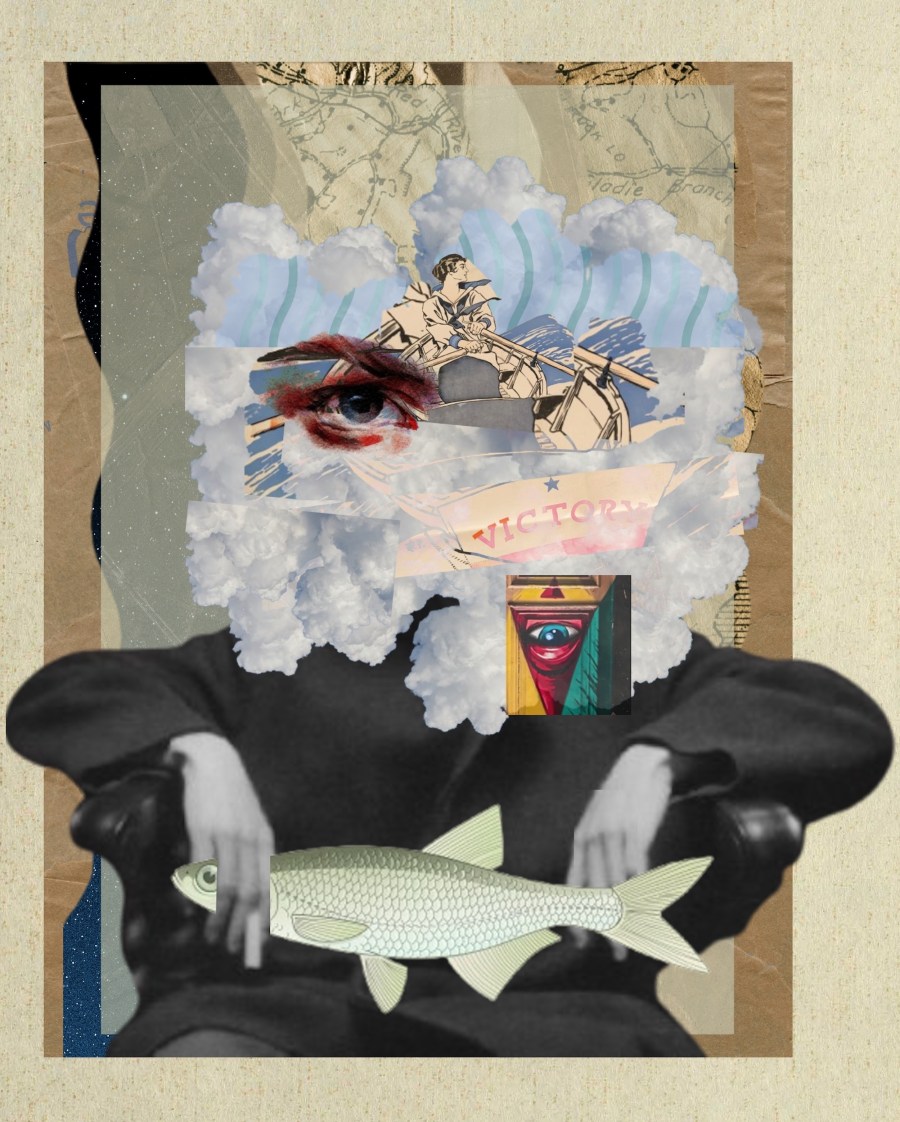
Featured Art: “Two of a Kind” by Ana Prundaru

The next morning, the sky stitches itself back
into its routine arrangement of blue, and this,
too, is a type 

of betrayal. The absurd nonchalance of
cumulus clouds. Their fluff a fuck you of
evaporated rain, and how dare 

the bluegill gather in the dock’s shadow, dumb
mouths falling open and closed, with something
like blood in the seams 

of their gills. And there, too, in the lake’s reflection, those ridiculous
clouds, so the slim fish bodies flash through the water and sky, flaunting
their life from every visible angle.


Read More

Excerpts from Falling in Love

By Bridget Bell

The snow folded a halcyon hush over Jersey City, and I
could still make a map of all the places where we fell in
love, the snow in high drifts on the sidewalks 

where I’d later find my lost keys, shiny and heavy,
a brass-toothed life on display in a wet circle of
leftover blizzard skin: 

the bar, the press, the P.O. Box, car, apartment.
Praise the lord. I wouldn’t have to tell my bosses.
We laughed at my luck 

back then when we could still laugh at things
like that because there is so much promise in
the opening. 

Barely off the main trail, we tore off our pants could
not waste the time it would take 
to cut deeper into the Pine Barrens, and later, more laughter, 

a tick on my ass. This started with two
barstools dragged close, my knee pressed into
your knee, the pull so steel-strong 

as my fingers swam beneath a shield of sticky counter to find
your fingers. And up against the steering wheel, my old car
parked at a scenic Utah lookout, 

and after each bar shift,
I fought sleep, drove north out of the city to crash next to you
on a blowup mattress in the basement

surrounded by your parents’ packed up Xmas decor, 
my beloved dog not even allowed 
upstairs in the mornings, remember how she whined  

at the basement door while we fried  
eggs for breakfast? And now, Sweet Violet, how sorry I am.  
I hated to lock you down there; it hurt my heart, but, god, don’t you know,  
I would have done anything for him.


Read More

Deadhead the Marigolds

By Bridget Bell

I am forever bending toward you like
the marigold starters packed onto
these plastic trays curve 

toward the windows. I save my SSRI
bottles. Pack them full of the papery
seeds from the deadheaded 

wasted petals, pulled off at their narrow necks and
even these stupid flowers
know they need warmth to survive. You say you are trying 

but when you pass through the
door arch—the one I’m leaning
into (as if to hold me up)— 

you do not brush against me so it feels like you
are lying, like you’ve passed through this tight
space, not only without touching me 

but with an avoidance of touch. I
turn the plastic trays so the
seedlings curve away 

from the sun—and tomorrow when I check
they will lean again toward the window—
all the back and forth 

buttresses their stems into strong green
spines, so I know they will be okay when
they are left outside and exposed for the
first time to all the brutal elements.


Read More

Two Wars

By Jasmine V. Bailey

No one knew Putin when he became
prime minister. I remember it well—Dan

In case there is any doubt, I am guilty.
—Dzhokhar Tsarnaev

“The thing about Chechnya is, there were two wars,” Dan says, fishing two Chalkidiki olives out of the jar with chopsticks and plopping them into chilled glasses. The ten-year anniversary of the Boston Marathon Bombing is coming up, and I am feeling nostalgic or depressed, and I want to get to the bottom of something in my mind. “We refer to Putin’s war as the ‘second war’ in Chechnya, counting Yeltsin’s war in the 1990s as the first. But really the first was the Russian imperial war to make Chechnya part of the Russian empire, and the second was Stalin’s exile of Chechens to Kazakhstan.”

“Exile qualifies as war?” I ask.

“It’s a euphemism for genocide. Between half- and three-quarters of a million Chechens were rounded up at gunpoint and forced to move to resettlement camps. They had less than half an hour to pack, and Soviet soldiers shot people for any reason. They got them out quick so they could plunder their houses. If there was any organized resistance, they killed everyone. They were stuffed into cattle trains in the middle of winter and transported 2,000 miles to godforsaken places in Central Asia with no food, shelter, or infrastructure. A quarter of them died. Half of them were children.”

Read More

For My Husband Out Too Far

By Chelsea Rathburn

My mother calls about another death,
this one a neighbor I haven’t met who took
his paddleboard out at dawn and never came home,
body and board found drifting a day later.
Given his age, we guess a heart attack,
but when my parents drop off a casserole,
his widow explains he died by suicide
in the place he loved. She says it matter-of-factly,
their teenage daughter standing behind her
as my parents fumble their condolences. 
She thought they were through the worst of it, she says,
and hearing the story of strangers’ pain I think
maybe ours will never end, or maybe this
is how it will end for us, just when I think
we’re safe. The ebb and flood of your depression
determines the rhythms of our days,
for whenever I think we’ll never sink
so deep again, your face becomes a mask
and I become someone who says, Your father
is having one of his spells
, as if you’re a wizard,
or cursed. I’ve told you how my grandfather
thought that his epilepsy was a sign of Satan,
and how my grandmother, watching him preach,
her eye trained on the pulpit, would leap to her feet
when she saw a seizure coming, speaking in tongues
as if the Holy Spirit moved her, since that
alone would keep the congregation from seeing
what she saw. Love oh love, can love be enough
to save us, can I be life vest and vessel and breath?


Read More

Unaccompanied Minors

By Chelsea Rathburn

—San Francisco to Miami, 1951 

My father recalls nothing of the flight itself, only
arriving, dazed, to meet the mother 

he hadn’t seen since he was still in diapers.
He doesn’t know how they left the foster home, 

or if his father was there to say goodbye,
or who paid for the tickets, only that they 

flew alone, he and his sister, arguing
over just whose Ami they were headed for. 

On the tarmac twelve hours later, he heard
two strangers yelling: his mother and new father, 

shouting a name they’d coined for him. They seemed
surprised, even angry, he didn’t know 

to answer to it. His memory stops there,
in that moment. Their anger never ended. 

His sister swears now there was an engine fire
that she spotted, then an emergency landing. 

More likely she remembers the stop in Dallas
to refuel, but my father’s given up correcting her.


Read More

Blue-handled Grabber

By Maura Stanton

Before her stroke, my mother used it to grab
a fallen tissue, or the newspaper crossword
when it slipped off her lap. Now it’s mine,
sitting in my study near an artist’s easel
unfolded for years. Squeeze the handles
and the grabber’s bite picks up anything light,
even a paperclip, with its magnetic lip.
Don’t want to stoop? The grabber pulls underwear
out of the dryer, or lifts the catch-and-release
mousetrap so I can see if it’s still empty.
It swipes the ceiling cobwebs, or picks up
an M&M or a grape rolled under the fridge.
On autumn walks I could use the grabber to yank
more yellow leaves off the trees to let me see
the architecture of winter below the froth,
or maybe, sitting by a window some dark night
I might grab a distant star out of the sky,
one of those little pinpricks from a galaxy
far from our own, where life’s more cheerful.
The tiny star would tremble on its way,
gleaming and giving off blue sparks as I pulled
it down with the grabber, and made it mine.


Read More

Lunch with Heron

By Maura Stanton
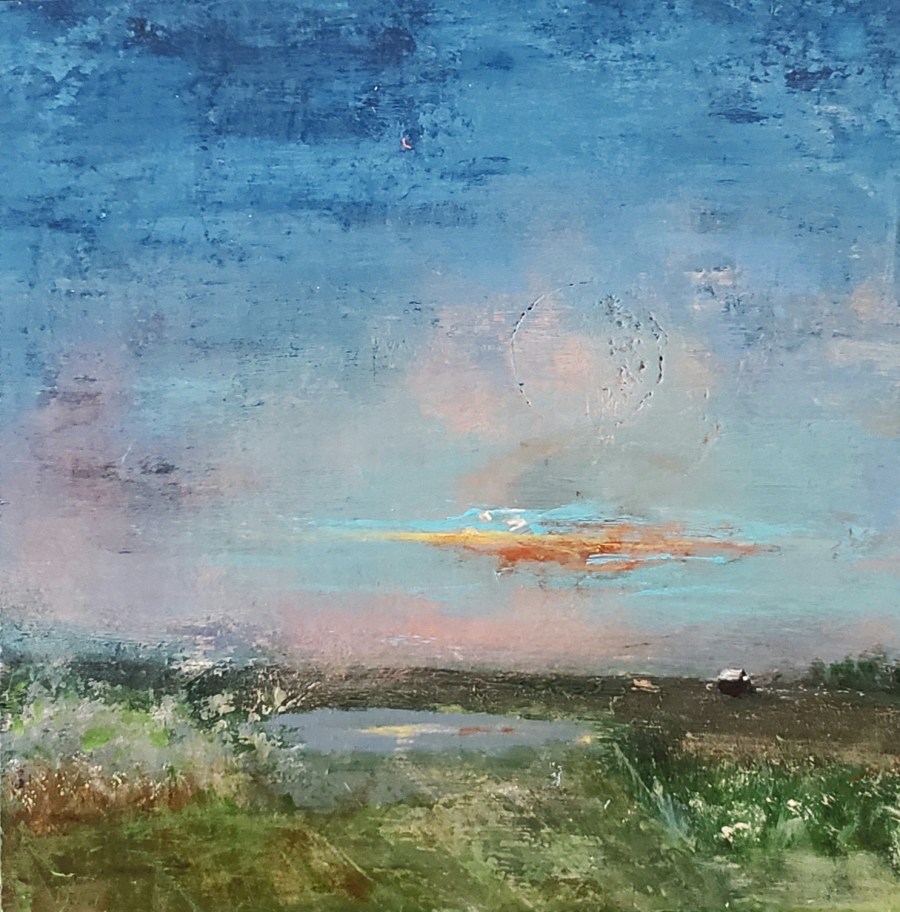
Featured Art: “Black Barn, Adjacent Land” by Thad DeVassie

After the rain, a heron’s stalking the stream,
lifting its delicate knees, neck outstretched,
and just as I pass by, it dips its sharp beak—
flash of silver—and swallows a small fish.
Shocked, I stand on the bank as the fat bulge
moves down the gray throat and disappears. 

But it’s not the fish, it’s the bit of silver
that’s stung me—and then I see it—
the job committee that took me out to lunch
when I was desperate for any sort of work.
Unwrapping a big, foil-covered burrito,
chatting brightly to the closed faces,
I didn’t notice foil stuck to my first bite
until I tasted metal. Then the sharp edge
cut my throat, and I coughed and coughed,
sputtering beans and salsa as I choked.
Someone slapped my back, but I had to reach
inside my mouth with my fingers to get it out
while my hosts looked aghast at the silver bit.
Another job I wasn’t going to get, I thought,
and ordered a beer, though I wasn’t drinking.


Read More

On Learning to Play the Shakuhachi Before You’re Dead

By Ash Good

Sometimes, or probably all the time and with the same outcome, 
I try something new, or old for that matter,
like playing the shakuhachi, and can’t get the damn thing 
to make a single solitary sound, not even a noise that would annoy my wife,
and cause her to give me that look. That would at the least, be somethin worth complaining about,
and even in terms of complaining, I fail to create much commotion,
but after years of puckering my lips as if going in for a kiss
and blowing over the simplest of angled cuts
on the most ordinary of all bamboo sticks, the shakuhachi is silent. 
I thought it would make me wise, and it is silent. 
I thought it would calm my inner demons, and yet—silent anger.
I thought it could help me find inner peace, but inner turmoil rises
with breath after breath until I’m out of breath and must catch it
and maybe this was the point, maybe the final answer is to be more silent.
But then, I know that shakuhachis do, in practice, make sounds,
and making sounds with the shakuhachi is what I wanted to do,
regardless of some Buddhist lesson in futility. 
I imagined myself playing the shakuhachi at parties and office retreats,
under waterfalls in Hawaii, at a Japanese appreciation festival,
while sitting as peaceful and grounded as a boulder,
rooted by a healthy and robust butt chakra, 
or outside a Buddhist temple with a basket on my head—
I even have a proper basket— 
on spiritual trips to Bhutan, or at local yoga classes,
at least local yoga, but still and always, along with all Gods
and the vast Universe, there is effort and intention
only to be followed by more silence. 
Sometimes I hum through it and pretend. 
Sometimes I think, definitely, without a doubt, this is a faulty shakuhachi. 
There is something deeply wrong with this shakuhachi, 
something dark and disturbing and beyond my grasp. 
But then—I do hear something. 
There is a voice calling to me from inside the shakuhachi.
It is wise and it is smug, and it represents all things
as they pertain to the essence of the embodiment of me,
and it says, “Well, there’s one thing we know for sure,
the problem isn’t the shakuhachi.”


Read More

Boxes

By Rodd Whelpley
Featured Art: “Random Toothpicks #4” by Thom Hawkins

On the top shelf are coffee cups
from which I never drank
and, next to all the ghosts
of passwords, sits a stout list
of dog names I will never use.
Life is a short place, littered
with vital, misremembered notions,
riddled with porcelain shards—
spoiled gifts from a son at summer camp
or souvenirs from crispy-aired mountains
where slow steam curled past the lips
of eco-friendly paper cups. Careful boys,
careful how you finally pack my house. 
Don’t miss that stuff that isn’t there.


Read More

Wedding Present

By Rodney Jones

Moving the box carefully because it might break
Or is so heavy anyone might get hurt carrying it 

Awkwardly because one is always slighter 
And struggling to get small hands placed under it, 

And what are the chances they are in the vicinity
Of a hornet’s nest, solicitor, or snarling dog? 

Not to speak of impediments, bumps in the sidewalk,
Narrow steps, the blind ascent of a little hill— 

O it is especially difficult when the weight shifts
And the one in front who is walking backward 

Breaks step but laughs when they finally set it down,
Open it and spread the parts out on the rug 

Though some of the parts they need are missing 
And the instructions translated from another language.


Read More

Something You Should Know

By Swathi Desai

The email from Kalpana’s niece showed up at the top of her personal inbox. There were no other addressees and only one Cc appeared displaying her niece’s email address. The subject line read: Something You Should Know. Kalpana thought the subject odd, but she closed the email without reading it; she didn’t have time this morning. Her day was filled with meetings; the email would have to wait until tonight when she returned home.

The last time she received an email from Jyoti was after her high school graduation, about ten years ago. Unlike this email, that one was sent en masse, to relatives and family friends thanking them for their generous graduation gifts. All of the addresses, some fifty or sixty of them, were clearly displayed in the recipient line. Kalpana recalled that Jyoti excelled in both academics and the arts, graduating from high school at sixteen and wanting to use her talents to “make the world a more beautiful place,” as she’d written in her thank you email. She added that she would be thinking of them all as she went off to study architecture at Cornell. 

Read More

Wilt

By Kathleen Rooney
Featured Art: “Spring Returns and So Do I” by Leo Arkus

Usages tilt and words can wither, but they don’t get torn down like buildings do. 

O archaic present tense second-person singular of will, of what wilt thy obsolescence consist? 

To lose turgor from lack of water. To become limp or to languish. O language, if thou wilt not do as I insist, I shall shrivel and droop out of dry brown anguish. 

Words whose referents no longer exist—place them in a room painted pale museum green, cool and clean, a calming space, filled with monstera, dieffenbachia, and schefflera, their leaves a-flap like floppy disks. 

Modern humans suffer from what botanists call plant blindness, moving through life insensate to vegetation, failing to recognize plants at all other than something we might eat. 

“Salad bar” originates in 1940 in American English, “fern bar” in the late 1960s. Do lettuce leaves look more appealing behind sneezeguards? Do ferns thrive in light cast by ersatz Tiffany lamps? 

The flowers upturn their ferocious faces. Would that I could catch what I need from the sky. 

Wilt Chamberlain’s full first name was “Wilton,” but his high school classmates called him “Wilt the Stilt.” Seven-foot-one is tall, but that’s nothing to a tree. He claimed to have had sex with over 20,000 women (despite being “shy”). You’d never catch a tree trying to brag about that. 

At my elementary school, we put on A Midsummer Night’s Dream, abridged considerably. I laughed backstage at my friend Bryn, playing Bottom, declaiming at Titania: “Out of this wood do not desire to go. / Thou shalt remain here whether thou wilt or no.” 

WILT as acronym—What I’m Listening To: Mort Garson’s 1976 album Mother Earth’s Plantasia: “warm earth music for plants . . . and the people who love them.” Soothing, tuneful Moog instrumentals. 

Unlike certain humans I could name, no plant has ever said anything to spoil my mood. 

What’s happening down there beneath the soil? Calibrate your sense of time to plant growth. 

The dreams of plants unfurl with the slow force of a thousand forests. 

In The Brothers Karamazov, Dostoevsky writes, “The centripetal force on our planet is still fearfully strong, Alyosha. I have a longing for life, and I go on living in spite of logic. Though I may not believe in the order of the universe, yet I love the sticky little leaves as they open in spring.”
The federal government banned lead paint in 1978

By Caroline White
Featured Art: “Untitled” by Josiane Kouagheu

but, like an outlaw, that does not just make it
disappear: the act of searching, of hunting
down becomes something like adoration—
riding on horseback through the night only to
catch a glimpse of him, to describe again the
color of his hair. And so with two hands on
the roller we sealed in the lead paint with the
boombox in the center of the room, the disc
gliding around and around like Saturn’s ring.
My father painted wide and calculated
stripes. The room felt special when it was
empty, like a museum—our voices touched,
echoing into each other. This is how it feels
to be the first figurines in the snow globe
before they drown you. Before the snow falls
and won’t stop falling. It was a soft green. I
was painting flowers and leaves and then
they were sinking into the rest of the paint,
hidden; the lead, layers away from us and
dormant. Sealed off like unspeakable
memory, somewhere deep in there, the tiny
flecks staining a ripped sweatshirt. I have
lost so much inside myself. I have forgotten
what music was playing.


Read More

The Growth of the Bureau of Infinite Growth

By Lucas Jorgenson
Featured Art: “Doorways Guarding the Mind” by John Zywar

It started on The President’s cheek. Small and pink, like he was always chewing bubblegum, obvious only if he smiled. He loved it immediately, saw in it our whole future, history, changed laws for it, made it the national mascot, respected its autonomy and rights. 

It got bigger: a meatball, a mango, a baby’s spare-haired head. It started teething. The teeth erupted bicuspid, perfect, glistening, and always white. The President feared its deflation more than anything, went on an all-milk diet, kept a fresh toothbrush in his shirt pocket to polish its every point. It was a full-time job. At night, he tucked it into a crib beside him, whispering questions about tomorrow’s weather, macroeconomic policy. 

It got bigger: a coconut, a disco ball, the head of a bull. The highest honor The President could offer was to extract a tooth and implant it in the recipient’s chest. But he got jealous. He hoarded it. It wanted to be hoarded. It waterballooned over his eyes. 

His fingers withered, plums into prunes. He said he weighed more than ever, felt healthy, robust. It rode him like a jockey. His words were garbled with it. Undulating like a pom-pom, it punctuated his every point. It got bigger: a boulder, a meteor. Underneath it, The President shrunk. He loved it. It chewed him up. He was all smiles all the time.


Read More

Malpractice Insurance for Poets

By David Gullette
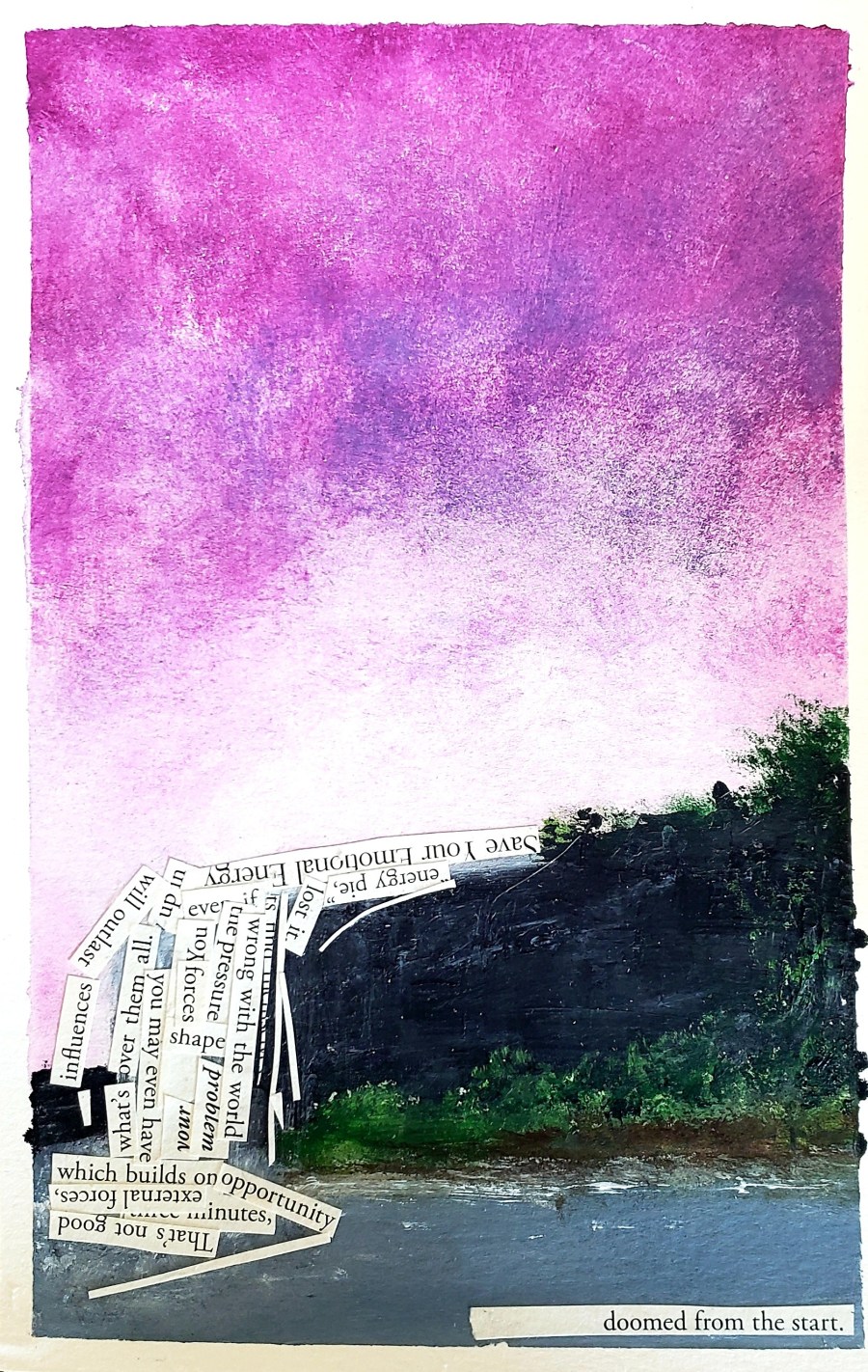
Featured Art: “Doomed From the Start” by Thad DeVassie

I mean, 
suppose you opened up your reader’s heart but carelessly
left in the cavity a jagged mixed metaphor? 

Or swore in writing to tell only the truth but used invisible
ink and the stiffed readers cried “Fraud!” and came after you
with something resembling pitchforks? 

Or your rap sheet said you repeatedly named emotions
instead of re-enacting that spot of time that would shake
your readers to the core without telling them what to call
it? 

Or in your fine poem the fine print is
flea-bitten with clichés like “to the
core” 
or “I had never been so unhappy in my life” or
“My father always told me” etc.? 

Or at the Open Mic you groaned out your poem with the
endless Gregorian monotone the Poets’ Theatre calls “The
American Drone Strike”? 
(audience shuffles, checks watches, stares at ceiling). 

Mistakes have consequences, people!
That’s why you need to sell your
house cash in your Roth 
pawn your first edition of Self-Portrait in a Convex Mirror
signed “For (your name here) very cordially John Ashbery”
so you can buy our top-of-the-line policy that covers all the
mishaps mentioned above a list that (believe me) only
“scratches the surface.” 

We offer multiple paths of escape from your . . . Let’s
call them slip-ups 
including a new identity as some nondescript who
evinces no interest in writing anything followed by
transplantation to some mindless spot 
(American Virgin Islands?) where no one will
recognize you as the guy whose sonnet used the
same rhyme twice: 
especially after your state-of-the-art
face and hair and voice transplants
[Part 3, paragraphs 4–6] that will
make you unrecognizable 
even to your dead mother who keeps popping up in your poems like a
(hey, time for a moratorium on similes). 

You didn’t think of all this when you were in Poetry School.
Or during your Residency. 
Or were made Partner. 
Or got mentioned in Dispatches as 
“once up-and-coming and now a known quantity
in the world of American poetry.” But this is the
real world, kid. 
Real and unforgiving. 
One false move and down you go. 
Which is why Insurance was invented. 

After the first substantial deposit 
along with the sworn affidavit in which you promise
to lay off poetry once and for all it’s a series of
manageable monthly payments wired to our
headquarters in the Cayman Islands, where no one
remembers anything. It’s not that we forgive you (not
our job). 
It’s that we cover your tracks and
make you disappear long before
your pen has gleaned your
excessively teeming brain. 

And what a relief that will be!


Read More

Meat Bird

By Marika Guthrie

Everyone in Shirttail called her Familiar. Not because that was her name, no one knew her name. And not because eventually the men of Shirttail would become as familiar with Familiar as the inside of their own palms. No, they called her Familiar because she felt familiar to them despite not being born in Shirttail or spending a day of her short life there before arriving unannounced to squat in the late Larson Boucher’s chicken coop.  

That trashy little blank-faced girl over at Larson’s place sure seems familiar, got shortened to, that familiar-sorta-girl living in Boucher’s old meat bird coop, got shortened to, that familiar girl, and within five days they had talked her over so hard she was whittled down to Familiar.  

The meat bird coop was twenty-three paces east of Larson Boucher’s twobedroom house, which was set behind Boucher’s Gas & Garage. The station had died years before the man. Wild Turkey brought premature death to them both in equal measure. Boucher’s Gas & Garage was on the south end of town, spitting distance from the “Welcome to Shirttail” sign, erected by the Rotary Club. Proximity to that marker made Familiar an outskirts problem, not an intown scandal. Still, “town” wasn’t but three blocks away, and the residents of Shirttail watched from the sides of their eyes and talked out the sides of their mouths.  

Read More

Questions for the Lord in the Court of Divine Indifference

By Kerry James Evans

Lord, hasn’t it been long enough? I’ve prayed
three days straight, read Matthew, Mark, most of Luke,
and John. I’ve called my grandmothers,
listened for you in every note of the bluebird’s song,
and yesterday I even spoke to your messenger,
walking the dog—a chipmunk escaping
the screams of a circling hawk into a split log. 

Lord, if this is the end, can I have a bowl of ice cream?
Can I toke up one last time? Can we agree
to skip the next World War? No? I’ll settle
for a housing crisis, another divorce—whatever’s left
on your Armageddon Bingo card.
Lord, forgive my lowly sentiment. I’m tired
of missing my ex. Since she left, all I do 

is litigate with the walls. I never win. 
The opposition? Stoic, crown-molded from corner
to baseboard. Its argument linear, square.
I should know. I painted each wall
an assortment of pastels, hoping to please her.
I didn’t account for how light shapes a house
throughout the day—how dark a room 

becomes when all that’s left is you. Your Honor,
the defense recognizes it won’t change anything,
but I need to repaint the walls. Do it now,
I hear you say from on high, but, for the life of me, 
I can’t grasp how you made a world
in seven days. After years of trial, 
I still struggle to fry an egg. Who doesn’t? 
Phil Tucker, the postal worker, stops
every morning at Flagg Chapel Pavilion
and slides open the door of his box truck
to burn a cigarette. Once he’s snuffed
the butt under his boot, he’s off to finish the route.
I don’t smoke anymore, but find myself wanting
to be more like him. What’s that about? 

Why is it, despite your best efforts,
I’m filled with this stubborn, juvenile belief
that you’ll return in a whirlwind, halo and all?
Lord, if you can render honey from a speck
of flower dust, what’s your plan for me?
I know a bowl of ice cream is asking a lot,
but I promise to wash the dishes when I’m done.


Read More

First Joy

By Jana-Lee Germaine

Hard to pick the moment—first smudge
of my smile when my nephew, learning the
Earth’s age, told his teacher Grandpa’s old
as dirt!
so serious, so proud to connect
eons with epochs with his own long span. 

No antidote for grief, Just walk
straight through
, mom always
said, don’t stop to smell the
self-pity
. My heart pushing its
wheelbarrow dirt and rocks
across the overgrown lawn, 

Sisyphus New England–style, until
one morning I flip through the
comic-a-day calendar and laugh,
though months and months too late. 

Hard to pick where—to untangle one katydid note
from the rest in September, synchronous scrumming
legs like insect Rockettes. Easier to say it was that
first leaf in autumn to orange: unexpected flash
among reams of still- 

green, precocious student of temperature
shifts you can’t unsee, can’t unfocus on once
your eye lights it, signal flare that means not
help anymore, but a spot to mark, here. The
end of something approaches, 

I learn first to drop, allot each piece to
patchwork air, branches lift, shuck down to 
simplest selves so you can see them stretch,
lengthen, then second: to stand, 

in an attitude suggesting peace, not understood by
the ever-grinding mind, but held in the core,
learning still, learning know that I am, in a far
country, meditate on the merits of snow.


Read More

The Unhealed

By Brad Aaron Modlin

The ones who weren’t healed didn’t make it into
the Bible, but remained still as ponds the wind has
forgotten, seated as always 

on their straw mats, while across Jerusalem, a lucky one
stood for the first time and walked, her heels learning the
hot dirt. And that lucky 

woman, all she could do—feeling the ground as
it pushes back against our steps—was say,
“What, what, what.” And the man whose sight 

returned shouted, “Yellow!” like an old friend’s name. 
“Carry me home,” the unhealed instructed
their companions, 

and there, where everyone lingered in the dark as if
the curtains had no drawstrings, someone started to
say, “I’m so sorry,” but couldn’t get past I

And everyone drank hot water because there
was no tea and no one wanted to leave to buy
any, and no one wanted the water 

to end either, until it had to, because it had to, and the Bible left
out the friend who mentioned, too soon, returning the new
sandals the unhealed had bought 

prematurely. Then, while the room sat silent,
pretending never to have heard of shoes before, the
unhealed chewed a fingernail and thought for the
first time of many, “Maybe tomorrow. 

Maybe he will pass by and see me.” Finally,
remembering our hunger 

never stops, someone felt their way to the stove. And the
room ate flatbread unfamously, and halibut with lemon, and
what rose from the ground— 

a feast of more food than they’d expected to find there—
their wooden spoons scraping the bowls, the rising moon
scratching at the curtains.


Read More

Hand Over Hand Over the Edge of the World

By Claire Bateman

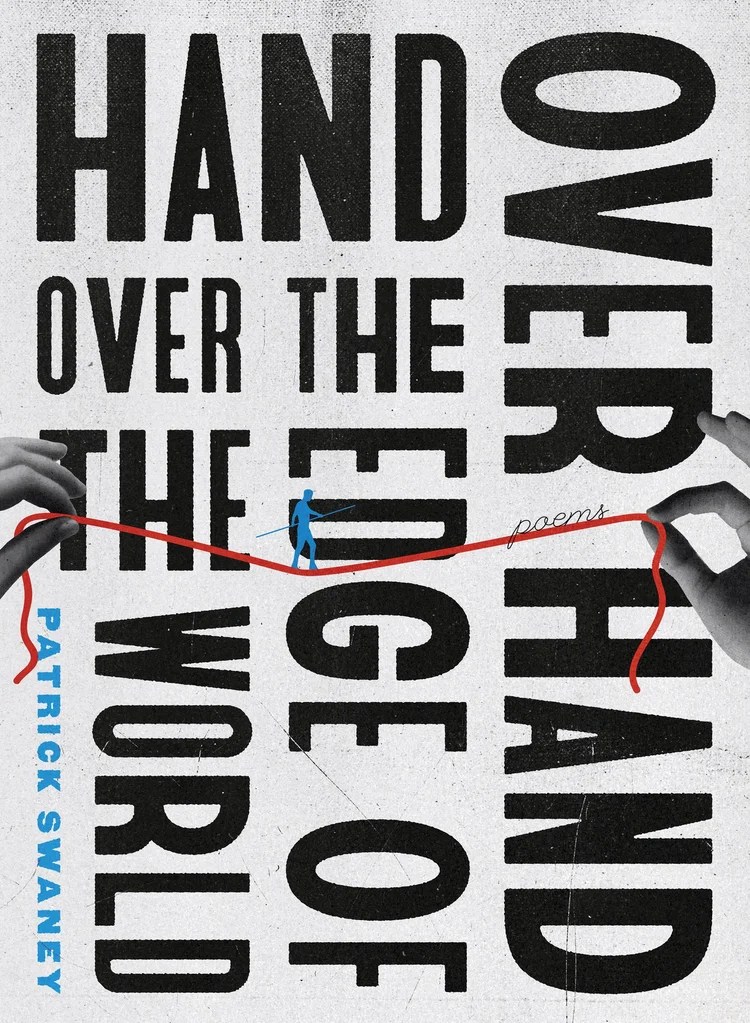
Let’s begin with genre. While Patrick Swaney’s Hand Over Hand Over the Edge of the World (YesYes Books, 2025) is described in its promotional materials as prose poems, the title piece won Nanofiction’s 2012 Nano Prize, and Swaney himself refers to it as a story. This slippage is generative: on the flash-fiction/prose-poem continuum, there’s space for experimentation in the messy middle, and that piece exemplifies this fluidity:

Read More

The Deletions by Sarah Green

By Bethany Schultz Hurst

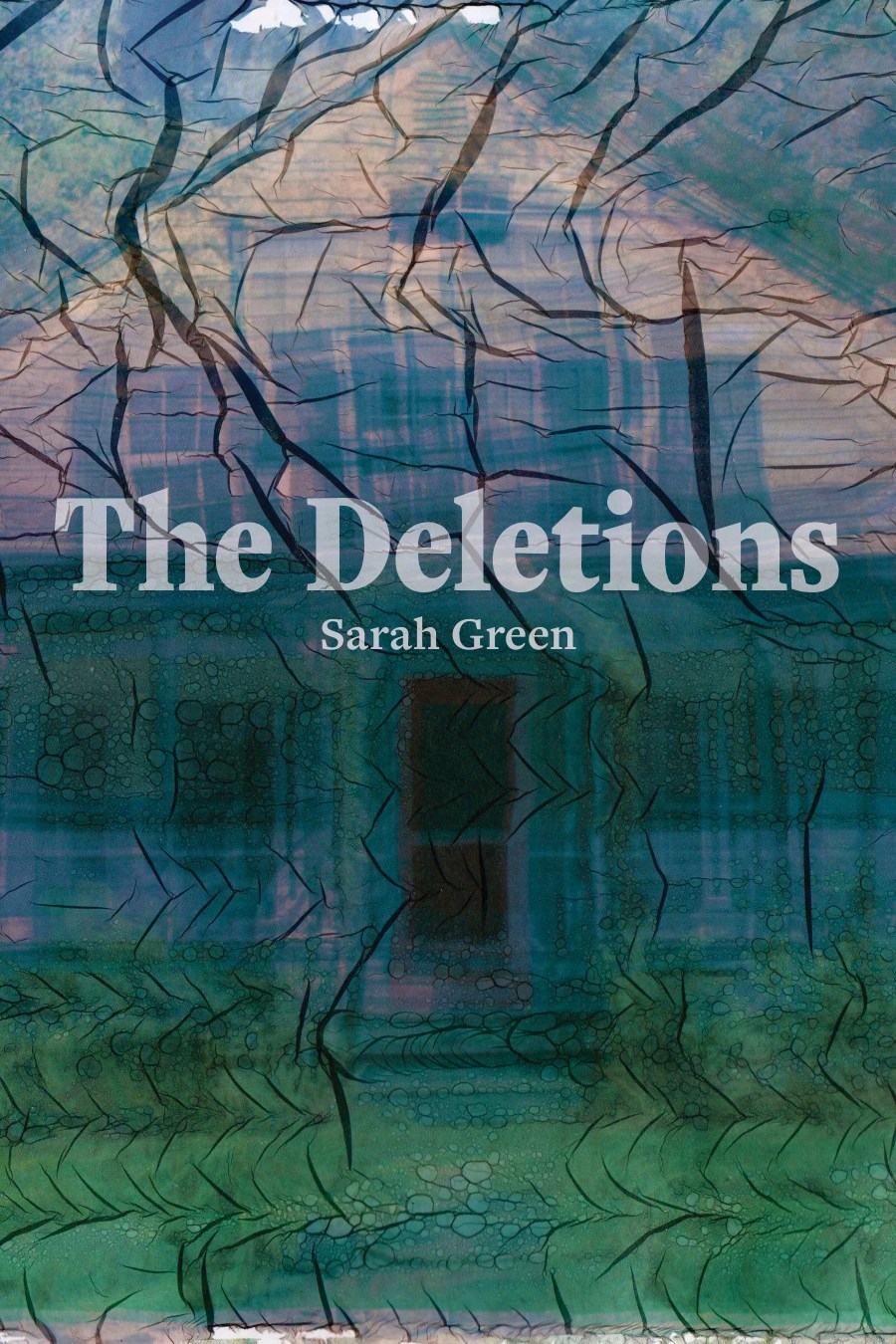
Sarah Green’s second poetry collection, The Deletions (University of Akron Press, 2025), considers how to reckon with loss on a spectrum from personal to global—from divorce to violence, mortality, and ecological crisis. “How can I stay in this body?” asks the speaker in “The Afterlife.” The question reverberates throughout the collection: How can we contain our many griefs, or expect our fragile bodies to contain us as we grieve?

In many ways, the book itself seems organized into a neat container. Divided into three sections of similar length, most of its poems are one-pagers, often using conventionally-punctuated stanzas of equal length. Resisting that containment, though, are several outliers, sectioned poems that span multiple pages, sometimes—as in the case of “My Liver”—eschewing formal punctuation. While numbered sections in poems like “The Afterlife” suggest a sense of order, sentences spill mid-phrase over the section breaks. Green aptly uses these less cohesive forms when the integrity or safety of the physical body feels most precarious, as when the speaker is diagnosed with ovarian failure, undergoes a biopsy, meditates on violence against the female body, or confronts a death so recent that the departed still feels physically present.

Read More

Drawbridge Sewn to Jawbone A Review of Derek JG Williams’ Reading Water

By Johnny Cate

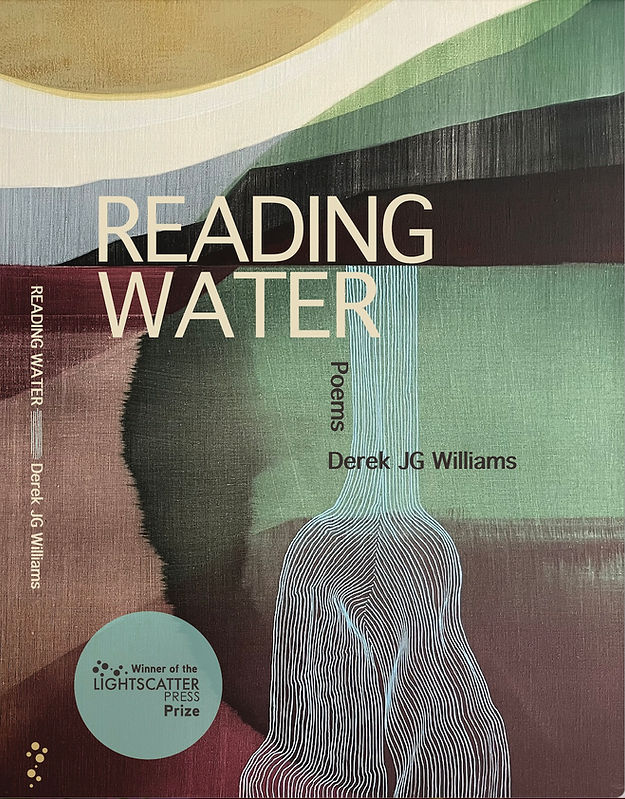
Reading Water is absolute fire. But let’s do ourselves a favor and stay away from the term tour de force. This is an award-winning book, deservedly. It doesn’t need another nobody to validate it, but I guess it can’t hurt, right?

With 100-something pages, Derek JG Williams puts together a cohesive and cool poetic vision in this book, which was published by Lightscatter Press in 2025.

The voice is distinct and the poet’s devotion to a liquescent style of lyricism gives it a slick and appropriately fluid vibe. There’s far too much to say about it—this review will be painfully incomplete, but let’s just revel for a second.

Read More

The Saddest Girl on the Beach by Heather Frese

By Ashley Cowger

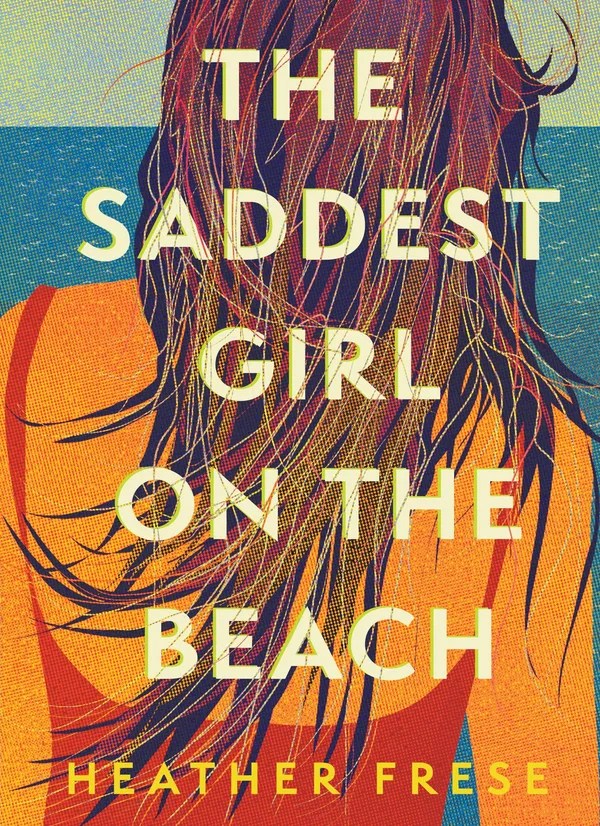
Many stories arise from the conflict between science and a belief in something unknowable. At no point does this conflict feel as urgent as it does when we are mourning a loved one. For Charlotte, the narrator of Heather Frese’s The Saddest Girl on the Beach (Blair, 2024), no question is more important than how to process and move on from the death of her father without the aid of belief in an afterlife. “My dad believed in science,” Charlotte says. “But science doesn’t believe there’s anything after death.” Frese personifies the distinction between belief in an afterlife and belief in science through Charlotte’s two romantic interests: Michael, a young scientist to whom Charlotte feels an electric pull, and Nate, the religious brother of Charlotte’s best friend who is perfect for her “on paper.” The choice between these two men is much more than a generic rom-com setup, though. Michael and Nate represent two strong opposing forces in Charlotte’s life, two very different ways of dealing with grief.

Read More

The Poetics of Ecology Kathryn Nuernberger’s Held: Essays in Belonging

By Anna Farro Henderson

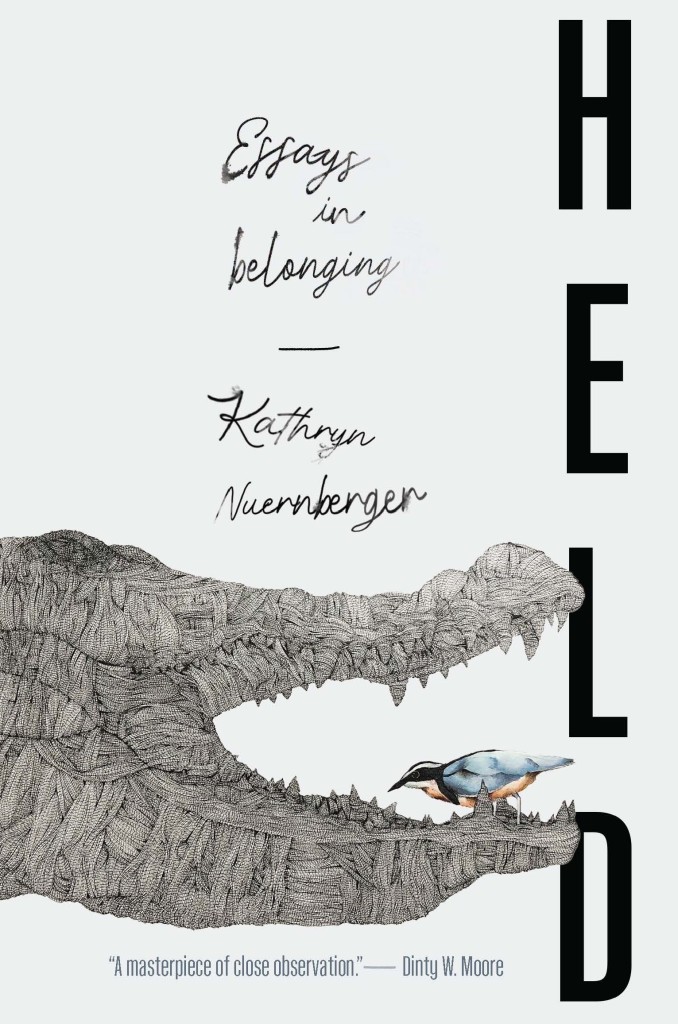
Facing environmental crises, Kathryn Nuernberger obsesses over mutually beneficial interspecies relationships in Held: Essays in Belonging (Sarabande Books, 2025). Short lyrical essays named for pairs of species examine our interconnectedness and collective experiences. Yucca moths fertilize and feed on the Yucca plant. Mycorrhiza fungi live on trees and share resources among them to maintain forest health. Bioluminescent algae camouflage bobtail squid in moonbeams, hiding them from predators. “I need sparrows to understand myself,” Nuernberger writes. Non-human species offer mirrors to see ourselves and imagine how else we might show up in relationships. Through essays on
travel, observation, and grief, Nuernberger attempts to find belonging in the poetics of ecology and to share this belonging with all of us.

Read More

Play This Book Loud by Joe Bonomo

By Kyle Minor

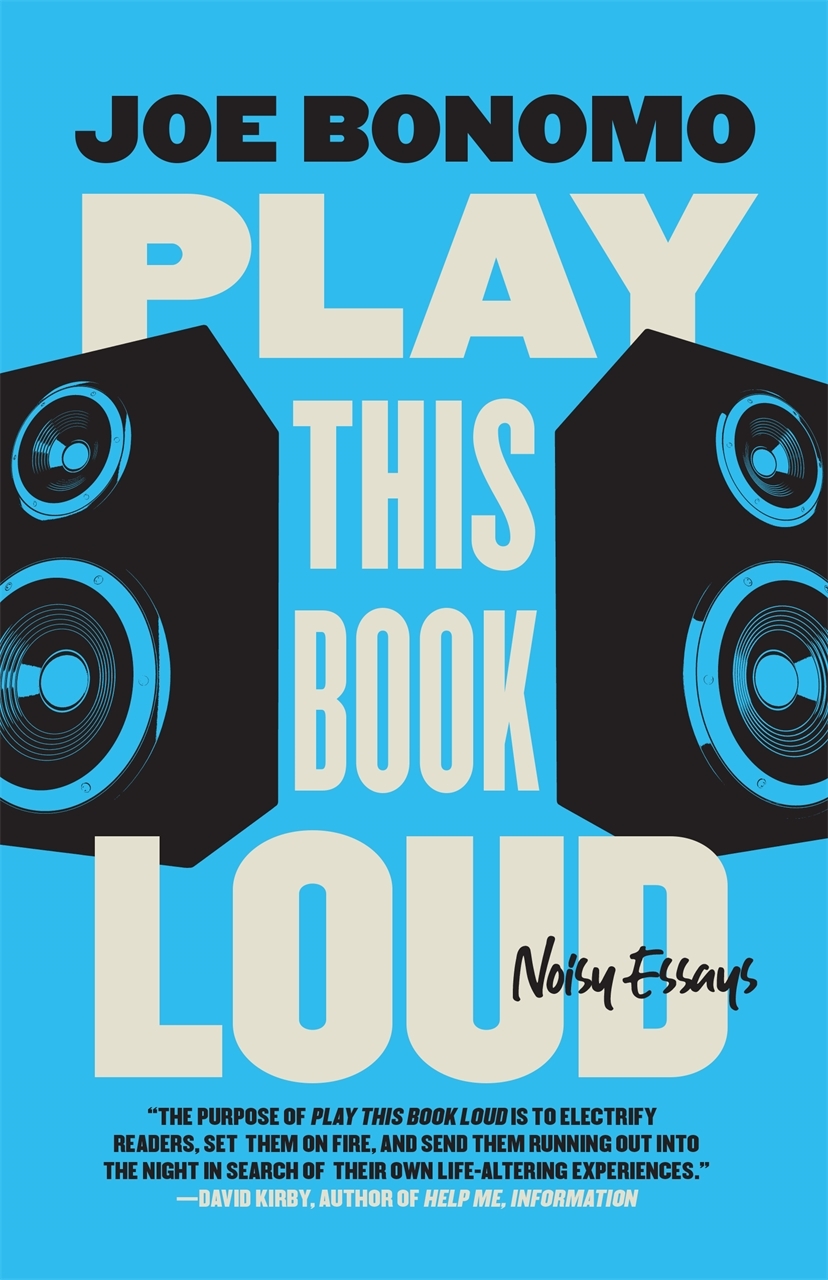
The epigraph to Joe Bonomo’s Play This Book Loud: Noisy Essays (University of Georgia Press, 2025), comes from Lester Bangs’s “Untitled Notes on Lou Reed”:

           The real question is what to live for. And I can’t answer it. Except another
            one of your records. And another chance for me to write.

That epigraph, for all its devotion, underplays what was actually going on in the long, weird relationship between Reed, who made a career of making a myth of himself, and Bangs, who loved the myth, and who did as much as any music critic to burnish and promote it. What precedes the epigraph in “Untitled Notes” (and which Bonomo elides) is the invocation, “You know your hatred is just like anybody else’s,” and what follows (also elided) includes the assertion that Bangs “would suck Lou Reed’s cock.”

It is difficult to imagine a contemporary critic writing out of such a fever, or even daring the transgression of Bangs’s fellatial declaration. The performative aspect of the Bangs act arrived amidst the two-decades’-long context of all sorts of post-rock’n’roll posing—the speed-driven Warhol machine, the punker-than thou CBGB scene, Studio 54, Tom Wolfe and Hunter S. Thompson and the New Journalism, nearly every page of Creem or Crawdaddy or Rolling Stone.

Read More

Fourth Genre: Twenty-Five Essays from Our First Twenty-Five Years

By Robert Rebein

These days we take for granted that creative nonfiction has earned its place within the pantheon of writing genres. But that hasn’t always been the case. As recently as the early 1990s, the so-called “fourth genre” was so little regarded that there were virtually no anthologies, textbooks, or journals devoted to it. That began to change in the mid-to-late ’90s, when, in the space of five years, an influential textbook, Robert Root and Michael Steinberg’s The Fourth Genre: Contemporary Writers of/on Creative Nonfiction, was published, and the journals Creative Nonfiction, River Teeth, and Fourth Genre each launched in quick succession.

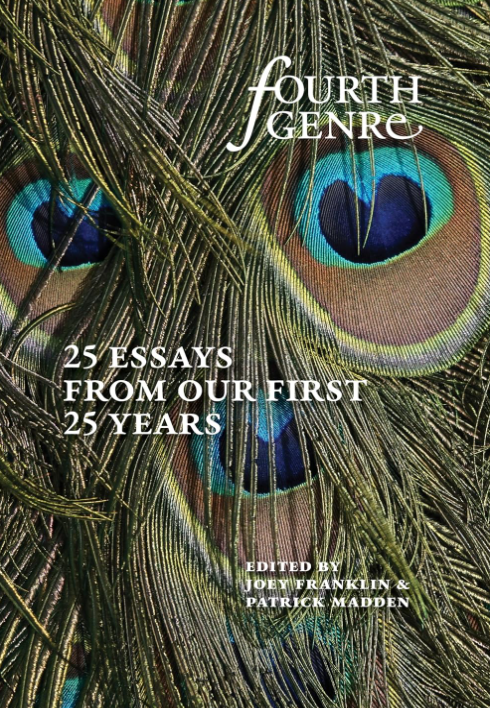
It’s difficult to overestimate the role these journals played in elevating creative nonfiction to its current position vis-a-vis poetry, fiction, and drama. One sign of this ascension appears in the title to Joey Franklin and Patrick Madden’s introduction to Fourth Genre: Twenty-Five Essays from Our First Twenty-Five Years (Michigan State University Press, 2025), which boldly declares, “Fourth Genre? More Like First Genre!” Such boldness would have been difficult for founding editor Michael Steinberg to imagine, let alone express, when he prepared the first issue of Fourth Genre for publication in the winter of 1998, but judging by the contents of this retrospective anthology, it doesn’t feel out of place.

Read More