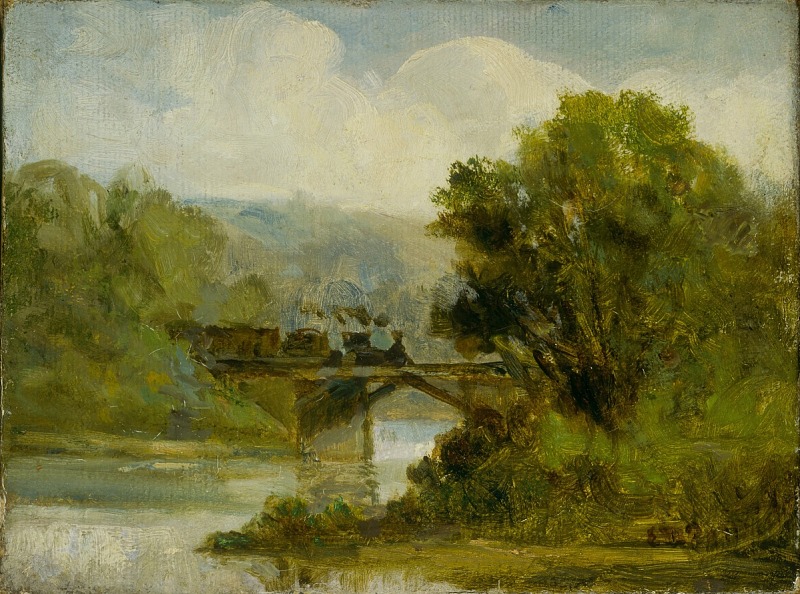
North River Shad, c. 1910

By Lindsay Atnip

Featured Art: Green Fish About to Eat the Fish Hook Wall Art by The Lazy Artist Gallery

William Merritt Chase painted numerous versions of fish still
lifes, many of which were quickly purchased by museums across
the country. Because of the popularity of these works, the artist
worried that he would be remembered only “as a painter of fish.”
—placard, Art Institute of Chicago

The real thing rots. Corrupts,
               Decays, time-lapses, hollow to holes.

But yours—immortal, silver-scaled, so round
               (Why should its roundness be wrenching?)

               Realer than the real.

You were afraid this was what they’d remember you for.
               Afraid—as if there were somehow more than this.

Here one sees, forever, how it could fill the hand—
               How it would feel, filling one’s hand.

               One could do worse than be a painter of fishes.


Read More

Long Division

By Jessica Tanck

Featured Art: Green and White Press Drill on Table by Lisa Fotios

We have split the phone plan,
emptied the safety deposit box.

My dad is moving out of the house:
gone, the sentinel from his office

in the basement, plastic Star Wars
figurines tipped into a box.

It is hard not to imagine all of us
in our old places, hard not to fill

the house with past. Alesha (sister,
I still think, not ex-. ex-step.)

cross-legged on the futon, remote
in hand, a bowl of macaroni

in her lap. She peels home
on repeat, inside in a jangle

of keys, stays up with me all night,
perpetually lights and leaves.

Myranda (blood sister) half-absent
in her eyrie, moves from floor to desk,

floor to desk. My stepmom flickers
in the dark bedroom, in the mirrors,

on the stairs, in the corners of halls.
I am always underneath all of this,

in the skin of the basement or crossing
the yard. How many times do I tread that

bed of needles, climb to the freshly sawn-off
branches, wish a kinder mending, wish

an absence gone? Press my hands to trace
the drip of sap, what cannot be divided,

to touch what bubbles forth, what empties,
amber, from the knotted heart.


Read More

We Are the Bachelorettes and We Insist

By Susan Finch
Winner, Editors’ Prize in Prose: selected by Mandy Berman

Featured Art: Woman in Silver V-neck Long-sleeved Dress by Inga Seliverstova

As bachelorettes, we solemnly promise the next forty-eight hours will include three brunches, two happy hours, fifteen moderate disagreements, one unforgettable fight, eight matching T-shirts, one bar crawl, one pedal tavern, one sprained wrist, three twisted ankles, sixteen hangovers, too many tearful promises to count, and one sober regret. We are the bachelorettes and we insist.

We must begin with brunch, and in order to fit three brunches into forty-eight hours, we will congregate Friday morning. After all, brunch is the most important meal of the day. We can eat French toast and French fries, and getting tipsy or emotional (i.e., Lydia has too many feelings after bottomless mimosas) will not be frowned upon. Not every restaurant serves brunch on Friday, so we must select carefully, find a place that has an all-day breakfast menu, and really, why shouldn’t a restaurant serve breakfast food all day. It’s not so hard to whip up a couple of poached eggs, is it? We will reserve the table for 10:30; the proper time to eat brunch is 11, but we already know that some of our bachelorettes will be late—particularly Tara, the bride’s sister. She’s a musician and runs on her own schedule, and of course, Felicia. She hasn’t been able to get anywhere on time since the new baby.

Event attire is outlined in the invitation—brunches are for sundresses or rompers paired with cute cowboy boots or wedge sandals. We do not do flats—flats are for business casual events or maybe if you’re trying to let someone down easy. Matching T-shirts will be provided for the pedal tavern that begins promptly at four. The shirts may be knotted at your hip or tucked in with a cute belt, but please do not leave your shirt untucked. Evening wear will have two themes: Friday red and Saturday sparkle, and the bride, of course, will wear white. No one else should plan to wear white or anything white adjacent —no cream, no ivory, no pearl, no silver, no soft grays, no misty light blues or sugary beige. Don’t pack it. Don’t even think about it. We don’t want anyone to steal the bride’s thunder. After all, we are the bachelorettes, and it is our job to insist.

Read More

Last Night I Told a Stranger

By Mary Leauna Christensen

Featured Art: Hand of crop woman on crumpled bed sheet by medium photoclub

I am very go with the flow—

I used to wipe down airplane
trays only when they were sticky.

Now my hands have dried
from soap and alcohol.

But they are still the same
hands that fixed your hair

and earring against the pillow
that most likely was not silk

because we did not buy
the premium package

from the funeral home.
Everything is packaged nowadays.

I try not to use plastic bags
for produce. Not because

I’m environmentally conscious
but because I want to slow down

rot. Just a few weeks ago
I finely chopped cilantro and

green onion while the man
I was cooking for drank wine.

He was nervous and high
so we danced to the music

that came from his phone.
He tasted like peach Moscato.

I led him to my room
though I knew nothing would happen.

And by nothing
I meant between the two of us

because here I am
in bed and alone

wishing I could live in that sentence—
nothing will happen.


Read More

Life Through Glass

By Jonathan Duckworth

Featured Art: by Giuseppe Barberi (1746-1809)

—for Kat Flinn

blurs become faces & eyes for me

as I see through layers of glass

& now that my fiancée is half

a continent away we speak through

a tunnel of light bound by twin

screens, more layers

& there are boats with bottoms

that let you see the underwater

in perfect safety & I wonder if the fish

in my fiancée’s tanks see us that way

huge ugly misshapen things safely

on the wrong side of the pane

lyretail mollies harlequin rasboras

bettas of swish & swirl green blue red

how they circle & gape & watch us

watch them & maybe sometimes

they wonder if we are happy & maybe

they see her on her couch as she

cradles my glowing face & they think

that’s how the finless frolic

& navigate this the sometimes

joy of being


Read More

Polar Bear

By George Bilgere
Winner, Editors’ Prize in Poetry: selected by J. Allyn Rosser

Featured Art: Mounted Model of a Polar Bear from United States National Museum Photographic Laboratory

A father died heroically in some Alaskan park
while trying to save his kids from a polar bear.

Long ago, when his mother gave birth
one summer afternoon in Bakersfield, California,
could anyone have prophesied,
as in an old myth, that the baby crying
at her breast would one day be killed
and partially eaten by a polar bear?

Has anyone from Bakersfield, California been killed
and partially eaten by a polar bear? Yet her son
was. He looked up from making camp,
pitching the tent or lighting his Coleman stove,
and there it was, white and immense. His fate.

And he died heroically and was partially eaten.

Of course, the bear had to be killed. The rangers shot it,
which makes sense. You can’t have polar bears
running around in the wilderness!
The wilderness is a place for dads and kids
and Coleman stoves. Polar bears just . . .
they just kind of ruin the whole thing.

As for the bear, it didn’t die heroically.
It just got shot and fell over
and was sent to a lab for testing.


Read More

The Scar

By George Bilgere

My son slipped on the concrete
by the pool and smacked his head.
Blood cauling on his small shoulders.
The doctor stitching him whole.
Three years on, after a haircut,
the scar still rises, a quarter moon
a woman will ask about
as they lie there one night,
her fingers in his hair,
her voice in his ear, the secret
delight of him—a bit
like burnt toast—in her nostrils
as she takes his strangeness
into her. What she won’t know
is how the frail, Phidian skull
I held that day in my hands
resounded on the hot concrete.
It echoed all summer, less
like an egg cracking in a bowl,
or a world breaking, than the wild
knocking of love against my heart.
Dear girl who will one day win him,
that part of the boy is mine.


Read More

Homecoming

By Christopher Brean Murray

Featured Art: United States National Museum Library from United States National Museum Photographic Laboratory

At the edge of town, you pass a water tower beside train tracks.

A shopping cart blocks your path.

The telephone poles have no wires.

Someone has spray-painted Fuk Yo on the train station.

A breeze bathes your face

as seed pods click overhead.

How long’s it been since you sat in a theater?

The marquee says JAWS, but the ticket booth’s empty.

The jewelry store says: 40% off weeding rings.

Brass clips clink against the flagless pole.

The library is a house that’s rumored to be haunted.

The librarian recounts tales of the first settlers’ deaths.

She’s seen books flung from shelves,

a woman at the bottom of a staircase.

You pass a garage where mechanics yammer.

At the nursery, a sprinkler douses the curb, leaving shrubs parched.

A Corvette peels out in a mini-mart parking lot.

Smoke drifts over storefronts.

At the Dairy Queen, a woman buys cones for kids.

She snaps at them, but they remain buoyant.

Read More

Currency of Survival

By Natalie Taylor

Featured Art: Scott Catalogue USA PC7 from National Postal Museum

A half-eaten waffle, syrup-logged in a plastic takeout container,
       dropped in the middle of the street. Bald man in a blue truck slows down,
cranes his head out the window to get a closer look. Suited folk

coming home from church swerve. It’s finally cool enough, after 37 days of dry heat,
       to turn off the air conditioning, open windows.
Hooting and hollering from the apartments as someone on TV scores a touchdown.

Last night a friend came over. She has 16 pets, most of them rescue animals:
       dogs, cats, rabbits, and ducks. She installed a heated pond in a spare bedroom. She’s worried
about how to transport them when she moves to Maine as a climate refugee.

A grandmother and grandkids carrying leftovers in Styrofoam walk past
       the waffle. Dark feathers brush across the storm-swift sky.
A car drives over it, wheels straddling the soggy breakfast. Something exciting happens in the game:

Yeah! Then clapping. My friend with 16 pets has no hope life on earth will get better.
       If you think we have an immigration crisis now, wait until Mumbai is uninhabitable,
she says. Everyone on the planet is moving to Canada.

I think of a fable where a rich man buries a bag of gold
       in the middle of the road and covers it with a boulder. Then he watches.
Some people are angry. Some ignore it and walk around it. Only one boy

thinks to move the stone. My friend thinks that by 2050 the high desert will be too hot to survive.
       We’ll run out of water. She thinks we are hurtling ourselves out of
the habitable zone. But I think of pyramids and vaccines and walking on the moon.

Humans adapt. Imagine, all of us trying to fit in the northernmost region
       of North America
. She thinks it’s impossible because
the rich are already buying up all the land and building homes there.

A girl in a striped shirt and red pants walks a dog with an upcurled
       toffee-colored tail. The dog stops to sniff as thunder growls across the valley.
Four teenagers on bicycles. Another couple with three dogs, hair and fur rising

in gusts. Wind rhythms the chimes, thunder drums closer
       and the first sweet slaps of rain hit burnt tips of leaves, brown grass, dried lily stalks.
Smell of wet cement. Soon, a miniature river bounces in the gutter.

Clatter of rain drowns out the game. A neighbor checking his mail—leopard-print kimono
       sticking to his long legs, arms waving wildly to shoo the storm, yelling out as if in pain—
bends to pick up the waffle. Raindrops plinking like millions of silver coins.


Read More

Gothic

By SM Stubbs

Featured Art: Bird by Robert Frederick Blum

Upon a hill, a house. Upon the house,
a roof. On the roof, a bird. The bird—
oiled feathers, beak like an awl—grooms
the roof’s moss, subsists on ticks
and silverfish. Inside the house, a man
without a tongue and a woman
who loves him. The woman grooms
the house, subsists on potatoes and rice
and whatever rodents roam the slope.
The man hunts every day until noon.
Every day he returns empty-handed,
his shoulders tense as flywheels,
his jaw the floor of a collapsed cave,
crowded with everything he cannot say.
She brews his tea. She washes the corners
of the house. She chases the bird away.
At sundown the man leaves again, hunting.
Upon another hill, another house. Another
woman waits inside. The man without
a tongue feasts on rabbit she trapped
in a pit. From fireplace ashes she makes lye
and scrubs his back. She fills his canteen with it.
By the time her sister misses him, his body
has sunk to the bottom of the pond.


Read More

There Will Be Salvation Yet

By Tania De Rozario
Winner, New Ohio Review Nonfiction Contest: selected by Ira Sukrungruang

Featured Art: The Last Supper By H. Siddons Mowbray

1993. That’s when it happens. Two months after your twelfth birthday. It’s a sweaty afternoon. This day which blisters with possibility. This day you learn that there are demons inside of you.

You’re on your way home from school. You know something is wrong the minute you get off the bus. Your mother waits at the bus stop, teary-eyed. Your relationship has grown monosyllabic, but the tears feel like a warning, so you ask.

What’s wrong?

It is when she smiles that something inside you unravels. You realize hers are happy tears. But her smile is vacant. Placid. A Stepford Wives smile. The tears fall but there is nothing behind them. She’s a mannequin crying on command. A talking-doll with electronics scrambled.

You don’t have the language for this yet.

She grabs you, holds you tight: Nana has been saved!

Read More

Jesus and My Way of Seeing Him Go

By Jeanine Walker

Featured Art: Jesus Christ, the Virgin and St. John the Baptist with Saints Paul and Catherine, ca. 1520 designed by Raphael, printed by Marc Antonio Raimondi

I was eighty-two again
and Jesus came perched like an angel
on top of my fridge, his palms spread open.

Almost old enough to be comfortable going,
I wondered if he had come to take me.
“Are you here for me?” I asked him.

I was eighty-two and my eyesight
was dimming, but I was in good health
for my age. And in my good health

I saw how lovely Jesus was, how physically
lovely, and I felt like kissing
his stomach. Not even where it was whipped

or wounded, or where the vinegar
dripped onto it as it overflowed
from the taunting sponge, but just

his belly, carefully haired, divinely
flat and strong and hungry and disciplined.
May I May I May I, I prayed,

and when finally he said I could
I pulled the stepladder out from under
the sink and gathered myself on top of it.

Then I kissed the stomach of Jesus.
It tasted like the steam that arises
from dry ice. I kept the wind at bay,

but it was difficult to do so, what
with the howling just then
picking up and all.


Read More

My IRS

By Adam O. Davis

I am two vowels strung twenty years long.
                                                                                            My life a ransom
letter written by a cardiogram, tympanic as traffic & the lights of traffic

that renew the tercets of Esso stations standing violent as macaws
in the ululative night.
                                                      I need lithium or language, nurse.

I need words to fall like ricin from an envelope.
Clearly, my synapses need seeing to.
                                                                      So, please, repo the verb of me.

                                        Conduct me swiftly
through the conjunction of Tennessee where nouns loiter like limbs
languid with Quaaludes, where daylight breaks

like a mouthful of fentanyl over the teeth of a country that cares not
for such news.
                           Should a poem be the pill or the pharmacy?

Should I pledge myself to this business as if it were Gerard Manley Hopkins
or Jesus Christ?
                            Here I am, Lord, earnest as a rice cooker, lively as Superman

in his leotard, my spiritual fizz empirical as Pepsi & just as cheap.
                                                                                                           Jesus, Gerard—
who will irrigate these ears from error?

                                                                   Who will whisper that in the empire
of swans the black cygnet is Elvis?
                                                    All around me the malady of my unmaking

unmans me: roadside trash, unrecycled recyclables, my shadow laid
like a new suit over the bus bench & birds behind it.
                                                                                    All this urban tumbleweed,

all these words for worse.
                                           When whoever’s kingdom it is comes calling for it
will the last televangelist of grammar go angled like an angel in the direction

of their god?
                            Or will America just eat my opioids as it like Nemo poisons
its seas to peace?

When I was a verb I thought as a verb so I did as a verb, just like the police.
Tonight the moon slouches in its straitjacket of stars.
                                                                                            There’s a multinational

wind afoot, some merry beast loose, all pronoun without surcease.
                                What rooky woods will it rouse first?
                                                       What islands will it make of our bodies yet?


Read More

The Arachnologist

By Benjamin Gucciardi

Featured Art: Untitled (Hourglass) by Mary Vaux Walcott

When he told me his teeth felt too heavy
to study history, I excused him.
I knew he was headed for the aqueduct,

or the boarded-up houses choked
by trumpet vine where he found them.
Martel collected spiders with the discipline of a surgeon.

He kept them in empty soda bottles
under his bed. On his way into sixth period,
he touched my fist with his fist,

announced the genus of his catch,
Latrodectus, and his total, that’s nine this week!
Through this tally of arachnids captured

in sugary plastic, we learned to trust each other
the way men on tankers far out at sea
confide reluctantly in gray rippling water.

When his best friend broke the news,
they found Martel last night, her voice quavering,
stray bullet off International,

I went to his house to adopt a spider.
I imagined the red hourglass
on the female’s abdomen emptying itself

slowly, her segmented body imprisoned
in the glow of the green-tinted bottle,
but no one was home. Now when I hear

the old women gathering cans at dawn,
half-swallowed by blue waste bins,
I think of Martel finding containers

to bring to the canyon, Martel
inspecting stones, placing his fingers
delicately around the thorax,

the eight legs angry at the morning
as he lifts the arrowhead orb weaver
toward the sun, offering

what he loved to the old, hungry light.


Read More

Leaf Light

By Emily Tuszynska

Featured Art: Forest by Arnold William Brunner

We live in green
depths of trees
planted by those
who grew old
and died or moved
away our children
play in yards theirs left
behind and sleep
in rooms that held two
or even three until
they grew our children too
are growing in summer
we box outgrown
clothes repaint
the walls new tiles
for the bath new
shingles the trees
don’t seem to change
though of course
they must the backyard
beech and oaks
that will outlast us
casting a deeper
shade the front yard
holly reaching farther
over the drive we pull in
and out of always
in a rush someone
running back for what
they forgot the trees
keep some other kind
of time spend whole
seasons taking in
their sustenance
strange food
without substance
every summer a feast
of light


Read More

Night Train

By Emily Tuszynska

Featured Art: Train by Edward Mitchell Bannister

The interior landscape shifts, erodes.
                While the children sleep we shore it up
                                with flotsam but the next day another

tide-bitten chunk of coastline
                crumbles. The trouble is we’re living
                                all at once. We keep rearranging the furniture

to try to make it fit. By day we push
                aside the clutter, lay the baby
                                on the floor she drums with open palms

as if to feel it’s there. Something solid
                underneath. Mostly everything sways.
                                A tree falls and the house next door

stands empty for years. The boy holds his sister
                to the window and shows her how
                                to wave goodbye, and that’s the morning,

fingerprints in the dust of it. Outside the day
                moves away in all directions. Streetlights
                                come on. When as I walk the baby the night train  

whistles through its distant crossing,
                why does it feel like we are the ones
                                hurtling toward some unknown destination?

I lean my forehead against the icy, rattling glass,
                look through our reflection at the moon
                                rushing through branches. Look, there’s a farmhouse,

miles from the lights of any town. Someone
                turns on a lamp in one of the windows;
                                someone stands there, watching us go past.


Read More

Awe

By Peter Krumbach

Featured Art: Blossoming Cherry Trees by Kano Sanraku (1559-1635)

I waited for it in the fork
of a cherry tree. On the LL
train. Made bed for it in my 8th
Street room. I left gaps in sentences
where it could land. Dug holes, smoked
ham, lost bets and innocence, granted
exculpation long before it sinned.
To track its scent, I stripped
and whorled, committed perfidy,
burned effigies and caramelized
figs. I rubbed nougat with licorice
and seven sprigs of dill. I renamed
myself after it, just to see
how I rang. Morning, midnight,
noon and dusk, I texted,
sexted, called and faxed it.
For years and years, I slept unkept,
sculpting pleas and letters
of regret. And then one day
it was in my palm. Smooth
as a peanut, smelling of pine.
Dzweep, said a jay from the elm
above my head, then bolt-like
he dove and snatched it away.
Beautiful hard-eyed thief, leaving
nothing but an ampersand.
My core cracked like a deer-
struck windshield. It splintered
into little hearts shuffled through
a deck. So I wrote this
in red.


Read More
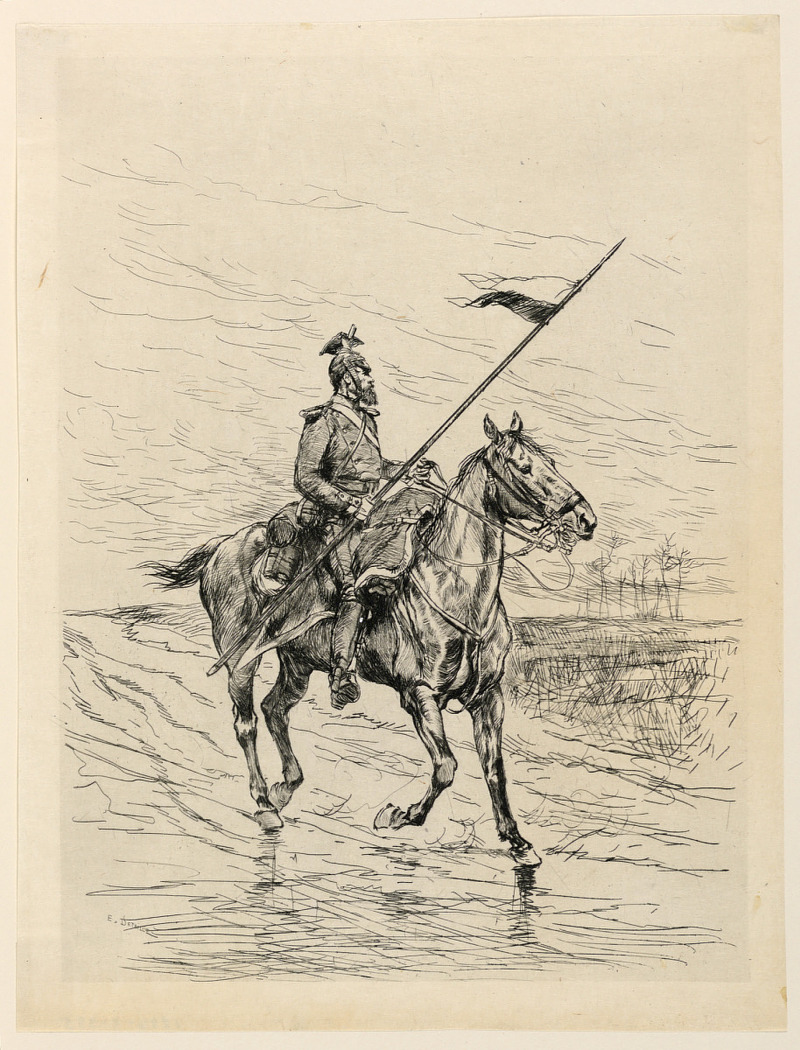
Amtrak Psalm

By Craig van Rooyen

Featured Art: An Uhlan (mounted soldier with a pike) by Jean Baptiste Edouard Detaille (1848-1912)

The sway-backed horses of Lompoc don’t spook anymore.
They keep their muzzles pressed, sharing a pulse

while you clatter past, invisible in tinted business class.
And whose business are you minding anyway

as you peek into the pitbull’s backyard wreckage,
glimpse the bad cuts and dye-jobs of students smoking

behind Oxnard’s International College of Beauty? Camarillo,
Moorpark, Simi Valley, recede into heat-shimmer oblivion.

At home, your daughter’s behind a closed door
with Carnivorous Red nails posting stories that dissolve.

The entire universe big-bangs away from her irreducible center
of disdain. I’ll be gone soon enough, you want to say.

So this afternoon you’ve fallen in love with the common
mourning dove, tilting at the wind on his coil of razor wire.

You’re rooting for the tag crew artists
in their neverending arms race with Parks & Rec.

Boomer and Lil’ G, Fatlip and The Dog, Fraho, Buzz,
Rollin’ Sixty and Bashr. Naming themselves

over and over in the middle of the night, learning
like Buddhist masters the lessons of impermanence.

And now you’re waving at ranks of garden gnomes—
little domestic terra cotta soldiers waiting to be found

in the Burbank Home Depot back lot. I see you, you whisper
through the glass at their earnest bearded faces.

I see every one of you.


Read More
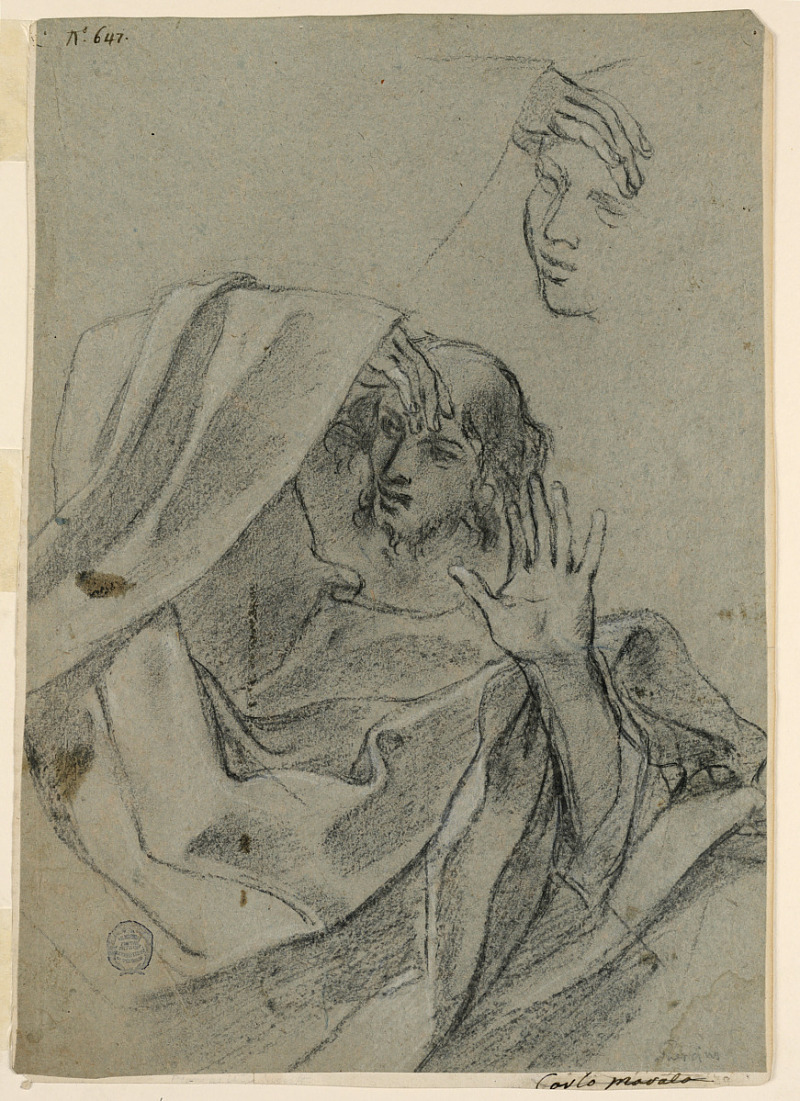
“Take the Neck Step Against Aging”

By Craig van Rooyen

Featured Art: by Giovanni Francesco Barbieri (1591-1666)

Today my wife bought a twin pack of neck-tightening cream
for me, and I’m trying not to take offense.

It’s not that I haven’t noticed the thinning crepe paper
over my Adam’s apple, or the way it bunches when I tie a tie,

but I guess I had hoped she would be my accomplice
in pretending. The book I’m reading’s called The Denial of Death.

It says civilization’s an elaborate symbolic defense mechanism
against the knowledge of our mortality. And yet I can’t help but hope

this cream will work. My wife learned from her mother
who learned from her mother, and so on, how the crushed

bark powder of a Thanaka tree, abraded in water and a stone dish,
will form a milky paste that protects the faces of the ones you love.

Do you know how it feels to have a woman massage her history
deep into your skin? So we pretend this is a Costco twin-pack of Thanaka

and that we have all the time in the world as she opens the jar,
warms the cream between her palms and wraps her slender fingers

around my throat. It’s one thing to try to bridge the basic duality between
the physical world of objects and the symbolic world of meaning

with neck cream. It’s another to trust a woman’s hands around your throat.
“Point your chin up,” she says, cradling my head in her lap.

I’m hoping we’re part of something eternal, but if not,
that the decline of our bodies will be gradual and in tandem, and

that we will continue to be startled every March when
the flock of cedar waxwings reappears in the clattering branches

of the apple tree outside our window. See how their little masks hide
fatigue as they settle in by the dozens, Lone Ranger faces all pointed

in the same direction. Just one night in our tree on their long trip
from the sun-lashed Yucatan to the tundra of the Northwest Territories


Read More
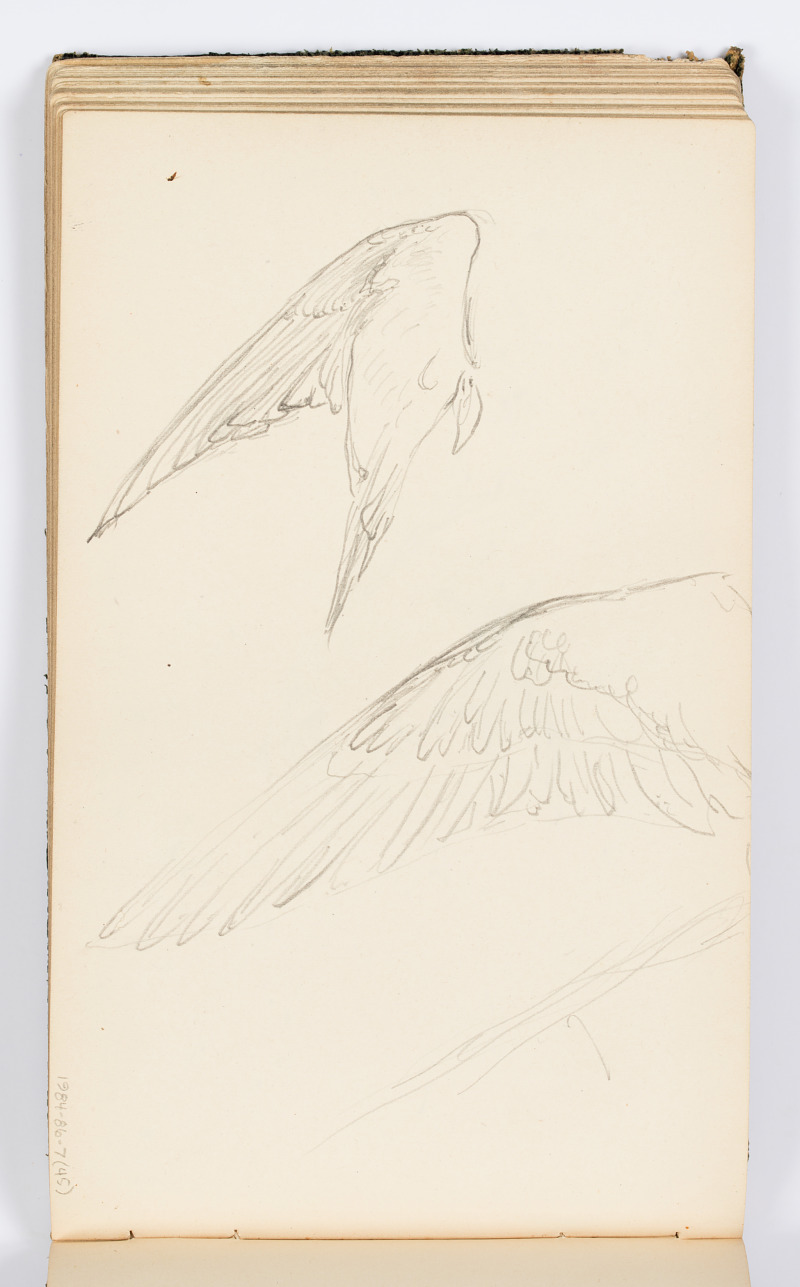
Requiem with “Little Wing”

By Craig van Rooyen

Featured Art: by Kenyon Cox (1856-1919)

Perhaps, on your downtown lunch stroll
in unseasonably cheery weather,
you walk up on a flock of grackles
on the ground in front of Urban Outfitters,
their impact marks still drying on the window
recently washed to display Big Sur Ribbed Pullovers
and the Willow Fuzzy Drawstring Teddy,
as if anyone believes October’s still a sweater month.

Perhaps you become suddenly dizzy,
a strange gravity drawing you toward this constellation
of twitching black holes
opened in the sidewalk at your feet.
And perhaps this brings to mind
how it feels when your face falls from your face.

In the old days before the imminent apocalypse,
the pattern would be read as omen:
a toothache’s coming on, the breath of your bride-to-be
will sour every time she walks in moonlight,
your best cow will soon grow milk-sick.
The prescriptions would be just as clear:
wash your warp and dye it while a new moon waxes;
steal a neighbor’s crickets and install them in your hearth;
milk with one hand only.

Perhaps, even now, you try to read in the little bodies
some feathered correspondence: this relates to that.
If you step on a crack, the snowy plover will slip
into extinction; if you breathe out while passing a cemetery,
Greenland’s ice shelf will break off and float away.
But the letters blur and you can’t discern the news
from the wrecked wings and necks.

Read More

On Ongoingness: A Conversation with Ada Limon and Jaswinder Bolina

Moderated by NOR editor, David Wanczyk

David Wanczyk: We’re talking on Zoom today with Ada Limón, author of five award-winning collections of poetry, and Jaswinder Bolina, author of three acclaimed collections and the recent book of essays Of Color. And we’re talking only 16 days after the police shooting of Jacob Blake, when months of predominantly peaceful protests have been met by ever more ominous counterprotest, when our election is threatened by a virus and dishonesty, when we simply miss our friends, and when many of us are even more exhausted than usual; and yet I’m happy to be having this conversation because these are two writers who have given me a clear-eyed bucking-up in the past, who refuse to ignore the struggle, but find—at least seem to find—a kind of dog-chewed, persevering, loveliness and electricity in their work. Even when, as Limón writes, quote “the country plummets into a crepitating crater of hatred, isn’t there still something singing?” 

And so I want to ask both of you—How are you? First, but also, how are you as artists listening for what’s still singing? How can we—can we resist what feels like the desperation of our country?

Ada Limón: Hmm. Hmm. Just start there? [laughs]

Jaswinder Bolina: An easy a softball to start, to lead off.

Read More