Self-Portrait as Minor Prophet

By Craig Van Rooyen

Not the one who foretells 
our city become a jackals’ haunt 
or our silver turned to dross.

Rather, the one who needs a grocery list
from his wife with the precise level of yogurt fat 
underlined and the aisle number

for the hypo-allergenic soap
so he will not wander, masked, into 
the floral section to be with orchids,

their double stems of moth wings 
looking nothing like fields stripped by foreigners 
or hands hinged in prayer.

Woe to you with more than 10 items
in express checkout, he may think.
Woe to you who do not stand six feet apart.

But he does not proclaim their downfall
or predict their cattle slaughtered, their
gardens trampled underfoot. 

I have seen enough buying and selling by now 
to know I am a product, packaged 
for someone else’s comfort, and to know

in this too I will fail. The truth is, my people, 
we were always sheltered alone 
and for mysterious reasons never knew it. 

After 24 years with one woman
I still wonder with whom I will awake:
Sword or plowshare; flint horse hoof

or threshing floor, wasteland or vineyard
where grape skins crack from the pressure
of flesh and juice answering sun.

Read More

What I Meant to Say

By Emily Alexander

friends I am not in love these days I wait
for the bus when it’s cool enough
I bake little treats in muffin tins for fun
I say sea urchin        squash blossom

vacuous oh no I’m afraid
I don’t know

what this means and many others the usual
fears plus some     uniquely mine balloons popping
in a small room needing immediately

a tooth pulled in a city I’m only visiting strange
coffee shops parking lots
I’m not sure
the rules here     maybe these are
usual after all I don’t mean what I say

always what’s the difference these days
before going anywhere I out loud
say     phone wallet keys

yesterday I said it and still
forgot all I needed then from the freeway

the ocean right there among everything oh

friends I’m just undone you know
what I mean       truth is these days I find myself
occasionally full

of rage other times beer sitting with Halle
on her bedroom floor  what’s new

oh man did you hear
about whoever I’m hungry are you
a little flimsy
drunk now the city rumors its width around us

and sometimes over it we just say
very quietly yeah


Read More

Stolen Hard Drive

By John Moessner

Featured Art from rawpixel.com

It contained home movies where he wore
goggle-sized glasses, a toweled shoulder holding
a small redhead at a birthday party, three hours

of ripped paper like static on a radio, the sun flaring
off the ripples of the neighborhood pool. What do
those thieves think of your soccer games,

the Go girl! and the rain that drove him cursing to the car?
What about last Christmas? He was too tired, so you held the
camera instead and closed in on his drooped head

nodding while everyone opened gifts. Would they tear up
thinking of their fathers, would it convince them to call more?
Ripped from your life, just a plastic box in a bag of stuff.

Maybe before wiping it clean, they will browse your home
movies and say, What a good father, what a good life.


Read More

Ode to My Pink Bathroom

By Julie Danho

Featured Art: by J.L. Mott Iron Works

How long I’ve tried to love you, the way
you still blush and gleam like a teenager
in a poodle skirt, unblemished as the day

you were pressed against wire and mortar
in the shower, on the walls, even the floor,
its concrete flecked with pink. The Nolans,

who chose you, are long gone, their daughters
now grandmothers in their own houses,
the blueprints they left behind moldering

in the basement. How can I blame them?
I didn’t live through the War, the Boom,
this neighborhood rising up in neat rows

as if each Cape had been pining for sun.
In those years, you were prosperity, pedigree,
First Lady Pink named in honor of Mamie

Eisenhower, her White House bathroom pink
from the walls to the tub to the cotton balls,
so that all over America, millions like me

wake up and stumble into a past that waits
with toothbrush and soap. In you, I saw history
running like a faucet, building to a flood

unless stemmed. But when the contractor
gave me a price, he said you were lead,
and with my daughter . . . it might be better

to let you be. So I’ll own your purr and poison,
though I may dream still of reinvention—
blue trim and Harbor Gray—even as I hang

the pink polka dot shower curtain, lay down
that cranberry rug, act as if I chose you,
as if you were everything I ever wanted.


Read More

Free Association

By Henrietta Goodman

Featured Art: by Katsushika Hokusai

“Free associating, that is to say, is akin to mourning; it is
a process of detachment that releases hidden energies . . .”
—Adam Phillips

Always the smell of Windex brings me back to Martin Shelton
in first grade, his memory atomized from some forgotten source.

It’s wind and window when I see him late for school through double
doors of tempered glass, then rushing in on the lovely trochaic

feet of his name, shirt buttoned wrong, blond hair blown in a gust
of oak leaves, smoke, and frost that swept away the simmered meat

and rubber smells, the green litter that soaked up accidents. The wind
recorded and erased. I was afraid to sit with him, or speak—

my first crush a boy who packed his own lunch and walked alone
through dark stairwells hung with Bomb Shelter signs, arrows

aimed at the basement lunchroom where we bowed our heads
to wait for fallout’s drift from the split atom, the invisible anvil

that could fall no matter where we hid. Even when the speakers
hummed and Mr. Wells announced that we were safe,

his name said the earth would swallow us. And now I spray
the glass to wipe away the prints, the trace, but traces gone,

the glass I see through stays. How, then, could mourning set me free,
if Windex leads to Martin leads to beauty leads to bomb?


Read More

After Hours

By Maria Nazos

Featured Art: “Illusion of My Studio” by Yan Sun

When I exited the stall, she was standing at the sink.

I knew her best from one night at the bar, when she’d said

my ex was handsome. Then asked whether I’d mind if she

called him later that night. I’d pressed my lips together

and said, go ahead, certain she held an unspoken malice

which young women carry into small towns. I’d moved

to the Cape to escape from my talent for tearing through

love, only to follow a trail of broken glass into every bar.

Only to find every fisherman with a penchant for failed

marriages and pot, and myself, again,

staying up too long and late.

As I stood beside her in the bathroom, washing my hands,

I thought of another night when she’d told me, as if casually

draping a dark blouse across a stool, that her father had just died.

I’d squeezed her hand. She pushed her blonde hair off her face,

said, that’s okay. But I’d seen her at the bar every night since,

drinking with a red-haired fisherman who’d tried to strangle

his ex. I shook my hands dry. Tear my shirt, she urged, interrupting

my reverie. Why? I asked. Did she want to show off

her seashell-curved cleavage or simply feel something

besides her heart splitting down the middle?

Read More

My Life Is Like This

By John Mark Ballenger

Each night I keep trying to say something
specific before sleep, something about time
or the horizon. How time unwinds
like a copperhead or the fear
of a copperhead or the spaces between
hay bales, under porch steps.
                                                   I try to say something
about the ash of memory, a farmhouse
firm in my mind and burned to the ground
of my childhood, standing and consumed
every moment.
                             About the distance light
travels from the glacier-crumpled
Southern Ohio hills to the shadowed
valley bottoms. The horizon
that weighs down the eye, reduces the world
to a hollow, a creek, a hardwood canopy,
ivy overcoming ancient leaning barns,
a half-sunk Ford Pinto and the speckled blue
of a robin’s egg in the grass. I want to say
something of men talking under a great
sugar maple in the late summer dark, a mud dauber
tapping against a window, my mother speaking
her mother’s name.
                                  In my dream the words are exactly
the thing itself: time, horizon, copperhead, dark, robin’s
egg in grass, my mother, at last, a revelation.


Read More

Then and Now, the Essex Street Market

By Roger Mitchell

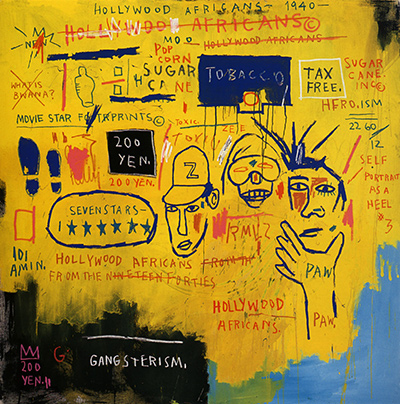
Featured Art: Hollywood Africans by Jean-Michel Basquiat

The person who took this picture took it
well above the parking lot across the street.
“Malted Milk with Ice Cream” cost five cents
once. Leroy’s on the corner sold “knishes
frankfurters and root beer,” and the cars
and everyone stopped moving for a moment
so this proof could be snapped of the way
a few things stood at the corner of Essex
and Delancey sometime between the Fall
of Rome and now. Which is also falling.

In the upper-right-hand reaches of the shot,
a line of laundry sags out of a tenement window.
The other end seems suspended in air,
like everything else, both in and out
of the window, the photo, the cowl of dust
that wraps the earth in its own heat. Damn,
said Napoleon, and he turned his horse
and started back across the steppe toward Josephine.

The half dozen newly planted trees lined up
in their iron jackets along Essex were leafless,
so winter must have been on its way, in
or out, we can’t tell. The little lie the picture tells
is that, though everything is about to change, it brought
life to a halt, so someone could open the door, now,
and let in a large whack of dust and noise,
the kind they make no room for in pictures,
passing them on to the woman in the next booth
who is giving, maybe the air, maybe her mother,
a colorfully athletic lesson in Spanglish,
involving, from what little I can make out,
most of what we call history, as it’s apt to look
when the future gets here, and “that fucker
Reynaldo.” I have no idea what Reynaldo’s crime is,
but, if you are listening, Reynaldo, get over here,
quick, if you don’t want to be history.


Read More

Confirmation

By John McCarthy

You taught me how hands could be laid, how they could touch
     a head and heal, but all of those hands eventually fell limp
like a field bent by threshing or a lit match dropped in water. Once,
     we used to dance in The Corner Tavern’s neon light
where the pickup exhaust wafted inside like harvest dust.
     Life in the Midwest is like one long goodbye because it is the same
every day, and I didn’t realize you had left until there was nothing
     but hard work and long days ending with the wind’s silent dirge
that sounds like trying not to die but always dies in smaller ways—
     screen doors that slam closed but don’t shut all the way
because the house has settled and the roof is warping from the sky
     boiling over with thunder and rain. I wake up now to the flashing
falling from the gutters and the water dripping through the holes
     in the ceiling. All I do is recall your voice like a prayer thrashing
my skull that mines the night begging our fathers our fathers
     our fathers in prayer, but they are off begging other women
in other towns. This town is not the memory I want, but I know
     how sadness works. It’s like a kettle-bottom collapsing onto
the details of every thought. I shouldn’t have, but I stayed in town
     to try and keep what I love alive, but no that never works. We were
a long time ago and a long time ago is too hard to get back.
     The last time we talked you said, We will end up like our mothers
waiting for nothing. Then you didn’t come back. No. Not ever.


Read More

My Hometown, the Hypothetical Guided Tour

By Dan Wiencek

Featured Art: by Jasper Francis Cropsey

            First we come to the field
where I did not hit the winning
     home run, where no cheers rose
            up and the game ball went ungiven

     Beyond left field,
            the bleachers where I did not
    make out with my high-school
         crush, did not taste her perfume
                  or dodge her brother’s freckled glare

      This is the house where a family of
                color did not live, there, where
         that guy is hosing Chinese
                              menus off his car

     Then of course this tax attorney’s office, once
            the bookstore where I stole
                        Helter Skelter, which I still
                     visit in my dreams

                 Finally, this empty lot
          staring up at the sun like a vast
                   gravel eye, formerly the school where
     I never thought to imagine a future,
         where no one told me and I
             did not listen

                        that life could be a wave
      beating the rocks or

           a wind bouncing a kite—

                         taut string pinwheels,
               dips and swoops groundward only
    to right itself, to stay resolutely
                                                                in the air

                                              and here we are.


Read More

Bird

By Danusha Laméris

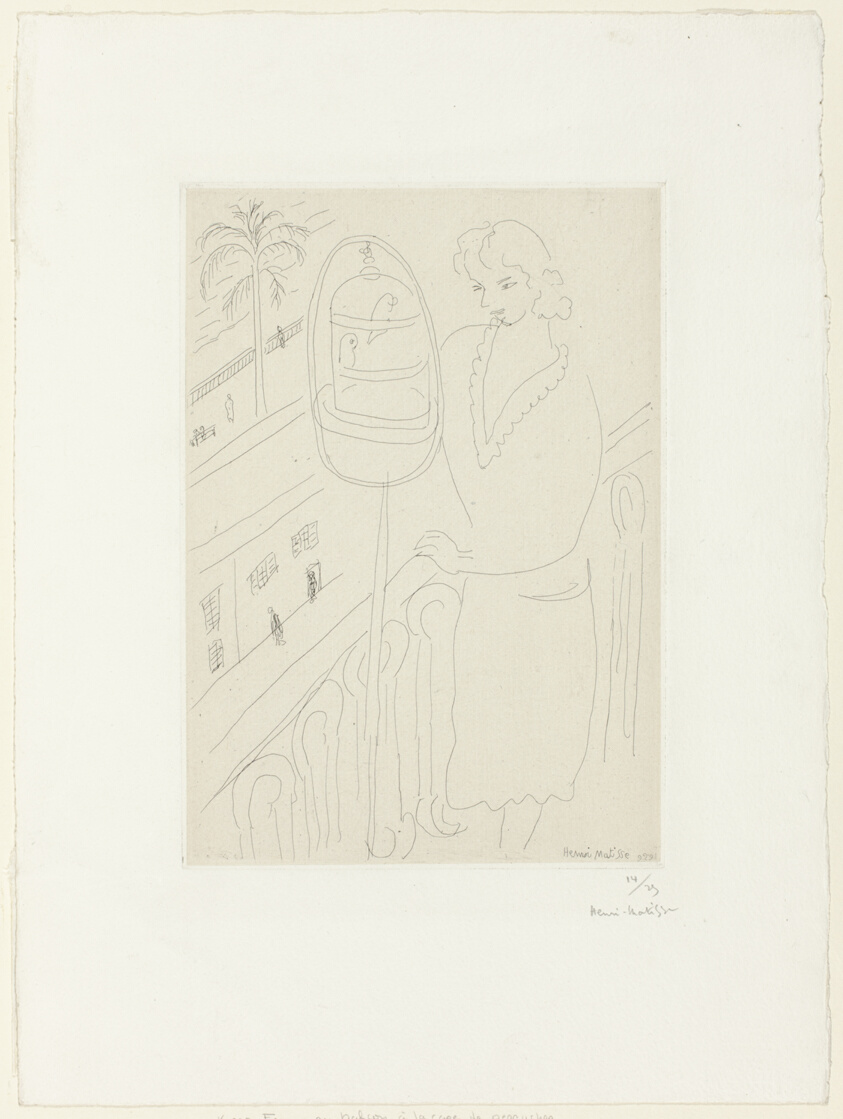
Featured Art: Young Woman on a Balcony Looking at Parakeets by Henri Matisse

We were sitting on the couch in the dark
talking about first pets, when I told him how,
as a girl, I kept a blue and white parakeet I let
y around the house and, sometimes, outside,
where he’d land on the branches of pine
and eucalyptus, balancing between seedpods
and spines. Only, while I was telling it,
my companion began to stroke, very lightly,
the indent of my palm, the way you do when you’re
sitting in the dark with someone you’ve never kissed
but have thought about kissing. And I told him
how my bird would sit on a high branch and sing,
loudly, at the wonder of it—the whole, green world—
while he traced the inside of my arm with his fingers,
opening another world of greenery and vines,
twisting toward the sun. I loved that bird for his singing,
and also for the way his small body, lifted skyward,
made my life larger. And then it was lip-to-lip,
a bramble, and it was hard to say who was who—
thumb to cheek to chest. The whole ravening.
When I told him I did not clip my bird’s wings,
I was talking about hunger. When he pressed me
hard against the back of the couch, named a litany
of things he’d do to me, I wanted them all.
I, too, have loved to live in a body. To feel the way
it lifts up the octaves of sky, cells spiraling
through smoke and mist, cumulus and stratus,
into that wild blue. And though I knew
there was always a hawk somewhere in the shadows
ready to snatch his heart in its claws, still,
I couldn’t help letting that parakeet free.


Read More

To Inscribe

By Anne Starling

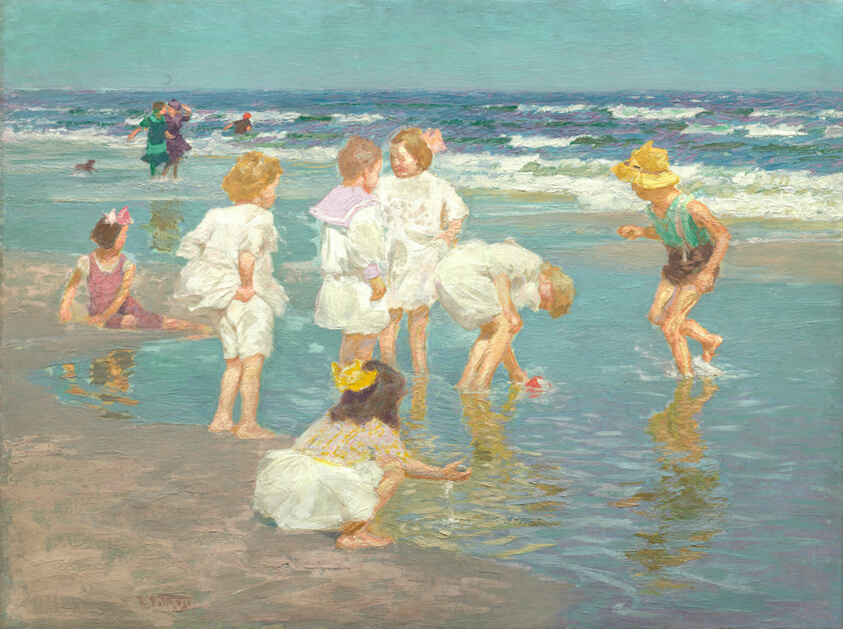
Featured Art: A Holiday by Edward Henry Potthast

The dead are with us to stay
                  —Charles Wright

But not the living, the fallible breathing.

For a while it seemed one thing
could be righted. One small piece at the
ocean’s bottom corner
or the bottom
dresser drawer with the scuffed
baby shoes and shoeboxes
               full of snapshots of kid parties, holidays, school picnics
               etcetera.

A comfort, even knowing that wrong
can’t be undone, is more like oceans plural
rushing in
               weighing in with their trick of
                no light, unfathomable.

The idea was to inscribe
the back of the photograph taken
on our last anniversary.
                        Simply to write, in everyday
permanent ink
his name                in the possessive
                then “Mom and Dad.”

Read More

Box in a Closet

By Faith Shearin

Featured Art: by Emil Carlsen

I open a box
in a closet and here I find us,
stuck in scenes long forgotten: my uncle

disappearing down an oak alley
in a horse-drawn carriage,
my grandmother dressed for a garden party,

gloves to her elbows, posed in a stiff
southern parlor, 1953. Here is the trip
to Disney World where we drank from

plastic oranges, held balloons
with ears; oh, we grow younger
on beaches, until we are babies, naked

on blankets, and my grandfather
rises from the grave to sit
in a wood-paneled living room,

on a plaid couch, in a fedora.
I find my cousins beneath cypress trees,
in a river at sunset, and my sister,

age eight, dressed as a mosquito,
on her way to a costume party.
The van that floated away

in a hurricane reassembles itself in our
driveway and my father’s dog,
ten years dead, rides over the lagoon

where she will someday drown,
in a canoe: October falling,
my father’s hair black, his paddle

still in his hands.


Read More

Calchas Reading the Signs


By George Kalogeris

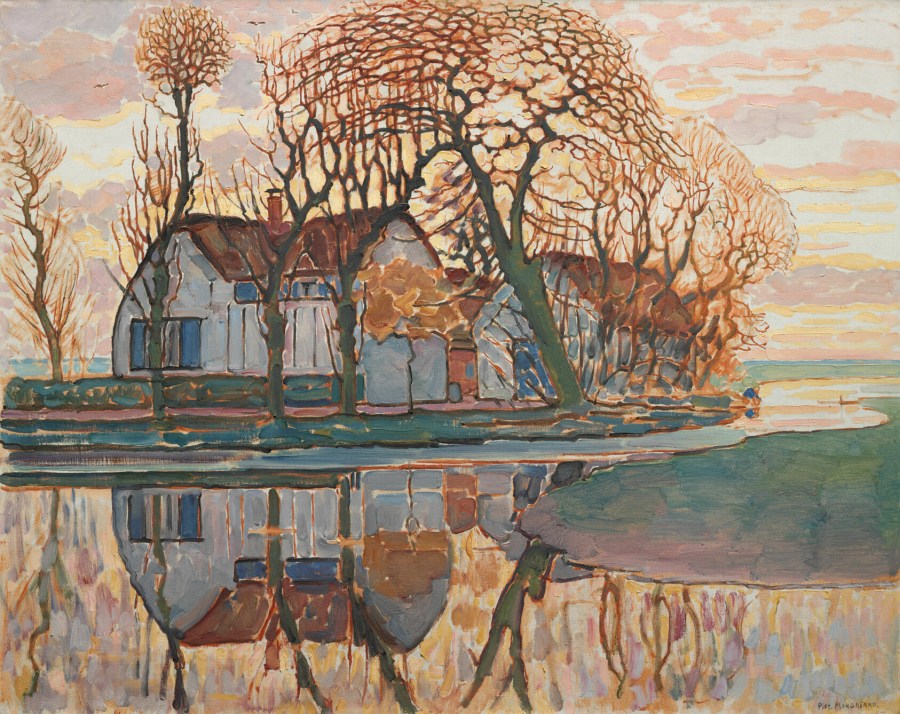
Featured Art: by Piet Mondrian

It’s ’68. Whatever he saw, whatever he smelt
In that smoky, dripping handful of purple entrails
Just thawing out from the freezer, the news from Athens

Was ominous, and he wouldn’t haruspicate
On how and when the Colonels might react—
But the gobbets of offal keep piling up in the pail.

It’s not that he fully trusted the lordly voice
Of the BBC, but hearing Vietnam
He drops what he’s doing, and cranking up the volume

On that crackly plastic Panasonic—
That’s when I hear it too: Khe Sanh. It’s what
Comes through the speaker’s throbbing bamboo mesh

As I’m stamping prices on jars of baby food:
A staticky hiss like burning jungle grass . . .
My father wiping his hands on his butcher’s apron,

Oblivious to his customers as he listens
To a transistor radio broadcast the blood
Of a world in shambles. And then he’s back at his block.

Khe Sanh. My older cousins, Kosta and Jimmy,
Are loading up the van they’ll drive around Winthrop,
Delivering groceries and checking out girls.

I’m stamping the little glass jars of applesauce.
Nobody knows whose number will come up.
But our Calchas isn’t taking any chances.

Already he’s built another hecatomb,
And now he’s scrutinizing some gristly turkey
Intestines unfurling for all I know like the coils

Of giant lianas he saw in Guadalcanal
As a young recruit. But through that throbbing bamboo
Mesh I hear the Hydra’s serpentine hiss

He heard as a village boy way up in the Peloponnese.


Read More

My Babysitter Karen B Who Was Sent to Willard Asylum

Winner, New Ohio Review Poetry Contest
selected by Kevin Prufer

By Jessica Cuello

There are only two photos of me as a child.
She took them, she had no child.

She had Kool Cigarettes and a job at the drugstore.
She gave me the Crayola box with the built-in sharpener.

Four hundred suitcases were stored in the attic
of Willard Asylum for the Chronic Insane.

She joined her twin brother there.
She wore her black hair down.

A child could admire it.
She bought me an Easter basket,

a stuffed rabbit whose fur rubbed off.
She walked everywhere.

She painted circles of blush on her cheeks.
Loony, people said so,

I mean grown-ups who saw signs
who passed her on our street before she

started to call and say Remember,
on the phone she said Remember,

Remember the date we killed her brother,
forgetting he’d been committed.

I took her hand and tagged along like an animal.
She was perfect to a child.

Read More

An Education

By Molly Minturn

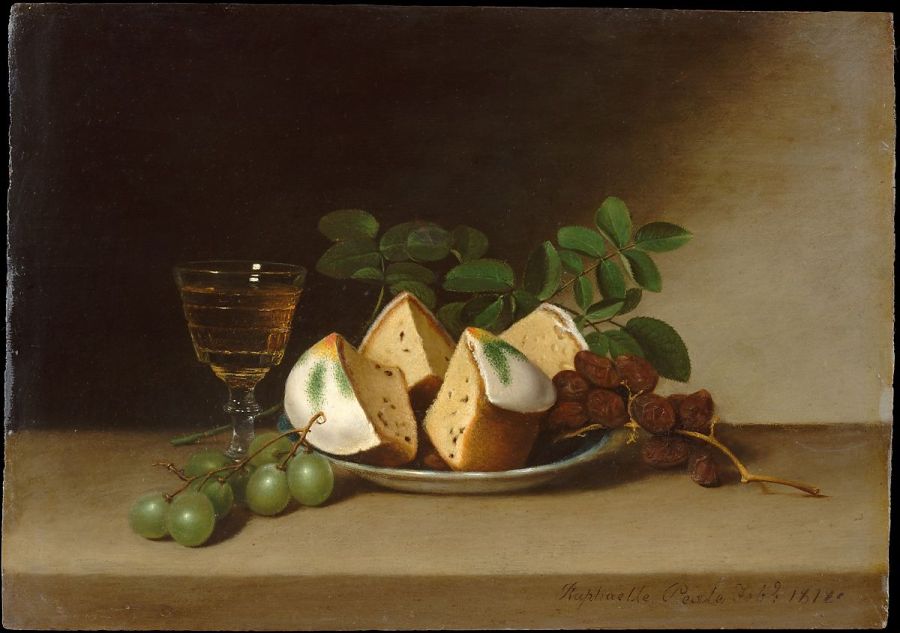
Featured Art: Still Life with Cake by Raphaelle Peale

It was spring and I walked
the streets in the late afternoon
with the best poet I knew.
She was tall with a severe face
like an early New Englander.
Her ancestors survived genocide.
We didn’t discuss our work, only
the weather, how the blossoms
were upsetting. The war was on.
We bought a hefty slice of cake
and walked slowly under a murder
of crows back to my apartment.
This seemed too evocative,
almost to the point of embarrassment.
The cake was coconut. We split
the slice, sitting at the small
table in my living room, away
from the sun. At the time,
it was the present. Here
in the future, I sometimes forget
to breathe, waiting
for the next catastrophe. That cake
was pure in its sweetness, the poet
alive with me, her eyes scanning
my face, both of our histories
neatly bound in our throats.
I wanted to ask if she was frightened
by living, by the change
in the light. Instead, she slid the plate
across to me, a Ouija planchette,
insisting I take the last bite.


Read More

Trees in March

By Linda Bamber

We were seated near the back of the Chinese restaurant, and waiters were
rushing in and out of the swinging doors to the kitchen. At the time we had
not as yet so much as brushed shoulders. Resting on the formica table top, my
hand began to feel odd. Not bad-odd; but most unusual. Trees in early March,
aroused, their branches slightly reddened by the slightly stronger sun, may feel
something similar. They have a new sense of their importance in the scheme of
things; they remember (if I may say so) they are divine. He was looking at my
face, not my hand, so I don’t know how my hand, resting near the remains of
the General Gau’s chicken, intuited its sudden access of significance; but it did.
It had aura you could cut with a knife.

Shortly thereafter he took my hand.


Read More

A Race Car Made of Sand

By Margot Wizansky

Featured Art: “Beach of Bass Rocks, Gloucester, Massachusetts” by Frank Knox Morton Rehn

Everything made my mother nervous:
the baby crying, sand on the floor, the flies.
So we went out to the beach.
I took my bucket and shovel.
My mother sat my little brother up on her shoulders
and carried the towels and a canvas chair for my father,
who was too weak to carry anything.
He wore his cabaña suit, light green with white palm trees,
his legs, pale like the sheets in the hotel room.
He hadn’t shaved.
His face had been blue for weeks,
the circles under his eyes, dark as his beard.
Mother said I was too heavy to sit in his lap.
All afternoon I dug a string of frantic little ponds.
Nothing was right; my back was sunburnt;
my father hardly moved.
Uncle Robert came, like a bus from the city,
to build me a race car of sand, with jar lids
for hubcaps and for headlights, clamshells,
and he found a quoit on the beach for the steering wheel.
He dug me a driver’s seat that just fit,
and a rumble seat for my little brother.
My father peeled me an apple with his penknife,
in one long piece, that didn’t ever break.


Read More

Advice

By Emily Sernaker

Featured Art: by Fran Hogan

Don’t ever make him a take-me-back
mix CD. But if you do, open with Sam Cooke’s
“Bring It On Home To Me.”
If Kim from high school wants to wait
in the really long line for the panda
at the zoo, don’t complain.
That panda is going to be so cuddly cupping
its paw around the bamboo, your heart
will do a somersault. Besides,
you’ll miss Kim when you’re away
trying to tell her updates
before the metro goes underground.
“I’m going on a date and wearing eyeliner.”
“You’re going on a date with a minor?
Distance can be so hard. If you take
a dance class at the gym don’t stand
in the very back. Halfway through they turn
around and that side becomes the leaders
of the choreographed dance
everyone knows but you. You want
a middle-back spot for minimal shame.
One more thing about boys—
sometimes they’re sending a message
by not sending a message. There are many
films and books about this. If you need
an easy Halloween costume
go with Clark Kent. You just wear
glasses, a button-up shirt, a loose tie,
and show a Superman logo
underneath. You can even make
Daily Planet badge if there’s time.
That noise you hear in the morning
opening the coffee shop isn’t
the other barista sneezing.
It’s the espresso machine warming up—
you don’t need to say bless you.
Ask your mom how she’s doing. Early
in each phone call ask her and really listen.
If you don’t, she’ll let you talk and talk
and what kind of person
do you want to be? You should
probably read Dante, that gets referenced
a lot. Anyone who hates Bob Dylan,
especially the Blood On The Tracks album,
is wrong. He’s given us a road map
to life, they should be grateful.
One last thing—don’t be scared
when the Georgetown cross-country team
is running toward you full speed
on the bridge. I know
it’s the bridge with the narrow walkway
close to traffic, where there’s nowhere
for you to step to the side.
Just raise up both of your hands.
Sixty people will give you high-fives
and keep going.


Read More

The Resort

By Preston Martin

He paces, half naked,
across his second-floor balcony,
phone against his ear.

A translucent mist moves on shore,
the swoosh of high tide hardly heard
across mannered dunes.

As the day moon hangs
over his building fresh sunlight sinks
low in the moist air like a lemon slice in soda,
sparkling dewy marigolds, dollar weeds.

The man paces, turns, punctuates
thoughts with a free hand, either
pleading or singing into the phone.
Please

let it be to an old love,
who loved him on this beach, loved him once,
on a tender morning like this morning.

Still now, he stares at the phone,
as if it were sentient, caring,
as if the conversation still goes on,

as if the greater part of life
isn’t our suitcase of memories,
handled everywhere,
the calling back

of times slipped through fingers,
the calling back
what can’t come back.


Read More

Sunny Day

By Joyce Schmid

Featured Art: ‘Woman Lying in the Dunes near Noordwijk’ Jan Toorop

Verweile doch, du bist so schön.
—Goethe

I grab the young, unruly day
and say, Stand still, stand still.
I want to comb her hair and dress her up,

but she just laughs and wriggles in my grasp
and breaks away. She dances mockingly,
just out of reach, the little imp,

and runs ahead of me. I’m running
out of energy to try
to catch her in my arms,

warm, fragrant child,
her changeling eyes lit up
with winter sun.

Come here, you darling day,
and stay with me
a while, a little while.


Read More

We Remember You for Now

By Stephanie Rogers

Featured Art: Figurative Abstraction by Unknown

Now when my heart beats, it sounds like
crunched leaves skittering, the revving up

of a broken-down Honda. I can’t visit him
at a cemetery, or even the park. Scatter

my ashes there, he asked, and then injected
god knows how much, enough to warrant

a coroner call. Hahaha. Joke is Heather said nope,
stuffed and stored him in the back

of our mother’s closet. He lives there now,
sucking up the radiator heat. Joel, damn,

man. Come back and lick the spilt fizz off
the Budweiser can again. No one here

is going anywhere if I have a say, and how
didn’t I have a say with you? You plunged,

you syringed, each time needling—gentle,
I hope, as my grandmother crocheting

a winter hat for your oldest girl. I won’t
for long torture myself for you, I thought,

biting into a string of candy hearts around
my neck, your kid insisting, eat it, the sick-

sweet sticky hands of a two-year-old with
a dad resting inside a shoebox next to

a bowling ball. You did it. Congratulations.
I’m elated. I’m devastated. I’m a copycat

singing your songs to your girls to sleep.
Listen, creep: we remember you for now,

but now is a ragged dog, dragging its bum
leg along the buzzing halls of a new house.


Read More

My This, My That

By Sarah Brown Weitzman

Featured Art: Paris Bridge by Arthur B. Carles

To live in the moment is probably good advice.
What else is there but the now
of which nothing will remain but memory
already fading and unreliable.
My past is a pile of losses: parents, pets,
childhood, a hometown, ideals, and god.
Born to a countdown yet I make claims
to “my this” and “my that.”

But what can we ever possess?
Last night’s symphony, the blurred faces
of our dead, the way the wind slid
through the dogwoods of youth
are what we may possess just as the sun
possesses the windowglass it shines through.


Read More

Jenny Perowski is Ahead of Me in the Grocery Store Line

By Julie Danho

Featured Art:  (Untitled–Flower Study) by Mary Vaux Walcott

If an Amish family can forgive the man who burned
their land, surely I can say hello to Jenny Perowski,
who used to call me “fattie fat” in seventh grade math
and had boys call my house, pretending to ask me out.
That was twenty years ago. Now Jenny, if not fat exactly,
is puffy as a slightly overstuffed chair. I’m thinner than her,
and my pleasure feels more whiskey than cream, makes me
want to pour out her Kors bag to rifle for candy, then slowly
eat it in front of her like she once did to me. I know
her cruelty was, at best, a misdemeanor. But anger
is like a peppermint in a pocketbook—everything inside
takes on its smell and taste. I could break it in my teeth,
make it disappear. Instead, I savor the mint, let the sugar
line my mouth like fur, linger far past what can be called
pleasure. How good it would be to be better than this.


Read More

Grammar School

By Mark Belair

Featured Art: Project for an Overdoor by Carlo Marchionni or Filippo Marchionni

Through the municipal green, overpainted wire mesh
obscuring the grammar school basement windows

comes the spank of a basketball not engaged in any game,
just pounded in place in an empty, echoing cafeteria, then

an outside metal door gets gut-punched open to release
gruff-voiced janitor, belt keys jangling, cursing at the world

while from a first-floor office a stretch of plastic packing tape
screaks off a roll as a phone rings and a copy machine whumps

as if providing a bass line to a class that, upstairs,
bursts into a trebly, mocking laugh, after which,

yet farther up, in a distantly reverberant bathroom, a toilet
flushes and keeps running even after a door slams shut and

all the old, hard memories flood
back enough for me to know

that if a documentary film was made
about daily life in grammar school—

with shot after shot of small, solemn faces
taring out at us—

its scoreless soundtrack
would be this.


Read More

Sintra

By Gail Mazur

Featured Art: Composition by Otto Freundlich

In your office, you, mastering the art of Photoshop,
scanning a crumpled snapshot, 3 inches square,

of your father, poolside, jaunty in a blue swimsuit,
his straw fedora at a rakish angle,

carrying two splashing cups of bica toward your mother.
Beaming, gallant, tanned, grinning for her camera.

That was in Portugal, in Sintra—
the village Byron called “most beautiful in the world.”

In the old cracked photo,
part of his naked chest had flaked away:

under the glossy surface an ashen patch.
Forty years later at your desk,

filial, in a fantasy of surgery,
you worked your laptop to repair the wound,

dragging pixels of skin tone, of mortal coloration,
from his right side to his left.

A new skill mastered, new language, new tools
that restored but couldn’t save.

I watched you transplant a blush of skin—
a tender ministry, your digital touch

lighter than a kiss—not unlike a kiss—

exactly where his heart four decades
earlier began to falter. As yours, invisibly, did now.

—One of those days we both still thought that somehow
with the proper tools, there was nothing you couldn’t fix.


Read More

Tag Sale

By Scott Brennan

Featured Art: The Rose Cloud by Henri-Edmond Cross

A Barbie with gum in her hair, a Lite-Brite that may or may not turn on,
and Monopoly played once or twice then stowed, the Chance cards

missing, the Scottie dog lost, the dice gone. Here, the Boggle bubble,
cracked. In a milk crate beside the games, we have the tools: a hacksaw,

a cordless Black and Decker drill, a Stanley hammer, a rat-tail file,
a Phillips screwdriver. Here’s a Schwinn bicycle with dry-rot tires, and,

Read More

Looney Tunes

By Nathan Anderson

Featured Image: Summer Morning by David Lucas, 1830

Nah, it’s not that, I wouldn’t call it that, I mean molested
that’s like TV stuff, and Brenna
she’d be real nice sometimes like flesh and blood should.
Bring me back a chocolate frosty just because.
Anyway, I’d just as soon say we’re done,
or you want I should go through it all like I did in June
with the last one? Twice now—and this just goes to show
the system’s jacked—twice I’ve waited, asked the front desk ladies
and waited, I said people I need a little help and you’re telling me two hours?
In all this hospital you’re telling me there’s no one I can talk to now?
I said what about the dude mopping floors? Is he around?
Can I talk to him? Or do I go ahead and slit my wrists right here?
So they hauled me up to you, another white coat
working the psych ward. A woman. What’s up with that?
No offense or nothing. That’s just how they do me
down on first-floor, where everyone else on earth is. You ever one of those
ER docs I see running around? The way I figure it, a woman like you
doesn’t need to run. You’re all put together—you know, like a car
that’s just come off the line . . . . But okay, this isn’t about you.

Read More

That’s Me Smiling in the Back Row

By Elton Glaser

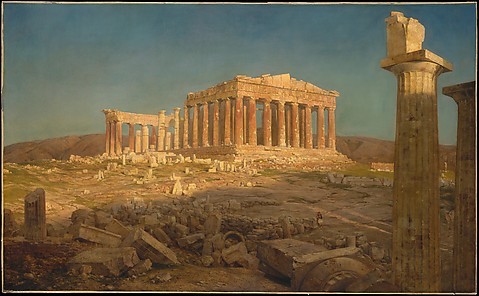
Featured Image: The Parthenon by Frederic Edwin church, 1871

The day warms up fast,
Like leftovers in a microwave, odors of dawn
Still rising from the dead lilies,
From dry grass bleached to blonde and now
Heading toward platinum.
In the slow burn of midsummer,
The nose takes you where the mind won’t go.

There’s bad juju all over the place.
Light clings like cellophane
To the limp leaves. Nothing will budge
That carpet of shadows on the back porch.
I’m watching a spider
Rappel from the blades of a broken fan.
Somebody needs to fix it soon,
Somebody who knows how to work a miracle
With Juicy Fruit and a steak knife.

Read More

Photograph Albums

By George Kalogeris

“We finally got all of our family photos
Onto our home computer,” Quentin was saying,
Just as we entered the Asian fusion place.

And that’s when it hit me: all those leather albums
With their matted pages and bristly hides,
In their mundane way as archly ceremonial

As the Golden Dragon preening against
The restaurant window. All those cumbersome tomes,
In a decade or so defunct as the dinosaur.

But once their images have all been scanned,
Why should it matter? By then the cherished snapshots
Will have all gone into the world of light—

Or at least into cyberspace. Ancestral faces
That once unfurled from trays of salty water
As dark as Lethe, and then were pinned on strings,

Ex-voto like, and left to dry, will seem
A little less spooky-stern without the shades
Of their twentieth century negatives to haunt us.

And pantheons of illumination so vast
They promised we’d see ourselves reflected in
Their image forever—Olympus, Polaroid, Kodak—

Will shrink to the candle-watt stature of household gods:
Preservers of birthday parties and graduations,
Penátes of pointed hats and obnoxious horns.

Read More

Whatever I Might Say

By Sydney Lea

Though to touch its flame would surely be as painful as when it burned brighter, the candle’s low now. On the table, just prior to guttering after dinner, it vaguely illuminates friends.

The glow takes me to Creston MacArthur, one son’s and one grandson’s namesake, and to our many evenings as a campfire ebbed. Just now I’m remembering a particular night, the two of us seated next to a favorite river, swapping stories. His were better.

A bleakness sinks into me despite the patent pleasures of this later interlude with other people I care for and admire. I’ve long savored their camaraderie, their conversation, their gifts for wit. The lateness of the hour has turned our talk to rote murmuring, something like the water of that river, which always flows right below my consciousness.

I should do more now than merely prattle with these good companions, just as I should have said more to Creston, gone almost forty years, and perhaps he to me. Or maybe not: deep in the woods, barred owls started to chatter that night. “Like a good pack of hounds,” Creston said, and that woodsy locution seemed perfect, seemed pinpoint accurate.

Still I’m unsettled. It’s as though I were looking on these people here, on my children, on my children’s children, on my past—I’m looking from above. Having failed to put the right words together, I’ve risen over our group like smoke. The chill in my spirit has something to do with feeling removed, and feeling removed because I’m tongue-tied, tongue-tied for fear that any speech of mine will sound formulaic.

It’s late. The guests will leave. The candle’s wick whispers. I must hope I’ve found a way of being with loved ones that’s better than any talk I could grope for, than any I craved as those old fires grayed, a way that bespoke me better than whatever I may have said, whatever I might say now.


Read More

The Professional

By Michael Bazzett

She arrived in a dark suit and a mask-like smile, explaining
her services in a manner so polished it almost put us off.
This is my specialty, she soothed. Both mind and house
will be empty as a mountain wind once I’m done. I sensed
she’d said those words before. We sat at the kitchen table,
you and I, looking at one another, hoping the other felt more
certain, more assured. Once we signed, it would take years
before we acknowledged our mistake. She’d left the whole day
open, and could begin immediately. Was there perhaps a guest
room where she could change? Her assistant arrived with
a black duffel, fresh white towels, and a stainless-steel basin.

I didn’t know the basin would be so big, I murmured. We looked
at one another uncomfortably. It is not always a clean process,
she reassured. You do understand, once I’m sequestered, it is
very important that I not be disturbed. We nodded. She closed
the door with an audible click. For the first few hours, it seemed
okay. Her assistant sat out in the van, with the windows down,
reading. We sat in the living room and tried to do the same,
ignoring the sounds coming from the guest room, sighs that
sharpened into cries. When a few faces started disappearing
in the photographs above the piano, you leapt to your feet.
This isn’t right, you said. These things shouldn’t be removed.

But what about the pain? I asked. Don’t you want it gone?
No, you said, pointing to the image of a child, suddenly frantic.
The eyes had faded to nothing. From forehead to cheekbone
was just smooth skin. I ran to the window. The van was gone,
as was the tire-swing that had been there an hour earlier. I looked
and saw the elm losing its limbs, one by one. Maybe we can still
get some of our money back, I said. And then you said: I want her
gone. The assistant had sealed the door shut with tape. It came
off with a spattering sound, and the shrieks from inside paused.
Then the voice came, a strangled croak as I opened the door
and saw her, smaller than I remembered, perched on the dresser,
her suit pooled on the floor beneath her. Her face had become
a sort of beak, hinged open and hissing. But it was the children
that were upsetting, sitting in a circle at her feet, quietly singing.


Read More

Still Listening

By Robert Cording

Featured Art: Confusion of Christmas by Julia Thecla

I. Hospice Jumble

The Jumble in the paper too hard for him to read,
my mother suggested we make up our own: Dear,

she said to her husband, your first word is life.
Reduced to words we jumbled, he joked file

it. My brother offered another, mean,
thinking perhaps of his diabetes, a name

like cancer to our family. Then, lamp,
lit at his bedside, and the one palm

visible outside his one windowed room.
My father got them quickly, the last, moor,

said with all the sadness of being far from shore . . .
A grandchild solved that one—horse,

she blurted, noticing that he had left
us for a while. By his bed, my mother felt

his hands and face and eyes. Bob, please,
she said, but he was already asleep,

snoring, not dead. My mother sighed, O God.
My brother, in the spirit still, said dog. Read More

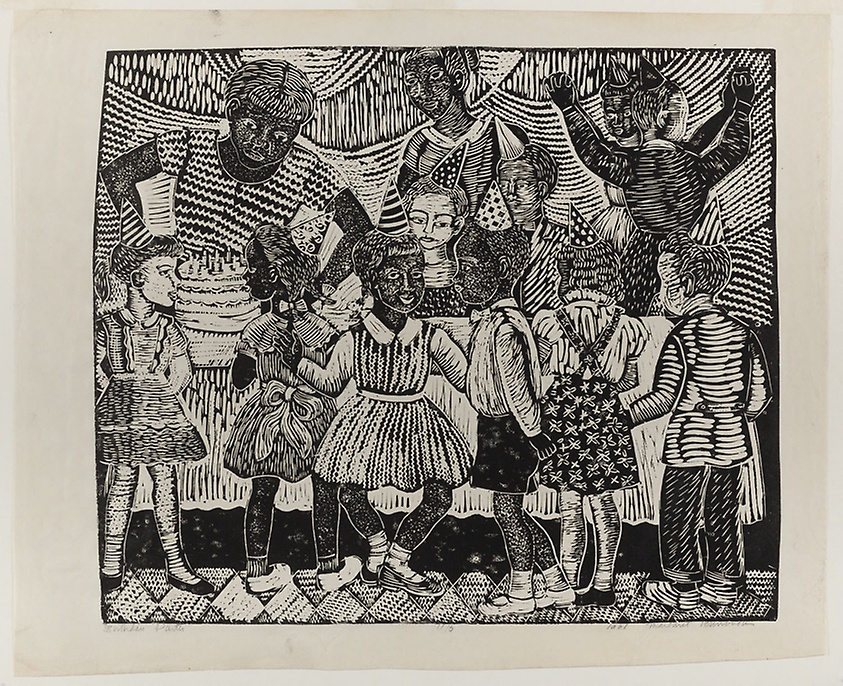
My Dead Father Remembers My Birthday

By Lesley Wheeler

Featured Art: Birthday Party by Margaret Burroughs

Dream-phone rang and I thought: that’s exactly
his voice. I haven’t forgotten. Then: but I could
forget, because he’s dead. Hi, sorry it’s been so long,
but I was sick and the doctors messed everything up.

He made that shrug-noise, dismissive but pained,
meaning he’s lying or leaving something out.
It’s snowing here, and then a click, click, over the line,
and a neutral woman’s voice, slightly officious:
This recording was intercepted. If you wish to replay
this message, dial this number now,
and she recited
a blizzard of digits while I flailed
for a pen then found myself tangled in blankets.
The window a bruise beginning to fade.

Here mist wreathes the trunks. In a few months
snow will crisp the grass, insulate and numb the oaks
with feathery layers that would soak and freeze
a human being. When and where is he? Snug,
maybe, watching weather through double panes.
Or wanting to be. I heard a bead of doubt
suspended in his voice, a cool guess he’d missed
something, before my operator intervened,
reason declaring: This is memory. The line is cut.


Read More

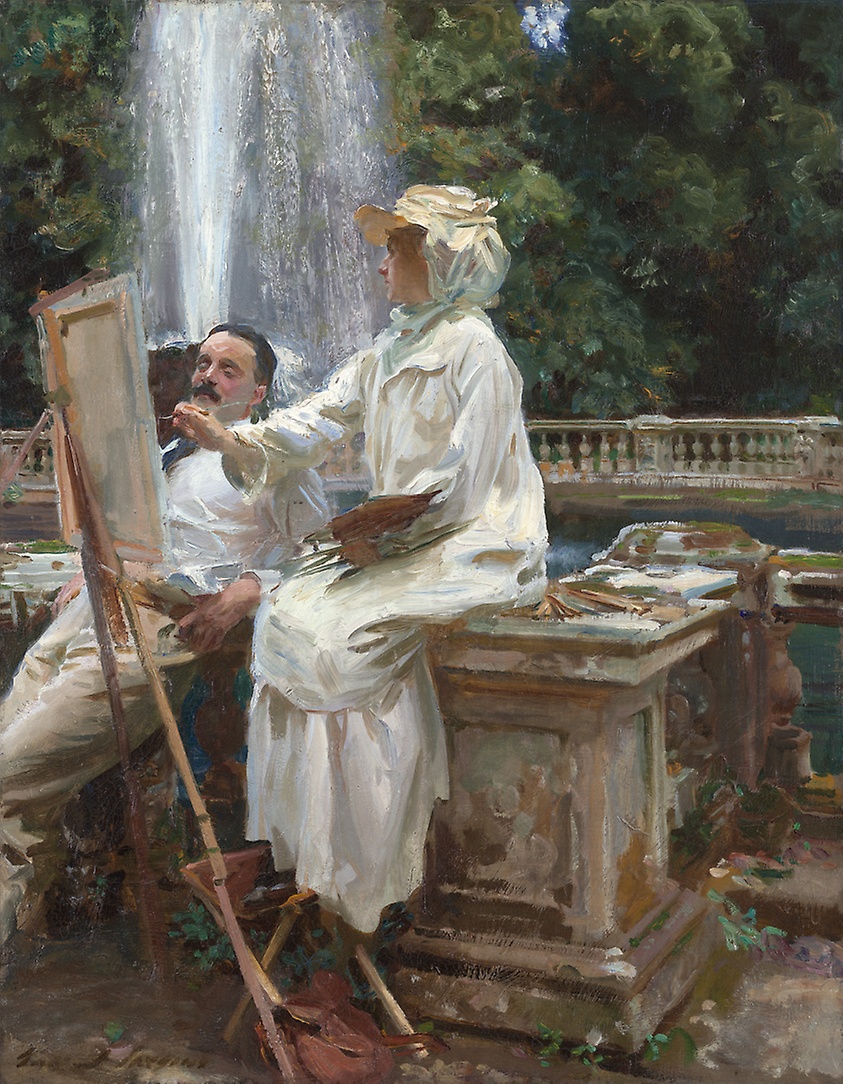
Rome in Us

By Thomas Grout

Featured Art: The Fountain, Villa Torlonia, Frascati, Italy by John Singer Sargent

It’s funny isn’t it—the way Rome still comes at you
fast like a bat breaking past your head from memory.
At the Roman pace the body takes the city better than the mind.
A cathedral ceiling’s fireworks shoot up
once the sermon’s fireworks stop. And when
the ceiling finally stills, the piazza outside overfills
with new fruits and vegetables and etymologies.
Stimulation’s cheap as wine and your horse
is more than happy to take it in by trough.
But it flies by so fast—

only just now it’s slowed enough to hatch a feeling
similar to how it is to listen through the dark over our bed
for a half-caught sound to sound again.
That given one more chance I could make easy sense of it.

It’s often that I sleepwalk down our subdivision’s version
of the Spanish Steps thinking I left something unnamable
inside the Trevi. Is that it at the end of the tube-slide?
I never know. It all gets hazy after the Flaminian gate
though I’m absolutely certain I wake up at the refrigerator.
Rome is in us like unfinished business—

that’s why half of me is still sauntering the cobbles.
I guess we’ll always live our lives possessed
by the ancient Roman sense that down any old left turn
suddenly one of our dreams might find its title.


Read More

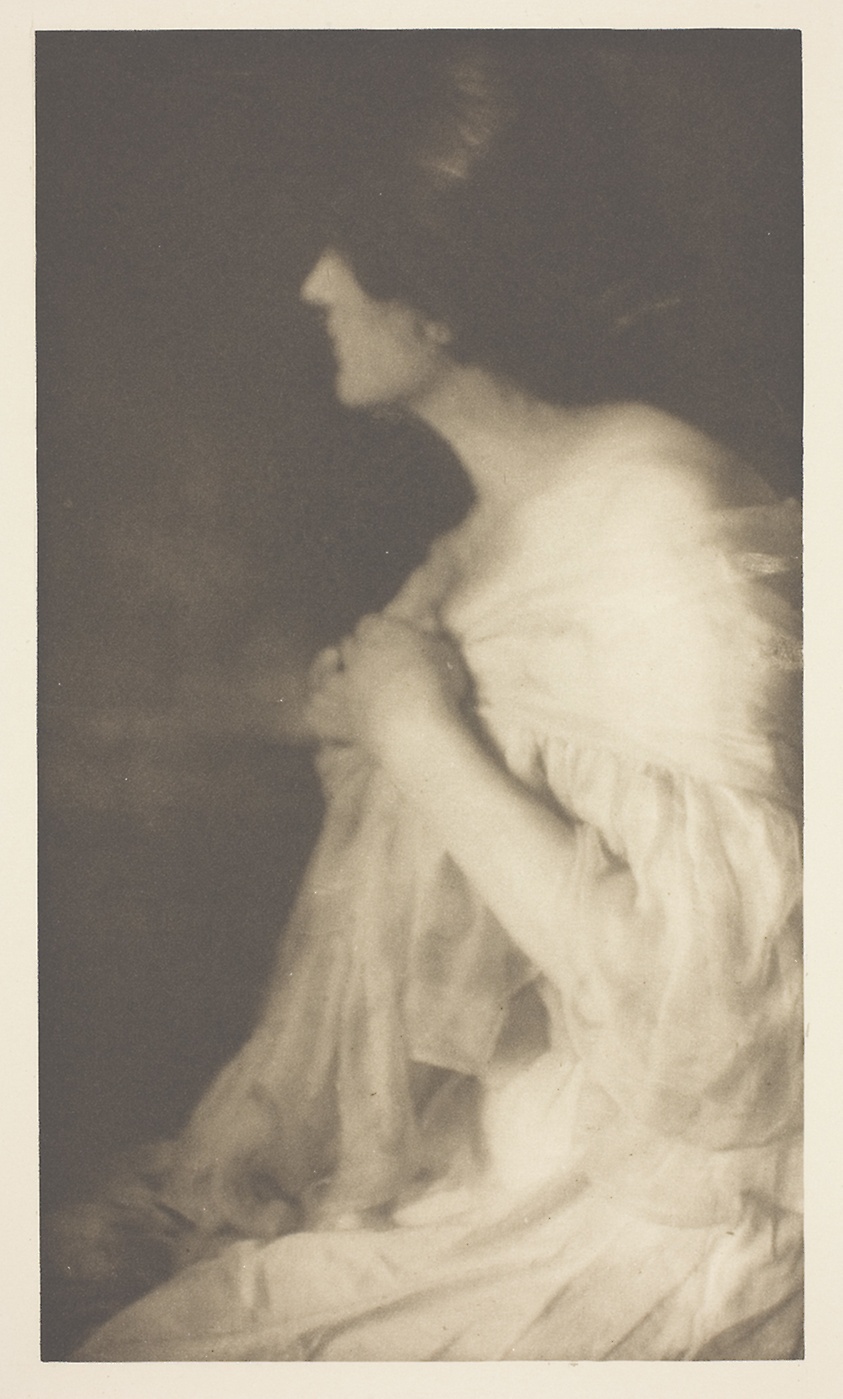
Back Then

By John Brehm

Featured Art: Miss M. of Washington by Rose Clark

Everything was better back then.
Even my nostalgia was better,
more piercing, more true.
I miss missing things that much,
but not as much as I missed
missing things back then.
Even my anxieties about the future,
which have indeed come to pass,
were more vivid back then,
more real. Reality itself seemed
more real back then—this clanking
stage-play only a fool could find
convincing—I fell for it all,
and it killed me, again and again.
Ghosts of myself wander
the cities I’ve lived in, thinking
of other cities, imagining me
here imagining them.
We nod to each other across
the years, the way the last line
of a poem will sometimes
look back, wistfully,
at the first.


Read More

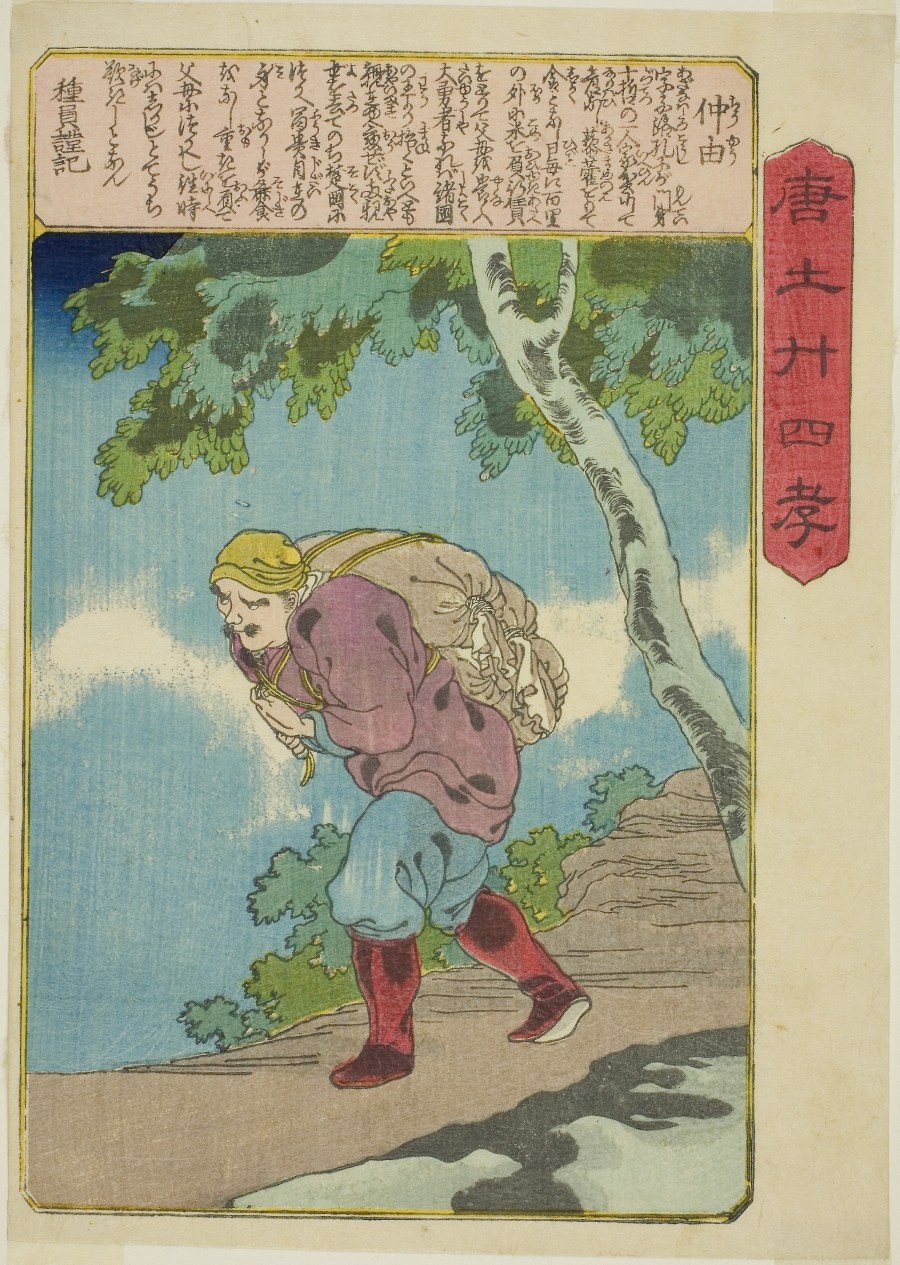
1974: The Raspberries

By Campbell McGrath

Featured Art: Jung You (Chu Yu), from the series “Twenty-four Paragons of Filial Piety in China (Morokoshi nijushiko)” by Utagawa Kuniyoshi

If it’s true, as they teach in elementary school,
that ours is a secular republic, not gods but men
do our temples and sacred monuments adorn,
then how to explain the immediacy with which I recall
my baptism into the cult of American identity,
my consecration as a democratic individual,
the very first things I bought at a store by myself—
a cherry Slurpee in a collectible plastic superhero cup
and a pack of baseball cards, hoping to find Bob Gibson.
This was at the 7-Eleven on Porter Street,
and soon the five-and-dime on Wisconsin Avenue
cycled into orbit, musty aisles of G.C. Murphy & Co.
where I might spend my allowance on plastic soldiers,
a balsa wood airplane, a rabbit’s foot keychain,
trinkets of no intrinsic worth ennobled by commerce,
aglimmer with the foxfire of mercantile significance,
toys of thought that blazed in the imagination
every step walking home. Not to jingle pocket change,
not to carry a crumpled dollar bill was to drift untethered
from the enormous comfort and safety of the system,
like the astronaut who crosses Hal in 2001: A Space Odyssey,
like a Stone Age tribe wandering into civilization
from some last unmapped Amazonian tributary.

Read More

Last Night Ferguson’s Caught Fire

By. Laura Read


In the paper you can see the red booths

turned on their sides, their stuffing

leaking out. The fire spread next door

to the Milk Bottle, which is shaped like one

so you think of the bottles that clinked

on the porch in the first blue light

of morning, at the end of milkmen,

at the beginning of your life.

I went there once with a boy too sweet

for desire, after the Ferris Wheel

and The Octopus and trying not

to throw up on the grass and trying

to be sweet too, the kind of girl

you want to win a stuffed bear for,

one of the big ones that she’ll have trouble

carrying, so you keep handing

the skinny man your dollars and his eyes

glint and you wonder what he’s thinking

when he folds them in his pocket,

where he’s going when he gets off,

not the Milk Bottle for scoops of vanilla

in small glass bowls. His heart is a book

of matches, his mind clear as the sky

in the morning when it’s covered its stars

with light. In the winter, he’ll hang

a ragged coat from his collarbone.

He’ll think only of this year, this cup

of coffee, as he sits alone in his red booth.

If he walks along a bridge,

he might jump. And the river will feel

cold at first but then like kindness.

Last night a boy named Travis

killed himself

like young people sometimes do.

He told people he would do it.

They tried to stop him.

Now he’ll have a full page in the yearbook,

his senior picture where he’s wearing

his dark blue jeans and sweater vest,

leaned up against the trunk of a tree.

I wonder if he felt the bark

pressed against him

when he had to keep staring into the lens,

his cheeks taut from trying.

I wonder if he thought about the tree,

how could it keep standing there

without speaking,

storing all those years in its core.


Laura Read has published poems in a variety of journals, most recently in Rattle, Mississippi Review, and Bellingham Review. Her chapbook, The Chewbacca on Hollywood Boulevard Reminds Me of You, was the 2010 winner of the Floating Bridge Chapbook Award, and her collection, Instructions for My Mother’s Funeral, was the 2011 winner of the AWP Donald Hall Prize for Poetry and will be published this fall by the University of Pittsburgh Press.

Originally appeared in NOR 12.

Standing on the Desk

By Donna L. Emerson

I am twelve years old in Mr. Ody’s art class and he’s teaching me to use an
eraser on my watercolor of rain and sun. To make the sun stream like spotlights
through the clouds. He moves the eraser by placing his hand over mine. He rests
his hand on my wrist a little longer.

I start to back away.

He asks me to be a model for the class. He lets me stand on his desk. He says,
Don’t take your eyes off her. Let your pencil try to draw her without ever stopping
your looking and drawing. I’m glad I wore my new turquoise skirt and
flowered blouse. Mr. Ody pulls his chair out to see better.

While Danny Sessa makes jokes, I can feel Mr. Ody’s eyes. He’s staring. I turn
red, start to joke back and Mr. Ody says, Just stand still and be quiet.

This was the beginning of the first time.


Read More

At the Mall

By Carl Dennis

Featured art: Youth by Frederick Carl Frieseke

It’s a long time now since the cedar tree
That you and Martha Spicer inscribed
With your twined initials was reduced to shingles
For a house later torn down to make way
For the Northtown Mall, the very mall
You walk now on rainy mornings.
In a few more weeks of the exercise program
Prescribed by your doctor, you should feel the strength
Lost with your triple-bypass finally returning.
Then you’ll confront the years still left you
With the zeal they merit, or the fortitude.
Be sure you’re in line when the mall doors open,
Before the aisles fill with serious shoppers
Intent on finding items more sturdy
Than their bodies are proving to be.
Could Martha Spicer be among them?
What you felt for each other back then
Didn’t survive the separation of college,
Though now it seems careless of you
Not to have kept in touch. Maybe you’ve passed her
Unrecognized as she’s looked for gifts
To make her grandchildren curious
About the world they live in, a book, say,
Devoted to local trees. On the cover
A cedar stands resplendent, the very kind
She carved her initials in long ago
With a boy whose name may be resting now
On the tip of her tongue. Try to imagine her
Hoping he hasn’t wasted his time on wishes
That proved impractical, like her hill house
Bought for its vista that proved in winter
Inaccessible to a snowplow. If he made that mistake,
Let him move back to town as she did
And focus like her on keeping her windows open
So a fragrance blown from afar can enter
When it wants to enter, and be made welcome.


Read More

Early Life

By Sydney Lea

All the pastor’s years of serving God
and humankind—they’re nothing now.
His congregation has long resigned itself
to anecdotal, meandering sermons.
But how forgive his mixing the liturgy
of welcome to a new church member
with the ceremony—however it may be related—
of baptism? The poor young parents

blush and fidget while veteran members feel
something between impatience and rage.

The minister and infant, robed and sleeping,
appear serene, above it all,
the one too young, even awake, to know
what’s going on and the other unable
to keep intact his thinking. Painful pauses.
Autumn rain on the roof like gunfire.

Read More

How She Lost Her Mind

By April Lindner

Featured Art: Drawing – Collage by Joan Miró

Slowly at first, the arteries
in the brain’s finely spun net
narrow one by one
_____________to dead ends;
like the hand’s delicate motion,
__________a series of strokes

erase what took decades to write.

Difficult tasks forgotten first:
_______________how to merge onto a highway,
___________________knit a sweater,
_______________________buy a stamp.
Then the simpler ones,
___________________how to turn on an oven,
_______________________what goes in a cup.

Read More

’69

By Kathy Fagan

Featured Art: Alfred Sisley by Pierre-Auguste Renoir

If it’s been ten times it’s been forty-five
I’ve checked the man out in the car behind
mine, teeth bared, laughing in my rearview.

I cannot stop myself from watching him,
sun full on his face. He’s all alone—
we are, among our fellow rush commuters—

and then it dawns on me: it’s Mr. Cahill
from sixth grade, my first male teacher (heart, be still!),
who taught sex ed to us in ‘69,

in Catholic school, till someone narked and he
was gone for good. Those days, we venerated
the venereal, reciting sex words right

Read More

Constant Craving

By Kathy Fagan

Featured Art: Café Concert (The Spectators) by Edgar Degas

When Peter Byrne of the 80s synthpop duo, Naked Eyes, played for me his acoustic cover of k.d. lang’s “Constant Craving” in his studio over-looking Los Angeles, the peacock—not the NBC peacock but a real peacock among the many on the grounds—opened his fan as if the music were a potential mate. He strutted and shirred. He shimmied his many eyes. He’d been drawn to the music, then spotted himself in the sliding glass doors. He leaned in and turned for us like a Vegas show girl. He brought tears to my eyes. When the song was over I could barely muster, “What a tender version, Peter,” though tender wasn’t the word for the primitive if aimless seduction on the lawn.

Read More

The History of Forgetting

By Lawrence Raab

Featured Art: Eve by Lucas Cranach the Elder

When Adam and Eve lived in the garden
they hadn’t yet learned how to forget.
For them every day was the same day.
Flowers opened, then closed.
They went where the light told them to go.
They slept when it left, and did not dream.

What could they have remembered,
who had never been children? Sometimes
Adam felt a soreness in his side,
but if this was pain it didn’t appear to
require a name, or suggest the idea
that anything else might be taken away.
The bright flowers unfolded,
swayed in the breeze.

It was the snake, of course, who knew
about the past—that such a place could exist.
He understood how people would yearn
for whatever they’d lost, and so to survive
they’d need to forget. Soon
the garden will be gone, the snake
thought, and in time God himself.

These were the last days—Adam and Eve
tending the luxurious plants, the snake
watching from above. He knew
what had to happen next, how persuasive
was the taste of that apple. And then
the history of forgetting would begin—
not at the moment of their leaving,
but the first time they looked back.


Read More

Nothing Stays Buried, Hector Flores

By Andrew Michael Roberts

Featured Art: Daedalus and Icarus by Giulio Romano

Not your sad little sister nor the boy of your youth some doors down who shot himself twice. Not even dirt. It churns for years and surfaces as something alive. We name it old names we know by their taste on our tongues. Humus and bone, a song in the blood. Hector, we’re all descendants of conquistadors and graveyards. If you were thrown a sword, you’d know how to hold it. Know which tombstones to walk behind, whistling. Which mountain to climb and when to take flight. How heavy your tired arms. Hector, look down on us tenderly before crossing over and descending into the desert. Remember us as the sand swallows and sings you. Before the sun takes you, cast your winged shadow across it. We are the grains in your grave. We are buried there with you.

Read More