Sunny Day

By Joyce Schmid

Featured Art: ‘Woman Lying in the Dunes near Noordwijk’ Jan Toorop

Verweile doch, du bist so schön.
—Goethe

I grab the young, unruly day
and say, Stand still, stand still.
I want to comb her hair and dress her up,

but she just laughs and wriggles in my grasp
and breaks away. She dances mockingly,
just out of reach, the little imp,

and runs ahead of me. I’m running
out of energy to try
to catch her in my arms,

warm, fragrant child,
her changeling eyes lit up
with winter sun.

Come here, you darling day,
and stay with me
a while, a little while.


Read More

We Remember You for Now

By Stephanie Rogers

Featured Art: Figurative Abstraction by Unknown

Now when my heart beats, it sounds like
crunched leaves skittering, the revving up

of a broken-down Honda. I can’t visit him
at a cemetery, or even the park. Scatter

my ashes there, he asked, and then injected
god knows how much, enough to warrant

a coroner call. Hahaha. Joke is Heather said nope,
stuffed and stored him in the back

of our mother’s closet. He lives there now,
sucking up the radiator heat. Joel, damn,

man. Come back and lick the spilt fizz off
the Budweiser can again. No one here

is going anywhere if I have a say, and how
didn’t I have a say with you? You plunged,

you syringed, each time needling—gentle,
I hope, as my grandmother crocheting

a winter hat for your oldest girl. I won’t
for long torture myself for you, I thought,

biting into a string of candy hearts around
my neck, your kid insisting, eat it, the sick-

sweet sticky hands of a two-year-old with
a dad resting inside a shoebox next to

a bowling ball. You did it. Congratulations.
I’m elated. I’m devastated. I’m a copycat

singing your songs to your girls to sleep.
Listen, creep: we remember you for now,

but now is a ragged dog, dragging its bum
leg along the buzzing halls of a new house.


Read More

My This, My That

By Sarah Brown Weitzman

Featured Art: Paris Bridge by Arthur B. Carles

To live in the moment is probably good advice.
What else is there but the now
of which nothing will remain but memory
already fading and unreliable.
My past is a pile of losses: parents, pets,
childhood, a hometown, ideals, and god.
Born to a countdown yet I make claims
to “my this” and “my that.”

But what can we ever possess?
Last night’s symphony, the blurred faces
of our dead, the way the wind slid
through the dogwoods of youth
are what we may possess just as the sun
possesses the windowglass it shines through.


Read More

Jenny Perowski is Ahead of Me in the Grocery Store Line

By Julie Danho

Featured Art:  (Untitled–Flower Study) by Mary Vaux Walcott

If an Amish family can forgive the man who burned
their land, surely I can say hello to Jenny Perowski,
who used to call me “fattie fat” in seventh grade math
and had boys call my house, pretending to ask me out.
That was twenty years ago. Now Jenny, if not fat exactly,
is puffy as a slightly overstuffed chair. I’m thinner than her,
and my pleasure feels more whiskey than cream, makes me
want to pour out her Kors bag to rifle for candy, then slowly
eat it in front of her like she once did to me. I know
her cruelty was, at best, a misdemeanor. But anger
is like a peppermint in a pocketbook—everything inside
takes on its smell and taste. I could break it in my teeth,
make it disappear. Instead, I savor the mint, let the sugar
line my mouth like fur, linger far past what can be called
pleasure. How good it would be to be better than this.


Read More

Grammar School

By Mark Belair

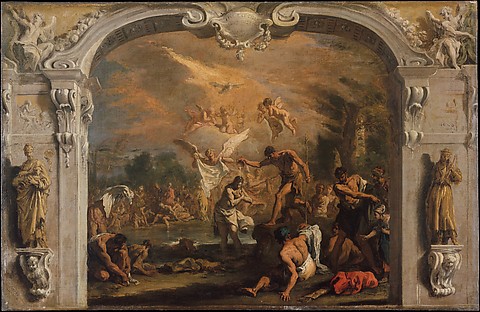
Featured Art: Project for an Overdoor by Carlo Marchionni or Filippo Marchionni

Through the municipal green, overpainted wire mesh
obscuring the grammar school basement windows

comes the spank of a basketball not engaged in any game,
just pounded in place in an empty, echoing cafeteria, then

an outside metal door gets gut-punched open to release
gruff-voiced janitor, belt keys jangling, cursing at the world

while from a first-floor office a stretch of plastic packing tape
screaks off a roll as a phone rings and a copy machine whumps

as if providing a bass line to a class that, upstairs,
bursts into a trebly, mocking laugh, after which,

yet farther up, in a distantly reverberant bathroom, a toilet
flushes and keeps running even after a door slams shut and

all the old, hard memories flood
back enough for me to know

that if a documentary film was made
about daily life in grammar school—

with shot after shot of small, solemn faces
taring out at us—

its scoreless soundtrack
would be this.


Read More

Sintra

By Gail Mazur

Featured Art: Composition by Otto Freundlich

In your office, you, mastering the art of Photoshop,
scanning a crumpled snapshot, 3 inches square,

of your father, poolside, jaunty in a blue swimsuit,
his straw fedora at a rakish angle,

carrying two splashing cups of bica toward your mother.
Beaming, gallant, tanned, grinning for her camera.

That was in Portugal, in Sintra—
the village Byron called “most beautiful in the world.”

In the old cracked photo,
part of his naked chest had flaked away:

under the glossy surface an ashen patch.
Forty years later at your desk,

filial, in a fantasy of surgery,
you worked your laptop to repair the wound,

dragging pixels of skin tone, of mortal coloration,
from his right side to his left.

A new skill mastered, new language, new tools
that restored but couldn’t save.

I watched you transplant a blush of skin—
a tender ministry, your digital touch

lighter than a kiss—not unlike a kiss—

exactly where his heart four decades
earlier began to falter. As yours, invisibly, did now.

—One of those days we both still thought that somehow
with the proper tools, there was nothing you couldn’t fix.


Read More

Tag Sale

By Scott Brennan

Featured Art: The Rose Cloud by Henri-Edmond Cross

A Barbie with gum in her hair, a Lite-Brite that may or may not turn on,
and Monopoly played once or twice then stowed, the Chance cards

missing, the Scottie dog lost, the dice gone. Here, the Boggle bubble,
cracked. In a milk crate beside the games, we have the tools: a hacksaw,

a cordless Black and Decker drill, a Stanley hammer, a rat-tail file,
a Phillips screwdriver. Here’s a Schwinn bicycle with dry-rot tires, and,

Read More

Looney Tunes

By Nathan Anderson

Featured Image: Summer Morning by David Lucas, 1830

Nah, it’s not that, I wouldn’t call it that, I mean molested
that’s like TV stuff, and Brenna
she’d be real nice sometimes like flesh and blood should.
Bring me back a chocolate frosty just because.
Anyway, I’d just as soon say we’re done,
or you want I should go through it all like I did in June
with the last one? Twice now—and this just goes to show
the system’s jacked—twice I’ve waited, asked the front desk ladies
and waited, I said people I need a little help and you’re telling me two hours?
In all this hospital you’re telling me there’s no one I can talk to now?
I said what about the dude mopping floors? Is he around?
Can I talk to him? Or do I go ahead and slit my wrists right here?
So they hauled me up to you, another white coat
working the psych ward. A woman. What’s up with that?
No offense or nothing. That’s just how they do me
down on first-floor, where everyone else on earth is. You ever one of those
ER docs I see running around? The way I figure it, a woman like you
doesn’t need to run. You’re all put together—you know, like a car
that’s just come off the line . . . . But okay, this isn’t about you.
Read More

That’s Me Smiling in the Back Row

By Elton Glaser

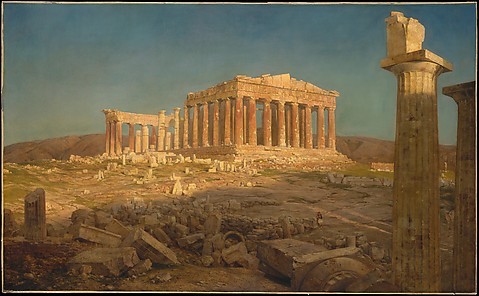
Featured Image: The Parthenon by Frederic Edwin church, 1871

The day warms up fast,
Like leftovers in a microwave, odors of dawn
Still rising from the dead lilies,
From dry grass bleached to blonde and now
Heading toward platinum.
In the slow burn of midsummer,
The nose takes you where the mind won’t go.

There’s bad juju all over the place.
Light clings like cellophane
To the limp leaves. Nothing will budge
That carpet of shadows on the back porch.
I’m watching a spider
Rappel from the blades of a broken fan.
Somebody needs to fix it soon,
Somebody who knows how to work a miracle
With Juicy Fruit and a steak knife.

Read More

Photograph Albums

By George Kalogeris

“We finally got all of our family photos
Onto our home computer,” Quentin was saying,
Just as we entered the Asian fusion place.

And that’s when it hit me: all those leather albums
With their matted pages and bristly hides,
In their mundane way as archly ceremonial

As the Golden Dragon preening against
The restaurant window. All those cumbersome tomes,
In a decade or so defunct as the dinosaur.

But once their images have all been scanned,
Why should it matter? By then the cherished snapshots
Will have all gone into the world of light—

Or at least into cyberspace. Ancestral faces
That once unfurled from trays of salty water
As dark as Lethe, and then were pinned on strings,

Ex-voto like, and left to dry, will seem
A little less spooky-stern without the shades
Of their twentieth century negatives to haunt us.

And pantheons of illumination so vast
They promised we’d see ourselves reflected in
Their image forever—Olympus, Polaroid, Kodak—

Will shrink to the candle-watt stature of household gods:
Preservers of birthday parties and graduations,
Penátes of pointed hats and obnoxious horns.

Read More

Whatever I Might Say

By Sydney Lea

Though to touch its flame would surely be as painful as when it burned brighter, the candle’s low now. On the table, just prior to guttering after dinner, it vaguely illuminates friends.

The glow takes me to Creston MacArthur, one son’s and one grandson’s namesake, and to our many evenings as a campfire ebbed. Just now I’m remembering a particular night, the two of us seated next to a favorite river, swapping stories. His were better.

A bleakness sinks into me despite the patent pleasures of this later interlude with other people I care for and admire. I’ve long savored their camaraderie, their conversation, their gifts for wit. The lateness of the hour has turned our talk to rote murmuring, something like the water of that river, which always flows right below my consciousness.

I should do more now than merely prattle with these good companions, just as I should have said more to Creston, gone almost forty years, and perhaps he to me. Or maybe not: deep in the woods, barred owls started to chatter that night. “Like a good pack of hounds,” Creston said, and that woodsy locution seemed perfect, seemed pinpoint accurate.

Still I’m unsettled. It’s as though I were looking on these people here, on my children, on my children’s children, on my past—I’m looking from above. Having failed to put the right words together, I’ve risen over our group like smoke. The chill in my spirit has something to do with feeling removed, and feeling removed because I’m tongue-tied, tongue-tied for fear that any speech of mine will sound formulaic.

It’s late. The guests will leave. The candle’s wick whispers. I must hope I’ve found a way of being with loved ones that’s better than any talk I could grope for, than any I craved as those old fires grayed, a way that bespoke me better than whatever I may have said, whatever I might say now.


Read More

The Professional

By Michael Bazzett

She arrived in a dark suit and a mask-like smile, explaining
her services in a manner so polished it almost put us off.
This is my specialty, she soothed. Both mind and house
will be empty as a mountain wind once I’m done. I sensed
she’d said those words before. We sat at the kitchen table,
you and I, looking at one another, hoping the other felt more
certain, more assured. Once we signed, it would take years
before we acknowledged our mistake. She’d left the whole day
open, and could begin immediately. Was there perhaps a guest
room where she could change? Her assistant arrived with
a black duffel, fresh white towels, and a stainless-steel basin.

I didn’t know the basin would be so big, I murmured. We looked
at one another uncomfortably. It is not always a clean process,
she reassured. You do understand, once I’m sequestered, it is
very important that I not be disturbed. We nodded. She closed
the door with an audible click. For the first few hours, it seemed
okay. Her assistant sat out in the van, with the windows down,
reading. We sat in the living room and tried to do the same,
ignoring the sounds coming from the guest room, sighs that
sharpened into cries. When a few faces started disappearing
in the photographs above the piano, you leapt to your feet.
This isn’t right, you said. These things shouldn’t be removed.

But what about the pain? I asked. Don’t you want it gone?
No, you said, pointing to the image of a child, suddenly frantic.
The eyes had faded to nothing. From forehead to cheekbone
was just smooth skin. I ran to the window. The van was gone,
as was the tire-swing that had been there an hour earlier. I looked
and saw the elm losing its limbs, one by one. Maybe we can still
get some of our money back, I said. And then you said: I want her
gone. The assistant had sealed the door shut with tape. It came
off with a spattering sound, and the shrieks from inside paused.
Then the voice came, a strangled croak as I opened the door
and saw her, smaller than I remembered, perched on the dresser,
her suit pooled on the floor beneath her. Her face had become
a sort of beak, hinged open and hissing. But it was the children
that were upsetting, sitting in a circle at her feet, quietly singing.


Read More

Still Listening

By Robert Cording

Featured Art: Confusion of Christmas by Julia Thecla

I. Hospice Jumble

The Jumble in the paper too hard for him to read,
my mother suggested we make up our own: Dear,

she said to her husband, your first word is life.
Reduced to words we jumbled, he joked file

it. My brother offered another, mean,
thinking perhaps of his diabetes, a name

like cancer to our family. Then, lamp,
lit at his bedside, and the one palm

visible outside his one windowed room.
My father got them quickly, the last, moor,

said with all the sadness of being far from shore . . .
A grandchild solved that one—horse,

she blurted, noticing that he had left
us for a while. By his bed, my mother felt

his hands and face and eyes. Bob, please,
she said, but he was already asleep,

snoring, not dead. My mother sighed, O God.
My brother, in the spirit still, said dog. Read More

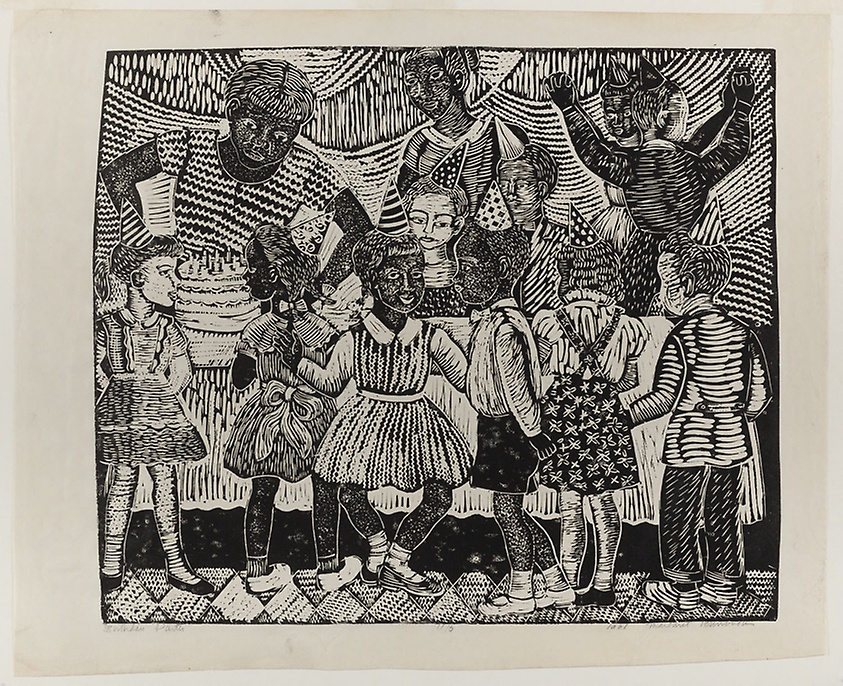
My Dead Father Remembers My Birthday

By Lesley Wheeler

Featured Art: Birthday Party by Margaret Burroughs

Dream-phone rang and I thought: that’s exactly
his voice. I haven’t forgotten. Then: but I could
forget, because he’s dead. Hi, sorry it’s been so long,
but I was sick and the doctors messed everything up.

He made that shrug-noise, dismissive but pained,
meaning he’s lying or leaving something out.
It’s snowing here, and then a click, click, over the line,
and a neutral woman’s voice, slightly officious:
This recording was intercepted. If you wish to replay
this message, dial this number now,
and she recited
a blizzard of digits while I flailed
for a pen then found myself tangled in blankets.
The window a bruise beginning to fade.

Here mist wreathes the trunks. In a few months
snow will crisp the grass, insulate and numb the oaks
with feathery layers that would soak and freeze
a human being. When and where is he? Snug,
maybe, watching weather through double panes.
Or wanting to be. I heard a bead of doubt
suspended in his voice, a cool guess he’d missed
something, before my operator intervened,
reason declaring: This is memory. The line is cut.


Read More

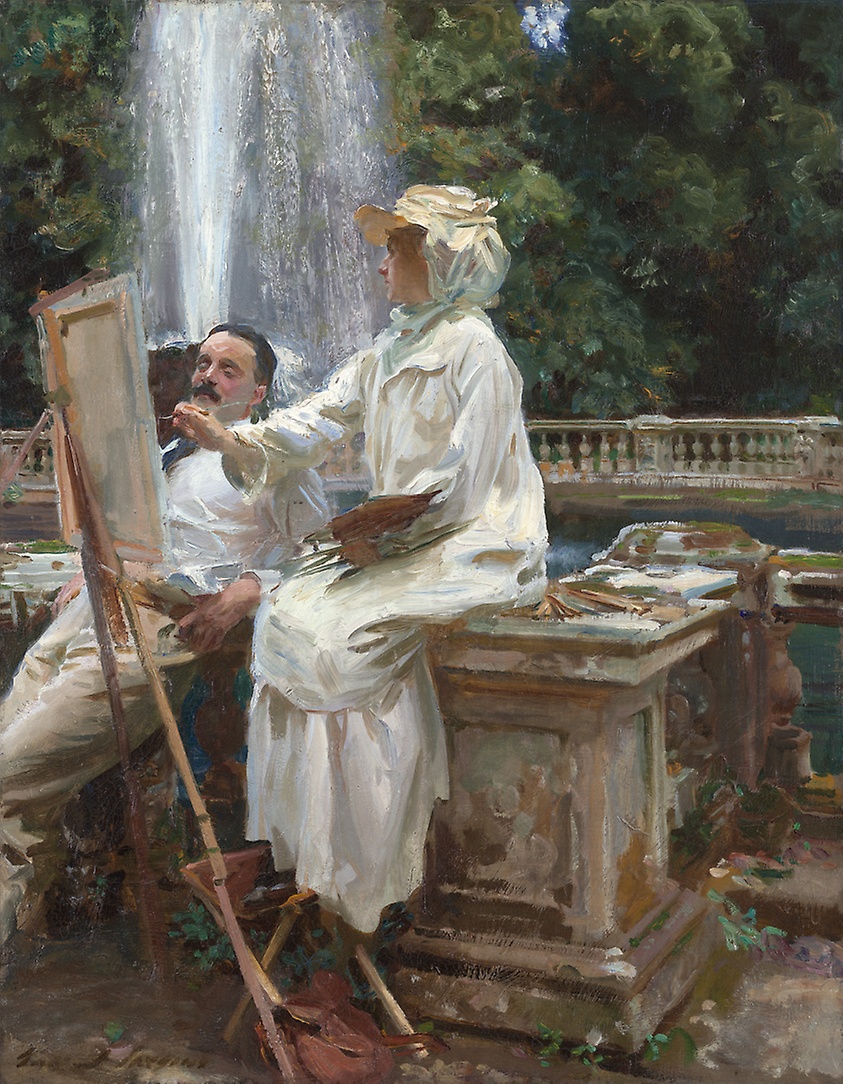
Rome in Us

By Thomas Grout

Featured Art: The Fountain, Villa Torlonia, Frascati, Italy by John Singer Sargent

It’s funny isn’t it—the way Rome still comes at you
fast like a bat breaking past your head from memory.
At the Roman pace the body takes the city better than the mind.
A cathedral ceiling’s fireworks shoot up
once the sermon’s fireworks stop. And when
the ceiling finally stills, the piazza outside overfills
with new fruits and vegetables and etymologies.
Stimulation’s cheap as wine and your horse
is more than happy to take it in by trough.
But it flies by so fast—

only just now it’s slowed enough to hatch a feeling
similar to how it is to listen through the dark over our bed
for a half-caught sound to sound again.
That given one more chance I could make easy sense of it.

It’s often that I sleepwalk down our subdivision’s version
of the Spanish Steps thinking I left something unnamable
inside the Trevi. Is that it at the end of the tube-slide?
I never know. It all gets hazy after the Flaminian gate
though I’m absolutely certain I wake up at the refrigerator.
Rome is in us like unfinished business—

that’s why half of me is still sauntering the cobbles.
I guess we’ll always live our lives possessed
by the ancient Roman sense that down any old left turn
suddenly one of our dreams might find its title.


Read More

Back Then

By John Brehm

Featured Art: Miss M. of Washington by Rose Clark

Everything was better back then.
Even my nostalgia was better,
more piercing, more true.
I miss missing things that much,
but not as much as I missed
missing things back then.
Even my anxieties about the future,
which have indeed come to pass,
were more vivid back then,
more real. Reality itself seemed
more real back then—this clanking
stage-play only a fool could find
convincing—I fell for it all,
and it killed me, again and again.
Ghosts of myself wander
the cities I’ve lived in, thinking
of other cities, imagining me
here imagining them.
We nod to each other across
the years, the way the last line
of a poem will sometimes
look back, wistfully,
at the first.


Read More

1974: The Raspberries

By Campbell McGrath

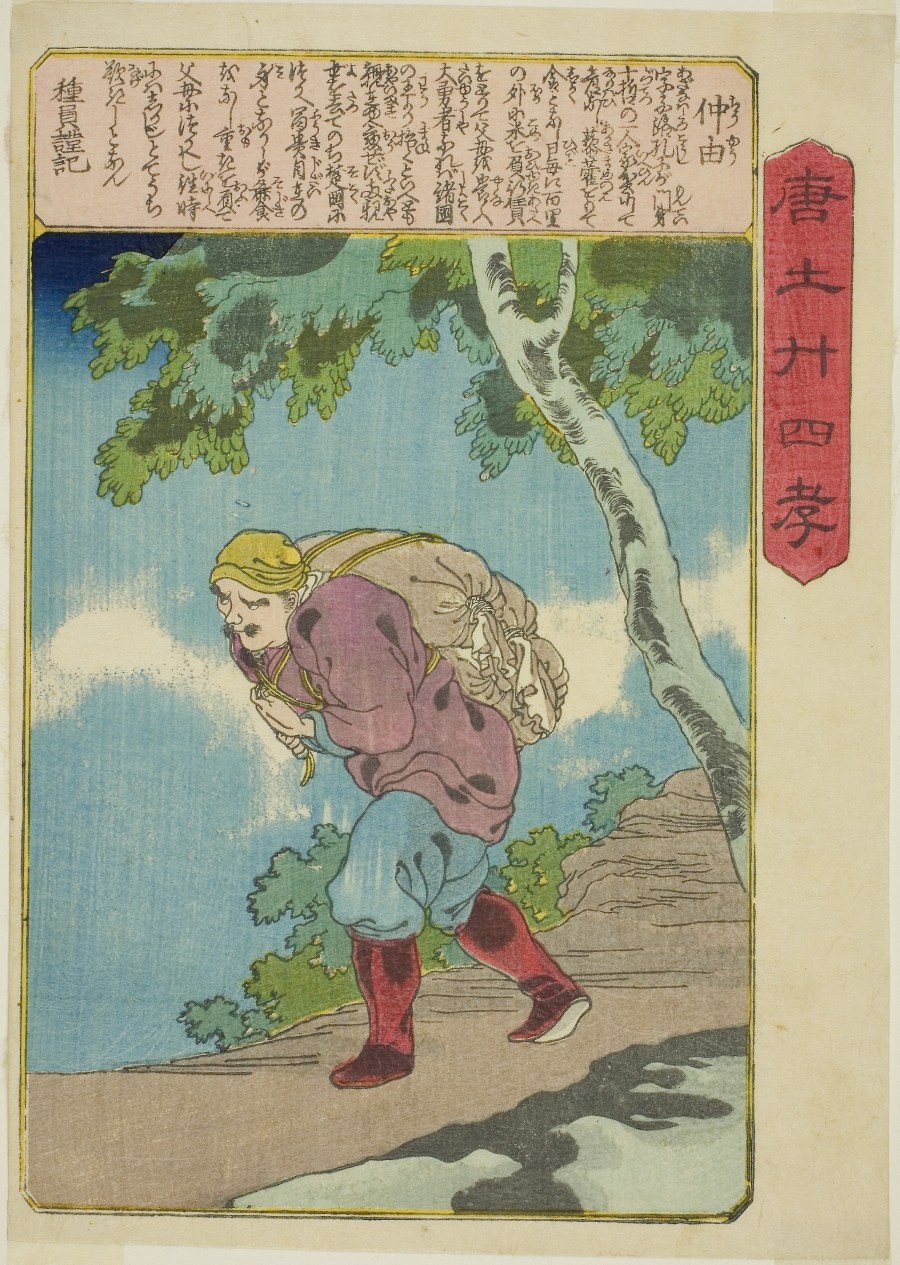
Featured Art: Jung You (Chu Yu), from the series “Twenty-four Paragons of Filial Piety in China (Morokoshi nijushiko)” by Utagawa Kuniyoshi

If it’s true, as they teach in elementary school,
that ours is a secular republic, not gods but men
do our temples and sacred monuments adorn,
then how to explain the immediacy with which I recall
my baptism into the cult of American identity,
my consecration as a democratic individual,
the very first things I bought at a store by myself—
a cherry Slurpee in a collectible plastic superhero cup
and a pack of baseball cards, hoping to find Bob Gibson.
This was at the 7-Eleven on Porter Street,
and soon the five-and-dime on Wisconsin Avenue
cycled into orbit, musty aisles of G.C. Murphy & Co.
where I might spend my allowance on plastic soldiers,
a balsa wood airplane, a rabbit’s foot keychain,
trinkets of no intrinsic worth ennobled by commerce,
aglimmer with the foxfire of mercantile significance,
toys of thought that blazed in the imagination
every step walking home. Not to jingle pocket change,
not to carry a crumpled dollar bill was to drift untethered
from the enormous comfort and safety of the system,
like the astronaut who crosses Hal in 2001: A Space Odyssey,
like a Stone Age tribe wandering into civilization
from some last unmapped Amazonian tributary.

Read More

Last Night Ferguson’s Caught Fire

By. Laura Read


In the paper you can see the red booths

turned on their sides, their stuffing

leaking out. The fire spread next door

to the Milk Bottle, which is shaped like one

so you think of the bottles that clinked

on the porch in the first blue light

of morning, at the end of milkmen,

at the beginning of your life.

I went there once with a boy too sweet

for desire, after the Ferris Wheel

and The Octopus and trying not

to throw up on the grass and trying

to be sweet too, the kind of girl

you want to win a stuffed bear for,

one of the big ones that she’ll have trouble

carrying, so you keep handing

the skinny man your dollars and his eyes

glint and you wonder what he’s thinking

when he folds them in his pocket,

where he’s going when he gets off,

not the Milk Bottle for scoops of vanilla

in small glass bowls. His heart is a book

of matches, his mind clear as the sky

in the morning when it’s covered its stars

with light. In the winter, he’ll hang

a ragged coat from his collarbone.

He’ll think only of this year, this cup

of coffee, as he sits alone in his red booth.

If he walks along a bridge,

he might jump. And the river will feel

cold at first but then like kindness.

Last night a boy named Travis

killed himself

like young people sometimes do.

He told people he would do it.

They tried to stop him.

Now he’ll have a full page in the yearbook,

his senior picture where he’s wearing

his dark blue jeans and sweater vest,

leaned up against the trunk of a tree.

I wonder if he felt the bark

pressed against him

when he had to keep staring into the lens,

his cheeks taut from trying.

I wonder if he thought about the tree,

how could it keep standing there

without speaking,

storing all those years in its core.


Laura Read has published poems in a variety of journals, most recently in Rattle, Mississippi Review, and Bellingham Review. Her chapbook, The Chewbacca on Hollywood Boulevard Reminds Me of You, was the 2010 winner of the Floating Bridge Chapbook Award, and her collection, Instructions for My Mother’s Funeral, was the 2011 winner of the AWP Donald Hall Prize for Poetry and will be published this fall by the University of Pittsburgh Press.

Originally appeared in NOR 12.

Standing on the Desk

By Donna L. Emerson

I am twelve years old in Mr. Ody’s art class and he’s teaching me to use an
eraser on my watercolor of rain and sun. To make the sun stream like spotlights
through the clouds. He moves the eraser by placing his hand over mine. He rests
his hand on my wrist a little longer.

I start to back away.

He asks me to be a model for the class. He lets me stand on his desk. He says,
Don’t take your eyes off her. Let your pencil try to draw her without ever stopping
your looking and drawing. I’m glad I wore my new turquoise skirt and
flowered blouse. Mr. Ody pulls his chair out to see better.

While Danny Sessa makes jokes, I can feel Mr. Ody’s eyes. He’s staring. I turn
red, start to joke back and Mr. Ody says, Just stand still and be quiet.

This was the beginning of the first time.


Read More

At the Mall

By Carl Dennis

Featured art: Youth by Frederick Carl Frieseke

It’s a long time now since the cedar tree
That you and Martha Spicer inscribed
With your twined initials was reduced to shingles
For a house later torn down to make way
For the Northtown Mall, the very mall
You walk now on rainy mornings.
In a few more weeks of the exercise program
Prescribed by your doctor, you should feel the strength
Lost with your triple-bypass finally returning.
Then you’ll confront the years still left you
With the zeal they merit, or the fortitude.
Be sure you’re in line when the mall doors open,
Before the aisles fill with serious shoppers
Intent on finding items more sturdy
Than their bodies are proving to be.
Could Martha Spicer be among them?
What you felt for each other back then
Didn’t survive the separation of college,
Though now it seems careless of you
Not to have kept in touch. Maybe you’ve passed her
Unrecognized as she’s looked for gifts
To make her grandchildren curious
About the world they live in, a book, say,
Devoted to local trees. On the cover
A cedar stands resplendent, the very kind
She carved her initials in long ago
With a boy whose name may be resting now
On the tip of her tongue. Try to imagine her
Hoping he hasn’t wasted his time on wishes
That proved impractical, like her hill house
Bought for its vista that proved in winter
Inaccessible to a snowplow. If he made that mistake,
Let him move back to town as she did
And focus like her on keeping her windows open
So a fragrance blown from afar can enter
When it wants to enter, and be made welcome.


Read More

Early Life

By Sydney Lea

All the pastor’s years of serving God
and humankind—they’re nothing now.
His congregation has long resigned itself
to anecdotal, meandering sermons.
But how forgive his mixing the liturgy
of welcome to a new church member
with the ceremony—however it may be related—
of baptism? The poor young parents

blush and fidget while veteran members feel
something between impatience and rage.

The minister and infant, robed and sleeping,
appear serene, above it all,
the one too young, even awake, to know
what’s going on and the other unable
to keep intact his thinking. Painful pauses.
Autumn rain on the roof like gunfire.

Read More

How She Lost Her Mind

By April Lindner

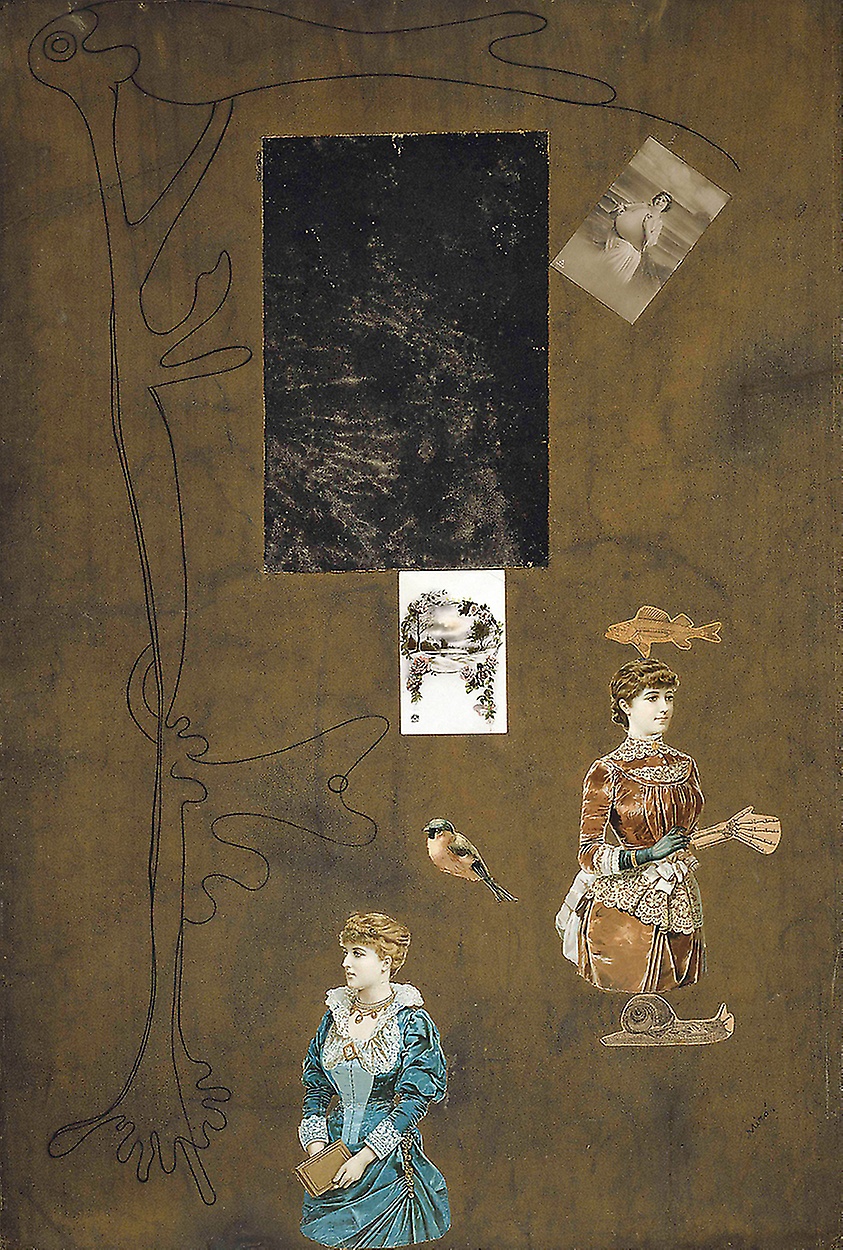
Featured Art: Drawing – Collage by Joan Miró

Slowly at first, the arteries
in the brain’s finely spun net
narrow one by one
_____________to dead ends;
like the hand’s delicate motion,
__________a series of strokes

erase what took decades to write.

Difficult tasks forgotten first:
_______________how to merge onto a highway,
___________________knit a sweater,
_______________________buy a stamp.
Then the simpler ones,
___________________how to turn on an oven,
_______________________what goes in a cup.

Read More

’69

By Kathy Fagan

Featured Art: Alfred Sisley by Pierre-Auguste Renoir

If it’s been ten times it’s been forty-five
I’ve checked the man out in the car behind
mine, teeth bared, laughing in my rearview.

I cannot stop myself from watching him,
sun full on his face. He’s all alone—
we are, among our fellow rush commuters—

and then it dawns on me: it’s Mr. Cahill
from sixth grade, my first male teacher (heart, be still!),
who taught sex ed to us in ‘69,

in Catholic school, till someone narked and he
was gone for good. Those days, we venerated
the venereal, reciting sex words right

Read More

Constant Craving

By Kathy Fagan

Featured Art: Café Concert (The Spectators) by Edgar Degas

When Peter Byrne of the 80s synthpop duo, Naked Eyes, played for me his acoustic cover of k.d. lang’s “Constant Craving” in his studio over-looking Los Angeles, the peacock—not the NBC peacock but a real peacock among the many on the grounds—opened his fan as if the music were a potential mate. He strutted and shirred. He shimmied his many eyes. He’d been drawn to the music, then spotted himself in the sliding glass doors. He leaned in and turned for us like a Vegas show girl. He brought tears to my eyes. When the song was over I could barely muster, “What a tender version, Peter,” though tender wasn’t the word for the primitive if aimless seduction on the lawn.

Read More

The History of Forgetting

By Lawrence Raab

Featured Art: Eve by Lucas Cranach the Elder

When Adam and Eve lived in the garden
they hadn’t yet learned how to forget.
For them every day was the same day.
Flowers opened, then closed.
They went where the light told them to go.
They slept when it left, and did not dream.

What could they have remembered,
who had never been children? Sometimes
Adam felt a soreness in his side,
but if this was pain it didn’t appear to
require a name, or suggest the idea
that anything else might be taken away.
The bright flowers unfolded,
swayed in the breeze.

It was the snake, of course, who knew
about the past—that such a place could exist.
He understood how people would yearn
for whatever they’d lost, and so to survive
they’d need to forget. Soon
the garden will be gone, the snake
thought, and in time God himself.

These were the last days—Adam and Eve
tending the luxurious plants, the snake
watching from above. He knew
what had to happen next, how persuasive
was the taste of that apple. And then
the history of forgetting would begin—
not at the moment of their leaving,
but the first time they looked back.


Read More

Nothing Stays Buried, Hector Flores

By Andrew Michael Roberts

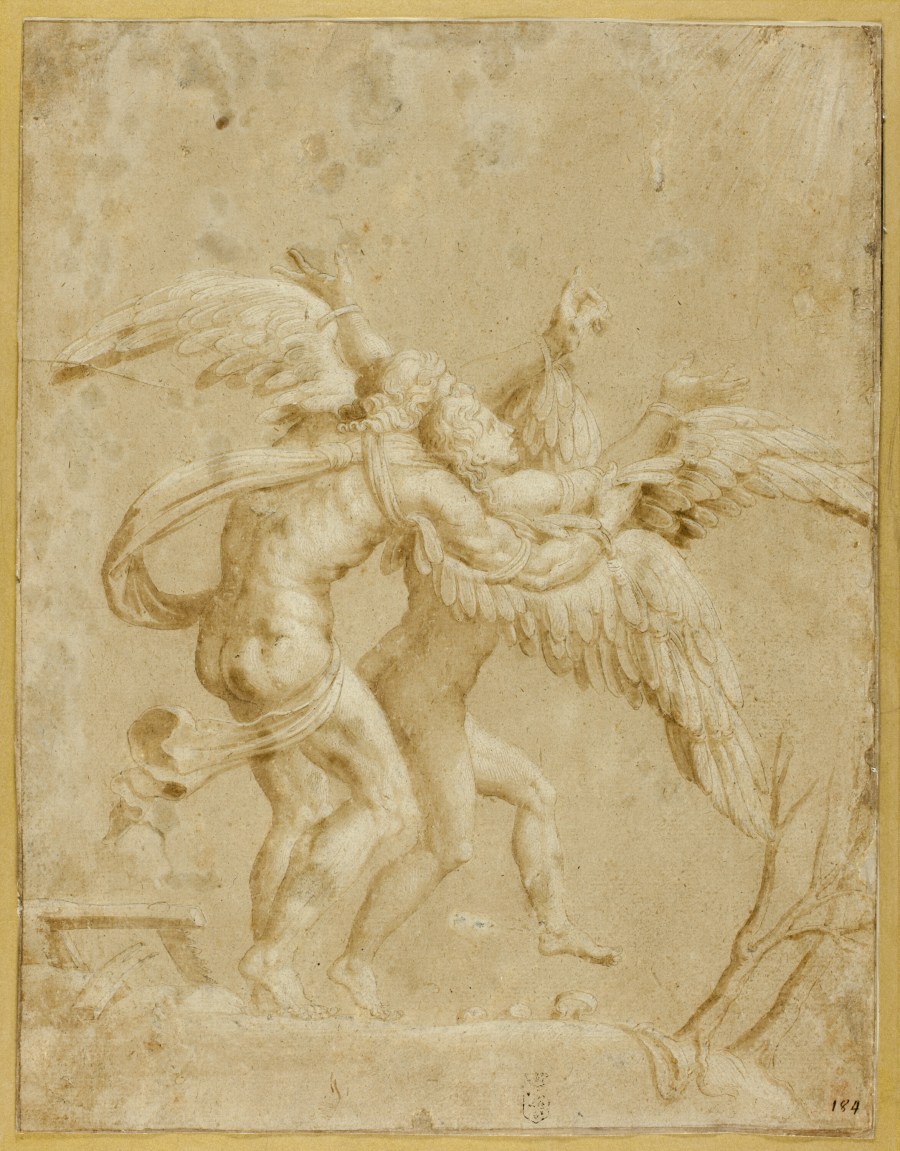
Featured Art: Daedalus and Icarus by Giulio Romano

Not your sad little sister nor the boy of your youth some doors down who shot himself twice. Not even dirt. It churns for years and surfaces as something alive. We name it old names we know by their taste on our tongues. Humus and bone, a song in the blood. Hector, we’re all descendants of conquistadors and graveyards. If you were thrown a sword, you’d know how to hold it. Know which tombstones to walk behind, whistling. Which mountain to climb and when to take flight. How heavy your tired arms. Hector, look down on us tenderly before crossing over and descending into the desert. Remember us as the sand swallows and sings you. Before the sun takes you, cast your winged shadow across it. We are the grains in your grave. We are buried there with you.

Read More

In which I first discovered

By Emily Pérez

Featured Art: Woman Writing by Zabitz

Quite suddenly, at least it seems in retrospect
Though I still seek a complete

My relationship to my past
It was as if my past had taken

Without warning, understand,
Had slipped in such a way that it uncovered

No, that’s not right, for it suggests a lack of deliberate
It wasn’t that I didn’t try

Read More

Notre histoire sinister

By Michael Joyce

Here is our lurid history, the days that were before us once
have slipped behind now and press against us as in a crowd
stumbling from the circus. The circus again! How it haunts
their memories, the afternoon at the Tibetan resto juste en face
where the young clown reminisced about life as a dominatrix
in San Francisco and how gentle it all was finally, her smile
truly angelic, framed in a corona of spun gold hair, le coiff’
paillé, soft, vaguely leonine, the archangel with golden hair
at Petersburg perhaps or Raphael’s lost “Portrait of a Boy”
pillaged by the Nazis from the Musée Czartoryski. This she
recognizes in herself, how in the snapshot from her troupe
she had them guess which one she was, eyes giving her away:
the boy in the pale blue jumper, a play upon Pierrot, fey,
younger, at that age where gender is permeable, apt to slip
hermaphroditic back to girlish, qualis ab incepto processerit
et sibi constet, as Horace had it, i.e., let him stay what he was
at first, but what that was hardly any of us can remember.
And now the children come pouring out from the matinée
into rue Amelot as dans le coin de la salle the three of them
whisper softly lost in each other over tea and dumplings


Read More