Riddle

By Emily Banks

It was everything I didn’t have
and all I wanted. 

If I could have it
I knew I would have all
I didn’t have and everything
I wanted. 

It was a key to the city
of dreams, a hacker’s code
in a hackneyed spy film,
a sleek black rectangle
of plastic with no limit I could slip
into my back pocket. 

I wasn’t wrong. I found it.
Doors did open
and chairs were gestured free.
I saw carpets roll out in strangers’ eyes. 

They flock like moths to artificial light.
It tickles me, how they brush their tattered wings
on my glass skin, fiends for the bright,
willing even to die— 

I can make anyone
tell me everything
I want to hear
for a night. 

They hate me when they learn I’m not the sky.  


Read More

The Church of the Dermatologist 

By Amy Miller
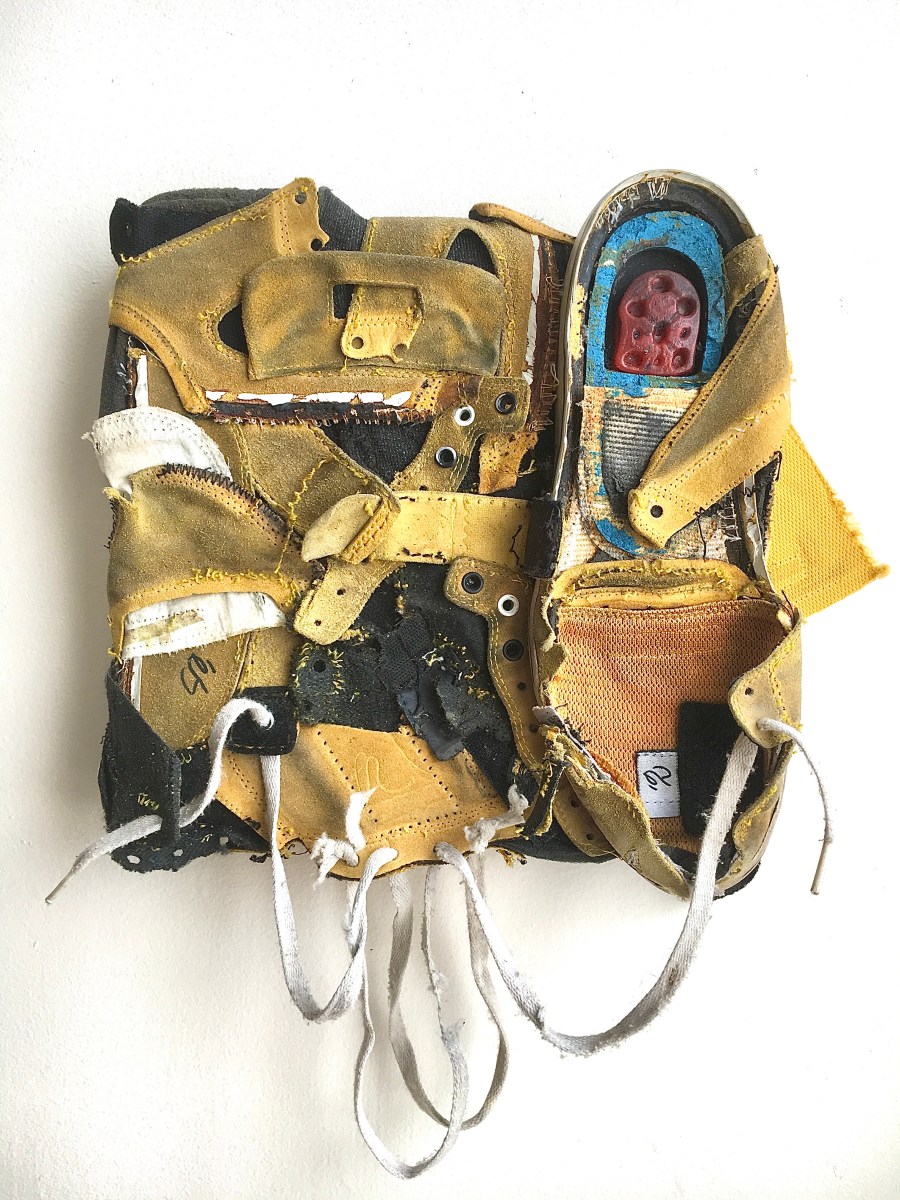
Featured Art: “Pony Up” by Alex Brice

I wonder if she says a prayer before
she bustles into the room, all smiles and sweet
accented English, tongue a rolling horse
in a field of Russian consonants. My feet  

or scalp or inner thigh might pronounce
a sentence on my life: she incants
asymmetry, border, color in three rounds,
four, the marketeer’s or pastor’s chant.  

She’s here-and-now, no penance crap to pay,
no questions of the beach, my tans, my youth,
for everybody’s sinned already, way
too late to rein those horses in. Truth: 

I did my praying driving here. Lord,
let her eye be ruthless. Thorough. Bored.  


Read More

Paprika

By Lory Bedikian

Not every song on the radio is a great song. Usually
it airs because someone knows someone knows someone.

There are most likely a million songs that will never
make it to any Billboard top chart ranking yet will

kick the amp, graze the sound factor with tonal bliss.
I like calling it phenomenal. To give examples would be

dangerous. So instead, one could say, a song needs
to be a bit like paprika. Before we go there, let’s imagine

a punk band named Paprika. Perfect. Even better,
a vocal artist who goes by just: Paprika. Catchy.

We never really knew where it came from. Maybe
just another ground red pepper, but it was what

we always fell back on. Sometimes spicy, sometimes
smoked, sweet. Music. It’s what we are all looking for

all of our lives, just in different incarnations.
Let’s forget the song or I’ll never tell you the story

of how paprika was my mother’s diva and crooner both,
the spice she believed, with all her soul and lashes,

could save any cooked dish from ruin. Paprikah tuhrehk!
Meaning “put paprika on it!” However, in Armenian

addressing you in the second-person, plural, formal,
sounds like, although only two words: all of you, listen to me,

before it all gets thrown out, get the paprika, sprinkle it on, damn
you all!
My mother. A woman who saved nothing,

but thought almost anything could be saved from ruin.
Mended socks, shortened the cocktail dress because

she never went anywhere really, but shorter she could
wear it to work, to her job selling formaldehyde-filled

furniture at Montgomery Ward, waited for commission
checks, came home late because it was her turn to close

the register, waiting for her between asphalt and neon
lights. Almost forgot we were talking about the belief

that one could save things from ruin. Last night I almost
forgot that my mother was dead, gone for four months now.

I know paprika is not my style. At least as a spice. Just as
I’m certain that there are too many songs not being heard

because someone’s got to know someone and someone
else has got to close the register before the walk home.


Read More

We Were Talking About Words We Didn’t Like

By Jessy Randall

We were talking about words
we didn’t like. One of us
was making a list, and we all
wanted our words on it.

“Leverage” came up, and the
overuse of “awesome.”
(We were distracting ourselves
from the reason we were together—

or not distracting, exactly, but
giving ourselves a breather
from grieving and thinking about loss.
We were in town for a funeral.)

My turn came and I didn’t
want to say, didn’t want my mouth
to make the word, but I screwed up
my courage and said it: “meatball.”

The others laughed, not at my word, I think,
but at the face I made when I said it.
The conversation turned to social justice,
but “meatball” had been said aloud

and it imbued the rest of the visit,
for me, with ridiculousness, and maybe,
much as I hate “meatball”—my god—
with hope.


Read More

If

By Marie-Claire Bancquart
Translated from French by Claire Eder and Marie Moulin-Salles

We had a ribbon of words to say
like the machines with their coffers of signs
prêt-à-porter.

We would have finished going over them.

Returned to the first ones
we would pronounce them with our renewed body.

Dead horses climb back up the trails.

Silence.

They would carry us finally toward
            our solemn communion with objects.


Featured Art: Eldridge, by John Schriner

Read More

Ruthless

By Emily Lee Luan
Winner, New Ohio Review Poetry Contest: selected by Ada Limón

Featured Art: The Dance by George Grey Barnard

My friend lowers his foot into the stony
runoff from the mountain, lets out a burst
of frantic laughter. This, I think, is a happiness.

When I don’t feel pain, is it joy that pours
in? A hollow vessel glows to be filled.
無 , my father taught me, is tangible—

an emptiness held. It means nothing, or to not have,
which implies there was something to be had
in the first place. It negates other characters:

無心 , “without heart”;
無情 , “without feeling”;
heartless, ruthless, pitiless.

Is the vacant heart so ruthless?

The ancient pictogram for 無 shows a person
with something dangling in each hand. Nothingness
the image of yourself with what you once had,

what you could have. And the figure is dancing,
as if to say nothingness is a feeling, maybe even
a happiness—dancing with what is gone from you.

When I ask myself what am I missing? I think
of how much I loved to dance, arms awash
with air, the outline of loss leaping on the wall.


Read More

What I Meant to Say

By Emily Alexander

friends I am not in love these days I wait
for the bus when it’s cool enough
I bake little treats in muffin tins for fun
I say sea urchin        squash blossom

vacuous oh no I’m afraid
I don’t know

what this means and many others the usual
fears plus some     uniquely mine balloons popping
in a small room needing immediately

a tooth pulled in a city I’m only visiting strange
coffee shops parking lots
I’m not sure
the rules here     maybe these are
usual after all I don’t mean what I say

always what’s the difference these days
before going anywhere I out loud
say     phone wallet keys

yesterday I said it and still
forgot all I needed then from the freeway

the ocean right there among everything oh

friends I’m just undone you know
what I mean       truth is these days I find myself
occasionally full

of rage other times beer sitting with Halle
on her bedroom floor  what’s new

oh man did you hear
about whoever I’m hungry are you
a little flimsy
drunk now the city rumors its width around us

and sometimes over it we just say
very quietly yeah


Read More

ASL on Memory

By Cody Wilson

Here is the sign for remember:

With one thumb, pull a line
from the spool in your forehead and set to tether
on the cleat of your other thumb.

Now the hull of your head can stay
docked to this thought.

Here is forget:

 Wipe your forehead with fingers
—the sign of relief—then pull
them into your palm.

Except your thumb. That sticks up,
like there is something good about this.

(Click “Read More” to see this poem signed by Kirsten Pribula)


Read More

Work in Progress

By Lance Larsen

Featured Art: “Holy Family with Saint John the Baptist” by Perino del Vaga

Use what’s handy color pencil shavings
dirt maybe bug parts cat hair also saliva

lots of it no paint or collage nothing
modern just a smudgy finger on textured

paper grind the colors in or swoosh
them around like a muskrat in mud

no pattern at first till wet scratches
turn chance into sky fear into a face

yours and not yours call this turmoil time
and materials call this a case of falling

feelingly if stuck have your beloved spit
on the dry parts pop failures in the oven

let divinity simmer let the making
unmake you every doubt an inky wing


Read More

Learning Swedish in Secret as a Joke

By Bobbie Jean Huff

Featured Art: Breton Girls Dancing Pont Aven by Paul Gauguin

All this passing on going on, almost
as if it were contagious. Words you’ve recently learned
spill easily from your lips:
Wenckebach, biliary, Cetuximab, granuloma,
the new bright colors of life. Just when
you were getting bored with the
pinks, purples, and greens on offer
for almost seven decades,

you’d happily now trade blasts and plasma cells for
brown or black or tan. But as surely
and hard as you know how many platelets it takes
to sustain life, you know that
more new words will show up soon.
Months ago you learned that “consistent with” means
you have it, and, last week, that “refractory” means
the treatment has quit working.

Now that you realize you’ll never learn Swedish,
in secret and as a joke
(to surprise your daughter-in-law with at dinner time),
you understand it’s not that you’re running out of
brain cells,
you’re running out of time.
You can’t learn sjuka and middag while you’re learning
leukopenia and transampullary.

You never expected this.
You never thought it would come to this!
(That’s the funny part. Has it ever not been there?)
Wake up and
you will see it even now,
gliding merrily in your direction,
not even bothering to look you in the eye,
as if you are the last thing on its mind—and if

you squint you will notice it gather a little speed
(the teensiest of fuck-you’s),
like a sailboat in languid waters
a moment after the wind has shifted.


Read More

Bay Sunday

By W.J. Herbert

Featured Art: Boys in a Dory by Winslow Homer

1.

Wind hits the cliff face and climbs the palisade
as three men at a slatted table play cards.
Two wear hats. A third faces the sun and smokes.
All three are gray-haired, but none is my father.
He wouldn’t have played without scotch
on a Sunday or sat on a park bench, anyway.

2.

A man holding a child speaks to her in Mandarin
as he touches a small seat attached to the back of a bike.
He pats handlebars and points to spokes, saying bike
every twenty words or so, then taps the front wheel gently,
the way you would touch the shoulder of an old friend.

3.

Some Sundays even if I’m not near the bay,
I imagine my father playing solitaire at a slatted table
as I lean over the cliff rail, watching waves
that grapple with the beach as they leave it.

On the bike path below, grit spins under a stream of cyclists
as a man wipes a child’s tear with the edge
of his sleeve and speaks to her in a language so soft and low
the bay curves like an ear to hear it.


Read More

Heart 2. Kathryn Cowles. Mixed media (tuning forks, megaphones, windmill, catapult, volcano, bathtub, confettied heart, tissue-paper flowers, flamethrowers, pianos, etc.) 2014

By Kathryn Cowles 

after The Way Things Go, by Peter Fischli
and David Weiss

I give the boot on a stick a push.
                                                          The boot circles round and kicks the light switch on, which, as the open bulb grows hot, melts the balloon full of red red paint, which drips down to fill up the glass precariously balanced until it tips over and breaks, tripping a wire on its way down,
                                                                                                                            and the wire sends a spoon attached to a little weighted car down a ramp, and the spoon hits against strategically placed tuning forks in different notes as it travels down, and the tuning forks are each pointed toward a red and white megaphone set at full volume, and the megaphones serve to amplify the little 12-note tune that I can’t get out of my head,
           and when the spoon car gets to the bottom of the ramp, it smacks into a striped target, which knocks a red bowling ball onto an oversized inflated black plastic bag, which releases its air into a long silver tube in a burst, causing the white canvas windmill at the other end of the tube to turn, which tips the wooden seesaw structure so that it releases its 1,000 one-inch rubber balls in various shades of red and pink and gray and black down a 25-foot wooden plank, and then into a metal chute, where they line up and twist and turn their way, roller-coaster-like, to the bottom of the track, picking up speed all the while,
                                                                                                                                                                   and at the bottom, they split into two tracks and collect in two separate tubs attached to two separate strings that will only pull once enough balls have accumulated in the tubs, given enough weight, one string attached to a trip wire attached to an oversized match, which quickly strikes against its measure of sandpaper and lights on fire, and the other string attached to the safety catch of a tightened, loaded bow above it,
                                                                                                                                                                   and the string slowly, slowly, as the waiting match burns down, as the tub fills with one-inch balls, slowly pulls at the safety catch until it, quite suddenly,
                                                                releases, letting loose the paraffin-soaked arrow, which passes through the flame of the oversized match and lights up as it shoots just feet above the heads of the seated spectators in the outdoor garden of the art museum, over, across the open space, grazing on the other side of the crowd a wick attached to the paraffin-soaked cardboard mannequin,
                                                                                                                                        which bursts into a flame that lights all the attached oversized sparklers from their shortened bases, and they burn in reverse, outward, and the mannequin sags, and the mannequin gets infinitesimally lighter, as the sparklers drop their ash to the ground and as the chemicals react and burn away, so that the enormous and sensitive scale holding the sparklered mannequin on one side becomes outweighed by the enormous pile of inflated red balloons on the platform on the other side of the scale and slowly lifts into the air,
                                                                                                                               and a metal ball rolls in a track along the edge of the platform and catches in a pocket on one end of a wooden plank,
                                                                                                                                                        causing the giant catapult full of red-dyed baking soda on the other end of the wooden plank to fling its contents in the air and, upon hitting the vat of red-dyed vinegar in the center of the giant papier-mâché model of a volcano, to bubble up over the edge and through a rugged papier-mâché channel painted to look like rock on the side of the volcano,
                            and the fake lava flows into a water wheel, which turns and turns, and the turning untwists a 50-foot length of rope from around a pole high above the crowd, out on the end of a crane,
                                                                                                                                                                    and the pole is attached to the side of a bathtub full of confetti made from hole-punching-to-pieces every letter or postcard you ever sent me every photograph I have of you every scrap of film every original thing every only-copy-that-exists and that might hurt to lose,
                                                                                         and the bathtub turns,
                                                                                                   and turns on its pole,
                                                                                                                       and upends its contents onto the crowd
as 12 pianos each tuned to a single note drop in succession,
                                                                                                         a literal kind of surround
sound,
          playing the little tune I can’t get out of my head,
                                                                                           as confetti cannons shoot red
tissue-paper flowers into the air,
                                                    as the tissue-paper flowers pass through the blaze
of the four flamethrowers, strategically placed,
                                                                                    as they light one after the other and burn completely to ash before landing gently and harmlessly alongside the confetti on the heads and shoulders of the crowd in the art museum garden 50 feet below.


Read More

Maintenance

By David Gullette

Listen,
            while you were over ogling ogives and trefoils,
                                                                                           chancels and bays,
the things you left behind were quietly giving up,
flying to pieces, falling apart almost together.
            That grinding whine up front you thought was brakes failing?
It was, but that’s not all:
            the last shred of resistance is gone from the shocks,
            every bump is now like the thump of a flawed heart,
but that’s not all:
            the tires have gone slick and bland in your absence,
            unevenly worn like the martyr that marries a slob,
wait, there’s more:
             not only can’t you stop at will, you can’t get started,
             the juice is dead
             some slackness in belt or disc
            something not flowing
            the black box caked with inertia.
Listen,
            you cried at the Royal Wedding and swallowed the cream,
meanwhile the tube lost its sight: snow, garbled snow in its face
            and a twisting of speech unknown in Babel, O
things have been going to pot,
            the paint peeling off your house,
            leprous, obscene, what about that?
The food has vanished under the weed,
the path has forgotten where in the world it was headed,
the mower that might begin to set things aright
is all smoke and flame and missing parts,
shorn of its function.
            Maybe you thought as you turned away toward exotic joys
            the objects you’d secretly started to hate
            would await your return unchanged
            loyal and fixed in their whatness?
You forgot the revenge of decay, you forgot
how even immobile things, unloved, blindly careen and plummet,
how care is a constant curing,
our bulletin first last and always: Aid.

Okay
            you’re back: the fat and languor are through.
The wind has shifted to pelt what’s left of the garden.
Strange birds are swarming the shorter days.
            You dreamed and the world dissolved
            but already the perfumes of distant sugars
            begin to escape from your larder,
            and you open your eyes to the list of your derelictions,
            whelmed with the staggering costs of restitution.
It is time you accept your share in the damage
and spend what needs to be spent.
Repair.


Read More

Sky

By Luiza Flynn-Goodlett

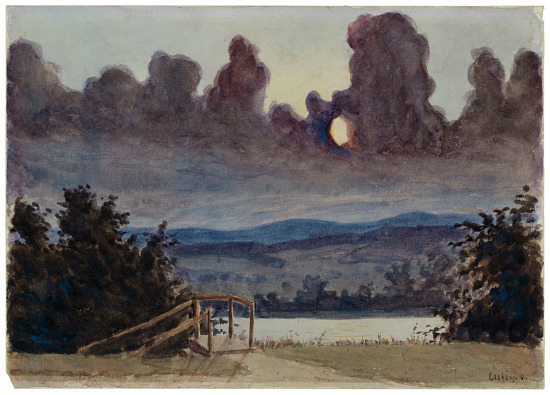
Featured Art: Dark Clouds by Louis Eilshemius

The caul we’re born beneath, its gaze drives
mystics to fits. Constant as parents never are,
it blinks back cumulus to examine us, offers
no opinion. Unlike old gods, nothing troubles
it—rains withheld, not censure, just drought.
Some tire of scrutiny, shelter in offices, under
newspapers. It doesn’t mind, proffers an open
eye to all—the seabirds that caw at its margins,
delayed ships, the drowned who clawed toward it.


Read More

Directions

By Matthew J. Spireng

Featured Art: Village Street by Alice Pike Barney

This time, giving directions to a place
I have never been, an address
I have only passed so I could tell another where

it is, I have explained: across the street from,
a few blocks down from, between this
cross street and that, a little yellow awning

across the front, the name in big letters above it,
and if it is dark, will there be
light on the awning, or will its color be gone,

indeterminate? Tell me, will you, if I arrive
first and find a better way to describe, how
can I reach you, or must the first suffice?


Read More

The Anatomy Lesson

By Bruce Bond

Featured Art: The Brook by Paul Cézanne

after Rembrandt

Why they look away is anyone’s guess,
these men apprenticed to the evidence,

gathered at the corpse the dark context
makes bright inside the surgical forum.

Anyone’s guess why, at this instant,
even the teacher looks past his subject,

the harp strings of these extended tendons
raised up from the bed of the open wound.

A spectacle, it seems, for no one there,
for though they lean in, wide-eyed, severe,

they look instead at the anatomy volume
propped up in the center of the room,

or at us, the viewer, the painter, the future
that stares back with the blindness of a mirror.

Read More

Plato and You

By Christopher Flannery

Featured Art: Reading by Berthe Morisot

I was reading Plato

and thinking about you.

So I wasn’t really reading.

I was thinking.

And I wasn’t thinking about reading,

if you get the idea.

And that’s the thing.

With Plato,

it’s all about the idea.


Read More

This Contract is Complete

By Kyle Norwood

Featured Art: Crescent Moon from Album of Paintings by the Venerable Zeshin by Shibata Zeshin 柴田 是真

    “This contract,” this machine with knobs
to be pulled, buttons to be pushed, inexorable gears
leading from
A to B, but so easily sabotaged,
mucked up by a fallen coin or shirtsleeve or
dangled lock of hair caught in the works


    “is complete,” encompasses entirely the world
of its transaction, has an inside but no outside,
everything else is forever foreign and beneath notice
in the penumbra of this dazzling light,

    “and all promises, representations, understandings,
and agreements,” theories, whispered assurances,
messages in code, three-martini lunchtime conversations,
husky-voiced proposals to meet in back of the bank by moonlight,

“have been expressed herein, and all prior negotiations

    and agreements are merged herein,” forgotten, a haze,
only this document remembers, everything else is indistinct.
Nonetheless,
“no change, modification, or assignment hereof”
shall surprise the sociologists, or Erda the earth-spirit
who knows how all things end,

    and no contract, no music or poem worth the paper,
no valedictory address or deathbed testament,
no blood sacrifices, voodoo rituals, fire sales,
or promises spoken out of a burning bush,
no house finch spilling its enthusiasm into the gutters,
no final snow covering the earth like a last sigh,

“shall be binding against the Company unless in writing
and signed by one of its officers.”


Read More

Grace

By Craig van Rooyen

Featured Art: Pine Tree by Giovanni Segantini

The History Channel’s playing “The Gold Rush” again.
All those bearded men looking at reflections
of themselves on the surfaces of creeks and rivers and lakes.
They’re so beautiful coming out of ramshackle cabins,
thumbs tucked into suspenders, wading into streams
the color of cheap whiskey. That golden light
on their shoulders, in their beards, dripping
from the brims of their hats, high on
“howdy” and “rough and ready,”
around every bend in the river, expecting
life to begin. The flash of light in a silver pan
full and overflowing. All that hope. Out of
the river, there’s always more earth.
There’s always the scooping and sifting and
throwing away. Everything left behind—out of
frame: The women in their calico, waving goodbye.
The steaming cows in their barns. Now just
the sloshing desire of this moment and the next.
Sure, you have to be willing to kill a few Indians.
But as long as you’ve got a pan and a river
to dip it in, you can forget the rest.
At least that’s what I tell myself before the first
commercial break. Before those attractive
late-middle-aged people clutch each other
in honey light and the baritone voice-over tells me
to go to the emergency room if I experience
an erection that lasts more than four hours. I wonder
if anyone ever panned for gold in terrycloth—
my fabric of choice for watching “The Gold Rush”
in bed at 10 a.m. on a Wednesday. I wonder
if any of those bearded men had a bottle of
Prozac back in the cabin next to the straight-blade
razor underneath the cracked mirror—something
to take the edge off all that failure, something
to dull the regret of walking out on their women
and cows. Of course they’d have another name
for Prozac, like maybe “nerve pills,” as in:
“Durn near forgot to take my nerve pills this morning, Jake.
Christing Jesus, sure don’t want to start sawing
at my wrists again, now do I?” I love the way
there’s no word for shame in the language
of gold miners. All that hope is contagious.
In fact, I believe if I really tried, I could get up
and shuffle to the bathroom and brush my teeth
during the next commercial break. I love
the History Channel! It’s so inspirational.
Right now, the sad banjo music is playing—
the plinking of catgut string over doe-skin,
a sound so Californian it makes you weep for
the all-night diner in Auburn where it’s 6 a.m.
and the sun is lighting up the foothills and
the American River is still frothing to get wherever
it’s been trying to go all night long. All the gold’s dug out
of the hills but the waitress is calling you “love” as she
puts down a cup of awful coffee and sits in your booth—
night shift done. It’s as if she knows you. As if she’s
made the same mistakes and she’s telling you it’s okay.
Now she’s taking out a bobby pin.
Now she’s letting down all that golden hair.


Read More

The Tenants of Feminism

By Denise Duhamel

Featured Image: The Valley of the Seine, from the Hills of Giverny by Theodore Robinson, 1892

When the interviewer mishears “tenets”
I know my gals are not in a villa,
never mind the United States Senate.

My heroines crowd in drab tenements,
their image scaring even Attila
the Hun. The interviewer hears “tenants”—

bad asses, public housing. Bob Bennett
wakes sweaty from a nightmare, Guerrilla
Girls rushing the United States Senate;

Gloria Steinem, bell hooks, and Joan Jett
stuffing manifestos in manila
mailers. The interviewer hears “tenants,”

sees kitchens where women cook venomous
dishes. His lady smells of vanilla,
minding their house, not the U.S. Senate.

My principles are not set in cement,
nor are they adrift on a flotilla.
I call upon all feminist “tenants”—
Steer your U-Hauls to the U.S. Senate.


Read More

Banality

By Gregory Djanikian

Featured Image: Tullichewan Castle, Vale of Leven, Scotland by Sir James Campbell of Strathro, 1855
Courtesy National Gallery of Art, Washington

There’s something to be said for banality,
the way it keeps everything on a level plane,
one cliché blithely following another
like cows heading toward the pasture.

How lovely sometimes not to think
about Russian Futurism, or the second law
of thermodynamics, or how thinking itself
requires some thoughtfulness.

I’d like to ask if Machiavelli
ever owned a dog named “Prince.”
I’d like to imagine Rosalind Franklin
lounging pleasantly by a wood stove.

Let the mind take a holiday,
the body put its slippers on.
It’s a beautiful day, says the banal,
and today, I’m happy to agree
with its genial locutions.

Read More

At a Pet Shop

By Tom Whalen

Featured Art: Red Parrot on the Branch of a Tree by Ito Jakuchu

When the parrot took the cracker I offered, it said:

“Thank you, my friend. You’re the first person to give me anything to eat in decades. There is no a priori order of things. I thought I had been living the good life, but what did I know? The poet fell sick, traveled to the capital, needed words, painted his curtains bright green. A sumptuous village girl threatened me with a cheap lighter. Night after night watching the corpses of rodents turn to bone. I remember when my mother took me to the city, remember how her perfume gave me a high. After that it took me years to find a mate. Night work. Elocution lessons. A treatise on Gorgias’ Encomium of Helen. I kept to the plan I started with. Death is not an experience, food is.”

Then it fell from its perch with a thump, and from its beak an ant exited soaked in the parrot’s blood.


Read More

for Claude Monet

By Michael Casey

Featured Art: Water Lilies by Claude Monet

I mean the excitement level
was just about in negative numbers
as my sister’s basketball team
lost its seventh straight
and after it
the girls are jumping up and down
in total glee
genuine happihappihappiness
the reason? they broke the magic number
ten in the losing score
they didn’t actually break it
but they finally made it to that number
no sense of perspective
in art too you have to see
my sister’s painting
of the flour mill with water wheel
the central subject of which is a frog
amidst the water lilies


Read More

Ambassador of the Dead

By George Kalogeris

Selected as runner-up of the 2013 New Ohio Review Poetry Contest by Barbara Hamby

Featured Art: The Artist in His Studio by James McNeill Whistler

My parents were never crazy about Cavafy—
They didn’t know much about poetry, at all,
And barely had time to read anything but the papers;

Though sometimes a poem they liked would appear in their
Beloved Hellenic Voice. (A poem that was always
In rhyming stanzas, and deeply nostalgic.) Or else

I’d show them one of the Modern Greek poets that I
Was trying to translate, and ask for their advice
About a line. “Is this for school?” they’d say.

My parents were never crazy about Cavafy—
To them he was too refined, too ALEX-AN-
DRIAN, and they were only peasants, xhoríates.

And there was no Ithaka for them to go back to.
When I’d beg them to read the Greek, they’d balk when they got
To his purist kátharévousa diction—they just

Couldn’t stomach its formalist starch. His poems were never
Demotic enough, never trapέzeiká:
Songs to be sung across the kitchen table.

And if I read them Elytis, Odysseus Elytis
Too was too elitist to trust, too drunk
On the island sun of his own Ionian vision.

To people for whom elevation meant being raised
In the steepening shadows of Peloponnesos.
(“The great Odysseus,” my father would chide.)

And if Yannis Ritsos spoke their working-class language,
And his poems weren’t hard to follow, still, once they heard
That Ritsos was Marxist that’s all they needed to know.

Read More

Not Ready for Our Close-Up

By Elton Glaser

Featured Art: Portrait of Jeanne Wenz by Henri de Toulouse-Lautrec

So here we are, helpless among the infinities,
Like noonday devils with the midnight blues.

It’s no use looking for clues in the cradle or the cave.
They’re having none of it down at the U, the cranky professors

And the poets won’t tuck us in with milk and macaroons,
With the sleepy rise and fall of blanket verse.

The mind makes its way among the mazes, inconsolable, quick,
The cross-eyed love child of amnesia fucked by adrenaline.

We might as well steal some Etruscan tear jars for the soulwater.
We might as well scrape a pig’s ear to flavor the beans.

It’s going to be a long night of gossip among the isolatoes,
Candles writhing their light against the slippery walls.


Read More

Jonah

By Maura Stanton

Featured Art: Stowing Sail by Winslow Homer

Whoops! He was afraid this was going to happen. He’s been sucked up. The strong wind pulls him in against the stiff fringe of the brush attachment, where he gasps and tangles with bits of debris, strands of hair, crumbs, dust bunnies, specks, soot, and flecks of dander. The brush is swiped across the carpet, freeing him from the tough indifferent bristles. He flies up the silver tube, but since he’s heavier than the rest of the grime, he gets to catch his breath at the bend, pinned against the cold metal until he’s slapped free by a dancing paper clip. Swoop! Suck! Up he goes into the flexible plastic hose. Now and then he catches on the accordion folds, but the air is warmer now, and he feels himself being pulled closer and closer to the engine thrumming in the center. Why, this isn’t so bad. He almost feels excited as he approaches his destination, the special paper bag fitted inside the machine where all the dirt in the house congregates. And then he’s in! He’s dragged through the opening. It’s all over. There’s nothing to do but make a cozy nest in the mound of familiar filth.


Read More

The Call

By Michael Chitwood

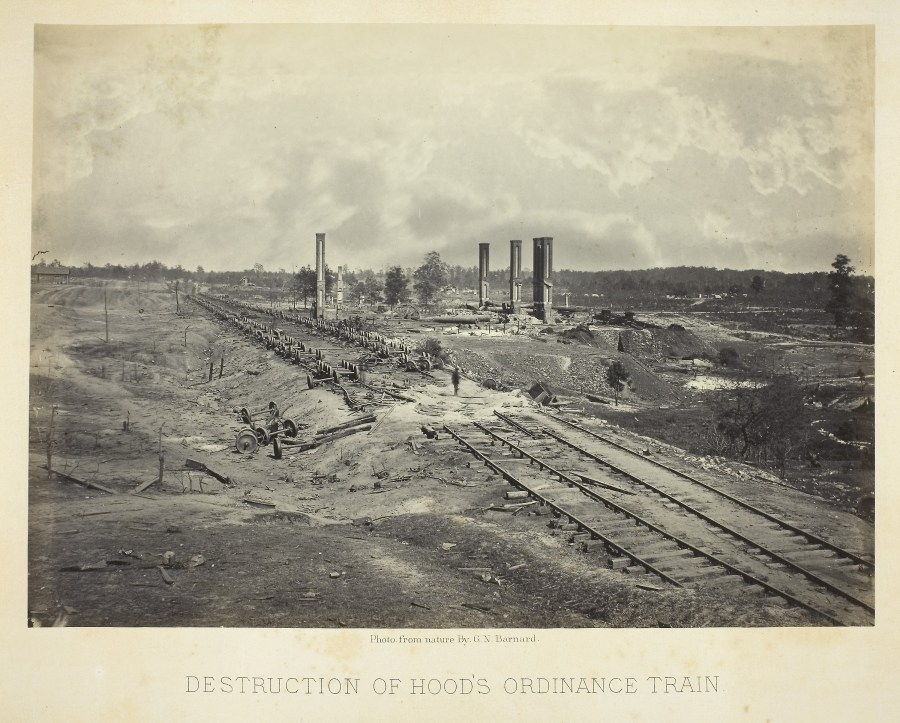
Featured Art: Destruction of Hood’s Ordinance Train by George N. Barnard

There was the rumor
of a deep night/early morning
secret train that a crew
had to be called in for
and they got double time
for their trouble. Big money.
They cleared the tracks for it,
put everything on the side rails,
even the coal cars that were priority.
And when it left the yard
it was only three cars
with a puller and a pusher
so it was jimmy-john scooting
before it was out of sight.
Everyone had a theory.
Some millionaire had a coupe
shipped to Norfolk from Europe
and wanted it in New York by the weekend.
Or the government needed a rocket
pronto to Fort Meade. Or gold—
gold was always a good bet.
No one ever knew for sure
or knew anyone who had been on the crew,
but when the call came,
and it would come, it would,
why sure, sure, you’d go,
that kind of money and all.


Read More

Appropriate Interjection

By Brock Guthrie

Featured Art: Painting with Troika by Wassily Kandinsky

Seven in the morning laying insulation
and wiring electric with a friend and his friend
who make money building houses.
Laying insulation at seven on Saturday
because of a promise made the night before
at the bar, where the ambition to learn
something about house circuitry
appeared like a blown fuse. This pink shit
makes you itch. Not so with my friend here—
he’s worked with this stuff so long
he sleeps on it, wakes up
throws a piece in the toaster, eats it slowly
with cream cheese and coffee. Shouldn’t we
be wearing respirators or something?
How the hell should I know?
But this is good. This kind of work
is good for me—re-callous these grandma hands
I’ve grown. Like back in those summers
when I tar-sealed blacktop
on ninety-five-degree early mornings. “And then
in the afternoons,” I tell them. On break
we smoke a joint in front of the site, drink
water, sit there in silence. Silent like that
until I start to count breaths. And wonder
what happened to last night’s beer brotherhood.
But then I recognize the similarity
between our collective awareness
and the object of our unfocused gazes:
Margaret’s Creek, running muddy and a little high
along the other side of the road.
I could try to articulate this thought—
it might break the silence. Then again it might
make more, and I want to work with these guys
on future jobs, so instead I tell them how
I once caught a five-pound largemouth
a quarter-mile up this creek
that jerked so hard in my grip
she stuck two of the treble hook barbs
from the top-water Rapala I caught her with
into my thumb, how I tried for an hour
to loosen them from the nerve, feeling it
in my front teeth, fish in the water, gone,
how I had to push the points
clear through the side of my thumb
and clip the barbs with rusty wire cutters.
“Sure,” I add, “there’s good fishing in this creek
if you know the good holes.”
Then my friend’s friend holds out his left thumb,
a nubby little thing, tells us about an accident
he had with a circular saw.


Read More

Let Me Bore You With My PowerPoint

By Lee Upton

Featured Art: Answer Me by Anri Sala

—after Peter Porter’s “Let Me Bore You With My Slides”

I’ll say it and I’ll say it and I’ll say it again
and here it’s said for us, illuminated. Do you like my wave effects?
The technology will be bypassed any day now. I know. So?
How did that get in? That’s my kid.
Ha ha. That’s a goat Brenda and I saw blocking the road in Brixton.
Look at the head on that.
Oh—Brenda. Sorry. There goes my job. Just kidding.
That’s not really Brenda. That’s her best friend. No, just kidding.
We were on a wildflower walk, you know? Walking by a stream and
they had these
statues that look amazingly real? I don’t know how they do it.
Carve mushrooms or something and magnify them into these enormous—
we’re moving on. Oh, here we go, our Venn diagram—
why is Brenda wearing antlers?
Okay. On track.
You know, I say something and then what I say is right up here.
I might as well just give away handouts and leave the class.
Tempting. I mean I could go home right about now.
Right when it’s least expected.
Except I’m a professional. I meant to crop that.
That shouldn’t be embedded.
Nice 3-D effects, if I do say so myself.


Read More

Overflow

By David Gullette

Featured Image: “Proposed Broadway Underground Railway” by Unknown Artist

The first of February 1855
Thoreau skates up the river:
it swells beneath its crust
making a musical cracking,
running like chain lightning of sound
athwart my course.


The rising of the mass
lifts the ice in one place
but drops it in another
the low patch filling with water
to form quite a lake there where he has passed
and he imagines

another skater two hours later
his successor who with wonder and alarm
will see Henry’s twin tracks
disappear in one side of it
and come out the other.

Sometimes I glide across

the brittle glaze of sleep
and am above and in and beneath
the dark currents
and wonder at dawn how did I drown
only to glance back and see my tracks
coming up and out and going on.


Read More

The Open Door

By. Alan Shapiro

For Peggy Rabb

What did it mean when she said at last, “All day I

have been running to the open door”—

What door was it she ran to, opening to what?

From what? And did she reach it and get through?


No one was there with her, it seems, inside or out, no

one she mentioned, no solving light or phantoms

calling in parental voices, urging her

to come, child, run; and that she ran “all day”—


was that the joy of being able now

to run in some way none of us could see, a

bodiless release imagining a body

if only to feel how free of it she was?


Or was it desperate running, running to

get out of the nightmare room that was all day

uncrossable, the door like a horizon

a stride away with every stride she took?


And if she reached it, running, what did it feel like

then, that moment, being nothing but

the motion of herself without herself,

over that threshold into nothing else?


Alan Shapiro will publish two books in 2012: Broadway Baby, a novel from Algonquin Books, and Night of the Republic, a book of poems, from Houghton Mifflin Harcourt.

Originally appeared in NOR 11.

Should I Take it as a Sign

By Sue D. Burton

Featured Image: “Ancient of Days Setting a Compass to the Earth” by William Blake

that the Don’t Bore God note taped
to my desk just fell to the floor,
that I dreamt you gave me
a sandwich wrapped in a glove
& I ate the glove,
that I was mortified even
in my dream?
That the pony I always wanted
I never got. Piebald.
I would’ve called her Cowboy.
Was that the problem?
That I feel you sweating in the night
& I’m afraid.
That I’m afraid to tell you
in the morning.
That my friend Lewis says
my name in Mandarin
is shuōbùtōng, which
means talk no communicate.
That Samuel Beckett
& I have the same initials.
(Let’s go. We can’t. Why not?)
Both born April 13.
That my fortune cookie says, Bite me.
That I hear you crying in the night.
That a shaman in the Colombian rain forest
told my friend Megan,
I’ve been waiting for you.
That once a psychic told me
she saw piles of paper under my desk.
That once a guy at a bar said,
Don’t I know you from someplace?
That years after the funeral
my father says he misses me,
that I still see him
walking down the street.
His back always to me.
That the famous Lama said to Lar,
What took you so long?
God, I don’t want to bore.
Just give me some kind of sign.


Read More

Une danse des rêves

By Michael Joyce

Sleep like babies’, the undifferentiated terror and dull pain
of becoming once again upon them, unutterable bone ache
as muscles stretch into some new being, Bachelard’s auberge
à fantômes, rooms swept clean each morning as they resume
themselves, shadowless, bereft beneath the thin cover of
gray overcast, “à la base, le zombi est un mort qui marche,”
basically a zombie is walking death, says the online bestiary
propagated by children in a game world, presided over
by an elf, what could they know of growing into this
restlessness? how lovers fall from a preternatural embrace
into dream semblances of themselves, mewling once again
like astronauts tethered to the tumbling apparatus circling
the blue planet from which they come and which seems
at this distance Verlaine’s moon of masks and Bergamasks
the bed a costume ball in which we play ourselves at last


Read More