New Ohio Review Issue 19 (Originally Published Spring 2016)

Newohioreview.org is archiving previous editions as they originally appeared. We are pairing the pieces with curated art work, as well as select audio recordings. In collaboration with our past contributors, we are happy to (re)-present this outstanding work.

Issue 19 compiled by Connor Beeman.

Letter to the Gone Lover, Late May

By Laura Maher

Featured Art: Idle Governer by Horatio C. Forjohn

If I needed to make a list for you
of all the beautiful things that have gone
on since you’ve left, the first thing

would be the line of bats leaving
the bridge at sunset, hundreds,
flying into the sky until they disappeared,

the effect making the mountains
to the west look more like a scrawled
suggestion of words than a skyline.

Or maybe what was beautiful
was that I could see something beautiful
that didn’t also make me sad, something

in the constant motion of so many wings,
the bat a thing that shouldn’t fly
but does, so unlike the easy lightness

of birds—something so beautiful in that
effort, the struggle of a bat against
the weight of its very bones.

Read More

Revery

by Elizabeth Murawski

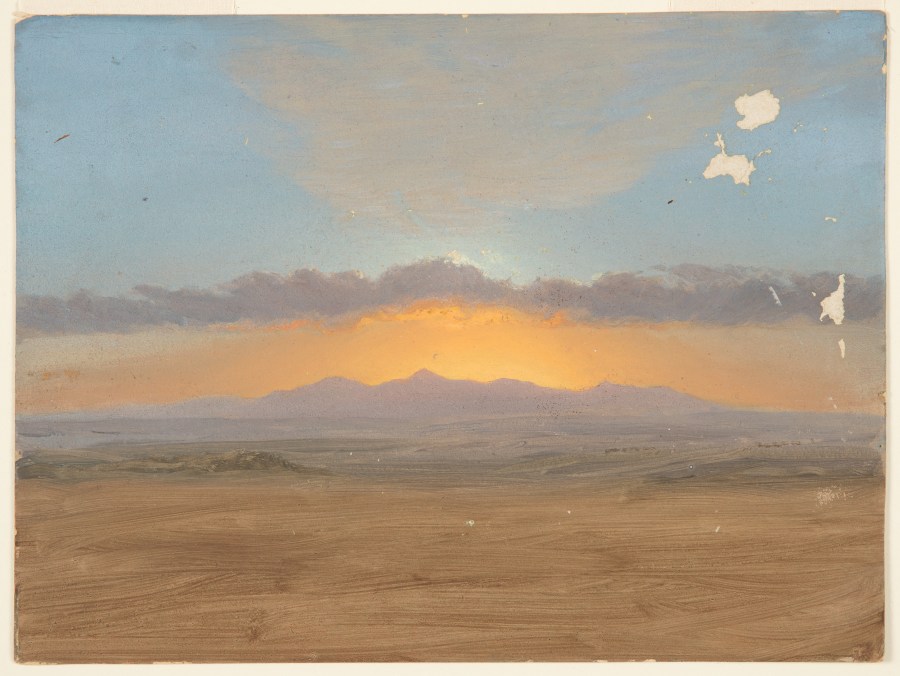
Featured Art: Sunset by Frederic Edwin Church

Too many women to count
rode behind him in helmets,
clung to his waist, wedded

to the wind in the dark
as the bike’s headlight pierced
the wooded hills, scaring

a deer, sending up an owl
in an explosion of wings.
I knew there were others

in line, grateful to share
one hour with the blue-eyed sun-god
worshiped for his light.

Always the nagging fear
he was never really there.
I saved his green bandanna for a year.


Read More

Prayer While Driving Home After My Yearly Physical

By Robert Cording

Featured Art: The Pink Cloud by Henri-Edmond Cross

Sixty-six, my shoulders rounded, my arches flattening, I am,
Lord, a small man, now a full inch shorter,
I’m told, than I once was. And so I pray

that my end-of-life diminishment might prove the occasion
for some late opening of my cramped borders,
this no-exit, small country of the self.

Lord, what I wouldn’t give for a lifting up,
to be free of this strange human gift of making
something less out of something,

each day stunting the fresh opportunity—
as your better servant William Blake saw—to become
the towering giant, the four-fold angelic power

you wanted us to be, if only we didn’t make ourselves
tiny with our incessant self-interest, our hearts
clamped around our enemies,

our narrow sympathies and unrelenting prideful gloom.
Lord, at every moment I have been a beginner,
lost in the bewildering wilderness of my ignorance.

Now that I am smaller, I pray that it will be
easier to recede from the center of my picture
and find this unexpected reprieve from vanity.

Let everything around me grow taller Lord
and more vivid, newly made, like these autumn maples
oranging the air, or this roadside red-tailed hawk,

its wingspan blinding as it crosses my windshield,
the road for a moment dark, then bright,
bearing me on, a small man nearing his exit.


Read More

The Stability of Floating Bodies

By Craig Bernardini

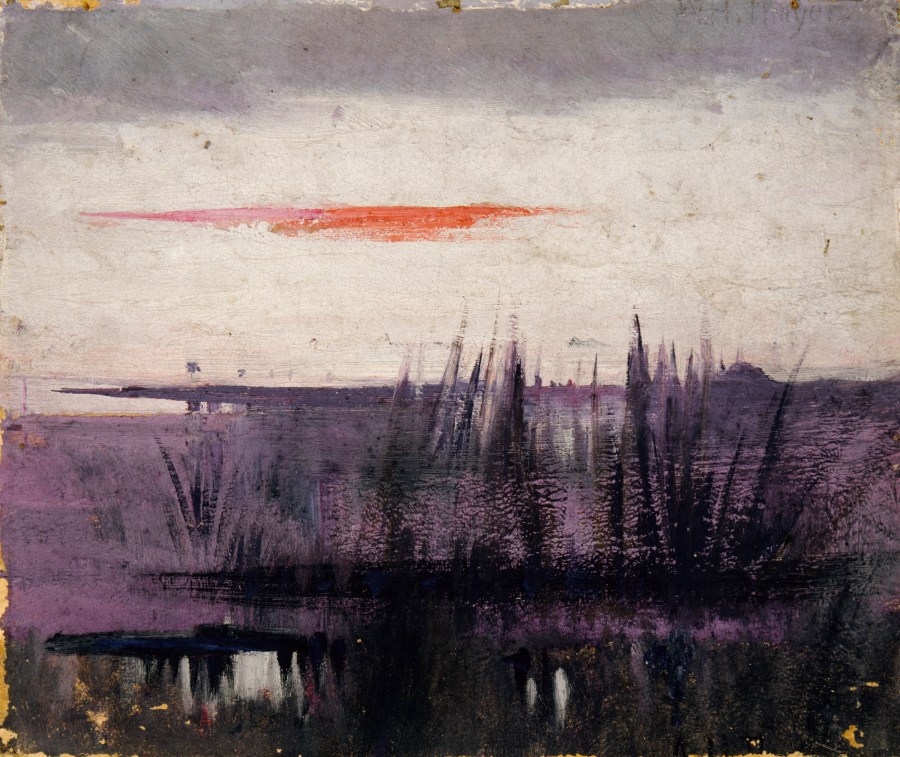
Featured Art: Dublin Pond, New Hampshire by Abbott Handerson Thayer

It was never my intention, when my father came to live with us, that he would live in the pond. Things just worked out that way. This was shortly after my mother died. My wife and I had never really spoken about what we would do in the event that one of our parents died. It had always seemed a little premature to have that discussion, at least where my parents were concerned. They were in their mid-seventies, enviably lucid, and as healthy, according to their physicians, as most Americans ten years their junior. But then maybe it always seems too early to have that discussion. Or maybe it was just that I could never imagine them apart. They had done everything together, my parents, gone everywhere together. There had been something almost tyrannical in their solicitousness about each other’s welfare. One day, it occurred to me that I didn’t have a single picture with just one of them in it. Were I ever to try to crop one of them out, the other would remain in the shape of the border traced by my scissors. Growing together, my mother had said to me not long before she passed, was the key to a healthy relationship; and grow together they had, like skinny trees, the trunks of which wound round each other in acts of mutual strangulation.

Read More

Little Red Book

By Jeffrey Harrison

Featured Art: Le Code Noir by Pierre Prault

I unearth it while cleaning up my office,
The Little Book of Common Sense Investing
that my father sent me two years before he died,
its bright red cover like an accusation,
a yellow Post-it bearing his cheerful
half-script still attached: “Jeff—even if you read
only the first part of this book, you’ll get the gist.
Return it some time, no hurry. Love, Dad.”
I chose to place the emphasis on “no hurry”
and hadn’t cracked its little crimson spine
when, a year later, he asked me what I thought.
When I told him I hadn’t gotten to it yet,
he said he wanted it back, so he could lend it
“to someone who might actually read it.”
“But I might still read it,” I said half-heartedly.
“No, you won’t.” Which made me all the more
determined not to read it, so I said fine,
I’d send it back. But I never did—and then
he got sick, and our investment
in that particular contest seemed pointless.

But here it is again, this little red book
so unlike Mao’s, as if my father were making
a move from beyond the grave. Okay, my turn.
Is it because I need to prove him wrong
even now, or that I want to make amends
belatedly for disappointing him yet again
that I open the book and begin reading?
Or am I doing it in his honor? And is he
still trying to tell me I invested
in the wrong things?—poetry, for instance.
“Counting angels on a pin,” he said once.
Which is just the kind of cliché I find in the book.
Later, though, he claimed to like my poems,
the funny ones at least. And if we drew a graph
of our relationship over his last decades
it would look a lot like the Dow: a steady ascent
with several harrowing jagged downward spikes.
The little red book says nothing about those,
though it does advise not getting too caught up
in the market’s dramatic nose-dives.

Unless, perhaps, you’re trying to realize
your loss—another topic that the book,
with its rosy perspective, blithely avoids
as it enthuses on “the miracle of compounding.”
But instead of getting annoyed I feel an odd
joy: my father could have written this book.
He too was an optimist who liked to talk
about money, and so I used to ask him questions—
What’s the best kind of mortgage to get? Is life
insurance a good idea?—and those led
to some of our least fraught conversations.
That’s why he gave me the book. And he
was right: I get the gist after two chapters.
And the suggestions seem helpful, if limited—
I even underline a few sentences.
Still, that other book, the one about losses,
would be more complicated, and harder to write,
its author finally coming to understand
that, no matter what the future brings,
he won’t be able to ask his father’s advice.


Read More
Sky

By Luiza Flynn-Goodlett

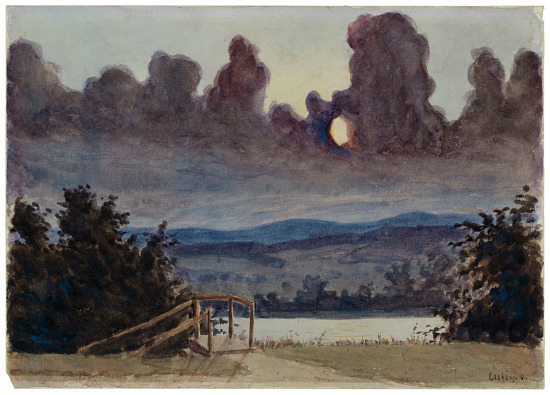
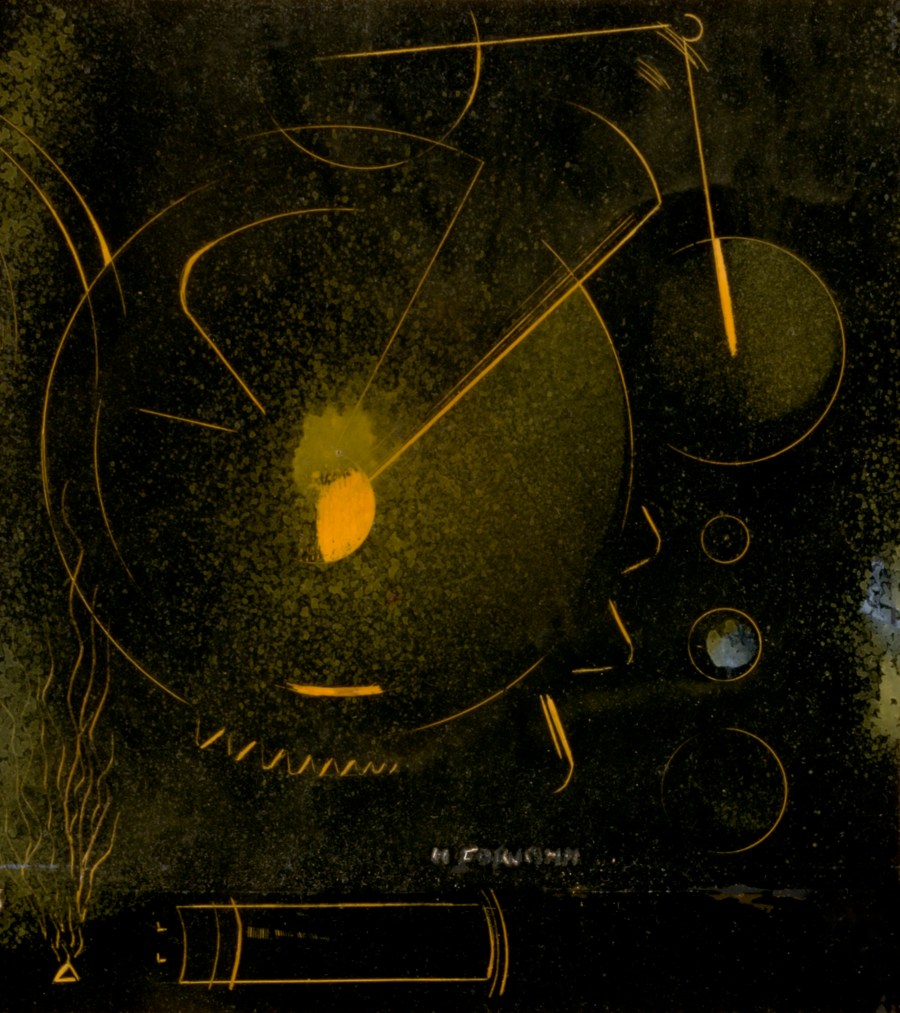
Featured Art: Dark Clouds by Louis Eilshemius

The caul we’re born beneath, its gaze drives
mystics to fits. Constant as parents never are,
it blinks back cumulus to examine us, offers
no opinion. Unlike old gods, nothing troubles
it—rains withheld, not censure, just drought.
Some tire of scrutiny, shelter in offices, under
newspapers. It doesn’t mind, proffers an open
eye to all—the seabirds that caw at its margins,
delayed ships, the drowned who clawed toward it.


Read More

Black Ants

By Fay Dillof

Featured Art: Crumpled and Withered Leaf Edge Mimicking Caterpillar (study for book Concealing Coloration in the Animal Kingdom) by Emma Beach Thayer

Unable to sleep,
I imagine a blob
of ants, erupting
from a faucet.

If they puddle,
that will mean sleep.

But if each ant
descends on a crumb,
steals what it can
and lumbers robotically off,
which they do,
branching in veins across the tile floor,
then I’m left
listening to the sound
of my two sisters
downstairs
in the summer kitchen
where they’re making
my mother laugh
without me
again,
carrying their prize
over invisible trails.


Read More

Etymologies

By Krista Christensen

Featured Art: Abstract — Woman by Carl Newman

It is out of a need for precision that I search for words, wading through thesauri and dictionaries and -pedias, crawling into the tunnels of -ologies and -onomies and -ectomies, mining deep for a more accurate reflection of self than dry medical terms like bilateral salpingo-oophorectomy.

I’m not even sure how to pronounce that last word, though it’s a thing that’s been done to me. Perhaps the two o’s bleed together into one sound, like the two o’s in moon, my two ovaries like white orbs hovering in one sky: oophorectomy. Or possibly the two o’s mirror the guttural softness of the pair in brook, like the one tinkling through the lot behind my home: oophorectomy.

When I look it up, I find that both o’s get equal play. Medical dictionaries give the pronunciation oh-uh-for-ec-toh-mee. A perfect irony that even in sound, the two o’s are piled on top of one another in the beginning of the word, as if there are more than enough to go around. There’s a sense of excess, of plenty and abundance, when really the word is all about what’s missing, about evacuation, about empty space. An O, a zero, the absence of value.

Nothing is ever straightforward in female anatomy. Even using the term hysterectomy, a casual term in comparison, brings up more questions than it answers. Repercussions of this surgery are nebulous, confounding: it could mean that a woman has lost just her uterus, but kept her ovaries, and so would not need to make the choice between synthetic hormone therapy or instant menopause. Even if a woman loses just her uterus, it’s possible she’d keep her cervix, that her vagina wouldn’t be sewn shut at the top, that she wouldn’t become a dead-end, a U-turn, closed for business.

For me, the word hysterectomy doesn’t begin to cover it.

Read More

Lieu d’hiver mémoire

By Angie Estes

Featured art: The Sky Simulated by White Flamingoes (study for book Concealing Coloration in the Animal Kingdom) by Abbott Handerson Thayer

You can find them each year
               for a brief while only
in winter—a drop of red and yellow
                              sealing wax dashed at the end of
               their stems to prevent the loss
of moisture—because the squat,
              copper-russeted pears of the ancient
variety Passe Crassane will not ripen
                             on the tree no matter how long
              you let them hang, as if they had taken
St. Catherine of Siena’s advice
               to Make yourself a cell in your
own mind from which you need never
                              come out, the way the goldfish
                on late autumn evenings
circle all night, flicking
                their tails in the fireplace.
What kind of pear is
                              sweetest? Bartlett, Seckel,
                Comice? Oboe d’amore—mezzo-
soprano of the oboes—is Armagnac
                brown, its mouth, a pear-shaped
opening. Autumn is so oboe,
                               but then winter is near, so close
                to hinter, to did you ever, no
never, to once I might have
                tried. En hiver it might
as well be hier, but who are
                               the dead of winter, are they
                the same as the dead of night?
In the Lumière brothers’ black
                and white film, le trottoir roulant
carries Parisians on its rolling sidewalk
                                across the bridge to the Exposition
                of 1900. We watch them move
toward us, though like Hamlet, they never
                take a step: “If it be now, ’tis not
to come; if it be not to come, it will
                               be now; if it be not now, yet
                it will come.” Our 1955
turquoise and white Pontiac smiles
                in the snow while my mother finishes
dressing for church. Stationed
                                in his suit and tie, my father rests
                his hands on the steering wheel
as the car idles and warms,
                while in the back seat, my brother
and I wait for my mother
                              to appear, our breath rising
                like smoke signals.


Read More

Stick Season

By Sydney Lea

-For Peter Gilbert

The one that precedes my season is the one that always shows
in those quaint calendar photographs, the one that brings the tourists
to a scene that is sumptuous, granted—exorbitant on the sidehills,
most of the leaves incandescent, drifting or plunging downward
to scuttle along the roadbeds like little creatures reluctant
to be seen, yet wanting us to notice them after all.

But give me this: middle November, season of sticks,
of stubborn oak and beech leaves, umber and dun, which rattle
in gusts that smell so elemental they stab your heart.
The trees—the other, unclothed ones—are standing there,
gaunt but dignified, and you can look straight through them
to the contours of the mountains, stark, perhaps, but lovely

in their apparent constancy. That gap-toothed barn
houses space alone since its owner died. Do you remember
Studebakers? That’s one over there, a pickup truck,
flat-footed among the sumacs. Painted green way back,
these days it has taken the hue of these later leaves I love.
Old age has changed the mountains too. They’re rounder now

than once, worn smoother. Everything is for a time.


Read More

Good for What Ails You

By Elton Glaser

Featured Art: Winter, Monadock by Abbott Handerson Thayer

                                                                                                  He too would live: like the rats among the ruins,
                                                                                                     but nonetheless alive.
                                                                                                                                  —Antal Szerb, trans. Len Rix

It’s the first fresh day
After a winter so hard
I disappeared inside myself,

Nothing out there but cardinals
Like drops of blood against
The creamy desecrations of the snow.

Ah, there’s the shit we need,
And the shit we don’t need,
And the shit we end up with.

I seem to be returning to
Some form of infantile intelligence,
On the sloppy side of the brain:

Mumblings over the oatmeal, nights
Broken by clumsy sleep, hands
At the mercy of small machines.

We come out of nowhere, and we go
Into nowhere. Should I stick
My fingers in my wounds,

Like a good little Dutch boy?

Even in the barren precincts
Of the cold, there must be love,

Though love does not travel well—
It needs its own terroir,
A discipline of flinty soil where

The roots struggle, where they work
Hard in the hot sun, until
Deprivation makes the fruit sweet.

And what wine will I have?
Here, at the open edge of things,
I’m like a spruce that hugs itself

Against the ice and the night wind.
But sometimes there’s comfort
In the certainties of burlap, and more

Sure footing on grit than marble gives.
And even a thin sun feels warm
After three dead months deep below zero.


Read More

A Meadow

By Lee Upton

Featured Art: Autumn (L’Automne) by Arthur B. Carles

The wife isn’t supposed to know, but Lucy knew. She knew about her husband and her best friend, Maria. Had known for nearly two years. And now Maria’s brother—a stranger—was coming to visit. Did he know about Maria and Owen? Did he think he was visiting to reveal the affair, to confess on Maria’s behalf? Lucy hoped not. She would resent that.


Lucy got the news from Owen before he left for work. He turned at the front door and told her—as if he almost forgot something so important. He didn’t want to be late, and so there wasn’t time to talk. She followed him outside.

“He’s coming? When?”

Read More

Phone Call

By Stephanie Rogers

Featured Art: Figure with Guitar II by Henry Fitch Taylor

When I got the phone call, I listened
to my sister’s voice give
no hint, at first, that overnight,
like that, her life had changed.
I said hello and flipped through
a book on the nightstand, knowing
deep down, from all my missed
calls, that she was preparing
to tell me something
important. How are you? I asked,
trying to delay what I knew already
I didn’t want to hear. And after
her silence, then, I sat straight up—I was still
in bed—my eyes blinking
awake, the automatic
coffee pot dripping into the quiet,
and I said it: What’s wrong, Heather?
expecting for one singular moment the death
of our father, the sniffed
pills, the heroin finally ending
his life. But when she said
nothing, I demanded, this time, hearing
the pitch of her voice fill with the sound a brass
instrument might make breathing
a low note, barely
audible, into the crashing,
noisy universe. And she said it: Joel killed himself
last night, choking
on “killed,” and when I said, Oh
my god Heather
oh my god, she understood, she told me
later, for the first time,
that her husband was never
coming back. The sun peeked through
the window blinds. It flashed across
the framed faces of his daughters, who I pictured,
for a second, on the swing set
behind their house, their father pushing them
higher each time they swung back to him, further
away each time, further away.


Read More

We Remember You for Now

By Stephanie Rogers

Featured Art: Figurative Abstraction by Unknown

Now when my heart beats, it sounds like
crunched leaves skittering, the revving up

of a broken-down Honda. I can’t visit him
at a cemetery, or even the park. Scatter

my ashes there, he asked, and then injected
god knows how much, enough to warrant

a coroner call. Hahaha. Joke is Heather said nope,
stuffed and stored him in the back

of our mother’s closet. He lives there now,
sucking up the radiator heat. Joel, damn,

man. Come back and lick the spilt fizz off
the Budweiser can again. No one here

is going anywhere if I have a say, and how
didn’t I have a say with you? You plunged,

you syringed, each time needling—gentle,
I hope, as my grandmother crocheting

a winter hat for your oldest girl. I won’t
for long torture myself for you, I thought,

biting into a string of candy hearts around
my neck, your kid insisting, eat it, the sick-

sweet sticky hands of a two-year-old with
a dad resting inside a shoebox next to

a bowling ball. You did it. Congratulations.
I’m elated. I’m devastated. I’m a copycat

singing your songs to your girls to sleep.
Listen, creep: we remember you for now,

but now is a ragged dog, dragging its bum
leg along the buzzing halls of a new house.


Read More

Necessaries

By Tina Tocco

Featured Art: Still Life by Earl Horter

We’re in Omaha when I know. You’re out bootlegging—running, you call it—for that man from Tinker’s, a deacon at First Baptist, he says, though his name is Kinsky. I curl on a cardboard cot imagining my quilt from Pomeroy’s when the big Chicago woman, hair steam-strung from the laundry pots, stands downwind. “Only two reasons to stay with a man, but only one to stay with a man like that.” She has brought the necessaries. They clink in a feed sack the pattern of girls’ dresses. There is not much for me to do, but I do it quietly. It’s one jug of Tinker’s mash for quietly. The Boston girl, she warns, paid three.


Read More

That Boy’s a Catch

By Tina Tocco

Featured Art: Country Road in France by Henry Ossawa Tanner

“Your daddy and I just figured all this nonsense would be over by now.”

My mother has just dropped six spoonfuls of instant coffee into a mug filled with hot water from the bathroom sink. Her spoon chinks and chinks and chinks and chinks the side with the chip. I sip the tea I brought from Berkeley.

“You’re thirty-one, Tanya Grace. I hope someone’s told you what that means.”

My father has read what he can of the newspaper. He has shaved off the end of his pencil and is circling the houses locked in foreclosure. He and Uncle Rex can be in and out in under an hour, the knobs and faucets silent in the sacks my mother sews.

“Four sweatshirts wide,” she used to tutor, “so the stuff don’t clang so much, like.”

Read More

Timestamps

By Katie Condon

Ten hours ago, Adam Liddy liked my profile picture
alone in his Asheville apartment. My brown eyes coaxed him back
seven months to Bread Loaf where I pulled him by his shirtsleeve
onto the dance floor in the barn; poured him a shot of bourbon; shared
a blanket on the porch; asked him to close the flue of the woodstove
at the party because it was getting too hot. He must’ve remembered my
laughter as I climbed onto the puny wooden raft at midnight to listen to him
describe what being suddenly lusted after by many women feels like
& how he would never cheat on his girlfriend. Never, he said.

Nine hours ago, from his solitude in Asheville, Adam Liddy
wrote me an email to catch me up on his life: his non-existent & therefore
perfect teaching load, his Camargo Fellowship, & his recent breakup.
What he didn’t write but wanted to was that he’d convinced himself
desire isn’t tangible unless you act on it—that when we climbed into the trailer
storing the left-handed desks, that when I sat down in one & looked up at him,
just before a security guard shined his flashlight onto my shadowed face,
desire wasn’t thrashing around like a snake under his boot.

In the trailer seven months ago, what I didn’t say but could’ve was, Adam,
I’d never cheat on my boyfriend, either—& I wouldn’t.
But there’s nothing wrong with getting off on the shape tension takes in a
   small space,
with lifting your eyes up over the wall you’ve built & named Life
to see how you might be different.

Adam, there’s nothing wrong with desiring what you know you can’t have—
nothing wrong with playing with potential
like a housecat plays with a bird it won’t mean to kill.


Read More

The Present

By Billy Collins

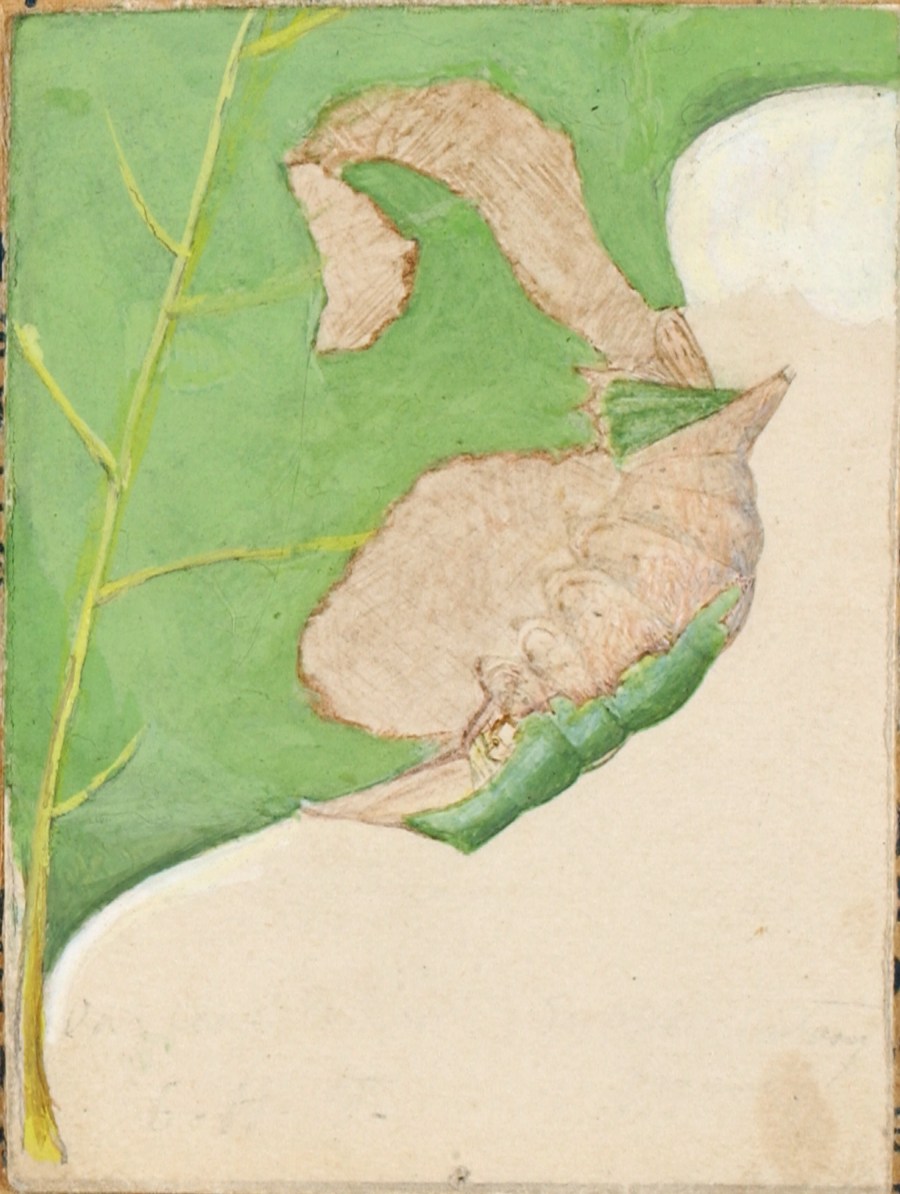
Featured Art: Oak Leaf Edge Caterpillar (study for book Concealing Coloration in the Animal Kingdom) by Gerald H. Thayer

Much has been said about being in the present. I
t’s the place to be, according to the gurus,
like the latest club on the downtown scene,
but no one, it seems, is able to give you directions.

It doesn’t seem desirable or even possible
to wake up every morning and begin
leaping from one second into the next
until you fall exhausted back into bed.

Plus, there’s the past to wander in,
so many scenes to savor and regret,
and the future, the place you will die
but not before flying around with a jet-pack.

The trouble with the present is
that it’s always in a state of vanishing.
Take the second it takes to end
this sentence with a period—already gone.

What about the moment that exists
between banging your thumb
with a hammer and realizing
you are in a whole lot of pain?

What about the one that occurs
after you hear the punch line
but before you get the joke?
Is that where the wise men want us to live

in that intervening tick, the tiny slot
that occurs after you have spent hours
searching downtown for that new club
and just before you give up and head back home?


Read More

A Box of Records

By James Haug

Someone placed a box of records by the curb because it was hoped that someone would want to take them away. They’re records no one wants but maybe someone will want them. Someone driving will stop. Someone walking will stop. That is the pleasure of looking through records. Then the sun clears the tree across the street and shines on the records and makes the colors of the record jackets festive even as it robs them of their pigments. Someone will stop and rescue them from the sun. Someone will look up at the empty house behind the box of records at the curb to see if someone is watching. The people on the jackets smile and smile with their best hair, maintaining resolve all night in a box by the curb. Someone will stop and bring them home and listen to what they have to sing. Someone will carry them off out of the rain. Someone will spread them on the grass to dry.


Read More

My This, My That

By Sarah Brown Weitzman

Featured Art: Paris Bridge by Arthur B. Carles

To live in the moment is probably good advice.
What else is there but the now
of which nothing will remain but memory
already fading and unreliable.
My past is a pile of losses: parents, pets,
childhood, a hometown, ideals, and god.
Born to a countdown yet I make claims
to “my this” and “my that.”

But what can we ever possess?
Last night’s symphony, the blurred faces
of our dead, the way the wind slid
through the dogwoods of youth
are what we may possess just as the sun
possesses the windowglass it shines through.


Read More

Pie

By Micheal Chitwood

Featured Art: Main Street, Montreal by Louis Wiesenberg

That his old Impala still ran
was a miracle. The blue puff of exhaust
and the way the engine rattled on
for a minute or two when he turned off the ignition.
A miracle. He shaved maybe once a week.
And his clothes. The wrinkles and stains
held them together.
But he came to the diner every Tuesday.
Where he got money no one knew.
He would nurse his black coffee
and have a piece of pie.
He wanted to talk about God,
mostly to the county deputies having lunch,
who talked to him as a way of keeping an eye on him.
“God’s grandeur is in his silence,” he told them.
“And the silence is immense and not all that quiet.”
He looked into the bowl of a spoon
as if he was looking into a river.
The deputies joshed with him.
They told the waitresses he was harmless
if a bit ripe.
There was plenty of coffee.
Sometimes a waitress would give him another wedge of pie,
cold lemon, warm apple with a dollop of whipped cream.
The deputies paid, winked, and left.
The leather of their holsters squeaked.
Outside, the afternoon filled the sky.


Read More

Safety

By Catherine Carberry

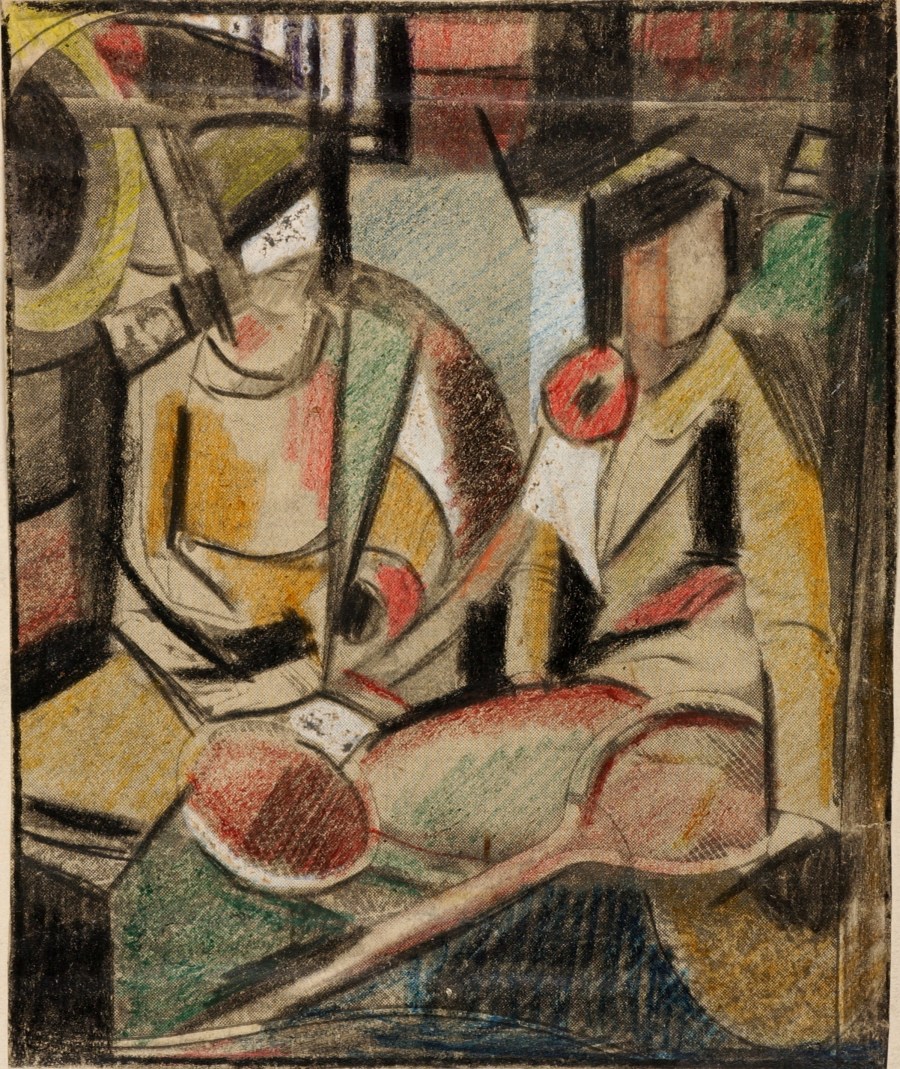
Featured Art: Abstract – Two Women With Tennis Racquets by Carl Newman

When we came to Montana we weren’t going to be cooks, but that’s how we ended up. Blair got me the job, she’s the real chef. In the kitchen, after the Eggs Benedict disaster, I mainly swat flies and hang amber strips of flypaper from the ceiling. The goal is to keep moving to outpace the flies. They’re everywhere and some of them bite.

Blair and I work together on this farm, feeding the owners and workers. Two of the workers are Mexican and the others are drifters with invented names: Bill, Bird, Slim Jim, G. The Mexicans are called León and Ernesto and say they’re brothers but they’re pulling our leg. They don’t know that when Blair and I lived in Whitefish for six months before our money ran out, we told people we were
sisters. We thought it would help us somehow, that the sister game would give us some footing and a tangible backstory, but it didn’t attract too much attention and Blair never found a ski instructor who would love her. By that time, it was too late for either of us to go back to our husbands. Just as we were losing momentum, Blair saw a sign posted for a cook on a farm only nine miles away. The job came with some money and a private trailer. She talked to the owners and convinced them to take both of us for the same pay. We’ve been here since then, avoiding the question of what we’re doing and when we’ll leave.

Read More

Depleted Uranium and Other Facebook Posts

By Okla Elliott

Featured Art: Evening Tones by Oscar Bluemner

We read about depleted uranium
and try to imagine the scientific facts
about depleted uranium.
What does depleted even mean in the context of uranium?
So we Google it and learn something horrendous.
Or rather something interesting
that has been turned to horrendous purpose.
And so we join a protest against depleted uranium
even though our friends tell us there are more pressing
matters right here at home. How can you post
on Facebook about depleted uranium?
our friends ask.
And so we post on Facebook about whatever
our friends have told us is most important to post
on Facebook about, and people stop thinking
about depleted uranium, though it still decays
its way into the cells of Iraqi children—and adults too,
but it is less effective to post on Facebook about the suffering
of adults, so I’ll only mention the children whose lymph nodes
and livers and lungs are mutating
due to depleted uranium. Or rather, I won’t,
since my friends tell me there are more pressing matters
here at home.


Read More

Chemistry

By Micheal George

Featured Art: Steps by Manierre Dawson

Sunday at one o’clock, my sister Denise arrives at my father’s house in Elizabeth, New Jersey. We don’t hug; I know that many siblings engage in this ritual, but it’s never been our way. Instead we share a kind of wry, shy smile, a brief flash of eye contact that’s almost like flirting. I ask her how she’s doing, and she says she’s great.

“And Dad?” She nods toward our father, who is reclined in his La-Z-Boy, watching the Cooking Channel.

“He’s great too.”

Denise doesn’t ask about me; such questions we probably both understand as unnecessary formalities. I can see through the window of my father’s one- story bungalow that her camera crew has arrived behind her, and are unloading equipment.

Read More

Night Blind

By David Yezzi

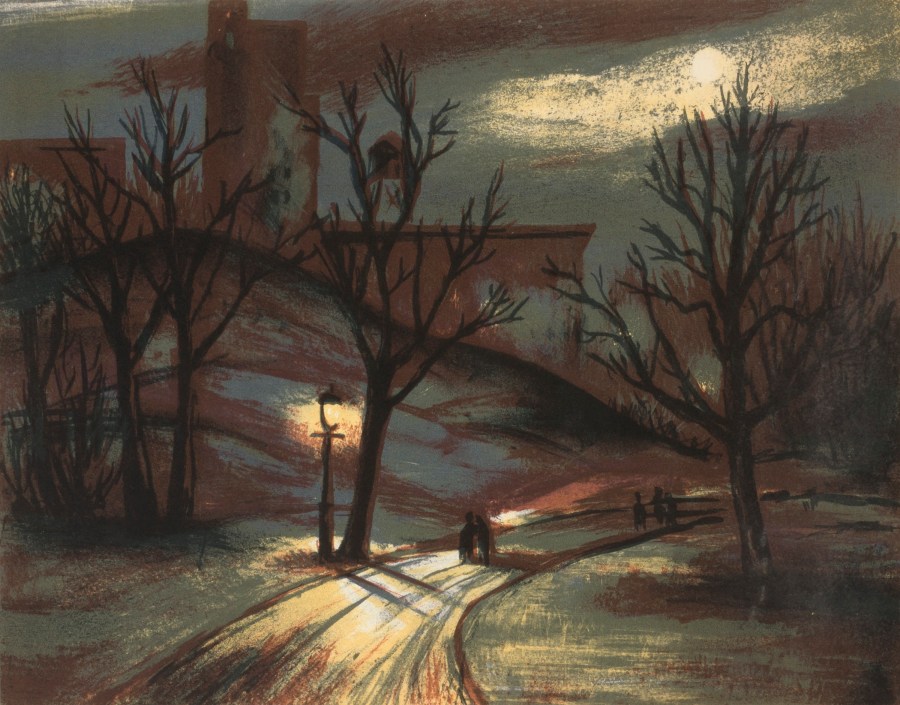
Featured Art: (Untitled) Nightscene of Park in a City by Unidentified

There’s a spot
at the top
of the street,
where the lamp

is out, that’s
the darkest
part of the
block. I don’t

go that way
at night, though
it would be
all right,

I’m sure. No one’s
there, just
a chained-up dog
in the damp air,

and branches
too dark to see
like black water
churning.


Read More

Aubade

By David Yezzi

Featured Art: (Untitled) City Scene with Playground by Unidentified

Some mornings I wake up in my old house,
half-conscious, squinting at the seam of light
gilding the edges of the flowered curtains.
I can imagine—actually feel, in fact—
that I am back there, where three flights down
the city’s up before me making noise:
a woman in green unchains the gated park
and the cross street fills with taxis. The light turns.
And in my half-lit bedroom, I am held
by a taut web of untold activity.
It surrounds me and carries on without me.
I breathe it in, smiling, lightened somehow.
For a moment then, I recognize myself,
before I’m back here where not all that much
goes on and the day begins its long goodbye.


Read More

Face to Face

By James Lineberger

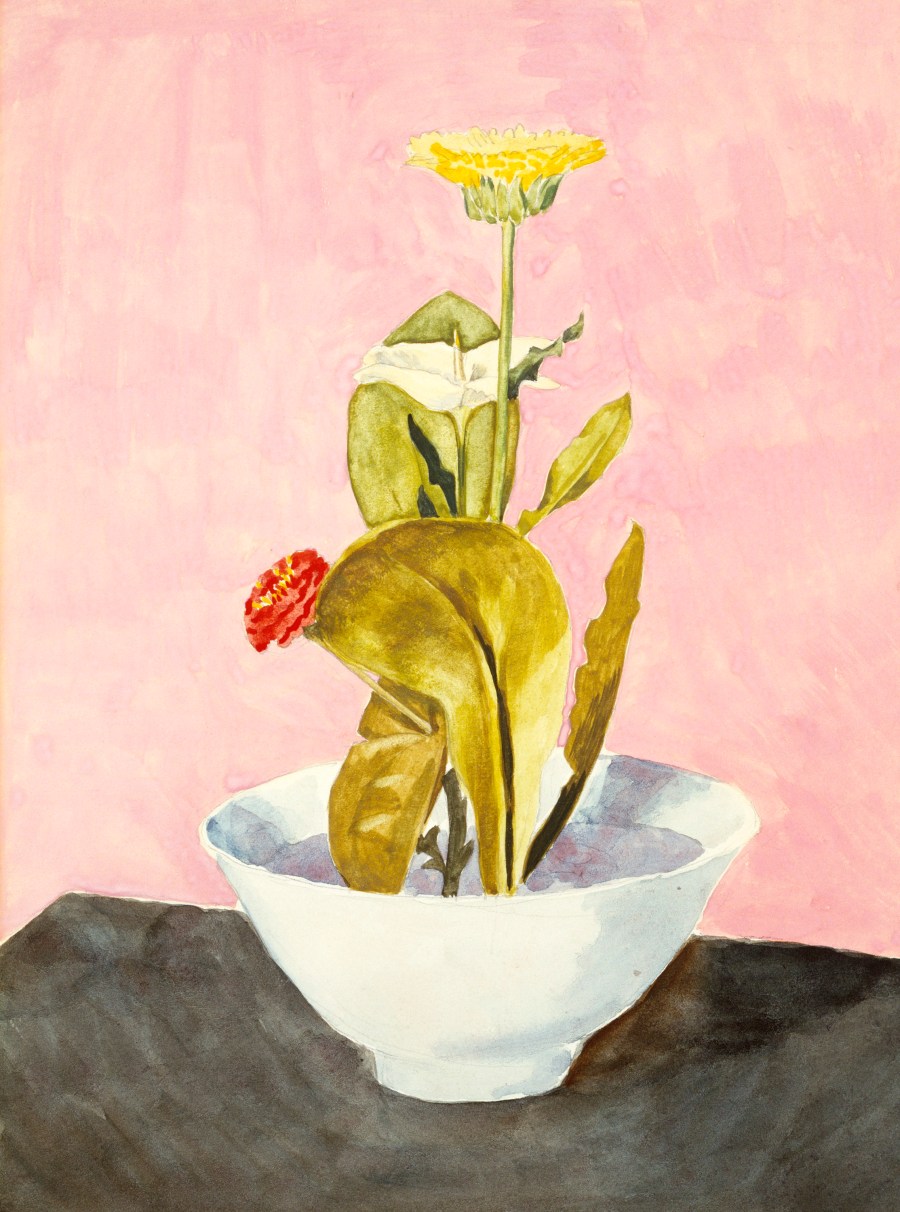
Featured Art: Bowl of Flowers by Morton L. Schamberg

Back when our son died
I already suspected
that you and I would be having these
conversations sooner or later
but what I had not anticipated was your laughter,
the role-playing and costumes
and all the faces-on-parade,
as if you can’t decide which one to wear,
for there’s hardly a moment
when the one I’m talking to
is not some other you
like last night before I even had my apnea headgear
fastened securely
there you were peering at me up close
through the plastic mask,
only suddenly you weren’t you at all
but the image of my father
struggling to maintain his balance as he pisses
on the kitchen floor,

which forgive me I have a hard time accepting because
just ask yourself,
how are we supposed to have a serious conversation here,
where I come begging your forgiveness
for all the years of pain and deception you were married to,
when geez louise I just be damned if I owe that falling down alkie bastard
a single goddamn thing hear me
and answer me this:
if you’re so content being wife and daddy and everybody else,
what is it in there that sends out
your bird calls,
wears the hoodie, conveys itself behind the arras
and summons forth every one of you
who?


Read More

Here’s My Love Poem

By James Lineberger

Featured Art: Flowers from the Mesa, by Mary Vaux Walcott

If I didn’t love you
would I stand
there holding the car door so you
don’t hit yourself in
the head with it no I could just
step back and let it
happen and who would know the difference
except me cause you wouldn’t
remember what
went on anyway and when
we finally hobble inside Hardee’s with you
holding on for dear life until
I get you seated while
I order and then I surprise you by
bringing us a couple of cinnamon raisin
biscuits you think if I didn’t
love you I would sit there unprotesting while
you ignore your bacon and eggs
and gobble down both cinnamons dripping
the icing all over your fingers
and brand new sweater
you insatiable self-centered helpless child
what else to do but
dip a napkin in my water cup and wash your hands
until you start to cry saying why
don’t you just leave me I’m not worth anything to anybody
and I say me too


Read More

Old Married Couple

By Robin Messing

Featured Art: (Untitled–Group of Flowers) by Mary Vaux Walcott

They couldn’t part with things, so in the end, they lived with everything. Two toaster ovens, two coffee makers, two waffle irons, two sets of dishes, two couches, two coffee tables, two beds. Their former spouses would not have tolerated it. But together, something different happened.

Ben toasted an English muffin in his toaster oven, and Sophie toasted a piece of leftover challah in hers. Ben poured coffee from the percolator pot that his former wife, Edna, had bought decades before at a hardware store on Avenue J. Sophie brewed coffee in a Mr. Coffee pot that her former husband, Sam, had purchased after their glass percolator pot, slippery with soap, splintered in the sink when Sophie dropped it.

Sam died first, four years earlier. Six months later, Edna passed, both from cancer. Two years ago, Sophie and Ben married—a small ceremony in a shul on Coney Island Avenue.

Read More

They Used to Be So Valuable They Were Free

By Susan Blackwell Ramsey

Featured Art: 2019 Ohio State Map by Ohio Department of Transportation

Road maps may have gone to slide-rule heaven,
      but they were king. Swelling huge in glove compartments,
refusing to be refolded, snickering
      as we wrestled them wider. Marriages
foundered: thin lips, insults, tears,
      shouts as The Map went hurtling through the window
to pirouette in the car’s diminishing wake
      before drifting down to tent the roadside weeds.

Now GPS. Oh, there are always holdouts,
      Luddites who cite the morons who drove off cliffs,
glitch-guided, who claim it’s lousy in the Loop.
      And I grant that maps are glamorous, the world
wide in your lap, manageable, all places
      there simultaneously. Your past. Your future.

But that paper map can’t tell you where you are,
      which is half of navigation. Wasn’t that
always the problem? By the time you’d figured out 
      where you were and found it on the map,
you’d missed your exit. GPS lives in the moment.

Sometimes the good ones let you look ahead,
      pan out, zoom in, even overlay
a bird’s eye view of real trees, rivers, rooftops,
      but the beating heart is still that small blue dot,
like our planet seen from space, that stands for you,
      and the quiet voice that guides you through confusions,
absorbing your mistakes without reproach,
      recalculating a way to bring you home.


Read More

Query

By Sandy Gingras

Featured Art: Vase of Flowers by Unidentified 

(double space between paragraphs and indent throughout)

Use polite address: Dear Mr. Neil Augustus,

      How you picked aforementioned specific agent: I met you at a “A Hook for Every Book” writing workshop at the Holiday Inn and we made an interpersonal connection: At the opening reception, we both took an orange cheese cube from the buffet, and I said, “Hi.” I hope you remember me.

      Show that you’ve read this specific agent’s guidelines: I wrote 75,000 words exactly and used the font, Times New Roman, just the way you said to. Plus, I took out all the mentions of Tarot cards, trailer parks, and vampires in my book as your guidelines say you have a thing about them. I also spell-checked.

      Your novel is about: a serial killer. The sub-plot is about: another serial killer. It stands out from other novels in this genre because it has: two serial killers in it. Also, it has some good recipes. Your novel’s title is: Bodies and Brownies.

      The main character is: me except with shorter hair. The essence of the story is: I almost get killed a bunch of times and all sorts of hijinks ensue, but, in the end, I don’t die. So, no worries.

      The setting is: a hot climate. But I’m flexible and could switch it to a cold climate if you want that, Mr. Augustus. I’d just have to change the characters’ clothes and add snow and stuff.

      Your style of writing is: extremely marketable. Your novel compares favorably to: all of Stephen King’s novels. I’m like a female version of him, but I’m unique because my book is in all my own words.

      You are equipped to market your novel because: I enjoy travelling to other locales, particularly tropical vacation spots. For example, Orlando, Florida and/or The Bahamas. Your blog reaches: potentially millions of people worldwide.

      Who will like this novel? I know most people usually only read nonfiction nowadays, but I know plenty of people will like this fiction novel because it seems like it really could have happened.

                                                                                                            Sincerely or Respectfully,
                                                                                                            Your full name goes here: Ima Case


Read More

When We Were Neanderthals

By Chrys Tobey

Featured Art: Peacock in the Woods (study for book Concealing Coloration in the Animal Kingdom) by Abbott Handerson Thayor & Richard S. Meryman

I hunted deer for you. I scratched your back with stone tools
and we swaddled each other in fur from sabre-tooth cats

and laughed as we said, burp me. We’d say things like, You know
what they say about a large cranium.
I’d chase a woolly mammoth

just because you thought it was sexy. We’d snort chamomile
and talk about how after we’re dead others will ponder our

big toes and our inability to ice-skate. When we were Neanderthals,
you’d make me necklaces of shell, and because this was a few years

before the Pill, we had a kid, but because this was also a few years
before the Catholic Church, we eventually mastered when to pull out.

When we were Neanderthals, we had no buses to take, no offices
to be at, no flights from Germany to wherever. I was never

lonely. You’d run and hide in the woods and I’d try to spot you.
We thought the stars were ours. We thought the earth was square.

We thought the sky was a song, and then the Homo sapiens came.


Read More

Like a Fish Needs a Bicycle

By Ösel Jessica Plante

Featured Art: Group of Abstract Nudes by Carl Newman

There is something crooked about his mouth,
and though he’s obviously going to go bald soon,
his eyebrows are like kind, squat
temples above his eyes, one pupil dilated slightly
more than the other. This is what’s it’s like
to be single—to stare at a picture of a man online
and wonder, what does he smell like? What
would it feel like to wake up beside him
after two years of living together? I want
to believe that all relationships are mistakes
waiting to happen, have that built-in obsolescence
and are the reason why I finally like that saying
about the woman, a fish, and a bicycle. I like
imagining that fish upright underwater with its fins
spinning in loose circles the same way we pedaled
our feet in the air today during yoga to warm up
our thighs. Love’s made a fool of me once
too often. It’s like standing over a car engine—
I don’t know the rules for recalibrating
or even how to change the oil. It’s just that
every man looks like laundry and concession, even
the doctor with great abs my sister tells me she’s seen
at the soccer field with his son. I wonder if he wakes
in the morning and cooks his kid oatmeal,
I wonder where his ex-wife is now and whether she’s felt
it, how love is at first a greening, how even the bright
trees shuddering their shadows across our faces seem
a delicious sensation, I wonder that we’re able to hold
in abeyance the blade that will come to cut away all
that softness and leave in its place the ribs of something
enormous like the hull of a shipwreck, love having split
a way for something new, the bones of the world exposed.


Read More

Critical Learning Period

By Chelsea Biondolillo

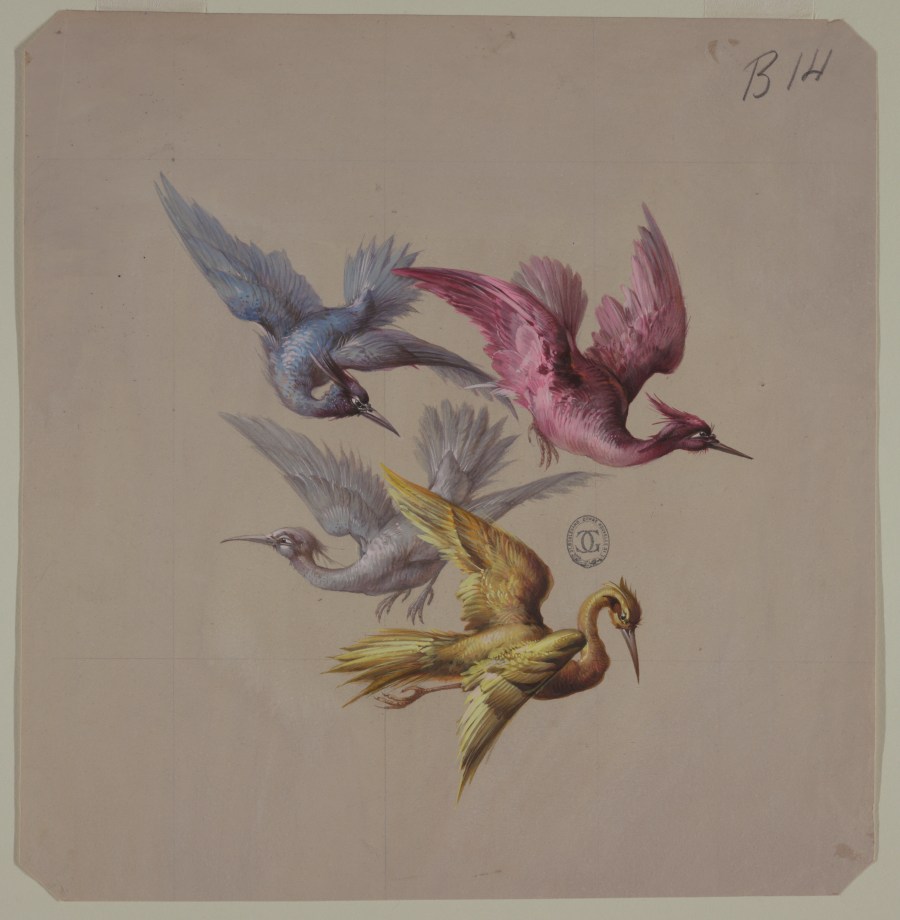
Featured Art: Designs for Wallpaper and Textiles: Birds

1. CRITICAL LEARNING PERIOD

Songbirds, or suboscine Passeriformes, with fixed song repertoires learn to sing in four steps. The steps are studied, in part, because many linguists believe that these same four steps describe human language acquisition.

The first step in song acquisition is called the critical learning period. This is when chicks begin to recognize their parents’ voices along with neighbors of the same species, and they differentiate between those voices and other sounds.

*

My parents were married for three years before I was born, and they lived together for almost three years after. The shape and sound of their love is unknown to me. I have no idea how he courted her or when the courting became something else. I do not remember the words they spoke to each other in the days and months while I lay in my crib, listening.

I know what my mother said to me and what I said back. These are stories I’ve heard often. Before I could talk, I had night terrors, she tells me. I would scream inconsolably in my sleep. The pediatrician said this was normal for some babies. She tells me about the day I choked on bottle milk while lying in my crib, and how the sound of it sent her running to me; how afterwards, I would choke and gag whenever I wanted her to pick me up. It was a sound she could never ignore, she says, eyes squinted theatrically at the memory of my manipulation.

I would stand in my crib and yell (so early! so advanced!) MOM. MOM. MOM. MOM. And then one day, after a moment, DARLENE. I wonder, now, if I sounded like my father when I said it.

Read More

Bank Shot

By Greg McBride

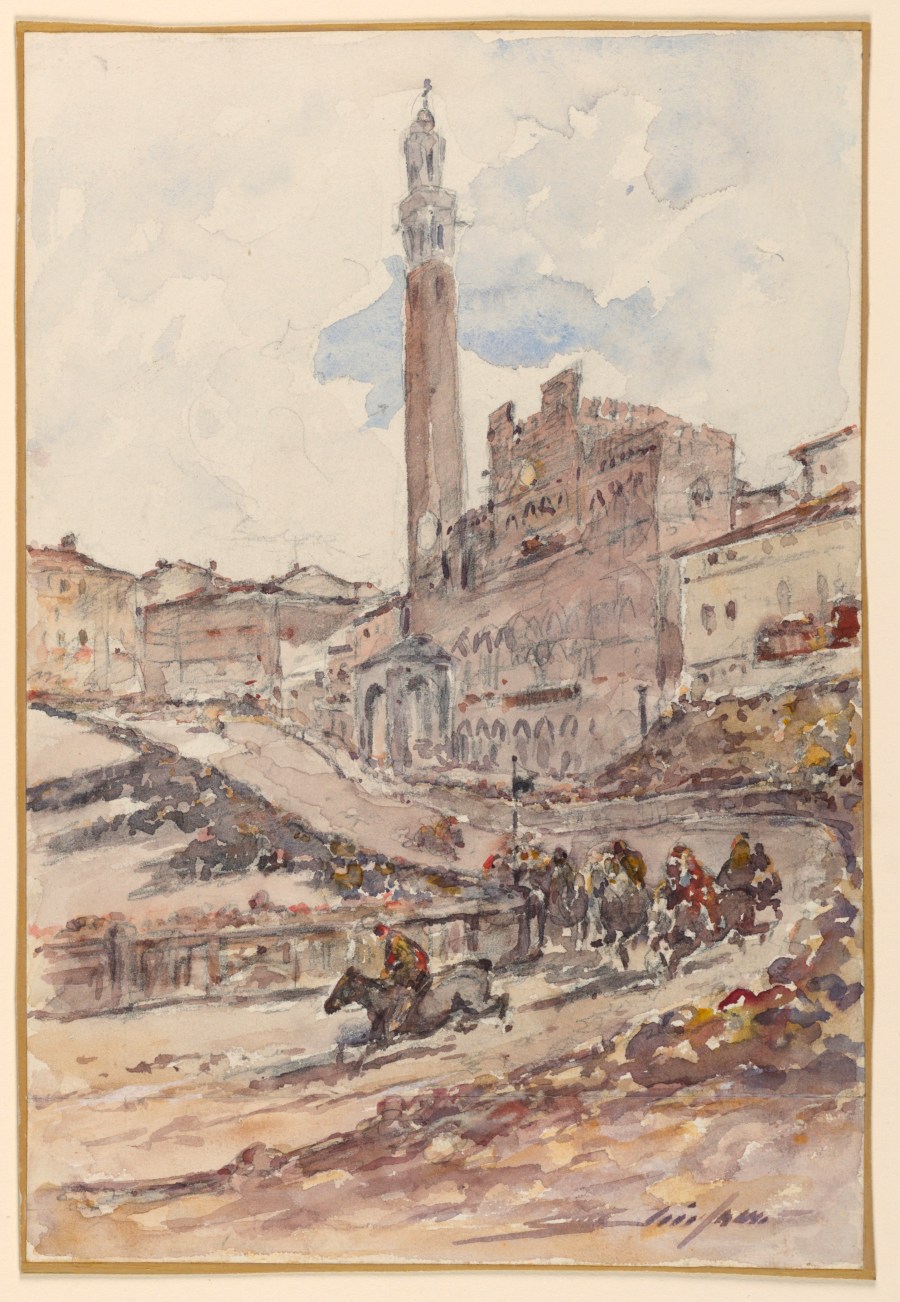
Featured Art: Horse Race, Siena, Italy by Walter Shirlaw

I asked about the old days, when they
were my age—my mother scrambling eggs,
Dad and I at the table. He aimed a glance
sidelong at her, then took a shot toward me:

             We’ve been very lucky, Son.

He must have meant their gamboling, teenage
marriage after weeks of jitterbug jokes
and getting-to-know-you’s in the Abilene
Lady Luck pool hall in 1941.

Her silence like the hush of a tournament
match, the cue’s tip skittish at the ball,
probing for angle and spin, velocity,
the all-important leave and follow-on.

By now—both gone so long, both unlucky—
I understand his game, how words can
travel in disguise, their spin covert,
as on that morning when his mumbled plea

caromed off me—sharply, as off
a felted cushion—and spun toward her,
determined at the stove:

             Come on, Honey, let’s play.
             Let’s keep the run alive.


Read More

Cousin Scott on His Lizard

by Anders Carlson-Wee

Featured Art: A Lizard, Jamaica by Frederic Edwin Church

-In memory of Scott Christopher Maxwell,
1961 – 2007

You ever had some loose screw try to tell you
your friends is the family you choose?
Well I wouldn’t bottle the breath of the minister
that delivered the message. The family you got
is the only family you’re gonna get,
take it or leave it. Wanna know what I got?
I got myself sisters. Two of em. But that’s all I got
to say about that. That’s all I ever knew
to say about my sisters: There’s two of em.
I bet I coulda stomached a brother better.
Even when I was a little grommet I wanted
a brother, so I practiced on this pet lizard I had.
He was one of them color-changers that could
change his skin to blend in with whatever’s
below him. I named him Tony and took him
around with me. Showed him how to do
whatever I was doin. Talked to him and tried
to explain things. I remember wearin tie-dyed shirts
and puttin Tony on my shoulder so I could
watch him change. One day I had him on the back
of my hand while I was hot-wheelin down the street
and he jumped off and I ran right over him.
What do you say about something like that?
Afterwards he was so flat he looked like one of them
outlines of a lizard in a coloring book. No blood
or nothin, like nothin was in him. I’ll be damned
if I know what else to say about that.
I don’t even know why I told you about it.
Would you believe me if I said I never got over it?
Never got over the fact that when he died
he was the color of my hand? You think that’s funny?
I can’t even look at a goddamn lizard anymore.


Read More

Cousin Scott on Doomsday

By Anders Carlson-Wee

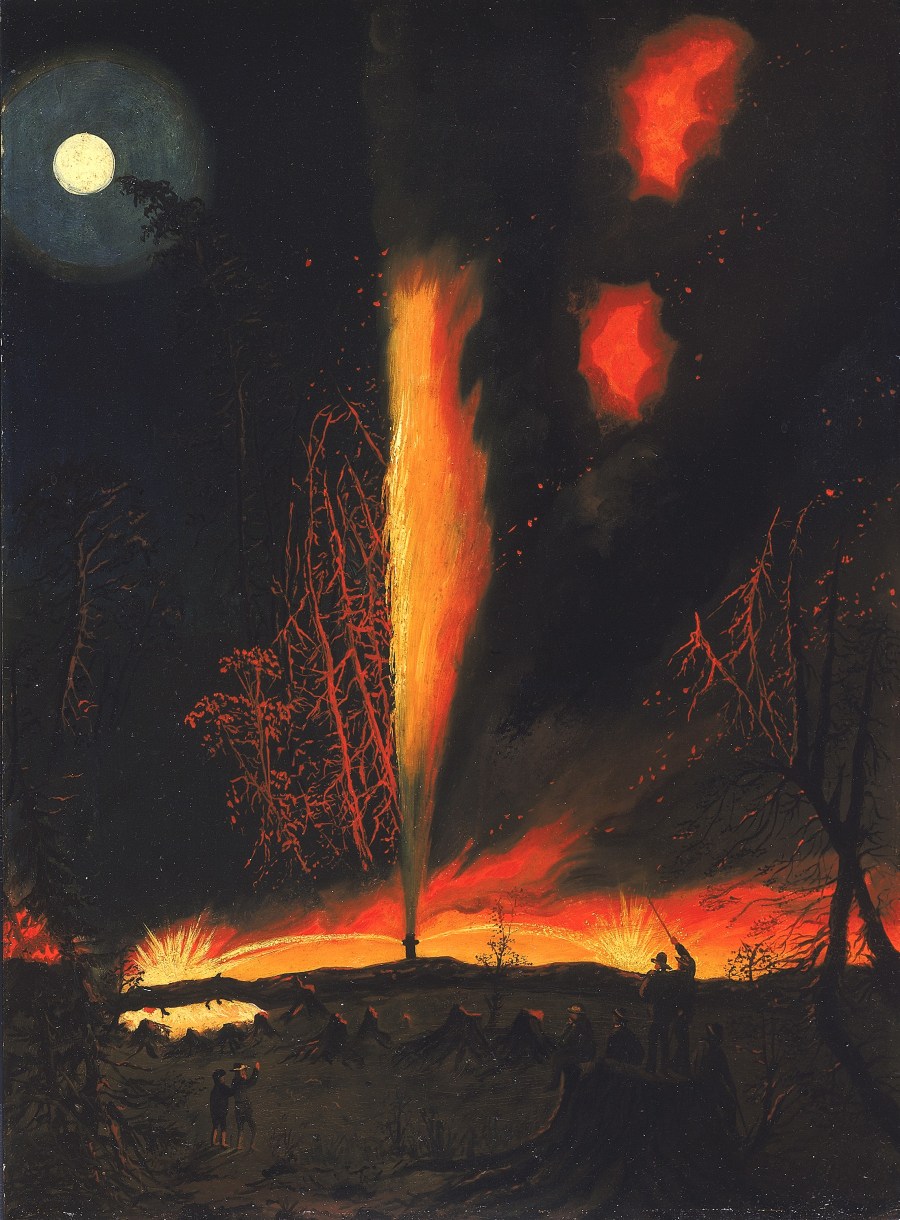
Featured Art: Burning Oil Well at Night, near Rouseville, Pennsylvania by James Hamilton

It don’t matter what you believe. All the Christians
know it’s comin, all the scientists know it’s comin.
Could be a chunk of the sun wipin out the grid
just as likely as the Lord Himself snuffin us out
one by one like a bunch of candle wicks.
Could be a oil shortage. Or the souls of the dead
come back to reckon. My buddy Critter figures
it’ll be the Lake of Fire––all the flesh dripping off
our dicks while we drown at the same time
over and over forever––like it says in the Bible.
But most folks won’t tell you what they believe.
My ma, she never broke silence on the issue.
My old man, he says I’m crazy. Says I’m gonna drink
myself to death before anything else gets the chance.
Me myself, I got my chips pushed in for somethin natural.
A meteor maybe. Or a polar flip. But like I said:
when you’re throwin pies, it don’t matter much what the flavor is.
It’s more folks thinkin like me than you’d think.
And like most of us, I got a bug-in plan for stayin put,
but I also got a bug-out plan for gettin gone.
Not that I’m gonna tell you where I’m goin.
It’s high in the mountains––I’ll say that much––
but that’s all the scat this cat’s gonna leave in the sand
for you to track by. Let me ask you somethin:
You think I’m crazy to have a hundred pounds of Spam
buried in caches? You think I’m crazy to have Critter
shoot me with a .22 so I know what it feels like
to get hit in a bulletproof vest? Well, you know what?
I hope I am crazy. I hope I’m the craziest son of a bitch
you ever met.


Read More

White Earth, Minnesota

By Anders Carlson-Wee

Featured Art: Hudson Valley, New York in Winter by Frederic Edwin Church

The volunteer staff at Saint Vincent de Paul
made too many sandwiches, expecting more.
When the drunk Indian came in from the winter
wearing some kind of neck-warmer pulled up
over his nose, they were able to give him
three for now and seven in a Ziploc bag. He sat down
at a fold-out table by himself and began eating
all of them. The icicles in his wild eyebrows
melted slowly. He mumbled orders as he chewed,
demanding bacon and a woman. From his pocket
he unfolded a photo of heck horses and held it up
whenever someone dared to look at him.
Partway through the meal he overheated
and took off most of his clothes. There was a hole
in his neck clearly made by a bullet, and made
recently. The rush of blood should never have clotted,
but it had. Maybe from the unbearable cold.
When the cop showed up he knocked back his hood
and pulled off his gloves to rub his nose.
He asked the staff if anyone had come in wearing
a ski mask. They shook their heads in unison
and kept shaking as the officer described the rough
features of the drunk Indian sitting by himself
with a hole in his neck eating sandwiches.


Read More

A Million Tigers Who Aren’t Mad at You

By Sandy Nietling

Featured Art: Abstract–Flowers in the Left by Carl Newman

My Mexican boyfriend cannot tell me if he’s ever killed a person. This is not because of a language barrier on either side. I asked my question clearly enough, and he is a good conversationalist with a decent English vocabulary. Still, Raf furrows his dark brows for a long moment, apparently needing time to puzzle through the facts as he knows them. Finally he frowns. “I’m not sure.”

When I ask my American boyfriends if they’ve killed someone, they laugh the way that they’re meant to laugh. Then, while they’re busy being surprised or trying to work up a clever response, I can worry about the papers I have to grade or how much longer the sliced pineapple in the refrigerator will last before I have to give it to the orioles in my backyard. That’s why you ask about death in the first place. It’s supposed to buy conversational elbow room, but Rafael has done the unexpected and provoked my attention instead of letting it drift away. It is not until later, in the dark of my bedroom, that he is relaxed enough to explain his crime.

Read More

Jenny Perowski is Ahead of Me in the Grocery Store Line

By Julie Danho

Featured Art:  (Untitled–Flower Study) by Mary Vaux Walcott

If an Amish family can forgive the man who burned
their land, surely I can say hello to Jenny Perowski,
who used to call me “fattie fat” in seventh grade math
and had boys call my house, pretending to ask me out.
That was twenty years ago. Now Jenny, if not fat exactly,
is puffy as a slightly overstuffed chair. I’m thinner than her,
and my pleasure feels more whiskey than cream, makes me
want to pour out her Kors bag to rifle for candy, then slowly
eat it in front of her like she once did to me. I know
her cruelty was, at best, a misdemeanor. But anger
is like a peppermint in a pocketbook—everything inside
takes on its smell and taste. I could break it in my teeth,
make it disappear. Instead, I savor the mint, let the sugar
line my mouth like fur, linger far past what can be called
pleasure. How good it would be to be better than this.


Read More

Grammar School

By Mark Belair

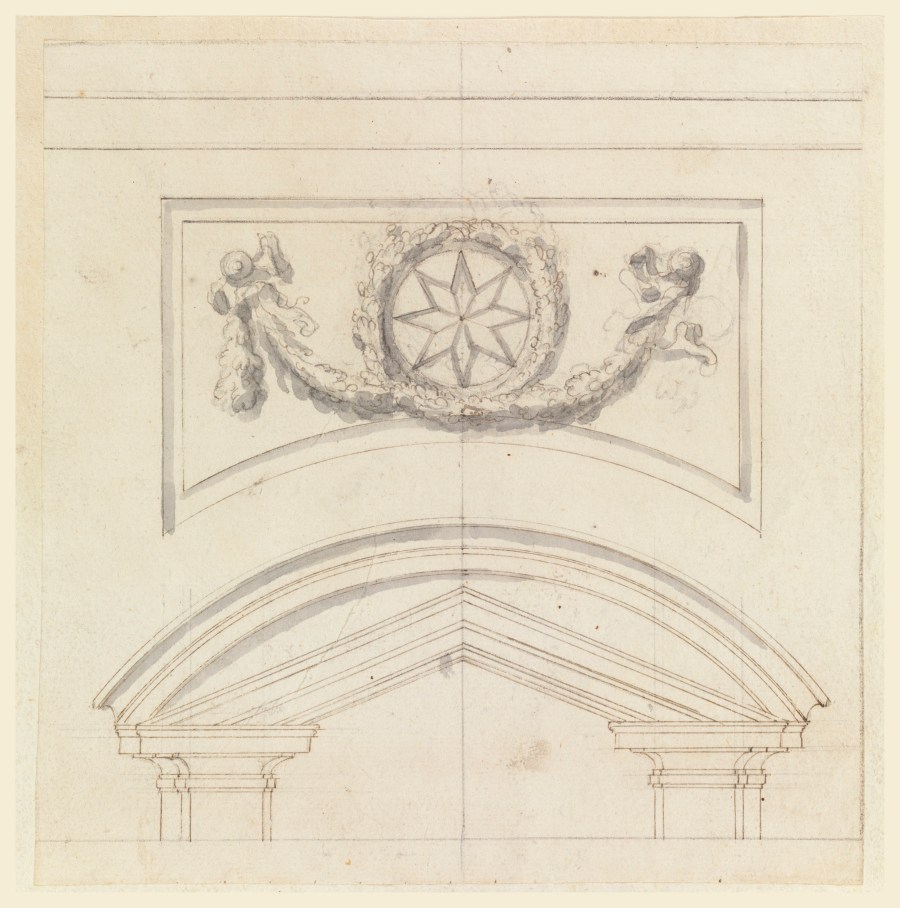
Featured Art: Project for an Overdoor by Carlo Marchionni or Filippo Marchionni

Through the municipal green, overpainted wire mesh
obscuring the grammar school basement windows

comes the spank of a basketball not engaged in any game,
just pounded in place in an empty, echoing cafeteria, then

an outside metal door gets gut-punched open to release
gruff-voiced janitor, belt keys jangling, cursing at the world

while from a first-floor office a stretch of plastic packing tape
screaks off a roll as a phone rings and a copy machine whumps

as if providing a bass line to a class that, upstairs,
bursts into a trebly, mocking laugh, after which,

yet farther up, in a distantly reverberant bathroom, a toilet
flushes and keeps running even after a door slams shut and

all the old, hard memories flood
back enough for me to know

that if a documentary film was made
about daily life in grammar school—

with shot after shot of small, solemn faces
taring out at us—

its scoreless soundtrack
would be this.


Read More

When Mr. Bridges Died

By Mark Kraushaar

Featured Art: (Children Swimming) by Unidentified 

When Mr. Bridges died I knew
the whole eighth grade would have to gather
in the gym and sit there on those cheerless,
folding metal chairs set up by string-bean
Donny Graf the constant burper.
Mr. Bridges was a substitute,
we hardly knew him, but
I knew that there we’d be, all of us,
and there would be our stiff-grinning
twitchy principal, Mr. Albert Fraze, to slowly,
slowly stand and tell us what a deep
and lasting loss this was for all of us.
And later, sitting there three rows from the exit
by fatso Robert Randall who’d socked me
in the stomach on the 8 bus once,
I knew that Mr. Fraze would drill us
with the first long look that said, Every one of you
should be ashamed, ashamed for even thinking about,
for even thinking about thinking about
turning your gaze away one ten
thousandth of an inch:
a man is dead today.
And then would come this clumsy, freighted
metaphor and though I doubt I knew the word
(metaphor) I knew our Mr. Fraze: Mr. Bridges
was a kind of bridge, he’d say,
or found a bridge, or formed a bridge, or built
a bridge, or was a bridge from ignorance to wisdom,
from confusion to compassion, blah, blah, blah,
which is exactly what he said so that
sitting there I thought of that four-cabled
quarter-mile Roebling tower bridge
and I thought of its glittering
river city Cincinnati since we’d studied it all week.
I pictured its reaching, curving waterway, the great
Ohio and I thought of the circling terns and swirling slicks
and chemical froths and then I thought of a row of houseboats
and a paddlewheel steamer with a single, smiling
tourist, anyone and no one, waving once.


Read More

Siccità

By Stephan Jarret

Featured Art: The Hills by Preston Dickinson

To my grandmother, Francesca, the cliffs of Wilmerding, Pennsylvania resembled Italy’s Amalfi coast. Only, when she looked over the edge, the valley was waterless. Not even a polluted stream that dried out in the summer months. “Siccità”—drought—she used to say, when she led me into our backyard and squinted with high-angle menace toward the neighboring town of Pitcairn. At night, the phosphorescent sign of Randy’s Brew House shrouded the valley in faux-oceanic cobalt blue, offering “HOT GIRLS” and “FREE PRETZELS.” Still, the lower hillside was anything but arid—peppered with trees, I thought— so I tried to mention that something was sustaining them. “What?” she’d say, either incredulous or deaf.
Read More

If I Could Have Your Attention

By Jonathan Louis Duckworth

Featured Art: Sunrise or Sunset (study for book Concealing Coloration in the Animal Kingdom) by Abbott Handerson Thayer

-To S. S.

              and if I could make of my hands a hammock
for the sinuous long-S slope of your spine
              if I could flocculate moonlight into a salve
to rub away our fears as fingers smooth a bedsheet’s creases         
              if I could scan the abjad calligraphy of your curls
and wake with long strands coiled lamia-like under my tongue
              if we could lie enmeshed under night’s aspect
our spooned bodies a crescent luna under the folds
                if I could rise first to cook you breakfast
and convince you basil pesto is morning fare
               
if I could recite to you all sixty-three octaves
of Keats’s Isabella with pungent pesto breath
                if we could exhume for each other our buried poems
to pry vital marrow from those discarded bones
               
and if we could distill the essential incanti
like sweet incense extracted from fetid agarwood
               
if I could breathe my favorite words to you:
“gloaming,” “Ewigkeit,” “azimuth,” “garrigues,” “laverock”
               
if I could settle into entire stillness
while you whisper your own treasured motes into my ear
               
and if I could only compose the words
that could incite in you half what yours have in me
               
I could be with you, or else write no more

Read More