THE KNOT

By Sarah Suhr
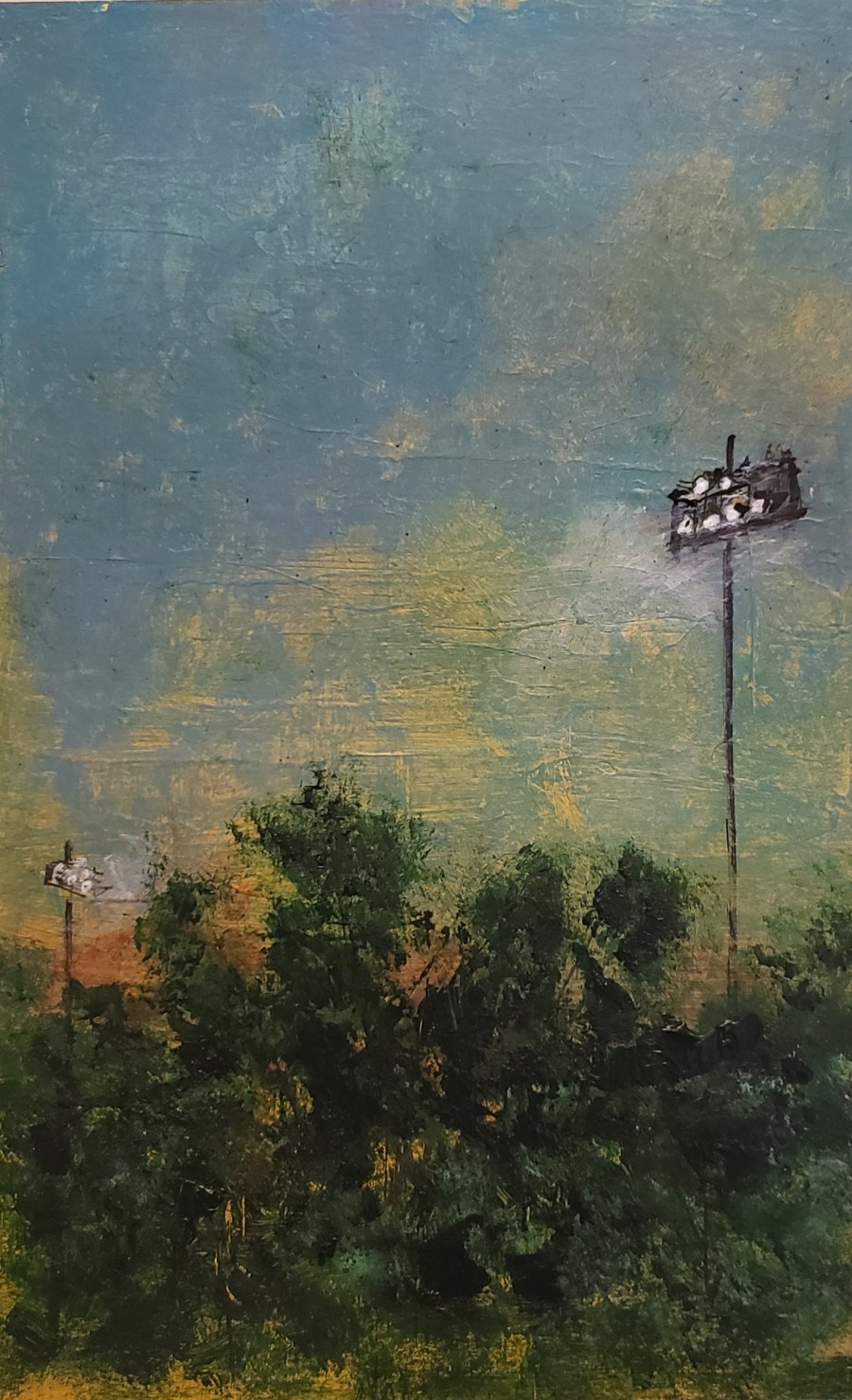
Featured Art: “Aria” by Mallory Stowe

   for Patty 

you broke your mother’s ribcage trying  
to revive her bones like a goldfinch 
do not cry daughter oh wisp of breath  
she speaks from beyond her tomb  
keep chrysanthemums & coneflowers  
in each corner of our house & console  
your father with a nightcap westerns &  
puzzles  
        still he cries each year  
that passes & you oh daughter carry  
bouquets & his weight across  
threshold after threshold till he can  
no longer hold a spoon to his mouth 
so you petal chowder to his tongue  
& every swallow is a strangulation 
that stones your heart to silence   
               you 
no longer know where your fingertips 
end & his begin if the sun has risen 
or descended oh daughter are you 
in darkness or light he says this is it 
i am done after dialysis & within days  
his head wilts cold into your palms 
you clear his books from your shelf &  
reshelve poetry found in a storage unit  
your hands hold a collection called  
reclamation but you can’t recall  
how it came to you 


Read More

IN THE DAYS OF CHILDHOOD AND VIOLENCE—

By Shelly Cato

        One Morning Before School

A tricorn hook pierced a night
       crawler before
       entering a boy’s
       thumbnail—
       the bone

At the same moment
      a grain of grit shifted
      into his mother’s left eye
      which remained to stick—
      twitch

On her cutting board
       apple peelings wilted—
       and the hound
       outside jowled
       ham fat 

Behind a shed
       seldom used for skinning
       the boy waited  
       for his school bus—
       nursed blood

from his thumb—believed
       in the way his mother
       arranged his lunchbox—
       believed he would live
       to open his lunchbox

that day


Read More

IN THE DAYS OF CHILDHOOD AND VIOLENCE —

By Shelly Cato

Featured Art: Notes and sketches from “Life as distraction as practice as discovery” by Zelda Thayer-Hansen

⠀⠀⠀⠀⠀⠀⠀⠀⠀⠀⠀⠀One Morning Before School

A tricorn hook pierced a night
       crawler before
       entering a boy’s
       thumbnail—
       the bone

At the same moment
      a grain of grit shifted
      into his mother’s left eye
      which remained to stick—
      twitch

On her cutting board
       apple peelings wilted—
       and the hound
       outside jowled
       ham fat 

Behind a shed
       seldom used for skinning
       the boy waited  
       for his school bus—
       nursed blood

from his thumb—believed
       in the way his mother
       arranged his lunchbox—
       believed he would live
       to open his lunchbox

that day


Read More

Who I Passed While Running

By Kenneth Tanemura

I ran after the siren’s light,
past retirees in bright tank tops
and tank dresses,

reclining on lawn chairs.
The woman in carefully
crafted beach body standing

in a bikini, parts of her spilling
out of it. She was looking
at the sea, past the kids bodyboarding

in the shallow surf. The kids stood
calmly in a calm pool unscathed
by the waves coming to shore,

then going in reverse.
They didn’t move outside
their zone to catch a wave

to the sand. Currents travel out
to the ocean faster than Olympic
swimmers, in Volusia County,

where the front desks at the hotels
lining the beaches don’t warn
the guests about high surf

and rip risks. I ran
in my touristy linen shirt, a white
affair I could wear

to a wedding. My arthritic knee
tightened. I saw my stepson
on his back, the young woman

pressing down on his chest,
searching for his pulse.
“Was he alone?” a shirtless lifeguard said.

“He was alone,” I said.
I shouldn’t have left the boy alone,
I thought. I was tired of watching

my tired, elderly parents
awkwardly stand on the beach like
they didn’t belong there.

It was hot and there was nowhere
to sit. It was boring to wait
and watch the baby

in the summer heat. A sheriff
noted my name
on a notepad, scribbled

‘stepfather’ on the thin line.
Go home and get your wife,
then head to the Halifax Hospital.

On the drive home a man
jogging passed me.
Someone walked her dog

on the trail by the Halifax River.
In the parking lot, Dezree
was showing an apartment

to a young couple
with Illinois license plates.
She waved to me

from the golf cart. My wife came out
when she saw our white
Sentra pull up.

In the lobby, a bored
security guard scanned
our IDs, a woman

behind us complained
she had to get another
pass to get upstairs?

Good lord. If it’s not
one thing, then it’s another.

A smiling nurse in blue

scrubs smiled. “We were waiting
for you, please follow me.”
The boy’s eyes jolted open.

The ventilator pumped
oxygen into his lungs.
There was nothing behind

his eyes. His pupils
didn’t move. My wife cried
beside the hospital bed. I put

my arm around her shoulder.
She did not lean into me.
The sheriff stood in the hall.

Behind him, someone walked
by, a cell phone pressed
to his left ear.


Read More

My Sister

By Veronica Kornberg

The four of us—Kathie, Ruth,
our mom, and I—drove down
to Maryland to visit Annie
in the coma hospital where
she’d been sent after she
opened her eyes and moved
one finger. The place
was great—therapy
six hours a day and nurses
like strong, funny angels
swooping around her railed bed.
One terrifying thing—
every week, the team tested Annie
to see if she’d made
enough progress to stay
another week, and if she hadn’t
she’d be moved elsewhere,
somewhere not so great
but nobody knew where,
there was no where—we should call
our congressman and tell him
to do something.


That day was bright
and cold. We wheeled Annie
outside and sat on a bench by
the parking lot, squinting into
the winter-low sun amid
pocked mounds of plowed snow
that had hardened to ice.
We chatted in Annie’s direction—
about a cardinal in the naked dogwood,
about mom’s poodle barking hysterically at
a snow woman in the yard,
about the balls of yarn slowly morphing
into a crocheted afghan on the recliner.
I heard us packing the silent spaces,
cramming them full of news and pictures.
Annie didn’t have many words
but she could still make her famous
bird face to show a little sarcasm
so that made the conversation feel
familiar and less desperate. Annie began
to fixate on our mother. “She is scary,”
she stammered. A kind of miracle—
Annie speaking a complete sentence.
Our mother blanched,
then made a goofy-ugly face.
“Scary,” she chimed, waving her
gloved fingers. It was the most
adult thing I’ve ever seen,
the way she swallowed that pain
and turned it into a sweet
lick of icing, a joke, a little nothing.
God it was awful.


Halfway home we stopped for the night
at a freeway motel, the four of us
in one room. In the lobby, we scarfed down
a buffet—honeyed ham
and gloppy macaroni salad,
dinner rolls spongy and soft as
an old man’s belly. There were two double
beds in the room and when I plopped
on the corner of one, the whole mattress
flew up toward the ceiling in a way
that I cannot explain the physics of
to this day. But I kept doing it,
the mattress jack-knifing in the dim room
until we were all laughing
and laughing—we laughed until
we cried we were laughing so hard.


Read More

My Mother’s Breast Prosthesis Falls Out

By Sara T. Baker

as she takes off her bra to put on a hospital gown.
She motions for me to pick it up off the floor,
which still has spots of blood or plasma
on it. I glance at her breasts, small-nippled
like my own, although one is dented
where they did the biopsy. She tells me
about that every time, how they deformed
her. Then she climbs, regal, into the hospital bed.
In the bed, she is pale under the fluorescent
lights, although her diamonds wink on either side
of her face. Her bedazzling smile is at rest,
her cheekbones rise over sunken cheeks,
her brow is furrowed, her hazel eyes flutter
behind purple lids, her roots need touching up.
She’s had work done, but dementia has
elided that fact, which seems to me
the best of all possible worlds.
The gorgeous male doctor comes in
with a homely male nurse to report
The tumor is bigger and you have to do
something
. His cobalt eyes lock intently
on mine across my mother’s supine body.
I imagine swimming in that blue, freestyling,
one rhythmic stroke after the other. My weary
voice explains We have been waiting weeks
to see the oncologist
, even as my body is flipturning
in his eyes, my nostrils full of chlorine
and Coppertone.

None of which my mother hears, as, mercifully,
she isn’t wearing her hearing aids. But when
the men leave, she slides her eyes over to me
and asks Which one was the doctor?
The tall one, I answer.
She cocks an eyebrow.
Fit? The bluest eyes?
Yes, I say, that one.


Not that I noticed, she adds,
with a shrug and a laugh.


Read More

Safety Deposit

By John Bargowski

She was going in for new valves
and a bypass later that week,
so my mother asked me to drive her
to the bank where she signed a log
the branch manager initialed
before he swung the vault open
and let us into that metallic space
walled with rows of numbered doors.
His key first in the one with her number,
then hers in the other slot,
and the steel box she’d earned
by her loyalty slid from its shelf.
He led us to a private closet
with a chair and small table,
and when she lifted the box lid
there they were—the deed for a remnant
of the family farm, the cancelled
house mortgage, a copy of the title
for the last car my father owned,
his 30-year plaque from the slaughterhouse,
and a pinky ring with his initials,
a certificate for a stock gone bust,
her mother’s gold wedding band,
the Silver Anniversary bracelet
she wore only to weddings,
a lock of hair from my first haircut,
and under it all, her bridal corsage,
wrapped in yellowed cellophane,
and while I stood near she peered
inside the manila envelopes
that held the legal papers,
touched each piece of jewelry,
the curl of hair, and tattered remains
of the corsage she’d worn
just above her heart, a desiccated
rosebud pierced with a rusted pin.


Read More

Reading Shackleton During My Husband’s Cancer Treatment

By Michele Bombardier

Selected as winner of the 2024 NORward Prize for Poetry by a panel of previous poetry contributors

After tucking in the kids, we tucked in the house—
dishes, laundry, prepping the next day’s meals.
When the hush finally settled, we’d get in bed
read Endurance out loud to each other.

                         The ship became trapped in ice
the night before his surgery. All that week I tried
to get back from the hospital in time to kiss the boys
but I failed. I sat on their beds, watched them sleep.
The day we got the pathology report,

                         the men, running low on food, put down their dogs.
Radiation all summer. The boys played soccer.
The oncologist told him to join a gym, get a trainer,
go hard because she was going off-label,
tripling the usual dose.

                         They threw everything overboard, but the ship sank anyway.
Anemia turned his skin yellow-gray. His body
became smooth as a seal. I watched
as he denied fatigue, struggled to untie his shoes,
get up the stairs.

                         Shackleton split the crew, sought help: everyone survived.
After we finished the book, we never opened it again.
I wonder where it went. Years it sat on the bedside table
under the clock: last thing we saw at night,
first thing every morning.


Read More

In Which I Compare My Brain Surgery to a Slope Mine

By Evan Gurney

Featured Art by Greg Rounds

Mine and mill have done their work,
the ridge face once lush with fir
and poplar now cleared of airy timber,
the brow slashed and bored, a strip
of railroad curling like a scar up
the mountain to the excavation’s cavity,
sealed now but still marking its territory,
still leaving its lasting impression.

Hidden from sight, a subterranean labyrinth
of crosscuts line like stitches the shaft
that slopes down and in through folds
and plunges to the precious stope
that engineers surveyed, prospected,
and, finally, removed entire, hoisting out
the bituminous ore, leaving behind a sump
that time and age will fill once more.


Read More

Remedies

By Mickie Kennedy

I

The surgeon wants me
to remove my prostate.
The upside: my life.
The downside: no more
erections, unless I take
a TriMix penile injection,
used by porn stars
for ten-hour shoots.
I do not feel
like a porn star.
Diapers for a year
if I’m lucky,
for a life if I’m not.
Also for a life:
arid orgasms.
The upside: no more
messes. The downside:
no more messes.

II

Reddit-strangers want me
basic: every day,
I’m swallowing seven
teaspoons of baking soda
to vault my pH
above eight. Cancer
struggles to survive,
they say, in a basic
environment. I shit
a dozen times a day.
I piss on a plastic strip
and it changes color,
almost like a game.
I live on the toilet
but still, that’s a life.

III

The Happy Prostate
Facebook Group
wants me on everything—
milk thistle, black
seed oil, broccoli sprouts
I grow myself,
sea moss, boron,
tudca twice a day,
a dog dewormer
even though I’m not
a dog, mangosteen,
hibiscus tea, soursop
leaves, and never more
than twenty pits
of bitter apricot,
unless I need
to end things early
(a drop of cyanide
in every pit).

IV

The oncologist wants me
to annihilate my prostate
with targeted blasts
of radiation.
CyberKnife.
Sounds like something
Guy Fieri would hawk
on late-night TV.
This is everything
you need, he says,
trimming his frosted tips
with a glowing scalpel.

V

Randy wants me cumming every day, a frenzy
before the famine.

With the patience of an attentive nurse,
he helps me arrive,

his finger curling towards the place
my prostate takes me—
a brief obliteration.

Maybe if I touch the cancer,
he says, it’ll leave.

My stupid, silly man.
It doesn’t work like that.
But even when there’s nothing left to touch,

I would let him touch me there.


Read More

Miraculous

By Pam Baggett

Featured Art by Eliza Scott

Switch on the car radio, music falls out of the air
into my ears: James Brown, Joni Mitchell,
Jim Croce. Old gold. Plus, when I got in my car,
it cranked like it does every time, so many miracles
in that I can’t even count them. Traffic lights
that help us get along with one another,
scent of roast chicken rising from my grocery bag,
which also contains the most delicious bread,
whole wheat with flax, sesame and a hint
of cherries. That someone thought to turn wheat
into bread, miraculous. Yeah, I know, I just
had to start on a heart pill, but it’s nothing,
a little electrical nuisance, no effect
on longevity. And yeah, my best friend
has a hurt so deep and wide whole oceans
pour through it, and her story’s not mine to tell
but jeez, what a soul-shatterer. Yet even she
watches bumblebees. She swears they’re her favorite
miracle. So aerodynamically complicated
in the way they get off the ground you’d think
they never would—flapping their wings
back and forth, not up and down—yet up they go.
She says if they can beat gravity she can too,
and I gotta tell you that to see her dressed
and laughing, hear her singing with that voice
that sounds like water tumbling over rocks
in some ancient river, water that’s passed through
some murky cavernous places but has emerged
into the stunning light of day, to hear her sing again
is one big fat black-and-yellow buzzing miracle.


Read More

Pitching and Staving

By Evan Gurney

from Folk Medical Lexicon of South Central Appalachia

The phrase that mountain folk
coined for this condition

provides its own lesson
in the semantics of vertigo,

its participial movement
staggering to and fro,

unmoored by prepositions,
the grammar gone dizzy too

as those twinned verbs spin
into gerundive nouns,

all meaning aptly erratic,
out of tune, each stave’s

horizontal bars failing to fix
in place its pitch, which drifts

off the scale like a ship
that has lost its horizon

among the many staves
in this timbered ocean

of hollow, ridge, and cove
that roll and reel and veer

until I look up, I sing out,
I pitch over, I’m staved in.


Read More

Mass

By Jeff Tigchelaar


1. Jana, in for a mammogram 

So they give you these special shirts: 
easy-open fronts. 
Post procedure they herd you 
into this room where others in the same boat 
and shirt
must sit 
and wait. 
I walk in say Oh how embarrassing 
we’re all wearing the same top
to no response. The TV’s tuned 
to daytime talk, nobody watching. I offer 
to change the channel or turn it off. 
No takers. A few seconds later: “Up next! 
How one woman got the news that would 
change her life forever: ‘I found out 
I had breast cancer!’” Then someone 
says Yeah no we’re shutting that off
and gets up and does the deed. 
A minute later this same woman gets 
her results. And they were 
good. Very good. 
They were perfect.
And she jumped, whooped, pumped her fists 
said Praise Sweet Jesus and her boobs 
popped right out of that special shirt 

Read More

Invisible Bodies

By Aza Pace

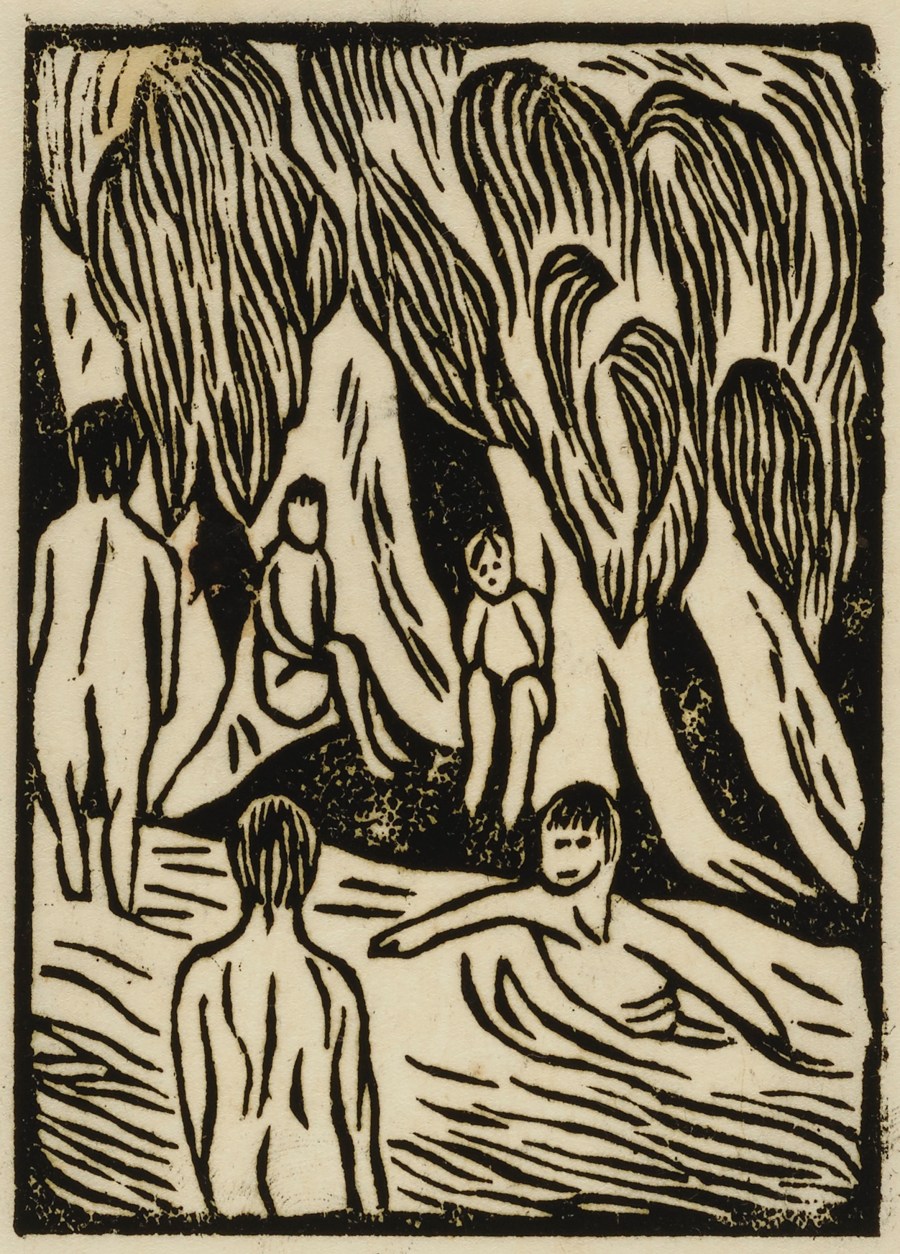
Featured Art: (Children Swimming) by Unknown

Meanwhile, plastic particles
burrow in the Arctic snow

and in the sea’s deep trenches,
its legion bellies.

Meanwhile, a galaxy bursts
across my cervix—bad cells

someone will slice off
with electric wire as I sleep.

There is nothing untouched
in the whole furious world.

But the water today
in Galveston is blue,

with not a hint of tar.
In each wave, hermit crabs

and no bottle caps.
Babies in life jackets

tumble and squeal in the surf
while an older child bobs

out to the first sandbar
to fish. Meanwhile,

I think—I’m happy.
Under my tongue

sit the names of children
I will not make.

I roll them over and over
and love them.


Read More

Blue Camaro

By Owen McLeod

I’m up at 6 A.M. to write, but all I do is stare
at the rain and the trees and watch the wind
strip away what remains of November’s leaves.
Somewhere in Virginia, my father is dying.
Not on the sidewalk of a sudden heart attack
from shoveling snow, or in a hospital room
monitored by nurses and beeping machines,
but at home, alone, and almost imperceptibly
from a sluggish, inoperable form of cancer.
That man was never satisfied with anything.
When leaves were green he wanted them red,
when red then brown, when brown then fallen
and gone. Once, after making me rake them
into a curbside pile, he tossed in a cinderblock
meant for the local punk who’d been plowing
his 1982 Camaro through the heaped up leaves
of our neighborhood. Two days later, the kid
blew through our pile without suffering a scratch.
My father didn’t realize that I, fearing for him
as much as for the boy, had fished out the brick
and chucked it in the ravine behind our house.
As punishment, I had to climb down in there,
retrieve the cinderblock, and bury it in the leaves
after I’d raked them back into a mound. My dad
said that was nothing if I dared to take it out.
I can still see him, stationed at the window,
watching and waiting for that boy to return—
but he never did, because I tipped him off
the next day after spotting him at 7-Eleven.
Decades later and hundreds of miles away,
a malignant brick buried deep inside him,
my father still waits at the living room window,
listening for the death rumble of that blue Camaro.


Read More

My IRS

By Adam O. Davis

I am two vowels strung twenty years long.
                                                                                            My life a ransom
letter written by a cardiogram, tympanic as traffic & the lights of traffic

that renew the tercets of Esso stations standing violent as macaws
in the ululative night.
                                                      I need lithium or language, nurse.

I need words to fall like ricin from an envelope.
Clearly, my synapses need seeing to.
                                                                      So, please, repo the verb of me.

                                        Conduct me swiftly
through the conjunction of Tennessee where nouns loiter like limbs
languid with Quaaludes, where daylight breaks

like a mouthful of fentanyl over the teeth of a country that cares not
for such news.
                           Should a poem be the pill or the pharmacy?

Should I pledge myself to this business as if it were Gerard Manley Hopkins
or Jesus Christ?
                            Here I am, Lord, earnest as a rice cooker, lively as Superman

in his leotard, my spiritual fizz empirical as Pepsi & just as cheap.
                                                                                                           Jesus, Gerard—
who will irrigate these ears from error?

                                                                   Who will whisper that in the empire
of swans the black cygnet is Elvis?
                                                    All around me the malady of my unmaking

unmans me: roadside trash, unrecycled recyclables, my shadow laid
like a new suit over the bus bench & birds behind it.
                                                                                    All this urban tumbleweed,

all these words for worse.
                                           When whoever’s kingdom it is comes calling for it
will the last televangelist of grammar go angled like an angel in the direction

of their god?
                            Or will America just eat my opioids as it like Nemo poisons
its seas to peace?

When I was a verb I thought as a verb so I did as a verb, just like the police.
Tonight the moon slouches in its straitjacket of stars.
                                                                                            There’s a multinational

wind afoot, some merry beast loose, all pronoun without surcease.
                                What rooky woods will it rouse first?
                                                       What islands will it make of our bodies yet?


Read More

Requiem with “Little Wing”

By Craig van Rooyen

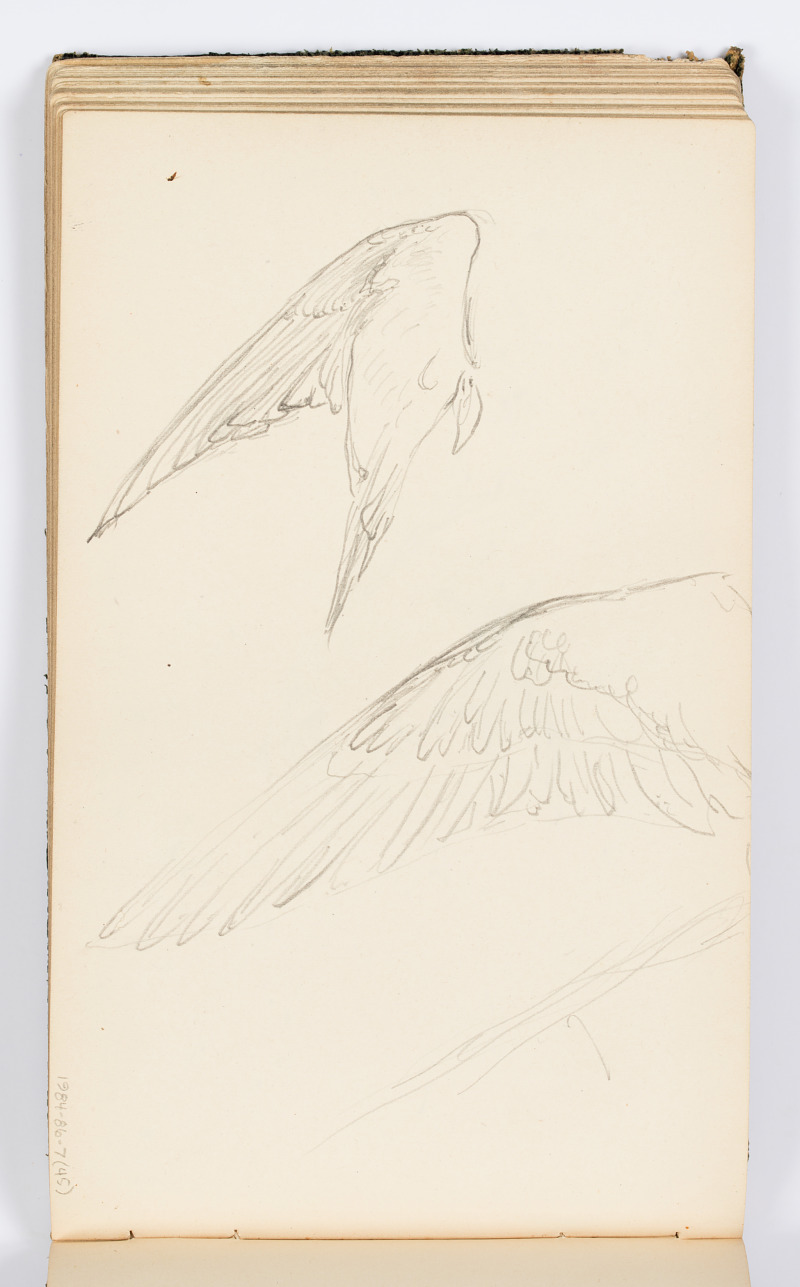
Featured Art: by Kenyon Cox (1856-1919)

Perhaps, on your downtown lunch stroll
in unseasonably cheery weather,
you walk up on a flock of grackles
on the ground in front of Urban Outfitters,
their impact marks still drying on the window
recently washed to display Big Sur Ribbed Pullovers
and the Willow Fuzzy Drawstring Teddy,
as if anyone believes October’s still a sweater month.

Perhaps you become suddenly dizzy,
a strange gravity drawing you toward this constellation
of twitching black holes
opened in the sidewalk at your feet.
And perhaps this brings to mind
how it feels when your face falls from your face.

In the old days before the imminent apocalypse,
the pattern would be read as omen:
a toothache’s coming on, the breath of your bride-to-be
will sour every time she walks in moonlight,
your best cow will soon grow milk-sick.
The prescriptions would be just as clear:
wash your warp and dye it while a new moon waxes;
steal a neighbor’s crickets and install them in your hearth;
milk with one hand only.

Perhaps, even now, you try to read in the little bodies
some feathered correspondence: this relates to that.
If you step on a crack, the snowy plover will slip
into extinction; if you breathe out while passing a cemetery,
Greenland’s ice shelf will break off and float away.
But the letters blur and you can’t discern the news
from the wrecked wings and necks.

Read More

Radiology

By Kim Garcia

Sitting on the x-ray dolly, gown fastened front to back,
steel girders propping the tracks of the x-ray cam,
resting in half-dark with a lead blanket
size and weight of a doormat over my belly
while the tech disappears behind the wall
and a light flashes blue and white,
then more waiting, every joint in need
of repair.
                   The cam floats over my body.
The tech touches me gently. He’s nearly bald
and pale in his scrubs. I sit up, hearing
a soft popping of cartilage as I swing
my knees over the side. Knee-capped
by nothing. I am so poorly
designed and executed that one might call
this incarnation accidental, unintended.
And against accident, what can I do but keep
intending?
                   So, bless the half-hearted pinging
of the Philips logo saving the screen.
Bless the lead aprons and blankets,
the plastic stretcher board hung
on hooks on the wall, the stacks
of towels and plastic gloves, the cream
and cocoa checkerboard tiles, the tech
with his soft hands in this cheerful wing
that promises nothing
                   the lame will not walk
                   the deaf will not hear

but more light
to see our suffering by.


Read More

Learning

By Kelly Michels

Featured Art from rawpixel.com

A new cure is invented every day,
along with a new disease
because every miracle needs a disaster
to survive, and there is no shortage
of disaster, the sparrows have learned
to eat anything under the slash-and-burn
of the sun, and the children have learned
how to weave plastic buttercups into bracelets
between the alphabet and spoonfuls of NyQuil
their mothers give them before bed
where they dream of the swish of scar tissue
behind their teacher’s glass eye.

We tell them: There is horror. There is pain.
There are people wedged between bullets
and mud floors, between cracked river ice
and broken elevator shafts. But not here.
Never here.

Now, we sit still as an Eames chair, and the children
will never know the bridge of a song the rain spells
out in the sand on an October morning.
It is safer behind closed doors and windows, safer
where the wheat and ragweed and daisies
can kill no one.

We tell them: We have seen the grim amoeba of lake water,
the blizzard of ocean waves lashing against the curved spine
of coast, the blue-eyed grass raising itself like a rash toward
the swollen ache of sun, the sting of salt, grazing the long arm
of a bluff. We have lived it. We know better now.
We have knelt at the rim of a cliff and looked down.
We have fallen, felt the pulse of the sea pull at our hair
and it was not kind.

Child, put your ear to the conch shell and listen.
This is enough.


Read More

Selling

By Judy Kronenfeld

Featured Art: Unfinished Monster by Hugh Laidman

Heads thrown back after one
bubbly sip—the young in soft drink commercials
seem as lavishly happy
as lottery winners. They look
the way we imagine ourselves
on the stages of our dreams—glamorous,
anointed, spotlit—our luck about to spill
into graciousness.

And even in ads for walk-in bathtubs,
incontinence pull-ups, stair chairs,
dementia care, the actors don’t merely grin
and bear it, but almost chortle,
like Cheshire cats who just
swallowed these amazing canaries,
though the old they represent
are more like expiring birds.

But the worst soft pitch: the “personal” Christmas
pictures taken in the dementia wing
of my father’s “retirement home.”
In another life, his face would say
This is ridiculous, even if he played along,
and sat in the appointed armchair
by the tree, and hugged the enormous white
teddy bear prop, as instructed.
But he is in this current life,
and guilelessly presses his warm cheek
against the bear’s fuzzy one,
and stabilizes the bear’s plump feet
with his free hand, as if they were a child’s.


Read More

Train Prayer

By Steven Dawson

Featured Art: Indulge by Felicity Gunn

In Denver all days end standing up
packed like dried fish dry-humping
each other on the H Line. Some
passengers in their drunken wobble
or even in their haze of sobriety
pull down hard on the rubber handles,
the ones meant for standing,
the ones that swing dumbly above
our heads. They think this action
stops the locomotive but the train
is automated, stopping itself
at Broadway then Osage, Lincoln Blvd.
Since the train, as it always does, stops—
the travelers learn to keep tugging
& I can’t help but think this is how
prayer works. Like when I prayed
to a god I don’t believe in that your
morphine drip might soothe the wounds
that chemotherapy would not
& how I swear it worked sometimes
but didn’t others & yet in my drunken
sobriety I believe that it was me
who eased your pain, that it was my
failed pleas that bleached your blood.


Read More

Women in Treatment

By Theresa Burns

Featured Art by Dante Gabriel Rossetti

Why had I not noticed them
before? The women in treatment
on every block, it seems, leaving
the library, walking their dogs.
Once they hid themselves
beneath wigs, fashionable hats
in the city, or entered softly
in Birkenstocks and baseball caps,
stayed out of the way. Now they
show up, unannounced.
In offices, in waiting rooms,
in aisle seats with legs outstretched,
the women in treatment
flip the pages, reach the end,
bald, emboldened. One
outside a florist today arranges
lantana in time for evening
rush. A bright silk scarf
around her pale round head
calls attention to her Supermoon.
And one woman my own age,
in my own town, takes up a table
right in front. She nurses a chai latte
in a purple jacket, her hair
making its gentle comeback.
What she pens in a small
leather notebook: a grocery list?
Ode to her half-finished
French toast? The kind of poem
living people write.


Read More

At Milward Funeral Home, Lexington, KY

By Jeff Worley

Featured Art: Bloemenzee by Theo van Hoytema

Someone has to identify the body.
The funeral facilitator, Jeanne,
gestures me into the room and clicks
the door shut behind me.

You finally got your wish,
I say to my mother.
She’s wearing a shade of lipstick
that unbecomes her, a subtle peach
she would have hated. Her face
is her face and of course is not,
her hair parted in the middle,
a new look. Her hands, composed
across her sternum, are the color
of parchment, skin thin as vellum.

I don’t stroke her arm. I don’t kiss
her forehead, as I thought I would.
Instead, I wonder, oddly, if the funeral
people use the same gorgeous quilt
that covers my mother now,
with its sunbursts and bluebirds,
for everybody.

When I think I have stayed long enough,
Brahms trailing off in the corners,
Jeanne is sitting outside the door,
her long fingers forming a steeple.
I want to say to her I have no idea
who that is, I’m sorry, but levity
isn’t encouraged here. Although
I would only be speaking the truth:
Alzheimer’s riddled her brain
and sucked the marrow from her spirit;
she became a stranger and a stranger
to herself. What else was there to do
but believe along with her that Hoss
and his Bonanza brothers were indeed
aliens from another planet, that Pat Sajak
was “in on it,” along with everyone else
who came and went in Mom’s room,
stealing her clothes, her makeup,
the nursing home grand conspiracy . . .

I’m sorry it’s taking me so long,
Mom said in a rare lucid moment
last week, and I had nothing to say,
and I tugged the blanket snugly
under her chin, and I handed her
the plastic cup full of water which
she waved away.


Read More

There Was a Young Woman With Cancer

By Susan Blackwell Ramsey

Featured Art: In the Spirit of Hoffmann by Paul Klee

With each remission she’d take it up again,
her search for proof her great love Edward Lear
was influenced by the Irish poet Mangan,
and while we weeded she would bend my ear
with her latest evidence: an owl here,
elsewhere a pussycat or a beard, a wren.
I was polite, but it was pretty thin.
There was one word, though,
some nonsense confabulation that occurred
in Mangan first, so odd that it could not
be accident. Then cancer, like a weed
we’d missed, some snapped-off root or dormant seed.
The last cure killed her. I would give a lot
to be able to recall that word.


Read More

Where the Stars Are Hived

By James Lineberger 
Winner, New Ohio Review Poetry Contest selected by Rosanna Warren

Featured Art: Beautiful woman portrait from Messiah by Samuel Johnson, LL.D

That Saturday, when The ABC’s
of Beekeeping arrived UPS,
he was already a very sick man, survivor
of several major surgeries, all of which were
successful, within limits, but what
could they do, all those
doctors and technicians, to halt the inevitable, which
he knew, of course, we all do, even in those
moments of temporary triumph
when we feel we have won something or other, when
that dratted parathyroid thing
gets plucked and dropped in the bucket, the scar artfully
hidden in a crease of skin, or the triple bypass pains have subsided
and become one of those historical blips
on the mind-screen, these and all the others
will have taken their toll, but when the book arrived
he was nonetheless grateful, knowing full well
he would never get around to the bees or a score
of other projects, but the pride was still there, and some
stubborn sense of accomplishment
that had nothing to do with the rest of his life, the marriages,
the lawyers, the pre-nuptials, and the money,
the money, all that goddamn money, and what did it mean,
any of it, next to this hillside filled with row
upon row of Silver Queen, and the praying mantids
and ladybugs, the chalcid wasps and the pungent
scent of the marigolds, how to speak
of these things or make anyone understand that the garden
is not a weapon against Death,
but a doorway to invite her in, a private place
where they can talk undisturbed
with a growing closeness and affection he never
dreamed possible,
he and this little girl in her denim coveralls with
the bear appliqué and the bottoms
rolled up, the way she holds his fingers in her tiny hand, and her shining face,
upturned, her lips parted in a daughter’s trusting smile.


Read More

My Mother’s Dogs

By Sandy Gingras

Featured Art: Three Dogs Fighting by Antonio Tempesta

They are big and smelly and mean,
and they’re living in her basement.
I think they are dogs, but they might be wolves.
Eight or eighteen of them, something like that.
They all would bite me if I gave them
the chance, so I’m really careful
when I herd them out into the yard.
What is it with my mother?
Most families just have pets—usually one dog
and a cat, nothing like this. How
did she let this happen to her?

She’s living in some decrepit house now on Rt. 9
in the next town over and she’s evidently lost
her taste in furniture. Everything is gold
with rickety legs. She and I watch
the dogs patrol around the yard
from behind a glass sliding door. My mother is angry
now that she’s old, and I think that maybe
she and the dogs deserve each other, but
I can tell that my mother is scared too,
and I want to help her out because
I’m the problem-solver in our family.

The dogs don’t play like normal dogs,
they just move around the yard
like big bullet-headed missiles. We have to get rid
of them somehow, I tell my mother who is
suddenly smaller than she was, and then I hold her
in my arms and she’s a little girl. Whatever you do,
don’t let them in, I whisper, but
she’s already dead of lung cancer.


Read More

Serenity Room

By Linda Hillringhouse

Featured Art: Buste van een oude vrouw by Anonymous

There are five recliners in a circle,
each with a spongy blanket.
The lights have been dimmed,
but an aide has left behind her walkie-talkie
and it sounds like it’s ready to lift off.
My mother is in one recliner, I’m in another,
an easy way to spend time now that she’s afraid
of the color red and distrusts windows
as if the glass weren’t there and the fingers
of the dwarf palmetto would reach in
and pull her down into its dark center
to cut out the last cluster of syllables
huddled beneath her tongue.

I look over to see if she’s sleeping
and her eyes are open as though
she’s forgotten to close them. Maybe
she’s on some dusky street where half-drawn
figures drift and sounds almost blossom
into meaning. Maybe she opens a door
and her aunts from Brooklyn are there
and clutch her to their mountainous breasts
where she could stay forever.

She tries to inch out of the recliner but an aide
intercedes with a cup of apple juice
which my mother examines closely
for poison and studies her hand as if it’s
screwed to her wrist. Then she brings the cup
to her lips as if it’s the last thing left
from the world when she was Shirley
and carried keys, lipstick, cash.

And I hope that the cold, sweet liquid
brings a moment’s pleasure, but how can it be
that it comes to this, that at the end you get
thrown in the ring for one more brutal round
without enough stamina to put on your shoes
or enough strength to say Thank you or Go to hell.


Read More

Believe that Even in My Deliberateness I Was Not Deliberate

By Gail Mazur

Featured Art: Butterfly by Mary Altha Nims

Believe that even in my deliberateness I was not deliberate
—The end words form this line from Gwendolyn Brooks’
poem, “the mother”

We’d be calm, we’d be serene, as long as we could believe

in the blue dragonflies and balletic monarchs that

hovered near us in a kind of peaceable kingdom even

while my love’s illness menaced the peace in

the summer yard, in the fragile house, in the air I breathed in my

deliberateness. My only stratagem, deliberateness:

to accept our lot in that pathless time. I

thought I’d know what he’d want; what I’d want was-

n’t any different. Wouldn’t it be, wouldn’t it finally be, not

to consider how finite our August? Not to deliberate?


Read More

New Regs

By James Lineberger

Featured Art: Card Rack with a Jack of Hearts by Jack F. Peto

I’d never seen her before that day when
she came knocking on the door and I thought at first
I must owe postage on the package in her hand
but no, she said, this was an official visit to advise me
that unless I stopped parking the Malibu in our circular drive,
I would have to mount a new mailbox out on the street
rather than the one by the door that we’ve been using since
the house was built back in the Fifties.
“Say what?” I said,
“excuse me lady but that is my drive not yours.”
But she was not to be dissuaded,
advising me that new regs from the Postmaster General
would not permit her to put her Jeep in reverse
and turn around in the drive,
and she only shook her head no when I said,
“Look, okay, if we mounted it out there on this dead-end street
you would still have to back up
when you get to my neighbor’s house next door
because hers is on the front porch too same as this one
and you have to pull in her driveway to get there, and tell me
how you’re going to get out, and besides,
the reason we park the car out front here is because
my wife broke her hip and had to have screws put in it
and she’s still not too certain on her feet, not to mention
she’s got Alzheimer’s, unless you’ve got regs about that too
but the regular carrier never told us anything like this
and he doesn’t seem to mind backing up at all.”
“Well, sir,” she said, “that is him, this is me,
besides which where is your handicap placard?”
and walked away even as I was saying
“Just you wait lady, we’ll see about this.”

Read More

The Wall

By Christopher Kempf

Selected as runner-up for the 2015 New Ohio Review Poetry Contest by Robert Pinsky

Featured Art: Ruins of an Ancient City by John Martin

                At mile twenty, roughly, the muscles
of the legs will collapse. Calves
                 twitching at random. The hamstrings’
                                                    sacked meat seizing. Scarry,
in The Body in Pain, explains
                                             that language too, tasked
                    with conveying affliction, fails. That pain,
   she argues, obliterates
                                                          discourse. I limped

                           past the drunk undergrads
of Boston College, my body’s stock-
                                                           pile of glycogen finally
                                       exhausted. The wall, runners
               call it.  The bonk.  The blowing
                                                                                         up. & after,
             the body in pain will make
                                                       of its own fat fuel. I followed

               the shimmering column of runners right
                                     onto Boylston Street. In three
                                                                                            hours two
           coinciding explosions would themselves
                                                                   leave the city—except
    for its sirens—speechless. The limes, Latin

        for boundary line, signified
                                         to ancient Romans the most remote
                              walls of the sacred Empire. Lie-
     
  meez Arabicus for instance.
                                                         Limit.
                                                                      The legions
                           Caesar trusted most though & therefore
    dreaded, he kept
               stationed on the Plain of Mars a mile only
                                      west from the city walls. He watched
     from the seventh hill the drilling
                                                                    columns, consulted
                                          each morning in the sky above him
             the wheeling birds.  A body,
                                                                            he knew well, will
                      at sometime or other, hungry
                                                                                for blood, break
               in on itself & eat.


Read More

One Solid Chassis Among Us

By Susan Blackwell Ramsey

Featured Image: Giant Magnolias on a Blue Velvet Cloth by Martin Johnson Heade, 1890
Courtesy National Gallery of Art, Washington

We praised the gray car for being a good little mule
the day before it roared demands. The labs
for my sister’s knee surgery came back showing dual
heart chambers out of whack. And right-left jabs
of exploding joints and breast removal for me
came one year after both my husband’s eyes
lost cataracts, gained corneas. The knee
still needs to be replaced, of course. So why
not buy a new car? Certainly we could
transport our patchwork selves in our patchwork car,
all very apt, and prudently get the good
of what’s left. Or, while granting how things are,
we could fling cash, climb in with gleeful smiles,
and ride shiny the remaining miles.


Read More

Activity Room

By John Bargowski

My mother wants nothing to do with the puzzle
two other residents,
whose wheelchairs have been rolled up
to a folding card table,
are trying to put together—
a west side shot of the New York skyline
broken up into a thousand pieces,
the stubborn morning smog
she could see from the apartment
she had to give up photo-shopped out,
the OT insisting Mom join in the fun,
taking my mother’s stroke-locked hand
and guiding it to
a corner piece that’s an easy fit,

Read More

Still Listening

By Robert Cording

Featured Art: Confusion of Christmas by Julia Thecla

I. Hospice Jumble

The Jumble in the paper too hard for him to read,
my mother suggested we make up our own: Dear,

she said to her husband, your first word is life.
Reduced to words we jumbled, he joked file

it. My brother offered another, mean,
thinking perhaps of his diabetes, a name

like cancer to our family. Then, lamp,
lit at his bedside, and the one palm

visible outside his one windowed room.
My father got them quickly, the last, moor,

said with all the sadness of being far from shore . . .
A grandchild solved that one—horse,

she blurted, noticing that he had left
us for a while. By his bed, my mother felt

his hands and face and eyes. Bob, please,
she said, but he was already asleep,

snoring, not dead. My mother sighed, O God.
My brother, in the spirit still, said dog. Read More

Short Lists on a Diagnosis

By Aran Donovan

Featured Art: A City Park by William Merritt Chase

Ever so rare: the robin’s egg that’s fallen
at the doorstep, as yet untouched by ants
or useless knowledge. A letter mailed from France,
its certain words predestined. New snow, appalling
last spring on cars, mailboxes. Quite rare: the pollen
of narcissus but more rare the bees that dance
their distance. The choreography of plants,
shadow of leaves. St. Francis granting pardon.
More common: construction on the way to work,
the broken earth and open pipe. The trite
condolence of a friend. Misunderstandings
on the phone. The removal of your blouse and skirt
for the new doctor. How it’s come back in spite
of all you’d hoped, your vain and human plannings.


Read More

Tauromaquia

By Deborah Casillas

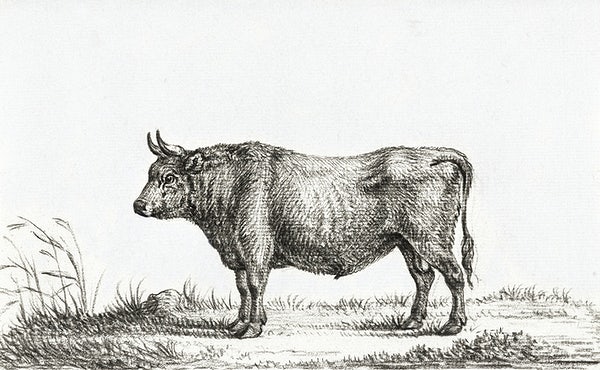
Featured Image: “Standing Bull” by Jean Bernard

The days dragged on, steady ticking of the clock.
My mother’s cancer; surgery, injections, drugs.
Long afternoons I sat in my grandfather’s library
looking at books. Shelves of books about bullfighting—
la lidia, combat; la corrida, the running of the bulls.
Books on Manolete, Belmonte, Joselito,
his copies of The Brave Bulls, Blood and Sand,
Death in the Afternoon. Books aficionados collect,
those fanatic followers of the taurine subculture.
I stacked volumes beside me, looked at pictures
of the black bulls, studied their deadly horns,
the ritual sacrifice. Here were portraits of the famous
matadors, their lives venerated like the lives of saints.

Read More

Remembered Grace

By Jim Daniels

My mother rolls her walker through the rug
like pushing a dull reel mower through high grass.
She cannot see, so maybe the simile should be sound instead—
like bad jokes from a dull boor. The brittle thread of escape
snapped long ago, sewing kit trashed, needles only and constant
from pain—knee/back/hip. Blurry edges of God rim
her miraged vision. She burns a sandwich on the grill
but not herself—thrill enough to earn a pill. Today
she’s skipping church, and it’s just next door. She calls me
from the kitchen to carry her cup back to her chair—no free
hands. She must watch where she lands when it’s all freefall
and whiffs of Jesus not happy with her. I’m a tourist
with a bad map. She’s a local with time. She waves her hand
as she talks, one graceful thing. She flirts with air.


Read More

Speed of Light

By Mark Irwin

Featured Image: “Blossoming Cherry on a Moonlit Night” by Ohara Koson

Married in Beijing, they had their names carved on
a grain of rice. Mai wore a yellow silk gown. He wore
a black suit. Embraced in the photo turned sideways
they resemble a tiger scrambling through strewn mums.
That evening they ate salted mango and shrimp. He
can still taste that, see the tortoise-shell clip sun-
splintered in her hair. That evening continues, stalled
like the sea-filled drapes in their room. For twenty
years he worked at a lab that accelerated protons. Here
are photographs of their two girls on Lake Michigan,
then in Zermatt, standing before the Matterhorn,
whose moraines, cirques, and ravines resemble those
through two names magnified on a grain of rice, or
of that shadow looming through the CAT scan of her brain.


Read More

Playing My Part

By Sharon Dolin

Featured art: Dancers by Edgar Degas

I let him go. I complied. Adjusted. Saw. Did not see his disappearing
act of staying while leaving the body. It felt so familiar.
My zombie-mom (on Stelazine, Thorazine to tamp

her paranoia down), would be there/not there to make
macaroni and cheese, do the wash, help me with my Spanish.
I knew she was sick, I knew she loved me though she lay in bed until noon,

again in the afternoon, comatose with the New York Post, her arm bent
at the elbow to cover her face. This was what love could feel like—
somnolent, absent. Why be paranoid when he slept in the same pose.

Sometimes cooked dinner, did the wash. Who knew a blunt face
could hold so much hate. The child in me saw his numbing out,
going to bed early, not as aversion but a version of my mother’s love

and all I had to do—as when she’d be taken away, hospitalized, shocked—
was wait for his return. (Is there a Penelope inside every troubled wife?)
Didn’t my mom always come back?


Read More

House on the Lake

By Liz Robbins

Featured Image: Greenwood Lake by Jasper Francis Cropsey 1875

When Dad was dying, everyone wanted
to take care of him, no one
wanted to.

We sent flowered cards, everyone wanted
the easy parts.

His cancer was a quiet purple flower
that grew too familiar when it took
over the bed.

The purple wanted the easy parts,
the purple wanted the hard parts, the liver.

We all went one way, then another.
We were the roots, we scattered.

We couldn’t compete, that’s all we could
do. We wanted to sit around and stare
at the clouded sky and drink.

His IV was clear, the only thing.

He had ten months, ten years.

We walked around Lily-Pad Lake,
where hordes of trout wriggled
to breathe.

Read More

Heroic

By Lawrence Raab

“People who plan their own memorial services,”

my friend was saying, “don’t get the point of death.”

There’d been songs and prayers and ecumenical readings.

Then one of the children played the trumpet

and the brother told too many stories that weren’t

sad or funny. Now we were headed to the reception

to be sincere about how much he’d have appreciated it.

But I liked thinking you could say of someone,

He didn’t get the point of death, and make it sound

like a brave refusal. As we walked up the hill

on that stubbornly beautiful day, I liked that idea

a lot more than hearing about people battling their illnesses

when all they’re really doing is lying there with a chemo drip

in their arms, then stumbling off to throw up. I know, I

know it’s only a figure of speech, a way of granting

courage to those whose bodies can’t manage it,

but what I want is the strapping on of bright armor,

the hefting of great swords, then striding out

into the blinding plain, massed armies on either side.

Sure, the odds are against us. In fact, we’re doomed,

which is why the clarity of standing here

has become important. Not the battle itself, but these

few minutes of stillness—the ocean in the distance

brandishing its light, and the sea-birds inscribing

their invisible maps across the field of the sky,

and the colorful flags of our armies testing the wind.


Lawrence Raab is the author of seven collections of poetry, most recently The History of Forgetting (Penguin, 2009). His collection What We Don’t Know About Each Other won the National Poetry Series and was a finalist for the 1993 National Book Award. He has received a Guggenheim fellowship, a Junior Fellowship from the University of Michigan Society of Fellows, and grants from the National Endowment for the Arts and the Massachusetts Council on the Arts. He teaches literature and writing at Williams College, where he is the Morris Professor of Rhetoric.

Originally appeared in NOR 8.

Whirlpool

By George Bilgere

In the morning, after much delay,
I finally go down to the basement
To replace the broken dryer belt.

First, I unbolt the panels
And sweep up the dust mice and crumbling spiders.
I listen to the sounds of the furnace
Thinking things over
At the beginning of winter.

Then I stretch out on the concrete floor
With a flashlight in my mouth
To contemplate the mystery
Of the tensioner-pulley assembly.

And finally, with a small, keen pleasure,
I slip the new belt over the spindle, rise,
And screw everything back together.

Later, we have Thanksgiving dinner
With my wife’s grandmother, who is dying
Of bone cancer. Maybe,
If they dial up the chemo, fine-tune the meds,
We’ll do this again next year.

But she’s old, and the cancer
Seems to know what it’s doing.
Everyone loves her broccoli casserole.
As for the turkey, it sits on the table,
A small, brown mountain we can’t see beyond.

That night I empty the washer,
Throw the damp clothes into the dryer.
For half an hour my wife’s blouses
Wrestle with my shirts
In a hot and whirling ecstasy,

Because I replaced an ancient belt
And adjusted the tensioner-pulley assembly.


Read More

How She Lost Her Mind

By April Lindner

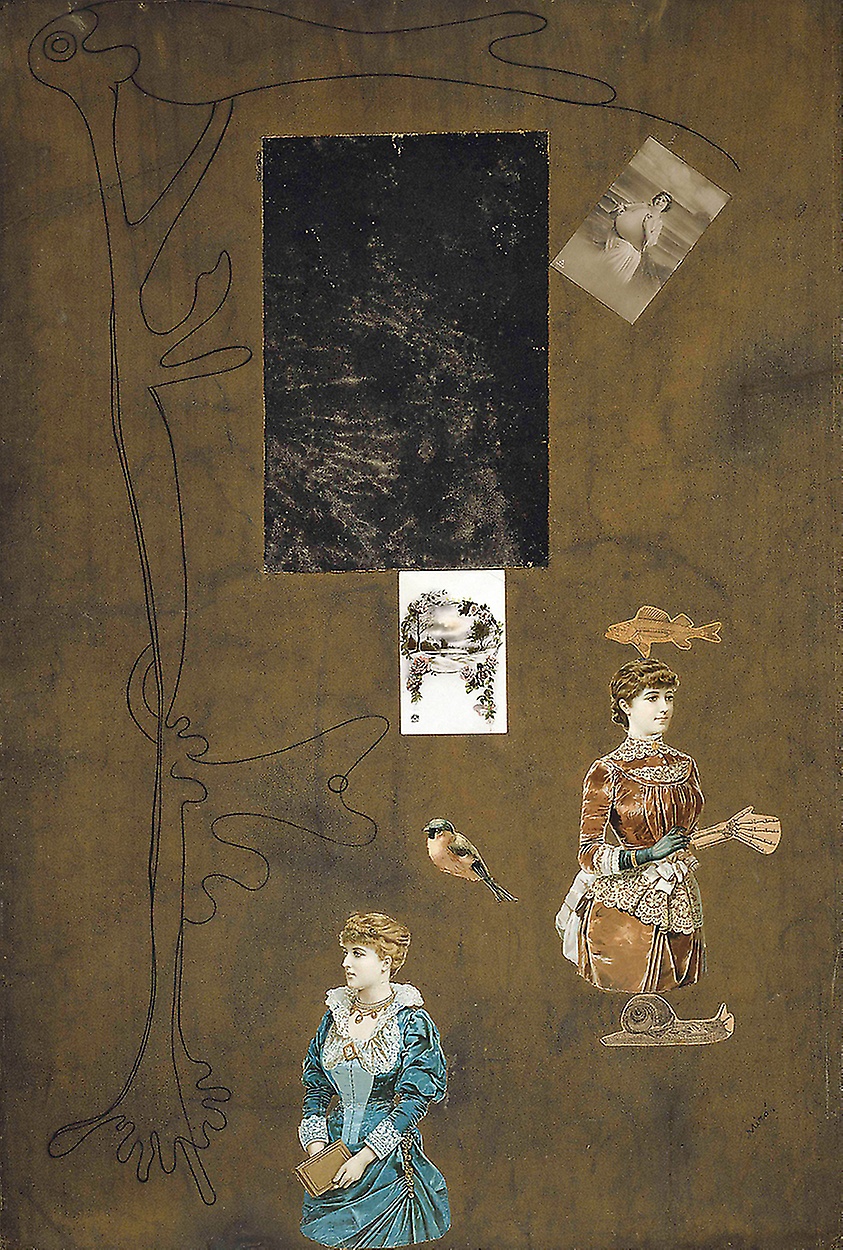
Featured Art: Drawing – Collage by Joan Miró

Slowly at first, the arteries
in the brain’s finely spun net
narrow one by one
_____________to dead ends;
like the hand’s delicate motion,
__________a series of strokes

erase what took decades to write.

Difficult tasks forgotten first:
_______________how to merge onto a highway,
___________________knit a sweater,
_______________________buy a stamp.
Then the simpler ones,
___________________how to turn on an oven,
_______________________what goes in a cup.

Read More

Degeneration

By Stefi Weisburd

Featured Art: Stoke-by-Nayland by John Constable

Through the forest’s dark persistence, hugging
the relentless road, you search the inevitable
for the sad address, then find yourself paused

in front of the driveway, just
before your halogens startle the dim
windows, the porch out of joint, in that moment

before you are knotted irrevocably
to the future, to her avocado refrigerator whining
like a beast, its gullet full of Ice Age ice cream and the odd

trap-sprung mouse in a Ziploc, before the legions
of art magazines piled in solemn cairns and the Old Countries
purpling her arms, her throat’s

dry drapery and the keys to abandoned
rooms clutched
like a crucifix. In that moment

before her body slips
out of itself and she dampens the floor, before
her ears traffic in the static of her dead

father’s scolding, before her dull
doe eyes fever with fury and shadows hunch like Dante,
before she calls you “Mother,” demanding

you wipe her ass, before her heart cherries and
Tolstoys, in that moment, turned in the driveway, before
all that, back out. Gun it.


Read More