Guts

By Jamie Danielle Logan

She stirs with the movement of the sun. Dawn stretches over the horizon, and she searches for motion amid the brush. Her world appears in shades of gray, with bursts of blue and violet. She cannot see the orange of my vest or the green-brown pattern on my coat, but she can smell my breath in the air. She startles, bounding once, twice, before the breeze decides her fate. It shifts and she pauses next to the lone pine tree, the one that is seventy yards from my small wooden stand. She has just lost the spots of fawnhood. I pull the trigger.

The hunt is humane, my uncle tells me. The population of white-tailed deer in Mississippi is estimated at 1.75 million. It is the highest density in the nation, and only Texas has more deer. In some areas, the herd is still above capacity. A study done in Wisconsin revealed that starvation, non-human predators, and vehicle collision are the top three causes of death for deer, afterhuman hunting. Of these three, none are painless. A bullet to the heart is.

I was sixteen when my uncle first built a deer stand on family land. Deer had begun to appear on our property with increasing frequency. An outdoorsman, he eagerly anticipated teaching his three children this new skill. He convinced my father, his younger brother, to join him. It was decided. My cousins, my brother, and I would learn to hunt. My uncle taught us how to shoot in the summer when the earth was green. We aimed for slabs of cardboard, our mantra ringing louder than the echo of the gun. If it’s brown, it’s down, we said. We did not think of race when we said it, just of victory.

Read More
Promised Lands

By Christie Tate

Winner, New Ohio Review Nonfiction Contest: selected by Kiese Laymon

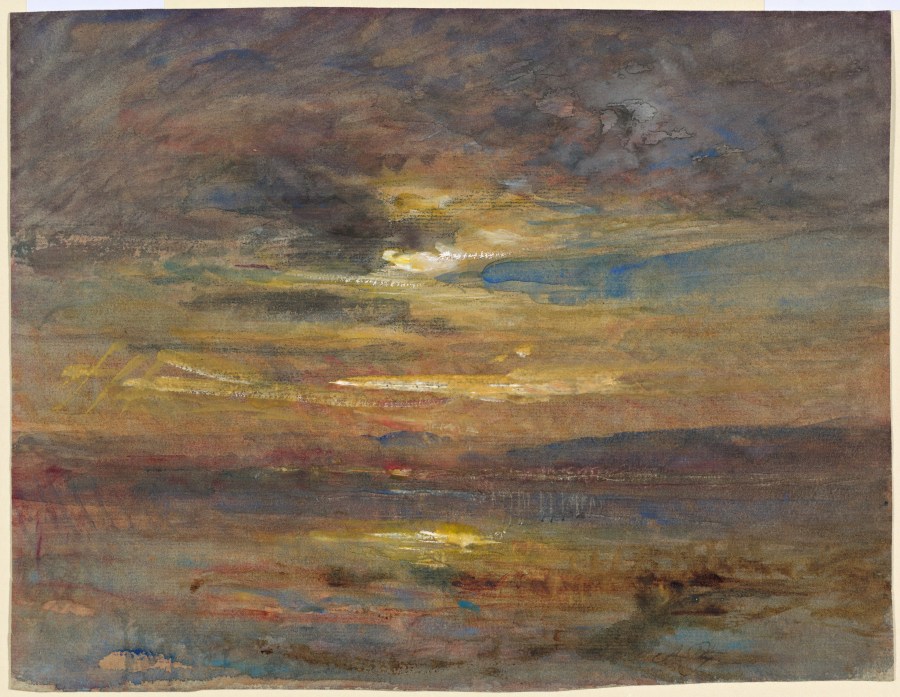
Featured Art: Sunset over a Pond, c. 1880 by François-Auguste Ravier

I.

The first time I walked into Grandma’s church, I was a little girl in white Stride Rite leather sandals and a pale yellow dress with a sash. The First Baptist Church of Forreston, Texas. There was no parking lot, so Grandma, like a dozen others, steered her big blue Chevy off the road into the grass in front of the sign welcoming all worshippers.

The white clapboard building looked like the school-church from Little House on the Prairie. Simple wooden porch with four steps. Plain white steeple. Two long skinny windows. Our regular church in Dallas was three times larger, had bells that chimed every hour, and its thick walls held colorful stained glass depicting Jesus carrying the cross, falling, dying.

My older brother and I trailed behind Grandma, who hung her big leather purse in the crook of one arm and used the other to grip the wooden rail to steady her arthritic knees. My brother and I jockeyed to sit next to her because we wanted to plumb her treasure-filled purse. Doublemint gum. A map of the highways crisscrossing the Texas plains. A keychain with a long plastic placard with her name blazed across it. Virginia. Same as the state. I liked to run my finger along the raised white letters.

Before we opened the door, we could hear voices singing “What a Friend We Have in Jesus.” I shot a look at my brother. We were late—something we were never allowed to be on Sunday mornings with our parents at Holy Trinity. My brother shrugged. I grabbed Grandma’s free hand and let the rush of air and music pour over me as she opened the door and led us to the back row.

Read More

Melbourne Beach

By Bo Lewis

Featured Art: Second Beach, Newport, c. 1878-80 by Worthington Whittredge 

Coach West had just finished grilling the dogs and we were all standing in line, going crazy with hunger. We’d had nothing but concession stand sno-cones after the doubleheader, and we were ready to eat our weight in barbecue. Rudy and I were going to do an experiment to see which tasted better on dogs—onions or relish. I was going to blindfold myself with my ballcap and Rudy was going to feed me one bite of each until I discovered the answer.

But Dad’s hatchback came skidding across the gravel toward the pavilion, a long dust cloud rising up behind it like the tail of a dragon, and I knew something was about to happen. The door popped open and his hand shot down to the gravel like a kickstand as he got out of the car. He left it running and didn’t shut the door behind him.

Coach West set down his tongs and gave Rudy’s father a look. They hopped off the pavilion deck and went to greet Dad. Marcellus’s mother, our Team Mom, took over at the grill, speaking loudly and brightly, asking what everybody was doing for summer now that we were done with the third grade.

Read More

Holding On Is [ ]

By Kay Gram

Featured Art: “Cradle of Kleptocracy” by Madara Mason

[arms & legs]


Be my arms and legs. You’re strong. You can do it! Mom would say. Mom’s body was small, fragile, needed time to move, moved differently than other bodies. I always thought she was beautiful. She was—blonde, blue eyed, narrow nose, all symmetrical. Mom had a determined presence that demanded respect and she had mastered the performance of a Eurocentric female beauty. Outfits were planned, makeup was worn, perfume was sprayed. We were late to everything. Sometimes she fell down.

* * *

Mom was diagnosed with Limb Girdle Muscular Dystrophy, a rare and incurable neuromuscular disease, when she was thirty and pregnant with me. In our life together, she wasn’t able to lift heavy objects, things like pots or pans or dog food bags, her own body. She couldn’t run or dance or move very fast. She used a brown wooden cane, shiny wood, golden handle. When walking was too much, a wheelchair. I was her arms and legs. Elle was her arms and legs. We were good at being Mom’s limbs. Sometimes she held onto us when she walked and we took turns pushing her wheelchair. When she fell, we helped her back up. We loved Mom, her body, went to her for comfort, to cry, to laugh, for attention. Who could listen better? Care more about our days, our lives, our futures. Of course I miss her. She haunts me. Or her pain does.

* * *

  Read More

Dark Matter

By Caro Claire Burke

1.

The mother and father received the news on a Friday afternoon and were in the car driving south an hour later. They drove until midnight, then checked into a Courtyard Marriott for five hours before hopping back onto the road at dawn to cover the last hundred miles. They were silent in the car, which was strange: in their twenty years of marriage, they had never run out of things to talk about. There were, of course, things to talk about now—perhaps more than ever before—but neither the mother nor the father could find the words to start the conversation. By the time they navigated through the college town and parked at the police station where their son was held, they were both exhausted, irritable, and fit to burst with all the questions they’d swallowed on the way down.

The police officer behind the desk looked up as the entrance bells went off. “You must be the boy’s parents.”

The father stepped forward to shake the police officer’s hand. “That we are. Where is he?”

The officer was jovial to a fault. “Just down the hall a ways.” He turned toward a door in the back and waved an arm at them to follow. But the mother and father were silent, almost frozen, and at that silence the police officer turned around, his hand on the doorknob. “Hey, now,” he said. “Now’s not the time for that. Your boy is pretty shook up. He could use some support. Between you and me, these cases happen all the time. My guess? Your boy will be out of here in no time, clean record and everything.”

Read More

Special Days

By Scott Koenig

It’s so bright even though the blinds are closed. Streaks of white light gash the wall. The wall Dad painted blue last month. Your favorite color is red but you like blue, too. There’s the humming of lawnmowers in the distance. Open those blinds.

Out there it’s green everywhere.  Up above, it’s blue. There’s a white car in your driveway, too. Not our car, you think. Whose car is that. Green grass down here, around the strange little white car, and blue sky up there. The colors are so pure it kind of hurts.  It’s nice, though. Do your eyes hurt? You could open the window to smell the grass but Dad got mad last time. Up on the hill where green turns into blue are big brown houses. If you squint they look like blobs of oatmeal raisin cookie dough when Mom lines them up on a baking sheet. And between the houses are thin lanes of grass where the older kids go sledding on snow days. The older kids with the colorful backpacks and the best Pokemon cards. Andy said one of the Meyer boys had three holographic Charizards. There’s no way. You aren’t allowed to go sledding on the hill yet. You just got allowed to ride your bike up to the black mailbox. The green mailbox after that is too high, too far up the hill, too dangerous, Mom always says. You know you can do it but you aren’t allowed.  But soon you’ll be allowed to go all the way up – to the top of the hill. Then back down super fast into the coldy sack. Like how the older kids do.

The man across the street is bent over by a bush, the man whose house is white and black and pointy and looks like a castle. He’s bent over by a bush using those big shiny scissors. The scary ones. The kind Dad uses a lot. Is Dad outside?  Look down into your part of the green.  Dad isn’t in your part of the green yet. Maybe later. There’s still the humming. Humming is an outside activity, Mom always says. Sometimes she hums but she does it quieter than you. And mostly outside. Her humming is nicer than lawnmower humming. Especially because when there’s a bunch of different lawnmowers all at once it sounds like buzzing. Like bugs, kind of.

Read More

Roses and Begonias; Or, Things That Can Crush You

By J.H. Bond

We’re in a bathroom at McDonald’s and it smells like pee and I’m helping my dad put his makeup on. It’s his eyebrows that he struggles the most with. They’re supposed to arc like dark rainbows high up on his forehead. He can’t do them in the mirror—they look like mountains.

“Get ’em even, Mitchell,” Dad tells me, as he kneels down, eye-level.

I’m always drawing pictures. Now I’m drawing one on my dad. His real eyebrows are gone, lost under a mask of white. I give him some new ones with a makeup pencil, then paint the tip of his nose bright red.

He pulls on his stockings. Zips up his yellow-gold jumpsuit. I hand him his giant shoes and ask how come they’re so big. Goofy factor, he says.

He fits on his wig and it blazes like fire.

“How do I look?” he asks me.

“Like a clown,” I say.

*

Dad’s got three parties this afternoon. I count eight kids at the first and I don’t know any of them. Dad’s trying to make a wiener dog balloon and I’m at a table in the corner, drawing pictures of the motel I’ve been living in with my mom.

I sort of hate the kids Dad entertains. He gives this boy with braces the wiener dog balloon and a freckle-faced girl a turtle. They’re all cracking up and happy like Dad’s a good clown, but he’s not. Every time he tries to juggle he splatters an egg. Kids laugh, but still. He can’t do tricks. He doesn’t tell jokes. He just falls down and spills stuff, and slips in the stuff he spilled.

Read More

The Red Bird

This story originally appeared in New Ohio Review 8. Here, Joanne Serling, author of the new novel, Good Neighbors, reads for our NOR Audio feature.

Illustration by Devan Murphy.


Lower

By Gunnar Jaeck

Featured Art by Emma Hamilton

Two men watched fireworks from a rooftop on the night that the alien landed. One man was Scott, who had inherited the house from his father, who had built it with his own hands and, according to his will, had been buried in its basement. Scott thought that was kind of weird, but those were the man’s last wishes, and last wishes are what they are. The other was Lucas, who had brought over the cooler full of Duvel, which the alien’s landing pod incinerated. After the alien slithered, skittered, or shivered out of the pod (it depended on which section of the alien’s body was exiting the hatch), the pod lifted off on its own and zoomed back up into the boom, crackle, and hiss.

Scott and Lucas backed up until they reached the edge of the roof. The alien waved feelers and glowed red from sucking orifices as it came closer. Scott had a feeling that the alien wanted to communicate, but its appearance was so terrifying he couldn’t think of anything to say. Lucas had some ideas of things to say but also thought the alien might be dangerous. Like, just look what it did to the beer.

Here was first contact with intelligent life from beyond our world, the most important event that had ever happened to anyone ever in the entire history of everything, but both men kind of wished it was other than it was. The alien sensed this telepathically, and obliged them by skithivering down from the roof into the attic, where it wove a cocoon for itself. Scott and Lucas climbed down the ladder after it.

The cocoon hung from the ceiling and throbbed accommodating shades of blue and turquoise with calm, floral scents. When it was done, the cocoon split open, unraveling to the floor like a spilt flag, and when the last alien folds fell away, a man Scott remembered from the war stood before them.

Read More

Devil’s Advocate

By Becky Hagenston

His kid doesn’t want a smartphone. His fourteen-year-old flute-playing boy is saying, “Nah, I don’t really need one.” Mitch’s wife Shelley says, “No one’s forcing you, honey.” She beams. The boy beams. Mitch feels a faint nausea. There’s something wrong with his kid, who still likes Legos and watches network TV and keeps his room clean and calls his two nerd friends on the landline.

“Well, that’s fine,” says Mitch. For some reason, he’s pitched his voice like an actor from a 1950s movie. He tries it again: “That’s just fine, son!” He’s speaking like a man wearing a fedora, a man carrying a briefcase. But nobody seems to notice. “So what do you want for Christmas?”

His kid, Ernie, frowns as if Mitch has just asked him to poke a kitten in the eye. “I can’t think of anything at the moment,” he says. “Can I go practice flute now?”

“Yes!” says Shelley. She rises from the sofa and kisses Ernie on the ear. “I’ll let you know when dinner’s ready. I’m making your favorite.”

“Brussels sprouts?” he asks brightly. “And Salisbury steak?”

“You bet,” she says. When Ernie has disappeared down the hall, she turns to Mitch. “Don’t force him to grow up before he’s ready.”

Mitch knows better than to argue, but he can tell that his thoughts—not grow up, just join the 21st century like a normal kid!—might as well be floating above his head like a comic book bubble. Not that Ernie would get such a reference, because he doesn’t read comic books, either.

“Okay,” he says, but Shelley has stomped down the hall to prepare the kid’s Brussels sprouts.

Read More

Tough Love

By Paul Hansen

I was one of those kids that spent a lot of time on the internet. Chat rooms, message boards. ASL, S2R, and some gender tricks too. That stuff was normal in the Nineties. And it was all good clean fun until I fell in with some gun nuts when I was fifteen years old, the type of people that encrypt shit. Way down in the web. Amateur blacksmiths and whatnot. I got so into it I ended up putting together a makeshift muzzle loader out of Schedule 80 piping, cold American steel, something I saw on the blacksmithing forum. I tried it in the basement but it didn’t work so I got a slightly bigger ball bearing for ammunition, about the size of a marble. I took it to the backyard, propped it on some dunnage, put a flame to the fuse. And by god, it worked. There was this huge discharge, a cloud of smoke. It shot wildly though. Fucking hit my kid brother square in the leg. He was clear across the yard. Dad came running from the house. There was so much blood that none of it seemed real and after Dad stopped the bleeding he came at me and that’s the deepest fear I’ve ever felt.

But that all happened fifteen years ago. I’m an adult now, turned thirty recently. Lacey’s my girlfriend these days. We met at a support group for those that’ve been injured by firearms: Tuesday night, St. Vincent de Paul, where I was the only one whose wound wasn’t visible. It’s like Lacey says: “Pretty baby’s hurt on the inside.” When she was ten years old she was making herself a necklace out of scrap—a little bit of twine, whatever else—then she found the perfect final piece, this shiny gold thing. All it needed was to be flattened. She grabbed a hammer and that was that. It was a live .22 round. Went off in her face. Took a half-dozen surgeries to put her back together. As a result she’s permanently blind in the right eye, with a spiderweb of ice covering the whole thing; little scars that don’t look like much until they’re pressed together.

Read More

A Fistful of Dirt

By Sujatha Fernandes

Manuel relayed buckets of moist earth to the concrete stairwell. It was Héctor’s job to hoist the buckets up and ferry them over to the dumpster. They had to work quickly to keep the buckets moving or the Bangladeshi contractor, a slight man with a beard, would start yelling at them, “Taratari koro.”

The workers down below had broken up the existing basement floor of the six-story building with jackhammers and then used pickaxes to pry out the concrete. Now they were excavating eight to ten feet of earth to increase the height of the basement.

Héctor was grateful to work in the open air instead of underground like a mole with the thick damp air and the artificial light from lamps. It was also safer up here. The men in the basement would dig themselves into three-foot-square holes up to eight-feet deep and there weren’t even any planks of wood to brace the sides. Suddenly someone would look up to see the sides crumbling in on him. He suspected that the contractors didn’t know what they were doing. It was only a matter of time before a worker was buried alive.

Still, it was regular work, something Héctor hadn’t had in a while. He had spent several months going to the parada on Roosevelt Avenue, getting picked up occasionally for one- or two-day stints in demolition or renovation. He found this job through Jesús, a slim Oaxaqueño, always clean shaven with dimples and a broad smile. Jesús used to talk big on the corner about his influence in the construction world. The men would rib him. “So why are you here at the parada, dumbass?” It didn’t bother Jesús.

Read More

The Deluge

By Alan Sincic

It wasn’t the voice that woke me, but the jolt of the trailer. It was Dad. He’d lurched out of bed. Fumbled upright as if in a dream, as if he’d skippered a boat upside a pier in the dark, struck a piling and—pow—off the pitch of the deck and onto the dock he stumbles.

Not that the camper was what you’d call terra firma. Less like a home on wheels and more like a traveling dollhouse, everything pretending to be more than it really was—parlor the size of a bathroom, bathroom the size of a fridge, fridge the size of a toaster, toaster the hearth around which we’d huddle when the rain shattered and the dark thickened and the cold rose up to stab us in  the ankles. The Cookie Tin’s what Mom called the trailer. Dad and Mom in the fold-out bed at the back, at the foot of which you got a curdle of flannel, Ben-Ben, not a toddler anymore but still squat enough (Tater-Tot we called him) to wedge in cross-wise. Up top of that the rack for Cece—canvas on a pair of poles, like a stretcher. Down below a carpet runner rolling out a luxurious four feet to the front-end boudoir—Len and me bull-dozed into the same bed together, head-to-toe across a table-top that, every morning at eight, we’d pop back up into place.

Oh. And Sal. Little Miss Bon-bon. Seems like the second a girl gets a couple of—what would be the polite word for it?—bosoms—you got the whole damn troposphere torqueing up to accommodate the blessed event. The VW van should’ve been for Len and me but no, Sal’s gotta have her privacy, her womanly solicitude, as if a girl who burns a whole afternoon spot-welding a girder of curls into a confectionary (what would be the word?) spectacle could give a damn about privacy.

Read More

Return

Winner, New Ohio Review Fiction Contest
selected by Mary Gaitskill

By Analía Villagra

He was gone for eleven years, and Jackie is still getting used to the idea that Victor is out. Exonerated. His release had warranted a few sentences on the local NPR station, so Jackie knows that he has been at his mother’s place, three blocks away, for a week. She has not yet run into him on the street. Each time she leaves her apartment she scans the sidewalks, and when he does not materialize she feels equal parts relief and disappointment. Thursday afternoon she goes out of her way to walk past his building, willing him to be on the front steps or looking out the window. She slows down. Would he even recognize her now? Her hair is short, with a few stray glints of gray, no longer halfway to her waist and shimmering black. Her eyes have shadows beneath them. Her hips have spread. She’s thirty years old, in good shape she thinks, unless you’ve spent a decade fantasizing about a nineteen-year-old body. Jackie blushes. This is the first time she’s admitted to herself that she wondered—hoped? assumed?—that Victor thought about her while he was away. Eleven years. Maybe he’ll recognize her, maybe he won’t. She can’t decide which is worse, so she stares down at the sidewalk and hurries past the building.

She goes to the Y to pick her daughter up from camp. Graciela is running around the outdoor play area with a group of other kids, their hair wild, their clothes and faces filthy.

“Mama!” Grace shrieks when she sees her.

Jackie waves. She locates the teenagers wearing staff T-shirts, and they hand her the sign-out sheet without pausing their conversation. Jackie half-listens to the latest counselor drama while Grace gathers her things.

Read More

This Is How It Will Feel

By Jennifer Watkins

Featured Art: Woman and Child by Mary Cassatt

At three years old, you will sit beside me in a rusty Ford as we head south on I-95. The air conditioning will blow lukewarm air, and you will feel hot and sticky. From the carrier in the backseat, our cat will growl long and low. Looking out of the passenger window, you will see stacks of steel lattice speed by, connected by strands of drooping lines. Through the back windshield, a shrinking ribbon of asphalt, lengthening and disappearing into the horizon. After many hours, the dirt will turn from brown to orange.

“I want my daddy,” you will say.

“Daddy’s staying in Maryland,” I will reply.

A few weeks later, after boxes have been unpacked in the Georgia apartment complex called Cherry Tree Hill, a card will arrive in the mail. Tearing open the envelope, you will find a photograph of your father. He’ll be sitting in a leather office chair, smiling for his daughter’s benefit and wearing neatly pressed blues. You will clutch the picture to your chest, pressing your cheek against its sharp edges. You will kiss the photo over and over. I will tell you to stop.

“You’ll ruin it,” I’ll say.

I will hold you as you cry, and you will hear my heart beat as you lie against my chest. At three years old, you will learn: your mother is flesh and blood. Your father is envelopes and stamps.

Read More

Clean For Him the Ashes

By David E. Yee
Winner, New Ohio Review Fiction Contest selected by Colm Tóibín

Featured Art: The Burning of the Houses of Lords and Commons, 16 October 1834 by Joseph Mallord William Turner

I remember watching the Cotton family’s kitchen burn, felt only a ripple of urgency. Knew it was the kitchen because the houses on this stretch are all the same split-levels built north of Ellicott City, the semi-rural bit just past 70—two main avenues laced together by branches of side streets, neighborhoods pocketed along them. I kept waiting for the flames to reach out like arms through the windows, but there were just these little tips of orange licking the gutter. Our plots were far enough apart that the heat didn’t warp my siding, but the pungent smell of that old wood burning, the paint peeling, felt toxic, jarred me from an otherwise peaceful Monday night.

Firefighters got it out in five. I had my face in the blinds, shifted to see the Cottons—father, mother, two boys—standing shoeless in the grass. It was warm for a September evening, but they huddled, heads tipped skyward as the tail of the smoke crept up past the alder trees lining our backyards. The Chief handed Mr. Cotton a phone, and he just stared at it like he was waiting for a call, didn’t dial, gave it back to the Chief when he was done talking to his crew. The crowd of neighbors gathered on the opposite curb began to thin as the trucks pulled away, and I went back to dusting my living room.

Read More

The Getaway

By Rebecca McClanahan

Featured Art: Haverstraw Bay by Sanford Robinson Gifford

“Is that our car?” my mother asks. She has rolled her walker over to the window and is pointing to the Buick LeSabre parked outside their condo. I keep it there so that Dad can see it from his recliner, where he spends most of his days and evenings. He hasn’t driven for several years and never will again, but he likes knowing the car is there, likes sitting in the co-pilot seat when I take them for doctor appointments or Sunday drives. The Buick has rarely moved from the space in the three years since my husband and I relocated them from Indiana, to a condo twenty feet from our own. But each day is a new day for my mother; thus, the question, which she will keep asking until I answer.

“Yes, Mother. That’s your car.”

“Mine?” Her brown eyes light up, her eyebrows lift.

“Yours and Dad’s.”

“Dad’s?”

“Paul’s, I mean.” Lately I’ve been trying to break my lifelong habit of calling my dad “Dad.” “Dad” only encourages her confusion: that her husband is her father, or sometimes her grandfather. No matter that her father has been dead nearly thirty years and her grandfather, over seventy. She still sometimes sets a place for them at the table, and worries when they’re late for dinner.

Read More

Sometimes the Mother Eats Her Young

By Rachel Cochran
Winner, New Ohio Review Nonfiction Contest selected by Phillip Lopate

I. Snakes

My parents divorce when I’m five, maybe six, at which point Mom takes the three of us and leaves the state, sardine-packs the whole (broken) family unit into the spare room of her parents’ place in Dallas, where she learns a new routine. Works at an ice cream shop. Avoids the kitchen phone when Dad calls each Saturday morning at 9:00. Cries most nights. (We learn to sleep over it.) She dates around, first a guy named Laslie, who takes us to the rodeo, and whose apartment I walk into one day to find that he’s napping naked on the couch. It’s the first naked man I’ve ever seen in person, and it strikes me that the space between his legs looks strangely melted, folded, mottled pink like ground meat. There’s another guy named Andy, the recently divorced brother of my grandparents’ across-the-street neighbor. Andy takes us to a theme park, gives us a day full of sweat and sky and sticky candy. Days later, in the toy aisle of a Family Dollar, my sister shakes a Magic 8-Ball, still in its packaging, and asks it, “Is Mom going to marry Laslie?”

Don’t count on it.

“Is Mom going to marry Andy?”

It is certain.

She marries Andy when he asks, and we follow him down to the Gulf, pile into a spare room at his parents’ place this time, even smaller than the first one (We learn to take up less space.)

Read More

The Oregon Trail

By Corey Van Landingham

Featured Art: Wooden fence with two black buffaloes by Markus Spiske

When my first boyfriend’s mother died of breast cancer, I spoke with him on the cordless, from the bathtub, trying to console him. He was calm in his grief, and I broke his heart soon after. A cruelty only vaguely acceptable at fourteen. A week before we had snuck out, in the middle of the night, and driven up the snaking mountain roads of southern Oregon. Toward what? Toward something. We could feel a pull all around us, the silence in the woods, the ghosts of the Shasta people passing below our windows.

What did we know of love? Across the screen, in the dark computer labs of our youth where we played The Oregon Trail on our soon-to-be-extinct Apple II computers, love was entering in the names of those you wanted to take with you, west, toward the promised land. We could all begin a new life together, if we purchased the right supplies. Unless we were in a particularly harsh environment, we knew to conduct a brief funeral. Here lies Laura. We wrote epitaphs across the virtual tombstones before continuing down the trail.

Read More

Your Mother Wouldn’t Approve

By Krystal Sanders

Of the way you spend Saturday morning in your room, instead of helping Papaw with the lawn work. You watch him on the riding mower, in customary slacks and suspenders, coasting back and forth beneath your window as if the ragged scream of the machine will summon you like a siren to your manly duty. You raise the binoculars Papaw used when he was stationed in West Africa during WWII, long before his shoulders bowed and his skin darkened with liver spots. They are clunky, large in your hands even though you’ve had a growth spurt and you’re well on your way to catching up to Peter, who’s a whole six feet and had college basketball scouts watching him at every game last season. It was Peter’s senior year of high school, your freshman year. The fall had been glorious, riding the cloud of popularity as Peter Thompson’s younger brother. The other kids, the teachers and coaches, cafeteria ladies, librarians, all looking at you with an expectation that was not yet a burden. You joined the Fellowship of Christian Students, which Peter was president of, and took the Advanced Placement classes he’d taken. You had more friends than you’d ever had before. Through the lens, Papaw’s face jumps up at you. You’re intimately aware of every wrinkle, every nose hair. He guides the mower in long, straight lines, first in front of your window at the corner of the house, on the second floor, and then away toward the county road. The motor’s howl falls to a low growl, builds back up as he returns exactly two feet to the left, is eventually reduced to a low grumble at the back of the house.

Your mother wouldn’t approve of the way you watch the world, binoculars pressed to your face, aimed into the neighborhood across the county road. The man who owns the nearest corner lot, 5371, has some kind of shepherd. The dog roams along its chainlink fence, pants in the heat, takes a shit. You catch a glimpse of motion deeper in the neighborhood and sit up straight. You focus on the door that caught your eye, at 5377 striding out of the back of her house in shorts and a man’s plaid shirt. She is headed to the metal trash barrel at the back of the lot. You know she will stand there for a long time, and then go back inside. You imagine burying your fingers in the tangle of her long hair. She is barefoot, and the thought of the stiff crunchiness of the yellow grass against the tender arches of her feet almost makes you moan.

Read More

Some Things Rosa Can’t Tell Little Esmeralda

By Barbara de la Cuesta

Featured Art: by Farrukh Beg

A late afternoon after work, Rosa puts the flame down under the rice and beans and sits with her feet up in Laureano’s recliner. The knock on the front door Rosa thinks must be Mondo’s social worker, the only person she knows who doesn’t just walk in the back door. Mondo is in detention again for defacing a wall, or an overpass, something.

But it isn’t the social worker, it’s little Esmeralda, daughter of the Mexican grocer on Moody Street, who comes in politely, sits opposite her with a notebook, and asks Rosa can she ask her some questions. Hah, like the social worker, Rosa thinks, then corrects herself. This is a child she used to see sitting on the floor of her father’s abasto sorting red beans. The girl tells Rosa she needs to write a biography of an older person for her fifth grade class.

Ah, Rosa, with her aching feet, feels old.

Not old, old; just older than me, says the child. She used to be in Rosa’s catechism class at St. Justin’s and was notably better behaved and brighter than any of the others.

Hokay, says Rosa, not yet realizing what will happen to her.

Read More

How to Survive on Land

By Joy Baglio

Featured Art: Playful Mermaid by Henri Héran, 1897

Let me tell you about my mother, a mermaid: For years, despite her handicaps, she embraced land life in Okanogan, Washington—the drizzly winters and sun-soaked summers—with a steadfastness both impressive and exhausting. She read us stories with the ardor of a human mother; bagged our lunches; brushed our hair. For years, she was just Mom: Mom who snuggled up to us on the couch with a book; Mom who packed Tupperware containers full of watermelon and whisked us away to the town pool on humid summer days; Mom who cooked themed meals (Tuna Tuesdays, Waffle Wednesdays); Mom with her perpetual ocean smell and unruly laughter. Of course, there were harmless omens of her first loyalties: shellfish for breakfast, kelp pods strewn like confetti around our living room, the shrill whale-speak whines that filled our house in the mornings, our Nereid names and Mom’s insistence that my sister Thetis and I explain to every curious land-dweller our sea-nymph heritage. (My name, Amphitrite, means Queen of the Ocean, after all.)

Read More

At the Threshold

By Marilyn Abildskov

Featured Art: Dilapidated House, 1811

She hesitates, then opens the unlocked door. The house is not hers. It’s nobody’s yet. That’s why she’s here. To walk on red tiles in the empty entryway. To see if there’s carpet yet in the bedrooms. To touch the smooth white marble fireplace that reaches the ceiling in the living room. To wander empty rooms before the rooms are filled.

Here in the entranceway of the new empty house she says out loud—hello hello—and listens for something, a spirit maybe, to say something back.

Nothing. Not even an echo.

From the kitchen window, she can see her home, the tip of a modernist triangle roof. In the distance, she can hear her mother playing the piano, lost in the music. Her shoes squeak against the floorboards of the hallway. No carpet. Not yet.

Read More

Cooking with Fire

By Cady Vishniac

Featured Art: Hunters resting in a forest at night by Kilian Christoffer Zoll, 1830–60

At the Retreat for Warriors at the Blundsheim Nature Reserve, Pete watches Dave shoot one of the docile young Blundsheim bucks square in the chest with his crossbow, and the buck falls neatly on the spot. Deer, Dave tells Pete, are like women—even though this particular one was actually male—because they’re skittish and must be wooed with a hunter’s silence.

Pete doesn’t get it. The warriors haven’t been especially silent, and women, in his experience, like to be talked to. Still, he nods. Dave is the Elder in this Circle of Responsibility, and Pete’s father-in-law. This is Pete’s first Retreat.

Another man in the Circle jokes that he hopes the deer was a feminist, but Dave ignores the guy, instead looking at Pete directly and saying, “We are harvesting this animal, like a farmer with an ear of corn.” He’s always tossing out these nuggets of homespun wisdom, which, Pete thinks, are annoying enough to explain why his wife, Pete’s mother-in-law, left him. Maybe Dave wasn’t silent enough.

Read More

The Stability of Floating Bodies

By Craig Bernardini

Featured Art: Dublin Pond, New Hampshire by Abbott Handerson Thayer

It was never my intention, when my father came to live with us, that he would live in the pond. Things just worked out that way. This was shortly after my mother died. My wife and I had never really spoken about what we would do in the event that one of our parents died. It had always seemed a little premature to have that discussion, at least where my parents were concerned. They were in their mid-seventies, enviably lucid, and as healthy, according to their physicians, as most Americans ten years their junior. But then maybe it always seems too early to have that discussion. Or maybe it was just that I could never imagine them apart. They had done everything together, my parents, gone everywhere together. There had been something almost tyrannical in their solicitousness about each other’s welfare. One day, it occurred to me that I didn’t have a single picture with just one of them in it. Were I ever to try to crop one of them out, the other would remain in the shape of the border traced by my scissors. Growing together, my mother had said to me not long before she passed, was the key to a healthy relationship; and grow together they had, like skinny trees, the trunks of which wound round each other in acts of mutual strangulation.

Read More

That Boy’s a Catch

By Tina Tocco

Featured Art: Country Road in France by Henry Ossawa Tanner

“Your daddy and I just figured all this nonsense would be over by now.”

My mother has just dropped six spoonfuls of instant coffee into a mug filled with hot water from the bathroom sink. Her spoon chinks and chinks and chinks and chinks the side with the chip. I sip the tea I brought from Berkeley.

“You’re thirty-one, Tanya Grace. I hope someone’s told you what that means.”

My father has read what he can of the newspaper. He has shaved off the end of his pencil and is circling the houses locked in foreclosure. He and Uncle Rex can be in and out in under an hour, the knobs and faucets silent in the sacks my mother sews.

“Four sweatshirts wide,” she used to tutor, “so the stuff don’t clang so much, like.”

Read More

Critical Learning Period

By Chelsea Biondolillo

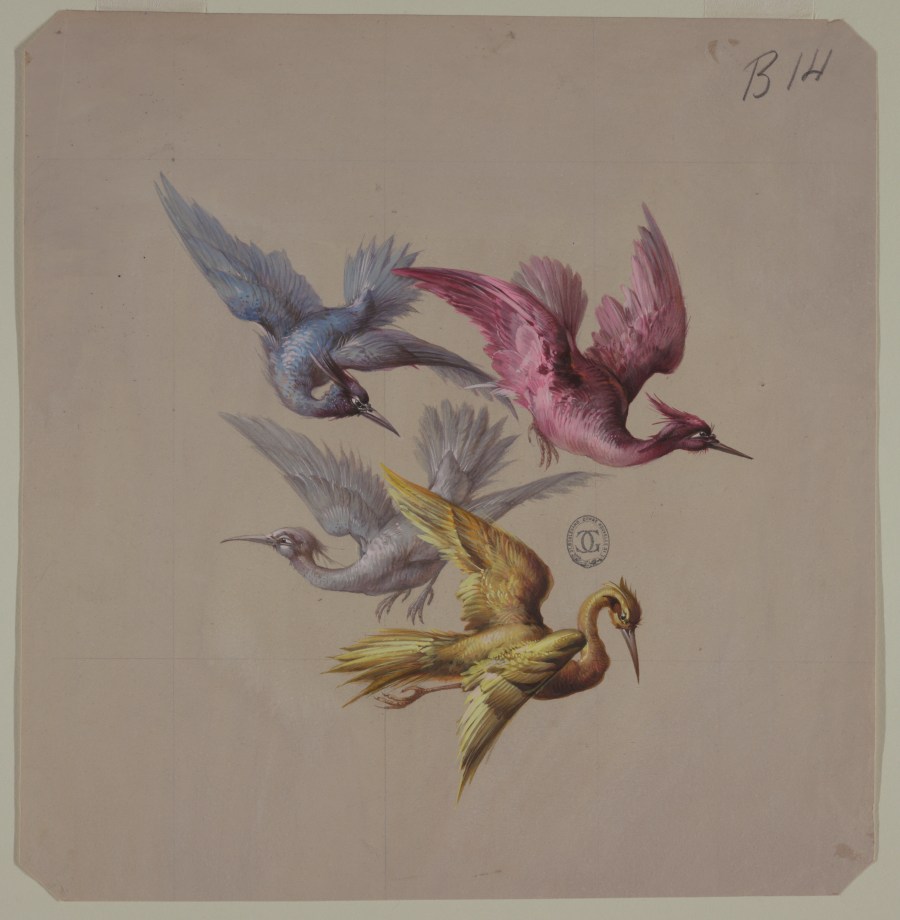
Featured Art: Designs for Wallpaper and Textiles: Birds

1. CRITICAL LEARNING PERIOD

Songbirds, or suboscine Passeriformes, with fixed song repertoires learn to sing in four steps. The steps are studied, in part, because many linguists believe that these same four steps describe human language acquisition.

The first step in song acquisition is called the critical learning period. This is when chicks begin to recognize their parents’ voices along with neighbors of the same species, and they differentiate between those voices and other sounds.

*

My parents were married for three years before I was born, and they lived together for almost three years after. The shape and sound of their love is unknown to me. I have no idea how he courted her or when the courting became something else. I do not remember the words they spoke to each other in the days and months while I lay in my crib, listening.

I know what my mother said to me and what I said back. These are stories I’ve heard often. Before I could talk, I had night terrors, she tells me. I would scream inconsolably in my sleep. The pediatrician said this was normal for some babies. She tells me about the day I choked on bottle milk while lying in my crib, and how the sound of it sent her running to me; how afterwards, I would choke and gag whenever I wanted her to pick me up. It was a sound she could never ignore, she says, eyes squinted theatrically at the memory of my manipulation.

I would stand in my crib and yell (so early! so advanced!) MOM. MOM. MOM. MOM. And then one day, after a moment, DARLENE. I wonder, now, if I sounded like my father when I said it.

Read More

Siccità

By Stephan Jarret

Featured Art: The Hills by Preston Dickinson

To my grandmother, Francesca, the cliffs of Wilmerding, Pennsylvania resembled Italy’s Amalfi coast. Only, when she looked over the edge, the valley was waterless. Not even a polluted stream that dried out in the summer months. “Siccità”—drought—she used to say, when she led me into our backyard and squinted with high-angle menace toward the neighboring town of Pitcairn. At night, the phosphorescent sign of Randy’s Brew House shrouded the valley in faux-oceanic cobalt blue, offering “HOT GIRLS” and “FREE PRETZELS.” Still, the lower hillside was anything but arid—peppered with trees, I thought— so I tried to mention that something was sustaining them. “What?” she’d say, either incredulous or deaf.
Read More

Sisters Peeling

By Julie Henson

Featured Art: A Fisherman’s Daughter by Winslow Homer

Late in the night after my father’s memorial service, my sisters and I stopped our small caravan at a Speedway in the stretch of US-40 between Greencastle and Indianapolis. It was early November.

“Come with me,” my sister Emily said, leading me to the back of her car and opening the trunk. She pointed to a box in the corner. “You want some?” she asked sounding like a drug dealer, which at one point she had been. I saw her slipping back in easy—my dad’s ashes were valuable and sort of dangerous—I felt like it may have even been against Indiana state law to have them, let alone scatter them, though I never checked. When I said nothing, she prodded, “You want even just a little? There’s so much to go around.” Sarah, our oldest sister, was waiting in the passenger seat—she had already been dealt her ash-inheritance. It was late and it was cold; I wanted to go to sleep. Emily looked at me intently. The way the gas station lights slanted cast a shadow across the top of her face, and I could not make out her expression.

“No,” I finally said. “I’m trying to quit.”

The nozzle on the gas pump clicked, and she sighed, shut the trunk.

Read More

Change in Hat or Glove Size

By Darrell Spencer

Featured Art: Twilight in the Wilderness by Frederic Edwin Church

Our joke was either Molly sells a kidney—under the radar, off the books, $40,000 cash up front in England we discovered online, no questions asked, wink-wink, and also, I came to this understanding in my bones, not really all that funny as an option—or reality was we hock our gold.

We hocked it.

Okay, Molly did. Her gold. Every last effing piece of it Molly’s. Earrings. Necklaces, long and dangly and three-tiered, one of them leaf-like, all the chains intertwined and hard to separate. You know how they get twisted up in their boxes like they have a secret life. None of the jewelry rolled or washed gold. Molly did her online research at the library. Brooches, one an open hand, palm out, standing for generosity and giving, one a butterfly whose catch was missing. It had been her mother’s. There was a heart Molly liked to wear on her sleeve. Only one ring. Her grandfather’s on her father’s side. It had a pair of serpents circling an in-set ruby. Brewster was his name, and he had been an M.D. The kind of G.P. parents named their newborns after. The man part of a long line of doctors stretching back to the Civil War. Molly had photos back home in Ohio. The old-timers a bunch of bearded hacksaws, grim butchers.

Read More

Sometimes It Snows In Florida

By Michael Cooper

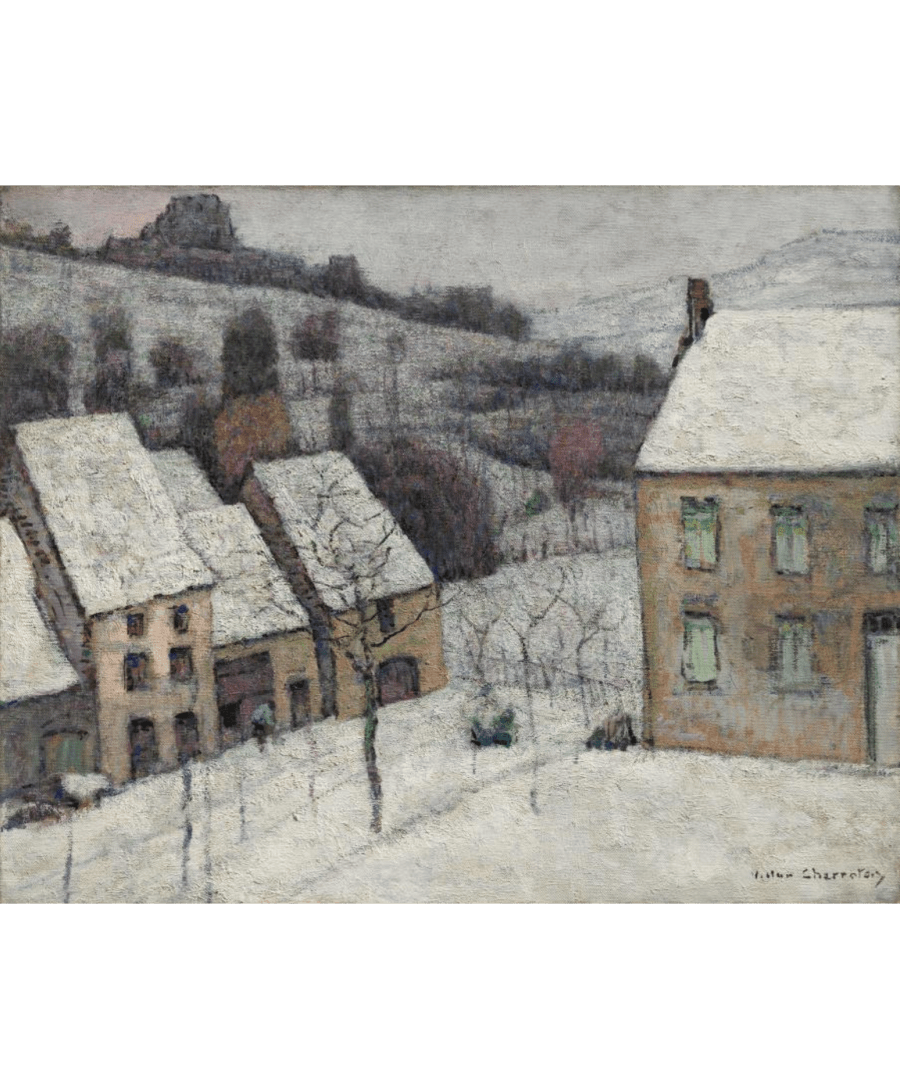
Featured Art: Murol in the Snow by Victor Charreton

The new girl from Vermont said that a woman lived in her shed. The new girl from Vermont brought in a pair of boots to prove it. The boots looked ancient, green suede in a previous incarnation, full suede probably before any of the children in Ms. Gwynn’s class had been born. Now the boots were gray and stiff with duct tape layered up to the edges, leaving only the mossy-looking tips exposed. Terry Wilkins, whom the other children called Terry the Terrible, said it looked as though Sally, the new girl from Vermont, was holding a pair of elf shoes from Middle-earth. The entire class erupted in laughter. Before the show-and-tell session could regress entirely, Ms. Gwynn told the children to quiet down. She told them that they should respect Sally and her story.

The last of the laughter subsided and Sally continued speaking, the shoes nestled in a forearm like pets.

“My father keeps a woman in our shed and these are her shoes.”

Read More

Where My Father Went

By Sandy Gingras
Courtesy National Gallery of Art, Washington

When the funeral director hands my father’s ashes to my mother, she puts the little cardboard box into her pocketbook—the one with all the zippers and buckles. My mother says she’ll hold off on scattering the ashes until maybe the next time my brother comes down from his farm and we’re all together. Maybe we’ll scatter them in the ocean.

“But, for now,” I ask, “Where are you going to put him?”

“In my bedroom closet,” she says.

My parents never shared a bedroom. My father’s room was the converted attic, my mother’s, the converted garage. As far away as they could get from each other within the same house. Putting him in her bedroom closet seems, at once, too remote and too intimate, but I don’t say anything.

Two years pass.

My brother only visits on Christmas and Thanksgiving, which is not the right time to scatter the ashes. It’s never the right time to scatter the ashes.

Read More

The Undersized Negative

By Robert Glick

Selected as winner of the 2014 New Ohio Review Fiction Contest by Aimee Bender

Sometimes the day after Mom’s miscarriage, a chemistry teacher with chin-only stubble interrupts class to tell you he is dying. There were so many reasons not to be anywhere. I, Dr. Watermelon, convened everyone at the abandoned house, which I insisted on calling the sketch house, on account of the Etch A Sketch I had found in a toy chest. My buddy Filbert plopped himself down on one of the oyster chairs; the air clouded with dust mites and dried skin. “Finders, keepers,” he said. We demanded answers of the Harris family from phone bills and colanders, from the oregano scent of the bathroom cleaner, from a postal sack half-full of gas caps. The throat to the fireplace was choked; perhaps a bird’s nest. Rob and Ron each kept one eye perched on the doorless front door, wary of the patriarch Dustin Oskar Harris barging in to reclaim what he once owned. They thought the sketch house itself was sketchy, as if its waxy kitchen linoleum had been responsible for mawing open and swallowing its former occupants. Ron suggested that we get sizzled on the freon from the fridge. Rob agreed; they were repurposers. “Highly toxic,” Filbert said, reluctantly we transitioned to flicking matches at the shelves—flyfishing magazines, nautical books – knowing damp, expecting sulfur, anticipating cartwheels of burn through the air. Filbert, nicknamed for the teratomic testicle lodged like a moon above his kidney, had a talent for fire: me, not so much. I was a Pisces; I went as long as I could underwater.

Filbert’s lit match flew through the air and landed on my crotch. I didn’t want to move. I felt crowned, blinkered by a halo of marsh fog. I observed the flicker of little flame, a prickle of warmth on my jeans. “Huh,” I said. That was my best eloquent admiration for the trajectory of heat and light.

Read More

Tutti Frutti for Me

By Andrea Simon

I’m watching The Adventures of Ozzie and Harriet on the giant Admiral 21-inch console television, and I can’t wait for the commercial to raid the freezer and see if there’s any ice cream. My father, mother, and sister are in the living room; and it’s no use asking them because my father would not answer me, my sister would order me to bring her a bowl of whatever I find, and my mother would say that I should look myself if I want anything that badly. Besides, what I’m longing for does not exist in this small Brooklyn apartment. I need to find tutti frutti ice cream, and the only flavors my mother buys are butter pecan for my father and chocolate for my sister. Every time I tell my mother that I don’t have the same taste as my sister, she seems surprised and says, “Why, I thought chocolate was your favorite.” I always answer her with the truth, “I love vanilla.” But it may as well be tutti frutti because she never listens to me.

The reason I’m crazy with the tutti frutti is because in the show, the Nelsons see a story in the newspaper about a police sergeant who was keeping a lost boy happy with a large tutti frutti cone, entertaining him until his parents showed up. This is the one night the Nelsons decided to forgo dessert in order to cut down on calories. Ricky, the troublemaker, wants tutti frutti badly. Darning socks, wearing a high-necked sweater with a double strand of pearls, Harriet Nelson says, “I haven’t tasted tutti frutti in years.”

Read More

The Darkest Part of the Cloud

By Jessica Langan-Pack

Featured Art: Wheatfield by Georges Braque

My daughter is nine, and she has recently grown taller and lost most of her softness. Now she’s a thin and delicate thing with very straight, very smooth hair that she wears in bangs across her forehead. She is afraid of bees. She is afraid of forest fires, and of strangers, and of a book she read called The Face on the Milk Carton, which is about a little girl who sees her own face on a missing children poster. She is articulate and serious and very imaginative. When she finds out, at the beginning of her summer vacation, that her father is losing his memory, not slowly, or gracefully, but at a possibly alarming rate, what she decides to do is remember everything.

“So that you can tell him?” I ask her. For a few weeks I have been thinking of my head as an empty room of some kind, and sometimes my voice reverberates off its walls. We are sitting in the kitchen eating cereal.

She shrugs. “Just so I don’t forget.” She is at a stage where she has trouble differentiating between other people, real or fictitious, and herself. I wonder if she is afraid of losing her own memory.

Read More
Irgendwo, Nirgendwo

By Dave Madden

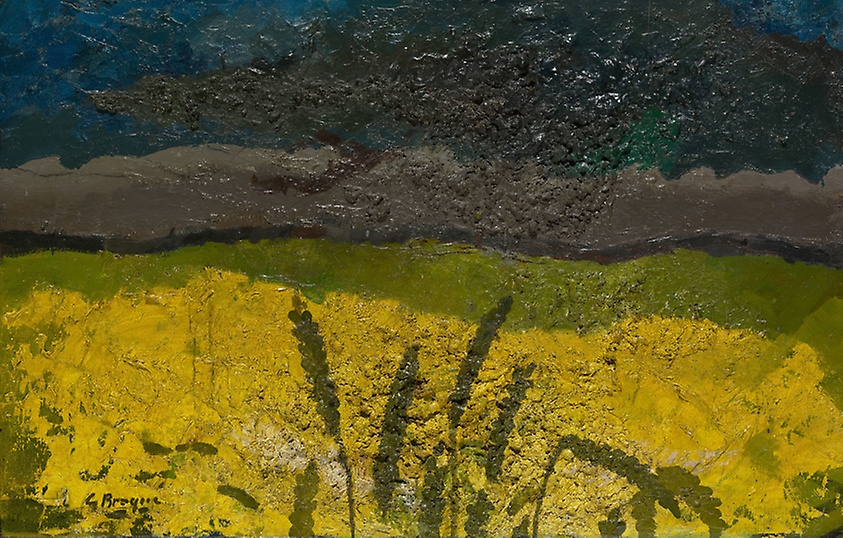
Featured Art: Abstract Landscape by H. Lyman Saÿen

They sit like lumps at the kitchen table covered by a worn and graying cloth, milkdregs ghosting the glass of two tumblers. Their four feet dangle inches above the floor as Opa sucks his horehound. They can hear it slopping around, see it burrowing there behind his potato jowls. They smell the burnt-tire funk of it. It’s July and the brothers are long enough out of school that their stretched and empty afternoons have become kind of boring, they say. Nowadays, the two are mostly bored. Opa’s fat hand claps the table. He tongues his candy to the far end of the mouth and cries nonsense. There is no mostly, he tells them. No kind of. Either you are bored or you are not and if you are it is only you who is to blame. From the other room come the strangled words of their mother shouting at her mother. Opa nudges the boys out to the front porch. There he lowers his flanks onto a teak rocker. There’s an oomph and a curse and the old man begins to teach the boys a game.

Read More
The Skirts and Blouses are Hatched

By  Tam Lin Neville

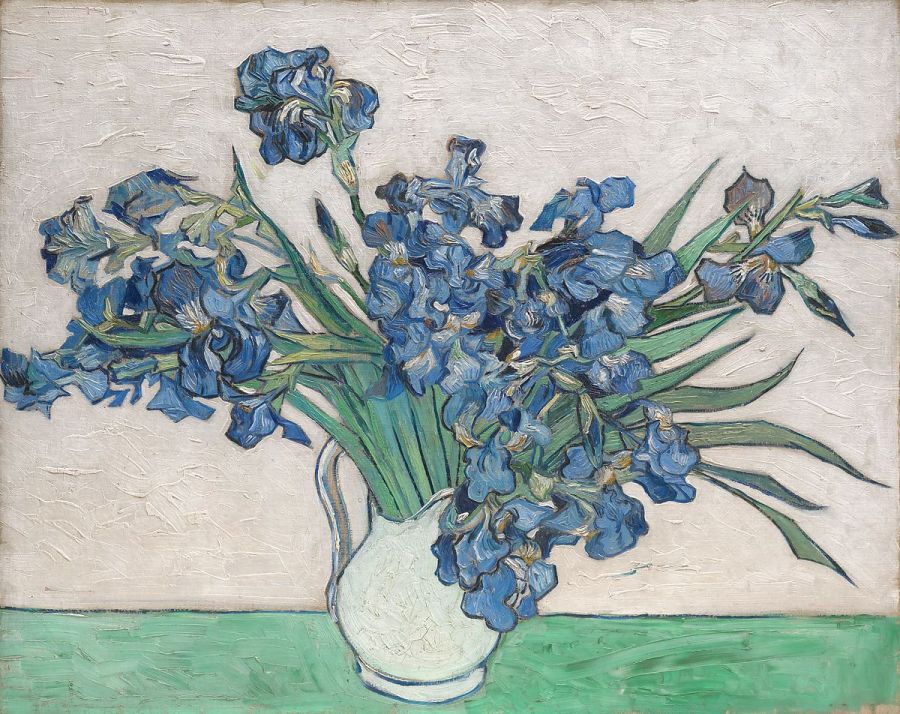
Featured Art: Irises by Van Gogh

My mother had been failing for several years, slowly, but minimized the signs. We, her five grown children, were not to worry or be diverted from our lives. When it came, the time of her dying seemed to open of its own accord, its span neither too short nor too long. We had several weeks to talk, to tie up loose ends before the illness closed in and became a kind of weather we could no longer work around. On December 14, l997 she died at home in the company of her children and grandchildren. Snow was falling in Keene Valley, the small town in the Adirondack Mountains where she had lived for thirty-five years.

Emily Neville, my mother, was a well-known writer for young adults, and my relationship with her, as the oldest, a daughter, and also a writer, is complicated. Sometimes it seems like a difficult poem I have memorized but don’t yet understand. During her lifetime I was wary of such a strong, capable figure so close to me. My Aunt Mary, the sibling closest to my mother in age, once remarked, “As a child there was no point in doing anything—Emily could always do it better.” But she was a gentle person with no heavy-handed ways an oldest child could legitimately dispute, though I did resist her increasingly as I entered my teens. Since she was almost universally liked and respected my opposition put me at odds, not only with my mother, but with everyone I knew.

Read More

Fidelity

By William Lychack

Sent to visit one summer, Charlie and me, eight or nine years old, our mother putting us on a train in Providence, our father waiting on a platform in Detroit, pigeon murmur of loudspeakers in the station, man carrying our bags out into late afternoon light, click of boot heels across the concrete of parking garage, three of us riding out of the city in that old Impala of his, car floating big and
loose as a motorboat in the dusk, radial drone of road and traffic under everything, burgers and fries in Flint, gas station in Saginaw, another hour to Grayling, Portage Lake, and the fishing cabin with our father at last.

Read More
The Down

By Molly Ficek

Featured Art: Bath of Venus by Sir Edward Burne-Jones

My mother is immersed in membrane when I find her. Eggs cover her body, some cracked and spilling their spoils, some whole, resting on her belly, her breasts. White flecks of eggshells gravel her skin and the runnings of yellow yolks have dried, look like the peelings of a summer burn. Her head is underneath this mess when I look over the side of the tub.

“Mom?”

She surfaces, wipes film back into her hair, the glossy middle of the egg from her cheek. She blinks.

“What are you doing?” I ask.

She looks at me as if it’s quite obvious, which I guess it is. She is taking a bath in chicken eggs, dozens and dozens of them.

“I heard it’s good for your skin,” she says.

“Um…for your hair, maybe. Egg whites are supposed to be good for your hair.”

“Hmm,” she says, inhales a big gulp of air, and sloshes down under the eggs, the water beneath them. She waves her hand up at me. Eggs spill over the sides of the tub and drop onto the bathroom floor, cracking open.

Read More

What You Find, If You Find It

By Jeff P. Jones

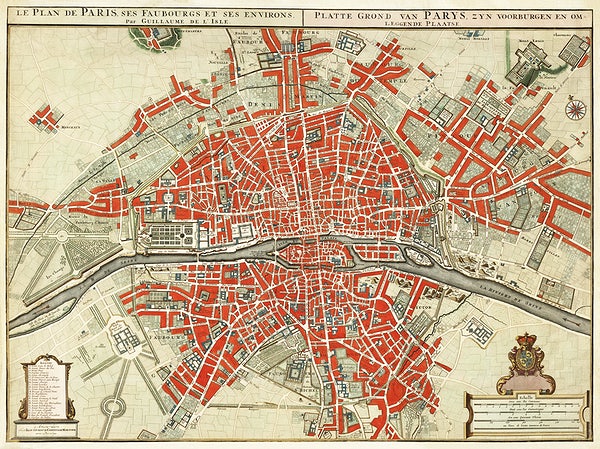
Featured Image: “Paris Map in Dutch” by Guillaume Delisle

As a letter carrier, she delivered non-urgent messages to people’s houses. Her work brought her past gates, across yards, onto porches, into foyers. She never looked in windows or rang doorbells but on request would hand mail to a resident encountered outside as she exchanged small talk. She would then move on, readying the next house’s letters and advertisements, imagining fingertips releasing sealed flaps, creases tearing, messages sliding into waiting hands.

Each week her teenaged son caused some new havoc. One night he stole her car and was stopped by police forty miles away, coursing a college town’s streets with three friends and a bottle of vodka. The four boys cleaned her gutters the next weekend as she grilled hamburgers and made jokes about her prematurely gray hair.

She sipped her morning coffee and pretended to read the paper as she watched him eat toast.

In his last year of high school he had to transfer schools because of attendance problems. He brought home a stray mutt that he forgot to feed. He began to take phone calls from a man with a comically gravelly voice named Staff Sergeant Thigpen. The son carried the receiver into his room and shut the door. Posters of grimfaced warriors appeared on his walls. He exterminated the squirrels and birds from the backyard with an air rifle. He rarely answered her in a full sentence. In the summer she drove him to the airport. He wore a new pair of running shoes and carried no suitcase.

Read More

The Last Speaker of the Language

by Carol Anshaw

Featured image: Fernand Lungren. In the Café c. 1882-1884. The Art Institute of Chicago.

All right. Here we go.

Darlyn teeters high on a swayback wooden ladder she has dragged in from her mother’s garage. From here she can reach around blindly on top of the kitchen cabinets. She has struck pay dirt—a tidy arrangement of small, flat bottles. She doesn’t have to look to know they will all be pints of 5 O’Clock vodka.

She backs down the ladder, finds a grocery bag, goes back up and tosses in every bottle she can reach. Then she moves the ladder further along the way and clears out the bottles above those cabinets. She pours the liquor down the drain in the sink. 5 O’Clock is not for the amateur drinker. When she has the presence of mind, Darlyn’s mother filters it through a Brita, then mixes it with lime juice and ice and ginger ale, her version of a Suffering Bastard. After a while, though, she drops the lime and the niceties and in the end skips even the glass.

Read More

On the Strand

by Dave Kim

Feature image: Edgar Degas. Beach at Low Tide (Mouth of the River), 1869. The Art Institute of Chicago.

My mother’s boyfriend was a man named Bang. I never learned his first name. He’d been an officer in the Korean army before coming to the States, and he would yank me out of bed at six-thirty every morning to do jumping jacks. I was a doughy nine-year-old and he was trying to make me leaner and tougher. If I got angry, he would dare me to hit him and stand up for myself, get it out of my system. On Sundays we’d go to his boxing gym to watch the men pound each other to pieces, which terrified me at first and then made me dream of days when I’d be big enough to put on gloves and whomp Bang in the gut. I needed a good ass-kicking, he would tease me in his throaty Korean. Anytime I wanted, I could challenge him. Mom didn’t get involved.

The three of us went to Santa Monica Beach one Saturday afternoon to ride our bikes on the Strand. Bang would take me fishing on the pier sometimes and when we rode past it that day, I thought about how much I would rather be out there with a basket of calamari and a cherry Icee, watching our poles nod on the railing. It was one of those perfect afternoons when the California coast looked way better in real life than on the glossy postcards they sold on the boardwalk. Couples were stretched out on the sand, half-hidden under candy-colored parasols. The sky was ablaze in orange light. But I didn’t care about the scenery. All I really saw was this endless bike path and its dashed yellow divider. The back wheel on my hand-me-down Schwinn was grazing the brake pad with every rotation and I lagged at least a hundred yards behind.

Read More
July 4th, 1984

By Maggie Mitchell

Featured art: Figures by Benjamin F. Berlin

Maddy is thirteen, almost fourteen. Her chest is as flat as a boy’s and she does not own a pair of Jordache jeans.

“I hate Fridays,” she tells her mother. What she means is that she hates everything.

“I know you do,” says Jude, understanding perfectly. “I’m not sure what you want me to do about it.”

“It feels like I’m in prison. There aren’t any windows in there.” She’s referring to her room behind the bar, to which she is more strictly confined than usual on Friday nights: Jude insists that she stay out of the way when it’s crowded. “I can hear people but I can’t see them.”

“Why would you want to see them? They’re adults at a bar.”

“But that’s all there ever is,” Maddy rails, not even caring if she makes sense. “Adults at a bar. I wish we could be normal.”

“That’s what you keep saying. You tell me what normal is, and I’ll see what we can do.”

Maddy whirls around and storms into her room behind the bar, daring to slam the door. She knows only what normal isn’t.

Read More

Amerikanka

By Maria Kuznetsova

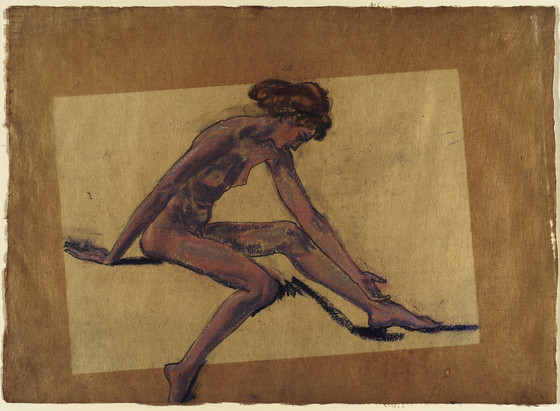
Featured art: Seated Female Nude in Profile, Bending Forward by Arthur Bowen Davies

I met a man in Russia, after my father’s funeral. It was only appropriate.

Papa always knew how to make things harder for me and I didn’t see why his death should be an exception. This is how it happened: after the service, I was taking a walk through the cemetery, hoping to get lost. The throng of admirers and chemistry colleagues had left long before, and it was just me there, staring at the grave of this little girl who died on her second birthday. I don’t know how long I must have been standing there, considering this, when I heard a voice say, “Excuse me, Miss. You dropped this. And this. And this.” A man came up from behind, holding my wallet, my passport, and the headphones from the airplane. He gestured toward my purse, which was hanging open.

Read More

Eight Photographs

By Kim Adrian

Featured Art: The Child’s Bath by Mary Cassatt

The current set of complications involves a three-unit bridge—the kind a dentist puts in your mouth. Actually, I’m talking about half of a six-unit bridge that at some point during my mother’s cleaning rituals got cracked down the middle. In any case, my mother swallowed this thing while she was driving out from Chicago after my sister kicked her out. She was taking a handful of pills when the bridge, which was loose, dislodged and got swept down her esophagus.

You see, already, how complicated?

Three-unit bridges are weighty little constructions made of porcelain and gold. At the base, where they fit into the gumline, they are, as my mother puts it, “sharp as razors.” I don’t think they are actually that sharp, but that the metal tapers to a very thin point is certainly the case.

Read More

From The Presence of Their Passing

By Andrew Mossin

Featured Art: The Old World by Creative Commons

I am unable—words can’t recover it. A landscape back of those who carried me through my first days: mother, that “she” who bore me. The extrinsic realism of these few facts I know and have preserved: I was born in the Hospital for Children in Athens, Greece on April 20, 1958. My mother’s name, Angeliki Sakkas, became known to me in my mid-20’s when my father presented me with my birth certificate and an index card on which her name and that of my father—Efthimois Kooroubis—were written. Initial knowledge of the circumstances of my birth parents came to me from my adoptive mother, Iris. I was perhaps five or six, had already come to understand that my place in our household was pre-emptive, uncertain, dependent on the fluctuations of my mother’s temperament. One understands so little at the time of each event, but I remember her hands holding the book close to me as we sat together on the sofa one afternoon (a cup of tea just made? some pieces of orange left on the plate from lunch? what did she wear? how did she move into the light from outside?) and she tried to explain my origins. In one version, my birth mother and father were peasants who lived in the countryside, not far from Athens. One day my father accosted my mother in an olive grove near her home and took her into the field and raped her. When she became pregnant, my father (who lived in a nearby town) refused to help and abandoned her to return to the city. My mother traveled to Athens to find him, without luck.

Read More