Molting

By Henrick Karoliszyn
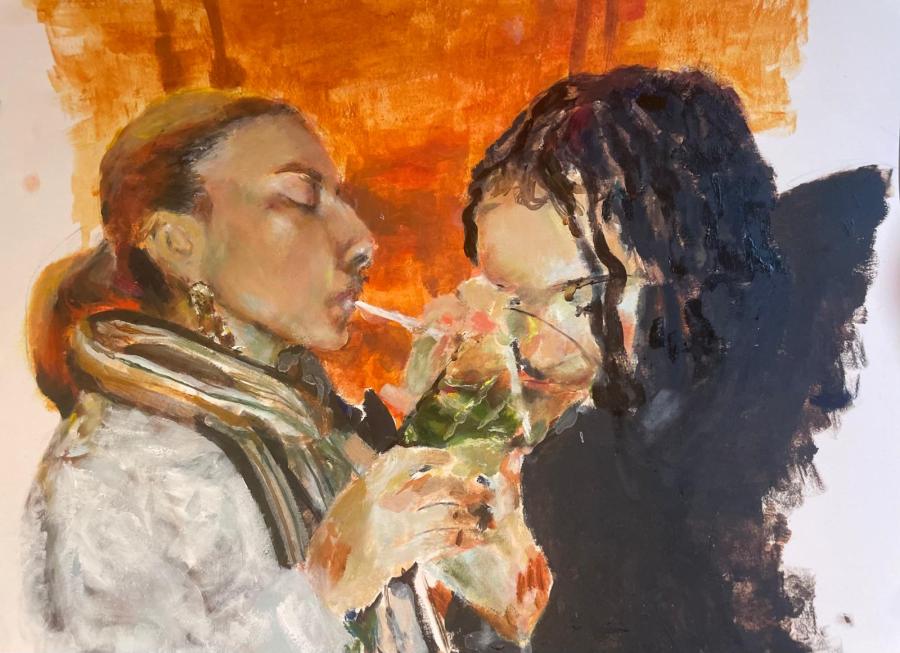
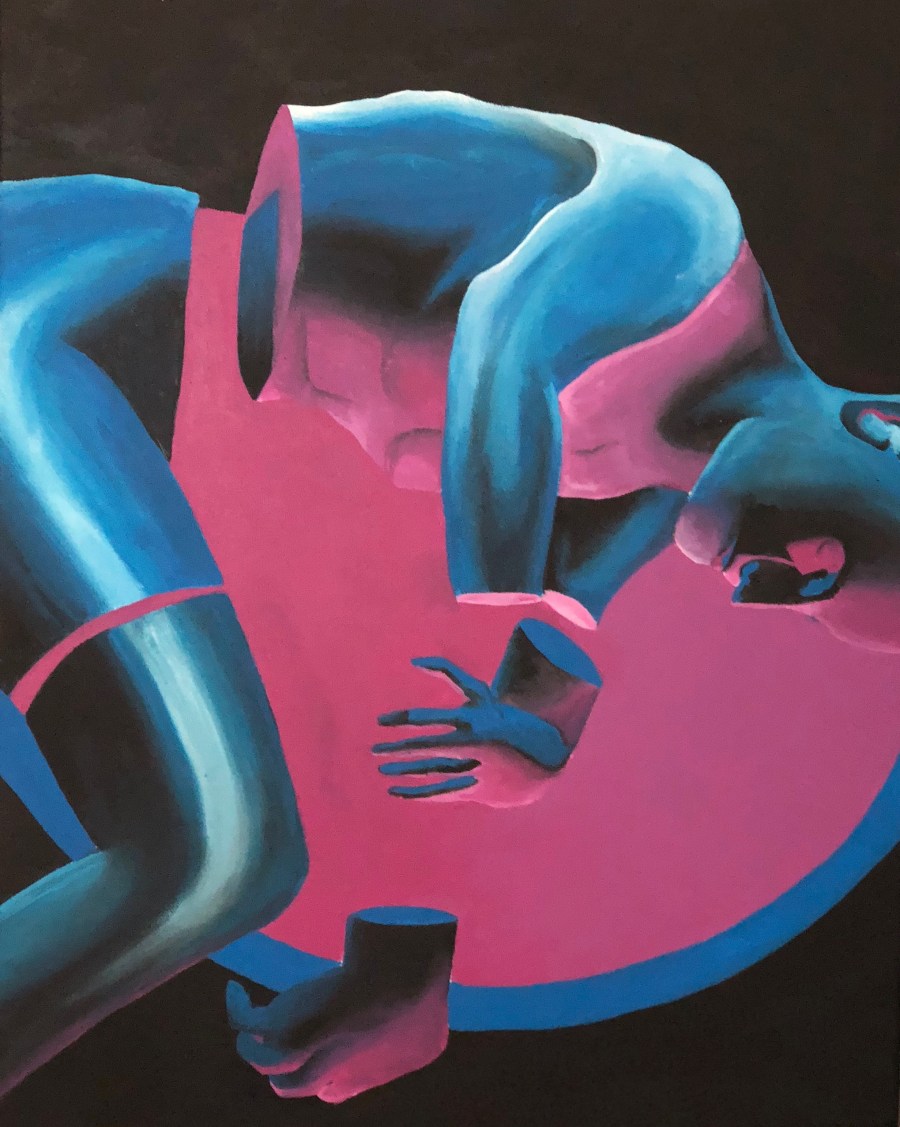
Featured Art: “Friends” by Mia Broecke

Janice tells me about the bearded dragon. She explains that Melvin, wheat-yellow with the face of a perpetual grump, stopped eating crickets. As he’s lazing about under his heat lamp, she swears his outer layer is transforming into a shade of brown right before her eyes. She calls it “emotional molting,” though I don’t think that’s a thing, and I didn’t know what feelings would cause the reptile to change colors. 

Janice is my sister, but she doesn’t feel like my sister. She feels like a stranger in a train car issuing favored life updates (her pet changing skin tone). She talks about the weather in Chicago (“shrinkage-level-emergency” cold) and the weather in her apartment (“boiling toad in pot” hot), and a trip she planned for Saint Kitts (“Henry Cavill” degrees in December). She talks about disappointing politicians in clipped, bumper sticker fashion. She talks about the disappointing Cubs in long-winded run-on sentences. She talks about the disappointing Netflix series based on a book she loved like it was a false prophet.  

She doesn’t talk about Mom anymore. 

Read More

Butterscotch

By Carlene Moore
Featured Art: “Partner Pitching” by Lesley Weston

Nine 

The night my dad walked out was two weeks before Halloween. My mom and I had finished my costume, a porcupine, that afternoon and I was so excited to show him. But I stopped short in the hall when I heard my mother shriek. “You smell like perfume. Perfume.” 

“What are you on about?” My dad’s words were soft like caramel. He had been drinking.  

“Who is she? You know I’ll find out.” 

“I was twenty when you got pregnant. That was too early. A man needs to sow his seeds. It’s only natural.” 

My mom’s laugh probably tasted as bitter as it sounded. “Because I’m the only one responsible for that pregnancy?” 

“I didn’t want it. And then you went and did it again two years later.” 

“If you don’t want it, then go.” 

I don’t think she thought he’d leave. But he did. He stormed right past me, my quills scraping the wall when I backed up to let him through. He didn’t even notice or comment on the fact that his daughter was “spectacularly spikey” as my mom had said earlier that day.  

I chased him into the driveway. “Dad. Dad! Don’t you want me?” 

His eyes met mine above the hood of his car. “Aw kitten,” he said, shaking his head. But I wasn’t a cat. I was a porcupine.  

My house filled with tears and shame and cursing for a few years after that. During which I learned that being wanted, above all else, is the key to happiness. There’s a power in it. 

Read More

Love Locks 

By Leslie Pietrzyk

“It’s a red bird,” Cassie shouts, pointing at a bush ten feet ahead as the startled bird swoops to higher tree branches. Cassie’s constantly shouting or thrashing or bouncing around. Adam wants to appreciate that his daughter’s active and noisy, tries to understand she’ll do well in boardrooms and on teams if she can impose presence. He, himself, started out a quiet boy, an observer, prone to silent, secretive rages. Not until college did he force himself to learn to speak up. Life got better.

“Yes, a cardinal,” he says.

Read More

Quad Stunt

By Michael Lutz

When dad first explained the stunt to me, I didn’t understand it. I acted like I did, but I could tell he knew the truth. He left the dining room, came back with a piece of paper and a pencil and started drawing.  

“See, I’ll be riding the quad coming this way, hit the ramp here,” he said, drawing the way with a line, “And you’ll be laying down here, where this x is, in the ditch. And I’ll jump through the air over you. The best part is, we’ll do it right when mom is pulling into the driveway to pick you up, so she’ll get to see it.” 

I looked at dad’s drawing of the ATV—which was always what mom called it, for some reason. I imagined it flying over me, the metal frame and handlebars and motor and 4 big tires. We had just finished eating my favorite dinner, peanut butter and jelly crackers, which normally makes me happy, but dad talking about the stunt made my stomach feel sick. “I don’t think mom would like that.” 

Read More

Dear Yara

By Siamak Vossoughi
Featured Art: “Mirage in the Sky” by Gina Gidaro

Dear Yara,

I figure you ought to know something about the year you went from two to three, and how I would go quiet sometimes when we were playing or reading or walking somewhere together. Some days I’d see the kids in Gaza in you and I’d take the moment we were in and hold it as the last moment one of them had before being killed. I’d breathe through it, telling myself to do two things, as evenly as I could, fifty-fifty: Stay in the moment with you, because you deserved that. And recognize it was true, that each one of them had, in the moments just before, been just as alive as the aliveness in you. And something would happen to the moment with you then. It would hold all of who you were, and I would come as close as I could to touching that. I’d get as close as I could to understanding the thing the mothers and fathers there had lost. 

Keep breathing, keep breathing, I’d tell myself. As big as the feeling of the death of children was, it was important to stay small. It was wonderful to stay small with you, because there was plenty that was still big. There would be days that year when I would be reading about Gaza just before you came home from daycare with your mother, and it would seem like a long way to travel to go from where children were dying to playing with you, but when I got it right, it wasn’t a long way at all. It was love both ways. If those children deserved to live, then let’s you and me see what kind of funny business Blue Bunny and Ruffles the Dog can get up to. Those children were in our games all that year. They were there because I was thinking that someday I would tell you about them the same way I was telling you stories of the animals who were lining up for school. I didn’t know when that would be. This was also the year that you started having nightmares. You’d wake up early and tell us that a scary monster had been chasing you. I would quietly admire your ability to articulate your fear. But I’d wonder too if you were getting it from me. I’d wonder if you could tell the way I was carrying around the kids I was reading about at the same time that I was playing with you. If you were, that seemed like a decent way to start having nightmares. I remember when I was nine and the men who I’d learned had tortured my father in prison in Iran replaced monsters in my dreams. I said goodbye to monsters then. Now you were saying hello to them, but your bravery made me wonder if you knew the world could be worse.  That year we tried to let you in on it as carefully as we could. Back in November, we went to a family peace march on Beacon Hill, led by Jewish Voices for Peace. We taught you what peace meant. There were kids there holding up signs saying Stop Bombing Children. I knew you might be one of them in a few years, and I didn’t mind that I’d have to tell you about war by then. It was the same as sharing a lot of beautiful things with you that day, like the view of the Cascade Mountains from the top of the hill and the circle of people gathered outside the library. I thought about how to have the right balance between anger and sadness when I told you. I looked forward to your anger because there is a time in a person’s life when anger can rightly feel like strength, and five, six, seven, or eight is right about in that sweet spot. It’s because anger is likely to be an appropriate feeling at that age, at least the kind that’s just discovered the foolishness or ugliness of the world. But I looked forward to your sadness too, because sadness carried me farther than anger did. There were more stories to come out of it for me. There was more singing too. I thought about how I was going to have to pay close attention to how sadness or anger helped or got in the way when you learned about war and everything else, but the nice thing was knowing that if I ever wasn’t sure which one you needed, I could always ask.

Read More

Ghee

By Trent Lewin

Heated ghee crackles in a pan. Smell of soft fat circulates through the kitchen.

Upstairs, Bakshi opens the window and smokes. Across the street, an ice cream van sits in a driveway, same place it’s been for ten years. The decals on the side are fading.

When the ghee is hot, add wheat flour. I cook the mixture until it’s golden. Water comes next, then sugar.

When I was young, in the gurdwara, I would sit at the back of the hall, unwilling to be the child that gave out napkins to the cross-legged people. Just hand each person a napkin and move on, my father would tell me. But why is this necessary? I’d ask. Why do they need napkins? 

Because prasad is full of fat. It’s greasy. And it’s holy. Don’t forget that it’s holy.  

In the gurdwara, you do not drop prasad. It is a holy food when made in a holy place, and if you drop some on the carpet or on your clothes, you pick it up and eat it, whether it’s dirty or not. 

Read More

Something You Should Know

By Swathi Desai

The email from Kalpana’s niece showed up at the top of her personal inbox. There were no other addressees and only one Cc appeared displaying her niece’s email address. The subject line read: Something You Should Know. Kalpana thought the subject odd, but she closed the email without reading it; she didn’t have time this morning. Her day was filled with meetings; the email would have to wait until tonight when she returned home.

The last time she received an email from Jyoti was after her high school graduation, about ten years ago. Unlike this email, that one was sent en masse, to relatives and family friends thanking them for their generous graduation gifts. All of the addresses, some fifty or sixty of them, were clearly displayed in the recipient line. Kalpana recalled that Jyoti excelled in both academics and the arts, graduating from high school at sixteen and wanting to use her talents to “make the world a more beautiful place,” as she’d written in her thank you email. She added that she would be thinking of them all as she went off to study architecture at Cornell. 

Read More

Essay: The lines, the borders

By Julia Ferry

  1. Beginning 

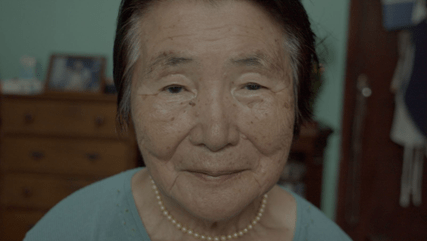
I shrink the size of the image. Now I feel that it reveals too much, even though that was precisely my intention when I photographed my grandmother. It is her daughter, who died when I was only 5 years old, who I wanted to find through this face. For a while I’ve started searching for my mother and decided to start with hers. I wanted to get as close as possible to this person who, to me, is distant and silent. 

I’ve never known the name of the city where she was born, who her parents were, or how old she was when she emigrated to Brazil. I don’t know what it was like for her to raise six Brazilian children, all born in a Japanese colony where she lived and worked for 40 years. We’ve exchanged a few words, especially about her second daughter. I think about this silence and wonder whether it is the generations, the languages, the apprehension, or the loss that separates us. 

Read More

The News from North Korea 

By Jim Marino

We’re three bites into not-quite-Christmas pie when my mother breaks into the epic tale of Dad leaving her for another woman. Sometimes it’s a blonde, sometimes a spurious redhead, depending on how inspiration moves the teller. Like all great oral epics, it’s founded on a myth. My father’s been dead almost four years. The other woman he left my mother for was an inoperable brain tumor. But who wants to hear that? 

“All those sexy young dental hygienists, and in the end? He leaves me for a patient.” Mom wags her fork like a finger, emphasizing, demanding attention, making just one point more. “This little Puerto Rican with big fake tits and fake blonde hair and two impacted molars. Consuela. And would you believe the worst part?” 

My husband wears the Jesuit-school poker face I envy so, eyebrows raised as if he’s just been told some modestly interesting fact. Eddie, approximately 2.4 years old, is busy experimenting with whipped cream between his fingers, and my sister Judy, who drove Mom the two days from Miami, still looks a little dazed. But Larry from work hangs on Mom’s every word.  

Read More

Essay: Far From a Mother 

By Madeline Simms
Featured Art: “Eye of Horus” by Ryan Davis

It is a Wednesday when I ask for help in the kitchen, a Tuesday night for my mother.  Winter flirts with spring as she sends a photo of the Monkey Bread recipe across the Atlantic. It reaches me and my dry bones in the wet grey of Ireland. I am looking for anything sweet—  

She sends a good night text when I send Good morning, alongside a picture of Rian and Jonah climbing over my groggy body. We laugh countries apart. Day or night, it is winter-dark wherever we are. I send her a video of the boys licking my face as if they are dogs, and we laugh counties apart. Our well-wishing is a promise of rising, be it the sun, the bread. I think of the day ahead of me filled with Hot Wheels, dropping off the boys at school, picking them up, snacks, spills, a likely tear or two—author unknown.  

During the past few months as an au pair, I’ve grown closer to my mother. She sends me suggestions for sneaking veggies onto the boys’ picky tongues, fun games to fill our long days together. I can’t help but wonder if she feels this too, comradery despite the distance. 

Read More

Animal Control

By Anna Sheffer
Featured Art: “The Bride” by Alex Brice

The buffalo’s tail swished. Clumps of sod mashed around in its mouth. Dana watched through the sliding glass door, safely hidden behind the curtains. If she wasn’t so afraid, it would have been funny, spying on this creature demolishing their yard as if it were an inconsiderate neighbor. But the welcome pamphlet had said these animals were unpredictable—not to be approached under any circumstance—so she was on hold with the nature preserve, listening to jazz flute riffs while wrapped in the curtains she had bought less than a month ago.  

Libby materialized, round four-year-old stomach protruding in front of her. A plastic horse figurine dangled by its mane from her closed fist. “Mommy, what are you doing?” She had been playing quietly in front of the TV just minutes ago; why couldn’t she go back to whatever she’d been up to?  

Before Dana could reply, Libby peeked around the curtain and let out a delighted squeal. “Look, mommy, a buffafwo! Did you see it?” 

Read More

Essay: Angling

“Fie on the witch!” cried a merry girl,
    As they rounded the point where Goody Cole
Sat by her door with her wheel atwirl,
    A bent and blear-eyed poor old soul.
—from “Wreck of Rivermouth” by John Greenleaf Whittier

By Matt Miller
Featured Art: “Close Up – Spatial Neighborhoods” by Alex Brice

The world will work to twirl girls into witches, or they will twirl themselves into witches, or they will twirl and turn away from the witch they could be, would be if not for the world saying no, the world saying that their lives are their own fault. Goody Cole, the witch of Hampton, walks the marshes, haunts the dune grasses, watches the ships from the granite perch above the Atlantic shoreline of Little Boars’ Head. She is looking for her name.  

“I can’t back,” my father said and so I thought this was a story about my father. In the old stories, every father is an ogre, an ogre of absence or an ogre of presence. Today he was present and being pulled out into the Atlantic, borne upon his own currents.   

Read More

Vernonox

By Rick Andrews

<BEGIN AT MARK 1> 

                                  Thank you. I appreciate it. Thank you. You’re too kind.
                 Thanks so much, everyone. <GESTURE TO CROWD>. There’s an
                 excitement in the air tonight. Can you feel it? 
                                  Let’s give it up one more time for our amazing speakers,
                shall we? Let them hear it, folks!  

<LET APPLAUSE DIE DOWN

                                  You know, people ask me why I started Vernonox. They
                 come up to me in the lobby, they recognize me at bars, in airports.
                 People all over the world stop me on the street and say “Michael—
                 Michael D. Powers—why did you start Vernonox?” I tell them
                 there are three reasons. 

Read More

Essay: Acres of Gold

By Katharine L. Wiegele

Dear Friend, it began. 

Around the last week of April in 1944, farmers around the country received a letter from the DeKalb Ag seed company. 

Twelve common kernels of corn would mean nothing to you, but the kernels in this envelope are far from being common. In fact, they are special seed kernels of a new DeKalb hybrid variety. […] Put them in safe keeping until you plant corn. This seed will produce a hybrid which neither you nor your neighbors have ever seen. 

Stapled to the letter was a small envelope containing twelve seeds. 

* * * 

A seed is an embryo. Every farmer and gardener since the Mesopotamians chose seeds to save and replant the following year. This allowed people to stop roaming around looking for food in the wild. We passed seeds from hand to hand every year in a chain of nearly 450 generations. Parents and grandparents died, but the seeds continued. If the seed was lost, we were lost.  

Read More

Essay: The Journey and Return of Elizabeth Fisher 

By Elle Therese Napolitano

In Elizabeth Fisher’s 1970 story, “A Wall Around Her,” published in Aphra (Volume 4, Number 4), the main character pounds on the locked door of a house where she’s rented a room. As she waits for someone to respond, she is overcome by crushing loneliness and futility. “I never was in, never was and never will be, always outside, always trying to get in, beating with my fists, pleading, ‘Let me in. Let me in.’ Why don’t I just give up the struggle, stop trying to reach people, to be a human being.” 

Elizabeth Fisher was a writer, editor, translator, publisher, teacher and feminist, but these days, she is best known—and unknown, it turns out—for sparking Ursula K. Le Guin’s 1986 essay, “The Carrier Bag Theory of Fiction,” republished after Le Guin’s death as a tiny book (Ignota, 2019). It’s safe to say that now, thousands of people have seen her name in print—Le Guin names her right there in her resurging essay, along with a partial title of Fisher’s book, Woman’s Creation (though the publication date is wrong)—in which she puts forth “The Carrier Bag Theory of Evolution.” Since Le Guin’s essay was reprinted, new writings about her essay have proliferated. Nearly all mention Fisher. But people don’t seem to know anything about her. There’s all this stuff out there about carrier bags and Ursula Le Guin, but what about Elizabeth Fisher? What about her life?  

Read More
Butter

By Meghan Chou

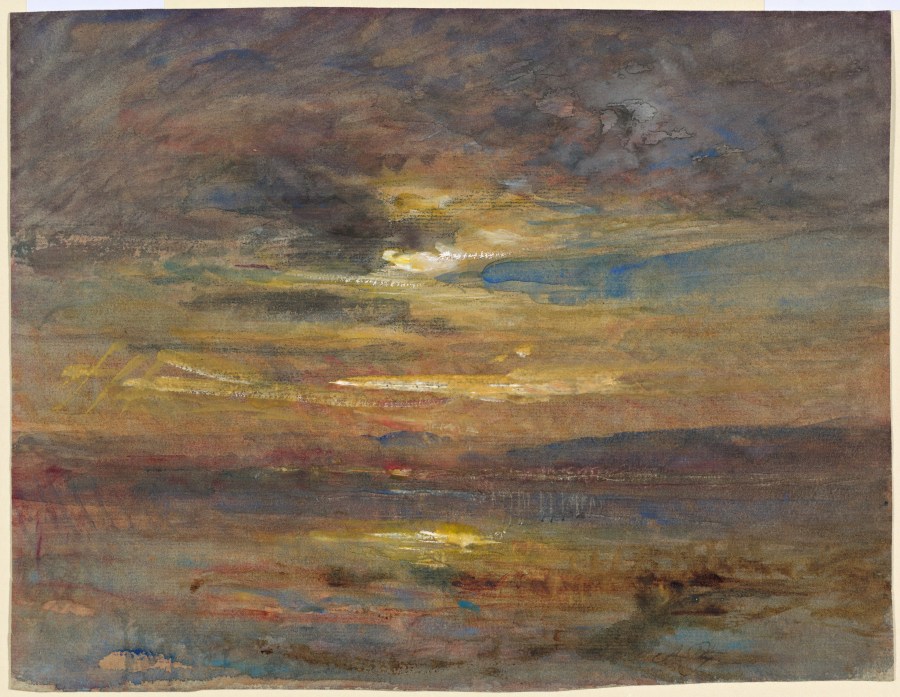
Featured Art: Stephen Reichert, Untitled, 2014. Oil on canvas, 12″ x 12″. “Cirlce” series.

I first saw her aboard the JADE PRINCESS, a cruise ship several miles off the coast of New Hampshire. She wore ribbons in her hair and a leather choker around her neck that read GIVE ME A REASON. The two of us made up the entire wedding party. I played the roles of daughter and maid of honor and she, her father’s best man. The other guests were staff on their dinner break and a couple gamblers, vying for a seat at the blackjack table.

The captain kept the ceremony short (on autopilot like his ship). Ma had already been married twice, yet for Husband #3, she still felt giddy and hopeful. Where I saw folding chairs and a wrinkled backdrop, she saw romance. Where I saw a cardboard cutout of her last boyfriend, she saw the love of her life. When the time came to exchange vows, I handed Ma the wedding band for her five-second fiancé, a mood ring from LOST & FOUND that glowed black in my sweaty hands. The best man gave her father a light-up jelly ring and our parents sealed it all with a kiss.

“Faye,” she introduced herself at the reception, my stepsister before I learned her name.

“Lenny.”

Read More

The Tooth

By Colton Huelle

One morning, as he was filling up the electric tea kettle, Lev Bradley discovered a khaki-colored tooth in the corner of his kitchen sink. Mistaking it at first for a pebble, he plucked it up with a bemused chuckle. That was when he noticed the few spots of pearly sheen and the distinctly tooth-like dimples on the upper surface. A shock of revulsion shot down Lev’s spine. He flinched and flicked the tooth back into the sink, where it struck a brown diner mug with a shrill ping.

When the initial shock subsided, he peered once more into the sink to confirm what he had seen. It looked somewhat small for a tooth, but what did he know? He retrieved a pair of yellow dish gloves and, steeling himself with a deep breath, once again picked up the tooth.

“Where did you come from, little guy?” he asked it.

Read More

Like Communion

By Ellen Skirvin 

My dad warned us that aliens were watching him before he disappeared. He also had checked himself into a psychiatric hospital five times throughout my sixteen-year lifetime. During his last visit to the hospital, the doctors said he vanished in the night. His clothes were left in his dresser. The framed photo of my sister and me left on his bedside table. None of the night nurses saw him leave. There were no tied up sheets found dangling outside his open window. The doctors reminded our family that my dad had admitted himself voluntarily and was free to leave at any time. There was nothing they could do. My mom didn’t seem worried at first. He’d left and come back before. One time he left for almost a week and returned with a pet frog that died the next day. Another time he traveled halfway across the country to tour a NASA museum. He needed space; he’d tell us later. Most of the time he checked himself into the hospital for a long weekend, casually packing his car as if he were leaving for a fishing trip.  

Read More
Ground Control

By Lesa Hastings

Everyone has to start somewhere. I began as a child stalker, or rather an accomplice to my mom’s propensity for stalking.

We first saw the man we called “Tony 86” parked in the dirt lot rest stop adjacent to the motel my dad would go to after fighting with my mom. After he left us, it became the meeting point for my parents to exchange me and my brother for the occasional weekend. Mom called it a fleabag motel for lowlifes.

“Late as usual,” Mom said. Dad was late enough I wondered if he was actually coming. He was late a lot, but this time he was really late. I’d never stayed in a motel before and made up stories about the people we’d see coming and going while waiting for Dad. Minutes passed as I watched a couple argue on the second-floor balcony, then embrace in a farewell, the woman walking away with the man holding her hand as long as her arm would stretch, until she moved out of reach. Mom had stopped nagging about Dad being late, distracted by something.

Read More

Hand-Me-Downs

By Shaun Haurin

Opal had an annoying habit of leaving stuff she no longer wanted on our doorstep. What’s more, she refused to call ahead or send a warning text. She wouldn’t even ring the bell. (She once gave us a partial gallon of rainbow water ice on a warm spring day, and it wasn’t until a neighbor kid spotted it staining our stoop like an oil slick that we became aware of the leaky treat, accompanied by a sticky caravan of ants.) “It’s just Opal’s way,” was how my wife explained it to me the first few times I opened the front door and nearly tripped over one of her sister’s “offerings.” “Tell her we have enough junk of our own,” I would say, or some cranky comment along those lines. “She can take it to a flea market.” Wendy would just roll her wide-set eyes and smile her eternally camera-ready smile. “You’re missing the point, Tom. She doesn’t want to sell her stuff to strangers. She wants family to have it.” “But what if family doesn’t want it?” I’d press. At which point Wendy, who was likely late for an audition, would cut the conversation short. She was done defending her sister. Not that Opal wasn’t a bona fide blackbelt when it came to verbally defending herself.

On bad days, I thought of my sister-in-law as a mangy stray for whom depositing her gleefully eviscerated prey was a sign of great respect. On slightly better days, I thought of her as a kind of half-assed Santa Claus. Not in a million years would we ask for the sort of gifts we were routinely given: A trash bag full of bucatini pool noodles (we didn’t have a pool); a cast-iron fondue pot (Wendy was lactose intolerant); an “autographed” portrait of Kevin Costner atop a horse, dressed in full-blown Dances with Wolves regalia (it was a portrait of Kevin Costner atop a horse). Opal once left us a heaping brown bag of bargain-basement lingerie—assuming the basement was located at the bottom of a brothel. It was coarse, iridescent stuff, as if its wearer’s chief concern was not getting lost in the dark. Its intense color seemed to come off on our hands. Never mind that Opal was twice Wendy’s size. It’s hard to imagine any woman being taken seriously in that sort of underwear, let alone lusted after, coveted, craved. But maybe being taken seriously wasn’t the point. Opal was good-looking, but her sense of humor tended toward the shadier side of the street. In fact she looked a lot like Wendy—Wendy with a perpetual sneer and a little extra face between her features. Once, at the beach, we came across a guy armed with a Sharpie who was drawing caricatures of passersby on balloons. After a few seconds of scribbling, his zany, inflated medium squeaking like a set of handlebar brakes, he handed us Wendy’s likeness. She and I looked at each other and shared the same tipsy thought aloud: Opal.

Read More
We Grow Apples

By Owen Thomas

My father told me the story of this big-time gangster from Georgia. The guy ran the streets of Tbilisi but left in the 1990s. He was running from something. He ended up a trash collector on the streets of New York City. I used to imagine this gangster’s thick gloved fingers wrapping around the handles of the plastic bins, lifting them up and flipping them into the back of the truck.  

Read More

A Peacock on Niner Hill

By Jennifer Schomburg Kanke

Featured Art by Debbie Norton

The union was strong, but not strong enough to make Detroit Steel keep a dying man on the payroll. John shouldn’t have known this, but he often overheard his parents talking in the room beneath him until late in the evening. He was a respectful boy and was never trying to eavesdrop, but in a house that’s small with heating vents that weren’t so much vents as just holes in the floor (or ceiling, depending on your perception), there wasn’t much of a way to avoid it. He knew the other men at the mill were keeping an eye on his father, Bernard. They were propping him up at his station and bringing him water and coffee throughout the day, whatever he needed to keep him going. “I don’t know why they do it, I don’t need no special treatment,” his father complained to his mother at least once a week. But he still hopped in the car of whoever showed up for him in the morning, usually Jay Mingus’s dad Jimmy who had a 1947 Studebaker with a long front hood and wild wrap-around back window. The fathers of most of John’s friends had older cars like that, bought when they first returned from the war and were fresh hires at the mill. Some bought new ones every few years, like Joseph’s dad who bought a 1957 Buick a few months back even though his old one, which Joseph’s mom had now, was only three years old. The Bondurant’s didn’t even have one car, let alone two. His father always told John it was because he liked to walk to work and couldn’t imagine missing out on the fresh New Boston air, which John assumed was a joke like when he told him his Purple Heart was from getting stabbed with a fork in the chow line. No one, not even John, who loved his town with a ferocity rivaled only by his love for Roy Rogers, would describe the air of their town as fresh. 

Read More
Lore

By S Graham

Featured Art by Beth Klaus

Every night I tag a surface with the word LORE.  

Last night: the wall of a mansion abandoned mid-construction.  

The night before: the back garage of a boarded-up health spa.  

Tonight: a section of the fence that marks the end of our skinny seaside town. 

No one really comes down to this fence, no one except for surfers on their way to the beach and cyclists heading south. Beyond the fence are kilometers of forest before the next town. In front of it is where Lauren’s body washed up on the sand.  

The fence was her training ground. Her minimalist tags run along it, as well as our father’s nickname for her in other styles: bubble throw ups, pichação pieces, the occasional wildstyle.  

After adding my mimicry to the painted patchwork, I look at the precision of her lines and the sloppiness of mine. The contrast makes me petulant in the way I often was when we were kids and she was better at something, better at everything. But then my heart swells with pride and I have to get away from her symbols and signs.

Read More

The Man in the Mirror

By Marissa Yuan

-After Chelsea Bieker

I see him when I look in the mirror, my father, the coach of my 5 a.m. 800-meter runs, who sacrificed to finance my education and once presented a twenty-five-slide PowerPoint on how to live my college life in the U.S. He carried a black-and-white photo of our family in his wallet. People say we look the same.  

He was the first in his village to go to college after China’s Culture Revolution. He brought honor to and redeemed his once politically shamed family. By his mid-thirties, he already made tenure and was named vice president, the youngest in his university’s history. I remember him waking up in the middle of the night, drenched in sweat, punching the air and yelling, “You can’t get me!” My mother once gave me a peek into his childhood: being hung up-side-down to the ceiling with a rope tied to his ankles while my grandfather beat him until he had broken all three broom sticks. Wrinkles cover my father’s face now, his temples all gray, sharp shoulder bones gathering under his shirt. At my wedding, he hugged me long and tight, with tears of joy and pride, though I had walked down the aisle by myself and never asked him for the honor. I freeze-frame this minute. It was the moment I want to see him in and remember. 

Read More

The Elko Butter Chase

By J. Dominic Patacsil

Lakey Sturgis took a palmful of margarine from the brown plastic tub between her feet and ran it over the cheekbones of her grandson’s face. She smeared the pale-yellow spread across the boy’s sloped forehead, deep into the wrinkles of his ears, working her way down the turkey skin of his throat to his bare chest, then beyond.

Just a little more, she said to Peep, who batted long, effeminate eyelashes back at her. Nuggets of the margarine stuck to them, and for a second, Lakey was reminded of nights long past when she lived in Greenpoint and Hans was still living. She looked into her grandson’s globby lashes and saw her twenty-year-old self going to bed without caring to wipe away the makeup she spent so long painting on for nights of swing dancing and manhattans at Truffani’s. That was before Hans’ job brought them to the desert, before their daughter was born. Now Lakey was sixty-six and dying, far from any place she called home.

Read More

Flying Objects

By Daryl Ogden

My mother and I were driving home at dusk on a two-lane country highway following one of our visits to the fire station where her newish boyfriend was posted. It was Memorial Day, a couple of months ahead of my eleventh birthday. A pair of vehicles were bearing down on us, their headlights filling up the rear and side view mirrors of our Toyota. The trailing drivers had already twice veered over the center line and gunned their engines, with ambitions of sling-shotting past. My mother responded by pressing hard on the accelerator, threatening a head on collision from traffic traveling in the opposite lane. Even though an 18-wheeler was now headed our direction a few hundred yards in the distance, both trailing vehicles tried again to pass. My mother floored it, forcing the drivers back into our lane or risk being entombed within thousand-pound accordions.

“They’ll have to wait until I’m ready for them to drive on by, Billy.”

On the road, my mother didn’t take any crap.

Read More

Stick Season

By Rosamund Healey

Featured Art by Reagan Settle

Ruth Ann doesn’t drive that way anymore. She doesn’t have a car but if she did, she wouldn’t. She has no reason to go to that side of the hill anyway. All that’s left of the Alstead farm is a small sliver of land on the dark side of the hill, just big enough for Ruth Ann’s double-wide trailer. Her daddy’s old place—the parts bought by the flatlanders—sits on the sun side of the hill, empty aside from ski season or leaf-peeping. Ruth Ann heard they razed the old farmhouse and put up a new lodge, all logs, meant to look old, yet nothing like what folks used to build. She heard someone else taps their sap lines and runs their sugar house too, but they still put their name on the syrup. She would not drive to that side of the hill for a thousand dollars. Well. Hundred.

“Time, lovey.” Haley doesn’t want to go to school. She pouts, sticky fingers on the cheap screen, knowing she can test Ruth Ann. Ruth Ann reaches out and tries to paw it off the girl, her arms jiggling as she stretches, yellowed nails like sloth claws. Haley jumps up quick and they play their game, the two of them moving in the trailer like slow-motion ninjas, knowing every corner by heart, how to avoid every precarious pile of stuff or mound of dirty laundry. Ruth Ann soon stops to catch her breath. She steadies herself, hand on her knee, palm on her heart, neither body part built for such a heavy body or small space. Haley relents quick, eyebrows knitting as she tosses the screen and roots around for a bottle of stale water. Ruth Ann smiles when she takes a sip even though it hurts. “Come now. Bus will be here.”

Read More

Down in the Valley

By Mary Birnbaum

The Featured Art is “Sea Library” by Greta Delapp

I was supposed to go on vacation to a National Park, but I don’t vacation. I mean, I did go, but I came very close to not seeing anything at all, because here is how I am accustomed to seeing: There are windows in my home office, but my desk does not face them, so light enters from the side. I am obliquely aware of the day. Sometimes I twist my body to see if the sun has risen, whether fog covers or wind stirs the big green shrub outside. In this small room in my house, I face three computer monitors and their glowing non-sun. I do a real-time job. Creation and consumption of the product are simultaneous; I make live captions for people to read on the Internet, like a stenographer does in court. I do it for seminars and webinars and legal proceedings, in Zoom or Teams or Chime or the platform du jour. My job is to listen and talk at once. What I do is called Voicewriting. It is a job of ears and mouth, an occupation more physical than cerebral, though I’m very stuck at a desk. I receive an audio feed from a remote source and say aloud what I hear as I hear it. Voice recognition software instantly converts my speech to text, which appears in a unique URL, or onscreen in a meeting platform. Someone I don’t know, someone far away or near, reads it as it unfurls. The job is sweaty and live. I’ve parroted defense contractors, nuclear regulators, pastors and poets. It’s echo, not interpretation.

There is no time to fall behind. A dropped word can be fatal to sentence meaning, a dropped sentence is dereliction. Tethered to my laptop by a web of cords, in my black microphone-headset, I resemble an air traffic controller. When a meeting has weak audio, I jack the volume up, and with my palms I press the headphones to my skull, so I am filled with sound and its vibration, then quickly I move my lips and tongue. If I get a very speedy talker, I close my eyes to eliminate all extraneous stimuli. The trick of the job is to tune out your own noise, to be a channel of syllables divorced from sense.

Read More

Acting Out

By Caroline Koopford

A Friday afternoon, late March of 1990, suburban New Jersey. A second-floor apartment in a series of two-story brick buildings. In the living room there is a slumped brown couch, a scarred coffee table, and a television with dial controls and bunny-ear antenna that stick out garishly from a lop-sided wicker shelving unit strewn with artificial flowers. Beside the shelves is an unshaded window. Outside, the branches of a close maple tree bud neon green. It is almost evening. The light is warm, crepuscular.

Two girls laze on either end of the couch, sleek as seals on a dock, stretched out as far as they can be without touching one another. The television blazes. Cassie is ten. Franny is eight and has been suspended from school. Not for the first time.

Read More

Bandits

By Terry Dubow

Featured Art: Day 4 by John Sabraw

When the phone rang at two in the morning, Michael leapt out of bed so as to not wake Natalie, his exhausted wife who’d been working far too much and far too late for a fifty-three-year-old. In the hallway outside his bedroom, Michael looked down at the screen of his phone and saw his son’s face staring at him. It was a photo of Ezekiel as a little boy, which was how Michael liked to picture his son, who was no longer little. He was actually quite tall. Six foot two at least. And old as well. Nineteen with a flop of uncombed hair and a tattoo on his forearm that he still tried to hide from his mother even though there were few if any secrets among them.

Read More

The Country Husband

By Jared Hanson

Featured Art: No End To The Desert by John Sabraw

The lobby of the midtown hotel, packed with disheveled travelers asleep on loose rows of waiting room chairs, or fidgeting next to their rolling suitcases in line for the electronic kiosks, resembled nothing less than a Greyhound bus station. Otto cut briskly over the unmopped floors, spinning out into the livelier air over the sidewalk on Seventh Avenue, jogging across the standing traffic and merging with the crowd onto the escalator that carried him down into Penn Station to catch the 3:13 Amtrak Keystone to 30th Street Station. Leaving his conference early, buoyed by the prospect of improved surroundings, carefully weighing his snack and magazine options, he was warily eyeing a copse of NYPD officers and their German Shepherd on a leash, when he heard the pattering of the first shots.

Read More

Balloons

By Catherine Uroff

Featured Art: Polar Chroma Squall by John Sabraw

We’re waiting for a hot air balloon ride up by the old Warren County airport, in the middle of an open field, nothing around us but the long airport shed and a guy with a bushy beard sitting on the flatbed of a truck. Kent’s talking to the pilot about the weather, asking about refunds because it’s a little windy out. The pilot laughs. White teeth flashing in the middle of all that dark hair on his face.

“It’s a breeze,” he says. “You’ve got nothing to worry about.”

Sherri calls me then. She’s lived across the street from us for years. She’s a gossip, telling me things that she shouldn’t, like who in the neighborhood is fighting over money, whose child is questioning, whose husband needs a lawyer. Last year, she asked my daughter, Aimee, to babysit for her while she played tennis. Apparently, Aimee turned on the television almost instantly and forgot to feed the kids their lunch and by the time Sherri came home, the house was wrecked and the children were stunned from all the shows they’d watched, and a boy was coming down the stairs, tucking in his shirt.

Read More

12th and McGraw

By Hillary Behrman

Featured Art: Epidermis, by John Schriner

I moved fast always hoping to slip into the house and up to my room unnoticed. I made it to the first landing of the wide staircase before I heard the pop pop and grind and looked up. My little brother, Alex, was perched above me, kneeling on the long cushioned window seat. His chicken-wing shoulder blades stuck out on either side of his old fashioned undershirt. The afternoon light, filtered through the two-story stained glass window, hit his pale skin and formed a glowing checkerboard of red, yellow and green patches all across the back of his shorn head and bent neck. He gripped the plastic handle of a large Phillips-head screwdriver with both hands, pumping it like a tiny jackhammer straight out from his concave chest, shattering square after square of swirly rainbow glass. He must have been at it for a while, because by the time I reached him the first three rows of bread-slice sized panes were gone.

My brother was a watchful, wary sort of kid, circumspect in all his actions by the age of six in a way I still can’t manage in my thirties. I gave him a quick once over. I didn’t see any blood, so I left him to it. The snap crackle pop of each new shattered pane followed me up the stairs to the next landing and down the long hallway to my room. I wasn’t an idiot or monster. I was fourteen. I got it, Alex’s desire to expose that house to the elements, chip away at its candy colored Victorian shell.

I kept listening until the sounds of Alex’s demolition project stopped. The silence freaked me out way more than his vandalism. I don’t know why. I should have been thinking about broken glass and the paper-thin flesh on the undersides of his skinny wrists all along. But I wasn’t. He had seemed so preternaturally competent back then. I don’t know why I finally had the sense to sprint back down the hall. Alex was curled up on the window seat, his cheek pressed into bits of colored glass. I don’t know why there wasn’t more blood, why the cuts weren’t deeper. I scooped him up and carried him up the stairs.  He stayed limp and floppy until I reached the third floor, where he wrapped his legs tight around my waist.

Read More

Stomach Pains

By Danie Shokoohi

When the doctor found the tumor in his brain, when the surgery was first scheduled but not yet scalpeled, before the poorly fitted tracheostomy tube which introduced the sepsis, your father forbade you from coming to Connecticut. He didn’t want you to see him like that, he said. That when your grandfather died, your father could only picture him ill and threadbare in a hospital bed. He did not want that for you, if he didn’t make it. 

“No.” You lifted your laptop from the coffee table and clicked your internet browser. “Absolutely not. I’m pulling up Delta.” The ticket would be expensive from Iowa City, but you would pay anything to be there.

He told you that you could visit when he was well again, for Thanksgiving, maybe. “Look, Kimmy,” he said. “I got some bad apples, but we can still make applesauce out of them. It’ll be okay. The surgeon’s good. I’ll have to do some PT, but I won’t lose any cognitive function. That’s pretty good applesauce.”

You wanted to tell him there was nothing applesauce about a brain tumor. That you didn’t care how small, or how easy the recovery, or how experienced the doctor. You wanted to tell him that twenty-two was too young to be fatherless. If it was your Iranian mother, you would have had permission to scream and rip hair from your scalp and weep. But he wasn’t one for big sentiments, your father. He was American. So you laughed because you knew he wanted you to laugh.

After the phone call, you drove to the grocery store and picked out a jar of applesauce. It sat in your cupboard through his entire sickness, and you ate a spoonful a day as if it could keep him safe.

Read More

Kiddos

By Leila Mohr

We are walking along the dunes at Corn Hill Beach with my grandfather, Baba. The sun is broiling our backs, and there aren’t any clouds. We smell like suntan lotion and laundered clothes. Baba breathes heavily as he walks. He wears clean sneakers with white socks pulled halfway up his calves. I have a new pair of flip-flops in one hand, my toes seeping into the sand. My brother runs ahead, an inflatable red lobster tucked under his arm.

We were supposed to leave the Cape a week ago to go back home to our mother, but we are still here. At night, after we’ve been bathed and fed, my grandparents fight about what to do with us. The day camp with the dreadlocked artist has ended; neither of us did well with tennis.                        

Wyatt is eight, and I am ten. We sleep in bunk beds in my grandparents’ renovated wing. When I close my eyes, I hear large ice cubes fill my grandmother’s glass, the freezer open and close. We have a whole dresser of new clothes they’ve bought us, some colorful toys in a wicker basket. If they yell at each other loudly enough, Wyatt sniffles and cries. “Be quiet,” I try to tell him, but he doesn’t understand. On my back, I lie as still as I can be in the top bunk, pretending I’m frozen in glass. If my grandmother hears my brother cry and peeks into the room, she’ll think that I’m asleep.

“Over here,” Baba says, and we move toward the water. He’s packed a cooler with Goldfish and Milano cookies, juice boxes, and cans of Coke. His white hair sneaks out the back of his baseball cap. Wyatt throws his shirt off and runs into the water, thrashing wildly in the waves. Baba takes off his shoes and socks carefully. He looks far out into the ocean, his soft skin glistening in the sun. The waves crash onto the sand, and the wind twirls through my hair.

Last week, when I asked my grandmother why we weren’t going back home to our mother, she wouldn’t give me a straight answer. “Your mother is busy,” she said. She was staring at herself in the mirror of her bathroom, fluffing her hair. “She’s writing a paper for her Statistics class.” My grandmother sprayed perfume on her wrists and then rubbed them together. Her gold bracelets slid down her arm. “She needs more time.”      

“Don’t you want to go in the water?” Baba says.

The truth is I am afraid of swimming, but I get up and walk slowly through the thick sand, sitting down at the water’s edge. Wyatt is pretending to be a shark, flapping his hands like fins and growling. We are two different islands; we almost can’t see each other.

*             *             *

Read More

Carousel

By Michael Henson

The Boy had decided, finally, enough was enough. He and his sister were running away. They were with their third set of foster people since the County took them away and these were the worst yet. The parents were weird and the children were mean and Sissy cried herself to sleep every night. Read More

The Mooneyeds

By Sarah Minor

Featured art: American Rural Baroque by Ralph Steiner

The landline clapped as Dinah set the phone in its cradle and saw five new mini-Butterfinger wrappers in the can beneath her desk. There was a drizzle going on in the office parking lot—Giant lake weather. Billy Lloyd the Tobacco King, her Grandad, had finally died. Dinah stared into the gray matter of her cubicle, calling up the blue-frosted window in the fifth-floor bathroom, weighing whether at this hour she could finish an organic cigarette in there before someone noticed her shoes.

Dinah hadn’t spoken to her father in five months and then there he was, Billy Lloyd Jr., pronouncing emphysema, crying blubbery on the phone. Today and tomorrow would be for the examiner. The Lloyds didn’t embalm on account of a fear initiated by Lincoln’s rail-traveling corpse, though most of them had forgotten why by now, and with the heat they wouldn’t want more than three days for a body, even then. If Dinah went, she’d have to fly in the morning through Hotlanta or Dulles to land in time. Read More

Sevens

By Deborah Thompson

I.

“Watch out for the number seven,” my mother tells me at the start of my recent visit to her Florida apartment; I’ve just mentioned that I will soon turn 57. “You know sevens are big in our family, right?”

I’m still getting used to how old my mother has gotten. A chaos of cross-hatched wrinkles nest her graying eyes. She’s convinced those wrinkles were caused by her cataract surgery, but more likely she just wasn’t able to see them before. She huddles in her powder blue bathrobe even though it’s 80 degrees outside and she doesn’t use the air conditioner. She’s been wearing the same robe since I was in high school, the blue now paler and more powdery. Because of the arthritis in her fingers, she can no longer button it, so she does without.

 “Sevens? Big?” I ask. “What do you mean?” Am I witnessing my 82-year-old mother’s fall into dementia? Without her dentures, she slurs her words, which doesn’t reassure me. I know, though that when she says something nutty, it’s often because she’s now nearly deaf. Not hearing a question properly, she makes up her own question and then answers it. This time, however, she’s watching my over-enunciating lips and guesses correctly. Read More

The Last Innocent Moment

By Janine Kovac

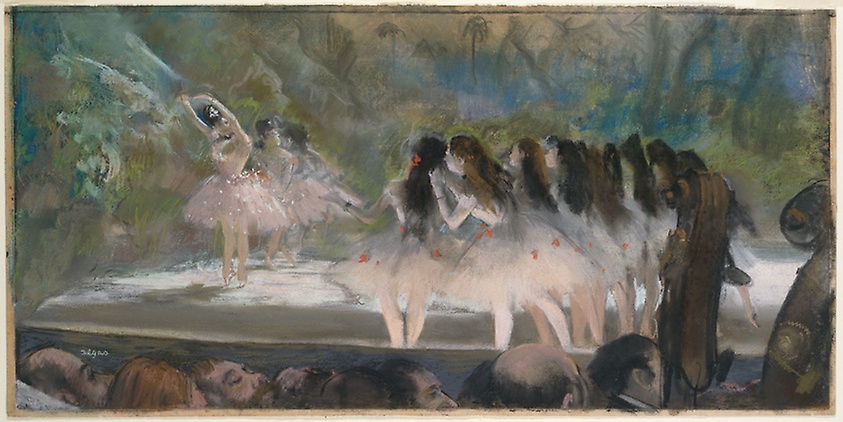
Featured Art: Ballet at the Paris Opéra by Edgar Degas

Today we are a cozy family of three—Daddy, Mama, and daughter. We are taking a road trip from our home in Oakland, California to a town called King City so Daddy can perform his signature role as the Sugar Plum Fairy cavalier. It’s our last trip together before the twins are born and Chiara-Noelle has told me in her three-year-old way that she is not pleased about this pregnancy. She wanted a sister, not two brothers and she can’t understand why we can’t just make what’s growing inside me be something else. Read More

The Terms of Agreement

By Patrick J. Murphy

Featured art: Untitled by Sue-Yeon Ryu

It was getting late and her grandson Buddy wasn’t back, so Vera decided to brave the heat and go with Alicia to find him. She’d wanted to talk to her daughter in private, anyway, but when she stepped outside, though the sun was low, the light still bounced with a glaring intensity off the pale houses, the plastered walls. Vera felt her skin growing damp, the small shock as the heat hit her body. It just took time to adapt to a Florida retirement, she thought, and remembered Little Rock and the parks along the river, the evening fireflies above deep grass.

It irritated her that Alicia, walking placidly beside her, didn’t seem to mind the climate, or much of anything else. Her daughter was overweight and wore long, black, wrinkled cotton dresses. Her left ear was pierced in five places, and she sometimes wore a silver ring through her right eyebrow. She was making a statement, she said, and didn’t care what anyone thought.

“Then why bother making a statement?” Vera asked once, only to meet with an uncomprehending stare.

Read More

The Names You Choose

By Nicole VanderLinden
Winner, New Ohio Review Fiction Contest: selected by Lauren Groff

Featured Art: Beach Scene by James Hamilton

Vanessa had wanted the luau, something extravagant—never mind that we were a moon away from our original budget. But that was Vanessa, always doubling down. She swam in mountain lakes; she was the only person I knew who’d been arrested for playing chicken. “We’re in Maui,” she said, letting geography make its case. “It’d be fun for the kids.”

This wasn’t all true, because our youngest, Chloe, dreamed of puréed bananas. She was barely a toddler. She’d never tasted salt, and bubble baths made her shriek. It was the other kid my wife had been alluding to, the child of our concern, our Anna.

Vanessa bought tickets to the luau. I was suggestible—there were so many things I was trying to save then, money the least precious among them. We returned to the cool of our room by three so we could shower and put calamine lotion on our burns, our sun-chapped faces. Vanessa took Chloe with her and got dressed in the bathroom, where she’d laid out various makeup cases and where the tub had jets, and I waited for Anna, who was twelve and who, when she was ready, spun for me in a white sundress lined in eyelet lace.

At the luau, we inched toward the entrance on the resort grounds, entertainers beating drums and offering drinks made with canned pineapple juice. Chloe sat on her mother’s hip with her wild, straight-up ponytail and gave everyone her skeptical face, the one that prefaced an opinion you couldn’t predict. “Drum,” she said seriously, as if naming objects for the first time. “Drink.” Anna had put on a dark hoodie, though it was still hot, and shuffled ahead of us all.

Read More

Memorial Day on Fire Island w/ Laughing Buddha

By Ed Falco

Arthur is, look, you don’t want to, fine; and Bee’s, good, I’m glad.

It’s about a billion degrees out. They’re on a clothing-optional beach. Arthur had to practically drag her.

He gets up and walks away, which makes her mad. She’s all about how men retreat to their caves. Arthur stops and puts his hands on his hips and looks out over the Atlantic Ocean. There’s a half dozen guys on blankets to the left and behind him chattering. They’re all young and nude, built like Greek gods. One guy’s putting sunblock on another guy like he’s practicing the art of sensuous massage. Next to them’s what looks like a straight couple, the girl’s young, topless, with a bikini bottom. She looks good. She’s in fact gorgeous. The guy’s probably at least twice her age, well into his forties. He’s tanned a golden bronze and built solid, stretched out, arms under his head, got on one of those skimpy bathing suits Olympic divers wear. No belly at all if not quite a six-pack. The girl’s sitting up looking off at the horizon, her hand wrapped around his kneecap like she’s holding a stick shift. Arthur goes back to their blanket.

You’re back.

Look, if you don’t want to, okay, but I’m going to.

Go right ahead. Who’s stopping you?

All I’m saying is, we’re here, right?

Read More

There Will Be Salvation Yet

By Tania De Rozario
Winner, New Ohio Review Nonfiction Contest: selected by Ira Sukrungruang

Featured Art: The Last Supper By H. Siddons Mowbray

1993. That’s when it happens. Two months after your twelfth birthday. It’s a sweaty afternoon. This day which blisters with possibility. This day you learn that there are demons inside of you.

You’re on your way home from school. You know something is wrong the minute you get off the bus. Your mother waits at the bus stop, teary-eyed. Your relationship has grown monosyllabic, but the tears feel like a warning, so you ask.

What’s wrong?

It is when she smiles that something inside you unravels. You realize hers are happy tears. But her smile is vacant. Placid. A Stepford Wives smile. The tears fall but there is nothing behind them. She’s a mannequin crying on command. A talking-doll with electronics scrambled.

You don’t have the language for this yet.

She grabs you, holds you tight: Nana has been saved!

Read More

The Tour

By. Erica S. Arkin

It occurred to Dennis six hours into the road trip that he might have made a terrible mistake. His daughter Natalie sat on a fold-down seat in the back of his pickup’s not-so-extended cab, plugged into her Discman and propped against the small window behind the empty passenger seat. She was reading a magazine with a cover that said something about Bedroom Tricks to Blow . . . Dennis only caught a glance when she’d pulled it from her backpack at the last rest area. He was glad he couldn’t see the whole thing in the rearview mirror.

Read More

Donna Was Not a Cat Person

By Halle Ruth

Featured Art: Chowder by Troy Goins

Donna forgot about the cat. She had promised to take care of it when her sister went on another one of her vacations. But the cat slipped to the bottom of Donna’s to-do list until he was barely hanging on, his presence barely noticed and left to his own devices, roaming her sister’s home on his lonesome. Donna did not want the cat staying in her own home, choosing to sacrifice the time it would take to drive to her sister’s to feed it every other day rather than let its fur coat her hardwood floors.  

She woke early that morning and decided to take advantage of the rare combination of a day off and unusually warm October weather to tackle the overgrown landscaping surrounding the house. At the beginning of summer, she paid a neighborhood kid to pull weeds and lay mulch, but the upkeep fell to her, and she hadn’t been particularly diligent about keeping the crab grass at bay. Her husband suggested hiring the kid again, but Donna refused. Everyone else in the neighborhood either cared for their yards themselves or hired professionals who drove around in logo-covered trucks that hauled riding lawnmowers, hedge trimmers, and leaf blowers. None of them cheaped out and hired a teenager to do a half-assed job to save a few dollars. It was embarrassing that they even hired him in the first place, like they couldn’t afford to do any better than that. Ella, who lived across the street, would have never done such a thing. Donna was sure of it.

Read More

Memoir: Sacred

By Shelagh Connor Shapiro

Featured Art: Birds by Jonathan Salzman and Tibetan Monks visiting Passion Works Studio

Ohio 

We sit in the car, my mother and I, outside a large white barn with black trim. It’s a pretty barn—less than a mile from our home—and my sister Maura keeps her horse here. The horse is Culotte. His previous owner called him “Just Cool It,” but Dad said that was too much of a hippy name. He is a proud Republican. During the last election, I picked up one of the dropped campaign buttons outside the voting booths. You aren’t allowed to wear the buttons inside. The vote is private, sacrosanct. 

We have stopped, as we do each morning, for Maura to feed Culotte. In March 1972, I am nine. In five minutes or ten minutes, when Maura comes back to the car, Mom will drive me to the William E. Miller Elementary School. She will drive Maura to the parking lot of the A&P, where Mrs. Besaunceny and three other students meet every day to drive to Columbus School for Girls, an hour away. CSG has no room for me in the fourth grade class. I’ll join the fifth graders next year. 

Our breath is frosty in the car. I ask my mother to repeat her question.

“If your Dad and I ever got a divorce, who would you want to live with?”

Read More