i am out with gloves, foraging for myself 

By Amanda Nicole Corbin

i’m doing this because i’m wondering if i’m paying enough
attention to my own life. i can’t even get my own molars to stop leaving
toothprints in my tastebuds so i make myself stop and examine
my fingers and find i’ve picked new shapes into their folds. i’ve colored  
myself outside the lines. there were once people i called my entire world  
and now i don’t even know which timezone they’re in—i only ever
studied the architecture of others, not the geography—and all i know
about that version of myself is that she did not know how to pay
attention to most things, which is not very much to know
about someone. i know less about her than i know about what it’s like
to throw up a veggie burger in the sink at rehab. i know less about
what she saw in each of her lovers than i know about yeast infections.
now i’m not saying i’m an expert; i’m saying the fields are always
changing sides like the illinois–penn state game that went into nonuple
overtime. my finger remembers better the feel of a door slamming
on its eight-year-old marrow than it does its first engagement ring. the only
thing i can remember was the obvious flaw he pointed out. you see,
i’ve memorized the dry scratchy floral chokehold scent of a diaper pail
better than i can recall the man i was going to marry and even the version
of me before that remembers my loose flaking fingernail like a pocket
trinket. it’s funny though, even now, when i think of him, i think of his hair,
his glasses, his hands—and then i’m back to myself. 


Read More

Joy Riders

By Michael Mark
Featured Art: “Lost Moment” by Mallory Stowe

My 98-year-old father steals cars
every day. It’s not uncommon
for him to take another at night, too. 

Sometimes he slips the keys
from an aide’s pastel pink scrubs
while they’re tying his shoes or,  

he tells me, he picks the pockets
of visitors of other residents—he sneers
saying that word. Most times, though,  

he steals his own—he’s been prohibited
from driving by his ophthalmologist,
audiologist, cardiologist, children,  

the State of New York. Often he’ll filch one
he sold last century or one he’s wrecked—
the green woody station wagon. He winks  

telling me he hot-wired his old man’s
‘31 yellow taxi cab. Lunch mostly
is when he makes his getaways. The food’s crap  

at The Home—more sneers, punctuated
with a dry spit—cold, mushy, same grey
thing over and over. He brings the cars back,  

tank filled to the exact spot
on the gauge as when he heists it. So nobody’s
tipped off. Weekday or weekend, 

makes no difference, he always ends up
at the same Burger King. On the way
he swings by the cemetery, picks up mom.  

She loves their nuggets.                                                     


Read More

Drink it up, buttercup

By Natalie Taylor

                                                             Blue Fruit Moon: August 30, 2023

There’s a lot of hullabaloo in the woo woo
circles about this Super Blue Fruit moon, so rare
we won’t see the next one until 2037. My astrologer
friend counts on her fingers seven celestial bodies
in retrograde: Mercury, Venus, Saturn, Uranus,
Neptune, Pluto, and Chiron. A celestial goo
of retrospect and rehashing, a muck of revisiting old
stories, exes, holidays and birthdays fuzzy on the why
but clear on what wasn’t there, who didn’t show up,
what we missed. Wheels spinning under
a tree. What was plucked too small, hard
and green. Reconnecting with your inner child,
still wanting to play, to be held. Still dreaming
of some freedom attainable with gobs of money or super
hero powers or sheer will. The planets rotate in reverse,
earth shifts in its nook in the universe. We look back.

                                       Riding my scooter after teaching a late class, I stop
                                   at the light. I am not young anymore. I shiver in sweaty
                                      yoga tights, chilling in night air. Once I make it home,
                                             I will have fulfilled responsibilities of all three jobs,
                                        another 12 hours devoted to maintaining shelter and food.
                                          A young man pulls up next to me on his Kawasaki, dirty
                                          carburetor popping with every wrist crank. He waves
                                         smiling under midnight metallic helmet. In the other lane,
                                                                    a Harley’s deep throat rumbles as its bandanaed rider
                                                                     revs the V-twin crankpin engines. We wait for green,
                                                                  a small symphony of crankpins and cylinders and buzz
                                                       and backfires under a freeway overpass. I point to the moon,
                                                                 full and free as a peach, Saturn in conjunction hovering
                                                                                               just above, still spinning. The riders flip
                                                                                            their thumbs up. Just some kids on bikes
                                                                                             lapping up all the juicy bits they can get.


Read More
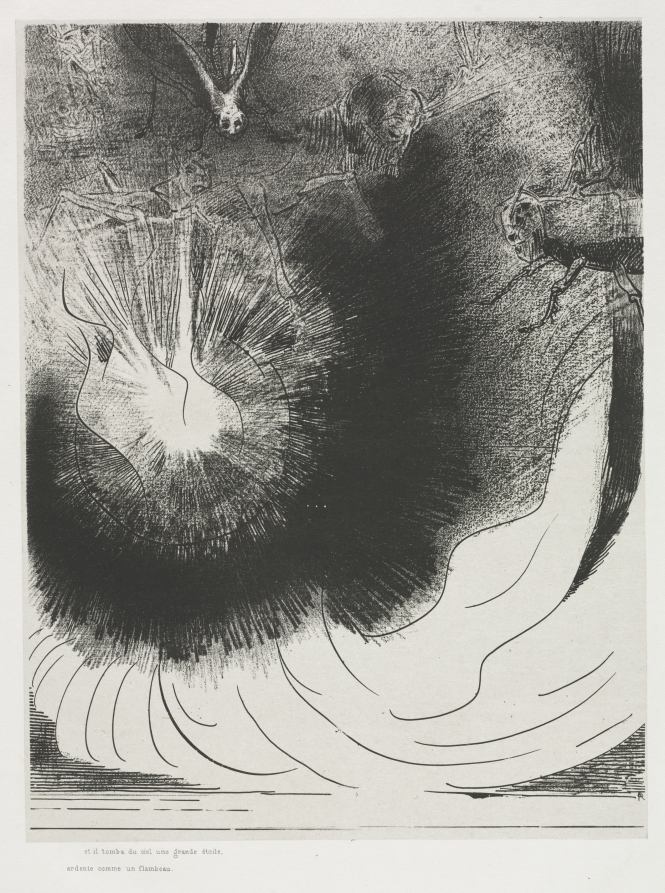
Of A Million Earths

By Susan Browne

One million earths could fit inside the sun
The thought of a million earths

makes me want to be a bee falling asleep inside a flower
It’s a fact: sometimes while gathering nectar bees get tired

& put their three pairs of legs over their five eyes
to block the sun which is halfway through its journey

of ten billion years
My mother loved sunsets at the beach

I remember once in Santa Barbara
our chairs close together on the sand

There’s no way to fact-check this
or that we chewed Juicy Fruit gum

& talked about things we’d never shared before
or that I kept looking at the freckles

on her knees because they made me
feel peaceful as a bee dreaming inside a dahlia

A billion years since that day with my mother
or seems like it

Her middle name was Marie
I brought a boombox to the church to play Ave Maria

A cold morning although the sun was shining
on the only known planet in the universe where life exists.


Read More
Questions

By William Olsen

Julie. Jaimie. Maya. Clayton with a reputation for being the
least far gone has fallen on the floor again. Missy with her
ever sour face and her rare bursts of humor. Or the nameless
woman in Memory Care who’d come out of her room at the
end of the hall naked for anyone, her face with the beam of
having accomplished something nobody even dreamed before.
Marilyn cradling the doll that puzzles her in a quieting way.
Dick a World War II vet with Sansabelt pants always asking
after his belt. He’d sidle up to me because I knew his name.
Always smiling. And Jerry, a Colonel who served in Vietnam
brazenly stealing from his lunch mates, right off the plate,
or pounding the locked metal door every day right about
noon, and, no matter why, ready to demote the lot of us.


Read More

In the Midst of It

By Gregory Djanikian

Featured Art: “Titania Dreaming” by Mateo Galvano

The woodpeckers are making holes
in the eaves of my house,
destroying some small part of it
while I count the wood chips
falling from the sky.

Isn’t it lovely that the natural world
can be so companionable,
keeping me frazzled and deeply alert?

Yesterday afternoon, the sky turned gray
as if it were going to thunder and rain
though it never did,
what a turnaround.

Sometimes it’s all you need,
a little reprieve, a surprise
to make you think
it’s not all ruthless
even as the shots ring out
in the heart of the city.

It’s the life we’re given
the pulpit managers say,
some of us having more life than others.

The woodpeckers are still at it,
doing what they are born to do
and I’m throwing tennis balls at them,
I’m squirting a jet stream
of water from my hose.

They disappear, then cheerfully come back.
There’s no manual that says
everything will stay as it is.

Look at the sky.
It’s as clear as day.

In another hour,
I might have to bolt the doors and windows
against the hurricane onrush of all that keeps me weathering away

from those long expansive afternoons
when I was young
and the wind was a feather in my hair.


Read More
Visiting the Natural History Museum with My 97-Year-Old Dad

By Michael Mark

In the photograph that my father has
             me take of him with the woolly mammoth,
he’s pointing to himself. He asks

to see the selfie. I don’t correct
             his terminology. Next, the triceratops, then
the sabertooth tiger. He takes the same stance

throughout the Extinction Exhibit. With the 4000-
             year-old beetle, 300-million-year-old coelacanth,
the dodo. She was beautiful,

he sighs at the butterfly, and I get the sense
             he’s thinking about Mom. Earlier, in his kitchen,
he posed with a jar of mayonnaise

with the expiration date from 1998, also pointing
             to himself. At the cemetery, he stands on his plot,
next to my mother, because I refuse to let him

lie down. Back at his apartment, he says it’s nice
             to have some company. I know
he’s referring to his defunct card game, so we go

down to the game room. He sits at their once
             regular table and points around the empty chairs,
Billy, Dick, Harold, Nat, Frank, hey Joe. He deals

them in. I take the picture of him squinting at the cards, fanned
             tight to his chest. He tosses a chip to the center
of the felt. In the shot, it really looks like

he’s waiting for someone to call his bet.


Read More

Obituaries

By George Franklin

My mother used to say that only old people read them.
Now, I get an email about a classmate from high school,
Someone I might not have recognized over fifty years ago,
Much less today. I could call my friend Richard to ask,
Who was the guy who just died? And, Richard could tell me.
But the truth is that I don’t want to keep track of acquaintances
Beneath the ground—or above it. The cemetery in Shreveport
Was just down the block from a drive-thru liquor store that
Didn’t ask for IDs. The ability to turn the steering wheel and
Press the gas pedal was apparently good enough. On the same
Street, a fried chicken place sold onions pickled in jalapeños
And vinegar. They went down well with Jack Daniel’s
On summer weekends when we’d play penny-ante poker
In someone’s garage. Back then, almost none of us were dying.


Read More
The Morning I Turn Forty-Five, I Wake Up

By Chrys Tobey

with two new creases in my forehead. Deep creases.
The night before, my hair stylist tells me
she wants to get some lift because a man
once told her she would not have to worry
about lines. Just gravity. So I think about the
dermatologist who said Now you look so young after he
convinced me to treat some scars when I was twenty-four,
when I looked fourteen. I fall asleep reading a poem by a woman
who mourns her youth and another elegy nostalgic for beauty
someone fears she’s lost. My girlfriend hates her lines. Hates
her freckles. She asks me to dye the gray from her hair before
she confesses she got Botox before our first date. I eat dinner
with a friend in his early forties; as he sips some whiskey, I remind
him he’s attractive and he smirks, That ship has sailed.
Another friend is going through a divorce
and she’s afraid no one will want to date her.
Later, I google the poet who feels men don’t want
her anymore because she’s no longer young.
She’s gorgeous. During my birthday weekend,
I sheepishly share some photos from my twenties. I see a sad
young woman struggling to smile perfectly
for the disposable camera. If that’s the ship,
let it float away. I’ll blow it kisses while I walk
to the coffee shop. I’ll blow my beautiful friends kisses. I’ll
blow the lamenting poets kisses. And here is a kiss
for our poor brains. And this kiss is for my heart
when the barista smiles and says, It’s on me.


Read More

The Museum of Death

By Sara Fetherolf

A week after our wedding,
in New Orleans, on our long way

to California, when the afternoon

turned thunderstorm (salt & river
& old stone smell &

the dripping awnings we ran under),

we came upon the door
to the museum. I wanted to see

the Victorian death masks, hair lockets, embalmer’s tools,

obituary clippings. I imagined
a museum of ordinary,

sentimental tchotchkes for marking loss.

I imagined shadowboxes full
of letters with laced black borders, penning in

the old grief. I wasn’t expecting

the serial killer memorabilia (a Gacy
clown painting, the sagging prison panties

Aileen Wuornos wore), crime scene photographs,

car-crash snuff films, blood green-white
in the dusty filmstrip light.

I walked through the displays, viewing

a type of death I had somehow not seen
coming, hearing your footfall

in the next exhibit room. I like the idea

there are many versions of us,
spread through many universes, and dying

in one sends our consciousness rocketing back

to a universe where the death never
happened, our still-living

variations drawing our dead

selves in like iron filings
to a magnet—meaning every near accident

or pollutant worrying the lungs, every bad fall, childhood

illness, &c.—it all
simply concentrates us, makes us more

ourselves than ever, the one who has survived

everything, flickering
against the dust. But I began to see

(walking the rows where I could lift

a black velvet curtain to look
at executions, botched surgeries, the Black Dahlia)

how one day I would rocket back

to somewhere you are not—more myself
than ever, and you more

yourself elsewhere, a partition in between.

Last week we had fed
each other cake, which ahead of time

we had not quite agreed to do. I’d joked, then,

how one of us will have to feed the other
someday, maybe, anyway, so might as well

practice in a gleaming still-young summer,

and I was angry, almost, that I had to worry now
about your universe slipping off

from mine. Honestly, I was still angry about it,

that honeymoon afternoon
in the museum of death,

where the murder photos glowed, rainlit

and old already, each of them holding someone
who, if I’m right, was still alive

in the universe where they are the one

who goes on forever. Maybe they were
even then in New Orleans, in that

rainstorm, having their fortune

read or browsing these walls that wee missing
their image. Before that day, I had

mostly felt, if not invincible, ready at least

to see what would happen next. And now
here I wasn’t. And outside the rain

had stopped like a watch. And never again

would the streets shine in that precise way.


Read More

Horses in a Field

By Emily Blair

I am reading my book manuscript to my mother
in her backyard. She tells me that was probably a catbird
I saw earlier. She tells me bleach is the real way
to get stains out of grout. The narrative urge is a strong one,
she says. She had an invisible horse, but never said
she wanted to be one. On that last point, we disagree.
Perhaps it was only a feeling I had
when we were watching horses in a field. That blurring of beings.
Like the colors in a Vuillard painting. A dress turning into
a table or an orchard. My college painting teacher said edges
are important, but never explained how best to create them.
I wanted us to be old ladies together, I say to my mother,
meaning me and her. Now we know it isn’t going to happen.
But she says she was dreading it—she didn’t want to be here
to see me grow old. We decide death comes too soon,
in the second section of my manuscript—
And speaking of death, how can the deck chair cushions
still have a cat hair side, I ask her,
now that the cats have been dead for years.
Because we’re disgusting old people, she replies
with a laugh, meaning herself and my stepfather.
Though the truth is I’m the sloppy one. This redbud tree
is a new redbud tree and I didn’t even notice.
I didn’t notice the new flowers she potted either, lined up
with their brilliant blossoms, waiting
to be put on the front porch. It’s all one to me:
the backyard, the flowers, my mother, me.
How can any of it exist without the rest?
We agree that I’ve written too many poems,
and they don’t go together.


Read More

The lone wild goose sticks out his tongue at me

By Joyce Schmid

half-heartedly, not like the one last April— fierce,
protecting pear-green goslings. But this year, no little ones.

It’s been so long since I have seen a baby—
even seen one—not to speak of holding one,
or watching a tiny face reflect my smile.

I’m not demented yet, not like the woman who begged to see
her stolen babies as they loomed above her, grown.

I’m not asking to be young again, back in the tent
with everyone asleep but me and the baby at my breast—
warm baby in the chill of night— or in the back seat

of my daughter’s Ford Escape— the “baby-whisperer” she called me
as I gentled her son to sleep.

I tell myself there are advantages to being old:
no longer wondering

if God exists, or what life’s meaning is
(He does, there’s none),
acquiring bits of wisdom

such as everything takes longer than you think
except your life.


Read More

Essential Worker

By J.C. Talamantez

Featured art: maternal memories, 2019 by Emma Stefanoff

When you were a girl, you thought about
            what kind of woman you would be

            how you would differ
                           from her / her life in hardening hands
                                       the work, an early marriage
                                                   then the angry one
            her suspect taste in men
                           that she hung on when there was nothing
                                       left to hang
            kept laboring the labor
                           the men wouldn’t do

            It was a long time to undo / the belief
                                 that to be a woman is partial
                              a life of shadows joining

                           and sometimes i still feel
                                       like a dog always checking
                                             its masters eyes

You wanted / to be a woman
         this is what it is sometimes


Read More

Some Kind of Palace

By Chrys Tobey

My old man cat is, unfortunately, getting old.  Kidneys failing.

Asthma.  Arthritis. A tongue that won’t go back inside his mouth. 

Seizures.  The last one made me think he was a goner.  But then he blinked

and hobbled around me in circles. Pretty disoriented.  My old man

cat has started eating books and this may be due to the fact

that I’ve had my old man cat for seventeen years Read More

I Had an Aunt

By Joe Woodward

Featured art: Soul Released From Captivity by Chloe McLaughlin

I had an aunt
From Apalachicola
Who retired from
The Kash n’ Karry

Her feet hurt and
Something about
Varicose veins
After that she just
Sang Jesus hymns

In the church choir
And worried about
Those fall storms
Coming up in the gulf

She believed in pairs
Of black cat glasses
Her hair curled
In half dollars

And particularly
The 4th of July
When she told me
Once while we ate
Our fried chicken

Don’t write your
Whole life story
At the top of
The Ferris wheel Read More

Cursing Lessons

By Jackie Craven

Featured art: look, quick by Emma Stefanoff

I am learning to bake curses
the way my mother did
with paprika and clotted cream.
Her recipe book lists fifteen steps
and she’s added three more,
her instructions scrawled
on pages brittle as phyllo dough. 
I trace my fingers over every word
and try to understand the significance
of Simmer on Low. I’ve heard
that if you heat a kettle gently,
a frog can’t feel the water boil. But
what to do about the grumble
from the dining room, the hungry command
to hurry up? Nothing my mother served
could please my father,
who poured Tabasco into a slow-cooked stifatho
and called her a stupid cow.
I lean against the round shoulders
of the old refrigerator and listen
to her murmur. I’m grown now
and married and need to know––
When is it time to whisk, when to fold,
when to toss with newts and toads?


Read More

Superpowers

By Bonnie Proudfoot

If all of my thoughts have been thought before, who was the one

who thought them? Probably it was some stranger, but maybe not,

maybe it was someone I knew or maybe someone I loved so hard

that she is actually a part of me, like my grandmother,

who came by on poker nights, maybe I inhaled her like the smoke

from the tip of her Parliament, or I ate her up like a slice

of her poundcake with lemon drizzle icing. And my superpowers? Read More

Free Will

By Daniel Eduardo Ruiz

I will pay for singing lessons

and play the piano. I will

learn Kung Fu, capoeira,

and break dance on the A train.

My magazine will be called

Pangaea and I’ll deliver

a carry-on bag of Café Bustelo

to poets living in Lithuania,

Zimbabwe, Jerusalem, Honduras.

I swear I’ll hold chopsticks correctly

before I’m buried, swear

to bungee jump, skydive,

go fishing because

I’ve never done it. One day

I’ll dunk a basketball—

sooner before later. Kiss

me, I wake up early

on purpose. Someone must

sing to the roosters,

peel the kiwis,

and preheat the oven.

Kiss me—I’m learning

Catalan. I’m getting a credit card

with sky miles and flossing

so my dentist will smile

more. At first, I missed

my car, but after seeing Dracula

I found I sleep sound

on buses. If Bruce Lee

did push-ups with two fingers,

what about me? Why can’t

I karate-chop  concrete

slabs? I wasn’t always an apt

jump-roper. I didn’t always

speak English, nor did I like

cheese until my teens. I played

baseball with rocks and sticks,

basketball with a netless hoop,

soccer with a kickball.

The first seven years of my life

I refused to tie my shoes

myself. Now I can cut my own hair,

hold a handstand a few seconds, and

type with ten fingers.

I have whole albums memorized—

Big L and New Order, Kanye West and

Duran Duran—and every minute I’m

witness to the wind, a trained secret

agent. Every day I do

1,000 calf-raises. I’m turning

my body into a sculpture.


Daniel Eduardo Ruiz was born in Bayamón, Puerto Rico, and now studies poetry at the Michener Center for Writers at University of Texas-Austin. A 2016 Fulbright Scholar to Chile, his poems can or will be found in Southern Indiana Review, Juked, The Adroit Journal, and elsewhere.

Originally appeared in NOR 23.

In the Winter of my Sixty-Seventh Year

By Susan Browne

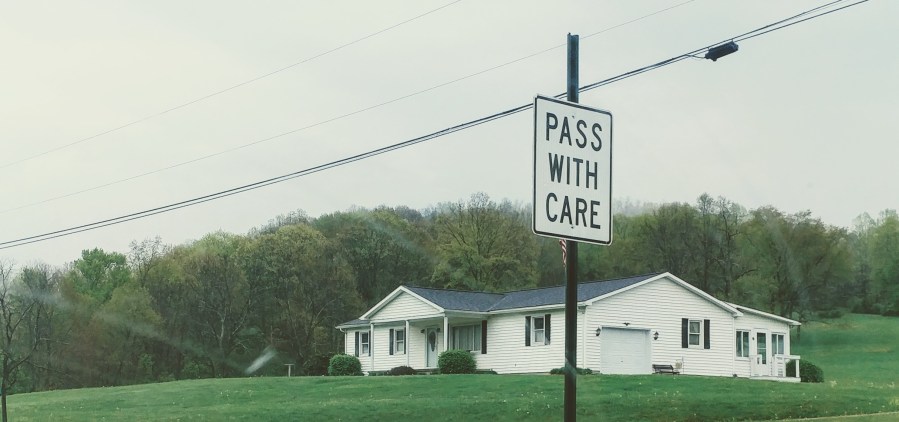
Featured Art: pass with care by Gina Gidaro

I feel the cold more
I stay in bed longer
To linger in my dreams 
Where I’m young
& falling in & out of love
I couldn’t imagine then
Being this old     only old people
Are this old
Looking at my friends I wonder
Wow do I look like that
Today I wore my new beanie
With the silver-grey pom-pom
& took a walk in the fog
I thought I looked cute in that hat
But nobody noticed     maybe a squirrel
Although he didn’t say anything
When was the last time I got a compliment
Now it’s mostly someone pointing out
I have food stuck in my teeth
Did my teeth grow     they seem bigger
& so do my feet     everything’s larger
Except my lips     lipstick smudges
Outside the lines or travels to my teeth
Then there’s my neck
The wattle     an unfortunate word
& should have never been invented
These winter months are like open coffins
For frail oldsters to fall in
I once had a student who believed
We can be any age we want
In the afterlife
I’m desperate to be fifty    
Six was also a good year
I saw snow for the first time
At my great-uncle’s house in Schenectady
My sister & I stood at the window
I can still remember the thrill
Of a first time     a marvel
Life would be full of firsts
I met my first love in winter
He was a hoodlum 
& way too old for me     seventeen     I was fifteen
I could tell he’d had sex or something close to it
He had a burning building in his eyes
He wore a black leather jacket     so cool & greasy
Matched his hair     he broke up with me
Although there wasn’t much to break    
All we’d done was sit together on the bus
Breathing on each other
It was my first broken heart
I walked in the rain
Listening to “Wichita Lineman”
On my transistor radio
I need you more than want you
Which confused me but I felt it
All over my body    
& that was a first too    
O world of marvels
I’m entering antiquity for the first time
Ruined columns     sun-blasted walls
Dusty rubble     wind-blown husks
I’m wintering     there is nothing wrong with it
A deep field of silence
The grass grown over & now the snow


Read More

The Other Big Bang

By Mason Wray

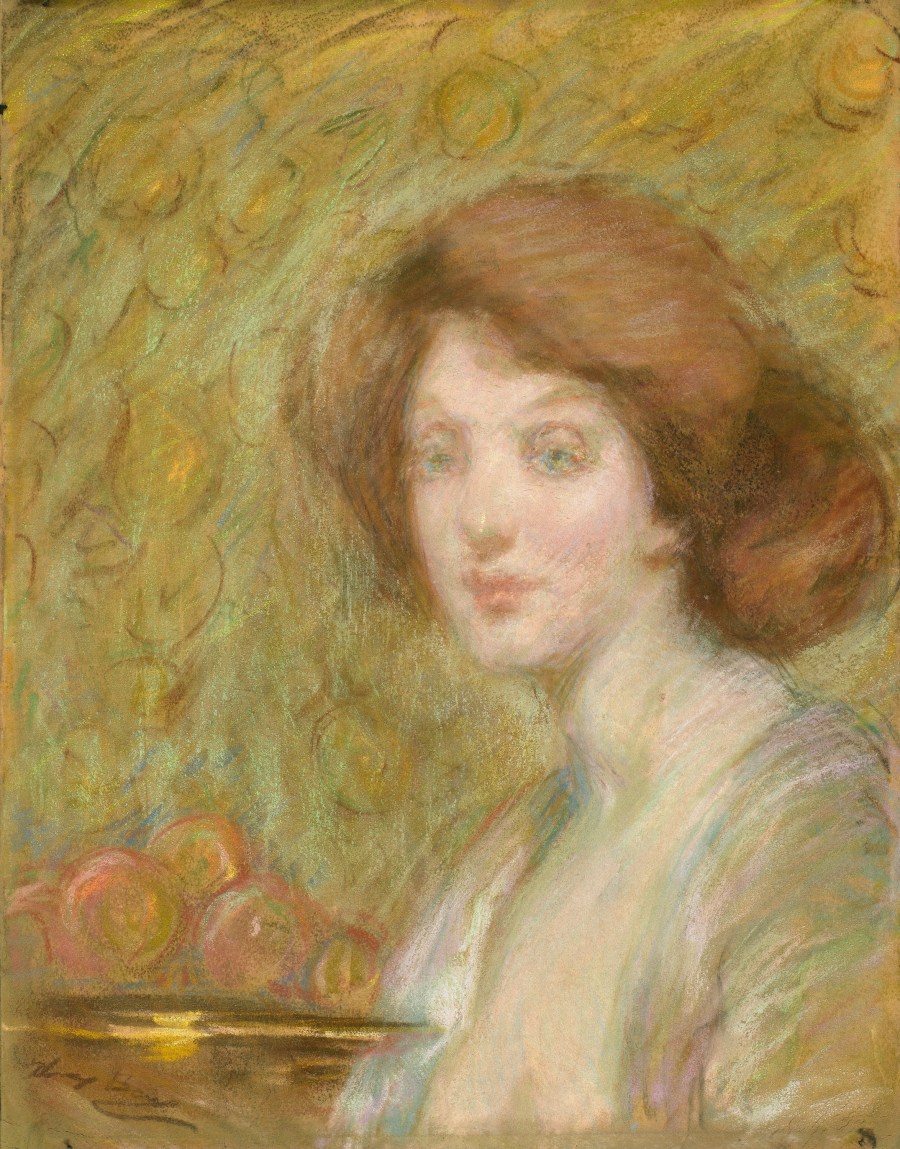
Featured Art: Peach Bloom by Alice Pike Barney

An equal and opposite burst expanding
from the same particle but in reverse.
Where peaches unripen in the family orchard.
A mom-and-pop deli replaces the condos on Second Ave.
OutKast never breaks up. They only get back together.

My sister is getting smaller by the day
her outfits like pastel pythons swallowing a doe.
In the other big bang, we start
with all the knowledge we’ll ever know
then forget it piece by piece.

So even after my grandmother’s brain
stitches itself whole, vanquishes the plaque
that shows up like coffee stains in scans,
still she becomes more unknowing by the day.

But we all become naïve with her. Everyone
communes over fears of growing young:
how we’ll tie our shoes, cross the road alone.
I am planning an expedition. One day I hope
to have never known you yet.


Read More

Gone

By Jennifer Burd

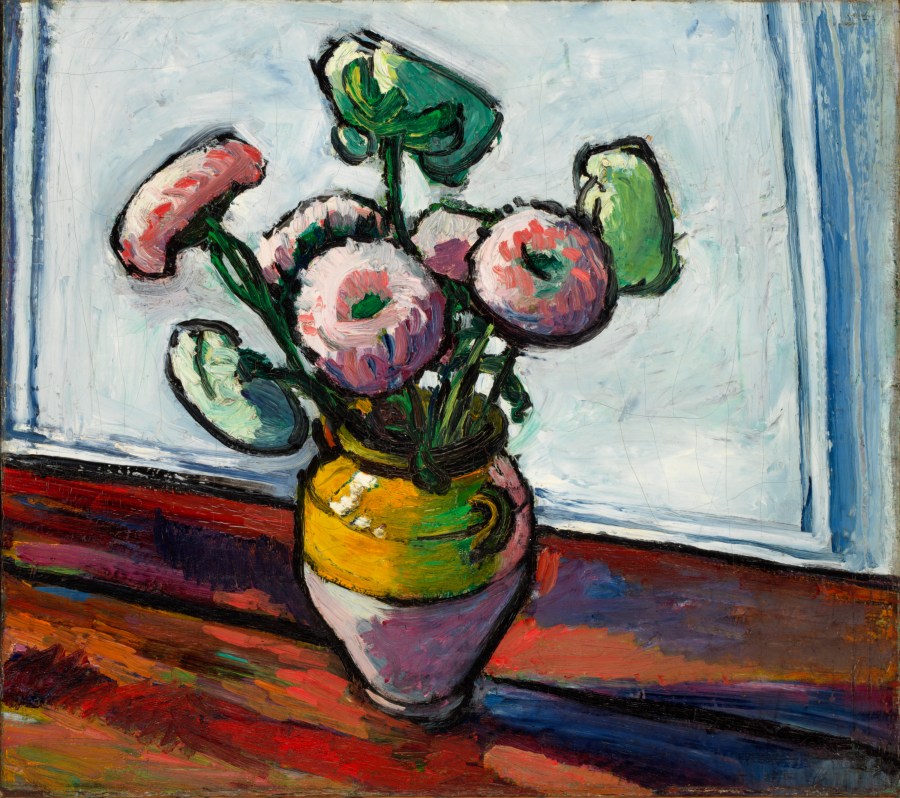
Featured Art: Zinnias by H. Lyman Saÿen

Reading Accompanied with Music By: Laszlo Slomovits

While I was away the world
went on without me—
a spider completed its web
under my plant stand,
dust from an unseen wind
settled in all the hard-to-reach places,
light drifted across the walls.
The ceiling fan dipped its oars
in stillness. Zinnias in the vase
went from Technicolor
to hand-painted antique postcard hues.
The world’s bad news got worse,
the good news, better than expected.
Letters and bills fought for room
in the mailbox. Mold helped itself
to the food I hadn’t eaten,
and a late rose bloomed in the garden.
I watched myself considering each thing,
thinking, this is how it will be.


Read More

Epistle to Myself on my 70th Birthday

By Robert Cording

“How’s business?—
Slow as a white man in slippers.”
—The Wire

Listen, nobody wants another overworked sky
of Beethovian sun and cloud,

or starlings loop-the-looping as they gather.

You’re standard issue, friend. Where’s the market unrest,
the ups and downs of soybean and pork belly,

the tango of selfie and brazen litany of self-invention?

Where’s your Twitter handle and your presence
on Facebook? OMG, you’re an old white man in slippers,

still daydreaming about Truth and Beauty,
still earnest even, taken up once again

by a titmouse just outside your study window,
(who still calls it a study?)

lifting one translucent wing in the afternoon light,
its beak cleaning and rearranging a downy under-layer

of feathers. You’re incorrigible, a puppy splashing
in dirty puddles, unaware of your puppy-ness,

happy as your silly puppy-feet plunge.
Pal, the Four Horsemen are riding in, the planet’s

burning up, and there’s enough lies going around
to fill Baltimore’s dumpsters. And what are you

proposing to do?—give a good Wordsworthian Hark 
at some celandine or lark to lighten your mood?

Go on, schlep down to your rural mailbox—
you’re a fountain pen and letter guy, aren’t you,

and maybe someone’s written you, or at least
sent a birthday card rather than an email.

And, if not, there’s always this poem—
place it in its little stall, pull up the red flag,

and shuffle back tomorrow in your slippers
to open the door on yourself.


Read More

“Take the Neck Step Against Aging”

By Craig van Rooyen

Featured Art: by Giovanni Francesco Barbieri (1591-1666)

Today my wife bought a twin pack of neck-tightening cream
for me, and I’m trying not to take offense.

It’s not that I haven’t noticed the thinning crepe paper
over my Adam’s apple, or the way it bunches when I tie a tie,

but I guess I had hoped she would be my accomplice
in pretending. The book I’m reading’s called The Denial of Death.

It says civilization’s an elaborate symbolic defense mechanism
against the knowledge of our mortality. And yet I can’t help but hope

this cream will work. My wife learned from her mother
who learned from her mother, and so on, how the crushed

bark powder of a Thanaka tree, abraded in water and a stone dish,
will form a milky paste that protects the faces of the ones you love.

Do you know how it feels to have a woman massage her history
deep into your skin? So we pretend this is a Costco twin-pack of Thanaka

and that we have all the time in the world as she opens the jar,
warms the cream between her palms and wraps her slender fingers

around my throat. It’s one thing to try to bridge the basic duality between
the physical world of objects and the symbolic world of meaning

with neck cream. It’s another to trust a woman’s hands around your throat.
“Point your chin up,” she says, cradling my head in her lap.

I’m hoping we’re part of something eternal, but if not,
that the decline of our bodies will be gradual and in tandem, and

that we will continue to be startled every March when
the flock of cedar waxwings reappears in the clattering branches

of the apple tree outside our window. See how their little masks hide
fatigue as they settle in by the dozens, Lone Ranger faces all pointed

in the same direction. Just one night in our tree on their long trip
from the sun-lashed Yucatan to the tundra of the Northwest Territories


Read More

He’s Fine with a Little College (or, All Those Pups)

By Jeff Tigchelaar 

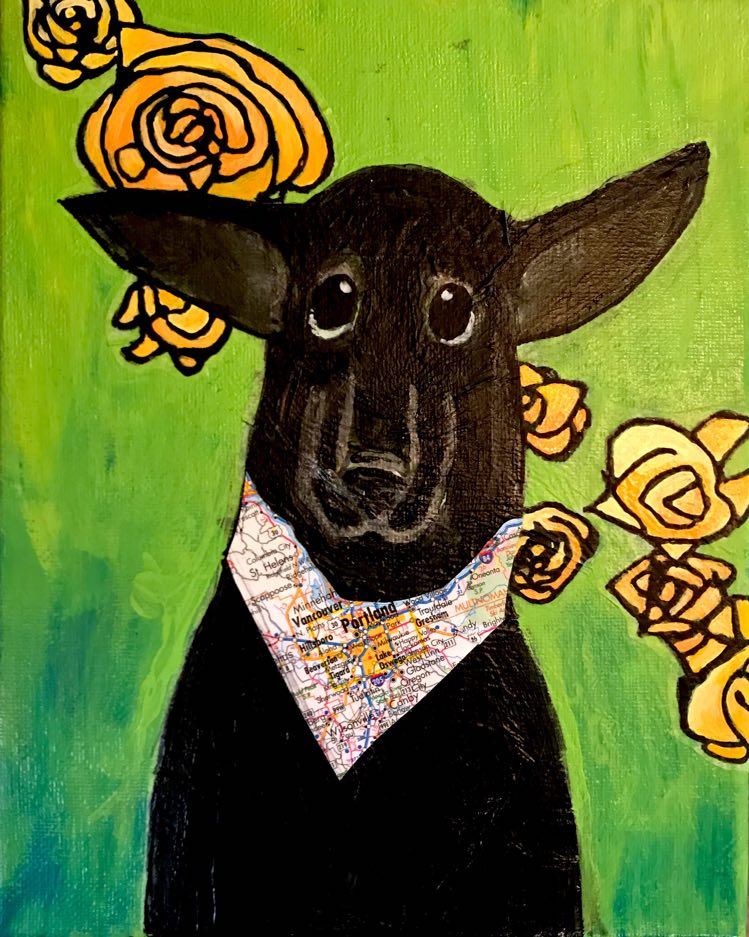
Featured Art: Atlas the Pup by Troy Goins and Mallory Valentour

College is for people who think

they’re too good to work.

Don’t get me wrong: I’m fine

with a little college, as long as it’s

in a Lego set, like.

But the kind with full-size

buildings and professors . . .

that right there’s a different sack of bait.


But you know what? Life’s like a dogsled team.

Unless you’re in the lead, the scene don’t change.

All those pups, yipping and chomping

to get ahead and be up front . . . but

the top dog’s been chosen from the start.

And that one mutt might not have to

have his nose up the asshole in front of him,

but guess what he’s got right behind him. A dog.

And another dog, and another and another. A whole

damn pack, and a few feet back there’s a sled

and you know who’s standing on that sled?

The man.

Read More

You Start To Grow Old

By Haolun Xu 

You start to grow old so fast, you notice how much you love home.
Home means a local mall, it means a place with a little Thai stand with all the world in the pocket.

You walk in with mystery.
People ask you with curiosity if you’re a student, if you work, if you have kids.

You laugh with charisma. You say you’re looking forward to all your time in the world.
London, maybe, next week. But next week never comes. Today just has too much of you in it.

But you’re adventurous, right? You order a new thing everyday. A meal that can be held in your hands, it is the best part of your day. It’s the biggest pillar of your lunchtime.

One day, you have a beautiful combo. Pineapple and shrimp, rice and chopped veggies.
It’s perfect. It’s yours,

you eat it more and more each next month, every other day, every day. You gorge yourself in it,
you start to smile more and more each time,

they start to cheer whenever you come over. You ask, do you know me, and they say yes! of course we know you! They’re all so happy, you’re family now.

But they stop asking about London. They stop asking where you’re going,
they suddenly have all the jokes of a lifetime to tell you.

And they stop asking for your name,
they don’t need to know what it is to know who you are.


Read More

Donovan

By Susan Browne

Featured Art: by Carol M Highsmith

I walk down my neighborhood street called mountain
although there is no mountain     only rolling hills
although hills don’t really roll        & as I look
at a window display of shoes & pass by the candy store
a gasp happens in my head    a quake in my heart     they aren’t
here      my father who loved sweets
my mother who loved shoes    & the sun shines
on a world of orphans      I quake along mountain street
like a rolling gasp although if someone asked
how are you I’d say fine      like most of us are
& aren’t       I thought sadness was a prison
but it connects us & if a chain it should be
one of tenderness     my father died
two years ago although sometimes I say a year
a way of keeping him closer      can’t do that
anymore with my mother      need math on paper      the ache
woven into each leaf although there are birds & nests
we live in a tsunami     waves of being & non-being
but I’m no philosopher standing at the counter buying
bunion pads     feeling drowned & drying
under fluorescent lights & warmed by the smile
of the clerk who blesses me with have a great day as I go out
to mountainless mountain & remember donovan’s song
playing in my parents’ house in the sixties      first there is
a mountain then there is no mountain then there is


Read More

Selling

By Judy Kronenfeld

Featured Art: Unfinished Monster by Hugh Laidman

Heads thrown back after one
bubbly sip—the young in soft drink commercials
seem as lavishly happy
as lottery winners. They look
the way we imagine ourselves
on the stages of our dreams—glamorous,
anointed, spotlit—our luck about to spill
into graciousness.

And even in ads for walk-in bathtubs,
incontinence pull-ups, stair chairs,
dementia care, the actors don’t merely grin
and bear it, but almost chortle,
like Cheshire cats who just
swallowed these amazing canaries,
though the old they represent
are more like expiring birds.

But the worst soft pitch: the “personal” Christmas
pictures taken in the dementia wing
of my father’s “retirement home.”
In another life, his face would say
This is ridiculous, even if he played along,
and sat in the appointed armchair
by the tree, and hugged the enormous white
teddy bear prop, as instructed.
But he is in this current life,
and guilelessly presses his warm cheek
against the bear’s fuzzy one,
and stabilizes the bear’s plump feet
with his free hand, as if they were a child’s.


Read More

What is your favorite past time?

By Robert Danberg

The form asked, “What is your favorite past time?”
So I wrote how I loved the 1947 Technicolor American comedy classic
Life with Father.
Whereas home to me as a kid felt like the morning after a trip to the emergency room,
William Powell’s brood lived on the brink of a joy omnipresent
in the wealthy brownstones of Gay Nineties New York,
and in Meet Me in St. Louis, which opens
on Mary Astor and Marjorie Main making ketchup,
Judy Garland’s face in repose always seemed baffled by love.
And who knew ketchup could be made?

Then, I peeked and saw my neighbor’d written “tennis.”
The guy on the other side, “tailgating.”
I noted that the question before was favorite color,
the one after, what would you do with an unexpected day off.
(Blue, by the way. And, of course, watch whatever’s on Turner Classic Movies.)

Suddenly, I was tired.
I longed for the time before I was ever asked this question.
I crossed out my answer and drew an arrow to the bottom where I wrote

“When I was twenty and my body was a blossom
trembling to shake itself from the vine.”


Read More

You Want to Go Back

By Fleming Meeks

Featured Art: Johnny Dunn’s Sandwhich Shop by Walker Evans

You want to go back is the name of your car,
the make, the model, the name you give the swaying trees,
the rustle of leaves before a thunderstorm
as sun gives way to clouds and quiet falls
on a meadow of grass and clover.
You want to go back and ask the question.
Or you dream it. Or it’s a movie with Walter Huston,
the rumor of a movie at MGM, killed
before shooting began. Nothing was written down,
no minutes of the meetings, nothing
but a few scraps of papyrus, of vellum, of cuneiform
carved into stone, baffling translators.
Or typed on onion skin, brittle and cracked
in a box in the basement of the first house
you ever bought, along with a fund-raising letter
from Dwight Eisenhower, then president
of Columbia University, and a water-stained circular
from the Bulletin of Atomic Scientists warning
of the danger of a full-scale atomic war.
The temperature is dropping, the wind is erratic,
swift and then calm. You want to go back.


Read More

Poem Beginning with “My Father”

By Craig van Rooyen

Featured Art: Ancient Roman Ruins by Giovanni Paolo Panini

Rome

1.

My father fills a syringe with insulin,
pushes the needle through his shirt into belly skin,
looks through the window at his dying lawn.
He writes a note to me: Summer’s early here, bud.
Your mom’s still on me to lay off the Snickers.
She means well, of course.
The oak tree’s about to go—groans all night long.
Caravaggio is one of my favorites. A sensitive scoundrel.
Go see Conversion On The Road To Damascus.
All is of Grace, Dad.

2.

Four lions stick out hollow tongues
in the middle of Piazza del Popolo.
Each tongue spews water—spilling down
stepped plinths into four collection pools
whose surfaces are mildly disturbed
but never overflow. With their perspective of stone,
the lions have remained unmoved for 200 years.
How, I wonder, can they gaze without weeping
at the sun-burned stoner strumming a distorted
“Stairway To Heaven.”
I stumble from one to another,
dropping coins until my pockets are empty.

3.

When he baptized me, my father’s robe floated
up around him like the wings of a manta ray,
revealing the soft skin of his shins to the believers.
We stood in a glass tank, with nothing to hide.
He covered my eyes with a handkerchief,
dipped me backwards into new life.
I trusted his strong arms
more than God.

4.

Fountains fill my photographs: pissing cherubs,
horses with fish tails. Granite seashells emerge
amid glistening mermaids—
breasts taut in the exquisite way
stone has of lying about flesh and time.

Read More

Confirmation

By John McCarthy

You taught me how hands could be laid, how they could touch
     a head and heal, but all of those hands eventually fell limp
like a field bent by threshing or a lit match dropped in water. Once,
     we used to dance in The Corner Tavern’s neon light
where the pickup exhaust wafted inside like harvest dust.
     Life in the Midwest is like one long goodbye because it is the same
every day, and I didn’t realize you had left until there was nothing
     but hard work and long days ending with the wind’s silent dirge
that sounds like trying not to die but always dies in smaller ways—
     screen doors that slam closed but don’t shut all the way
because the house has settled and the roof is warping from the sky
     boiling over with thunder and rain. I wake up now to the flashing
falling from the gutters and the water dripping through the holes
     in the ceiling. All I do is recall your voice like a prayer thrashing
my skull that mines the night begging our fathers our fathers
     our fathers in prayer, but they are off begging other women
in other towns. This town is not the memory I want, but I know
     how sadness works. It’s like a kettle-bottom collapsing onto
the details of every thought. I shouldn’t have, but I stayed in town
     to try and keep what I love alive, but no that never works. We were
a long time ago and a long time ago is too hard to get back.
     The last time we talked you said, We will end up like our mothers
waiting for nothing. Then you didn’t come back. No. Not ever.


Read More

My Hometown, the Hypothetical Guided Tour

By Dan Wiencek

Featured Art: by Jasper Francis Cropsey

            First we come to the field
where I did not hit the winning
     home run, where no cheers rose
            up and the game ball went ungiven

     Beyond left field,
            the bleachers where I did not
    make out with my high-school
         crush, did not taste her perfume
                  or dodge her brother’s freckled glare

      This is the house where a family of
                color did not live, there, where
         that guy is hosing Chinese
                              menus off his car

     Then of course this tax attorney’s office, once
            the bookstore where I stole
                        Helter Skelter, which I still
                     visit in my dreams

                 Finally, this empty lot
          staring up at the sun like a vast
                   gravel eye, formerly the school where
     I never thought to imagine a future,
         where no one told me and I
             did not listen

                        that life could be a wave
      beating the rocks or

           a wind bouncing a kite—

                         taut string pinwheels,
               dips and swoops groundward only
    to right itself, to stay resolutely
                                                                in the air

                                              and here we are.


Read More

Hole in One

By Alan Shapiro

Since my dad was blind by then,
when David and I led him from his apartment
to the tee of the shrunken one hole
golf course that served as kitschy
courtyard for the complex
of retirees only well-off
enough for this unironic
aping of the rich, it was by habit
only that he looked down
at the ball he couldn’t see,
then up and out into the void
of stunted fairway and green
while first this foot then that
foot patted the fake grass, almost
kneading it cat-like till the tight
swing arced the ball up high

as the second-story windows
and I swear it was like a trick
ball the pin on an invisible line
reeled in straight down
into the hole—his first and only
hole in one, on the last swing
of a club he ever took, though
we didn’t know this then, and how
we whooped my brother and I
as we jumped and capered throwing
the other balls up into the air
while the old man baffled said what?
what happened? what? already wistful
for this best moment of a life it was
his luck the blindness made him miss.

And now it’s my luck, isn’t it just
my luck, to be the last one
remembering, as if I’m not just
there with them but also far
removed above it all and watching
as through the block glass of an upper-story
window high enough for the ruckus
not to reach me but too low
not to see the filmy blur of
bodies hugging one another
pumping fists as arm in arm
the three of them head out across
the fake grass of that single hole.


Read More

Cockadoodledoo

By Chrys Tobey

Our parson to the old women’s faces
That are cold and folded, like plucked dead hens’ arses.

—Ted Hughes

An old woman thought her face was a dead
hen’s arse. Maybe it was all the years
of plucking and waxing. The woman had no idea
what would make her think her face
was a dead hen’s arse and not a live hen’s
arse, and why the arse and not the beak, but
she did. It couldn’t be my age, the woman thought.

It couldn’t be the men, not when everyone knows men
love older women, especially much older, especially
with all the grandma porn, all the old women sex
costumes, all the men who ogle elderly women in walkers.
She had read so many books where men longed
for older women, where old women seduced helpless
wide-eyed men. She saw billboards where old women
modeled teenage clothing, modeled Brazilian
bathing suit bottoms. And she knew the trend: folding
wrinkles into one’s face using a Dumpling Dough Press.

People would stop her and take selfies. You look
like a movie star,
they’d say. They wouldn’t leave her alone.
She’d shrug. Maybe it was the way she’d sometimes cluck
when she made love to her husband? This could be the reason
he’d whisper, One day I may trade you in for an older model.
Or maybe it was all the eggs she ate. Or her penchant for feathers.
Or how her mother used to call her my little chickadee. The woman
was unsure why she thought her face was a dead fowl’s
feces-extruding cloaca. She only knew she was tired
of seeing twenty-year-old men with women who could
be their grandmothers, old women who treated the men
like so many dimpled birds.


Read More

Wex in Totus Taggle

By Owen Doyle

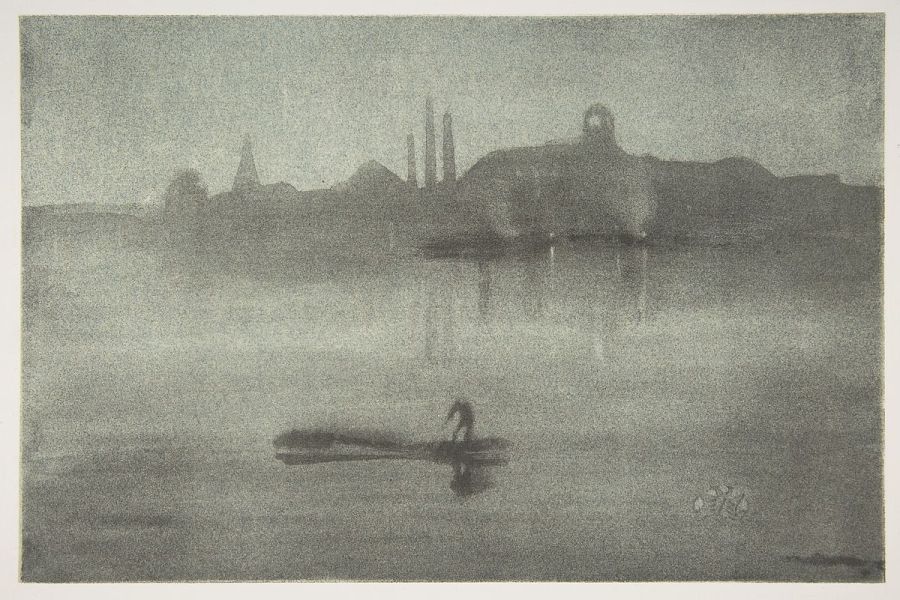
Featured Art by James McNeill Whistler

Words in an old notebook
prove (I was twenty-ish, then)
that mind-mud and dismally
tangled brain material
have causes other than old age
or illness. At the time,
they might have been explained
by the rum or beer in mind-
blowing excess the night before.
I don’t remember.
But surely those episodes
of binge and babble
are far outnumbered
by drier spells of helplessness:
me, frozen
over the neat rectangular form
of a blank page, compelled
to write totus to avoid
writing nothing.
It’s reason enough for terror
or self-pity, the thought
that those very things—the booze-
blasts and blackouts—were then
and are now the efficient
cause of wex and taggle:
furrows of gray matter, tilled
for art and wisdom, laid
waste, and the flood of those young
insults cascading still. But no,
I’ve heard that it’s very common:
this empty gaze, the pen loose
between a finger and a thumb,
its tip hovering
over absolutely nothing. And so,
as tragic as it all may be, finally,
I won’t let it bother me too
too much. Why taggle over wex
totus? I’ll pour myself a glass
of wine and see
what comes spilling out.


Read More

Midnight at the Anaconda Wire and Cable Company

By Sandy Gingras

Featured Art: Position Interplay: Midnight by Samia Halaby

The building is boarded up, but we know how to get in.
It’s the end of summer and we’re seventeen. We don’t have a car
and there’s nowhere to go in this town except down

the huge hills gliding our bikes past the A&P,
the Ben Sun store where my mother buys my gym uniform, past
the funeral home and the corner bar where Eddie’s father sits

in the same chair every afternoon. The air is humid,
and the stars look stalled out in the sky. Maybe they’re waiting
for us to try something or to grow up already like my mother tells

me to do. A train goes past and faces stare out of the fluorescent lights.
My flip-flops ring on the metal stairs. Eddie puts his shoulder on
a board, and we’re through. It’s just the way it always is—

the way they left it. Eddie sweeps his flashlight across
the cables and cogs and steel beams, the stacks of papers
next to the stapler. This place is leaking

PCPs into the Hudson River, my mother says, but we don’t know
what PCPs are. All I know is, this is where my father worked
before he left my mother. Eddie and I grew up two brick houses

away from each other. Tonight we’re here to take one last look at
the muscley machines. I’m leaving for school tomorrow.
See, some things last, Eddie says to me. I don’t tell him different.


Read More

Los Angeles, 1990

By Jerry Williams

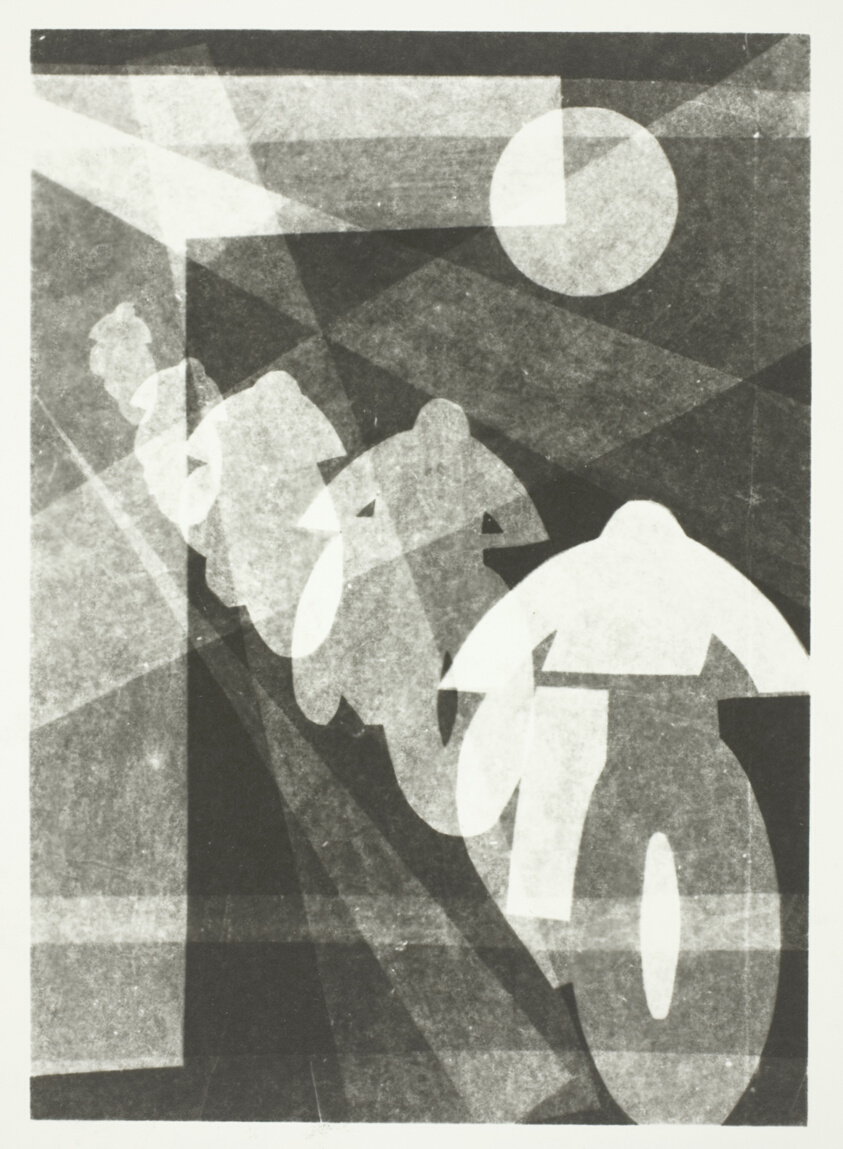
Featured Art: Motorcycle Race (Motorradrennen) by Oskar Nerlinger

I can recall riding a Kawasaki 750
down Sunset Boulevard
on a Saturday afternoon in light traffic.
Cruising along at thirty mph in fourth gear,
I let go of the handlebars,
braced myself on the fuel tank,
and slowly rose to my feet.
Helmetless, I stood like a surfer in the wind
on the imitation leather seat,
my longish hair blown back,
sunshine bursting through my goggles.
A thin membrane of fear lined
the inside of an urn made of pure joy.
After about an eighth of a mile,
I returned to the legal sitting position
and only then did I notice my runaway pulse.
When you’re twenty-three years old
the saddle of a thousand-pound motorcycle
feels as firm as the ground you walk on.
You get full access to your inner maniac.
Nowadays, doctors and sounder reasoning
have rescued me from worldly vices
and a rapid heartbeat often provokes alarm.
But I miss the brash torque of myself,
the quality of light in that urban desert,
all the midnights and years out in front of me
like the beautiful stupid jewels of infinity.


Read More

Meditation On My 44th Birthday

By Jason Irwin

Before going for a walk, I open the day’s newspaper.
NASA releases detailed photos of Charon,
Pluto’s largest moon. In a marketplace in Diyala Province, Iraq,
a suicide bomber kills one hundred and twenty.
On this day in 1959, Billie Holiday died
handcuffed to her hospital bed. My horoscope
tells me I will be extremely serious and earnest
in my emotions, that I will suffer
from the ailments of birds.

                                        Hard to believe half of my life
is just some thing that used to be.

On my walk I stop at the corner of Maple
and Elm, watch the sun sink behind the station,
I think about Charon, orbiting Pluto, and the Charon
who ferried the souls of the dead to the underworld. Maybe
he delivered the people killed in the marketplace,
or Lady Day. Instead of a coin for passage
she sang Baby why stop and cling to some fading
thing that used to be. Her lilting voice trailing off
as they reached the far shore.


Read More

46 Years Old

By Karen Skolfied 

Featured Art: Pine Tree by Giovanni Segantini

I’m not really sure how I got to 46.
If I think about it, I could probably
come up with a dozen years, two dozen
if I include sleep or staring into space
and one more year with worrying
about the wild flax and campion
which never once needed me to do
more than mow around them.
The rest of it, who knows.
I don’t have a smartphone.
I don’t do a ton of zesting.
I will admit, there were some books
along the way and a few parking tickets.
I voted. Oh, how I voted. Tracy, I’d say,
tell me who’s running for school board
and how to vote. And she’d tell me—
that took up more of the 46 years than
you’d think. Good grief, Tracy, I’d say.
Just write down their initials for me.
Write it on my hand, so I won’t forget.
I am not writing on your hand, she’d say.
So I wrote her in as a candidate,
just so she’d have something to do
in the cordage of her own years.
The time spent touching Heather’s
bobbleheads—that adds up. Breaking down
cardboard boxes for my father-in-law.
This still won’t sum to 46, even with all
the pretzels and the time asking waiters
for mustard in a ketchup world.
Okay, the sporting events. Sometimes,
woooo, the cheering, and other times
all the play’s at your net and third period
goes on forever. More than a smidge
of my 46 years has been spent in ice rinks.
Is no one interested in clearing the zone?
The whistle works both ways, ref!
Yeah, I might have yelled that more
than once. How long does this guy
think I have, waiting for a good call?


Read More

Lunatic, Time

By Rachel Rinehart 

Featured Art: Trees on a Rocky Hillside by Asher Brown Durand

Sometimes, seeking desperately the measure
of her weeks, she dresses now for church
on Tuesdays or Saturdays, slides sideways
into the slick interior of the Oldsmobile.

So familiar the route, the car seems to know it,
nosing its gentle way like some peculiar
land-bound fish, and she leans in its belly
as it makes its one wide turn before the church.

But dim, the sanctuary withholds its promise.
She sits in the pew, hymnal poised, waiting
for the organ to thunder out
of its immaculate, peepless slumber.

Churchgoers flit in her periphery,
but she cannot fix them. The long dead
lingering beside her flee when she turns
to greet them. Even the eyes of Christ

flash impenetrable in the soft flush
of stained glass. Lunatic, time loops and tangles,
doubles back on itself. Somewhere in the hours
the pastor appears, or the woman

who fills the candles. They call up her son
to collect her. Behind the scrim at her windows
she baffles in the horrors of her dotage.
Someone has moved her husband’s truck.

It has been only days and decades since he slumped
dead against the dash in a hay-flecked shirt.
The chicken coop, too, is missing, the pasture fence.
Vagrant memory, like livestock loosed over the plain.

Always night obliterates. In the morning
she will gather her pocketbook and go again
to church, searching still for some low-lit beacon
to mark her faltering way toward the long home.


Read More

Horseplay

By George Bilgere

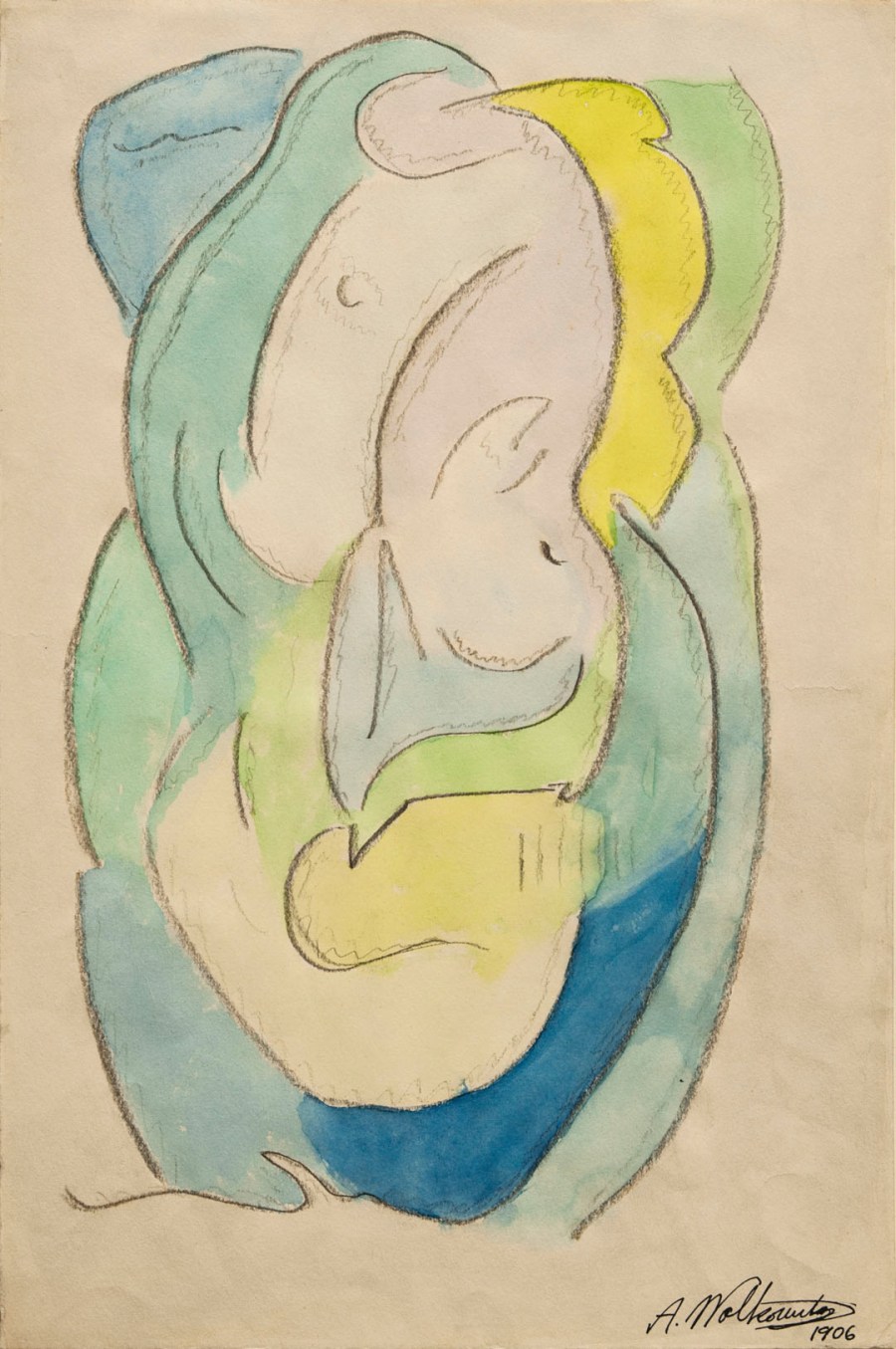
Featured Art: Abstraction, 1906 by Abraham Walkowitz

I am floating in the public pool, an older guy
who has achieved much, including a mortgage,
a child, and health insurance including dental.

I have a Premier Rewards Gold Card
from American Express, and my car
is quite large. I have traveled to Finland.
In addition, I once met Toni Morrison
at an awards banquet and made some remarks
she found “extremely interesting.” And last month
I was the subject of a local news story
called “Recyclers: Neighbors Who Care.” In short,
I am not someone you would take lightly.

But when I begin to playfully splash my wife,
the teenaged lifeguard raises her megaphone
and calls down from her throne, “No horseplay in the pool,”
and suddenly I am twelve again, a pale worm
at the feet of a blonde and suntanned goddess,
and I just wish my mom would come pick me up.


Read More

Serenity Room

By Linda Hillringhouse

Featured Art: Buste van een oude vrouw by Anonymous

There are five recliners in a circle,
each with a spongy blanket.
The lights have been dimmed,
but an aide has left behind her walkie-talkie
and it sounds like it’s ready to lift off.
My mother is in one recliner, I’m in another,
an easy way to spend time now that she’s afraid
of the color red and distrusts windows
as if the glass weren’t there and the fingers
of the dwarf palmetto would reach in
and pull her down into its dark center
to cut out the last cluster of syllables
huddled beneath her tongue.

I look over to see if she’s sleeping
and her eyes are open as though
she’s forgotten to close them. Maybe
she’s on some dusky street where half-drawn
figures drift and sounds almost blossom
into meaning. Maybe she opens a door
and her aunts from Brooklyn are there
and clutch her to their mountainous breasts
where she could stay forever.

She tries to inch out of the recliner but an aide
intercedes with a cup of apple juice
which my mother examines closely
for poison and studies her hand as if it’s
screwed to her wrist. Then she brings the cup
to her lips as if it’s the last thing left
from the world when she was Shirley
and carried keys, lipstick, cash.

And I hope that the cold, sweet liquid
brings a moment’s pleasure, but how can it be
that it comes to this, that at the end you get
thrown in the ring for one more brutal round
without enough stamina to put on your shoes
or enough strength to say Thank you or Go to hell.


Read More

Good for What Ails You

By Elton Glaser

Featured Art: Winter, Monadock by Abbott Handerson Thayer

                                                                                                  He too would live: like the rats among the ruins,
                                                                                                     but nonetheless alive.
                                                                                                                                  —Antal Szerb, trans. Len Rix

It’s the first fresh day
After a winter so hard
I disappeared inside myself,

Nothing out there but cardinals
Like drops of blood against
The creamy desecrations of the snow.

Ah, there’s the shit we need,
And the shit we don’t need,
And the shit we end up with.

I seem to be returning to
Some form of infantile intelligence,
On the sloppy side of the brain:

Mumblings over the oatmeal, nights
Broken by clumsy sleep, hands
At the mercy of small machines.

We come out of nowhere, and we go
Into nowhere. Should I stick
My fingers in my wounds,

Like a good little Dutch boy?

Even in the barren precincts
Of the cold, there must be love,

Though love does not travel well—
It needs its own terroir,
A discipline of flinty soil where

The roots struggle, where they work
Hard in the hot sun, until
Deprivation makes the fruit sweet.

And what wine will I have?
Here, at the open edge of things,
I’m like a spruce that hugs itself

Against the ice and the night wind.
But sometimes there’s comfort
In the certainties of burlap, and more

Sure footing on grit than marble gives.
And even a thin sun feels warm
After three dead months deep below zero.


Read More

Aesthetics to Change the Way You Live

By Sally Bliumis-Dunn

Featured Art: The Burning of the Houses of Lords and Commons, 16 October 1834 by Joseph Mallord William Turner

“Aesthetics to Change the Way You Live”
—Growth Magazine

For instance wabi sabi,
a Japanese view of life
that celebrates the imperfect,

the light-hearted sound
of the two words
like figures balanced on a seesaw,

behind them, cloudless sky,
and in the spread, the photograph
of nicked and tarnished silver spoons

arranged in rows on lilac velvet—
how perfectly imperfect.
But separate from the printed page,

the air around me darkens—
and then the sound
like thunder pressing closer

as I think of my own flaws—
and then they all
come charging toward me

like a herd of bison,
so dense it’s hard to see
from all the kicked-up dust.

So loud I cannot think.
How much easier to be won over
by a living room’s worn rug,

the reds and blues, faded,
even threadbare in those places
I have most often stood.


Read More

New Regs

By James Lineberger

Featured Art: Card Rack with a Jack of Hearts by Jack F. Peto

I’d never seen her before that day when
she came knocking on the door and I thought at first
I must owe postage on the package in her hand
but no, she said, this was an official visit to advise me
that unless I stopped parking the Malibu in our circular drive,
I would have to mount a new mailbox out on the street
rather than the one by the door that we’ve been using since
the house was built back in the Fifties.
“Say what?” I said,
“excuse me lady but that is my drive not yours.”
But she was not to be dissuaded,
advising me that new regs from the Postmaster General
would not permit her to put her Jeep in reverse
and turn around in the drive,
and she only shook her head no when I said,
“Look, okay, if we mounted it out there on this dead-end street
you would still have to back up
when you get to my neighbor’s house next door
because hers is on the front porch too same as this one
and you have to pull in her driveway to get there, and tell me
how you’re going to get out, and besides,
the reason we park the car out front here is because
my wife broke her hip and had to have screws put in it
and she’s still not too certain on her feet, not to mention
she’s got Alzheimer’s, unless you’ve got regs about that too
but the regular carrier never told us anything like this
and he doesn’t seem to mind backing up at all.”
“Well, sir,” she said, “that is him, this is me,
besides which where is your handicap placard?”
and walked away even as I was saying
“Just you wait lady, we’ll see about this.”

Read More

One Solid Chassis Among Us

By Susan Blackwell Ramsey

Featured Image: Giant Magnolias on a Blue Velvet Cloth by Martin Johnson Heade, 1890
Courtesy National Gallery of Art, Washington

We praised the gray car for being a good little mule
the day before it roared demands. The labs
for my sister’s knee surgery came back showing dual
heart chambers out of whack. And right-left jabs
of exploding joints and breast removal for me
came one year after both my husband’s eyes
lost cataracts, gained corneas. The knee
still needs to be replaced, of course. So why
not buy a new car? Certainly we could
transport our patchwork selves in our patchwork car,
all very apt, and prudently get the good
of what’s left. Or, while granting how things are,
we could fling cash, climb in with gleeful smiles,
and ride shiny the remaining miles.


Read More

My Mother Comes to Dinner

By Sally Bliumis-Dunn

Featured Image: Green Plums by Joseph Decker, 1885
Courtesy National Gallery of Art, Washington

We leave the dining room and she remains
alone at the table; the plates need washing,
we prepare dessert. I still wait for her

questions, half-buried in dish-clatter,
her broken tones in the hot kitchen air,
though these days she sits mostly silent.

And larger than the room and yellow walls, her silence—
as though it were strung to the sky,
to the air that too has been washed and washed

like a bed sheet in the relentless sun,
colors and patterns mostly faded

like all the meals enjoyed then washed
from these brown earthenware plates.


Read More

Gun on the Table

By Eric Nelson

My favorite scene in Body Heat has nothing
To do with the intricate plot
That William Hurt and Kathleen Turner
Devise to kill her rich, oppressive husband.
My favorite scene, maybe ten seconds long,
Shows Hurt getting into his car as an antique
Convertible drives by, a fully costumed clown
At the wheel, waving. Hurt stares, slightly
Bewildered, while the clown passes and disappears.
That’s it. Cut to Hurt and Turner in another
Sweaty sex scene and post-coital planning,
The foregone noir conclusion closing in. Meanwhile,
Since we know there are no meaningless details
In art, we keep expecting the clown to reappear
Or at least figure indirectly yet clearly in the action.
Like Chekhov said—if there’s a gun on the table
In act one, it had better be fired by act three.
But no, the clown is random, there and gone, an odd,
Unrelated moment like any of the ones that pass us
Every day and we barely notice
Because life isn’t art, isn’t revised for coherence,
Not until our lives collapse around us
Like a circus tent in flames
And we begin to look for the alarm we missed.


Read More

Activity Room

By John Bargowski

My mother wants nothing to do with the puzzle
two other residents,
whose wheelchairs have been rolled up
to a folding card table,
are trying to put together—
a west side shot of the New York skyline
broken up into a thousand pieces,
the stubborn morning smog
she could see from the apartment
she had to give up photo-shopped out,
the OT insisting Mom join in the fun,
taking my mother’s stroke-locked hand
and guiding it to
a corner piece that’s an easy fit,

Read More

Sitting in a Simulated Living Space at the Seattle Ikea

By Abby E. Murray

Finalist, New Ohio Review Poetry Contest

To sit in a simulated living space at Ikea
is to know what sand knows
as it rests inside the oyster.
This is how you might arrange your life
if you were to start from scratch:
a newer, better version of yourself applied
coat by coat, beginning with lamplight
from the simulated living room.
The man who lives here has never killed.
There is no American camouflage drying
over the backs of his kitchen chairs,
no battle studies on the coffee table.
He travels without a weapon,
hangs photographs of the Taj Mahal,
the Eiffel Tower above the sofa.
The woman who lives here has no need
for prescriptions or self-help:
her mirror cabinet holds a pump
for lotion and a rose-colored water glass,
her nightstand is stacked with hardcovers
on Swedish architecture. The cat who lives here
has been declawed, the dog rehomed.
There are no parking tickets in the breadbox,
no parakeets shrilling over newspaper
in the decorative cage by the desk.
When you finish your dollar coffee
and exit through the simulated front door,
join other shoppers with chapsticks
in their purses and Kleenex and receipts,
with T-shirts that say Florida Keys 2003
and unopened Nicorette blisters in their pockets,
you will wish you could say this place
is not enough for you, that you are better off
in the harsh light of the parking garage,
a light that shows your skin beneath your skin,
the color of your past self,
pale in places, flushed in others.


Read More

Whatever I Might Say

By Sydney Lea

Though to touch its flame would surely be as painful as when it burned brighter, the candle’s low now. On the table, just prior to guttering after dinner, it vaguely illuminates friends.

The glow takes me to Creston MacArthur, one son’s and one grandson’s namesake, and to our many evenings as a campfire ebbed. Just now I’m remembering a particular night, the two of us seated next to a favorite river, swapping stories. His were better.

A bleakness sinks into me despite the patent pleasures of this later interlude with other people I care for and admire. I’ve long savored their camaraderie, their conversation, their gifts for wit. The lateness of the hour has turned our talk to rote murmuring, something like the water of that river, which always flows right below my consciousness.

I should do more now than merely prattle with these good companions, just as I should have said more to Creston, gone almost forty years, and perhaps he to me. Or maybe not: deep in the woods, barred owls started to chatter that night. “Like a good pack of hounds,” Creston said, and that woodsy locution seemed perfect, seemed pinpoint accurate.

Still I’m unsettled. It’s as though I were looking on these people here, on my children, on my children’s children, on my past—I’m looking from above. Having failed to put the right words together, I’ve risen over our group like smoke. The chill in my spirit has something to do with feeling removed, and feeling removed because I’m tongue-tied, tongue-tied for fear that any speech of mine will sound formulaic.

It’s late. The guests will leave. The candle’s wick whispers. I must hope I’ve found a way of being with loved ones that’s better than any talk I could grope for, than any I craved as those old fires grayed, a way that bespoke me better than whatever I may have said, whatever I might say now.


Read More

Patina

By Mark Cox

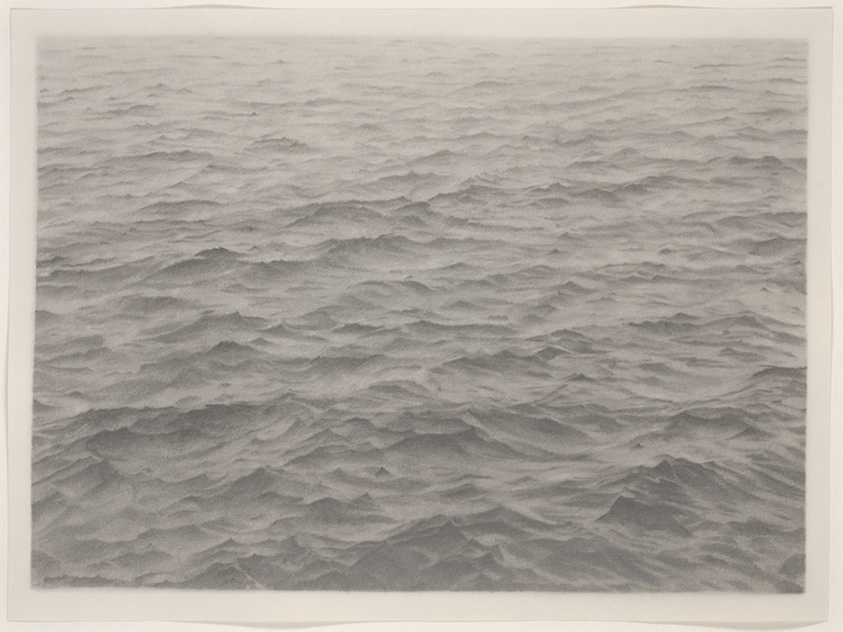
Featured Art: Untitled by Vija Clemins

In your prime, shape presents itself first,
the angle and curve of one thing,
the size of something else,
or the way her hair flows volcanically

along each subtle slope and swell.
It is crazed, intense, super-heated,
even the soles of your boots feel sticky,

because she’s entered you, you know this,
she charts the very map of your blood,
and that eyelid twitch you have going,
they’ll claim is stress and dehydration,

but it’s her, pal, all her, she floods places
you’ve never named in yourself,
she proffers the pulse, the duende, the élan,
that jackhammer of lust
outside the Fiesta Ware outlet. . . .

But one day, it just happens,
a man’s eyes cloud and change,
you don’t feel with the same ardor
the way she moves, her confident posture,

no, suddenly it is color you notice,
the grays, the yellows, the bruised surfaces
tinged with a silver-green, almost a tarnish,
as if her skin were a metal,

and not such a precious one, either,
more like pewter or the common alloys
of soot-smudged medieval artisans,
something to be re-shaped, hammered thin,
become useful and used.

Read More

The Museum of Might-Have-Been

By Anne-Marie Fyfe

Featured Art: Art Institute of Chicago by Thomas Struth

Opens its doors one Sunday a month
in winter. The queues back up for decades.

If you’re lucky and your number’s called
you can have any tour: Your Charmed Life,
Your Regrets, The Prodigal You, every second
slip-road at the intersections of the possible.

The exhibits are stark and infinite
under strip neon, long hallways
of lost opportunity, slow clocks,
stopped clocks, rooms where even now
a thought might wither: the attic storeroom
is out-of-bounds to all but the curators,
though artifacts are still donated by the hour.

Standing in line is no guarantee
of admission: some days
word spreads that when you
reach the queue’s head, pass through
the double doors, it’ll be stripped out,
even lightbulbs, with only packing materials
and discarded drapes left. Yet critics insist
The Multiple-Choice Foyer, The Roads-Not-Taken
Gallery, The Back Burner Café
are stunning.

Every room’s a tasteful shade of apple-white
apparently. Waxworks and living statues
rehearse at intervals for The Balcony Scene,
The Shining City, The Reconciliation
, over
and over, night by night. As in the finest operas.


Read More

My Grandmother the Mohel

By Barbara Hamby

Featured Art: Study of a Baby by Fredrick Goodall

When I tell my mother that a man I know pickets the local hospital
              about what his wife calls “his topic” that is, circumcision
and its evils, she tells me this was my grandmother’s specialty
              as a nurse, and I say, “You’re kidding.” “No. The doctor
she worked for couldn’t stand it, so she did all his circumcisions.
              She loved it!” Loved it? I think—cutting the tips off
boys’ penises? Loved what? The precision? The power? The cries?
              I remember sitting with my mother and grandmother
when I was seven or eight, pretending to play, so I could listen
              to them talk in front of my grandparents’ house
in Washington, 328 Maryland Avenue, and down the tree-lined street
              you could see the Capitol dome looming. A couple
were walking on the sidewalk, and they waved at my grandmother,
              who smiled and waved back. “Are they married?”
my mother asked when they passed. “No,” my grandmother
              answered, “they’re just shacked up.” The cups of my ears
gathered around those words like ravenous Venus Fly Traps,
              because this was just what I had been waiting for,
though I had no idea what it meant, and I knew I couldn’t ask
              or my doll dressing and tuneless singing would be exposed
for the subterfuge they were, and I’d be exiled into the house,
              and this was before my grandfather died, who didn’t think
a woman should drive, but my grandmother taught herself,
              her two little girls in the back seat screaming
as the car jerked over the dirt road behind their house in Kentucky,
              and then after he died, she went to school and became a nurse,
but fifty years later I’m chatting with a man on a plane, who’s returning
              home after spending the day in New York because
he is a mohel and has made this long trip to snip the tip off
              some little boy’s penis, and I think of Mantegna’s painting
of the circumcision of Christ at the Uffizi and kosher laws which
              forbid eating crustaceans, which would mean a sacrifice
of gumbo, boullabaisse, cioppino and fish soups the world over,
              and it was the fried Apalachicola shrimps that broke
the back of my vegetarianism, what in Louisiana they call
              “sramps,” and I’ve heard them called “pinks,” “prawns,”
and sometimes when I’m standing over the stove making a roux
              my life seems to be a kind of gumbo, and if you don’t burn
the water-and-flour paste, then it doesn’t much matter what else
              you throw in, but okra is a must and a couple dozen
oysters, andouille sausage, all your dark mistakes mixed in
              with the brilliant medals and diamond tiaras,
and my grandmother told me she went to her wedding
              in a horse and buggy, a seventeen-year-old girl,
probably a virgin, and little did she know where that road
              would lead her, from canning tomatoes and corn
to snipping the tips off thousands of penises to the nursing home
              where she died, shacked up with all her selves,
that particular gumbo stewing in a body withered by 93 years,
              not knowing anything but that she’d rather be eating
ice cream, driving to Memphis, frying chicken, mashing
              potatoes, baking a cake with blackberries
her daughters picked that morning before walking to school.


Read More