Home Fires

By Anne Kenner

I didn’t want to live on Sonoma Mountain. I was busy in San Francisco, with my job and my children, our friends and activities. Cities had always been my preferred environment; I like the noise and jostling crowds. But Jim needed more room and fewer people, country vistas and wide-open spaces. He wanted privacy and verdure, bike paths and hiking trails. So I agreed to look for them with him, first in Carmel Valley and finally, one afternoon, by myself in Sonoma county.

The real estate agent selected a few houses that fit our careful budget, and pointed to the first on a map, three miles up Sonoma Mountain from the valley floor.

“That one,” I said, “is too remote.”

“Don’t worry,” she assured me, “we won’t stay long.”

Read More
Triage

By Lance Larsen

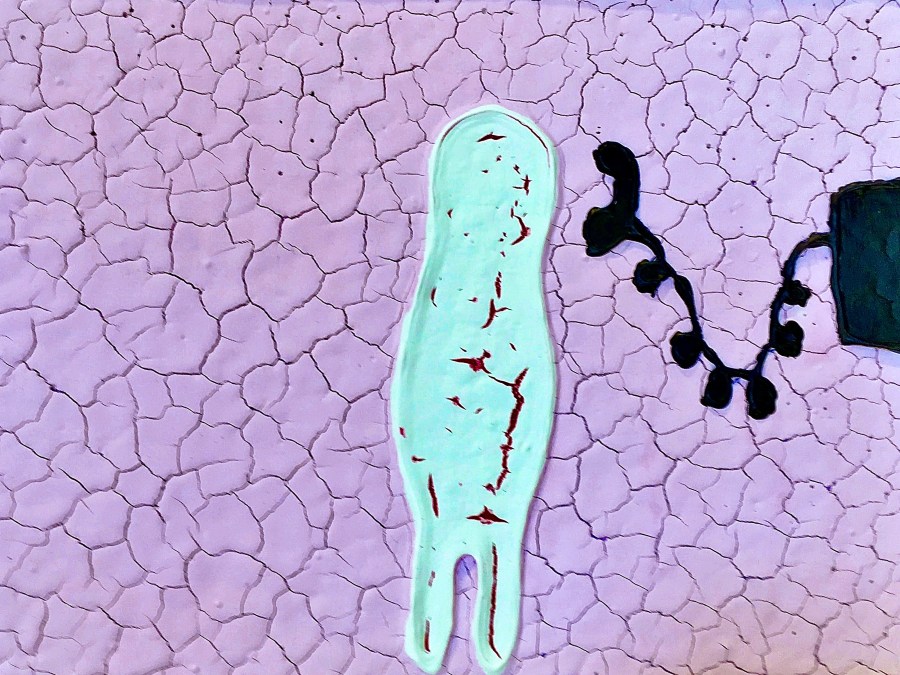
Featured Art: Fresh Air, by John Schriner

My job is to mow. My job is to coax the prairie
around my  mother-in-law’s house into green
chaos, then decapitate it on Friday till it looks
like carpet. My other job is to say dang
it’s hot and enter the kitchen and sip juice
and nuzzle my beloved at the stove when her
mother’s back is turned—an eighty-seven-year-old
back but still super quick. My beloved
has her own job—open and close the fridge,
push me away, and keep some things
cold like cucumbers and Gouda and yogurt,
and others hot like caramelized onions
and yesterday’s sweet and sour, and pretend
her mother’s Alzheimer’s is a shrine we’ll visit
someday like the Taj Mahal and not daily triage.
I still have other jobs, like having cancer cells
burned from my face at 3:00. Or is it 3:30?
I check my phone. Oh good, 3:30, more time
to decapitate the prairie and sip juice
and maybe swim slippery laps at the rec center.

Read More

Anthropologist of the Apocalypse

By Samantha Krause

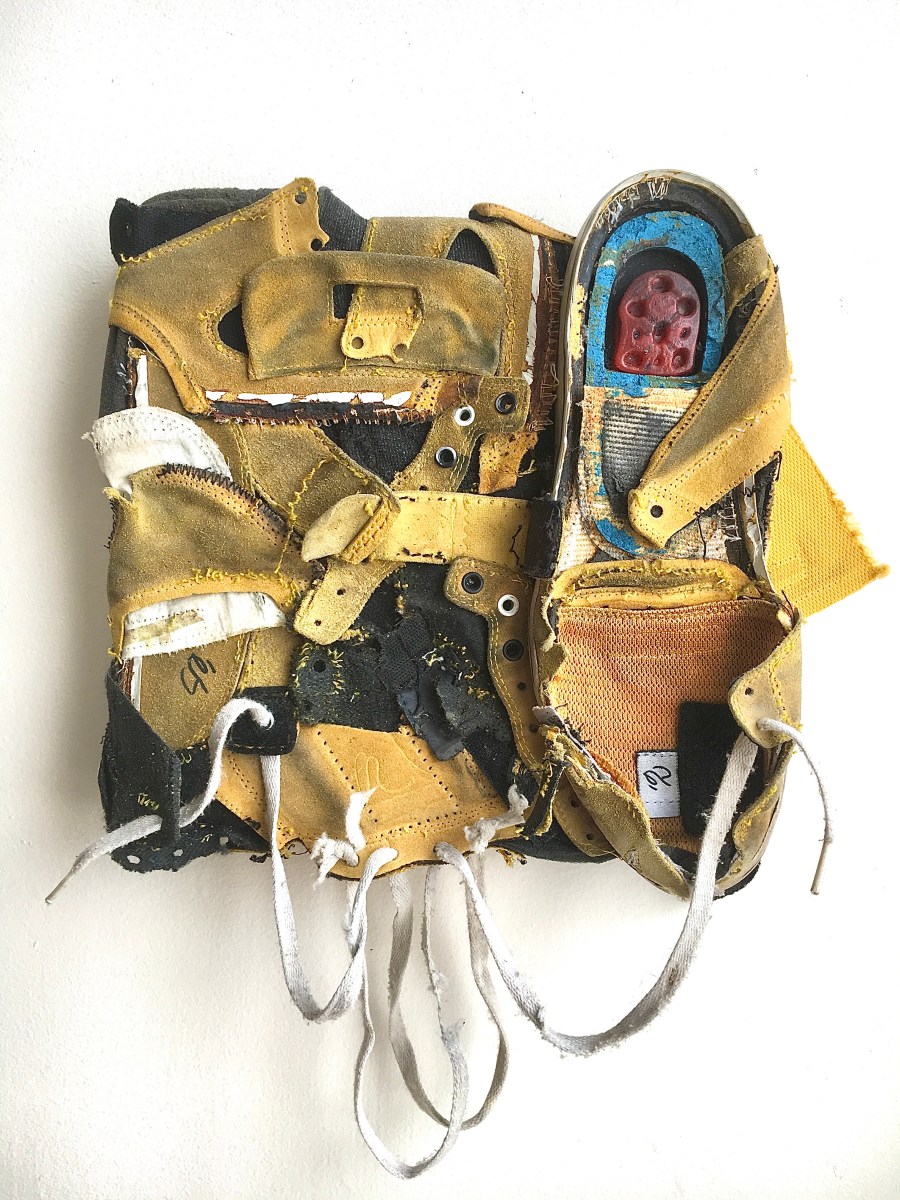
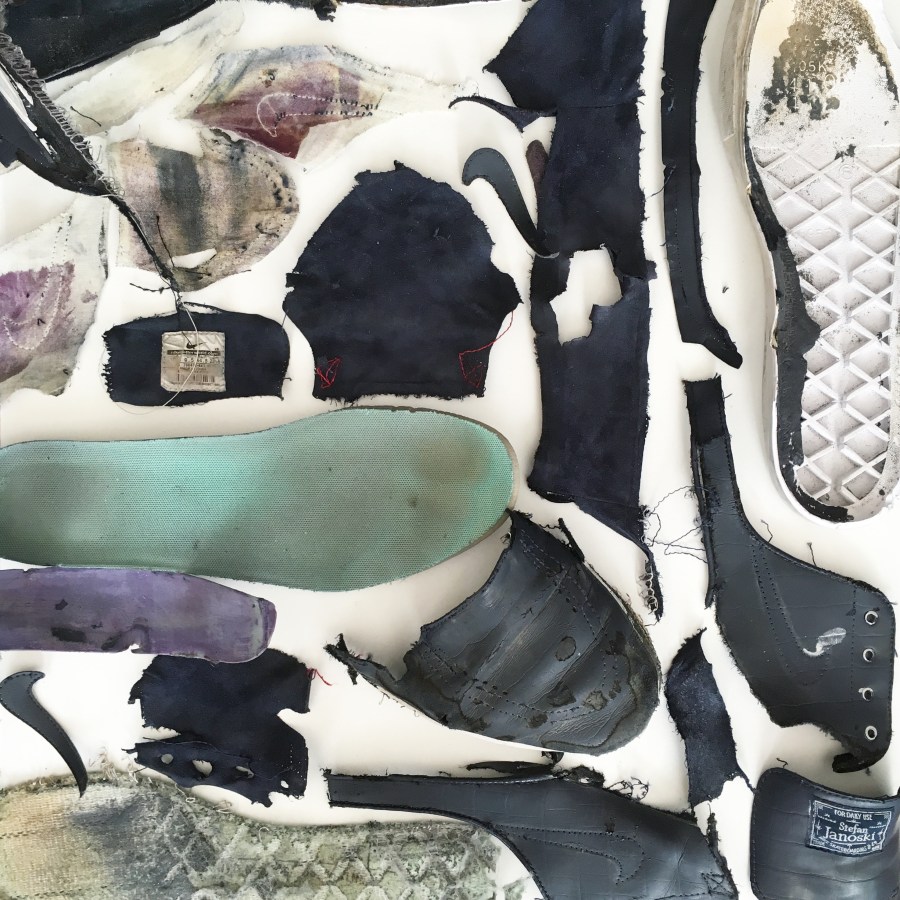
Featured Art: Janoski (Deconstructed), by John Schriner

Welcome to the museum of secondhand savings. The journey starts like this: when something is donated to The Thrift Store, the attendants at the store decide whether to sell it there or send it to my department to sell online. In each of the 13 stores in our district, there is a list of items that are always to be sent to us. We get all the jewelry, every musical instrument, any expensive-looking art, all video games, computers, clothes with tags over $75. All brand-name purses, every vinyl record, typewriters from certain years and countries. American Girl Dolls, vintage Barbies, Pokémon and Yu-Gi-Oh! and baseball cards. Stamp collections. Fur coats. LEGOs. Cameras, digital and film. It goes on.

Read More

The Natural World

by Chris Crockett

Featured Art: Cosmic Eye, by John Schriner

The moon rises
to the left of the kitchen sink.

I go outside to check on
the world’s artistry:

Moths and stars;
bats whose blind ping-pings

pinpoint insects,
accurate as an adding machine.

Horses are head down in the soup
of flooded grass fields;

All day long
they solve their hunger.

Everything partners and trades
nutrients. Billions

unseen in the black roots.
Inaudible hum.

My fingers keep time
to a barely comprehended

background beat.


Read More

Partition

by Carolina Hotchandani

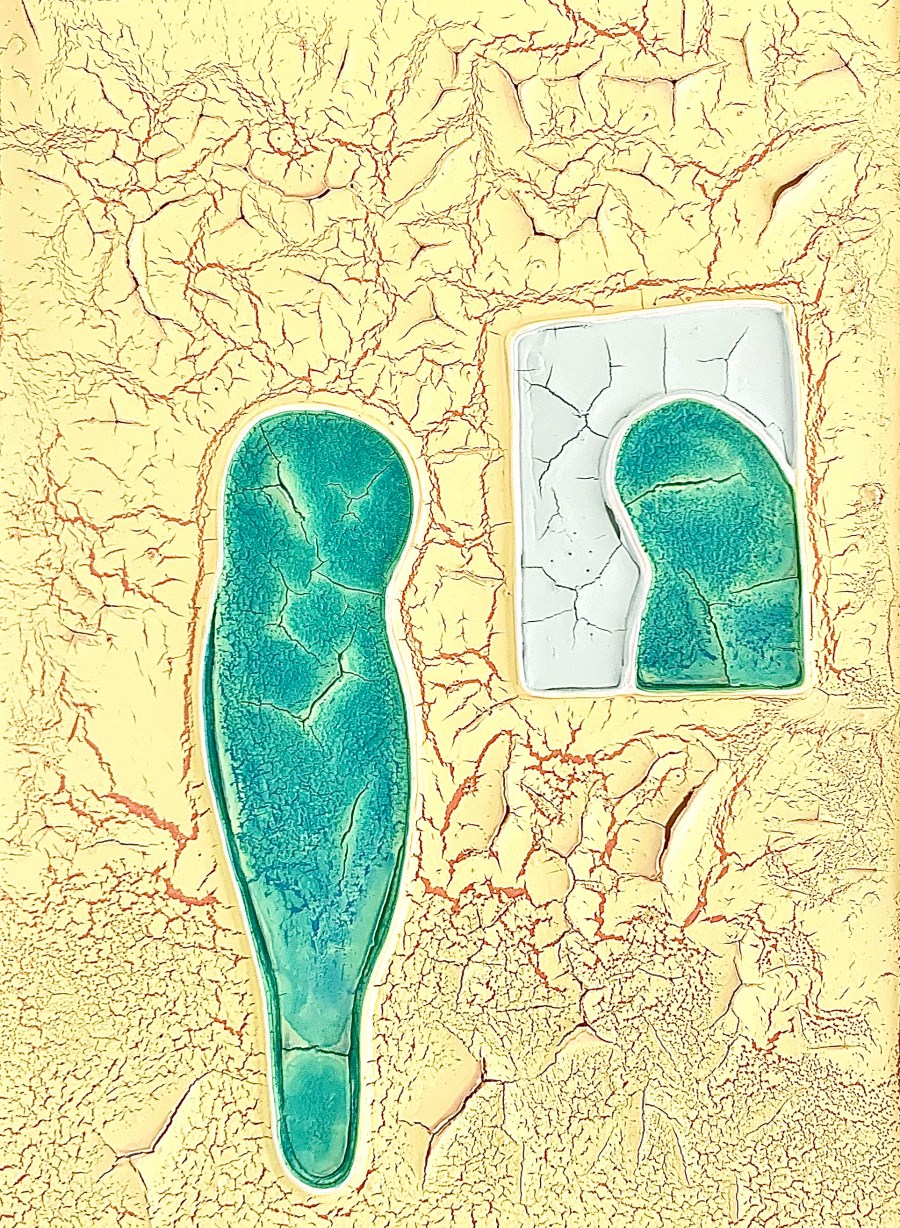
Featured Art: Fissure, by John Schriner


In your version of the story, people butter their fingers 

with notions of God, splitting India into a smaller India, 

a new Pakistan. The way a single roti’s dough 

is pulled apart, the new spheres, rolled in the palms, 

then flattened. The idea of God—the destroyer of human bonds, 

you will say in the diatribe I know well—the reason for new 

borders, new pain to sprout on either side of a dividing line. 

You’ll go on. I’ll picture the edges of your words blurring 

to a hum as I think of how to wrest your rant from you. 

A rolling pin barrels over dough, widens the soft disc, 

makes it fine. You are fragile. Like a story that stretches 

belief. Like a nation. Like a thin disc of dough that sticks 

to a surface, tearing when it’s peeled back. I don’t know 

how to part the story from the person and keep the person.


Read More

Culprit

By Carolina Hotchandani

Featured Art: Hello, Hello, by John Schriner

As you finish your morning cup of tea,
an identity thief rings.

You answer.

Sleep wraps loosely around your mind
like the flannel robe you’re still wearing.

It’s almost noon.

The television is on
but muted.

On the screen, Lieutenant Columbo’s mouth moves
as he pesters his prime suspect.
Soon, he’ll reveal how the murderer
murdered the murdered.

Ahhh, you say to the voice on the phone
that dubs over the episode’s denouement:

Tell me the story behind your name.
So you do.
Can you spell it for me?
So you enunciate:
M as in “money” — A — N as in “Nancy” — O — H . . .
till all the letters of your name go down
into the small holes of the phone.

You were born in India before Partition?
Those were hard times.

When the voice solicits your social security number,
you want to know why,
but the logic you’re offered makes sense:
there’s money to be claimed
by survivors of arduous times.

Columbo lights his cigar.
The murderer’s exposed, and the credits are rolling.

The end is not surprising; we’ve known it from the start.

We won’t learn who trafficked in your memories,
committing this crime.
You aren’t the best witness,
forgetful these days.
But you watch and rewatch your favorite TV sleuth
intuit the culprit, apprehend the truth.


Read More

12th and McGraw

By Hillary Behrman

Featured Art: Epidermis, by John Schriner

I moved fast always hoping to slip into the house and up to my room unnoticed. I made it to the first landing of the wide staircase before I heard the pop pop and grind and looked up. My little brother, Alex, was perched above me, kneeling on the long cushioned window seat. His chicken-wing shoulder blades stuck out on either side of his old fashioned undershirt. The afternoon light, filtered through the two-story stained glass window, hit his pale skin and formed a glowing checkerboard of red, yellow and green patches all across the back of his shorn head and bent neck. He gripped the plastic handle of a large Phillips-head screwdriver with both hands, pumping it like a tiny jackhammer straight out from his concave chest, shattering square after square of swirly rainbow glass. He must have been at it for a while, because by the time I reached him the first three rows of bread-slice sized panes were gone.

My brother was a watchful, wary sort of kid, circumspect in all his actions by the age of six in a way I still can’t manage in my thirties. I gave him a quick once over. I didn’t see any blood, so I left him to it. The snap crackle pop of each new shattered pane followed me up the stairs to the next landing and down the long hallway to my room. I wasn’t an idiot or monster. I was fourteen. I got it, Alex’s desire to expose that house to the elements, chip away at its candy colored Victorian shell.

I kept listening until the sounds of Alex’s demolition project stopped. The silence freaked me out way more than his vandalism. I don’t know why. I should have been thinking about broken glass and the paper-thin flesh on the undersides of his skinny wrists all along. But I wasn’t. He had seemed so preternaturally competent back then. I don’t know why I finally had the sense to sprint back down the hall. Alex was curled up on the window seat, his cheek pressed into bits of colored glass. I don’t know why there wasn’t more blood, why the cuts weren’t deeper. I scooped him up and carried him up the stairs.  He stayed limp and floppy until I reached the third floor, where he wrapped his legs tight around my waist.

Read More

Bumping Around

by Eileen Pettycrew

Featured Art: Vaider, by John Schriner

Then I saw a man sheltering from the rain
inside a concrete circle meant to be
a work of art. I didn’t want to think
he was homeless, just a commuter waiting
for the light rail. Forgive me,
I’ve seen trash spilling from hillsides,
tents popping up like mushrooms in the dark.
Mattresses, ripped tarps, lamps, rugs,
metal and plastic twisted into a pile
reaching the top of a broken-down RV.
Last week I saw a flag flying at half-staff
after another mass shooting,
and underneath the flag, an electronic billboard
that said Walk Away from Joint Pain.
Forgive me for thinking it was a signal
to drag my sorry body up and over the wind,
to rise like vapor, like water cycling
around the earth, sky to land and back again,
one big circle that never ends.
Let me feel a little love for everything.
The steaming pile of wood chips, the barren
stumps, the grove of trees still bearing
open wounds from February’s ice storm.
The days I shivered in a cold house,
bumping around in the dark with a flashlight,
hoping the batteries would last.


Read More

Dear Austin,

By Brian Builta

A year after your death we keep receiving college brochures
telling you how nicely you’d fit at certain institutions, under a
pine I guess, or next to a Doric column. The earth would bear
you up. In youth group one of the leaders reads about Jesus
raising Lazarus from death. Lazarus’ sister says to Jesus, If you
had been here, my brother would not have died. Your sister leans over,
says Same. She may be pissed for some time. Sometimes we
think of you as Judas, hanging there, unused coins scattered at
your feet. For a minute it helped to think that God also lost
His son, but then, you know, the resurrection. I’ve been
assured by Fr. Larry Richards you are not in hell. Something
about full consent of the will. The way you made your grandma
heave, though, I’m not so sure. Still, I said a few hundred
thousand Divine Mercy Chaplets for you, so by now you
should be on some beach in Costa Rica blowing through a
palm toward a new day, rising.


Read More

If

By Marie-Claire Bancquart
Translated from French by Claire Eder and Marie Moulin-Salles

We had a ribbon of words to say
like the machines with their coffers of signs
prêt-à-porter.

We would have finished going over them.

Returned to the first ones
we would pronounce them with our renewed body.

Dead horses climb back up the trails.

Silence.

They would carry us finally toward
            our solemn communion with objects.


Featured Art: Eldridge, by John Schriner

Read More

Margins

By Marie-Claire Bancquart
Translated from French by Claire Eder and Marie Moulin-Salles

Eating the apple
I eat enigma
and I glimpse us in the mirror the apple and me
inaccurate and profound.

Something trembles inside us with mouths
of saps and metals.

Long trees
go out from us toward the suburbs of the horizon.

Is it us
at the center?

Or the center of the drift?


Featured Art: Reflection, by John Schriner

Read More