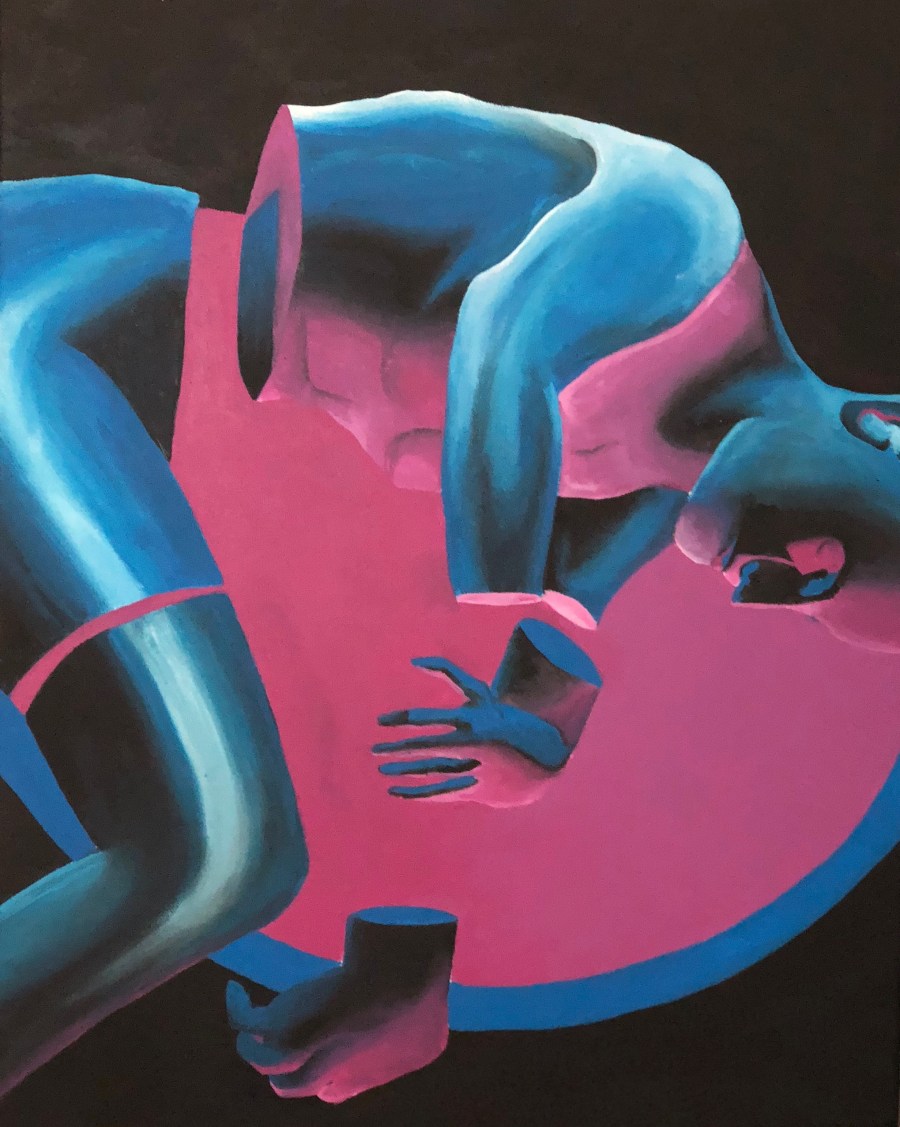
By David O’Connell
I hate their tiny hands, the silent-screen-villains’ way they have
of rubbing them together, chest-high, as they squat on countertop
or wall and stare me down with gas-mask goggle eyes.
Hate how they materialize from clear blue sky to picnic, to garbage,
to shit. It’s their disregard. Their monotonous, dull thudding—wings
to window—so persistent that it bullies my attention. As does
that intermittent buzz, somewhere in the house, taunting me to try
and stalk it down. In swarms, if possible, I hate them more. Despise
their ganged-up arrogance, the lazy way they rise—helicopters
from midtown—when I approach each mutilated victim of the cat.
But it’s more than that. If not a full-blown phobia, my aversion’s
on the spectrum. And I believe them, those psychiatrists
who guess true phobic hate (blistered, crippling) may indicate
that terror’s being leeched from something other than experience,
that, right now, somewhere in my genome’s mud, there lies
a clutch of rusting drums leaking grim ancestral memories: flies
inside the suppurating wound, flies on the gangrene rot, flies
alighting on the child too weak—or worse—to brush them off.
And if that’s true, wouldn’t it account for why I sweat
when I catch sight of one upon my pillow or hear its stuttering hum?
No. Not entirely. Terror’s well delves deeper. Its waters seep
from hollows in the Id infested with the blind, albino worms of nightmare.
And more than suffering, more even than the thought of the loved body’s
eventual decay, its stench a honey drawing clouds of flies to mate
and lay those eggs that, hours after death, make cold skin pulse,
then writhe—more than this, it’s what comes after that fuels phobia.
Read More