Happiness

By Daniel Arias-Gomez

Sometimes it sneaks up on me, as I look out the window
of a bus, for example, and see a woman in huaraches running
in the rain—her right arm waving, her left
hand pulling a boy, a backpack bumping
against his shoulders. The woman opens
her mouth, but I only hear rain
against the glass—a black braid lashes
her neck, and from her arm
dangle two mesh bags with a plaid pattern
woven out of strands of plastic and filled with vegetables, beans, rice. My mother
used those same bags when we went to the market on Sundays. One day
she bought me a bag all for myself, the same
as hers but smaller, in which I dropped
tangerines, peanuts, mazapanes, as I followed her
through market stalls. The bus driver sees
the woman and the boy in time
and stops—her face loosens, and she smiles,
and her smile takes in all the rain
and all the mud on the street and on her huaraches, and she turns
to the boy and says
something to him,
and he smiles back.


Read More

A Brief History of Hunger

By Mary Jo Firth Gillett

Up from the mire of the primordial soup
came one-celled, tiny cavernous bits
whose innards knew a hollow ache only cured
when their shape-shifting borders engulfed
smaller bits, and came a world more complicated,
the paramecium with its oral groove,
the surprising planaria—nick its frontispiece
and the split becomes two hungry heads!—
then came, as ever, competition begetting variation,
to move or not to move, that was the question—
whether it was more propitious to see
with eyes multitudinous or on stalks or both,
whether it was better to be safely anchored,
waiting in camouflage, or to mount an assault,
evolution’s choices simple, almost biblical—seek
and ye shall find or lurk with bait in the hope that all
will come to him who waits, and then came
specialized beaks and teeth, fanciful horns
and coloration prompting procreation,
as well as a multitude of eating adaptations—
the water bird’s fused nostrils, air sacs in head and neck
to absorb impact as the feathered darts, pillaging
angels, plummet—and came homo sapiens with a myriad
of tastes and ways to cook—sear and braise, sauté
and soufflé, pickle and brine—came table manners, the urge
to gorge, to purge, came sorbet and gourmet, foods
delectable and indigestible, epicurean delights, food fights,
and all the ravenous mouths of tomorrow and tomorrow.


Read More

The Oregon Trail

By Corey Van Landingham

Featured Art: Wooden fence with two black buffaloes by Markus Spiske

When my first boyfriend’s mother died of breast cancer, I spoke with him on the cordless, from the bathtub, trying to console him. He was calm in his grief, and I broke his heart soon after. A cruelty only vaguely acceptable at fourteen. A week before we had snuck out, in the middle of the night, and driven up the snaking mountain roads of southern Oregon. Toward what? Toward something. We could feel a pull all around us, the silence in the woods, the ghosts of the Shasta people passing below our windows.

What did we know of love? Across the screen, in the dark computer labs of our youth where we played The Oregon Trail on our soon-to-be-extinct Apple II computers, love was entering in the names of those you wanted to take with you, west, toward the promised land. We could all begin a new life together, if we purchased the right supplies. Unless we were in a particularly harsh environment, we knew to conduct a brief funeral. Here lies Laura. We wrote epitaphs across the virtual tombstones before continuing down the trail.

Read More

Evening With Little Comfort

By Caitlin Vance

Featured Art: Heron in snow by Ohara Koson

8 p.m. and an even-ing out of the world’s darkness
I’d like to escape. I take comfort in headlights,

phone screens, a busy lawyer’s lamp still on
through the office window. Small resistances

to night’s tyranny. I take comfort in a heavy glass
filled with ice which catches glimmers of light

like wedding rings. There’s comfort in walking down the sidewalk
where matches flicker and last season’s tinsel hangs

on tree branches in a shop window, there’s comfort
in the glitter painted on the eyelids of a drunk woman,

and the voices of strangers saying look at that moon.
At home I lure a firefly in through my window.

My green-eyed cat chases it and scrapes her teeth
against its little light-bulb tail, so all that’s left

to flicker are her eyes and mine and not
the firefly’s tiny dead eyes, gone dark.

My cat goes to sleep. I climb into bed, lower
my eyelids, burn out my last little lamps, surrender.


Read More

Where the Stars Are Hived

By James Lineberger 
Winner, New Ohio Review Poetry Contest selected by Rosanna Warren

Featured Art: Beautiful woman portrait from Messiah by Samuel Johnson, LL.D

That Saturday, when The ABC’s
of Beekeeping arrived UPS,
he was already a very sick man, survivor
of several major surgeries, all of which were
successful, within limits, but what
could they do, all those
doctors and technicians, to halt the inevitable, which
he knew, of course, we all do, even in those
moments of temporary triumph
when we feel we have won something or other, when
that dratted parathyroid thing
gets plucked and dropped in the bucket, the scar artfully
hidden in a crease of skin, or the triple bypass pains have subsided
and become one of those historical blips
on the mind-screen, these and all the others
will have taken their toll, but when the book arrived
he was nonetheless grateful, knowing full well
he would never get around to the bees or a score
of other projects, but the pride was still there, and some
stubborn sense of accomplishment
that had nothing to do with the rest of his life, the marriages,
the lawyers, the pre-nuptials, and the money,
the money, all that goddamn money, and what did it mean,
any of it, next to this hillside filled with row
upon row of Silver Queen, and the praying mantids
and ladybugs, the chalcid wasps and the pungent
scent of the marigolds, how to speak
of these things or make anyone understand that the garden
is not a weapon against Death,
but a doorway to invite her in, a private place
where they can talk undisturbed
with a growing closeness and affection he never
dreamed possible,
he and this little girl in her denim coveralls with
the bear appliqué and the bottoms
rolled up, the way she holds his fingers in her tiny hand, and her shining face,
upturned, her lips parted in a daughter’s trusting smile.


Read More

Convocation

By James Lineberger

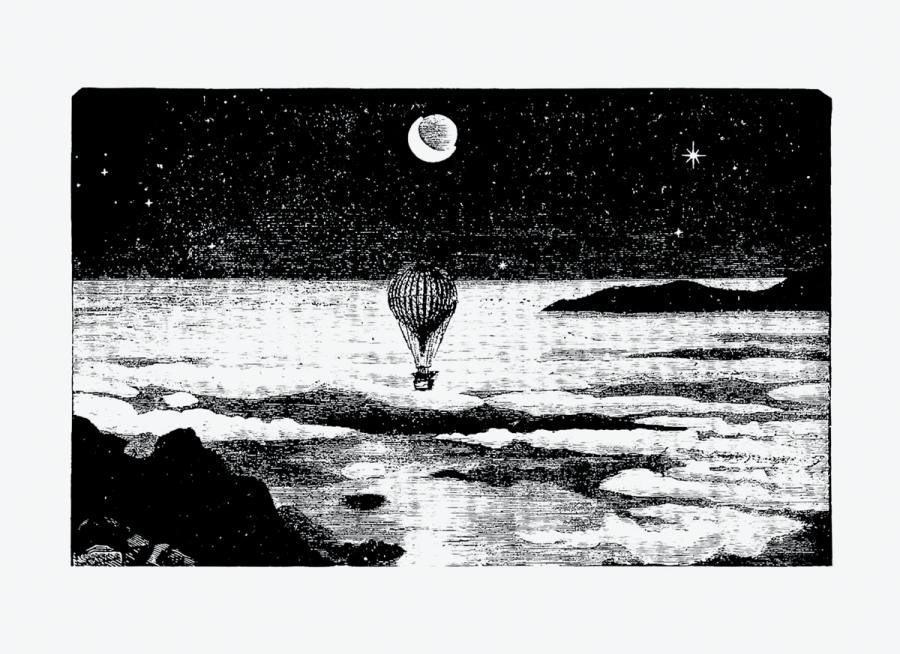
Featured Art: Hot air balloon by James Nisbet & Co.

Perhaps you’ll find it strange
you no longer appear in my dreams,
but on the other hand
it may serve
to fuel your belief that I never loved you
at all, that we were little
more than a scattering of pixels
in the ether,
the kind of momentary disturbance
a thrush will make
stabbing its bill into the leaves
and tossing them
about in search of food, shaking its head
to clear away the debris
and take whatever sustenance the god of thrushes
has promised
before the world settles back again,
asleep in the wake of a need
more primal than heaven and hell;
yet even when I think of us in that sense, as only
the leftovers at some Olympian event where we were not guests,
but mere canapés, nibbled at
and tossed aside,
left in the dead grass for worms to eat,
still it seems that even
birds and grubs, yea, our very comminuted dust, are cursed
with the memory
of a time when nothing could ever
go wrong,
and we knew all the words to every song.


Read More

My Mother’s Neck

By Sarah Suhr

Trailer parks as a winding tire swing,
              as Zigzags and a one-dollar wine cooler.
                             Trailer parks as an ice cube in sweet tea.

Trailer parks as a drunk dad on a dirt bike,
              and that chunk of flesh gone from his head.
                             Trailer parks as a shatter, as a fist, as a scream.

Black–Camaro trailer parks.
              Black Sabbath, black leash.
                             Ticks-on-the-dog trailer parks.

Fingers-in-a-pussy trailer parks.
              Good-Lord-Grant-us-Grace trailer parks.
                             Trailer parks as Dad who called me shithead.

Naked-Barbie trailer parks,
              Moon-Pies and Welch’s Grape Soda.
                             I’m sorry, I’m sorry trailer parks.

Fish-smoker trailer parks.
              Pot-in-a-closet trailer parks.
                             An aluminum shed full of porn.

Trailer parks as loose underwear,
              lawn mattresses, CoverGirl.
                             Trailer parks as half a box of tree ornaments,

as a repossessed Ford Taurus (cream),
              as a shatter, a fist, a scream.
                             Trailer parks as cans of peas.

Piss-in-a-5-gallon-bucket trailer parks,
              cinderblocks and plywood.
                             Trailer parks as three shredded tires.

I’m sorry, I’m sorry trailer parks.
              Wild poppies growing alongside weeds,
                             and that police photo of Mom’s choked neck.

Unpaid-propane-bill, cold-water trailer parks.
              Trailer parks as a grip, a gasp, a little hand on a loaded gun.

                             A-phone-call-from-jail trailer parks.


Read More

Maintenance

By David Gullette

Listen,
            while you were over ogling ogives and trefoils,
                                                                                           chancels and bays,
the things you left behind were quietly giving up,
flying to pieces, falling apart almost together.
            That grinding whine up front you thought was brakes failing?
It was, but that’s not all:
            the last shred of resistance is gone from the shocks,
            every bump is now like the thump of a flawed heart,
but that’s not all:
            the tires have gone slick and bland in your absence,
            unevenly worn like the martyr that marries a slob,
wait, there’s more:
             not only can’t you stop at will, you can’t get started,
             the juice is dead
             some slackness in belt or disc
            something not flowing
            the black box caked with inertia.
Listen,
            you cried at the Royal Wedding and swallowed the cream,
meanwhile the tube lost its sight: snow, garbled snow in its face
            and a twisting of speech unknown in Babel, O
things have been going to pot,
            the paint peeling off your house,
            leprous, obscene, what about that?
The food has vanished under the weed,
the path has forgotten where in the world it was headed,
the mower that might begin to set things aright
is all smoke and flame and missing parts,
shorn of its function.
            Maybe you thought as you turned away toward exotic joys
            the objects you’d secretly started to hate
            would await your return unchanged
            loyal and fixed in their whatness?
You forgot the revenge of decay, you forgot
how even immobile things, unloved, blindly careen and plummet,
how care is a constant curing,
our bulletin first last and always: Aid.

Okay
            you’re back: the fat and languor are through.
The wind has shifted to pelt what’s left of the garden.
Strange birds are swarming the shorter days.
            You dreamed and the world dissolved
            but already the perfumes of distant sugars
            begin to escape from your larder,
            and you open your eyes to the list of your derelictions,
            whelmed with the staggering costs of restitution.
It is time you accept your share in the damage
and spend what needs to be spent.
Repair.


Read More

Borges’s Farewell to Meadville, Pennsylvania

By Stephen Myers

Featured Art: brown leather arm chair by Markus Spiske

By then, old age had laid siege to Borges
for many years. That evening, two handlers
one at each elbow, guided him, bent
like a question mark, up a short staircase
to his seat before the assemblage.
His voice, at first, was an ancient raven’s.
But finally, out of the brain’s dark nest,
he brought forth two lines from Virgil’s Georgics.
They glittered before him. His tongue loosened.
The night heat pressed in. A fragment of
Sappho. Erato beat the blackness back.
His listeners perceived her as wanderers
hear wings among pyrocanthus branches
under a thin moon. A couplet from Dryden,
a silver chain. “Ulalume” a small chalice.
He shifted more easily. One of his men
stepped forward with a glass of water.
Outside, sudden thunder, intermittent
flashes. After he’d spoken, they brought on
the musicians. He sat tapping his cane
to “St. James Infirmary,” smiling,
leaning forward toward the low-lit stage
as if in submission, he who had loved
the Goddess, and she him, letting himself
be lifted and carried off on the shoulders
of Milt Hinton’s gold-greaved bass.


Read More

It Depends

By Lisa Rhoades 

Featured Art: Still Life with Bottle, Carafe, Bread, and Wine by Claude Monet

We are all sick. We are all dying.
This is more or less
the truth, depending on the day.
Depending on the location,
some more than others
are headed home with hospice, toward
a tragic confrontation, a chicken bone, black ice.
Maybe it’s because of breakfast—
years of bitter coffee, the eggs
we were warned away from,
bracelets of sweet cereal O’s.
Perhaps it would help
if more of us knew CPR,
unless it all depends
on the weather of our hearts.
Don’t be fooled
by how quickly flesh folds
back into itself to heal,
or by the ones who are limping,
waxy-skinned and quiet. They will not carry
your part of this forever.
Maybe you should cover your cough,
not be so careless with knives.


Read More

Florida Man Throws Alligator into Wendy’s Drive-Thru Window

By Mitchell Jacobs

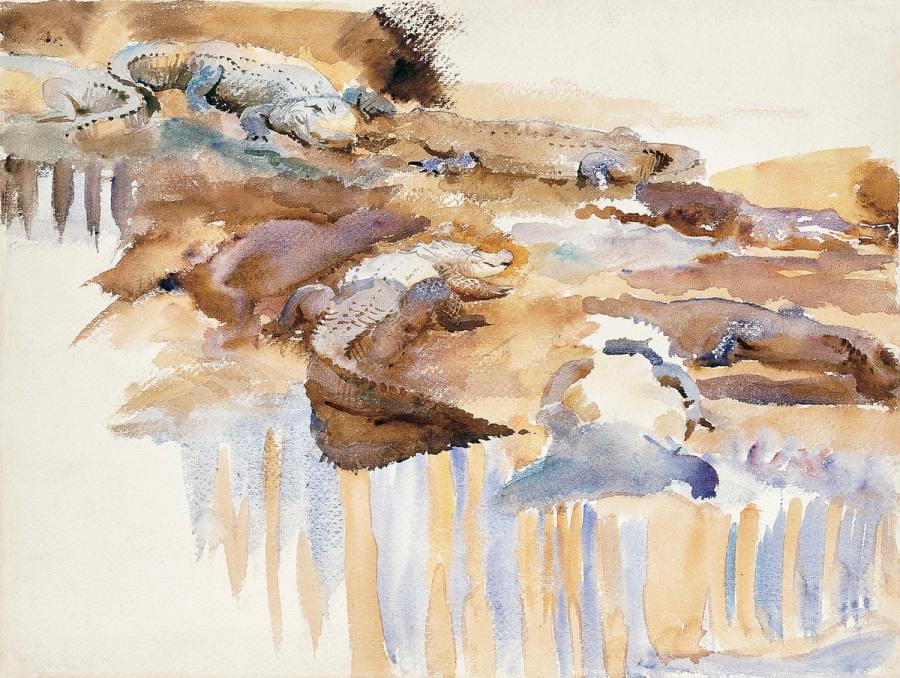
Featured Art: Alligators by John Singer Sargent

The attendant hands him a soda and turns her back, thinking
of straws—how she’s running low, and their candy-red stripes,
and the way everything here comes wrapped up in paper, and

then a 3½-foot alligator is clawing the air.
                                                                          As if she pressed
the wrong button on the register. Or maybe, during lunch rush,
she’d ignored an oncoming hurricane tossing them about.

In any case, she shrieks, finding for this alligator non sequitur
no earthly explanation. Back when the heavens functioned
with less subtlety, she might have turned to the logic of myth.

The god of rapacity took the shape of a lizard
to penetrate the food hall’s oil-glossed aperture.

Perhaps the oracle of Jupiter, FL on his faux-leather throne
delivers this cold-blooded message to confront corporate greed
teeth to teeth.
                        Not that the police have succeeded

in extracting a motive. The culprit’s Frosty-smeared lips are sealed.
His charge: assault with a deadly weapon. Yet it rings untrue.
For Florida Man, we need a more particular punishment:

accused of wielding a projectile reptile,
the defendant shall be flung naked
into the Loxahatchee Slough.

If indeed he is a criminal, there will be no proper dunking.
If he is a hero, he will don no duckweed laurel as he rises
from the mud. But the surveillance camera remembers:

it’s not so wide, the gap between the actual and the possible.
About the space from Nissan Frontier to take-out window
where an alligator, bewildered, sees the kitchen’s steam

like fog over a marsh in red bloom, smells the billows
of meaty fragrance, hears the gatekeeper’s yodel of welcome,
and for a moment
                                 flies.


Read More

The Reflex

By Mitchell Jacobs

Featured Art: Boats and setting sun by Ohara Koson

The scent of shampoo reminds me of carrots.
There’s an explanation, I swear, surfacing
from a developing-Polaroid brown. It’s April.
At recess an upside-down pizza slab is gooing
into the cracked blacktop, and a grainy beat
blasts from some girl’s hot-orange earbuds.
On the grass all the boys are playing wallball
with one of those rubber balls like a big pink eraser,
and when I’m up I don’t chuck it far enough
so Austin says, “Come on, Mitchell, you can’t
even throw like the girls,” which is heartbreaking
for a bunch of reasons. Back home, Duran Duran’s
“The Reflex” spins in the Discman on my bathtub rim.
You’ve gone too far this time, and I’m dancing
on the Valentine. My tunes are twenty years out of date
but I know them by heart. I’ve been lying there half an hour,
tub empty, stoking a burn in my gut. Next day in L.A.
(that’s Language Arts), it’s Fat Shawn’s turn at vocab charades
but he just stands there thinking until somebody shouts
“Rotund!” and that’s not his word but it is the end
of the game. That’s how cruelty works around here.
I’m no Shawn but I am Tree Kid and no one
tells me why. The reflex is a lonely child . . .
Jake calls me a poser for wearing skate shoes,
which is how I learn I wear skate shoes, and then
I chase him and kick him with those shoes. Mostly
I’m a head-down kind of kid. I don’t peek at the pull-down map
during the geography quiz. I don’t snicker when
the health teacher says gluteus maximus, but I am
the one who laughs when she can’t spell epididymis.
Another night and it’s the tub again, lights off, interpreting
the song with nonsense lyrics I’m sure have something
to do with all this clench and spasm. The reflex is a door
to finding treasure in the dark. I un-twist-tie
the plastic produce bag and glob out more Pantene, hating
the boys who run around cocksure with their narrow
calves and their throwing arms with actual
visible muscles and those stupid impossible taut butts
and I’ll show them with this soaped-up carrot
what I can take, how it stings, how I tighten my fist
as I hear them spit out my name.


Read More

Love’s Been Good to Me

By Andrew Robinson

Featured Art: Zurich by Ernst Ludwig Kirchner

The girl from Zurich is deathly quiet. But even in a king-sized bed her presence prickles me awake. Her fetal body rises, falls, a pillow wedged between us. A natural end approaches now; I’m sure she knows it too. We met six months ago, flotsamed onto the misfit table at a Chinese wedding. There was nothing to do but drink, and seven wines into the night we decided to go slumming at Orchard Towers—Singapore’s neon throwback of tacky sleaze. Sailors go there for the prostitutes, and bankers for the irony, but for her it was the Filipino bands. I love to dance to them, she said, they always try so hard. But she wouldn’t go there without a man, and so, still in my suit at 4 a.m., I held her as she cried on the sticky dancefloor. Cried with drunken empathy for the Indonesian whores she was dancing with. At their age I was still in school, she said, And they have to sell themselves to these fucking men. She feinted at the sweaty marines, bewildered with Burmese whisky and shore leave, and she had me at that. I’ve always been a sucker for compassion—it doesn’t always serve me well.

Then as she sniffed into the smoky bathroom I texted her something about goodness—I don’t remember what—which showed up as her Facebook status the next day. But like the young marines, she was shipping out in the morning, her company posting her to Paris. And it wasn’t until her stint was up—four months later—that we got to meet again. And all that texting and mailing and chatting online, it didn’t serve to warn us that after just a few weeks it wouldn’t be working the way we’d hoped. And now it’s coming to an end—no relish of redemption here—my thoughts rise on a sleepy surge of affection. The girl from Zurich: I’ll remember her—I will.

Read More

Seafaring

By Marie-Elizabeth Mali

Featured Art: Eddystone Lighthouse by Mary Altha Nims 

As if love were a lighthouse and I
the creaking rain-lashed vessel

heaving through the waves.
In the wheelhouse, a heart

that refuses to give up, despite
sharp coral under surface churn

waiting to turn the boat
into a rusted hull the sun vermillions

each morning for photographers
who revel in the sea’s dominion.

I’m tired of chop but don’t remember
calm, the hatches battened down

so long they’re salted shut.
No, that’s not true. That’s someone

else’s story, not mine. I say,
for every hungry ghost in the hold,

ten thousand iron-spined sailors
with rope-calloused hands navigate

around the coral minefields, eyes
on the lighthouse, its revolving beam.


Read More

I Never Met a Flower That Yelled At Me

By Julie Moore 

Featured Art: Flowers by L. Prang and Co

her neighbor always says, explaining why,
every year, he plants & hangs
geraniums, begonias, impatiens, petunias,
even blue lobelia, amid his blooming bulbs.

She wants that sentiment to infect her, too,
the summer her husband leaves.
So on the hottest day Ohio can muster, she faces
the roses her husband sank in soil ten years before.

On the side of the house, they grow weed-loud—
even cantankerous saplings push through
the bushes, silencing all the kind words in their red mouths.
Everything has to go.

As she digs, thorns & muscular weeds
thick with prickles recite
her husband’s remarks on her skin,
scratching, clawing, tearing:

I can’t commit to you 100%, only 75%.
Shovel meets hard earth again & again.
Gasping for air, feeling her back spasm in protest,
she clings to the wood handle. You’re too hardline.

You want too much. She lets the sun scold her,
lets the heavy air weigh on her shoulders,
lets all of it, the whole fucking force
of his question—What do you mean I ‘disregard’ you?—

fuel her resistance, her freedom to say,
No, you & your furious mess
will not stand, not here, not any longer.
In their place, she leaves behind

what perennial peace she can—
pink Asiatic lilies, purple coneflowers,
& threadleaf coreopsis shining
their favor without ridicule or question.


Read More

Here Below

By Sarah Carleton

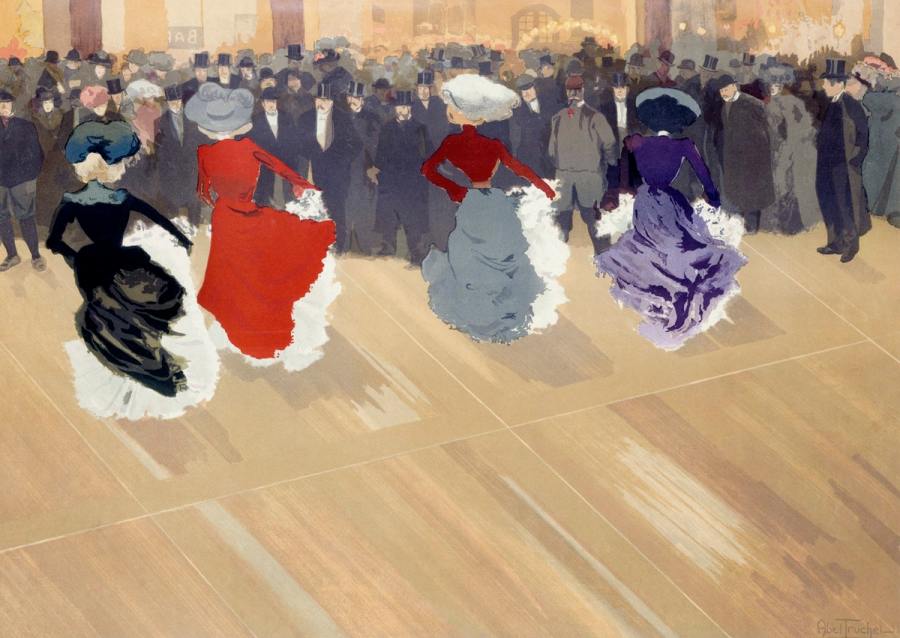
Featured Art: The quadrille at the Moulin-Rouge by Louis Abel-Truchet

Before a careless bulldozer buried him under a ton of dirt
he played with impeccable pulse.
He anchored tunes with a standup bass,

left fingers spidering, right hand patting pauses,
a running commentary that thumped below the chitchat,
bristling with off-color intent.

Just as hothouse plants rooted and swelled
to his sweet, muttered, nasty guy’s-guy nothings,
we set our feet in the soil of his crude jokes and thrived.

His wife didn’t pay much mind to the dirty stories
and sly non-secrets. When he laid their deck,
he penciled women’s names on the underside of the planking,

like an ode to abundance, and she just laughed, shrugging.
We take our cue from her and refuse to fret,
but celebrate him in smut and subtext.

Without crawling among the snakes to check, we hope
we made the list––divas of warm skin and rayon dresses
immortalized on a two-by-ten––

and we also aspire to be like his wife,
who stands aboveboard, rolling her eyes, knowing
her name has been etched more than once in that slatted dark.


Read More

Giverny

By Emily Sernaker

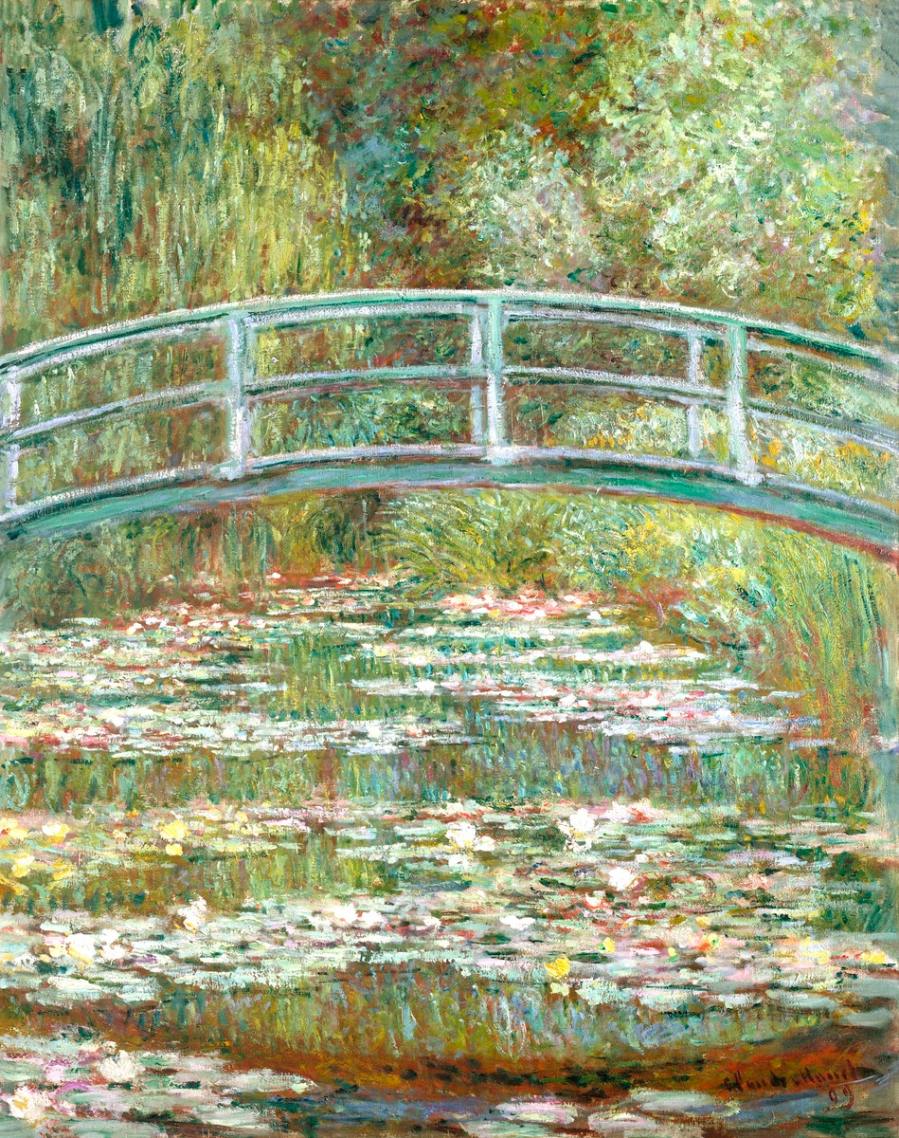
Featured Art: Bridge over a Pond of Water Lilies by Claude Monet

I try not to think about falling in love
too much, although sometimes I look
at pictures of Giverny.

You can visit you know.
See Claude Monet’s lily pad garden,
that famous footbridge.

I enjoy a good trip with my girlfriends.
A walk with my sweet mother.
But I want to see Giverny

with my partner. Whom I haven’t met.
Who might not want to fly 3,585 miles
to see a lily pad garden in France,

all of those pastels up close and floating.
Sometimes I check the website
confirming it’s open. That anyone can go.


Read More

Writing What You Know and Whom You’ve Known

Feature: Of Essays and Exes

By Joey Franklin

When I teach the essay to new college students, I usually put the kibosh on three subjects right away—the Big Disease, the Big Game, and the Big Break-Up. One reason for this blanket prohibition is as simple as it is selfish: I don’t want to read bad writing about tired subjects; and there are few subjects more exercised in the essays of new college students than dying family members, fleeting athletic glory, and the pains of first love.

I do have a more legitimate reason for this prohibition than my own desire to never read another internal monologue about teenage unrequited love. You see, I steer my students away from these subjects because, while the loss they represent is certainly real, it is a loss so common as to tax the ability of any writer—let alone a young writer—to say something worthwhile.

Perhaps, then, it is unfair that I follow up this prohibition by challenging my students to write according to Phillip Lopate’s dictum: “The trick is to realize that one is not important, except insofar as one’s example can serve to elucidate a more widespread human trait and make readers feel a little less lonely and freakish.”

Read More

What Binds Them Together

Features: Of Essays and Exes

By Rachael Peckham

When a MacArthur grant-winning poet and classicist writes about her ex-lover, she doesn’t commit a “thick stacked act of revenge” against him, a tempting “vocation of anger” enacted on the page. Yet Anne Carson, author of “The Glass Essay” (from the collection Glass, Irony, and God), knows it’s “easier to tell a story of how people wound one another than of what binds them together.” It makes sense. Where there’s an ex, there’s the story of a relationship—a clear beginning, middle, and the dreaded end, with a natural protagonist in us versus them, the Exes.

That said, Carson’s “The Glass Essay,” which begins with the speaker’s losing sleep over an ex named Law, can hardly be called a clear or easy break-up story. In fact, it’s not a story at all but an essay in verse—one that doesn’t mention him much. Perhaps it’s no surprise that it’s not about him (is it ever, with the essay?) but about her. About several hers, actually; Carson oscillates between “three silent women” each struggling, each alone or left behind in love. It’s loss that binds them together.

Read More

Breakup, Break Down, Break Open: Intimate Partner Violence and Life Inside a Daily Ending

Feature: Of Essays and Exes

By Sonya Huber

Some relationships fall apart in a gradual and mutual cooling, and others rise toward a crescendo of irreconcilable differences. Still others are threaded with periodic or daily heartbreak and even violence. Imagine living a love in which every moment was a breakup, and every next moment was a reunion, over and over and over. The essay of domestic violence is the essay of a living bonfire of a breakup, an extreme breakup in slow motion, and in this writing we can see essayists shining a light on heartbreak, but also on thornier issues of identity and personal safety.

Many of the best essays in this genre have to deal with misconceptions about domestic violence first, since the query applied to an abused person in a relationship is often: “Why didn’t she leave?,” why wasn’t a simple breakup the solution, as if the abused had a decision to make and then failed to make it correctly. For some people affected by domestic violence, though, the breakup hovers as a longed-for destination, an impossible shore to reach. Others fear the breakup due to real hazards and the effects of trauma. And so the question reveals the asker’s naiveté. The nature of violence is that it won’t simply be left. Violence pursues, damages, threatens, and changes the reality that contains it. Several notable essays have dealt with this painful truth.

Read More
More than a Vanished Husband: Jo Ann Beard’s “The Fourth State of Matter”

Feature: Of Essays and Exes

By Holly Baker

“My vanished husband is neither here nor there,” Jo Ann Beard writes in her 1996 New Yorker essay “The Fourth State of Matter.” She’s describing a relationship caught in the freeze-frame of a collapse. The rafters have buckled   and the walls are caving in, but the marriage structure is falling, not yet fallen. Beard, though, is not centrally concerned with the catalyst of this disaster, nor  its aftermath. She does not reflect on settling dust or salvage work. Instead, with a sense of foreboding, her essay captures the days and hours preceding a series of inevitable tragedies: divorce, the death of her dog, and a horrific campus shooting that leaves seven people dead and a survivor seeking new self- definition.

Beard’s lack of control over these horrible intertwining events permeates the writing, and her failing marriage hovers continuously and gloomily in the background as she thinks about her “vanished” husband. But why vanished? Why does Beard paint him this way, not as estranged or simply gone, but vanished?

In this word, she seems to want to elicit a magic trick, and readers may just as well finish the phrase in their minds: vanished without a trace. Unexamined and unexplained—this is exactly the approach Beard uses to distance herself from the heartbreak of impending divorce, from allowing herself to mourn a relationship that has died. To spare herself and the relationship from bare examination, she instead creates buffers and barriers as tools to cope with and contextualize these losses.

Read More

On Breaking Up with the Dream of Your Former Self: Megan Daum’s “My Misspent Youth”

Feature: Of Essays and Exes

By Kelly Kathleen Ferguson

We all know “you can’t go home again,” but what does it mean to long for a place we’ve never inhabited, to love that idea so much that it feels like the beginning of a relationship? And what does it mean to finally admit defeat and break up with that ideal?

Megan Daum, in “My Misspent Youth,” writes of her infatuation with—and split from—New York City, and her long-cherished imagination of the life she would lead there. Daum begins by recounting a time in high school when she first saw a couple’s artsy, romantic Upper West Side apartment. From that moment she was driven by an “unwavering determination to live in a pre-war, oak-floored apartment on or at least in the immediate vicinity of 104th Street and West End Avenue.” Daum goes on to detail how this obsession influenced every major decision of her late teens and twenties, until she discovers—as in most relationships—there’s no escaping money trouble.

Read More

On Natalia Ginzburg’s “Human Relations”

Feature: Of Essays and Exes

By Dinah Lenney

“ . . . the friend we’ve dropped is hurt on our account . . . We know this but we have no regrets, indeed we feel a kind of covert pleasure, for if someone suffers on our account, it shows we have the power to cause pain, we who for so long felt utterly weak and insignificant.”

So writes Natalia Ginzburg in “Human Relations” in which she considers the way people come together and grow apart; and come together and grow apart; not a breakup essay exactly, and yet it will serve, I think, I hope, since Ginzburg breaks (or anticipates breaking) with parents and friends and relations from beginning to end. She hangs her reflection-on-the-human-condition (that’s what this is)—in which we humans are eventually forced to come to terms with how human we are (as in helpless in the face of the universe, as in doomed from the start)—on a story of coming of age, beginning in childhood when we are understandably baffled by adults and their “dark and mysterious” ways. Next, sparked by adolescence, comes the long middle of the piece: Enamored of our peers, Ginzburg admits “we punish the adults . . . by our profound contempt”; by the end of the essay, she herself has grown up, of course. “We are so adult now,” she tells us, “that our adolescent children are already starting to look at us with eyes of stone.” In other words, what goes around comes around, right? As for what happens in between: Relationships—hers (ours?)—keep ending and ending and ending of natural causes, which (if we don’t count death) only means we eponymous humans—naturally (hopelessly) fickle and self-serving—are to be held responsible more often than not.

Read More

New Ohio Review Issue 21 (Originally Published Spring 2017)

Newohioreview.org is archiving previous editions as they originally appeared. We are pairing the pieces with curated art work, as well as select audio recordings. In collaboration with our past contributors, we are happy to (re)-present this outstanding work.

Issue 21 compiled by Averie Hicks

Push

By George Bilgere
Featured Art: by Clay Banks

I’m trying to look as if I’m suffering.
I have this anguished expression on my face
but it’s wasted since I’m wearing a surgical mask
and anyway the focus here is really on my wife
and the doctor is right there between her legs
and he’s shouting Push, and my wife
is doing this astounding thing, she’s pushing
yet another human being into the world, a world
that so far seems to be pushing back,

and the baby’s heartbeat is down to 90
so the doc says, I think maybe one more try,
then we do the Caesarean, so things in the room
really are a bit tense, it’s definitely a moment
that demands a lot of attention, and my wife
is gathering whatever shreds of strength
remain in the shaking exhausted sleeve of flesh
her body has become, the blood and sweat and fluids
everywhere, and this is It!—when I hear
the attending nurse standing just behind me
saying to this guy in scrubs standing next to her,
I think he’s the anesthesiologist’s assistant,

Well, just because Karen says she has a boyfriend
doesn’t necessarily mean she won’t go out with you,
and the guy says, his voice rising because my wife
really is screaming quite loudly at this point,
Yeah, OK, I guess I should give it a try, I mean
what’s the worst that can happen, other than
getting shot down and looking like a total fool,

and the nurse says, as the doctor is shouting PUSH, 
Yeah, but hasn’t it been like a long dry spell for you?
Aren’t you getting a little desperate here? And the guy
laughs and my wife screams again and the doctor
says Yes and into the world comes the bloody head
followed by the naked lovely bloody little boy
insanely ill-prepared for any of this, and I guess
the guy actually is going to ask Karen out
and I say go for it.


Read More

Void Unfilled

By George Bilgere
Featured Art: Long Exposure Couple by Jr Korpa

I walk past Erin’s house at dusk
and there she is at her kitchen table,
working on her book about the Reformation.

She needs to finish it if she wants to get tenure,
but it’s slow going because being a single mom
is very difficult what with child care and cooking dinner
and going in to teach her courses on the Reformation,
which I can see her writing about right now,
her face attractive yet harried in the glow
of her laptop as she searches for le mot juste.

Meanwhile Andrew, her nine-year-old son,
shoots forlorn baskets in the driveway
under the fatherless hoop bolted to the garage
by the father now remarried and living in Dayton,
as Andrew makes a move, a crossover dribble,
against the ghost father guarding him, just as I did
when I was nine, my daddy so immensely dead,
my mother inside looking harried and scared,
studying thick frightening books for her realtor’s exam.

And although I hardly know Erin,
I feel I should walk up, knock on her door,
and when she opens it (looking harried,
apologizing for the mess) ask her to marry me.
And she will smile with relief and say
yes, of course, what took you so long,
and she’ll finish her chapter on the Reformation
and start frying up some pork chops for us

as I walk out to the driveway and exorcise
the ghost father with my amazing Larry Bird jump shot,
and tomorrow I’ll mow the lawn and maybe
build a birdhouse with the power tools slumbering
on the basement workbench where the ghost
father left them on his way to Dayton.

I will fill the void, having left voids of my own,
except that my own wife and son are waiting
down the street for me to come home for dinner,
and so I just walk on by, leaving the void unfilled,
as Erin brushes her hair from her face and types out
a further contribution to the body of scholarship
concerning the Reformation, and Andrew
sinks a long beautiful jumper in the gloom.


Read More

Horseplay

By George Bilgere

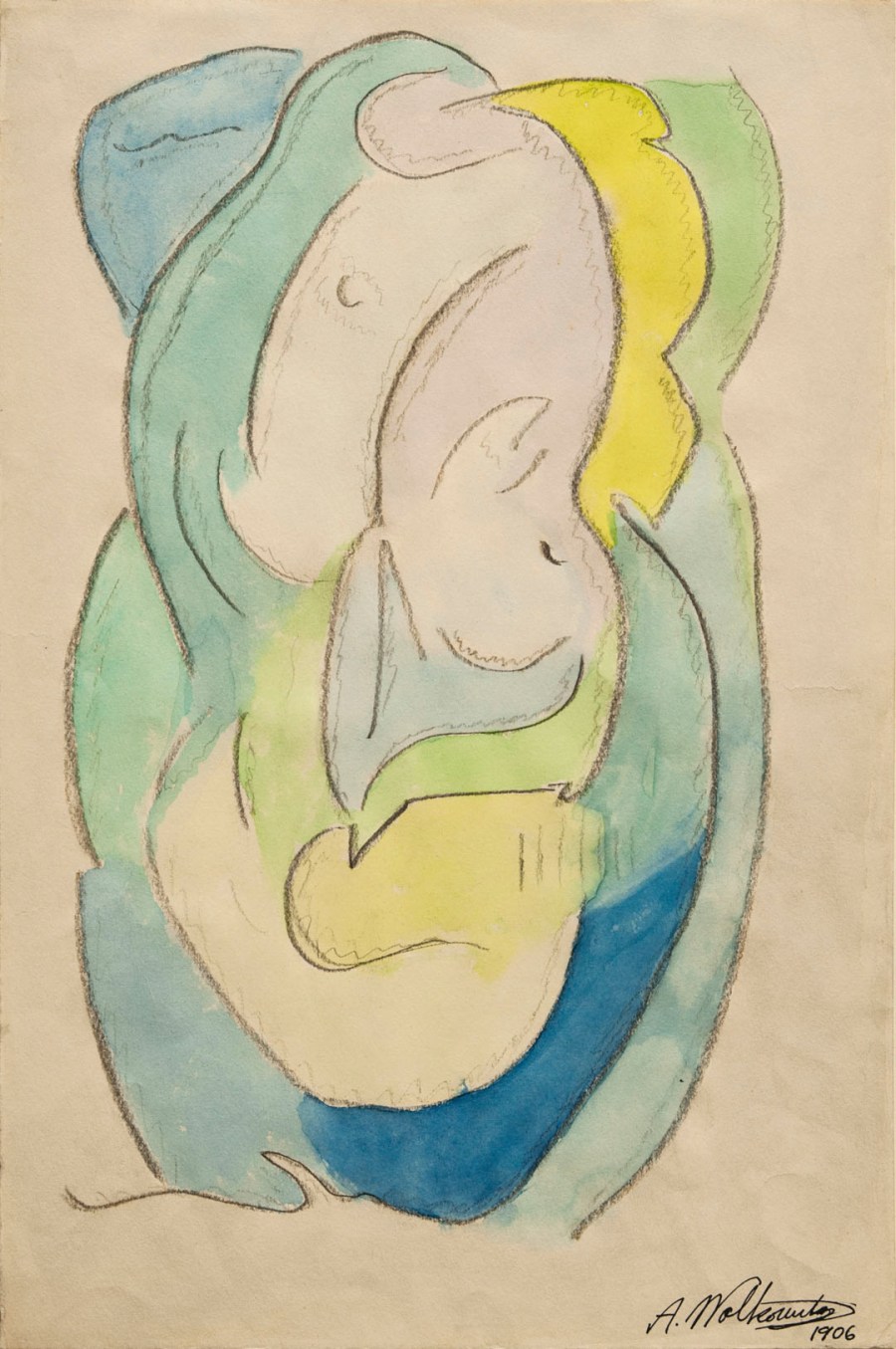
Featured Art: Abstraction, 1906 by Abraham Walkowitz

I am floating in the public pool, an older guy
who has achieved much, including a mortgage,
a child, and health insurance including dental.

I have a Premier Rewards Gold Card
from American Express, and my car
is quite large. I have traveled to Finland.
In addition, I once met Toni Morrison
at an awards banquet and made some remarks
she found “extremely interesting.” And last month
I was the subject of a local news story
called “Recyclers: Neighbors Who Care.” In short,
I am not someone you would take lightly.

But when I begin to playfully splash my wife,
the teenaged lifeguard raises her megaphone
and calls down from her throne, “No horseplay in the pool,”
and suddenly I am twelve again, a pale worm
at the feet of a blonde and suntanned goddess,
and I just wish my mom would come pick me up.


Read More

I Tie My Shoes

By George Bilgere

Featured art: ‘Sorrowing Old Man (At Eternity’s Gate)’ by Vincent Van Gogh

I’m walking home late after work
along Meadowbrook Road when I realize
the guy half a block ahead of me
is Bill, from Religious Studies.
I recognize his bald spot, like a pale moon
in the dusk, and his kind of shuffling,
inward-gazing gait. Bill walks
like a pilgrim, measuring his stride
for the long journey, for the next step
in the hard progression of steps.

And while I like Bill, and in some ways
even admire him (he wrote something important
maybe a decade ago on Vatican II),
I slow down a little bit. I even stop
and pretend to tie my shoes, not wanting
to overtake him, because I’m afraid
of the thing he’s carrying, which is big
and invisible and grotesque, a burden
he’s lugging through the twilight, its weight
and unwieldiness slowing him down,
as it has for five years, since a drunk
killed his teenaged son, and Bill’s bald spot
dawned like a tonsure and his gait
grew tentative and unsure, and his gaze
turned inward as his body curled itself
around the enormous, boy-shaped
emptiness, and the question
he spends his days asking God.

And if I caught up with him
and we walked together through the dusk
he would ask me about my own son,
who is three, and the vast prospect of the future
onto which that number opens, involving
Little League and camp-outs and touch
football in the backyard would hang there,
terrible and ablaze in the autumn twilight,
and the two of us would have to slog
down Meadowbrook Road like penitents,
adding its awful weight to the weight of his son
on our backs, our shoulders, and so I fail
Bill, and stop and pretend to tie my shoes.


Read More

Facebook Sonnet

By Tanya Grae

Featured Art: by Prateek Katyal

Someone thinks I’m beautiful again
                & likes posts of my day, comments.
I stifle smiles & feel uncontainable—
                bungeed off ether & the interplay.
Punch-drunk in this blue-sky space,
                a rush of the past, the in-between,
whole chapters, I open annuals
                & albums from storage. His change
in status: single. Papers in hand,
                this backlit man heaves toward
the kite’s trailing end: What if?—
                that butterfly. My youngest lights
onto my lap. Who’s that?—
                as a key turns the lock, I log off.


Read More

Your Mother Wouldn’t Approve

By Krystal Sanders

Of the way you spend Saturday morning in your room, instead of helping Papaw with the lawn work. You watch him on the riding mower, in customary slacks and suspenders, coasting back and forth beneath your window as if the ragged scream of the machine will summon you like a siren to your manly duty. You raise the binoculars Papaw used when he was stationed in West Africa during WWII, long before his shoulders bowed and his skin darkened with liver spots. They are clunky, large in your hands even though you’ve had a growth spurt and you’re well on your way to catching up to Peter, who’s a whole six feet and had college basketball scouts watching him at every game last season. It was Peter’s senior year of high school, your freshman year. The fall had been glorious, riding the cloud of popularity as Peter Thompson’s younger brother. The other kids, the teachers and coaches, cafeteria ladies, librarians, all looking at you with an expectation that was not yet a burden. You joined the Fellowship of Christian Students, which Peter was president of, and took the Advanced Placement classes he’d taken. You had more friends than you’d ever had before. Through the lens, Papaw’s face jumps up at you. You’re intimately aware of every wrinkle, every nose hair. He guides the mower in long, straight lines, first in front of your window at the corner of the house, on the second floor, and then away toward the county road. The motor’s howl falls to a low growl, builds back up as he returns exactly two feet to the left, is eventually reduced to a low grumble at the back of the house.

Your mother wouldn’t approve of the way you watch the world, binoculars pressed to your face, aimed into the neighborhood across the county road. The man who owns the nearest corner lot, 5371, has some kind of shepherd. The dog roams along its chainlink fence, pants in the heat, takes a shit. You catch a glimpse of motion deeper in the neighborhood and sit up straight. You focus on the door that caught your eye, at 5377 striding out of the back of her house in shorts and a man’s plaid shirt. She is headed to the metal trash barrel at the back of the lot. You know she will stand there for a long time, and then go back inside. You imagine burying your fingers in the tangle of her long hair. She is barefoot, and the thought of the stiff crunchiness of the yellow grass against the tender arches of her feet almost makes you moan.

Read More

The Worn-Out West

By Pamela Davis

Featured Art: by Jannes Glas

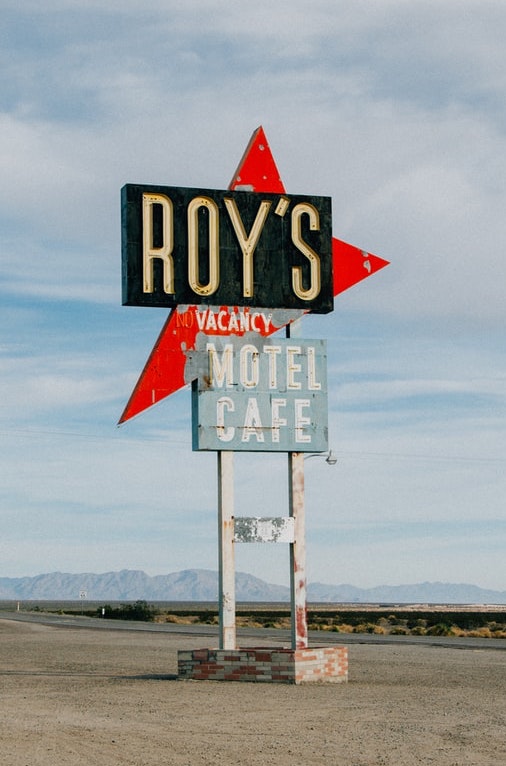
I drive past motel signs advertising
free cable for bikers, truckers numbed
by cracked asphalt. A looseness,
as if everything is slipping
away, and the sky shaved thin as mica.

Stretch of dusty storefronts hung
with local art—warriors astride
painted horses, mesas. The Rio Grande
cuts in and out, shape-shifting
between cottonwoods. In the café,
regulars remove their hats, sit alone.

One gathers himself judge-straight
as the waitress refills his mug,
her bar rag slung over a bare shoulder.
She gifts him a sudden, chipped-tooth
grin. Yesterday she banned
a drifter for fouling the toilet she lets
everyone use. Today she walks a cup
of coffee across the street for
a homeless guy wrapped in his own arms.

On her own this young, every new boss—
town, lover—will treat her like a stolen car.

Smooth, how she glides
from radio to grill. Easy, her talk,
comebacks quick. And outside, a mountain
looms, split long ago by a blast. Wire mesh hugs
some of it back. I want to tell her temporary
lasts a long time. The air is thin
up here. It’s nobody’s idea of home.


Read More

What My Massage Therapist Girlfriend Discovers When I’m On Her Table For the First Time

By Robert Wilder

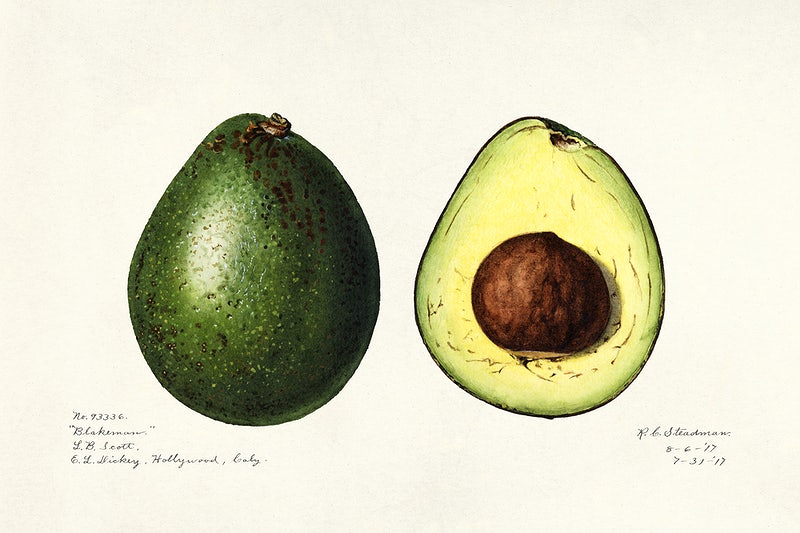
Featured Art: ‘Avocado’ (1916) by Amada Almira Newton

Your right leg is shorter than your left.
There’s something funny happening in your left shoulder.
You should change your detergent and go fragrance-free.
Is this too much pressure?

You once had a girlfriend who threw bottles at your head.
You haven’t slept well in decades.
You store all the grief for your dead mother in your solar plexus.
Breathe.

You grind your teeth.
You have the musical tastes of a seventeen-year-old girl.
There’s tension in your neck which runs down your left side.
No one believes that you are not attracted to Rebecca.

Does this hurt?
Let me stretch you out a bit more.

For someone with such little flexibility, you have a surprisingly good vertical.
You’ve wounded more people than you’re willing to admit.
Your father will die soon and you’ll have no clue where to turn.
You and your brothers will drift apart.
Sorry about that. Just trying to break it up.

Nothing will get easier for a long time.
You loved the bottle thrower something fierce.
You can’t hear your mother’s voice anymore.
Turn on your side, please.

You still love the sun sneaking through cracked windows.
You have a closet full of clothes that no longer fit.
Holding your breath won’t help either of us.
There you are.


Read More

Stuff

By Claudia Monpere

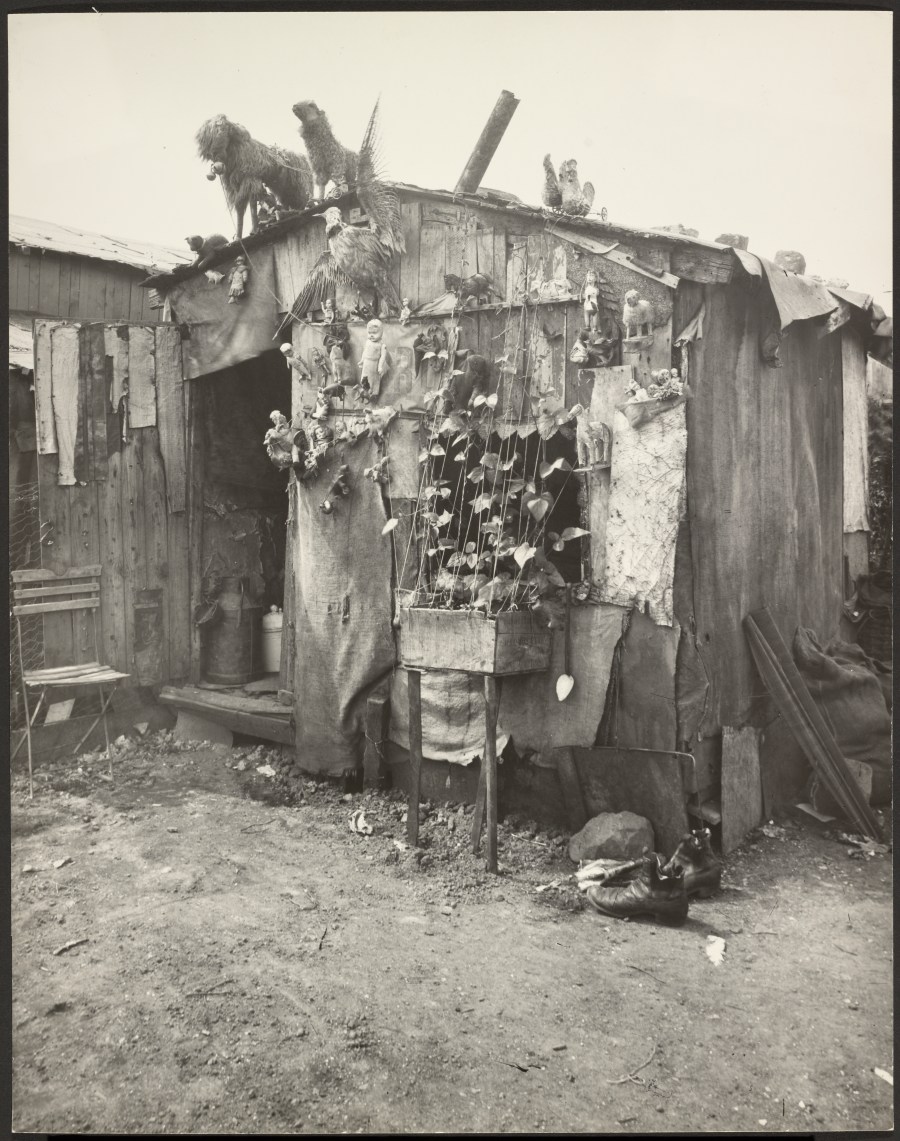
Featured Art: [Villa d’un Chiffonier (Ragpicker’s Shack)], 1920 by Eugène Atget

I saw you, daughter, sneaking
a garbage bag of my treasures
into your car. Those heaps of eyeglasses are art.

Never mind the cracked lenses
and broken hinges, the bent frames.
Some day I’ll make a sculpture or hanging lamp.
I’ll make a mobile.

The broken picture frames and dried-out
pens. Even the bottle caps beg
to be known. And how patient
those stacks of hotel soap.
Waiting. Just in case.

Yes newspapers haystack the walls.
But it’s all there: knowledge at my
fingertips. The postman will bring more.

There is an ocean liner inside my heart
that waits to set sail. The crowds wave
at the dock. My shades are drawn.
Bring me, daughter.
Don’t take. Bring me a basket 
brimming with words.

Not fester, not filth—
fang words that surgeon my heart.
Bring me gossamer, lagoon, violet-crowned
hummingbird.
Bring me, daughter, elixir of cloud.


Read More

A Race Car Made of Sand

By Margot Wizansky

Featured Art: “Beach of Bass Rocks, Gloucester, Massachusetts” by Frank Knox Morton Rehn

Everything made my mother nervous:
the baby crying, sand on the floor, the flies.
So we went out to the beach.
I took my bucket and shovel.
My mother sat my little brother up on her shoulders
and carried the towels and a canvas chair for my father,
who was too weak to carry anything.
He wore his cabaña suit, light green with white palm trees,
his legs, pale like the sheets in the hotel room.
He hadn’t shaved.
His face had been blue for weeks,
the circles under his eyes, dark as his beard.
Mother said I was too heavy to sit in his lap.
All afternoon I dug a string of frantic little ponds.
Nothing was right; my back was sunburnt;
my father hardly moved.
Uncle Robert came, like a bus from the city,
to build me a race car of sand, with jar lids
for hubcaps and for headlights, clamshells,
and he found a quoit on the beach for the steering wheel.
He dug me a driver’s seat that just fit,
and a rumble seat for my little brother.
My father peeled me an apple with his penknife,
in one long piece, that didn’t ever break.


Read More

Some Things Rosa Can’t Tell Little Esmeralda

By Barbara de la Cuesta

Featured Art: by Farrukh Beg

A late afternoon after work, Rosa puts the flame down under the rice and beans and sits with her feet up in Laureano’s recliner. The knock on the front door Rosa thinks must be Mondo’s social worker, the only person she knows who doesn’t just walk in the back door. Mondo is in detention again for defacing a wall, or an overpass, something.

But it isn’t the social worker, it’s little Esmeralda, daughter of the Mexican grocer on Moody Street, who comes in politely, sits opposite her with a notebook, and asks Rosa can she ask her some questions. Hah, like the social worker, Rosa thinks, then corrects herself. This is a child she used to see sitting on the floor of her father’s abasto sorting red beans. The girl tells Rosa she needs to write a biography of an older person for her fifth grade class.

Ah, Rosa, with her aching feet, feels old.

Not old, old; just older than me, says the child. She used to be in Rosa’s catechism class at St. Justin’s and was notably better behaved and brighter than any of the others.

Hokay, says Rosa, not yet realizing what will happen to her.

Read More

Miles

By Craig van Rooyen

Featured Art: by Mike Lewinski

It was dark, sure, but the city’s halo
whitewashed the stars.
We drank good bourbon from Dixie cups
to mock our sophistication.
Two black men and a white one
who needed a brother.
We drank to Ghana advancing,
not so naïve to believe
they had a chance against England.
We toasted our wives of many colors
and our barefoot children chasing fireflies
like the first night in Eden.
But it was Oakland.
So when the boy climbed the porch steps
cupping a winged and glowing offering,
I called him by the wrong name, as if
I did not know him, as if his father
was not my friend.
The brothers exchanged their look,
too polite to call me out
on a summer night in paradise.
And we all pretended not to notice
the bats that let go their roosts
to flap old patterns in our chests.
Suddenly I felt like humming
Swing Low, Sweet Chariot,” professing my love
for Serena, telling them all about my black Scout leader
whom I hadn’t thought about in years,
assembling, in other words, my own minstrel show
to prove how down I am.
All the while, the party soundtrack plays on
through hidden speakers, Kind of Blue 
from the end of that gorgeous terrible horn:
Live, no net, each note feeling its way
into the dark as if we can still improvise,
as if there is always another chance
to get it right before the night ends.
The boy, who isn’t Miles after all,
keeps coming closer
to show me his gift, opening the dark
hemispheres of his hands so I can see
the pulsing fireflies lift off
to join the others in the city’s halo
far above our heads.


Read More

Mitigation

By Craig van Rooyen

Featured Art: by Romina Farías

Somehow it’s good to know
the wildfires have not touched the face
of our local TV anchor
delivering her lines
with a touch of sadness that never approaches
despair, even as her bangs cascade
onto her forehead like evening clouds
descending the Coast Range.
I think of her in her dressing room
before she offers her face to us
the one that will help us fall asleep
while a line of flames somewhere far away
descends the ridge and licks into a kitchen,
melting the refrigerator magnets,
popping cans of spray oil, and setting
the dog out back to howling, jerking
against its chain.
I see her in front of the mirror,
surrendering to the ministrations of tiny brushes— 
a makeup artist leaning in like a lover.
Foundation first, an A-side attack
on brow furrows and laugh lines.
Then concealer to suppress the advance
of crow’s feet into the Botox buffer zone.
Within a half-hour, the spread of creases
and fissures 95% contained.
The brushes flit across her face
like prayer flags, and I can almost smell
the warm breath of the girl who sticks out
the tip of her tongue, leaning close
to line the boundary
where the fullness of a lower lip
begins its concave plunge
into smooth white chin.
Our TV anchor practicing her lines,
mastering her face.
We need to love her for this.
For the way she shows us how to keep
a chin from trembling, an eye from twitching
even while the chained dog
curls in on itself in the burning.


Read More

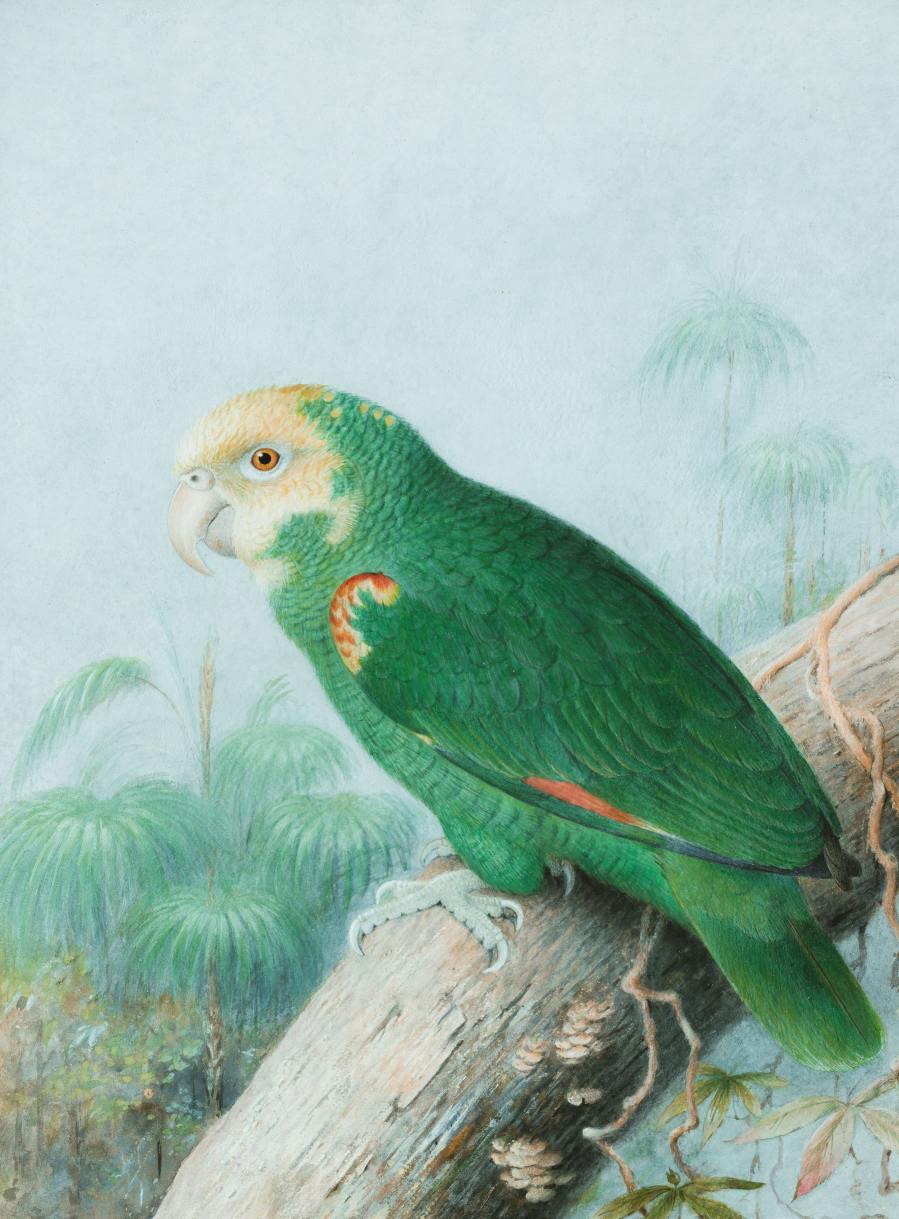
Parrots Over Suburbia

By Craig van Rooyen

Featured Art: by McGill Library

There are two,
as if some ark came to rest
on the high school football field
and Noah flung them through an open window
to test whether this cement-skinned town
can sustain life.
See them there, trimming
lava-dipped wings in the sky above Costco,
bills curved like question marks.
And what do they ask, out of earshot
of the man with sunflower seeds?
Do you know what it means
to circle, to draw and redraw the tightening
circumference of your life
above the grid of 50-year roofs,
in steak smoke risen from backyard barbecues?
The parrots’ owner is no prophet.
Summer evenings, he wrenches
on a ’67 Mustang that drips its innards
onto his Avenue L driveway.
And at dusk, he makes his arm a perch,
takes the two from their cage,
feeds them from his lips, knowing
if they love him he need not maim their wings.
So they fly in circles
and on every pass above the fenced playground,
swoop near to watch the girl in high-tops and earbuds
swinging, head thrown back to reveal
her pale and wild throat.


Read More

Steno

By Mark Kraushaar

“Hypergraphia is a behavioral condition
characterized by the intense desire to write . . . ”
“It is a symptom associated with temporal lobe epilepsy.”

It’s as if . . . , he says, It’s like . . . , or, It’s ABOUT
things being simply THERE, molecular,
blue, strewn, flattened, aflame.
He pulls up the shade and looks out.
There’s this kind of accounting he does:
sidewalk, hedgerow, phone pole.
He lists the round and the ready-made.
He notes the hand-carved and the curved.
He sorts by color and shape.
He lists by size and by brightness.
He notes the nautical, normal and nameless.
It’s Wednesday and he’s moved from columns
to rows: alphabetic, magnetic, majestic . . .

He lists the unowned and the changed,
the charged, unsuitable and smooth.
He leans forward turning the page.
It’s like . . . , It’s as if . . . , he says,
as if these THINGS, this STUFF:
hunk and clod, object and article, gizmo,
whatnot, doodad, exactingly placid, substantial
and actual, for knowing nothing,
know it all: guruish shoe-tree, savvy axle.
He opens the door and sits on the stoop.
It’s as if each thought over-laps the last.
A girl on a bike goes by.


Read More

Fable

By Sally Bliumis-Dunn

Featured Art: Formerly attributed to Zhao Boju (ca. 1120s-ca.1162)

People often spoke
about her mousy behavior,

her gray squeaky voice,
but no one made the connection

that the words they used,
which she devoured like giant crumbs,

commenced her change,
so that when she drew the curtains

to darken the air
it was not a sign of depression

as they had begun to suppose
but simply a trait as she became

more and more nocturnal,
scurrying about the rooms, the tail

of her housecoat trailing.


Read More

Safehouse

By Sandy Gingras

Featured Art: by Pierre Châtel-Innocenti

Pull up any rug, there’s a hole.
An easy chair sits on a trap door, which leads to
a slide. I am still surprised, after all these years,
how many tunnels are in my house.

In the basement, which is under the place
you would consider the basement, is
what I call “the secret room.” But all my rooms
are really secret rooms. It has a large
colored map on the wall, a folding table under
a fluorescent light, a red couch.

I go down there to find
a way to slip something into my dreams or to
block my escape routes. I am a spy, don’t
you know? I don’t look like a spy, and I’m paid
nothing for my work, but I do it anyway.
I was called, as they say, to duty.

Under my clothes, I’m naked.
Within my ID card is another identity.
I can change at will. I have a machine
that scrambles my words into code,
a pill I can bite to shift my mood,
a certification to never sleep.

Now I must run.
Even though there is no such thing as a
hiding spot in this house. Even if I put on
my invisible suit. Even if I cover my face
so I can’t see myself.
In the bathroom cupboard is a shelf that lifts
to reveal a chute which looks like it’s for laundry,
but it isn’t. I can’t hear when I hit bottom.


Read More

Other People’s Ranch Dressing

By Kate Maclam

Featured Art: by Au Lido Plate no.14 (1920)

I wanted to smell less like
a restaurant and more like
a woman.
I tried my best.
All the women I know could
have sex with famous men
like J Hamm or Leo D or BJ.
All the women I know smell like
French Vanilla perfume
and fresh cigarettes.
They smell like thin people.
When I describe them I say,
she is thin like a rich person.
I say, she eats paper
and melts diamonds,
to stay thin—
she huffs paint thinner.
I say, she has never touched
another person’s ranch dressing
or brushed it onto her thigh
where it looked like
the seed of a famous man
or anyone really.


Read More