Ammo

By Marc Tretin

Featured Art: Snap-the-Whip by Winslow Homer, 1873

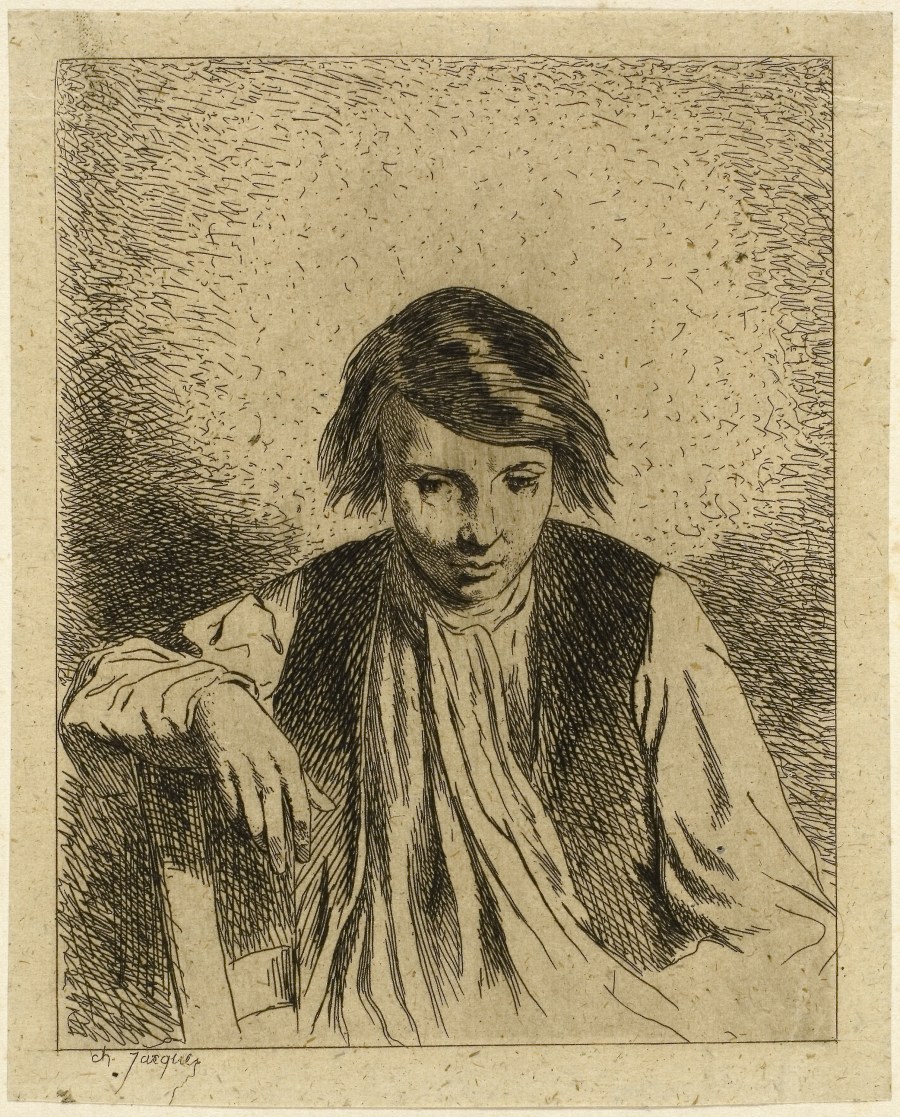
In ’69, to avoid the draft, I taught at Mt. Tryon
Boarding School for Troubled Boys and there
I hit a child. Afterward I imagined
I was on top of an explosive ammo truck
manning a gun, squeezing off bullets
at young bodies of boys who’d tried
to run to the back of our truck to soft-toss
a grenade that could blow us into
strips of meat. It seemed better to be scared
in that V.C.-controlled village I’d
never been to than to think of squeaky-voiced
and fat Gerry, who at thirteen, threw chalk
at me, hit a younger boy,
and always grabbed that kid’s crotch.

I was in charge of him and ten others. For punishment
they’d have to sit without making a sound, but Gerry
sang, “Try to shut me up. Try to shut
me up.” I was afraid the others would join him.
My hands felt like clubs. Then
I swung and his nose spurted surprised
blood that dripped to his shirt from his chin.
The principal came from the main office.
I was gone.

                       So this is why, my son,
when you, at thirteen, said,
“I don’t know who I am. I don’t know
who I am!” I said, “Be glad you
haven’t done anything that makes you choke
on who you are,” and I put up
my paper to read about how, somewhere,
a soldier was shooting civilians.


Read More

Princess Summer-Fall-Winter-Spring

By Charles Harper Webb

What serpentine producer snuck her past the censors
to corrupt the Peanut Gallery boys? Oh Princess
of the Tinka Tonka tribe, I loved you more than Dolores
at the swimming pool, Janey next door, or Bobbi Jo,

the best baseball player on my block. I loved
the beaded buckskin dress that couldn’t hide your curvy
hips and thighs. I loved your black braids, your dark
eyes that shocked me through the new TV, smudged

by my lips. Indian girl with skin as pale as mine—
birds and butterflies flocked to your singing drum.
Native royalty, whose name evoked School’s Out /
Trick or Treat / Santa Claus / Home Run Derby—

daughter (I guessed) of Big Chief Thunderthud—
you dumped Howdy, and left me to stomp
the flowers I plucked for you, and shred
the blue-jay plume I’d saved to slide behind your ear.

Starring with Elvis in Jailhouse Rock, you helped
to crown him King before you married a loser
named Lafayette who, driving through Wyoming
(near where Tinka Tonkan warriors ruled?) hit a car

towing a trailer that sliced your car and you in two,
ten years before Jayne Mansfield lost half
of her head the same way. The stone that bears
your white-girl name, Judy Tyler, says you were 25.

Elvis skipped your funeral, wanting (his mother said)
to remember you alive. I would have gone.
But no one told me. And I was still (“Thank God,”
my mother would have said) too young to drive.


Read More

Audition

Winner, New Ohio Review Fiction Contest
selected by Charles Johnson

By Leslie Rodd

Featured Art: Nymphs and Satyrs Playing Musical Instruments by Claude Lorrain

San Francisco, 1969

Outside the jazz club where I’ve been audience, player, and piano tuner over the years, it’s quiet at this sunstruck ten o’clock, and I have a shivery thought of a guitar and a girl that began inside my head last night. No rocking, no rhythm, no foot-stomping or window-shaking. Only the fifty measured strides I’ve counted from the corner where the 30 Stockton dropped me off, past the police station to the alley, the dip in the pavement and the sloping rise, the manhole cover to my left, yes, here it is, the last of my landmarks, reassuring me I’m in the right place. A thought of a girl, who used to make my music glow.

I rap the metal tip of my cane against the partly opened steel door, the tradesman’s entrance.

“Easy does it there, fella,” a man calls out to me.

“Jimmy McGee,” I identify myself.

He says, in a voice that’s smoother than Roscoe’s, “Come on in, Jimmy. Mustafa Monroe, at your service. Roscoe’s on-again bass, as of yesterday.”

Read More

Watching Nature on PBS

By Angela Voras-Hills

The caribou calf is separated from the herd, pursued
by the wolf. Unless it slips up, the calf could escape,
outrun it. The toddler grows restless and runs to the window,
watching the garbage truck back up, lift bins, and dump
our trash into itself. I don’t redirect her. My own childhood
window looked into a tree. All year, there were branches. Sometimes
covered in leaves, but by winter, they were bare. I often prayed
for a way out. I once spoke directly to God, said: “God, if you know everything,
what am I thinking now?” And I tried to think the opposite of anything
he’d expect me to think. Another time I said, “God, if you help me
leave this place,” but could think of nothing worth giving in return.
No matter how much we bargained, I never asked God to save our house
from fire, even after a house on our block burned down. I didn’t
ask him to spare us from cancer, Alzheimer’s, any other death. I believed
there was a reason for everything. When my mother asked me
to blow into her cup of dice for luck before she rolled them onto the bar,
I didn’t wonder what it meant if she didn’t win. Then, in high school,
a classmate was found dead in her bed. Her mother had gone to wake her,
but her heart had stopped beating. The parenting books say it’s good
to establish rituals. I run a bath, wash peanut butter from the toddler’s hair.
I rock her, sing folk songs about birds, and she sits up, pointing to a spider
climbing the wall. I watch it as I lay her in the crib, still singing
as her eyes close. I wait until she falls asleep.


Read More

Full Disclosure

By Emily Sernaker

When someone says a mental math problem
I usually act like I’m trying to solve it but secretly

wait it out until someone else does the work.
I tend to think of today’s date in the announcer’s voice

from The Daily Show. I sometimes sit next to handsome
men in coffee shops, pretend we’re together reading

different sides of the same newspaper. My family
loves watching 24 reruns. Dad yells “there’s no time,”

accuses my mother of being a Russian spy. When I’m
let down I feel like a game of Jenga with a log taken out.

I can feel myself tumbling. I don’t like people who
over-use the word “obviously.” I got a month-to-month

lease so I could leave Washington D.C. any time.
The Lincoln Memorial steps are still the best place to sit.

I could learn to pack a better snowball. Could save M&Ms
in trail mix for someone good. I have a sneaking

suspicion the man I end up with will own a Ghostbusters
T-shirt. I’d like to know more about Saint Francis.


Read More

History Will Remember

By David O’Connell

Featured Art: Showers by Louis Auguste Lepère, 1890

maybe not today, but this July,
surely, the way the city wakes up
to brunch, the café windows

thrown open to foot traffic.
It rained overnight. But now sun.
Or if not this July, certainly the skyline,

the bar graph of midtown, the Empire
State Building, the Chrysler, all that was
accomplished. And that we were?

Not we, as in you and me,
but we all? Impossible
that the record could be garbled

beyond translation. Centuries on,
careers will be made retelling
what’s . . . sorry, a cabbie’s honking

at a bike messenger, and the newsstand
on the corner’s glossy with everything
you’d ever need to know

about red carpet nip slips, double
truffle burgers, how soon the West
Antarctic ice sheet’s likely to collapse.

I’ve got weekend plans. My wife’s
friend’s rented a place in the Hamptons
we could never afford. She doesn’t buy

she says, because it’ll be under water
in a decade. I’m hoping, like last year,
for clear nights. We’re crossing through

the Perseids, that annual shower
of meteors: traces of a comet’s tail
that flared some time ago.


Read More

Black Telephone

By Robert Long Foreman

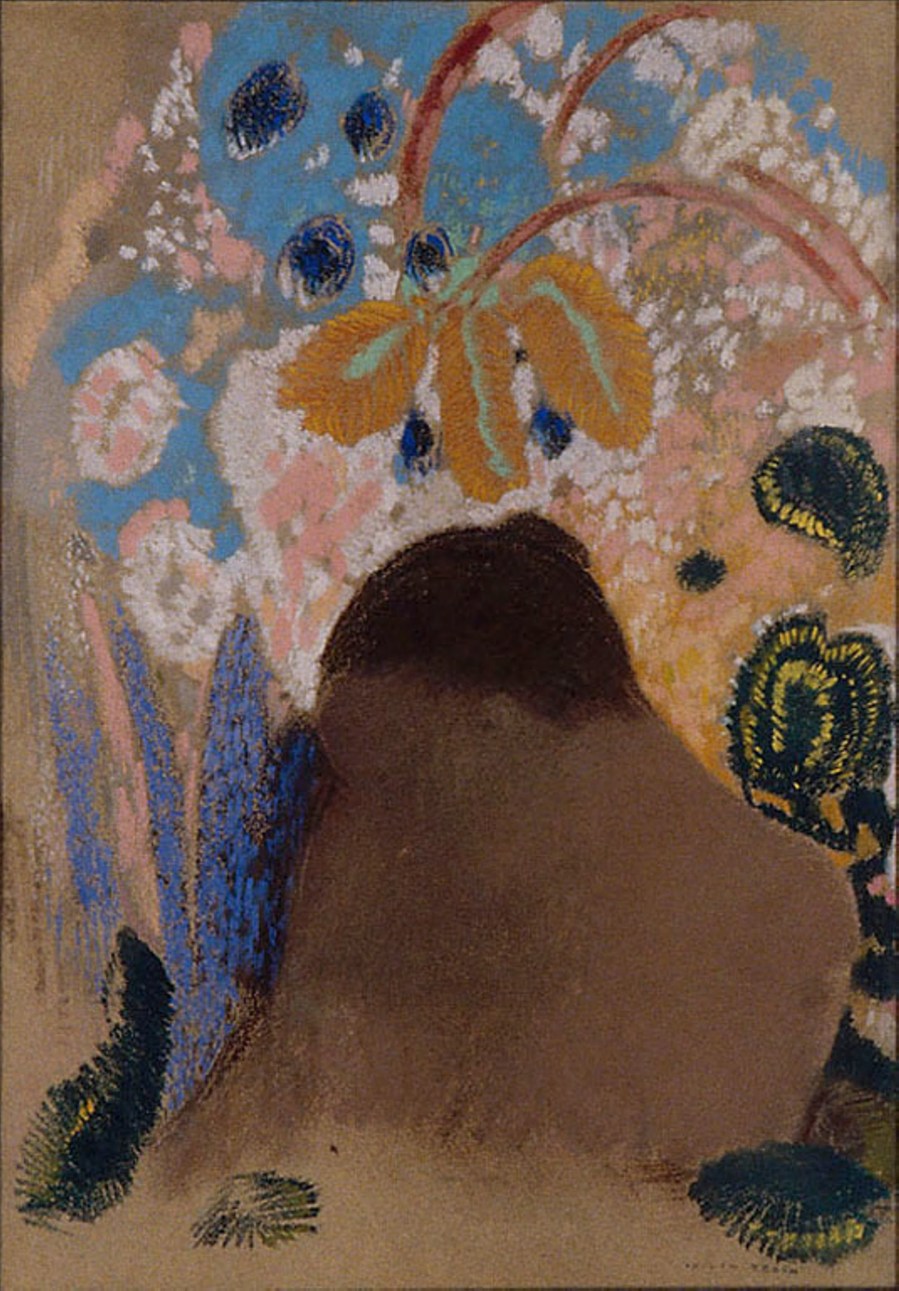
Featured Art: Death: “My Irony Surpasses All Others” by Odilon Redon, 1888

Michael, you are gone, and in this house where you once were there is an antique telephone as black as your coffin. Heavier than it looks, it is as full as the hole the men dug for you, early one morning, as they talked about summer and things they saw on TV.

Old things weigh more than they look—dead, leaden things like you and the black telephone.

You have been gone three weeks, and now my mother is gone, too. When she left for Providence she left me here with Michael, whom you left behind like a copy of yourself when you went. He doesn’t ask where you are anymore. Instead he says, nine times a day, that he’s going to call you on his telephone.

He found it at the flea market where my mother took him, to take him off my hands and take me off of his.

When I’m not looking, he lifts the receiver and talks to you. He doesn’t say your name, and I don’t ask who is on the line. I know it’s you.

Read More

The Potter’s Field

By Amit Majmudar

Featured Art: Study of Arms for “The Cadence of Autumn” by Evelyn De Morgan, 1905

Something lumpen, something slapped
Wet on a wheel, cupped and spun,
Sculpted; something hollowed, bellied,
Shapely; something held, watered,
Coaxed into a poised amphora.

Soiled hands smooth their own prints
Like still winds pressed to the spinning earth.
Brittle even after the fire,
The vessel is what it holds:
Ashes, ouzo, roses, olive oil.

I never understood your choice,
Or what that haggard savior held
For you, until you told me the part
Of the cemetery where the dirt poor
Returned their poverty to the dirt,

Repossessed, anonymous,
No grave-goods but a prayer,
Used to be called the potter’s field—
Barren furrows, fruitful now with clay
Scooped and pulsing in your hand.


Read More

The Skeleton in My Grandfather’s Closet

By Peter Schmitt

Featured Art: The Print Collector by Honoré Victorin Daumier, 1857/63

hung in their bedroom
for years after he died,
my grandmother dutifully dusting
the yellowing lifesize model
from his surgical days.
Who can say

if she ever let time settle
on the stack of letters
she found from the nurse—
but she took my father with her
(he was six) from Brooklyn
to Oakland on the Zephyr,

booking so late
every berth was reserved.
The nerve of that woman,
she might’ve muttered, and How
could he bring them home?
Unsure she’d bring herself

home, or their son.
Sleeping upright was no bargain
while he roamed the observation car,
a storm out over the Rockies
lighting up the glassed-in deck
like an x-ray.

By the time the Bay
washed into view, sun burning
through fog, she saw how it was,
and penned my grandfather a letter
of her own—one he saved
only he knew where—

because it saved him.


Read More

Checkup

By Daryl Jones

Featured Art: Woman Bathing by Mary Cassatt, 1890–91

Two weeks they didn’t speak,
my father sleeping on the couch
and rising early, spooning cold cereal
into his mouth like a metronome,
while my mother stood at the stove
in her white nightgown, back turned,
stirring the silence. And all because
the handsome new doctor, I’d gathered
from muffled shouts through the wall,
had asked her, at her annual checkup,
to take off all of her clothes
and she did. Every day at school,
the words chalked on the blackboard
all spelled DIVORCE, and I figured,
homeless, I’d grab my paper route cash
stashed under my socks in the dresser
and thumb my way west
to Frisco, jam out on bop and poetry
like Sal and Dean, eat
chocolate-covered ants and sip
jasmine tea, maybe smoke some Mary Jane.
But who would take care of my dog? Read More

Bag It, Box It, Haul It Away

By Jay Leeming

What’s the matter? Stuff is the matter and our basement
       is filthy with it, our ignored understory grown lumber-
cluttered and impossible so my wife and I descend
       to wrestle with the rusted-out wheelbarrow festering

tilted beside the unstartable lawnmower and the extra

freezer, the two of us tangling with moldy drywall, broken
       bicycles and that heap of gray peeling stair treads
their half-pulled nails all askew like arrows fired
       at ten different targets. Matter is mother, is milk crates

a-clatter with extra faucets and so in a faded T-shirt

and ragged jeans I go huffing the leftover porcelain
       toilet top, cracked desk drawer and crate of tile down
the low corridor up three battered stairs then out
       under the sky, each trip a rebirth, a bringing of things

to light, the shadow-world made conscious but like dreams

remembered later they seem silly, unimportant now.
       Two previous owners plus our neglect means multiple
jelly-jars full of nails, a bucket of gravel, a torque-
       wrench and a rusty alternator, every clogged caulk-gun

and bent window screen witness to dramas unknown, mute

Read More

Black-Eyed Susan

By Lisa Bellamy

I just cannot bloom endlessly, you know—this is November, I’m
pale, a dry stalk—I can barely stand, I’m shaking, I need Me time,
I need to center myself—this summer was horrific: It was all about
the aphids, crawling, depositing God knows what without my
permission, from who knows what hollows of slime; it was all about the
jays—“by mistake” they smashed into me, to try to grab
the crickets—I had to hear the swallowing, I had to see the bulging
gullets; it was all about the bees, their selfishness and their overall
lack of tenderness. Oh, bees are sly—they say they buzz for
beauty, for splendor, and they preen, like debutantes in frilly
hats—people, it’s a racket, a con job—they trampled on my
privates, they scurried back, mobsters with their booty (my pollen!)
to their dank, little clubs, their “hives.” This summer was all about
the deer, their nibbling, their slobbering, ticks crawling in and out
of their noses—sweet Jesus, a sight no one should have to
endure—and who, in the meadow, ever thought to pause, ever
thought to kiss my petals? People, I’m on my own here—I need T-L-C.
Look, dormant does not mean down-for-the-count, I will re-
seed myself—I am a brilliant genius of reinvention, the hardiest of
the hardy perennials—but I need to be pumped from below, long
and slow, with the cool water brimming under the meadow—I
need the slathering, the mud pack sliding into my flowerets, the
wet leaves—damnit someone needs to soothe my pistil.


Read More

Our Family Walks

By N. R. Robinson

Featured Art: A Window Seen Through a Window by Theodore Roussel, 1897

“Y’all are hungry,” Mama said, no question in her downcast whispery voice. “I’ll be back quick.” There was something definite behind the distraction in Mama’s careless hair, and in her careless face, and in the blue-veined hands that wandered as she spoke. Too young to understand, Cookie’s puzzled brown eyes darted back and forth between Mama and me. Cookie was weeping that day because I was.

That autumn of 1963 people were walking, and we were among them. But our walks, at the time, seemed purposeless. Or perhaps I did not see then their purpose. I barely knew it, but ’63 was a dangerous time to be wandering the heat- and frost-blazed roads of America. Over the months surrounding what would be our last family trek across D.C., a quarter million folk marched on Washington, protesters were beaten in Birmingham, a U.S. President was assassinated in the street.

When Mama called our aimless ambles anything, they were Our Family Walks. We strolled that September day, just weeks after my seventh birthday, Mama on one side, five-year-old Cookie on the other.  It was late afternoon when Mama crooned—face demure, fragile, resolute—“Don’ worry babies, th’ angels are beside y’all,” then walked away. Because I’d learned it was useless to protest, I pulled Cookie to the sidewalk curb. Snarling cars and trucks belched heat and grit in our direction as we watched Mama flicker and fade down North Capitol Street. Before she left, I’d searched her eyes. She was telling the truth, I decided. I promised Cookie, “Mama comin’ back this time.”

Read More

Grounded

By Claire Bateman

Featured Art: Different Peoples Inhabit the Countries of the Ocean, plate 23 of 24 by Odilon Redon, 1896

Neither pulverized nor laid to rest,
the phone booths were loaded on container ships,
then consigned to the ocean floor
along with their superheroes
in various stages of undress
who, weary of perusing pulpy directories,
soggy Chick tracts, and obsolete graffiti,
now peer through glass at clouds of kelp,
anticipating a slo-mo emergency.


Read More
Ancient Stone Coin, Diameter Six Feet

By Claire Bateman

In dreams it escapes its keepers,
rolls away, accelerating
as though trying to leave
its huge ungainliness behind,
sensing a destiny of shrinkage
through millennia of metals,
feeling its way toward pure ideation
so it can flow freely between hosts,
reunited with thought itself
from which it was first
thrust into the world
to thicken into matter.


Read More

The New Loneliness

By Claire Bateman

Featured Art: Rocks in the Forest by Paul Cézanne, 1890s

Remember how it was before thought balloons,
when we all pondered in one huge lumpish murk,
a supercontinent of undifferentiated cognitive matter
floating just above our heads?

Remember the era before alphabets were sorted,
hieroglyphics and cuneiform all jumbled up together,
characters resembling machine parts
tangled with runes like forked and flaming branches?

Remember life before quotation marks,
when anything could be attributed to anyone,
so there was never a distinction
between generosity and return?

Not only is the world tidier these days,
but there’s no limit to what we may accomplish
now that each of us is equipped to take things personally.


Read More

Cake-o-Rama

By Claire Bateman

Featured Art: Still Life with Cake by Raphaelle Peale, 1818

You can never speak of the cake that rises up
without implying the cake that sinks into itself,
languorous as liquid glass;

the cake that’s all scaffolding and prestidigitation,
so precisely calibrated,
you must not even whisper in its presence;

and the inversely incendiary cake,
candles ablaze in its hollow center.

To attempt to do otherwise
would be like trying to extricate
taste from the tongue,
duration from time,
the world from the world.

This is not to say, however,
either that all cakes are one,
or that there is only one cake,

for each, sculpted out of
everything it is not,
embodies a largesse
particular to itself,

especially the event-horizon cake
that the fork never reaches,
known also as the cake
of ineluctable sweetness.


Read More
We Handle It

By Gwen E. Kirby

Featured Art: Fisherman’s Cottage by Harald Sohlberg, 1906

We see him first at the reservoir, a middle-aged man with an oval of fur on his chest, nipples like button eyes, and blue swim trunks with yellow Hawaiian flowers. We are swimming, and he regards us from the shore in that way we are learning to expect from a certain kind of man.

Like every day in Tennessee, it is hot, and in the early afternoon, we walk from the stone campus of this small college to the lake. We are at a summer music camp, our fingertips sore from strings, our backs sticky with sweat, and when we reach the lake we shed our summer dresses and leap from a boulder into the water, which is deep and clean. Around the lake, tall pines and the heavy hum of Southern bug life. We float on our backs, conscious of how our breasts protrude from the water, pleased that we are sixteen, except for Caisa who is seventeen and over-proud of it. For her birthday, she buzzed her head. Her cheekbones are sharp and high, and even if she were not older, she would be our leader because she walks with confidence and draws checkers on the white rubber of her Converse in ballpoint pen, cheap ink that shimmers like oilslick. We wish we could go home and buzz our heads, draw on our shoes, but our faces are round, we like our sneakers white, we like our mothers happy.

The man doesn’t jump into the water. He walks down the wooden stairs to the dock, sits, then eases himself into the water as if it pains him. Though we don’t say anything, we cease floating on our backs, tucking ourselves under the surface, our heads and shoulders bobbing in a circle.

Read More

Cooking with Fire

By Cady Vishniac

Featured Art: Hunters resting in a forest at night by Kilian Christoffer Zoll, 1830–60

At the Retreat for Warriors at the Blundsheim Nature Reserve, Pete watches Dave shoot one of the docile young Blundsheim bucks square in the chest with his crossbow, and the buck falls neatly on the spot. Deer, Dave tells Pete, are like women—even though this particular one was actually male—because they’re skittish and must be wooed with a hunter’s silence.

Pete doesn’t get it. The warriors haven’t been especially silent, and women, in his experience, like to be talked to. Still, he nods. Dave is the Elder in this Circle of Responsibility, and Pete’s father-in-law. This is Pete’s first Retreat.

Another man in the Circle jokes that he hopes the deer was a feminist, but Dave ignores the guy, instead looking at Pete directly and saying, “We are harvesting this animal, like a farmer with an ear of corn.” He’s always tossing out these nuggets of homespun wisdom, which, Pete thinks, are annoying enough to explain why his wife, Pete’s mother-in-law, left him. Maybe Dave wasn’t silent enough.

Read More

Henry’s Horses

Winner, New Ohio Review Poetry Contest
selected by Tony Hoagland

By Michael Pearce

Featured Art: In the Valley of Wyoming, Pennsylvania (Interior of a Coal Mine, Susquehanna) by Thomas Addison Richards, 1852

The old barrel warehouse across the street
had a ceiling so high there was weather inside.
Henry Gutierrez lived there—they said
he’d been there since before the war,
though they never said which war.
He worked at Anger’s garage all day
rebuilding engines, then came home
and slept a few hours, and when
he woke up after dark he’d knock back
a bowl of cereal and a couple beers.

If you looked over there at midnight you’d see
brilliant flashes coming from inside,
silent explosions, like lightning
trapped in a thunderless cage.
But it was only Henry’s arc welder,
he worked all night fusing together
sheets and scraps of steel until
they seemed to breathe and shake
and prance and strike a noble pose.
He built animals, mostly horses,
and he said he knew he’d finished one
when he found himself talking to it.

One time Uncle Jack, my father’s brother,
invited Henry to his church, the one
where they forgive you for anything
as long as you let Jesus into your heart
and drop a twenty in the basket.
But Henry knew there was no forgiving
his sins, and it made him sick
to talk about the people he’d injured
then listen to the other craven souls
tell him he was absolved. He said
he had his own way of atoning that
was mostly about wrestling with steel.

Read More

The Pale Man

By Michael Pearce

Featured Art: We Both Saw a Large Pale Light, plate 2 of 6 by Odilon Redon, 1896

Last time I saw my dad was at
the cemetery on Pilgrim Hill,
pale as a ghost but he wasn’t dead.
He stood over the grave of his grandfather,
the hero of our family.
I called out to him and waved and
he turned my way—he looked sad
and then he looked ashamed and
I felt bad for him until I understood
that his shame was directed at me.

No point in pondering his disappointment,
I know I’m a failure in his eyes and
there’s no way back to the sunshine of his pride—
the boy of great promise is long dead and here I am.
And there he was—he turned away from me
and peered right through the gravestone
and into a glorious dream of the past
where a brave man stood against the mob
and brought reason to our torn-up town.

I tried to smile because I love him so much
and because I know he’ll be the next to go—
that’s why he was there on Pilgrim Hill
and in fact as I stood there watching
he got even paler and I could see
the silhouette of a fencepost behind him,
dim x-ray of a thick dead spine.

A full moon rose in the afternoon sky.
Oh Daddy, said the scream inside my head,
oh Papa, please don’t go without giving me
your blessing, the sweet sneeze of your blessing.
And then I knew that he didn’t have it in him
and never had, that he was too faint and frail
and too scared to issue blessing or curse.
And I forgave him, I did my best to forgive him
and when I wake up on these fullmoon nights
that’s what I do, I forgive him as best I can
because now I can’t see him anymore
that’s how pale he’s gotten but I know
he’s alive and still walks this town.


Read More

The Boy on the Ridge

By Michael Pearce

Featured Art: Precarious Glimmering, a Head Suspended from Infinity, plate 3 of 6 by Odilon Redon, 1891

I rode my bike down from Pilgrim Hill
toward the river that splits our town.
Along the way I waved to Sheriff Roy
and Mildred Floss, then wondered what
they were saying about me and my family.

It was fall and the road was littered
with goose shit and hyena shit and
shit-shadows shrinking in the rising sun,
and Estelle was bringing milk and muffins
to Mayor Bob’s bedside and pretending
his soul was alive inside its doltish husk
and my Noni was sitting in the bathtub
like a pile of wet clothes while Grappa
lay in bed dreaming of blood-hungry Cossacks
cruising the Steppe on thundering horses
and the town was still quiet enough
that you could hear the river’s bashful giggle.
I was headed to my shop
to build a desk for McElroy.

Up on Pilgrim Hill my mother’s voice
had spoken to me from her grave
in the Jewish section, had told me
about a little boy of few delights
and many sorrows who roams the high ridge
where Dorsell Quivers chases fox and deer.
My mother’s voice said only she
can see that little boy right now,
but he’ll saunter down and climb into
the belly of a comely maiden
as soon as I’m ready to be his dad.

I don’t want a boy of many sorrows,
I was such a boy and my heart
isn’t big enough to bear another,
to blaze the cul-de-sac of his youth
or watch his terror of his own hungry body
and the other demons of his undoing
hound him from his destiny.

Read More
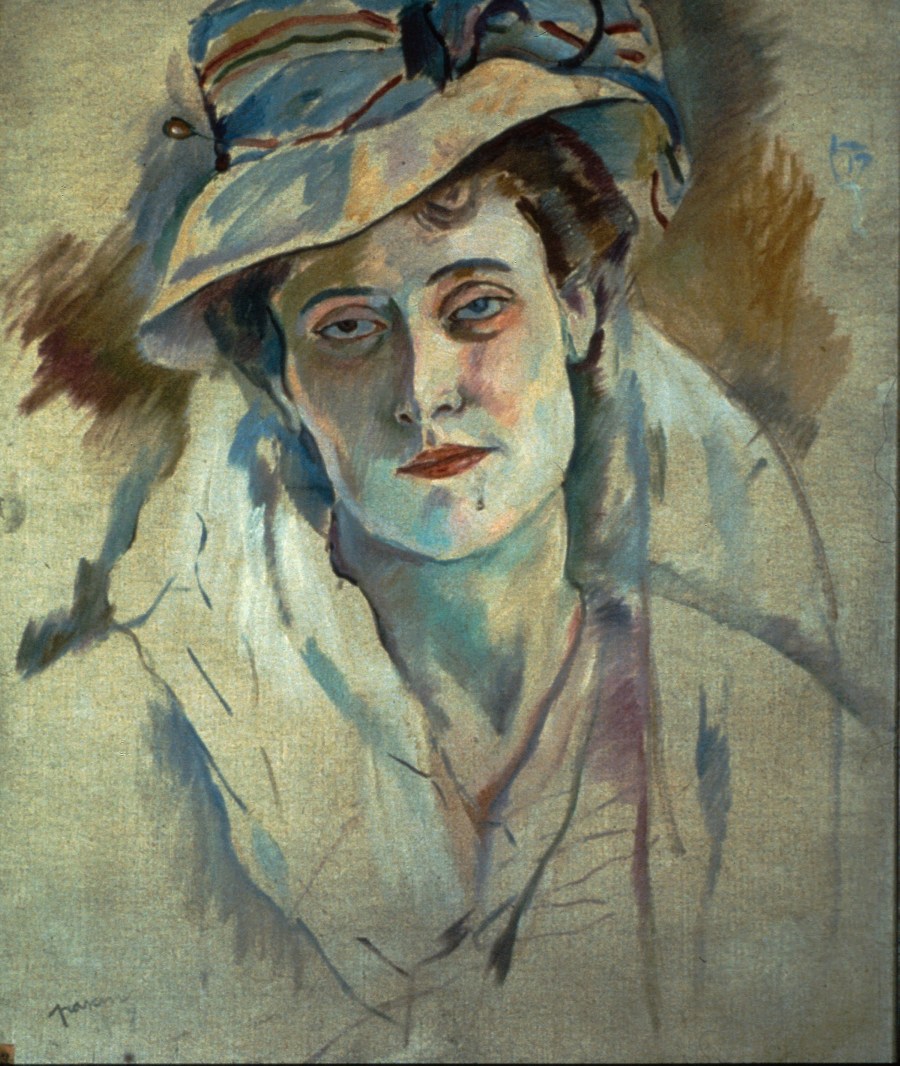
Night Dodge

By Jill Leininger

Every philosopher I haven’t read is drunk and arguing
             in the same Dodge Chrysler. I swerve
to miss them, blinded in their sublime 60-mile-an-hour
             wake along the dotted divide. Looking back,
how odd! There was no way to distinguish one pipe from
             the other, Spinoza from Kant, yet I knew,
in the sudden, smoky fervor of that car, who they were:

in aggregate, the thoughts I haven’t formed, books skimmed
             and come alive, unified recklessly
behind headlights to make me pull off under the half-lit
             letters of this truck stop, Esso $3.89.
In the time it takes to remember the phrase “burn and dodge”—
             in fact, to misremember it—they’re gone.

I wake up hungry, of course, grasping for the words I’d heard
             in my head as the reel of the almost-
crash replayed. But in the dissolve of daylight I find only
             one image: a license plate, which someone had tied
to the bathroom key and, if memory serves, cleverly elided.


Read More

Abandoned Settlement

By Christopher Brean Murray

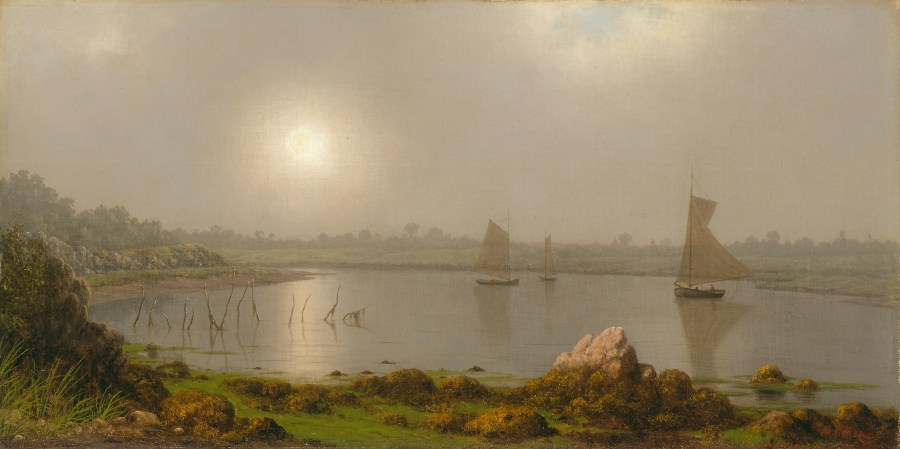
Featured Art: Frontier Cabin by William Louis Sonntag, 1894

We came upon it at midday. We were in need
of a rest. Our rucksacks were heavy,
and the trail we’d navigated wove serpentine
through mountain crags. It laced figure-eights
though fields of stone before tracing the lips
of cliffs that hung over the gaping abyss.
Eagles cried and soared through the cloudless
expanse. A violet lizard stared at us
before vanishing. Vegetation was sparse:
only trailside scrub and grass-clumps.
Yet, at the settlement we found shaggy spruces.
Aspen leaves flickered in the breeze.
The odor of Douglas fir streaked the air.
We advanced into the enclave, offering
a polite greeting to our anticipated hosts.
No answer. I kicked open the door of a cabin—
it smelled of urine. On dusty floorboards lay
a collapsed soccer ball and some thumb-tacks.
Pinned above a soiled bunk, a picture of
a sable-skinned seductress spreading her sex.
She wore high purple boots and a white derby.
Mouse shit speckled the floor. Otherwise,
the cabin was empty. We walked a trail
that hugged a creek into which someone
had hurled a mini-fridge. Did we hear music? Read More

Buzz Can Happen Here: Sinclair Lewis and the New American Fascism

By Michael Mark Cohen

Featured Art:

The exquisitely named Berzelius Windrip, known to all as “Buzz,” is the fictional politician and “Ringmaster Revolutionist” who ousts FDR from the Democratic ticket in 1936 and gets himself elected dictator in Sinclair Lewis’s speculative novel It Can’t Happen Here. No uniformed buffoon like Italy’s Il Duce, nor an awkward, vegetarian mystic like Adolf Hitler, President Buzz Windrip is a decidedly American kind of fascist.

Published in October 1935, in the sixth year of the Great Depression, It Can’t Happen Here was a major literary and political event. Not only was Sinclair Lewis famous for being the first American to win a Nobel Prize, in 1930, but this novel gave both name and narrative to Americans’ growing fears of whatever “It” was. Critics praised the book, written over the course of one summer, for its journalistic immediacy, and Lewis was so committed to capturing this sense of urgency that he insisted on changing the text at the printers after the September 10th assassination of Senator Huey Long.

After Hollywood spiked a film version (a decision made by the conservative head of MGM studios at the request of the German foreign office), Lewis wrote a play for the Federal Theater Project. On October 27, 1936, 21 companies in 18 cities debuted local productions of It Can’t Happen Here. “Out in Denver” reported the New York Times, “dictatorship came to a small Colorado town, and in Detroit it captured the factory district.” Companies performed in Yiddish in New York City, Spanish in Tampa, and an all-black cast focused on racial issues in Seattle.

Read More

Take Me to Your Lady Leader

By Kristen Lillvis

Featured Art: Profile of Shadow by Odilon Redon, 1895

Contact, Carl Sagan’s best-selling 1985 science-fiction novel, tells of alien shape-shifters, wormhole-traveling spacecraft, and—perhaps the most fantastical element of the bunch—a female president. Yet Contact’s protagonist, Eleanor “Ellie” Arroway, compares President Lasker to her predecessors with no acknowledgment of their gender difference, noting that Ms. President demonstrates an appreciation for science seen in “few previous American leaders since James Madison and John Quincy Adams.” Despite her tie to the presidential establishment—and regardless of Sagan’s attempt to make her gender unremarkable—President Lasker still fulfills the function particular to women world leaders in literature. Whether she erodes or extends existing gender stereotypes, the female president operates as a sign of the apocalypse or, at least, a harbinger of the unfamiliar, a reminder to readers that they have entered a world drastically different from their own.

Read More

Of the People, for the People, by the Robots

By Christopher A. Sims

Featured Art: Triumph of the Moon by Monogrammist P.P., 1500/10

American fiction has its small share of memorable politician characters—Willie Stark in Robert Penn Warren’s All the King’s Men and Robert Leffingwell in Allen Drury’s Advise and Consent to name a pair—but there’s a strand of this tradition that is becoming more relevant in 2016: Artificial Intelligence politician figures in the work of two of our most prominent science-fiction writers, Isaac Asimov and Philip K. Dick.

While SF traditionally serves as a space to explore futuristic ideas, Asimov’s 1950 I, Robot and Dick’s 1960 Vulcan’s Hammer can now be reread as prescient visions of the looming potentiality of an AI political leader (perhaps as early as 2024, if Joe Biden chooses not to run).

As the so-called “Internet of Things” takes shape and works to synthesize the physical with the cyber,  we can begin to speculate about how long it will be before AIs take over even our most complicated tasks, such as governance. But the genius of Asimov and Dick lies not in their depiction of the technologies that make AI leaders possible; instead, it’s in their assumption that we will one day, not too long from now, be faced with a critical choice between human and mechanical rule. That, it’s fair to say, will be a consequential election.

Read More

New Ohio Review Issue 19 (Originally Published Spring 2016)

Newohioreview.org is archiving previous editions as they originally appeared. We are pairing the pieces with curated art work, as well as select audio recordings. In collaboration with our past contributors, we are happy to (re)-present this outstanding work.

Issue 19 compiled by Connor Beeman.

Letter to the Gone Lover, Late May

By Laura Maher

Featured Art: Idle Governer by Horatio C. Forjohn

If I needed to make a list for you
of all the beautiful things that have gone
on since you’ve left, the first thing

would be the line of bats leaving
the bridge at sunset, hundreds,
flying into the sky until they disappeared,

the effect making the mountains
to the west look more like a scrawled
suggestion of words than a skyline.

Or maybe what was beautiful
was that I could see something beautiful
that didn’t also make me sad, something

in the constant motion of so many wings,
the bat a thing that shouldn’t fly
but does, so unlike the easy lightness

of birds—something so beautiful in that
effort, the struggle of a bat against
the weight of its very bones.

Read More

Revery

by Elizabeth Murawski

Featured Art: Sunset by Frederic Edwin Church

Too many women to count
rode behind him in helmets,
clung to his waist, wedded

to the wind in the dark
as the bike’s headlight pierced
the wooded hills, scaring

a deer, sending up an owl
in an explosion of wings.
I knew there were others

in line, grateful to share
one hour with the blue-eyed sun-god
worshiped for his light.

Always the nagging fear
he was never really there.
I saved his green bandanna for a year.


Read More

Prayer While Driving Home After My Yearly Physical

By Robert Cording

Featured Art: The Pink Cloud by Henri-Edmond Cross

Sixty-six, my shoulders rounded, my arches flattening, I am,
Lord, a small man, now a full inch shorter,
I’m told, than I once was. And so I pray

that my end-of-life diminishment might prove the occasion
for some late opening of my cramped borders,
this no-exit, small country of the self.

Lord, what I wouldn’t give for a lifting up,
to be free of this strange human gift of making
something less out of something,

each day stunting the fresh opportunity—
as your better servant William Blake saw—to become
the towering giant, the four-fold angelic power

you wanted us to be, if only we didn’t make ourselves
tiny with our incessant self-interest, our hearts
clamped around our enemies,

our narrow sympathies and unrelenting prideful gloom.
Lord, at every moment I have been a beginner,
lost in the bewildering wilderness of my ignorance.

Now that I am smaller, I pray that it will be
easier to recede from the center of my picture
and find this unexpected reprieve from vanity.

Let everything around me grow taller Lord
and more vivid, newly made, like these autumn maples
oranging the air, or this roadside red-tailed hawk,

its wingspan blinding as it crosses my windshield,
the road for a moment dark, then bright,
bearing me on, a small man nearing his exit.


Read More

The Stability of Floating Bodies

By Craig Bernardini

Featured Art: Dublin Pond, New Hampshire by Abbott Handerson Thayer

It was never my intention, when my father came to live with us, that he would live in the pond. Things just worked out that way. This was shortly after my mother died. My wife and I had never really spoken about what we would do in the event that one of our parents died. It had always seemed a little premature to have that discussion, at least where my parents were concerned. They were in their mid-seventies, enviably lucid, and as healthy, according to their physicians, as most Americans ten years their junior. But then maybe it always seems too early to have that discussion. Or maybe it was just that I could never imagine them apart. They had done everything together, my parents, gone everywhere together. There had been something almost tyrannical in their solicitousness about each other’s welfare. One day, it occurred to me that I didn’t have a single picture with just one of them in it. Were I ever to try to crop one of them out, the other would remain in the shape of the border traced by my scissors. Growing together, my mother had said to me not long before she passed, was the key to a healthy relationship; and grow together they had, like skinny trees, the trunks of which wound round each other in acts of mutual strangulation.

Read More

Little Red Book

By Jeffrey Harrison

Featured Art: Le Code Noir by Pierre Prault

I unearth it while cleaning up my office,
The Little Book of Common Sense Investing
that my father sent me two years before he died,
its bright red cover like an accusation,
a yellow Post-it bearing his cheerful
half-script still attached: “Jeff—even if you read
only the first part of this book, you’ll get the gist.
Return it some time, no hurry. Love, Dad.”
I chose to place the emphasis on “no hurry”
and hadn’t cracked its little crimson spine
when, a year later, he asked me what I thought.
When I told him I hadn’t gotten to it yet,
he said he wanted it back, so he could lend it
“to someone who might actually read it.”
“But I might still read it,” I said half-heartedly.
“No, you won’t.” Which made me all the more
determined not to read it, so I said fine,
I’d send it back. But I never did—and then
he got sick, and our investment
in that particular contest seemed pointless.

But here it is again, this little red book
so unlike Mao’s, as if my father were making
a move from beyond the grave. Okay, my turn.
Is it because I need to prove him wrong
even now, or that I want to make amends
belatedly for disappointing him yet again
that I open the book and begin reading?
Or am I doing it in his honor? And is he
still trying to tell me I invested
in the wrong things?—poetry, for instance.
“Counting angels on a pin,” he said once.
Which is just the kind of cliché I find in the book.
Later, though, he claimed to like my poems,
the funny ones at least. And if we drew a graph
of our relationship over his last decades
it would look a lot like the Dow: a steady ascent
with several harrowing jagged downward spikes.
The little red book says nothing about those,
though it does advise not getting too caught up
in the market’s dramatic nose-dives.

Unless, perhaps, you’re trying to realize
your loss—another topic that the book,
with its rosy perspective, blithely avoids
as it enthuses on “the miracle of compounding.”
But instead of getting annoyed I feel an odd
joy: my father could have written this book.
He too was an optimist who liked to talk
about money, and so I used to ask him questions—
What’s the best kind of mortgage to get? Is life
insurance a good idea?—and those led
to some of our least fraught conversations.
That’s why he gave me the book. And he
was right: I get the gist after two chapters.
And the suggestions seem helpful, if limited—
I even underline a few sentences.
Still, that other book, the one about losses,
would be more complicated, and harder to write,
its author finally coming to understand
that, no matter what the future brings,
he won’t be able to ask his father’s advice.


Read More

Sky

By Luiza Flynn-Goodlett

Featured Art: Dark Clouds by Louis Eilshemius

The caul we’re born beneath, its gaze drives
mystics to fits. Constant as parents never are,
it blinks back cumulus to examine us, offers
no opinion. Unlike old gods, nothing troubles
it—rains withheld, not censure, just drought.
Some tire of scrutiny, shelter in offices, under
newspapers. It doesn’t mind, proffers an open
eye to all—the seabirds that caw at its margins,
delayed ships, the drowned who clawed toward it.


Read More

Black Ants

By Fay Dillof

Featured Art: Crumpled and Withered Leaf Edge Mimicking Caterpillar (study for book Concealing Coloration in the Animal Kingdom) by Emma Beach Thayer

Unable to sleep,
I imagine a blob
of ants, erupting
from a faucet.

If they puddle,
that will mean sleep.

But if each ant
descends on a crumb,
steals what it can
and lumbers robotically off,
which they do,
branching in veins across the tile floor,
then I’m left
listening to the sound
of my two sisters
downstairs
in the summer kitchen
where they’re making
my mother laugh
without me
again,
carrying their prize
over invisible trails.


Read More

Etymologies

By Krista Christensen

Featured Art: Abstract — Woman by Carl Newman

It is out of a need for precision that I search for words, wading through thesauri and dictionaries and -pedias, crawling into the tunnels of -ologies and -onomies and -ectomies, mining deep for a more accurate reflection of self than dry medical terms like bilateral salpingo-oophorectomy.

I’m not even sure how to pronounce that last word, though it’s a thing that’s been done to me. Perhaps the two o’s bleed together into one sound, like the two o’s in moon, my two ovaries like white orbs hovering in one sky: oophorectomy. Or possibly the two o’s mirror the guttural softness of the pair in brook, like the one tinkling through the lot behind my home: oophorectomy.

When I look it up, I find that both o’s get equal play. Medical dictionaries give the pronunciation oh-uh-for-ec-toh-mee. A perfect irony that even in sound, the two o’s are piled on top of one another in the beginning of the word, as if there are more than enough to go around. There’s a sense of excess, of plenty and abundance, when really the word is all about what’s missing, about evacuation, about empty space. An O, a zero, the absence of value.

Nothing is ever straightforward in female anatomy. Even using the term hysterectomy, a casual term in comparison, brings up more questions than it answers. Repercussions of this surgery are nebulous, confounding: it could mean that a woman has lost just her uterus, but kept her ovaries, and so would not need to make the choice between synthetic hormone therapy or instant menopause. Even if a woman loses just her uterus, it’s possible she’d keep her cervix, that her vagina wouldn’t be sewn shut at the top, that she wouldn’t become a dead-end, a U-turn, closed for business.

For me, the word hysterectomy doesn’t begin to cover it.

Read More

Lieu d’hiver mémoire

By Angie Estes

Featured art: The Sky Simulated by White Flamingoes (study for book Concealing Coloration in the Animal Kingdom) by Abbott Handerson Thayer

You can find them each year
               for a brief while only
in winter—a drop of red and yellow
                              sealing wax dashed at the end of
               their stems to prevent the loss
of moisture—because the squat,
              copper-russeted pears of the ancient
variety Passe Crassane will not ripen
                             on the tree no matter how long
              you let them hang, as if they had taken
St. Catherine of Siena’s advice
               to Make yourself a cell in your
own mind from which you need never
                              come out, the way the goldfish
                on late autumn evenings
circle all night, flicking
                their tails in the fireplace.
What kind of pear is
                              sweetest? Bartlett, Seckel,
                Comice? Oboe d’amore—mezzo-
soprano of the oboes—is Armagnac
                brown, its mouth, a pear-shaped
opening. Autumn is so oboe,
                               but then winter is near, so close
                to hinter, to did you ever, no
never, to once I might have
                tried. En hiver it might
as well be hier, but who are
                               the dead of winter, are they
                the same as the dead of night?
In the Lumière brothers’ black
                and white film, le trottoir roulant
carries Parisians on its rolling sidewalk
                                across the bridge to the Exposition
                of 1900. We watch them move
toward us, though like Hamlet, they never
                take a step: “If it be now, ’tis not
to come; if it be not to come, it will
                               be now; if it be not now, yet
                it will come.” Our 1955
turquoise and white Pontiac smiles
                in the snow while my mother finishes
dressing for church. Stationed
                                in his suit and tie, my father rests
                his hands on the steering wheel
as the car idles and warms,
                while in the back seat, my brother
and I wait for my mother
                              to appear, our breath rising
                like smoke signals.


Read More

Stick Season

By Sydney Lea

-For Peter Gilbert

The one that precedes my season is the one that always shows
in those quaint calendar photographs, the one that brings the tourists
to a scene that is sumptuous, granted—exorbitant on the sidehills,
most of the leaves incandescent, drifting or plunging downward
to scuttle along the roadbeds like little creatures reluctant
to be seen, yet wanting us to notice them after all.

But give me this: middle November, season of sticks,
of stubborn oak and beech leaves, umber and dun, which rattle
in gusts that smell so elemental they stab your heart.
The trees—the other, unclothed ones—are standing there,
gaunt but dignified, and you can look straight through them
to the contours of the mountains, stark, perhaps, but lovely

in their apparent constancy. That gap-toothed barn
houses space alone since its owner died. Do you remember
Studebakers? That’s one over there, a pickup truck,
flat-footed among the sumacs. Painted green way back,
these days it has taken the hue of these later leaves I love.
Old age has changed the mountains too. They’re rounder now

than once, worn smoother. Everything is for a time.


Read More

Good for What Ails You

By Elton Glaser

Featured Art: Winter, Monadock by Abbott Handerson Thayer

                                                                                                  He too would live: like the rats among the ruins,
                                                                                                     but nonetheless alive.
                                                                                                                                  —Antal Szerb, trans. Len Rix

It’s the first fresh day
After a winter so hard
I disappeared inside myself,

Nothing out there but cardinals
Like drops of blood against
The creamy desecrations of the snow.

Ah, there’s the shit we need,
And the shit we don’t need,
And the shit we end up with.

I seem to be returning to
Some form of infantile intelligence,
On the sloppy side of the brain:

Mumblings over the oatmeal, nights
Broken by clumsy sleep, hands
At the mercy of small machines.

We come out of nowhere, and we go
Into nowhere. Should I stick
My fingers in my wounds,

Like a good little Dutch boy?

Even in the barren precincts
Of the cold, there must be love,

Though love does not travel well—
It needs its own terroir,
A discipline of flinty soil where

The roots struggle, where they work
Hard in the hot sun, until
Deprivation makes the fruit sweet.

And what wine will I have?
Here, at the open edge of things,
I’m like a spruce that hugs itself

Against the ice and the night wind.
But sometimes there’s comfort
In the certainties of burlap, and more

Sure footing on grit than marble gives.
And even a thin sun feels warm
After three dead months deep below zero.


Read More

A Meadow

By Lee Upton

Featured Art: Autumn (L’Automne) by Arthur B. Carles

The wife isn’t supposed to know, but Lucy knew. She knew about her husband and her best friend, Maria. Had known for nearly two years. And now Maria’s brother—a stranger—was coming to visit. Did he know about Maria and Owen? Did he think he was visiting to reveal the affair, to confess on Maria’s behalf? Lucy hoped not. She would resent that.


Lucy got the news from Owen before he left for work. He turned at the front door and told her—as if he almost forgot something so important. He didn’t want to be late, and so there wasn’t time to talk. She followed him outside.

“He’s coming? When?”

Read More

Phone Call

By Stephanie Rogers

Featured Art: Figure with Guitar II by Henry Fitch Taylor

When I got the phone call, I listened
to my sister’s voice give
no hint, at first, that overnight,
like that, her life had changed.
I said hello and flipped through
a book on the nightstand, knowing
deep down, from all my missed
calls, that she was preparing
to tell me something
important. How are you? I asked,
trying to delay what I knew already
I didn’t want to hear. And after
her silence, then, I sat straight up—I was still
in bed—my eyes blinking
awake, the automatic
coffee pot dripping into the quiet,
and I said it: What’s wrong, Heather?
expecting for one singular moment the death
of our father, the sniffed
pills, the heroin finally ending
his life. But when she said
nothing, I demanded, this time, hearing
the pitch of her voice fill with the sound a brass
instrument might make breathing
a low note, barely
audible, into the crashing,
noisy universe. And she said it: Joel killed himself
last night, choking
on “killed,” and when I said, Oh
my god Heather
oh my god, she understood, she told me
later, for the first time,
that her husband was never
coming back. The sun peeked through
the window blinds. It flashed across
the framed faces of his daughters, who I pictured,
for a second, on the swing set
behind their house, their father pushing them
higher each time they swung back to him, further
away each time, further away.


Read More

We Remember You for Now

By Stephanie Rogers

Featured Art: Figurative Abstraction by Unknown

Now when my heart beats, it sounds like
crunched leaves skittering, the revving up

of a broken-down Honda. I can’t visit him
at a cemetery, or even the park. Scatter

my ashes there, he asked, and then injected
god knows how much, enough to warrant

a coroner call. Hahaha. Joke is Heather said nope,
stuffed and stored him in the back

of our mother’s closet. He lives there now,
sucking up the radiator heat. Joel, damn,

man. Come back and lick the spilt fizz off
the Budweiser can again. No one here

is going anywhere if I have a say, and how
didn’t I have a say with you? You plunged,

you syringed, each time needling—gentle,
I hope, as my grandmother crocheting

a winter hat for your oldest girl. I won’t
for long torture myself for you, I thought,

biting into a string of candy hearts around
my neck, your kid insisting, eat it, the sick-

sweet sticky hands of a two-year-old with
a dad resting inside a shoebox next to

a bowling ball. You did it. Congratulations.
I’m elated. I’m devastated. I’m a copycat

singing your songs to your girls to sleep.
Listen, creep: we remember you for now,

but now is a ragged dog, dragging its bum
leg along the buzzing halls of a new house.


Read More

Necessaries

By Tina Tocco

Featured Art: Still Life by Earl Horter

We’re in Omaha when I know. You’re out bootlegging—running, you call it—for that man from Tinker’s, a deacon at First Baptist, he says, though his name is Kinsky. I curl on a cardboard cot imagining my quilt from Pomeroy’s when the big Chicago woman, hair steam-strung from the laundry pots, stands downwind. “Only two reasons to stay with a man, but only one to stay with a man like that.” She has brought the necessaries. They clink in a feed sack the pattern of girls’ dresses. There is not much for me to do, but I do it quietly. It’s one jug of Tinker’s mash for quietly. The Boston girl, she warns, paid three.


Read More

That Boy’s a Catch

By Tina Tocco

Featured Art: Country Road in France by Henry Ossawa Tanner

“Your daddy and I just figured all this nonsense would be over by now.”

My mother has just dropped six spoonfuls of instant coffee into a mug filled with hot water from the bathroom sink. Her spoon chinks and chinks and chinks and chinks the side with the chip. I sip the tea I brought from Berkeley.

“You’re thirty-one, Tanya Grace. I hope someone’s told you what that means.”

My father has read what he can of the newspaper. He has shaved off the end of his pencil and is circling the houses locked in foreclosure. He and Uncle Rex can be in and out in under an hour, the knobs and faucets silent in the sacks my mother sews.

“Four sweatshirts wide,” she used to tutor, “so the stuff don’t clang so much, like.”

Read More

Timestamps

By Katie Condon

Ten hours ago, Adam Liddy liked my profile picture
alone in his Asheville apartment. My brown eyes coaxed him back
seven months to Bread Loaf where I pulled him by his shirtsleeve
onto the dance floor in the barn; poured him a shot of bourbon; shared
a blanket on the porch; asked him to close the flue of the woodstove
at the party because it was getting too hot. He must’ve remembered my
laughter as I climbed onto the puny wooden raft at midnight to listen to him
describe what being suddenly lusted after by many women feels like
& how he would never cheat on his girlfriend. Never, he said.

Nine hours ago, from his solitude in Asheville, Adam Liddy
wrote me an email to catch me up on his life: his non-existent & therefore
perfect teaching load, his Camargo Fellowship, & his recent breakup.
What he didn’t write but wanted to was that he’d convinced himself
desire isn’t tangible unless you act on it—that when we climbed into the trailer
storing the left-handed desks, that when I sat down in one & looked up at him,
just before a security guard shined his flashlight onto my shadowed face,
desire wasn’t thrashing around like a snake under his boot.

In the trailer seven months ago, what I didn’t say but could’ve was, Adam,
I’d never cheat on my boyfriend, either—& I wouldn’t.
But there’s nothing wrong with getting off on the shape tension takes in a
   small space,
with lifting your eyes up over the wall you’ve built & named Life
to see how you might be different.

Adam, there’s nothing wrong with desiring what you know you can’t have—
nothing wrong with playing with potential
like a housecat plays with a bird it won’t mean to kill.


Read More

The Present

By Billy Collins

Featured Art: Oak Leaf Edge Caterpillar (study for book Concealing Coloration in the Animal Kingdom) by Gerald H. Thayer

Much has been said about being in the present. I
t’s the place to be, according to the gurus,
like the latest club on the downtown scene,
but no one, it seems, is able to give you directions.

It doesn’t seem desirable or even possible
to wake up every morning and begin
leaping from one second into the next
until you fall exhausted back into bed.

Plus, there’s the past to wander in,
so many scenes to savor and regret,
and the future, the place you will die
but not before flying around with a jet-pack.

The trouble with the present is
that it’s always in a state of vanishing.
Take the second it takes to end
this sentence with a period—already gone.

What about the moment that exists
between banging your thumb
with a hammer and realizing
you are in a whole lot of pain?

What about the one that occurs
after you hear the punch line
but before you get the joke?
Is that where the wise men want us to live

in that intervening tick, the tiny slot
that occurs after you have spent hours
searching downtown for that new club
and just before you give up and head back home?


Read More

A Box of Records

By James Haug

Someone placed a box of records by the curb because it was hoped that someone would want to take them away. They’re records no one wants but maybe someone will want them. Someone driving will stop. Someone walking will stop. That is the pleasure of looking through records. Then the sun clears the tree across the street and shines on the records and makes the colors of the record jackets festive even as it robs them of their pigments. Someone will stop and rescue them from the sun. Someone will look up at the empty house behind the box of records at the curb to see if someone is watching. The people on the jackets smile and smile with their best hair, maintaining resolve all night in a box by the curb. Someone will stop and bring them home and listen to what they have to sing. Someone will carry them off out of the rain. Someone will spread them on the grass to dry.


Read More

My This, My That

By Sarah Brown Weitzman

Featured Art: Paris Bridge by Arthur B. Carles

To live in the moment is probably good advice.
What else is there but the now
of which nothing will remain but memory
already fading and unreliable.
My past is a pile of losses: parents, pets,
childhood, a hometown, ideals, and god.
Born to a countdown yet I make claims
to “my this” and “my that.”

But what can we ever possess?
Last night’s symphony, the blurred faces
of our dead, the way the wind slid
through the dogwoods of youth
are what we may possess just as the sun
possesses the windowglass it shines through.


Read More

Pie

By Micheal Chitwood

Featured Art: Main Street, Montreal by Louis Wiesenberg

That his old Impala still ran
was a miracle. The blue puff of exhaust
and the way the engine rattled on
for a minute or two when he turned off the ignition.
A miracle. He shaved maybe once a week.
And his clothes. The wrinkles and stains
held them together.
But he came to the diner every Tuesday.
Where he got money no one knew.
He would nurse his black coffee
and have a piece of pie.
He wanted to talk about God,
mostly to the county deputies having lunch,
who talked to him as a way of keeping an eye on him.
“God’s grandeur is in his silence,” he told them.
“And the silence is immense and not all that quiet.”
He looked into the bowl of a spoon
as if he was looking into a river.
The deputies joshed with him.
They told the waitresses he was harmless
if a bit ripe.
There was plenty of coffee.
Sometimes a waitress would give him another wedge of pie,
cold lemon, warm apple with a dollop of whipped cream.
The deputies paid, winked, and left.
The leather of their holsters squeaked.
Outside, the afternoon filled the sky.


Read More

Safety

By Catherine Carberry

Featured Art: Abstract – Two Women With Tennis Racquets by Carl Newman

When we came to Montana we weren’t going to be cooks, but that’s how we ended up. Blair got me the job, she’s the real chef. In the kitchen, after the Eggs Benedict disaster, I mainly swat flies and hang amber strips of flypaper from the ceiling. The goal is to keep moving to outpace the flies. They’re everywhere and some of them bite.

Blair and I work together on this farm, feeding the owners and workers. Two of the workers are Mexican and the others are drifters with invented names: Bill, Bird, Slim Jim, G. The Mexicans are called León and Ernesto and say they’re brothers but they’re pulling our leg. They don’t know that when Blair and I lived in Whitefish for six months before our money ran out, we told people we were
sisters. We thought it would help us somehow, that the sister game would give us some footing and a tangible backstory, but it didn’t attract too much attention and Blair never found a ski instructor who would love her. By that time, it was too late for either of us to go back to our husbands. Just as we were losing momentum, Blair saw a sign posted for a cook on a farm only nine miles away. The job came with some money and a private trailer. She talked to the owners and convinced them to take both of us for the same pay. We’ve been here since then, avoiding the question of what we’re doing and when we’ll leave.

Read More