
When We Were Neanderthals
By Chrys Tobey
Featured Art: Peacock in the Woods (study for book Concealing Coloration in the Animal Kingdom) by Abbott Handerson Thayor & Richard S. Meryman
I hunted deer for you. I scratched your back with stone tools
and we swaddled each other in fur from sabre-tooth cats
and laughed as we said, burp me. We’d say things like, You know
what they say about a large cranium. I’d chase a woolly mammoth
just because you thought it was sexy. We’d snort chamomile
and talk about how after we’re dead others will ponder our
big toes and our inability to ice-skate. When we were Neanderthals,
you’d make me necklaces of shell, and because this was a few years
before the Pill, we had a kid, but because this was also a few years
before the Catholic Church, we eventually mastered when to pull out.
When we were Neanderthals, we had no buses to take, no offices
to be at, no flights from Germany to wherever. I was never
lonely. You’d run and hide in the woods and I’d try to spot you.
We thought the stars were ours. We thought the earth was square.
We thought the sky was a song, and then the Homo sapiens came.
Read More

Like a Fish Needs a Bicycle
By Ösel Jessica Plante
Featured Art: Group of Abstract Nudes by Carl Newman
There is something crooked about his mouth,
and though he’s obviously going to go bald soon,
his eyebrows are like kind, squat
temples above his eyes, one pupil dilated slightly
more than the other. This is what’s it’s like
to be single—to stare at a picture of a man online
and wonder, what does he smell like? What
would it feel like to wake up beside him
after two years of living together? I want
to believe that all relationships are mistakes
waiting to happen, have that built-in obsolescence
and are the reason why I finally like that saying
about the woman, a fish, and a bicycle. I like
imagining that fish upright underwater with its fins
spinning in loose circles the same way we pedaled
our feet in the air today during yoga to warm up
our thighs. Love’s made a fool of me once
too often. It’s like standing over a car engine—
I don’t know the rules for recalibrating
or even how to change the oil. It’s just that
every man looks like laundry and concession, even
the doctor with great abs my sister tells me she’s seen
at the soccer field with his son. I wonder if he wakes
in the morning and cooks his kid oatmeal,
I wonder where his ex-wife is now and whether she’s felt
it, how love is at first a greening, how even the bright
trees shuddering their shadows across our faces seem
a delicious sensation, I wonder that we’re able to hold
in abeyance the blade that will come to cut away all
that softness and leave in its place the ribs of something
enormous like the hull of a shipwreck, love having split
a way for something new, the bones of the world exposed.
Read More
Critical Learning Period
By Chelsea Biondolillo
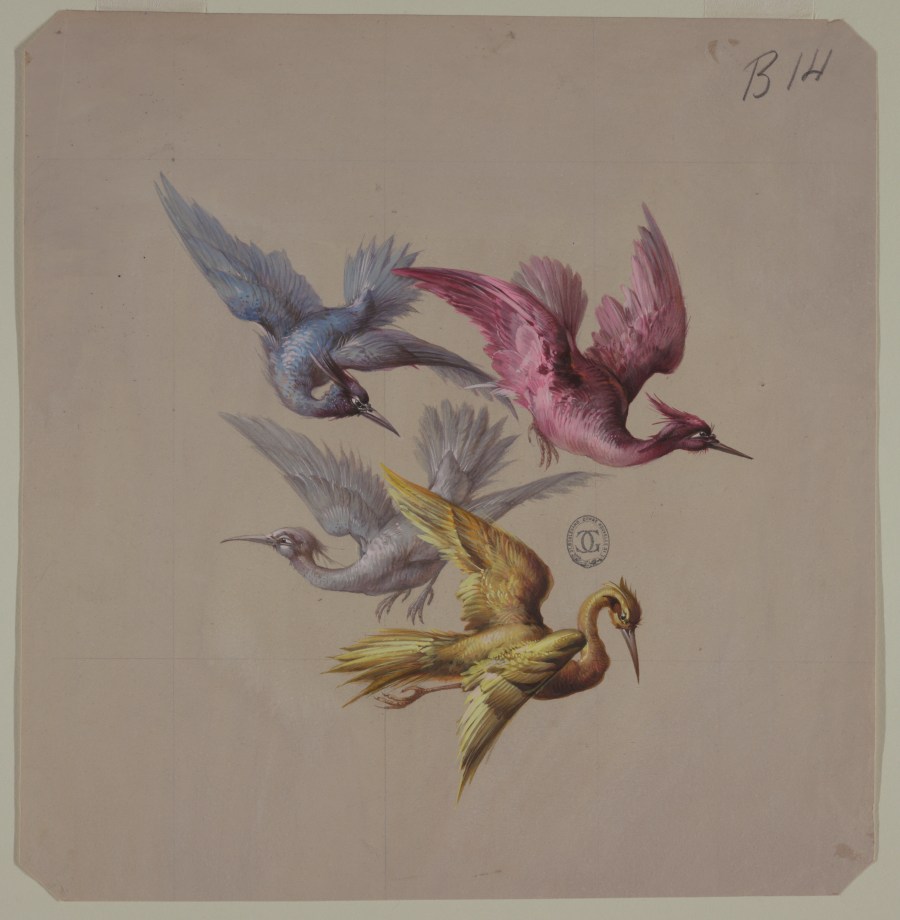
Featured Art: Designs for Wallpaper and Textiles: Birds
1. CRITICAL LEARNING PERIOD
Songbirds, or suboscine Passeriformes, with fixed song repertoires learn to sing in four steps. The steps are studied, in part, because many linguists believe that these same four steps describe human language acquisition.
The first step in song acquisition is called the critical learning period. This is when chicks begin to recognize their parents’ voices along with neighbors of the same species, and they differentiate between those voices and other sounds.
*
My parents were married for three years before I was born, and they lived together for almost three years after. The shape and sound of their love is unknown to me. I have no idea how he courted her or when the courting became something else. I do not remember the words they spoke to each other in the days and months while I lay in my crib, listening.
I know what my mother said to me and what I said back. These are stories I’ve heard often. Before I could talk, I had night terrors, she tells me. I would scream inconsolably in my sleep. The pediatrician said this was normal for some babies. She tells me about the day I choked on bottle milk while lying in my crib, and how the sound of it sent her running to me; how afterwards, I would choke and gag whenever I wanted her to pick me up. It was a sound she could never ignore, she says, eyes squinted theatrically at the memory of my manipulation.
I would stand in my crib and yell (so early! so advanced!) MOM. MOM. MOM. MOM. And then one day, after a moment, DARLENE. I wonder, now, if I sounded like my father when I said it.
Read More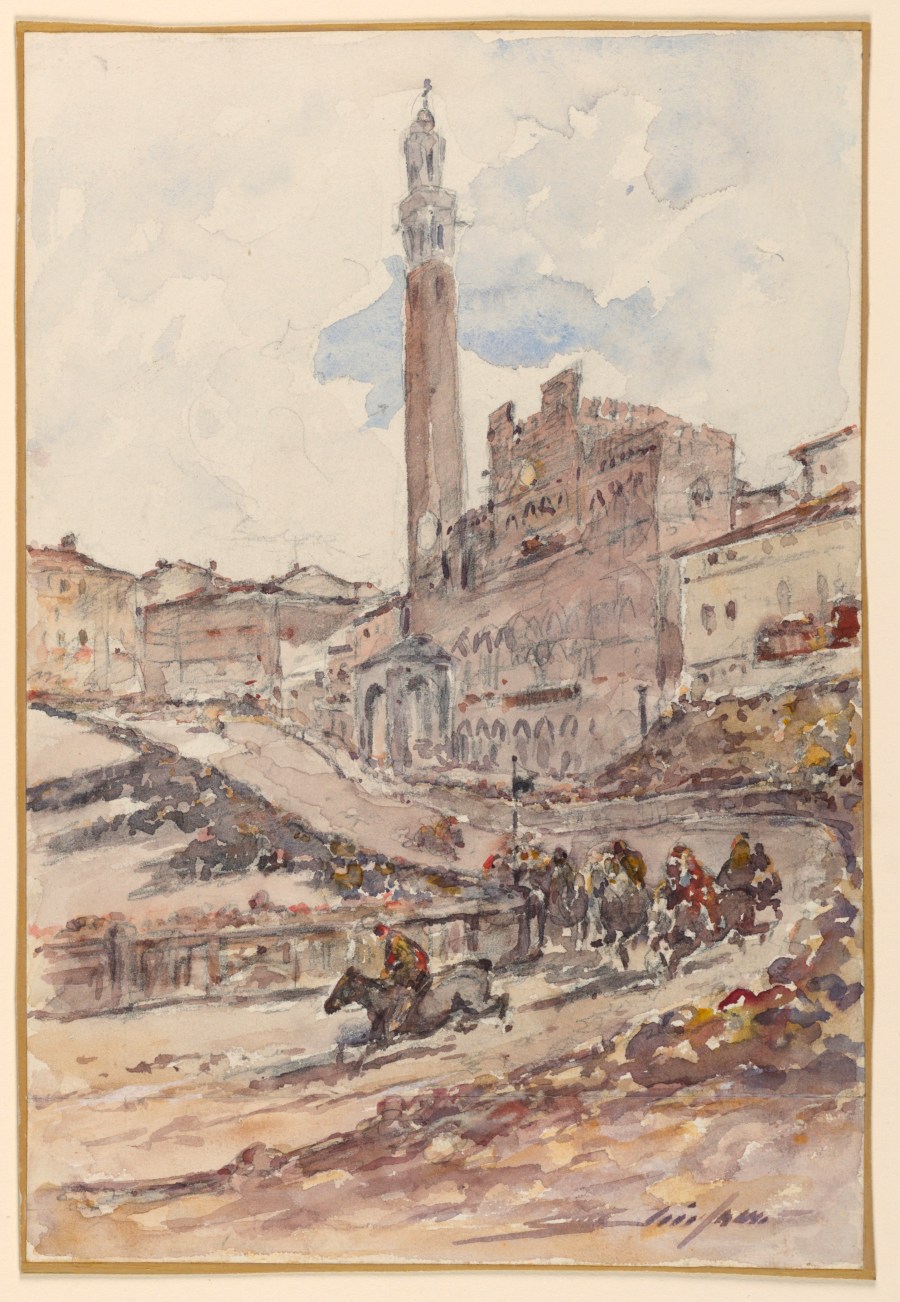
Bank Shot
By Greg McBride
Featured Art: Horse Race, Siena, Italy by Walter Shirlaw
I asked about the old days, when they
were my age—my mother scrambling eggs,
Dad and I at the table. He aimed a glance
sidelong at her, then took a shot toward me:
We’ve been very lucky, Son.
He must have meant their gamboling, teenage
marriage after weeks of jitterbug jokes
and getting-to-know-you’s in the Abilene
Lady Luck pool hall in 1941.
Her silence like the hush of a tournament
match, the cue’s tip skittish at the ball,
probing for angle and spin, velocity,
the all-important leave and follow-on.
By now—both gone so long, both unlucky—
I understand his game, how words can
travel in disguise, their spin covert,
as on that morning when his mumbled plea
caromed off me—sharply, as off
a felted cushion—and spun toward her,
determined at the stove:
Come on, Honey, let’s play.
Let’s keep the run alive.
Read More

Cousin Scott on His Lizard
by Anders Carlson-Wee
Featured Art: A Lizard, Jamaica by Frederic Edwin Church
-In memory of Scott Christopher Maxwell,
1961 – 2007
You ever had some loose screw try to tell you
your friends is the family you choose?
Well I wouldn’t bottle the breath of the minister
that delivered the message. The family you got
is the only family you’re gonna get,
take it or leave it. Wanna know what I got?
I got myself sisters. Two of em. But that’s all I got
to say about that. That’s all I ever knew
to say about my sisters: There’s two of em.
I bet I coulda stomached a brother better.
Even when I was a little grommet I wanted
a brother, so I practiced on this pet lizard I had.
He was one of them color-changers that could
change his skin to blend in with whatever’s
below him. I named him Tony and took him
around with me. Showed him how to do
whatever I was doin. Talked to him and tried
to explain things. I remember wearin tie-dyed shirts
and puttin Tony on my shoulder so I could
watch him change. One day I had him on the back
of my hand while I was hot-wheelin down the street
and he jumped off and I ran right over him.
What do you say about something like that?
Afterwards he was so flat he looked like one of them
outlines of a lizard in a coloring book. No blood
or nothin, like nothin was in him. I’ll be damned
if I know what else to say about that.
I don’t even know why I told you about it.
Would you believe me if I said I never got over it?
Never got over the fact that when he died
he was the color of my hand? You think that’s funny?
I can’t even look at a goddamn lizard anymore.
Read More
Cousin Scott on Doomsday
By Anders Carlson-Wee
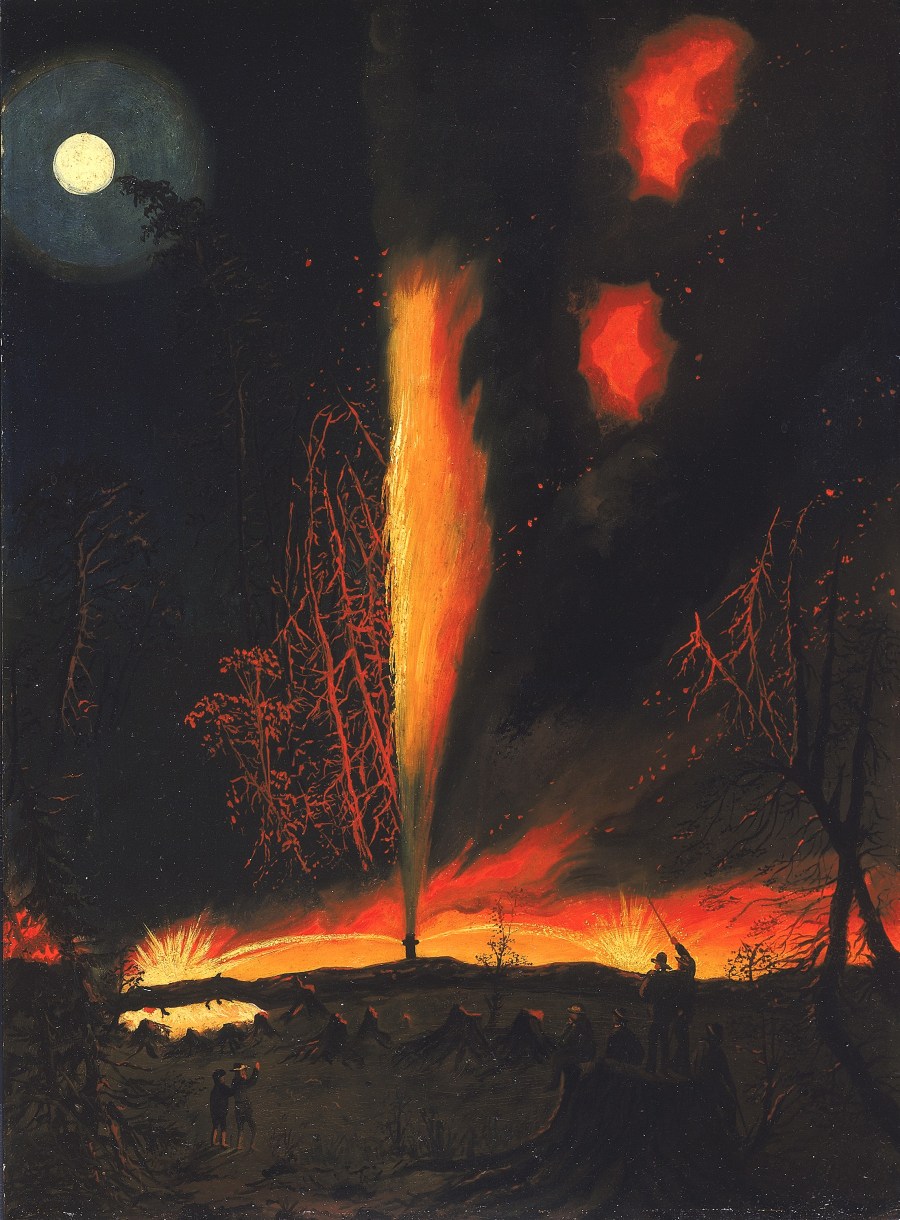
Featured Art: Burning Oil Well at Night, near Rouseville, Pennsylvania by James Hamilton
It don’t matter what you believe. All the Christians
know it’s comin, all the scientists know it’s comin.
Could be a chunk of the sun wipin out the grid
just as likely as the Lord Himself snuffin us out
one by one like a bunch of candle wicks.
Could be a oil shortage. Or the souls of the dead
come back to reckon. My buddy Critter figures
it’ll be the Lake of Fire––all the flesh dripping off
our dicks while we drown at the same time
over and over forever––like it says in the Bible.
But most folks won’t tell you what they believe.
My ma, she never broke silence on the issue.
My old man, he says I’m crazy. Says I’m gonna drink
myself to death before anything else gets the chance.
Me myself, I got my chips pushed in for somethin natural.
A meteor maybe. Or a polar flip. But like I said:
when you’re throwin pies, it don’t matter much what the flavor is.
It’s more folks thinkin like me than you’d think.
And like most of us, I got a bug-in plan for stayin put,
but I also got a bug-out plan for gettin gone.
Not that I’m gonna tell you where I’m goin.
It’s high in the mountains––I’ll say that much––
but that’s all the scat this cat’s gonna leave in the sand
for you to track by. Let me ask you somethin:
You think I’m crazy to have a hundred pounds of Spam
buried in caches? You think I’m crazy to have Critter
shoot me with a .22 so I know what it feels like
to get hit in a bulletproof vest? Well, you know what?
I hope I am crazy. I hope I’m the craziest son of a bitch
you ever met.
Read More

White Earth, Minnesota
By Anders Carlson-Wee
Featured Art: Hudson Valley, New York in Winter by Frederic Edwin Church
The volunteer staff at Saint Vincent de Paul
made too many sandwiches, expecting more.
When the drunk Indian came in from the winter
wearing some kind of neck-warmer pulled up
over his nose, they were able to give him
three for now and seven in a Ziploc bag. He sat down
at a fold-out table by himself and began eating
all of them. The icicles in his wild eyebrows
melted slowly. He mumbled orders as he chewed,
demanding bacon and a woman. From his pocket
he unfolded a photo of heck horses and held it up
whenever someone dared to look at him.
Partway through the meal he overheated
and took off most of his clothes. There was a hole
in his neck clearly made by a bullet, and made
recently. The rush of blood should never have clotted,
but it had. Maybe from the unbearable cold.
When the cop showed up he knocked back his hood
and pulled off his gloves to rub his nose.
He asked the staff if anyone had come in wearing
a ski mask. They shook their heads in unison
and kept shaking as the officer described the rough
features of the drunk Indian sitting by himself
with a hole in his neck eating sandwiches.
Read More
A Million Tigers Who Aren’t Mad at You
By Sandy Nietling
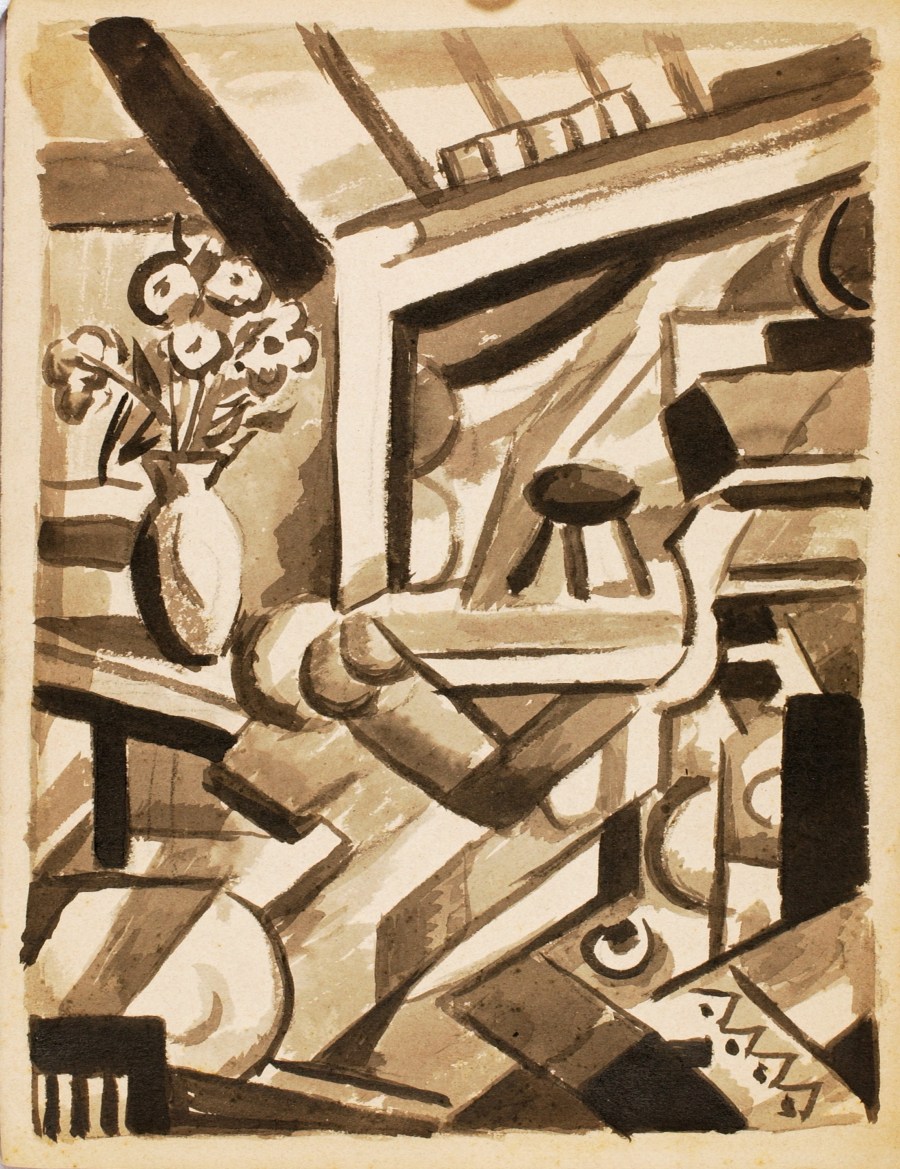
Featured Art: Abstract–Flowers in the Left by Carl Newman
My Mexican boyfriend cannot tell me if he’s ever killed a person. This is not because of a language barrier on either side. I asked my question clearly enough, and he is a good conversationalist with a decent English vocabulary. Still, Raf furrows his dark brows for a long moment, apparently needing time to puzzle through the facts as he knows them. Finally he frowns. “I’m not sure.”
When I ask my American boyfriends if they’ve killed someone, they laugh the way that they’re meant to laugh. Then, while they’re busy being surprised or trying to work up a clever response, I can worry about the papers I have to grade or how much longer the sliced pineapple in the refrigerator will last before I have to give it to the orioles in my backyard. That’s why you ask about death in the first place. It’s supposed to buy conversational elbow room, but Rafael has done the unexpected and provoked my attention instead of letting it drift away. It is not until later, in the dark of my bedroom, that he is relaxed enough to explain his crime.
Jenny Perowski is Ahead of Me in the Grocery Store Line
By Julie Danho
Featured Art: (Untitled–Flower Study) by Mary Vaux Walcott
If an Amish family can forgive the man who burned
their land, surely I can say hello to Jenny Perowski,
who used to call me “fattie fat” in seventh grade math
and had boys call my house, pretending to ask me out.
That was twenty years ago. Now Jenny, if not fat exactly,
is puffy as a slightly overstuffed chair. I’m thinner than her,
and my pleasure feels more whiskey than cream, makes me
want to pour out her Kors bag to rifle for candy, then slowly
eat it in front of her like she once did to me. I know
her cruelty was, at best, a misdemeanor. But anger
is like a peppermint in a pocketbook—everything inside
takes on its smell and taste. I could break it in my teeth,
make it disappear. Instead, I savor the mint, let the sugar
line my mouth like fur, linger far past what can be called
pleasure. How good it would be to be better than this.
Read More
Grammar School
By Mark Belair
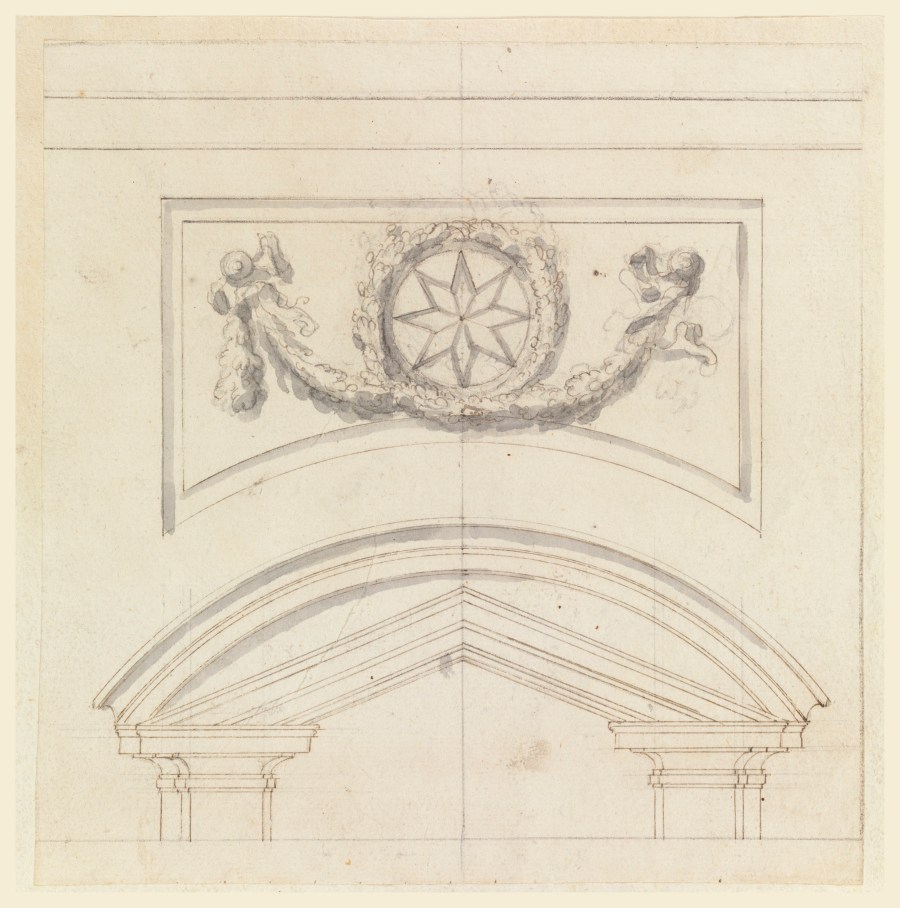
Featured Art: Project for an Overdoor by Carlo Marchionni or Filippo Marchionni
Through the municipal green, overpainted wire mesh
obscuring the grammar school basement windows
comes the spank of a basketball not engaged in any game,
just pounded in place in an empty, echoing cafeteria, then
an outside metal door gets gut-punched open to release
gruff-voiced janitor, belt keys jangling, cursing at the world
while from a first-floor office a stretch of plastic packing tape
screaks off a roll as a phone rings and a copy machine whumps
as if providing a bass line to a class that, upstairs,
bursts into a trebly, mocking laugh, after which,
yet farther up, in a distantly reverberant bathroom, a toilet
flushes and keeps running even after a door slams shut and
all the old, hard memories flood
back enough for me to know
that if a documentary film was made
about daily life in grammar school—
with shot after shot of small, solemn faces
taring out at us—
its scoreless soundtrack
would be this.
Read More

When Mr. Bridges Died
By Mark Kraushaar
Featured Art: (Children Swimming) by Unidentified
When Mr. Bridges died I knew
the whole eighth grade would have to gather
in the gym and sit there on those cheerless,
folding metal chairs set up by string-bean
Donny Graf the constant burper.
Mr. Bridges was a substitute,
we hardly knew him, but
I knew that there we’d be, all of us,
and there would be our stiff-grinning
twitchy principal, Mr. Albert Fraze, to slowly,
slowly stand and tell us what a deep
and lasting loss this was for all of us.
And later, sitting there three rows from the exit
by fatso Robert Randall who’d socked me
in the stomach on the 8 bus once,
I knew that Mr. Fraze would drill us
with the first long look that said, Every one of you
should be ashamed, ashamed for even thinking about,
for even thinking about thinking about
turning your gaze away one ten
thousandth of an inch:
a man is dead today.
And then would come this clumsy, freighted
metaphor and though I doubt I knew the word
(metaphor) I knew our Mr. Fraze: Mr. Bridges
was a kind of bridge, he’d say,
or found a bridge, or formed a bridge, or built
a bridge, or was a bridge from ignorance to wisdom,
from confusion to compassion, blah, blah, blah,
which is exactly what he said so that
sitting there I thought of that four-cabled
quarter-mile Roebling tower bridge
and I thought of its glittering
river city Cincinnati since we’d studied it all week.
I pictured its reaching, curving waterway, the great
Ohio and I thought of the circling terns and swirling slicks
and chemical froths and then I thought of a row of houseboats
and a paddlewheel steamer with a single, smiling
tourist, anyone and no one, waving once.
Read More

Siccità
By Stephan Jarret
Featured Art: The Hills by Preston Dickinson
To my grandmother, Francesca, the cliffs of Wilmerding, Pennsylvania resembled Italy’s Amalfi coast. Only, when she looked over the edge, the valley was waterless. Not even a polluted stream that dried out in the summer months. “Siccità”—drought—she used to say, when she led me into our backyard and squinted with high-angle menace toward the neighboring town of Pitcairn. At night, the phosphorescent sign of Randy’s Brew House shrouded the valley in faux-oceanic cobalt blue, offering “HOT GIRLS” and “FREE PRETZELS.” Still, the lower hillside was anything but arid—peppered with trees, I thought— so I tried to mention that something was sustaining them. “What?” she’d say, either incredulous or deaf.
Read More

If I Could Have Your Attention
By Jonathan Louis Duckworth
Featured Art: Sunrise or Sunset (study for book Concealing Coloration in the Animal Kingdom) by Abbott Handerson Thayer
-To S. S.
and if I could make of my hands a hammock
for the sinuous long-S slope of your spine
if I could flocculate moonlight into a salve
to rub away our fears as fingers smooth a bedsheet’s creases
if I could scan the abjad calligraphy of your curls
and wake with long strands coiled lamia-like under my tongue
if we could lie enmeshed under night’s aspect
our spooned bodies a crescent luna under the folds
if I could rise first to cook you breakfast
and convince you basil pesto is morning fare
if I could recite to you all sixty-three octaves
of Keats’s Isabella with pungent pesto breath
if we could exhume for each other our buried poems
to pry vital marrow from those discarded bones
and if we could distill the essential incanti
like sweet incense extracted from fetid agarwood
if I could breathe my favorite words to you:
“gloaming,” “Ewigkeit,” “azimuth,” “garrigues,” “laverock”
if I could settle into entire stillness
while you whisper your own treasured motes into my ear
and if I could only compose the words
that could incite in you half what yours have in me
I could be with you, or else write no more
Read More

Directions
By Matthew J. Spireng
Featured Art: Village Street by Alice Pike Barney
This time, giving directions to a place
I have never been, an address
I have only passed so I could tell another where
it is, I have explained: across the street from,
a few blocks down from, between this
cross street and that, a little yellow awning
across the front, the name in big letters above it,
and if it is dark, will there be
light on the awning, or will its color be gone,
indeterminate? Tell me, will you, if I arrive
first and find a better way to describe, how
can I reach you, or must the first suffice?
Read More
Fantaisie
By Donald Platt
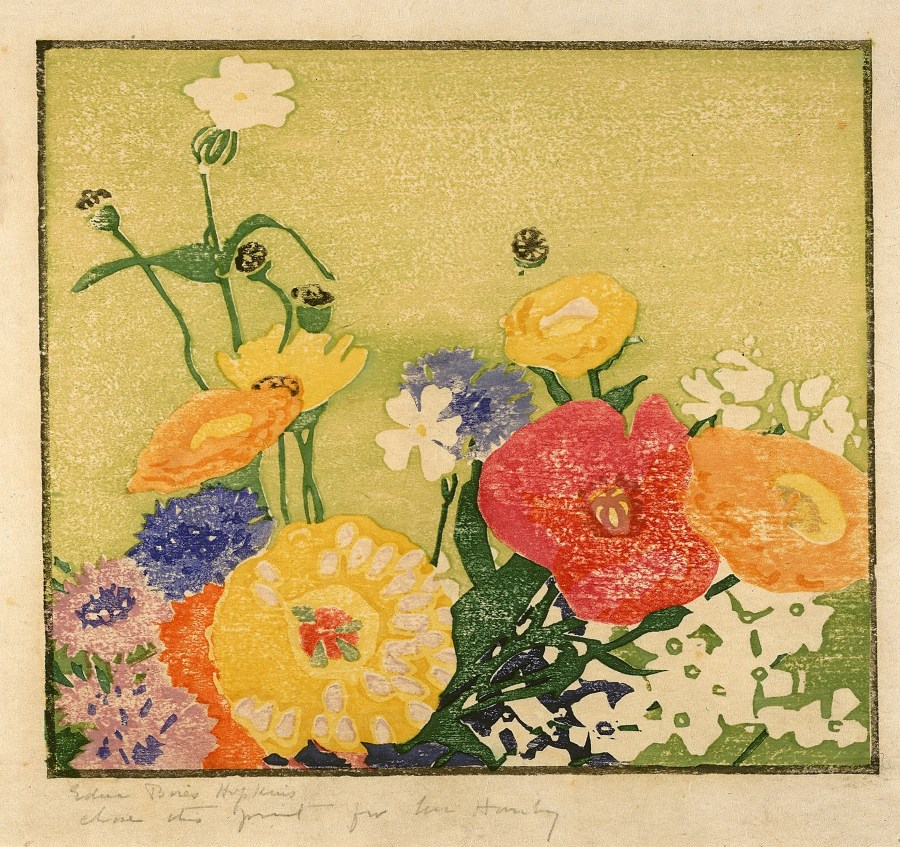
Featured Art: Garden Flowers by Edna Boies Hopkins
Each person is
a solar system, the bits of birth’s Big Bang orbiting
some sun that both attracts
and repels. Elliptically, my mother orbits her own death,
that great shining
ball of fire I cannot look directly at. She draws closer to it,
then pulls away. She rotates
as she revolves. Together we write her obituary. Born.
Schooled. Worked as.
Married to. Gave birth. Resided. Retired. Is survived by.
The old story
we all get to write if we’re lucky, or one that will willy-nilly
get written for us.
I leave the day she’ll die blank. She gives me the notes
she wrote last night:
“Funeral in Christ Church and Bill Eakins to preach.
Ask Women’s Guild
to serve a simple refreshment. Give $100 to organist.
Give $5,000
to church. Give $500 to Bill Eakins. Give $1,000 to women.
Give $250
to soloist. No calling hours. Only the church service.
Nobody
getting up and saying nice things about me. Everyone
has their own
memories—good, bad, and indifferent. Chief purpose
of a funeral
is to pray for the departed. Also to give comfort
to those who grieve.
Call Hickey Funeral Home.” As an afterthought, she added
“Ask Charlene
to play Saint-Saëns’ Fantaisie for violin and harp.
You’ll need to find
a harpist.” Everyone needs a harpist to accompany her living
and her dying.
No one to turn to but the seated, marble harp player
at the Metropolitan Museum
of Art, early Cycladic, eleven and a half inches high
He embraces
the D-shaped instrument, whose top is ornamented
with the head
of a waterfowl. Against his right thigh and stone shoulder, he rests
the weight
of the instrument. It has no strings. His raised right thumb plucks
five thousand years of silence.
Read More
NOR 19 Feature: Manipulating the Reader
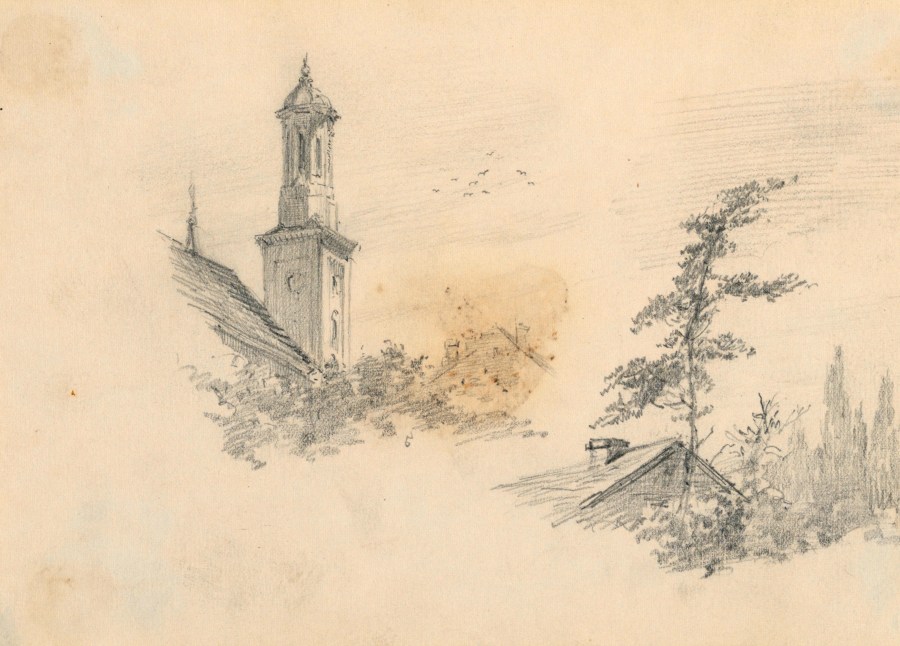
Featured Art: Sketch of Church Tower and Roof Top by Arnold William Brunner
We often say that a story, a movie, a song, or even a commercial about sad dogs is “emotionally manipulative.” We use this phrase not only to discount a particular piece, but to condemn it. What, though, constitutes literary emotional manipulation? Is there such a thing as a benign manipulation, a justifiable heart- tugging? And what specific moves can we identify that make the difference between effective and ineffective narrative manipulation, between a moving poem and a mawkish one?
We asked five writers—Rebecca McClanahan, Debra Marquart, A-J Aronstein, C.L. Dallat, and Matthew VanWinkle—to respond to those questions.
I Second That Emotion
A few years ago, I attended a literary gathering and heard four poets and memoirists read from their work. They were all accomplished writers, varied enough in their approaches to evoke laughter, sighs, nods of acknowledgment, a collective gasp at one point, and, toward the end of the evening, some tears as well. Tears are not uncommon at readings, of course—I have cried at several—but in this case the tears came not from audience members but rather from one of the readers, who had warned us that she might “choke up” because of the emotional content of the autobiographical piece she was about to read. Her introduction, followed by a tearful presentation, suggested either that the work was too new to share publicly or that she had planned her reaction and was intentionally manipulating us. As she spoke, I sensed listeners growing more and more uncomfortable, as I was. Some leaned back into their chairs, some crossed their arms. The more emotional the reader’s performance became, the less effect bit seemed to have, an unfortunate outcome, especially given that the work was potentially moving in and of itself. But it was as if the writer did not trust the work, or perhaps did not trust us to do our job as listeners: to bring our own emotional response to the work.
As I listened, I kept thinking of Chekhov’s advice to a writer who had sent him a story: If you “want to touch the reader’s heart, try to be colder . . . As it is, your heroes weep and you sigh.” John Gardner has a similar take on this issue in The Art of Fiction. “In great fiction,” Gardner writes, “we are moved by what happens, not by the whimpering or bawling of the writer’s presentation of what happens. That is, in great fiction, we are moved by characters and events, not by the emotion of the person who happens to be telling the story.” Certainly Chekhov and Gardner are not suggesting that the writer herself be unmoved by events and characters, but rather that she allow the reader the space to complete the transaction her words set into motion. For isn’t that what readers of literary fiction, poetry, and nonfiction want the chance to do? To, in the words of that Smokey Robinson hit, “second that emotion”?
Read More
Tell it Cool: On Writing with Restraint
By Debra Marquart
Featured Art: Hill with Trees by Eleanor Harris
For years, I’ve encouraged students to “tell it cool” when narrating a tale that is harrowing or emotional. A cool narrator can be a buoy in rough waters. I’ve always thought this advice came from Hemingway, but at this moment as I search my bookshelves for the place where Hemingway said it, I can’t put my finger on the quote. I know it’s in there somewhere, likely in one of the letters (bossy letters full of unsolicited advice and signed “Papa” when friends were just writing to ask for money).
In A Moveable Feast, Hemingway famously wrote about knowing what to leave out. In his discussion of the short story, “Out of Season,” for example, he remarks that he left out a key event connected to the real story: “I had omitted the real end of it which was that the old man hanged himself.” According to a letter that Hemingway wrote to F. Scott Fitzgerald in 1925, the story was “an almost literal transcription” of an experience he’d had while traveling in Europe with his first wife, Hadley.
Read More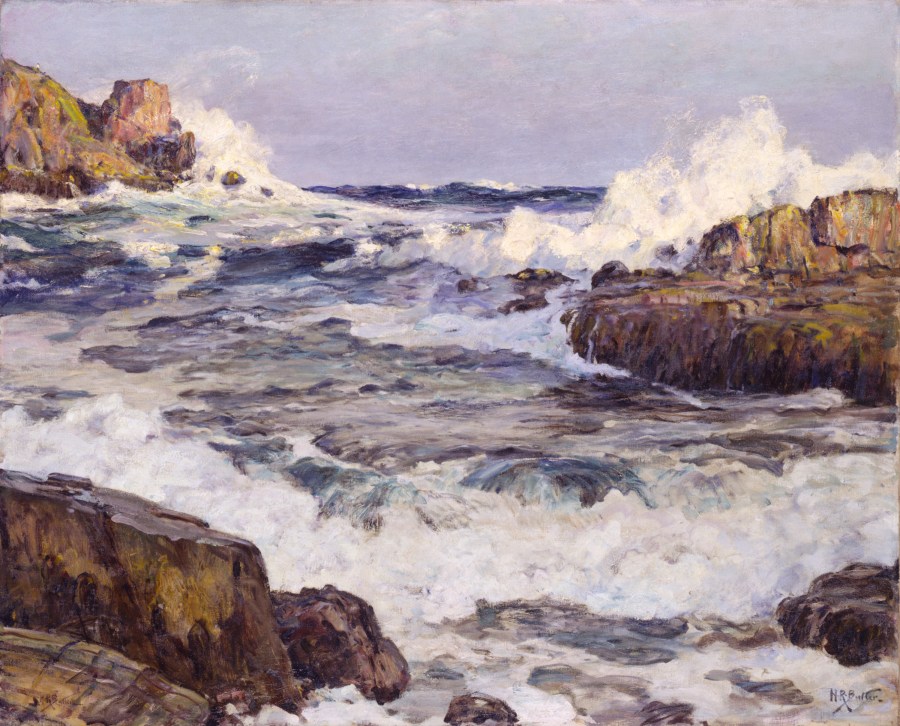
Staying with Argos: Odysseus and His Dog
By A-J Aronstein
Featured Art: Clearing after September Gale–Maine Coast by Howard Russell Butler
Argos, the loyal dog of long-suffering, well-tanned, always-oiled Odysseus, appears only once in The Odyssey. At the sight of Odysseus, who returns to the island kingdom Ithaca after 20 years, Argos dies. Bam! Kaput. Struck down by a Zeusian thunderbolt. At this point in Book 17, no one other than the reader knows the true identity of the disguised and smelly Odysseus, who dresses like a beggar. Escorted by his loyal swineherd Eumaeus, Odysseus pauses to observe Argos from the distance of a few steps. But he can’t even pet the pup before steering back toward his wife’s suitors, whom he’ll slaughter in due course. Argos dies almost immediately after Odysseus turns away. Though the encounter takes fewer than one hundred lines, its brevity should not trick us into thinking about Argos’s death as a merely sad aside. A closer reading reveals how Homer manipulates his audience before the final act, using Argos to orient our empathy toward Odysseus. Moreover, if we stay with Argos a little longer, he reveals something essential about fiction’s capacity to wrap epic emotions into even the tiniest moments.
To see a doggie’s demise in any medium will always make us blubber. So too will reunions between pets and soldiers. Witness the strange phenomenon of YouTube compilations documenting first meetings between dogs and American troops returning home from Middle Eastern war zones. These clips depict pure cathartic joy. Fido or Georgie or Lady jump and drool all over their patriotic owners, howling with disbelief, filmed by someone holding an iPhone that trembles with the cinematographer’s barely-constrained sobs. Music swells, the major cries, and before we have time to think about the trauma lurking in the background, we cut to another dog jumping into the arms of another deep-eyed master in fatigues. These are fragmented blips of pure joy. They don’t ask us to think: They constitute a conveyor belt of emotive force.
Read More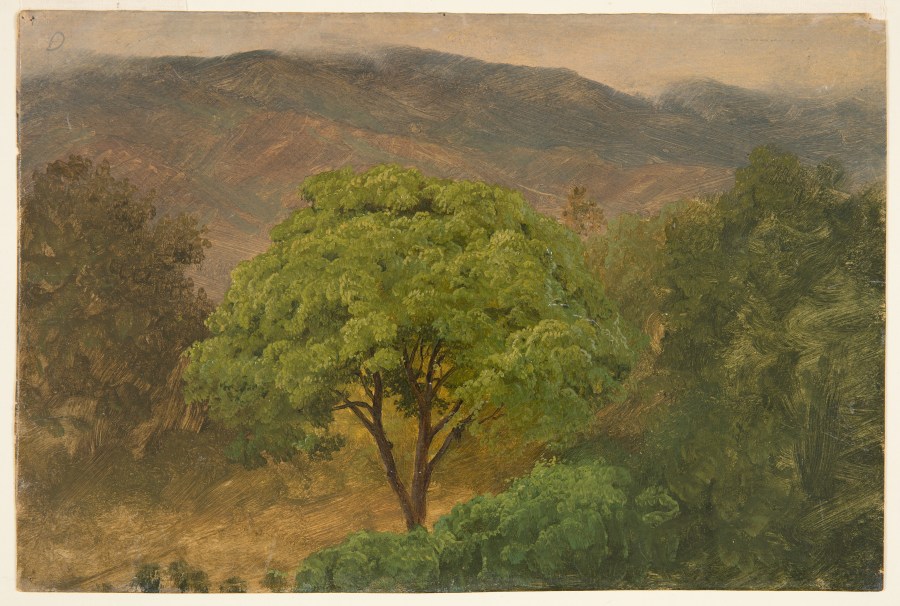
Yeats and Heaney: The Poetry Without the Pity
By C. L. Dallat
Featured Art: Genip Tree in the Mountains, Jamaica by Frederic Edwin Church
When W.B. Yeats dismissed Wilfred Owen’s World War I poetry as “all blood, dirt & sucked sugar stick” (and omitted Owen, Sassoon, and Rosenberg from his 1936 anthology), he was making a powerful statement, not just about dis- taste for sentimental language and the role of pity in poetry, but about the poet’s duties and limits. He had already excluded writing war poetry from his own list of obligations in 1915’s “On Being Asked for a War Poem,” but only later became more coherent on the abjuration of pity as an unfit subject.
This is, of course, the Yeats whose career started in the mists and myths of a Celtic twilight amidst a flurry of pre-Raphaelite sentimentalism and romance, who wrote of tragic heroes, of “The Pity of Love” and “The Sorrow of Love.” So before reaching for his famous poem, “Easter 1916,” where Yeats does appear to address war and politics, we should take a momentary look at that early work.
Designs Less Palpable: Emotional Manipulation and Even-Handedness in Keats
By Matthew VanWinkle
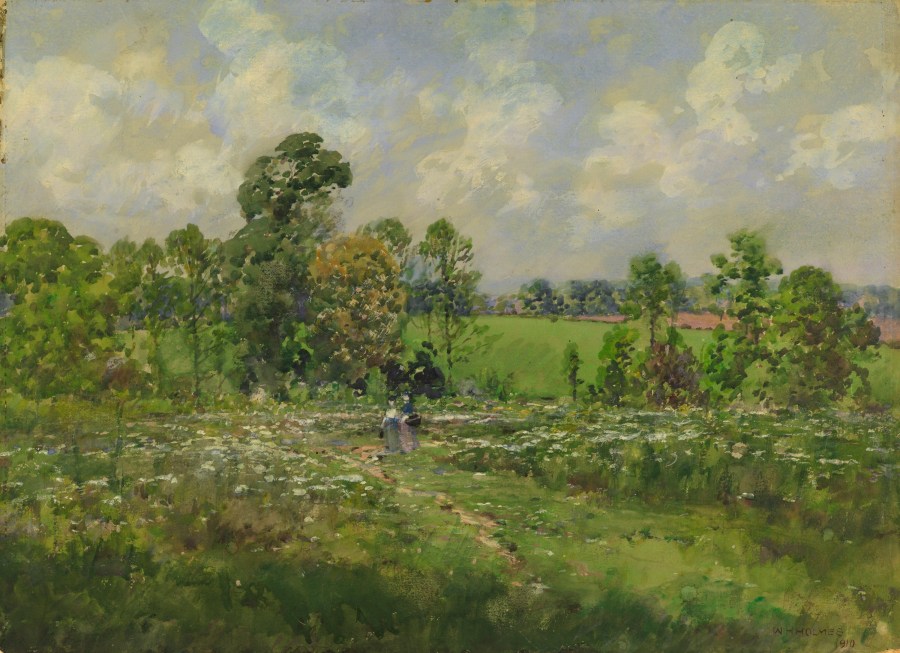
Featured Art: Flowery Meadow by William Henry Holmes
In a February 3, 1818 letter to his friend Reynolds, Keats rejects a reading experience that he associates primarily with Wordsworth: “We hate poetry that has a palpable design upon us—and if we do not agree, seems to put its hand in its breeches pocket.” The reproach is so scathing because it acutely observes how rapidly the poetry’s interest in its audience cools, from the importunate heat of the design to the indifferent withdrawal to the pocket. Keats is fuming primarily at Wordsworth’s dogmatism and propensity for self-congratulation, as we hear earlier in the letter, where Keats complains of being “bullied into a certain Philosophy engendered in the whims of an Egotist.”
At first glance, this might seem like a rarefied chafing, a protest against an intellectual irritation or an effusion of rivalry peculiar to talented writers. Yet the kind of readerly hatred that Keats memorably articulates becomes more comprehensible when we think of art that has palpable designs not on our ideas but on our feelings: the swelling soundtrack that jerks at our tears, the so-cute cartoon kitty kitty that beguiles us into wuv. Every reader has caved in to this sort of appeal at one time or another, and many readers look back on such acquiescence abashedly, or worse. How to admit, even in hindsight, to having been manipulated, to having feelings that can be summoned and practiced upon with such infuriating confidence?
New Ohio Review Issue 18 (originally printed Fall 2015)
Newohioreview.org is archiving previous editions as they originally appeared. We are pairing the pieces with curated art work, as well as select audio recordings. In collaboration with our past contributors, we are happy to (re)-present this outstanding work.
Issue 18 compiled by Meah McCallister.

Believe that Even in My Deliberateness I Was Not Deliberate
By Gail Mazur
Featured Art: Butterfly by Mary Altha Nims
Believe that even in my deliberateness I was not deliberate
—The end words form this line from Gwendolyn Brooks’
poem, “the mother”
We’d be calm, we’d be serene, as long as we could believe
in the blue dragonflies and balletic monarchs that
hovered near us in a kind of peaceable kingdom even
while my love’s illness menaced the peace in
the summer yard, in the fragile house, in the air I breathed in my
deliberateness. My only stratagem, deliberateness:
to accept our lot in that pathless time. I
thought I’d know what he’d want; what I’d want was-
n’t any different. Wouldn’t it be, wouldn’t it finally be, not
to consider how finite our August? Not to deliberate?
Read More

Sintra
By Gail Mazur
Featured Art: Composition by Otto Freundlich
In your office, you, mastering the art of Photoshop,
scanning a crumpled snapshot, 3 inches square,
of your father, poolside, jaunty in a blue swimsuit,
his straw fedora at a rakish angle,
carrying two splashing cups of bica toward your mother.
Beaming, gallant, tanned, grinning for her camera.
That was in Portugal, in Sintra—
the village Byron called “most beautiful in the world.”
In the old cracked photo,
part of his naked chest had flaked away:
under the glossy surface an ashen patch.
Forty years later at your desk,
filial, in a fantasy of surgery,
you worked your laptop to repair the wound,
dragging pixels of skin tone, of mortal coloration,
from his right side to his left.
A new skill mastered, new language, new tools
that restored but couldn’t save.
I watched you transplant a blush of skin—
a tender ministry, your digital touch
lighter than a kiss—not unlike a kiss—
exactly where his heart four decades
earlier began to falter. As yours, invisibly, did now.
—One of those days we both still thought that somehow
with the proper tools, there was nothing you couldn’t fix.
Read More

Neighbors
By Suzanne McConnell
Selected as winner of the 2015 New Ohio Review Fiction Contest by Maud Casey
Featured Art: Gardener’s House at Antibes by Claude Monet
I wake to the phone ringing like an alarm. It’s the middle of the night. I clamber out of bed, hard-won sleep, into the living room, grope for the receiver. “Isabella,” my neighbor Viv says in her throaty, demanding voice. “I’ve lost my keys. I’m at the booth two blocks away. Come downstairs and let me in.” The phone clicks off.
I light a cigarette, and now I hear her raving like a maniac coming down the street. I move to the kitchen window and stand in the dark in my nightgown, trembling with rage, waiting for her figure to catch up with her voice shattering the night, and now I see her at the edge of the streetlight.

The Anatomy Lesson
By Bruce Bond
Featured Art: The Brook by Paul Cézanne
after Rembrandt
Why they look away is anyone’s guess,
these men apprenticed to the evidence,
gathered at the corpse the dark context
makes bright inside the surgical forum.
Anyone’s guess why, at this instant,
even the teacher looks past his subject,
the harp strings of these extended tendons
raised up from the bed of the open wound.
A spectacle, it seems, for no one there,
for though they lean in, wide-eyed, severe,
they look instead at the anatomy volume
propped up in the center of the room,
or at us, the viewer, the painter, the future
that stares back with the blindness of a mirror.

Girl with the Red Stockings
By Julie Hassett
Featured Art: The Red Kerchief by Claude Monet
after a painting by Winslow Homer, Boston MFA
Blue skirt a bell, percussive
on her calves, basket full of mussels,
unable to quell the surge,
red hair a banner,
she glares at a ship which lifts,
smacks the swell.
Spumes geyser over hull.
Black shoes plant on granite,
root to her core,
a ballast that will not crack
no matter the force
of gusts from the north,
a gush that rushes her sternum,
alone, again, by the ocean.
Read More

Sisters Peeling
By Julie Henson
Featured Art: A Fisherman’s Daughter by Winslow Homer
Late in the night after my father’s memorial service, my sisters and I stopped our small caravan at a Speedway in the stretch of US-40 between Greencastle and Indianapolis. It was early November.
“Come with me,” my sister Emily said, leading me to the back of her car and opening the trunk. She pointed to a box in the corner. “You want some?” she asked sounding like a drug dealer, which at one point she had been. I saw her slipping back in easy—my dad’s ashes were valuable and sort of dangerous—I felt like it may have even been against Indiana state law to have them, let alone scatter them, though I never checked. When I said nothing, she prodded, “You want even just a little? There’s so much to go around.” Sarah, our oldest sister, was waiting in the passenger seat—she had already been dealt her ash-inheritance. It was late and it was cold; I wanted to go to sleep. Emily looked at me intently. The way the gas station lights slanted cast a shadow across the top of her face, and I could not make out her expression.
“No,” I finally said. “I’m trying to quit.”
The nozzle on the gas pump clicked, and she sighed, shut the trunk.

Talking to My Dead Mother About Dogs
By Stephanie Gangi
Featured Art: Dog with pups by India, Rajasthan, Ajmer, probably Sawar school
That damn dog.
Which one, Ma?
The first one.
There is no first one, there was always a dog, Ma.
The shepherd, the one who kept the baby
from rolling in to the road down the hill in front of the house.
That was me, Ma. I was the baby.
I know that. Rex. Rex.
And what about your father’s, who jumped
out the car window at a toll booth, headed for the hills. Skippy,
ungrateful mutt.
Then we got Duchess, because of Lassie on television.
Duchess was weak. Duchess didn’t last.
The toy poodle came in a hat box. She matched the décor!
I swear to god, she did.
Your chateau phase.
What about your dogs?
My dogs? My dogs, Ma?
The fear biter who darted in the dark at the ankles of my bad choices?
The herder who swam himself spent, circling me circling me when I was at sea?
The too-happy dog, who I couldn’t keep, I forget why?
Now this one, the big one, this horse of a dog who braces himself
so I can stand? Who, the slower I go, the stronger he gets?
Who can’t rest until I rest? This dog, Ma?
This last one? Ma?
Read More

At the Columbarium
By Jackie Craven
Featured Art: Edge of the Woods Near L’Hermitage, Pontoise by Camille Pissarro
“We’d invite you in,” my mother said, “but where
would we put you?” I must have seemed enormous
squatting before her door, third drawer from center.
If not for the marble nameplate, I might’ve seen
a diorama of Jacobean chairs, tiny forks and spoons,
and my stepfather’s bonsai.
“There’s barely enough room for the two of us,”
my mother went on. Deep inside the granite walls,
my stepfather growled, “I blame the Realtor.”
Dogwoods fluttered, casting stained blossoms
into the fountain. Down the hill, a procession of bagpipes
let out a skirl. “She promised us a view,” my mother shrilled.
I think my parents imagined themselves still
at the retirement home, rolling along a tulip-edged path
from the Independent Wing, past Assisted Living,
over to Memory Care, where the Admissions Lady
touched my arm and whispered, “Don’t worry.
We’ll help them downsize.”

After the Funeral
By Holly Day
Featured Art: A Funeral by Jean-Paul Laurens
When my father was ten, his mother died
and he went outside into the street after her funeral and screamed
at God. He said, “Take me,
you fucker!” to God, and his younger brother, my
uncle, was so scared he ran
into the room they both shared and hid. Later, when
my father came back, my uncle asked him what Hell was like,
why God had let him come back, if he had seen
their mother, what she was wearing.
Read More
An Evolution of Prayer
By Stephen Dunn
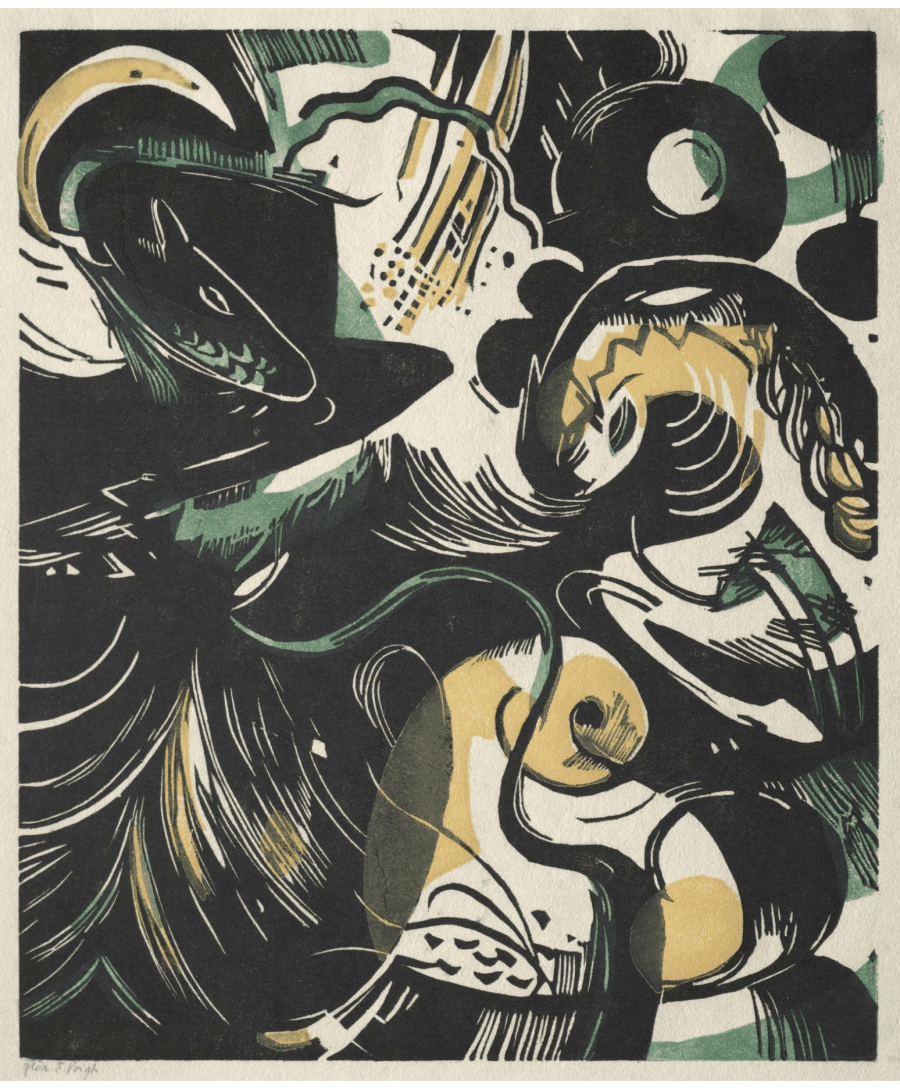
Featured Art: Genesis II by Franz Marc
As a child, some of his prayers were answered
because he prayed out loud for a kite or bike,
which his mother would overhear, and pass on
to her husband, his father, the Lord.
Later, he understood that when he prayed
he was mostly talking to himself—albeit a better,
more moral part of himself—which accounted
for why he heard nothing back from the void.
Lord, he’d begin, because he was afraid
to alter the language of prayer, Lord, deliver
me from envy and mean-spiritedness,
allow me to love people as I love animals.
Then his father died, and he became the sad Lord
of himself, praying for pleasures immediate and grantable.
Let me tango the night long with Margot the receptionist,
he’d say to no one. Let me do unto others.
Read More

Rock Harbor
Selected as runner-up for the 2015 New Ohio Review Fiction Contest by Maud Casey
By Susan Finch
Featured Art: Early Morning After a Storm at Sea by Winslow Homer
When Bob Miller slipped and fell from the rooftop deck of his ex-wife’s houseboat into the inky black of Rock Harbor, it almost appeared as if he’d done it on purpose. The fall took him feet over head, his flailing arms tightening into a V like he was performing a cartwheel. His fingers spread open in sunbursts, his legs stretched wide and long like a dancer’s, and his toes tensed into sharp points. As he tumbled the twenty-five feet into the shadowy water, his whole body seemed to expand and explode into a star.
The entire party saw Bob’s fall or, at least, when the police conducted the official investigation, partygoers would claim they had. And in truth, the spinning and twisting of Bob Miller’s body end-over-end was so spectacular that in hearing the story later in whispers passing across the marina from slip to slip, everyone felt they had seen it. Those who knew Bob assumed he’d been dared to do it. He had always been a bit of a showoff and couldn’t say no to a challenge. When he was thirteen, he’d purchased a dirt bike and had performed stunts for his friends on the weekend, vaulting over a campfire, navigating the narrow wall between the cornfield and the river, and once, after a double-dog-dare, he’d launched the bike from the hayloft of his father’s dilapidated barn and taken a nasty spill on the landing, fracturing his femur.

Gray Whale
By Sally Bliumis-Dunn
Featured Art: Submarine Series Introductory Lithograph by Eric Ravilious
When they read the metal tag
on her pectoral fin—
a surprise of dark Cyrillic letters
on this Gray Whale
who had swum some fourteen thousand miles,
inter-braiding continent
with continent—
strange that I think of you now, father
though you too had lived
mostly below a surface,
the breadth of which we could not know—
until they read her tag,
the cetologists had thought
the gray whales off the coast of Baja
were of a different species
from the ones in Minsk.
When I found your lacquer boxes,
so small they fit into my hand,
with their depictions of our home,
the pots above the stove,
their odd discolorations,
the cheerful curtained window
that looked out at the pines,
I felt sad I had not known your heart
would swim such distance for us—
you had never shown us one.
And how small you had to make yourself
to see each scene and paint it
like an ant stepping carefully along
one of those dark passages
in its hill of dirt that nobody sees inside.
Read More

Aesthetics to Change the Way You Live
By Sally Bliumis-Dunn
Featured Art: The Burning of the Houses of Lords and Commons, 16 October 1834 by Joseph Mallord William Turner
“Aesthetics to Change the Way You Live”
—Growth Magazine
For instance wabi sabi,
a Japanese view of life
that celebrates the imperfect,
the light-hearted sound
of the two words
like figures balanced on a seesaw,
behind them, cloudless sky,
and in the spread, the photograph
of nicked and tarnished silver spoons
arranged in rows on lilac velvet—
how perfectly imperfect.
But separate from the printed page,
the air around me darkens—
and then the sound
like thunder pressing closer
as I think of my own flaws—
and then they all
come charging toward me
like a herd of bison,
so dense it’s hard to see
from all the kicked-up dust.
So loud I cannot think.
How much easier to be won over
by a living room’s worn rug,
the reds and blues, faded,
even threadbare in those places
I have most often stood.
Read More

Plato and You
By Christopher Flannery
Featured Art: Reading by Berthe Morisot
I was reading Plato
and thinking about you.
So I wasn’t really reading.
I was thinking.
And I wasn’t thinking about reading,
if you get the idea.
And that’s the thing.
With Plato,
it’s all about the idea.
Read More
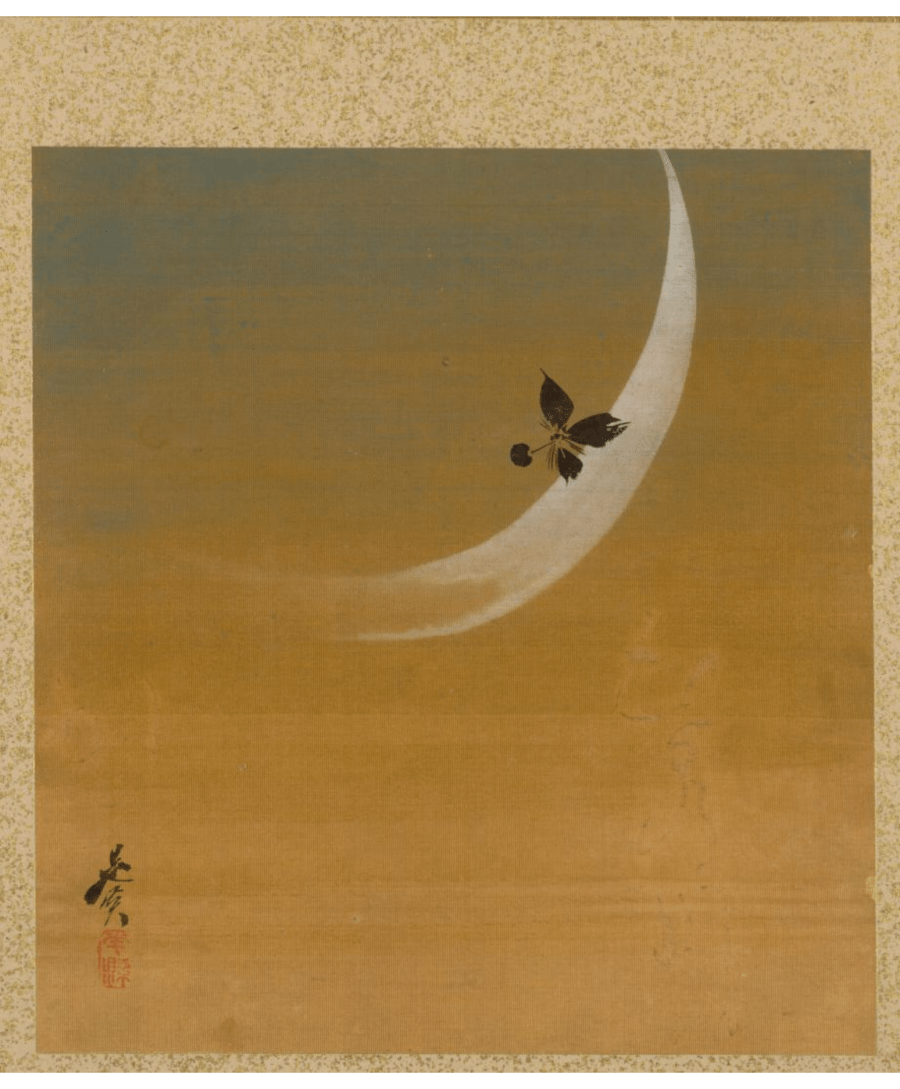
This Contract is Complete
By Kyle Norwood
Featured Art: Crescent Moon from Album of Paintings by the Venerable Zeshin by Shibata Zeshin 柴田 是真
“This contract,” this machine with knobs
to be pulled, buttons to be pushed, inexorable gears
leading from A to B, but so easily sabotaged,
mucked up by a fallen coin or shirtsleeve or
dangled lock of hair caught in the works—
“is complete,” encompasses entirely the world
of its transaction, has an inside but no outside,
everything else is forever foreign and beneath notice
in the penumbra of this dazzling light,
“and all promises, representations, understandings,
and agreements,” theories, whispered assurances,
messages in code, three-martini lunchtime conversations,
husky-voiced proposals to meet in back of the bank by moonlight,
“have been expressed herein, and all prior negotiations
and agreements are merged herein,” forgotten, a haze,
only this document remembers, everything else is indistinct.
Nonetheless, “no change, modification, or assignment hereof”
shall surprise the sociologists, or Erda the earth-spirit
who knows how all things end,
and no contract, no music or poem worth the paper,
no valedictory address or deathbed testament,
no blood sacrifices, voodoo rituals, fire sales,
or promises spoken out of a burning bush,
no house finch spilling its enthusiasm into the gutters,
no final snow covering the earth like a last sigh,
“shall be binding against the Company unless in writing
and signed by one of its officers.”
Read More
Re: Re: Re: Re: Re: Re: Re: Re: PINK
By Bryan Owens
Featured Art: Ananas (Pineapples) by Charles Martin
Is it against school dress code for a student to wear sweatpants
that say PINK across the rear? I have CC’d the school director.
Please advise.
Though it is not stated explicitly in the student handbook,
I think it is safe to say this article of clothing
is not school appropriate.
If we do not adhere to the dress code policy
as it is stated explicitly, we are doing these kids
a tragic disservice in their preparation for the real world.
I agree, given the suggestiveness of the images it raises
& its placement in relative context with that which
it is alluding to, this article of clothing should not be tolerated at school.
Well, to what extent do we implement
school policy based on our individual theories of how one article,
not explicitly referred to in the handbook, defies or complies
with the fundamental principles of the guidelines?
So does that mean we let slide what is merely not stated
in the handbook?
How is PINK suggestive it’s just a brand name
I have my own pair at home super comfortable
Of course we don’t merely let it slide!!! but if every member
of the faculty is meant to uphold the dress code policy
through individual subjectivity, how can we have any consistency
throughout the faculty? The student has gone the whole morning
with no faculty sending her to the office!!!
PINK is suggestive as sexual innuendo or metonym
for female reproductive parts. Our dress code is in place
to protect our female students from themselves,
thinking it is good to provoke what teenage boys are already thinking.
Comfortable??? I’m so glad for you, but would you wear them to school???
I would if I could! : )
Read More

This Bed You’ve Made
By Samuel Ligon
Featured Art: The Large Plane Trees (Road Menders at Saint-Rémy) by Vincent van Gogh
We killed Kitty’s husband with a harpoon her grandfather had given her, but it could have been a skillet or the steel ashtray from her kitchen table. The band would sit around that table at night, smoking and drinking and filling the house with music, and as it got late, Billy Wayne would make Kitty feel bad about who she was and what was best in her, calling her ignorant hillbilly trash and blaming her for everything that was small in him. He married her when she was fifteen, two months after he discovered her in Spokane, though everybody knew she didn’t need to be discovered. She only needed to sing the sweet, sad songs we wrote, and America’s heart would melt.
Our first single, “A Stone of Ice,” told the story of Billy Wayne trampling Kitty’s love with whiskey and womanizing, leaching all the goodness from her once pure soul. Every song we sang was about him. We wrote “This Bed You’ve Made” a month before he died, with the chorus that would make Kitty famous:
This bed you’ve made of cheating nights
This bed you’ve made of sin
This bed you’ve made of drunken lies
Is the bed I’m in with him

Open Mic
By Jesse Wallis
Featured Art: Dancers by Edgar Degas
I don’t know how, but I knew as soon as he said it, he would get lost
after the bridge. “I’m still working on this one,” he began, tightening
the strings. “Hope I make it through.” It was the third song the young
man played. He was really quite good, if new. His tenor voice earnest,
fingers deliberate in finding the chords along the neck of the acoustic.
But exactly where I had thought, he forgot the lyrics, shook his head
while he strummed on in circles. Until he whispered under his breath,
“I’m sorry,” and I called out, Muriel plays piano. With a broad smile,
he nodded, “Very good. Thank you.” Then picked it up, Muriel plays
piano every Friday at The Hollywood, and brought it home as strong
as he’d started. This was at a small coffee shop in Carefree, Arizona.
On the patio strung with white lights, maybe a dozen people, a night
in November cold enough to recollect. My wife and I had separated
recently. A friend was trying to get me out in the world, to keep me
busy. And at least for that moment, I felt like I belonged someplace
again. I had something someone needed. Realized anyone could get
lost, even in Carefree. Yet every now and then, the invisible chords
connecting us—even with a complete stranger—sway in the breeze
like silk filaments of a web and catch the light. And you can follow
that flashing back, the path familiar as a song. You know the words.
Read More

Accelerated Learning
By Laura Read
Featured Art: Seated Man and Woman by Célestin François Nanteuil
At the middle school meeting for parents of children
in Accelerated Learning, I sit at a lunch table across
the cafeteria from him. At first he is just
part of the scene, like the board listing prices
for soda and chips, or the English teacher addressing us,
famous for tearing up a kid’s paper if it wasn’t
double-spaced. She is talking about the importance
of Latin roots, this new language made from taking apart
what they already know. On the first day of school,
my son recited them to me from the back seat,
wearing his new cool sweatshirt and no longer carrying
a lunchbox, his lunch jammed instead into a plastic
bag like the ones he told me the other kids would have.
Port. Carry. Co com con. With. The man’s face
is starting to look like two faces, like that optical
illusion of an old woman and a young woman,
the same line for the chin and the nose.
The teacher tells us, They’re going to struggle.
They’re going to fail. They’re twelve. Let’s face it—
no one here wants to go back to seventh grade.
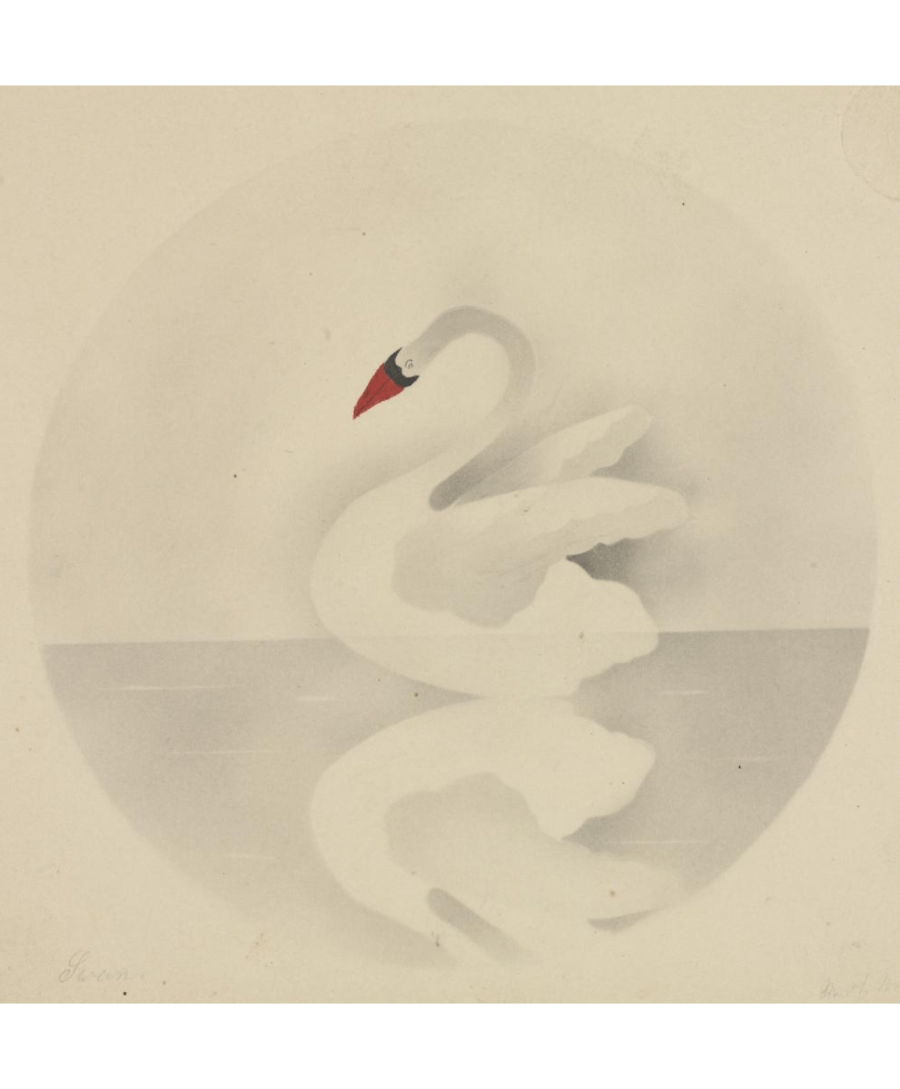
Mute Swan
By Fleda Brown
Featured Art: Swan by Mary Altha Nims
1
I am full of irritation this morning
which makes folding the fitted sheet
a disaster, wrinkles smashed inside.
Down at the dock, the swan hissed
at me and I thought, good for you,
swan, what business do we have
in your life, anyway, making up myths
in which you rape, or die?
Beautiful things often hiss if you get
too close. Or if you try to neaten them up
like clothes. A swan’s neck is tough
enough to twist you into knots.
Beauty, I don’t know how to feed it
without getting bitten.
2
Swan’s wings are heavy enough to kill you.
Eleven swans at once have traveled our lake
in perfect synchrony in the boat wakes,
their heads so far from the wild bucking,
they seem to have forgotten their bodies.
Terrible flowerings, they are going
somewhere else, to do what they do.
3
A male swan is a cob, the female a pen.
Who thought those up? They make a kind
of sense, though, the same kind of sense
that turns a swan’s neck plus its reflection
into an ice-hook.
4
If a challenger comes too near the nest
the cob climbs on him and shoves
his head down until he drowns. Not shoves.
He rests his beak quietly, relentlessly
on the neck as if it were the challenger’s
decision to bow under, and he were
helping him stay there. His big body
covers the other, except for one wingtip.
There’s a leisurely quality, like love.
When swans mate, their heads and necks
form a perfect valentine. Or, they intertwine
necks. Last night I wanted to watch
the movie unencumbered by your hand
on my breast. I was touchy. You were all
winding; I, all hiss.
Read More

Leather Coat
By Maxine Scates
Featured Art: Star Flower by Mary Altha Nims
“It’s only a matter of time before eternity,”
reads a sign in front of a church, turning the day
epigrammatic. But rather than think of the time I have left,
I think about all that goes wrong. For instance,
how did that cow, an Angus, red tag in its ear, die
by the side of the road? Did someone shoot it
because it stood as still as the time I’ve already spent
does not? Its coat was still shining, sleek as that coat
I’d only dreamed of buying all those years ago
until a boy asked me out on a date and I finally
had somewhere to go. I’d already saved the money,
and did not consider whether or not such a coat
was too hot for L.A. I thought instead of the stars
I ushered to their courtside seats in my hip-length toga
at the Fabulous Forum, the stars who followed the ass
I’d only gradually understood I’d been hired for,
the stars who wore leather coats, shiny and supple
as their skin when they stepped from the lengthening dusk
of fall days like the gods they were without ever
breaking a sweat. So on my day off I opened the door
to Discount Leathers, which smelled of barnyards
and fields I had never seen though now I think
of that smell as more like the roadside of lingering death
where I hope the cow’s carcass has mercifully
been picked clean by vultures leaving nothing behind
but bones and a dull hide. I picked my coat
quickly, laid my cash on the counter and got out, but
not before I saw the smirk on the salesman’s face,
not before he saw how I believed that cloaked
in my coat my skin would be soft, my hair glossy,
saw how I knew nothing about anything, all of it
a mystery in whose maze I was certain I wandered
alone. I don’t remember the boy or how the date went.
The coat was too hot. It was heavy and felt like the hide
that it was, stiff and unyielding. I took it to the cleaners
up by Sears Liquors and whatever they did turned it
whitish, marbled as a slab of meat. I stood at the counter
and paid for it and never asked what had gone wrong.
Read More

The Devil’s Best Friend
By Vincent Poturica
Featured Art: View of the City and London Bridge
About nine or ten years ago when I was not yet twenty, my friend Carlos asked me if he should sell his soul to the Devil’s best friend in exchange for a better world—I am not kidding, son. I told Carlos that selling his soul sounded a little hardcore, even for him, and that he should probably meditate on the potential consequences for at least a week. I also suggested that he contemplate his motives, i.e. whether or not he was really doing it for a good cause—though I confessed that I distrusted anyone who thought they knew what was best—or because he felt desperate regarding the recent death of our dear friend Ivan. I then told him—and he agreed—that he also probably needed to consider whether the Devil’s best friend was the best person or demon to sell his soul to, whether the Devil’s best friend was even certified to buy his soul—I admitted that I had never heard of someone selling their soul to the Devil’s best friend, but I was, of course, ignorant of many things. I then questioned the extreme subjectivity of better world, encouraging Carlos to make sure to specify as much as possible the criteria for what made this world better, for instance its natural resources, its climate, its historical record of oppression, among other factors, before he signed any contracts with his blood or whatever you did these days to officially seal transactions involving that most precious and contested conception of the self.
Read More
Not Holding the Gun
Selected as winner of the 2015 New Ohio Review Poetry Contest by Robert Pinsky
By Keith Kopka
Featured Art: Spring Flowers by Claude Monet
Knowledge of crime is a crime
even if one is not committed
by participation. At this cookout,
in a parallel universe, a version
of me lifts the gun, considers
its weight a handful of peanuts.
Another variant lets off a shot
into Godless sky, a traditional
celebration of manhood, in
the dimension of Texas oil barons.
I have a self who understands
breech-bolt action, another
who can separate grip cap
and butt stock, put them back
blindfolded, turn shotgun into
sawed off. In our current rotation
of speed and light, his pump
action is between us on the table.
The cookout has been great,
and I’m glad his sister, my date,
invited me. His mother is grilling
cow tongue. The whole gang’s
here to celebrate Marshmallow’s
release after three years in prison,
he’s at the grill asking for a fourth
helping. The word Rascal carved
in his chest like a pacemaker scar.
In the universe of wooden nickels,
I am best friends with this blunt
instrument. Of course, this isn’t
the universe where we live. My date’s
brother is asking if I’m interested
in a job, simple robbery, I get a part
of the product, but he needs me
because I’m white, because it won’t
get back to his gang, or the black
gangs, if a white man robs a white
man of some drugs. I’ve noticed
I’m the only guy at the cookout
wearing a shirt. Her brother
has a tattoo of two devils balanced
on the top of a mountain range.
It covers his whole stomach.
He tells me if I shoot the guy,
when I rob him, it’s okay, but if I kill
there’s nothing in this world
he can do to help me. Marshmallow
settles himself in a deck chair,
eyes closed, the meat on the grill
smells like warm wood. Hungry
is the only word I can think of.
Read More
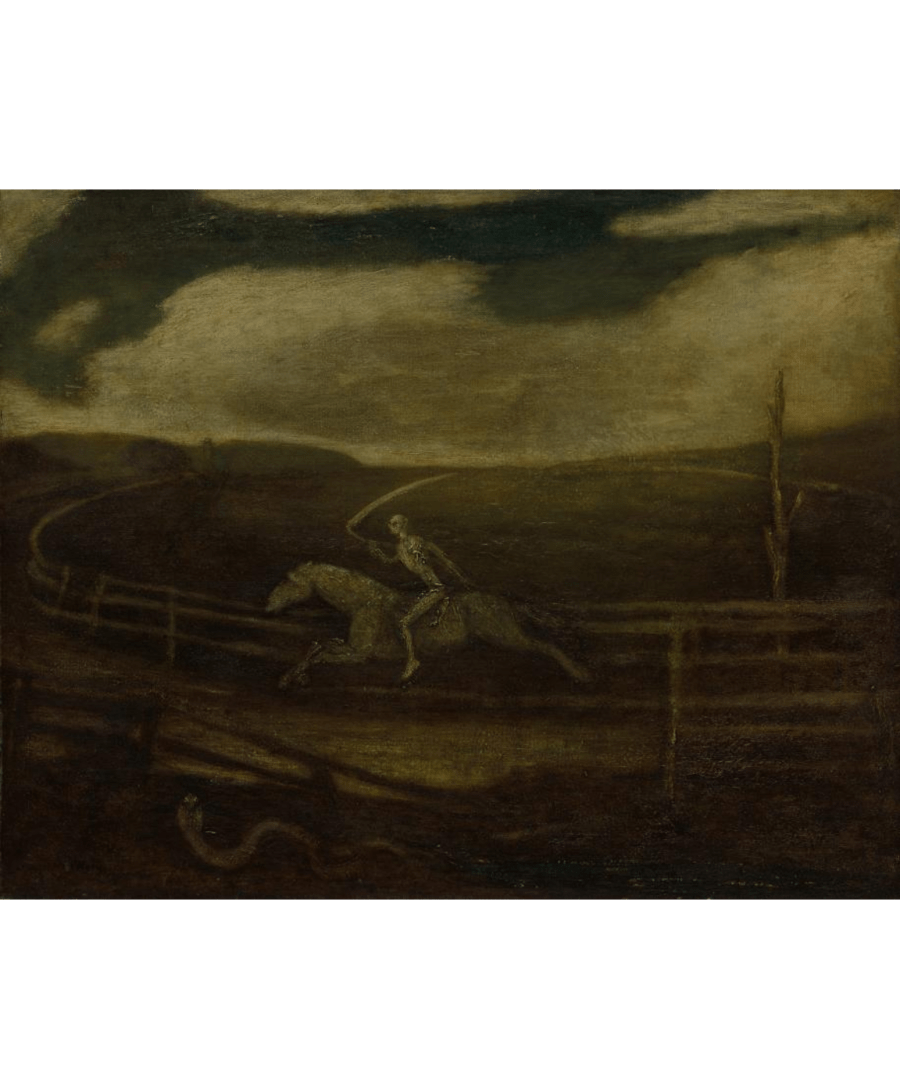
You, Strung
By Keith Kopka
Selected as winner of the 2015 New Ohio Review Poetry Contest by Robert Pinsky
Featured Art: The Race Track (Death on a Pale Horse) by Albert Pinkham Ryder
Young John Wayne leaps, without effort,
onto the back of a Palomino, and I know
he’ll catch the leader of the Taylor Gang
for what he’s done to his woman. He’ll swing
for this one. Wayne is ruthless, but it’s hard
to forget him cut open for cancer research,
the forty pounds of meat wadding through
his colon like a saddle strap. You and Wayne
have a lot in common: doctor’s hands
searched the mineshaft of your stomach,
catalogued what they took, then fastened
you with a wandering stitch. Still, nothing
extracted from anyone can explain why
the body takes revenge on the body.
***
Hanging is the ninth most popular
suicide method behind gunshot to chest;
it has an almost seventy-eight percent
success rate, and takes seven minutes.
In the west, thousands gathered
to watch hanging judges size bight
and neck, and after the bags dropped
some took pieces of the scaffold or rope
as keepsakes. You hung, too.
I still have the pair of shoes you loaned
me in gym class on a nail hook
in the back of my closet.

Change in Hat or Glove Size
By Darrell Spencer
Featured Art: Twilight in the Wilderness by Frederic Edwin Church
Our joke was either Molly sells a kidney—under the radar, off the books, $40,000 cash up front in England we discovered online, no questions asked, wink-wink, and also, I came to this understanding in my bones, not really all that funny as an option—or reality was we hock our gold.
We hocked it.
Okay, Molly did. Her gold. Every last effing piece of it Molly’s. Earrings. Necklaces, long and dangly and three-tiered, one of them leaf-like, all the chains intertwined and hard to separate. You know how they get twisted up in their boxes like they have a secret life. None of the jewelry rolled or washed gold. Molly did her online research at the library. Brooches, one an open hand, palm out, standing for generosity and giving, one a butterfly whose catch was missing. It had been her mother’s. There was a heart Molly liked to wear on her sleeve. Only one ring. Her grandfather’s on her father’s side. It had a pair of serpents circling an in-set ruby. Brewster was his name, and he had been an M.D. The kind of G.P. parents named their newborns after. The man part of a long line of doctors stretching back to the Civil War. Molly had photos back home in Ohio. The old-timers a bunch of bearded hacksaws, grim butchers.
New Regs
By James Lineberger
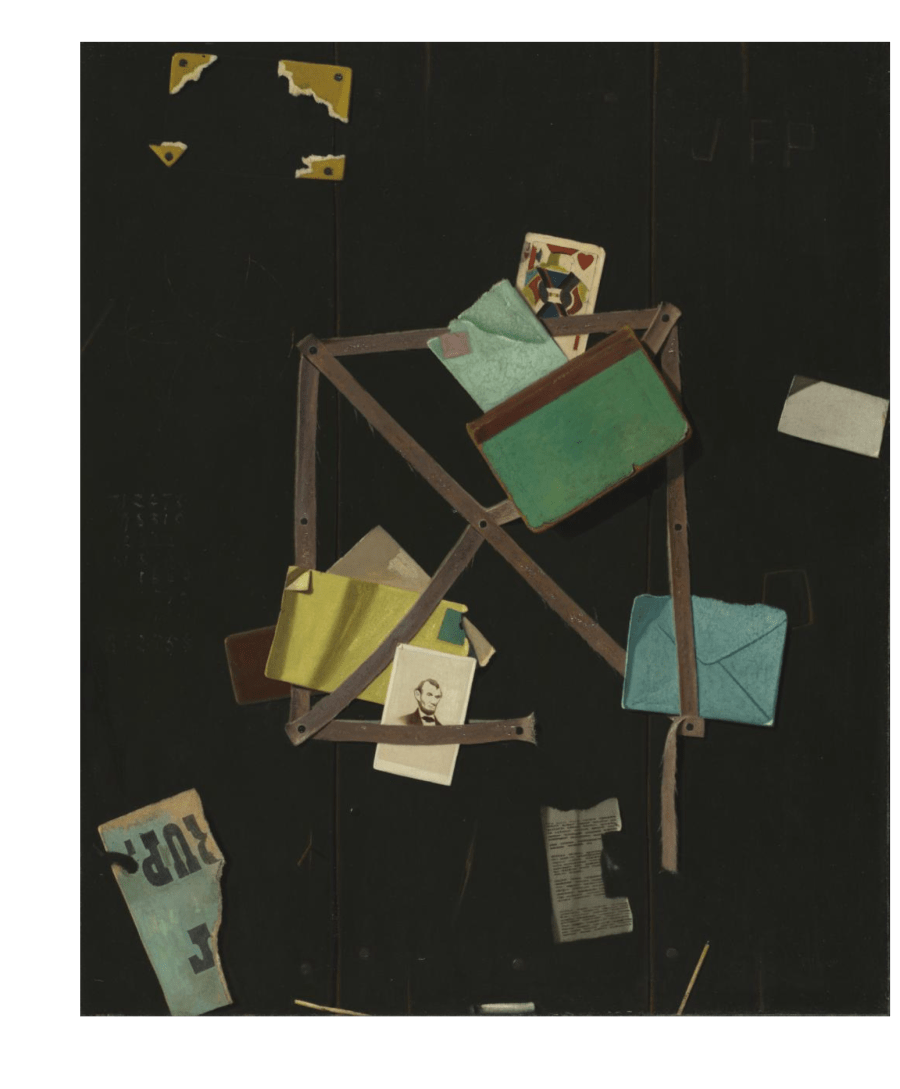
Featured Art: Card Rack with a Jack of Hearts by Jack F. Peto
I’d never seen her before that day when
she came knocking on the door and I thought at first
I must owe postage on the package in her hand
but no, she said, this was an official visit to advise me
that unless I stopped parking the Malibu in our circular drive,
I would have to mount a new mailbox out on the street
rather than the one by the door that we’ve been using since
the house was built back in the Fifties.
“Say what?” I said,
“excuse me lady but that is my drive not yours.”
But she was not to be dissuaded,
advising me that new regs from the Postmaster General
would not permit her to put her Jeep in reverse
and turn around in the drive,
and she only shook her head no when I said,
“Look, okay, if we mounted it out there on this dead-end street
you would still have to back up
when you get to my neighbor’s house next door
because hers is on the front porch too same as this one
and you have to pull in her driveway to get there, and tell me
how you’re going to get out, and besides,
the reason we park the car out front here is because
my wife broke her hip and had to have screws put in it
and she’s still not too certain on her feet, not to mention
she’s got Alzheimer’s, unless you’ve got regs about that too
but the regular carrier never told us anything like this
and he doesn’t seem to mind backing up at all.”
“Well, sir,” she said, “that is him, this is me,
besides which where is your handicap placard?”
and walked away even as I was saying
“Just you wait lady, we’ll see about this.”

The Villanos
By Z.Z. Boone
Featured Art: Vase of Flowers by Odilon Redon
Nobody was really surprised when Rosemary Villano turned up pregnant. It was like my dad said at dinner the night Bernadette Fischer, a receptionist at Staten Island Physician Practice, walked across the street and dropped the news.
“The girl had it coming,” he said.
This was in August 1995, when Rosemary was eighteen. She was my buddy Chegg’s sister, and had quit high school in January in order to work full-time at Frosty’s Italian Ice Creamery in the mall. Some genius had stuck her in this short, skin-tight beige uniform, and it seemed the area’s male populace—my dad included—had all of a sudden developed this insatiable craving for spumoni.
Rosemary had been dating this oversized pinhead named Eddie Dowd ever since her freshman year, another dropout who thought nothing of punching a kid like me in the stomach, or shoplifting liquid Tylenol from CVS, or talking about Rosemary with his fellow goons and saying stuff like, “This girl could suck the bark off a maple tree.” He drove around in a white van that had an amateurish painting of Daffy Duck saluting the American flag painted on the side, under which the words, “Where the Women At?” were printed.
Read More
Tag Sale
By Scott Brennan
Featured Art: The Rose Cloud by Henri-Edmond Cross
A Barbie with gum in her hair, a Lite-Brite that may or may not turn on,
and Monopoly played once or twice then stowed, the Chance cards
missing, the Scottie dog lost, the dice gone. Here, the Boggle bubble,
cracked. In a milk crate beside the games, we have the tools: a hacksaw,
a cordless Black and Decker drill, a Stanley hammer, a rat-tail file,
a Phillips screwdriver. Here’s a Schwinn bicycle with dry-rot tires, and,
Sometimes It Snows In Florida
By Michael Cooper
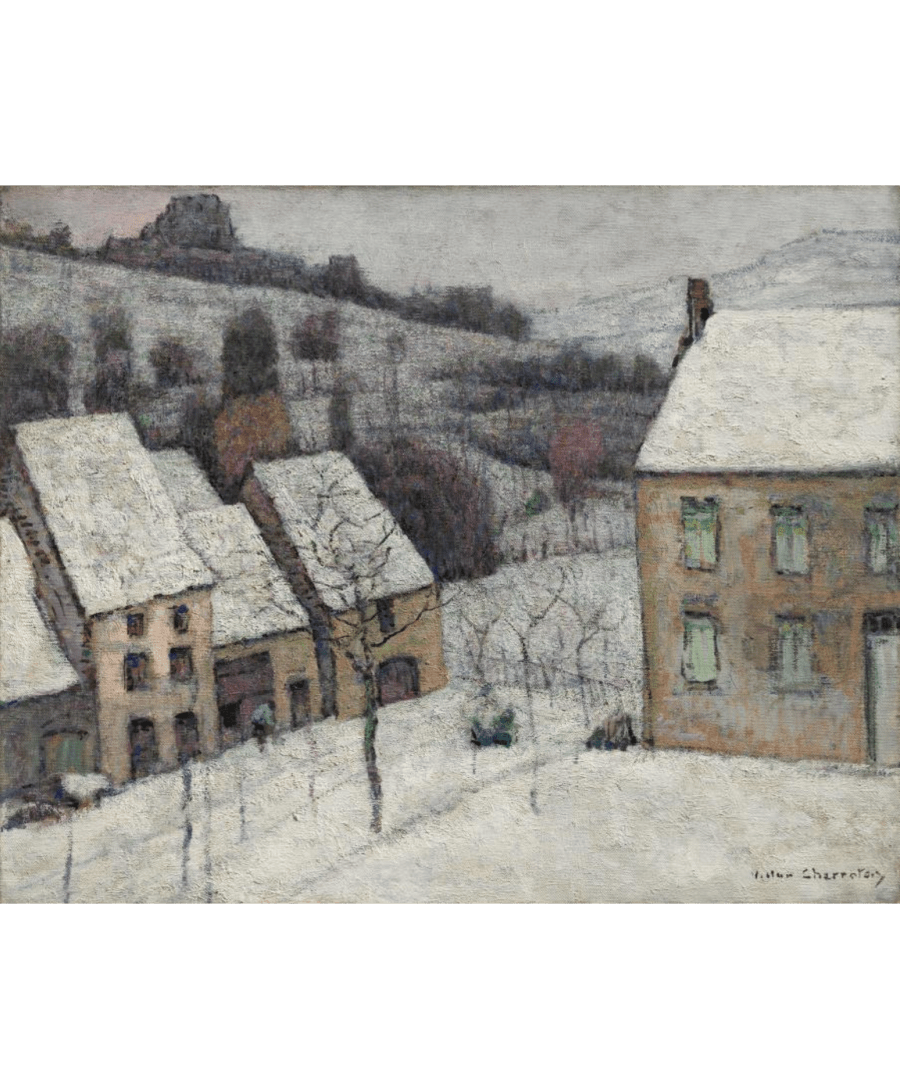
Featured Art: Murol in the Snow by Victor Charreton
The new girl from Vermont said that a woman lived in her shed. The new girl from Vermont brought in a pair of boots to prove it. The boots looked ancient, green suede in a previous incarnation, full suede probably before any of the children in Ms. Gwynn’s class had been born. Now the boots were gray and stiff with duct tape layered up to the edges, leaving only the mossy-looking tips exposed. Terry Wilkins, whom the other children called Terry the Terrible, said it looked as though Sally, the new girl from Vermont, was holding a pair of elf shoes from Middle-earth. The entire class erupted in laughter. Before the show-and-tell session could regress entirely, Ms. Gwynn told the children to quiet down. She told them that they should respect Sally and her story.
The last of the laughter subsided and Sally continued speaking, the shoes nestled in a forearm like pets.
“My father keeps a woman in our shed and these are her shoes.”
Against Silence
By Andrea Hollander
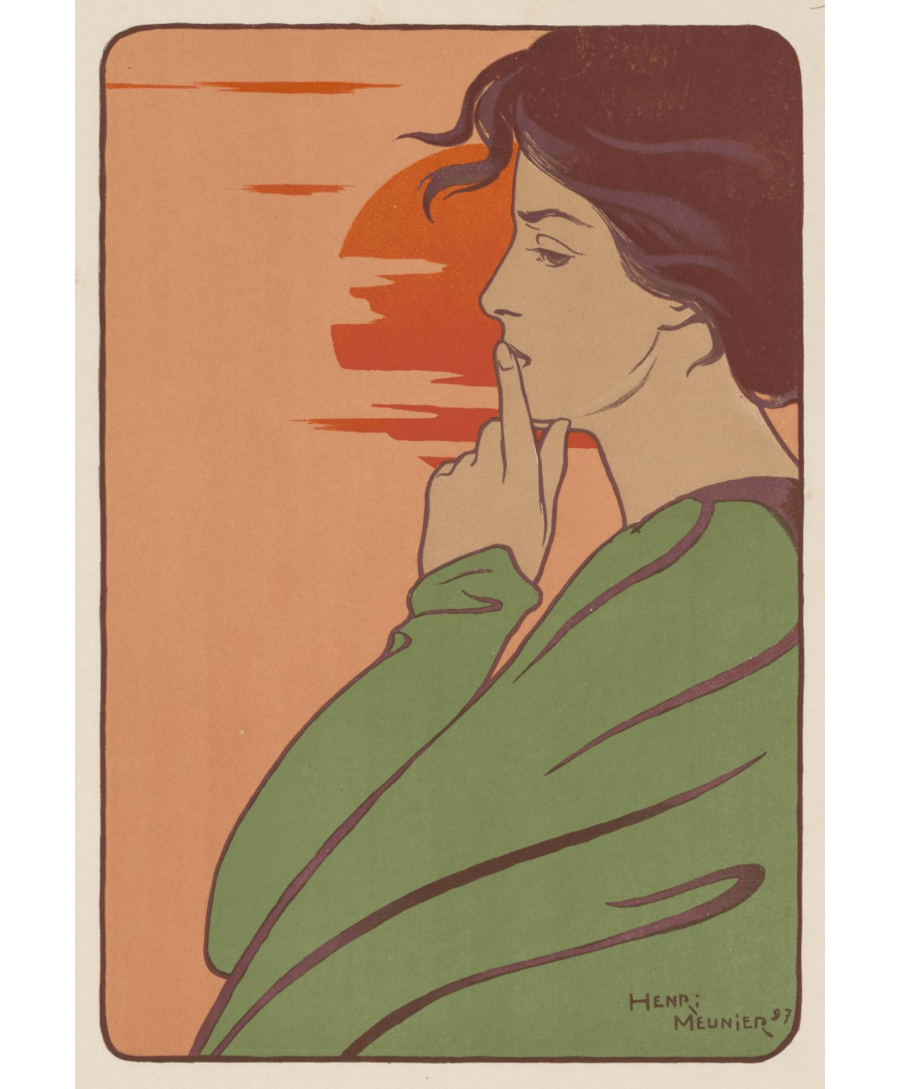
Featured Art: L’Heure du silence by Henri Georges J. I. Meunier
After I confessed, all I’d hear
was the scratch of my father’s ballpoint
against his prescription pad
as I stood before him at his office desk
on the first floor of our house. Yes,
I’d say, I did it, I left the mower out
all night, forgot
to turn the sprinkler off, lied
about the party,
the pack of cigarettes,
the exact hour I got home.
His hours or sometimes days
of silence entered our house
like an unwelcome guest,
an intruder we agreed
to treat with kindness,
each of us saying Sit here
when we didn’t want him
to sit anywhere.
After I apologized and promised
never to do it again, whatever it was,
after I made his coffee
in the morning, served it
with two Lorna Doones on the saucer
beside the china cup, sometimes
he would thank me.
But even then I didn’t know
if it would take one more
silent dinner or two
before I’d hear forgiveness
in his voice, that other guest
who arrived unpredictably
while I wept myself to sleep,
that guest whose safe return
I prayed for, the one
my mother prayed for, too,
she told me later, that guest
she thought she’d married
in the first place.
Read More
My Mother Who Told Me
By Martha Silano
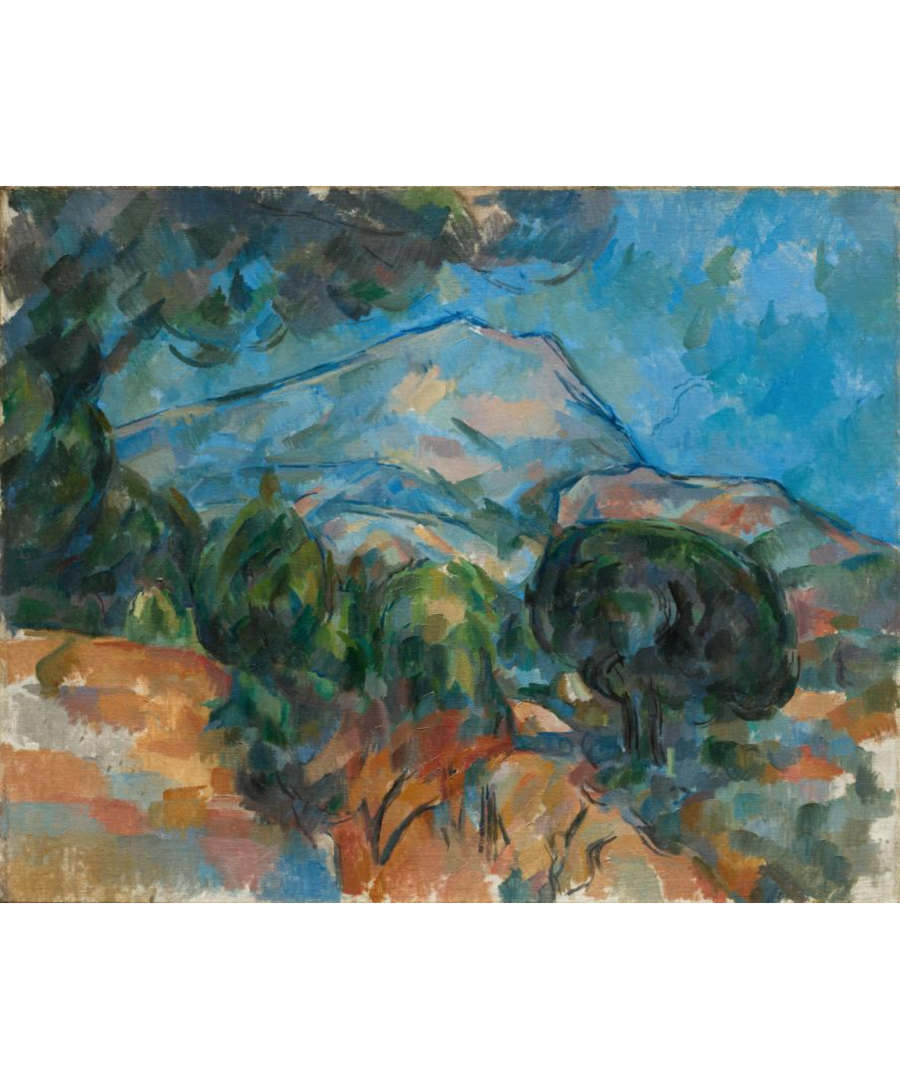
Featured Art: Mount Sainte-Victoire by Paul Cézanne
the Bible’s a Mount Everest of metaphor—
the seventh day more likely the seven
trillionth, the Holy Spirit about as real
as Casper the Friendly Ghost. My mother
who never once definitively sang
in the tune of Judgment, the lexicon
of flames. My equivocating, not-sure-he’s
the-Savior mother, who calls with an urgent
message: Billy Graham’s 95th birthday special.
Mother of Peace, mother who sanctioned
my Sunday school exodus when my teacher
refused to define adultery, who rolled her eyes
at shiny offering plates, who yadda yadda’d
the Lord’s Prayer, mother too busy browsing
The Female Eunuch to read to us from the book
of Jonah, to reason a man could live three days
in the belly of a whale, mother lacking sufficient
conviction to share the story of the loaves and fishes,
inciting me to fall to my knees as I did one day in 1974,
the man on the screen having told me I must.
Read More
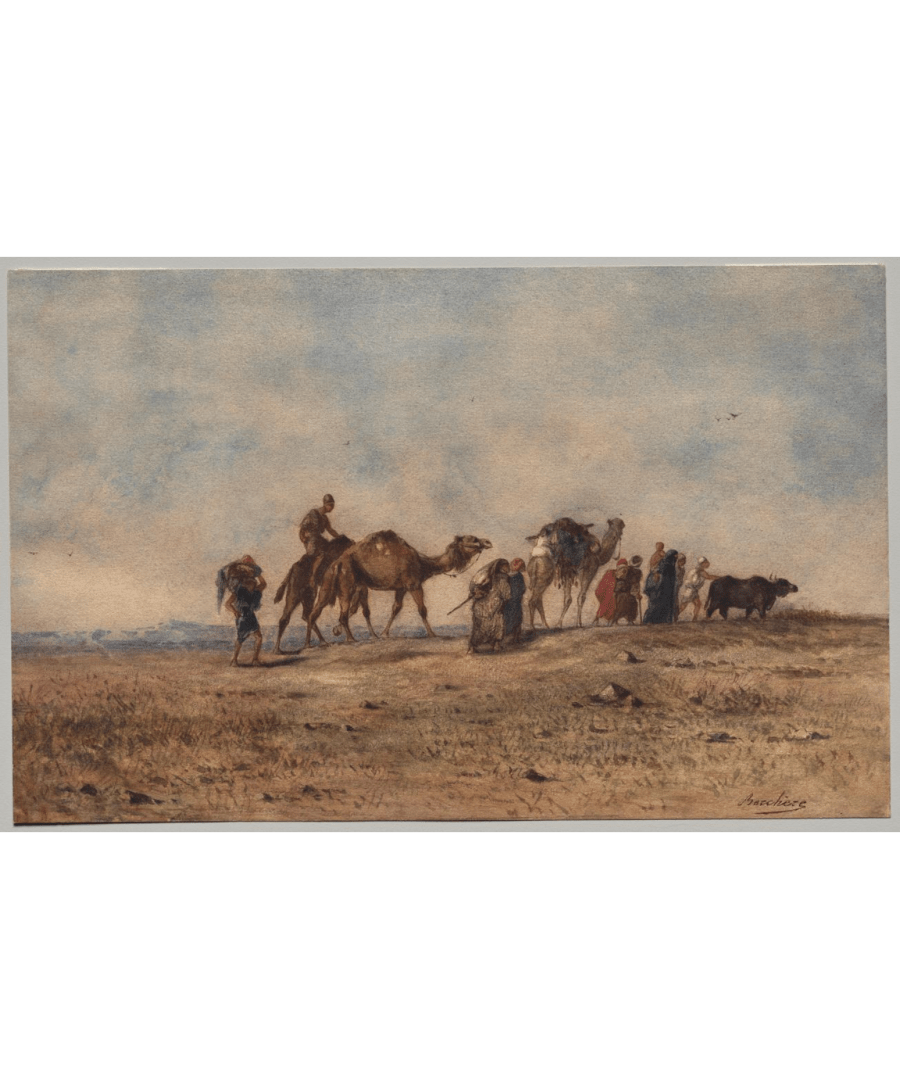
The First Straw
By Billy Collins
Featured Art: A Caravan in the Desert by Narcisse Berchère
The camel felt nothing
as it stood outside the encampment,
its nose lifted in the thin desert air.
And no one in the caravan
even noticed the straw,
or if they did, no mention was made of it
that evening as they sat in a circle
inside a colorful tent
talking quietly under the numerous stars.
Read More
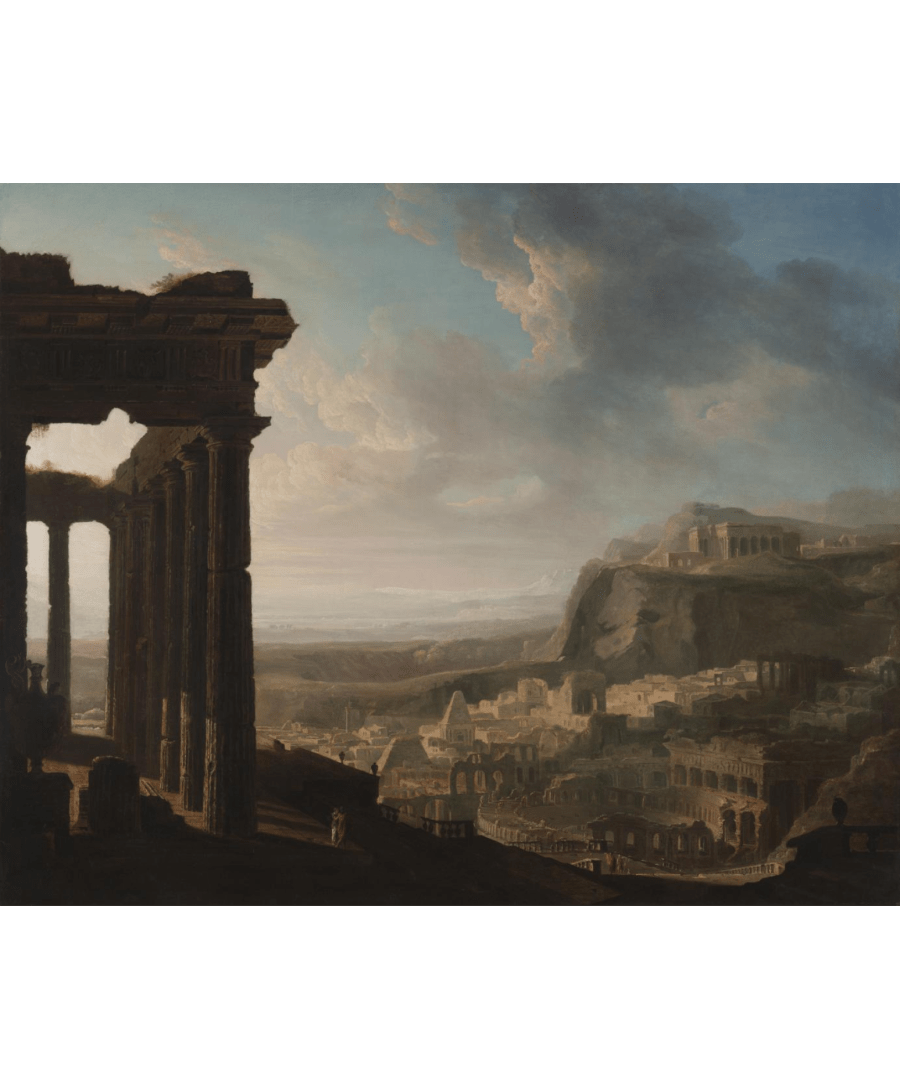
The Wall
By Christopher Kempf
Selected as runner-up for the 2015 New Ohio Review Poetry Contest by Robert Pinsky
Featured Art: Ruins of an Ancient City by John Martin
At mile twenty, roughly, the muscles
of the legs will collapse. Calves
twitching at random. The hamstrings’
sacked meat seizing. Scarry,
in The Body in Pain, explains
that language too, tasked
with conveying affliction, fails. That pain,
she argues, obliterates
discourse. I limped
past the drunk undergrads
of Boston College, my body’s stock-
pile of glycogen finally
exhausted. The wall, runners
call it. The bonk. The blowing
up. & after,
the body in pain will make
of its own fat fuel. I followed
the shimmering column of runners right
onto Boylston Street. In three
hours two
coinciding explosions would themselves
leave the city—except
for its sirens—speechless. The limes, Latin
for boundary line, signified
to ancient Romans the most remote
walls of the sacred Empire. Lie-
meez Arabicus for instance.
Limit.
The legions
Caesar trusted most though & therefore
dreaded, he kept
stationed on the Plain of Mars a mile only
west from the city walls. He watched
from the seventh hill the drilling
columns, consulted
each morning in the sky above him
the wheeling birds. A body,
he knew well, will
at sometime or other, hungry
for blood, break
in on itself & eat.
Read More

In a Year of Drought, I Drink Wine in a Los Angeles Hot Tub
By Christopher Kempf
Selected as runner-up in the 2015 New Ohio Review Poetry Contest by Robert Pinsky
Featured Art: Interior of the Pantheon, Rome by Giovanni Paolo Panini
So too on Troy’s final afternoon
the doomed children of the city sang. Such
was their joy, Virgil tells us, such
was their simple awestruck wonder
at the great beast even
the Achaeans, cramped, standing
on each other’s shoulders inside
the close wood, wept. What
he means, of course, is that inside
of the other’s suffering, one
can imagine always aspects
of a wild beauty refusing
negation. Or no. Not
that it exists, this
beauty, but that
it can be made so. Rome
Virgil says, springing
from Ilion’s ashes. Elsewhere
Orpheus. This
is not my home. Here
for the weekend only, I float
out into the hot tub’s bubbling, bleach-
& salt-scoured water. I watch
the few stars the city permits
still flicker on, the long
avenues of light below them—Cienaga
& Sunset, Ventura—burn
& spangle in the mountains’ dark bowl. The bottle
of La Marca prosecco sweats. To secure
for their desert metropolis water
enough to nourish all this, city
developers—circa
the arrival, reports suggest, of something

Before the Storm
By Christopher Kempf
Selected as runner-up for the 2015 New Ohio Review Poetry Contest by Robert Pinsky
Featured Art: Storm Clouds by John Henry Twachtman
Birds fled. The city fell
quiet. Across
the night the neighbors raised
their glasses & together, gathered
on our porches, forms
in a Japanese landscape, we stared
up. Or was it
Turner the sky resembled? How every
late seascape became
for him, given
to opium & with his father’s
death, depression, a tempest
of motion & color. Clouds
roiling. The oils
of his tiny boats bleeding
out. Only,
he knew, the frame’s gilt edge
splits beauty from terror. Airplanes,
that night, climbed
from the city & steeply, fleeing
too the ruinous
wall of rain, banked
south. Schools, a step
ahead of the looming cataclysm,
closed. Newscasters
leaned forward into the wind & we, raising
our own glasses to the neighbors
drank. Dark
& Stormies. Sazeracs. We imagined
the city flooding. Mudslides
on Foothill Parkway. Prospero, fallen
from his dukedom, does it
all for pleasure he says, every
shipwrecked Milanese aristocrat, every
extravagant clipper cast
up in the pitch & tumult his rough
magic fashioned. That,
we know, is mostly
what the groundlings came for. To fancy
a world they would never see struck
low, & so
close, sometimes, as to feel even
on their faces the great
king’s spit. There is,
in catastrophe, a satisfaction
exceeding sex, psychologists
believe. Before
the storm the city
bristled. Bells
tolled. Before
the last helicopters cleared
Saigon, operatives
burned in a rooftop incinerator
the state’s documents. We watched
from our porches the planes
shudder & mount. On Merritt
Lake, the pelicans, frenzied,
fed.
Read More

Sixteen
By Mary Angelino
Featured Art: Japanese Iris (Large Blue Iris) by John Edwards
His dad did coke. His mom died young.
We watched porn so I could learn—
he was my first. I didn’t know enough
to do things right like other girls.
We watched porn so I could learn
to say what I did and didn’t want,
to do things right like other girls.
He filmed me almost naked once.
To say what I did and didn’t want
was a trap, an argument that didn’t stop.
He filmed me almost naked once—
he lost the tape when we broke up.
A trap, an argument that didn’t stop:
he was my first, I didn’t know enough,
he lost the tape when we broke up,
his dad did coke, his mom died young.
Read More

Laura’s Brother
By Ryan Ruff Smith
Featured Art: The Blue Passion-flower by Robert John Thornton
Laura’s brother has been crashing on my couch. He’s an addict—a recovering one. The hardest part of recovering is to keep doing it. Laura’s brother recovers for a while, and then he stops recovering, and then he runs out of money and picks it back up again. As of today, he’s been recovering for two months straight, which is a big milestone. Laura’s really proud of him. I’m proud, too, but I’d never say it, because I’m afraid that it would sound condescending and weird. I’m afraid that I would say something like: I’m really proud of you, Jim, and I believe in you, and I wouldn’t be surprised at all if you kept this up and, one day, maybe you’ll even find your way off my couch.
Don’t get me wrong. I am proud of him. Because I know that it’s really hard for him not to slip up. I mean, it’s hard for one. For anyone who is struggling with addiction. Which is what he has. Which is hard.
I get that.
The thing is, there’s this smell. I would never say this to him, but my whole apartment smells a bit funky. Not because he’s an addict—a recovering addict— it’s just a person smell, but since he’s on my couch every night, and most of the day, it accumulates, and it’s not the most pleasant. He bathes and everything, maybe not as often as he could, and usually pretty late in the day, but it’s not like he’s trying to smell. He makes an effort, but I do wonder what kind of soap he uses. Here, I have mixed feelings, because I don’t necessarily want him using my soap—not that I’m stingy, if you come for the weekend, go nuts, use all the soap you want, it’s just that he’s been here for two months—but at the same time, I’m afraid that he’s not using any soap at all, in which case, maybe I’d rather have him use my stuff than have this stench in my apartment all the time.
Read More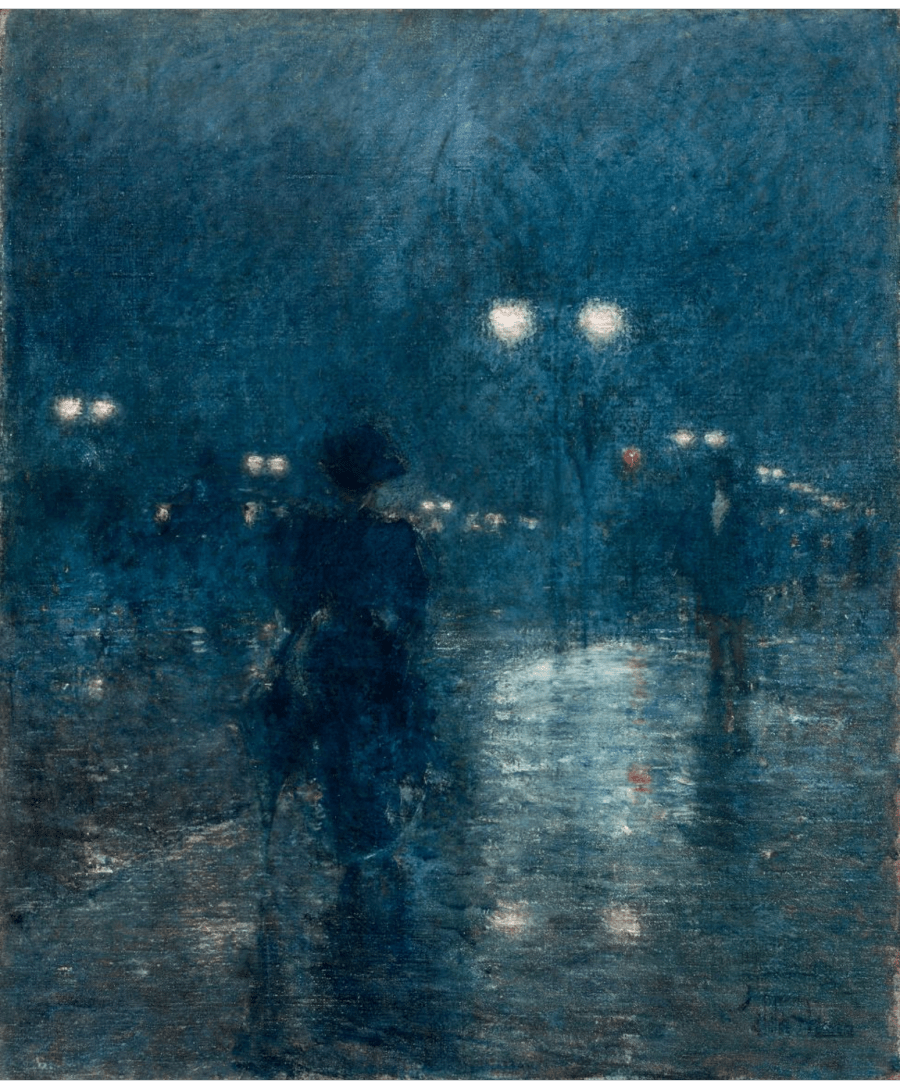
Blood Buzz, AZ
By Shane Lake
Featured Art: Fifth Avenue Nocturne by Childe Hassam
A Red Cross bus gets hit by a truck
and lands on its side, the driver unconscious.
Blood spills from the broken glass,
coats the pavement in bubbling rust.
It is 1977 and the theme for summer is .44 caliber.
It is one hundred fifteen degrees.
A crowd forms in the contagious heat,
pulls back as the red pool expands.
I watch from the ailing shade of a palm tree,
the sweet taste of blood in the air, on my tongue.
Someone tries to rescue the driver
but the mix is slippery. He lands on his back.
His impact speckles the closest few,
who scream and cover their mouths with their hands.
Sirens sound, and soon the fire trucks are here,
hosing donations into the street drain.
Secretly, we all enjoy this,
being here at the scene of the crash
where news vans make stars of us all.
We want our trauma to trump everyone else’s.
We want to be able to say:
“You weren’t there. You wouldn’t understand.”

Manhandled
By Tamie Parker Song
Featured Art: Flowers of a Hundred Worlds (Momoyogusa): Ivy (Tsuta) by Kamisaka Sekka 神坂 雪佳
Our house is a toilet full of shit and fistfuls of toilet paper, long past flushing. It is the bones of kitchen cups smashed with cigarettes. It is the way we don’t turn on the lights anymore. The way we do not light the fire. It is dead flies in the windows; a pantry with food cans several years old. The house used to be Mom, music on the record player; hair cuts in the kitchen, blueberry pancakes for breakfast, light. Now it is cupboards we keep opening, hoping. Then fishing grabs for us, pulls us under, and we stop even opening the cupboards.
We are commercial salmon fishermen on an island in Alaska seventy miles by plane or boat from the nearest town. Only our family lives on this island, and the crew who works for us, and even though everyone is watching me no one is watching out for me. I have been fishing my whole life, the only girl on an all-male crew. I am fifteen.
Dad eats tubs of frosting and bowls of raw cake batter. He wears the same clothes for six weeks at a time and does not bathe. Mom has stopped coming to the island, and Dad can’t or won’t cook, so I start eating with the crew. DeWitt eats with us sometimes, and sometimes with Dad. DeWitt fishes almost exclusively with Dad, while I trade around and fish with different crew. I try not to think about leaving DeWitt at home. He is only thirteen. But something in my body is trying to pull itself away.
Read More New Ohio Review