On Lubitsch’s “Angel”
By Lloyd Schwartz
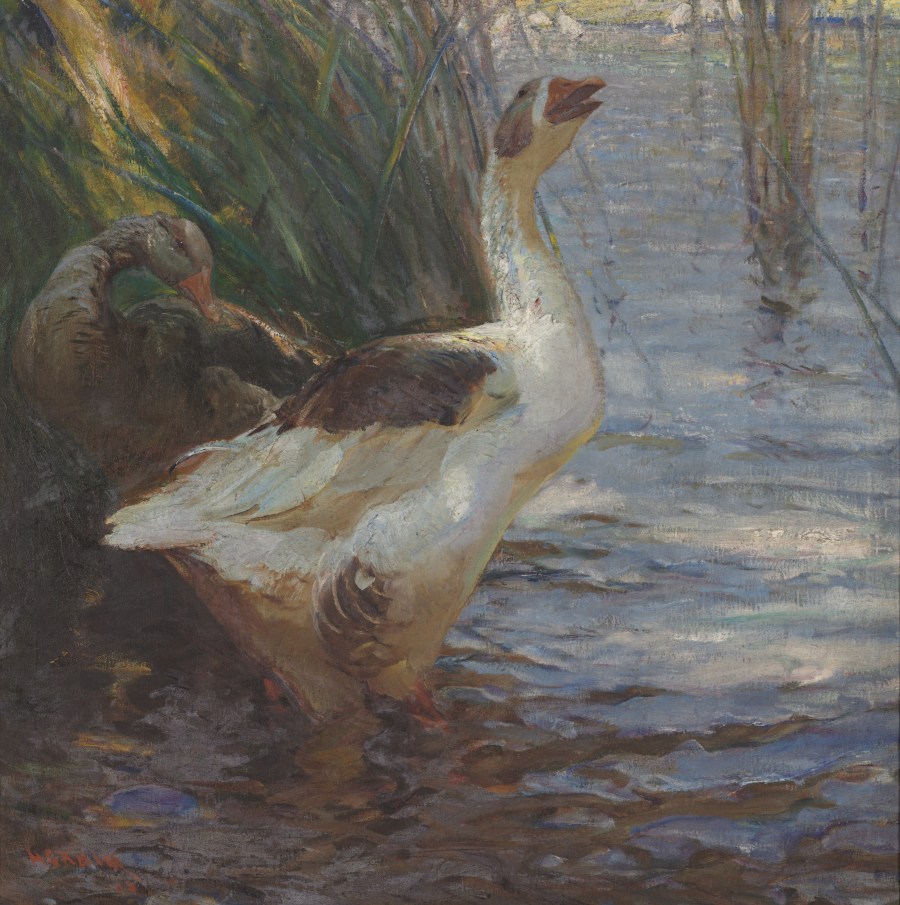
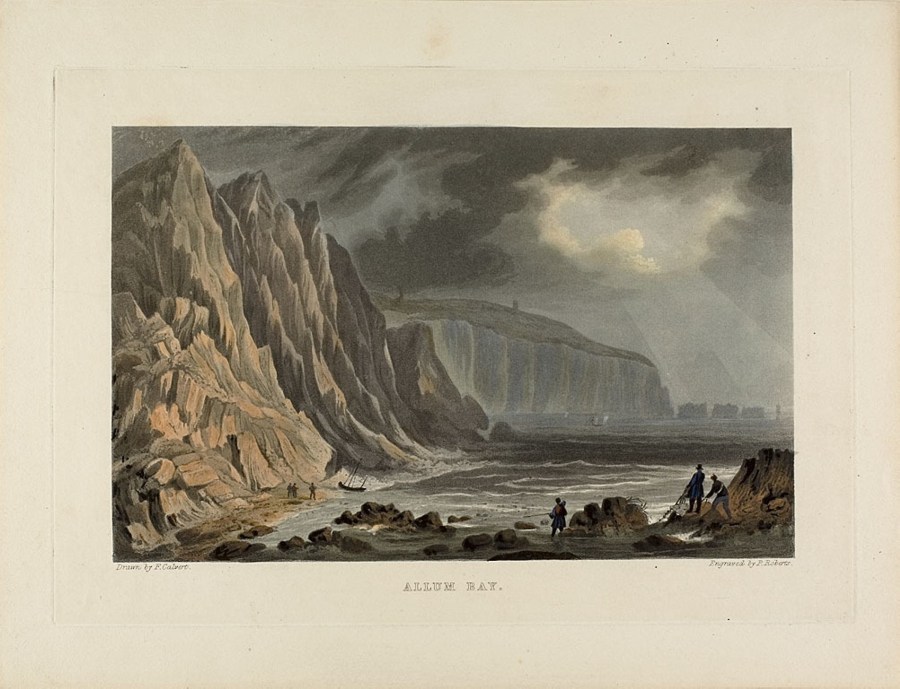
Feature image: P. Roberts. Allum Bay, c. 1794. The Art Institute of Chicago.
It’s probably hard to remember, but there once was a time when Hollywood took for granted from its audience a certain level of cultural knowledge. I mean high culture. Art. Literature. Classical music. My favorite example of this assumption occurs in a 1937 romantic comedy-drama called Angel, a generally overlooked film by the great German-born director Ernst Lubitsch, still admired for his inimitable “touch” in such stylish masterpieces as The Merry Widow, Trouble in Paradise, Ninotchka (“Garbo laughs!”), and The Shop Around the Corner. His earlier Lady Windermere’s Fan, based on Oscar Wilde’s play but without any of Wilde’s dialogue (just as my nominee for the greatest Shakespeare movie, Kurosawa’s Throne of Blood, hasn’t a line of Macbeth), might be the most sophisticated silent film ever made.
In Angel, the glamorous heroine, played by Marlene Dietrich, perfectly cast, is married to a British diplomat (the touchingly stolid Herbert Marshall) who devotes more time to the League of Nations than to his wife. She loves him, but is frustrated by how much his desire to save the world from war has blinded him to his need to save their marriage. So she slips off to Paris to visit an old friend, a Grand Duchess (Laura Hope Crews—soon to be Gone with the Wind’s Aunt Pittypat) who runs a social (very social) club where people connect anonymously (there’s a delicate post-Production Code innuendo that Dietrich may have been an active member of this “private club” before her marriage). On this impulsive visit to Paris, she meets at the club Melvyn Douglas, who instantly falls for her. Hard. Since she refuses to give him her name, he calls her “Angel.” Their negotiation for their first rendezvous has some of the film’s most deliciously teasing double-entendres (screenplay by Samson Raphaelson). But Dietrich becomes frightened by the intensity of this fling and disappears, returning to London without even saying goodbye, leaving Douglas no way to reach her.
Read More