The Lyric Moment Lasts

By Dion O’Reilly

Featured Art by Levi McLain

Canadian smoke              vape-skunk
on public paths

a smokeless Rivian
driven by a man who didn’t want me

all the men and women who didn’t want me
and the one who does       our favorite bed       our over-washed sheets

I let them in

I let in the living              I let in the dead

the expanding ranks
of the mad with tin cups and tuneless guitars

the falsely proud
with their flags and concealed carry

my assassin mother       plumbers              pilots project managers
ex-presidents       thieves

I let in the fleshy              I let in the wasted

yes I let in the one who loves me              and the velvet night
lifts my bed       takes me

like a clipper ship
takes fine-cut tea

the oaks and eucalyptus bow to me like a queen

they regain their kingdoms       and the sins
of the eucalyptus are forgotten

monarchs guild their branches like magnificent cloth

the beetle-eaten oaks burst into green
the white clay broken in bogs and spray cans in landfills

lift like Jehovah’s Witnesses

even my assassin mother       deathless god              dies
and gives me reign

the necrophiliacs abandon their passions
the flag bearers and gunslingers are stunned

by the lies of Revelation

A.I. ceases its hallucinations
project managers leave their applications
totalitarians learn to follow

their breath

in a warm sea              fish tremble       leaderless
they move toward another world


Read More

Love Poem in The Unfortunate

By Danny Caine

There’s too much news
and not enough me.
I’m not sure if there’s
enough of you either.
It takes a million news
to buy a loaf of bread.
Wheelbarrows of news.
People line up for blocks
to withdraw their news
before it’s too late.
The run on news
has caused the industry
to consolidate further
and us too—there’s
really only two of us now.
As the plane lands
you slowly loosen
your grip on my
whitened fingers.
The attendant says
“I’d like to be the first
to welcome you to
Unprecedented Times.”
Somewhere a man
is buying a gun.
Somewhere a couple
is trying not to
think about it.
Somewhere a sign
says “Due to The
Unfortunate we are
deeply out of onions!”
I’d like to stop living
through history.
I’d love to know more
about how to love.
I have questions
for you. Four
questions. More.
You tell me to
pardon your dust.
Every day is demo day.
I’m sure there are
a million times you
could’ve given up
on me. But here you are.
Now help me with this
wheelbarrow, would ya?


Read More

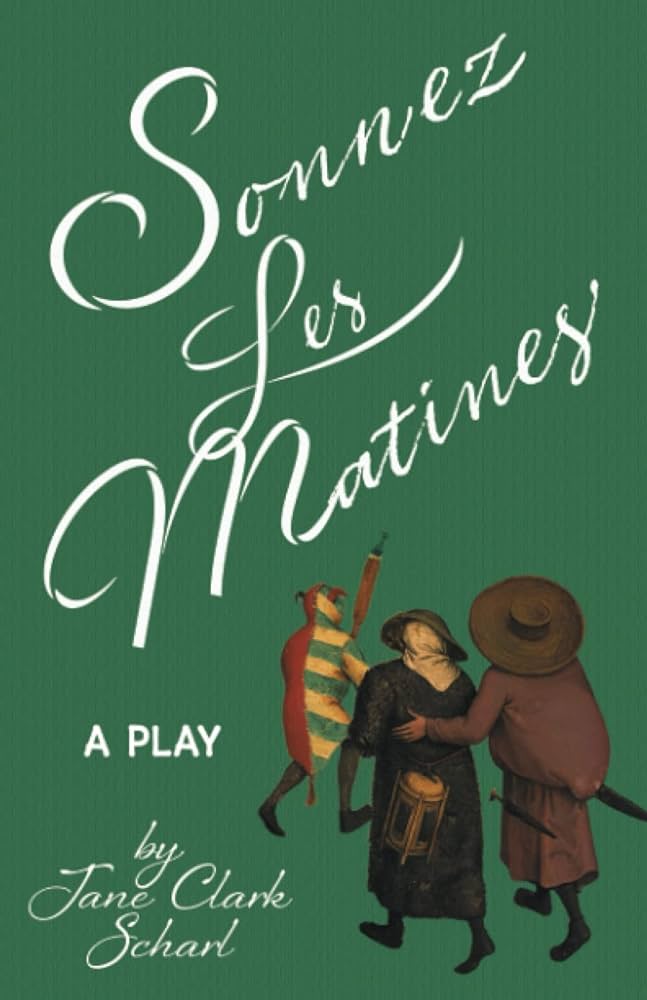
Review: Sonnez Les Matines by J. C. Scharl

By Betsy K. Brown

The greatest murder mysteries are often hilarious. Perhaps this is because, as investigator Porfiry Petrovich says in Crime and Punishment, “Human nature is a mirror, sir, the clearest mirror!” Raskolnikov, and other famous murderers in many stories, are not that different from ourselves. How should we respond to this devastating fact? Laughter may be the answer. 

Sonnez Les Matines by Jane Clark Scharl is many things—a verse play, a murder mystery, a philosophical dialogue—but it is also simply and deeply funny. A trio of famous former Parisians: François Rabelais, Jean Calvin, and Ignatius of Loyola, stumble upon a dead body during Mardi Gras, and spend the story arguing about who is guilty. In the play this is both an immediate question and a cosmic question, as the interlocutors explore everything from the weapon and evidence to the incarnation of Jesus and what happens when we die. Meanwhile, there is also ample banter, finger-pointing, and poop jokes. 

Read More

Vitality in Poetry, a Review of Ponds by J. C. Scharl

By Jonathan Geltner

I came that they may have life and have it abundantly. 

So says Jesus in the Gospel of John. It is a line that occurs to me often when I consider the influence of religious ideas—in this case, Christian—on a writer’s ability to engage with the fullness of life. That is a vague phrase, I realize: fullness of life. Perhaps it would be helpful to say what gets in the way of fullness of life.  

There are two major obstacles, in my view. One is material: the virtual world we have constructed and inhabit through screens is by its nature a thing set apart from real life. The more time a writer spends immersed in that world, the less she is able to observe, reflect upon, and move bodily through the real world, the given world of nature and human society as it is experienced face-to-face. The second obstacle is mental: the temptation to delude ourselves, to live in a fantasy of who we are, pretending to believe and feel what we think we ought to believe and feel or want to believe and feel in order to secure membership in a particular tribe. 

Read More

Review: Newly Not Eternal by George David Clark

By Michael Lavers

Newly Not Eternal, the second collection by George David Clark, is a book in which time has burned the dross away. The poems look small, but like Blake’s grain of sand each holds a world. The prologue poem, “Mosquito,” is a manifesto which, with its childlike music and theological contrariness, I think the author of “The Fly” would recognize:

                              God was only acting godly
                              when he strapped a dirty needle
                              to the fly
                              and taught it how to curtsy
                              on our knees and elbows

                              on our necks and earlobes
                              so politely that it hardly
                              stirs an eye.
                              God was hard but speaking softly
                              when He told us we should die.

It’s like Paradise Lost covered by Ariel, Shakespeare’s most musical character. Most of the poems have that spirit’s melodic drive, sitting somewhere between nursery-rhymes and spells.

Read More

Review: A Beautiful Persistence: Nancy Miller Gomez’s Inconsolable Objects

By Erin Redfern

In her essay “Voices from the air,” Adrienne Rich notes that a captivating poem is “an instrument for embodied experience.” Inconsolable Objects, Nancy Miller Gomez’s first full-length book, is chock-full of such instruments. The word “body” itself enters in the third line of the collection, and from that point serves as a primary interface between the poems’ various speakers and the vast territory of experience they are navigating.

Read More

Full-Throated Singing: A Review of Kari Gunter-Seymour’s Dirt Songs

By Bonnie Proudfoot

From the first line of the first poem of Kari Gunter-Seymour’s new poetry collection, Dirt Songs (Eastover Press 2024), we are presented with a poetic voice that sings with authority, perspective, and experience, also one that is grounded in place. “Where I’m from, girls learn / to conjure young . . .”  and with that, readers are enticed to discover more about both the poet and the place she came of age in. In Dirt Songs, dedicated to “All the invisible girls,” Gunter-Seymour writes against invisibility, conjuring identity through personal history, story, naming, heightened use of detail, and through humor, grief, and pride. “Our grandmother. . . wielded a scythe and hoe / good as any man. . .  drew us maps, where we came from.” These songs call attention to phrasing and language, to the rhythms of speech of Appalachian Southeastern Ohio, rich with imagery and music, a place where, “. . . [windshield] wipers slip-slap the beat / like two metal spoons against the thigh.” Speech patterns overflow into the making of poems. “I was a new mother,” Gunter-Seymour writes, “alone more than was fit.”  

Read More

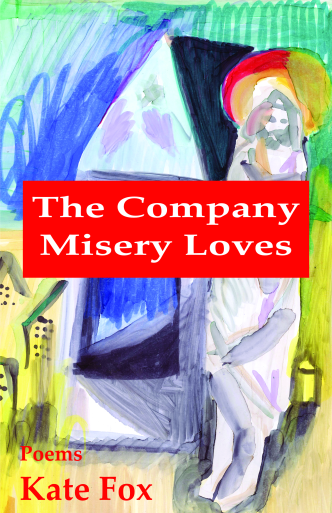
Insight and Echo: A Review of Kate Fox’s The Company Misery Loves

By Rose M. Smith

Within the first few lines of Kate Fox’s latest collection The Company Misery Loves (Sheila-Na-Gig 2024), we embark on a journey to consider the role of inevitability in shaping how we face or embrace life’s absolutes. In language that shimmers on the page, she becomes stage director, tour guide, host as we follow her lead over a marvelous succession of former landscapes.  We are invited in turn to believe and to suspend our former belief, to hear the author’s voice and the voices this author has shared so insightfully that one wonders when each poem’s speaker visited her bedside, pulled back the veil, guided her hand over the page.

Poems from the poet’s thoughts of home invite us with visceral, concrete images into each moment. Such is the craft at work in this collection that bids us to see “that oil mixed with rain / in a hubcap is beautiful, which it is / because you own it,” and long years later to walk the land under great emotional weight and behold “as the entry shawls itself / in brilliant leaves, and the mountain beside me / pulls the sun’s deep brim down over its eyes” as though even the land feels the loss of things past.

Just when you think you know what sort of work will be encountered throughout, Fox introduces us to beautifully dimensional voices such as Mary Shelley, Josephine Peary (wife of the admiral), and Kathleen Scott (widow of the Antarctic explorer), whose voice becomes a masterful device to illuminate us regarding Scott’s expedition and those of George Mallory. This present Kathleen Scott handles with alacrity having been mistaken for the wife of Ernest Shackleton as well as how she might have sculpted Mallory had she not found “Everest / holding fast its own.” This author threads much sound insight and fact into these historical poems without ever drifting out of poetic voice—there again, as with us at the beginning, empowering Scott with agency to recount or rewrite history as she pleases. And it pleases.

With misery in the title, yes, there is loss in this book—loss not shared for loss’ sake but because its inclusion is essential. The losses are here, but the art and beauty of this work is not diminished by what is inevitable for us all. These poems stare into the face of that inevitable and seem to say “this, too can be beautiful.” To repeat Jane Ann Fuller’s words, “This poetry is flawless.” Here is where I must confess exceptional bias. Having begun reading The Company Misery Loves, I was pleased to find this collection includes some of my favorite works by Kate Fox. Finally, I get to share my excitement at how deftly she also wraps biblical icons in humor and contemporary sensibility. Poems from Fox’s book The Lazarus Method retell age-old stories with brilliance. In our varied experiences, there are poems remembered because they were assigned or were the subject of debate. There are poems we witness in live readings that echo the poet’s voice inside us for days. Then there are poems that are remembered because they refuse to be forgotten. The Company Misery Loves draws us into the unforgettable like “human branches reaching armless / toward their maker.”


Read More

Winter Online Exclusive

The latest Winter Online Exclusive of New Ohio Review is now available. The cover art is “Diamond” by Reagan Settle.

This issue includes work from Cara Lynn Albert, Steph Del Rosso, Robert Long Foreman, Rosamund Healey, Caroline Koopford, Cyn Nooney, Daryl Ogden, J. Dominic Patacsil, Valli Jo Porter, Maya Afilalo, Mary Birnbaum, KT Ryan, Craig van Rooyen, Linda Bamber, Emily Blair, Joseph Capista, Wes Civilz, Joyce Schmid, Pichchenda Bao, and Michael Lavers.

We hope you enjoy our 2023 Winter Exclusive, which you can read below. This is an issue we hope will add some warmth to your winter reading.

-The Editors

Improvisation for Beginners

By Joseph J. Capista

Featured Art by Reagan Settle

Peanuts work for earplugs.
Motor oil’s dandy warpaint.
Hammer yonder socket screw.
Let, for birdsong, boulevard
suffice, its springtime
putsch of blathered whoosh.
Try disorganized religion.
Whereas one yellow, freshly
sharpened pencil expedites
the trach, deep blue in place
of black seldom works.
Socks in place of sanitary
tissue is a trick I learned
in proximity to a mosh pit.
For accolade try: While
the jury commends your
recent submission to our
sculpture exposition,
concerns persist regarding
the capacity of guano,
liverwurst, and gypsum
to withstand the realities
of summertime Chicago.
My mother pierced her ears
with a sharp object and ice,
that trick from way back in
the Pleistocene Epoch when
our ancestors substituted bona
fide desire for Neanderthals
which must have been a hoot.
For Perikles, try sprinkles.
For mope, try poem.
For readjust, just read.
For that hornet nest you’ve
tried all summer to locate
and found now in, yikes,
your front maple whose
leaves turned a very specific
color and then with little
fanfare fell immediately
to the gutter try your heart.
For love, try anything.


Read More

The Elko Butter Chase

By J. Dominic Patacsil

Lakey Sturgis took a palmful of margarine from the brown plastic tub between her feet and ran it over the cheekbones of her grandson’s face. She smeared the pale-yellow spread across the boy’s sloped forehead, deep into the wrinkles of his ears, working her way down the turkey skin of his throat to his bare chest, then beyond.

Just a little more, she said to Peep, who batted long, effeminate eyelashes back at her. Nuggets of the margarine stuck to them, and for a second, Lakey was reminded of nights long past when she lived in Greenpoint and Hans was still living. She looked into her grandson’s globby lashes and saw her twenty-year-old self going to bed without caring to wipe away the makeup she spent so long painting on for nights of swing dancing and manhattans at Truffani’s. That was before Hans’ job brought them to the desert, before their daughter was born. Now Lakey was sixty-six and dying, far from any place she called home.

Read More

Slow Fruit

By Robert Long Foreman

Featured Art by Reagan Settle

I sat across the desk from the hospital administrator.

On the desk, reflected in her glasses, I could see a photo of her husband and kids.

Having the photo there must have kept her from feeling lonely at work. Or it fortified her in trying moments. Or both of those things.

Pens were on the desk, and a phone with many extensions.

The hospital administrator must have been in her fifties. She wore her hair short, but we’re not talking Terry Gross short. More like Meg Ryan in the nineties—only the administrator didn’t look like Meg Ryan. She didn’t look like anyone. She was wholly her own person, and I respected that.

Read More

Note on Human Who Has Been Insulted

By Wes Civilz

Human under observation is suffering from an “insult”—
a verbal exchange with another human
that has inserted a nugget of dark information
firmly into one of the sub-surface personality cores.

Interestingly, the insult has, on the quantum level, a shape
related fractally to the central pieces used in the game
called “darts.” Pointy and missile-shaped. Capable
of lodging deeply, if aimed with skill.

Upon pointy end of insult it should be noted
there are “barbs,” similar to those on hooks
used for fishing (these enable ease
of entry and difficulty of removal).

After several observations, I note that
the most effective insults are those that are true.
False claims are much more easily processed
by the ego’s immune system, and dumped from memory.

Specifically, this human was told
he is “dumb.”
Note that this insult referred to
his lack of intelligence

rather than its older meaning-layer
of non-speaking (although it could be interesting
to at some point analyze the connection,
if any, between stupidity and muteness).

This human suffers internally
because he was assigned the word dumb
and the word matched lock-and-key
with the fact that he is indeed dumb.

Upon observing him again
some days later, he has failed to discover
the hidden intelligence boost
contained within the quantum dart of the insult.

I will spend no more time
observing this specimen;
he is sad,
entropic.


Read More

Flying Objects

By Daryl Ogden

My mother and I were driving home at dusk on a two-lane country highway following one of our visits to the fire station where her newish boyfriend was posted. It was Memorial Day, a couple of months ahead of my eleventh birthday. A pair of vehicles were bearing down on us, their headlights filling up the rear and side view mirrors of our Toyota. The trailing drivers had already twice veered over the center line and gunned their engines, with ambitions of sling-shotting past. My mother responded by pressing hard on the accelerator, threatening a head on collision from traffic traveling in the opposite lane. Even though an 18-wheeler was now headed our direction a few hundred yards in the distance, both trailing vehicles tried again to pass. My mother floored it, forcing the drivers back into our lane or risk being entombed within thousand-pound accordions.

“They’ll have to wait until I’m ready for them to drive on by, Billy.”

On the road, my mother didn’t take any crap.

Read More

Stick Season

By Rosamund Healey

Featured Art by Reagan Settle

Ruth Ann doesn’t drive that way anymore. She doesn’t have a car but if she did, she wouldn’t. She has no reason to go to that side of the hill anyway. All that’s left of the Alstead farm is a small sliver of land on the dark side of the hill, just big enough for Ruth Ann’s double-wide trailer. Her daddy’s old place—the parts bought by the flatlanders—sits on the sun side of the hill, empty aside from ski season or leaf-peeping. Ruth Ann heard they razed the old farmhouse and put up a new lodge, all logs, meant to look old, yet nothing like what folks used to build. She heard someone else taps their sap lines and runs their sugar house too, but they still put their name on the syrup. She would not drive to that side of the hill for a thousand dollars. Well. Hundred.

“Time, lovey.” Haley doesn’t want to go to school. She pouts, sticky fingers on the cheap screen, knowing she can test Ruth Ann. Ruth Ann reaches out and tries to paw it off the girl, her arms jiggling as she stretches, yellowed nails like sloth claws. Haley jumps up quick and they play their game, the two of them moving in the trailer like slow-motion ninjas, knowing every corner by heart, how to avoid every precarious pile of stuff or mound of dirty laundry. Ruth Ann soon stops to catch her breath. She steadies herself, hand on her knee, palm on her heart, neither body part built for such a heavy body or small space. Haley relents quick, eyebrows knitting as she tosses the screen and roots around for a bottle of stale water. Ruth Ann smiles when she takes a sip even though it hurts. “Come now. Bus will be here.”

Read More

Should You Choose To Accept It

By Emily Blair

I couldn’t wait to leave town when I was young.
After that, I’m not sure I have much of a story.
It’s true I met someone. We had a child together.
In between I walked across a frozen lake.
I drove over a frozen mountain.
I ran up a hill to find a pay phone.
I closed down the city for extended action scenes
to the tune of 290 million dollars. No—
I’m thinking of the latest Mission Impossible movie
with Tom Cruise. I get confused.
I should be writing domestic poetry,
but I don’t want to. What more do you need to know?
Our family of three live in a third floor apartment.
Sometimes we also meet up outside. I guess leaving town
is still the most exciting thing I’ve done. The other day
I asked another mother on the playground how to clean
bathroom grout. I said Stephanie, what’s your secret?
Then we ripped off our latex masks,
revealing our true identities. No—
that mask thing happened in the first Mission Impossible movie,
the one I saw with my friend Michelle. I leaned over
to say something snarky, but she was fast asleep.
It must have been the whirring of the helicopter blades.
There’s nothing duller than an overblown action sequence.
The secret to having an exciting life is the people you meet.
The secret to battling a helicopter in a tunnel
is explosive chewing gum. The secret to cleaning grout
is a magic eraser from Mr. Clean.


Read More

Down in the Valley

By Mary Birnbaum

The Featured Art is “Sea Library” by Greta Delapp

I was supposed to go on vacation to a National Park, but I don’t vacation. I mean, I did go, but I came very close to not seeing anything at all, because here is how I am accustomed to seeing: There are windows in my home office, but my desk does not face them, so light enters from the side. I am obliquely aware of the day. Sometimes I twist my body to see if the sun has risen, whether fog covers or wind stirs the big green shrub outside. In this small room in my house, I face three computer monitors and their glowing non-sun. I do a real-time job. Creation and consumption of the product are simultaneous; I make live captions for people to read on the Internet, like a stenographer does in court. I do it for seminars and webinars and legal proceedings, in Zoom or Teams or Chime or the platform du jour. My job is to listen and talk at once. What I do is called Voicewriting. It is a job of ears and mouth, an occupation more physical than cerebral, though I’m very stuck at a desk. I receive an audio feed from a remote source and say aloud what I hear as I hear it. Voice recognition software instantly converts my speech to text, which appears in a unique URL, or onscreen in a meeting platform. Someone I don’t know, someone far away or near, reads it as it unfurls. The job is sweaty and live. I’ve parroted defense contractors, nuclear regulators, pastors and poets. It’s echo, not interpretation.

There is no time to fall behind. A dropped word can be fatal to sentence meaning, a dropped sentence is dereliction. Tethered to my laptop by a web of cords, in my black microphone-headset, I resemble an air traffic controller. When a meeting has weak audio, I jack the volume up, and with my palms I press the headphones to my skull, so I am filled with sound and its vibration, then quickly I move my lips and tongue. If I get a very speedy talker, I close my eyes to eliminate all extraneous stimuli. The trick of the job is to tune out your own noise, to be a channel of syllables divorced from sense.

Read More

Sweater Weather

By Cara Lynn Albert

The Featured Art is “The Illusion of Memory” by Greta Delapp

You drive to Cassadaga not because you really believe in psychics and spiritualists, but because you’re thirty-eight and feel like you’re running out of options. Because it’s January fourth and you just spent another holiday season alone while your family asks about the absent husband.

The was-never-present in-the-first-place husband. The would-rather-fuck-the-eighteen-year-old-dog-walker husband.

He’s been gone for two years, and good riddance. You pull a cashmere cardigan over your shoulders, a Christmas present from your aunt bought half-off at JCPenney, because it’s one of the few days out of the year where Central Florida dips below sixty degrees. Angels and bloated polar bears dance over crabgrass-infested lawns. Plastic icicles hang from gutters, though it hasn’t fallen under freezing here in three decades.

Read More

Masking

By KT Ryan

The Featured Art is “Dead or Dreaming?” by Greta Delapp

Month 1: June

“Promise me you’re not gonna die,” my eight-year-old Ellie said.

It was a simple request during her bedtime tuck-in. All she needed was a one sentence guarantee that the operation to remove my brain tumor would go well. I couldn’t do it. What if something went wrong—a spinal fluid leak, paralysis, even death? Ellie’s arms formed a vice-grip around my body. I kneaded Ellie’s pillow, worried that she’d never be able to trust an adult again if I promised success and then something bad happened.

With twelve hours to go before I went under the knife, I resorted to chanting the same thing I’d been saying since my diagnosis one month earlier: that my surgeon, Dr. T. was “the best of the best.” It had worked well up until now.

Read More

Horses in a Field

By Emily Blair

I am reading my book manuscript to my mother
in her backyard. She tells me that was probably a catbird
I saw earlier. She tells me bleach is the real way
to get stains out of grout. The narrative urge is a strong one,
she says. She had an invisible horse, but never said
she wanted to be one. On that last point, we disagree.
Perhaps it was only a feeling I had
when we were watching horses in a field. That blurring of beings.
Like the colors in a Vuillard painting. A dress turning into
a table or an orchard. My college painting teacher said edges
are important, but never explained how best to create them.
I wanted us to be old ladies together, I say to my mother,
meaning me and her. Now we know it isn’t going to happen.
But she says she was dreading it—she didn’t want to be here
to see me grow old. We decide death comes too soon,
in the second section of my manuscript—
And speaking of death, how can the deck chair cushions
still have a cat hair side, I ask her,
now that the cats have been dead for years.
Because we’re disgusting old people, she replies
with a laugh, meaning herself and my stepfather.
Though the truth is I’m the sloppy one. This redbud tree
is a new redbud tree and I didn’t even notice.
I didn’t notice the new flowers she potted either, lined up
with their brilliant blossoms, waiting
to be put on the front porch. It’s all one to me:
the backyard, the flowers, my mother, me.
How can any of it exist without the rest?
We agree that I’ve written too many poems,
and they don’t go together.


Read More

Acting Out

By Caroline Koopford

A Friday afternoon, late March of 1990, suburban New Jersey. A second-floor apartment in a series of two-story brick buildings. In the living room there is a slumped brown couch, a scarred coffee table, and a television with dial controls and bunny-ear antenna that stick out garishly from a lop-sided wicker shelving unit strewn with artificial flowers. Beside the shelves is an unshaded window. Outside, the branches of a close maple tree bud neon green. It is almost evening. The light is warm, crepuscular.

Two girls laze on either end of the couch, sleek as seals on a dock, stretched out as far as they can be without touching one another. The television blazes. Cassie is ten. Franny is eight and has been suspended from school. Not for the first time.

Read More

Skin Check

By Steph Del Rosso

Featured Art by Reagan Settle

The mole was the color of charcoal, shaped like a raindrop sliding down a car window. Mona had gotten the call from her dermatologist in the bathroom stall of a dive bar. Two women were arguing at the sink.

“I can’t tell where his opinions end and yours begin,” said one.

“What are you talking about? I’ve always hated neoliberalism,” said the other.

“Unfortunately, we’ve detected melanoma,” said the dermatologist. “The good news is, we caught it early.”

But Mona hadn’t heard her above the whir of the hand dryer. She plugged one ear with her finger. “Sorry, could you repeat that?”

“We caught it early,” said her dermatologist. “And that’s helpful with melanoma.”

The word cut through the bathroom din like an un-tuned chord. Mona looked down at her bare thighs on the toilet seat.

Read More

The Strange Situation

By Valli Jo Porter

Featured Art by Tristen Luken

I escaped the religion of my youth by moving five hundred miles from Ohio to Virginia. There, I refused to pray as I drifted off to sleep, and I never roused for church on Sunday morning. I lived in a tiny broken-down ranch on a quarter acre lot, a single oak tree in the front yard and the world’s worst neighbor to my side. Wayne Bishop was his name, and he spent his afternoons in his driveway, under the shade of my oak, his feet propped on an upturned milk crate, empty beer cans lined up next to his lawn chair. He looked like a toad with a rosacaed face and giant turned-out lips. He called me over to help with his projects, and each time I’d internally debate just drunk or personality disorder. He’d enlist me to help him cut crown molding or install paneling, then he’d hover and insult my handiwork and calculations while he drank his beer. He was also breathtakingly litigious, prone to staying up all night authoring lawsuits that he asked me to copy edit before he filed. I picked random sentences and inserted commas—he never had enough commas—to placate him, so he didn’t sue me like he did his former employer, every doctor who tried to help him, and his own brother. I always helped because I was lonely, and it seemed prudent to stay on his good side.

Read More

Craig’s List

By Craig van Rooyen

1.

Nowhere in history will you find Craig followed by 
“the Great” or preceded by “His Excellency,” 
though many have been excellent 
at diagramming sentences and choosing crisp apples 
and braiding their daughters’ hair.

2.

There are no Craigs in the Old Testament or the New
but yourdestinyblueprint.com says we are
useful, friendly, and prone to suffer from a bottomless hunger.
Which must be why I find myself in unmatched socks
on the bare patch of earth overlooking town every morning. 
I am useful here because I am walking the dog.
No one questions the usefulness of a man walking a dog. 
But really I’m here to watch the 6:30 Amtrak
head south toward L.A. where 10 million suns rise
in a city of panes and Craigs is about to open on Melrose – 
a place a man can start with baked french toast and move on 
to southern fried chicken on corn pancakes 
smothered in maple syrup.

3.

We are known for our lists of gently used or 
used up things, where you can find a spittoon for $50 
and for only ten, a vintage wooden ironing board that 
has been intimate with the underarms of 10,000 shirts 
worn by various middle managers since 1892.

4.

The first of us must have lived
up some Scottish canyon, content to stay 
in the crag with stonechats and sparrows
until the townspeople named the person for his place,
a type of blurring that persists in this variety 
of boys and men who have done so little of note 
they are known not by their achievements 
but by the space they take up in the world: 
Crag dwellers, a half-rung above cave men. 

5.

Over the history of the modern Olympic games, 
our seven medalists brought home
bronze twice and exactly five silvers.

6.

Our numbers dwindle. In 1967, I was one of 7,310 Craigs 
born in the U.S. By 2017, American parents chose the name 
just 207 times. By all rights we are ready to take our place 
on the endangered species list along with the Birdwing Pearlymussel 
and the Bandrumped Storm Petrel, creatures that appear
nowhere on stamps or posters, and still are holy in their way. 

7.

Broken yellow stripes spangle the ribcage of 
the Santa Cruz Long-Toed Salamander.
The last few, with their evolved tail fins and 
absurd toes, like to live near slow-moving streams
and are apparently useless to humankind.
Do you see now that a list can also be a psalm?

8.

On the graph of Craigs, the plunging line predicts
the last of us will be born in 2032. 
If I could, I’d tell that last Craig to have only daughters 
and try to learn the french braid. I’d tell him 
to take up everything that is everything to him 
in his own hands every day and, fistful over fistful, weave 
the trinity of brown strands into a shining rope, taking care 
not to miss the sun-bleached strays around 
his girl’s temples and the nape of her neck, knowing
when the time comes he must find a way to let it go.


Read More

The Nigels

By Linda Bamber

I used to have no name-mates
but I never took my birth name back and now
two other Linda Bambers
sometimes get my mail. Texas and Kansas, I call them

to tell them apart. One is the author of a perennially best-selling textbook
on accounting; the other
wears crossed pink ribbons
in images online. I trust them both and plan
to be in touch.

If all 8 billion of us had one name
would no one ever start another war?

Nigel Smith, a pub owner in Worcestershire, England
once threw a ‘Nigel night’
expecting maybe half a dozen name-mates.
Four hundred thirty four showed up, he exulted,
              including one from Colorado
crowd-sourced for the trip.

Ni GEL, Ni GEL, Ni GEL
they all shouted
when they’d had enough beer.

All these Nigels, crowed the host,
were really keen to talk and share their lives
and come together in a kind of Nigel community.

I’m saying . . .
could you scale that up?


Read More

Lone Star Jubilee

By Cyn Nooney

Tanya says Hollis beat a boy last night. Tanya says the boy crawled through the girl’s bedroom window and good thing Hollis caught him. He beat that boy so hard he soiled himself, Tanya goes on, taking a drag from her cigarette. She saw it with her own two eyes, heard all the whooping and hollering, then the boy curled up beneath the window, jeans streaked with shit. We’re at work when Tanya tells me this. She’s standing near my desk, her back against the easel where I lay out the company newsletter. I’m twenty-three, she’s thirty-eight. She works in purchasing. I’m in PR. Her cubicle is catty-corner to mine. As she talks Tanya adjusts the underwire in her bra with long, tapered fingernails painted the color of strawberry frosting. My boobies are sagging by the minute, she says, Hollis used to spray ‘em all over with whipped cream then slurp up every last bit, but now he never touches them let alone glances their way.

It embarrasses me when she talks like this, but I keep a straight face, so she’ll tell me more. I like to know what’s coming down the pike. She has a young son, Hollis Junior, and a daughter named Mercy who just turned fourteen. Mercy is the one with the window in her room that the boy crawled through.

Read More

Praying I Wouldn’t Be Last

By Maya Afilalo

The Featured Art is “Blossoming” by Greta Delapp

The summer after ninth grade, I had my first kiss. All school year, I’d been on a mission to no longer be “prude”—the kissing equivalent of a virgin. It seemed other girls were always talking about their conquests. Who they had kissed, and where, and whether the boys felt them up over or under the bra. I longed to be part of these conversations, to offer my own tale of triumph, to sagely weigh in on others’ dilemmas. Instead, I stood to the side, quiet, fiddling with my razr flip phone. That summer was the Summer of Death: Michael Jackson, Walter Cronkite, Farrah Fawcett, Billy Mays. Others, whose names I didn’t recognize. I was fourteen years old, and death was no deterrent to my desire.

I wondered if my lack of suitors had something to do with my appearance. Through middle school, I had sported frizzy curls cropped into an unfortunate bob. Every day, I wore a Life is Good T-shirt or a hoodie or both. Adidas track pants. I had what my well-intentioned cousin once called “only a little bit of a mustache.” When high school started, I made an effort. I traded my swishy pants for jeans, my shapeless T-shirts for fitted tops from Old Navy. I got my ears pierced. I kept the bob, though I began styling it with John Frieda mousse that came in a tall silver can. It was my cousin who showed me how to apply the mousse. He was my age, also curly-haired, had been kissing girls for years.

Read More

The lone wild goose sticks out his tongue at me

By Joyce Schmid

half-heartedly, not like the one last April— fierce,
protecting pear-green goslings. But this year, no little ones.

It’s been so long since I have seen a baby—
even seen one—not to speak of holding one,
or watching a tiny face reflect my smile.

I’m not demented yet, not like the woman who begged to see
her stolen babies as they loomed above her, grown.

I’m not asking to be young again, back in the tent
with everyone asleep but me and the baby at my breast—
warm baby in the chill of night— or in the back seat

of my daughter’s Ford Escape— the “baby-whisperer” she called me
as I gentled her son to sleep.

I tell myself there are advantages to being old:
no longer wondering

if God exists, or what life’s meaning is
(He does, there’s none),
acquiring bits of wisdom

such as everything takes longer than you think
except your life.


Read More

Review: Let Our Bodies Change the Subject by Jared Harél

By Pichchenda Bao

Let Our Bodies Change the Subject, Jared Harél’s latest poetry collection, is an invitation to reckon with what it means to steward life, your own as well as others’, to hold on to its preciousness while also taking stock of its dear costs. It calls to mind Emily Dickinson’s exhortation to “tell all the truth, but tell it slant.” The language and the subjects of Harél’s poems are plainspoken and familiar, yet the truths they hold have the power to devastate.

Consider the first line of the first poem, “Sad Rollercoaster”:

              My daughter is in the kitchen, working out death.

Harél situates us first with his daughter, establishes kinship in the kitchen, that place of nourishment, labor, and loaded emotions. The sentence is matter-of-fact and utterly relatable until we get to the word, “death,” that lightning strike of truth. Even in the comfort of a kitchen, even with a beloved child, we face mortality. This movement between ease and confrontation, this “working out” of being human, will carry on throughout the collection as Harél takes us through the various places and phases of his life as a son, a husband and a parent in the 21st century in the U.S.

Read More

Review: Rise Above the River by Kelly Rowe

By Michael Lavers

In Rise Above the River Kelly Rowe writes about her brother, whose Huck Finn boyhood–building rafts and climbing trees–was shattered when a teacher sexually abused him. Gone is the boy who cries “the world goes on forever–- // and I’m the king!” Instead we get a man in free fall, ramifying trauma outward. He wrecks cars, he steals his dying mother’s morphine, he drives right from her funeral to the bank to get his share of the inheritance, and then disappears. Eventually he commits suicide after a stint in prison.

Read More

The latest issue of New Ohio Review is now available. This issue features our 2023 contest winners, stunning poetry, brilliant fiction, resonant nonfiction and from our fabulous contributors. The cover art is “Fine Print,” by Ashura Lewis.

You may order a copy of this issue, previous issues, or subscribe to future issues by visiting the subscribe page or by visiting our online store here.

Congratulations to this year’s contest winners, who have all had their winning pieces published in Issue 33. They are listed below with links to their work:

Fiction Contest Winner:
Jonathon Atkinson’s “Baby Suits”

Nonfiction Contest Winner:
Arya Samuelson’s “I Am No Beekeeper”

Poetry Contest Winner:
Rebecca Foust’s “Has this ever happened to you”

NORward Prize for Poetry Winner:
Jill Michelle’s “On Our Way Home”

This issue also includes work from Angela Ball, Taylor Byas, Robert Cording, Stephanie Coyne DeGhett, Joanne Dominique Dwyer, John Gallaher, Gwendolyn Soper, Maria Zoccola, Claire Bateman, John Honkala, Brad Aaron Modlin, Danielle Batalion Ola, Ashlen Renner, and others. Our feature for the issue, “Ohio Stories,” includes essays on Hanif Abdurraqib, Sherwood Anderson, Michael Cunningham, Mary Oliver, David Foster Wallace, James Wright, and an interview with Amit Majmudar. For a full list of titles, contributors, and linked pieces, please visit our All-Time Table of Contents.

We hope you enjoy Issue 33, which you can read below. This is an issue that is close to all of our hearts.

-The Editors

Self-Portrait as Someone Not Supposed to Be Here

By Brad Aaron Modlin

Because of a clerical error for which the temp agency sincerely apologizes,
today I’m a tour guide at “Jimmy’s Sistine-Chapel Warehouse Replica

and Gift Shop!” where I try to avoid laser-pointing to the Biblical genitals while children
and art critics ask about pigment-to-egg ratios of contemporary fresco restoration.

These people saved for weeks for a tour with an eloquent expert named
Albert, and I won’t tell them they got me instead. Though my father warned,

“Don’t trust someone who never says, I don’t know,” when the critics question if I’m sure
the panel overhead is titled “Then God Makes a Red Planet,” I think not of my father,

but of confident, informed Albert and shout, “Contrapposto!” which is a word
I remember from art appreciation class. “Why is that naked man building a boat?”

a child asks about Noah, and I say, “God wanted a re-do.”
When I point to Samson’s rippling thighs, I am embarrassed I wore shorts.

How often have I wished to exchange body parts—legs, stomachs—with a passerby?
One who could walk tall surrounded by all these fearless nudes.

The children are confused about God
ready to touch his index finger to Adam’s, assembling him from dirt.

“God should have used gold or rubies,” a blond boy says, “but who am I to criticize?”
A girl asks, “So Adam is our great-great grampa?” “If so,” I say, “Our great-great-great grampa

is earth.” The critics point at me, and I point at the ceiling, where, as usual,
the divine and the human point at each other.


Read More

Fortune Cookie

By Brad Aaron Modlin

Featured Art: Emaciation by Brooke Ripley

Yes, everyone says to add “in bed” to end
everything with sex, but all I think of is
the deathbed. Your hard work
will soon pay off
in bed. Great surprises await
in bed. Your experiment’s results
will reveal themselves
in bed. When I Christmas-visit
my parents, who love me in ways I
can’t understand, they say,
“We don’t want to leave you
a lot of junk to sort through
[when we die],” so when they dial
Chinese takeout, I suggest pizza.
No cookies.
I think about it all January. It’s still
that January, I think, I’m only in the middle
of it. If you say you’re in the middle,
you assume you know the end date,
that’s why religious Southerners say, “Lord
willin’” when making plans.
In a college poem, I made
the Gingerbread Man pickup lines about lic-
orice. I was afraid to rhyme cookie
with nookie, embarrassed by words
that might be 40–90% crass?
Afraid to expose myself
to danger: our Shakespeare
professor defined la petite mort.
I was afraid to talk about
death. My Brit Lit professor
angered me by saying,
“It’s all sex, death,
and madness,” so I yelled,
“People fully clothed
and alive under rainbows of sanity!”
Even I didn’t realize at the bar
the Gingerbread Man was flirting
with the fox.
No matter who writes the story,
everyone dies. I am too old
to find this so surprising.
Too young to keep repeating
the crassest word.
Too waste-averse to ask the fortune
teller to flip my cards
on her front porch. Congratulations!
You are on your way
in bed. All your troubles will pass quickly
in bed. Stormy seas ahead
in bed. You will find bliss
in bed. Love is around the corner
in bed. Love is around, love is.


Read More

At Home in the Dog Days

By Elton Glaser

Featured Art by Mike Miller

The heat’s so bad the lilies put out a limp perfume
And the chipmunks sag through their holes
Like a bridge-and-tunnel crowd on their wasted way home.

I’m listening to the bees in the summer garden, their big
Furry bottoms striped like rugby shirts,
A scrum humming some sad doo-wop in the flower wombs.

I’ve been stuck for weeks in a house of grief and cable TV
And a dozen kinds of condiment,
And I’m feeling a little hemmed in, all funky and stirred up.

Soon there’ll be a sunset like an oozing wound, and then
A moon in the crotch of the dogwood tree.
In this wreckage of hours, what now can I do?

Not even weeping Jesus with a bush hog
And a weed wacker
Could push this earth around and make it work.

I’d save myself and others in their own worse way,
But words won’t do it when there’s
Nothing inside the fortune cookies but suicide notes.


Read More

Theory of Knowledge

By Fay Dillof

But maybe you don’t have to be happy,
Kid, to be happy

you’re alive,
and it’s enough to stand on one leg, tilting,

and toss your heart like a stone.
To look at a magnolia tree

and see a magnolia tree. A crow, a crow.
Make something spectacular out of . . .

I hid, as a child,
notes beneath stones for my future self.

Now I am my future self
and could blame my upcoming operation.

Or the text I just wrote about my daughter,
not realizing she was on the thread. Roe,

overturned. Or my closest friends, all of them
away, it seems, in Italy or France

and how they won’t stop WhatsApping me.
But maybe you don’t have to be happy

to know what to do
with an afternoon as green as this.


Read More

Hey, You

By Fay Dillof

Featured Art by Ashura Lewis

who took the bait––
hoped––

and who is now trying to reverse
the motion, thread the hook out through the lip––

I see you
waiting all the time, waiting, and . . .

Well, actually that’s all of it. What I have for you:
I see you. I do.

I––the sherbet sky,
rush of birds, etc., etc.

About what you’re waiting for––
no, I don’t––don’t know––if it will ever materialize,

sorry.
But you’re thirsty?

There’s lemonade in the refrigerator.
To be blunt––

as a sunflower––
it’s true––that bumper sticker on your neighbor’s car––

You are not alone.
A saying which, incidentally, started with me––

I mean, with us––
you, life too.

But I have a tendency to hammer
on the obvious.

To be blunt.
As a sunflower


Read More

Archipelago

By Fay Dillof

It wasn’t hard,
my mother said.
With a sad
mother-in-law
and two toddlers
in her house,
she was busy.
Plus, the NICU
was a 30-minute drive away.
And she didn’t drive.
So concerning
her new baby––
out of sight,
out of mind.
A strategy
which, because it worked,
became the trick
my infant brain learned
to play as well.

                                                                                 •

                                                                        Why is it, a friend asks, you don’t trust anything unless you can kiss it?


If
I
recall
every
word
of
a
song
I
learned
when
my
child
was
small
in
which
archipelago
was
rhymed
with
said
hello,
why,
every time my husband returns from a trip and sees the way I look at him,
does he have to ask Remember me?

                                                                       Hello?


                                                                         Like chains of islands . . . stretching across three sections of the brain . . . neural pathways

                                     form––fast––during experiences of
high intensity . . . then later reactivate, through associative . . .

leaps . . .

                                                                    causing–– thwack !–– . . . flash-

backs . . . as in when my cousin . . . who’s been shot at . . . heard his friend . . .
yet another friend . . . had been . . . It’s an automatic
response . . . the instant recall of terror . . . the sense . . . sudden . . . intrusive and

interrupting . . . that it’s happening

                    again . . . when are trigg . . . thwack . . .

thwack-thwack thwack-thwack . . .


I wanted to die
when my child was born.
Postpartum, I was pumped
to jump in front of cars,
be eaten by flames, brawl––anything
to save her. I called this
a mother’s instinct to protect.
What it felt like, though,
was lust.

                                                                •                                                   
                                                                One way to communicate lust
                                                                in ASL is by tracing a line from the head
                                                                down
                                                                to
                                                                the
                                                                nape
                                                                of
                                                                the
                                                                   neck,

                                                                like this:

                                                                                                                                •                               
                                                                                                                                Remember when
                                                                                                                       you showed me another?


I had a friend when I was young
who had a rat named Memory.

Do you want to hold her?

                                                                   •                                                     
                                                                Daughter, the day                        

                                                                you were born, I placed two hands

                                                                in front of my chest,       
                                                                making the sign for door,            

                                                                and out, from the shadows , tiptoed
                                                                                                                                                a deer.


Read More

Different Planet

By Fay Dillof

Remember waiting for the flight attendant to bring you your silver dinner? Then for her to free you of it? Buckled in, in blank suspension, confusing flying east with back in time? As if later, it might be anyone you ever adored, young as when last you saw them, waiting for you when you emerge, spacewalking through the humming tunnel.

And all the while, so far from earth, impossible not to think of death. All that life down there happening, heedless of one’s departure. Was it that––

a fright in how seamlessly the film is spliced?––or the pull of some half-belief in different planet, different moons?––that got me, long ago, to sleep with someone I didn’t want, cheating on someone who, up until then, I’d fooled myself I did. Lies exploding lies. Then universes.

It’s always out there somewhere, isn’t it––the damage or potential for it, like floating space debris? Now, trembling trees, sideways rain––there’s nothing not in motion, vexed by unseen forces. Love,

like I know the moon’s, I know your face, its different phases––waxing, waning, full. And this one too––not new but the worst––dark and turned away from me. How I wish I believed in the multiverse––this life, only one articulation of some big and/or in which we get it right. And

/or, what didn’t bring me to you? You to me. We were always meant to collide. But how can it be that

Wind, wind––headlights of a passing car


Read More

Mythology

By Chi Siegel

Featured Art: Residuum by Brooke Ripley

The answer was Pandora, obviously. The moderator had begun the question with, “Who opened . . . ?”—and that’s when you buzz, Jillian thought. Come on, this is novice-level. No one buzzed, though, until the third word of the next clause.

So, Team California isn’t going to field a novice team worth shit this year at Nationals, Jillian concluded—she was the Roman general sighting Hannibal’s elephants in the Alps and forecasting doom for the whole army. She nudged Adam beside her. He smirked back, shaking his head, a little, Yeah, we’re boned.

Read More

helen of troy recalls the tenth date

By Maria Zoccola

probably it was dinner and dancing
or dinner and music or dinner and
i don’t know, some other postscript
to the initial round of consumption,
shooting or drinks or riding around
in his truck while he pointed out
land the company was buying up.
that’s not important. what i want to
remember is yanking the chain off
the door to get to him on the stoop,
evening sun slicing through every
chink in the slow-rotting pergola
overhead, den of carpenter bees
and termites eating their lives
straight into the bone. he smiled
at me, wire frames and pinstripes
and the same kind of watch my
father wore, and when he put out
his hand and said let’s get the hell
out of here
, i grabbed on so tight
he cussed and had to shake me off
his fingers. it wasn’t always so
gory, is what i’m saying. or maybe
i mean that if there were problems,
i was still digging their roots.


Read More

Has this happened to you

By Rebecca Foust

Selected as winner of the 2023 New Ohio Review Poetry Contest by Denise Duhamel

Featured Art by Claire Bateman

You realize you know something
you didn’t know you knew,

like in what modern-day country
lie the ruins

of ancient Troy, or the name of the boy
Achilles loved, or the Trojan

who speared him, or the former Beatle
or first drummer for The Stones

or your sister’s first flame, who drank
milk straight from the carton,

whose name she now—60 years later
& brain-wiped by ALZ—

cannot herself recall. He was a strapping,
young crewcut man, who came

to court my sister & then left with her more
winsome twin—our other sister

now in an ICU after swallowing a full vial
of Tylenol. I knew

before it happened, it would happen like this
& nothing to be done.

There is foresight, & then, its impotence.
Anyway, it was Pat Nicodemus

who courted my sister, not to be confused
with Patroclus, Hector,

Pete Best or Tony Chapman, each doomed
in their way as my sisters are,

as we all are doomed, but each name still
a small ping of pleasure

when I blurt it out, surprising everyone,
especially me, still playing

the game. In the days before Google,
it felt powerful & oracular,

what we didn’t know we knew welling up
on our tongues,

coursing its way out & through, like the body
of a baby after the head is born.

Aristotle demanded surprise & recognition
from good writing,

plus pity & horror, much of which presumes
foreknowledge,

for a time occluded but still operating behind
the scene, unseen,

as a kind of sixth sense, or is it non-sense,
like when you know

without knowing your husband is cheating
again, or what sometimes

pulls your pen across the page like automatic
writing, or your cribbage peg home

ahead of the rest when you’ve all along been,
with immense concentration,

wondering did I close those car windows?
now that you’re hearing rain.

How unknown are we to ourselves, unreadable
code in the end. I never thought

that after nine years of drought it would rain
like the Amazon inside my car,

nor that one sister would wind up living every
hour of every day in the same

Bonanza rerun, nor another so enwombed
in despair, nor that I’d be the one

to leave my marriage after four decades of fear
my husband would leave,

but somehow, I was not surprised
that my car, a sauna inside,

would continue to run, even after I found
that floormat profusion

of mushroom, each pink cup turned up
& open like a wish

or a tiny satellite dish set to receive.


Read More

We All Know That Something Is Eternal

By John Gallaher

I search “What to wear when meeting your birth mother,” and the first result
is “Ways to Ruin an Adoption Reunion.” So now I have this new thought
to occupy myself with. “Be interested,” it says: favorite foods; favorite music;
what did they like to do in school; favorite place to vacation;
share pictures of yourself growing up.

In high school, junior year, I was George Gibbs in Our Town,
the 1938 meta-theatrical three-act play by Thornton Wilder,
regarding small-town Grover’s Corners. I married Emily Webb,
who died during intermission
and ghost-watched us through the final act, “Death
and Eternity.” She asks the Stage Manager if anyone
truly understands the value of life, and he responds, “Not really.”

The idea of the Our Town graveyard though, that’s something
I get: the names in order, catalogued, in their folding chairs,
neat rows, the Stage Manager wishing the audience a good night.

We botch so many things, whole lives sometimes.
People should say “botch” more. It’s a useful word,
so we don’t have to say “fuck up” so often. That’s what
I could say when I meet my birth mother. It will be a Monday,
we’ll be strangers in a restaurant who bear a resemblance,
and I will want nothing but to suddenly appear
in all her old family photos, birthdays,
4th of Julys, Christmases. I’m practicing each of them
in front of the bathroom mirror.


Read More

How to Sweep a Garage Floor

By David Thoreen

Keep your line advancing north to south and east to west,
and that’s why you shut the overhead door against dust kicking up;
here’s how you light a grill and how to brush the grate

when it’s hot enough; and here’s how you fish an ice cube
from your drink and toss it on the sizzle and laugh;
and here’s how you sear the steaks two minutes each side at four-fifty

and how to pour a beer so it’s not all foam; here’s how you put two bottles
in the freezer to chill them quick; here’s how you install storm windows
in the fall; here’s how to tie a necktie in what they call a double Windsor;

and here’s how to pour a glass of wine so it doesn’t run down and stain
your mother’s good tablecloth; and here’s how you say a blessing
at Thanksgiving and how you tell Uncle Chuck to pump the brakes;

and here’s how you make an Old Fashioned by muddling sugar and bitters
in a short glass called a tumbler and add this much bourbon and then the ice,
stirring like you’re trying to decide whether to vote Republican or Republican—

and don’t forget the maraschino cherry; and here’s how after dinner
we’ll have dessert and football, if not necessarily in that order;
here’s how you cut a pie in slices the way your mother likes;

and here’s how you mix another one, and that’s how you get a first down;
and here’s how you wield a plunger; and here’s how you know it’s time
to call in the big guns; and here’s how you balance a checkbook;

and here’s how you polish dress shoes and drive to church in a snowstorm;
here’s how you shovel your walk and then your neighbor’s walk
because the lucky S.O.B.’s in Florida; and here’s how you light a fire

when the chimney’s cold and won’t draw; and here’s how you tell Uncle Chuck
he’s made his bed and now must lie in it; and here’s how you mix gin
and dry vermouth in a cocktail shaker and—no, you need a martini glass

for this; and here’s how you mix gin and lime juice and ribbons of cucumber
with ice in the cocktail shaker and strain it into a tumbler with fresh ice
before you top it with three ounces of tonic and stir like a man contemplating

the difference between sin and failure; and here’s how you burn rubber
if it’s a rental; and here’s how to freshen a lady’s drink; and here’s
a chart so you’ll remember which glass to use; and here’s how you prep

a surface for painting; and here’s how to get paint out of the can and onto the wall;
and here’s how you unbalance a checkbook; and here’s to God above
and save the middleman; and here’s how you change the sparkplugs

in a Ford; and here’s when you better start looking out for number one;
and here’s how you take a thermos to work; and here’s how you squeegee
a windshield; and that’s what happens when you fly too close to the curb,

and here’s how to change a tire; and here’s how to muddle your bitters;
and here’s how to take two tablets of Alka-Seltzer before work;
and here’s how to unwind after work; and here’s how to unwind some more;

and here’s how to slowly simmer and keep the lid on till there’s no
hiding that you’re a pot of boiling water; and here’s how you lie in bed
wondering why you didn’t make it.


Read More

Errands

By John Honkala

Featured Art: The Sacrificial Lambs by Brooke Ripley

Lucy said You need something to do and handed me this bag of trash, which is barely half-full, it’s like a hobo bindle. I’m not one to take orders, or demands really, especially not from her, but the tone she took—it was so dismissive—got me extra riled so I grabbed the bag without even thinking and went out the back door and wound it around a few times and slung it over the deck railing like a softball pitcher really clocking one in. I shot it upward though and it hit the overhang and fell straight down on someone’s moonroof. Quality bag, it didn’t break. Just sort of stuck there on the car like it was full of diapers or something. I went down the three flights and retrieved it. Maybe one of the neighbors was peeping but I didn’t really care. Lucy’s up there with the rest of them. Her dad’s hospiced in the front room, cancer of the esophagus, can’t even eat, they feed him with a syringe. And I was getting in the way. Buck, can you find a hobby, she’s always saying. Surely when I dump this thing, when I have to kick open the sticking gate and brush the snow off the dumpster and I toss this wad in and walk back up the steps in my wet slippers, when I open the door and stamp the wet off, Lucy will be there in the kitchen and she’ll say, Buck, the door. Please. She’ll add that because she knows me after thirty years. The TV will still be going, the Bears, and they’ll all be in the dining room because her dad’s in the front room and they’ll all be talking about him like he’s not right there in earshot and that the absolute very last thing he wants is to be lying in his pajamas in his daughter’s front room drowning in pity and the horrid smell of green bean casserole, all decorum gone to the wind, everyone pretending he’s not farting, eating their dogfood, and meanwhile the toilet’s been running for three days, something he could fix in half a minute and then get back to his stool in the basement. Lucy saying Ha ha Dad would hate this and one of the others going Ha ha I know.

Read More

Eavesdropping

By Taylor Byas

Featured Art: Iterations by Brooke Ripley

My father talked about me in hushed tones
on the phone. He said I understood him.

       On the phone, he said I understood him
       when he was drunk, when no one else bothered.

When he was drunk, when no one else bothered
to listen to him, he blew up my phone

       to listen. To him, he blew up my phone
       because I owed him this therapy.

Because I owed him this, therapy
was complicated. My shame, the blame I took

        was complicated. My shame, the blame I took—
        old cycles I repeated. The new men like

old cycles I repeated. The new men, like
my father, talked about me in hushed tones.


Read More

Hunters in the Snow

By Linda Bamber

1. Cocktails with a Curator

Idle moment in the day
Cocktails with a Curator playing on my laptop
the Italian-inflected curator going through the idiotic ritual
of matching a cocktail to the featured painting but
urbanely
his dignity uninjured
(I love this guy!)

and I’m eating lunch, when
BOING!
something flashes on the screen.
Three men with rifles trudging home

very little to show for the morning’s outing
one measly rabbit
nine hungry dogs
village life. It’s Bruegel’s famous Hunters in the Snow
WHAM!

I keep using these caps in an attempt to express
the shock I felt
sandwich halfway to my mouth
stars coming out of my boinked brain

but Mr. Smoothie has moved on.
Up now is a portrait of Charles the First (Hunters’ first owner)
painted from below
so he’d look taller than he was.
Charles is all in silks

huge hat
hand on hip
elbow in the viewer’s face as if to say
fuck-you-I’m-King. In Hunters the figures all know

their own significance
as Charles the Short did not
or his very horse wouldn’t have had to be depicted bowing down to him
nostrils to the ground. For Bruegel

size is about perspective
not ego
the women stoking fire near an inn
smaller only because farther from the viewer
not less consequential.
Others bearing burdens down the hill
are smaller still

at the bottom on a greenish lake
a dozen skaters just
a few black brushstrokes each
but playing hockey
dancing
falling
rushing to the fallen one to help. Are you alright?
Are you alright? I’m fine
I’ve just had my head
mysteriously boinked

not chopped off like poor Charles’.
Who lived, says Smooth, in tumultuous times.

2. Not Dead

My basement is crammed with the past.
I don’t expect to lose my head betimes, like Charles,
but time’s a-wasting, so routinely I resolve to clear it out.
Suddenly

a photo of myself at six
stops me like a slap.
Behind me hangs a reproduction of . . .

Hunters in the Snow! The damn thing dwelt in my earliest home
wired my neurons
disappeared

so of course my head went wham when it came back!
Now here’s this little gap-toothed Linda
smiling to oblige
the photo’s edges crinkled
as if a pinking shears had cut it out. How many of me are there
back there / down here?

I feel a fleeting helpless obligation
to retrieve them all. Among the skaters
one
horizontal millimeter stroke of red reads as
some girl’s skirt.
Seconds ago she was holding hands with some fellow brushstrokes
now on their way to help the fallen friend. Will he disintegrate

without her
like my hasty, not-dead, brush-stroked life
dissolving as I go? Or (egregiously) find someone else?

No. This is Bruegel’s Hunters in the Snow.
A fire is being stoked to roast a meal.
The hunters have come home.
No way this kid skates off with someone else.


Read More

What’s With All These Foxes

By Gwendolyn Soper

First I found the trapped fox and then we let it go
and I wrote a poem about that and then in my weekly
online writing group Pamela in Scotland says your fox
poem reminds me of Ted Hughes’ animal poems

and I think cool and then I read a poem in the LRB
written by Nick Laird about praying with his little boy
and I like it so much I order his book Go Giants and
I print up his bio admiring his amazing hair envious

that his hair’s thicker than mine and then my brother dies
and it’s the second worst day of my life and I need to think
I have to think the fox that gorgeous beast appeared
a few days earlier to guide him to an afterlife and I
keep thinking of metaphors about cages and freedom
from his schizophrenia and then my husband’s employer
sends me sympathy flowers from a company named
Foxglove see another fox and then

I solve a Wordle to subdue my traumatic responses
to my brother’s death and the word is SNARL
which is what I thought that trapped fox would have done
like a dog but didn’t but it is what I feel like doing
some of the time or bingeing shows or snacking or doing
nothing and then I see a book by Julian Barnes on top
of my stack of books at the top of the stairs so I start
to read it since I’d meant to for years because
I love his books and Ted Hughes

is mentioned in the first chapter now more Ted Hughes
so I figure it is high time I read more of his poetry but
his collected work is so thick it’s a brick on my shelf
instead I look up his work online and the first poem
is about a fox what
what’s with all these foxes and there’s a hyphen
in his title so I add one to mine because it needed one
I see that now and then I receive that book by Nick Laird
in the mail and he gives credit to Julian Barnes for a couple
of lines and then I receive an unexpected parcel

in the mail with Billy Collins’ new book Musical Tables
inside and in the front he quotes a line by
Nick Laird more Nick see these mystifying links between
Hughes Barnes Laird and Collins and then my friend
in Manhattan texts me a photo he took of a window display
full of stuffed toy foxes see more foxes but these are dressed
in plaid after Macy’s unveiled their windows for Christmas ’22

and then I see a new photo online of Billy Collins
giving a reading for his new book wearing a scarf with
illustrated foxes on it more Collins more foxes and
a few days later he mentioned on his poetry broadcast
that the Prairie Home Companion Christmas Show would be
playing that night so I tune in virtually and Garrison Keillor
welcomes everyone to The Fabulous Fox Theater more foxes

still plus the brass fox door knocker Ada Limón just posted
on Insta my God how many more fox sightings are there
going to be in my future it wasn’t my brother’s style
to pester me like this I have no answers and yet I thank
the gods for each and every reminder of that
living warm animal my husband and I let go which may
who knows be the thing that peacefully accompanied him

to some afterlife and now it’s 3AM where all this stuff is
swirling in my thoughts like pistachio-colored seed saucers
that I used to watch from a bridge caught in the local river’s eddy
on my early morning walks hoping to clear my head which
sometimes worked or didn’t and I just lie here thinking
about pistachio-green and how its complementary color
is a certain shade of purple and then I think of purple hearts

and how valiant my brother was see my brother and then
I recall the framed album cover I gave him of a vinyl record
we used to play The Valiant Little Tailor because Taylor is
our family name and I remember how he was his own kind
of sixty-three-year-old soldier rescuing his other
selves for decades from battlefields that were visible
to him but not to me no matter how hard I squinted.


Read More

High Stepping

By Angela Ball

Where we set foot
matters, is status
and purchase.

If on red,
you may be important;
on purple, royal. Stepping

out, stepping in;
stealing someone’s place
in a coffee line, pharmacy,

or marriage; watching a horseshow
without realizing that the horses’
high-stepping energy

comes from lead weights
added to their iron shoes. The riders
form a line. Slowly, the judge walks

horse to horse, checking
conformation, feeling
his trick knee, thinking of the arrogant

Nazis of his youth, whose goosesteps said
We will stamp you out forever,
vermin Jews.


Read More

Étude en douze exercices, S.136

By Weijia Pan

*
In Liszt, I hear an old man stumbling across the fields to meet me.
He starves to save bits of bread for my pocket.
*
My own grandpa is different in a senior home in Shanghai:
He’s polite. Asking about my age & name & marriage & age.
*
Time’s time’s timestamp. Which means that time keeps its own records
like a metronome, or a fountain blooming every 25 seconds
*
unlike the skyline that fades when the clouds loom large,
a flock of your imagination dropping on a book’s dead pages.
*
In the early 19th century, Japanese samurais from the South
would gather every spring to discuss insurrection. Now! they would say,
*
finally; it was 1868, the Americans were banging on the door
& the last shōgun, a bony young man, would wisely concede.
*
Being an introvert, I concede every day to my own messiness.
I read in my study. I love the fact that you’re out there, reader.
*
But glad you were not here is not what a poet should tell another poet, as if
to imagine the world, we should only write about selfhood, the feathers of birds
*
on parchment, & cold, 13th-century nights. How destructive
were Stalin’s pencils, marked in blue ✘s & ✔s on death warrants,
*
a color not visible when photographed?
He started off as a poet. A job I now have.
*
I remember another poet in Flushing, NY who told me
that I shouldn’t let my poems end too easily, how I’d always
*
despised him a little, yet accepted when he rummaged for cash
& broken English, a fatherly way to say stay alive and goodbye.


Read More

Red Skies

By Danielle Batalion Ola

Featured Art by Ashura Lewis

Do you remember, Pa, our summer mornings? I woke when you did, most days. No matter how many times I did it, you were always shocked to see me standing in the kitchen, draped in one of your old shirts and an ebbing sleep. You thought it was unnatural to be up so early, for someone so young. “Up already? You get work or what? Go sleep some more, Baby Girl.” But you liked when I stayed. I could tell.

Read More

Red Tulips

By Stephanie Coyne DeGhett

We meet near the bunches of tulips
and bags of apples, a pair of women
whose old professor husbands have died:
our first Christmas in a frozen snow bank
without them is behind us, the northern spring
is near, but the path to it is still snowing over.

I’m rattled in the way that only
chance encounters in a grocery aisle
can undo me—my slipping armload
of groceries is going to spill
and while I hold the red tulips
in their slick transparent sleeve
yet more tightly—it’s all going to cascade:
I want very much to get this right.

I want to staunch her grief with my own
for this moment: no sense us both suffering,
take a minute’s breather—I’ve got this thing
covered for the both of us is what I want to say—
but for all the intimacy of loss,
we are just long-time acquaintances.

A woman—ornithologist husband dead
decades ago—moves past us:
the Academic Bereavement Society
has called a surprise meeting in produce
and my hold on myself is getting more slippery.
Three women walk into a grocery store,
I think, but the joke won’t tell itself.

Clumsy with grief, catching at the flowers,
catching at words—I think to settle for saying
hang on because that’s what I’m trying to do
with this goddamn sleeve of red tulips, just trying,
for this moment, to make it all the way to the register.
In a few minutes I catch a glimpse of her
heading out the automatic door:
one of us through, I think—and take heart.


Read More

Viper

By Kimberly Johnson

Wow, what a dumb universe: I’m the one
Always running after risk, who can’t walk
Past a vertical fancy of sandstone

Without eyeballing a route up, who’ll take
What the stranger offers, scoff the fire code,
Jump out of planes, rev the dirtbike

Past a hundred out on desert washboard roads,
Was me who bought the snake, sweet snuggly pet
For the kid but really because I love to fold

Its girth around my neck and stroll the street,
Half lightheaded and half charmed
To feel it clench its length around my throat,

Was you who kept your distance, so alarmed
At salmonella, as you were at heights,


Tight spots, stage lights, throngs, germs, and other harms,
Preferring to be imperiled by the night
Sky with its changing moon-moods, and by poems.

I crash around like rashness is my birthright,
Like I want to kiss death daily on the mouth.
Hellbent and headlong my nymphly feet

Stomp around on muddy fate’s doubtful path
Like it’s never going to stomp me back,
Like it’s not coiled down in the undergrowth,

Never going to rattle scales or choke
Around the windpipe in sinuous turns
Or ankle-prick with single venomed strike.

I’m the one holds the firework as it burns.
You’re the one safe as houses. Safe as urns.


Read More

The Shades

By Kimberly Johnson

The birds are doing their birdy thing again,
Flustering about the feeders, thrust and wheel,
Giving the noisy business to the sun-

Flower seeds then whizzing to the windowsill
To inspect the hungry colors of the stained
Glass. I had thought that when you passed, they’d all

Pipe down, chill out, put some somber on and
Show some respect, for hell’s sake, for the guy
Who snuck them into everything he penned.

But the birds don’t mind. They’re like ghosts that way,
Those splendid, headlong numberless who fuss
Indifferent at the edges of our days

Mercilessly busy with the clamorous,
Headstrong work of refusing to be lost.


Read More

All I Want

By Justin Rigamonti

Featured Art by Claire Bateman

for J

All I want is your love and arugula 
and anxiety meds. Maybe
a table for our chess board,
a new toy for the dog, four or 
five more plants. The only thing I’ve 
ever cared about is having books 
stacked to the ceiling, a photo
montage on the fridge, maybe 
a stove that isn’t from the 1980’s.
I mean, it isn’t much. Monthly
morning hikes across the green
steel bridge would be nice,
finches in the park branches, a slash
of late November sunlight 
simmering our boots. Please just 
hold my hand. Please just keep 
fumbling with your cellphone’s
selfie camera to catch our 
mid-bridge grins. Just one
more game of backgammon, just 
one short conversation with my father’s 
only decent friend, who died before 
I could bring myself to call him.
All I wanted was to hear an honest man
say something kind about my dad.
Say something kind about me, please
hold me close. All I’m asking for 
is you to come back to me
from the grocery store, lorazepam
in hand, a bag of arugula—for you
and all of this to be here 
when I wake up from my nap.


Read More

The Great Conjunction

By Sarah Green

Featured Art by Ashura Lewis

I wasn’t convinced, when we drove to the lake
one night that last winter and pulled over,
that we’d arrived at what the paper told us
not to miss. Jupiter. Saturn. Two blurry dots
almost touching.

The blinking could have been anything—airplanes,
streetlights—but, too, the marriage
was failing. We tried once more to both believe.
The whole city was searching
but we were somehow in that field alone
peering up at two points suspended over the water.

Fatigued—that’s how I see them now—as if
relying on our looking to stay there.
And the Great Conjunction was us trying.


Read More

Grieving with Wordsworth

By Robert Cording

October 14, 2022, was the fifth anniversary of our son Daniel’s death. “Anniversary”—I use the word to mean the date on which an event took place. Not a celebration but the marking of something like the start of a war or, in our case, the day our lives changed irrevocably. The word comes from the Latin anniversarius, returning yearly, from annus, year, and versus, turning. This day that returns each year is like the turning and returning of the line in (versus) poetry; or, if one thinks of versus’s origin, the turn and return of the plow for planting. Of course, an anniversary is also an occasion that asks one to look back over what has passed—like the forty years of marriage which my wife and I just celebrated. A marriage that includes the birth of our three sons, the death of one of them, and the intimacies of love and suffering that have come with our time together.

Read More

Barred Owl

By Robert Cording

It just appeared for three days,
then disappeared.

We never saw it arrive,
the closest we ever came to seeing it depart

later in the day was the trembling branch
it always sat on.

For three straight mornings, we woke
to the owl outside our kitchen windows.

It sat with an otherworldly calm,
like a god or a statue of a god

the year our middle son died, warming itself
in the late winter, early morning sun.

Hidden in plain sight,
its mottled and speckled body and wings

became the tree it sat in,
forcing us, again and again, to refocus our vision

to find it. Of course, we wanted it
to mean something—

but when we opened the door
for a closer look, it never moved, never

turned its head, never acknowledged
we were there.

It just hunched in the cold, unflinching,
nape feathers lifting in the wind.


Read More

My Vera Cruz Road

By Steve Myers

That’s where a peacock lived,
its otherworldly mewling,

so like that of a hungering child,
now ceased. An emptiness grieved

as deeply as the too-soon
vanishing of its hi-def blue.

Don’t you long for the ghostly
passenger pigeon’s return, or

the Appalachian panther,
the pine martens, Eastern elk?

So I do for my wandered brother,
whose three-days-old heart leaked

his life’s blood out, whose sudden
abdication had me watching

years after for a flash of blanket,
listening for that high wild cry

I once thought I caught as I swung
through this hairpin past the empty pen,

window down, blue sky flaring
like the crest of Krishna, full of eyes.


Read More

Canary

By Nick Flynn

Your bible tells us that the Lord knows
why every bird falls. It isn’t for lack of want—
their song is seed seed seed. A canary’s
heart beats faster than light, fill a room
with them & it will glow. I once held a bird
in my hand, I once held a man in my arms.
I once let a doctor cut her way inside me
so I could live a little longer. Each was me,
circling myself, unable to land. As if I was
an astronaut & woke one morning in deep
space to nothing but silence. Here’s me,
beaming frantic signals back to earth, come
in, Earth, come in
. Each cell in our bodies
is like this astronaut, each reacts the same
way—the moment we die, the cells want to
hold on. It takes a few hours or a few days
(our hair still grows in our coffins, fingernails
long when they dig us up) to understand
(heart brain blood / stopped quiet cold).
This morning I tell my daughter we are
canaries in a coal mine, I don’t know why
I tell her this—maybe the radio was playing
Another Iceshelf Gone. Do you know what
a coal mine is? I ask. It’s a hole, she says,
where they get the coal. The miners work in
darkness, a light strapped to their foreheads,
digging into walls. A canary is a tiny light in
search of seed—why would the miners bring
that canary down into that hole? To hear it
sing, she answers.


Read More

Irish Traveler’s Writer’s Block

By Joanne Dominique Dwyer

Featured Art: My Memory Knows More Than Your Photograph by Brooke Ripley

No longer on my knees holed up with a halitosis priest

in the twilit-dark behind a screen of latticed woodwork.

No longer swathed in a fog of incense.

Not thirsting for absolution, but slanting toward a mindset of confession.

Desire to disclose that mornings I promise myself to write

I do housework, albeit arbitrarily & haphazardly.

A woman gone astray, circuitry askew.

I half sweep one room, half mop another.

Sprinkle toilet bowl cleaner as though I’m anointing the sick,

but never get around to abrading the porcelain.

Drink two cups of tea; return emails.

Put musk oil in my hair, lemon hydrating lotion on my feet;

a woman just shy of wallpapering her tongue.

I top flaxseed toast with grass-fed butter.

Apply flea and tick repellent to the lonely dogs.

Drape laundry up in the coppery sun; tweeze my fading eyebrows.

Put a pot of garbanzo beans on to boil; water the withering fruit trees,

check the traps for rotting rodents.

Shake out the Kashmiri prayer rug from under my desk.

Chant mantras in a language not my own.

Only now am I tranquilized down enough to write.

And then Leonard Cohen’s lyrics leap into my head:

A million candles burning for the help that never came.

Which sidetracks me into believing it is best not to need.

No anodynes or aphrodisiacs; no aide insulating my attic;

no jump when my battery dies; no holy words

or holy water; no cream to temper my caffeine.

Instead of marrying words to trees, I go down the stairs

of my basement, retrieve a polyester superhero costume

to wear to God’s funeral. Dab a little perfume

between my breasts and on the small of my back.

I arrive and look around to see who is crying.

I sing burial songs, write my name in the ledger.

Return home, mascara smeared, as if I’ve been punched

or had a facelift; eat heavily frosted supermarket cake.

Then make an appointment for later the same day,

while I still have tequila in my blood, to get a tattoo

of an invisible rider on the back of a black mare.


Read More

Inherit

By Joanne Dominque Dwyer

When I get to heaven, I find the inhabitants shoeless,
braless, stock portfolio-less. Everyone has yellowed teeth.

Barbers save the hair they sweep up from the floors,
feed it to hogs, make winter hats with it. No such thing as

windows, only holes in the walls, and murals on the walls
of leaping antelopes and trapeze artists in glittery spandex.

People stare at the airbrushed pigmented semblances the way
they once bored their eyes into television and computer screens.

No one owns a car, speedboat, or lawnmower. No grass to cut,
as people eat the planted seeds before they can take hold in dirt.

Then soccer fields germinate and luxuriate inside their stomachs.
Jesus used the word inherit, and on long scavenging strolls I’ve

accrued my inheritance of eleven colorful elastic hairbands,
one snow cone-making machine, and a tiny dehydrated seahorse.

The most prized item in heaven is a black baby doll.
Inhabitants sign up years in advance to hold it for a day.

Self-same as on earth: alcohol is drunk as anesthetic.
I never tire of the pelicans pecking the mosquitoes

from the air; never get used to watching God eat
such a bounty of fried potato and caper sandwiches.

Though he stays as thin as the thrushes and threadsnakes—
and the pencils some of us hoard.

Read More

I Am Cunigunde

By River Adams

Featured Art: The Anthro-technological Convergence by Brooke Ripley

1.

It happened again last night: some kids vandalized the Manhattan Wall. One sprawling sentence in black spraypaint, thick and shiny and fresh as darkness must be in hell. I thought, though, that the handwriting was not without flair.

This has been happening more and more in city preserves all over the world, so much that my order now has convents with wall-care ministries in New Orleans, Boston, St. Petersburg, Helsinki, Tokyo, and Calcutta, and expanding to London. The Keepers of Memory and the Sisters of Divine Purity are covering the other walled cities.

Read More

Essay on the Devil

By Adele Elise Williams

I thought the nuns would be wilder, that they’d grab their breasts,
flick their tongues. I imagined their habits above their heads,

their pink parts singing in the sun. Before that, I’m talking to L
at a dinner table for artists and he tells me about his daughters,

how the youngest is “very high energy” and I say adoringly,
“She’s your wild one!” and he says, “I don’t like to label my daughters

as one lesser than the other,” and I thought what is this square-ass
fucker talking about
. Before that though, I’m sick. I’m on a ridge.

I’m thanking God for the height. If I could choose one natural thing,
it would be landforms. This is when I start reading about the nuns. No!

Actually, before the sickness, before the ridge, I’m by a river and half
a coyote hangs above me in a tree. I want it. I spend an hour poking

into the tree-sky with a stick longer than a truck. The book about the nuns
sits by the river, and once I score the coyote carcass I start to read.

When I was a little girl my mother made me so mad primping for mass
I’d yell, “If you love God so much why don’t you just marry him!”

Twenty years later, when my life sank like a river boat wrapped in flames,
I researched monasteries and forgiveness and celibacy and divine betrothal.

Oh the way we full-circle! How round-about our discontentments become!

The nun-novel says a lot about reformation and heretics and transcendence.
Story goes, the Mother Superior grew bored and lustful. She imagined

the deviant parson’s slender fingers on her thighs, his beetle-black curls
on her breast. Safe as milk. Soft as a sandwich. The Superior could not let it go.

Before reading the nun-novel, before the ridge, before the sickness, before
the half-coyote, I paint all my easter eggs red and slip a secret inside each one,

a line of language with no narrative tether. I give one to you and one to you
and one to you. On three we open the eggs. On four we pray. There is no five.

The Mother Superior grew ashamed of her libido, feigned possession
and blamed the devil for the erotic depravity. She was not the only one.

Jesuits performed exorcisms, shoved fingers into mouths, administered
holy water enemas. The nuns rolled around on the floor like poisoned opossums,

screaming like rats under the street. The Superior jerked her body ten times,
stood upright, and grabbed for the Jesuits’ heat.

There is something to be said for setting sail, for faking it until you’re there.
The provocation of exasperated effort, how the play goes on until it doesn’t.

Before I painted the eggs red I had to buy them and before I bought
them I had the idea. Ideas come from our heads and hearts, so, our souls.

Descartes says the soul is a thinking thing, and before everything
was a thing I did not know so I did not do. Penultimately,

I think the nuns were on to something clutch about devotion, about
rage. In conclusion, the red eggs were red.


Read More

Devices

By Claire Bateman

The inaccessible phone is always just out of reach, caught in a field of mutual repulsion between the desire to communicate and the desire to withhold.

*

Almost too hot to touch, the incandescent phone is powered by rage—there’s nothing for it to want and it can’t forget anything.

Read More

The Self-Correcting Language

By Claire Bateman

Featured Art by Claire Bateman

Almost everyone was happy when the bioengineers released it into the population, even editors and grammarians whose jobs were rendered obsolete, their pure-hearted love of accuracy transcending their own self-interest. It’s true that a few alarmists were concerned about the way it consumed all other languages as it crackled through the population’s synapses, but against such ferocity and speed, what recourse could there be?

Read More

Baby Suits

By Jonathon Atkinson

Selected as winner of the 2023 New Ohio Review Fiction Contest by Megan Giddings

Infants develop the ability to see during their first months of life. They can’t discern figures against a background until they’re two or three months old, a milestone whose achievement comes as a shock. The resolution of so much detail out of that myopic blur is overwhelming, frightening; hence, at least in part, their characteristic astonished stare. Their field of vision remains cloudy until they are about a year old, at which point—setting aside the effects of our immersion in language and concepts, the coursing rush of lived life—a child’s vision reaches typical adult levels.

Read More

Yes, There Is a Paris, Idaho

By Bethany Schultz Hurst


Yes, there is a Paris, Idaho. No, it’s not very far from here.

Yes, there are potato fields adjacent. An ice cave whose mouth fills with mud in warmer months.

Yes, the man who sculpted Mount Rushmore was born nearby.

Yes, before Rushmore, onto a different mountain, he carved a tribute to
Confederate leaders.

Yes, okay, someone else technically finished that Stone Mountain; he only
sculpted Robert E. Lee’s head.

Yes, yesterday 31 white nationalists were arrested on conspiracy to riot. Yes,
that was here in Idaho, but, no, that was way up north.

Yes, there is ice shoved way back in the muddy cave even in Idaho’s driest
months.

Yes, taking a break from painting my son’s room, I scroll through the mugshots. Yes, I think mean things about their faces. Yes, I laugh at the insulting comments posted underneath.

No, you’re right. Laughter doesn’t diminish their danger.

But yes, they look blank and stony. Yes, I think I can tell just from looking that
they are dumb.

Yes, I keep taking the easy target.

Yes, I keep confiscating all of the Nerf guns that are gifted to my son.

Yes, when he was a baby I worried about a vacant look I sometimes glimpsed.
Yes, I worried something was lurking in that dark cave.

Yes, I was afraid I’d see that look on his pale, grown-up face in some awful,
awful picture.

Yes, my understanding of infant intellectual development was thin.

Yes, thank god, he is a sweet boy now who loves kitties, who thinks to help his limping grandfather up the stairs, though he’s not strong enough yet to offer real assistance.

Yes, we try to teach him to see his privilege, to watch out for traps of hate, for the lures that could reel him in.

But no, he cannot seem to keep himself from aiming soft Nerf bullets at the light fixture’s glass globe, at his little sister’s belly.

Yes, one day he will tower over me.

Yes, I am nervous about raising him in a state that seems to love its armed
militias.

Yes, at Stone Mountain the horse’s Confederate mouth is so big you could stand inside it to escape the rain.

No, that’s hypothetical. No, I don’t think you’d be allowed that close.

Yes, my son has promised me he’ll still be my boy even when he’s big enough to lift me off my feet. No, I promise, I didn’t prompt him to that speech.

But yes, I’m only painting one wall the deep teal that he selected and the other three a tasteful neutral.

Yes, I’m glad repainting gives me an excuse to take down the tacky sports car
poster he’d taped haphazardly to the wall.

No, at least I didn’t throw it away.

Yes, I thought I’d gotten the low-VOC paint, but still the smell is overwhelming.

Yes, I cracked the window. Yes, I realize how much I want control. Yes, I’m sorry,

we were talking about Paris, Idaho.

Population 667, it surprisingly does display a massive stone tabernacle at its
center.

Yes, I do have a friend who once booked a flight to Paris, Ontario, instead of
Paris, France. No, he didn’t realize until he arrived at the airport. No, I don’t
remember if he took the flight anyway. Yes, I like to think he did.

No, there is no opportunity for such confusion in Paris, Idaho, with its cropduster airstrip.

Yes, most of the nationalists traveled in from other states. Yes, the local news
outlets like to emphasize this.

Yes, the nationalists dream of Idaho as their homeland, as a territory imperative to reclaim.

Yes, they’ve been constructing that flimsy story for a while.

Yes, Paris, Idaho, is near a beautiful, massive lake, inside of which a cryptid is
said to live.

Yes, long, long ago the white settler who’d started that rumor confessed it was a “first-class lie.”

But yes, locals still argue about what face the cryptid wears: an otter, a cow,
walrus? Crocodile?

Yes, the sculptor preferred the colossal: blowing the real faces off of mountains, reshaping them into what he thought was a grander story.

Yes, he dreamed his thoughts were so big they could only be contained in such dimension.

Yes, now that I tuck my son into bed, I worry the VOC is getting stronger.

Yes, Mount Rushmore was blasted right into a mountain its Indigenous people consider sacred. Into something beautiful the wind and rain had long been making.

Yes, the sculptor was fond of dynamite.

Why, yes, he did have ties to the KKK.

Yes, the sculptor tunneled out a cave behind Lincoln’s face to house records,
some explanation of what he’d done.

Yes, he worried in the distant future the monument might not make sense.

No, the cave’s entrance isn’t through Lincoln’s nostril. Yes, I’d hoped so, too.

Yes, there’s always some half-baked design in Paris, Idaho, to lure the cryptid
from the lake. To see at last what kind of body it’s been hiding.

Yes, even the pioneers near Paris, Idaho, had hoped to trap him with a great
length of rope.

Yes, at the edge of the Pride celebration, the nationalists were crammed inside a U-Haul.

Yes, they were playing little army.

No, imagining doesn’t make them into something safe.

Yes, in the U-Haul’s mouth they pulled up gaiters over their faces, waited to be spit out with shields and smoke grenades.

Yes, now that he is finally sleeping, I am convinced my son is breathing toxic
fumes.

Yes, it’s usually late at night when I lose what thin control I wield over my worry.

Yes, my future son will tower over me. But I can carry him now to my room,
where I think the air is safer.

Yes, he is heavy. Yes, this is probably the last time I can lift him like this.

No, the sculptor didn’t finish Rushmore, either; he left that mantle lying for his son.

Yes, like many settlers he was good at wrecking a terrain and then good at
wandering away.

Yes, the beautiful lake near Paris, Idaho, gleams lower and lower each year, due to persistent drought and irrigation.

Yes, a marker nearby shows where the sculptor’s childhood home no longer is.

No, I can’t see my son’s eyes roving behind his lids.

I mean, yes, I can see his eyes are roving, but, no, I cannot see his actual eyeballs behind his lids.

Yes, there is a little light left here, watery and blue.

Yes, once we parked near where we thought the lake began—where the waters recently had begun—and walked and walked into the shoreline mist weighed down with armloads of towels and beach toys and food. The kids ran on ahead. For a minute, no, we couldn’t see them. Then there they were, at the water’s distant edge like they’d always been there, their feet and hands disappearing into mounds of shell and sand. The lake was so teal and vivid, who could need another story?

Yes, in low water the lake’s boat ramps all were closed.

No, we didn’t see anything moving underwater.

Yes, the lake’s own exquisite face sufficed.

Yes, I am still holding him.

No, I can’t know what dream he has vanished into.

Yes, my son is heavy.

No, he is not a stone.

No, I can’t imagine when I’ll be ready to lay him down.


Read More

Visit With My Daughter

By Joyce Schmid

I try to keep my mouth shut so she’ll talk to me,
but unsuccessfully, and wondering with every word
about my hunger to be heard—
she a hummingbird at rest, and I so tired.
Her son—a rain cloud on the fishes’ sky—
angles for a large-mouth bass,
while over us, an airplane dangles hook and line.

Wild geese step high like toddlers in the grass,
pecking at a mallard hen,
but the hen’s the one who finds some food,
outnumbered as she is,
and small and plain, her only ornament
a flash of satin on her wing,
blue as longing.


Read More

Drought Interrupted

By Craig van Rooyen

Featured Art by Claire Bateman

I cannot tell you how green the hills are
because I have only one tongue,
and you also are unable to taste green.
I mean ur-green, as in green that knocked up green
and spawned a neon bastard green that polite people
turn away from. Green that can’t be trapped
in a thumb, but multiplies in the body like a virus.
Not greens to cure indigestion, but Verde!
a serrano tampiqueño that plants
an ulcer in the soft folds of your stomach;
a little mouth that won’t stop speaking
the fiery truth. The green that buckled
Saint Patrick’s knees when he was yet a slave
in a foreign land. Conversion green, in other words.
Not an argument, but an abiding conviction
that the charges against us are true.
A “we hold this green to be self-evident” green.
A green to shock mustard into constellation.
Not the Masters blazer, but this new rain jacket
I pull over my daughter’s shoulders
before she leaves for fourth grade
on the greenest day of the rest of her life.
It’s a green I try to imagine her wearing
when she buries me in the brown earth and remembers
the day her father clothed her in Amazon green—
a green that was all the rage.


Read More

Shed

By Ashlen Renner

I once watched my pet gecko eat his own skin. It was late at night, and I woke to his little nails scraping against woodchips and rocks. I turned on the light and rolled over in bed to see the gecko paused, mid-chew, as the inverted white glove of his hand protruded from his mouth. His pupils were straight lines, his little shoulders tensed. He was startled by the light.

Read More

Smithereens

By Tyler Sones

Featured Art: I Tricked You by Brooke Ripley

For Halloween you dress up as a mountain woman, a pioneer. You model your costume on a lady in National Geographic—a porkpie hat, a complicated blanket draped around your shoulders, bedsheet as petticoat, bedsheet as skirts, and some turquoise earrings you got in New Mexico forever ago. It’s hard to choose between shoes and sandals. After months of cooking dinner over carpet fires, there’s only a week or two left of it in the living room, beige and pinned under the couch legs and the La-Z-Boy. Both are too heavy to move on your own. Dinner tends to taste like singed hair. You consider going barefoot but the floor is so cold.

Read More

Human Observed Preserving Cucumbers

By Wes Civilz

This human is making something, he is placing
garlic, dill, peppercorns, salt, and a splash
of vinegar into a type of jar he refers
to as a “Mason jar,” although

it is made of glass, not stone. Later research
reveals “Mason” to be a surname, not a material.
Specimen closes jar and shakes briskly
and vinegar covers all

and jar is left to ferment at room temperature
for an hour before sliced, salt-cured cucumbers
are added. Now a vinegar brine is mixed and heated
and poured in up to just under the jar’s lip.

Jar goes in refrigerator for three days.
Important to seal well.
Requires a hermetic seal.
Could be full of sickness

from tiny invisible squirming micro-beings
and all their bad intentions. But vinegar
is toxic to these tiny scary squirmers.
Also vinegar adds deep flavor.

Over three days the cucumbers become “pickles”
and evoke great joy upon their consumption.
Wide smile on the chewing, swallowing specimen.
Wildly happy, he views the cucumbers

as greatly enhanced by the vinegar, salt, and herbs.
He views pickles as better than cucumbers.
Feels happy simply looking at the jar.
Naps after eating large portion, a deep sleep

posing as death. The specimen wakes
in a mood of Value and Joy
and he focuses this Value-Joy feeling
back onto the jar in a feedback loop

evoking Goodness and Calm.
The specimen experiences the jar
as a Perfect Made Thing that enables
him to be a passable, okay self

moving forward through time
for a limited time
without significant negative emotion.
With what might be called non-sadness.


Read More