1974: The Raspberries

By Campbell McGrath

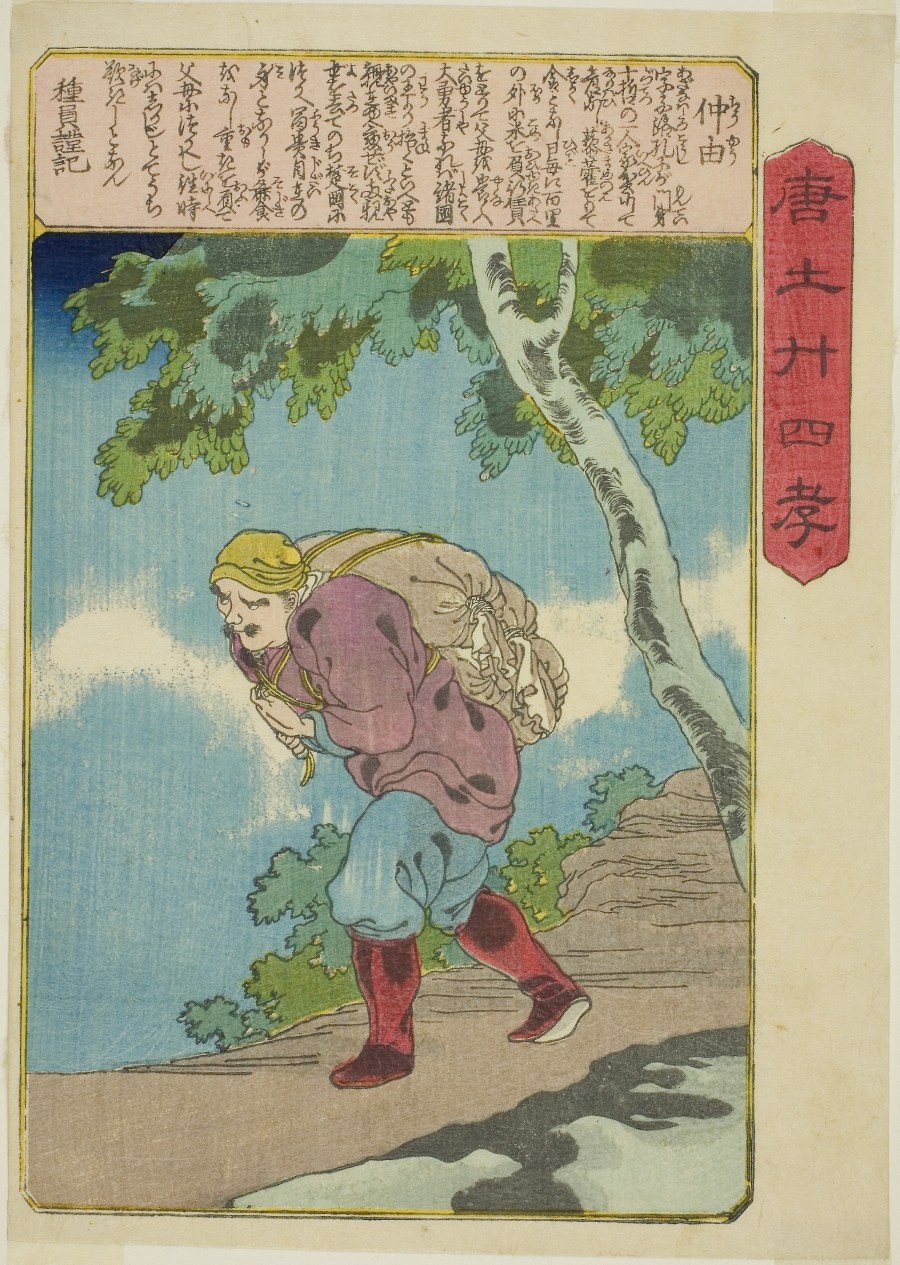
Featured Art: Jung You (Chu Yu), from the series “Twenty-four Paragons of Filial Piety in China (Morokoshi nijushiko)” by Utagawa Kuniyoshi

If it’s true, as they teach in elementary school,
that ours is a secular republic, not gods but men
do our temples and sacred monuments adorn,
then how to explain the immediacy with which I recall
my baptism into the cult of American identity,
my consecration as a democratic individual,
the very first things I bought at a store by myself—
a cherry Slurpee in a collectible plastic superhero cup
and a pack of baseball cards, hoping to find Bob Gibson.
This was at the 7-Eleven on Porter Street,
and soon the five-and-dime on Wisconsin Avenue
cycled into orbit, musty aisles of G.C. Murphy & Co.
where I might spend my allowance on plastic soldiers,
a balsa wood airplane, a rabbit’s foot keychain,
trinkets of no intrinsic worth ennobled by commerce,
aglimmer with the foxfire of mercantile significance,
toys of thought that blazed in the imagination
every step walking home. Not to jingle pocket change,
not to carry a crumpled dollar bill was to drift untethered
from the enormous comfort and safety of the system,
like the astronaut who crosses Hal in 2001: A Space Odyssey,
like a Stone Age tribe wandering into civilization
from some last unmapped Amazonian tributary.

Read More

Recitations

By J. Estanislao Lopez

Featured Art: The Petite Creuse River by Claude Monet

  1. The Mountain Recites a Poem

     The enunciation of one syllable
     lasts two thousand years.

     The only mode it knows:
     confessional. All it has witnessed,

     condensed into a single line.
     We’ve compiled the research,

     and can say with some certainty
     that the first word is Above.

     2. The River Recites a Poem

     Obsessed with revision, the river
     never completes a line. No one

     attends its readings anymore
     as they go on for months.

     Each phrase spills out, then
     is sucked back in and altered. This

     continues until, by the merciful
     winter, the river is shushed.

     3. The Sky Recites a Poem

     The first experimentalist, the sky
     reduces every image to abstraction.

     Soap dispenser becomes Absolution.
     Mandolin string becomes Disquietude.

     Its diction of emptiness surrounds the reader
     until he is extinguished—This isn’t murder.

     This is nothing but the semblance
     of control.


Read More

The Call

By Michael Chitwood

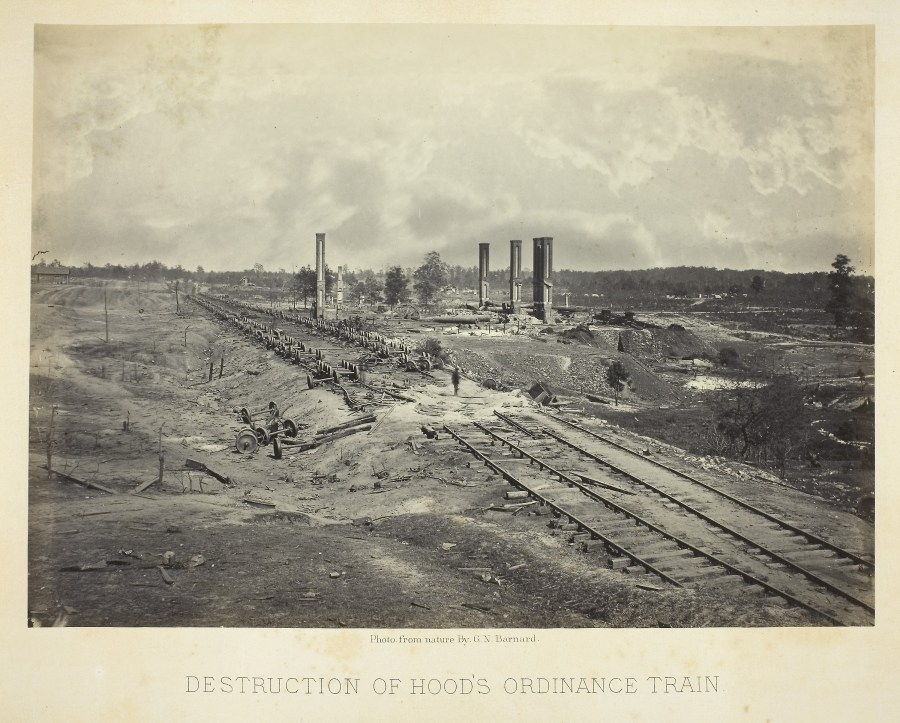
Featured Art: Destruction of Hood’s Ordinance Train by George N. Barnard

There was the rumor
of a deep night/early morning
secret train that a crew
had to be called in for
and they got double time
for their trouble. Big money.
They cleared the tracks for it,
put everything on the side rails,
even the coal cars that were priority.
And when it left the yard
it was only three cars
with a puller and a pusher
so it was jimmy-john scooting
before it was out of sight.
Everyone had a theory.
Some millionaire had a coupe
shipped to Norfolk from Europe
and wanted it in New York by the weekend.
Or the government needed a rocket
pronto to Fort Meade. Or gold—
gold was always a good bet.
No one ever knew for sure
or knew anyone who had been on the crew,
but when the call came,
and it would come, it would,
why sure, sure, you’d go,
that kind of money and all.


Read More

But it Moves

By D.J. Thielke

Featured Art: Ely Cathedral: Galilee Porch from Nave by Frederick H. Evans

Science is nothing to be scared of, I promise my eighth-graders. Science, I say, is what gives us words for what the earth, the universe, already know in a language of cells and change.

They are busy copying my name off the board.

I tell them to think about time, think about how we talk about the abstract idea of it like something physical: a road we’re traveling on. The road of life, we say. Moving past something, leaving it behind; or stepping into the future, looking forward to something. The future is ahead, the past behind, this is how we place ourselves.

But, I say, earlier cultures spoke about time as a road that you walked backwards on. They faced the past, its landscape visible and familiar, while taking tentative, shaky steps into the unknown behind them. The future, a darkness over the shoulder they had to carefully, fearfully move toward.

My students are quiet for a moment.

Then one says, So, life is a highway?

Read More

Title Search for the Italian Ashbery Book

By Damiano Abeni

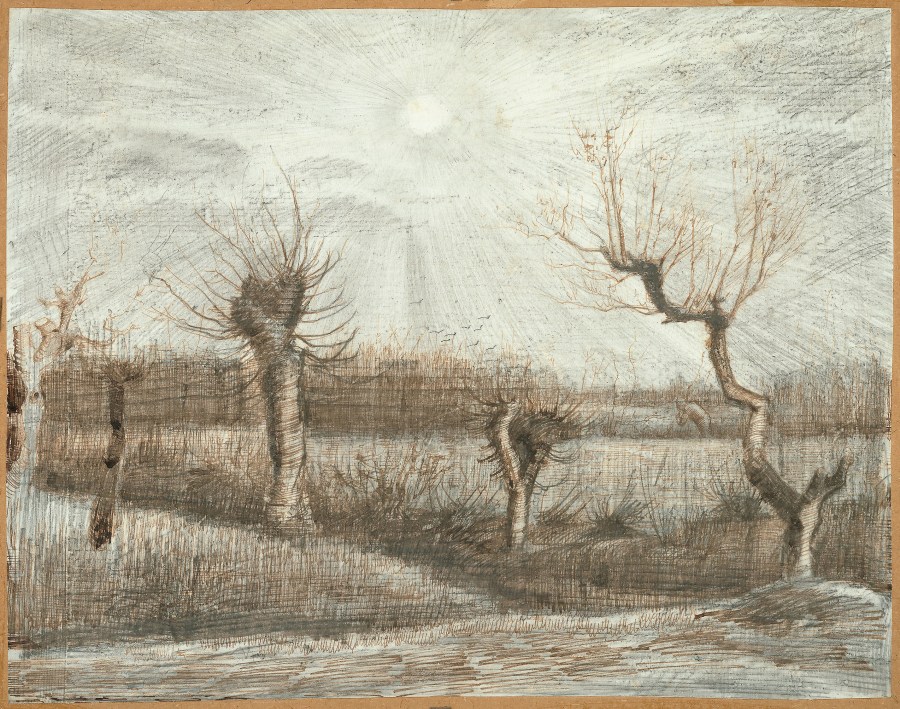
Featured Art: Tetards (Pollards) by Vincent van Gogh

[The following poem (and its Italian translation) reflect the actual search for the title of a selection of poems by John Ashbery published in a bilingual edition in Italy, and it reproduces the structure of Ashbery’s “Title Search,” from And the Stars Were Shining. The book was eventually published under the title Un mondo che non può essere migliore (A World that Cannot Be Better), translated by Damiano Abeni and Moira Egan, with an introduction by Joseph Harrison (Luca Sossella Editore: Rome, Italy, 2008). The translators thought it was aptly Ashberian that the final book title had not been considered in this search, and that it was derived from a poem not included in the Italian selection: “…while you, in this nether world that could not be better / Waken each morning to the exact value of what you did and said, which remains” (“Definition of Blue,” in The Double Dream of Spring).]

Read More

Feature: Translation Cruxes

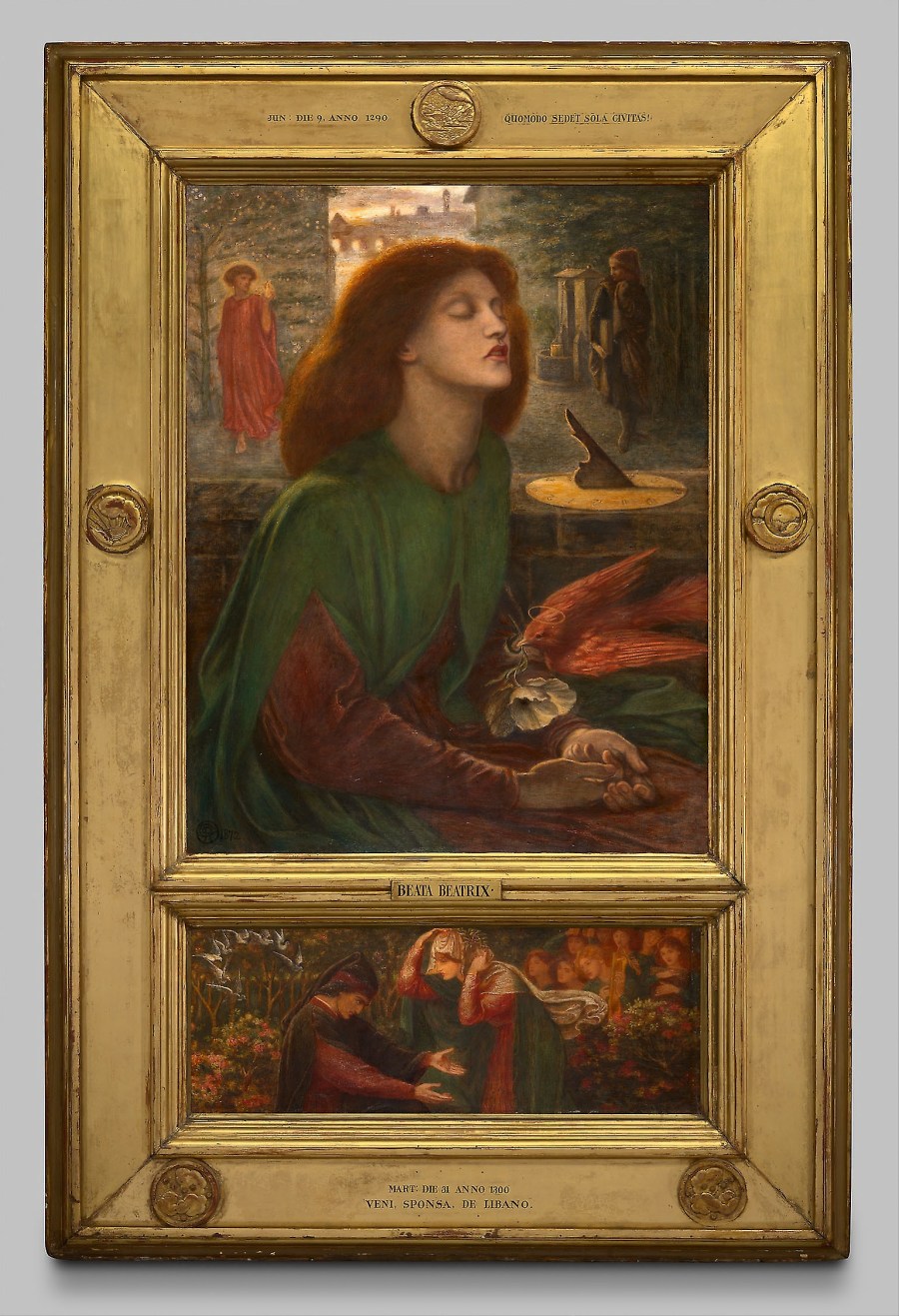
Featured Art: Beata Beatrix by Dante Gabriel Rossetti

We asked the distinguished translators listed below to
write about any particularly thorny passages they had
wrestled with, as well as the solutions they came up
with. Their responses follow.

David Ferry
Lydia Davis
Damiano Abeni
Moira Egan
Rosamund Bartlett
George Kalogeris
Joanna Trzeciak
Geoffrey Brock

On Translating Strand and Ashbery

By Damiano Abeni and Moira Egan

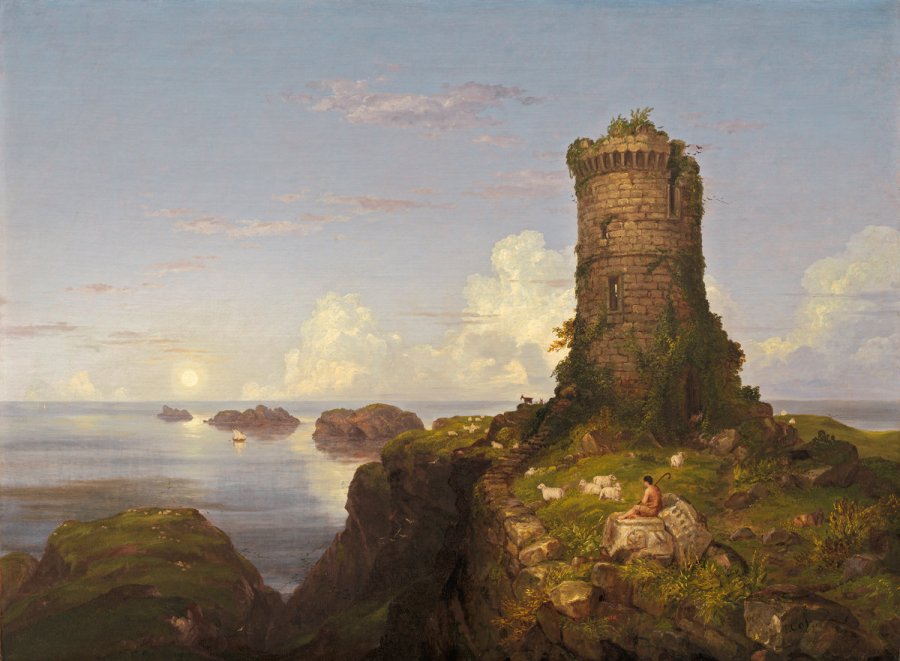
Featured Art: Italian Coast Scene with Ruined Tower by Thomas Cole

A few years ago Damiano published the Italian version of 89 Clouds by Mark Strand (ACA Galleries, New York, 1999; 89 Nuvole, Edizioni L’Obliquo, Brescia, Italy, 2003). Some of these one-liners are quite straightforward, but some are really tough to translate. For instance, Cloud # 25 reads: “A cloud without you is only a clod.” Damiano’s main inspiration when translating comes from the approach Glenn Gould had when interpreting a musical score. Rather than focusing on the literal meaning of each word, he tried to play the same game the author was playing, to imitate his wittiness and to leave a trace of the strong cloud/clod alliteration. What came out, when back-translated, would sound something like “A cloud without part of you is almost nothing,” and here is how it looks in Italian: Una nuvola senza parte di voi è quasi nulla.

Read More

On Translating Tolstoy

By Rosamund Bartlett

Featured Art: Spring by Eduard Willmann, after Eduard Marak

In chapter fourteen of the eighth and final part of Anna Karenina, some five thousand words before the end of the novel, Tolstoy produces one of his inimitable, participle-laden, congested sentences about the behaviour of bees in Levin’s apiary:

                 In front of the entrances to the hives sparkling bees and drones danced
                 before his eyes as they circled and bumped into each other on one spot,
                  and amongst them, continually plying the same route to the blossoming
                 lime trees in the wood and back towards the hives, flew worker bees with
                 their spoils and in pursuit of their spoils.

                 Перед летками ульев рябили в глазах кружащиеся и толкущиеся
                 на одном месте, играющие пчелы и трутни, и среди их, все в
                 одном направлении, туда, в лес на цветущую липу, и назад, к
                 ульям, пролетали рабочие пчелы с взяткой и за взяткой.

It is one of those sentences which exemplifies the challenges posed by Tolstoy’s often tortuous but majestic prose in Anna Karenina—a novel he found hard to write due to profound spiritual crisis welling up inside him in the 1870s.

Read More

On Translating Cavafy

By George Kalogeris

Featured Art: The Trojans pulling the wooden horse into the city by Giulio Bonasone

          THE TROJANS

          As long as our efforts, no matter how hard we try,
          Are doomed to fail, we’re like the people of Troy.

          Just when the tide is finally turning for us
          And our confidence swells, as if we were ready to face

          Whatever comes our way, Achilles turns up
          Shouting bloody murder, and crushes our hope

          With one swift leap from the trench. We’re like the Trojans.
          No matter what we do, this always happens–

          Though right till the very end we still believe
          We still might win, if only by being brave

          And not giving in. But once we go out to meet
          Our fate, behind our back it bolts the gate.

          Even at the eleventh hour, we truly
          Believe the gods are with us, defending Troy.

          But as soon as we resolve to make a stand
          That daring spirit dissolves, like a phantom friend.

          Now it’s our worst nightmare, but there we are,
          Outside the city walls, running for dear

          Life as the sweat pours down, though our legs feel frozen.
          Already it’s time to start the lamentation.

          And then, high up on the ancient parapets,
          Priam and Hecuba weep, weeping for us.

Read More

On Translating Szymborska

By Joanna Trzeciak

Featured Art: New York Sky Line, Dark Buildings by Childe Hassam

I got into translation early in life, but instead of playing the field I have tended to go steady and stay with one poet for a long time. My first was Wislawa Szymborska, a Polish poet whom I have translated since the early nineties. Szymborska’s poetry, rife with wit, graceful and deeply humane, has earned her the Nobel Prize, a permanent place in the pantheon of poetry, and admirers such as Woody Allen. Her response to the world is rendered in one of her poems as one of “rapture and despair.”

In the 2002 collection Miracle Fair, I intimated six themes under which her poems might be clustered. One of them is our relation as human beings to animate and inanimate nature. Our attitudes toward other sentient beings is central to poems such as “Tarsier,” “Monkey,” “Seen from Above,” and “Birds Returning.” When it comes to the inanimate world she has devoted entire poems to the contemplation of water, rock, clouds, and sky. Or if not “sky” then perhaps “heavens”? Or maybe “heaven”? The Polish word is niebo [pronounced NYEH boh]. Here we start.

Read More

On Translating Eco

By Geoffrey Brock

Featured Art: Handkerchief by Oriental Print Works

Despite the Italian adage traduttore/traditore, which equates translation with betrayal, nearly all translators I know claim fidelity as their goal (while also admitting the impossibility of perfect fidelity); it was certainly my goal as I set out to translate Umberto Eco’s 2005 novel, The Mysterious Flame of Queen Loana. But what does “fidelity” mean to literary translators? Faithful to whom or what? There is less agreement on that score. The question is complex even with regard to what might be called vanilla prose; it’s deeply vexed with regard to most poetry or any prose that features puns or other word-play, or that contrasts its language with that of one of its dialects, or that relies on allusions that would be clear to source-language readers but opaque or even misleading to others—and so on. In such cases, liberties will often be taken at the expense of semantic fidelity but in the service of broader and arguably more important fidelities. In this piece, I will look at three such cases from Eco’s novel.

Read More

New Ohio Review Issue 12 (Originally printed Fall 2012)

Newohioreview.org is archiving previous editions as they originally appeared. We are pairing the pieces with curated art work, as well as select audio recordings. In collaboration with our past contributors, we are happy to (re)-present this outstanding work.

Issue 12 compiled by Natalie Dupre.

Rituals

By Suzanne Carey

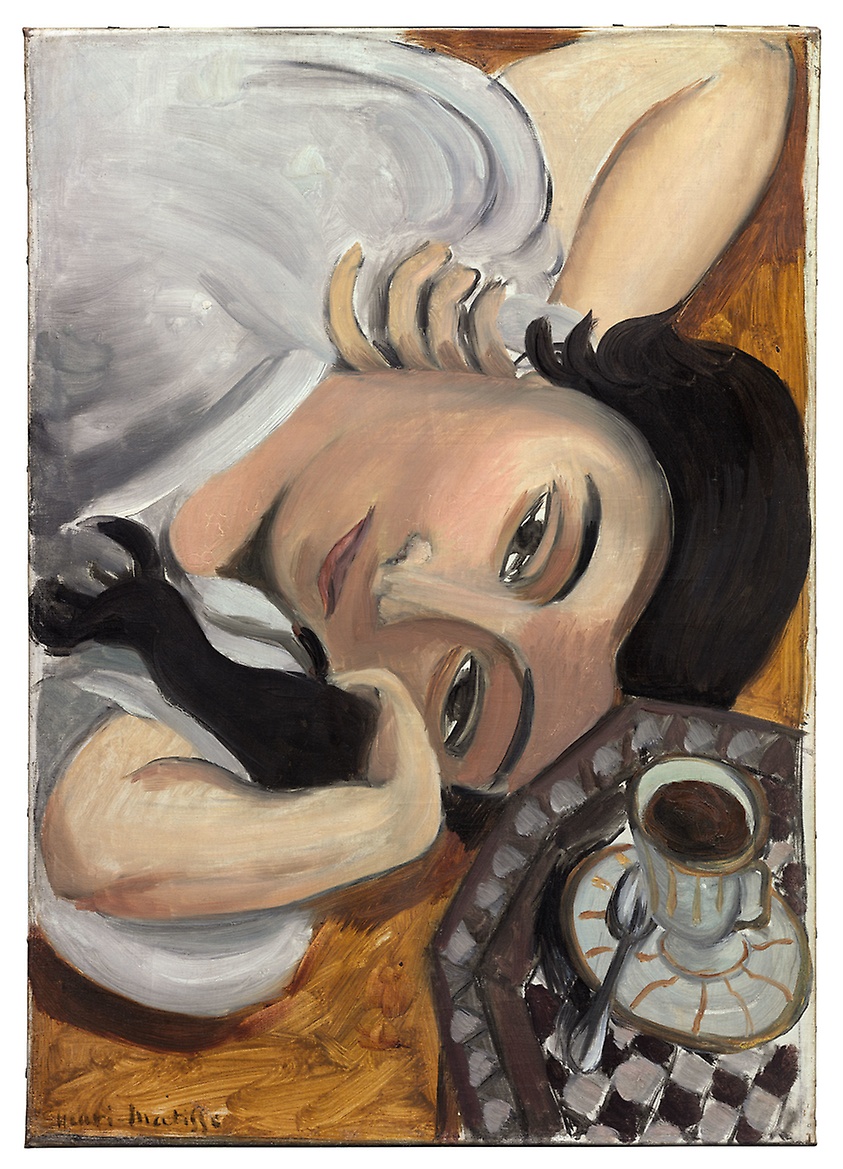
Featured Art: Lorette with a Cup of Coffee by Henri Matisse

After my swim, I sit at a small table at Peet’s
with my medium sugar-free, low-fat, vanilla freddo
that the barista started as I walked in.
I push the whipped cream deep into the cup and worry

about my daughter, who drives
a perilously small car on the freeway,
and my son in New Orleans, too poor to drive,
whose illness frightens me most of all.

My father worried about us until the day he died.
When I came home from college, he insisted
I take the dog or my ten-year-old brother with me
when I drove at night. At eighty-six, he called me daily

from the nursing home to make sure I was okay.
I remember how my mother savored
half a nickel-box of licorice bits and a single cigarette
as she read each evening, waiting for us to come home,

and years later, how she devoured the Hershey bars
and Cokes Dad brought her every afternoon,
long after she had forgotten us all.


Read More

My Father’s New Woman

By Fleda Brown

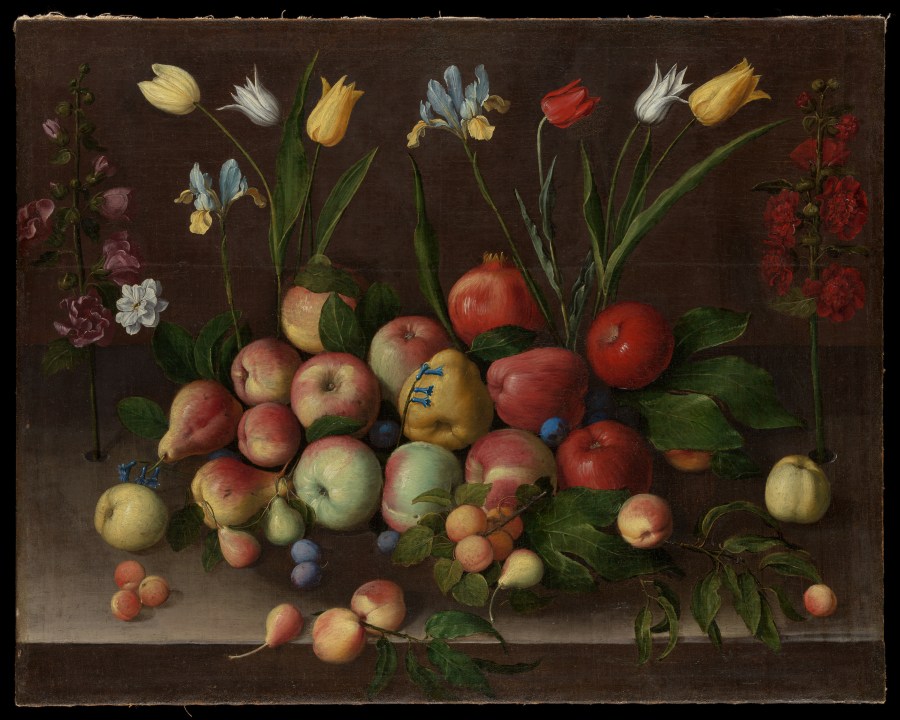
Featured Art: Fruit and Flowers by Orsola Maddalena Caccia

My father has a new woman. He’s 93, the old one is worn out.
They used to hold hands and watch TV in his Independent Living
cottage, but now there is the new one, to hold hands. The old
one is in Assisted Living not 50 feet away but barely able
to lift herself to her walker. He sits in her room after dinner,
her mind wandering in and out. What if she escapes
and comes over while my father is “taking a nap”
with this new one? My mother is two miles away beneath
her stone, relieved. I bring artificial flowers to her with my sister,
who likes to do that when we visit. I am not much for
demonstration. I would just stand there and say, oh, mother,
he’s at it again. And she’d say, I am sleeping, don’t bother me
with him anymore. And we’d commune in that way that knows
well enough what we’re not saying. And I’d be lamenting
my self-righteous silence in the past, my smart-aleck-motherjust-
go-to-a-therapist talk. What I should have said was, was,
was, oh, it was like a tower of blocks. Pull one out and all
would fall. She would get a divorce and a job and marry some
balding man like her father, who would be my ersatz father
and would take her dancing and let her wear her hair
the way she wanted, and she would cut it short and get it
permed and life would quiet down and my father, to her, would
morph into the handsome and funny Harvard Man he was
in the old days, the way he posed her for his camera, tilting
her head to the light with his devouring-passion fingertips
and her days would begin to feel like a succession
of pale slates to scribble on and erase before the new husband
came home from work, while my father would spin off
after whoever would “put up with him,” as he says,
and would follow his new one around carrying her groceries
and complaining that she spends too much, but biting his tongue
and thinking how soon she would let him, well, you know,
and I would be, what? The same as now, writing this down
so that none of the shifting and sifting could get away
cleanly without at least this small consequence.


Read More

If Only I’d Met You Earlier

By Adrienne Su

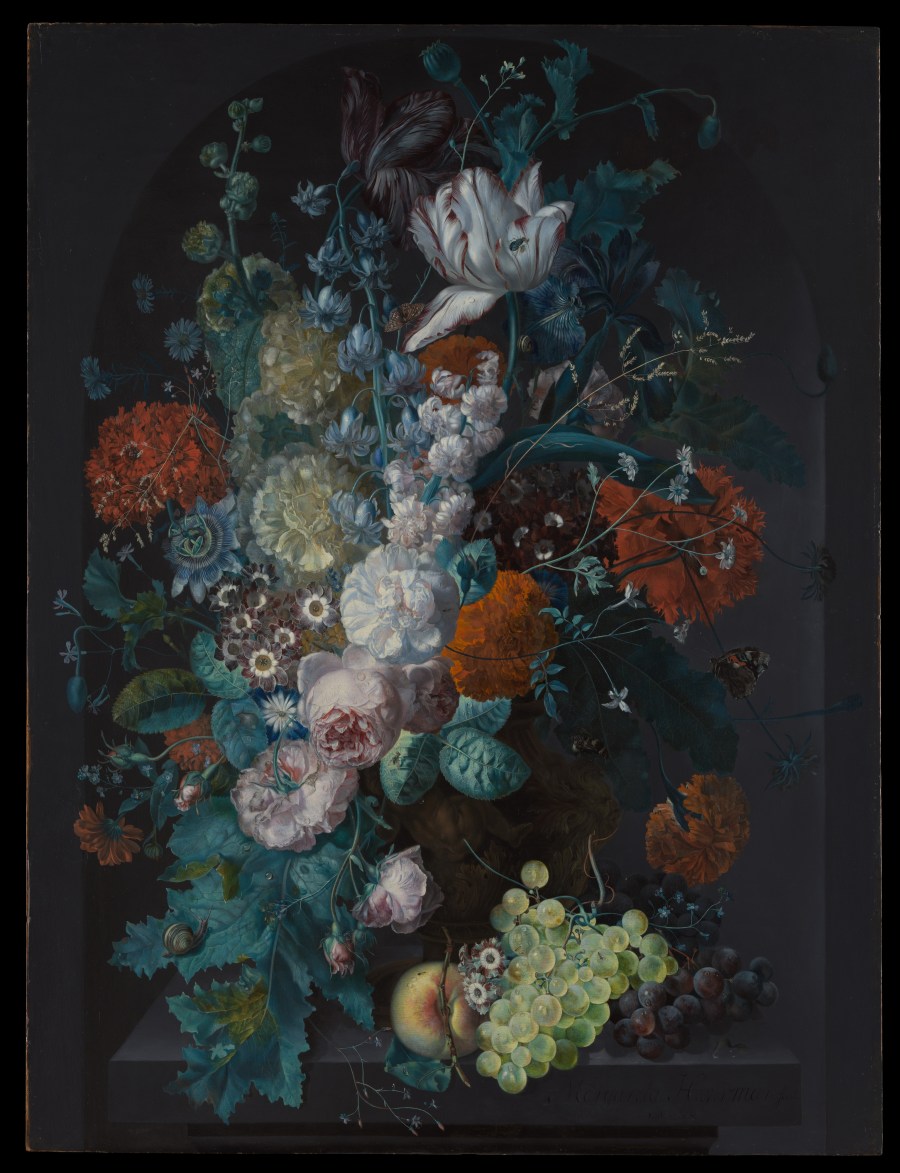
Featured Art: A Vase of Flowers by Margareta Haverman

We’re at it again. It’s hard not to rewrite
the years, though we couldn’t have known
they were wrong, if they were. Life
isn’t longer than it is, so off we go,

picturing how it might have happened,
though one of us would have been taken,
or both, and one of us lived up north, one
by the warmest sea. We had no common

travel destinations, we rarely read
the same books, there wasn’t one same
friend, and either might have fled
if it started to matter. Apologies, if made,

might not have been accepted. In truth
we could only have met on the street,
on one of your trips to the city. We’d both
have held back. The courage to speak

would’ve yielded “Excuse me,” no more,
all vision cordoned off by the sun.
So we might as well indulge in the words
for their sound: You would’ve been the one.


Read More

In the Second Month of Parched Land

By Daiva Markelis

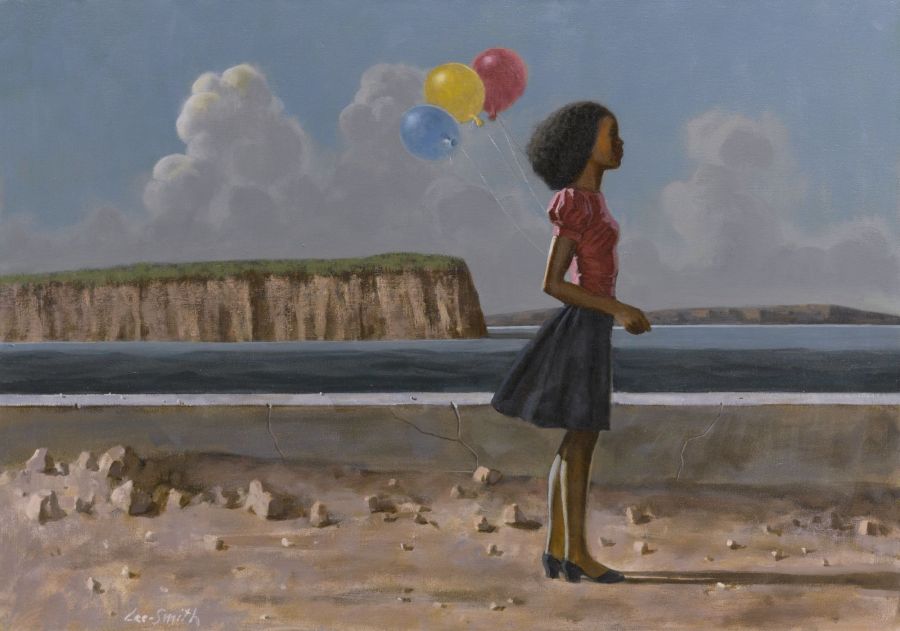
Featured Art: Stroll with Balloons by Hughie Lee Smith

We came across the camels every time we picnicked that merciless autumn, huge herds grazing on sparse vegetation. Camel comes from jamal, the Arabic root word for beauty. From a distance they did look lovely, their curvy silhouettes mimicking the contours of the dunes. Up close, however, they seemed slightly ridiculous, like bad female impersonators, batting their Scarlett O’Hara lashes to keep the sand out of their eyes, their long necks sloping toward us, then coyly withdrawing.

That we saw them so near the city surprised us. We’d heard stories of naive Westerners who’d driven for hours looking for adventure—for camels—and then stopped to explore the landscape with their pitifully small water bottles, supplemented, in some cases, by flasks of 100-proof siddiqi. Some were lost in the Empty Quarter, the largest desert in the world, never to be heard from again. I wrote a friend: If I were to start a literary journal here, I’d call it The Empty Quarterly.

Sometimes we’d see a row of black tents with goats tethered to a nearby post. Once, an old Bedouin waved a gnarled hand back and forth like a weathered stick. I thought we were in trouble, trespassing on his property, but as he ambled closer all he said, in a slow, proud English, was “See my camels.” He invited my husband into the largest of the tents. I waited in the air-conditioned Mazda, fiddling with the radio. Masculine voices jabbered in endless variations of the little Arabic I knew: Assalamu alaikum wa rahmatullah, Allah akbar, Inshalla. The sounds seemed to emanate from deep down the throat, a rush of rough and phlegmy h’s, a conspiracy of k’s.

Read More

The Circus Lion’s Lament

By Michael Derrick Hudson

Featured Art: Circus Clown and Dancer by Marc Chagall

So what happened? I used to be a lion, crashing
the herd and yanking down stampeding

zebras on the hoof. Days spent pissing hot gold

across the Serengeti! The ground gone tawny
with my scat! Those long afternoons

of fly-blown torpor, those gristly jawfuls of prey

and those after-fuck yawns. At night, snoozing
into my paws, I’d twitch and thump

the muscular scourge of my dreaming tail . . .

But Emily the Elephant jerks my chain, suggests
my ferocious howls lack plausibility

or conviction. O how I howl! I can rend the air

with lost prerogatives! Demolish the audience
with has-been imperium! I worry

and tooth the Ringmaster’s splintery stool. Dolts

applaud. Clowns in a jalopy lampoon
terror, hitched to their posse of sidekick knuckle-

draggers waddling away in diapers and tuxedos . . .

Come night, I’ll sniff the corners for what’s left
of my petrified stink, the proof

I somehow still exist. Breakfast’s tossed in at six.


Read More

Animals

By Brock Guthrie

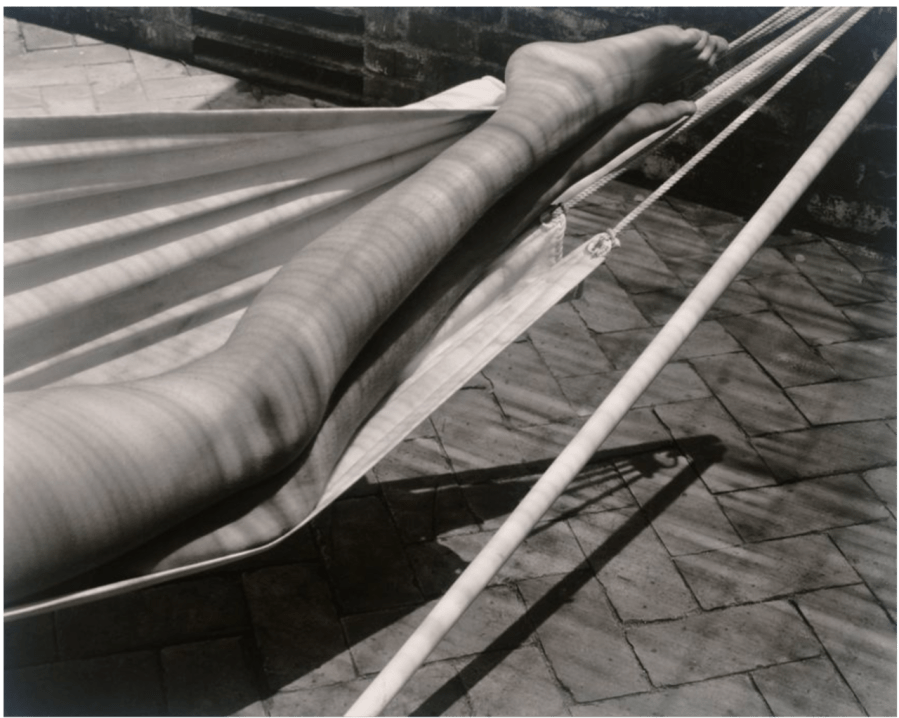
Featured Art: Leg in Hammock by Edward Weston

One is what one looks at—well, at least partially. —Joseph Brodsky

All morning in my hammock burning
a tight one, poised with pencil and notebook
and seven-week beard, I look to the pines
outside my cabin, seeking inspiration
from the birds and the squirrels
whose singing and foraging, whose
exclamations, no, arguments, reflect
my inner my inner my inner . . .
and every so often my cousin Ricky returns
from hunting rabbits on my four-wheeler
to tell me he’s thought of a new way
to beat off: Anywhere around here to buy
watermelons? Even his camo flannel
can’t conceal that Superdome belly
and I hate to think how long
since anyone’s seen his diminutive dangle
so I tell him in all seriousness, my sympathy
sincere, You might be on to something,
but after he tokes and rides away
I get inspired, realize I should’ve said
Go drive around these country roads, man,
look for signs!
and even Ricky would’ve
nodded with a look of feigned profundity
like he’s posing for an author photo
but I let that moment go

Read More

Appropriate Interjection

By Brock Guthrie

Featured Art: Painting with Troika by Wassily Kandinsky

Seven in the morning laying insulation
and wiring electric with a friend and his friend
who make money building houses.
Laying insulation at seven on Saturday
because of a promise made the night before
at the bar, where the ambition to learn
something about house circuitry
appeared like a blown fuse. This pink shit
makes you itch. Not so with my friend here—
he’s worked with this stuff so long
he sleeps on it, wakes up
throws a piece in the toaster, eats it slowly
with cream cheese and coffee. Shouldn’t we
be wearing respirators or something?
How the hell should I know?
But this is good. This kind of work
is good for me—re-callous these grandma hands
I’ve grown. Like back in those summers
when I tar-sealed blacktop
on ninety-five-degree early mornings. “And then
in the afternoons,” I tell them. On break
we smoke a joint in front of the site, drink
water, sit there in silence. Silent like that
until I start to count breaths. And wonder
what happened to last night’s beer brotherhood.
But then I recognize the similarity
between our collective awareness
and the object of our unfocused gazes:
Margaret’s Creek, running muddy and a little high
along the other side of the road.
I could try to articulate this thought—
it might break the silence. Then again it might
make more, and I want to work with these guys
on future jobs, so instead I tell them how
I once caught a five-pound largemouth
a quarter-mile up this creek
that jerked so hard in my grip
she stuck two of the treble hook barbs
from the top-water Rapala I caught her with
into my thumb, how I tried for an hour
to loosen them from the nerve, feeling it
in my front teeth, fish in the water, gone,
how I had to push the points
clear through the side of my thumb
and clip the barbs with rusty wire cutters.
“Sure,” I add, “there’s good fishing in this creek
if you know the good holes.”
Then my friend’s friend holds out his left thumb,
a nubby little thing, tells us about an accident
he had with a circular saw.


Read More

Play it by Ear

By Claudia Peirce

Featured Art: The Big Red Ball by Ellen Lanyon

Recently I’ve become a “regular” at an especially sub-standard diner called Sam’s World. Although I have no special fondness for the soggy potatoes, greasy burgers or limp lettuce leaves they dish up, Sam’s World is within walking distance. This is important because I have no car and my apartment has no kitchen. There is an old, barely functioning refrigerator in the narrow hallway between the bathroom and the only other room. I don’t hold out much hope for this refrigerator since I can’t bring myself to defrost it. A solid block of ice has formed over the opening to the freezer, and at some point I expect the whole thing will just blow up.

One day I might be out of debt and able to afford an apartment larger than one hundred and fifty square feet. Then again, I may not. When I consider the size of my indebtedness I realize I could quite easily be dead before I pay it off.

Anyway, it’s Tuesday evening at Sam’s World; I’m not very hungry but am in need of comfort so I decide to skip actual food and have ice cream and coffee.

BUM fired me today but then he changed his mind. He said I didn’t really have to leave but if I wanted to it would be all right. Then he went back to our mail-sorting session as if nothing unusual had occurred. I would guess an episode like that does not bode well for job security.

Read More

Fidelity

By William Lychack

Sent to visit one summer, Charlie and me, eight or nine years old, our mother putting us on a train in Providence, our father waiting on a platform in Detroit, pigeon murmur of loudspeakers in the station, man carrying our bags out into late afternoon light, click of boot heels across the concrete of parking garage, three of us riding out of the city in that old Impala of his, car floating big and
loose as a motorboat in the dusk, radial drone of road and traffic under everything, burgers and fries in Flint, gas station in Saginaw, another hour to Grayling, Portage Lake, and the fishing cabin with our father at last.

Read More

Return of the Media Five

By Maya Sonenburg

Second Prize, New Ohio Review Fiction Contest
selected by Charles Baxter

Featured Art: The Eventuality of Destiny by Giorgio de Chirico

I am this heart, this brain, only these, right now—no other. This is what Susan (that’s her name now) tells herself every morning upon waking. She opens her eyes and sees the flaking ceiling above her, sees the wash of sunlight coming through leaves. She touches her chest, feels her heart beating steadily—no rush of fear—and exhales. She’s alone. She touches her head, hair just starting to gray and she’s not bothering to color it. “This can be my new disguise,” she thinks, “my new self.” One of the million selves she’s been in the last twenty-odd years. She rubs her eyes and before she can silence herself again, she remembers days when she thought more, remembered more: a million legs all running toward the Pentagon or induction center or federal courthouse. Flowers in the barrel of a gun. A Viet Cong flag. Giant puppets of Kissinger, Nixon, McNamara. Or their heads atop the bodies of gigantic hawks, perched among the blackened trees of a burned landscape. Bring the war home. A placard of a napalmed child. If people see, they will join us and this atrocity will have to stop. A million hands waving. A million arms, fists raised in salute. They were the million legs and hands of her—her legs and hands—the million-limbed body of resistance, then revolution. Why does she allow these things to come back to her today? Because it’s spring and her curtains are the color of a daffodil she handed to a child once at a demonstration? She remembers when the remembered voices were always with her, singing off-key but loudly together. She never felt alone. But then suddenly she was alone, amputated from everyone and everything she knew. Most mornings she silences these memories of memories, she manages to.

Read More

Timeline

By Amy Pickworth

Featured Art: Chrysanthemums by Pierre-Auguste Renoir

1880: John Stine proposes to his dead wife’s sister, Eliza. He is a farmer, about forty, she is a spinster midwife. She accepts, telling him, “I will marry you for the sake of the children, but I will never sleep with you.”

This sounds strange—would she have said sleep with in the nineteenth century?—but these are my grandmother’s words. It is 1993 and we are sitting in her house, which smells like cigarettes and meat. The curtains are drawn. Her second husband has been dead for fifteen years. She hasn’t gone blind yet.


1962: The Orlons sing Baby baby when you do the Twist, never never do you get yourself kissed.

Teenagers everywhere Watusi in response.


Read More

The Hittite

By Alex Myers

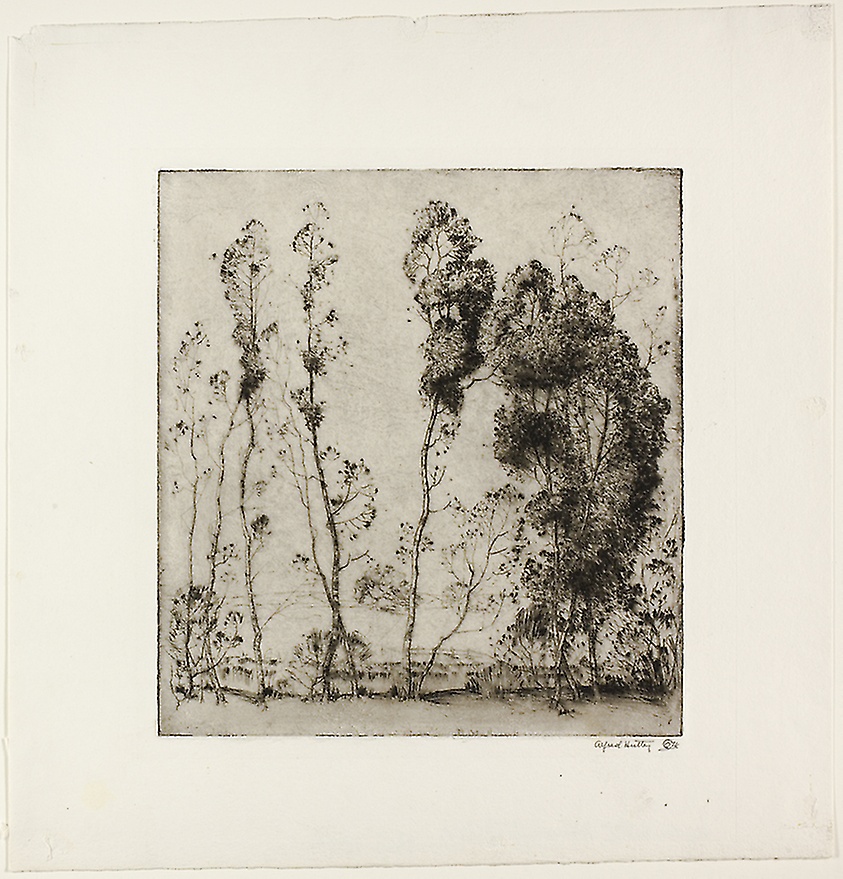
Featured Art: Trees Against the Sky by Alfred Hutty

In the spring of the year, the time when kings go out to battle, David sent Joab with
his officers and all Israel with him; they ravaged the Ammonites, and besieged Rabbah. But David remained at Jerusalem. (2 Samuel 11:1)

11:6

He was halfway to Ramstein, the dust of Afghanistan still on his boots, when it finally hit him: home. In April no less. The cherry blossoms would be spinning down from their trees, sweet, light, floating. It was a military jet—noisy, hard, and sidewise—that took him to Germany, him in his camis, sand still hidden in the folds, hardly believing he was out of the desert. Four months into his first deployment to Afghanistan and, after the training and orientation at central command near Kabul, he’d spent his months out in the mountains, riding Humvees along what they called the main corridor, though it was pockmarked and potholed and barely paved, and humping alongside mules to little villages. Escorting the arrival of humanitarian aid, waiting while some brain from intel, some secret squirrel, interrogated the village elder.

Read More

The Down

By Molly Ficek

Featured Art: Bath of Venus by Sir Edward Burne-Jones

My mother is immersed in membrane when I find her. Eggs cover her body, some cracked and spilling their spoils, some whole, resting on her belly, her breasts. White flecks of eggshells gravel her skin and the runnings of yellow yolks have dried, look like the peelings of a summer burn. Her head is underneath this mess when I look over the side of the tub.

“Mom?”

She surfaces, wipes film back into her hair, the glossy middle of the egg from her cheek. She blinks.

“What are you doing?” I ask.

She looks at me as if it’s quite obvious, which I guess it is. She is taking a bath in chicken eggs, dozens and dozens of them.

“I heard it’s good for your skin,” she says.

“Um…for your hair, maybe. Egg whites are supposed to be good for your hair.”

“Hmm,” she says, inhales a big gulp of air, and sloshes down under the eggs, the water beneath them. She waves her hand up at me. Eggs spill over the sides of the tub and drop onto the bathroom floor, cracking open.

Read More

Craigslist

By Maya Jewell Zeller

Selected as winner of the 2012 New Ohio Review Poetry Contest by Billy Collins

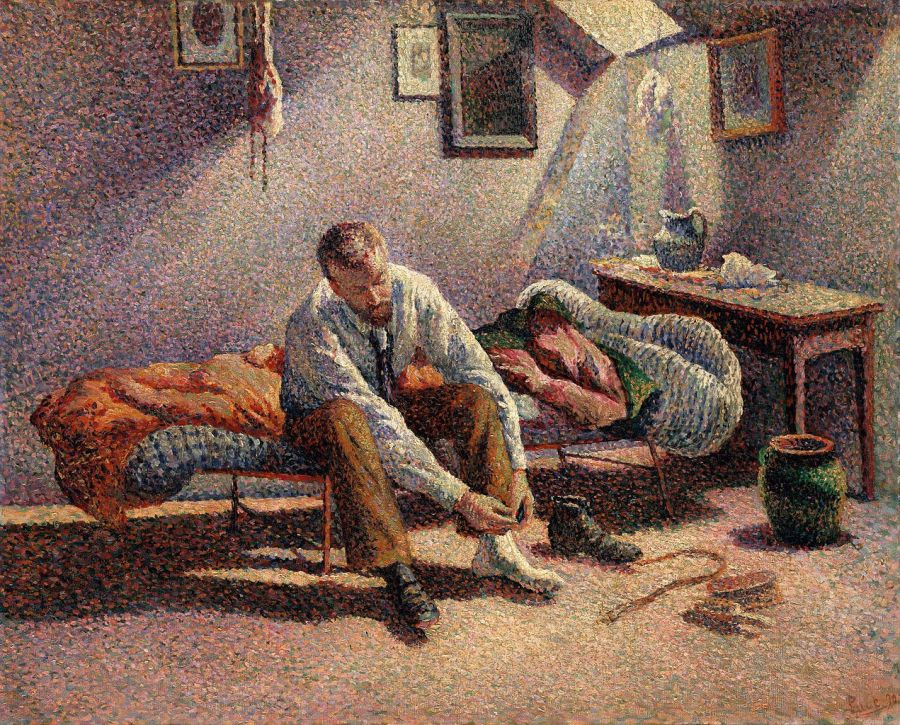
Featured art: Morning, Interior by Maximilien Luce

It’s all there—the stuff
no one wants to say is theirs anymore,
the single-slate pool table, the six-person
tent, a complete professional tattoo set
complete with analog power supply.

And my father’s 1988 Corvette.
He is no longer sad
to see it go, though he does lament,
my mother tells me, that young people
these days no longer want something like it.
They want a car with good
mileage, something they can take
a child to preschool in, cart around
the six-person tent.

Read More

Let Me Bore You With My PowerPoint

By Lee Upton

Featured Art: Answer Me by Anri Sala

—after Peter Porter’s “Let Me Bore You With My Slides”

I’ll say it and I’ll say it and I’ll say it again
and here it’s said for us, illuminated. Do you like my wave effects?
The technology will be bypassed any day now. I know. So?
How did that get in? That’s my kid.
Ha ha. That’s a goat Brenda and I saw blocking the road in Brixton.
Look at the head on that.
Oh—Brenda. Sorry. There goes my job. Just kidding.
That’s not really Brenda. That’s her best friend. No, just kidding.
We were on a wildflower walk, you know? Walking by a stream and
they had these
statues that look amazingly real? I don’t know how they do it.
Carve mushrooms or something and magnify them into these enormous—
we’re moving on. Oh, here we go, our Venn diagram—
why is Brenda wearing antlers?
Okay. On track.
You know, I say something and then what I say is right up here.
I might as well just give away handouts and leave the class.
Tempting. I mean I could go home right about now.
Right when it’s least expected.
Except I’m a professional. I meant to crop that.
That shouldn’t be embedded.
Nice 3-D effects, if I do say so myself.


Read More

Animal Science

By Michael Davis

Featured Art: Calf Startena by Robert Rauschenberg

It was hot. That was foremost in my thoughts. A sheer, raw, violating hotness that wobbled on the cement quad and in the still dry air above it. I focused on getting across without fainting. I fixed it in my mind. I didn’t have to ask why there weren’t any birds in the Flushing sky. I knew they all had heatstroke, carpets of passed-out sparrows under the campus trees. Even the shade pulsed with heat. I’d accepted the hottest day in Michigan history the way one accepts an incurable disease or a prison term or a bad marriage. I stopped fighting. I let it own me.

As I reached the rusted double doors of Animal Science, the world seemed to tilt. Darkness rushed into the edges of my vision, and the numbness of heat prostration began to twist through my skin. Panting, I sat down on one of the benches in the building atrium, wondering if my three-mile hike from the adjunct lot was destined to put me in the hospital. The central A/C was broken, but there were box fans every thirty yards, and I felt truly grateful to the Animal Science secretaries for providing the hot air current. Hot air that moved felt better than hot air that didn’t.

Read More

From The Secret Correspondence: A Novel of Novels

By Tom Whalen

Featured Art: Nan and Brian in bed, New York City by Nan Goldin

The Solution

For the life of me, I can’t understand why The Solution has been marketed as a crime novel rather than simply one of a failed marriage; not a single head is severed from its body, not one of the novel’s protagonists dies. He loved her, it seems, and she loved him and then didn’t, while his love lingered like a bad dream. She worked in the business sector of a nameless city in southern Germany, he spent his days writing a treatise on Hegel’s early years and thought. When they met by chance in Vienna seventeen years earlier coming out of a revival of In the Realm of the Senses, she was studying Wittgenstein in Munich, he finishing an MBA in Bern. As he remade his life to accommodate hers, she remade hers to accommodate his. But where is the crime in that? I find here no commission of an act forbidden by public law. Neither she nor he stole one another’s innocence, as far as I can tell, much less raided each other’s savings. Pages of meticulous detail about the German financial industry, reams of notes about Hegel and Napoleon, Napoleon and Hegel, first a paragraph about Napoleon, then a paragraph about Hegel, then a paragraph on both. Once, yes, at a company party, he believes he sees her flirting with her manager, her hand remaining perhaps a bit too long on his shoulder, his eyes glittering with a sort of bemused rapture, and then his hand on her shoulder, followed by the tilt downward of her head, quickly upraised. Had she only been steadying herself, having drunk too much champagne? The husband doesn’t seem to know any more than I do. And how pitiful the novel’s climax! He returns without any advanced warning to an apartment vacant of all her things, including the furniture she had inherited from her grandmother. Room after room, closet after closet, cabinet after cabinet, drawer after drawer emptied of all that once was hers, no farewell note on the kitchen table or left on a pillow, only the stale, sour scent of an emptiness grown suddenly emptier. Good God, what unfathomable creatures we are. Why do we even bother to marry?

Read More

On a passage from Alice Munro’s Lives of Girls and Women

By Ann Harleman

Featured Art: The Girl with the Green Face by Alexei Jawlensky

             Since our arrival at my house had not been signaled by the noise of the
             truck we were able to go around to the side and crush up against the wall,
             kissing and loving. I had always thought that our eventual union would
             have some sort of special pause before it, a ceremonial beginning, like a
             curtain going up on the last act of a play. But there was nothing of the
             kind. By the time I realized he was really going ahead with it I wanted
             to lie down on the ground, I wanted to get rid of my panties which were
             around my feet, I wanted to take off the belt of my dress because he was
             pressing the buckle painfully into my stomach. However there was no
             time. I pushed my legs as far apart as I could with those pants tangling
             my feet and heaved myself up against the house wall trying to keep my
             balance. Unlike our previous intimacies, this required effort and attention.
             It also hurt me, though his fingers had stretched me before this time.
             With everything else, I had to hold his pants up, afraid that the white
             gleam of his buttocks might give us away, to anybody passing on the
             street. I developed an unbearable pain in the arches of my feet. Just when I
             thought I would have to ask him to stop, wait, at least till I put my heels to
             the ground for a second, he groaned and pushed violently and collapsed
             against me, his heart pounding. I was not balanced to receive his weight
             and we both crashed down, coming unstuck somehow, into the peony
             border. I put my hand to my wet leg and it came away dark. Blood. When
             I saw the blood the glory of the whole episode became clear to me.
                                         —Alice Munro, Lives of Girls and Women

Read More

Last Night Ferguson’s Caught Fire

By. Laura Read


In the paper you can see the red booths

turned on their sides, their stuffing

leaking out. The fire spread next door

to the Milk Bottle, which is shaped like one

so you think of the bottles that clinked

on the porch in the first blue light

of morning, at the end of milkmen,

at the beginning of your life.

I went there once with a boy too sweet

for desire, after the Ferris Wheel

and The Octopus and trying not

to throw up on the grass and trying

to be sweet too, the kind of girl

you want to win a stuffed bear for,

one of the big ones that she’ll have trouble

carrying, so you keep handing

the skinny man your dollars and his eyes

glint and you wonder what he’s thinking

when he folds them in his pocket,

where he’s going when he gets off,

not the Milk Bottle for scoops of vanilla

in small glass bowls. His heart is a book

of matches, his mind clear as the sky

in the morning when it’s covered its stars

with light. In the winter, he’ll hang

a ragged coat from his collarbone.

He’ll think only of this year, this cup

of coffee, as he sits alone in his red booth.

If he walks along a bridge,

he might jump. And the river will feel

cold at first but then like kindness.

Last night a boy named Travis

killed himself

like young people sometimes do.

He told people he would do it.

They tried to stop him.

Now he’ll have a full page in the yearbook,

his senior picture where he’s wearing

his dark blue jeans and sweater vest,

leaned up against the trunk of a tree.

I wonder if he felt the bark

pressed against him

when he had to keep staring into the lens,

his cheeks taut from trying.

I wonder if he thought about the tree,

how could it keep standing there

without speaking,

storing all those years in its core.


Laura Read has published poems in a variety of journals, most recently in Rattle, Mississippi Review, and Bellingham Review. Her chapbook, The Chewbacca on Hollywood Boulevard Reminds Me of You, was the 2010 winner of the Floating Bridge Chapbook Award, and her collection, Instructions for My Mother’s Funeral, was the 2011 winner of the AWP Donald Hall Prize for Poetry and will be published this fall by the University of Pittsburgh Press.

Originally appeared in NOR 12.

On a passage from F. Scott Fitzgerald’s The Great Gatsby

By Ralph Lombreglia

Featured Art: Man Lighting a Girl’s Cigarette by Irving Penn

                [Tom Buchanan] “…Daisy loved me when she married me and she
        loves me now.”

                “No,” said Gatsby, shaking his head.

                “She does, though. The trouble is that sometimes she gets foolish
        ideas in her head and doesn’t know what she’s doing.” He nodded sagely.
        “And what’s more I love Daisy too. Once in a while I go off on a spree
        and make a fool of myself, but I always come back, and in my heart I love
        her all the time.”


                “You’re revolting,” said Daisy. She turned to me, and her voice,
        dropping an octave lower, filled the room with thrilling scorn: “Do you
        know why we left Chicago? I’m surprised that they didn’t treat you to the
        story of that little spree.”

                Gatsby walked over and stood beside her.

                “Daisy, that’s all over now,” he said earnestly. “It doesn’t matter
        any more. Just tell him the truth—that you never loved him—and it’s all
        wiped out forever.”

                She looked at him blindly. “Why—how could I love him—possibly?”

                “You never loved him.”

                She hesitated. Her eyes fell on Jordan and me with a sort of appeal,
        as though she realized at last what she was doing—and as though she had
        never, all along, intended doing anything at all. But it was done now. It
        was too late.

                “I never loved him,” she said, with perceptible reluctance.

                “Not at Kapiolani?” demanded Tom suddenly.

                “No.”

                From the ballroom beneath, muffled and suffocating chords were
        drifting up on hot waves of air.

                “Not that day I carried you down from the Punch Bowl to keep your
        shoes dry?” There was a husky tenderness in his tone . . . . “Daisy?”

                “Please don’t.” Her voice was cold, but the rancor was gone from
        it. “There, Jay,” she said—but her hand as she tried to light a cigarette
        was trembling. Suddenly she threw the cigarette and the burning match
        on the carpet.

                “Oh, you want too much!” she cried to Gatsby. “I love you now—
        isn’t that enough? I can’t help what’s past.” She began to sob helplessly. “I
        did love him once—but I loved you too.”

                Gatsby’s eyes opened and closed.

                “You loved me too?” he repeated.

—F. Scott Fitzgerald, The Great Gatsby

Read More

On a passage from Raymond Carver’s “Chef’s House”

By Bret Lott

Featured art: The Farm at Les Collettes, Cagnes by Auguste Renoir

Wes, it’s all right, I said. I brought his hand to my cheek. Then, I don’t know, I remembered how he was when he was nineteen, the way he looked running across this field to where his dad sat on a tractor, hand over his eyes, watching Wes run toward him. We’d just driven up from California. I got out with Cheryl and Bobby and said, There’s Grandpa. But they were just babies.

Raymond Carver, “Chef’s House”

I remember vividly the day I first read a story by Raymond Carver. I was standing in the front room of a minuscule apartment in Northampton, Massachusetts reading “Chef’s House” in The New Yorker—only two pages in the magazine. I then looked up and out the window at the bare trees there, full of wonder and awe at discovering that what mattered in a story was not, as I had thought it to be, the writer of the story and how wonderfully he performed his magic tricks. Rather, what mattered in a story were the lives of the people involved.

Read More

New Ohio Review Issue 11 (Originally printed Spring 2012)

Newohioreview.org is archiving previous editions as they originally appeared. We are pairing the pieces with curated art work, as well as select audio recordings. In collaboration with our past contributors, we are happy to (re)-present this outstanding work.

Issue 11 compiled by Peter Russ.

Unicom

By Tony Hoagland

Featured Image: Deer from Momoyogusa-Flowers of a Hundred Generations (1909) by Kamisaka Sekka

Set in the large public hallway and various spaces of a courtroom building. Drinking fountain, a pay phone on the wall, various benches where people eat their lunch or sit, and a few nooks and crannies where they stand and speak. The play is a sequence of monologues from alternate sides of the stage. All the speakers are connected to the trial, but nothing of the trial itself is ever shown.

PROLOGUE

(professional woman wearing glasses, reading from a clipboard, her voice bu- reaucratic and oracular)

Unicom officials denied knowledge of the events of June ’95. Somehow an entire forest had disappeared.

2nd PROLOGUE

Those erasures were committed, they said, by an irresponsible subsidiary

who didn’t know the right way to make a jungle disappear.

Read More

Beach Towel

By Alan Shapiro

Imagine sitting on some towels on a beach, and

suddenly it’s raining, and you scramble up,

hurrying over the sand with all the towels

to a stall inside the bathhouse where

the towel you choose to dry yourself off with

is only a little dryer than you are,

and then, as you continue drying, isn’t,

it’s wet too, too wet, wetting as much as drying.

You pick another towel up but it’s damp

too, in fact they all are, every one as wet

as you are, towel and skin exchanging

the same dampness—

if the sun were shining you could run outside

and dry yourself, or find another towel

and pass the wetness on

in a one-way tradeoff of damp for dry.

But now imagine that the doors are locked,

the stall door and the bathhouse door, and you,

you can’t get out, you have only these towels,

you can’t escape these towels, you can’t get new ones,

there’s no way to make one thing go one way or

another: imagine energy as dampness,

the jiggling accidents of energy

spread out like dampness over everything

so evenly that there is nothing left

of any kind of more of this for less of

that to balance or redress, no one

to help or call to, nobody else to touch:

Now picture everyone locked up with you,

each in his own stall, having waited there

so long inside that chilly damp enclosure

that the world beyond it may as well not exist,

or ever have existed, and you’re all shivering in

the cold air, but since no warmth remains,

there is no shivering, nobody is there.


Alan Shapiro will publish two books in 2012: Broadway Baby, a novel from Algonquin Books, and Night of the Republic, a book of poems, from Houghton Mifflin Harcourt.

Originally appeared in NOR 11.

Old Love Poems

By Denise Duhamel

Featured Image: “Rozen” by Margaretha Roosenboom

I can burn the pictures, but not the poems
since I published them in books, which are on shelves
in libraries and in people’s homes. Once my cousin told me
not to write anything down because the words would be there forever
to remind me of the fool I once was. My cousin
was the little dog on the Tarot card, barking at the Fool’s heels
as I headed right toward the cliff.
                                                             When James Taylor and Carly Simon
broke up, I was shocked. Taylor’s drug use or not,
couldn’t they work it out? I was in college
and, though I didn’t really believe in marriage,
I believed in them. How could they part
having written those love songs? And how could they go on
singing those love songs after the divorce?
                                                             But now, I know.
After time, when they reached for those notes,
there wasn’t really a beloved there anymore,
just a strand of hair each left behind
on the other’s scarf or pillow, a cologne trigger that transcended
into something more real than they were,
the lovers themselves ephemeral muses.
                                                             It’s still hard
for me to accept the notion of love outliving the lovers—
a notion so romantic, it’s unromantic. Hard to accept
that those big lumps of affection
would find alternate places to stick,
that Simon and Taylor would be swept away and marry
others. That need is not so much a deficit
                                                             as an asset,
like a wallet that keeps manufacturing its own dollar bills even after it’s been robbed of everything.
Or to say it another way: the plant that will bloom
despite being uprooted. The new seedling that will pop up.
It’s hard to believe when you are down to your last penny,
when the soil is dry and rocky and full of weeds,
                                                             when your love
is freeze-dried into a metallic pouch and you are full of snarky rage.
You look back at a love poem you wrote and ask:
did I really feel this way? Even if you no longer remember tenderness,
even if the verse was simply artifice, your idea of love, a subspecies
you made up to tag and define that one poor sap, you read the poem
again, grateful, holding the words in your hands like a bunch of flowers.


Read More

Clear and Cold

By Lisa Ampleman

Featured Image: “The Red Kerchief” by Claude Monet

Though already setting,
the sun in late afternoon

in late December revels
in its power—how it,

though meager, can set
red-brick façades ablaze,

glorify an oak’s moss—
the only green thing—

and later sear far clouds
deep purple, more sky

exposed because the trees
are bare. Meager, too,

what you could give
me, what you called fondness—

but I let it dazzle me for a time.
And, though the room

is darkening, the last light
brightens the metallic edge

of the window screen
before it goes.


Read More

The Muse of Work

By Ellen Bass

Featured Image: “Portrait of Mrs Marie Jeanette de Lange” (1900) by Jan Toorop

If I could choose my muse,
she’d have red hair, short, spikey,
and green cateye glasses with rhinestones at the tips.
She’d wear a sleeveless white blouse, ruffled
over shallow scallop-shell breasts.
Can you see how young she is?
I think she’s the girl Sappho loved,
the one with violets in her lap.
When she opens the door, a flurry of spring,
apple blossoms and plum, sweeps in.
But I’ve been assigned the Muse of Work.
It turns out she’s a dead ringer for my mother
as she scrambles the eggs, sips black coffee,
a Marlboro burning in a cut-glass ashtray.
Then she opens the store. The wooden shelves shine
with amber whiskeys and clear vodkas,
bruise-dark wine rising in the slender necks.

Read More

What You Find, If You Find It

By Jeff P. Jones

Featured Image: “Paris Map in Dutch” by Guillaume Delisle

As a letter carrier, she delivered non-urgent messages to people’s houses. Her work brought her past gates, across yards, onto porches, into foyers. She never looked in windows or rang doorbells but on request would hand mail to a resident encountered outside as she exchanged small talk. She would then move on, readying the next house’s letters and advertisements, imagining fingertips releasing sealed flaps, creases tearing, messages sliding into waiting hands.

Each week her teenaged son caused some new havoc. One night he stole her car and was stopped by police forty miles away, coursing a college town’s streets with three friends and a bottle of vodka. The four boys cleaned her gutters the next weekend as she grilled hamburgers and made jokes about her prematurely gray hair.

She sipped her morning coffee and pretended to read the paper as she watched him eat toast.

In his last year of high school he had to transfer schools because of attendance problems. He brought home a stray mutt that he forgot to feed. He began to take phone calls from a man with a comically gravelly voice named Staff Sergeant Thigpen. The son carried the receiver into his room and shut the door. Posters of grimfaced warriors appeared on his walls. He exterminated the squirrels and birds from the backyard with an air rifle. He rarely answered her in a full sentence. In the summer she drove him to the airport. He wore a new pair of running shoes and carried no suitcase.

Read More

Dispatches From the Interior

By Geoffrey Brock

Featured Image: “A Lone Child Walking Down the Street at Night“, Unknown Artist

Like the one where you stumble along happily drunk
after closing a bar and reach your car only to find it
surrounded by militia who take you in to question you
about why you left your son alone in the car so long
and you say I lost track of time though that’s not true
and Can I see him and they refuse and Is he okay and
you’re panicking and thinking What if he died in there
or the one the very next night when you find yourself
atop some posh hotel listening to some poet speaking
and realize you haven’t seen your son since morning
when you let him go down to the lobby alone to play
despite the warnings you now recall about the natives
and you race for the elevator but there is no elevator
and so you find the stairs and descend floor by floor
and each landing is a shabby apartment living room
and though you can sometimes tell someone is home
water running for instance or light under a shut door
you never see anyone or gain any real insight into this
country of ancient dearth and modern resentment
what country is this anyway? and after the gauntlet of
these empty private foreign lives you emerge at last
into a brightly lit and darkly paneled colonial lobby
and scramble frantic now through the patrician crowd
looking for help but when you ask a giant suited man
if he speaks English he replies in the plummiest nasals
I don’t just speak it I am it and merely cocks one brow
about your son so you race outside where a boy squats
alone in the penumbra by a bush and you tilt his face
to the light but he isn’t yours too small and dark and
you keep looking and see others and scream one name
and then oh god you see his hunched familiar shape
rise out of the pile of dead leaves he had hidden under
and stumble toward you arms extended the pajamas
he was wearing this morning now tattered and filthy
and when you scoop him up you discover obscenities
and anti-American slogans scrawled in black marker
on his face and blood or something caking his nostrils
and he doesn’t speak or cry and nothing shines forth
from those eyes and you carry him cradle him through
this endless third-world night trying to comfort him
but knowing you will never be able to comfort him but
cooing You’re safe now Daddy’s here or the one where


Read More

Strapless

By Z.Z. Boone

Featured Image: “Breton Girls Dancing, Pont-Aven” (1888) by Paul Gauguin

I don’t know what happened, but last night I just lost it. Just fucking lost it.

It’s eleven o’clock at night, I’ve been doing inventory in my store all week, I’ve barely made a dime, and this is when my fourteen-year-old daughter decides it’s a good time for defiance.

“You have no idea what it’s like!” she screams.

I’m lying on my still-made bed, full dressed except for my shoes, and she’s standing with a hand on each side of the doorway as if to prevent my escape. I’m not going anywhere. I’m just trying to hear the TV, trying to get the news about how screwed up the rest of the world is, but I can’t make out a word.

Read More

Zigzag. Yeah.

By Scott Kreeger

Featured Image: “Flowers on a Footpath from Bijutsu Sekai” by Watanabe Seitei

Zigzag down the stairs. Yeah. Zigzag to the trash can and toss the bag in. Yeah.

Zigzag through the gate and into the pool area. Yeah. Zigzag between the chaise lounges. Yeah. Zigzag down the steps and into the pool. Yeah.

Zigzag too cold, too cold. Yeah. Zigzag out of the pool. Yeah.

Zigzag out the gate. Yeah. Zigzag onto the bike. Yeah. Zigzag past apart- ments 4, 3, 2, 1, and into the alley. Yeah. Zigzag down the alley and out to the street. Yeah. Zigzag wait for traffic. Yeah.

Zigzag across the street. Yeah. Zigzag off the bike and into the store. Yeah. Zigzag past the smiley man behind the counter. Yeah. Zigzag smile back, wave, say hello. Yeah.

Zigzag to the candy. Yeah. Zigzag to the Zagnut bars. Yeah. Zigzag pick out a Zagnut. Yeah. Zigzag Zagnut. Yeah.

Zigzag say that again three times fast. Yeah. Zigzag Zagnut zigzag Zagnut zigzag Zagnut. Yeah.

Read More

Throw It Up

By Suzanne Richardson

Featured Image: “The Fallen Angel Spreads His Black Wings” by Odilon Redon

Heroin made Tristan’s breath sweet like mangoes. When we kissed it felt like licking the inside of a kiwi: fragrant, indulgent, the tangy saccharine rolling around my tongue. I didn’t know why he tasted like that, but I liked it. At the time I didn’t know I was sleeping with a heroin addict. He would sit up in bed and scratch his arms and face for hours. I would call his name, shake him even, but he wouldn’t answer. In all four years I’d slept with him, he had never acted that way before. I would put on a robe and pace the apartment, or sit on the couch, and think about my family. My brother. My parents. I had never felt this scared with them despite our differences. Sometimes I would grab fruits or vegetables from the fridge and nervously practice peeling, or dicing until dawn. I think I did this out of some compulsion to better myself even in the darkest of hours. My mother could always chop and dice things perfectly. I taught myself to peel mangoes in one motion so the peel piled into one long strand in the sink drain. I couldn’t think of anything that would make him act that way. One night, lying on the couch, staring at the ceiling, I recalled a conversation I’d had at a party with an EMT.

Read More

Dhaka Nocturne

By Tarfia Faizullah

Featured Image: “Tête-á-Tête” by Edvard Munch

I admit that when the falling hour
begins to husk the sky free of its
saffroning light, I reach for anyone

willing to wrap his good arm tight
around me for as long as the ribboned
darkness allows. Who wants, after all

to be seen too clearly? Still, the heart
trusts, climbs back down the old
mango tree outside the bar to marvel

at the gymnast tornadoing forward,
electrifying the air with her soaring
body on the TV, even as the friend

beside me asked, But how could you
sleep in the same room as your dead
sister’s things? Once, a man I loved

told me I was stunning. It terrified
me, the way grief still can, rising
above us in the bar, seeking its own

body. I told her the body, exhausted,
does what it must, as it does now,
suturing itself to his, saying, I’ll be

yours forever, with all its secretive
creases turning to steam in this heat
flustered city, wet fever of the nape

of my neck chiffoning beneath his
lips galaxying across it. I could have
told her about the shelves of porcelain-

cheeked dolls tarnished lavender by
falling light, the ebony abundance
of my mother’s hair varnished blue

as she slid my sister’s child clothes off
the old wooden hangers then back on—
but what else is mine, if not all this

strange beauty? Look, I say to him,
running my own hands down my own
body: night-rinsed anaglyph of muscle

and bone holding against everything
yet to plunder this or any twilight’s
nameless and numinous unfurling.


Read More

Overflow

By David Gullette

Featured Image: “Proposed Broadway Underground Railway” by Unknown Artist

The first of February 1855
Thoreau skates up the river:
it swells beneath its crust
making a musical cracking,
running like chain lightning of sound
athwart my course.


The rising of the mass
lifts the ice in one place
but drops it in another
the low patch filling with water
to form quite a lake there where he has passed
and he imagines

another skater two hours later
his successor who with wonder and alarm
will see Henry’s twin tracks
disappear in one side of it
and come out the other.

Sometimes I glide across

the brittle glaze of sleep
and am above and in and beneath
the dark currents
and wonder at dawn how did I drown
only to glance back and see my tracks
coming up and out and going on.


Read More

Birds In Cemeteries

By George Kalogeris

Featured Image: “Two Cockatoo and Plum Blossom” by Ohara Koson

It must be the shade that draws them. Or else the grass.
And it seems they always alight away from their flocks,

Alone. It’s so quiet here you can’t help but hear
Their talons clink as they hop from headstone to headstone.

Their sharp, inquisitive beaks cast quizzical glances.
The lawn is mown. The gate is always open.

The names engraved on the stones, and the uplifting words
Below the names, are lapidary as ever.

But almost never even a chirp from the birds,
Let alone a wild shriek, as they perch on a tomb.

And then they fly away, looking as if
They couldn’t remember why it was they came—

But were doing what our souls are supposed to do
On the day we die, if the birds could read the words.


Read More

Pelicans

By Robert Cording

Featured Image: “Australian Pelican” by Elizabeth Gould

Last evening, another sunset party:
drinks, laughs, ironies, hidden desires.
All of us tanned and glowing, we exchanged
jokes and gossip, fresh and stale, self-conscious
that something larger was missing
when we turned to best watches, shoes, cigars.

So much time is lost trying to agitate
the envies of others and monitor one’s own—
the thought that crossed my mind as I watched
six pelicans rise and fall with the water’s flux.
The winds had quieted, and just before the sun plunged
below the sea, the pelicans rose in a wind-hung line

and flew off, silent as a council of gods
in the pinkish sky. Palm trees scratched
their cuneiform shadows on the sand.
I wanted to say something about the pelicans,
who I knew, for no known reason, choose to live
their lives as near total mutes, as if they’d decided

simply to be done with the fecklessness of speaking,
but I kept quiet, the light draining from the sky,
the others going inside. I felt like a child in hiding,
alone on the deck, made fearful and alive
by the darkened Gulf, the stretch of beach
now entirely empty, the palm trees,

the sliver of moon rising directly opposite
of where the sun had set. If I had been called
to come in, I would have kept silent.


Read More

Crow

By William Kelley Woolfitt

I’ve been told Crow’s story so many times I remember it better than my own memories. It was my bedtime, naptime, and story-time story. I think my parents told it to each other too, in whispers, in each other’s arms, striped with moonlight coming in through the blinds, too tired to say anything new.

There was a storm the night my parents drove me home from the hospital. I was a few hours old. Mother says that the rain was too fast for the windshield wipers, that Father pulled over three times. Father says that Mother sat in the backseat and held me the whole way. When we got home, we had to wait almost an hour for the rain to die down. Father found some jazz on the radio, climbed into the back to be with Mother and me. That was the first time he held me. Mother fell asleep, and dreamed she was a passenger in a boat.

Wind toppled the elm in our front yard, though later on some neighbors claimed it had been hit by lightning. It just missed our house. One branch scratched our bedroom window. Crows spent the night on our porch, their nest in the elm ruined.

Mrs. Yamato across the street saw the crows on our porch swing, screamed and dropped her chopsticks. An omen of death, she thought. She came running over with a broom. All the crows flew away, except a baby. Father put the baby crow in a shoebox and thanked Mrs. Yamato for her concern. Mother went into the yard, walked around the fallen elm and its jagged stump, poked into the fallen nests and found shiny things: bottle caps, bits of tinfoil, Father’s screwdriver, her own gold pendant necklace.

Read More

Yet

By Eric Torgersen

Featured Image: “Study for “Le Bain”: Two Women and a Child in a Boat” by Mary Cassatt

You’ve got to act, and soon, but you don’t dare yet.
There’s one big load you don’t think you can bear yet.

You chose to dive this deep; it’s not for me
to tell you why you can’t come up for air yet.

You had big plans. You’re running out of time.
There’s no excuse to contemplate despair yet.

All that time and trouble spent on you.
For all the rest, you don’t have much to spare yet.

The world should find some meaning in your work?
You haven’t shown us why we ought to care yet.

Don’t give me that I-don’t-get-it look.
Sixty-five, and still not self-aware yet.

You might just want to start to pack your bags.
You may not have enough to pay the fare yet,

but that doesn’t mean the taxi’s not on its way.
Look out the window. No, it isn’t there. Yet.

Call it what you will, but thank something, Eric.
There’s one stiff suit you haven’t had to wear yet.


Read More

Awake

By Richard Schiffman

Featured Image: “Rendezvous in the Forest” By Henri Rousseau

Already morning ignites
the high wicks of the pine.
A few birds trilling,
don’t ask me their names,

or my own as I stumble
out of bed on sea legs,
rub my eyes until stars appear
like ships still foundering

on the reef of night.
But when I open them again, day
is fully rigged and sailing off
with me on it.


Read More

Unfinished

By Richard Schiffman

Featured Image: “Houses of Parliament, London” by Claude Monet

“It is not known why they were not finished,”
the curator noted of two hundred later canvases.
Turner’s work becoming increasingly unhinged—
cyclonic sunbursts, hills skipping like rams, crepuscular
curtains, reeling cliffs and brimstoned cities.

“I did not paint it to be understood.”
Was he mad, as some critics alleged?
Were these “mere freaks of chromomania,”
posters of a private apocalypse, flotsam
and jetsam from the shipwreck of a soul?

“I only wish I had any color to make them blacker.”
A glutton for whirlwinds and monster blizzards,
snow funnels and conflagrations. The lakes abysmal,
the seascapes either black or blinding—
a roller coaster few Victorians could ride.

“Indistinctness is my forte.”
Prophet for a world unravelling at the speed of light.
With hands as “fast as lightning,” when he sketched,
organs of creation, and equally destruction,
all churned together in the cement mixer of his palette.

“It is not known why they were not finished.”
Yet surely he knew that finishing would be a lie
in a world where the waxing / waning moon
is unfinished, the river ends, but does not finish,
nor the bronking sea, nor the calving sea-ice,
nor life itself, which only knows—
again and again and again—how
to begin.


Read More

Take Your Trash and Make it Fly

By Devin Murphy

Featured Image: “Shoes” by Vincent Van Gogh

One night a month, people in my hometown outside of Buffalo, New York, put their large trash items on the curb for the sanitation department to pick up the next morning. Our neighbors would drag out old Whirlpool appliances, ironing boards, and whatever else the weekly garbage route couldn’t take. On those evenings, my Dutch immigrant mother loaded me into her rusted-over white 1970 Chevy Caprice station wagon with its vinyl side panel, and we’d slowly cruise the streets picking through the refuse.

From where I was slouching low in the passenger’s seat I’d get this fishbowl feeling as she slowed down and parked in front of those houses. Each home gave off a sense of neatness and order that seeped into their lawns. It always made me feel as if strangers were looking out their windows at us—or worse, people we knew. The idea of being watched made me want to pull my lower lip over my head and swallow myself whole. But my mother was unfazed as she picked discarded rabbit-ear antennas, steel rods, sheet metal, chicken wire, aluminum siding, rebar, large bolts, coffee cans, aluminum fruit cans, and every scrap of metal or iron and tossed them in the back of the Caprice.

She walked from lawn to lawn on the sidewalk while I inched the car along beside her. I nudged the gas pedal and braked with my tiptoes. I wasn’t big enough to see over the steering column, so I navigated through the line-of-sight between the dashboard and the top of the enormous steering wheel. When we had to cross an intersection, she’d get back in, drive across, and we’d start down the next block.

Read More

Tauromaquia

By Deborah Casillas

Featured Image: “Standing Bull” by Jean Bernard

The days dragged on, steady ticking of the clock.
My mother’s cancer; surgery, injections, drugs.
Long afternoons I sat in my grandfather’s library
looking at books. Shelves of books about bullfighting—
la lidia, combat; la corrida, the running of the bulls.
Books on Manolete, Belmonte, Joselito,
his copies of The Brave Bulls, Blood and Sand,
Death in the Afternoon. Books aficionados collect,
those fanatic followers of the taurine subculture.
I stacked volumes beside me, looked at pictures
of the black bulls, studied their deadly horns,
the ritual sacrifice. Here were portraits of the famous
matadors, their lives venerated like the lives of saints.

Read More

The Swans

By Anamyn Turowski

Featured Image: “Woman with a Butterfly at a Pond with Two Swans” by Jan Toorop

She bought the swans because of the empty pond. Lonely; that’s why, really. She saw two swans in profile in a poultry magazine she’d picked up at the dentist’s. She paid $1500 for a pair. As if swans could change anything. Her husband says she needs birds like she needs a hole in her head. A lobotomy, she thinks, that’s what I need. Every time she stares out the window toward the pond, the empty water makes her cry. She charged the pair on a new credit card that came in the mail that day. What’s the interest on that card? You never read the fine print.

She isn’t the sexiest wife. She’s aware of this. Since the operation he hasn’t touched her. That was three years ago. They’ve the house and the dog and their two grown children who call on birthdays, Christmas.

Read More

Standing on the Desk

By Donna L. Emerson

I am twelve years old in Mr. Ody’s art class and he’s teaching me to use an
eraser on my watercolor of rain and sun. To make the sun stream like spotlights
through the clouds. He moves the eraser by placing his hand over mine. He rests
his hand on my wrist a little longer.

I start to back away.

He asks me to be a model for the class. He lets me stand on his desk. He says,
Don’t take your eyes off her. Let your pencil try to draw her without ever stopping
your looking and drawing. I’m glad I wore my new turquoise skirt and
flowered blouse. Mr. Ody pulls his chair out to see better.

While Danny Sessa makes jokes, I can feel Mr. Ody’s eyes. He’s staring. I turn
red, start to joke back and Mr. Ody says, Just stand still and be quiet.

This was the beginning of the first time.


Read More
The Jaguars of Southtown

By Amos Jasper Wright IV

Featured Image: “The Repast of the Lion” by Henri Rousseau

Forty days passed without landing a sale. For a while, I felt sorry for myself, and then self-pity shifted gears and boiled into a rage that curdled everything   I touched. The BP spill down in the Gulf had put a damper on auto sales. The economy in general was in shambles, but this town hadn’t prospered much since the Red Mountain cut. Meanwhile, we’re dumping good, hard-earned USD into foreign countries and our Harvard-educated Kenyan president was doing all  of jackshit about it. Instead of buying new cars, people just drive them longer. Used to I could sell forty cars in a month. You don’t need a Harvard degree to do that.

When DOT took a slice out of Red Mountain, most of downtown Birmingham reverted to a giant used-car lot, a smooth asphalted prairie where trash and news blew before the winds. I managed a downtown lot on 20th Street. My office was in a portable trailer stacked on cinder blocks. Long strands of razor wire outlined the perimeter of the lot like a concentration camp. The warehouse next door had probably been abandoned since I got my driver’s license. Sale banners flapped and whipped in the hot winds and the flat air in that metal can was tight as my collar. We parked cars on the sidewalk. On Saturdays, when the urban prairieland was empty and dead, looking more and more like a southern Detroit, instead of getting hung up on by irate voices, I played lonely games of golf, as blue and red klaxons dopplered by.

Read More

The Open Door

By. Alan Shapiro

For Peggy Rabb

What did it mean when she said at last, “All day I

have been running to the open door”—

What door was it she ran to, opening to what?

From what? And did she reach it and get through?


No one was there with her, it seems, inside or out, no

one she mentioned, no solving light or phantoms

calling in parental voices, urging her

to come, child, run; and that she ran “all day”—


was that the joy of being able now

to run in some way none of us could see, a

bodiless release imagining a body

if only to feel how free of it she was?


Or was it desperate running, running to

get out of the nightmare room that was all day

uncrossable, the door like a horizon

a stride away with every stride she took?


And if she reached it, running, what did it feel like

then, that moment, being nothing but

the motion of herself without herself,

over that threshold into nothing else?


Alan Shapiro will publish two books in 2012: Broadway Baby, a novel from Algonquin Books, and Night of the Republic, a book of poems, from Houghton Mifflin Harcourt.

Originally appeared in NOR 11.

Trust

By Liz Kingsley

Featured Image: “Pattern from L’ornoment Polychrome” by Albert Racinet

First he slept with someone else and later while he was busy sleeping, she slept
with someone else. No, before he slept with someone else, she slept with the
lawyer across the street who gave good oral argument. She did not tell him
about the lawyer. Their time together was privileged and she knew her rights.
While she was with the lawyer, he slept with the decorator. When she found out
about the decorator, she confronted him and said I trust that you know about
the lawyer. He said he in fact did not know about the lawyer, but that now he
no longer trusted her. She said that she had stopped trusting him after a flirty
consultation they had with the decorator about their living room, which is why
she slept with the lawyer in the first place. He said she had no reason not to
trust him, but that he sensed she didn’t, so he figured he might as well go ahead
and sleep with the decorator. She said that’s exactly why she can’t trust him
anymore. He slept with the decorator on the outgoing living room sofa. She
said the lawyer has a trust account, into which she deposited the money they
were planning to pay the decorator for the incoming living room sofa because
she didn’t trust him to go through with the renovation in light of their domestic
destruction.


Read More

The Farm

By Spencer Wise

Featured Image: “Poppy Fields near Argenteuil” by Claude Monet

We’re on our way to meet Charlene’s family for the first time, listening to Townes Van Zandt in the car, and Charlene’s saying, “‘Pancho and Lefty’ is me and my Daddy’s song,” when I suddenly smell fire. All along Highway 33, the smell of wood burning. She laughs. “Don’t laugh,” I say, “might be a forest fire.” She says, “First time south of the Mason-Dixon, and now you’re Woodsy Owl.”

“I feel vigilant,” I tell her, gripping the wheel tight with both hands, as we come over a hill and, on the horizon, points of orange flames burst from the tree line. “What the hell is that?” I say. “Those are laurel oaks. Those are pitch pines,” she says. “Not the damn trees,” I say. “The fire. We got to call your parents, tell them it’s time to evacuate. We got to get the hell out of Georgia.” She puts one hand on my knee and points to the parallel rows in the woods alongside the road, explains how the fire is burning in even rows, how it’s controlled. “Doesn’t look controlled,” I tell her. “Looks way the hell out of control.” Nacreous black smoke rises above the pines. She says her parents live about ten miles from here. “Correction,” I say. “Used to live. It’s all burned. You can’t go home again. Home is a marshmellow.” “Mallow,” she says. “If you’re talking about the spongy confection that you northerners eat two times a year when you go camping—that’s a marshmallow.”

Read More

When People Watch You

By Nathan Anderson

Featured Image: “Tingletangle” by Edvard Munch

I’m not like those crazy people.
The people that watch me
are real. I can see them.

Never mind the mailman. That blue coat
nearly swallows him. You never know
what’s under there—and he’s, well,
rather strange looking,

like a boy with a bald spot
bent over thick black shoes
and that bag he cradles

like a smooth gray animal
he does not recognize
is dead. Sometimes I believe

he really is a little boy
and I have to stop myself
from running after him.

Isn’t the mind amazing?
I’d like to know
what he’s doing when he’s not
walking through front lawns

or talking to the man
across the street. I’d like to know
what he’s delivering,
if it will require a deep breath

and more wine
than I’m willing to drink. If it’s even worth

the paper cut I’ll get
opening the envelope. And what about
that man across the street?

Read More

Stupid Sandwich

By Nathan Anderson

Featured Image: “The Grocer’s Encyclopedia” by an unknown artist

So yeah, we all have these moments that suck
because what they mean
is like a mystery, like the Mariners last year
good a team as any, traded
what’s-his-name, the fat one, for that Puerto Rican dude
with a wicked right arm
and didn’t even make the playoffs.
Anyway, I can see you’re a man of the world like me,
standing here I don’t know how long and still
no damn bus. But like I was saying
we all have these moments and last week
there I was after work, making a stupid sandwich,
the kind of stupid-ass food people like me always make
when I can’t figure out what I’m feeling
and I feel like being true to myself
is about the dumbest thing a man can do,
knowing how easy it is for the truth to mess things up.

Read More

Opening the Cottage

By Christina Cook

Featured Image: “Houses and Figure” by Vincent Van Gogh

Jays scrap in the maple
while I sit with my absence
of sound, and a bottle
of last summer’s wine.

I should be bleaching
the mouse-scat floor,
scraping their fur
from the spaces

left naked for plumbing.
I should be finishing off
the half-raked woods
or mending the hole

in the porch screen.
Sun’s still striking
the stretch of land
across the cove, where

the Frank-Lloyd-Wright-like
house has nestled in oaks
since my grandfather first
built our cottage.

Read More

Remembered Grace

By Jim Daniels

My mother rolls her walker through the rug
like pushing a dull reel mower through high grass.
She cannot see, so maybe the simile should be sound instead—
like bad jokes from a dull boor. The brittle thread of escape
snapped long ago, sewing kit trashed, needles only and constant
from pain—knee/back/hip. Blurry edges of God rim
her miraged vision. She burns a sandwich on the grill
but not herself—thrill enough to earn a pill. Today
she’s skipping church, and it’s just next door. She calls me
from the kitchen to carry her cup back to her chair—no free
hands. She must watch where she lands when it’s all freefall
and whiffs of Jesus not happy with her. I’m a tourist
with a bad map. She’s a local with time. She waves her hand
as she talks, one graceful thing. She flirts with air.


Read More

Speed of Light

By Mark Irwin

Featured Image: “Blossoming Cherry on a Moonlit Night” by Ohara Koson

Married in Beijing, they had their names carved on
a grain of rice. Mai wore a yellow silk gown. He wore
a black suit. Embraced in the photo turned sideways
they resemble a tiger scrambling through strewn mums.
That evening they ate salted mango and shrimp. He
can still taste that, see the tortoise-shell clip sun-
splintered in her hair. That evening continues, stalled
like the sea-filled drapes in their room. For twenty
years he worked at a lab that accelerated protons. Here
are photographs of their two girls on Lake Michigan,
then in Zermatt, standing before the Matterhorn,
whose moraines, cirques, and ravines resemble those
through two names magnified on a grain of rice, or
of that shadow looming through the CAT scan of her brain.


Read More

Everything Equal

By Joseph Holt

Featured Image: “Vintage European Style Key” by Paul Poiré

NOTE: When “Everything Equal” was posted to the NOR archives in Spring 2021, the author requested to revise and resubmit it to correct some issues of vulgarity and biased gender politics. His revision, titled “Futon Life,” appears below the original.

Three summers ago Ted Dexter flew standby to San Francisco with the vague intention of getting even with his ex-girlfriend. He and this girl, in only a couple months together, had argued, lied, cheated, had proven themselves in every way incompatible. Their final argument initiated with the most mundane of subjects—that he had worn “hideous, unstylish” carpenter jeans to the bars on a Saturday night—and escalated into a blowout that saw them thrown into the Cedar-Riverside streets, stumbling and shouting. At the sound of nearby sirens, Ted beat it back to his apartment and soon passed out drunk on his futon. He slept. The next morning he woke to find that sometime in the night this girl had come and gathered her belongings, most notably the blanket with which he had been covering himself. Sitting at the edge of his futon, slowly regaining his wits, he realized she had also gathered many of his belongings—his PlayStation, his baseball cards, his toaster, even the few bottles of Grain Belt from his crisper drawer. Also gone: his car. It would turn up several days later in Fargo, empty of gas and stripped of its stereo.

Read More

Should I Take it as a Sign

By Sue D. Burton

Featured Image: “Ancient of Days Setting a Compass to the Earth” by William Blake

that the Don’t Bore God note taped
to my desk just fell to the floor,
that I dreamt you gave me
a sandwich wrapped in a glove
& I ate the glove,
that I was mortified even
in my dream?
That the pony I always wanted
I never got. Piebald.
I would’ve called her Cowboy.
Was that the problem?
That I feel you sweating in the night
& I’m afraid.
That I’m afraid to tell you
in the morning.
That my friend Lewis says
my name in Mandarin
is shuōbùtōng, which
means talk no communicate.
That Samuel Beckett
& I have the same initials.
(Let’s go. We can’t. Why not?)
Both born April 13.
That my fortune cookie says, Bite me.
That I hear you crying in the night.
That a shaman in the Colombian rain forest
told my friend Megan,
I’ve been waiting for you.
That once a psychic told me
she saw piles of paper under my desk.
That once a guy at a bar said,
Don’t I know you from someplace?
That years after the funeral
my father says he misses me,
that I still see him
walking down the street.
His back always to me.
That the famous Lama said to Lar,
What took you so long?
God, I don’t want to bore.
Just give me some kind of sign.


Read More

The Suggestion Box

By Billy Collins

Featured Image: “Cupid Inspiring Plants with Love from The Temple of Flora” by Robert John Thornton

It all began fairly early in the day
at the coffee shop as it turned out
when the usual waitress said
I’ll bet you’re going to write a poem about this
after she had knocked a cup of coffee into my lap.

Then later in the morning I was told
by a student that I should write a poem
about the fire drill that was going on
as we all stood on the lawn outside our building.

In the afternoon a woman I barely knew
said you could write a poem about that,
pointing to a dirigible that was passing overhead.

And if all that were not enough,
a friend turned to me as we walked past
a man whose face was covered with tattoos
and said, I see poem coming!

Why is everyone being so helpful?
I wondered that evening by the shore of a lake.

Maybe I should write a poem
about all the people who think
they know what I should be writing poems about.

It was just then in the fading light that I spotted
a pair of ducks emerging
from a cluster of reeds to paddle out to open water,

the female glancing back over her russet shoulder
just in time to see me searching my pockets for a pen.

I knew it, she quacked, with a bit of a brogue.
But who can blame you for following your heart?
she went on.
Now, go write a lovely poem about me and the mister.


Read More
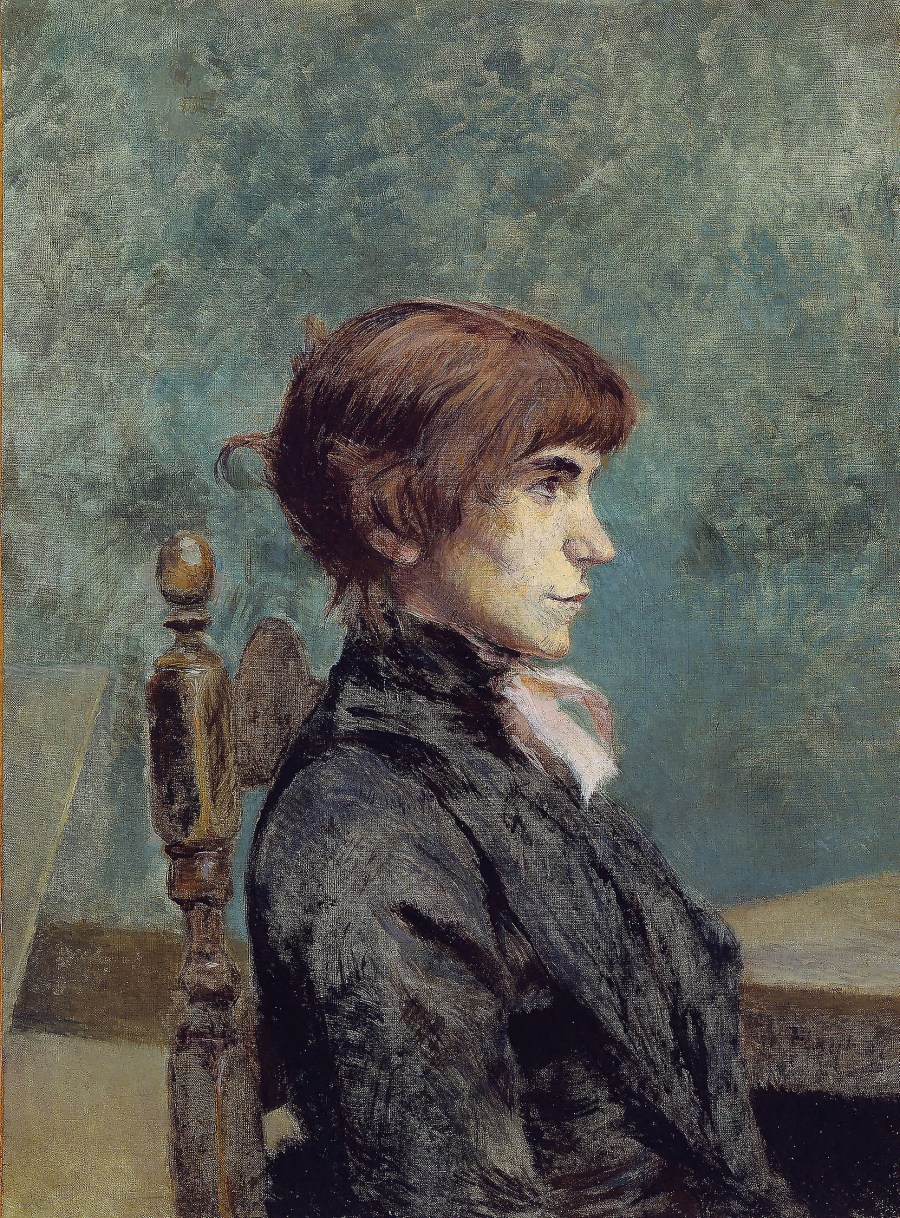
Collaboration

By Billy Collins

Featured Image: “The Past and the Present, or Philosophical Thought” by Henri Rousseau

The fox collaborates with the chicken.
The motorcycle collaborates with the tree.
The knife collaborates with the throat,
and you want to collaborate with me.

Your watercolors and my poems,
side by side for all to see.
You say it will be interesting and fun.
There you stand, ready to collaborate with me.

The lemming collaborates with the cliff.
The propeller collaborates with the manatee.
The wineglass collaborates with the floor,
and you’re all about collaborating with me.

Your photographs and my poems,
facing each other for all to see.
It will be experimental and fun, you say,
since the time has come to collaborate with me.

The hammer collaborates with the thumb.
The razor collaborates with the goatee.
The mousetrap collaborates with the mouse.
Are you sure you want to collaborate with me?

Your poems and my blurb,
together in a chapbook for all to see.
You say it would make you feel better.
I see why you want to collaborate with me.


Read More
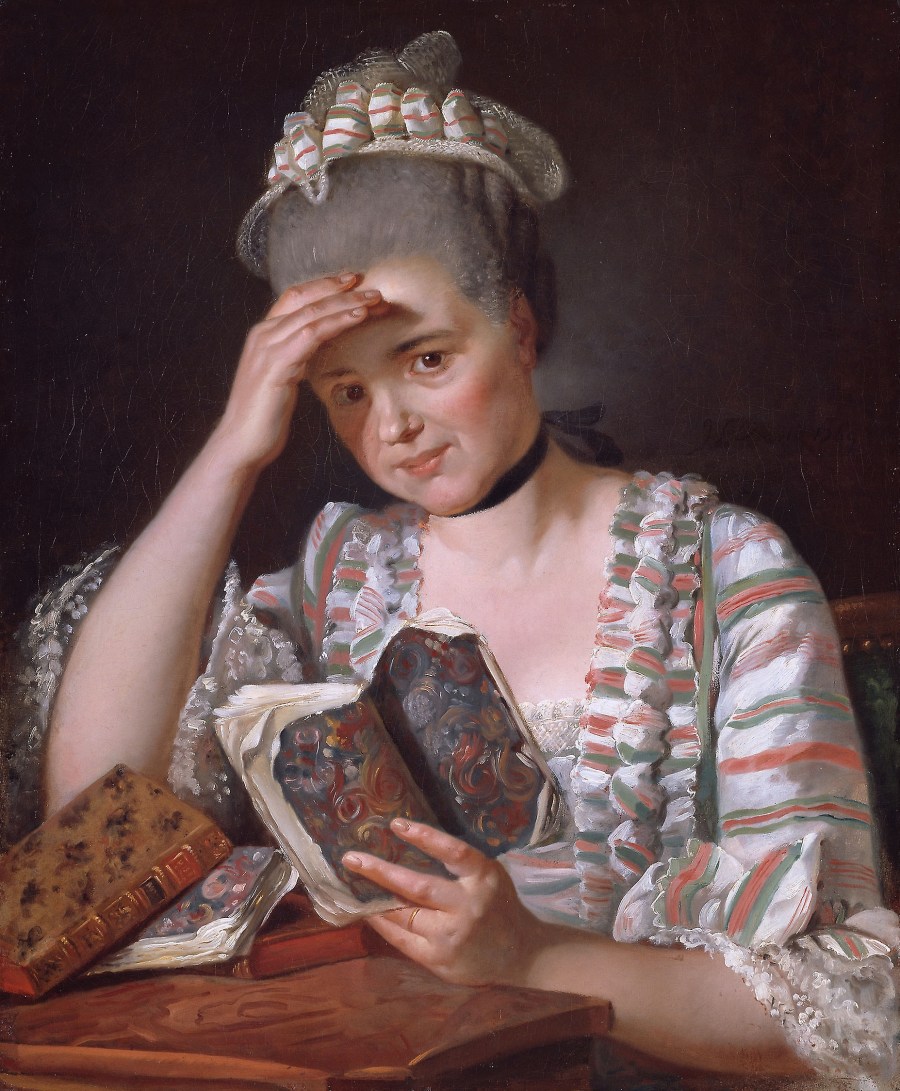
Preface to Making It Up

By Ron Padgett

Featured Image: “Antique Illustration from The Grammar of Ornament” by Owen Jones

I don’t remember who suggested the idea of an evening of spontaneous poetry collaborations by Allen Ginsberg and Kenneth Koch, but I think it came up during a taxi ride the three of us took, six or so months before the event, in which Allen and Kenneth started joking about and even parodying each other’s work. This playful conversation culminated in their public performance of Wednesday evening, May 9, 1979, at the St. Mark’s Poetry Project.

As the date approached, both Allen and Kenneth—who had never taken part in such an event—started to express some misgivings, as did I. A month before the event, I wrote to them, “I’ve been wondering about some details of your May 9 extravaganza here, and I thought I would ask you about the format of the evening. Do you want to set any rules? Or would it be better to set none and just let fly?” Both poets thought it best to have some structure to work with, but they left it up to me. So I drew up a list of poetry “assignments” to surprise them with.

Read More
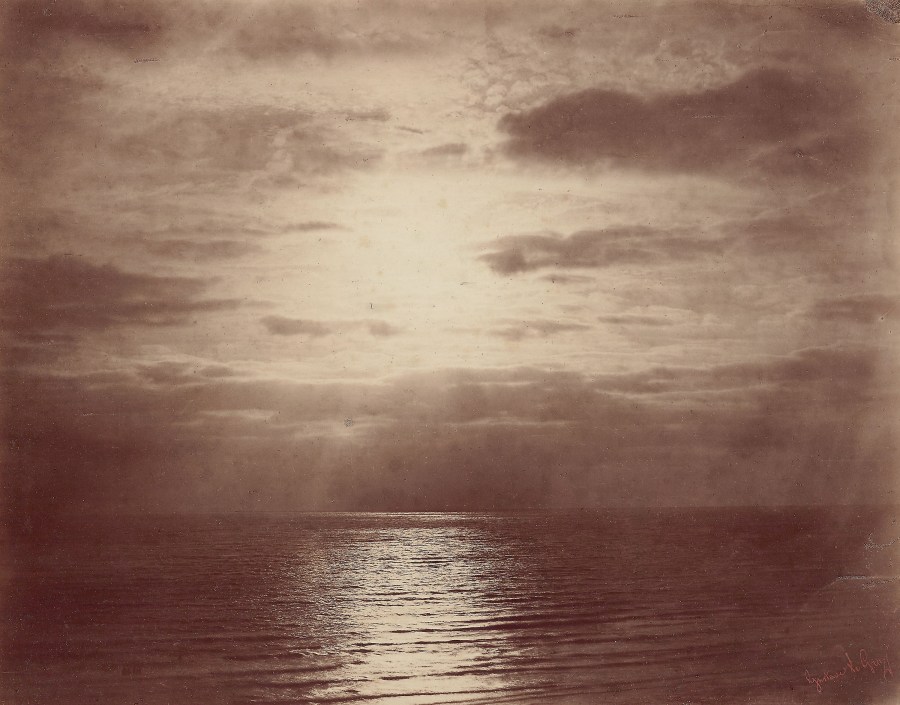
Some Remarks on Collaboration

By Tom Whalen

Featured Image: “Capucine” by Maurice Pillard Verneuil

  • I’m trying to think what isn’t a collaboration, but when nothing comes to mind, I wander about my Arbeitszimmer, scanning the shelves, lost in thought, before returning to my remarks concerning activities requiring, if not a multitude, at least one other mind.
  • “To be a fly on the wall,” thinks the narrator of a nonexistent novel on her way to her mother’s wedding to a fifth husband, clear indication the mother knows a thing or two about collaborations.
  • Translators raise their heads from dictionaries now and then to ponder how to translate, for example, a sentence by Robert Walser that I’m convinced demanded of him a close collaboration with nature: “Den Fischen fehlen die Arme.” Should I and my more experienced collaborator (Susan Bernofsky, in this case) choose the concise “Fish lack arms” or more closely mirror the music, e.g., “On fish one finds no arms”?
  • Proust in one hand, Ionesco in another, I strolled along the Champs-Élysées as if I were the saddest flâneur on the road to everything.
Read More

Collaboration Queens (Or How the Chapbook, ABBA: The Poems, Came to Be)

By Denise Duhamel and Amy Lemmon

Featured Image: “The Seasons” by Alphonse Maria Mucha

As we wrote “Class Action,” our first poem together (alternating one line at a time, on email), Amy noticed we were writing in abba rhyme, which gave her the idea of writing tangentially about ABBA, the pop group. This lucky association led us to begin a series of poems with two constraints: the stanzas had to be written in abba rhyme, with a mandatory mention of ABBA, the singing group, in each. As we built up our confidence, we sometimes added a third constraint. In one poem, each line had to end in a long “o” sound; and in another, each line had to contain a palindrome, as ABBA is a palindrome. Although we stuck with the rhyme scheme (with allowances for occasional, or more-than-occasional, slant rhymes), we liberated ourselves from metrical restrictions. While Denise is comfortable in the prose poem and free verse, Amy tends to write almost unconsciously in a loose iambic pentameter or tetrameter. But we didn’t insist on uniformity of rhythm. This gave us the leeway to go with the flow, quoting lyrics or song titles, creating dialogue between characters, and injecting other bits of pop culture into the poems.

Read More
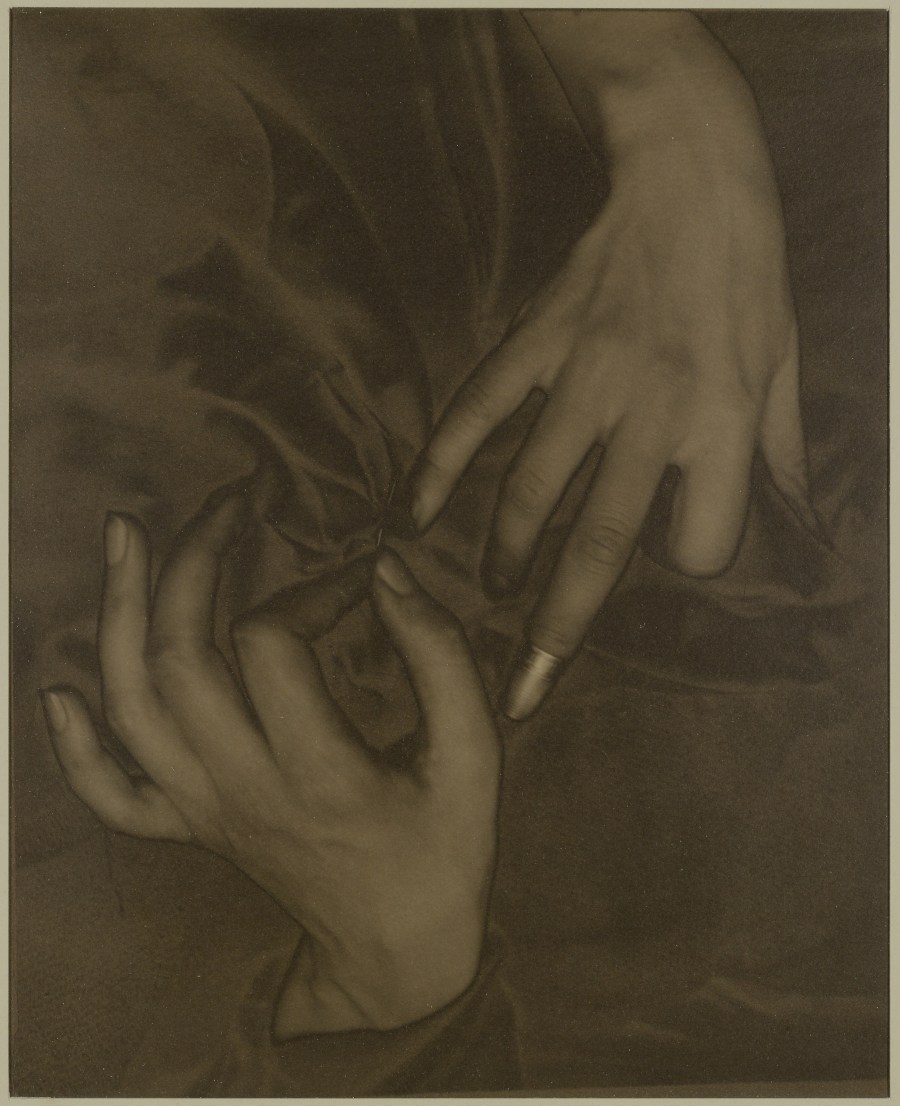
Changing the Record: A Poetry Collaboration in the ’70s and ’80s

By Ron Horning and David Lehman

Featured Image: “Four Crowned Cockatoos” by Samuel Jessurun de Masquita

We met late in 1972, when we lived two blocks from each other on Riverside Drive. Though Ron’s room in his apartment was easily quieter than David’s room in “The Barracks,” thus named because of the decibel levels achieved by the inhabitants (David’s roommates were a jazz disc jockey and poet, a veteran of the Marine Corps just back from Vietnam, and a TV-watching, football-twirling specialist in East Asian studies) and their many guests, Ron’s room was also less private, more subject to interruption, and did not have its own bathroom. The first poem we wrote together was written at the Barracks, and so were most of the others in 1973 and 1974. From almost the beginning, the idea was to write a book of poems, but the book never really gelled, either because there were too many other things to think about or because we didn’t know what, if anything, the poems and lines we were typing and writing added up to. We had a working title, or at least we toyed with some candidates. (A Phone of One’s Own captured David’s fancy for a time.) Many poems we started were left unfinished, and even the attempt to write poetry together stopped abruptly in 1975, when we both married for the first time, David in January, Ron in July.
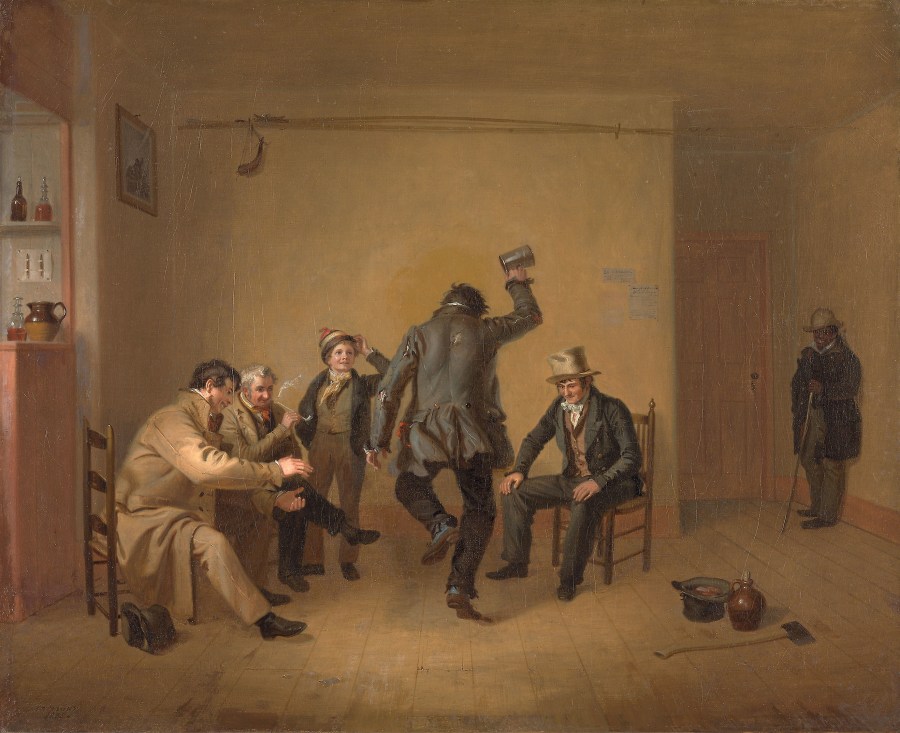
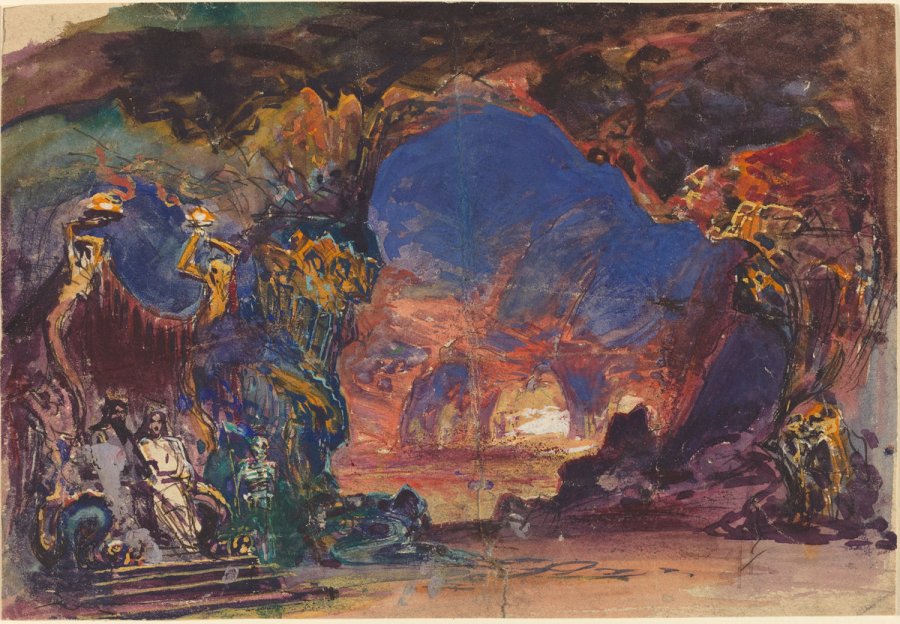
Read More

The Story Behind “Penguins”

By Patty Mitchell

Featured Image: “Little Penguin” by Elizabeth Gould

Located in Athens, Ohio, Passion Works Studio supports collaborations between artists with and without developmental disabilities. The studio began as an experiment in 1996: what would happen if I set up a collaborative art studio within a sheltered workshop, a supported work place for people with developmental disabilities? A grant from the Ohio Arts Council allowed us to put the idea in motion, and through additional grants and sales a second professional artist was added to the staff, Wendy Minor. Wendy and I brought to the table our understanding of materials and our art process; the participating individuals brought with them their unique way of experiencing the world and a natural ability of fearlessly jumping into art-making. For fifteen years now, Passion Works has offered a relaxed and informative environment for people to collaborate and investigate ideas. The synergy of excitement and discovery is conveyed in the resulting artwork: playful, vibrant, unpredictable.

Read More

Where the Path Leads: Collaboration, Revision, and Friendship

By Lawrence Raab

Featured Image: “Path Through the Fields from Momoyogusa-Flowers of a Hundred Generations” by Kamisaka Sekka

Many years ago—and I really don’t want to remember exactly how young we were—Stephen Dunn, a friend but not yet a collaborator, was traveling from New Jersey to Yaddo, the artists’ colony in Saratoga Springs, New York. He stopped for the night at our house. During the course of the evening I recall bemoaning the fact that I hadn’t written a poem—maybe not even tried to write one—in over a year. I had writer’s block, I announced, as if it were an identifiable disease. I had not yet learned the wisdom of William Stafford’s famous—or infamous—remark that there is no such thing as writer’s block; all you have to do is lower your standards.

Of course Stafford didn’t mean you ultimately aim for less. You just have to give yourself a break to get started, and accept whatever occurs to you because “something always occurs” to us, as Stafford says in his essay, “A Way of Writing.” Let the act of writing carry you beyond your first inevitably dull words, to better words, better sentences that may give you access to something waiting in your mind “ready for sustained attention.” This is the writer’s daily work—putting some words down, then rearranging them, adding, then subtracting, looking for a shape, a focus, “the poem’s informing principle,” as Stephen Dunn puts it in his wonderful essay, “The Good, the Not So Good.” If that’s inspiration— and I like to think so—it’s earned by the work of writing, not given as a gift of the gods, like an autumn leaf fluttering down significantly on the poet’s head.

Read More

New Ohio Review Issue 10 (Originally printed Fall 2011)

Newohioreview.org is archiving previous editions as they originally appeared. We are pairing the pieces with curated art work, as well as select audio recordings. In collaboration with our past contributors, we are happy to (re)-present this outstanding work.

The Last Speaker of the Language

by Carol Anshaw

Featured image: Fernand Lungren. In the Café c. 1882-1884. The Art Institute of Chicago.

All right. Here we go.

Darlyn teeters high on a swayback wooden ladder she has dragged in from her mother’s garage. From here she can reach around blindly on top of the kitchen cabinets. She has struck pay dirt—a tidy arrangement of small, flat bottles. She doesn’t have to look to know they will all be pints of 5 O’Clock vodka.

She backs down the ladder, finds a grocery bag, goes back up and tosses in every bottle she can reach. Then she moves the ladder further along the way and clears out the bottles above those cabinets. She pours the liquor down the drain in the sink. 5 O’Clock is not for the amateur drinker. When she has the presence of mind, Darlyn’s mother filters it through a Brita, then mixes it with lime juice and ice and ginger ale, her version of a Suffering Bastard. After a while, though, she drops the lime and the niceties and in the end skips even the glass.

Read More

Layover

by Erica Dawson

Featured image: Henri de Toulouse-Lautrec. The Englishman (William Tom Warrener, 1861–1934) at the Moulin Rouge, 1892. The Metropolitan Museum of Art.

I’ve half a mind to make a move.

I stayed in Archer City where
I made Larry McMurtry proud
by downing one too many shots
of ice-cold vodka, tumbler-sized,
then yelping all alone to “Sweet
Home, Alabama” while the band
reprised “Knockin’ on Heaven’s Door,”
packed up, and quit the Legion dance.

I thought I didn’t know that song.

I two-stepped with a cowboy, kissed
a Yankee (wrong), regretted it,
and found my cowboy once again:
the Yankee looking like a young
Paul Newman and the cowboy like
I’ll bed you, hard and hot in jeans.

What was it in the Texas air
that brought Delilah out of me?
Was it the quail and wild hogs?
The memorial on the Court House lawn?
The BBQ cooked from a cow
that tasted like a slaughtered cow?

What hiked my temperature? It climbed
the diving board and took its clothes
off, piece by piece, as if last May
were my last picture show, last chance
to sweat with strangers in a Spur
Hotel room, quaint with double beds
and Byron on the table, me
as Cybill Shepherd, starring in
her first movie as Jacy Farrow,
walking in beauty like a night
too much for such a little place
where the town Indian said she
was the town Indian; and, my
sweet cowboy said I gave him eyes,
said I was high-heeled trouble, said

I have the tendency to lead.


Read More

Entropy

by Tracey Knapp

Featured image: Félix Vallotton. Five O’Clock, Intimacies VII (Cinq Heures, Intimités VII), 1898. The Metropolitan Museum of Art.

All those times I crossed the bridge to see you
and not one lap dance. We haven’t held hands
since that time in the rain forest, chanting Lord
knows what in Sanskrit. I saw my first wild boar there
but even he took off for the brush. Someone always ends
the moment. Another call dropped on your iPhone,
the cosmic forces at work. My dog sighs and stares
at my flip-flop from his pillow. At work, the office
is separated into orderly earth-toned cubes.
My friends, we gather here today
to sit exactly ten feet apart. I am exactly
one hour away from being drunk enough
to call my psychic in Tuscaloosa, two
commercials away from another headache
and Nova on TV. The universe expands, shifting
its contents accordingly. There was a time when
we were closer. Helen Keller learned to speak
by holding her teacher’s face, feeling the words form
and fall out of her mouth, the throat buzzing with thought.
I also like to touch people while they talk,
but not about professional sports. I love
and hate eye contact, don’t you? One glance
from the Girl Scout and I get the thin mints. I don’t get
all that crap about divine connection,
but there is something to be said about
a collective consciousness if you consider how
everyone likes vampires again. If I had a spirit
animal, I think it would be the wild boar.
We never talk about it anymore and I miss that
about us. The only thing that could prevent
a greater distance forming between two stars
hurtling though space would be some entropic net,
a giant wet towel. While you’re crossing
the state line on your last gallon of gas,
a streetlight deteriorates over the Safeway
parking lot. A shopping cart rolls
into my Dog Chow and the whole bag
splits open, the pellets skidding and colliding
across the pavement, two strangers scrambling
to gather them, to fill the bag together, to make it right.


Read More

Women’s College

by Kenneth Hart

Feature image: Antoine Watteau. Head of a Man, ca. 1718. The Metropolitan Museum of Art.

I didn’t think of myself as a sex offender
or as someone whose sex was offensive
until I walked across the campus
of the women’s college. I tried to be
as inconspicuous as possible, looking away
when someone jogged past with a scrunchy holding back her hair
and breasts bouncing just a little beneath a sports bra,
making believe I had some business there
by putting a purposeful stride in my step.
I know I carry the chromosome of hatchet murderers and rapists,
it’s no wonder my hands felt like mallets
at the ends of my arms.
After awhile I sat on a bench
and tried to look at the oval pond,
the trees and manicured shrubbery in front of the study hall,
as passing girls gossiped in the late-January sunlight,
some of them tanned from winter break, or slightly heavier
after a month of their mother’s cooking.
So I got up to leave,
making sure my shoulders looked slumped and unathletic,
a little afraid of myself now,
and massively unaware
that one of them might consider my presence
a welcome relief.


Read More

When It’s That Time for Piranhas

by Michael Derrick Hudson

Featured image: Utagawa Hiroshige. Swallow and Wisteria, mid-1840s. The Metropolitan Museum of Art.

Everything has already blossomed: my neighbor’s wisteria
has gone hog-wild across the ragged frontier of
our mutual fence, the soft green tendrils
of it violating international borders

and breaking treaties. Achtung! So let me tell you about

my neighbor’s wife: she’s delicious! And every morning
I hear all the birds in Fort Wayne, Indiana, go

Yippee-yee! Yippee-yee! Which is how spring jibber-jabbers
while her husband blows the leafy detritus

off their depilated lawn. Something’s missing. I want to be
indigenous with her, something somehow prehistoric—

I want her in Brazil. I want a quiver full of spindly arrows
to fetch our breakfast’s blue-tailed skink or

supper’s three-toed sloth. I want ritual scarification, coherent
rites of passage. I want grandpa’s thighbone
whittled down to a splinter

and dangling around my neck.
I want to help her stitch banana leaves, scorch
grubs against a rock. I want her to smile at me like a jaguar,

each incisor filed to a point. I want poisonous frogs, seashell
currency, enemies who make sense, a copper
plug through my lip. I want

a shameless squat. I want mumbo-jumbo witches to shun and
screeching ghosts to appease. I want her to take me

down to the river where we’ll knot and
inch our way across. I want her to trust me to be the lookout

for piranhas. I want to know when it’s that time for piranhas.


Read More

Sixteen in Vegas

by Anastasia Selby

Featured image: Edvard Munch. The Girl by the Window, 1893. The Art Institute of Chicago.

It’s Vegas and I’m sixteen years old. I’ve been playing in the arcade for hours; I’m leaning on the console of Mortal Combat, pushing the quarters my stepdad has given me into the slot one after another, wearing the tips of my thumbs down with their ridged edges. I’m bored as hell and my parents have abandoned me in this wasteland, I can practically see the tumbleweeds and hear western music as I walk across the patterned carpet. I pass all the men and women with their heads almost touching the bright lights of the slot machines, their hands like lobster claws around the levers, as if they’re waiting for the secrets of life to come pouring out when they hit the right combination. The secrets must be what they see on billboards, what they see in magazines. The arcade smells like the sweat of children and sounds like broken glass.

Starting at the Excalibur, a gaudy Disney imitation that should have been torn down years ago, I walk from casino to casino, reveling in the transition from air-conditioning to the surreal heat that cloaks everyone who ventures outside in a thin layer of plastic wrap. I stare back at the men who gawk at me on the sidewalk as I walk past them, men who are over twice my age and probably have daughters half my age. They must give their daughters baths and put them in their pajamas at night, patting their heads as they tuck them into bed. I can’t remember one time my father actually tucked me into bed. He left when I was two.

Read More

After Rosenkavalier

by Natania Rosenfeld

Featured image: Goya (Francisco de Goya y Lucientes). Lovers Sitting on a Rock; folio 24 (verso) from the Madrid Album ‘B’, 1796–97. The Metropolitan Museum of Art.

We talked about her,
the Marschallin, only
thirty-two, and her lover,
seventeen, though the singers
were fiftyish, and we ourselves
are approaching there, though our
lives have not reached their
pinnacle. Will we ever
roar with our whole voice
and soul, cry out that way
with all life crying through us,
or will we walk on, obedient
and tired in our traces, as the round
orange sun goes down
across the long, white prairie?

In our little warm car, we drive
into the pale arms of the fields,
leave behind the mall and
the Marschallin, return to the small
town to lie under the glassy moon
and dream of a gold curtain,
of young limbs entangled,
and renunciation clad in violet.


Read More

The Ante

by Rodney Jones

Featured image: Gustave Courbet. The Source of the Loue, 1864. The Metropolitan Museum of Art.

A few sonnets about nature and the Greek gods.
Many free-verse poems in all lowercase letters.
Huey wrote of madness, Maddox of possums.
John played the sadness of empty stadiums.
Two berets, one silver-tipped cane, tweedy blazers.
In most Natalie poems, she took off her clothes.
The year of the Tet offensive. Wallace in Montgomery.
We read James Wright, Richard Wilbur, Anne Sexton.
One Friday an ex-guidance counselor from Jasper
leapt through the window of the cafeteria, shouting
“I am the son of Jesus Christ! Behold the rapture!”
But nothing much happened in Poetry Writing 301
until Walter C. Avery wrote that a black swan,
born in the infralapsarian brain of a garbage dump,
would crack the codes of the Southern Baptists.
And for this jack-surreal, mildly apocalyptic truffle
was taken for near-genius material, practically
a second Edgar Allan Poe, until Sam Maisel
submitted his “Poem for The Worksheet Typist,”
which made everyone consider how scandalous
it must have seemed for her, a local woman,
a seamstress, and mother of Christian athletes,
to run across “I know you think you’ve seen it all before,
but this is duck rape, feathered love.” And some
in the critique afterward, praised the line-endings;
one person even mentioned “The Second Coming,”
which, admittedly, made me blanch with envy,
so I wanted to say something about how
sometimes the subject is not what you think
or the ones you imagine you are talking about
stand abruptly and begin to talk back to you,
but spring was bearing down on the workshop,
ripping out pages, grinding the opinions to nubs.
So much energy in the streets—demonstrations,
happenings, awakenings—so many instances
of sudden and involuntary enlightenment,
though mostly my friends and I spent our nights
on Sixth Street drinking beer at The Chukkar
or crouched in a huddle around a record player.
By the time I thought of Sam’s duck again,
May had slipped into June and June into July,
and what is poetry in a copper tubing factory?
A cloud would fan out around the tubes
as the crane lifted them from the soaping vats
after they had softened in the furnace.
My job was to crimp a point on each of them.
Then the next man would carefully run them
through a die. Down the line I could see
the process repeating: the furnace, the point,
the die—the tubes and men diminishing.
All night the saws screeched and whined.
The pointers clattered. The press roared.
That was the beauty of it. You could sing.
No one would hear. You could say anything.


Read More

The Rush of Losing

by Daniel Larkins

Selected as winner of the 2011 New Ohio Review Fiction Contest by Don de Grazia

Featured image: Henri de Toulouse-Lautrec. At the Moulin Rouge, 1892–1895. The Art Institute of Chicago.

10. The race is over before it ends.


7. Tim leans forward. His blue dress shirt is untucked, unbuttoned, and his stomach shoves the undershirt out of his pants. When he loses it’s like a win, because when he wins he doesn’t want to keep on betting. Losing answers the question, Why continue? When he loses, he likes to think he can parlay that into a victory, persevere to make up for the loss.

All the TVs are muted. In his shoes he can feel the rumble of Holland Tunnel traffic from a couple blocks away. His twin boys are twelve and his fingertips are black. His nails are short and dull. His wife Meg used to have monthly manicures and the designer kitchen she wanted, but no more would she get a stupid room for hanging pots and pans and whatever else she liked to hang from racks and nails.

Tim leans forward. He has a hangnail, and it bleeds and stings, and his left hand balls into a fist on his thigh and his other wraps around a rolled-up Racing Form. It’s a tool, a bat, a weapon.

Read More

Times Pieces

by Susan Morehouse

Feature image: Jean Charles Cazin. October Day 1890-1891. The Art Institute of Chicago.

My husband is walking out the door with an expensive watch, carrying it in the box it came in. “Are you getting it fixed,” I ask.

“I’m going to see what it’s worth at the pawnshop on Main,” he says. “You could just get a Timex,” I say, “if you want to know what time it is.”

“Sure,” he says, “or I have that watch you gave me. It just needs—”

“Batteries,” I say.

“Yeah,” he agrees, “and a band.”

The expensive watch was a gift from a man whose biography he wrote on spec, a book no editor has taken yet, even though Henry, the man behind the success of a major tabloid, implied it was a done deal. That was before the financial collapse. Henry gives these watches to anyone he needs a gift for. He buys them in bulk. Need something for a sheik? Here’s a Millage.

We’re broke.

Read More

On the Strand

by Dave Kim

Feature image: Edgar Degas. Beach at Low Tide (Mouth of the River), 1869. The Art Institute of Chicago.

My mother’s boyfriend was a man named Bang. I never learned his first name. He’d been an officer in the Korean army before coming to the States, and he would yank me out of bed at six-thirty every morning to do jumping jacks. I was a doughy nine-year-old and he was trying to make me leaner and tougher. If I got angry, he would dare me to hit him and stand up for myself, get it out of my system. On Sundays we’d go to his boxing gym to watch the men pound each other to pieces, which terrified me at first and then made me dream of days when I’d be big enough to put on gloves and whomp Bang in the gut. I needed a good ass-kicking, he would tease me in his throaty Korean. Anytime I wanted, I could challenge him. Mom didn’t get involved.

The three of us went to Santa Monica Beach one Saturday afternoon to ride our bikes on the Strand. Bang would take me fishing on the pier sometimes and when we rode past it that day, I thought about how much I would rather be out there with a basket of calamari and a cherry Icee, watching our poles nod on the railing. It was one of those perfect afternoons when the California coast looked way better in real life than on the glossy postcards they sold on the boardwalk. Couples were stretched out on the sand, half-hidden under candy-colored parasols. The sky was ablaze in orange light. But I didn’t care about the scenery. All I really saw was this endless bike path and its dashed yellow divider. The back wheel on my hand-me-down Schwinn was grazing the brake pad with every rotation and I lagged at least a hundred yards behind.

Read More

Saying Goodbye to Dad

by Kate Fetherston

Feature image: Pierre-Auguste Renoir. Near the Lake, 1879-1880. The Art Institute of Chicago.

My dad died alone in a VA hospital
as July sun beat without mercy into the raw

seesaw of breath busting seams between
each cell. Third spacing doctors call it

when cell walls no longer sustain
boundaries with integrity, fluid

sluices into interstitial no-man’s
land and overpowers whatever little

plans were made for a garden and some
trees. When my brothers and I got

the news and flew in from the various
places to which we’d fled, I’d just split

on my first lover after years of her
threatened suicide, bouts of drunken

depression, and refusals to take
her medicine too numerous

to recount. Her view: I’d been trained
strictly for fixer-uppers, too stupid

or stubborn to leave, but, waxing
romantic, she’d croon, “You’ll do me

for a rough old mate.” The day she smashed
my stuff into the carpet and poured

ten pounds of flour over
everything, I might have stayed for

more of the same, but I threw
crumpled clothing into my pack,

startled when she whispered, “I’m
just like your crazy

old man, aren’t I?” I didn’t
answer because we both knew

Read More