Keepsakes

By Tanya Bomsta

First, it was a painting of sunflowers. He had always been afraid of them, had always thought their gaudy yellow petals blossomed from something sinister. And their height—it was unnatural, he thought, for a flower to stare you in the face. They were plants, not people. Christopher was tall himself, just about six feet. Tall enough to meet a short sunflower, but not quite tall enough to tower over one. It unnerved him, the way they seemed to look at him, the seeds in their disks like so many spider eyes. He shuddered every time he drove by the boundless fields of them on his way to work, with their leggy stems bending under the gross weight of their heads, their huge blank faces open and screaming in the wind.

But there had been a painting in the museum, and he hadn’t been able to stop looking at it. In the background, a nasty storm with deep purple clouds billowed against a bruised sky. In the foreground, the shadowed, golden petals of three sunflowers were being buffeted by the fierce gusts. Dark sky, dark flowers, the threat of storm so strong he almost turned his head and looked out the museum window to see if it was raining.

Read More
Open Mic at Tony’s Bar and Grill

By Tracey Knapp

There’s a man with the rope of a cowbell curled
around his Captain Morgan. He whispers his poems
from a stack of papers, sees your own and nods,
buys you a drink. No conversation needed.
Another person adjusts their blonde wig and quietly
sings Mi mi mi mi meeeee repetitively. You wonder
what song they’ll actually sing—their wig slightly off tilt.
A man cradles his ukulele like a baby. Everyone stares
into their drinks, performing their rehearsal, rubs
the dark worn wood of the bar. You doodle stars
on your pages. Half the people here will only show up
once. No one will tip, and they’ll leave their empty glasses
on the sticky tables, their printouts of songs and poems
on the floor. You were the first to arrive, not thinking
to stop home and put on something more formal
than yoga pants. It doesn’t matter. There is some
common urge to perform whatever thought you have,
to share with these strangers. It’s Sunday night
and raining. Why sit alone silently on your faulty couch
with the endless drone of 60 Minutes on the television,
the single-serving life of pasta and tomato sauce, the rain
driving the ants into your kitchen? Someone taps
the microphone, says HELLO, HELLO. The wig rises
to the stage, sings “I Fall to Pieces” unconvincingly.


Read More

A Working List

By Tracey Knapp

  1. Tell your online boyfriend your real age.
  2. Sweep the seeds and leaves from the porch. The winds were harsh last week.
  3. Practice sneezing more quietly. Stop the throat-scratch hacking. Who
    could sleep next to that?
  4. Why are you still single? Ask your friends. They know everything about
    your failures.
  5. Dump your shitty friends who can detail your failures verbatim back to you.
  6. Do the dishes. Remove your socks from the bed sheets.
  7. Bobby pins are not Q-Tips. Baby wipes are not bathtubs.
  8. Commit to eating like a person. With other people. Stop wasting your
    money on wine and prepackaged food at the 7-Eleven.
  9. Spend more time talking to yourself outdoors at night when stoned.
  10. Stop drinking wine. Stop drinking. But only when alone. Except if you
    were drinking with people beforehand, and you came home to your dog.
  11. Watch less TV. Except, re-watch the movie Frances Ha. You are a dancer,
    and you have dreams.
  12. All those goddamn books you buy and barely open.
  13. Make the world more beautiful! Take one earring, preferably dangled and
    missing its mate. Hang it from an old nail or forgotten hook. A quiet,
    lucky place.
  14. Quit losing earrings. Quit earrings. Quit things.
  15. Put your old jeans in a box and then the attic. And someday when you
    move into a new bright house with a new love, you’ll pull them out, thin
    and mothy, you’ll delight: I CAN’T BELIEVE IT! THEY ALMOST FIT!
  16. Grow things. Give away things. Give away your neighbor’s excessive
    lemons. Your tight jeans.
  17. Recycle more. Stop hoarding the little gifts that someone gives you when
    they kind of liked you because they barely knew you. The broken ceramic
    rabbit isn’t even emblematic.
  18. Appreciate your one good knee, your moisturized cuticles, and the hair
    that grew back on your head after you got rid of that fucking IUD.
  19. Reach into that folder of old letters pull out the one with the nicest paper.
    Don’t read it. Just touch it and let it be the cramp in the gut of all the
    people who used to love you by hand.
  20. Celebrate your old-man dog. In the following order, give him: a walk, a
    scratch, a bath, a treat, a nap, a brush, a walk, a treat, a nap.
  21. Write down a list of what you could do to be your best.
  22. Narrow it down to ten.

Read More

Absolution

By Kathleen Loe

The gravelly edge of the old macadam
crunches when Daddy Man veers, slightly over
his two-cocktail breakfast limit—whoa!

And Mama’s all, “Bi-ill!”, sherry sloshing
in her Dixie cup, me and my altar-boy brothers
welded to the backseat of red Chevy summer

vinyl, our own trinity, looking and not looking
for a tiny worn-out sign set meekly back
from the scorching road—St. Lucy’s Catholic Church,

faded and falling away, not the go-to
for the church-going in this neck of the north
piney woods. Far from a hundred cathedrals

sinking in the soft black silt of New Orleans,
we aim toward a single consecrated
gray rectangle stuck in the Chitimacha’s

red clay of North Hodge. Lucky pagans,
or even Methodists, might miss the turn
and be flung past the money-stench

of the paper mill, or further still to actual
wet towns with no need for Jubilee—
Jubilee, cross-dressing bootlegger

come to wax our floors and pocket the cash
and slip my mama her black-market hooch
every week in our dry-as-dust little podunk town

in East Jesus North Looziana, the pure
whitewalled tires of her luscious pink
booze-bought Caddy cutting trenches

in the sweet St. Augustine grass
of our front yard. It ain’t me that’s drunk
in this story about having to go to church

every damn Sunday morning all summer long,
no matter how crazy hot, no matter
if my best friend Bernadette is fixin’ to go

waterskiing on Black Lake instead,
worse thing about that being the snakes
you might wake falling in the wrong spot,

but I’d still pick some dozing water moccasins
over this weekly ecclesiastical misery.
Any minor road accident would be welcome

I pray, I pray we hit a huge nine-banded
armagorilla if it means I don’t have to go
to Confession today, having traded

The Examination of Conscience last night
for finishing Catcher in the Rye under the covers,
accompanied by muffled laughs from Johnny Carson

in my parents’ bedroom. Okay. Pinched
my brother, lied to Mama, ate my best
friend’s Twinkie. Wished and wished

that I was the pretty one, instead of her.


Read More

Tapping

By John Bargowski

I’d already watched him do it a hundred times,
my old man talking me through each step

since I was a young kid, forever warning me
about blow-off, all the hazards

of pressurized air as I stood behind him silently
mouthing: toggle, regulator, output port,

and watched him slide the tap into the spear
of the barrel and lock it down.

So as soon as I’d grown strong enough
to handle a full barrel,

maneuver it around the beer cooler, I followed
him into the basement of the D&J.

I can still hear the rattling compressor kick in,
feel the blast of CO2 sizz past my face,

the ache from the squeeze of his chapped hand
on my shoulder that big day

he shadowed me as I straddled the barrel
then opened the cut-off valve

and let the Rheingold stream through the tubing
to the upstairs spigot.

And after I sopped up spillage from the lip
of the bunghole, tumbled the empty

onto it’s dimpled belly and rolled it out
the double-sealed door into the cellar

then stacked it in a webby corner, I wish
I’d gone back inside, to finish the job,

scratched my name next to his on the rime
coated walls of the walk-in cooler.


Read More

Abu Hani’s Middle Eastern Foods and Gifts

By Sarah Cypher

Kelly took a bookkeeper/handyman job at his friend’s deli. He showed up at Abu Hani’s whitewashed corner shop in East Palo Alto three mornings a week. While Abu Hani prepped the food for the lunch crowd, Kelly squared the receipts and paid the bills. He made sure all the little lights in the deli’s sign were working and stocked the anemic rack of trinkets—hamsa talismans, blue-eye pendants. Then, if Abu Hani was still busy, Kelly sat at the register and charmed customers with his radio-announcer voice. The job, to him, was the most dignified way to hide that his energy was draining fast through the sieve of his sixties.

One morning when he was entering receipts in the side office, he heard a customer talking to Abu Hani. Kelly hovered at the door—he couldn’t place the accent, though its dense consonants were almost familiar. He poked his head around the corner. Over the top of the deli case, the guy looked like any of the old-country Arab geezers who came in for their weekly breakfast olives: that gull-wing hairline gelled back from the brow, hair so silver-bright it made a blurry reflection in the polished deli case. Abu Hani had stopped working and was leaning his bulk on his two hairy fists planted on the counter.

The man noticed Kelly standing there, and he swept up his parcels and exclaimed to Abu Hani, “But you are busy! I am keeping you from your day.” In a last flurry of goodwill, he paid his bill and left.

“New guy?” Kelly asked.

Read More

Upcountry Detour

By Sydney Lea

An old man sluggishly waves a hand.
He looks spellbound, as if by an apparition:
A stranger, me, in a place few visit.
I’m sidetracked into my own odd spell—
Both sadness at bleakness and fascination.
There’s a sign in another dooryard, bizarre:
Atrini, World’s Finest Files.

A softball arcs on the blistered common,
A father pitching, a son at bat.
One newer car, a Buick, glitters
Like gemstone in front of a postage-stamp store.
Back lots full of witch-grass show unwheeled pickups
Dead amid whips of lilac and sumac.
I drive out of town past further signs:

BECKYS TRUCKERS HEAVEN ONE MILE
COME IN AND HAVE A “CUP” WITH BECK
BECKYS CLOSED FOR RENOVATION
Its windows, boarded over with wanes,
In brush beside it, a bedspring, a dryer.
I notice a black cat eyeing a bird
On its roof, too high for him to consider.


Read More

The hardest part of losing her mother in 2020

By Nancy Miller Gomez

was after the memorial, her laptop propped on the table
cluttered with half-empty teacups and books
as her mother’s body was buried two time zones over

in Louisiana. After the eulogies and prayers,
and the few people standing graveside walked away
and all the others clicked off, there was nothing to do.

But she couldn’t bring herself to close the screen.
So she sat a long time watching her own face
looking back, and imagined she was her mother,

and watched to see what her mother would have seen
if she’d been there, and in her expression
she could see the love she knew her mother had felt

that last time they’d talked. And then she was crying
and watching herself cry—as if she was her mother,
and the connection was like a counterweight

she could carry, as though an infinity mirror
had opened inside her. It didn’t matter then,
if she hit the red button that said “End.”


Read More

My Family

By Nancy Miller Gomez

I used to keep old black-and-white photos in my wallet.
They weren’t people I knew, just snapshots of strangers

fished out of a shoebox at a junk store: dark-eyed men
in bomber jackets leaning against muscle cars, or sitting

astride a tractor wearing khakis and an undershirt, a pencil
of mustache above their lip. Women with cat-eyed glasses,

dressed up in feathered hats for a night of gin rickeys,
arms draped across each other’s shoulders and angling

for the camera. Even in grayscale I could see their cheeks
were rouged and their lips were slick with lipstick.

Sometimes I would take these people out and show them
to someone I’d just met. This is my family, I’d say

and watch as they shuffled through the pile of strangers
politely noting how nice-looking they were.

I don’t know why I did this. But it felt good
that all anyone could ever know of me was what I was

willing to show them. This heavyset blonde posing
on the steps of a California bungalow wearing a fur coat

in the obvious heat of summer. These children splashing
in a kiddie pool on a lawn cluttered with beach balls

and hula hoops, a spray of water suspended mid-air
as the camera clicked on the girl’s congenial scream,

her brother’s swashbuckling grin, while father watches
from a folding chair, a beaming fat baby on his lap.

I keep them ready, these people I don’t know. That’s me
I say, pointing at the fat baby. I was happy then.


Read More

Cultural Appropriation

By Nancy Miller Gomez

a mi esposo

I appropriate your tongue,
your lips, your teeth, the smooth
inner skin of your cheek.

I appropriate your rolled r’s,
and soft v’s, the way you say
wolf without the letter L

(the plural of which is wooves).
I claim the patch of hair
in the small of your back,

your brown skin, your mother’s molé.
I appropriate your mother,
rename her La Loca. I appropriate

your appropriators, the conquistadors
who came with their archangels
and saints, Our Lady of Guadalupe

with a chisel of moon
at her feet. I descend the ladder
of your lineage, past missionaries

and rancheros to inhabit your ancestors’
ancestors, the Nuhuatl gods
with feathered names I’ve learned

to pronounce. Coatlicue, the mother
of mortals, Huiztlilopotchli—
the hummingbird patron of War,

Tialoc—he who makes things sprout.
I appropriate sugar skulls and mezcal,
Día de los Muertos. Your pyramids

and painters, your Kahlo and Orozco.
Your poets, Octavio and Carlos.
I take your lowriders

and La Raza, the happy/sad
ting of mariachis singing.
I appropriate each sweet bite

of pan dulce and tres leches
and eat your street tacos
smothered with guac and tapatía.

I’ll take la plaza with its bandstand
and white ibis, the man selling
balloons and churros. And words,

nights filled with appropriated
besitos y sonrisas. Abrazos
and the rest of the Mexican lexicon,

all mine. I’ll take your lime and salt,
your fire and fault lines. And our son,
see where I have appropriated

your blood, your eyes, your love
of basketball, the sport you say
your people created, a game

played by the victors
with the decapitated heads
of their victims.


Read More

Siren Song

By Nancy Miller Gomez


A songbird mimicking the sounds
of emergency sirens has been
caught on video . . . —CNN

A starling has taught himself to sing
like an ambulance. Now the air is filled

with emergencies. Whee-o, whee-o, high and low,
a fire truck rides out of a mockingbird’s mouth.

Grackles impersonate police cars. They dive-bomb
the precinct parking lot, bashing their beaks

into the rearview mirrors of their rivals.
The magpie knows a lovely air raid. Now

she trills like a helicopter, next a chain saw,
then an AK-47. The quail stop, drop

and cower. Take-CO-ver they cantillate.
Whee-o, whee-o, high and low. Juncos,

pass to Vireos. Catbirds steal the flow.
The chickadees have gone on lockdown.

They bore like bullets through the bleeding bark
of the cedars. Crows reload from rooftops.


Read More

Watching the Wind

By Roger Mitchell

Featured Art: Wind by Mikhail Gordeevich Deregus

Lift a small shovelful of snow
               without a shovel
off the stubborn blanket of it
               in the field
and throw it completely away,
               quickly, too,
so quickly you couldn’t find it ever
               crawling
on your hands and knees, calling
               out its name,
puff of purest cloud, smoke
               of frozen fire,
wind’s breath, you,
               with no shovel
and a handful of white air.


Read More

After Petrarch

By Emily Wheeler

A romance developed in my sixtieth year,
which gave me hope, perhaps inane,
surely extreme, especially in my verse,
and affirmed principles of affection and cheer.

My lover was tender, our love serious, useful.
It was as if in the afternoon, gray, crepuscular
an angel had arrived! And we both so secular!
Of course we never spoke of death, its easeful

nest, or the unlikelihood we’d ever alight
together in the tall trees or, quivering,
fly off at the same moment, but that was alright,

because, whenever new or found or at least not lost,
desire adds a drop to the earth’s thousand rivers
and briefly greens the grave, its bed of moss.


Read More

The Missing Poem

By Emily Wheeler

Less a description of a Thanksgiving
I remember than an invitation
to a party that asks many people,
some alive, some dead,
to fill the front hall
of the old house
with such loud joy
at faces long unseen
that few can reach the quieter
fire-lit room at the back
where cheese and bread await,
and raise glasses of the most delicious,
deepest red wine.
No war, no plague, no economic
collapse deflate the mood.
I make a beeline for my favorite aunt
in the corner looking out the window
at the black river. There I join her
bringing the news that the river
doesn’t mean what it used to mean,
now it’s behind her, not ahead.


Read More

Vernal Equinox

By Kari Gunter-Seymour

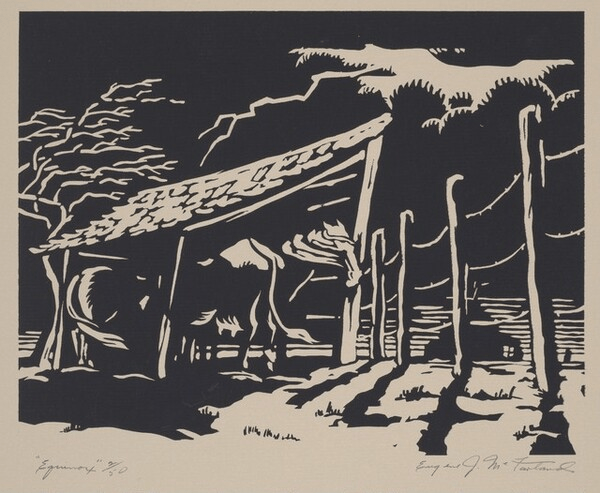
Featured Art: Equinox by Eugene James McFarland

I’ve been thinking about last times
I never knew were the last—
grandma cooing me unconscious,
daddy whistling me home to supper,
my toddler’s toothless grin, tiny fingers
clenching wildflowers, the last time
I prayed, desperate for those departed,
how they flit ahead of us, flying.

Tonight the Big Dipper balances
on its handle. Tepid tree frogs peep
songs of resurrection. One morning soon,
I’ll eat a good breakfast, fill a water bottle,
pack a book, walk the fencerow into the holler,
rest beneath the eagles’ favored perch,
shake off this inexplicable sadness,
two cinderblocks where lungs ought to be,
let spring hold on to me for a while.


Read More

“When We Talk About Mountains, We Talk About Memories”: a Conversation with Ohio Poet Laureate Kari Gunter-Seymour

New Ohio Review editor, David Wanczyk: I’m speaking today with Kari Gunter-Seymour, a 9th generation Appalachian, and the current Poet Laureate of Ohio. Her new anthology, I Thought I Heard a Cardinal Sing: Ohio’s Appalachian Voices, will be published in March 2022. Kari, welcome. Can you tell us about the project generally and more specifically about your hopes for what it will bring to light about Appalachian poetry?

Kari Gunter-Seymour: I would love to do that, David. My hope is that people will become aware that Ohio is part of Appalachia. Because some people don’t know, and a lot of people forget that a quarter of the state of Ohio rests in Appalachia proper, and there are pockets of Appalachian families throughout Ohio, even in major cities throughout Ohio, that still practice those teachings and learnings from their Appalachian heritage and their culture. And so this book is all about bringing notice to that.

I think of us as being Central Appalachians. With roots deep in South and North. You know we had those who came up during World War II and the Great Depression to find work. To seek out the steel mills. We have to remember there was lots of coal and iron mining in Ohio early on, too. And so this book is specifically my dream of being able to give these voices an opportunity to sing. Because they’re different. We’re a little bit different.

We’re more of a mixing pot, I think, here in Ohio, because we are, as we’re finding out, Central. We’re not necessarily North; we’re not necessarily South, but we’re a really good mix of it all.

Read More

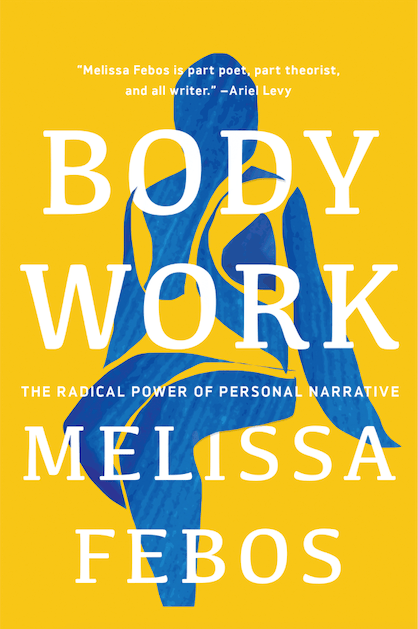
A Review of Melissa Febos’s Body Work: The Radical Power of Personal Narrative

By Morgan Riedl

A body can work and do work in many ways—a body can also not work, or perhaps another way of saying this is a society can make it harder for some bodies to work, in which case a body itself can become work. Our body can be our life’s work—a body of work is the work of our lifetime. 

In Melissa Febos’s recent essay collection Body Work: The Radical Power of Personal Narrative, she investigates how bodies and writing intersect, how to tell the stories of our bodies and why we should. By mixing memoir and craft, Febos’s book does exactly the kind of work it argues is important, underscoring the power of the personal. I can’t help but think of the slogan from Second Wave Feminism here, the personal is political, and how today we might consider the personal is professional—that sometimes this binary, like so many others, subjugates certain bodies.

Read More