I eat it to feel alive, a man confessed to me, teeth crunching through a golden reaper so hot, my eyes watered to be near. When did he feel alive? Lazarus, I mean, after he died and then came back again. We talk about him like a firebird, crumbling to ash and shaking off the coals to rise once more. But it must have been something, you know? Waking from four days of death, frankincense cloying the air, linen bandages unraveling. Did it feel good, like stretching after a days-long nap or did it sting like capsaicin, dormant limbs burning from lack of use? My father once ate a ghost pepper whole. First came the sweat, then vomiting. I think I’m dying, he told me, my life is flashing by my eyes. And that’s another question—what did he see, between? The glow of seven stars in a pierced right hand, a double-edged sword emerging from his mouth—perhaps the world tilted in resurrection like from a devastating concussion, swirling around his sisters’ grief-creased faces. Sometimes I leap from cliffs, cling to bridges, swim with sharks, but I’m not brave enough to suck a devil’s tongue, weep into a pile of sliced scotch bonnets, try to grill another chocolate habanero. Maybe the question I most wish I could ask Lazarus is which hurt more—the fever that burned him to death from the inside, or the rush of God, like a Trinidad Scorpion, like ten million Scoville shocking him alive to the face of a friend?
During the pandemic, after I told you— speaking up never easy—I was lonely for you, your kids, and your husband, you sent me tulips. Just like that, you sent tulips. I wondered, though: did I deserve them? I am sorry I was a drunk when you were a kid. Thank you for not hanging up when I call. The tulips arrived in a creamy box; your note tucked in tissue paper. I am sorry I could not keep your father around or try very hard to stop him when he said he was leaving. I am sorry I did not love him enough. Thank you for choosing such a nice, funny guy for a husband. I am sorry I pursued such a crazy boyfriend after your father left—the shouting, the slamming phones and slamming doors, the walking out, the coming back. The tulips are white and iridescent purple. Thank you for your brown eyes. I believe they are still flecked with green, although sometimes, even now, I am embarrassed to look you in the eye. I am sorry I was so sick from drinking, throwing up, and dizzy. Once, I could not take you to your dentist appointment because I felt shaky and kept falling. You cried, you said nothing works, nothing happens, everything falls apart. Thank you for your clarity. Thank you for your red face, your bursting, when you were born. Thank you for your anger when your stepfather and I screwed up the car seat as we drove the baby around the city, looking after her while you were at your conference. Boy, that woke us up! I am sorry you fell out of your stroller when you were a toddler because I was hungover and forgot to buckle you in. I don’t know if you remember. Now you know. Thank you for the tulips. You sent so many I filled three vases: one big, two small. Thank you for insisting you wanted hipster vegan donuts at your wedding instead of a white cake. That one threw me over the handlebars—drama, etc. Your stepfather was kind and calm throughout and wrote the checks. He loves you. He says, later you get all the money, no one else. In the end, I was a good sport, admit it; the donuts were delicious. You were a delicious baby.
Selected as winner of the 2022 Nonfiction Contest by Melissa Febos
1.
I dream I am teaching and it is not going well. I still have these dreams though I retired a year ago. Counting grad school, I taught 38 years so this particular nightmare is hardwired into my nervous system. In my usual dream, I am talking, then shouting, at students who are talking to each other and not paying any attention at all—something that never happened in real life, unless a dream counts as life. In this dream, though, it is the students who are yelling at me. I can see their mouths open, their tongues wagging, every one of their white teeth, remarkably straight after years of expensive orthodontia—but it is a silent movie. I touch my ears, a reflexive movement to check if my hearing aids are there. Yes, but somehow they seem to have swollen, tripled in size, and to be plugging my ears like fat kids’ fingers, making sure all I hear is the sounds of my body, heart, lungs, that we hear without using our ears at all.
“I felt free and therefore I was free” – Dharma Bums, by Jack Kerouac
We pooled money and food stamps, bought the largest turkey we could afford, also, cigarettes, baking potatoes, a baggie of reefer, a bottle of Jack Daniels and Mateus, because those bottles made cool candle holders. Someone had a blue and white enamel pot, and since the bird was frozen, we kept the lid on. Someone else said turkeys were best roasted slow, so we set the oven at 300 degrees, put in potatoes, set the table for four. Four hours, five hours, the room started to smell like dinner, though with each stab we saw the bird had refused to thaw. The potatoes were good and hot, and off we shot into the icy night, streetlights solemn and glazed, the whole silent city tucked behind parked cars and glowing blinds. On the swings in a playground beside some railroad tracks, we passed the bottle of Jack, gazed up at Orion, Betelgeuse, the glow of Bethlehem Steel edging the southern sky orange. Back home, the turkey was bronze, the wine was sweet, WBFO swung red-hot jazz after midnight, and we played scrabble until the sun rose over the Trico plant, letters and words strung across the board like an epic yet to be told, a cluster of constellations.
not a spark but a blaze, not a welding torch but a glass furnace molten and glowing, heat like an express train across the tongue down the throat, not Chet Baker or Stan Getz, but Arnett Cobb, Pharoah Saunders not Ringo but Gene Krupa, Buddy Rich, a box set of surprises, better to surrender. Hot enough for you? my neighbor asks. No, of course not. Give me ghost peppers, Carolina reapers, keep that Frank’s off the table, kiss with your teeth.
Featured Art: Fruits and Vegetables by Bright Kontor Osei
you sit down to dinner with your mother an ape appears in the kitchen and begins poking around i’m looking for the other ape he says the ape pulls out a frying pan and places it on your head he asks you if there is another ape under the frying pan you and your mother tell him no and little black hairs wriggle out of your arms and your face wrinkles like a dried apricot and your knuckles rap upon the floor no that’s wrong the ape says the other ape isn’t like that
the ape finds an empty seat at the table with an empty plate and an empty cup i love pork chops and applesauce he says and coincidentally this is what you are eating but i’m not hungry at the moment you seei am much too missing the other ape you understand him the hairs on your arm grow thicker and blacker you ask the ape if he would like to say grace the ape bows his head and says god tells bad jokes
you all open your eyes to an angel immaculate and chrome stuffing its face with pork the angel licks a glob of fat from its metallic lips and says god does not- but the ape holds up a hand and says no that’s wrong the other ape isn’t like that and crushes the angel like a sardine tin in his leathery fist the ape turns to your mother she nods and little black hairs wriggle out of her arms you all three settle in to eat but no one is hungry don’t worry says the ape it’s normal it’s all too normal everything in the room settles at this you hear the softness of footsteps upstairs wanting only to tell you all about who they spoke to today
Incredible to me now, how long I went without it. Palm, nape, arch. Shoulder blade, collarbone, top of knee. Weeks. Months. Not one for manicures, too old for club scenes.
Noting the daily ways we stop just shy of it: coins dropped into a waiting palm, elbows cased in thick wool in crowds, on trains the shared heat of covered thighs.
I moved my wrist along the cheap satin slide of drug store scarves, rubbed the budding tips of weeds, grabbed brass doorknobs still warm from the hand before.
To the skin-starved, the world’s a frisson of substitutes. If you know this, and you hear a knock, answer. I won’t stay long; you can leave the tv on. I’ll use
a fine-tooth comb or soft-bristle brush, my fingers through your hair. Let me do this. Let me make amends to my old loneliness. Your scalp’s sudden aria
flooding the studio apartment, the high-rise, the whole city sky sighed with airliners, then farther out, the dark plains with their small, hidden lives that pause to listen
and your roaming selves, returning now to the paddock of your skin. You will dream tonight, and wake up human.
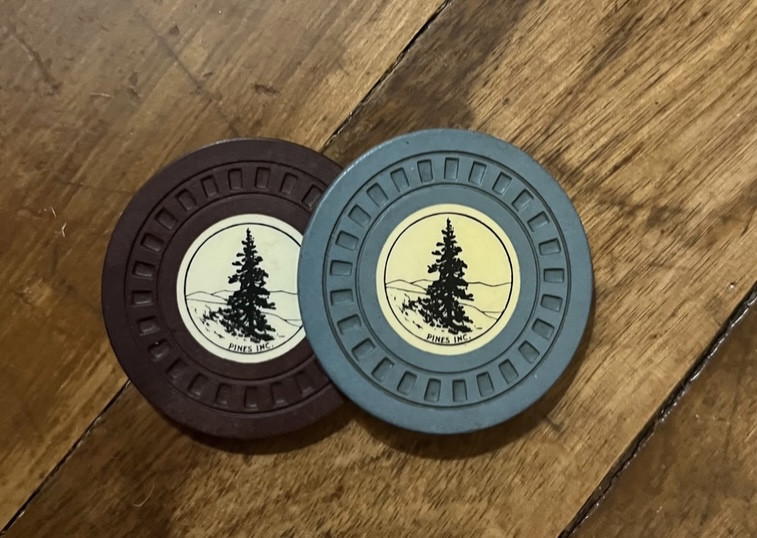
When Daddy was a boss at the telephone company we lived at the big house backed up to the railroad. There was a sliding board, a sandbox, a goat we could harness to a little cart, and a live-in nanny, Henrietta with her twisted arm. We had indoor plumbing and a great big car. When Maymie wasn’t sick we went to Daddy and Uncle Gus’s club: the plushest roadhouse in southern Indiana perched at the top of Floyd’s Knobs with only one road out and one road in where pretty dancers gave me and Kotzie fizzy drinks with paper umbrellas and a Maraschino cherry. The rooms were full of smoke and music, ladies with black stockings and red lips men in double-breasted suits hair slicked back clinking glasses tinkling with ice cubes, revelers who had crossed the Ohio after sundown to play cards and craps. Upstairs Daddy’s man sat at the window on top of the toilet with a rifle between his legs overlooking the 80-foot drop, scanning the highway’s seven hairpin curves for feds and cops, roulette wheels spinning, fortunes turning all night long. Once, when no one was looking I pocketed a chip: cream-colored, printed with a dark green pine. Good thing Maymie had stashed a suitcase of cash under the four-poster before the Crash, the handcuffs, the raid, before Daddy got the dropsy and we moved in over grandpa’s store, before me and Kotzie woke up one morning to find Henrietta cold and dead lying in bed between us.
The man with the yellow hat dragged his monkey out onto the balcony and locked it inside the wire-walled kennel. He’d reached desperation. The monkey he’d named George had finally followed his curiosity to disaster. The monkey had nearly killed a man. From behind the sliding glass door, he studied the monkey’s stillness, wondered what terrifying curiosity he could be conjuring now: a swing from the powerlines, steak knives chucked from their sixth-floor apartment.
Cool fingers trailed up the back of his neck, bumping down his hat brim. “Don’t you think he’s learned his lesson?” the scientist, his girlfriend, whispered into his ear. She joined him at the glass door.
The man clenched the syringe in his pocket. After two years of fostering, the man had become certain that the monkey he’d named George couldn’t be trained. The scientist imagined the man kinder, so much more patient. But there was a frailty he hid just as carefully as his balding scalp under the hat. His patience, his compassion for defenseless animals, was rubbed threadbare. So, he carried a fatal needle for the monkey, the quick solution, finally. She was wrong about him. Everyone was wrong.
and the White Pages, to the Switchboard, Rotary Dials and Dial Tone. To the Answering Machine, to Not Being Home to Pick Up the Phone, to Being Afraid of Being Found Out You Were Home Alone. To “Voigts’ Residence,” and “Can I Take a Message?” To Forgetting to Tell Mom Someone Called. To Busy Signals and Collect Calls and Call Waiting. To Long Distance, and Listening In On the Bedroom Cordless. To the Phone Tree, Caller ID, and the Red Cross Asking for Dad’s Blood Again. To the Do-Not-Call List. To Hotlines, Nine-Hundred Numbers, Star-Six-Nine, the Pound Sign, the Operator. To Having to Ask Your Girlfriend’s Parents If She Could Talk. To My First Cell Phone, and How It Didn’t Work the First Time I Turned It On. To its Tiny Screen, and the Animated Panda We Watched There That Meant We Were Roaming Even When We Were at Home. To Dropped Calls, Low Bars, and Family Plans. To the Call Mom Got On Our Way to the Beach Telling Her That Her Mother Was Gone. To the Quiet Afterwards in Our Rental Car, Just Her Crying, and How the Seaweed Lay in the Sand Like Tangled Cords. To Numbers No Longer in Service. To the Number That Was My Grandparents’ for Decades, The Last Four Digits Their Anniversary. To Whoever Would Answer If I Dialed It Now. To My Father, Who Will Go to His Grave Never Owning a Cell. To My Mother’s Voicemails About Christmas and My Sister and Computer Problems, The Messages I Save for When She Won’t Be There to Answer, When They’ll Be All I Have Left of Her Voice, The First I Ever Heard.
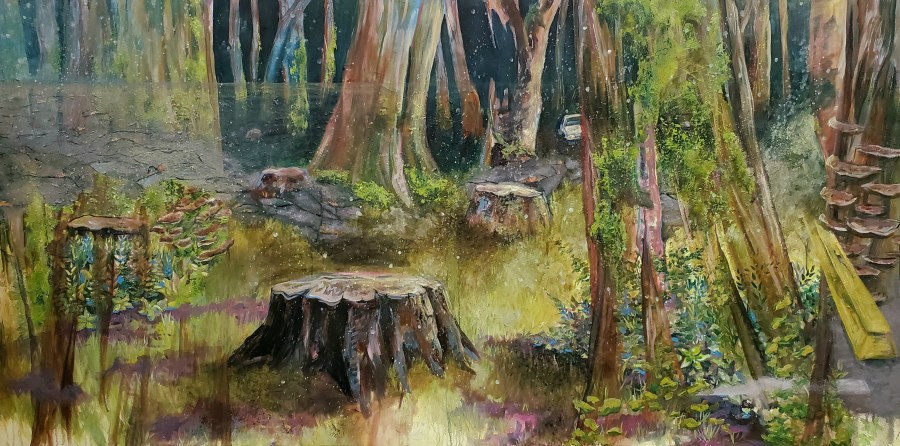
The last remaining sycamore on our suburban road was a playtime shelter; its roots, fairy council seats, its hollows, a dormouse school. For developers with an interest in the spare acre, it was an inconvenience.
The men with chainsaws came, met a ring of steel-eyed children, spanning the centuries-thick trunk. I wore my favourite coat for the occasion, a hand-me-down ski jacket— across my chest, a burnished sunrise patched above a flat-earth horizon. Hope was a four-foot thing in nylon.
We shook placards, posed for photos, made the front page of the local paper, before being called in for our supper. They came again in school hours, left nothing but a stump, hillocks of saw dust, dormice scrabbling for their copy books through the still-warm crumble.
Remind them, a word is the hardest thing to lose and practical as a kettle: there is nothing you cannot make with a word, nothing it will not hold. Start with despair. Add boiling water: tea for your throat, soup for your bones. Now add a crust of bread, some fat, mercy, this is the science of naming, a descendant of breathing, carried deep behind the eyes or within the eardrum or beneath the skin, and it cannot be stolen or surrendered at the threshold of any cell, refuses to be turned away, demands to be used even when you have no will for warmth or food. You cannot help it. So long as you have thought to think you’ve lost it all, you must call language what it is: more to live for.
The first time I told a man of my desire for sterilization, my intent to cut off the monthly ovum’s quiet passage through my uterine tubes, he silenced me.
)
The no spoken for almost all his gender, though I did not know so then.
)
“Let’s not discuss that,” he interrupted. His voice sliced the pathway of my unformed words as they traveled from the lungs to the larynx, before they could be birthed by my tongue. “You might change your mind,” he said.
I want you to become utterly inconvenienced by my past, present, and plans, and I want to have no awareness of your suffering. By all means, continue telling me you love me— every day, many times— but I want you to commit yourself to a mobius strip list of tedious chores that need doing several times a day, in perpetuity—namely laundry, cooking, and cleaning while cultivating kind and grateful children. You will need to prioritize. I want you to find everything our family wears no matter where we disrobe and I need you to wash our clothes in soaps that don’t irritate my skin, then you must line dry certain items while tumble-drying others; keep in mind that I alternate line/tumble drying depending on the item and how many times I’ve worn it and where I wore it and how much I like it. I will be very upset if you forget. Naturally, you’ll need to sort, fold, deliver, and hang clean clothes, but I’d like you also to tell me where they are in a way I can remember, when I feel up to listening. I will still ask you to help me find them again, when I need them, but I like to feel included, you know? Please remember to change the sheets on Fridays. Should you ask me for help and I am available to oblige, I promise never to learn how you’ve done any of this, staining and shrinking expensive items which I then fold into tiny cubes, the way my mother did. If you want to convince me you love me, I want you to create a weekly menu each Sunday to be posted on our fridge, and based on that menu, I want you to draft a list of supplies needed from various pharmacies and grocery stores, then you must drive to those places, find the supplies, buy them, bag them, drive them home, sort them, put them away. I will come with you to keep you company but I prefer not being sent to stores alone. While we’re out I will want to talk about traffic and the price of toilet paper in a loud voice. Let’s do this every weekend, forever. I’ll thank you later. I’ll likely get home from work just before dinner is served so you’ll have to make it. There will be nothing I can do about that— I’ll remind you. Please get excited when you hear the key in the lock. Maybe you can work remotely during the day? Maybe I can buy you a gym membership? I think you’d get better results at a gym. When you cook, I will describe my feelings about each dish, using terms like endlessly frustrating and pointlessly complicated and weird. In exchange, I will learn to make miso soup so well it becomes the only thing I can possibly contribute to any meal, ever. I want you to develop an interest in baking, desserts especially, so that when you follow a New York Times two-day recipe for miniature fig and cherry pies, I can remind you how much I was hoping for plain chocolate chip cookies— nothing fancy. I want you to become a vegetarian for reasons informed by your own childhood trauma, the kind you still feel down to the molecules of sweat that sprawl on your palms today, and I want you to raise our daughter as a vegetarian too so that when she asks for a real Mcnugget I can tell her no because you don’t want her to have delicious snacks while you sit there remembering that video of soldiers laughing at a headless chicken as it ran in circles, a sprinting font of blood until it died and became dinner. If you want to convince me you love me, you must keep the floors clear, make all our appointments, coordinate transportation and care for our pets— you will need to admit that you’re the one who wanted them, after all. You’ll need to sweep, mop, scrub, disinfect, diagnose, find, collect, stack, reorder, pay, mail, return, schedule, follow up, call and leave a message. I want you to be on time for doctor’s appointments that enter you. Don’t worry, I’ll be here to say I told you so. You will need to manage the household’s medications, illnesses, and symptoms. You’ll need to coerce us to heal. Aren’t we darling? Just look at our daughter. I think she has dandruff. If you want to convince me you love me, please teach her how to wash her hair properly and also she is struggling with her multiplication tables so if you get a minute you should address that because you get through to her better than I do, I don’t know why. And you know what, go ahead and get a PhD. I want you to study what you love most. I will complain about how little I see you for four years, I will become a well of mother’s guilt, does that help? I want you to publish, I want you to only accept jobs that pay enough for me to respect them (if you don’t, I’m not sure how I can discuss anything else when we have company) and while this might be difficult considering how often we relocate for my job I trust you to figure it out. If you want to convince me you love me, you will figure it all out. I know you don’t cry much but once every five times you break down sobbing in the bathroom I promise to look at you while you say things to me. I will buy you a coat, I will buy you a watch, I will tell you you’re just a better person than I am, maybe it’s genetics. I promise you, as always, to be easily convinced by your love; in fact, all I need is about twenty years of these requests fulfilled, and remember, you have a beautiful smile, you’re so smart, I liked your hair better when it was longer.
It is a brisk sun-swept morning, two days before Mardi-Gras, and I am eating paçzki, pronounced pounch-key, from a stubby Parma bakery that sells it in red, white, and blue flavors like Piña Colada or S’mores. As I pour my coffee, caramel-creamed, I watch boys who look like my brother die on television.
ii.
War is grey playgrounds and Cyrillic on faded billboards, letters I used to trace out in notebooks — Now I can read my name, nothing else. Slava Ukraini, heroiam slava. It’s not my language anyways, not my patch of once-Russian earth that’s thrashing like a sick dog before the shotgun. Still, I should cry for it. My mother does. She’s cut from Youngstown cloth, bread-lines for bedtime stories, so curses follow — Blood grudges bubbling, burning over after years in suburban veins. The tanks roll in after sunset.
iii.
I should learn Polish in solidarity, or attempt Lithuanian. I should clip in the too-blonde extensions and glittered plastic eyelashes, Sell the girl that American men like to order online. I should ask Nana about her family and write down the answers, tie a square scarf on my head, learn to bake kolache. I should stop making death half the world away about myself, for God’s sake — Take up smoking, or Lenin, or going to Mass.
iv.
My friends spend lunch giggling. They would dodge the draft, of course, in case you were wondering. World War Three before winter formal? It’s just too much! It’s funny. I laugh myself to tears.
I don’t know how to be a vessel. When my mother’s father drank himself to death, she was a day’s bus ride away at school, got the news by telegram. Today, in the yard, the trees are disappearing into fog so blank you could forget they had ever been there. In the 60s, along the Mississippi, bulldozing for I-64, workers dug up beads, shells, remains of Cahokia, a city as large in the 13th century as London was— plazas, mounds, courtyards, towers. Imagine getting to work with your backhoes, blueprints, your federal funding only to find that someone got there first. My father’s grandparents, eighteen, already three years married, left green Tennessee, headed west. I don’t know why they forsook Eden for the wind-raw Texas plain. Great grandmother vowed never to cross the Mississippi again. And she never did. That’s how the old ones said it— and she never did. I can’t explain how I wound up here, so close to the farm where she was born. At the end of her life my mother’s mother exacted a promise: keep the stacks of funeral visitation books, proof the ancestors had been somebody. My own mother dead, and thinking of my daughters, I snapped a photo of every page and threw them into the dumpster with her mouse-ridden sofa. In Cahokia, the Mississippians built a woodhenge to mark the sun’s solstice. Now, the sun is burning away the fog and across the valley, Flat Top Mountain smolders in autumn light. I don’t know where in these woods the copperheads are readying their dens for their long winding sleep, where the wild turkeys are fattening on acorns, their long necks ratcheting down and up. If I knew how to tell you that, I would.





 New Ohio Review