Dear Yara
By Siamak Vossoughi
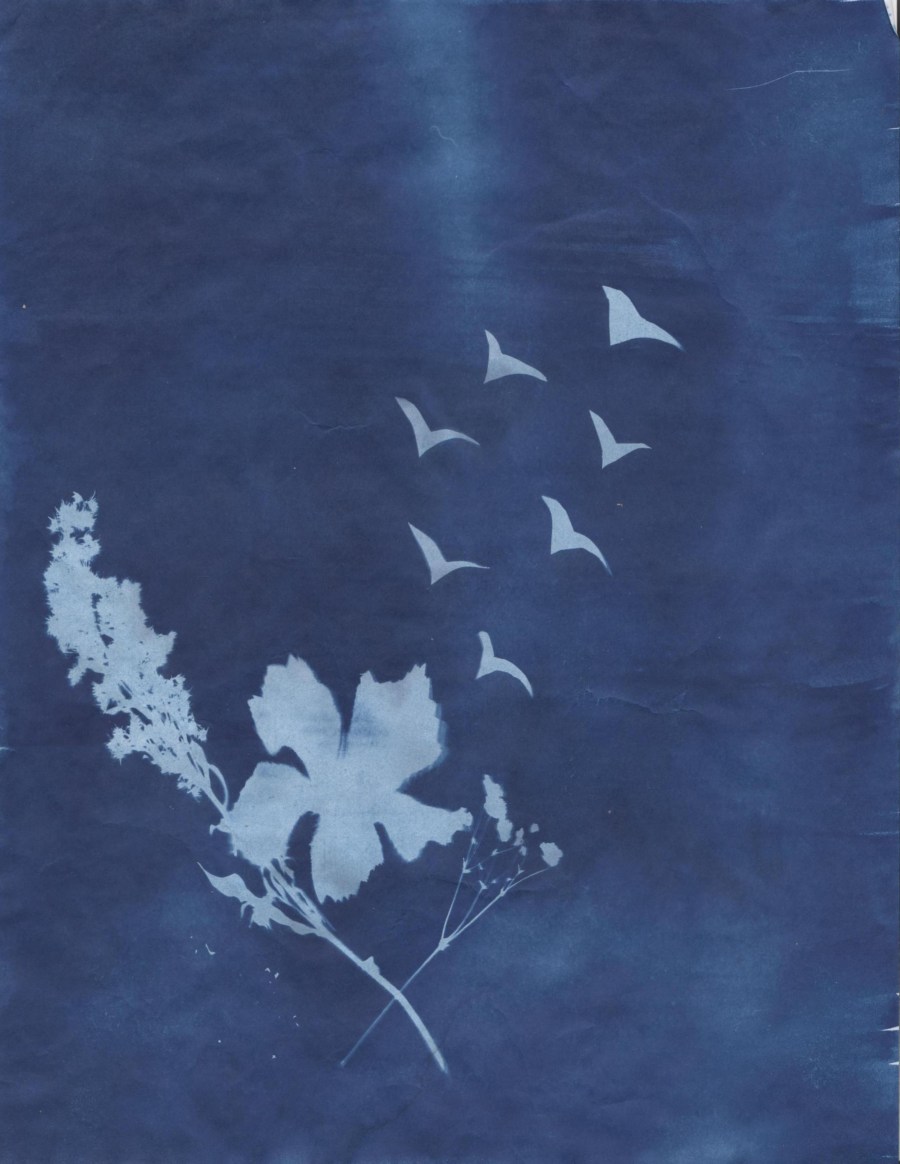
Featured Art: “Mirage in the Sky” by Gina Gidaro
Dear Yara,
I figure you ought to know something about the year you went from two to three, and how I would go quiet sometimes when we were playing or reading or walking somewhere together. Some days I’d see the kids in Gaza in you and I’d take the moment we were in and hold it as the last moment one of them had before being killed. I’d breathe through it, telling myself to do two things, as evenly as I could, fifty-fifty: Stay in the moment with you, because you deserved that. And recognize it was true, that each one of them had, in the moments just before, been just as alive as the aliveness in you. And something would happen to the moment with you then. It would hold all of who you were, and I would come as close as I could to touching that. I’d get as close as I could to understanding the thing the mothers and fathers there had lost.
Keep breathing, keep breathing, I’d tell myself. As big as the feeling of the death of children was, it was important to stay small. It was wonderful to stay small with you, because there was plenty that was still big. There would be days that year when I would be reading about Gaza just before you came home from daycare with your mother, and it would seem like a long way to travel to go from where children were dying to playing with you, but when I got it right, it wasn’t a long way at all. It was love both ways. If those children deserved to live, then let’s you and me see what kind of funny business Blue Bunny and Ruffles the Dog can get up to. Those children were in our games all that year. They were there because I was thinking that someday I would tell you about them the same way I was telling you stories of the animals who were lining up for school. I didn’t know when that would be. This was also the year that you started having nightmares. You’d wake up early and tell us that a scary monster had been chasing you. I would quietly admire your ability to articulate your fear. But I’d wonder too if you were getting it from me. I’d wonder if you could tell the way I was carrying around the kids I was reading about at the same time that I was playing with you. If you were, that seemed like a decent way to start having nightmares. I remember when I was nine and the men who I’d learned had tortured my father in prison in Iran replaced monsters in my dreams. I said goodbye to monsters then. Now you were saying hello to them, but your bravery made me wonder if you knew the world could be worse. That year we tried to let you in on it as carefully as we could. Back in November, we went to a family peace march on Beacon Hill, led by Jewish Voices for Peace. We taught you what peace meant. There were kids there holding up signs saying Stop Bombing Children. I knew you might be one of them in a few years, and I didn’t mind that I’d have to tell you about war by then. It was the same as sharing a lot of beautiful things with you that day, like the view of the Cascade Mountains from the top of the hill and the circle of people gathered outside the library. I thought about how to have the right balance between anger and sadness when I told you. I looked forward to your anger because there is a time in a person’s life when anger can rightly feel like strength, and five, six, seven, or eight is right about in that sweet spot. It’s because anger is likely to be an appropriate feeling at that age, at least the kind that’s just discovered the foolishness or ugliness of the world. But I looked forward to your sadness too, because sadness carried me farther than anger did. There were more stories to come out of it for me. There was more singing too. I thought about how I was going to have to pay close attention to how sadness or anger helped or got in the way when you learned about war and everything else, but the nice thing was knowing that if I ever wasn’t sure which one you needed, I could always ask.
Read More

 New Ohio Review