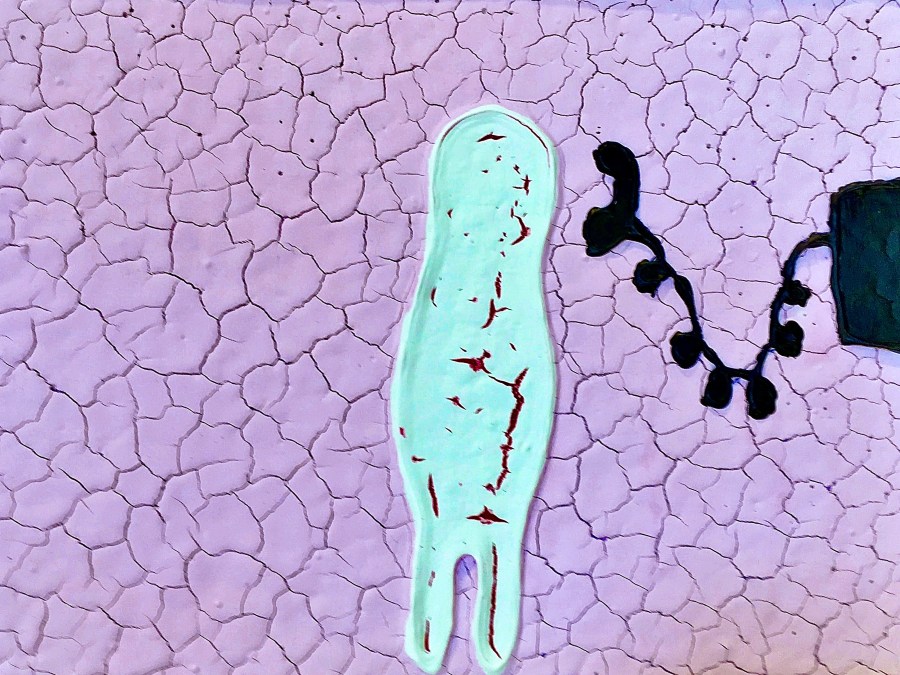
Étude en douze exercices, S.136

By Weijia Pan

*
In Liszt, I hear an old man stumbling across the fields to meet me.
He starves to save bits of bread for my pocket.
*
My own grandpa is different in a senior home in Shanghai:
He’s polite. Asking about my age & name & marriage & age.
*
Time’s time’s timestamp. Which means that time keeps its own records
like a metronome, or a fountain blooming every 25 seconds
*
unlike the skyline that fades when the clouds loom large,
a flock of your imagination dropping on a book’s dead pages.
*
In the early 19th century, Japanese samurais from the South
would gather every spring to discuss insurrection. Now! they would say,
*
finally; it was 1868, the Americans were banging on the door
& the last shōgun, a bony young man, would wisely concede.
*
Being an introvert, I concede every day to my own messiness.
I read in my study. I love the fact that you’re out there, reader.
*
But glad you were not here is not what a poet should tell another poet, as if
to imagine the world, we should only write about selfhood, the feathers of birds
*
on parchment, & cold, 13th-century nights. How destructive
were Stalin’s pencils, marked in blue ✘s & ✔s on death warrants,
*
a color not visible when photographed?
He started off as a poet. A job I now have.
*
I remember another poet in Flushing, NY who told me
that I shouldn’t let my poems end too easily, how I’d always
*
despised him a little, yet accepted when he rummaged for cash
& broken English, a fatherly way to say stay alive and goodbye.


Read More

Partition

by Carolina Hotchandani

Featured Art: Fissure, by John Schriner


In your version of the story, people butter their fingers 

with notions of God, splitting India into a smaller India, 

a new Pakistan. The way a single roti’s dough 

is pulled apart, the new spheres, rolled in the palms, 

then flattened. The idea of God—the destroyer of human bonds, 

you will say in the diatribe I know well—the reason for new 

borders, new pain to sprout on either side of a dividing line. 

You’ll go on. I’ll picture the edges of your words blurring 

to a hum as I think of how to wrest your rant from you. 

A rolling pin barrels over dough, widens the soft disc, 

makes it fine. You are fragile. Like a story that stretches 

belief. Like a nation. Like a thin disc of dough that sticks 

to a surface, tearing when it’s peeled back. I don’t know 

how to part the story from the person and keep the person.


Read More

Culprit

By Carolina Hotchandani

Featured Art: Hello, Hello, by John Schriner

As you finish your morning cup of tea,
an identity thief rings.

You answer.

Sleep wraps loosely around your mind
like the flannel robe you’re still wearing.

It’s almost noon.

The television is on
but muted.

On the screen, Lieutenant Columbo’s mouth moves
as he pesters his prime suspect.
Soon, he’ll reveal how the murderer
murdered the murdered.

Ahhh, you say to the voice on the phone
that dubs over the episode’s denouement:

Tell me the story behind your name.
So you do.
Can you spell it for me?
So you enunciate:
M as in “money” — A — N as in “Nancy” — O — H . . .
till all the letters of your name go down
into the small holes of the phone.

You were born in India before Partition?
Those were hard times.

When the voice solicits your social security number,
you want to know why,
but the logic you’re offered makes sense:
there’s money to be claimed
by survivors of arduous times.

Columbo lights his cigar.
The murderer’s exposed, and the credits are rolling.

The end is not surprising; we’ve known it from the start.

We won’t learn who trafficked in your memories,
committing this crime.
You aren’t the best witness,
forgetful these days.
But you watch and rewatch your favorite TV sleuth
intuit the culprit, apprehend the truth.


Read More

What Is There To Do in Akron, Ohio?

By Darius Simpson

Featured Art: Open Lock, Akron, Ohio by James Henry Moser

complain about the weather. wait five minutes
watch the boys you grew up with outgrow you
bury your cousin. go sledding on the tallest hill you can find
keep a family warm until their son thaws out of prison
ice skate between the skyscrapers downtown
inherit an emergency exit sign from your father
spray-paint your best friend’s brother on a t-shirt
daydream your way through a semester-long funeral
watch jeans and sleeves and family portraits unravel
play soccer with the black boys who almost evaporated
with the icicles. kick it outside with the skeletons
from your childhood. go to columbus and pretend
to be a grown-up. spend a weekend at kalahari resort
and call it a vacation. go back home. leave. shoot dice
with the dead boys playing dress up. stay long enough
to become a tourist attraction in a city nobody stops in
mount bikes and ride until the sun dribbles
out of the sky’s mouth. wade through the oatmeal july makes
of morning air. swim in a public pool where everyone
is drowning and no one knows how to survive
what happened last month. stop runnin in and out unless
you got somethin’ on the gas bill. seal yourself with cold air
while the trees melt. bet the boy down the street, who’ll have
the best first day fit. come out amid orange leaves lookin fresher
than all the food in a five-mile radius of granny’s house.
eat jojos from rizzi’s on sunday after pastor guilt trips you
on your way past the pulpit. dream about a city
where headstones don’t show up to dinner unannounced
where fried chicken isn’t on speed dial and diabetes
isn’t the family heirloom. where grief isn’t so molasses
root for lebron in whatever he’s wearing. become
an athlete as a way out of corner sales. never escape.
start a pickup game that never ends. rake leaves
with a rusted afro pick your older brother left you in his will.
let the leaf bags melt into the chimney on the side of the house.
play basketball with the ghosts who don’t know what year it is
volunteer at your local funeral home. open a cemetery
across the street from the playground. mow green.
cut ties with your grass-seller. survive the summer.


Read More

Miles

By Craig van Rooyen

Featured Art: by Mike Lewinski

It was dark, sure, but the city’s halo
whitewashed the stars.
We drank good bourbon from Dixie cups
to mock our sophistication.
Two black men and a white one
who needed a brother.
We drank to Ghana advancing,
not so naïve to believe
they had a chance against England.
We toasted our wives of many colors
and our barefoot children chasing fireflies
like the first night in Eden.
But it was Oakland.
So when the boy climbed the porch steps
cupping a winged and glowing offering,
I called him by the wrong name, as if
I did not know him, as if his father
was not my friend.
The brothers exchanged their look,
too polite to call me out
on a summer night in paradise.
And we all pretended not to notice
the bats that let go their roosts
to flap old patterns in our chests.
Suddenly I felt like humming
Swing Low, Sweet Chariot,” professing my love
for Serena, telling them all about my black Scout leader
whom I hadn’t thought about in years,
assembling, in other words, my own minstrel show
to prove how down I am.
All the while, the party soundtrack plays on
through hidden speakers, Kind of Blue 
from the end of that gorgeous terrible horn:
Live, no net, each note feeling its way
into the dark as if we can still improvise,
as if there is always another chance
to get it right before the night ends.
The boy, who isn’t Miles after all,
keeps coming closer
to show me his gift, opening the dark
hemispheres of his hands so I can see
the pulsing fireflies lift off
to join the others in the city’s halo
far above our heads.


Read More