Mask 13

By Annemarie Neary
Featured Art by Rachel Hall

They had barely finished the introductions when he asked about the war. The endgame, the likely victor, things no Ukrainian cared to discuss with strangers.  

‘I wish I knew,’ she said. Usually that was enough. 

‘But what do you think?’ 

She managed to keep her tone level. ‘I try not to think. But I’ll do a good job here regardless.’  

She didn’t like his smile any more than she liked his question. But she did want the job. A friend who was still in Kyiv had spotted the ad online. These things are almost never advertised, so Olena emailed right away with her CV.  

Read More

Essay: Little Giants, The Story of a Fire Hydrant and Other Heroes 

By Heather Buchanan

The patent for the fire hydrant was lost in a fire.  

There is a convincing theory that Frederick Graff, Sr. invented this life-saving device in 1801. He was the Chief Engineer of the Philadelphia Water Works. He came up with the idea of replacing wood pipes with an iron pipe system. He developed 37 other waterworks throughout the United States. He served the city of Philadelphia for 42 years and a stone gazebo with a bust of him was erected at Fairmount Water Works. It seems only natural that he would be the person who invented the fire hydrant. But the proof went up in flames along with 9,957 other patents and 7,000 patent models in 1836 when the U.S. Patent Office burned to the ground. At first, the Post Office was suspected of arson. It shared the building with the Patent Office and was already under investigation for awarding dishonest mail contracts. Rumors spread that they started the fire to destroy evidence. But, since the Post Office managed to save all their documents, investigators decided it was more likely an accident caused by someone improperly storing hot ashes in a box in the basement.  

There was an attempt to recover these patents by getting duplicates from the original inventors, but this process was slow-moving and expensive. The endeavor was abandoned in 1849. Only 2,845 of the lost 9,957 patent records were restored.  

Read More

Essay: The Journey and Return of Elizabeth Fisher 

By Elle Therese Napolitano

In Elizabeth Fisher’s 1970 story, “A Wall Around Her,” published in Aphra (Volume 4, Number 4), the main character pounds on the locked door of a house where she’s rented a room. As she waits for someone to respond, she is overcome by crushing loneliness and futility. “I never was in, never was and never will be, always outside, always trying to get in, beating with my fists, pleading, ‘Let me in. Let me in.’ Why don’t I just give up the struggle, stop trying to reach people, to be a human being.” 

Elizabeth Fisher was a writer, editor, translator, publisher, teacher and feminist, but these days, she is best known—and unknown, it turns out—for sparking Ursula K. Le Guin’s 1986 essay, “The Carrier Bag Theory of Fiction,” republished after Le Guin’s death as a tiny book (Ignota, 2019). It’s safe to say that now, thousands of people have seen her name in print—Le Guin names her right there in her resurging essay, along with a partial title of Fisher’s book, Woman’s Creation (though the publication date is wrong)—in which she puts forth “The Carrier Bag Theory of Evolution.” Since Le Guin’s essay was reprinted, new writings about her essay have proliferated. Nearly all mention Fisher. But people don’t seem to know anything about her. There’s all this stuff out there about carrier bags and Ursula Le Guin, but what about Elizabeth Fisher? What about her life?  

Read More

Tilting

By Matt Cantor

It’s been a full year, now.  

It’s October 7th. 

I stand at the platform at Kenmore, waiting for a D-train so I can get home to have dinner with my parents. I’m not waiting very hard. They’re going to ask all sorts of questions about what I’ve been working on.  

Don Quixote,”  I’ll tell them.  

“Hasn’t somebody already written that?”  they’ll ask me.  

“Lots of people have already written lots of things.”—like it means anything, or makes any sort of difference in the direction that I want it to.  

Read More

I Am No Beekeeper

By Arya Samuelson

Selected as winner of the 2023 New Ohio Review Nonfiction Contest by Barrie Jean Borich

My housemate sleeps all day, makes art all night, and paints giant bees. “I want people to feel my paintings,” she says, stroking the palm of her hand against a still dripping head-to-toe canvas.

I keep my hands in pockets. We’ve only been at the art residency for a week, and she has already transformed her garage studio into a whimsical world of texture and wonder and touch. My art is trapped inside me. Weighs down my womb with rocks.

Read More

The Man with the Yellow Hat

By Dustin M. Hoffman

The man with the yellow hat dragged his monkey out onto the balcony and locked it inside the wire-walled kennel. He’d reached desperation. The monkey he’d named George had finally followed his curiosity to disaster. The monkey had nearly killed a man. From behind the sliding glass door, he studied the monkey’s stillness, wondered what terrifying curiosity he could be conjuring now: a swing from the powerlines, steak knives chucked from their sixth-floor apartment.

Cool fingers trailed up the back of his neck, bumping down his hat brim. “Don’t you think he’s learned his lesson?” the scientist, his girlfriend, whispered into his ear. She joined him at the glass door.

The man clenched the syringe in his pocket. After two years of fostering, the man had become certain that the monkey he’d named George couldn’t be trained. The scientist imagined the man kinder, so much more patient. But there was a frailty he hid just as carefully as his balding scalp under the hat. His patience, his compassion for defenseless animals, was rubbed threadbare. So, he carried a fatal needle for the monkey, the quick solution, finally. She was wrong about him. Everyone was wrong.

Read More

La Malinche, La Llorona, and Cristine Ortiz

By Michael Leal García

On that nightmare afternoon at Plaza Mexico, Aaron never saw the gunman open fire. He just heard a series of pops—something he would only later recognize as gunfire—before Cristine knocked him over, their four-month-old son in his arms. After checking that Lil Aaron was fine—the boy still fast asleep—he felt a weight roll off his legs. There, Cristine lay motionless. Read More

Small Boy

By Joseph Scapellato

Selected as runner-up of the 2014 New Ohio Review Fiction Contest by Aimee Bender

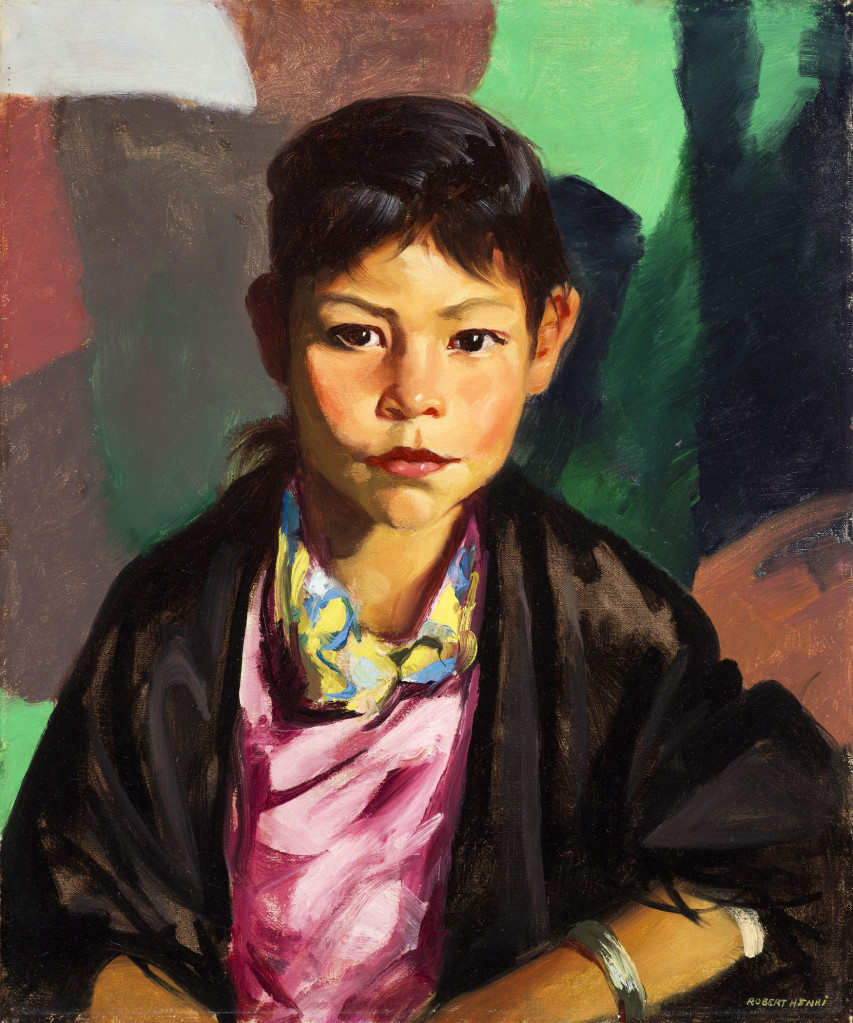
Featured Art: Pepita by Robert Henri

The small boy says to his big sister, “Why did we kill all the Indians?”

They’re in the basement playing a video game. Both of them are white.

“We didn’t kill them,” says his big sister, “our ancestors did.”

“Why did our ancestors kill all the Indians?”

“Okay, not really our ancestors because Dad’s family came in the 20s and Mom’s in the Sixties and the Indians were already totally dead by then, mostly.”

“Why did ancestors kill all the Indians?”

“But I guess you could say it was us, pretty much, because today we’re basically the same culture as the culture of the people who killed the Indians back then. And it’s ‘Native Americans,’ not ‘Indians.’ ‘Indians’ is ignorant.”

The small boy says to his angry stepmom, “Why did we kill all the Native Americans?”

They’re returning from the grocery store in hardly any traffic. Plastic bags stuffed with food rustle in the back seat.

Read More

Putting Girls on the Map

By Irene Keliher

Featured Art: Orchid Blossoms by Martin Johnson Heade

Only a few students competed in Kingston Junior High’s first geography bee  and nobody came to watch. We lined up in the band room submerged in our  flannel shirts, fidgeting, happy to escape sixth period. Pine trees pressed the  window. No one expected to win except me, though I wouldn’t admit it and  tried my best to look bored. I tucked my hands into my baggy Adidas jacket,  the only brand-name clothing I owned—I almost never took it off—poised to  triumph if I could answer the next question. Mrs. Raymond, chubby purveyor  of the world to our damp county, read us questions from a stapled packet  stamped National Geographic Society. 

“What world river has seen the greatest number of refugees cross its  shores?” She pronounced ref-u-gees in three careful beats and looked mournful, as if uncertain there could be an answer to such a question. 

Read More

Mango Languages

By Linda Bamber

Featured Art: Still Life with Birds and Fruit by Giovanna Garzoni

—For Chris Bullock (in memoriam) and Carolyn Bernstein

In that world people are not discussing The End of the American Experiment.

Yo soy de los Estados Unidos. ¿De dónde es usted?
(I am from the United States. Where are you from?)

In that world people are not in a rage at their relatives for voting wrong and sticking to it.

Read More

“This Time I’m Going to Fool Somebody”: Willie Stark and the Politics of Humiliation

By Dustin Faulstick

Featured Art: The politician’s corner by Honoré Daumier, 1864

“Folks,” roars Willie Stark on the eve of his impeachment trial, “there’s going to be a leetle mite of trouble back in town. Between me and that Legislature-ful of hyena-headed, feist-faced, belly-dragging sons of slack-gutted she-wolves. If you know what I mean. Well, I been looking at them and their kind so long, I just figured I’d take me a little trip and see what human folks looked like in the face before I clean forgot. Well, you all look human. More or less. And sensible. In spite of what they’re saying back in that Legislature and getting paid five dollars a day of your tax money for saying it. They’re saying you didn’t have bat sense or goose gumption when you cast your sacred ballot to elect me Governor of   this state.” From his colloquial diction and insults to his collegial banter with   his own supporters, from his invocation of corruptly used tax money to his reference to the sacredness of the ballot, Stark identifies himself as one of the people. Before neurosurgeon Ben Carson or business moguls Carly Fiorina and Donald Trump, farm-boy-turned-lawyer Willie Stark was the ultimate political outsider.

Read More

Someone Threw Down a Wildflower Garden in an Empty Lot in Newark

By Theresa Burns

Featured Art by Robert Jacob Gordon

And now, instead of staring at the weeds
and broken bottles from the train platform,
we’re taking in a scene from a Monet.
Asters, cosmos, little yellow fists
of something. All random and confetti.
I’m half expecting a lady in a high-waist
dress and bonnet to appear on a diagonal
stroll through its splendor, pausing
with her parasol so we can selfie with her.
Maybe she’ll hop aboard the light rail
to the Amtrak station, get off in D.C.,
step back into the painting she escaped from.
Who was the genius who thought of this?
What meadow-in-a-can Samaritan
got sick of passing the four-acre eyesore
on the way to work? Shook pity into blossom.
To whom do I write my thank you?
Mayor, surveyor, county clerk, church lady.
Who marched down to city hall, begged
anyone who would listen?


Read More

Subject Matter Experts

By Laura Jok

Featured Art: “Untitled” by Elizabeth Boch

You are twenty-six. Donald Trump is running for president. The company that you consider your current employer sees you as more of a friend. The insurance plan that you bought for yourself is hilarious. There is a hole in your back molar about which you are not thinking, which is growing, about which you are not thinking, and you are in love with a stranger who can always be replaced, should he turn out to be a disappointment. You teach other people how to do their jobs like you are some kind of expert.

A lowly contractor, you design employee training programs for companies too apathetic to do it themselves. You produce modules: scripted lesson plans, slides. You shoot instructional videos, for which you lure desperate actors. When resources are scarce, you narrate the training, play it back and edit. It does not sound like you: more like someone who knows what to do. You fall into this habit of talking to yourself.

The name of your company is an acronym that no longer stands for anything. In India, where the parent company is based, it is illegal to call anything unaffiliated with the government “national.” About this point in particular, the Indian government is exceptionally litigious. The closet between the green room and your cubicle is filled with worn-out fatigues left over from the last contract with the U.S. Army. When the bigwigs are on a call with Mumbai, you rub the fabric between your fingers. It is not synthetic. It is the real thing.

You used to be a promising costume designer: made it to Off-Broadway, became too disaffected to continue. It isn’t that you weren’t as good as you hoped. It is that no one is as good as you imagined.

The subject matter experts provided by the clients dodge your calls and lie to you. One is in the hospital recovering from a massive coronary and is under no circumstances to be disturbed. Another asks that you arrange your content acquisition calls around his daily psychotherapy sessions. A third prefers to communicate by copying and pasting chunks of text from Wikipedia into the bodies of emails. Every SME wants only one thing: to retire. To get rid of you, they need only pretend that what you are asking for does not exist.

Read More

Buzz Can Happen Here: Sinclair Lewis and the New American Fascism

By Michael Mark Cohen

Featured Art:

The exquisitely named Berzelius Windrip, known to all as “Buzz,” is the fictional politician and “Ringmaster Revolutionist” who ousts FDR from the Democratic ticket in 1936 and gets himself elected dictator in Sinclair Lewis’s speculative novel It Can’t Happen Here. No uniformed buffoon like Italy’s Il Duce, nor an awkward, vegetarian mystic like Adolf Hitler, President Buzz Windrip is a decidedly American kind of fascist.

Published in October 1935, in the sixth year of the Great Depression, It Can’t Happen Here was a major literary and political event. Not only was Sinclair Lewis famous for being the first American to win a Nobel Prize, in 1930, but this novel gave both name and narrative to Americans’ growing fears of whatever “It” was. Critics praised the book, written over the course of one summer, for its journalistic immediacy, and Lewis was so committed to capturing this sense of urgency that he insisted on changing the text at the printers after the September 10th assassination of Senator Huey Long.

After Hollywood spiked a film version (a decision made by the conservative head of MGM studios at the request of the German foreign office), Lewis wrote a play for the Federal Theater Project. On October 27, 1936, 21 companies in 18 cities debuted local productions of It Can’t Happen Here. “Out in Denver” reported the New York Times, “dictatorship came to a small Colorado town, and in Detroit it captured the factory district.” Companies performed in Yiddish in New York City, Spanish in Tampa, and an all-black cast focused on racial issues in Seattle.

Read More

Take Me to Your Lady Leader

By Kristen Lillvis

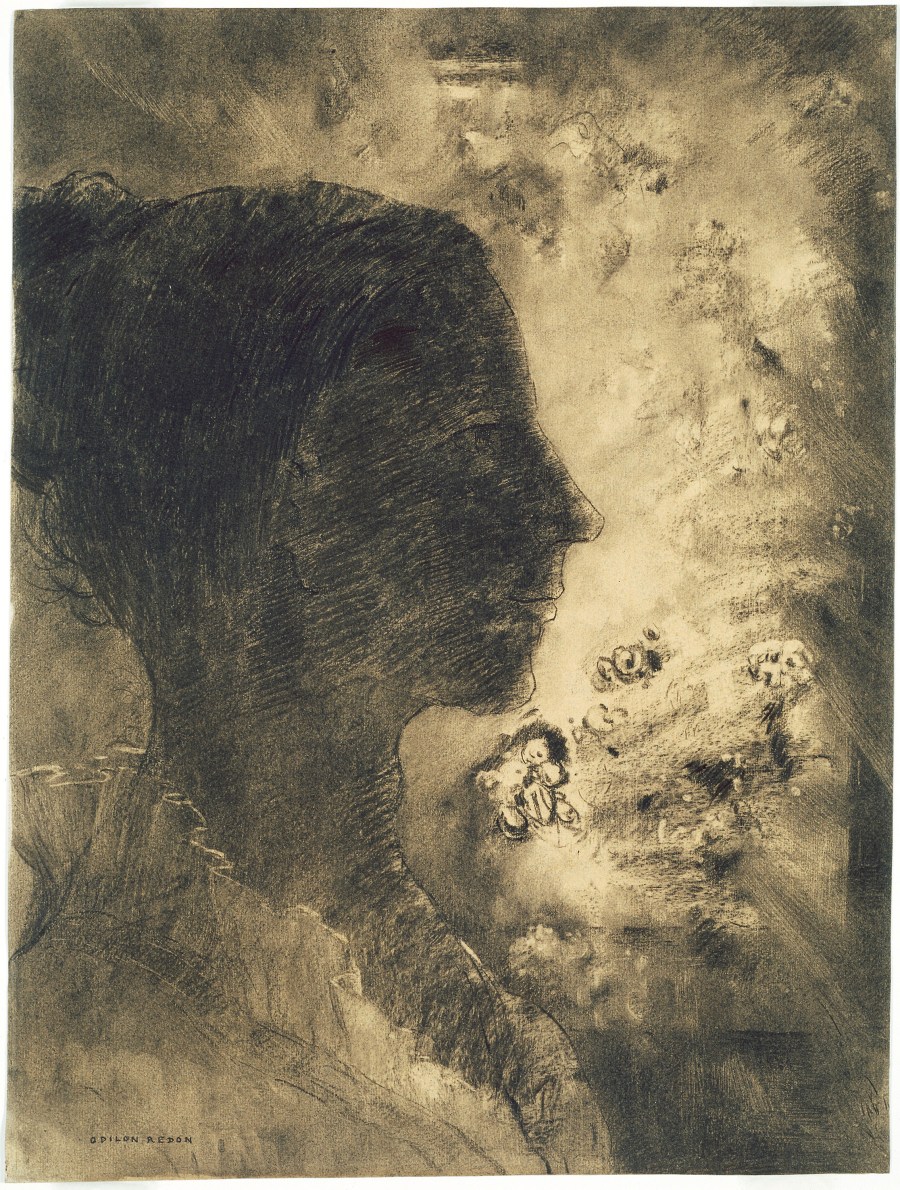
Featured Art: Profile of Shadow by Odilon Redon, 1895

Contact, Carl Sagan’s best-selling 1985 science-fiction novel, tells of alien shape-shifters, wormhole-traveling spacecraft, and—perhaps the most fantastical element of the bunch—a female president. Yet Contact’s protagonist, Eleanor “Ellie” Arroway, compares President Lasker to her predecessors with no acknowledgment of their gender difference, noting that Ms. President demonstrates an appreciation for science seen in “few previous American leaders since James Madison and John Quincy Adams.” Despite her tie to the presidential establishment—and regardless of Sagan’s attempt to make her gender unremarkable—President Lasker still fulfills the function particular to women world leaders in literature. Whether she erodes or extends existing gender stereotypes, the female president operates as a sign of the apocalypse or, at least, a harbinger of the unfamiliar, a reminder to readers that they have entered a world drastically different from their own.

Read More

Of the People, for the People, by the Robots

By Christopher A. Sims

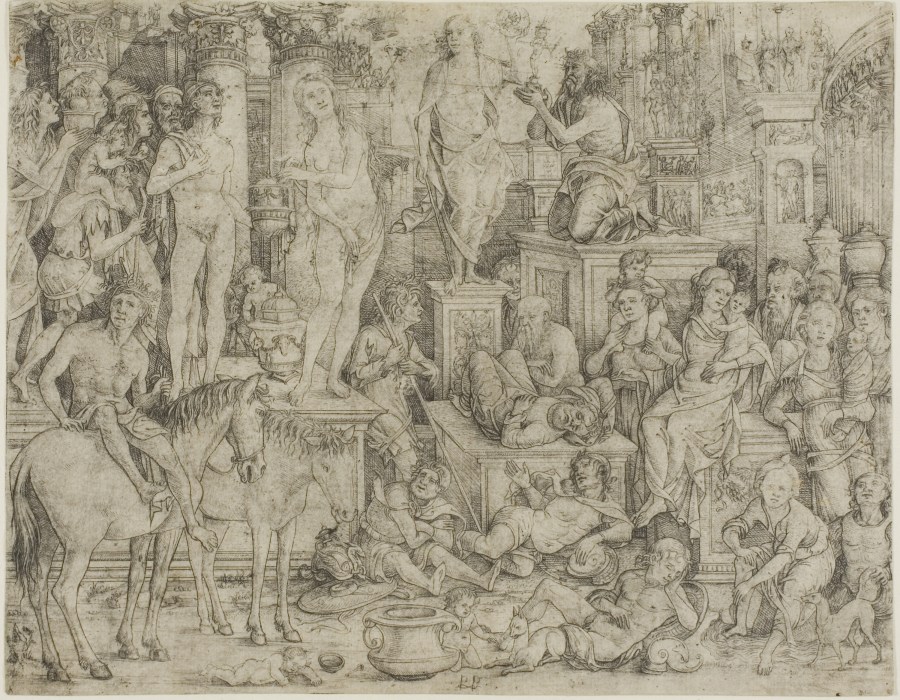
Featured Art: Triumph of the Moon by Monogrammist P.P., 1500/10

American fiction has its small share of memorable politician characters—Willie Stark in Robert Penn Warren’s All the King’s Men and Robert Leffingwell in Allen Drury’s Advise and Consent to name a pair—but there’s a strand of this tradition that is becoming more relevant in 2016: Artificial Intelligence politician figures in the work of two of our most prominent science-fiction writers, Isaac Asimov and Philip K. Dick.

While SF traditionally serves as a space to explore futuristic ideas, Asimov’s 1950 I, Robot and Dick’s 1960 Vulcan’s Hammer can now be reread as prescient visions of the looming potentiality of an AI political leader (perhaps as early as 2024, if Joe Biden chooses not to run).

As the so-called “Internet of Things” takes shape and works to synthesize the physical with the cyber,  we can begin to speculate about how long it will be before AIs take over even our most complicated tasks, such as governance. But the genius of Asimov and Dick lies not in their depiction of the technologies that make AI leaders possible; instead, it’s in their assumption that we will one day, not too long from now, be faced with a critical choice between human and mechanical rule. That, it’s fair to say, will be a consequential election.

Read More

The Devil’s Best Friend

By Vincent Poturica

Featured Art: View of the City and London Bridge

About nine or ten years ago when I was not yet twenty, my friend Carlos asked me if he should sell his soul to the Devil’s best friend in exchange for a better world—I am not kidding, son. I told Carlos that selling his soul sounded a little hardcore, even for him, and that he should probably meditate on the potential consequences for at least a week. I also suggested that he contemplate his motives, i.e. whether or not he was really doing it for a good cause—though I confessed that I distrusted anyone who thought they knew what was best—or because he felt desperate regarding the recent death of our dear friend Ivan. I then told him—and he agreed—that he also probably needed to consider whether the Devil’s best friend was the best person or demon to sell his soul to, whether the Devil’s best friend was even certified to buy his soul—I admitted that I had never heard of someone selling their soul to the Devil’s best friend, but I was, of course, ignorant of many things. I then questioned the extreme subjectivity of better world, encouraging Carlos to make sure to specify as much as possible the criteria for what made this world better, for instance its natural resources, its climate, its historical record of oppression, among other factors, before he signed any contracts with his blood or whatever you did these days to officially seal transactions involving that most precious and contested conception of the self.

Read More

What Comes Next

By Maxine Scates

Featured art: The Girl by the Window by Edvard Munch

Life’s police car, lights flashing, on the sidewalk
in front of McDonald’s and two boys on the bus stop,

one boy moving quickly away from the other
who raised his hands and dropped his pack as the officer

approached, gun drawn. But how did the cop know
which one he wanted since both wore watch caps

and gray parkas and carried backpacks? He seemed
certain enough as he handcuffed the boy

then helped him into the back of the cruiser
his now gunless hand almost gently dipping the boy’s head

into what comes next, all we don’t see swallowing him,
the signal changing, day swallowing me until this morning

Read More