Small Project

By William Wenthe

Two autumns ago, after our home
had broken up, my child and I
were left in a rugged way. If I were to paint it
with tempera on wet gesso, on a wall
in some palace chamber, it would be
a man carrying his daughter
who is holding a lantern for him.
This autumn we are settling in
to a new house; but that same pain—as if
the season, not us, were remembering it—
comes prying. Today, the same day
I begin the pills I’ve asked
the doctor for, whatever space
in the mind they might afford, I’m starting
a small project, a simple rack
for my daughter’s closet. It’s a habit
of making things, passed to me
by my father, but scant measure
to the skills of the man who made
a perfectly scaled four-poster bed
for a sister’s doll, as well as the life-size
bedroom where for years I slept.

Looking for a layer against
the season’s first chill, I reach for
a folded sweater on the high shelf
of my closet, one I’ve never worn before.
Though it’s thoroughly worn: shot-gunned by moths,
a ragged suture I sewed where the V-neck meets
the breastbone. It was twenty years ago,
this time of year, beginning
of the season for sweaters,
my father died. How strange now
to feel this sweater he wore, one
that I remember him in, cling to me
tight as old clothes I’ve outgrown.

Still I keep it on,
something I’ll work within
like this house where we now live,
with room for the two of us, but
small enough we have to imagine hard
how best it can be filled. Which is why
I’ve sawn a white pine board,
and will sand it, varnish, sand again;
and measure and drill, to fix the hooks
to hang the jackets, hoodies, and her prized
cow-print pajamas, now floor-strewn
like debris flown from the bed of a pickup.
She may or may not pick up
on the idea, also passed down, that one small thing
works into another, larger one: a jacket
on a hook, a hook on a board, fastened
to a wall holding up a roof, enclosing
the ongoing, unfinished project
of a house. The work, the daily intentions—
and the luck (all the apartments shelled
to ruins by one-eyed missiles)—the luck
to even have any of this—
careless, rich, flamboyant chance.


Read More

 Trying Not to Lump Together More Unknowns

By Matthew T. Birdsall

       “We know what we are, but know not what we may be”
                        -Ophelia, Hamlet, Act IV, Scene 5

Uncertainty looms heavy before sunrise.
Dark driving, she calls it, at 5:00 AM
to the hospital for her surgery,
when she mentions losing our dog,
Penny, a few months ago—
anxiously lumping together unknowns—
and I had trouble focusing
but I tried to turn the conversation around
with compliments—her outfit, hair, shoes—
but I shut down when she said,
It’s okay, Dad, I know that living is dying

Stuck in the white shock of her wisdom
I wanted to say something to redirect us
but I couldn’t decide whether
she was that conscious of her own mortality
or if she was just being a child—
redirecting gravity away from her upcoming operation
toward something more certain.

At the last minute, the operation was canceled.
As we walked out, my daughter took my hand
because she knew I needed it telling me she felt good.
She said she still missed Penny,
and she would miss her as long as she was alive
me too I said but holding back on diving deeper
trying not to lump together more unknowns,
as we headed home with just enough sun
to get all the way there without headlights.


Read More

Feeling Sorry for Myself After Failing to Tame a Unicorn 

By Michael Derrick Hudson

At first it was sublime, all her medieval tapestry qualities,
her plangent, gracile profile against a field

of heraldic green, the silvery trill of her neighs. My life
has purpose now, so I told myself happily

shoveling fodder and greasing the tackle. An obligation
to myth and legend, so I told myself, 

is worth the hassle. So I showered and shaved every day, 
expelled vulgarity and embraced the necessity

for an orderly household. And yet she still craps the halls,

and crap is crap even when it shimmers like the rainbows
on an oil slick and smells an awful lot

like butterscotch candy. She’s moody! And an incurable
insomniac keeping me awake gobbling stardust and

moonbeams in the middle of the night, her dainty hooves
clip-clop-clip-clopping across the kitchen tiles. 

She leaves the refrigerator door open half the time, uses up
the ice cubes. Every day it’s something, poking

her narwhal horn through the porch screen or another divot
gouged out of the drywall. Come the weekend,

she inevitably lays her head in the laps of my lady visitors, 
pestering them to scratch her ears and 

pat her dazzling pure white withers while she knocks over
beer cans and ashtrays. Some Knight Errant

or another is always pounding on the front door demanding
proof of her existence, as if I’m the Fairytale Ogre

keeping her locked away. Ha! She hides the whole time
in her bedroom like a teenager, ear pressed

against the door. Everything I say mortifies her. She plays
the same sad Joni Mitchell song over and over

on her little portable record player and mopes at suppertime

and smudges eyeliner all over the vanity. And each morning
she reproaches me over waffles with her doleful 

little nickers, and I still have no idea how I got this so wrong.


Read More

The World as It Is

By David O’Connell

Some believe the new math
proves reality is actually

a hologram. And who am I
to argue when I don’t know

the language? I speak pig math.
At times, finger count. Failed

this week to help my daughter
with her fractions. Don’t worry,

you’ll never use it in real life,
remember? But now it seems

this math has always been
presiding over smoke-filled

back rooms of the universe,
invisible mover and shaker

knowing what we want
are answers, and that we want

them now. Outside, the street
is darker for the light rain,

and I’ve cracked the window
to catch the scent of earth

kicked up by water falling
back to us. Nothing is lost,

explained the talking head
last night, asking that we picture

clapped erasers raising
clouds of dust. The math

he detailed says it’s possible
for every molecule of chalk

I smacked out in angry
plumes beside St. Mary’s

one afternoon in 1982
to reverse and gather again

upon the board—faint, then
clearly remaking each mistake

I’d scrawled that day in class.
Implausible, but not. An act

the nuns would’ve taught us
wasn’t math but miracle

on par with the angels
that appeared—like, what?

if not holograms—to trumpet
what they knew was right.


Read More

If I’m Honest

By Jaya Tripathi

this cheery fever feels
like a temporary insanity         I was safer
in the country of control         doling out small pleasures
to myself          like a wily jailer            like a loosie peddler
like a guppy’s sphincter           this morning
I washed tiny newborn bloomers          there were no fates
scuttling in the washing machine          no sheep livers
on the drying rack                     later in the shower when I felt her
moving like a bag of cats           between my hip bone
and my heart              I painted a cobweb of Silly String
around my fat belly   cupped my veiny breasts
and crowed     not long ago I grew my certainty
fresh every day like a liver       asked the doctors to look deep
at the pieces of my child sparkling in my blood
her stars            her tattoo      I hummed a boy scout
is always prepared        my daughter heard me
through my navel and laughed                lying
slathered in aspic I clutched at every skeletal preview
each glimpse of augury             fading too fast
a stick of incense on a dark stair           I always wanted
to be a mother but I thought I’d be
an armory          a phalanx        her stillsuit
in a gray shitty world                 instead
I see her hiccup on a monitor
and I break open into sunshine
completely


Read More

Evicted

By Mary Jo Firth Gillet

Before the suck and stutter of the first breath, even
before the first cells hook up for an amniotic float in
if not primordial bliss then something just this side of it,
there was the want, the desire that begat the pre-child
then stuck in a world impossible to remember, impossible
not to feel sorrow mixed with joy over my newborn’s
eviction from her Eden, her tenderest of faultless flesh
now to know the endless hunger, the deep cold of alone,
the body a riot of wants, wants unto the last gasp
of my mother’s four-foot-nine-inch fierce frame, every inch
railing railing against the bait-and-switch trickster’s scythe,
her only wish the hunger for more days, more life, and so
someone from hospice calls me to come get this inconvenient,
angry woman who will not go gentle into that good night.


Read More

Grief Mentor

By Kenneth Tanemura

She dresses up anyway, the long blue
cardigan drapes her form. Finished
a bit of work, she snaps her fingers.
The boy she once bathed and changed, lost
to what? The surf? Is rip risk a thing?
Locally, everything changes. She lets
herself crave—noodles, a drive
around the neighborhood, Ella crooning,
Billie grieving. Is that it? Anguish,
or just some annoyance? Not that word,
not anguish. Describing anything is a stretch.
Palm trees and ghosts, full moon, skeletons.
Grand, the way she stood by the crematorium,
her body shaking. Deep sobs in the shower
like any creature. Primate mothers carry
their dead infants for days, weeks,
knowing what? The soul passed
into another realm?


That’s not it—less drama, less fanfare.
See what you can get away with
if you undercut yourself? She gives
a clownish smile to the surviving
toddler, holds her hands high,
palms open. The boy eats it up.
She shares the crazy inner thoughts
most keep to themselves: rebirth,
the soul hungry for burgers, waiting
in an intermediary space between here
and there. So many ways to split hairs
about there. Is that a secular stance?

She would make a grief therapist’s
eyes roll with her talk of the pure land.
Those eyes so used to performing
sadness to mirror grief. She doesn’t want
to blame anyone. Better to explain
as fate, design—master plan.
She plans with colored pens, makes
sense of the random—why do I want to say
‘Fall days,’ as if the season matters?
Monotony calms grief: write down every
word that starts with k, the counselor said.
Is anger better? Pin it on someone,
this boy’s drowning. She wants to.


The coffee drinks change with the weather.
She doesn’t say words a character
in a TV series would say. She kneels
before the altar, chants, thanks
her partner for putting his hands
together in prayer. No, she wouldn’t thank her
mother, who’s supposed to sit
cross-legged on hardwood. The man,
the husband, somewhere between stranger
and who?—blood relation?
She wears childish sweatshirts, makes
her feel closer to the boy she lost.
Or it’s another look—the grieving,
or past that. She stays with the one
who was supposed to watch
the boy in the surf. Supposed to
save him? Her ring catches
light. His ring a band
the saleswoman said a chainsaw
couldn’t cut through. She liked that,
something unbreakable.


Read More

Leave rocks here

By Georgina McKay Lodge

Featured Art by Glenna Parry

Annoyed at rocks
in shoes
in laundry
in little piles at dinner,
she has placed a box
in the hall.

            -> Leave rocks here

Hold my rock,
her son says
when they are out,
and squats down
to select another.

            Be my rock

The smooth
pebbles,
dove-colored,
worn to wisdom,
she will gladly
carry home, but

his favorite find is
the jagged
saw-toothed
ugly rock,

scraped knee
stung by a bee
broken-armed
heart-choked rock.

Of course
she will carry that one too;
to the end of the world
she would carry it.


Read More

What It Looks Like

By Emily Wheeler

Featured Art by Glenna Parry

Returning from emptying 
compost out back,
I’m stopped 
by a praying mantis.
Don’t you look fabulous,

I hear my mother’s voice,
Dressed to kill and
to blend in, with just
a flash of emerald 
on your lower wing. 

I hear her say, 
Your feelers, are they new,
or are you parting 
them differently?  
Also, great figure!

I see her swooning
over its eyes that pop 
without any makeup,
and the way its face 
comes to a point 

at its delicate chin: 
really quite special.
To me, the mantis 
just stares, nods, 
possibly politely.

My mother appreciates
many kinds of beauty
and the bug’s elegant 
plus alluring look
but I know

its brown egg sac 
is hard as cement to protect 
the eggs from heat, cold, 
even the occasional maternal 
appetite for its young.


Read More

The lone wild goose sticks out his tongue at me

By Joyce Schmid

half-heartedly, not like the one last April— fierce,
protecting pear-green goslings. But this year, no little ones.

It’s been so long since I have seen a baby—
even seen one—not to speak of holding one,
or watching a tiny face reflect my smile.

I’m not demented yet, not like the woman who begged to see
her stolen babies as they loomed above her, grown.

I’m not asking to be young again, back in the tent
with everyone asleep but me and the baby at my breast—
warm baby in the chill of night— or in the back seat

of my daughter’s Ford Escape— the “baby-whisperer” she called me
as I gentled her son to sleep.

I tell myself there are advantages to being old:
no longer wondering

if God exists, or what life’s meaning is
(He does, there’s none),
acquiring bits of wisdom

such as everything takes longer than you think
except your life.


Read More

History of Desire

By Lisa C. Krueger

Featured Art: Day 7 by John Sabraw

I.

In the photograph
my mother is ten;
she poses in a ruffled dress
and hand-me-down coat
that swallows her arms
the way shame swallows
people whole.

Lost in the oversize. Standing
near a clapboard porch.
She knows she is poor,
one of the poorest; her shoes
are too tight. Other children
tease her about the key
around her neck.

My mother makes drawings
of what she can’t buy;
it will take years, and
thousands of dollars,
for her to learn that money
does not make her happy.

In the photo, my mother smiles
upward like the glamorous people
in magazines. She tapes sketches
of stars to her wall, studies them
before she falls asleep.

II.

My grandmother sews clothes
for my mother; she doesn’t
need patterns, she has learned
to make things on her own
from what her mind can see.
My grandmother is a bank teller,
on her feet all day; tellers
are not allowed to sit. Only night
belongs to her. My mother
hears the machine, an animal
that growls in the dark.

III.

My mother’s walls are rich
in the way my daughter’s walls
will be, covered in desire.
My daughter will labor
over vision boards, collage
pictures of people and places
to help dreams come true,
what vision boards can do.   

My daughter will stack magazines
by her bed, take scissors
to girls playing sports
with those beautiful bodies,
magnificent boys with interested eyes.
Picnics – dances – all the weddings –
cut out –

IV.

Sometimes, awake
with my own futility,
what I can’t do for my child,
I will picture the grandmother
I never knew,
bent over small light,
laboring. How many hours
to stitch ruffles?

V.

Standing, my mother crosses
her legs, an awkward pose,
perhaps one she has seen
in a star.  Balanced forever.
Pinned to a wall.


Read More

Empty Chamber

By Mark Neely

Featured Art: Ageless Darkness by John Sabraw

the newspaper tells
the childrns story
the mayors heart

swells and then explodes
near the end of the parade
I read Dickinsn

as flies flash drkly
against the blue wall
in spring my blood runs dank

I have these lttle spells
shout back at the news
cast pills

into my throat
sin my high school song
disappear into the moated

rooms the shooters eyes
sink forever in my memry
my kids hold signs first

grade fourth grade class
of twnty twnty too
class of those

who God held in the light
though we did nothing to deserv
though we didn’t believe in hem


Read More

My Daughters Sometimes Dress as Ladybugs

By Brian Simoneau

Featured Image: Untitled by Tanner Pearson

and I hope they won’t
outgrow it—little heroes
flitting leaf to leaf
in their polka-dotted suits
of armor, their vicious
pursuit of the feasting
pest that destroys what
beauty these days still lives.


Read More

The Last Vacation

By Shannon C. Ward

Featured art: Untitled Collage by Kennedy Cardenas


You beat time on my head -Theodore Roethke 

Her husband has taken the children swimming. 
She tries to speak, but her mouth is filled with coins. 
She washes them down with vodka, vomiting.

She knows what it means to dream of sinning.  
She’s the mother of four beautiful boys, 
and her husband has taken them swimming.  Read More

Artist with Newborn

By Riley Kross

Featured art: Jezebel’s Daughters by Chloe McLaughlin

– for Amy

The baby
finally sleeps

so she
paints her

toenails bright
red with

practiced strokes
so later

she can
see her

bare feet
pacing the

dark kitchen
and remember

while breastfeeding
again again

feet propped
remember how

small all
art begins Read More

No Most of the Time

By Nick Reading

Featured art: A Rat in Its Natural Habitat by Ellie Sinclair

Your son’s hand is in the shark bowl again
so you say no. Your daughter wears the potty

as a hat. Say no. He lists feces on the wall.
She rehearses a song about it all complete

with refrain. No. You say no when pots
and pans become soldiers’ helmets

assaulted by whisks and wooden spoons.  
No to everything else for dinner and yes

to pigs in a blanket and ice cream baths.
And no more, Can we afford it? Read More

Force of Habit

By Kathleen Winter

Featured Art: Girl Arranging Her Hair by Abbott Handerson Thayer

The woman in the Oldsmobile was awfully young
to have a kid, her kid would have said, if she’d had
a voice not just a body jittery inside her precious cotton
dress with ducks stitched in the smocked bodice
flat across her washboard chest. A woman’s hand
was every bit as flat when she had to slap somebody’s
face, so it wasn’t best sometimes to have a voice in case
you asked the woman one too many times how Seguin
was different from Saigon or where the dad had
gone or who was gonna fix the swing or when can we
get a collie or what’s the matter with twirling a lock
of hair around your index finger all day long it felt
so smooth & cool spooled round your finger &
released & caught & wound again, secured.
What’s wrong with messing with this living little
bit of you, a darling little thing. You couldn’t stop it
even if you wanted to.


Read More

Invisible Bodies

By Aza Pace

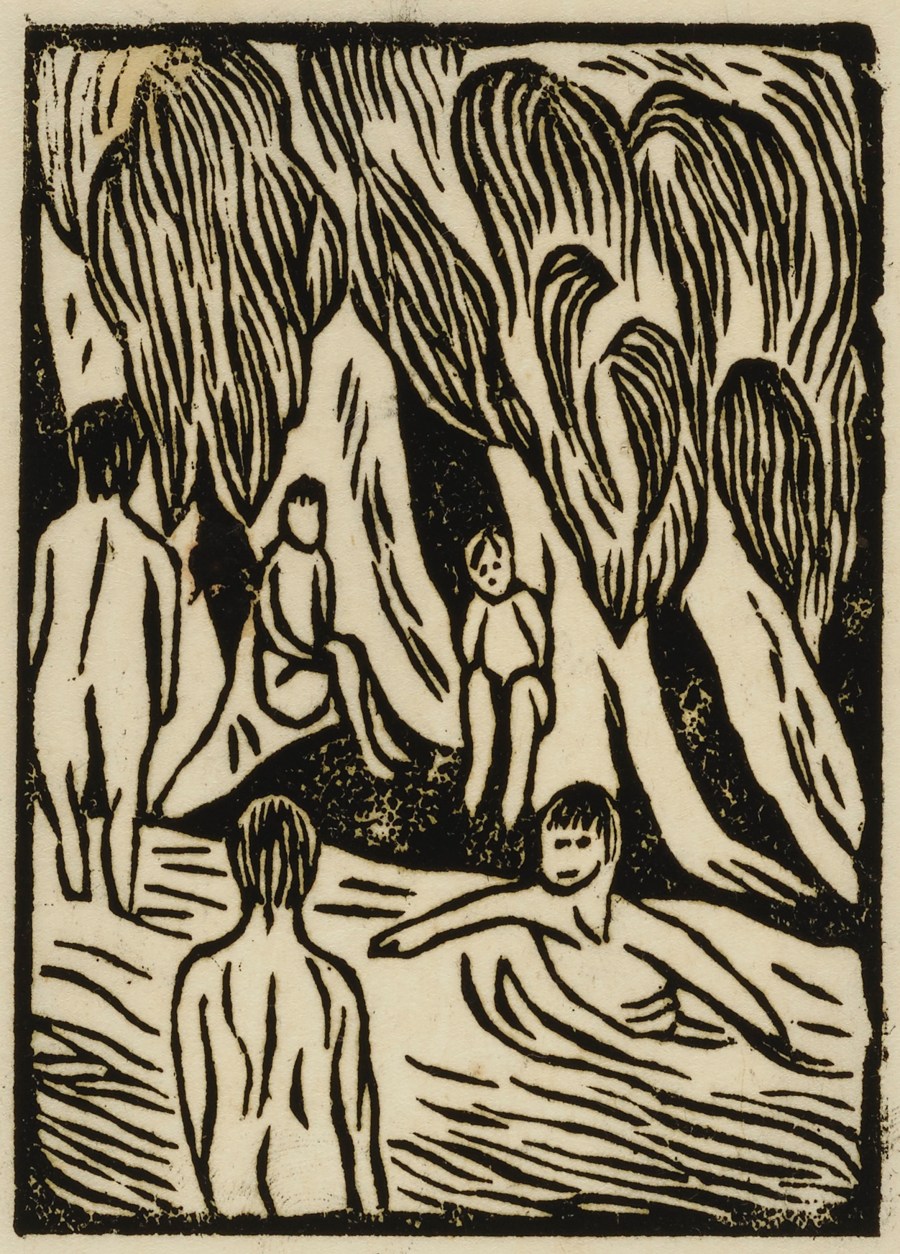
Featured Art: (Children Swimming) by Unknown

Meanwhile, plastic particles
burrow in the Arctic snow

and in the sea’s deep trenches,
its legion bellies.

Meanwhile, a galaxy bursts
across my cervix—bad cells

someone will slice off
with electric wire as I sleep.

There is nothing untouched
in the whole furious world.

But the water today
in Galveston is blue,

with not a hint of tar.
In each wave, hermit crabs

and no bottle caps.
Babies in life jackets

tumble and squeal in the surf
while an older child bobs

out to the first sandbar
to fish. Meanwhile,

I think—I’m happy.
Under my tongue

sit the names of children
I will not make.

I roll them over and over
and love them.


Read More

Daughter Poem

By Lisa Dordal

Featured Art: The Artist’s Daughter by H. Lyman Saÿen

Sometimes I see her pressing her palms
against a windowpane in a house that is real

the way a house in a dream is real
until you start to describe it and all you can say is:

it was this house, only it wasn’t. It’s winter
and she likes to feel the cold entering her body.

Or it’s summer and it’s heat she’s after.
She wasn’t born, so she can’t die.

Sometimes there is a window but no girl,
and I am the one walking toward it.

Sometimes I see her peering in—
forehead against the screen of our back door—

or running ahead of me on a path that is real
the way a path in a dream is real, saying:

this way, this way.


Read More

Polar Bear

By George Bilgere
Winner, Editors’ Prize in Poetry: selected by J. Allyn Rosser

Featured Art: Mounted Model of a Polar Bear from United States National Museum Photographic Laboratory

A father died heroically in some Alaskan park
while trying to save his kids from a polar bear.

Long ago, when his mother gave birth
one summer afternoon in Bakersfield, California,
could anyone have prophesied,
as in an old myth, that the baby crying
at her breast would one day be killed
and partially eaten by a polar bear?

Has anyone from Bakersfield, California been killed
and partially eaten by a polar bear? Yet her son
was. He looked up from making camp,
pitching the tent or lighting his Coleman stove,
and there it was, white and immense. His fate.

And he died heroically and was partially eaten.

Of course, the bear had to be killed. The rangers shot it,
which makes sense. You can’t have polar bears
running around in the wilderness!
The wilderness is a place for dads and kids
and Coleman stoves. Polar bears just . . .
they just kind of ruin the whole thing.

As for the bear, it didn’t die heroically.
It just got shot and fell over
and was sent to a lab for testing.


Read More

The Scar

By George Bilgere

My son slipped on the concrete
by the pool and smacked his head.
Blood cauling on his small shoulders.
The doctor stitching him whole.
Three years on, after a haircut,
the scar still rises, a quarter moon
a woman will ask about
as they lie there one night,
her fingers in his hair,
her voice in his ear, the secret
delight of him—a bit
like burnt toast—in her nostrils
as she takes his strangeness
into her. What she won’t know
is how the frail, Phidian skull
I held that day in my hands
resounded on the hot concrete.
It echoed all summer, less
like an egg cracking in a bowl,
or a world breaking, than the wild
knocking of love against my heart.
Dear girl who will one day win him,
that part of the boy is mine.


Read More

Night Train

By Emily Tuszynska

Featured Art: Train by Edward Mitchell Bannister

The interior landscape shifts, erodes.
                While the children sleep we shore it up
                                with flotsam but the next day another

tide-bitten chunk of coastline
                crumbles. The trouble is we’re living
                                all at once. We keep rearranging the furniture

to try to make it fit. By day we push
                aside the clutter, lay the baby
                                on the floor she drums with open palms

as if to feel it’s there. Something solid
                underneath. Mostly everything sways.
                                A tree falls and the house next door

stands empty for years. The boy holds his sister
                to the window and shows her how
                                to wave goodbye, and that’s the morning,

fingerprints in the dust of it. Outside the day
                moves away in all directions. Streetlights
                                come on. When as I walk the baby the night train  

whistles through its distant crossing,
                why does it feel like we are the ones
                                hurtling toward some unknown destination?

I lean my forehead against the icy, rattling glass,
                look through our reflection at the moon
                                rushing through branches. Look, there’s a farmhouse,

miles from the lights of any town. Someone
                turns on a lamp in one of the windows;
                                someone stands there, watching us go past.


Read More

Amtrak Psalm

By Craig van Rooyen

Featured Art: An Uhlan (mounted soldier with a pike) by Jean Baptiste Edouard Detaille (1848-1912)

The sway-backed horses of Lompoc don’t spook anymore.
They keep their muzzles pressed, sharing a pulse

while you clatter past, invisible in tinted business class.
And whose business are you minding anyway

as you peek into the pitbull’s backyard wreckage,
glimpse the bad cuts and dye-jobs of students smoking

behind Oxnard’s International College of Beauty? Camarillo,
Moorpark, Simi Valley, recede into heat-shimmer oblivion.

At home, your daughter’s behind a closed door
with Carnivorous Red nails posting stories that dissolve.

The entire universe big-bangs away from her irreducible center
of disdain. I’ll be gone soon enough, you want to say.

So this afternoon you’ve fallen in love with the common
mourning dove, tilting at the wind on his coil of razor wire.

You’re rooting for the tag crew artists
in their neverending arms race with Parks & Rec.

Boomer and Lil’ G, Fatlip and The Dog, Fraho, Buzz,
Rollin’ Sixty and Bashr. Naming themselves

over and over in the middle of the night, learning
like Buddhist masters the lessons of impermanence.

And now you’re waving at ranks of garden gnomes—
little domestic terra cotta soldiers waiting to be found

in the Burbank Home Depot back lot. I see you, you whisper
through the glass at their earnest bearded faces.

I see every one of you.


Read More

Difference

By Sara Moore Wagner

Featured Art: Floating Guy, collaboration between Passion Works Studio (Athens, Ohio) and Colores del Alma (Chile)

When I used to read my son the book
where the outcast girl becomes friends
with the alligator, where they dance
in the sewer to the burt-burp of her
tuba, I would imagine he was the gator,
that one day he might find someone
to teach him not to put everything
in his mouth, to go into the water
where he’s meant to return—when
I read my daughter that book, suddenly
I see the girl, tiny soft body in the mouth
of the gator, being pulled down into the
swamp with her tuba blaring. And
the story has always been about this gator,
how he’s not meant to live in regular
society, how neither is the girl so they
find each other and even though he eats
all the local dogs, he leaves her alone
and she saves him. When I am walking
with my daughter downtown, a man
comes up to me and moves his hands
around in my face, gestures at
my daughter until I’m lying
on the sidewalk with my arms around her,
folding her into me like a pair of socks
in a suitcase, like a lolling tongue into
a mouth. And I’m yelling at the construction
workers come help me—and they do,
rushing out in their orange vests. And I think
in that book, these would have been the villains;
in that book, my girl would have risen and danced
for the man who wanted to pull her out of me
like a tooth, would have shown him how to live
in the civilized world, how to cover
his fangs, let them out at night when the slow
lull of the Ohio river takes them so far away
from her home, from her mother that he
thinks about his nature. How even this
little make believe world wasn’t built
for the girl. How even still, it’s my girl’s favorite
book. How even still, I read it.


Read More

The Flash

By Jennifer Givhan

My 11-yr-old son has forgotten not to eat on my bed            He loves watching The Flash
from my room with the widest windows, the warmest place in our house each winter,

& with the coneflower warmth of his brown skin veiled in his bright red suit, he tucks
his kinky curls under the cap & ghosts from room to room undetected, sneaking

cookies            till I climb beside him into piles of crumbs            You’re grounded I echo
& he is sobbing            but what he says catches

the pit of wax burning always inside me            We got him
into special ed classes last year after years of fighting with teachers & breakdowns

over homework & his father yelling You’ve got to learn to listen            & I kept insisting
he’s trying, he just doesn’t understand             & here he slides onto my floor,

tears & mucus streaming down his cheeks, onto the superhero costume he wears
24/7, the toddlers at the park following him around perennially because he’s Iron

Man, Flash, Capt. America—            Mama I don’t know what’s wrong with me
between hiccupping sobs            I forgot

I was hungry & your bed is so warm            & I’m afraid I’ll go to jail
when I’m a grownup       
      I’m afraid I’m bad            because I always do the wrong thing

         & I’m hugging him on the floor where I’ve joined him
as sirens flick onscreen            thinking of how his little sister ties his shoes            how years

back his best friend said You have to learn to tie your shoes—do you want your mom
to tie them for you when you’re twenty? & we laughed            before we realized

we should not have been laughing            how at night I watch him breathing            & pray
because when I screamed at his father for screaming at him he said He has to learn

to listen! I’m trying to keep him safe

                         Much later I ask our boy with a milkshake in his hand
what he would do if the police, like they did to his daddy—

He beeps. Electronic Jeremiah is not here right now. Please leave a message.
He flashes so quick, I never see him vanish.


Read More

Northern Flicker

By Kathryn Jordan

Featured Art: “Bird Notes” by Madara Mason

It hits the window like a woman being thrown

against a wall. “Must have been an owl,”

I say to my grown girl emerging

from her part of the house. “An owl? 

Could that happen?” she asks. She takes

a torch into the dark alley while I remain

in my well-lit living room, protesting,

“I don’t want to know if it is or not: 

I mean, how could I save an owl?” 

Because of course it would come down to me.

The next day, a beautiful bird lies dead—

a Northern Flicker, red spot at its throat, white

and black speckled breast, wings limned in gold

rust—a color I can see when the creature

rests limp and quiet in my two cupped hands.

We bury its loveliness under a glass dome

in the garden to keep it from being torn apart

by ravening crows. She offers prayers and

suddenly I’m looking down the wrong end

of binoculars at my daughter, who announced

when she was six, “There’s no way to leave

this world until we die.” “Yes, I think you’re right,”

I agreed, trying to calibrate words to her age. 

“It’s like a trap,” she said, then.

Twenty years later, at home for her own protection,

she says it again. “Choosing safety over my dreams;

it’s like a trap.” I recorded my child’s words back then

because they hit my heart just as a woodpecker

might, if, flying fast, it couldn’t see, didn’t know,

it was being pulled into its own reflection.


Read More

Spring

By Lauren Shapiro

Featured Art: The Cock Sparrow by George Edwards

The nice teachers at the kindergarten open house
point out the Unifix cubes and color game;
they are professional in their analysis of play. Later
at Lainy’s party the operators of Jump ’N Bounce
just look away while the kids wrestle into an idyllic
sense of self. A mother tells me, hushed, how
one November morning Jason’s father parked the car
and blew his head off. Then it’s time for cake.
The kids are sweaty, tumbling over each other
for a spot at the table. I search Jason’s face
for a sign, a scar, but don’t find it—he’s waving
a noisemaker in Sean’s face, his mother chatting
pleasantly in the corner. Cue the birthday music.
Next day, we’re late, and I walk my distressed son
into school. “We might miss the eggs hatching!” he yells,
bounding down the stairs. The class is huddled
around the incubator, the glow from the heat lamp
flushing their faces. This must be a rite of passage,
watching a chick’s birth surrounded by friends.
It’s on the docket, tailored to the lesson plan, deemed
developmentally appropriate. It’s March, after all,
when the world glosses over its losses.


Read More

Repossession

By Steven Dawson

To apologize for your vanishing
you brought me a loosey
and a rolled-up Hustler and we sat

in your new car trading smoke.
This happened every few months,
a kind of church service for holiday

Catholics. In that steel cathedral
you preached what you thought
I’d absolutely need: how to cheat

the cylinder inside a lock,
what words undress a virgin,
why I can’t confuse the compass

with the cross and how to blame
heaven if you went to hell.
From the passenger seat of that

stolen Cutlass you were a ruined
simile—the way the back
of an empty tow truck looks

like a crucifix and how in the small
light of that blinking patrol car
you blushed like a martyr.


Read More

My Father Visits Not Long After My Mother (His Wife Twenty Years Ago) Dies

By Brock Guthrie

Featured Art: by Paul Gavarni

My father’s in town for a quick couple days
and it’s early morning and not much to do

and he needs some smokes and I need
a few things from Lowe’s. We walk to my car

and he says, “Man, you need a car wash,”
and I say, “Yeah, I’ve just been so busy,”

which isn’t really untrue, but I tell him
there’s a place on the way. We get in my car

and he says, “Go to McDonald’s, I’ll buy,”
and we wait in the drive-thru and he says,

“You need a vacuum too,” and I don’t reply
because the food is ready. I pass him his

Egg McMuffin and drive down the road,
carefully unwrapping my breakfast burrito,

and this commercial I’ve heard a dozen times
comes on the radio, some guy with a nasally

New York accent, but only now do I gather
it’s an advertisement for snoring remedies.

My father says, “If there are two vacuum hoses,
I can do one side and you can do the other.”

We drive past strip malls. I wave vaguely
toward a Mexican restaurant I kind of like

but I can’t think of what I want to say about it,
so I kind of mumble and my father does too

except his is more reply, like, “Is that right?”
The car wash kiosk has eight confusing options.

Read More

Bay Sunday

By W.J. Herbert

Featured Art: Boys in a Dory by Winslow Homer

1.

Wind hits the cliff face and climbs the palisade
as three men at a slatted table play cards.
Two wear hats. A third faces the sun and smokes.
All three are gray-haired, but none is my father.
He wouldn’t have played without scotch
on a Sunday or sat on a park bench, anyway.

2.

A man holding a child speaks to her in Mandarin
as he touches a small seat attached to the back of a bike.
He pats handlebars and points to spokes, saying bike
every twenty words or so, then taps the front wheel gently,
the way you would touch the shoulder of an old friend.

3.

Some Sundays even if I’m not near the bay,
I imagine my father playing solitaire at a slatted table
as I lean over the cliff rail, watching waves
that grapple with the beach as they leave it.

On the bike path below, grit spins under a stream of cyclists
as a man wipes a child’s tear with the edge
of his sleeve and speaks to her in a language so soft and low
the bay curves like an ear to hear it.


Read More

Our Fathers

By Lisa Bellamy

Our fathers never spoke to us of their wars.
Each morning, they girded their loins with tool belt
and slide rule, according to their appointed trades.
In the summer, as they backed out
our driveways, we ran after them. In the winter,
they left, whistling, as we slept.
They created Japanese–style goldfish ponds,
built backyard gazebos, sang barbershop harmony
and strummed the ukulele, but they refused
to call themselves makers of beauty.
They woke us at midnight to see
the Aurora Borealis, carried us out
to the rose and white light-waves streaming,
named for the goddess of dawn who brings life,
and the god of the north wind who brings death.
Our fathers grew restless. They started to pace,
walked outside to gawk at the stars.
When we asked, Can we come, they said, No.
When we asked Why, they said, Hush.
Our fathers stopped kissing our mothers.
They came home midday: red, laid-off, warned
for swearing at the foreman, said they were sick
unto death. They slammed screen doors, bedroom doors,
storage shed doors. They started to drink. They stood up
from couches, pushed dogs that nosed them, stumbled
outside, yodeling. Said they felt bigger
than the sky. They drank in bomb shelters,
at the Legion Post, watching TV. They drank
driving us to Scouts, bottles between their knees.
They drank when we begged them not to and when
we tried to ignore them. Sometimes
they slammed us against walls, sometimes
said they were sorry. One by one, they left:
in their sedans, vans, the pick-up, walking to the bus stop.
They left in the morning as we sat, silent,
at the kitchen table, eating cereal before school.
We watched them leave with their suitcases.
They left a goodbye note for us to find
after track practice. They left at night after fights.
Some stayed, but stopped talking, or faded
fast, eyes rolled back, clutching their heart.
Others left over time, from their wasting diseases.
They said they would never forget us.
Our fathers said they loved us, and we believed them.


Read More

Happiness

By Daniel Arias-Gomez

Sometimes it sneaks up on me, as I look out the window
of a bus, for example, and see a woman in huaraches running
in the rain—her right arm waving, her left
hand pulling a boy, a backpack bumping
against his shoulders. The woman opens
her mouth, but I only hear rain
against the glass—a black braid lashes
her neck, and from her arm
dangle two mesh bags with a plaid pattern
woven out of strands of plastic and filled with vegetables, beans, rice. My mother
used those same bags when we went to the market on Sundays. One day
she bought me a bag all for myself, the same
as hers but smaller, in which I dropped
tangerines, peanuts, mazapanes, as I followed her
through market stalls. The bus driver sees
the woman and the boy in time
and stops—her face loosens, and she smiles,
and her smile takes in all the rain
and all the mud on the street and on her huaraches, and she turns
to the boy and says
something to him,
and he smiles back.


Read More

Where the Stars Are Hived

By James Lineberger 
Winner, New Ohio Review Poetry Contest selected by Rosanna Warren

Featured Art: Beautiful woman portrait from Messiah by Samuel Johnson, LL.D

That Saturday, when The ABC’s
of Beekeeping arrived UPS,
he was already a very sick man, survivor
of several major surgeries, all of which were
successful, within limits, but what
could they do, all those
doctors and technicians, to halt the inevitable, which
he knew, of course, we all do, even in those
moments of temporary triumph
when we feel we have won something or other, when
that dratted parathyroid thing
gets plucked and dropped in the bucket, the scar artfully
hidden in a crease of skin, or the triple bypass pains have subsided
and become one of those historical blips
on the mind-screen, these and all the others
will have taken their toll, but when the book arrived
he was nonetheless grateful, knowing full well
he would never get around to the bees or a score
of other projects, but the pride was still there, and some
stubborn sense of accomplishment
that had nothing to do with the rest of his life, the marriages,
the lawyers, the pre-nuptials, and the money,
the money, all that goddamn money, and what did it mean,
any of it, next to this hillside filled with row
upon row of Silver Queen, and the praying mantids
and ladybugs, the chalcid wasps and the pungent
scent of the marigolds, how to speak
of these things or make anyone understand that the garden
is not a weapon against Death,
but a doorway to invite her in, a private place
where they can talk undisturbed
with a growing closeness and affection he never
dreamed possible,
he and this little girl in her denim coveralls with
the bear appliqué and the bottoms
rolled up, the way she holds his fingers in her tiny hand, and her shining face,
upturned, her lips parted in a daughter’s trusting smile.


Read More

Push

By George Bilgere
Featured Art: by Clay Banks

I’m trying to look as if I’m suffering.
I have this anguished expression on my face
but it’s wasted since I’m wearing a surgical mask
and anyway the focus here is really on my wife
and the doctor is right there between her legs
and he’s shouting Push, and my wife
is doing this astounding thing, she’s pushing
yet another human being into the world, a world
that so far seems to be pushing back,

and the baby’s heartbeat is down to 90
so the doc says, I think maybe one more try,
then we do the Caesarean, so things in the room
really are a bit tense, it’s definitely a moment
that demands a lot of attention, and my wife
is gathering whatever shreds of strength
remain in the shaking exhausted sleeve of flesh
her body has become, the blood and sweat and fluids
everywhere, and this is It!—when I hear
the attending nurse standing just behind me
saying to this guy in scrubs standing next to her,
I think he’s the anesthesiologist’s assistant,

Well, just because Karen says she has a boyfriend
doesn’t necessarily mean she won’t go out with you,
and the guy says, his voice rising because my wife
really is screaming quite loudly at this point,
Yeah, OK, I guess I should give it a try, I mean
what’s the worst that can happen, other than
getting shot down and looking like a total fool,

and the nurse says, as the doctor is shouting PUSH, 
Yeah, but hasn’t it been like a long dry spell for you?
Aren’t you getting a little desperate here? And the guy
laughs and my wife screams again and the doctor
says Yes and into the world comes the bloody head
followed by the naked lovely bloody little boy
insanely ill-prepared for any of this, and I guess
the guy actually is going to ask Karen out
and I say go for it.


Read More

I Tie My Shoes

By George Bilgere

Featured art: ‘Sorrowing Old Man (At Eternity’s Gate)’ by Vincent Van Gogh

I’m walking home late after work
along Meadowbrook Road when I realize
the guy half a block ahead of me
is Bill, from Religious Studies.
I recognize his bald spot, like a pale moon
in the dusk, and his kind of shuffling,
inward-gazing gait. Bill walks
like a pilgrim, measuring his stride
for the long journey, for the next step
in the hard progression of steps.

And while I like Bill, and in some ways
even admire him (he wrote something important
maybe a decade ago on Vatican II),
I slow down a little bit. I even stop
and pretend to tie my shoes, not wanting
to overtake him, because I’m afraid
of the thing he’s carrying, which is big
and invisible and grotesque, a burden
he’s lugging through the twilight, its weight
and unwieldiness slowing him down,
as it has for five years, since a drunk
killed his teenaged son, and Bill’s bald spot
dawned like a tonsure and his gait
grew tentative and unsure, and his gaze
turned inward as his body curled itself
around the enormous, boy-shaped
emptiness, and the question
he spends his days asking God.

And if I caught up with him
and we walked together through the dusk
he would ask me about my own son,
who is three, and the vast prospect of the future
onto which that number opens, involving
Little League and camp-outs and touch
football in the backyard would hang there,
terrible and ablaze in the autumn twilight,
and the two of us would have to slog
down Meadowbrook Road like penitents,
adding its awful weight to the weight of his son
on our backs, our shoulders, and so I fail
Bill, and stop and pretend to tie my shoes.


Read More

Detective Story

By James Lineberger

Featured Art: by sir Edwin Landseer

When I worked as a janitor at the courthouse
I met a detective in the Sheriff’s department
whose son, I learned, had committed suicide
some months earlier. Having lost a son myself
in a car-train collision, I tried to offer my condolences.
“Your boy kill himself?” the detective asked bluntly.
“We never knew,” I replied. The detective grunted
noncommittally and opened his desk drawer to take out
a photo of his son, a young man in his twenties, kneeling
and embracing a dog as he grinned for the camera.
“Two days before it happened,” the detective said.
“About the same age as our son,” I said.
The detective stared at the photo for a moment.
“You got a dog?” he asked.
“Two,” I said.
“Thing about a dog,” he said, “a person can screw up
a hundred ways, and his dog will love him when he can’t
even love his self.”
“Our son’s dog still sleeps at the foot of his bed,” I said.
The detective turned the photograph over on its face
and glanced up at me, his eyes as cold as stars.
“Ain’t his dog,” he said. “It’s mine.”


Read More

Sunny Day

By Joyce Schmid

Featured Art: ‘Woman Lying in the Dunes near Noordwijk’ Jan Toorop

Verweile doch, du bist so schön.
—Goethe

I grab the young, unruly day
and say, Stand still, stand still.
I want to comb her hair and dress her up,

but she just laughs and wriggles in my grasp
and breaks away. She dances mockingly,
just out of reach, the little imp,

and runs ahead of me. I’m running
out of energy to try
to catch her in my arms,

warm, fragrant child,
her changeling eyes lit up
with winter sun.

Come here, you darling day,
and stay with me
a while, a little while.


Read More

Little Red Book

By Jeffrey Harrison

Featured Art: Le Code Noir by Pierre Prault

I unearth it while cleaning up my office,
The Little Book of Common Sense Investing
that my father sent me two years before he died,
its bright red cover like an accusation,
a yellow Post-it bearing his cheerful
half-script still attached: “Jeff—even if you read
only the first part of this book, you’ll get the gist.
Return it some time, no hurry. Love, Dad.”
I chose to place the emphasis on “no hurry”
and hadn’t cracked its little crimson spine
when, a year later, he asked me what I thought.
When I told him I hadn’t gotten to it yet,
he said he wanted it back, so he could lend it
“to someone who might actually read it.”
“But I might still read it,” I said half-heartedly.
“No, you won’t.” Which made me all the more
determined not to read it, so I said fine,
I’d send it back. But I never did—and then
he got sick, and our investment
in that particular contest seemed pointless.

But here it is again, this little red book
so unlike Mao’s, as if my father were making
a move from beyond the grave. Okay, my turn.
Is it because I need to prove him wrong
even now, or that I want to make amends
belatedly for disappointing him yet again
that I open the book and begin reading?
Or am I doing it in his honor? And is he
still trying to tell me I invested
in the wrong things?—poetry, for instance.
“Counting angels on a pin,” he said once.
Which is just the kind of cliché I find in the book.
Later, though, he claimed to like my poems,
the funny ones at least. And if we drew a graph
of our relationship over his last decades
it would look a lot like the Dow: a steady ascent
with several harrowing jagged downward spikes.
The little red book says nothing about those,
though it does advise not getting too caught up
in the market’s dramatic nose-dives.

Unless, perhaps, you’re trying to realize
your loss—another topic that the book,
with its rosy perspective, blithely avoids
as it enthuses on “the miracle of compounding.”
But instead of getting annoyed I feel an odd
joy: my father could have written this book.
He too was an optimist who liked to talk
about money, and so I used to ask him questions—
What’s the best kind of mortgage to get? Is life
insurance a good idea?—and those led
to some of our least fraught conversations.
That’s why he gave me the book. And he
was right: I get the gist after two chapters.
And the suggestions seem helpful, if limited—
I even underline a few sentences.
Still, that other book, the one about losses,
would be more complicated, and harder to write,
its author finally coming to understand
that, no matter what the future brings,
he won’t be able to ask his father’s advice.


Read More

Face to Face

By James Lineberger

Featured Art: Bowl of Flowers by Morton L. Schamberg

Back when our son died
I already suspected
that you and I would be having these
conversations sooner or later
but what I had not anticipated was your laughter,
the role-playing and costumes
and all the faces-on-parade,
as if you can’t decide which one to wear,
for there’s hardly a moment
when the one I’m talking to
is not some other you
like last night before I even had my apnea headgear
fastened securely
there you were peering at me up close
through the plastic mask,
only suddenly you weren’t you at all
but the image of my father
struggling to maintain his balance as he pisses
on the kitchen floor,

which forgive me I have a hard time accepting because
just ask yourself,
how are we supposed to have a serious conversation here,
where I come begging your forgiveness
for all the years of pain and deception you were married to,
when geez louise I just be damned if I owe that falling down alkie bastard
a single goddamn thing hear me
and answer me this:
if you’re so content being wife and daddy and everybody else,
what is it in there that sends out
your bird calls,
wears the hoodie, conveys itself behind the arras
and summons forth every one of you
who?


Read More

Here’s My Love Poem

By James Lineberger

Featured Art: Flowers from the Mesa, by Mary Vaux Walcott

If I didn’t love you
would I stand
there holding the car door so you
don’t hit yourself in
the head with it no I could just
step back and let it
happen and who would know the difference
except me cause you wouldn’t
remember what
went on anyway and when
we finally hobble inside Hardee’s with you
holding on for dear life until
I get you seated while
I order and then I surprise you by
bringing us a couple of cinnamon raisin
biscuits you think if I didn’t
love you I would sit there unprotesting while
you ignore your bacon and eggs
and gobble down both cinnamons dripping
the icing all over your fingers
and brand new sweater
you insatiable self-centered helpless child
what else to do but
dip a napkin in my water cup and wash your hands
until you start to cry saying why
don’t you just leave me I’m not worth anything to anybody
and I say me too


Read More

My Mouth Versus Your Mouth

By Devon J. Moore

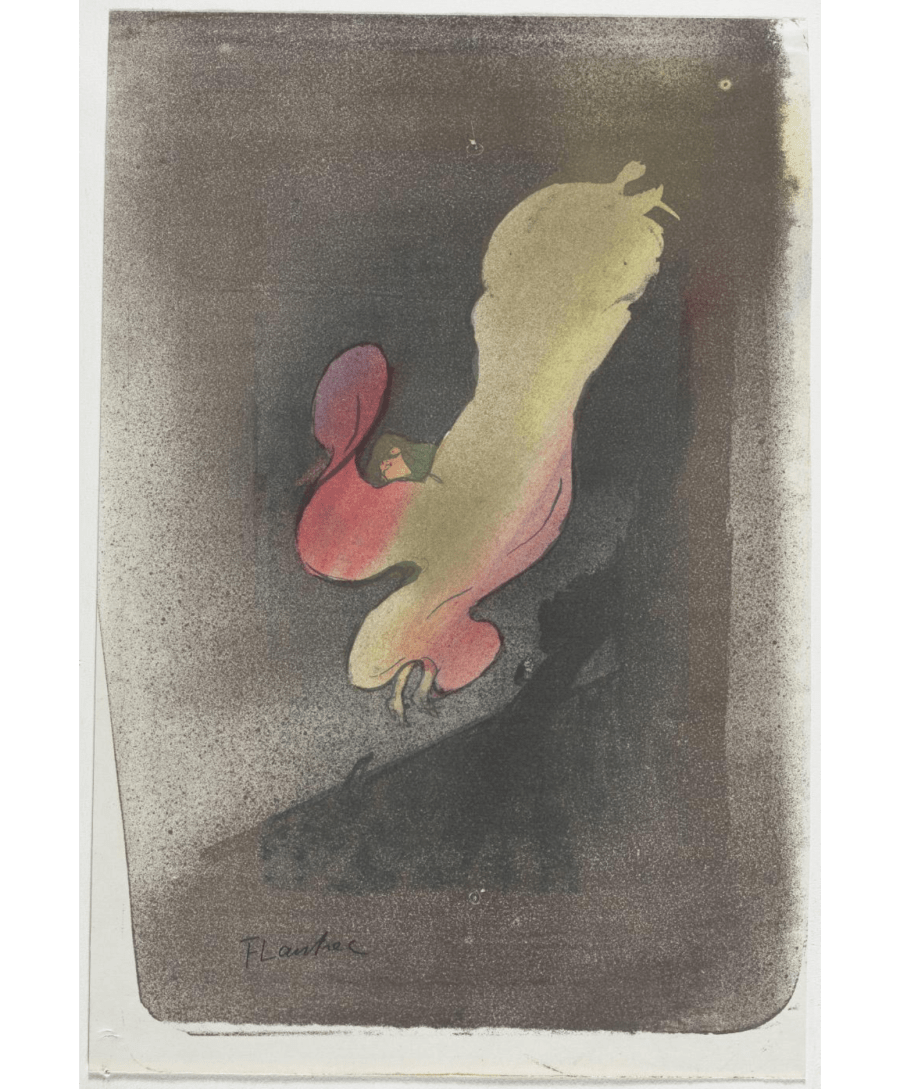
Featured Art: Miss Loïe Fuller by Henri de Toulouse-Lautrec

Gwyneth Paltrow is on the air again
saying something about the difficulty of being
a mother on set is more difficult than being
a mother in an office, on a train, commuting
to those 9 to 5s. She says you have it easier
when your life is synchronized to the needs of mouths
that are not your mouth, to the needs of bosses
that don’t know your name. You have it easier when
you’re alone in a room with a baby,
when the sun hasn’t risen and your chest is dripping milk
and you wonder if today is the day the paycheck
or the 7 o’clock bus or the sun won’t come.
Gwyneth, I don’t have a baby,
but my dread is bigger than your dread,
my breasts are bigger, heavier, than your breasts.
Do you still feel the need to compare?
How about this? My cat would be cuter than your cat
if it hadn’t been for that sick neighbor and his box cutters.
My lover left and his back got smaller,
more quickly, than your lover’s back.
My dad dying sucked more than your dad dying sucked.
I could do this ridiculousness all day. But, Gwyneth,
the memory of my mother needs me
to say, that novel she always wanted to write
never got written. I was a needy daughter,
maybe even needier than your daughter.
I demanded
she look at me instead
of a book or the movie on the TV,
and maybe, Gwyneth, you were
in it, being thinner than my mother
but not prettier. There were days
my pretty mother didn’t look at me
because she couldn’t see past the dark
space in herself and I hated her.
There was a day my mother cried in the laundromat
when a woman, another mother, asked her what she did
for a living, and when my mother said she was a home
health care aide, the woman said that meant
my mother was nothing
but a maid.
The color of blood is more vivid and harder to clean
in my daydreams than in your daydreams,
and a powerless life is harder to describe to the powerful
than the sound of my mother crying on the rug.
But I’ll try.


Read More

At the Precise Moment of Your Awakening

By Matt Morton

Featured Art: Time Transfixed by René Magritte

It will be raining. You will be watching
TV when your son walks
into the room. He will be crying

and holding the stuffed gazelle you bought.
What’s that noise? he will ask,
sounding scared. On the screen,

an armadillo singing show tunes. To humor him,
you’ll pretend to listen:
Outside, down the street, coming closer,

a sound like a train. It’s just a train
you’ll shrug. Here, look at this armadillo.
A flashing red banner scrolling from right

to left across the screen. Such tiny print.
You will squint. Undoubtedly,
you’ll have left your glasses in the other room

with your credit cards and shoes. Turning
your attention back to the show,
you will gather up your son. Front door

rattling against the jamb. All of the windows
black. But you said there aren’t any trains.
He won’t stop sobbing. You said they—

Hush you will say, annoyed
at missing your show. Where is your wife?
By now, the sound has become a roar. The gazelle

lying on the carpet, your son’s mouth
stuck open like a doll’s. When the portraits drop
to the floor and break, you will shake

your head: He is so small for his age, the world
will be hard on him. T-R-A-I-N
you’ll mouth, as if he’s deaf, when the windows

start to blow out. You’ll be shouting
It’ll pass, it’s just a train
as the roof is ripped from the house.


Read More

Dispatches From the Interior

By Geoffrey Brock

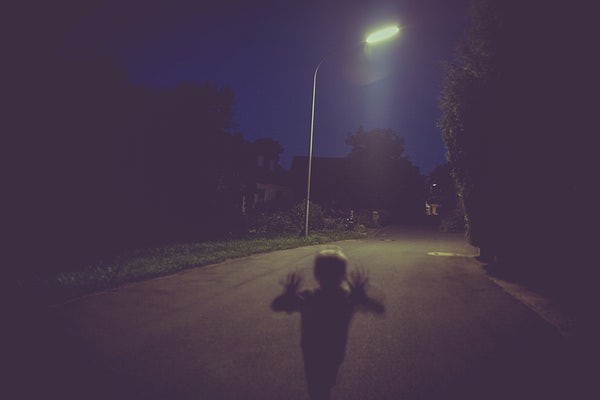
Featured Image: “A Lone Child Walking Down the Street at Night“, Unknown Artist

Like the one where you stumble along happily drunk
after closing a bar and reach your car only to find it
surrounded by militia who take you in to question you
about why you left your son alone in the car so long
and you say I lost track of time though that’s not true
and Can I see him and they refuse and Is he okay and
you’re panicking and thinking What if he died in there
or the one the very next night when you find yourself
atop some posh hotel listening to some poet speaking
and realize you haven’t seen your son since morning
when you let him go down to the lobby alone to play
despite the warnings you now recall about the natives
and you race for the elevator but there is no elevator
and so you find the stairs and descend floor by floor
and each landing is a shabby apartment living room
and though you can sometimes tell someone is home
water running for instance or light under a shut door
you never see anyone or gain any real insight into this
country of ancient dearth and modern resentment
what country is this anyway? and after the gauntlet of
these empty private foreign lives you emerge at last
into a brightly lit and darkly paneled colonial lobby
and scramble frantic now through the patrician crowd
looking for help but when you ask a giant suited man
if he speaks English he replies in the plummiest nasals
I don’t just speak it I am it and merely cocks one brow
about your son so you race outside where a boy squats
alone in the penumbra by a bush and you tilt his face
to the light but he isn’t yours too small and dark and
you keep looking and see others and scream one name
and then oh god you see his hunched familiar shape
rise out of the pile of dead leaves he had hidden under
and stumble toward you arms extended the pajamas
he was wearing this morning now tattered and filthy
and when you scoop him up you discover obscenities
and anti-American slogans scrawled in black marker
on his face and blood or something caking his nostrils
and he doesn’t speak or cry and nothing shines forth
from those eyes and you carry him cradle him through
this endless third-world night trying to comfort him
but knowing you will never be able to comfort him but
cooing You’re safe now Daddy’s here or the one where


Read More

Saying Goodbye to Dad

by Kate Fetherston

Feature image: Pierre-Auguste Renoir. Near the Lake, 1879-1880. The Art Institute of Chicago.

My dad died alone in a VA hospital
as July sun beat without mercy into the raw

seesaw of breath busting seams between
each cell. Third spacing doctors call it

when cell walls no longer sustain
boundaries with integrity, fluid

sluices into interstitial no-man’s
land and overpowers whatever little

plans were made for a garden and some
trees. When my brothers and I got

the news and flew in from the various
places to which we’d fled, I’d just split

on my first lover after years of her
threatened suicide, bouts of drunken

depression, and refusals to take
her medicine too numerous

to recount. Her view: I’d been trained
strictly for fixer-uppers, too stupid

or stubborn to leave, but, waxing
romantic, she’d croon, “You’ll do me

for a rough old mate.” The day she smashed
my stuff into the carpet and poured

ten pounds of flour over
everything, I might have stayed for

more of the same, but I threw
crumpled clothing into my pack,

startled when she whispered, “I’m
just like your crazy

old man, aren’t I?” I didn’t
answer because we both knew

Read More

Cake

By Mark Kraushaar

Featured Image: Landscape by Peter von Bemmel 1685-1754

She’s in the first booth left of the planters.
She’s been waiting an hour now.
She’s been waiting at the Watertown Family Buffet
with her little girl who’s dreamed up
some kind of a costume:
giant glasses, backwards cap, taffeta gown
which is clearly for him, for Al who’s
just now arriving, finally, and now

he’s seen them, and now
he’s walking over, and now
he’s standing there, standing there,
husband and father, or boyfriend and father,
or boyfriend and father figure, except he’s way too late,
he’s too late times two and the party’s over
thank-you, and, no, they’re not having,
not the grin, not the story, not the hug.

The woman gets up, and then, face baggy with patience,
she nods to the girl who scoots out too,
and they exit together.
So over the chips and spilt dip,
over the drained Pepsi and the big white cake
with “Al” in caps and quotes
he watches them go,
looks out at the parking lot,
opens his book.
Here’s the waitress with her pad and pen.
And what in hell is he reading?


Read More

Degeneration

By Stefi Weisburd

Featured Art: Stoke-by-Nayland by John Constable

Through the forest’s dark persistence, hugging
the relentless road, you search the inevitable
for the sad address, then find yourself paused

in front of the driveway, just
before your halogens startle the dim
windows, the porch out of joint, in that moment

before you are knotted irrevocably
to the future, to her avocado refrigerator whining
like a beast, its gullet full of Ice Age ice cream and the odd

trap-sprung mouse in a Ziploc, before the legions
of art magazines piled in solemn cairns and the Old Countries
purpling her arms, her throat’s

dry drapery and the keys to abandoned
rooms clutched
like a crucifix. In that moment

before her body slips
out of itself and she dampens the floor, before
her ears traffic in the static of her dead

father’s scolding, before her dull
doe eyes fever with fury and shadows hunch like Dante,
before she calls you “Mother,” demanding

you wipe her ass, before her heart cherries and
Tolstoys, in that moment, turned in the driveway, before
all that, back out. Gun it.


Read More

Miss Peach Considers #8: Reproduce

By Catie Rosemurgy

A paperweight of sorts.
A shiny genetic clip for the stack of notes she’s become
on carbon dating, lozenges, and “getting over it.”

On a park bench she could lean over
to the other stunned, unmade-up mothers
who stare like cruelly unfinished paintings.
She could say, we are the giant price tags
that once hung off them.

A penny to toss in the well.
Mindlessness held together by bones.
Something that happened once in the distance,
like a war or an arctic expedition.

A list of ways she would try not to feel about a son or a daughter.
A list of choking hazards and a list
of times she will have peeled back the curtain
for him or her by age seven.
A list of golf courses and shades of blue.

Her penmanship begins to pile up and look like sticks,
like an attempt at a tiny fire left on a stone.


Read More

Miss Peach Considers the Human Condition

By Catie Rosemurgy

Featured Art: A Bouquet of Flowers by Clara Peters

It’s OK to feel important.

The swelling between our legs
indicates we are the rarest of flowers.

We bloom in only the most
idiosyncratic conditions: rubber,

misery, great shoes. The other day

I realized that we can’t spit
without hitting grass or something else

that implies the necessity
of our experience, of our greatness.

Read More