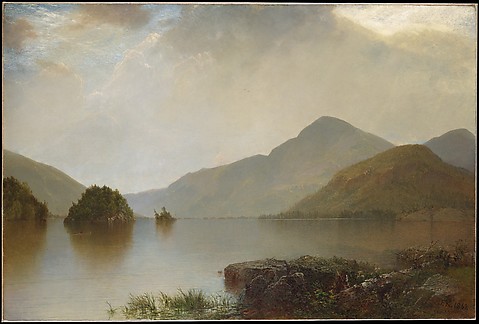
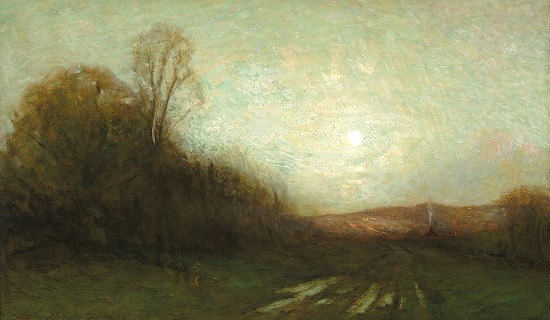
New Ohio Review Issue 5 (Originally printed Spring 2009)

Newohioreview.org is archiving previous editions as they originally appeared. We are pairing the pieces with curated art work, as well as select audio recordings. In collaboration with our past contributors, we are happy to (re)-present this outstanding work.

Issue 5 compiled by Logan Weyland and Jade Braden.

New Ohio Review Issue 5 (Originally printed Spring 2009)

Newohioreview.org is archiving previous editions as they originally appeared. We are pairing the pieces with curated art work, as well as select audio recordings. In collaboration with our past contributors, we are happy to (re)-present this outstanding work.

Issue 5 compiled by Logan Weyland.

Tool Box

By Maura Stanton

Under the rusting red metal lid we’re waiting for you—your father’s tools.
We always knew you weren’t going to build a doghouse or repair the stairs or
tighten a bibcock faucet, but we wanted to be of use as in the old days. Ah, the
old days! When we heard your father’s tread on the basement steps, we were
thrilled. The hammer clenched its head, the bubble trembled in the level, the
pliers stretched its jaws. But after your father died it was worse than we ex-
pected. You carted us out to your car, left us for months in the trunk, and then
stuck us on the floor of this hall closet next to the vacuum cleaner. Now the
hacksaw’s teeth are rusting, the file’s worn down, and the measuring tape sags
beside the plane. The poor jackscrew, no longer attached to a work bench, has
grown forgetful, and thinks it’s really a micrometer caliper. All you care about
is duct tape these days, tearing off flashy shreds to cover your botched work
while the tough little nails languish. So watch out! All of us in here are fed up
with your disregard for some of mankind’s oldest inventions, so if you ever do
open this lid you’re going to get hurt.


Fortune Cookie

By Maura Stanton

6 a.m. It’s cold and raining and you don’t want to get out of bed. It’s one of
those days when you’d like to stay home from work, curled up somewhere
comfortable and nice with your knees against your chest. Why not inside a for-
tune cookie? And at once you imagine yourself inside the sweet crispy shell, the
paper fortune wrapped around your body like a sheet. You’re about to close
your eyes and go back to sleep when you start to worry about the fortune. Is
this one of those really good fortunes like the one you’ve kept in your wallet
for years, You will never need to worry about a steady income? Or is it more
sinister like the one you pulled out last month, Idleness is the holiday of fools?
You want to read your fortune but you’ve got to break out of the cookie shell.
Only you can’t. You’re paralyzed. This is someone else’s fortune cookie, and you’ve got to wait patiently until they pour the tea, and crack it open. Then
they’ll laugh and read your fortune out loud for everyone to hear, Your prob-
lem lies not in a lack of ability but in a lack of ambition.


Penny Red

By Maura Stanton

Art Attribution: “Untitled (Hourglass)” by Mary Vaux Walcott

I found a cancelled English penny stamp
Stuck in a library book, and pinched it up,
1909, October 8, 6:50 p.m.
Somebody must have licked it right before
They posted a letter, and left their DNA
Stuck to the glue, and somebody else
Unpeeled it, saved it, stuck it between the pages
Of a book that later got shipped abroad. Read More

The Mood

By Carl Dennis

Art attribution: “Study of clouds” by William Stanley Haseltine

It’s only sensible for me to want to flourish
In mind and heart and body, but why
Should I want you to flourish as well
Unless I believe it’s in my interest?
Why should I put myself out for your sake
When I’m not in the mood, when my body
Wants to sleep in, my heart
Isn’t moved by the thought of your company,
And my mind considers your mind conventional? Read More

Recall Notice

By Carl Dennis

Art attribution: “Lear and Cordelia” by Richard Hatfield

Gone now the young professor
Who took pleasure in hauling Lear
Before the court of a sophomore classroom
And pronouncing the old king headstrong,
Hungry for praise, intemperate,
And flagrantly ignorant of the world,
Confident he can cede his kingdom
And still retain his kingly authority.

Read More

Variation on a Letter from Schoenberg to Mahler

By Nina Corwin

Dear Maestro, Dear Gustav, Dear Dear—

I must speak to you not as a pillar to a post if I am to give any figment of
the scurvy beast your symphony unleashed in me: I can speak only as one
emboldened avocado to another. For I saw the gritty foreskin of your soul,
fileted and in flagrante. It was unveiled before me as a sumptuous centerpiece
overrun with willful and tawdry tourism, a sprawling frontier of ruby-throated
gauntlets and savage cul-de-sacs scattered on a ravishing trash heap. I savored
in your symphony the soul of an exotic prophet who, after fleecing us with
digital adroitness, paints lipstick on the shattered mist. I shared in your sea-
son of strychnine; suffered a crucible of peeled fruit: a glorious hornets’ nest
of history subsumed by the bonfires of conquerors. I saw a man in traction
straggling toward inner uprightness; I divined a full-frontal mugshot, a flying
buttress, a blue-eyed lampoon. Oh yes, the most impetuous lampoon! I had
to let my gargoyles go! Forgive me: I cannot feel by halves. With me it is one
thing or the other.

In all devotion,

Arnold


Read More

Portraits of a Few of the People I’ve Made Cry

By Christine Sneed

Featured Art: Self-Portrait in the Artist’s Studio by Emile Masson

Antonio Martedi, a painter and sculptor who had sold what he sometimes boasted were his least interesting works to American museums, told his granddaughter, April Walsh, on what turned out to be the day before his death, that he had not lived in fear of mediocrity so much as the disdain of beautiful women. He had made art because he wanted to be loved, preferably by many beautiful women in a slow but uninterrupted progression, women who would remember him fondly after their affair had ended and keep whatever sketches or canvases he had given them in an honored place in their homes. “But if after a while they sold my work for a good price to someone who knew how to appreciate it, I wouldn’t have held it against them. The money would be another way for me to keep my place in their hot little hearts.” This was the first time April had heard any of this, and she had no idea what had prompted it. Her grandfather had a reserve of stories that he repeated with depressing regularity for a man widely known for his flamboyance. She assumed that she had heard all he was willing to tell by the time she had graduated from film school and was failing to sell her scripts or to get hired as the production assistant’s own scorned assistant.

Read More

Feel Better

By Mary Ann Samyn

It was raining on the other mountain
like a preview of a movie I’d watch soon.
The clouds smudged, like mascara.
The wind grew very important. The day
had not yet been assigned a permanent value
and I meant to offer some resistance.


Read More

The Number One

By Ashley Cowger

On Friday, November 30th, 2007, at precisely 7:48 in the morning, Eastern Standard Time, Anna Kelsey McMillan became, for the duration of 5.3 minutes, the number 1 most beautiful woman in the world. 3 of those 5 minutes Anna spent in her car, alone, where nobody saw her in all of her splendor. But Anna spent 2 of those glorious minutes traversing the parking lot of the large business complex where she was expected, at 8 o’clock, to commence her presentation on farmed salmon.

Read More

Give Me a Moment

By William Olsen

Everything I’ve always wanted, want me was the haiku I was working on when I thought I heard the mail come, some metallic hello of the mailbox lid creaking open and slamming shut, but I think it must have been my heart instead because there wasn’t any mail at all inside there, not even a bill, not a cancelled stamp. And there was nothing but emptiness in saying it was empty. Just thinking of saying so was heartless. So now in place of my heart was a deep well, a well that didn’t end well, a well that didn’t end at all. Meaning, what I was was what I saw, and what I saw was, and is, a seesaw down there in my deep well looking back at the seesaw I saw in the mirror at the bottom, O. Or was it, because it was a reflection, a sawsee? Yup, and after that mental yelp what should I see but a hummingbird, just a glimpse, rare occasion, first edition, last run, print on demand. I saw it! Here in Kalamazoo, particularly in the last three letters of this place name, having left the mailbox and halfway up the stairs to the front door and half done eating this banana like, well, a stir-crazy monkey! Read More

Cabbages Across from the Manitou Islands

By William Olsen

The earth is the subconscious of the subconscious.
—Bachelard

1.
Half a block inland and safe from genius gulls
local and alone in their dishwater droves,
up out of reach from beach inland-eaten

by gutless waves,
opposite the passage from two fresh green-furred
ursine islands, one lighthouse-flicker lit, one not,

safe from shark-toothed sails and trolling trolls,
unseen by one old crow
patrolling a fire-log-charcoal-pitted shore,

innocent, green, unschooled, dimwitted, featureless,
foregrounded by the imponderable plumpness
of the crimson motherships, summer’s end’s tomatoes,

encephalitic, all intelligence,
stupidly, yet astonishingly so,

Read More

Indoor Municipal Pool

By Alan Shapiro

The circulating disinfectants
make it an unearthly blue
or earth’s blue seen from space,
or what pooled from the steaming
of the planet’s first condensing.
In which case the pumps
and filters could be thermal
vents, and the tiny comet trail
of bubbles rising from the vents
could hold within it—if it isn’t it
already—the first blind chance,
if not the promise of
the hint of the beginning
of what at long last would
emerge into the eye which
being mostly water sees
only water signaling to itself
beyond itself in accidental
wormy quiverings over
the sea floor of the ceiling.


Read More

Downtown Strip Club

By Alan Shapiro

Its night is all day long;
the neon GIRLS out front go dark in sunlight,
while inside the cruciform stage
has stripped down to blackness,
in which the vertical
poles at the end of each transverse arm
stand naked and lonely.
Cold here is the cold on the faces of the presidents
on bills the absent hands
have pushed toward each body bending over
in a gown of brightness;
cold is the heat of the shadowless
shadow play of hands and legs
up and down along the poles,
and the hands retreating from the money,
and the hands in pockets dreaming,
or dreaming later on another body;
the heart of the cold is the opposite of what it is,
cold as the fire
through the day of its night
in the firing line of bottles
waiting for orders
on the shelf above the bar.


Read More

The Wet Jade Someone

By George David Clark

Years ago my father and I smuggled Mandarin
Gospel tracts and Jesus videos through customs in
Beijing, that labyrinth of marble lions and silk,
of pearl hawkers, of the Muslim Quarter’s narrow walks
confused with fruit and butchers’ racks in the open air.
At the night market I watched two geese dangling by their
necks in a darkened window while Father disappeared
into the neon dazzle of bald rabbit heads smeared
with candy glaze, scorpions and black locusts by
the shish kabob. A woman touched my arm. “You want I
give you bath?” she asked. Her eyes were the wet jade someone
lost off a bridge. Wry smile half-disguising her rotten
teeth, she whispered, “You like warm bath?” again in my ear,
branding the taste of fried starfish on my fifteenth year.
Often now, in the hotel of bad sleep, she leads me
down a hallway to a room with a golden tub. We
slip into the bath together. Her small breasts are white
as fresh apple flesh. First I kiss them, then take a bite. Read More

To a Rose

By Kim Addonizio

Bone-stick
partially stripped

I hang you upside down
with your sisters
above my mirror—

all drooping heads all trophies of desire

O rose thou art past-tense

Even your brother the worm
has shriveled and gone

Your silks are best
like this unkiss-

able
and therefore bearable


Read More

Yes

By Kim Addonizio

Do you sometimes drink alone?
Have you ever woken up the next morning
after a night of heavy drinking?
Does your cat wander through the house
meowing inconsolably,
despite having fresh food and water?
Hunger, thirst, friendship, love.
Green Bee, Russian Quaalude, Redheaded Slut:
IEDs on the supply route to pleasure.
There’s a gala in your hypothalamus,
helium balloons rising to the rafters,
the fizzy ricochet of laughter.
There’s a stumblebum in your cerebellum.
That empty feeling crawling toward you—
should you kill it with a wadded paper towel
or trap it in a jar and shake it out
and send it flying into the grass?
Is your head full of frozen tamales
and a vodka bottle curled on its side?
How do you get through the interminable evenings?
Are they really interminable?
Have you considered the alternative?
Now get out of your car,
stand by the side of the road
and take a step. Now recite
The Waste Land, backwards,
beginning with that sexy Sanskrit word.


Read More

Pediment

By David Gewanter

Like backtalking teenagers sent to their rooms,
__the boyhoods
of husbands dangle in closets, or bulge a locker,
__ancient toys

awaiting the senile hand—here inside the trunk,
__the Furry Freak Brothers
rub the benighted sovereignty of
__Big Ass Comix

or nuzzle the Up Against the Wall
__Street Journal, where
a sweaty financier is pictured with a purpley,
__squash-sized penis—

Why grow up? The basement monarch
__palms his relics:
the crumbled essay on pacifism, scrawled
__to the Draft Board’s

faustian query, Let’s say you see your mother
__being raped.
What would you do? The brochure, “Amputating
__Your Small Toe Safely.”

Read More

Teddy Agonistes

By Teddy Macker

Summer after high school I lived alone on my family’s farm in Carpinteria,
California.

I didn’t know a hoe from a spade but still reveled in the new role, begging my
mother to send money so I could rent a tractor and disc the field.

I disced the field, had my neighbor take pictures of me discing the field, then
sent those pictures to my ex-girlfriend.

Right before the photo I mashed hay into my hair.

At night I put on my Walkman and drove the tractor up and down the
lightless street, the speed of the machine shocking, the sycamore branches
raining down their sweet womanish incense. . . . I’d listen to Emmylou Harris
sing, You think you’re a cowboy but you’re only a kid, never once thinking I
was a kid.

During the day I spent hours not working but prayerfully wandering the
barn trying to be spellbound by every mote in every last shaft of light, then
scrawling T. S. Eliot on the walls of the hayloft.

Once I found a dead owl and for some reason washed it with a hose.

And late at night, lying on my back, the sounds of the coyotes pinned me to
my bed till I became an infinitely petalling blossom of strange clear dread.


Read More

Inheritance

By Harrison Candelaria Fletcher

I inherit the sword. Before my father dies, he decides that I, not my big brother, will receive the ceremonial blade from the secretive Masonic Order, to which the men in his family belonged. My brother will get the gold ring stamped with the family coat of arms—a broad gray shield emblazoned with a black cross, four white shells, and four silver arrowheads.

I’m proud of my heirloom. I sneak into the hallway storage closet to play with it while my mother prunes her rose bushes. I slip the dull-edged weapon from its tarnished brass sheath, grip the chipped black wooden handle with the knight’s helmet hilt, and run my finger along the clouded chrome surface etched with vines. My brother slides beside me into the cool darkness.

Read More

Truck

By Jerry Williams

When I was twelve years old, during the summer months when I was off from school, my father used to get me to ride around in his truck with him. The truck was a hospital-gown blue, three-quarter-ton Ford automatic with a wide bench seat, heaping ashtray, and a loaded .38 Smith & Wesson in the glove box. I guess he had a permit for the gun, but if it ever looked like the police might pull us over, he made me transfer it from the glove box to the seat between us, and with one hand he emptied the bullets onto the cracked vinyl and laid the gun across his thigh, evidently trying to impress me with his intricate knowledge of Ohio gun laws.

Read More

Outbound Fall River 1967

By David Rivard

Well, you know how it is
when you’re thirteen, & deep
in the factory bosses’ graveyard—your hair
damp, atmospherically

violet in the August dusk—the children
you run with calling back
over gravestones & wrought-iron Grand
Army of the Republic

picket fences—in this cemetery
catty-corner
from the China Inn (Catholic chow mein
sandwiches

served there Fridays,
Wayne Yee’s family cooks them)—
you know all those
grassy family plots you walk over, strongholds

Read More

Wordsworthian

By David Rivard

The brain bounces forward too, right?
so why return to what yesterday seemed to be becoming
before it became today?—
there’s no need for meanness or envy
when waking in the morning, no reasons for fear—
just an unlikely Rose of Sharon blooming by the branch library
and the balanced light of a warming
late October as it shines on a sheet of week-old social studies homework only recently
dropped from the book bag of a wandering Violet Neff
(5 points extra credit—according to Ms. DiNardo, a “nice job”):

nice job say the Tibetans by lugging the rolled-up rugs to air
in front of Yala Carpets mostly the smaller
prayer mats that are colored with clairvoyant vegetable dyes,
nice job says the scent of heavenly inventions like the breakfast plantains frying,
well done says the toddler with the jelly-fish haircut,
all answers perfect say the hedgerows of boxwood left
untrimmed by the vestry at St. Augustine’s

(a coven of swallows with attention deficit disorder muttering one-liners within),
perfect say the chicken legs in the freezer case at Fresh Killed Poultry,

while you wait for the 91 to the Green Line at Lechmere,
a vaguely Wordsworthian subway stop you think
(because the brain knows it’s well within its rights to do so)
a second or two before it occurs to you
to wonder if Ms. DiNardo’s grading is strict—

so what if it is? thinks the brain,
I can still imagine her first name is Julie whenever
I need to.


Read More

Free Period

By David Yezzi

___Outside study hall,
it’s me, my girlfriend, and a guy
named Rob—bony kid, klutzy
at games, fluent in French.
___He’s behind her;

___I’m asleep or half-
asleep (it’s morning), and, as I
squint into the trapezoid of light
breaking on the bench and me,
___I see him raise

___his hand to her head
from the back, so gently
she doesn’t notice
him at first, but stands there,
___carved in ebony

___and beaten gold:
Stacey’s straight black hair
falling in shafts of sun.
He smoothes it down,
___firmly now,

Read More

I’m sorry it has nothing

By Sydney Lea

to do sweet Jeanne with you this wild urge to leave behind
all that I treasure by zooming away on my old silver Norton
road bike with clip handlebars and mean engine never mind

that the two of us did that so often and country towns’ small winking
street lamps briefly lit us as we rumbled and roared below them
though we were lit up already by our idiot epical thinking

that we’d be the first ones ever to outspeed what kept on chasing us
which I suddenly ache to race from again as though we hadn’t
learned this was hogwash because even we in our garish glamorous

leathers could see how we played a script that in fact was an old one
familiar to lord knows how many people before us who’d enacted
their own absurd escapist narratives complete with explosive

trappings like the famous instance of the late Jimmy Dean who’d run
his fantasy Porsche right into something that turned out to be
much bigger than he of course and that’s not to mention my drunk

unfamous friends Mike Knott and Harry Robichaud
but wait I meant to be saying that this had nothing really
to do with you since just now I wish I could ride out solo

Read More

Early Life

By Sydney Lea

All the pastor’s years of serving God
and humankind—they’re nothing now.
His congregation has long resigned itself
to anecdotal, meandering sermons.
But how forgive his mixing the liturgy
of welcome to a new church member
with the ceremony—however it may be related—
of baptism? The poor young parents

blush and fidget while veteran members feel
something between impatience and rage.

The minister and infant, robed and sleeping,
appear serene, above it all,
the one too young, even awake, to know
what’s going on and the other unable
to keep intact his thinking. Painful pauses.
Autumn rain on the roof like gunfire.

Read More

The God-Blurred World

By Joe Bonomo

Recently I looked at newspaper coverage of the 1969 Apollo 11 lunar mission: front page after front page of banner headlines, screaming two-inch type, giddy editorial cartoons, all reported manner of visionary enthusiasm and tearful astonishment for a new future where moon creatures have been disproved and NASA will rescue us all. Writer and sci-fi visionary Ray Bradbury wanted to create a new calendar, beginning with “Year One of the New Era.”

In Section One, on page two of the July 20, 1969 edition of the Chicago Tribune—barely noticeable in the lower-left corner, the insubstantial pica-width dwarfed to near extinction by the booster power of Apollo media coverage—ran a small item:

Read More

New World

By David Baker

—Yellow gingkoes, awash on the sidewalks.
But we can’t have them. Blue sky like a just-
thrown vase. Bright plain blue side still glowing.
Autumn air. Warm as a bath. We can’t say so.
We did not see the horses nuzzling
in the field, in the muddy pen, in the big acres
hidden by trees in the middle of the financial city,
nor whisper through a night in a booth. In
a room. In no hurry atop sheets of many gone loves.
This was not us, nor will be, nor ever will I
forget you when the broken histories are
told. Expenditure and loss. Collateral and gift.
. . . no where shall Wee Be known. How
many leaves. How much wind in the new world—.


Read More

Saint Monica and the Devil’s Place

By Mary Biddinger

At school they were too polite to call it hell, though she heard the word on her
mother’s eight-tracks, seeping between damp towels in the bathroom, hover-
ing in the silver of the old hall mirror. Monica knew who went there and why,
regardless of time spent fluffing the chrysanthemums outside the rectory. She’d
go to the Devil’s Place herself if it meant one hour alone with Kevin McMillan
in the falling-down barn. Sister Rita said it was hot, but Monica could live
with that. Mrs. Dettweiler next door crushed cigarettes out on her daughter’s
back. She was on her way to the Devil’s Place, along with the Simmons twins,
and Monica’s uncle who thought he could piss out an electrical fire, ended
up burning down the Kroger instead. There were, of course, exceptions. If he
was mean enough you could take a cinderblock to your husband’s head in the
middle of the night, as long as you called the police afterwards, produced the
notebook of grievances when officers arrived. You could sign your husband up
for a war, then dash your face with mauve lipstick on the night they handed
him a gun. If you were married to one of the Simmons twins you could toss
the car keys down a sewer grate, sprint to JC Penney for a white sale bonanza
with the charge card, knowing you’d be safe until Randy or Ricky made it
out of the sludge. Monica would not go to the Devil’s Place over shoplifted
Raisinets or hair gel, but she would sign away her soul for an afternoon swim-
ming with Kevin McMillan in the pond at Raccoon Park, as long as they could
both be naked and the water above fifty-five degrees. Perhaps there was hope
for Monica’s uncle, provided he sold the Firebird, wheeled the recliner to the
curb and found a job. If they ever married, Monica would never torch Kevin
McMillan while he read the newspaper in his slippers and flannel boxers, or
dig a six-foot three-and-a-half-inch hole in the backyard while the children
planted daffodil bulbs. She would not include the Devil’s Place on her college
application list, as Rhonda Phillips did the day she broke her sister’s arm play-
ing darts. When the Simmons twins winked at her, Monica looked away. When
Kevin McMillan winked at her, Monica unbuttoned her shirt, showed the hot
pink swimsuit underneath.


Read More

Barbeque

By Roberta Allen

If I were to write a story about a barbeque in Stone Ridge, would I change the location to Willow? To Olive? Would I change the number of guests from six to five or maybe seven? Would I add another female? Would I exclude the odd-numbered male? Would I change the profession of the annoying architect swatting big fat flies at the table while we were eating to lawyer? Or pilot? Or yoga instructor? Did the architect swat flies while we were eating? Or was it later, after we had finished and taken the dishes and burnt buns back inside the house? Were the uneaten buns “burnt”? Or do I just like the sound of the words “burnt buns”?

Read More

Camouflage

By Richard Robbins

For a long time, I never understood how fish could live in that creek in the first place. It measured barely six feet across in most spots, and except for the rare place where a pool had developed, it never seemed deeper than a half-foot. My grandfather first stood me on the sandy bank across from our cabin when I was five. He put a salmon egg on my hook, locked a lead shot into place with his teeth a short way up the line, and showed me how to drop the bait gently into the flow and allow it to sink partway to the creek bed. The speed of the water would keep it from snagging in the rocks below. I should hold a small slack of line with my left hand between my thumb and index finger, waiting for the slightest nibbling of a trout to let it be pulled away and, as the slack tightened, set the hook in the fish’s mouth. I should not cast—high grass and sage and willow branches waited eagerly to snag my hook. I should not jerk the end of my rod if I felt a strike. If I did everything right, the trout would nibble, the slack would set the hook, I would keep the tip of the rod slightly in the water as it bent and danced and I reeled in my line slowly and evenly, and then before the lead shot reached the first eyelet I would carefully lift the rod-tip while backing away from the bank so that the fish would, in a swinging motion, be brought over dry earth, where it was free to flop off the hook and flail in the dirt until I pinned it down with foot or hand. These were my instructions every spring we returned to Rock Creek. Each spring the routine felt more familiar, something a long winter could never wipe away.

Read More

Sparrow

By George Bilgere

On the bricks of the patio
A sparrow is struggling with a used tampon
It half-flew, half-dragged here
From a dumpster across the street.

The tampon resembles a wounded rat.
Those of us enjoying our coffee
And New York Times in the spring morning
Pretend to ignore it.

But all the suns in all the galaxies,
And all the planets around our own paltry star,
Are turning on the same invisible pulleys
That drive the sparrow
To build a cozy little crib
In the eaves under somebody’s gutters,

And to find, sooner the better,
Another sparrow who hears
The same music of the spheres.

You can’t argue with that.

And though some of us on the patio might believe
That what the sparrow is wrestling with
Is the blight man was born for,
The curse Adam fell for,

For the bird
It’s an engineering problem: the tampon’s
Too stubbornly stitched together
For a tiny beak to tear apart,

And too heavy
With human blood to carry off
Into the blue air of the future.


Read More

Whirlpool

By George Bilgere

In the morning, after much delay,
I finally go down to the basement
To replace the broken dryer belt.

First, I unbolt the panels
And sweep up the dust mice and crumbling spiders.
I listen to the sounds of the furnace
Thinking things over
At the beginning of winter.

Then I stretch out on the concrete floor
With a flashlight in my mouth
To contemplate the mystery
Of the tensioner-pulley assembly.

And finally, with a small, keen pleasure,
I slip the new belt over the spindle, rise,
And screw everything back together.

Later, we have Thanksgiving dinner
With my wife’s grandmother, who is dying
Of bone cancer. Maybe,
If they dial up the chemo, fine-tune the meds,
We’ll do this again next year.

But she’s old, and the cancer
Seems to know what it’s doing.
Everyone loves her broccoli casserole.
As for the turkey, it sits on the table,
A small, brown mountain we can’t see beyond.

That night I empty the washer,
Throw the damp clothes into the dryer.
For half an hour my wife’s blouses
Wrestle with my shirts
In a hot and whirling ecstasy,

Because I replaced an ancient belt
And adjusted the tensioner-pulley assembly.


Read More

Faculty Lounge

By George Bilgere

There’s my friend Miles, reading the paper.
Looking at him, you’d never guess
He’s a world-class ichthyologist.

And there’s Graciella, still attractive,
Letting herself go gray. I remember
All the fuss about her groundbreaking treatise
On neutrinos created back in the early nineties.
She’s reading a book entitled, simply, Neutrinos.

And there, of course, is Marty. He’s always here,
With his flip-flops and his laptop.
His cappuccino and his shorts.
He’s the number one guy,
In this hemisphere, anyway,
In antimatter. What Marty doesn’t know
About antimatter isn’t worth knowing.

He’s talking with Lewis
Who is sweeping the floor.
Lewis knows his back hurts
When it’s going to storm. He knows
We don’t have any pitching this year,
And he’s right about that
And Marty knows he’s right
And there’s no point arguing about it.


Read More
From the Life of a Project Manager

By Tom Whalen

One rumor had it that Leslie was working from home for NorSpek, commuting occasionally from Mannheim to Erlangen, another that she was in a clinic in Cologne. But on IDS I couldn’t afford to over-empathize, though I well understood the risk in not empathizing. I knew my business. I told the PM at BodKom (a new kid assigned to IDS only a month ago) he had no reason to worry. The metadata had been restored. Everything was go. The project would meet its deadlines, including the supersedes. Team’s, more or less, intact.

Leslie’s failure (ostensible failure) to produce an accurate SOW (statement of work) was neither my nor BodKom’s fault, nobody was responsible for that unfortunate fiasco, the time-on-task as lost as Leslie herself now to the project. Let’s forget about it, I said. But BodKom’s outrage at the SOW mishap (twice escalated to Maidenhead where issues resolve themselves by means beyond my ken) still haunted me. Always, I knew, they could keep throwing the SOW issue back in my face, no matter how many times I insisted the past was past, SOW a memory not worth remembering. . . . We’re not sure who to hold accountable, I told them. No one, really. But we did, after all, let an employee go and at the moment we’re a little shorthanded. What else could I say?

Read More
The Meeting

By Catie Rosemurgy

They were deep in it and about to vote on what it was.
The leaves above them began to drip and blur
the proceedings. Thumper, Miss Peach, the yellow pile of wax
that was the Candlestick Maker, all of them
batted whatever lashes they had at the middle distance and recited
possible recipes for what was leaking out of their eyes.

The Black Coat read from The Official Complaint:
for years everything has been about itself, the music
about music, the light about light. In the small patch of woods
on the south end of town, someone played with a rock and a feather
and was never seen or heard from again.

3 parts: dirt thrown at the moon___1 part: other people’s bodies

Miss Peach straightened her lichen vest, lay down,
and pretended she was dead. Thumper sang a cappella about berries
and knowing what to do, the Black Coat swatted patchy bluebirds
from Miss Peach’s eyes. Everyone’s mouth craved the irritation of dirt,
but their faces, all mere surface damage and glow,
spoke of more. Of a time when things happened
and led quickly to other things. Of a place beyond the trunks of trees.

Soon they would lose the light filtering in from the big game down the road.
No matter. They could feel their faces
beginning to cave in and didn’t need to see.

3 parts: footsteps approaching your nest
1 part: your head held above the crowd on a satin pillow

1 part: wild mint___2 parts: your mother seeing you walk into a clearing
after you’ve been dead for so many years


Read More

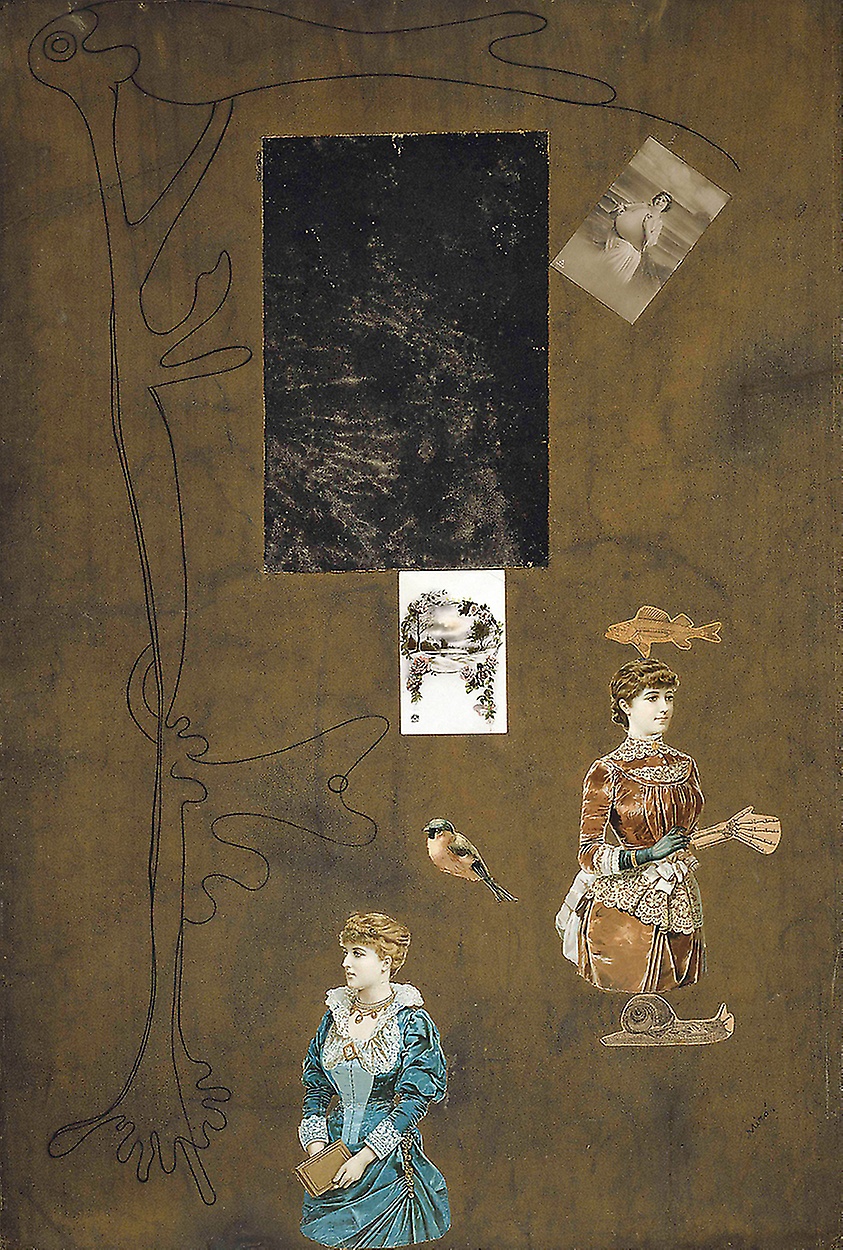
How She Lost Her Mind

By April Lindner

Featured Art: Drawing – Collage by Joan Miró

Slowly at first, the arteries
in the brain’s finely spun net
narrow one by one
_____________to dead ends;
like the hand’s delicate motion,
__________a series of strokes

erase what took decades to write.

Difficult tasks forgotten first:
_______________how to merge onto a highway,
___________________knit a sweater,
_______________________buy a stamp.
Then the simpler ones,
___________________how to turn on an oven,
_______________________what goes in a cup.

Read More

A Moment

By Wisława Szymborska
Translated from the Polish by Joanna Trzeciak

I’m walking on the slope of a hill newly green.
Grass, small flowers in the grass,
just as in a children’s book.
Hazy sky, already turning blue.
A view of other hills spreads out in silence.

As if there had been no Cambrians or Siluries here,
rocks growling at one another,
upthrust abysses, no fiery nights
nor days in clouds of darkness.

As if no plains had moved through here
in feverish delirium,
in icy shivers.

As if only elsewhere had the seas been churning,
tearing apart the edges of the horizon.

It is nine-thirty local time.
Everything is in its place and in genial accord.
In the valley, the small stream as a small stream.
The path as a path from always to ever.

Woods in the guise of woods world without end amen,
and on high, birds in flight as birds in flight.

As far as the eye can see a moment reigns here.
One of those earthly moments
implored to linger.


Read More

The Three Strangest Words

By Wisława Szymborska
Translated from the Polish by Joanna Trzeciak

When I utter the word Future,
the first syllable is already headed for the past.

When I utter the word Silence,
I destroy it.

When I utter the word Nothing,
I create something no non-existence can contain.


Read More

Little Girl Pulling Off the Tablecloth

By Wisława Szymborska
Translated from the Polish by Joanna Trzeciak

She’s been in this world for over a year,
but not everything in this world has been examined
and brought under control.

Now being probed are things
that cannot move on their own.

They need to be nudged,
slid, shoved,
moved from one place to another.

Not all of them want it: not the wardrobe,
the cupboard, the unyielding walls, the table.

But already the cloth on the stubborn table
—when firmly grasped by the hem—
reveals an urge to roam.

On the tablecloth, glasses, plates,
a creamer, spoons, a bowl
all quiver in anticipation.

It’s interesting,
what move will they make,
as they teeter on the edge:
a journey across the ceiling?
a flight around the lamp?
a leap to the windowsill, and from there to the tree?

Read More

The Puddle

By Wisława Szymborska
Translated from the Polish by Joanna Trzeciak

I remember well this childhood fear of mine.
I’d step around puddles,
especially the fresh ones, just after it rained.
For one of them might be bottomless,
even if it looked like all the rest.

One step and it would swallow me whole,
I would start ascending downward
and even deeper down,
toward the reflected clouds
and maybe even farther.

Then the puddle would dry,
closing over me,
trapping me forever—but where—
and with a scream that cannot reach the surface.

Only later did I come to understand:
not all misadventures
fit within the rules of nature
and even if they wanted to,
they could not happen.


Read More

A Note

By Wisława Szymborska
Translated from the Polish by Joanna Trzeciak

Life—the only way,
to grow over with leaves,
catch a breath on the sand,
soar on wings;

to be a dog,
or to pet one;

to tell pain apart
from everything that isn’t pain;

to fit into events,
to vanish in vistas,
to search for the minutest of errors.

It’s an excellent opportunity
to recall for a bit
what was talked about
with the lamp turned off;

and if only once
to trip over a rock,
to get drenched in the rain,
to lose keys in the grass,
to follow a spark on the wind;

always not knowing
something important.


Read More

ABC

By Wisława Szymborska
Translated from the Polish by Joanna Trzeciak

I’ll never find out, what A. thought of me.
Whether B. ever finally forgave me.
Why C. pretended it was all okay.
What was D.’s part in E.’s silence.
What F. expected, if anything.
Why G. pretended, though she knew full well.
What H. had to hide.
What I. wanted to add.
Whether my being there
mattered in any way
for J. or K. or the rest of the alphabet.


Read More

Considering Wislawa Szymborska

Wisława Szymborska was born in Poland in 1923 and has lived in the city of Krakow since childhood. Her first published poem appeared in 1945, and her first book of poems in 1952, followed by books in 1957, 1962, 1967, 1972, 1976, 1986, 1993, and 2002. In 1996 she was awarded the Nobel Prize for Literature.

Read More

Vaster: Wisława Szymborska and Elizabeth Bishop

By Kathy Fagan

“A Speech at the Lost and Found,” a poem published by Szymborska in 1972 (translated by Joanna Trzeciak in Miracle Fair, 2001), is remarkable for its wit, its polymorphic leaps, and its cosmic vision; equally remarkable is the resemblance it bears to its younger sibling, “One Art,” published by Elizabeth Bishop in her 1976 collection Geography III. These are of course not the only charming poems on the subject of relinquishment to be published in the 1970s. The 1970s were, after all, the moon-stone-bone era, and use of the autobiographical “I” was for many progressive and/or restless poets becoming passé as they raged against the excesses of rampant confessionalism. In Szymborska’s case, of course, political circumstances fostered reticence and inventiveness as much as, if not more than, aesthetic taste, but each poet struggles and thrives within the constraints she’s given, whatever those may be.

Read More

Thinking Out Loud

By Lawrence Raab

One of the ways a poem can be eloquent is by pretending to have nothing to do with eloquence. This strategy has many dangers. If we catch the writer cultivating modesty, putting on airs by pretending to do the opposite, the poem’s plain clothes will appear calculated for effect. Of course we know that all good art has been calculated for effect. Nevertheless, the directness of certain poems can seem wholly natural, as if the poet desired only to speak in the clearest possible way, saying just what needs to be said.

Read More

On Szymborska

By Carl Dennis

Go in fear of grand generalizations is the usual advice we give our students; let particulars carry the thematic burden, not abstractions. But we all know many poems that defy the rule successfully. One that I particularly enjoy is a poem by Wisława Szymborska entitled “A Contribution to Statistics,” in her most recent collection in English, Monologue of a Dog. This poem is of special interest in this regard because the will to generalize is itself part of the subject of the poem, and seems, on the first reading at least, to be treated critically, as the poet gives us the statistics about the prevalence of various character types in the population at large. Here is the opening:

Read More

“Non Omnis Moriar”: Reading Szymborska in Translation

By Jennifer Clarvoe

I go back again and again to one of the first poems of Szymborska’s that caught my attention, “Autotomy.” In it, she incorporates a Latin phrase, from Horace’s Ode III.30, “Non omnis moriar,” which means (the notes tell us helpfully), “I shall not wholly die.” The slightly disorienting pleasure of finding a Latin phrase in a Polish poem stands in part, for me, for the continuously disorienting pleasure of reading any poetry in translation—at least as much pleasure in what carries over as in wondering what is lost. The “I” in “I shall not wholly die” seems to me to be the phrase itself speaking, the poem speaking from the page, even more than it speaks for the poet, either Horace or Szymborska. In my facing-page text (in Krynski and Maguire’s translation), the Latin remains untranslated, identical, on both pages—the part I don’t entirely get in the English version, and the part I recognize with relief amid the Polish.

Read More

On Szymborska’s “Travel Elegy”

By William Olsen

Wisława Szymborska has the practical self-regard I imagine an anthropologist might have, all that much more functional for being a little off to the side. She does not deal in ironies as cosmic betrayals, as Milosz does, but in ironies as human fictions. Her poems are often written in a mood I’d describe as defenseless yet deliberate. They may maintain comic perspective on mood, but they do undergo their emotions. They can wince and smile at once, if doing so makes things clearer.

Read More