Mysterious Ways

By Kari Gunter-Seymour

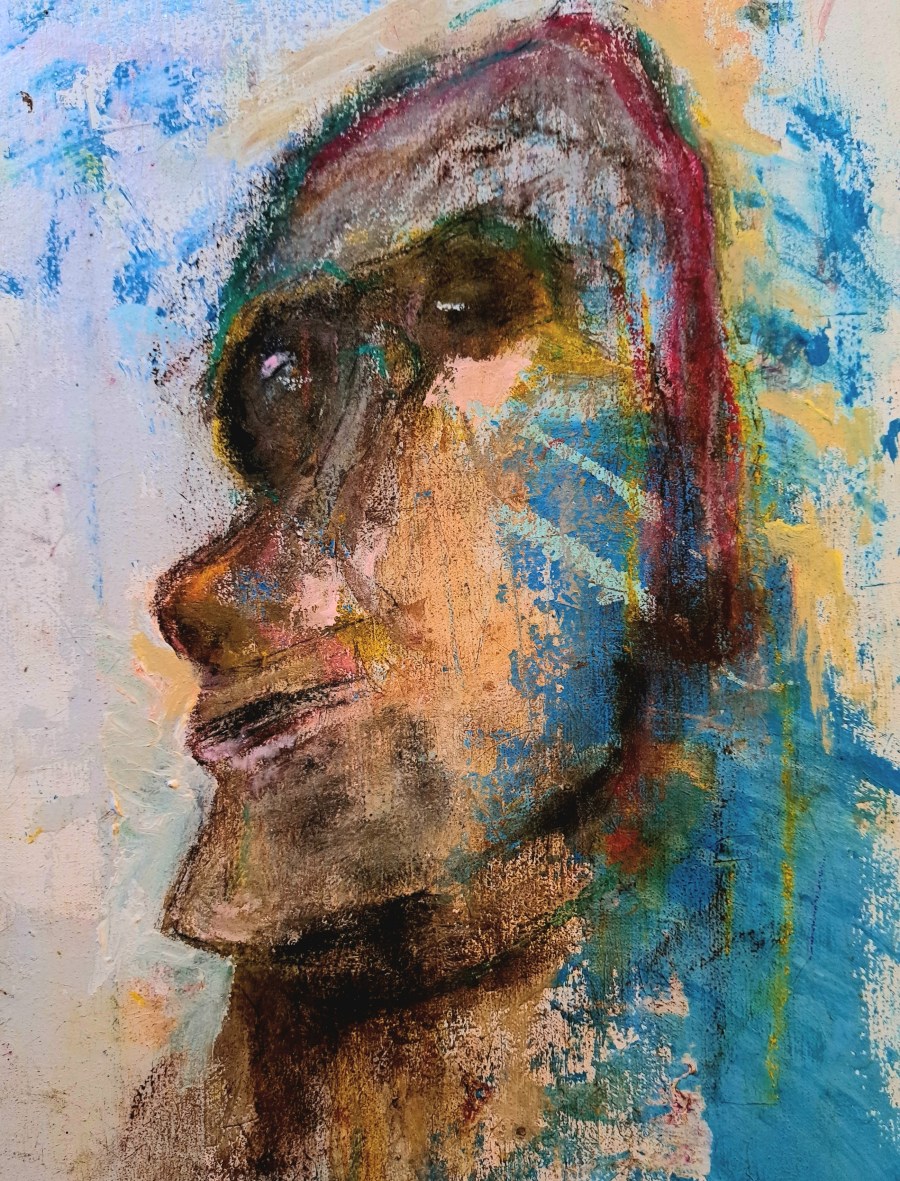
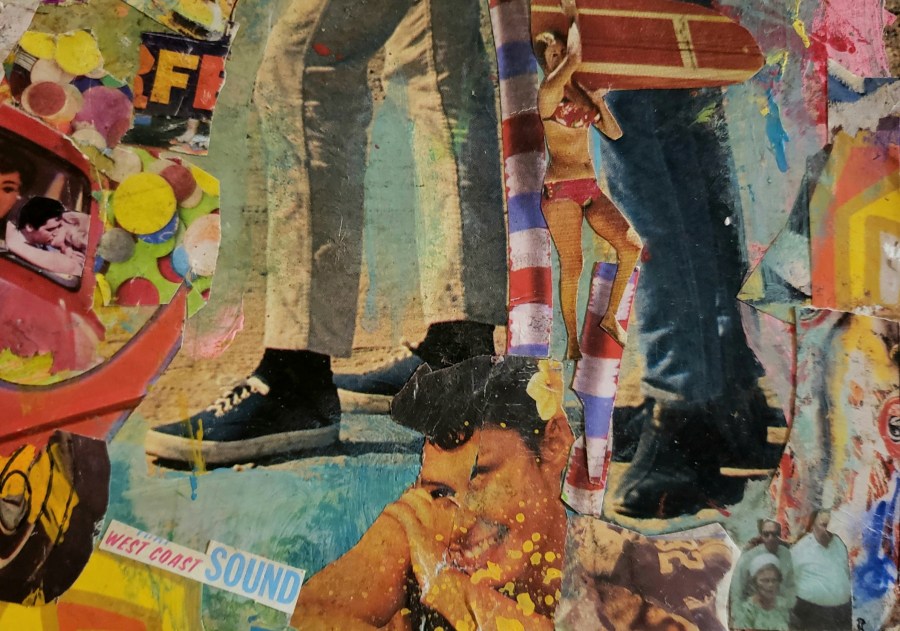
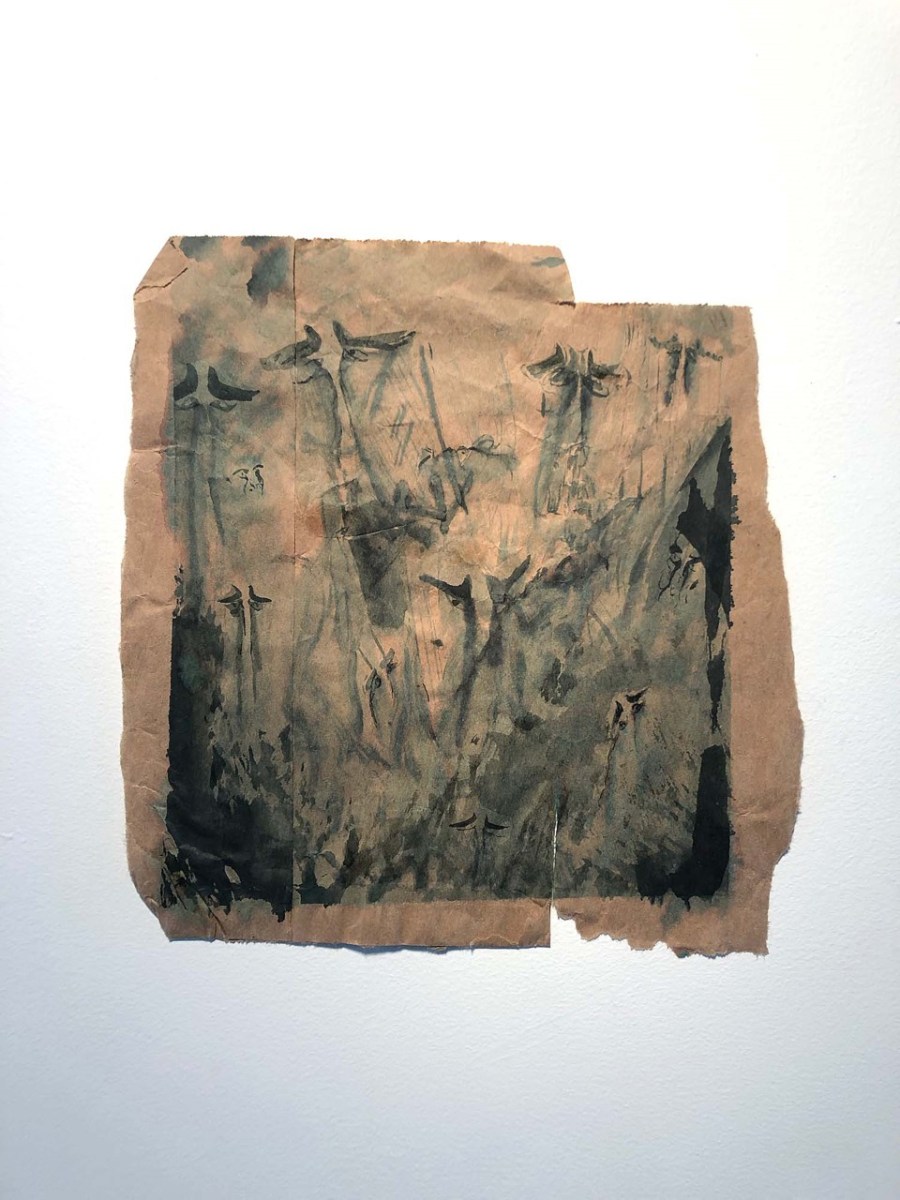
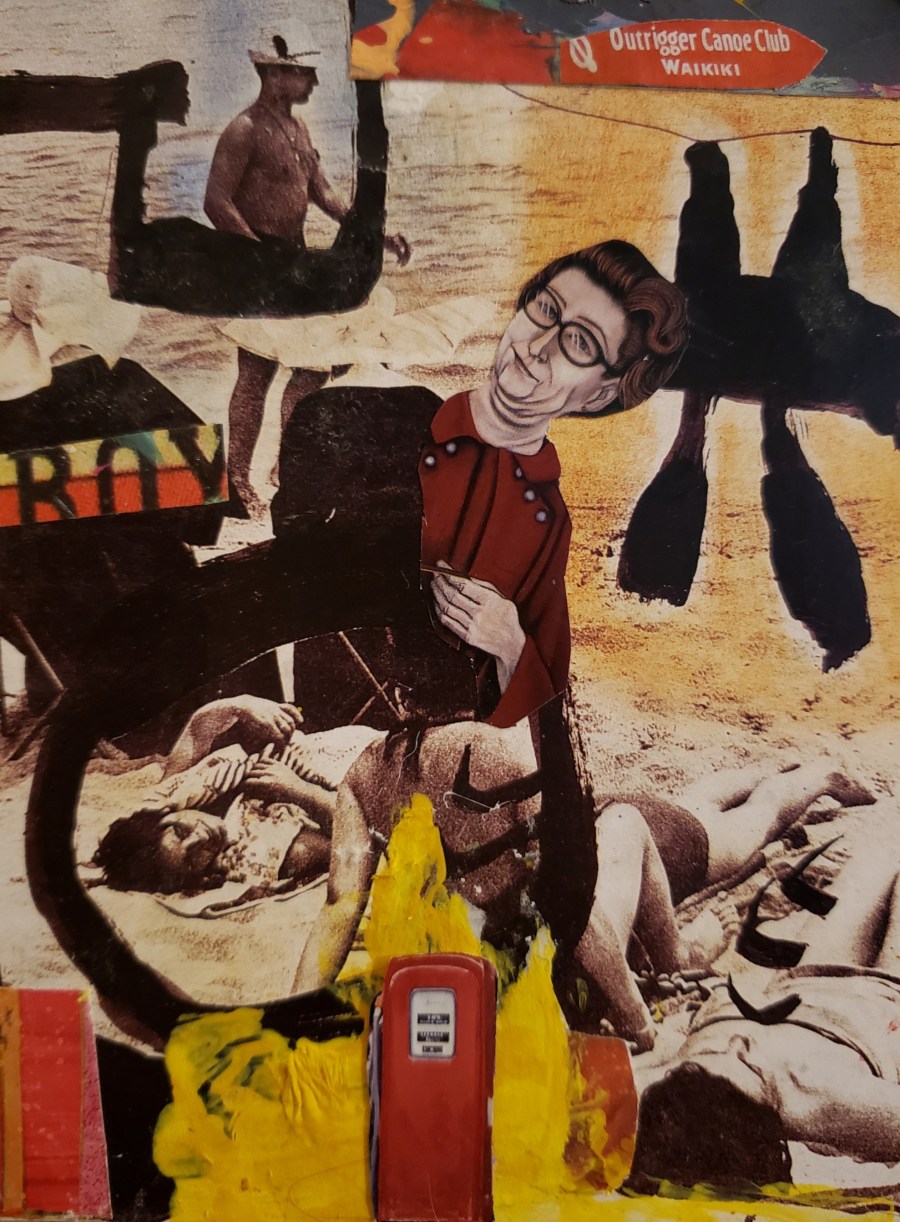
Featured Art by Ross Di Penti

Nine weeks, no monthlies,
my body a nestling’s perch,
a tremoring tree, leaning

into a southeaster, hard luck
and poverty licking red-hot
flames against my bent back.

I scrimped, saved, still forty dollars
short of the cash I’d need to set
me and that little bird free.

No stranger to a bowed head,
I got straight to the appeal, laid out
my endgame and trading points.

The Lord coughed up two twenties
by way of a birthday card, sent postage due
from my granny, who wrote at length

about her late-night vision.
She saw me old, alone in the dark,
crying out for some little bird.


Read More

Breaking the Silence: Abortion and Knowledge in Summer and Weeds

By Jana Tigchelaar

While bodily autonomy and individual privacy are phrases commonly associated with the current discussion of reproductive rights in the U.S., the key term for understanding the culture of abortion starting in the late nineteenth century is knowledge, according to Kristin Luker in Abortion and the Politics of Motherhood. As legal exceptions to the ban on abortion rested on a physician’s determination of medical necessity, abortion became the privileged ground of the doctor whose medical license gave him the sole ability to decide when abortion was medically justified. In other words, by the late nineteenth century, abortion became a question of who could lay claim to this specialized knowledge, and who could exercise their authority based on it. Luker calls this era from the 1880s until Roe v. Wade in 1973 “The Century of Silence” because while the medical community determined the necessity of abortion care, they also dominated the public narrative about abortion.

Other critics, however, point out that this was not a complete silence. In her book When Abortion Was a Crime: Women, Medicine, and the Law in the United States, 1867-1973, historian Leslie Reagan notes that women did “speak of their abortions among themselves and within smaller, more intimate spaces.” One such “intimate space” (which is paradoxically also very public) is within published literature. Abortion was a recurrent plot element in literature published in the early decades of the twentieth century; as Meg Gillette points out in “Modern American Abortion Narratives and the Century of Silence,” from “1910 to 1945, more than seventy abortions were contemplated or had by characters in modern literature.” This literature reveals a struggle that is firmly embedded in the narrative of knowledge and authority. In two of these texts, Edith Wharton’s 1917 novel Summer and Edith Summers Kelley’s 1923 novel Weeds, the question of knowledge is bound up with issues related to class, privilege, and connection—specifically the way the medical takeover of reproductive health care transformed the prior networks of knowledge shared among women.

Read More

Mary Shelley’s Frankenstein: Birth Without the Gendered Body

By Rebecca Richardson

Featured Art by Steve Mowrey

In his review of Frankenstein, Sir Walter Scott defended the novel’s “philosophical and refined use of the supernatural.” Here was a novel that altered “the laws of nature” not to “[pamper] the imagination” but to illustrate “the probable effect which the supposed miracles would produce on those who witnessed them.” The reviewer for Knight’s Quarterly Magazine agreed. “Frankenstein is, I think, the best instance of natural passions applied to supernatural events that I ever met with. Grant that it is possible for one man to create another, and the rest is perfectly natural and in course.”

This way of stating the novel’s premise—“Grant that it is possible for one man to create another”—can seem, like the novel itself, to elide the fact that Victor Frankenstein is reinventing a wheel. To be sure, there are distinctions: this is an asexual reproduction process that depends on the spare parts from the dissecting room and slaughterhouse, and the new being isn’t an infant but an adult of gigantic stature. But despite his size, the Creature starts off, in mind and spirit, as an infant, a blank slate to be written on by his experiences.

Despite what might seem an obvious analogy for reproduction and birth, it would take until Ellen Moers’s work in the 1970s for Frankenstein to be widely interpreted as a “birth myth.” For evidence, Moers pointed to the material of Mary Shelley’s lived experiences: Shelley knew that her own birth had caused the death of her mother, she became pregnant at sixteen after running away with Percy Bysshe Shelley, and, during her time with him (before and after their official marriage), she was continually dealing with pregnancy, miscarriage, childrearing, and the loss of children. Despite these parallels, it had taken around 150 years and a couple waves of feminist thought for Frankenstein to be read as a Gothic analogy for pregnancy, childbirth, and the aftermath.

Read More

Monstrous Body Horror in Transition: Gretchen Felker-Martin’s Manhunt and Jeanette Winterson’s Frankisstein

By Emrys Donaldson

When I consider being pregnant myself, I imagine Sigourney Weaver from the original Alien: a wet head emerging, its teeth bared, as I scream and scream. What for others may evoke joy and anticipation for me evokes fear. In Gretchen Felker-Martin’s 2021 horror novel Manhunt, pregnancy itself becomes a kind of body horror as testosterone turns people into sex-crazed zombies bent on cannibalism. A fertility specialist explains the process to a wealthy patient: “When they [the changed men] impregnate a victim, the baby is XY. No variation. It undergoes viral metamorphosis in utero and eats its way out of the mother at three or four months. A few hours later, it can hunt for itself. In a year, it’s sexually mature.” Gossip tells of “a woman in Vermont whose boy twins had eaten their way out of her.” In this science-fiction world, pregnancy is not only dangerous for all the usual reasons, but also because a zombified fetus might eat its way through the abdominal wall (just like in Alien). Abortion access saves lives. To abort, in this world, is to avoid being eaten from the inside out. Yet in the post-apocalyptic world of Manhunt, as in the twenty-first century United States, abortion access varies widely and depends on the pregnant person’s financial and social resources.

Under-resourced people undergo the brunt of pregnancy-related collateral damage in Manhunt, just as they do in real life. In the novel, a wealthy “bunker brat” impregnates a dozen women with her zombified boyfriend’s sperm to see if she will be safe trying to have a baby with him. Eleven women die; one gives birth to a girl infant. Yet, as seems to be the result of abortion bans everywhere, no one keeps close track of what happens to the infant once alive: one of the characters tries to convince herself, with no knowledge to support it, that “someone must have taken her. Kept her safe.” The desperate desire for a perfect infant at any cost leads, during the novel’s climax, to the death of the bunker brat at the hands of her wannabe baby daddy as well as the annihilation of the bunker, which was previously a walled garden for the wealthy. Class-based critique underpins the novel’s attitudes toward reproductive rights, as a safe pregnancy is a privilege only afforded to the richest people remaining.

Read More

Getting It Behind Them

By Wendy Rawlings

Featured Art by Steve Mowrey

For men, it’s almost always about solving a problem. “We’ll be fine afterward. Just like we were before,” the male character in Hemingway’s “Hills Like White Elephants” tells his girlfriend Jig. In Matt Klam’s 1997 short story, “There Should Be a Name for It,” the male narrator says of his girlfriend’s abortion, “This was her show. Soon it would finally be over.”

Of course (though maybe this isn’t as obvious as it should be), for women, it’s not over once the pregnancy is terminated. There are the lingering effects on the body as it recovers, days lost from work, stress from lies told to family or friends. There’s the money needing to be earned to replace the money the abortion cost. There might be ways the abortion shifted the woman’s relation- ship with her boyfriend or husband, or ways she was affected if the man who constituted the other half of the act that led to pregnancy wasn’t a boyfriend or husband. She might not have known or liked him very much. He might have raped her. And then there’s the cultural taboo against abortion; that, too, is in bed with the woman as she recovers.

Looking back into the two abortion stories written by men in the context of the Supreme Court’s overturning of Roe v. Wade, I noticed in ways I hadn’t before how insistent both the male characters in these stories are about getting the abortion behind them, getting back to normal. Further, neither man has the slightest ability to empathize with or help the female character, emotionally or otherwise. Hemingway’s character is classic Hemingway: a man of few words who imagines himself entirely in control of the situation. Klam’s narrator, a 24-year-old man-child, is wholly incapable of comforting his girlfriend Lynn, and during the actual procedure, implores the reader, “Is there a way to describe how much I wanted to get the fuck out of there?” This pretty much sums up how much of a help he turns out to be.

Read More

Unwinding Unwind

By Hilary Brewster

Featured Art by Ross Di Penti

Dystopian novels for teens, who are “trying to understand their world and their place in it” are written with gripping plots and first-person narration that “may have the potential to motivate a generation on the cusp of adulthood,” write Balaka Basu, Katherine R. Broad, and Carrie Hintz in their introduction to Contemporary Dystopian Fiction for Young Adults. It’s not a coincidence, I don’t think, that a “plethora” of these texts were published in the post-9/11 era of the mid-2000s, culminating with what John Green called an “explosion” in 2007-2008 that included the first installment of perhaps the most successful of all the franchises, Suzanne Collins’s The Hunger Games trilogy. With the commercial success of this burgeoning market, YA writers created fictional worlds to warn teens about too much surveillance, like in Little Brother; the dire consequences of obsession with unattainable standards of beauty, in Uglies; and damaging conformity, like in the Divergent series. Although dozens and dozens of realistic YA novels deal with teen pregnancy, abortion, adoption, and other matters related to reproductive healthcare, not as many dystopian novels do. But Unwind, by Neal Schusterman, is an exception.

One question scholars ask of YA dystopian novels—a particularly relevant question when considering abortion—is whether the text espouses radical political change or masks an inner conservatism (Basu, et al.). Schusterman’s Unwind, published in 2007, is set in a futuristic world where the United States has fought a Second Civil War: this time about abortion. After years of deadly conflict, a treaty was signed that satisfied both Pro Life and Pro-Choice armies. The premise of this treaty—as well as other moments of didacticism—seems to reveal the “inner conservatism” of the text. (A note on the language: while I prefer to use the term “anti-choice,” Schusterman uses “pro life”; thus, throughout this essay, I will use the linguistic terminology set forth by the author to avoid any confusion.)

Read More

Finding The Boundary Line: A Look at Ayelet Waldman’s “Rocketship”

By Jennifer Furner

Motherhood was not what I was expecting. I thought I had prepared myself—I read countless articles online, learned a myriad of soothing techniques, watched videos of women’s birthing experiences. But there had been no way to know what it would be like for me. And my experience was not at all like what I had been told to expect.

I was told any woman could give birth naturally if she breathed deeply enough, if she believed in herself. My daughter’s head was stuck on my pelvis, though, and in the end, it didn’t matter how much breathing or believing I did; I needed an emergency C-section.

I was told it’s a baby’s instinct to seek out the nipple and suck, but my baby only screamed at my bare chest.

I was told every mother had instincts that would guide her in how to care for her baby. But when my daughter cried for hours on end, my instincts told me nothing about what she needed, how to fix her problems.

Before my daughter was one-week old, I already felt like a complete failure as a mother.

Mothers and would-be mothers are told a lot of lies. “Motherhood is the best job in the world” is one. “Mothers put their children first” is another. These are lies, or at least certainly over-simplifications, because they imply that women stop being separate people once they become mothers, that they suddenly lose any ambitions they had for their own lives and think only about what is best for their baby. But mothers are people, and just like any other person, they have wants and needs. And flaws.

Read More

Tove Ditlevsen, Abortion, and Dependency as Birthright

By Anna Rollins

Featured Art by JC Talbott

Tove Ditlevsen’s The Copenhagen Trilogy (published in Danish from 1969-71 and available in English in 2022) tells the story of the author’s childhood, youth, and dependency. Her ultimate dependency occurs after her second abortion. During the procedure, she describes the injected anesthetic as “a bliss I have never before felt spread[ing] through my entire body.” Following this abortion experience, Ditlevsen struggles with addiction. Eventually she would succumb to it, dying by suicide.

Even before her abortion, though, dependency was Tove Ditlevsen’s birthright. As an ambitious woman, Ditlevsen was exposed to unspeakable sorrow in a world shaped by systemic sexism. It wasn’t abortion that turned Ditlevsen into an addict; it was her lack of agency that left her alone with her own pain.

In the first volume of Ditlevsen’s memoir, she describes a fraught relationship with her mother in childhood. Her mother was lonely and frustrated because she, too, lacked independence and choice, confined at home alone all day with her children while her husband went out into the world. Her “dark anger always ended in her slapping my face or pushing me against the stove,” Ditlevsen writes. In the absence of maternal nurturing, Ditlevsen turns into herself, in introspection and rumination, finding an outlet for expression in the written word.

Still, she feels compelled to conceal her writing, even as an adult: “for me, writing is like it was in my childhood, something secret and prohibited, shameful, something one sneaks into a corner to do when no one else is watching. They ask me what I am writing at the moment, and I say, Nothing.” Ditlevsen learns early that any use of voice or demonstration of need could be used against her—and so she practices concealing and repressing her passions.

Read More
Something Has Tried To Kill Me: Race, Poetry, and Reproductive Rights

By Sarah Green

I first heard Lucille Clifton’s “the lost baby poem” when I was nineteen years old listening to some Napster download of a warbly and far away Ani DiFranco reciting it onstage: “the time i dropped your almost body down . . .” That year, although emergency contraception had recently hit pharmacies, a long holiday weekend in Ohio found me saved instead by a friend in my dorm who carefully counted out pills from a blister pack until they added up to the amount of ethinyl estradiol and norethindrone that would resemble a morning-after dose. To be clear, this was not an abortion. But I found myself thinking about the potential baby. I counted the months—it would have been a Pisces. I read Diane di Prima: “how am I to forgive you this blood? / Which was [. . .] to grow, and become a son?” Still, as I finished up a spring semester Incomplete and made an appointment to get on birth control, I knew I was lucky to be able to move on so smoothly.

Of two abortions she had as a young woman, Ani DiFranco—who would go on in mid-life to give birth to two children—writes in a 2019 LitHub essay: “I used to periodically count the ages that my first two children would’ve been if they had entered the world as such. [. . .] It was an exercise in the terrifying math of the near miss. Your life as you envisioned it could have effectively ended three, five . . . ten years ago. Just imagine. What kind of shell of your former dreams would you be now?”

Read More

Abortion Is Like Art: Red Clocks and the Facts of the Body

By Madeline ffitch

“Two years ago the United States Congress ratified the Personhood Amendment, which gives the constitutional right to life, liberty, and property to a fertilized egg at the moment of conception. Abortion is now illegal in all fifty states. Abortion providers can be charged with second-degree murder, abortion seekers with conspiracy to commit murder. In vitro fertilization, too, is federally banned, because the amendment outlaws the transfer of embryos from laboratory to uterus. (The embryos can’t give consent to be moved).”
—Leni Zumas, Red Clocks

When I was in graduate school, a friend and I were invited to write a “docu-drama” about abortion access before 1973, when Roe v. Wade enshrined it in federal law. The project was a collaboration between the Women’s Studies, History, and English departments. History grad students supplied us with nearly a thousand pages of research, and we sifted through testimonials from people who’d sought illegal abortions, interviews with the Jane Collective, sobering statistics about how common it was before Roe for women, especially those who were low-income and not white, to be injured or to die from illegal abortions. Somehow, we gathered all these voices and patched together a draft of the play, after which one of the faculty sponsors invited me into her office. The draft was too cavalier, she told me. She let me know how important it was to emphasize that getting an abortion is never an easy choice. She shared with me that she’d had an abortion, and that although she believed strongly that her right to choose should be legally protected, ending her pregnancy was the most painful decision of her life, as it was for most women. To make it seem otherwise would be playing into the hands of the other side.

Read More