Melbourne Beach

By Bo Lewis

Featured Art: Second Beach, Newport, c. 1878-80 by Worthington Whittredge 

Coach West had just finished grilling the dogs and we were all standing in line, going crazy with hunger. We’d had nothing but concession stand sno-cones after the doubleheader, and we were ready to eat our weight in barbecue. Rudy and I were going to do an experiment to see which tasted better on dogs—onions or relish. I was going to blindfold myself with my ballcap and Rudy was going to feed me one bite of each until I discovered the answer.

But Dad’s hatchback came skidding across the gravel toward the pavilion, a long dust cloud rising up behind it like the tail of a dragon, and I knew something was about to happen. The door popped open and his hand shot down to the gravel like a kickstand as he got out of the car. He left it running and didn’t shut the door behind him.

Coach West set down his tongs and gave Rudy’s father a look. They hopped off the pavilion deck and went to greet Dad. Marcellus’s mother, our Team Mom, took over at the grill, speaking loudly and brightly, asking what everybody was doing for summer now that we were done with the third grade.

Read More
How to Be Better by Being Worse

By Justin Jannise

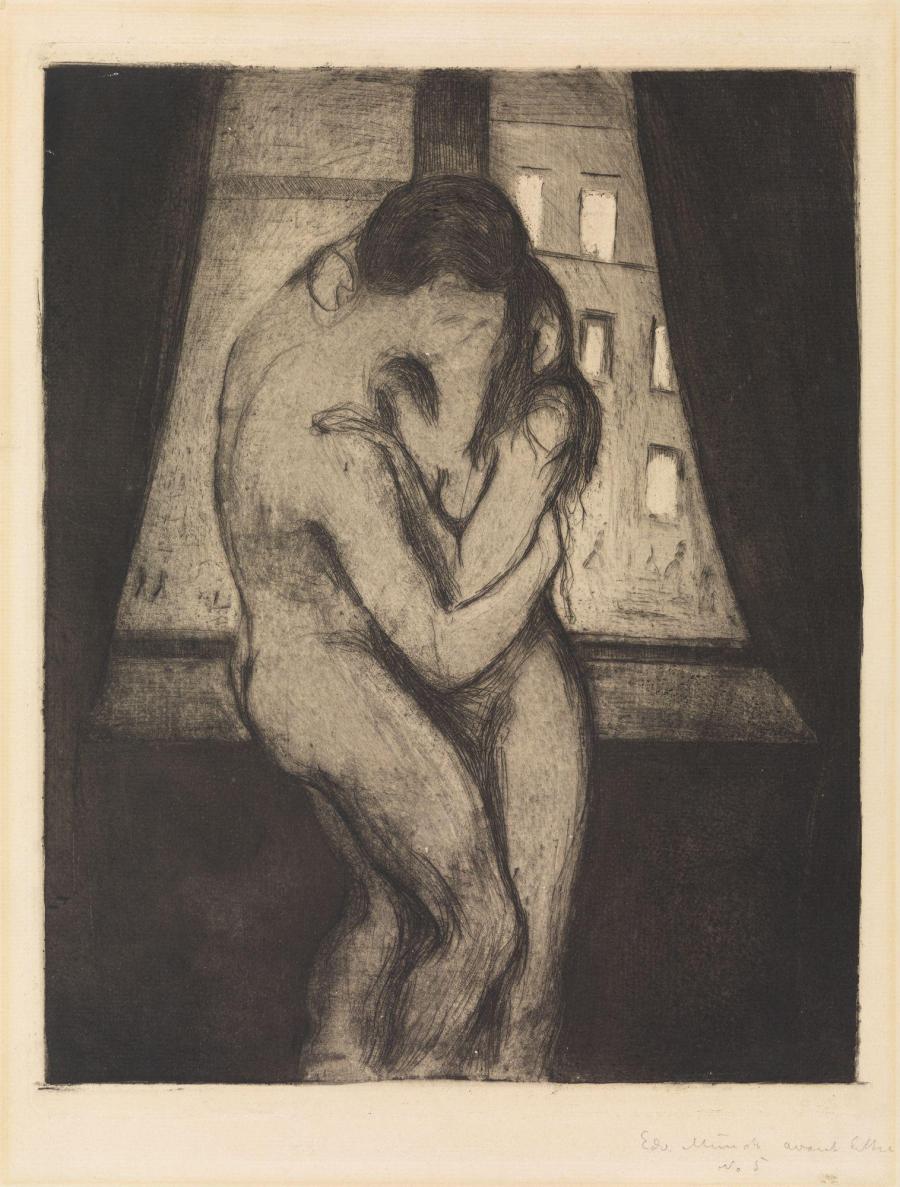
Featured Art: The Kiss, 1895 by Edvard Munch

Ban soap. Banish suds.
Sweep the dormitory clean
of polish. Let dust do
what dust does with no opinion

from feathers.
Invite musk. Be clothed
in scandal. Smear
and smudge and slander yourself

courageous. Fuck
courage. Stick your finger
in its wet mouth and kiss
its salty neck. Slip in

as many chickenshit deeds
as any deadbeat dad
ever did. Forget
birthdays. Ruin Christmas.

Run people over
in conversation. Let them finish
not one sentence.
Let them sit with their own nonsense

for a second. Leave them
tongue-tied and pent up
with unexpressed vexation.
Get off the pleasant train to nowhere.

Get back on with your most
regrettable self. Someone
will love you. Someone will still fall
madly in front of you.


Read More

Wethersfield

By Michael Pontacoloni

Featured Art: Fire at Full Moon by Paul Klee

Dad has three different chainsaws
and Kevlar shin pads,
the same glossy material
protecting a spacecraft
as it drifts into the Kuiper Belt
where little flecks of undead planet
fling around like buckshot
and light from the sun
takes a while to arrive.

I am glad that my dad is safe
from the Kuiper Belt.
Eventually something else will kill him,
but for now he is cutting firewood
into precise sizes. He is wearing
a wide-brimmed hat.
I am rubbing aloe
into my own growing forehead,
trying not to believe

that he grew up in the only town
hit by a meteorite twice.
One punched a hole in a roof
then rolled under a table
like a peach. The other
lodged in a crossbeam that might well have been

his sleeping smile or
the windshield of his idling El Camino.
He’s asked that I sprinkle him into the woods
when that something else
falls from the sky like a bucket of nails.


Read More

Moving the Piano

By Kathryn Petruccelli

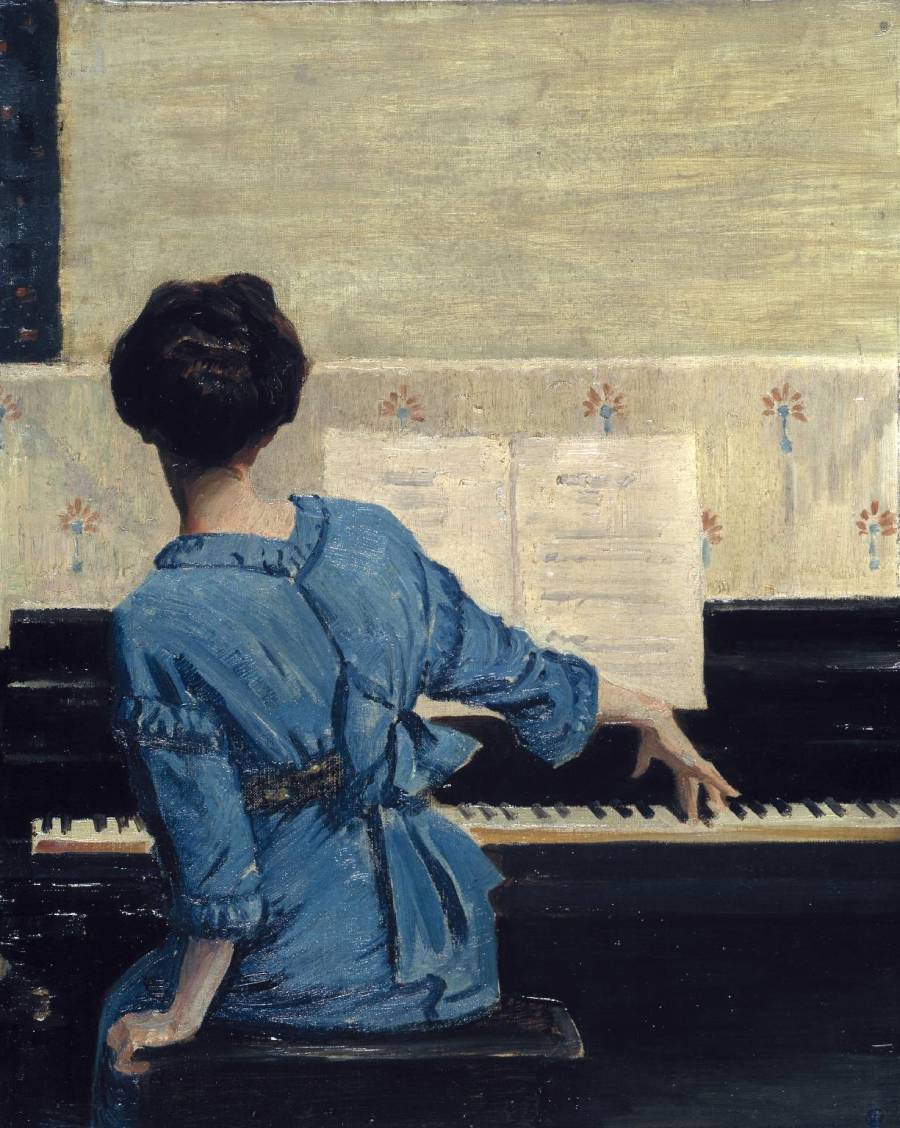
Featured Art: The Keynote, 1915 by William Arthur Chase

It takes almost nothing
to step into each other’s lives: a favor
for a neighbor, a huge, upright Steinway
there’s no one left to play.

All morning they labored together,
the men. Everything they could think of
to get it out of the van
                                          and over the curb—
metal ramp, wooden boards, a jack,
the old bed frame from behind the garage.

Dave had never asked my husband
for anything before. The house
he’d grown up in was already packed,
mementos sold, his mother’s mind

skipping liberally among the decades,
her fingers running through chords in the air
or waltzing grandly
through measures of Chopin.
                                                     His father
stooped from his own burdens, aged beyond
his years, nodding when people talked
about his new facility, so highly regarded,
so clean. There was sweat, grunting,

my husband mumbled a curse
as they argued about angles, pushed
their charge up the cracked walkway,
three shallow steps to the porch.

And because we have no better idea
how to be with each other
in our pain,
                       when they’d finally struggled
the monstrous instrument
into Dave’s house, they could only
wipe their hands on their jeans,
crack their knuckles, and share
a pizza, which they ate standing
in the kitchen, hunched over
its grease-stained box.


Read More

One Step

By Betsy Sholl

Featured Art: Towards the Forest I, 1897 by Edvard Munch

Who am I to say to the man: You can’t
sleep in corduroys and a dress shirt,

or: Don’t stick your fork in the potatoes,
spoon them onto your plate,

as I must have said more than once
to our children.

To the man I would have said: What does it
mean to be saved, and from what?

Or I’d ask about a friend’s blunder: How can
somebody so smart do such a dumb thing?

And he’d half smile, then shake his head,
Don’t you understand, it’s not about brains.

How can I tell this man: You can’t sleep
in anything that has a leather belt

or a wallet in its pocket, and, Here
are your pajamas, which he puts on

inside-out so the flannel pockets flap
like limp fins and he laughs

and flutters them a while before we start
again, right foot in right leg.

He laughs too at my schoolmarm self,
asks, How did you get so bossy?

Read More

Alexa

By Ruth Bardon

Featured Art: L’Armoire à Glace, 1924 by Walter Richard Sickert

She is ignorant and admits to being
easily confused.

She tells her jokes with a cheerfulness
that shows how lost she is.

I want to help her and teach her how
the world works,

and I love this feeling of knowing
so much more,

but it also makes me hate her
a little more each time,

each time she admits she’s having trouble,
is helpless to assist,

like a mother of grown children,
who see her now

as someone who offers only facts
from the news,

a weather report or a small repertoire
of songs and stories,

like the mother I may become,
sitting and nodding

as if I understood the talk,
chiming in

and coming to attention
when my name is spoken.


Read More

The Oldies, at Island Pond, Vermont

By Allen Stein

Featured Art: Oberon, Titania and Puck with Fairies Dancing, 1786 by William Blake

Rockin’ in jeans, T-shirt, and sneakers
at the tiny bandstand by the pond,
the ponytailed girl belts them out, the goldies
of three or four decades ago.
She’s hittin’ ’em with her best shot,
makin’ it all hurt so good,
but a closer look shows she’s no younger
than the songs she sings,
though not as old as most dancing
on the worn-out patch between
their lawn chairs and the stage
this final Friday Night Live of a brief
summer that in these parts is rarely
without a hint of the fall.

The dancers, moving gingerly, stiffly,
grin in unabashed acknowledgment
that the tempo hasn’t changed but they have.
One white-bearded fellow’s denims droop
at the seat despite his tightened belt
and taut bright suspenders, and an old lady
stands at her walker and sways,
dreamy-eyed, perhaps recalling, perhaps not,
that these are the tunes not of her own youth
but her grandchild’s. Beside her,
a stout, gray-haired woman,
no doubt her daughter, mouths the words,
smiles, and holds her mother’s hands,
steadying her as they move together
to “Every Breath You Take.”

The surrounding mountains dim
and the nearby pond (a broad, deep lake, really)
reflects the stars. At its center sits an island,
thickly wooded, uninhabited.
As the sun moves on, the elderly drift away,
and younger kids step in,
accepting, for tonight at least,
a mellowed groove. In time, the last notes
of the final Friday Night Live
will float out over the water. The dancers
will linger briefly, then depart, grateful
for the music they’ve been given.


Read More

On the Walls

By Julialicia Case

I am two, and the cornfields are enormous. An ocean of stalks surrounds our house in Iowa, green and hushed in the summer, brown and rattling in the fall. From our porch, the only thing visible that isn’t corn is a tiny house far in the distance at the crest of a small hill. This is where all the storybook characters live.

At night, I fall asleep imagining them. Big Bird sits in an armchair and watches the same episode of Dallas my parents watch in our living room. The Berenstain Bears make rice pudding while the poky little puppy splashes in the bathroom, and the Borrowers steal a sliver of soap. They are all there: Francis and Arthur and Corduroy, sharing popcorn, singing Simon and Garfunkel, adopting every single stray cat. Someday I will be there, too.

The fields are so big, the corn so tall. I will need to carry Fig Newtons and apple juice. I will bring my favorite blanket so I can sleep without nightmares among the leaves. Some days, while playing in the yard, I start out, racing across the grass toward that house on the horizon. My parents always catch me, turn me around, aim me back toward our flowerbeds. They laugh as if it is a joke, as if I’m not determined to risk everything.

One evening, a spring thunderstorm pelts the newly planted soil. Wind rocks the power lines, black clouds churning. I watch through the screen door as lightning throws up sparks along the horizon, the storybook house suddenly a star of flame. My father calls the fire department, but by the morning the house is only a gray smudge of ash.

Read More

Morning Rig

By Angela Sorby

Featured Art: Ophelia, 1851-2 by Sir John Everett Millais, Bt

The moon knows the laws—
the factors, the forces,
and is at peace. Look,

it’s unconscious up there!
Meanwhile, my brother quits
being a bankruptcy attorney

to get his Class B Trucking license.
Why? Let’s wake the moon
to ask why other people make

their weird other-people-decisions.
This is the origin of all religions.
An important part of the story:

the moon never responds.
It lies languid, bathed
in darkness like Ophelia,

while big rigs turn their engines
over as dawn breaks pink
with pollen and pollution.

So much is broken,
but never the largest laws—
how wheels set in motion

spin unless something stops them,
but never skid over the line
from speed to freedom.


Read More

The Dog in the Library

By Catherine Stearns

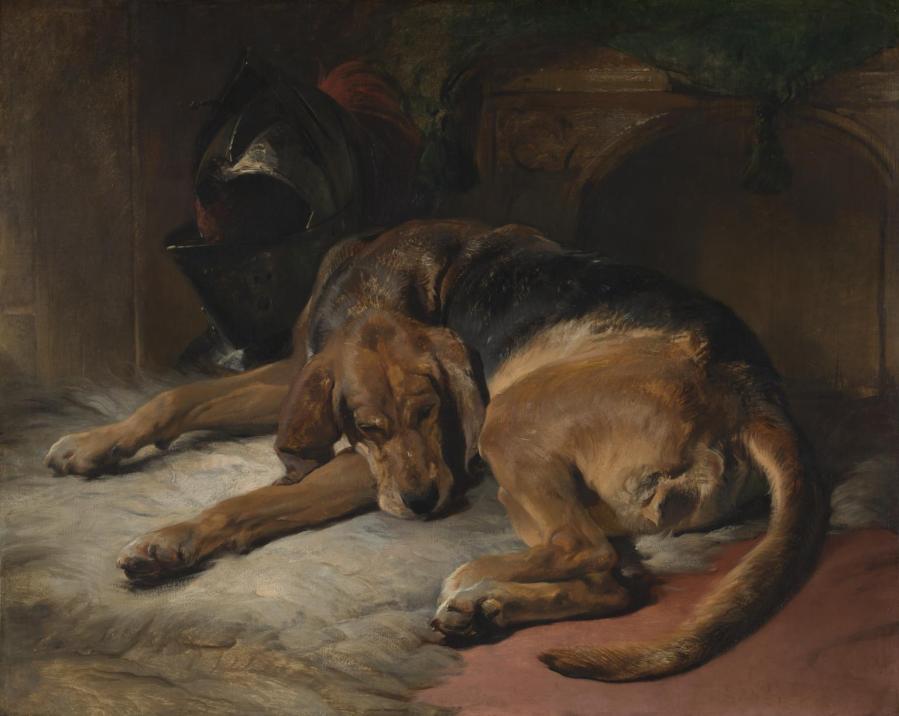
Featured Art: Sleeping Bloodhound, 1835 by Sir Edwin Henry Landseer

“We may be in the universe as dogs and cats are in our libraries,
seeing the books and hearing the conversation, but having no
inkling of the meaning of it all.” —William James

On sunny, cerulean days I go all the way
to eleven when I stretch and sniff among the leaves,
whereas you stay inside, hunched over
your moral universe. Old girl, if you
stopped trying to decipher those fossil bird tracks,
you might see the thermal-gliding hawk above
or that zaftig possum gnawing on fallen
persimmons under the window. I’m just saying
your preference betrays a certain fear
of your own nature. Remember
last summer when you left me in the car
to pick up a book they were holding for you,
and a page or two in you recognized
your own penciled and may I say
obsessive marginalia, although you had
no memory of the text itself?
Whatever made you think your mind
could be disenthralled with words?
As a pup, I once took Mark Strand’s
injunction in “Eating Poetry” to heart,
devouring one or two slim volumes,
but soon realized I prefer the raw
material of life, what e e cummings
calls “the slavver of spring”: smells
of fresh earth, the ghostly scent of
rabbits, even the mounds of dirty laundry
piled up on your bed. If you found answers
to your questions, do you truly believe
those answers would transform you?
So many of your species seem
susceptible to revelation. We’re all
browsers, old girl, without an inkling,
waiting by the door for a treat or to be forgiven
until our unleashed immortal part bolts
for that hit of dopamine. Then
all good dogs go to heaven.


Read More

Anti-Confessional

By Catherine Stearns

Featured Art: Girl in a Blue Dress, c. 1891 by Philip Wilson Steer

In one photo, she’s wearing a sapphire blue dress,
a black cloche posed rakishly over one eye,
a corsage of pink rosebuds around her wrist.
On the back it says JB & RPS, the man
in shadow next to her. This was before the war,
before they reinstated the marriage bar
and she lost her job when she married my father.

One hot summer night, maybe five years after he died—
we’d stripped down to our underwear to play Scrabble—
I asked her about grad school and her fifth-floor walk-up
with Mary Maud, about eating oysters at the Grand Central
Oyster House every Sunday, and the gold lighter engraved
in the Tiffany font at the back of her jewelry box, and I asked her
if she’d ever slept with anyone besides my dad.

She took an extra long sip of her G&T and told me to
mind my own business. Then reached over
to put her X on a Triple Word.


Read More

Exile Queen

By Bethany Schultz Hurst

the trees
                  flaunting their flowers                      after a while
their blooms will die and then
swell into a fruit             and I submit to you                 dear viewer
               this process is not monstrous

we’ve spent too much time

at night watching these shows where the queens
               keep making bad choices
like torching the city with their pet dragons
               or with sickly green fire
                              lit in tunnels underneath                  because they are mothers

they love their children too much or is it

                                 not enough         the flowers this spring
are ridiculous              on the way into the theater alone in broad daylight
               for some comic book sequel                I can’t stop
shoving my face           into the showy pink organs
               of the parking lot trees

at night I’ve been balancing like a knife on my side
of the couch            the bed because I’m
too tired already to have anyone really
                                               touch me

Read More