Borges’s Farewell to Meadville, Pennsylvania

By Stephen Myers

Featured Art: brown leather arm chair by Markus Spiske

By then, old age had laid siege to Borges
for many years. That evening, two handlers
one at each elbow, guided him, bent
like a question mark, up a short staircase
to his seat before the assemblage.
His voice, at first, was an ancient raven’s.
But finally, out of the brain’s dark nest,
he brought forth two lines from Virgil’s Georgics.
They glittered before him. His tongue loosened.
The night heat pressed in. A fragment of
Sappho. Erato beat the blackness back.
His listeners perceived her as wanderers
hear wings among pyrocanthus branches
under a thin moon. A couplet from Dryden,
a silver chain. “Ulalume” a small chalice.
He shifted more easily. One of his men
stepped forward with a glass of water.
Outside, sudden thunder, intermittent
flashes. After he’d spoken, they brought on
the musicians. He sat tapping his cane
to “St. James Infirmary,” smiling,
leaning forward toward the low-lit stage
as if in submission, he who had loved
the Goddess, and she him, letting himself
be lifted and carried off on the shoulders
of Milt Hinton’s gold-greaved bass.


Read More

It Depends

By Lisa Rhoades 

Featured Art: Still Life with Bottle, Carafe, Bread, and Wine by Claude Monet

We are all sick. We are all dying.
This is more or less
the truth, depending on the day.
Depending on the location,
some more than others
are headed home with hospice, toward
a tragic confrontation, a chicken bone, black ice.
Maybe it’s because of breakfast—
years of bitter coffee, the eggs
we were warned away from,
bracelets of sweet cereal O’s.
Perhaps it would help
if more of us knew CPR,
unless it all depends
on the weather of our hearts.
Don’t be fooled
by how quickly flesh folds
back into itself to heal,
or by the ones who are limping,
waxy-skinned and quiet. They will not carry
your part of this forever.
Maybe you should cover your cough,
not be so careless with knives.


Read More

Florida Man Throws Alligator into Wendy’s Drive-Thru Window

By Mitchell Jacobs

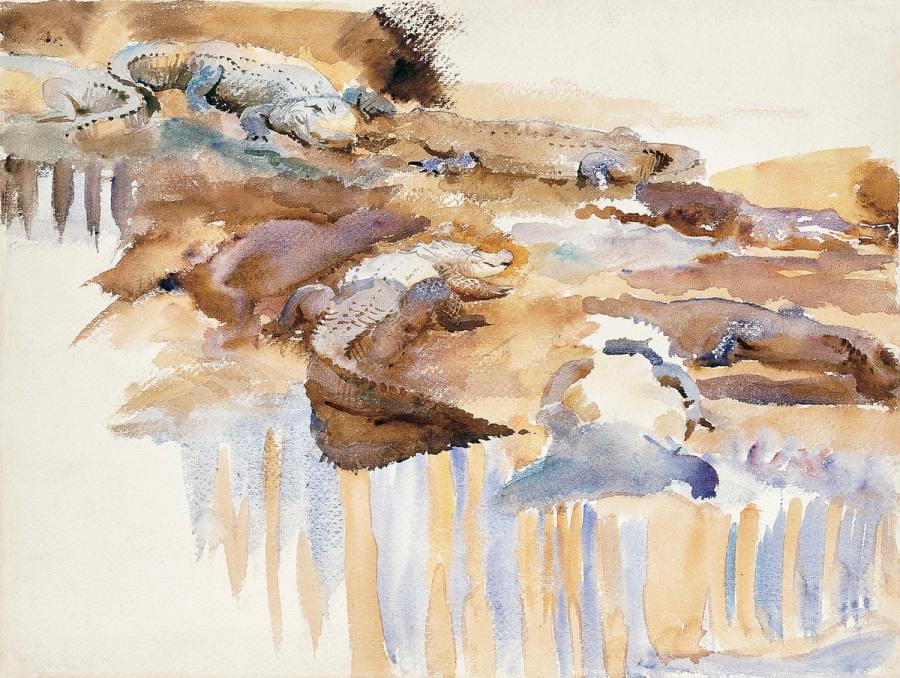
Featured Art: Alligators by John Singer Sargent

The attendant hands him a soda and turns her back, thinking
of straws—how she’s running low, and their candy-red stripes,
and the way everything here comes wrapped up in paper, and

then a 3½-foot alligator is clawing the air.
                                                                          As if she pressed
the wrong button on the register. Or maybe, during lunch rush,
she’d ignored an oncoming hurricane tossing them about.

In any case, she shrieks, finding for this alligator non sequitur
no earthly explanation. Back when the heavens functioned
with less subtlety, she might have turned to the logic of myth.

The god of rapacity took the shape of a lizard
to penetrate the food hall’s oil-glossed aperture.

Perhaps the oracle of Jupiter, FL on his faux-leather throne
delivers this cold-blooded message to confront corporate greed
teeth to teeth.
                        Not that the police have succeeded

in extracting a motive. The culprit’s Frosty-smeared lips are sealed.
His charge: assault with a deadly weapon. Yet it rings untrue.
For Florida Man, we need a more particular punishment:

accused of wielding a projectile reptile,
the defendant shall be flung naked
into the Loxahatchee Slough.

If indeed he is a criminal, there will be no proper dunking.
If he is a hero, he will don no duckweed laurel as he rises
from the mud. But the surveillance camera remembers:

it’s not so wide, the gap between the actual and the possible.
About the space from Nissan Frontier to take-out window
where an alligator, bewildered, sees the kitchen’s steam

like fog over a marsh in red bloom, smells the billows
of meaty fragrance, hears the gatekeeper’s yodel of welcome,
and for a moment
                                 flies.


Read More

The Reflex

By Mitchell Jacobs

Featured Art: Boats and setting sun by Ohara Koson

The scent of shampoo reminds me of carrots.
There’s an explanation, I swear, surfacing
from a developing-Polaroid brown. It’s April.
At recess an upside-down pizza slab is gooing
into the cracked blacktop, and a grainy beat
blasts from some girl’s hot-orange earbuds.
On the grass all the boys are playing wallball
with one of those rubber balls like a big pink eraser,
and when I’m up I don’t chuck it far enough
so Austin says, “Come on, Mitchell, you can’t
even throw like the girls,” which is heartbreaking
for a bunch of reasons. Back home, Duran Duran’s
“The Reflex” spins in the Discman on my bathtub rim.
You’ve gone too far this time, and I’m dancing
on the Valentine. My tunes are twenty years out of date
but I know them by heart. I’ve been lying there half an hour,
tub empty, stoking a burn in my gut. Next day in L.A.
(that’s Language Arts), it’s Fat Shawn’s turn at vocab charades
but he just stands there thinking until somebody shouts
“Rotund!” and that’s not his word but it is the end
of the game. That’s how cruelty works around here.
I’m no Shawn but I am Tree Kid and no one
tells me why. The reflex is a lonely child . . .
Jake calls me a poser for wearing skate shoes,
which is how I learn I wear skate shoes, and then
I chase him and kick him with those shoes. Mostly
I’m a head-down kind of kid. I don’t peek at the pull-down map
during the geography quiz. I don’t snicker when
the health teacher says gluteus maximus, but I am
the one who laughs when she can’t spell epididymis.
Another night and it’s the tub again, lights off, interpreting
the song with nonsense lyrics I’m sure have something
to do with all this clench and spasm. The reflex is a door
to finding treasure in the dark. I un-twist-tie
the plastic produce bag and glob out more Pantene, hating
the boys who run around cocksure with their narrow
calves and their throwing arms with actual
visible muscles and those stupid impossible taut butts
and I’ll show them with this soaped-up carrot
what I can take, how it stings, how I tighten my fist
as I hear them spit out my name.


Read More

Love’s Been Good to Me

By Andrew Robinson

Featured Art: Zurich by Ernst Ludwig Kirchner

The girl from Zurich is deathly quiet. But even in a king-sized bed her presence prickles me awake. Her fetal body rises, falls, a pillow wedged between us. A natural end approaches now; I’m sure she knows it too. We met six months ago, flotsamed onto the misfit table at a Chinese wedding. There was nothing to do but drink, and seven wines into the night we decided to go slumming at Orchard Towers—Singapore’s neon throwback of tacky sleaze. Sailors go there for the prostitutes, and bankers for the irony, but for her it was the Filipino bands. I love to dance to them, she said, they always try so hard. But she wouldn’t go there without a man, and so, still in my suit at 4 a.m., I held her as she cried on the sticky dancefloor. Cried with drunken empathy for the Indonesian whores she was dancing with. At their age I was still in school, she said, And they have to sell themselves to these fucking men. She feinted at the sweaty marines, bewildered with Burmese whisky and shore leave, and she had me at that. I’ve always been a sucker for compassion—it doesn’t always serve me well.

Then as she sniffed into the smoky bathroom I texted her something about goodness—I don’t remember what—which showed up as her Facebook status the next day. But like the young marines, she was shipping out in the morning, her company posting her to Paris. And it wasn’t until her stint was up—four months later—that we got to meet again. And all that texting and mailing and chatting online, it didn’t serve to warn us that after just a few weeks it wouldn’t be working the way we’d hoped. And now it’s coming to an end—no relish of redemption here—my thoughts rise on a sleepy surge of affection. The girl from Zurich: I’ll remember her—I will.

Read More

Seafaring

By Marie-Elizabeth Mali

Featured Art: Eddystone Lighthouse by Mary Altha Nims 

As if love were a lighthouse and I
the creaking rain-lashed vessel

heaving through the waves.
In the wheelhouse, a heart

that refuses to give up, despite
sharp coral under surface churn

waiting to turn the boat
into a rusted hull the sun vermillions

each morning for photographers
who revel in the sea’s dominion.

I’m tired of chop but don’t remember
calm, the hatches battened down

so long they’re salted shut.
No, that’s not true. That’s someone

else’s story, not mine. I say,
for every hungry ghost in the hold,

ten thousand iron-spined sailors
with rope-calloused hands navigate

around the coral minefields, eyes
on the lighthouse, its revolving beam.


Read More

I Never Met a Flower That Yelled At Me

By Julie Moore 

Featured Art: Flowers by L. Prang and Co

her neighbor always says, explaining why,
every year, he plants & hangs
geraniums, begonias, impatiens, petunias,
even blue lobelia, amid his blooming bulbs.

She wants that sentiment to infect her, too,
the summer her husband leaves.
So on the hottest day Ohio can muster, she faces
the roses her husband sank in soil ten years before.

On the side of the house, they grow weed-loud—
even cantankerous saplings push through
the bushes, silencing all the kind words in their red mouths.
Everything has to go.

As she digs, thorns & muscular weeds
thick with prickles recite
her husband’s remarks on her skin,
scratching, clawing, tearing:

I can’t commit to you 100%, only 75%.
Shovel meets hard earth again & again.
Gasping for air, feeling her back spasm in protest,
she clings to the wood handle. You’re too hardline.

You want too much. She lets the sun scold her,
lets the heavy air weigh on her shoulders,
lets all of it, the whole fucking force
of his question—What do you mean I ‘disregard’ you?—

fuel her resistance, her freedom to say,
No, you & your furious mess
will not stand, not here, not any longer.
In their place, she leaves behind

what perennial peace she can—
pink Asiatic lilies, purple coneflowers,
& threadleaf coreopsis shining
their favor without ridicule or question.


Read More

Here Below

By Sarah Carleton

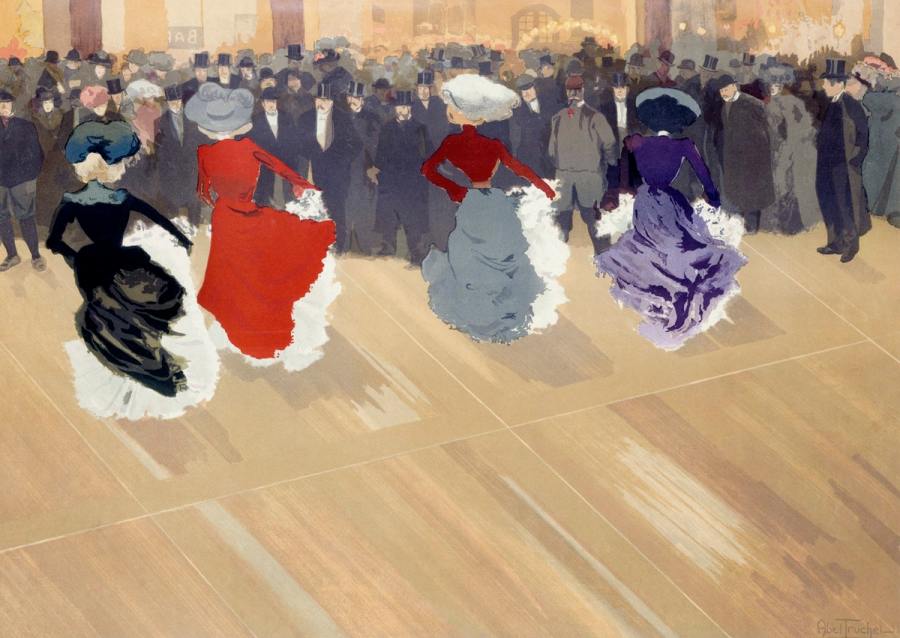
Featured Art: The quadrille at the Moulin-Rouge by Louis Abel-Truchet

Before a careless bulldozer buried him under a ton of dirt
he played with impeccable pulse.
He anchored tunes with a standup bass,

left fingers spidering, right hand patting pauses,
a running commentary that thumped below the chitchat,
bristling with off-color intent.

Just as hothouse plants rooted and swelled
to his sweet, muttered, nasty guy’s-guy nothings,
we set our feet in the soil of his crude jokes and thrived.

His wife didn’t pay much mind to the dirty stories
and sly non-secrets. When he laid their deck,
he penciled women’s names on the underside of the planking,

like an ode to abundance, and she just laughed, shrugging.
We take our cue from her and refuse to fret,
but celebrate him in smut and subtext.

Without crawling among the snakes to check, we hope
we made the list––divas of warm skin and rayon dresses
immortalized on a two-by-ten––

and we also aspire to be like his wife,
who stands aboveboard, rolling her eyes, knowing
her name has been etched more than once in that slatted dark.


Read More

Giverny

By Emily Sernaker

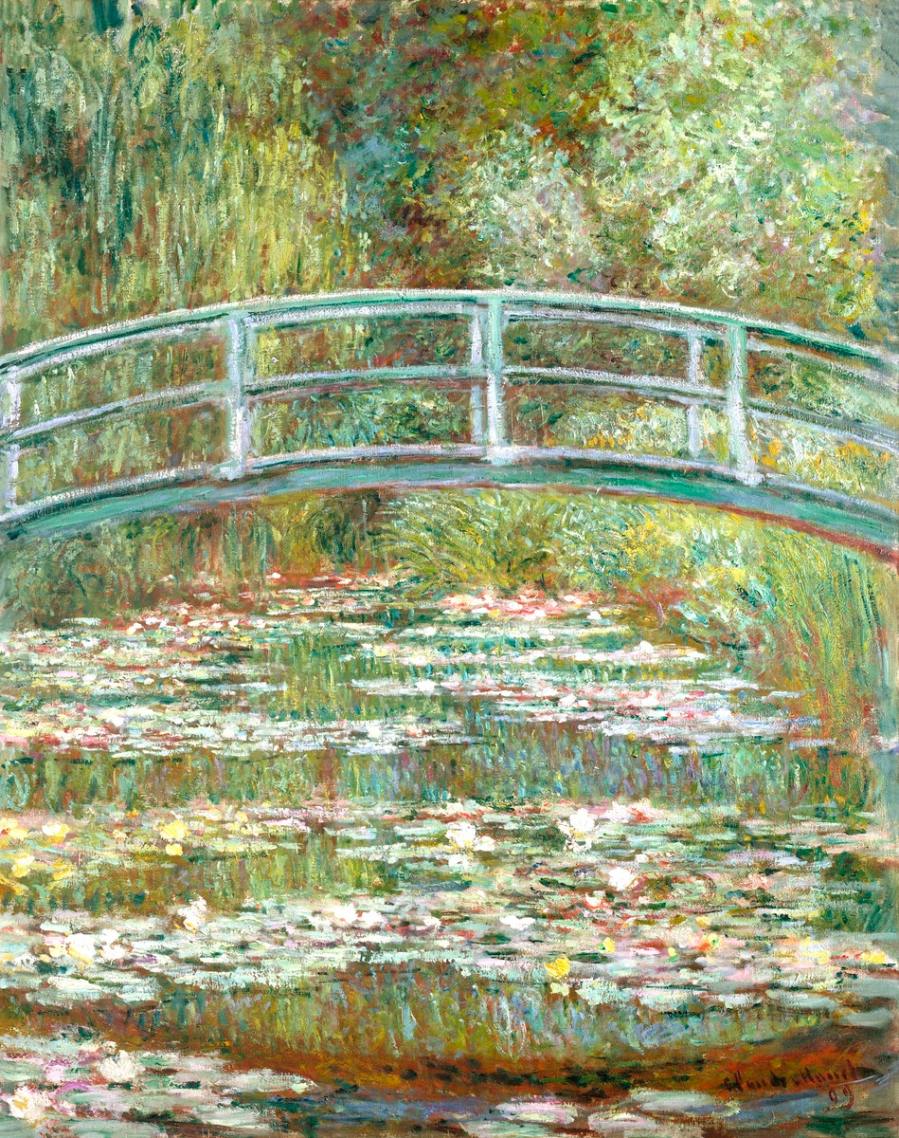
Featured Art: Bridge over a Pond of Water Lilies by Claude Monet

I try not to think about falling in love
too much, although sometimes I look
at pictures of Giverny.

You can visit you know.
See Claude Monet’s lily pad garden,
that famous footbridge.

I enjoy a good trip with my girlfriends.
A walk with my sweet mother.
But I want to see Giverny

with my partner. Whom I haven’t met.
Who might not want to fly 3,585 miles
to see a lily pad garden in France,

all of those pastels up close and floating.
Sometimes I check the website
confirming it’s open. That anyone can go.


Read More

Writing What You Know and Whom You’ve Known

Feature: Of Essays and Exes

By Joey Franklin

When I teach the essay to new college students, I usually put the kibosh on three subjects right away—the Big Disease, the Big Game, and the Big Break-Up. One reason for this blanket prohibition is as simple as it is selfish: I don’t want to read bad writing about tired subjects; and there are few subjects more exercised in the essays of new college students than dying family members, fleeting athletic glory, and the pains of first love.

I do have a more legitimate reason for this prohibition than my own desire to never read another internal monologue about teenage unrequited love. You see, I steer my students away from these subjects because, while the loss they represent is certainly real, it is a loss so common as to tax the ability of any writer—let alone a young writer—to say something worthwhile.

Perhaps, then, it is unfair that I follow up this prohibition by challenging my students to write according to Phillip Lopate’s dictum: “The trick is to realize that one is not important, except insofar as one’s example can serve to elucidate a more widespread human trait and make readers feel a little less lonely and freakish.”

Read More

What Binds Them Together

Features: Of Essays and Exes

By Rachael Peckham

When a MacArthur grant-winning poet and classicist writes about her ex-lover, she doesn’t commit a “thick stacked act of revenge” against him, a tempting “vocation of anger” enacted on the page. Yet Anne Carson, author of “The Glass Essay” (from the collection Glass, Irony, and God), knows it’s “easier to tell a story of how people wound one another than of what binds them together.” It makes sense. Where there’s an ex, there’s the story of a relationship—a clear beginning, middle, and the dreaded end, with a natural protagonist in us versus them, the Exes.

That said, Carson’s “The Glass Essay,” which begins with the speaker’s losing sleep over an ex named Law, can hardly be called a clear or easy break-up story. In fact, it’s not a story at all but an essay in verse—one that doesn’t mention him much. Perhaps it’s no surprise that it’s not about him (is it ever, with the essay?) but about her. About several hers, actually; Carson oscillates between “three silent women” each struggling, each alone or left behind in love. It’s loss that binds them together.

Read More

Breakup, Break Down, Break Open: Intimate Partner Violence and Life Inside a Daily Ending

Feature: Of Essays and Exes

By Sonya Huber

Some relationships fall apart in a gradual and mutual cooling, and others rise toward a crescendo of irreconcilable differences. Still others are threaded with periodic or daily heartbreak and even violence. Imagine living a love in which every moment was a breakup, and every next moment was a reunion, over and over and over. The essay of domestic violence is the essay of a living bonfire of a breakup, an extreme breakup in slow motion, and in this writing we can see essayists shining a light on heartbreak, but also on thornier issues of identity and personal safety.

Many of the best essays in this genre have to deal with misconceptions about domestic violence first, since the query applied to an abused person in a relationship is often: “Why didn’t she leave?,” why wasn’t a simple breakup the solution, as if the abused had a decision to make and then failed to make it correctly. For some people affected by domestic violence, though, the breakup hovers as a longed-for destination, an impossible shore to reach. Others fear the breakup due to real hazards and the effects of trauma. And so the question reveals the asker’s naiveté. The nature of violence is that it won’t simply be left. Violence pursues, damages, threatens, and changes the reality that contains it. Several notable essays have dealt with this painful truth.

Read More

More than a Vanished Husband: Jo Ann Beard’s “The Fourth State of Matter”

Feature: Of Essays and Exes

By Holly Baker

“My vanished husband is neither here nor there,” Jo Ann Beard writes in her 1996 New Yorker essay “The Fourth State of Matter.” She’s describing a relationship caught in the freeze-frame of a collapse. The rafters have buckled   and the walls are caving in, but the marriage structure is falling, not yet fallen. Beard, though, is not centrally concerned with the catalyst of this disaster, nor  its aftermath. She does not reflect on settling dust or salvage work. Instead, with a sense of foreboding, her essay captures the days and hours preceding a series of inevitable tragedies: divorce, the death of her dog, and a horrific campus shooting that leaves seven people dead and a survivor seeking new self- definition.

Beard’s lack of control over these horrible intertwining events permeates the writing, and her failing marriage hovers continuously and gloomily in the background as she thinks about her “vanished” husband. But why vanished? Why does Beard paint him this way, not as estranged or simply gone, but vanished?

In this word, she seems to want to elicit a magic trick, and readers may just as well finish the phrase in their minds: vanished without a trace. Unexamined and unexplained—this is exactly the approach Beard uses to distance herself from the heartbreak of impending divorce, from allowing herself to mourn a relationship that has died. To spare herself and the relationship from bare examination, she instead creates buffers and barriers as tools to cope with and contextualize these losses.

Read More

On Breaking Up with the Dream of Your Former Self: Megan Daum’s “My Misspent Youth”

Feature: Of Essays and Exes

By Kelly Kathleen Ferguson

We all know “you can’t go home again,” but what does it mean to long for a place we’ve never inhabited, to love that idea so much that it feels like the beginning of a relationship? And what does it mean to finally admit defeat and break up with that ideal?

Megan Daum, in “My Misspent Youth,” writes of her infatuation with—and split from—New York City, and her long-cherished imagination of the life she would lead there. Daum begins by recounting a time in high school when she first saw a couple’s artsy, romantic Upper West Side apartment. From that moment she was driven by an “unwavering determination to live in a pre-war, oak-floored apartment on or at least in the immediate vicinity of 104th Street and West End Avenue.” Daum goes on to detail how this obsession influenced every major decision of her late teens and twenties, until she discovers—as in most relationships—there’s no escaping money trouble.

Read More

On Natalia Ginzburg’s “Human Relations”

Feature: Of Essays and Exes

By Dinah Lenney

“ . . . the friend we’ve dropped is hurt on our account . . . We know this but we have no regrets, indeed we feel a kind of covert pleasure, for if someone suffers on our account, it shows we have the power to cause pain, we who for so long felt utterly weak and insignificant.”

So writes Natalia Ginzburg in “Human Relations” in which she considers the way people come together and grow apart; and come together and grow apart; not a breakup essay exactly, and yet it will serve, I think, I hope, since Ginzburg breaks (or anticipates breaking) with parents and friends and relations from beginning to end. She hangs her reflection-on-the-human-condition (that’s what this is)—in which we humans are eventually forced to come to terms with how human we are (as in helpless in the face of the universe, as in doomed from the start)—on a story of coming of age, beginning in childhood when we are understandably baffled by adults and their “dark and mysterious” ways. Next, sparked by adolescence, comes the long middle of the piece: Enamored of our peers, Ginzburg admits “we punish the adults . . . by our profound contempt”; by the end of the essay, she herself has grown up, of course. “We are so adult now,” she tells us, “that our adolescent children are already starting to look at us with eyes of stone.” In other words, what goes around comes around, right? As for what happens in between: Relationships—hers (ours?)—keep ending and ending and ending of natural causes, which (if we don’t count death) only means we eponymous humans—naturally (hopelessly) fickle and self-serving—are to be held responsible more often than not.

Read More