On the Opening of William Maxwell’s So Long, See You Tomorrow

By Maura Stanton

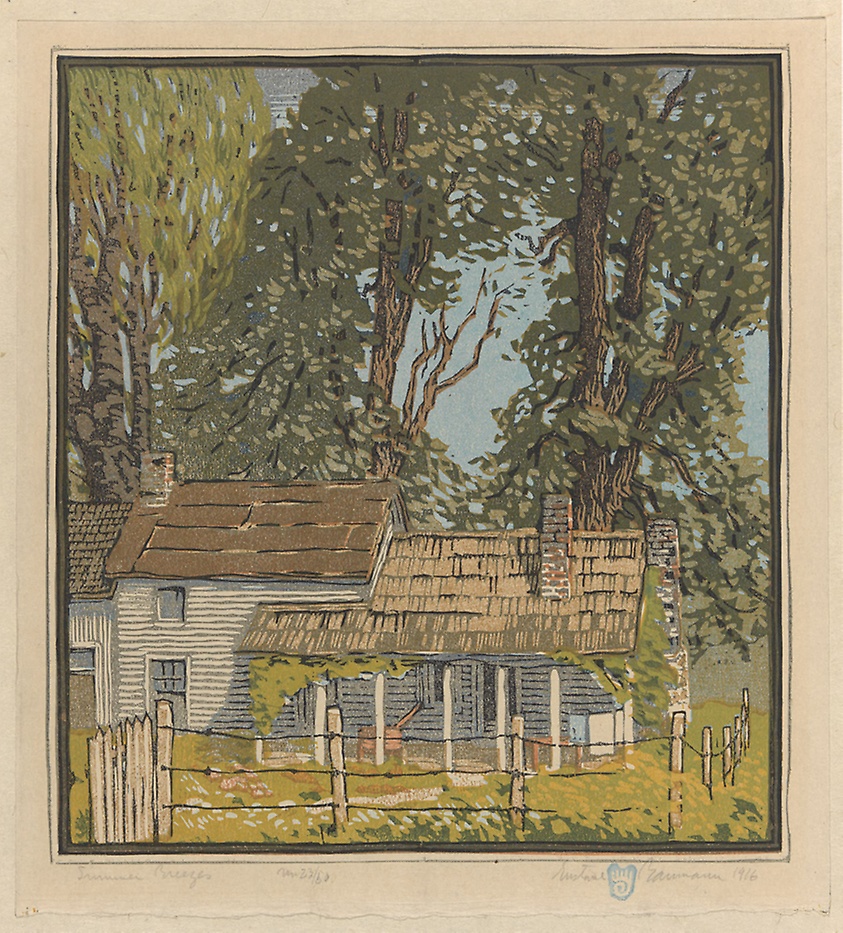
Featured Art: Summer Breezes by Gustave Baumann

William Maxwell’s great short novel, set in the farm country of central Illinois, where I, too, grew up, pulls us into the story of a murder with such force that we can’t stop reading.

The first chapter is called “A Pistol Shot.” Maxwell begins with the setting: “The gravel pit was about a mile east of town, and so deep that boys under sixteen were forbidden by their parents to swim there.” This sentence tells us that we’re out in isolated country. But it also suggests that this is a novel about “boys under sixteen.”

The next sentence introduces the narrator. “I knew it only by hearsay” he says of the gravel pit. And then we get to know something about his imagination as he tells us why boys like him are forbidden to swim there—“It had no bottom, people said, and because I was very much interested in the idea that if you dug a hole straight down anywhere and kept on digging it would come out in China, I took this to be a literal statement of fact.” Read More
On the Opening of Graham Greene’s “Under the Garden”

By David Lehman

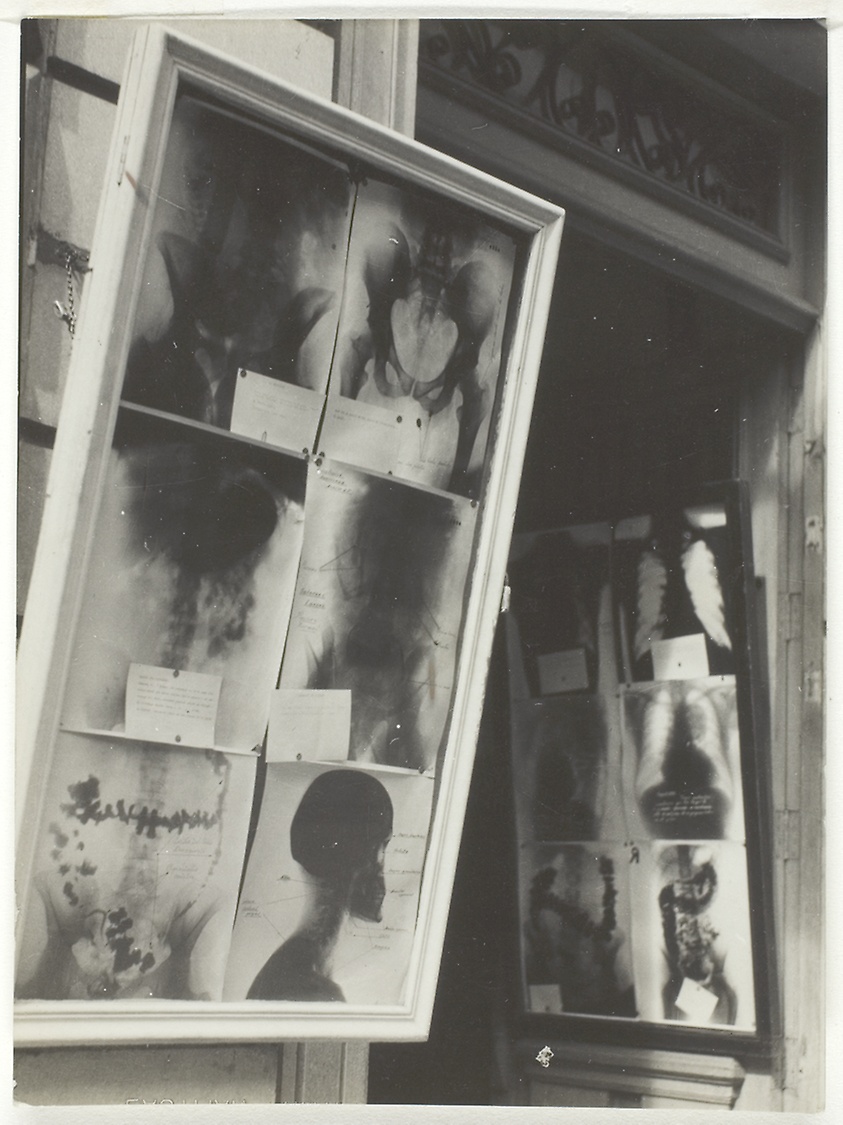
Featured Art: Ventana de Radiografías by Manuel Alvarez Bravo

The first paragraph of “Under the Garden,” Graham Greene’s finest story, consists of just two sentences:

                                  It was only when the doctor said to him, “Of course the fact that you
                          don’t smoke is in your favour,” Wilditch realized what it was he had been
                          trying to convey with such tact. Dr. Cave had lined up along one wall a
                          series of X-ray photographs, the whorls of which reminded the patient of
                          those pictures of the Earth’s surface taken from a great height that he had
                          pored over at one period during the war, trying to detect the tiny grey seed
                          of a launching camp.

With the indirection that passes for a physician’s professional “tact,” the masterly opening sentence reveals that the protagonist, a man named Wilditch, has just been handed a death sentence. Greene’s opening dwells on the doctor’s discomfort with speaking the bald truth (“what it was he had been trying to convey”), his determination to skirt the subject, with the result that the bitter prognostication of the man’s demise dawns on the reader in the same way that it dawns on Wilditch: belatedly, like the answer to a riddle or trick question. Or so it feels: Greene gets us right into the mind of his protagonist at the moment of revelation. Read More

On the Opening of Barbara Comyns’ The Vet’s Daughter

By Maud Casey

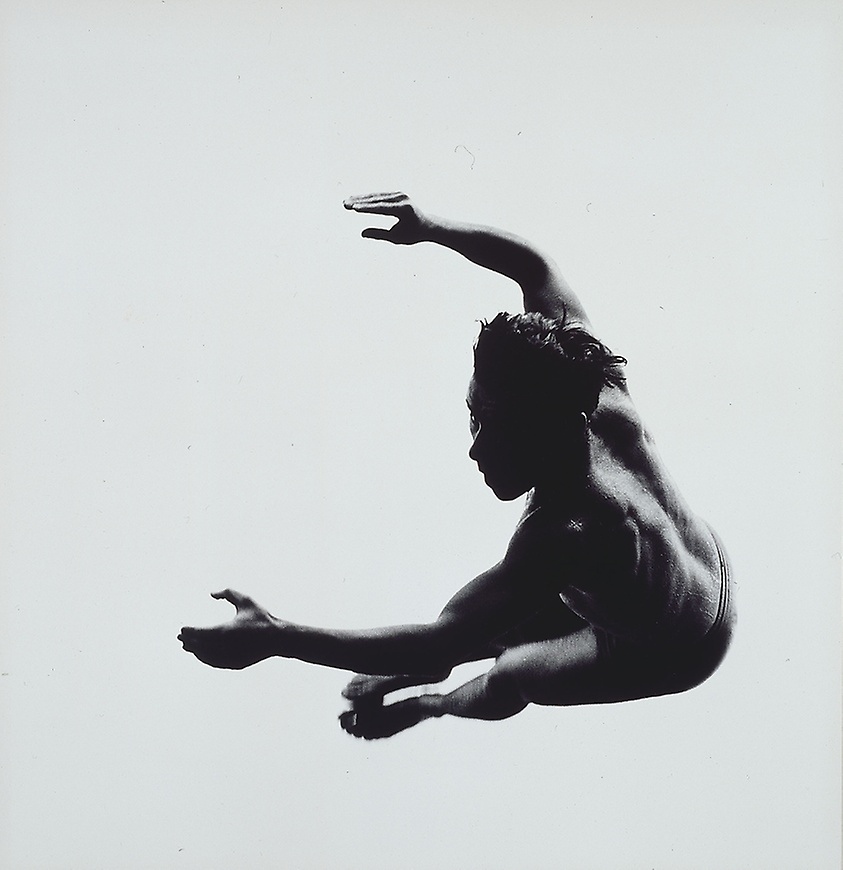
Featured Art: Falling by Aaron Siskind

A man with small eyes and a ginger moustache came and
spoke to me when I was thinking of something else.

I have thought about the first line of Barbara Comyns’ novel The Vet’s Daughter since 1993. I was in graduate school and my wonderful professor, the writer Mary Elsie Robertson, suggested I read Comyns. I did and I have been forever grateful for the recommendation. Comyns is that variety of obscure writer who is a secret literary password. To love her is to enter into a speakeasy filled with levitating teenagers, floods, plague, and the occasional monkey. She authored eleven novels between 1947 and 1989 before her death in 1992, with notably captivating titles, such as Who Was Changed and Who Was Dead and Our Spoons Came From Woolworths. When, in the late Fifties, her original publisher—Heinemann—sent her odd fairy tale of a novel, The Vet’s  Daughter, to Graham Greene for a blurb, he responded, “Please, send me no more lady novelists.” I’m not sure precisely which part of The Vet’s Daughter Graham objected to, which part he found too lady-ish—its concern with things domestic? Its girl protagonist? In any case, I’m happy to report, he came around because there’s his effusive blurb on the most recent effort to save it from obscurity, the beautiful edition put out by The New York  Review of Books with a foreword by Kathryn Davis and a painting by Louise Bourgeois on the cover that, at first, you might mistake for lovely red stockings hanging on a clothesline but, look closer, those aren’t lovely red stockings, that’s bloody sinew and bone. (The painting’s title is Untitled (Legs and Bones).) Read More

On the Opening of Flannery O’Connor’s “Good Country People”

By Alyson Hagy

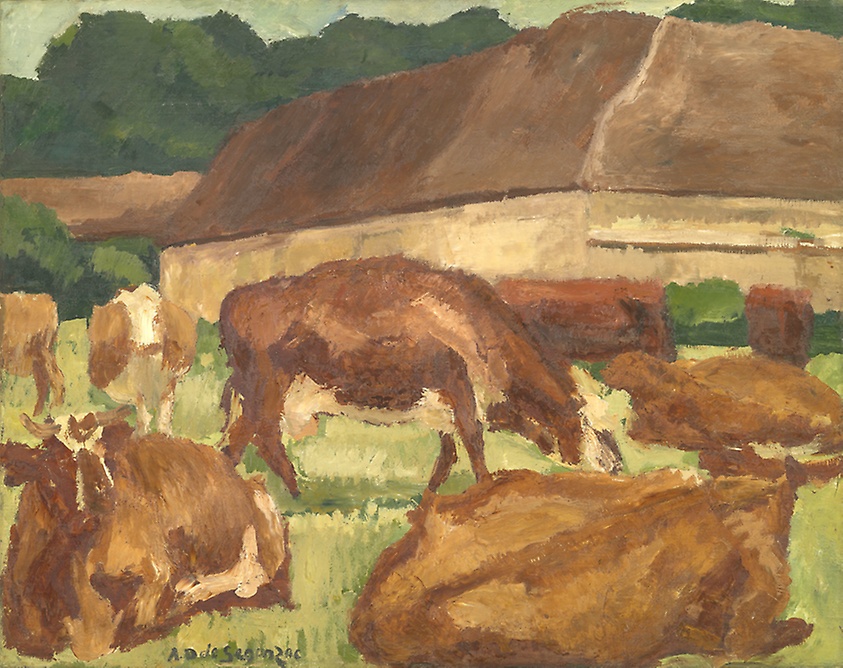
Featured Art: Pasturage by André Dunoyer de Segonzac

                                                                                                      Besides the neutral expression that she wore when she was 
                                                                                                      alone, Mrs. Freeman had two others, forward and reverse, that
                                                                                                      she used for all her human dealings. Her forward expression 
                                                                                                      was steady and driving like the advance of a heavy truck. Her
                                                                                                      eyes never swerved to left or right but turned as the story turned
                                                                                                      as if they followed a yellow line down the center of it. . . .

                                                                                                                                        —“Good Country People,” Flannery O’Connor

I’m sorry to say I’ve experienced my share of bible salesmen. And I can’t think of the names Joy or Hulga without wincing with delight. But why have I never gotten over the way O’Connor begins “Good Country People”?

I blame front porches.

Read More

On the Opening of Stanley Elkin’s “A Poetics for Bullies”

By Tom Noyes

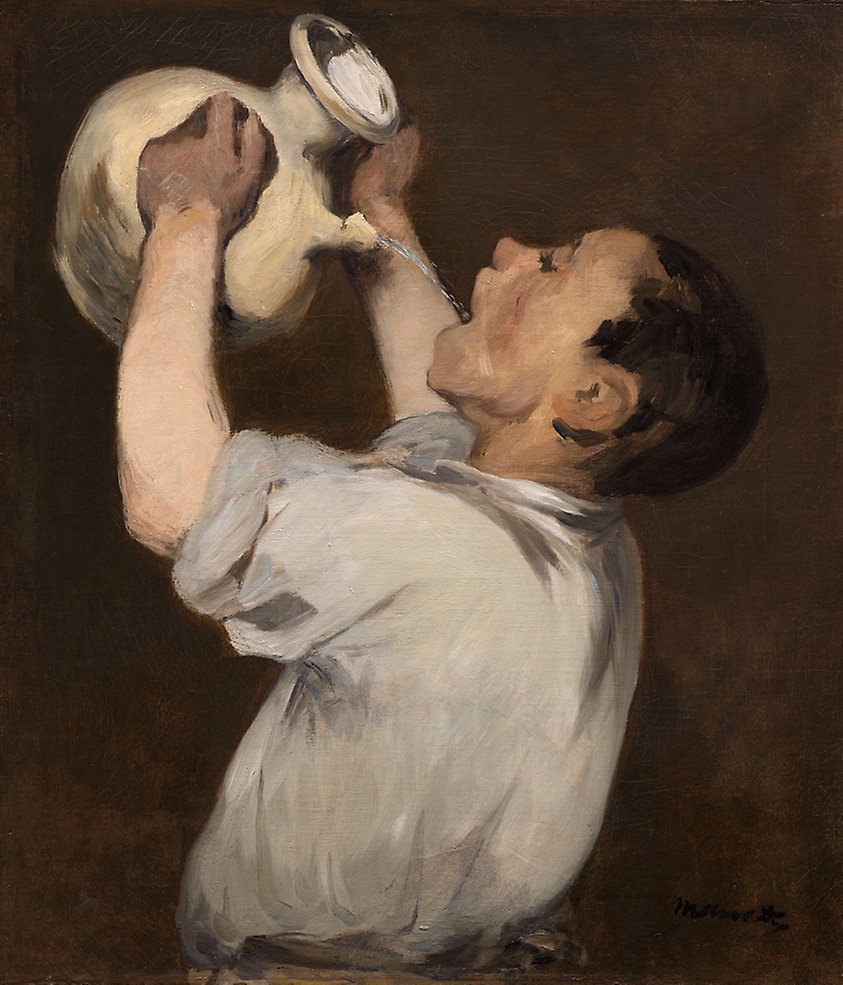
Featured Art: Boy with Pitcher By Édouard Manet

                                                                                                   I’m Push the bully, and what I hate are new kids and sissies,
                                                                                                   dumb kids and smart, rich kids, poor kids, kids who wear
                                                                                                   glasses, talk funny, show off, patrol boys and wise guys and
                                                                                                   kids who pass pencils and water the plants—and cripples, espe-
                                                                                                   cially cripples. I love nobody loved.

In Aspects of the Novel, E.M. Forster writes about the necessity of “bouncing” the reader. At the beginning of a work of fiction, he suggests, the writer must win the reader’s attention in such an immediate, all-encompassing way that the reader has no choice but to forget herself and her “real life” circumstances in order to abide fully and uninterruptedly in the imagined world of the fiction. If the writer can’t bounce the reader from the one world to the other right quick, all is lost.

Read More