The Good Life

By Susan Allison

The thing about good living

is that it happens, despite

plotting and planning, it happens

contrary to all devices. It happens

when you are renting the only room

you can afford and you somehow

catch the way the light is coming through

the broken dirty windows.

The door is open

and the wind blows in like balm.

It’s warm and you see the colors of the

faded gray frame of the door

against the rust-colored leaves

in the small patch of jungle

down by the alley.

The good life

comes through your eyes

and your ears and your skin,

the way a wild animal comes at you

when it is just curious.

Read More

New Ohio Review Issue 12 (Originally printed Fall 2012)

Newohioreview.org is archiving previous editions as they originally appeared. We are pairing the pieces with curated art work, as well as select audio recordings. In collaboration with our past contributors, we are happy to (re)-present this outstanding work.

Issue 12 compiled by Natalie Dupre.

Rituals

By Suzanne Carey

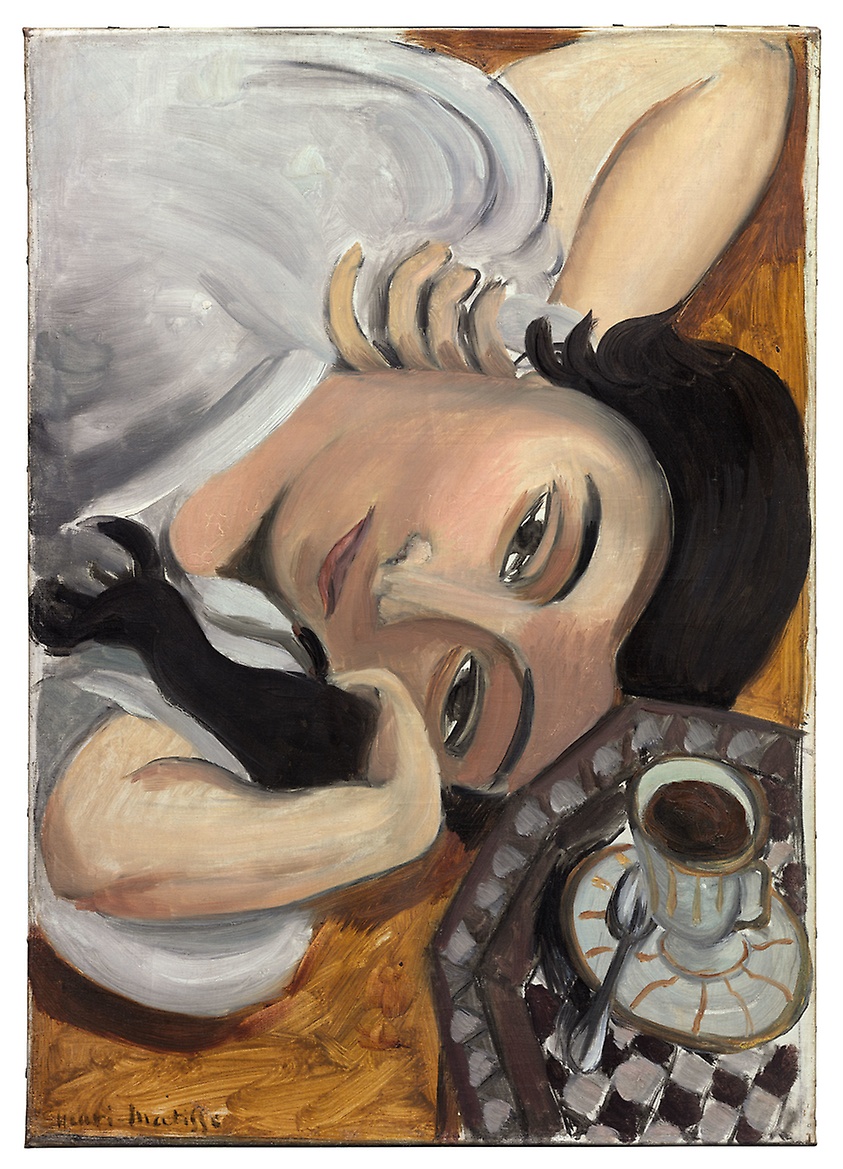
Featured Art: Lorette with a Cup of Coffee by Henri Matisse

After my swim, I sit at a small table at Peet’s
with my medium sugar-free, low-fat, vanilla freddo
that the barista started as I walked in.
I push the whipped cream deep into the cup and worry

about my daughter, who drives
a perilously small car on the freeway,
and my son in New Orleans, too poor to drive,
whose illness frightens me most of all.

My father worried about us until the day he died.
When I came home from college, he insisted
I take the dog or my ten-year-old brother with me
when I drove at night. At eighty-six, he called me daily

from the nursing home to make sure I was okay.
I remember how my mother savored
half a nickel-box of licorice bits and a single cigarette
as she read each evening, waiting for us to come home,

and years later, how she devoured the Hershey bars
and Cokes Dad brought her every afternoon,
long after she had forgotten us all.


Read More

My Father’s New Woman

By Fleda Brown

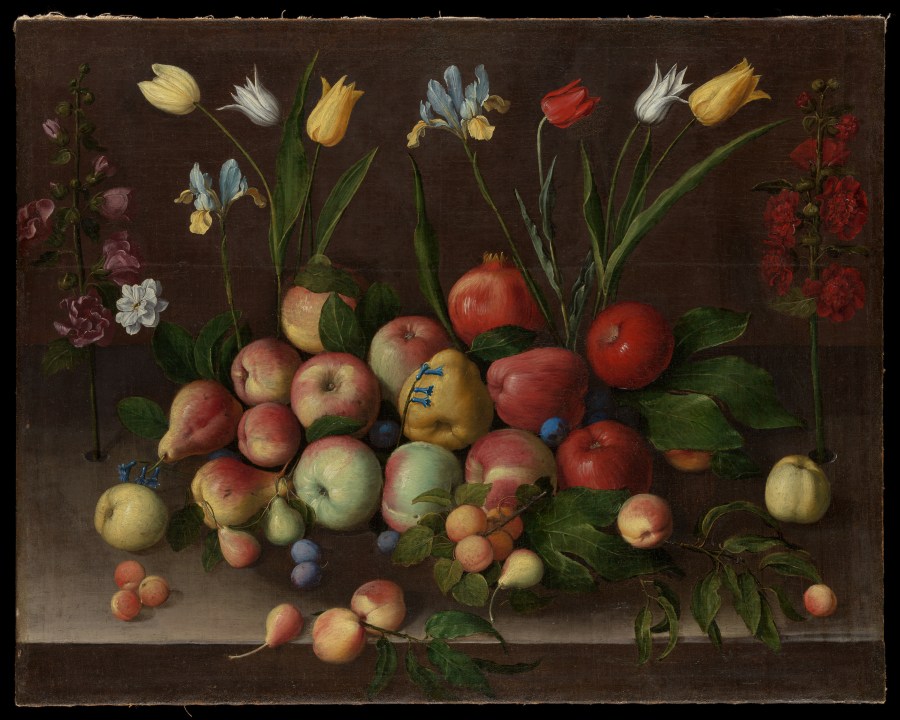
Featured Art: Fruit and Flowers by Orsola Maddalena Caccia

My father has a new woman. He’s 93, the old one is worn out.
They used to hold hands and watch TV in his Independent Living
cottage, but now there is the new one, to hold hands. The old
one is in Assisted Living not 50 feet away but barely able
to lift herself to her walker. He sits in her room after dinner,
her mind wandering in and out. What if she escapes
and comes over while my father is “taking a nap”
with this new one? My mother is two miles away beneath
her stone, relieved. I bring artificial flowers to her with my sister,
who likes to do that when we visit. I am not much for
demonstration. I would just stand there and say, oh, mother,
he’s at it again. And she’d say, I am sleeping, don’t bother me
with him anymore. And we’d commune in that way that knows
well enough what we’re not saying. And I’d be lamenting
my self-righteous silence in the past, my smart-aleck-motherjust-
go-to-a-therapist talk. What I should have said was, was,
was, oh, it was like a tower of blocks. Pull one out and all
would fall. She would get a divorce and a job and marry some
balding man like her father, who would be my ersatz father
and would take her dancing and let her wear her hair
the way she wanted, and she would cut it short and get it
permed and life would quiet down and my father, to her, would
morph into the handsome and funny Harvard Man he was
in the old days, the way he posed her for his camera, tilting
her head to the light with his devouring-passion fingertips
and her days would begin to feel like a succession
of pale slates to scribble on and erase before the new husband
came home from work, while my father would spin off
after whoever would “put up with him,” as he says,
and would follow his new one around carrying her groceries
and complaining that she spends too much, but biting his tongue
and thinking how soon she would let him, well, you know,
and I would be, what? The same as now, writing this down
so that none of the shifting and sifting could get away
cleanly without at least this small consequence.


Read More

If Only I’d Met You Earlier

By Adrienne Su

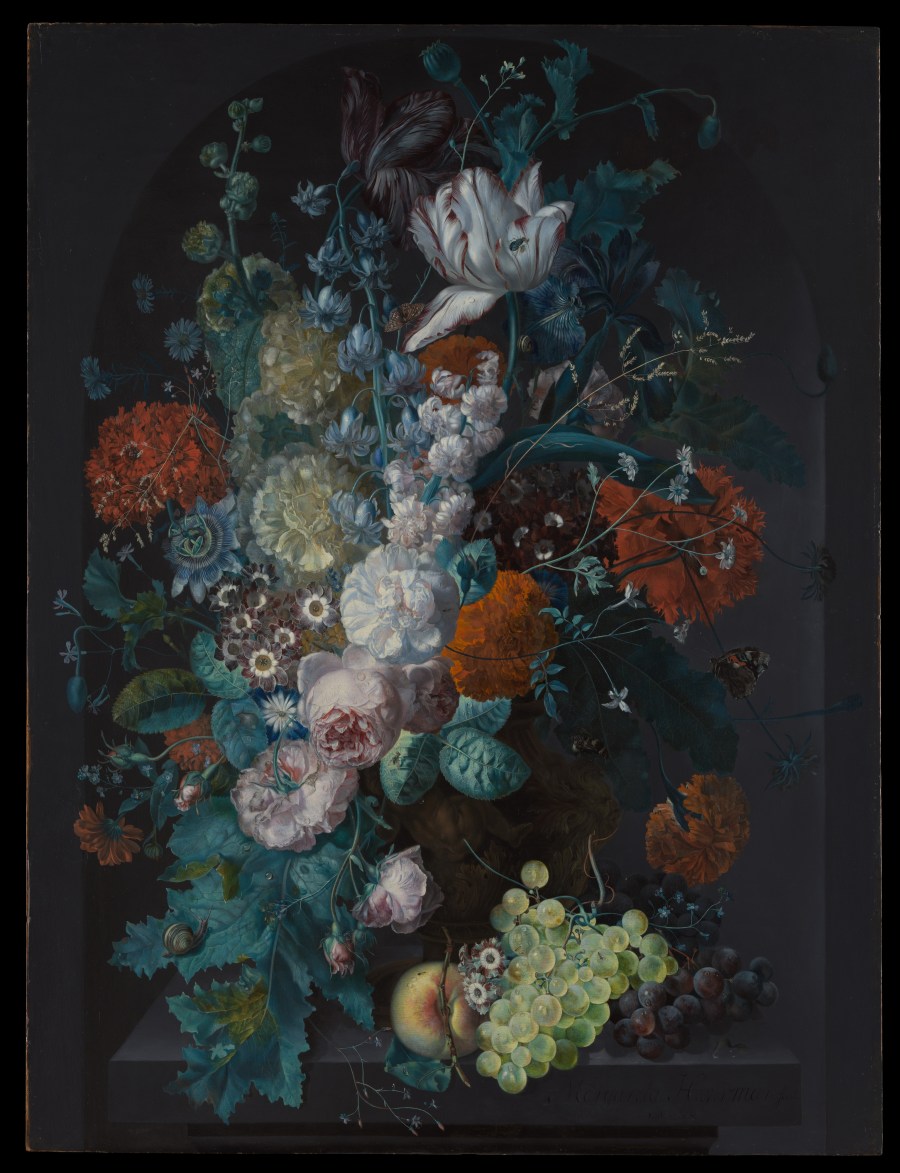
Featured Art: A Vase of Flowers by Margareta Haverman

We’re at it again. It’s hard not to rewrite
the years, though we couldn’t have known
they were wrong, if they were. Life
isn’t longer than it is, so off we go,

picturing how it might have happened,
though one of us would have been taken,
or both, and one of us lived up north, one
by the warmest sea. We had no common

travel destinations, we rarely read
the same books, there wasn’t one same
friend, and either might have fled
if it started to matter. Apologies, if made,

might not have been accepted. In truth
we could only have met on the street,
on one of your trips to the city. We’d both
have held back. The courage to speak

would’ve yielded “Excuse me,” no more,
all vision cordoned off by the sun.
So we might as well indulge in the words
for their sound: You would’ve been the one.


Read More

In the Second Month of Parched Land

By Daiva Markelis

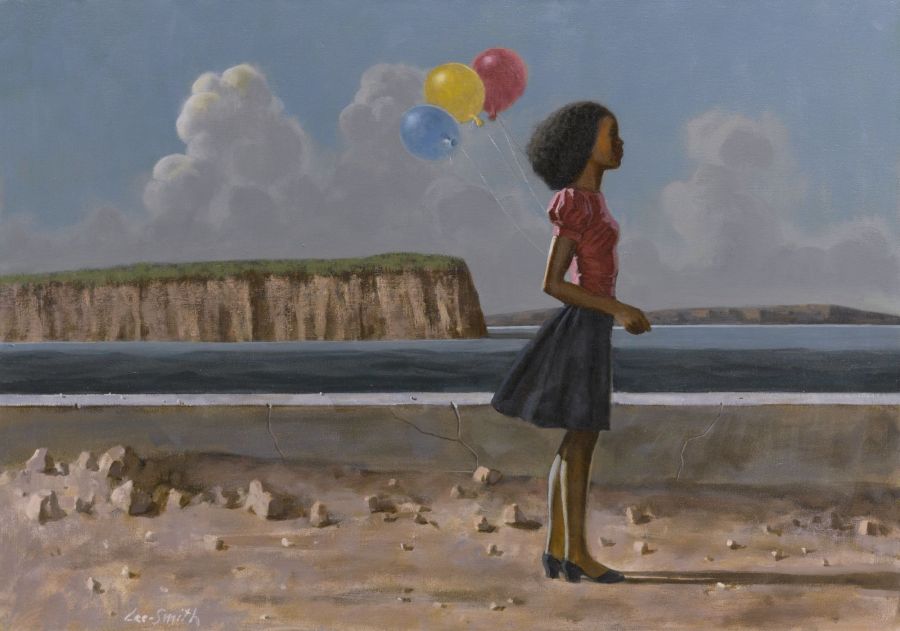
Featured Art: Stroll with Balloons by Hughie Lee Smith

We came across the camels every time we picnicked that merciless autumn, huge herds grazing on sparse vegetation. Camel comes from jamal, the Arabic root word for beauty. From a distance they did look lovely, their curvy silhouettes mimicking the contours of the dunes. Up close, however, they seemed slightly ridiculous, like bad female impersonators, batting their Scarlett O’Hara lashes to keep the sand out of their eyes, their long necks sloping toward us, then coyly withdrawing.

That we saw them so near the city surprised us. We’d heard stories of naive Westerners who’d driven for hours looking for adventure—for camels—and then stopped to explore the landscape with their pitifully small water bottles, supplemented, in some cases, by flasks of 100-proof siddiqi. Some were lost in the Empty Quarter, the largest desert in the world, never to be heard from again. I wrote a friend: If I were to start a literary journal here, I’d call it The Empty Quarterly.

Sometimes we’d see a row of black tents with goats tethered to a nearby post. Once, an old Bedouin waved a gnarled hand back and forth like a weathered stick. I thought we were in trouble, trespassing on his property, but as he ambled closer all he said, in a slow, proud English, was “See my camels.” He invited my husband into the largest of the tents. I waited in the air-conditioned Mazda, fiddling with the radio. Masculine voices jabbered in endless variations of the little Arabic I knew: Assalamu alaikum wa rahmatullah, Allah akbar, Inshalla. The sounds seemed to emanate from deep down the throat, a rush of rough and phlegmy h’s, a conspiracy of k’s.

Read More

The Circus Lion’s Lament

By Michael Derrick Hudson

Featured Art: Circus Clown and Dancer by Marc Chagall

So what happened? I used to be a lion, crashing
the herd and yanking down stampeding

zebras on the hoof. Days spent pissing hot gold

across the Serengeti! The ground gone tawny
with my scat! Those long afternoons

of fly-blown torpor, those gristly jawfuls of prey

and those after-fuck yawns. At night, snoozing
into my paws, I’d twitch and thump

the muscular scourge of my dreaming tail . . .

But Emily the Elephant jerks my chain, suggests
my ferocious howls lack plausibility

or conviction. O how I howl! I can rend the air

with lost prerogatives! Demolish the audience
with has-been imperium! I worry

and tooth the Ringmaster’s splintery stool. Dolts

applaud. Clowns in a jalopy lampoon
terror, hitched to their posse of sidekick knuckle-

draggers waddling away in diapers and tuxedos . . .

Come night, I’ll sniff the corners for what’s left
of my petrified stink, the proof

I somehow still exist. Breakfast’s tossed in at six.


Read More

Animals

By Brock Guthrie

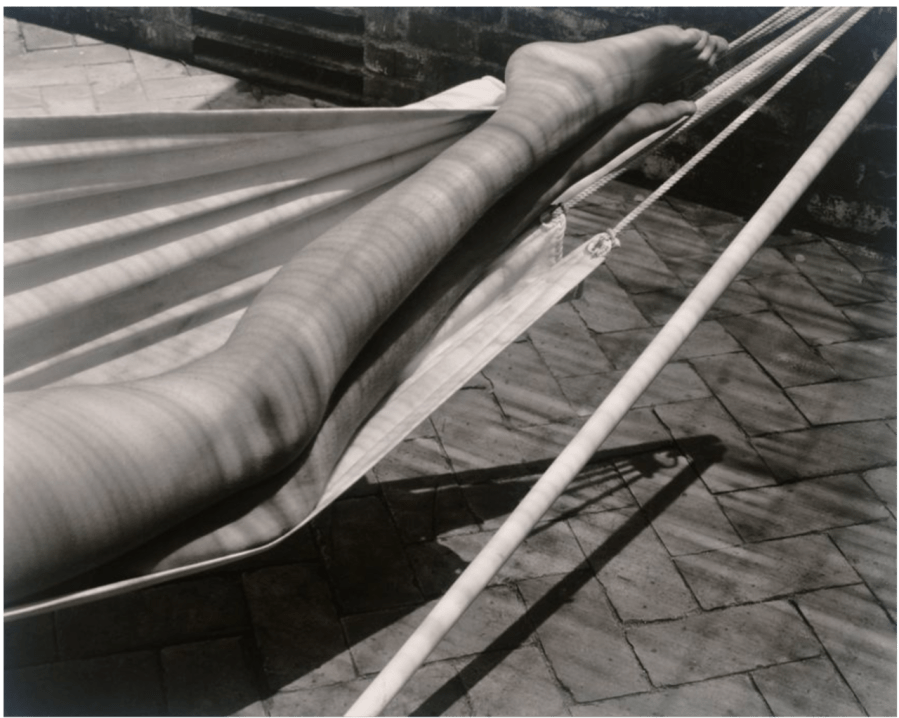
Featured Art: Leg in Hammock by Edward Weston

One is what one looks at—well, at least partially. —Joseph Brodsky

All morning in my hammock burning
a tight one, poised with pencil and notebook
and seven-week beard, I look to the pines
outside my cabin, seeking inspiration
from the birds and the squirrels
whose singing and foraging, whose
exclamations, no, arguments, reflect
my inner my inner my inner . . .
and every so often my cousin Ricky returns
from hunting rabbits on my four-wheeler
to tell me he’s thought of a new way
to beat off: Anywhere around here to buy
watermelons? Even his camo flannel
can’t conceal that Superdome belly
and I hate to think how long
since anyone’s seen his diminutive dangle
so I tell him in all seriousness, my sympathy
sincere, You might be on to something,
but after he tokes and rides away
I get inspired, realize I should’ve said
Go drive around these country roads, man,
look for signs!
and even Ricky would’ve
nodded with a look of feigned profundity
like he’s posing for an author photo
but I let that moment go

Read More

Appropriate Interjection

By Brock Guthrie

Featured Art: Painting with Troika by Wassily Kandinsky

Seven in the morning laying insulation
and wiring electric with a friend and his friend
who make money building houses.
Laying insulation at seven on Saturday
because of a promise made the night before
at the bar, where the ambition to learn
something about house circuitry
appeared like a blown fuse. This pink shit
makes you itch. Not so with my friend here—
he’s worked with this stuff so long
he sleeps on it, wakes up
throws a piece in the toaster, eats it slowly
with cream cheese and coffee. Shouldn’t we
be wearing respirators or something?
How the hell should I know?
But this is good. This kind of work
is good for me—re-callous these grandma hands
I’ve grown. Like back in those summers
when I tar-sealed blacktop
on ninety-five-degree early mornings. “And then
in the afternoons,” I tell them. On break
we smoke a joint in front of the site, drink
water, sit there in silence. Silent like that
until I start to count breaths. And wonder
what happened to last night’s beer brotherhood.
But then I recognize the similarity
between our collective awareness
and the object of our unfocused gazes:
Margaret’s Creek, running muddy and a little high
along the other side of the road.
I could try to articulate this thought—
it might break the silence. Then again it might
make more, and I want to work with these guys
on future jobs, so instead I tell them how
I once caught a five-pound largemouth
a quarter-mile up this creek
that jerked so hard in my grip
she stuck two of the treble hook barbs
from the top-water Rapala I caught her with
into my thumb, how I tried for an hour
to loosen them from the nerve, feeling it
in my front teeth, fish in the water, gone,
how I had to push the points
clear through the side of my thumb
and clip the barbs with rusty wire cutters.
“Sure,” I add, “there’s good fishing in this creek
if you know the good holes.”
Then my friend’s friend holds out his left thumb,
a nubby little thing, tells us about an accident
he had with a circular saw.


Read More

Play it by Ear

By Claudia Peirce

Featured Art: The Big Red Ball by Ellen Lanyon

Recently I’ve become a “regular” at an especially sub-standard diner called Sam’s World. Although I have no special fondness for the soggy potatoes, greasy burgers or limp lettuce leaves they dish up, Sam’s World is within walking distance. This is important because I have no car and my apartment has no kitchen. There is an old, barely functioning refrigerator in the narrow hallway between the bathroom and the only other room. I don’t hold out much hope for this refrigerator since I can’t bring myself to defrost it. A solid block of ice has formed over the opening to the freezer, and at some point I expect the whole thing will just blow up.

One day I might be out of debt and able to afford an apartment larger than one hundred and fifty square feet. Then again, I may not. When I consider the size of my indebtedness I realize I could quite easily be dead before I pay it off.

Anyway, it’s Tuesday evening at Sam’s World; I’m not very hungry but am in need of comfort so I decide to skip actual food and have ice cream and coffee.

BUM fired me today but then he changed his mind. He said I didn’t really have to leave but if I wanted to it would be all right. Then he went back to our mail-sorting session as if nothing unusual had occurred. I would guess an episode like that does not bode well for job security.

Read More

Return of the Media Five

By Maya Sonenburg

Second Prize, New Ohio Review Fiction Contest
selected by Charles Baxter

Featured Art: The Eventuality of Destiny by Giorgio de Chirico

I am this heart, this brain, only these, right now—no other. This is what Susan (that’s her name now) tells herself every morning upon waking. She opens her eyes and sees the flaking ceiling above her, sees the wash of sunlight coming through leaves. She touches her chest, feels her heart beating steadily—no rush of fear—and exhales. She’s alone. She touches her head, hair just starting to gray and she’s not bothering to color it. “This can be my new disguise,” she thinks, “my new self.” One of the million selves she’s been in the last twenty-odd years. She rubs her eyes and before she can silence herself again, she remembers days when she thought more, remembered more: a million legs all running toward the Pentagon or induction center or federal courthouse. Flowers in the barrel of a gun. A Viet Cong flag. Giant puppets of Kissinger, Nixon, McNamara. Or their heads atop the bodies of gigantic hawks, perched among the blackened trees of a burned landscape. Bring the war home. A placard of a napalmed child. If people see, they will join us and this atrocity will have to stop. A million hands waving. A million arms, fists raised in salute. They were the million legs and hands of her—her legs and hands—the million-limbed body of resistance, then revolution. Why does she allow these things to come back to her today? Because it’s spring and her curtains are the color of a daffodil she handed to a child once at a demonstration? She remembers when the remembered voices were always with her, singing off-key but loudly together. She never felt alone. But then suddenly she was alone, amputated from everyone and everything she knew. Most mornings she silences these memories of memories, she manages to.

Read More

Timeline

By Amy Pickworth

Featured Art: Chrysanthemums by Pierre-Auguste Renoir

1880: John Stine proposes to his dead wife’s sister, Eliza. He is a farmer, about forty, she is a spinster midwife. She accepts, telling him, “I will marry you for the sake of the children, but I will never sleep with you.”

This sounds strange—would she have said sleep with in the nineteenth century?—but these are my grandmother’s words. It is 1993 and we are sitting in her house, which smells like cigarettes and meat. The curtains are drawn. Her second husband has been dead for fifteen years. She hasn’t gone blind yet.


1962: The Orlons sing Baby baby when you do the Twist, never never do you get yourself kissed.

Teenagers everywhere Watusi in response.


Read More

The Hittite

By Alex Myers

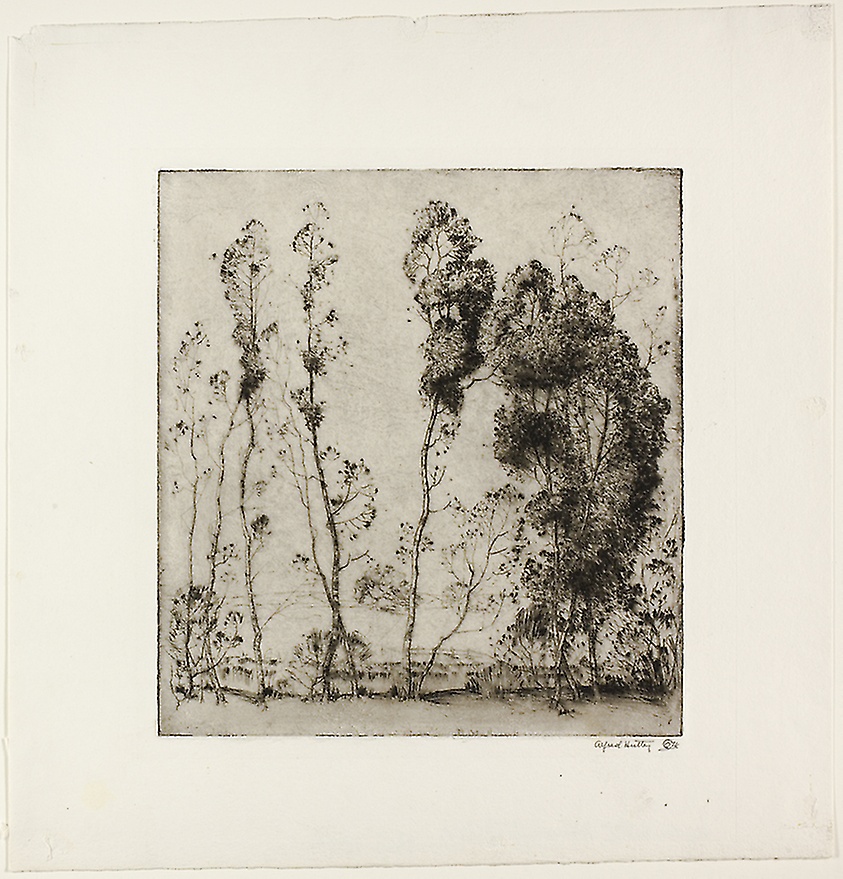
Featured Art: Trees Against the Sky by Alfred Hutty

In the spring of the year, the time when kings go out to battle, David sent Joab with
his officers and all Israel with him; they ravaged the Ammonites, and besieged Rabbah. But David remained at Jerusalem. (2 Samuel 11:1)

11:6

He was halfway to Ramstein, the dust of Afghanistan still on his boots, when it finally hit him: home. In April no less. The cherry blossoms would be spinning down from their trees, sweet, light, floating. It was a military jet—noisy, hard, and sidewise—that took him to Germany, him in his camis, sand still hidden in the folds, hardly believing he was out of the desert. Four months into his first deployment to Afghanistan and, after the training and orientation at central command near Kabul, he’d spent his months out in the mountains, riding Humvees along what they called the main corridor, though it was pockmarked and potholed and barely paved, and humping alongside mules to little villages. Escorting the arrival of humanitarian aid, waiting while some brain from intel, some secret squirrel, interrogated the village elder.

Read More

The Down

By Molly Ficek

Featured Art: Bath of Venus by Sir Edward Burne-Jones

My mother is immersed in membrane when I find her. Eggs cover her body, some cracked and spilling their spoils, some whole, resting on her belly, her breasts. White flecks of eggshells gravel her skin and the runnings of yellow yolks have dried, look like the peelings of a summer burn. Her head is underneath this mess when I look over the side of the tub.

“Mom?”

She surfaces, wipes film back into her hair, the glossy middle of the egg from her cheek. She blinks.

“What are you doing?” I ask.

She looks at me as if it’s quite obvious, which I guess it is. She is taking a bath in chicken eggs, dozens and dozens of them.

“I heard it’s good for your skin,” she says.

“Um…for your hair, maybe. Egg whites are supposed to be good for your hair.”

“Hmm,” she says, inhales a big gulp of air, and sloshes down under the eggs, the water beneath them. She waves her hand up at me. Eggs spill over the sides of the tub and drop onto the bathroom floor, cracking open.

Read More

Craigslist

By Maya Jewell Zeller

Selected as winner of the 2012 New Ohio Review Poetry Contest by Billy Collins

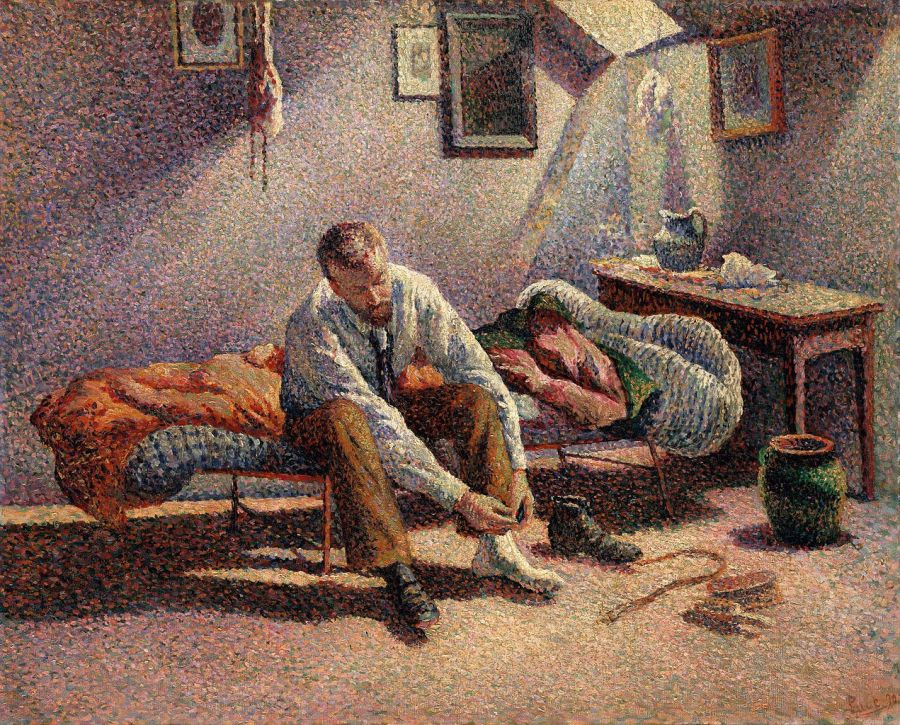
Featured art: Morning, Interior by Maximilien Luce

It’s all there—the stuff
no one wants to say is theirs anymore,
the single-slate pool table, the six-person
tent, a complete professional tattoo set
complete with analog power supply.

And my father’s 1988 Corvette.
He is no longer sad
to see it go, though he does lament,
my mother tells me, that young people
these days no longer want something like it.
They want a car with good
mileage, something they can take
a child to preschool in, cart around
the six-person tent.

Read More

Let Me Bore You With My PowerPoint

By Lee Upton

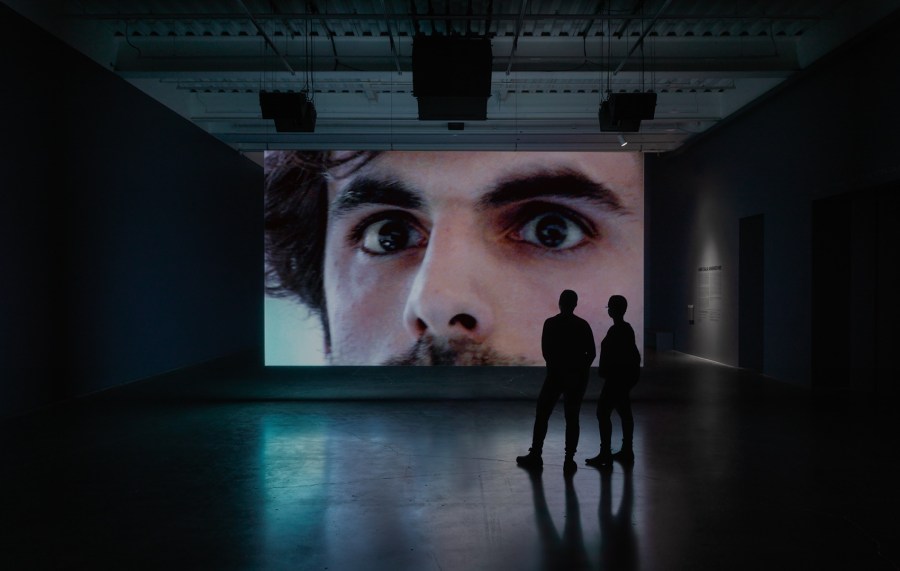
Featured Art: Answer Me by Anri Sala

—after Peter Porter’s “Let Me Bore You With My Slides”

I’ll say it and I’ll say it and I’ll say it again
and here it’s said for us, illuminated. Do you like my wave effects?
The technology will be bypassed any day now. I know. So?
How did that get in? That’s my kid.
Ha ha. That’s a goat Brenda and I saw blocking the road in Brixton.
Look at the head on that.
Oh—Brenda. Sorry. There goes my job. Just kidding.
That’s not really Brenda. That’s her best friend. No, just kidding.
We were on a wildflower walk, you know? Walking by a stream and
they had these
statues that look amazingly real? I don’t know how they do it.
Carve mushrooms or something and magnify them into these enormous—
we’re moving on. Oh, here we go, our Venn diagram—
why is Brenda wearing antlers?
Okay. On track.
You know, I say something and then what I say is right up here.
I might as well just give away handouts and leave the class.
Tempting. I mean I could go home right about now.
Right when it’s least expected.
Except I’m a professional. I meant to crop that.
That shouldn’t be embedded.
Nice 3-D effects, if I do say so myself.


Read More

Animal Science

By Michael Davis

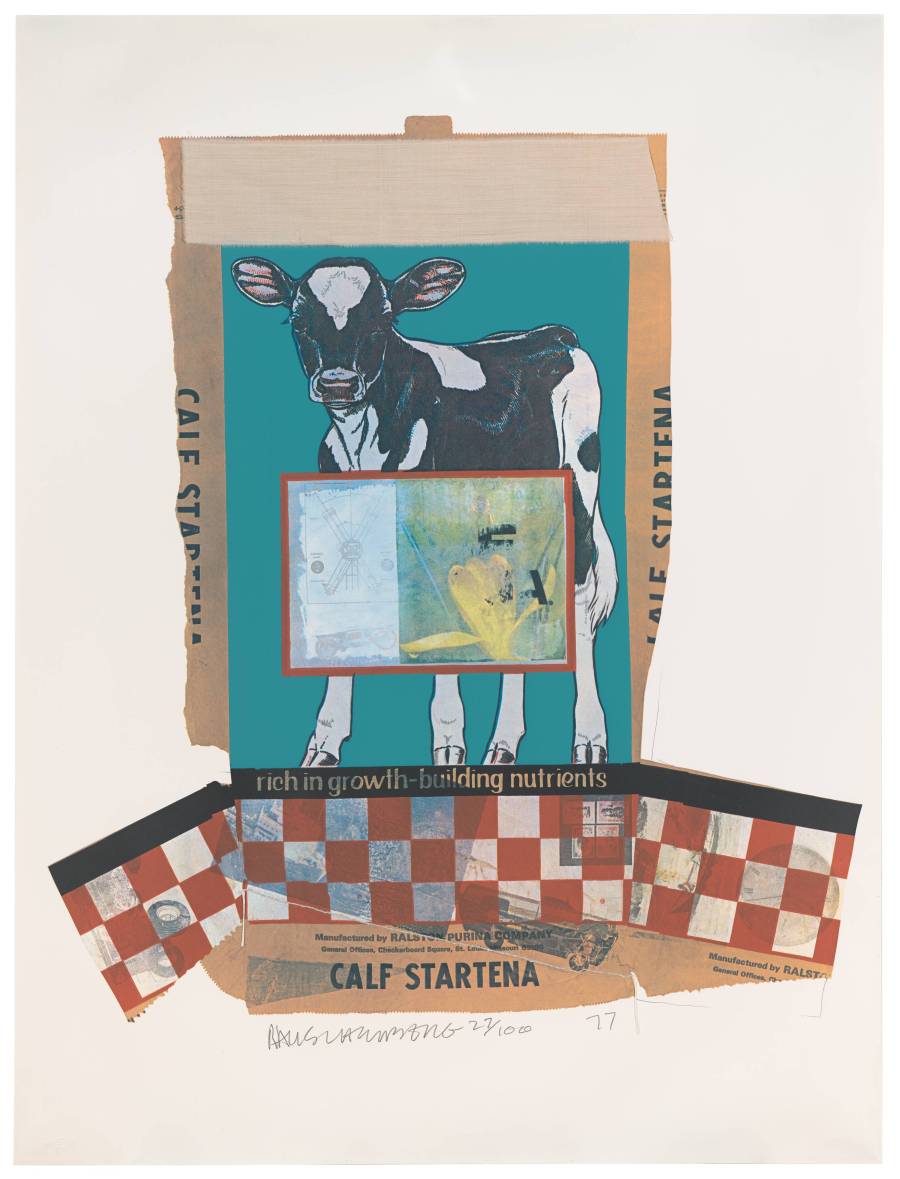
Featured Art: Calf Startena by Robert Rauschenberg

It was hot. That was foremost in my thoughts. A sheer, raw, violating hotness that wobbled on the cement quad and in the still dry air above it. I focused on getting across without fainting. I fixed it in my mind. I didn’t have to ask why there weren’t any birds in the Flushing sky. I knew they all had heatstroke, carpets of passed-out sparrows under the campus trees. Even the shade pulsed with heat. I’d accepted the hottest day in Michigan history the way one accepts an incurable disease or a prison term or a bad marriage. I stopped fighting. I let it own me.

As I reached the rusted double doors of Animal Science, the world seemed to tilt. Darkness rushed into the edges of my vision, and the numbness of heat prostration began to twist through my skin. Panting, I sat down on one of the benches in the building atrium, wondering if my three-mile hike from the adjunct lot was destined to put me in the hospital. The central A/C was broken, but there were box fans every thirty yards, and I felt truly grateful to the Animal Science secretaries for providing the hot air current. Hot air that moved felt better than hot air that didn’t.

Read More

From The Secret Correspondence: A Novel of Novels

By Tom Whalen

Featured Art: Nan and Brian in bed, New York City by Nan Goldin

The Solution

For the life of me, I can’t understand why The Solution has been marketed as a crime novel rather than simply one of a failed marriage; not a single head is severed from its body, not one of the novel’s protagonists dies. He loved her, it seems, and she loved him and then didn’t, while his love lingered like a bad dream. She worked in the business sector of a nameless city in southern Germany, he spent his days writing a treatise on Hegel’s early years and thought. When they met by chance in Vienna seventeen years earlier coming out of a revival of In the Realm of the Senses, she was studying Wittgenstein in Munich, he finishing an MBA in Bern. As he remade his life to accommodate hers, she remade hers to accommodate his. But where is the crime in that? I find here no commission of an act forbidden by public law. Neither she nor he stole one another’s innocence, as far as I can tell, much less raided each other’s savings. Pages of meticulous detail about the German financial industry, reams of notes about Hegel and Napoleon, Napoleon and Hegel, first a paragraph about Napoleon, then a paragraph about Hegel, then a paragraph on both. Once, yes, at a company party, he believes he sees her flirting with her manager, her hand remaining perhaps a bit too long on his shoulder, his eyes glittering with a sort of bemused rapture, and then his hand on her shoulder, followed by the tilt downward of her head, quickly upraised. Had she only been steadying herself, having drunk too much champagne? The husband doesn’t seem to know any more than I do. And how pitiful the novel’s climax! He returns without any advanced warning to an apartment vacant of all her things, including the furniture she had inherited from her grandmother. Room after room, closet after closet, cabinet after cabinet, drawer after drawer emptied of all that once was hers, no farewell note on the kitchen table or left on a pillow, only the stale, sour scent of an emptiness grown suddenly emptier. Good God, what unfathomable creatures we are. Why do we even bother to marry?

Read More

On a passage from Alice Munro’s Lives of Girls and Women

By Ann Harleman

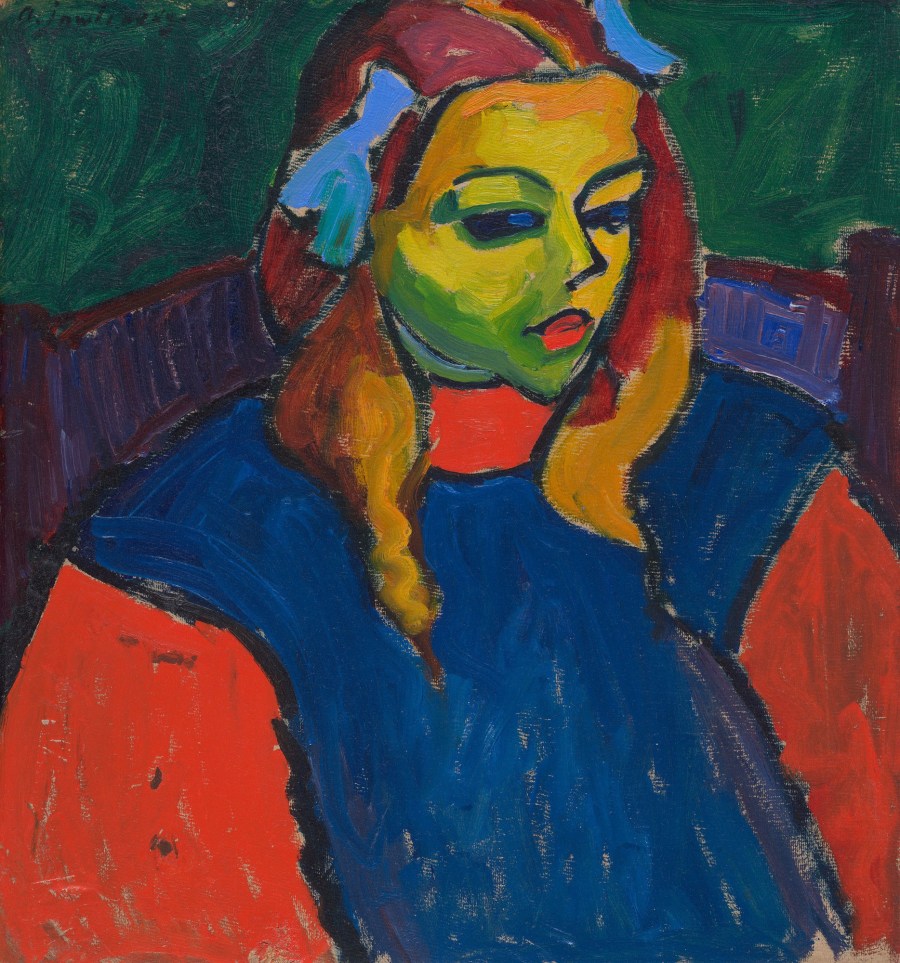
Featured Art: The Girl with the Green Face by Alexei Jawlensky

             Since our arrival at my house had not been signaled by the noise of the
             truck we were able to go around to the side and crush up against the wall,
             kissing and loving. I had always thought that our eventual union would
             have some sort of special pause before it, a ceremonial beginning, like a
             curtain going up on the last act of a play. But there was nothing of the
             kind. By the time I realized he was really going ahead with it I wanted
             to lie down on the ground, I wanted to get rid of my panties which were
             around my feet, I wanted to take off the belt of my dress because he was
             pressing the buckle painfully into my stomach. However there was no
             time. I pushed my legs as far apart as I could with those pants tangling
             my feet and heaved myself up against the house wall trying to keep my
             balance. Unlike our previous intimacies, this required effort and attention.
             It also hurt me, though his fingers had stretched me before this time.
             With everything else, I had to hold his pants up, afraid that the white
             gleam of his buttocks might give us away, to anybody passing on the
             street. I developed an unbearable pain in the arches of my feet. Just when I
             thought I would have to ask him to stop, wait, at least till I put my heels to
             the ground for a second, he groaned and pushed violently and collapsed
             against me, his heart pounding. I was not balanced to receive his weight
             and we both crashed down, coming unstuck somehow, into the peony
             border. I put my hand to my wet leg and it came away dark. Blood. When
             I saw the blood the glory of the whole episode became clear to me.
                                         —Alice Munro, Lives of Girls and Women

Read More

Last Night Ferguson’s Caught Fire

By. Laura Read


In the paper you can see the red booths

turned on their sides, their stuffing

leaking out. The fire spread next door

to the Milk Bottle, which is shaped like one

so you think of the bottles that clinked

on the porch in the first blue light

of morning, at the end of milkmen,

at the beginning of your life.

I went there once with a boy too sweet

for desire, after the Ferris Wheel

and The Octopus and trying not

to throw up on the grass and trying

to be sweet too, the kind of girl

you want to win a stuffed bear for,

one of the big ones that she’ll have trouble

carrying, so you keep handing

the skinny man your dollars and his eyes

glint and you wonder what he’s thinking

when he folds them in his pocket,

where he’s going when he gets off,

not the Milk Bottle for scoops of vanilla

in small glass bowls. His heart is a book

of matches, his mind clear as the sky

in the morning when it’s covered its stars

with light. In the winter, he’ll hang

a ragged coat from his collarbone.

He’ll think only of this year, this cup

of coffee, as he sits alone in his red booth.

If he walks along a bridge,

he might jump. And the river will feel

cold at first but then like kindness.

Last night a boy named Travis

killed himself

like young people sometimes do.

He told people he would do it.

They tried to stop him.

Now he’ll have a full page in the yearbook,

his senior picture where he’s wearing

his dark blue jeans and sweater vest,

leaned up against the trunk of a tree.

I wonder if he felt the bark

pressed against him

when he had to keep staring into the lens,

his cheeks taut from trying.

I wonder if he thought about the tree,

how could it keep standing there

without speaking,

storing all those years in its core.


Laura Read has published poems in a variety of journals, most recently in Rattle, Mississippi Review, and Bellingham Review. Her chapbook, The Chewbacca on Hollywood Boulevard Reminds Me of You, was the 2010 winner of the Floating Bridge Chapbook Award, and her collection, Instructions for My Mother’s Funeral, was the 2011 winner of the AWP Donald Hall Prize for Poetry and will be published this fall by the University of Pittsburgh Press.

Originally appeared in NOR 12.
On a passage from F. Scott Fitzgerald’s The Great Gatsby

By Ralph Lombreglia

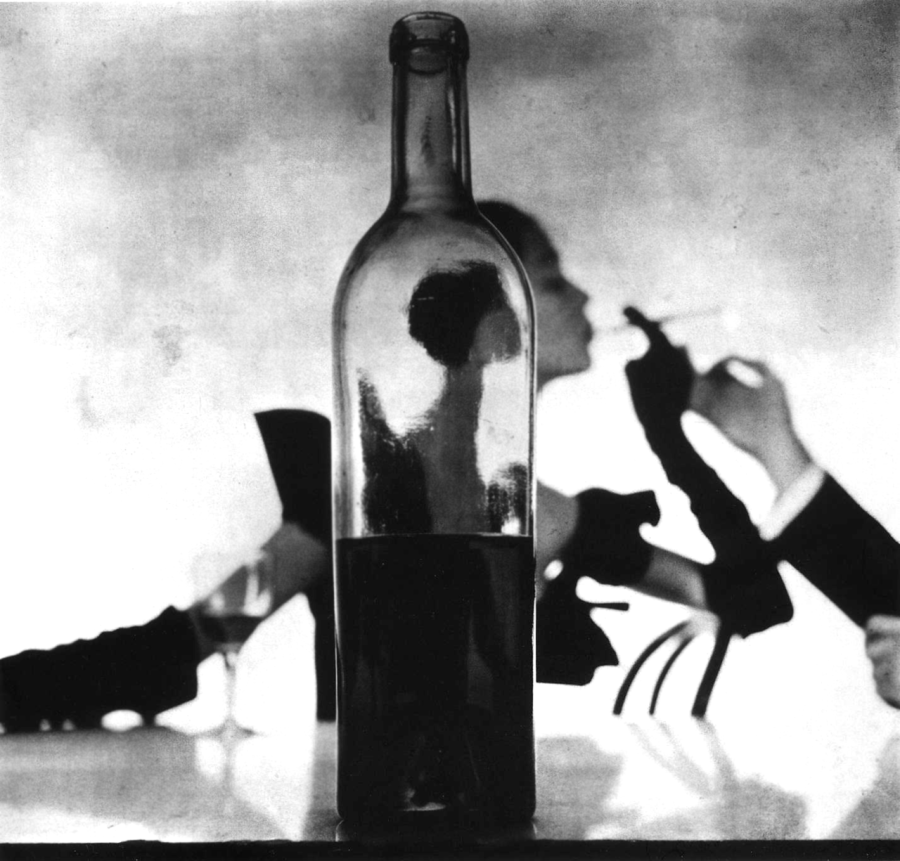
Featured Art: Man Lighting a Girl’s Cigarette by Irving Penn

                [Tom Buchanan] “…Daisy loved me when she married me and she
        loves me now.”

                “No,” said Gatsby, shaking his head.

                “She does, though. The trouble is that sometimes she gets foolish
        ideas in her head and doesn’t know what she’s doing.” He nodded sagely.
        “And what’s more I love Daisy too. Once in a while I go off on a spree
        and make a fool of myself, but I always come back, and in my heart I love
        her all the time.”


                “You’re revolting,” said Daisy. She turned to me, and her voice,
        dropping an octave lower, filled the room with thrilling scorn: “Do you
        know why we left Chicago? I’m surprised that they didn’t treat you to the
        story of that little spree.”

                Gatsby walked over and stood beside her.

                “Daisy, that’s all over now,” he said earnestly. “It doesn’t matter
        any more. Just tell him the truth—that you never loved him—and it’s all
        wiped out forever.”

                She looked at him blindly. “Why—how could I love him—possibly?”

                “You never loved him.”

                She hesitated. Her eyes fell on Jordan and me with a sort of appeal,
        as though she realized at last what she was doing—and as though she had
        never, all along, intended doing anything at all. But it was done now. It
        was too late.

                “I never loved him,” she said, with perceptible reluctance.

                “Not at Kapiolani?” demanded Tom suddenly.

                “No.”

                From the ballroom beneath, muffled and suffocating chords were
        drifting up on hot waves of air.

                “Not that day I carried you down from the Punch Bowl to keep your
        shoes dry?” There was a husky tenderness in his tone . . . . “Daisy?”

                “Please don’t.” Her voice was cold, but the rancor was gone from
        it. “There, Jay,” she said—but her hand as she tried to light a cigarette
        was trembling. Suddenly she threw the cigarette and the burning match
        on the carpet.

                “Oh, you want too much!” she cried to Gatsby. “I love you now—
        isn’t that enough? I can’t help what’s past.” She began to sob helplessly. “I
        did love him once—but I loved you too.”

                Gatsby’s eyes opened and closed.

                “You loved me too?” he repeated.

—F. Scott Fitzgerald, The Great Gatsby

Read More