Birds in Cemeteries

by George Kalogeris

It must be the shade that draws them. Or else the grass.
And it seems they always alight away from their flocks,

Alone. It’s so quiet here you can’t help but hear
Their talons clink as they hop from headstone to headstone.

Their sharp, inquisitive beaks cast quizzical glances.
The lawn is mown. The gate is always open.

The names engraved on the stones, and the uplifting words
Below the names, are lapidary as ever.

But almost never even a chirp from the birds,
Let alone a wild shriek, as they perch on a tomb.

And then they fly away, looking as if
They couldn’t remember why it was they came—

But were doing what our souls are supposed to do
On the day we die, if the birds could read the words.


Originally appeared in NOR 11

New Ohio Review Issue 11 (Originally printed Spring 2012)
Newohioreview.org is archiving previous editions as they originally appeared. We are pairing the pieces with curated art work, as well as select audio recordings. In collaboration with our past contributors, we are happy to (re)-present this outstanding work.

Issue 11 compiled by Peter Russ.

Unicom

By Tony Hoagland

Featured Image: Deer from Momoyogusa-Flowers of a Hundred Generations (1909) by Kamisaka Sekka

Set in the large public hallway and various spaces of a courtroom building. Drinking fountain, a pay phone on the wall, various benches where people eat their lunch or sit, and a few nooks and crannies where they stand and speak. The play is a sequence of monologues from alternate sides of the stage. All the speakers are connected to the trial, but nothing of the trial itself is ever shown.

PROLOGUE

(professional woman wearing glasses, reading from a clipboard, her voice bu- reaucratic and oracular)

Unicom officials denied knowledge of the events of June ’95. Somehow an entire forest had disappeared.

2nd PROLOGUE

Those erasures were committed, they said, by an irresponsible subsidiary

who didn’t know the right way to make a jungle disappear.

Read More

Old Love Poems

By Denise Duhamel

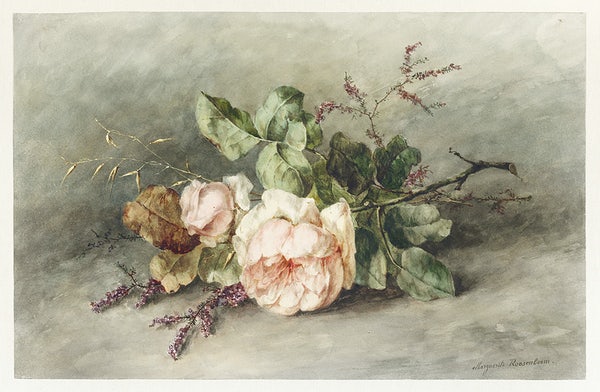
Featured Image: “Rozen” by Margaretha Roosenboom

I can burn the pictures, but not the poems
since I published them in books, which are on shelves
in libraries and in people’s homes. Once my cousin told me
not to write anything down because the words would be there forever
to remind me of the fool I once was. My cousin
was the little dog on the Tarot card, barking at the Fool’s heels
as I headed right toward the cliff.
                                                             When James Taylor and Carly Simon
broke up, I was shocked. Taylor’s drug use or not,
couldn’t they work it out? I was in college
and, though I didn’t really believe in marriage,
I believed in them. How could they part
having written those love songs? And how could they go on
singing those love songs after the divorce?
                                                             But now, I know.
After time, when they reached for those notes,
there wasn’t really a beloved there anymore,
just a strand of hair each left behind
on the other’s scarf or pillow, a cologne trigger that transcended
into something more real than they were,
the lovers themselves ephemeral muses.
                                                             It’s still hard
for me to accept the notion of love outliving the lovers—
a notion so romantic, it’s unromantic. Hard to accept
that those big lumps of affection
would find alternate places to stick,
that Simon and Taylor would be swept away and marry
others. That need is not so much a deficit
                                                             as an asset,
like a wallet that keeps manufacturing its own dollar bills even after it’s been robbed of everything.
Or to say it another way: the plant that will bloom
despite being uprooted. The new seedling that will pop up.
It’s hard to believe when you are down to your last penny,
when the soil is dry and rocky and full of weeds,
                                                             when your love
is freeze-dried into a metallic pouch and you are full of snarky rage.
You look back at a love poem you wrote and ask:
did I really feel this way? Even if you no longer remember tenderness,
even if the verse was simply artifice, your idea of love, a subspecies
you made up to tag and define that one poor sap, you read the poem
again, grateful, holding the words in your hands like a bunch of flowers.


Read More

Clear and Cold

By Lisa Ampleman

Featured Image: “The Red Kerchief” by Claude Monet

Though already setting,
the sun in late afternoon

in late December revels
in its power—how it,

though meager, can set
red-brick façades ablaze,

glorify an oak’s moss—
the only green thing—

and later sear far clouds
deep purple, more sky

exposed because the trees
are bare. Meager, too,

what you could give
me, what you called fondness—

but I let it dazzle me for a time.
And, though the room

is darkening, the last light
brightens the metallic edge

of the window screen
before it goes.


Read More

The Muse of Work

By Ellen Bass

Featured Image: “Portrait of Mrs Marie Jeanette de Lange” (1900) by Jan Toorop

If I could choose my muse,
she’d have red hair, short, spikey,
and green cateye glasses with rhinestones at the tips.
She’d wear a sleeveless white blouse, ruffled
over shallow scallop-shell breasts.
Can you see how young she is?
I think she’s the girl Sappho loved,
the one with violets in her lap.
When she opens the door, a flurry of spring,
apple blossoms and plum, sweeps in.
But I’ve been assigned the Muse of Work.
It turns out she’s a dead ringer for my mother
as she scrambles the eggs, sips black coffee,
a Marlboro burning in a cut-glass ashtray.
Then she opens the store. The wooden shelves shine
with amber whiskeys and clear vodkas,
bruise-dark wine rising in the slender necks.

Read More

What You Find, If You Find It

By Jeff P. Jones

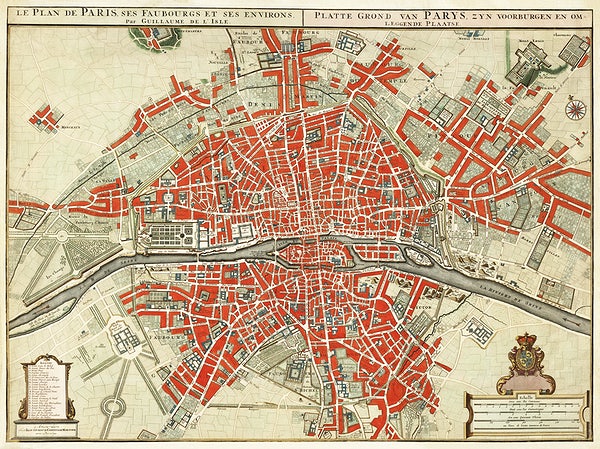
Featured Image: “Paris Map in Dutch” by Guillaume Delisle

As a letter carrier, she delivered non-urgent messages to people’s houses. Her work brought her past gates, across yards, onto porches, into foyers. She never looked in windows or rang doorbells but on request would hand mail to a resident encountered outside as she exchanged small talk. She would then move on, readying the next house’s letters and advertisements, imagining fingertips releasing sealed flaps, creases tearing, messages sliding into waiting hands.

Each week her teenaged son caused some new havoc. One night he stole her car and was stopped by police forty miles away, coursing a college town’s streets with three friends and a bottle of vodka. The four boys cleaned her gutters the next weekend as she grilled hamburgers and made jokes about her prematurely gray hair.

She sipped her morning coffee and pretended to read the paper as she watched him eat toast.

In his last year of high school he had to transfer schools because of attendance problems. He brought home a stray mutt that he forgot to feed. He began to take phone calls from a man with a comically gravelly voice named Staff Sergeant Thigpen. The son carried the receiver into his room and shut the door. Posters of grimfaced warriors appeared on his walls. He exterminated the squirrels and birds from the backyard with an air rifle. He rarely answered her in a full sentence. In the summer she drove him to the airport. He wore a new pair of running shoes and carried no suitcase.

Read More

Dispatches From the Interior

By Geoffrey Brock

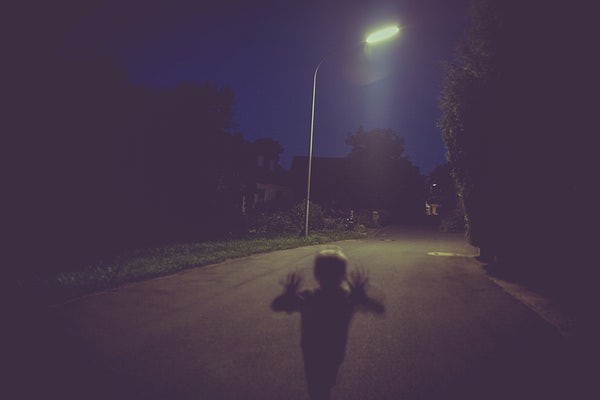
Featured Image: “A Lone Child Walking Down the Street at Night“, Unknown Artist

Like the one where you stumble along happily drunk
after closing a bar and reach your car only to find it
surrounded by militia who take you in to question you
about why you left your son alone in the car so long
and you say I lost track of time though that’s not true
and Can I see him and they refuse and Is he okay and
you’re panicking and thinking What if he died in there
or the one the very next night when you find yourself
atop some posh hotel listening to some poet speaking
and realize you haven’t seen your son since morning
when you let him go down to the lobby alone to play
despite the warnings you now recall about the natives
and you race for the elevator but there is no elevator
and so you find the stairs and descend floor by floor
and each landing is a shabby apartment living room
and though you can sometimes tell someone is home
water running for instance or light under a shut door
you never see anyone or gain any real insight into this
country of ancient dearth and modern resentment
what country is this anyway? and after the gauntlet of
these empty private foreign lives you emerge at last
into a brightly lit and darkly paneled colonial lobby
and scramble frantic now through the patrician crowd
looking for help but when you ask a giant suited man
if he speaks English he replies in the plummiest nasals
I don’t just speak it I am it and merely cocks one brow
about your son so you race outside where a boy squats
alone in the penumbra by a bush and you tilt his face
to the light but he isn’t yours too small and dark and
you keep looking and see others and scream one name
and then oh god you see his hunched familiar shape
rise out of the pile of dead leaves he had hidden under
and stumble toward you arms extended the pajamas
he was wearing this morning now tattered and filthy
and when you scoop him up you discover obscenities
and anti-American slogans scrawled in black marker
on his face and blood or something caking his nostrils
and he doesn’t speak or cry and nothing shines forth
from those eyes and you carry him cradle him through
this endless third-world night trying to comfort him
but knowing you will never be able to comfort him but
cooing You’re safe now Daddy’s here or the one where


Read More

Strapless

By Z.Z. Boone

Featured Image: “Breton Girls Dancing, Pont-Aven” (1888) by Paul Gauguin

I don’t know what happened, but last night I just lost it. Just fucking lost it.

It’s eleven o’clock at night, I’ve been doing inventory in my store all week, I’ve barely made a dime, and this is when my fourteen-year-old daughter decides it’s a good time for defiance.

“You have no idea what it’s like!” she screams.

I’m lying on my still-made bed, full dressed except for my shoes, and she’s standing with a hand on each side of the doorway as if to prevent my escape. I’m not going anywhere. I’m just trying to hear the TV, trying to get the news about how screwed up the rest of the world is, but I can’t make out a word.

Read More

Zigzag. Yeah.

By Scott Kreeger

Featured Image: “Flowers on a Footpath from Bijutsu Sekai” by Watanabe Seitei

Zigzag down the stairs. Yeah. Zigzag to the trash can and toss the bag in. Yeah.

Zigzag through the gate and into the pool area. Yeah. Zigzag between the chaise lounges. Yeah. Zigzag down the steps and into the pool. Yeah.

Zigzag too cold, too cold. Yeah. Zigzag out of the pool. Yeah.

Zigzag out the gate. Yeah. Zigzag onto the bike. Yeah. Zigzag past apart- ments 4, 3, 2, 1, and into the alley. Yeah. Zigzag down the alley and out to the street. Yeah. Zigzag wait for traffic. Yeah.

Zigzag across the street. Yeah. Zigzag off the bike and into the store. Yeah. Zigzag past the smiley man behind the counter. Yeah. Zigzag smile back, wave, say hello. Yeah.

Zigzag to the candy. Yeah. Zigzag to the Zagnut bars. Yeah. Zigzag pick out a Zagnut. Yeah. Zigzag Zagnut. Yeah.

Zigzag say that again three times fast. Yeah. Zigzag Zagnut zigzag Zagnut zigzag Zagnut. Yeah.

Read More

Throw It Up

By Suzanne Richardson

Featured Image: “The Fallen Angel Spreads His Black Wings” by Odilon Redon

Heroin made Tristan’s breath sweet like mangoes. When we kissed it felt like licking the inside of a kiwi: fragrant, indulgent, the tangy saccharine rolling around my tongue. I didn’t know why he tasted like that, but I liked it. At the time I didn’t know I was sleeping with a heroin addict. He would sit up in bed and scratch his arms and face for hours. I would call his name, shake him even, but he wouldn’t answer. In all four years I’d slept with him, he had never acted that way before. I would put on a robe and pace the apartment, or sit on the couch, and think about my family. My brother. My parents. I had never felt this scared with them despite our differences. Sometimes I would grab fruits or vegetables from the fridge and nervously practice peeling, or dicing until dawn. I think I did this out of some compulsion to better myself even in the darkest of hours. My mother could always chop and dice things perfectly. I taught myself to peel mangoes in one motion so the peel piled into one long strand in the sink drain. I couldn’t think of anything that would make him act that way. One night, lying on the couch, staring at the ceiling, I recalled a conversation I’d had at a party with an EMT.

Read More

Dhaka Nocturne

By Tarfia Faizullah

Featured Image: “Tête-á-Tête” by Edvard Munch

I admit that when the falling hour
begins to husk the sky free of its
saffroning light, I reach for anyone

willing to wrap his good arm tight
around me for as long as the ribboned
darkness allows. Who wants, after all

to be seen too clearly? Still, the heart
trusts, climbs back down the old
mango tree outside the bar to marvel

at the gymnast tornadoing forward,
electrifying the air with her soaring
body on the TV, even as the friend

beside me asked, But how could you
sleep in the same room as your dead
sister’s things? Once, a man I loved

told me I was stunning. It terrified
me, the way grief still can, rising
above us in the bar, seeking its own

body. I told her the body, exhausted,
does what it must, as it does now,
suturing itself to his, saying, I’ll be

yours forever, with all its secretive
creases turning to steam in this heat
flustered city, wet fever of the nape

of my neck chiffoning beneath his
lips galaxying across it. I could have
told her about the shelves of porcelain-

cheeked dolls tarnished lavender by
falling light, the ebony abundance
of my mother’s hair varnished blue

as she slid my sister’s child clothes off
the old wooden hangers then back on—
but what else is mine, if not all this

strange beauty? Look, I say to him,
running my own hands down my own
body: night-rinsed anaglyph of muscle

and bone holding against everything
yet to plunder this or any twilight’s
nameless and numinous unfurling.


Read More

Overflow

By David Gullette

Featured Image: “Proposed Broadway Underground Railway” by Unknown Artist

The first of February 1855
Thoreau skates up the river:
it swells beneath its crust
making a musical cracking,
running like chain lightning of sound
athwart my course.


The rising of the mass
lifts the ice in one place
but drops it in another
the low patch filling with water
to form quite a lake there where he has passed
and he imagines

another skater two hours later
his successor who with wonder and alarm
will see Henry’s twin tracks
disappear in one side of it
and come out the other.

Sometimes I glide across

the brittle glaze of sleep
and am above and in and beneath
the dark currents
and wonder at dawn how did I drown
only to glance back and see my tracks
coming up and out and going on.


Read More

Birds In Cemeteries

By George Kalogeris

Featured Image: “Two Cockatoo and Plum Blossom” by Ohara Koson

It must be the shade that draws them. Or else the grass.
And it seems they always alight away from their flocks,

Alone. It’s so quiet here you can’t help but hear
Their talons clink as they hop from headstone to headstone.

Their sharp, inquisitive beaks cast quizzical glances.
The lawn is mown. The gate is always open.

The names engraved on the stones, and the uplifting words
Below the names, are lapidary as ever.

But almost never even a chirp from the birds,
Let alone a wild shriek, as they perch on a tomb.

And then they fly away, looking as if
They couldn’t remember why it was they came—

But were doing what our souls are supposed to do
On the day we die, if the birds could read the words.


Read More

Pelicans

By Robert Cording

Featured Image: “Australian Pelican” by Elizabeth Gould

Last evening, another sunset party:
drinks, laughs, ironies, hidden desires.
All of us tanned and glowing, we exchanged
jokes and gossip, fresh and stale, self-conscious
that something larger was missing
when we turned to best watches, shoes, cigars.

So much time is lost trying to agitate
the envies of others and monitor one’s own—
the thought that crossed my mind as I watched
six pelicans rise and fall with the water’s flux.
The winds had quieted, and just before the sun plunged
below the sea, the pelicans rose in a wind-hung line

and flew off, silent as a council of gods
in the pinkish sky. Palm trees scratched
their cuneiform shadows on the sand.
I wanted to say something about the pelicans,
who I knew, for no known reason, choose to live
their lives as near total mutes, as if they’d decided

simply to be done with the fecklessness of speaking,
but I kept quiet, the light draining from the sky,
the others going inside. I felt like a child in hiding,
alone on the deck, made fearful and alive
by the darkened Gulf, the stretch of beach
now entirely empty, the palm trees,

the sliver of moon rising directly opposite
of where the sun had set. If I had been called
to come in, I would have kept silent.


Read More

Crow

By William Kelley Woolfitt

I’ve been told Crow’s story so many times I remember it better than my own memories. It was my bedtime, naptime, and story-time story. I think my parents told it to each other too, in whispers, in each other’s arms, striped with moonlight coming in through the blinds, too tired to say anything new.

There was a storm the night my parents drove me home from the hospital. I was a few hours old. Mother says that the rain was too fast for the windshield wipers, that Father pulled over three times. Father says that Mother sat in the backseat and held me the whole way. When we got home, we had to wait almost an hour for the rain to die down. Father found some jazz on the radio, climbed into the back to be with Mother and me. That was the first time he held me. Mother fell asleep, and dreamed she was a passenger in a boat.

Wind toppled the elm in our front yard, though later on some neighbors claimed it had been hit by lightning. It just missed our house. One branch scratched our bedroom window. Crows spent the night on our porch, their nest in the elm ruined.

Mrs. Yamato across the street saw the crows on our porch swing, screamed and dropped her chopsticks. An omen of death, she thought. She came running over with a broom. All the crows flew away, except a baby. Father put the baby crow in a shoebox and thanked Mrs. Yamato for her concern. Mother went into the yard, walked around the fallen elm and its jagged stump, poked into the fallen nests and found shiny things: bottle caps, bits of tinfoil, Father’s screwdriver, her own gold pendant necklace.

Read More

Yet

By Eric Torgersen

Featured Image: “Study for “Le Bain”: Two Women and a Child in a Boat” by Mary Cassatt

You’ve got to act, and soon, but you don’t dare yet.
There’s one big load you don’t think you can bear yet.

You chose to dive this deep; it’s not for me
to tell you why you can’t come up for air yet.

You had big plans. You’re running out of time.
There’s no excuse to contemplate despair yet.

All that time and trouble spent on you.
For all the rest, you don’t have much to spare yet.

The world should find some meaning in your work?
You haven’t shown us why we ought to care yet.

Don’t give me that I-don’t-get-it look.
Sixty-five, and still not self-aware yet.

You might just want to start to pack your bags.
You may not have enough to pay the fare yet,

but that doesn’t mean the taxi’s not on its way.
Look out the window. No, it isn’t there. Yet.

Call it what you will, but thank something, Eric.
There’s one stiff suit you haven’t had to wear yet.


Read More

Awake

By Richard Schiffman

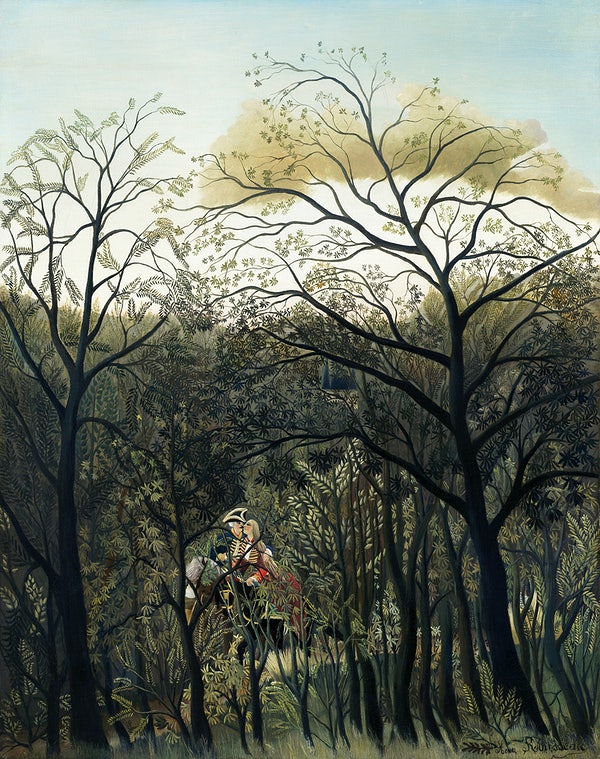
Featured Image: “Rendezvous in the Forest” By Henri Rousseau

Already morning ignites
the high wicks of the pine.
A few birds trilling,
don’t ask me their names,

or my own as I stumble
out of bed on sea legs,
rub my eyes until stars appear
like ships still foundering

on the reef of night.
But when I open them again, day
is fully rigged and sailing off
with me on it.


Read More

Unfinished

By Richard Schiffman

Featured Image: “Houses of Parliament, London” by Claude Monet

“It is not known why they were not finished,”
the curator noted of two hundred later canvases.
Turner’s work becoming increasingly unhinged—
cyclonic sunbursts, hills skipping like rams, crepuscular
curtains, reeling cliffs and brimstoned cities.

“I did not paint it to be understood.”
Was he mad, as some critics alleged?
Were these “mere freaks of chromomania,”
posters of a private apocalypse, flotsam
and jetsam from the shipwreck of a soul?

“I only wish I had any color to make them blacker.”
A glutton for whirlwinds and monster blizzards,
snow funnels and conflagrations. The lakes abysmal,
the seascapes either black or blinding—
a roller coaster few Victorians could ride.

“Indistinctness is my forte.”
Prophet for a world unravelling at the speed of light.
With hands as “fast as lightning,” when he sketched,
organs of creation, and equally destruction,
all churned together in the cement mixer of his palette.

“It is not known why they were not finished.”
Yet surely he knew that finishing would be a lie
in a world where the waxing / waning moon
is unfinished, the river ends, but does not finish,
nor the bronking sea, nor the calving sea-ice,
nor life itself, which only knows—
again and again and again—how
to begin.


Read More

Take Your Trash and Make it Fly

By Devin Murphy

Featured Image: “Shoes” by Vincent Van Gogh

One night a month, people in my hometown outside of Buffalo, New York, put their large trash items on the curb for the sanitation department to pick up the next morning. Our neighbors would drag out old Whirlpool appliances, ironing boards, and whatever else the weekly garbage route couldn’t take. On those evenings, my Dutch immigrant mother loaded me into her rusted-over white 1970 Chevy Caprice station wagon with its vinyl side panel, and we’d slowly cruise the streets picking through the refuse.

From where I was slouching low in the passenger’s seat I’d get this fishbowl feeling as she slowed down and parked in front of those houses. Each home gave off a sense of neatness and order that seeped into their lawns. It always made me feel as if strangers were looking out their windows at us—or worse, people we knew. The idea of being watched made me want to pull my lower lip over my head and swallow myself whole. But my mother was unfazed as she picked discarded rabbit-ear antennas, steel rods, sheet metal, chicken wire, aluminum siding, rebar, large bolts, coffee cans, aluminum fruit cans, and every scrap of metal or iron and tossed them in the back of the Caprice.

She walked from lawn to lawn on the sidewalk while I inched the car along beside her. I nudged the gas pedal and braked with my tiptoes. I wasn’t big enough to see over the steering column, so I navigated through the line-of-sight between the dashboard and the top of the enormous steering wheel. When we had to cross an intersection, she’d get back in, drive across, and we’d start down the next block.

Read More

Tauromaquia

By Deborah Casillas

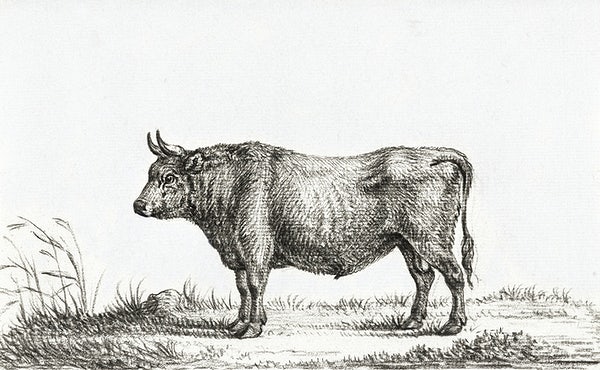
Featured Image: “Standing Bull” by Jean Bernard

The days dragged on, steady ticking of the clock.
My mother’s cancer; surgery, injections, drugs.
Long afternoons I sat in my grandfather’s library
looking at books. Shelves of books about bullfighting—
la lidia, combat; la corrida, the running of the bulls.
Books on Manolete, Belmonte, Joselito,
his copies of The Brave Bulls, Blood and Sand,
Death in the Afternoon. Books aficionados collect,
those fanatic followers of the taurine subculture.
I stacked volumes beside me, looked at pictures
of the black bulls, studied their deadly horns,
the ritual sacrifice. Here were portraits of the famous
matadors, their lives venerated like the lives of saints.

Read More

The Swans

By Anamyn Turowski

Featured Image: “Woman with a Butterfly at a Pond with Two Swans” by Jan Toorop

She bought the swans because of the empty pond. Lonely; that’s why, really. She saw two swans in profile in a poultry magazine she’d picked up at the dentist’s. She paid $1500 for a pair. As if swans could change anything. Her husband says she needs birds like she needs a hole in her head. A lobotomy, she thinks, that’s what I need. Every time she stares out the window toward the pond, the empty water makes her cry. She charged the pair on a new credit card that came in the mail that day. What’s the interest on that card? You never read the fine print.

She isn’t the sexiest wife. She’s aware of this. Since the operation he hasn’t touched her. That was three years ago. They’ve the house and the dog and their two grown children who call on birthdays, Christmas.

Read More

Standing on the Desk

By Donna L. Emerson

I am twelve years old in Mr. Ody’s art class and he’s teaching me to use an
eraser on my watercolor of rain and sun. To make the sun stream like spotlights
through the clouds. He moves the eraser by placing his hand over mine. He rests
his hand on my wrist a little longer.

I start to back away.

He asks me to be a model for the class. He lets me stand on his desk. He says,
Don’t take your eyes off her. Let your pencil try to draw her without ever stopping
your looking and drawing. I’m glad I wore my new turquoise skirt and
flowered blouse. Mr. Ody pulls his chair out to see better.

While Danny Sessa makes jokes, I can feel Mr. Ody’s eyes. He’s staring. I turn
red, start to joke back and Mr. Ody says, Just stand still and be quiet.

This was the beginning of the first time.


Read More

The Jaguars of Southtown

By Amos Jasper Wright IV

Featured Image: “The Repast of the Lion” by Henri Rousseau

Forty days passed without landing a sale. For a while, I felt sorry for myself, and then self-pity shifted gears and boiled into a rage that curdled everything   I touched. The BP spill down in the Gulf had put a damper on auto sales. The economy in general was in shambles, but this town hadn’t prospered much since the Red Mountain cut. Meanwhile, we’re dumping good, hard-earned USD into foreign countries and our Harvard-educated Kenyan president was doing all  of jackshit about it. Instead of buying new cars, people just drive them longer. Used to I could sell forty cars in a month. You don’t need a Harvard degree to do that.

When DOT took a slice out of Red Mountain, most of downtown Birmingham reverted to a giant used-car lot, a smooth asphalted prairie where trash and news blew before the winds. I managed a downtown lot on 20th Street. My office was in a portable trailer stacked on cinder blocks. Long strands of razor wire outlined the perimeter of the lot like a concentration camp. The warehouse next door had probably been abandoned since I got my driver’s license. Sale banners flapped and whipped in the hot winds and the flat air in that metal can was tight as my collar. We parked cars on the sidewalk. On Saturdays, when the urban prairieland was empty and dead, looking more and more like a southern Detroit, instead of getting hung up on by irate voices, I played lonely games of golf, as blue and red klaxons dopplered by.

Read More

The Open Door

By. Alan Shapiro

For Peggy Rabb

What did it mean when she said at last, “All day I

have been running to the open door”—

What door was it she ran to, opening to what?

From what? And did she reach it and get through?


No one was there with her, it seems, inside or out, no

one she mentioned, no solving light or phantoms

calling in parental voices, urging her

to come, child, run; and that she ran “all day”—


was that the joy of being able now

to run in some way none of us could see, a

bodiless release imagining a body

if only to feel how free of it she was?


Or was it desperate running, running to

get out of the nightmare room that was all day

uncrossable, the door like a horizon

a stride away with every stride she took?


And if she reached it, running, what did it feel like

then, that moment, being nothing but

the motion of herself without herself,

over that threshold into nothing else?


Alan Shapiro will publish two books in 2012: Broadway Baby, a novel from Algonquin Books, and Night of the Republic, a book of poems, from Houghton Mifflin Harcourt.

Originally appeared in NOR 11.

Trust

By Liz Kingsley

Featured Image: “Pattern from L’ornoment Polychrome” by Albert Racinet

First he slept with someone else and later while he was busy sleeping, she slept
with someone else. No, before he slept with someone else, she slept with the
lawyer across the street who gave good oral argument. She did not tell him
about the lawyer. Their time together was privileged and she knew her rights.
While she was with the lawyer, he slept with the decorator. When she found out
about the decorator, she confronted him and said I trust that you know about
the lawyer. He said he in fact did not know about the lawyer, but that now he
no longer trusted her. She said that she had stopped trusting him after a flirty
consultation they had with the decorator about their living room, which is why
she slept with the lawyer in the first place. He said she had no reason not to
trust him, but that he sensed she didn’t, so he figured he might as well go ahead
and sleep with the decorator. She said that’s exactly why she can’t trust him
anymore. He slept with the decorator on the outgoing living room sofa. She
said the lawyer has a trust account, into which she deposited the money they
were planning to pay the decorator for the incoming living room sofa because
she didn’t trust him to go through with the renovation in light of their domestic
destruction.


Read More

The Farm

By Spencer Wise

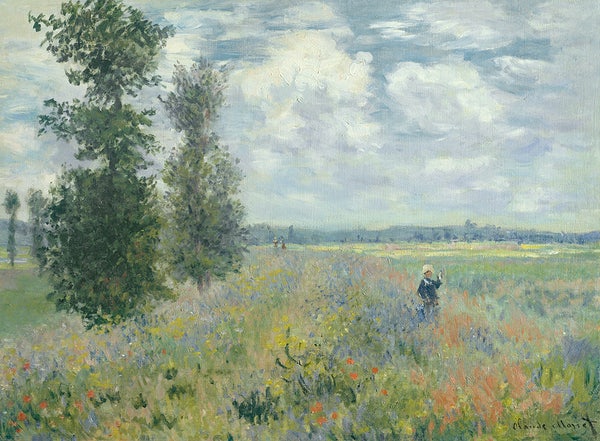
Featured Image: “Poppy Fields near Argenteuil” by Claude Monet

We’re on our way to meet Charlene’s family for the first time, listening to Townes Van Zandt in the car, and Charlene’s saying, “‘Pancho and Lefty’ is me and my Daddy’s song,” when I suddenly smell fire. All along Highway 33, the smell of wood burning. She laughs. “Don’t laugh,” I say, “might be a forest fire.” She says, “First time south of the Mason-Dixon, and now you’re Woodsy Owl.”

“I feel vigilant,” I tell her, gripping the wheel tight with both hands, as we come over a hill and, on the horizon, points of orange flames burst from the tree line. “What the hell is that?” I say. “Those are laurel oaks. Those are pitch pines,” she says. “Not the damn trees,” I say. “The fire. We got to call your parents, tell them it’s time to evacuate. We got to get the hell out of Georgia.” She puts one hand on my knee and points to the parallel rows in the woods alongside the road, explains how the fire is burning in even rows, how it’s controlled. “Doesn’t look controlled,” I tell her. “Looks way the hell out of control.” Nacreous black smoke rises above the pines. She says her parents live about ten miles from here. “Correction,” I say. “Used to live. It’s all burned. You can’t go home again. Home is a marshmellow.” “Mallow,” she says. “If you’re talking about the spongy confection that you northerners eat two times a year when you go camping—that’s a marshmallow.”

Read More

When People Watch You

By Nathan Anderson

Featured Image: “Tingletangle” by Edvard Munch

I’m not like those crazy people.
The people that watch me
are real. I can see them.

Never mind the mailman. That blue coat
nearly swallows him. You never know
what’s under there—and he’s, well,
rather strange looking,

like a boy with a bald spot
bent over thick black shoes
and that bag he cradles

like a smooth gray animal
he does not recognize
is dead. Sometimes I believe

he really is a little boy
and I have to stop myself
from running after him.

Isn’t the mind amazing?
I’d like to know
what he’s doing when he’s not
walking through front lawns

or talking to the man
across the street. I’d like to know
what he’s delivering,
if it will require a deep breath

and more wine
than I’m willing to drink. If it’s even worth

the paper cut I’ll get
opening the envelope. And what about
that man across the street?

Read More

Stupid Sandwich

By Nathan Anderson

Featured Image: “The Grocer’s Encyclopedia” by an unknown artist

So yeah, we all have these moments that suck
because what they mean
is like a mystery, like the Mariners last year
good a team as any, traded
what’s-his-name, the fat one, for that Puerto Rican dude
with a wicked right arm
and didn’t even make the playoffs.
Anyway, I can see you’re a man of the world like me,
standing here I don’t know how long and still
no damn bus. But like I was saying
we all have these moments and last week
there I was after work, making a stupid sandwich,
the kind of stupid-ass food people like me always make
when I can’t figure out what I’m feeling
and I feel like being true to myself
is about the dumbest thing a man can do,
knowing how easy it is for the truth to mess things up.

Read More

Opening the Cottage

By Christina Cook

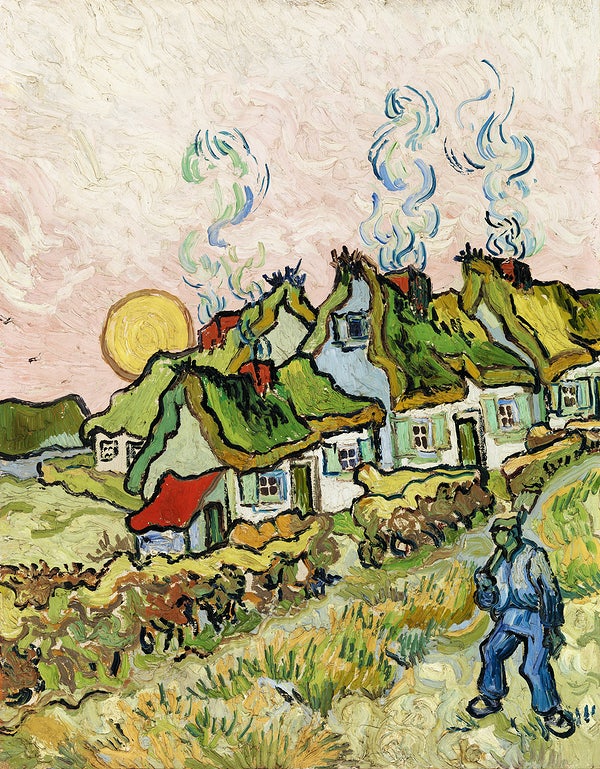
Featured Image: “Houses and Figure” by Vincent Van Gogh

Jays scrap in the maple
while I sit with my absence
of sound, and a bottle
of last summer’s wine.

I should be bleaching
the mouse-scat floor,
scraping their fur
from the spaces

left naked for plumbing.
I should be finishing off
the half-raked woods
or mending the hole

in the porch screen.
Sun’s still striking
the stretch of land
across the cove, where

the Frank-Lloyd-Wright-like
house has nestled in oaks
since my grandfather first
built our cottage.

Read More

Remembered Grace

By Jim Daniels

My mother rolls her walker through the rug
like pushing a dull reel mower through high grass.
She cannot see, so maybe the simile should be sound instead—
like bad jokes from a dull boor. The brittle thread of escape
snapped long ago, sewing kit trashed, needles only and constant
from pain—knee/back/hip. Blurry edges of God rim
her miraged vision. She burns a sandwich on the grill
but not herself—thrill enough to earn a pill. Today
she’s skipping church, and it’s just next door. She calls me
from the kitchen to carry her cup back to her chair—no free
hands. She must watch where she lands when it’s all freefall
and whiffs of Jesus not happy with her. I’m a tourist
with a bad map. She’s a local with time. She waves her hand
as she talks, one graceful thing. She flirts with air.


Read More

Speed of Light

By Mark Irwin

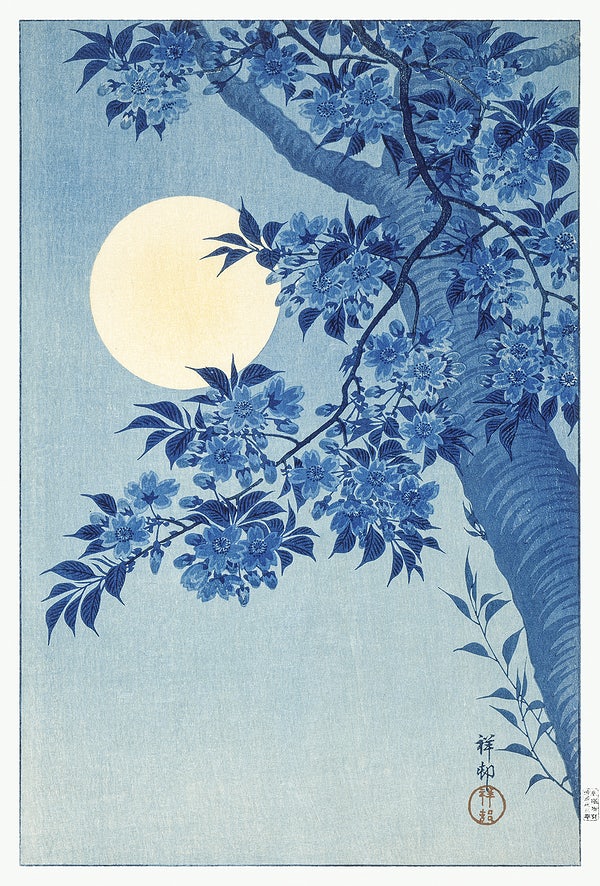
Featured Image: “Blossoming Cherry on a Moonlit Night” by Ohara Koson

Married in Beijing, they had their names carved on
a grain of rice. Mai wore a yellow silk gown. He wore
a black suit. Embraced in the photo turned sideways
they resemble a tiger scrambling through strewn mums.
That evening they ate salted mango and shrimp. He
can still taste that, see the tortoise-shell clip sun-
splintered in her hair. That evening continues, stalled
like the sea-filled drapes in their room. For twenty
years he worked at a lab that accelerated protons. Here
are photographs of their two girls on Lake Michigan,
then in Zermatt, standing before the Matterhorn,
whose moraines, cirques, and ravines resemble those
through two names magnified on a grain of rice, or
of that shadow looming through the CAT scan of her brain.


Read More

Everything Equal

By Joseph Holt

Featured Image: “Vintage European Style Key” by Paul Poiré

NOTE: When “Everything Equal” was posted to the NOR archives in Spring 2021, the author requested to revise and resubmit it to correct some issues of vulgarity and biased gender politics. His revision, titled “Futon Life,” appears below the original.

Three summers ago Ted Dexter flew standby to San Francisco with the vague intention of getting even with his ex-girlfriend. He and this girl, in only a couple months together, had argued, lied, cheated, had proven themselves in every way incompatible. Their final argument initiated with the most mundane of subjects—that he had worn “hideous, unstylish” carpenter jeans to the bars on a Saturday night—and escalated into a blowout that saw them thrown into the Cedar-Riverside streets, stumbling and shouting. At the sound of nearby sirens, Ted beat it back to his apartment and soon passed out drunk on his futon. He slept. The next morning he woke to find that sometime in the night this girl had come and gathered her belongings, most notably the blanket with which he had been covering himself. Sitting at the edge of his futon, slowly regaining his wits, he realized she had also gathered many of his belongings—his PlayStation, his baseball cards, his toaster, even the few bottles of Grain Belt from his crisper drawer. Also gone: his car. It would turn up several days later in Fargo, empty of gas and stripped of its stereo.

Read More

Should I Take it as a Sign

By Sue D. Burton

Featured Image: “Ancient of Days Setting a Compass to the Earth” by William Blake

that the Don’t Bore God note taped
to my desk just fell to the floor,
that I dreamt you gave me
a sandwich wrapped in a glove
& I ate the glove,
that I was mortified even
in my dream?
That the pony I always wanted
I never got. Piebald.
I would’ve called her Cowboy.
Was that the problem?
That I feel you sweating in the night
& I’m afraid.
That I’m afraid to tell you
in the morning.
That my friend Lewis says
my name in Mandarin
is shuōbùtōng, which
means talk no communicate.
That Samuel Beckett
& I have the same initials.
(Let’s go. We can’t. Why not?)
Both born April 13.
That my fortune cookie says, Bite me.
That I hear you crying in the night.
That a shaman in the Colombian rain forest
told my friend Megan,
I’ve been waiting for you.
That once a psychic told me
she saw piles of paper under my desk.
That once a guy at a bar said,
Don’t I know you from someplace?
That years after the funeral
my father says he misses me,
that I still see him
walking down the street.
His back always to me.
That the famous Lama said to Lar,
What took you so long?
God, I don’t want to bore.
Just give me some kind of sign.


Read More

The Suggestion Box

By Billy Collins

Featured Image: “Cupid Inspiring Plants with Love from The Temple of Flora” by Robert John Thornton

It all began fairly early in the day
at the coffee shop as it turned out
when the usual waitress said
I’ll bet you’re going to write a poem about this
after she had knocked a cup of coffee into my lap.

Then later in the morning I was told
by a student that I should write a poem
about the fire drill that was going on
as we all stood on the lawn outside our building.

In the afternoon a woman I barely knew
said you could write a poem about that,
pointing to a dirigible that was passing overhead.

And if all that were not enough,
a friend turned to me as we walked past
a man whose face was covered with tattoos
and said, I see poem coming!

Why is everyone being so helpful?
I wondered that evening by the shore of a lake.

Maybe I should write a poem
about all the people who think
they know what I should be writing poems about.

It was just then in the fading light that I spotted
a pair of ducks emerging
from a cluster of reeds to paddle out to open water,

the female glancing back over her russet shoulder
just in time to see me searching my pockets for a pen.

I knew it, she quacked, with a bit of a brogue.
But who can blame you for following your heart?
she went on.
Now, go write a lovely poem about me and the mister.


Read More

Collaboration

By Billy Collins

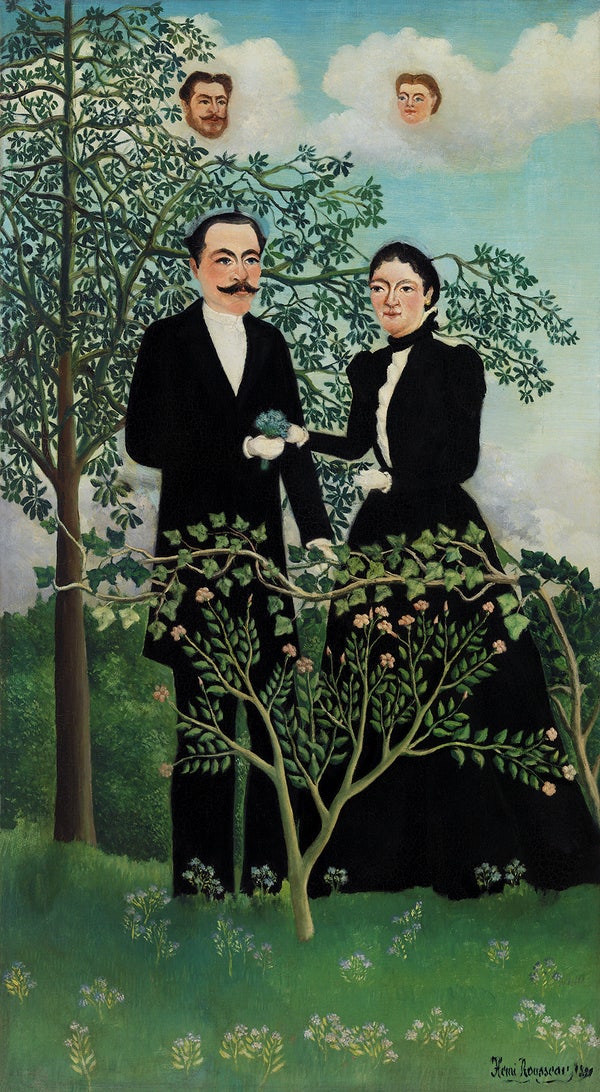
Featured Image: “The Past and the Present, or Philosophical Thought” by Henri Rousseau

The fox collaborates with the chicken.
The motorcycle collaborates with the tree.
The knife collaborates with the throat,
and you want to collaborate with me.

Your watercolors and my poems,
side by side for all to see.
You say it will be interesting and fun.
There you stand, ready to collaborate with me.

The lemming collaborates with the cliff.
The propeller collaborates with the manatee.
The wineglass collaborates with the floor,
and you’re all about collaborating with me.

Your photographs and my poems,
facing each other for all to see.
It will be experimental and fun, you say,
since the time has come to collaborate with me.

The hammer collaborates with the thumb.
The razor collaborates with the goatee.
The mousetrap collaborates with the mouse.
Are you sure you want to collaborate with me?

Your poems and my blurb,
together in a chapbook for all to see.
You say it would make you feel better.
I see why you want to collaborate with me.


Read More

Preface to Making It Up

By Ron Padgett

Featured Image: “Antique Illustration from The Grammar of Ornament” by Owen Jones

I don’t remember who suggested the idea of an evening of spontaneous poetry collaborations by Allen Ginsberg and Kenneth Koch, but I think it came up during a taxi ride the three of us took, six or so months before the event, in which Allen and Kenneth started joking about and even parodying each other’s work. This playful conversation culminated in their public performance of Wednesday evening, May 9, 1979, at the St. Mark’s Poetry Project.

As the date approached, both Allen and Kenneth—who had never taken part in such an event—started to express some misgivings, as did I. A month before the event, I wrote to them, “I’ve been wondering about some details of your May 9 extravaganza here, and I thought I would ask you about the format of the evening. Do you want to set any rules? Or would it be better to set none and just let fly?” Both poets thought it best to have some structure to work with, but they left it up to me. So I drew up a list of poetry “assignments” to surprise them with.

Read More

Some Remarks on Collaboration

By Tom Whalen

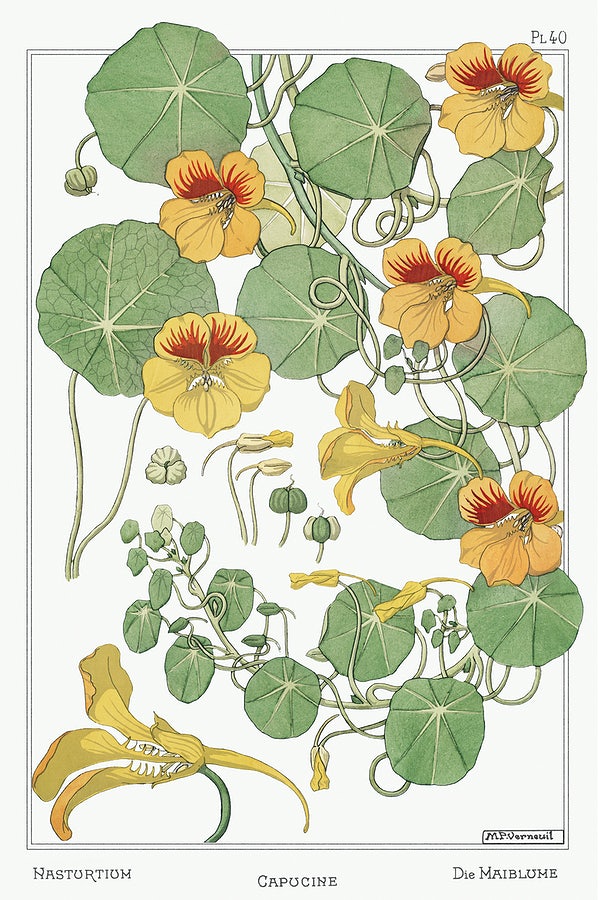
Featured Image: “Capucine” by Maurice Pillard Verneuil

  • I’m trying to think what isn’t a collaboration, but when nothing comes to mind, I wander about my Arbeitszimmer, scanning the shelves, lost in thought, before returning to my remarks concerning activities requiring, if not a multitude, at least one other mind.
  • “To be a fly on the wall,” thinks the narrator of a nonexistent novel on her way to her mother’s wedding to a fifth husband, clear indication the mother knows a thing or two about collaborations.
  • Translators raise their heads from dictionaries now and then to ponder how to translate, for example, a sentence by Robert Walser that I’m convinced demanded of him a close collaboration with nature: “Den Fischen fehlen die Arme.” Should I and my more experienced collaborator (Susan Bernofsky, in this case) choose the concise “Fish lack arms” or more closely mirror the music, e.g., “On fish one finds no arms”?
  • Proust in one hand, Ionesco in another, I strolled along the Champs-Élysées as if I were the saddest flâneur on the road to everything.
Read More

Collaboration Queens (Or How the Chapbook, ABBA: The Poems, Came to Be)

By Denise Duhamel and Amy Lemmon

Featured Image: “The Seasons” by Alphonse Maria Mucha

As we wrote “Class Action,” our first poem together (alternating one line at a time, on email), Amy noticed we were writing in abba rhyme, which gave her the idea of writing tangentially about ABBA, the pop group. This lucky association led us to begin a series of poems with two constraints: the stanzas had to be written in abba rhyme, with a mandatory mention of ABBA, the singing group, in each. As we built up our confidence, we sometimes added a third constraint. In one poem, each line had to end in a long “o” sound; and in another, each line had to contain a palindrome, as ABBA is a palindrome. Although we stuck with the rhyme scheme (with allowances for occasional, or more-than-occasional, slant rhymes), we liberated ourselves from metrical restrictions. While Denise is comfortable in the prose poem and free verse, Amy tends to write almost unconsciously in a loose iambic pentameter or tetrameter. But we didn’t insist on uniformity of rhythm. This gave us the leeway to go with the flow, quoting lyrics or song titles, creating dialogue between characters, and injecting other bits of pop culture into the poems.

Read More

Changing the Record: A Poetry Collaboration in the ’70s and ’80s

By Ron Horning and David Lehman

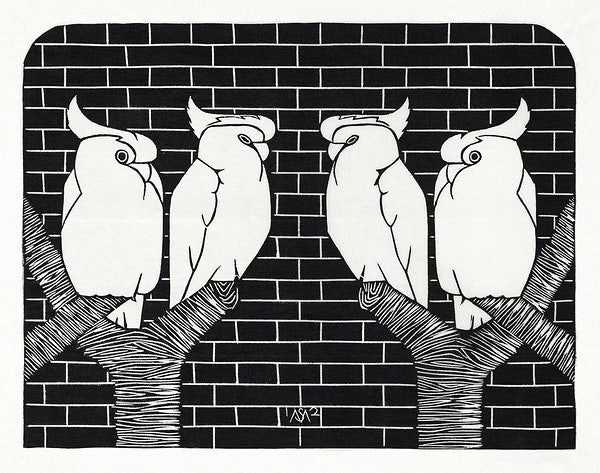
Featured Image: “Four Crowned Cockatoos” by Samuel Jessurun de Masquita

We met late in 1972, when we lived two blocks from each other on Riverside Drive. Though Ron’s room in his apartment was easily quieter than David’s room in “The Barracks,” thus named because of the decibel levels achieved by the inhabitants (David’s roommates were a jazz disc jockey and poet, a veteran of the Marine Corps just back from Vietnam, and a TV-watching, football-twirling specialist in East Asian studies) and their many guests, Ron’s room was also less private, more subject to interruption, and did not have its own bathroom. The first poem we wrote together was written at the Barracks, and so were most of the others in 1973 and 1974. From almost the beginning, the idea was to write a book of poems, but the book never really gelled, either because there were too many other things to think about or because we didn’t know what, if anything, the poems and lines we were typing and writing added up to. We had a working title, or at least we toyed with some candidates. (A Phone of One’s Own captured David’s fancy for a time.) Many poems we started were left unfinished, and even the attempt to write poetry together stopped abruptly in 1975, when we both married for the first time, David in January, Ron in July.

Read More

The Story Behind “Penguins”

By Patty Mitchell

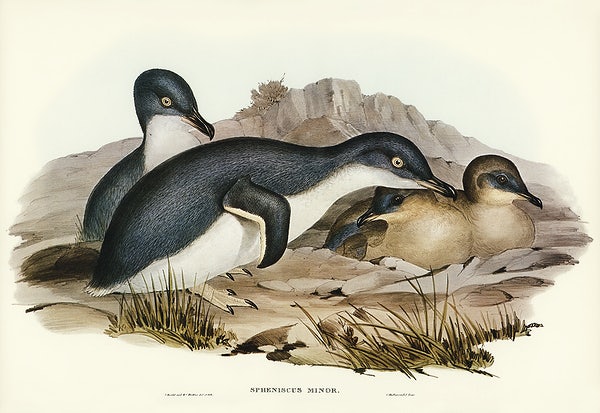
Featured Image: “Little Penguin” by Elizabeth Gould

Located in Athens, Ohio, Passion Works Studio supports collaborations between artists with and without developmental disabilities. The studio began as an experiment in 1996: what would happen if I set up a collaborative art studio within a sheltered workshop, a supported work place for people with developmental disabilities? A grant from the Ohio Arts Council allowed us to put the idea in motion, and through additional grants and sales a second professional artist was added to the staff, Wendy Minor. Wendy and I brought to the table our understanding of materials and our art process; the participating individuals brought with them their unique way of experiencing the world and a natural ability of fearlessly jumping into art-making. For fifteen years now, Passion Works has offered a relaxed and informative environment for people to collaborate and investigate ideas. The synergy of excitement and discovery is conveyed in the resulting artwork: playful, vibrant, unpredictable.

Read More

Where the Path Leads: Collaboration, Revision, and Friendship

By Lawrence Raab

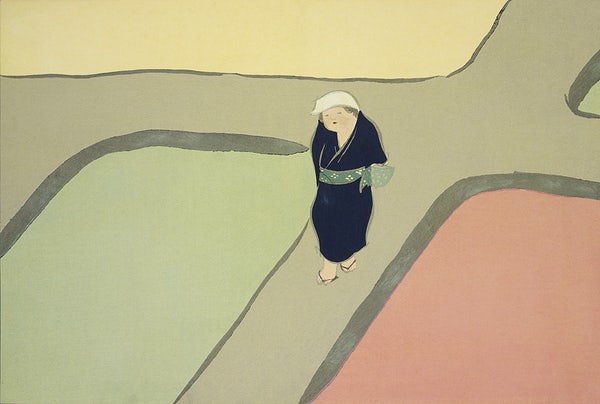
Featured Image: “Path Through the Fields from Momoyogusa-Flowers of a Hundred Generations” by Kamisaka Sekka

Many years ago—and I really don’t want to remember exactly how young we were—Stephen Dunn, a friend but not yet a collaborator, was traveling from New Jersey to Yaddo, the artists’ colony in Saratoga Springs, New York. He stopped for the night at our house. During the course of the evening I recall bemoaning the fact that I hadn’t written a poem—maybe not even tried to write one—in over a year. I had writer’s block, I announced, as if it were an identifiable disease. I had not yet learned the wisdom of William Stafford’s famous—or infamous—remark that there is no such thing as writer’s block; all you have to do is lower your standards.

Of course Stafford didn’t mean you ultimately aim for less. You just have to give yourself a break to get started, and accept whatever occurs to you because “something always occurs” to us, as Stafford says in his essay, “A Way of Writing.” Let the act of writing carry you beyond your first inevitably dull words, to better words, better sentences that may give you access to something waiting in your mind “ready for sustained attention.” This is the writer’s daily work—putting some words down, then rearranging them, adding, then subtracting, looking for a shape, a focus, “the poem’s informing principle,” as Stephen Dunn puts it in his wonderful essay, “The Good, the Not So Good.” If that’s inspiration— and I like to think so—it’s earned by the work of writing, not given as a gift of the gods, like an autumn leaf fluttering down significantly on the poet’s head.

Read More