Love’s Been Good to Me

By Andrew Robinson

Featured Art: Zurich by Ernst Ludwig Kirchner

The girl from Zurich is deathly quiet. But even in a king-sized bed her presence prickles me awake. Her fetal body rises, falls, a pillow wedged between us. A natural end approaches now; I’m sure she knows it too. We met six months ago, flotsamed onto the misfit table at a Chinese wedding. There was nothing to do but drink, and seven wines into the night we decided to go slumming at Orchard Towers—Singapore’s neon throwback of tacky sleaze. Sailors go there for the prostitutes, and bankers for the irony, but for her it was the Filipino bands. I love to dance to them, she said, they always try so hard. But she wouldn’t go there without a man, and so, still in my suit at 4 a.m., I held her as she cried on the sticky dancefloor. Cried with drunken empathy for the Indonesian whores she was dancing with. At their age I was still in school, she said, And they have to sell themselves to these fucking men. She feinted at the sweaty marines, bewildered with Burmese whisky and shore leave, and she had me at that. I’ve always been a sucker for compassion—it doesn’t always serve me well.

Then as she sniffed into the smoky bathroom I texted her something about goodness—I don’t remember what—which showed up as her Facebook status the next day. But like the young marines, she was shipping out in the morning, her company posting her to Paris. And it wasn’t until her stint was up—four months later—that we got to meet again. And all that texting and mailing and chatting online, it didn’t serve to warn us that after just a few weeks it wouldn’t be working the way we’d hoped. And now it’s coming to an end—no relish of redemption here—my thoughts rise on a sleepy surge of affection. The girl from Zurich: I’ll remember her—I will.

Read More

Your Mother Wouldn’t Approve

By Krystal Sanders

Of the way you spend Saturday morning in your room, instead of helping Papaw with the lawn work. You watch him on the riding mower, in customary slacks and suspenders, coasting back and forth beneath your window as if the ragged scream of the machine will summon you like a siren to your manly duty. You raise the binoculars Papaw used when he was stationed in West Africa during WWII, long before his shoulders bowed and his skin darkened with liver spots. They are clunky, large in your hands even though you’ve had a growth spurt and you’re well on your way to catching up to Peter, who’s a whole six feet and had college basketball scouts watching him at every game last season. It was Peter’s senior year of high school, your freshman year. The fall had been glorious, riding the cloud of popularity as Peter Thompson’s younger brother. The other kids, the teachers and coaches, cafeteria ladies, librarians, all looking at you with an expectation that was not yet a burden. You joined the Fellowship of Christian Students, which Peter was president of, and took the Advanced Placement classes he’d taken. You had more friends than you’d ever had before. Through the lens, Papaw’s face jumps up at you. You’re intimately aware of every wrinkle, every nose hair. He guides the mower in long, straight lines, first in front of your window at the corner of the house, on the second floor, and then away toward the county road. The motor’s howl falls to a low growl, builds back up as he returns exactly two feet to the left, is eventually reduced to a low grumble at the back of the house.

Your mother wouldn’t approve of the way you watch the world, binoculars pressed to your face, aimed into the neighborhood across the county road. The man who owns the nearest corner lot, 5371, has some kind of shepherd. The dog roams along its chainlink fence, pants in the heat, takes a shit. You catch a glimpse of motion deeper in the neighborhood and sit up straight. You focus on the door that caught your eye, at 5377 striding out of the back of her house in shorts and a man’s plaid shirt. She is headed to the metal trash barrel at the back of the lot. You know she will stand there for a long time, and then go back inside. You imagine burying your fingers in the tangle of her long hair. She is barefoot, and the thought of the stiff crunchiness of the yellow grass against the tender arches of her feet almost makes you moan.

Read More

Loving by Numbers

By Frances Orrok

Featured Art: by Nick Fewings

10
my dog, climbing trees, apples, my sister
On two separate car journeys, one with my mother, one with my father, I ask each of them to choose the last thing they’d give up. At ten, my questions take this form with some regularity: exaggerated parameters, carefully explained rules. “It can be food or water or something solid, but it doesn’t have to be. You only have twenty-four hours to live.” Both ask if they can think about it. Both remember to answer by the end of the journey (a hastily added rule).

My father: “the capacity to love.”
My mother: “to know I am loved.”

11
anywhere outside the classroom; mud, cold, leaves, not sports, lists
I start smoking in ditches. I ask my father if he’d still love me if I went to prison. “Of course.” He doesn’t hesitate or ask what crime I will have committed. I think about this and watch the back of him digging. I don’t doubt his words but I am curious. “What if I joined the IRA?” There is a long pause and he straightens out for it. The Irish Republican Army is in the news a lot. They drive fear into every school child, make public transport and Saturdays anxious. There are no longer bins on the streets, litter blows frightened of b-o-m-b-s. “There will always be things you could do to make loving you harder. That’s not the same as not loving you. Difficult doesn’t mean no.”

Read More

Year of the Rat

By Lucas Church

Featured Art: Chinese Zodiac Animals in Harmony by Kerima Swain

On my birthday, the twenty-fifth anniversary of a space shuttle disaster, I move in with Uncle, who lives next to a trash heap. The heap is privately owned, not the county dump, not open to just anybody, and it’s haloed with crows. I squirrel myself upstairs while Uncle watches the video of the spaceship disintegrating into smoke, repeating. I mention in passing an ex-boyfriend with fists like cans of beans, that he’s looking for me, probably. Outside the crows bicker while I hide under the covers, the house full of Uncle’s sobs back to the television.

The shuttle exploded hours before I was born. A question of timing, my mother said.

Fast forward to our routine each morning: Uncle sloughs to the door and asks if I am okay, if I need anything. I always say no, but offer to clean his pool, where trash from the heap sometimes catches. Uncle doesn’t ask about Ex, though he’s gleaned I’m running from Ex’s jealousies and agendas, but rattles out something about decisions, good and bad, where they end us all up.

After weeks of this dance, he finally needs something: We lack pudding. Uncle has a sweet tooth. Or maybe we could go for dinner, he says, talk about things, hit some of the friendly bars, etc. Two guys on the prowl then silence and we all feel embarrassed for him together.

Read More

A Creature, Stirring

Winner, New Ohio Review Nonfiction Contest
selected by Elena Passarello

By Gail Griffin

Featured Art: The Kitchen by James McNeill Whistler, 1858

It is Christmas night—or, more accurately, two in the morning of December 26th. I am on the small porch at the side of my house. My cat is in my lap. The door to the living room is closed. Every window inside the house is wide open, because the house is full of smoke—a vile, stinky smoke. The porch is winterized, but I have opened one window about six inches because of the smoke escaping from the house. And what I am saying to myself is Well, at least the temperature’s up in the twenties.

The cat is unusually docile. He knows that something fairly strange is going on, and he is cold. I murmur to him that we’ll be all right, over and over. With sudden, crystalline clarity I know that I am absolutely alone in the universe, except for this small animal.

Will it reassure you or just make the whole scene weirder if I tell you that the smoke is from burnt cat food?

Read More

Audition

Winner, New Ohio Review Fiction Contest
selected by Charles Johnson

By Leslie Rodd

Featured Art: Nymphs and Satyrs Playing Musical Instruments by Claude Lorrain

San Francisco, 1969

Outside the jazz club where I’ve been audience, player, and piano tuner over the years, it’s quiet at this sunstruck ten o’clock, and I have a shivery thought of a guitar and a girl that began inside my head last night. No rocking, no rhythm, no foot-stomping or window-shaking. Only the fifty measured strides I’ve counted from the corner where the 30 Stockton dropped me off, past the police station to the alley, the dip in the pavement and the sloping rise, the manhole cover to my left, yes, here it is, the last of my landmarks, reassuring me I’m in the right place. A thought of a girl, who used to make my music glow.

I rap the metal tip of my cane against the partly opened steel door, the tradesman’s entrance.

“Easy does it there, fella,” a man calls out to me.

“Jimmy McGee,” I identify myself.

He says, in a voice that’s smoother than Roscoe’s, “Come on in, Jimmy. Mustafa Monroe, at your service. Roscoe’s on-again bass, as of yesterday.”

Read More

A Meadow

By Lee Upton

Featured Art: Autumn (L’Automne) by Arthur B. Carles

The wife isn’t supposed to know, but Lucy knew. She knew about her husband and her best friend, Maria. Had known for nearly two years. And now Maria’s brother—a stranger—was coming to visit. Did he know about Maria and Owen? Did he think he was visiting to reveal the affair, to confess on Maria’s behalf? Lucy hoped not. She would resent that.


Lucy got the news from Owen before he left for work. He turned at the front door and told her—as if he almost forgot something so important. He didn’t want to be late, and so there wasn’t time to talk. She followed him outside.

“He’s coming? When?”

Read More

Safety

By Catherine Carberry

Featured Art: Abstract – Two Women With Tennis Racquets by Carl Newman

When we came to Montana we weren’t going to be cooks, but that’s how we ended up. Blair got me the job, she’s the real chef. In the kitchen, after the Eggs Benedict disaster, I mainly swat flies and hang amber strips of flypaper from the ceiling. The goal is to keep moving to outpace the flies. They’re everywhere and some of them bite.

Blair and I work together on this farm, feeding the owners and workers. Two of the workers are Mexican and the others are drifters with invented names: Bill, Bird, Slim Jim, G. The Mexicans are called León and Ernesto and say they’re brothers but they’re pulling our leg. They don’t know that when Blair and I lived in Whitefish for six months before our money ran out, we told people we were
sisters. We thought it would help us somehow, that the sister game would give us some footing and a tangible backstory, but it didn’t attract too much attention and Blair never found a ski instructor who would love her. By that time, it was too late for either of us to go back to our husbands. Just as we were losing momentum, Blair saw a sign posted for a cook on a farm only nine miles away. The job came with some money and a private trailer. She talked to the owners and convinced them to take both of us for the same pay. We’ve been here since then, avoiding the question of what we’re doing and when we’ll leave.

Read More

Old Married Couple

By Robin Messing

Featured Art: (Untitled–Group of Flowers) by Mary Vaux Walcott

They couldn’t part with things, so in the end, they lived with everything. Two toaster ovens, two coffee makers, two waffle irons, two sets of dishes, two couches, two coffee tables, two beds. Their former spouses would not have tolerated it. But together, something different happened.

Ben toasted an English muffin in his toaster oven, and Sophie toasted a piece of leftover challah in hers. Ben poured coffee from the percolator pot that his former wife, Edna, had bought decades before at a hardware store on Avenue J. Sophie brewed coffee in a Mr. Coffee pot that her former husband, Sam, had purchased after their glass percolator pot, slippery with soap, splintered in the sink when Sophie dropped it.

Sam died first, four years earlier. Six months later, Edna passed, both from cancer. Two years ago, Sophie and Ben married—a small ceremony in a shul on Coney Island Avenue.

Read More

A Million Tigers Who Aren’t Mad at You

By Sandy Nietling

Featured Art: Abstract–Flowers in the Left by Carl Newman

My Mexican boyfriend cannot tell me if he’s ever killed a person. This is not because of a language barrier on either side. I asked my question clearly enough, and he is a good conversationalist with a decent English vocabulary. Still, Raf furrows his dark brows for a long moment, apparently needing time to puzzle through the facts as he knows them. Finally he frowns. “I’m not sure.”

When I ask my American boyfriends if they’ve killed someone, they laugh the way that they’re meant to laugh. Then, while they’re busy being surprised or trying to work up a clever response, I can worry about the papers I have to grade or how much longer the sliced pineapple in the refrigerator will last before I have to give it to the orioles in my backyard. That’s why you ask about death in the first place. It’s supposed to buy conversational elbow room, but Rafael has done the unexpected and provoked my attention instead of letting it drift away. It is not until later, in the dark of my bedroom, that he is relaxed enough to explain his crime.

Read More

Rock Harbor

Selected as runner-up for the 2015 New Ohio Review Fiction Contest by Maud Casey

By Susan Finch

Featured Art: Early Morning After a Storm at Sea by Winslow Homer

When Bob Miller slipped and fell from the rooftop deck of his ex-wife’s houseboat into the inky black of Rock Harbor, it almost appeared as if he’d done it on purpose. The fall took him feet over head, his flailing arms tightening into a V like he was performing a cartwheel. His fingers spread open in sunbursts, his legs stretched wide and long like a dancer’s, and his toes tensed into sharp points. As he tumbled the twenty-five feet into the shadowy water, his whole body seemed to expand and explode into a star.

The entire party saw Bob’s fall or, at least, when the police conducted the official investigation, partygoers would claim they had. And in truth, the spinning and twisting of Bob Miller’s body end-over-end was so spectacular that in hearing the story later in whispers passing across the marina from slip to slip, everyone felt they had seen it. Those who knew Bob assumed he’d been dared to do it. He had always been a bit of a showoff and couldn’t say no to a challenge. When he was thirteen, he’d purchased a dirt bike and had performed stunts for his friends on the weekend, vaulting over a campfire, navigating the narrow wall between the cornfield and the river, and once, after a double-dog-dare, he’d launched the bike from the hayloft of his father’s dilapidated barn and taken a nasty spill on the landing, fracturing his femur.

Read More

This Bed You’ve Made

By Samuel Ligon

Featured Art: The Large Plane Trees (Road Menders at Saint-Rémy) by Vincent van Gogh

We killed Kitty’s husband with a harpoon her grandfather had given her, but it could have been a skillet or the steel ashtray from her kitchen table. The band would sit around that table at night, smoking and drinking and filling the house with music, and as it got late, Billy Wayne would make Kitty feel bad about who she was and what was best in her, calling her ignorant hillbilly trash and blaming her for everything that was small in him. He married her when she was fifteen, two months after he discovered her in Spokane, though everybody knew she didn’t need to be discovered. She only needed to sing the sweet, sad songs we wrote, and America’s heart would melt.

Our first single, “A Stone of Ice,” told the story of Billy Wayne trampling Kitty’s love with whiskey and womanizing, leaching all the goodness from her once pure soul. Every song we sang was about him. We wrote “This Bed You’ve Made” a month before he died, with the chorus that would make Kitty famous:

                       This bed you’ve made of cheating nights
                       This bed you’ve made of sin
                       This bed you’ve made of drunken lies
                       Is the bed I’m in with him

Read More

We Are All Beyond Disgusting

By Jill Kato

Featured Image: Breezing Up (A Fair Wind) by Winslw Homer, 1876
Courtesy National Gallery of Art, Washington

I like to get to the ship early. You’ll usually find a couple of old-timers waiting by the bar, itching to sip a Tom Collins or a whiskey sour on the rocks and get their vacation started right. This is the best time to build rapport and I’m their gal. At this point, they’re still excited about their trip and have a thick wad of cash in their billfolds. Their wives are in their cabins getting settled or making appointments at the spa or booking excursions for when we dock. The bar is quiet and they have me all to themselves. They can pour out all their troubles, and I can pour them all the liquor they need, at heavily marked-up prices. I haven’t even finished restocking the tabasco and maraschino cherries when a salty dog of a guy walks in. His name is Jerry and he’s on board to celebrate his wife’s sixty-fifth birthday. I ask him what he does, and he says he used to own a manufacturing company in the fashion district but now he’s retired. Left the business to his son. He says he built his company from scratch. Even though his shirt is ugly and has hula girls on it, I tell him I like it. I tell all men I like their shirts. I garnish his glass with an orange slice and tell him I admire men like him, self-made men who do things like run their own companies. And I do.

Read More

Last Call

By Penny Zang

Each night, after work, we changed our names. We were trying on new identities, seeing which ones fit. Serena and I would throw off our aprons and get undressed in the car, wiggling into tight black pants and shirts thin as napkins. Sometimes we wore red lipstick, sometimes eye glitter. Then we’d find a new bar with the same tattered barstools we were used to balancing on, the same veil of smoke and low light that felt like home. To the men who approached us, we turned into different girls, ones who knew how to charm even without the promise of making a tip.

Our new names were decided on the spot, never the same name twice. They were names we’d once used for our baby dolls, names we’d wished our moms had given us: Isabel, Deanna, Lily. Everything else came later—our stories, our new personalities—fueled by beer and tequila, a practiced game of improvisation. Sometimes men invited us home or out to their car. Sometimes the night just fizzled and we’d stumble out to the street in the wrong direction, too lost to even know it. We’d stop to eat greasy pizza and compare notes, our throbbing feet the only part of us that wanted to give up.

Read More

Envy

By Patricia Horvath

The sign on the door says: Children Under 18 Not Admitted to the Chemotherapy Suite Under Any Circumstances.

They call it a suite, this room at St. Luke’s Roosevelt Hospital where chemotherapy is administered, as though its occupants were members of some elite group, which in a sense I suppose they are. For reasons that elude me, the chemotherapy suite is located on the same floor as maternity services, and the elevator is often crowded with an odd mix of cancer patients and pregnant women. The cancer patients are generally hairless, elderly, their skin ashy, their bones prominent. The pregnant women are all flesh and smiles.

On Jeff’s first day of chemo, three months earlier, a couple made out during the entire ride to the eleventh floor. Teenagers practically, they wore tight jeans, cropped vinyl jackets. Her back hard against the elevator rail, her distended belly pressed into her partner. They made little moaning noises as they kissed. I tried to give Jeff my “What the fuck is this?” look, but he was too preoccupied—or maybe too polite—to notice. The other passengers looked away. I watched them not watching and then I stared at the floor.

Read More

Connect

By Glen Pourciau

Featured Art: Mall of America, Minnesota by Melanie Einzig

We were in a Mexican restaurant at the mall, and my husband, as is his habit, was looking at everything but me. I still had half an enchilada left, but Boyd’s empty plate had already been removed and he’d ground through all the tortilla chips and salsa on the table, leaving his eyes and mind free to survey the room. His attention was drawn to the occupants of a booth across and at a slight angle from ours. He could see them better than I could, but I peeked back and saw a man and woman, presumably married, and a young intellectually disabled boy, the boy seated on the man’s side, which may have appealed to Boyd. The three of them were a picture of happiness, talking and smiling and enjoying one another. If the boy was their son they’d likely been married at least ten years, and I admit I couldn’t help comparing how they seemed to how we were after fifteen years. Read More

The Best Man

By Brian Trapp

Selected as winner of the 2013 New Ohio Review Fiction Contest by Stuart Dybek

Featured Art: Chinese Garden by Cooper Hewitt

Outside the bride’s village, I lean against the side of a silver Audi with Mr. Wu, my boss’s businessman friend. I thought we were going to his wedding, where  I will be his best man, but I guess as per Chinese custom, we are going to the bride’s house first. We have traveled twenty-five minutes into the Chinese countryside, where we wait for the rest of the wedding caravan. The second half of the dancing lion is late, and the head walks around with its neon-red body dragging behind, a giant mutant worm.

On the ride over, tall buildings gave way to dingy shops. The road narrowed, going from the usual off-white tiled apartments to the old-timey black-tiled Chinese roofs— the tops curved into crescent moons. Smoke spewed from small factories and then green patches of farms appeared, pieces from two different puzzles jammed into one another’s edges.

Read More

My Lovers #1-5, or Why I Hate Kenny Rogers

By Donna Baier Stein

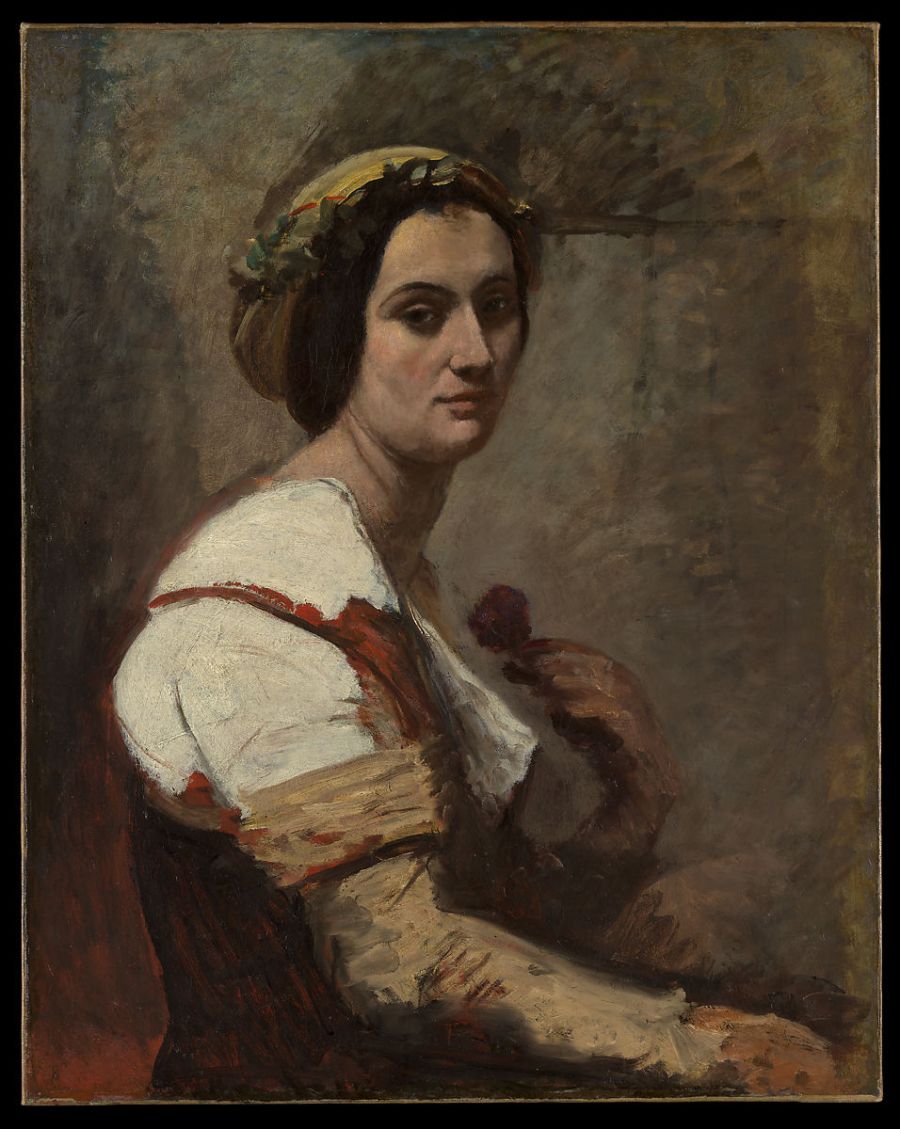
Featured Art: Sibylle by Camille Corot

What follows is by way of explaining what happened last Sunday, when I had more of a brush with sex than I’ve had in the five years since my divorce. What follows may explain my disappointment.

You see, the first man I fell in love with turned out to be gay and hanged himself from a tree along Highway 1 in California.

The second left me when I got pregnant. He was much shorter than me but had lovely lips and gentle eyes.

The third seemed promising: great sex, red-gold hair, tall. We met in a magical way. At a certain time on a certain day of the week, we passed each other going opposite directions on the campus of the University of Kansas. This was the sidewalk near the Student Union, which was burned down by hippies in 1972. I may have known one of the people who did it but I’m not positive about that. If it was the person I’m thinking of, he’s now an executive at an insurance company in Florida, with two kids.

Read More

Close Call

By Tamara Dean

Featured Art: Willows and White Poplars by Jean Baptiste Camille Corot

In the shower she takes a swig of beer, sets the bottle on the edge of the tub, and begins prying leeches, flat and large as house keys, from her cold toes, the top of her foot, her ankle. She places three in a line next to the bottle, where they lie motionless, though alive. Thinned blood threads over her feet. When she and Neil moved to the country four years ago, miles downriver from his family’s farm, he taught her to peel off leeches rather than douse them with salt, which he said might make them vomit and spread disease.

An hour ago, when she capsized, she didn’t feel the leeches take hold. She was alone. It was dusk. She looked up to greet a pair of bats when the kayak teetered, hit a tree recently fallen from the riverbank, and flipped. After a long moment, she surfaced. Sputtering, dog paddling, adrenaline-jarred, skin-tightened, throat splicing eddies, heels churning mud. She held the kayak and wrestled   to free it from the current and the willow it was pinned against. She imagined herself the puny accident bystander who suddenly has the strength to pull a giant, unconscious passenger from the wreckage. Even so, she worked half an hour to bring the kayak ashore, roll and empty it. Near dark, she returned for the paddle. More splashing, spitting, gulping, sinking in mud. More leeches latching on.

Read More

No Try, Only Do

By Alan Rossi

Featured Art: Forêt de Compiègne by Berthe Morisot

I gave Saul a room. Two years prior, he had left me for Utah. He left me for the wild, for backcountry slopes. He wanted to be in glossy magazines and have his ponytail flowing out behind him in pictures, carving some mountain, dropping through powder. He spoke like this, dropping through powder. I tried to tell myself I couldn’t be too mad: he paid more attention to skis and skiing forums than he did to me. In Utah, he grew his hair long and beautiful and got in some of those magazines, though mainly he just put up pictures of himself on the Internet. I know, I looked at them all, wondering if he was thinking of me when he was hiking up the slopes, skis on his back, or whether he might get a distant glimpse of our life together when he was on top of one of those mountains and looked east. He was gone for two years, but to me it seemed a lot longer. I often thought about all the other girls he probably had sex with and how people probably loved him and how he was living this wild, free life, and I was still in East Tennessee with my brother and mother and the probably comparatively lame Blue Ridge. So when I found out he was coming back because he had seriously injured himself and could no longer carve or ride or hike or otherwise put his health in danger in backcountry powder, I was happy and told him he had a room waiting. I wanted him to come back in the same state he had left me in: miserable and alone.

Read More

Crimes of the Video Age

By Bradley Bazzle

Selected as runner-up for the 2013 New Ohio Review Fiction Contest by Stuart Dybek

Featured Art: Decorative Study: Satyr by Aubrey Vincent Beardsley

In the spring of 1985, Ben lived with his friend Marco in a second-floor apartment near the college where they were sophomores. For fun they watched girls sunbathe down in the small back yard across the alley. They kept a potted ficus by the window to obscure their faces.

One day, while they were staring at the girls through the ficus leaves, Marco said he had an idea. He went down the hall and came back holding the VHS camcorder Ben got for Christmas and kept beneath his bed.

Marco said they should use the camcorder to film the girls. “That way we can watch them on the VCR at night,” he said, “when it’s more fun to watch sexy stuff.”

“No way,” Ben said.

“But we can pause it and look really hard.” Marco described in loving detail the way the girls’ bikini bottoms pinched their thighs and the way their breasts drooped to the sides when they lay on their backs.

Ben liked that stuff too, but he wondered if filming the girls didn’t make him and Marco weirdos. Instead of explaining this to Marco he said, “Don’t touch my stuff. Camcorders are expensive.”

Read More

The Rules of the Game

By Simon Barker

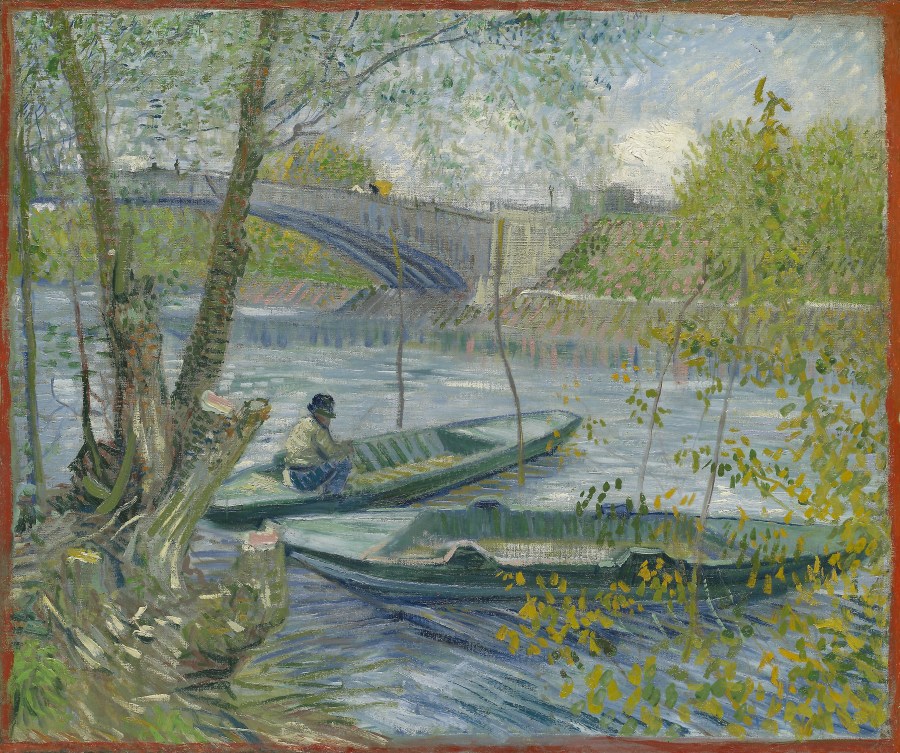
Featured Art: Fishing in Spring, the Pont de Clichy (Asnières) by Vincent van Gogh

I was eating tagliatelle napolitana and drinking imitation Chablis when I remembered that I was supposed to be looking at a house. I said to the others,  “I have to go and look at a house.” “We’ll order veal scaloppine,” they said. “We’ll wait for you.” Veal scaloppine was what you ordered at the Mussolini after tagliatelle napoli. The only other thing was grilled liver but Wendy didn’t like the blood so we never ordered it when she was there. Wendy and David had been married for about a year. Wendy was dark-eyed and beautiful and I was in love with her because she was utterly vivacious and she put up with me even though I was an idiot.

I was carrying a map of Sydney but I still got lost on my way to the house. That was one of the habits that made Wendy say, affectionately, “Richard! You’re an idiot!” The house turned out to be across the road from a vacant television factory. When I knocked on the red front door I could hear a cat miaowing. Julie answered in the big, nerdy glasses she wore for studying. She said, “Hi, come in. Watch out for the cat shit, don’t step in it.” But it was too late and I had to leave my sandshoes on top of the steps. The reason there was cat shit was that everyone thought it was Drew’s job to pick it up seeing as the cat belonged to him but Drew was always out. He played the recorder in a medieval band. Julie began by showing me Drew’s room, which was the one at the front. She said, “This’s quite a good room, except when you’re fucking because then people in the lounge can hear everything,” and I thought well, that wouldn’t bother me since I’m not doing any fucking, but I didn’t say so. In any case Drew wasn’t the one moving out so Julie took me to Toby’s room, which was upstairs at the back and not much bigger than the double bed that was covered in Toby’s black satin sheets. Toby’s girlfriend was the sort who was used to black satin. She was the reason he was moving, along with the disco up the street.

Read More

The Hittite

By Alex Myers

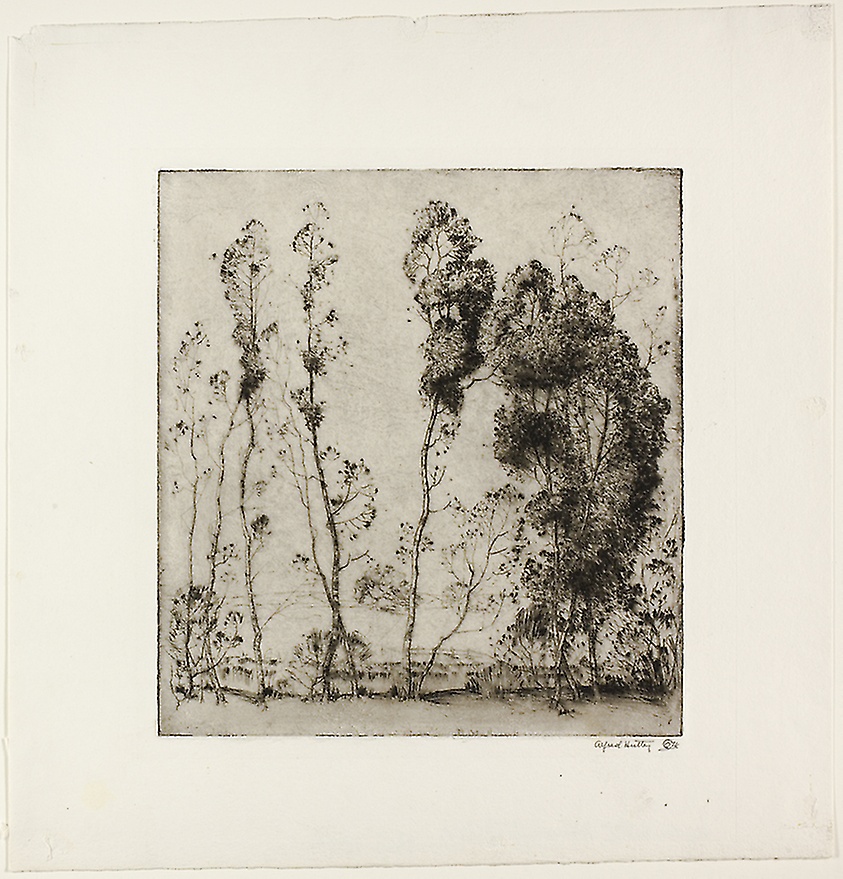
Featured Art: Trees Against the Sky by Alfred Hutty

In the spring of the year, the time when kings go out to battle, David sent Joab with
his officers and all Israel with him; they ravaged the Ammonites, and besieged Rabbah. But David remained at Jerusalem. (2 Samuel 11:1)

11:6

He was halfway to Ramstein, the dust of Afghanistan still on his boots, when it finally hit him: home. In April no less. The cherry blossoms would be spinning down from their trees, sweet, light, floating. It was a military jet—noisy, hard, and sidewise—that took him to Germany, him in his camis, sand still hidden in the folds, hardly believing he was out of the desert. Four months into his first deployment to Afghanistan and, after the training and orientation at central command near Kabul, he’d spent his months out in the mountains, riding Humvees along what they called the main corridor, though it was pockmarked and potholed and barely paved, and humping alongside mules to little villages. Escorting the arrival of humanitarian aid, waiting while some brain from intel, some secret squirrel, interrogated the village elder.

Read More

The Farm

By Spencer Wise

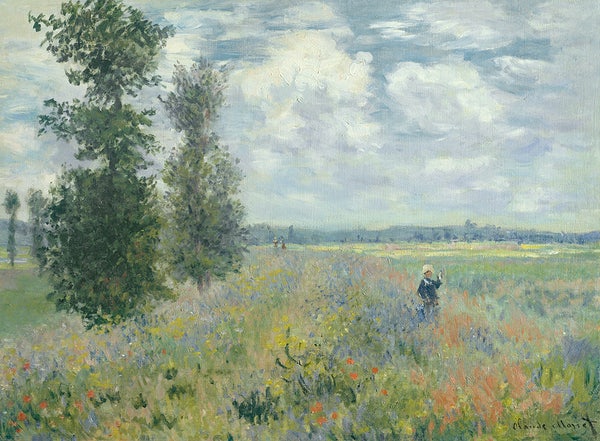
Featured Image: “Poppy Fields near Argenteuil” by Claude Monet

We’re on our way to meet Charlene’s family for the first time, listening to Townes Van Zandt in the car, and Charlene’s saying, “‘Pancho and Lefty’ is me and my Daddy’s song,” when I suddenly smell fire. All along Highway 33, the smell of wood burning. She laughs. “Don’t laugh,” I say, “might be a forest fire.” She says, “First time south of the Mason-Dixon, and now you’re Woodsy Owl.”

“I feel vigilant,” I tell her, gripping the wheel tight with both hands, as we come over a hill and, on the horizon, points of orange flames burst from the tree line. “What the hell is that?” I say. “Those are laurel oaks. Those are pitch pines,” she says. “Not the damn trees,” I say. “The fire. We got to call your parents, tell them it’s time to evacuate. We got to get the hell out of Georgia.” She puts one hand on my knee and points to the parallel rows in the woods alongside the road, explains how the fire is burning in even rows, how it’s controlled. “Doesn’t look controlled,” I tell her. “Looks way the hell out of control.” Nacreous black smoke rises above the pines. She says her parents live about ten miles from here. “Correction,” I say. “Used to live. It’s all burned. You can’t go home again. Home is a marshmellow.” “Mallow,” she says. “If you’re talking about the spongy confection that you northerners eat two times a year when you go camping—that’s a marshmallow.”

Read More

Everything Equal

By Joseph Holt

Featured Image: “Vintage European Style Key” by Paul Poiré

NOTE: When “Everything Equal” was posted to the NOR archives in Spring 2021, the author requested to revise and resubmit it to correct some issues of vulgarity and biased gender politics. His revision, titled “Futon Life,” appears below the original.

Three summers ago Ted Dexter flew standby to San Francisco with the vague intention of getting even with his ex-girlfriend. He and this girl, in only a couple months together, had argued, lied, cheated, had proven themselves in every way incompatible. Their final argument initiated with the most mundane of subjects—that he had worn “hideous, unstylish” carpenter jeans to the bars on a Saturday night—and escalated into a blowout that saw them thrown into the Cedar-Riverside streets, stumbling and shouting. At the sound of nearby sirens, Ted beat it back to his apartment and soon passed out drunk on his futon. He slept. The next morning he woke to find that sometime in the night this girl had come and gathered her belongings, most notably the blanket with which he had been covering himself. Sitting at the edge of his futon, slowly regaining his wits, he realized she had also gathered many of his belongings—his PlayStation, his baseball cards, his toaster, even the few bottles of Grain Belt from his crisper drawer. Also gone: his car. It would turn up several days later in Fargo, empty of gas and stripped of its stereo.

Read More

The Last Speaker of the Language

by Carol Anshaw

Featured image: Fernand Lungren. In the Café c. 1882-1884. The Art Institute of Chicago.

All right. Here we go.

Darlyn teeters high on a swayback wooden ladder she has dragged in from her mother’s garage. From here she can reach around blindly on top of the kitchen cabinets. She has struck pay dirt—a tidy arrangement of small, flat bottles. She doesn’t have to look to know they will all be pints of 5 O’Clock vodka.

She backs down the ladder, finds a grocery bag, goes back up and tosses in every bottle she can reach. Then she moves the ladder further along the way and clears out the bottles above those cabinets. She pours the liquor down the drain in the sink. 5 O’Clock is not for the amateur drinker. When she has the presence of mind, Darlyn’s mother filters it through a Brita, then mixes it with lime juice and ice and ginger ale, her version of a Suffering Bastard. After a while, though, she drops the lime and the niceties and in the end skips even the glass.

Read More

The Truest Thing

by Emily Nagin

Selected as runner-up of the 2011 New Ohio Review Fiction Contest by Don de Grazia

Feature image: Martin Johnson Heade. York Harbor, Coast of Maine, 1877. The Art Institute of Chicago.

In January, Nancy burst out laughing during the Shapiro funeral. She started laughing during a eulogy, though the eulogy itself was not funny. It was about deer hunting. The man giving it was stocky, red-cheeked, and blond, his buzz cut so close that from a distance, he looked bald. He spoke directly into the lectern, as if it had asked him to recall his father’s life. From her spot at the back of the chapel, all Nancy could see was the top of his head.

Her coworker, Lenny Faberman, sat across the aisle from her. Out of the corner of her eye, Nancy could see him fidgeting with his cufflinks. Last week, Lenny had caught Nancy crying while she embalmed an old woman. He’d stood in the basement doorway for a full minute, then said, “Did you know her?”

Nancy sniffed and wiped her eyes on her upper arm. She shook her head.

Read More

Luna de Miel

By Melanie Unruh

Featured art: The Herwigs by Edouard Antonin Vysekal

I like to practice what I’m going to say in therapy each week. The opening line is always the most important part because it has to be something attention-grabbing that still makes me sound stable.

I slept pretty well this week, except for Tuesday, when I stayed up all night watching a marathon of The Wonder Years. They played the one where Kevin touched Winnie’s boob.

It’s been six months, eighteen days, nineteen hours, and six minutes—give or take—since I last saw James.

This week I only made twelve lists.

My cat bears a striking resemblance to my therapist, but this isn’t because of their matching whiskers so much as the fact that they both make the same frowning concerned face when I tell them about my life. Boots and Dr. Andrews, who has tried without success, to get me to call her Maggie, are not formally acquainted.

Read More

Soul Patch

By Tom Noyes

Featured Art: Two Nudes in a Room by Ernst Ludwig Kirchner

Fresno, Fargo, Toledo. Albany, Tallahassee, Boise. I hit every town in a tux. When the crew and I crash the wedding—I try to time it so I’m rushing the aisle just as the bride and groom lean in for their kiss—the church erupts in confused gasps and worried whispers. Eugene, my best friend and agent, himself a three-time groom, holds the opinion that, in terms of nerves and anxiety, weddings are worse than funerals. With a funeral, what’s done is done. With a wedding, futures are at stake.

E’s theory of weddings could explain why things get hairy sometimes for the show and me. Three seasons ago in Dallas, the bride’s stepfather, an off-duty ATF agent, stood and drew his service revolver just as I reached the altar. Last season at a synagogue in Baltimore, one of the groomsmen, a former D-1 linebacker, took a running start and squared me up, yarmulke to sternum, knocking me flat and breathless. Usually, though, the spectators, ushers, bridesmaids and clergy recognize me, and relief sets in, and then euphoria. Kingsley Carter and his show New Digs for Newlyweds is in the house, and it’s all good.

Read More

Is That You, John Wayne?

By Scott Garson

The day kept changing. The sky would close in virtual dusk and thunder from the other side of the river would rumble the sodden hill. Then something would open. For a while the birds would sing their song to the shining grasses.

“Who are you going to believe?” she said. “Me or your own eyes?”

He turned from the window. He said, “Duck Soup?

“Only bad witches are ugly.”

“Too easy,” he said to her. “Wizard of Oz.”

She lay on the wrinkled futon-couch and worked a gathered lock of her hair into a very tight braid. She wore underwear and her breasts spread out within her tank top, which was charcoal gray.

“We didn’t need dialogue,” she said.

“We had faces,” he responded, “Sunset Boulevard.”

“You’re somewhat good at this, aren’t you?”

“Somewhat?”

He was joking but his heart wasn’t in it. Through the screens, the light was in sudden decline, as if the fires of the sun had been doused. The Live Oak tree was a hex in the gloom and the bushes on the hillside were graves. He wondered why he felt like he’d known her for so long. He wondered what they were doing for dinner. He wondered when he’d felt like he thought he would feel at his age, which tomorrow was thirty.

Read More

Living with the Dead

By Patrick Hicks

She was naked on the embalming table and I just couldn’t stop staring at her nipples. This happened two years ago when Ginny Pazinger ran a red light while she was text-messaging a friend. One of those big SUVs ran into her car and she spun around the intersection like a top. Shattered glass and chunks  of vehicle burst into the air, explosion-like. My family has been in the funeral business since 1882 so we expected Ginny’s body to be banged up pretty badly, we thought it would be a closed casket for sure, but her remains were in good shape thanks to the side airbag.

Read More

Too Much

By Natania Rosenfeld

I am a person of excess. When I open my mouth, I say too much, too loudly; I put in too much food, too quickly; I gulp my wine and burn my tongue on coffee. When I eat hard candy, I crunch it all down immediately. I say what I feel at the moment of feeling, and sometimes, because I am a teacher, I say more than what I feel so my meaning will penetrate. You must do this as a teacher and even so, feel sometimes that your mouth has opened and closed for an hour and nothing audible has emerged. So, I am loud; I exaggerate. I am one of those creatures of whom it is said, “She doesn’t know her own strength,” like a lion cub or a small orangutan. The last time I visited my in-laws, I broke their china teapot. I didn’t mean to break it; my big hands dropped it on the floor without volition. It was at a moment when no one was listening to me, and I grew agitated; my hands shook.

My husband is a man of careful, clean movements, an ectomorph with the great, sad eyes of a giraffe. My clumsiness surely pains him, and I am pained by the difference between us. He deserves a daintier sort, a woman named Fiona or Lily who flits through life. I believe I should go away for a while so he can find this Lily or Fiona. I should live with a big man, a loud man, a man who spills on himself and bumps into furniture. With a man like that, I’d be at home. His flesh would deflect my unintended barbs and his noise would drown out mine.

Today a friend told me of just such a man, a friend of hers she says is pining because no one wants him. He is enormous, she said, like a bear or a gorilla, but so deft with his hands that he sculpts tiny figures, figures you can hold in your hand and stroke with one fingertip. These tiny sculptures, my friend said, are world-famous, but the artist is terribly lonely. Year by year, he has become more enormous, and year by year, he has grown less able to part with his tiny figures. He surrounds himself with them, but he is beginning to have financial troubles because he won’t sell them, though buyers beat at his door.

I want to meet him, I told my friend. I was not thinking of his brittle heart, only of resting against that body, being cradled in those paws she described as so deft, though so huge. And of soothing him as I fail to soothe my angular, pensive husband, or all those friends and relatives to whom my every word is like a slap, or at least, the sting of an annoying insect. Lately, there has been a silence between me and my husband, a silence that booms through the house. I must get away and leave him be.

My friend took me to see the man where he lives in a white house by the gray sea. I had never seen so large a man: he towered over both of us, and when he embraced my friend, she was engulfed by his chest and belly. His hair and beard were shaggy and red, his sea-gray eyes were deep and glittering in their casements of craggy flesh. Enclosed in his ursine body, he seemed far away, unreachable. He served us tea at a table by a large window. The cups were porcelain and nearly transparent. How careful I was! And yet still I dropped my cup; it shattered, and splashed tea on my legs. Never mind, he said, it doesn’t matter. I got up to look for a towel, but he waved me back to the chair: Leave it. I watched him drink his own tea from a cup cradled in his paw like an egg.

After tea, we went to his studio.

“Here,” he said, “is my menagerie.”

All over shelves, tables and windowsills were the tiny figures. I cannot describe them, partly because you had to touch them to fully understand. I was terrified when he picked up a sculpture not much larger than a thimble and handed it to me.

“But I already broke your cup!” I said.

He shook his head. “It doesn’t matter.”

For many minutes, he handed me the tiny figures. I held them, looked at them, became lost in the features of their half-animal, half-human faces, and handed them back to him. It was a kind of dance, like the movement of the midwife who takes the baby from its mother’s womb and hands it to the at- tending nurse.

“I have no children,” he said. “They are my real children.”

“I have no children, either,” I answered.

“Then you must find your real children,” he said. “And you mustn’t smother them.”

“Do you smother yours?” I asked.

“Maybe. I can’t give them up. When others come to take them away, I feel as though I’m sending them into exile.”

“But even real children leave eventually,” I said.

“I know,” he said. “If I could part with my children, I’d have real ones. Look,” he said, pointing to his own great bulk. “I’m pregnant all the time. The more I eat, the more children I have inside. They’ll have to remove these with a knife!” He laughed. We all three laughed.

“Come on,” he said, “let’s dance.” He put on wild, whirling gypsy music and reached for a bottle on a high shelf. The bottle had a picture of a plum, and next to it stood a group of tiny, glass carafes.

“Oh no!” I said, when he tried to hand me one. “This I will drop, I’m certain.”

“Ah!” he said, “That’s the beauty of it. When you’ve finished drinking, you throw it over your shoulder. Then you take a new glass. We drink until the corners of the room are filled with shards.”

So we drank, and between the tinkling of tiny breaking bottles, we danced like crazed gypsies. Distantly, at some point, I heard the ringing of my phone; I pretended not to notice, and the other two gave no sign of hearing. I was wild with the excitement of permission to break things.

Suddenly, after about an hour, a terrible thing happened. The sculptor had drunk at least ten of the carafes of plum brandy; he was lurching about. With his enormous hand, he swiped a whole group of his figurines from a shelf onto the floor. “Damn you!” he shouted. “Damn you bloodsuckers, I’m finished!” He started to laugh like a maniac.

“Bernard!” said my friend. “Bernard, stop! You’ll destroy yourself.”

He stared at her like an elephant shot in the knees; then he crumpled to the floor and began to sob. He buried his face in his hands, and the tears flowed through his fingers. My friend went to him, squatted down, patted his shoulders, made soothing sounds. The gypsy music ended suddenly, and in the silence I could hear my telephone. I ran from the room, but before I did so, I swiped two broken figures from the floor and put them deep in my pocket. I kept my hands around them the whole way home to my husband, even though their chipped edges hurt me.

Read More

An Heiress Walks Into a Bar

By Karen Brown

Esme told him when she was twelve three things happened of notable significance: her grandfather presented her with a car, and then died in it, her grand- mother had a pool installed in her basement, and her father put on his pale blue pinstripe suit, custom-made for a previous trip to the Bahamas, and left, never to be heard from again. These events meant something, finally, as Dean motored her out among the Thimble Islands. It was April, a day with the unfulfilled promise to be warm. The wind did its own kind of dance with the Sound. Dean wore a straw hat anchored under his chin with rawhide, his hair in a ponytail, and shorts. Esme avoided looking at his knees exposed to the chill. He piloted the boat between the rocks, quiet and purposeful. She almost loved him for his disinterest.

An hour ago they’d sat in the seafood restaurant lounge on Main Street, the only patrons at eleven a.m. The place was dim, the chair she sat in damp and sticky with the sloshed liquor of uncountable drunken mishaps. The light came through the front window and made her feel dissolute and pale, like someone who might, according to her grandmother, have crawled out of the gutter. She wore her mother’s pearl earrings and a too-small T-shirt that her grandfather bought for her in a gift shop in Rio de Janeiro the fall before he died. She’d found it in a drawer in the upstairs bedroom of her grandmother’s house, a shirt she’d worn and abandoned years ago as a teenager. She’d left the house early that morning, and stopped at the bank. In her bag was enough cash to create a stir, to provide five times the yearly salary of the bartender, a girl whose sharp wrist bones made her seem fragile and terrible all at once. Esme could barely look at her lifting the bottle of J&B.

Read More

The Animal Trade

Winner of the 2009 New Ohio Review Prize in Fiction (selected by Peter Ho Davies)

By Christine Nicolai

Featured Art: Paard by Anton Mauve

It was close to midnight when Vic heard a shotgun echoing somewhere nearby. If Sue were still around, he’d have put on his boots and stomped out to the porch in his bathrobe, scanning the front yard and street in the twilight. If she were here, he’d have seen that it was all clear and come back to bed where she’d have been frozen under the blankets, breathing those shallow, rabbitty breaths, like she was flattened in a clump of weeds, waiting for the fox to move on. Without Sue, Vic told himself it wasn’t a shotgun he’d heard, because shots at midnight usually meant someone was doing something they shouldn’t.

This was midsummer, humid and hot. Even though it was long after the fourth, the noise could have been an M-80 or Salute, picked up from the reservation. Every couple of weeks one of the guys at the restaurant complained about kids lobbing cherry bombs into front lawns and tearing off down the street, yelping at the stars. That was an explanation he could almost hold in his hand, except that he knew it was the sharp-edged sound of a shotgun that had crackled through the night. His jeans were on the floor. He put them on in the dark and went to check the doors, sticking his head out the back, trying to make out more than just the outline of the barn against the dark sky. The gate leading to the back pasture appeared to be shut, which meant that Toby, the gelding Sue had left behind, should be all right. He closed the door.

Read More

Foreign Excellent

By Michelle Herman

Featured Art: The Last Dance by Mackenzie Siler

It wasn’t that I didn’t like her. I liked her fine—that’s what I would have said if anyone had asked me. But I knew better than to get too attached to the women who dated my next-door neighbor, John. Women cycled through his life pretty quickly, and so far all the ones I’d met had been crazy, anyway—too crazy for me, if not for him. John pursued crazy; he thought crazy was charming. And while she didn’t necessarily seem crazy, I’d learned that you couldn’t always tell at first (that actually you could hardly ever tell at first).

Did she like me? It was impossible to judge. She was friendly enough, always polite if not warm. Certainly she was more guarded than I (but then just about everyone I have ever met is more guarded than I). I could not have read her even if I’d tried. But I didn’t try, because we weren’t friends.

And then she cracked her skull—she almost died—and suddenly we were.

Read More

Portraits of a Few of the People I’ve Made Cry

By Christine Sneed

Featured Art: Self-Portrait in the Artist’s Studio by Emile Masson

Antonio Martedi, a painter and sculptor who had sold what he sometimes boasted were his least interesting works to American museums, told his granddaughter, April Walsh, on what turned out to be the day before his death, that he had not lived in fear of mediocrity so much as the disdain of beautiful women. He had made art because he wanted to be loved, preferably by many beautiful women in a slow but uninterrupted progression, women who would remember him fondly after their affair had ended and keep whatever sketches or canvases he had given them in an honored place in their homes. “But if after a while they sold my work for a good price to someone who knew how to appreciate it, I wouldn’t have held it against them. The money would be another way for me to keep my place in their hot little hearts.” This was the first time April had heard any of this, and she had no idea what had prompted it. Her grandfather had a reserve of stories that he repeated with depressing regularity for a man widely known for his flamboyance. She assumed that she had heard all he was willing to tell by the time she had graduated from film school and was failing to sell her scripts or to get hired as the production assistant’s own scorned assistant.

Read More

The Number One

By Ashley Cowger

On Friday, November 30th, 2007, at precisely 7:48 in the morning, Eastern Standard Time, Anna Kelsey McMillan became, for the duration of 5.3 minutes, the number 1 most beautiful woman in the world. 3 of those 5 minutes Anna spent in her car, alone, where nobody saw her in all of her splendor. But Anna spent 2 of those glorious minutes traversing the parking lot of the large business complex where she was expected, at 8 o’clock, to commence her presentation on farmed salmon.

Read More

Tableaux Vivants

By Katherine Lien Chariott

Featured Image: Icebound by John Henry Twachtman

1: Winter

Here is the beginning. I’m walking down the sidewalk and then the curb, sidewalk and curb again, under a sky full of tiny sad stars that light up this city  as well as they can, but not as well as the neon signs all around me, not as well as the rainbow glitter of the Strip, just five miles away, I’m walking with the glitter and the neon and the stars, in front of the Sav-On Drugstore and then past it, towards the Dottie’s—video poker and snacks, cheap smokes and booze, twenty-four hours a day. I go into the Dottie’s, with money in hand for two packs of Reds, and a hey there to the man working security. I’ve seen him before, know that brown skin and that smile, so I can look at the carpet instead of at him while I tap my hands on the counter, waiting to be rung up. He’s watching me, I think, and when I look at him, I know. Just like I know he hasn’t seen or doesn’t care that I came in with someone. 

Read More

Water We Made Ourselves

By Sara McKinnon

Featured Art: by Creative Commons

My mother said to do it standing up. To make it damp. To push it up and down. To press it back and forth. To keep moving. To start on the inside. To turn it over. To keep moving. I saw my mother do it on the kitchen table. She wasn’t standing up. She didn’t make it wet. My father had to be at work by seven thirty.

I never listen to my mother. And when my boyfriend’s father dies, I pay another woman to do it for me. I drive across town in dark glasses. I walk up the steps to his front door. His shirt, under plastic, in my arms. I help him to pull it out. I watch as he puts it on. I stand in the hallway with my hands on his shoulders. I turn down the collar myself.

Read More