Philosopy is a way to find out god left long time ago. Correction.
Philosophy is a way to catch on we are the only gods left. Death is an endless war against philosophy. Correction. Death is a reminder we’re already dead. Is history what we forget but are reminded again & again? Is religion a different method to talk to our future selves. Darkness is a joy to find out anything is better in the dark.
Colonization is to put the land in a casket then sell it to another cop. Let me try again. My professor says colonization is what colonizers did to his mama. A migrant caravan is a ship of settlers seeking land & jobs. Repeat. A migrant caravan is a ship with white sails seeking a bed & a good shower. Americans are anyone born in the continent named after Amerigo Vespucci. Yes, Nicaraguans are Americans, too. Disappearance is to live inside a skull that is too small for the mind.
There are people very good at that. I don’t know what else to tell you.
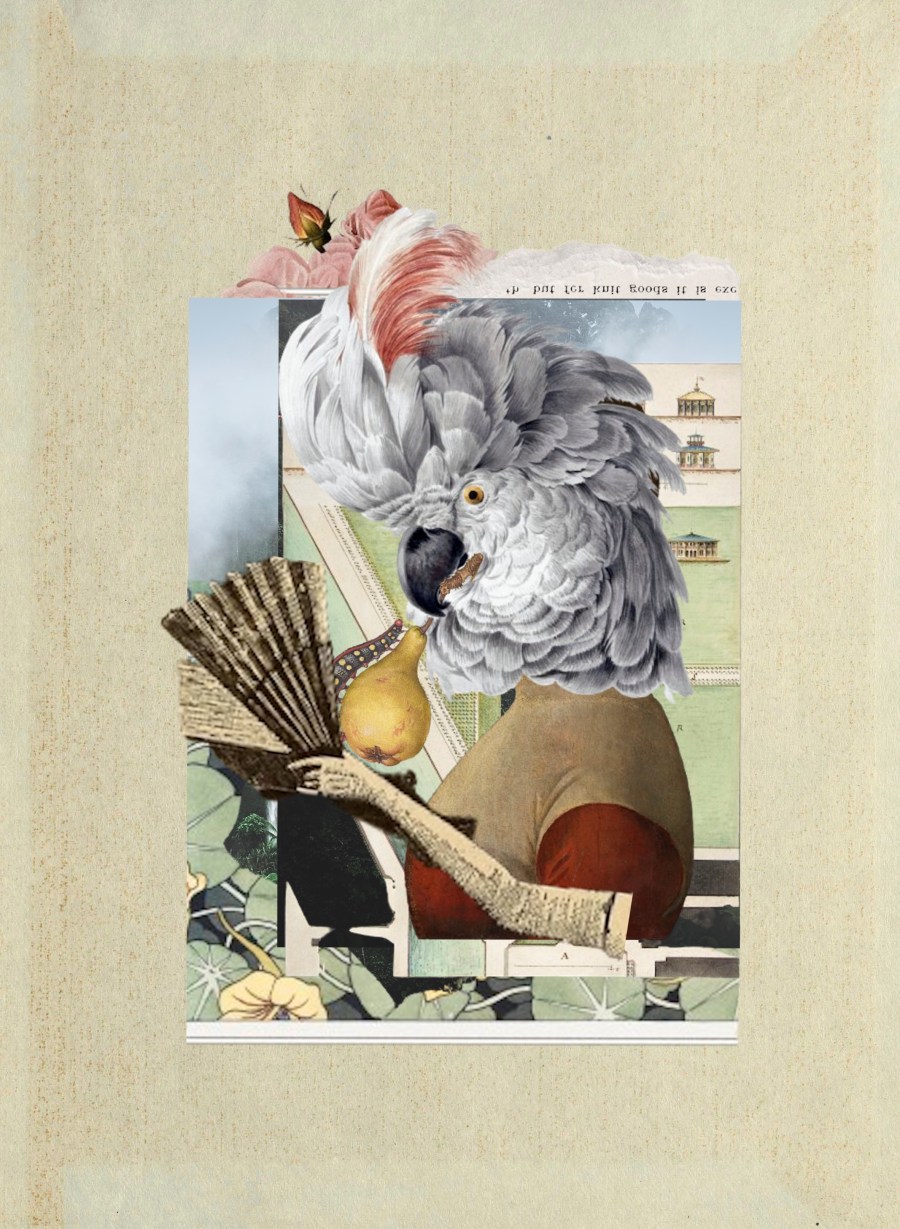
By George Bilgere Featured Art: “Lady Perroquet” by Ana Prundaru
I love this picture of Michael and Alex on our visit to Scotland, what, three, four years ago? Alex is missing his front teeth, so I think that makes him four, or five.
They’re standing with my wife before a palace in what I now realize is Düsseldorf, not Edinburgh, although it might also be outside Lyon, I forget the town’s name and the name of the palace,
but an 18th century king built it as a gift for his wife, who was mad—or no, the king was mad, or possibly they were both mad, although it could be I’m thinking of a palace we saw in Copenhagen,
as I recall there was something about the way the turrets were constructed, or the battlements, that identify it as Danish, I forget what century, but I do remember
the cozy little restaurant we stopped in afterwards, how cold the wine was, how delicious the mussels,
back when the boys were little and we were all together that sunny, long-ago afternoon in now I’m thinking Amsterdam.
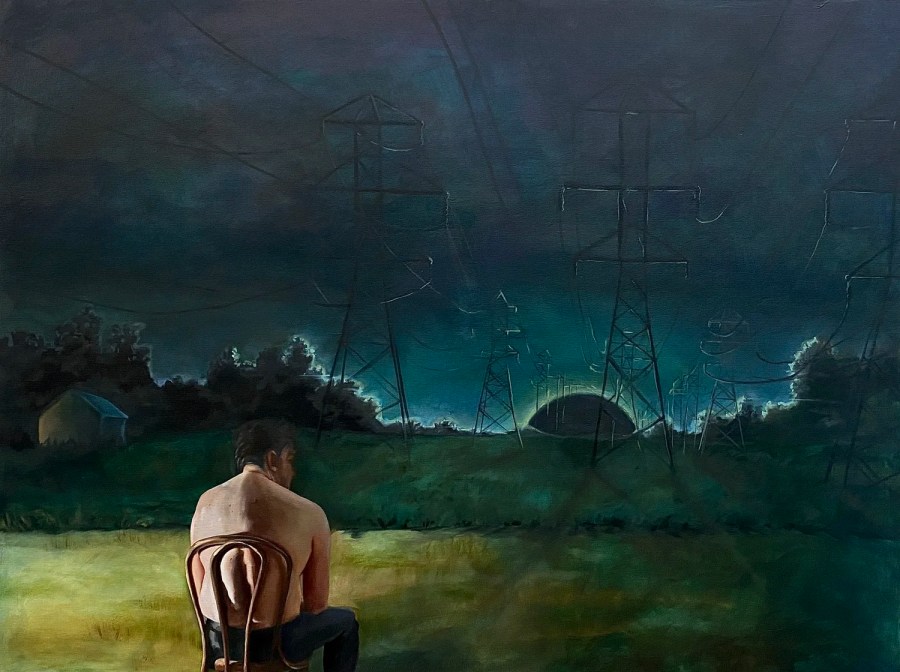
By Mark Anthony Cayanan Featured Art: “Event Horizon” by Mallory Stowe
Guess manageable despair arrives on time today, my soul cracking when sunlight sharpens my migraine. I listen to Wilco and amplify my unoriginal sadness. The U-Bahn stalls at Ullsteinstraße and now I’m sure I’m going to be alone forever, and it’s oh so important, this intimate history between my earbuds and my feelings. It wouldn’t be so bad, being somewhat lonely, mostly ordinary, if I could soundtrack my life. I’d stare at rows of bottled wieners while mumbling invented lyrics. And I’m still mostly male and so adjust myself in the aisle, my ball cap and sullen face, chili & lime chips, cheap IPAs. I self-checkout to avoid talking. I bring my own bag. Pleasure never lasts, you know, but pleasure does. And how embarrassing, to be unloved. I hum every longing home.
I used to have no name-mates but I never took my birth name back and now two other Linda Bambers sometimes get my mail. Texas and Kansas, I call them
to tell them apart. One is the author of a perennially best-selling textbook on accounting; the other wears crossed pink ribbons in images online. I trust them both and plan to be in touch.
If all 8 billion of us had one name would no one ever start another war?
Nigel Smith, a pub owner in Worcestershire, England once threw a ‘Nigel night’ expecting maybe half a dozen name-mates. Four hundred thirty four showed up, he exulted, including one from Colorado crowd-sourced for the trip.
Ni GEL, Ni GEL, Ni GEL they all shouted when they’d had enough beer.
All these Nigels, crowed the host, were really keen to talk and share their lives and come together in a kind of Nigel community.
As you finish your morning cup of tea, an identity thief rings.
You answer.
Sleep wraps loosely around your mind like the flannel robe you’re still wearing.
It’s almost noon.
The television is on but muted.
On the screen, Lieutenant Columbo’s mouth moves as he pesters his prime suspect. Soon, he’ll reveal how the murderer murdered the murdered.
Ahhh, you say to the voice on the phone that dubs over the episode’s denouement:
Tell me the story behind your name. So you do. Can you spell it for me? So you enunciate: M as in “money” — A — N as in “Nancy” — O — H . . . till all the letters of your name go down into the small holes of the phone.
You were born in India before Partition? Those were hard times.
When the voice solicits your social security number, you want to know why, but the logic you’re offered makes sense: there’s money to be claimed by survivors of arduous times.
Columbo lights his cigar. The murderer’s exposed, and the credits are rolling.
The end is not surprising; we’ve known it from the start.
We won’t learn who trafficked in your memories, committing this crime. You aren’t the best witness, forgetful these days. But you watch and rewatch your favorite TV sleuth intuit the culprit, apprehend the truth.
By Zuzanna Ginczanka Translated from the Polish by Joanna Trzeciak Huss
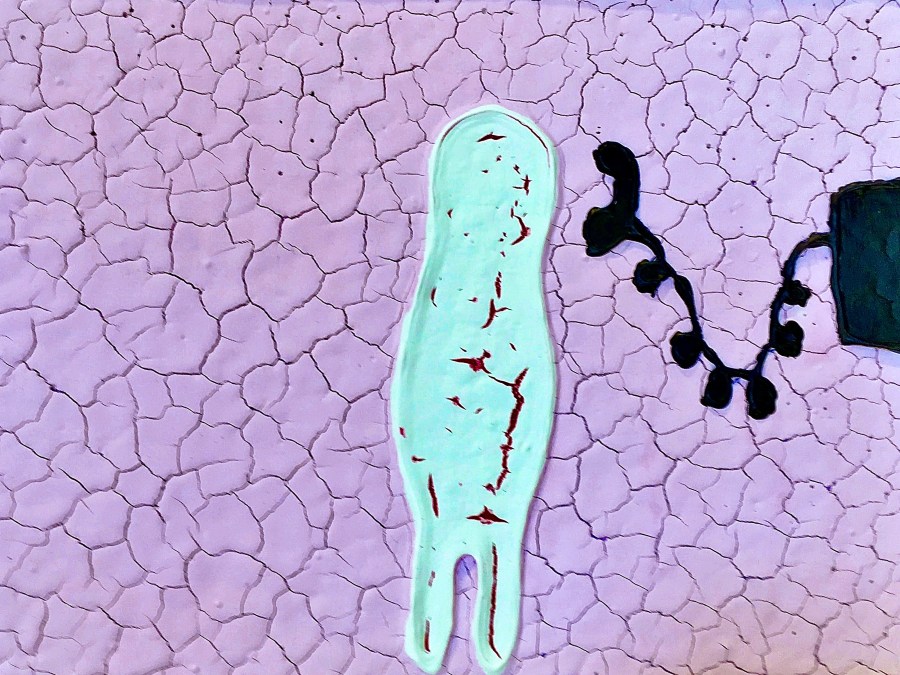
Featured Image: Untitled by Tanner Pearson
We… A frenzy of hazel trees, disheveled by rain, a scented nutty buttery crush. Cows give birth in the humid air in barns, blazing like stars. O, ripe currants and lush grains Sapid to overbrimming. O, she-wolves feeding their young, their eyes sweet like lilies. Sap drips like apiary honey. Goat udders sag like pumpkins. The white milk flows like eternity in the temples of maternal bosoms.
And we… …in cubes of peach wallpaper like steel thermoses hermetic beyond contemplation entangled up to our necks in dresses conduct proper conversations.
By Zuzanna Ginczanka Translated from the Polish by Joanna TrzeciakHuss
Featured Image: Untitled by Tanner Pearson
1 In the beginning was heaven and earth: black tallow and blue oxygen— and fawns beside nimble stags and God, soft, white as linen.
2 Cretaceous Jurassic Triassic The earth layers in strata— The Miocene advances by tank — a majestic conquest. There is a separation between water and the land of ferns and birches —and God sees that it is good when Genesis dawns. Nitrogen brews in magma, magma congeals into rock mountain thrusts upon mountain in a thunderous, cosmic mounting The Carboniferous enriches the earth with bituminous pulp. —and He sees that it is good for moist amphibians and stars. Iron pulses like blood Phosphorus hardens into tibia—— — and with singing air, God whistles into pipes of crater.
3 In the beginning was heaven and earth: and fawn and tawny stags but then things took a different course: and flesh was made word.
4 Back then, a lone rhododendron trembled before a fragrant angel, horsetails tall as New York creaked and clattered. Now daisies wilt in town squares in Konin, Brest, and Równe and at night policemen and their spouses make love.
This poem has already been written. The nausea, familiar. You’ve been left, bobbing bereft, in water, watching flames eat home and hearth. Or vicariously felt that dread suck of time elongating the slim barrel of a gun. You’ve picked your steps through a landscape of corpses, fumbled through each level of grief. This poem, your companion.
But who will read this poem? Not the ones with the guns. Nor the ones cheering them on or silently assenting to their menace. Not even the ones who are carrying their children away from their fears toward your fears of what you know about this country. This poem does not traffic in saviors.
By the third martini, he’ll ask her to marry him. She’s a tourist, he’s a captain, home by chance. I stand at the window, watching. I want to walk into that bar, order an ouzo, and tell them that, together, they’ll create a new generation of pain. I want to tell him to court the island girl, the one who, forty years later, will see him, run to the restroom, and return with a fresh coat of lipstick. I want to tell my young mother, in the words of the great North American philosopher, Pamela Anderson, “Never get married on vacation.” But this is long before Pam and Tommy Lee, before I existed. Before Reagan reigned over his long line of wreckage, and couples shot themselves, together, in their cars. The Vietnam War has ended, but here I am standing at the window, watching while they meet, both oblivious of wars they’ll wage. They’ll move from Greece back to the Midwest—she’ll drink, alone, in her kitchen. He’ll return to the island every chance he gets. When he’s back in Illinois, he’ll stare into the aquarium and long for water. She’ll look at him, frozen, behind her highball glass. Still, I stay at the window of the bar, wanting to use Pam’s biting wit. But this is long before Baywatch, and they’re gazing at the bay. I tap the glass like Morse code. Sealed in my own tank of silence, I say, Please let go. But as they take each other’s hands, I softly touch the pane and turn away. Because they, too, have the right to plunge. Even if they’ll swim out too deep: holding onto each other until death.
They’re so meticulous, aren’t they? They take such care that I am ashamed for my country, that impatient farm boy, that factory hand with the sausage fingers. First there’s the fragile object itself—vase, jewel, ornament—then tissue, stiff paper, bubble wrap, tissue again, tape, a beautiful bag made from something more like gift wrap than the stern brown stuff we use here in the States, then the actual carry bag
that has a little string handle but which is, in many ways, the loveliest part of the package except for the object you can barely remember, it’s been so long since you’ve seen it. In America, we just drop your trinket in a sack and hand it to you. Oh, that’s right. We have cars in this country: whereas Stefano or Nathalie has to elbow his or her way down a crowded street and take the bus or subway,
you get in the car, put the bag on the seat next to you, and off you go, back to your bungalow in Centralia or Eau Claire. Of course, this doesn’t mean you’re culturally inferior to Jacques or Magdalena just because, as Henry James said in his book-length essay on Hawthorne, we have no sovereign in our country, no court, no aristocracy, no high church, no palaces or castles or manors, no thatched cottages,
no ivied ruins. No, we just do things differently here: whereas Pedro and Ilsa take the tram or trolley, you have your car, and now you’re on your way home to Sheboygan or Dearborn, probably daydreaming as you turn the wheel, no more aware of your surroundings than 53-year-old Michael Stepien was in 2006 when he was walking home after work in Pittsburgh, which
is when a teenager robbed him and shot him in the head, and as Mr. Stepien lay dying, his family decided “to accept the inevitable,” said his daughter Jeni, and donate his heart to one Arthur Thomas of Lawrenceville, NJ, who was within days of dying. That’s one thing you can say about life in the U.S.: we have great medicine. Mr. Thomas recovered nicely
after the transplant, and he and the Stepiens kept in touch, swapping holiday cards and flowers on birthdays. And then Jeni Stepien gets engaged to be married and then thinks, Who will walk me down the aisle? No cathedrals in America, says Henry James, no abbeys, no little Norman churches, no Oxford nor Eton nor Harrow, no sporting class, no Epsom nor Ascot.
Featured Art: A Rocky Coast by William Trost Richards
De Sandro’s café with the orange tablecloths wades into the one stone street without tourists, all the Venetians pushing their big delivery carts at first of morning. From what I understand of it, the shouting is voluble, happy, glad to be alive, almost never without reference to anatomy.
Nine years after your death it is still your birthday. I’m treating you to cappuccino and showing off my lacework of Italian. Ecco, I cry, pointing to the beautiful faces, the beautiful things.
Everything was outlandish to you. Nothing is to me. In that way balance is achieved across the long years.
But I think you would like these people. They would pull out the orange chairs, sit down, listen to what you have to say. You would be old and wise in a city old and wise, and that would be enough.
I’d better think of something else before the mood turns heavy and hard to carry over the Rialto Bridge with the shops just opening. All those selfie-taking children, all that brightness bearing down.
Happy birthday, I want to say, from the last place on earth, where the earth dissolves and the crazy towers lean out over watching for what comes—sinuous, flowing, unexpected—next.
Featured Image: “Blossoming Cherry on a Moonlit Night” by Ohara Koson
Married in Beijing, they had their names carved on a grain of rice. Mai wore a yellow silk gown. He wore a black suit. Embraced in the photo turned sideways they resemble a tiger scrambling through strewn mums. That evening they ate salted mango and shrimp. He can still taste that, see the tortoise-shell clip sun- splintered in her hair. That evening continues, stalled like the sea-filled drapes in their room. For twenty years he worked at a lab that accelerated protons. Here are photographs of their two girls on Lake Michigan, then in Zermatt, standing before the Matterhorn, whose moraines, cirques, and ravines resemble those through two names magnified on a grain of rice, or of that shadow looming through the CAT scan of her brain.



 New Ohio Review