Written on the side of a payphone lashed to the wall of the bathroom in a Montreal café is Annie Oakley’s telephone number. I see it while I’m peeing. That’s how close the payphone is. Annie Oakley in black marker and then her number. I’ve only touched a gun once. Or maybe I didn’t touch it, I just thought about touching it and then said, No, thank you. It was my father’s gun. It was small, perfect for fitting into a lady’s hand. Is that called a .38 Special? Annie Oakley would know. I didn’t grow up with guns. I didn’t grow up with my father. People sometimes think that is a great tragedy. I did grow up near a little lake, beside which lived two goats and a horse. In spring and summer I would walk with my sisters the dirt trail overlooking the mountain to the gravel path to the stables. If the goats were out, we’d pass them cabbage through the fence. Back then I thought the greatest tragedy was August ending or my eighth-grade crush dumping me for a girl with nearly my same name. I’ve always had trouble locating the appropriate level of sadness about the father thing. I’m not saying it doesn’t register. I’ve just known from a young age there was nothing to do about it. Here is me. Here is my father. The distance between us could be as close as me to this payphone or as far as the mountain felt from the lake. Either way it changes things. Either way it’s done. Annie Oakley shot a squirrel’s head clean off at age eight. It was her first shot. Here is me, I hear her saying. Here is the squirrel. Right through the head or right through the thigh or right through the gut. Either way it’s done.
They’re so meticulous, aren’t they? They take such care that I am ashamed for my country, that impatient farm boy, that factory hand with the sausage fingers. First there’s the fragile object itself—vase, jewel, ornament—then tissue, stiff paper, bubble wrap, tissue again, tape, a beautiful bag made from something more like gift wrap than the stern brown stuff we use here in the States, then the actual carry bag
that has a little string handle but which is, in many ways, the loveliest part of the package except for the object you can barely remember, it’s been so long since you’ve seen it. In America, we just drop your trinket in a sack and hand it to you. Oh, that’s right. We have cars in this country: whereas Stefano or Nathalie has to elbow his or her way down a crowded street and take the bus or subway,
you get in the car, put the bag on the seat next to you, and off you go, back to your bungalow in Centralia or Eau Claire. Of course, this doesn’t mean you’re culturally inferior to Jacques or Magdalena just because, as Henry James said in his book-length essay on Hawthorne, we have no sovereign in our country, no court, no aristocracy, no high church, no palaces or castles or manors, no thatched cottages,
no ivied ruins. No, we just do things differently here: whereas Pedro and Ilsa take the tram or trolley, you have your car, and now you’re on your way home to Sheboygan or Dearborn, probably daydreaming as you turn the wheel, no more aware of your surroundings than 53-year-old Michael Stepien was in 2006 when he was walking home after work in Pittsburgh, which
is when a teenager robbed him and shot him in the head, and as Mr. Stepien lay dying, his family decided “to accept the inevitable,” said his daughter Jeni, and donate his heart to one Arthur Thomas of Lawrenceville, NJ, who was within days of dying. That’s one thing you can say about life in the U.S.: we have great medicine. Mr. Thomas recovered nicely
after the transplant, and he and the Stepiens kept in touch, swapping holiday cards and flowers on birthdays. And then Jeni Stepien gets engaged to be married and then thinks, Who will walk me down the aisle? No cathedrals in America, says Henry James, no abbeys, no little Norman churches, no Oxford nor Eton nor Harrow, no sporting class, no Epsom nor Ascot.
Since my dad was blind by then, when David and I led him from his apartment to the tee of the shrunken one hole golf course that served as kitschy courtyard for the complex of retirees only well-off enough for this unironic aping of the rich, it was by habit only that he looked down at the ball he couldn’t see, then up and out into the void of stunted fairway and green while first this foot then that foot patted the fake grass, almost kneading it cat-like till the tight swing arced the ball up high
as the second-story windows and I swear it was like a trick ball the pin on an invisible line reeled in straight down into the hole—his first and only hole in one, on the last swing of a club he ever took, though we didn’t know this then, and how we whooped my brother and I as we jumped and capered throwing the other balls up into the air while the old man baffled said what? what happened? what? already wistful for this best moment of a life it was his luck the blindness made him miss.
And now it’s my luck, isn’t it just my luck, to be the last one remembering, as if I’m not just there with them but also far removed above it all and watching as through the block glass of an upper-story window high enough for the ruckus not to reach me but too low not to see the filmy blur of bodies hugging one another pumping fists as arm in arm the three of them head out across the fake grass of that single hole.
Wind hits the cliff face and climbs the palisade as three men at a slatted table play cards. Two wear hats. A third faces the sun and smokes. All three are gray-haired, but none is my father. He wouldn’t have played without scotch on a Sunday or sat on a park bench, anyway.
2.
A man holding a child speaks to her in Mandarin as he touches a small seat attached to the back of a bike. He pats handlebars and points to spokes, saying bike every twenty words or so, then taps the front wheel gently, the way you would touch the shoulder of an old friend.
3.
Some Sundays even if I’m not near the bay, I imagine my father playing solitaire at a slatted table as I lean over the cliff rail, watching waves that grapple with the beach as they leave it.
On the bike path below, grit spins under a stream of cyclists as a man wipes a child’s tear with the edge of his sleeve and speaks to her in a language so soft and low the bay curves like an ear to hear it.
Featured Art: The Bathing Hour, Chester, Nova Scotia by William James Glackens
This morning, doing the laundry, smoothing collars and shirt plackets before placing it all in the dryer, I saw the ghost of my recently dead mother, her red-capillaried face looking on approvingly in the steam.
I didn’t expect to see her, and some of this must be pretend, but she was there, making a place for herself over by the baskets, in the light that fell through the windows at an angle that never seemed to change.
We got to talking—who doesn’t want to talk with the dead again when it’s morning and mostly sunny?— about the telephone pole in our old backyard, and the sound of the pulleys and ropes that carried the wash in and out.
I was lingering over the way a drying sheet took in a breeze and released it as if it were breathing, but my mother chattered away non-stop, moving as she always did, from topic to topic without transition,
only pausing here and there to punctuate with one of her sayings— Doing the wash makes you happy. It says you can begin again. And unlike when she was alive that seemed true. As the light’s angle
sharpened, none of our mistakes, our fights or failures, the old argument about Dad—or even the ridiculous, proper way to fold a bottom sheet—held us back as we finished the first load of darks.
And by the time she held a shirt by the shoulders, folded it in thirds, then flipped the bottom half under the top and laid it in the pile for the living, I was whistling, caught up entirely in the rhythm and pace of our task.
Someone has to identify the body. The funeral facilitator, Jeanne, gestures me into the room and clicks the door shut behind me.
You finally got your wish, I say to my mother. She’s wearing a shade of lipstick that unbecomes her, a subtle peach she would have hated. Her face is her face and of course is not, her hair parted in the middle, a new look. Her hands, composed across her sternum, are the color of parchment, skin thin as vellum.
I don’t stroke her arm. I don’t kiss her forehead, as I thought I would. Instead, I wonder, oddly, if the funeral people use the same gorgeous quilt that covers my mother now, with its sunbursts and bluebirds, for everybody.
When I think I have stayed long enough, Brahms trailing off in the corners, Jeanne is sitting outside the door, her long fingers forming a steeple. I want to say to her I have no idea who that is, I’m sorry, but levity isn’t encouraged here. Although I would only be speaking the truth: Alzheimer’s riddled her brain and sucked the marrow from her spirit; she became a stranger and a stranger to herself. What else was there to do but believe along with her that Hoss and his Bonanza brothers were indeed aliens from another planet, that Pat Sajak was “in on it,” along with everyone else who came and went in Mom’s room, stealing her clothes, her makeup, the nursing home grand conspiracy . . .
I’m sorry it’s taking me so long, Mom said in a rare lucid moment last week, and I had nothing to say, and I tugged the blanket snugly under her chin, and I handed her the plastic cup full of water which she waved away.
By George Bilgere Featured Art: Long Exposure Coupleby Jr Korpa
I walk past Erin’s house at dusk and there she is at her kitchen table, working on her book about the Reformation.
She needs to finish it if she wants to get tenure, but it’s slow going because being a single mom is very difficult what with child care and cooking dinner and going in to teach her courses on the Reformation, which I can see her writing about right now, her face attractive yet harried in the glow of her laptop as she searches for le mot juste.
Meanwhile Andrew, her nine-year-old son, shoots forlorn baskets in the driveway under the fatherless hoop bolted to the garage by the father now remarried and living in Dayton, as Andrew makes a move, a crossover dribble, against the ghost father guarding him, just as I did when I was nine, my daddy so immensely dead, my mother inside looking harried and scared, studying thick frightening books for her realtor’s exam.
And although I hardly know Erin, I feel I should walk up, knock on her door, and when she opens it (looking harried, apologizing for the mess) ask her to marry me. And she will smile with relief and say yes, of course, what took you so long, and she’ll finish her chapter on the Reformation and start frying up some pork chops for us
as I walk out to the driveway and exorcise the ghost father with my amazing Larry Bird jump shot, and tomorrow I’ll mow the lawn and maybe build a birdhouse with the power tools slumbering on the basement workbench where the ghost father left them on his way to Dayton.
I will fill the void, having left voids of my own, except that my own wife and son are waiting down the street for me to come home for dinner, and so I just walk on by, leaving the void unfilled, as Erin brushes her hair from her face and types out a further contribution to the body of scholarship concerning the Reformation, and Andrew sinks a long beautiful jumper in the gloom.
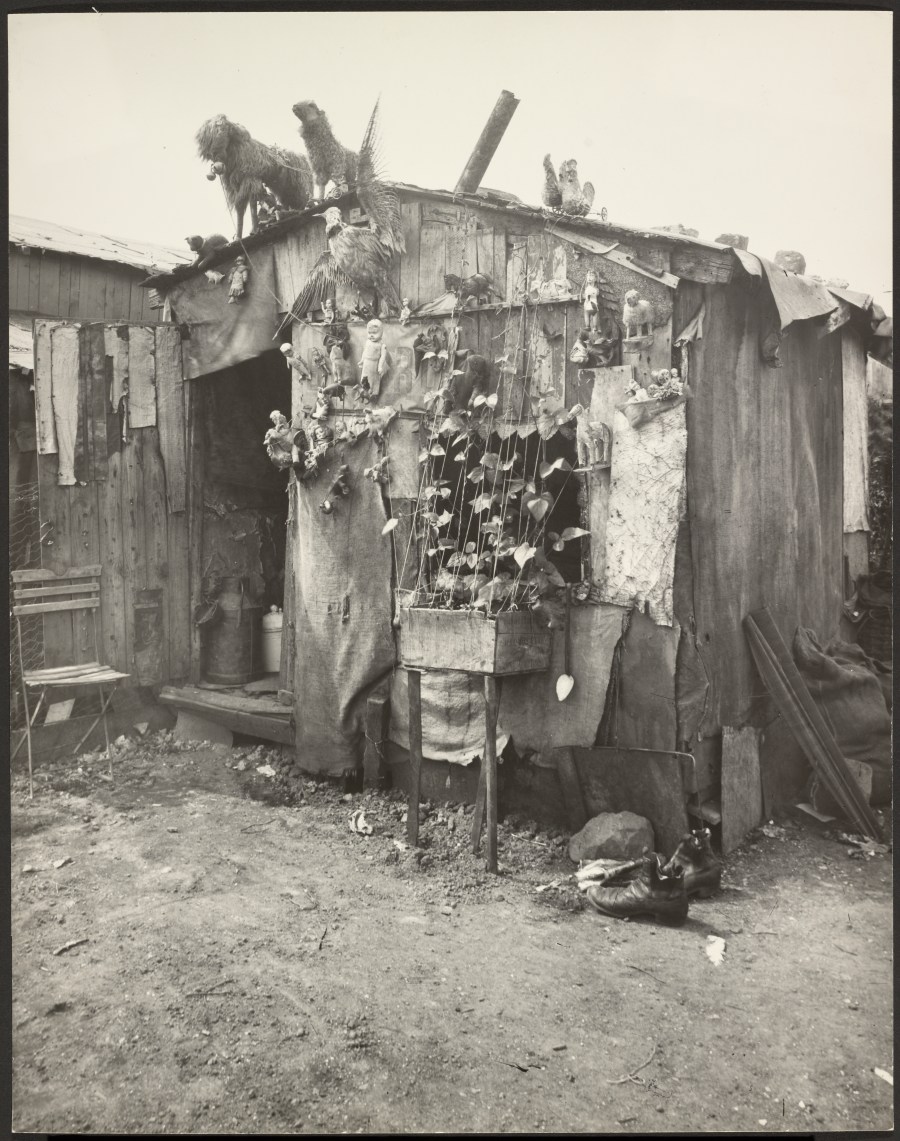
Featured Art: [Villa d’un Chiffonier (Ragpicker’s Shack)], 1920by Eugène Atget
I saw you, daughter, sneaking a garbage bag of my treasures into your car. Those heaps of eyeglasses are art.
Never mind the cracked lenses and broken hinges, the bent frames. Some day I’ll make a sculpture or hanging lamp. I’ll make a mobile.
The broken picture frames and dried-out pens. Even the bottle caps beg to be known. And how patient those stacks of hotel soap. Waiting. Just in case.
Yes newspapers haystack the walls. But it’s all there: knowledge at my fingertips. The postman will bring more.
There is an ocean liner inside my heart that waits to set sail. The crowds wave at the dock. My shades are drawn. Bring me, daughter. Don’t take. Bring me a basket brimming with words.
Not fester, not filth— fang words that surgeon my heart. Bring me gossamer, lagoon, violet-crowned hummingbird. Bring me, daughter, elixir of cloud.
Featured Art: Three Dogs Fighting by Antonio Tempesta
They are big and smelly and mean, and they’re living in her basement. I think they are dogs, but they might be wolves. Eight or eighteen of them, something like that. They all would bite me if I gave them the chance, so I’m really careful when I herd them out into the yard. What is it with my mother? Most families just have pets—usually one dog and a cat, nothing like this. How did she let this happen to her?
She’s living in some decrepit house now on Rt. 9 in the next town over and she’s evidently lost her taste in furniture. Everything is gold with rickety legs. She and I watch the dogs patrol around the yard from behind a glass sliding door. My mother is angry now that she’s old, and I think that maybe she and the dogs deserve each other, but I can tell that my mother is scared too, and I want to help her out because I’m the problem-solver in our family.
The dogs don’t play like normal dogs, they just move around the yard like big bullet-headed missiles. We have to get rid of them somehow, I tell my mother who is suddenly smaller than she was, and then I hold her in my arms and she’s a little girl. Whatever you do, don’t let them in, I whisper, but she’s already dead of lung cancer.
Featured Art: Buste van een oude vrouw by Anonymous
There are five recliners in a circle, each with a spongy blanket. The lights have been dimmed, but an aide has left behind her walkie-talkie and it sounds like it’s ready to lift off. My mother is in one recliner, I’m in another, an easy way to spend time now that she’s afraid of the color red and distrusts windows as if the glass weren’t there and the fingers of the dwarf palmetto would reach in and pull her down into its dark center to cut out the last cluster of syllables huddled beneath her tongue.
I look over to see if she’s sleeping and her eyes are open as though she’s forgotten to close them. Maybe she’s on some dusky street where half-drawn figures drift and sounds almost blossom into meaning. Maybe she opens a door and her aunts from Brooklyn are there and clutch her to their mountainous breasts where she could stay forever.
She tries to inch out of the recliner but an aide intercedes with a cup of apple juice which my mother examines closely for poison and studies her hand as if it’s screwed to her wrist. Then she brings the cup to her lips as if it’s the last thing left from the world when she was Shirley and carried keys, lipstick, cash.
And I hope that the cold, sweet liquid brings a moment’s pleasure, but how can it be that it comes to this, that at the end you get thrown in the ring for one more brutal round without enough stamina to put on your shoes or enough strength to say Thank you or Go to hell.
I unearth it while cleaning up my office, The Little Book of Common Sense Investing that my father sent me two years before he died, its bright red cover like an accusation, a yellow Post-it bearing his cheerful half-script still attached: “Jeff—even if you read only the first part of this book, you’ll get the gist. Return it some time, no hurry. Love, Dad.” I chose to place the emphasis on “no hurry” and hadn’t cracked its little crimson spine when, a year later, he asked me what I thought. When I told him I hadn’t gotten to it yet, he said he wanted it back, so he could lend it “to someone who might actually read it.” “But I might still read it,” I said half-heartedly. “No, you won’t.” Which made me all the more determined not to read it, so I said fine, I’d send it back. But I never did—and then he got sick, and our investment in that particular contest seemed pointless.
But here it is again, this little red book so unlike Mao’s, as if my father were making a move from beyond the grave. Okay, my turn. Is it because I need to prove him wrong even now, or that I want to make amends belatedly for disappointing him yet again that I open the book and begin reading? Or am I doing it in his honor? And is he still trying to tell me I invested in the wrong things?—poetry, for instance. “Counting angels on a pin,” he said once. Which is just the kind of cliché I find in the book. Later, though, he claimed to like my poems, the funny ones at least. And if we drew a graph of our relationship over his last decades it would look a lot like the Dow: a steady ascent with several harrowing jagged downward spikes. The little red book says nothing about those, though it does advise not getting too caught up in the market’s dramatic nose-dives.
Unless, perhaps, you’re trying to realize your loss—another topic that the book, with its rosy perspective, blithely avoids as it enthuses on “the miracle of compounding.” But instead of getting annoyed I feel an odd joy: my father could have written this book. He too was an optimist who liked to talk about money, and so I used to ask him questions— What’s the best kind of mortgage to get? Is life insurance a good idea?—and those led to some of our least fraught conversations. That’s why he gave me the book. And he was right: I get the gist after two chapters. And the suggestions seem helpful, if limited— I even underline a few sentences. Still, that other book, the one about losses, would be more complicated, and harder to write, its author finally coming to understand that, no matter what the future brings, he won’t be able to ask his father’s advice.
Featured Art: Crumpled and Withered Leaf Edge Mimicking Caterpillar (study for book Concealing Coloration in the Animal Kingdom) by Emma Beach Thayer
Unable to sleep, I imagine a blob of ants, erupting from a faucet.
If they puddle, that will mean sleep.
But if each ant descends on a crumb, steals what it can and lumbers robotically off, which they do, branching in veins across the tile floor, then I’m left listening to the sound of my two sisters downstairs in the summer kitchen where they’re making my mother laugh without me again, carrying their prize over invisible trails.
Featured Art: Figure with Guitar II by Henry Fitch Taylor
When I got the phone call, I listened to my sister’s voice give no hint, at first, that overnight, like that, her life had changed. I said hello and flipped through a book on the nightstand, knowing deep down, from all my missed calls, that she was preparing to tell me something important. How are you? I asked, trying to delay what I knew already I didn’t want to hear. And after her silence, then, I sat straight up—I was still in bed—my eyes blinking awake, the automatic coffee pot dripping into the quiet, and I said it: What’s wrong, Heather? expecting for one singular moment the death of our father, the sniffed pills, the heroin finally ending his life. But when she said nothing, I demanded, this time, hearing the pitch of her voice fill with the sound a brass instrument might make breathing a low note, barely audible, into the crashing, noisy universe. And she said it: Joel killed himself last night, choking on “killed,” and when I said, Oh my god Heather oh my god, she understood, she told me later, for the first time, that her husband was never coming back. The sun peeked through the window blinds. It flashed across the framed faces of his daughters, who I pictured, for a second, on the swing set behind their house, their father pushing them higher each time they swung back to him, further away each time, further away.
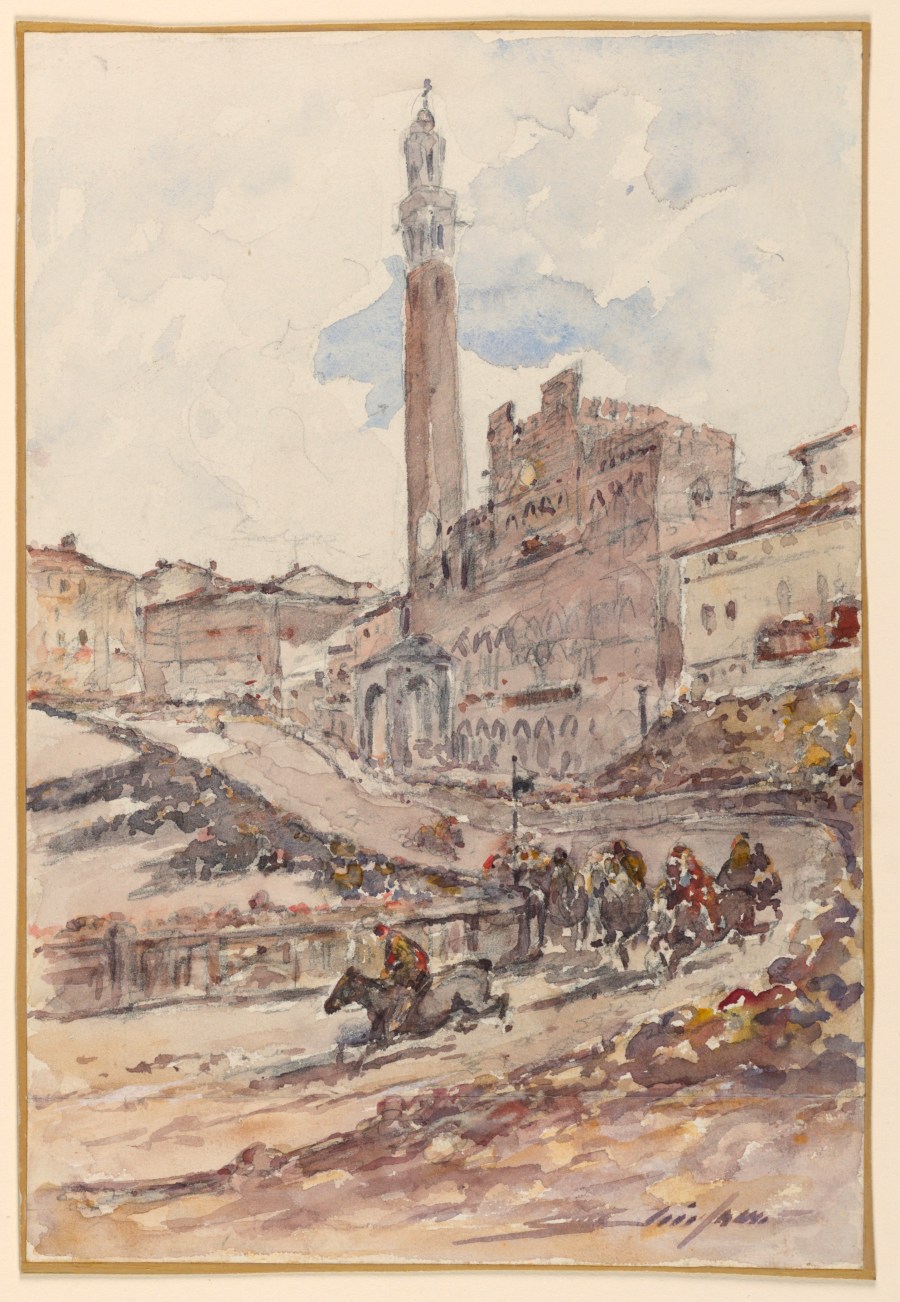
Featured Art: Horse Race, Siena, Italy by Walter Shirlaw
I asked about the old days, when they were my age—my mother scrambling eggs, Dad and I at the table. He aimed a glance sidelong at her, then took a shot toward me:
We’ve been very lucky, Son.
He must have meant their gamboling, teenage marriage after weeks of jitterbug jokes and getting-to-know-you’s in the Abilene Lady Luck pool hall in 1941.
Her silence like the hush of a tournament match, the cue’s tip skittish at the ball, probing for angle and spin, velocity, the all-important leave and follow-on.
By now—both gone so long, both unlucky— I understand his game, how words can travel in disguise, their spin covert, as on that morning when his mumbled plea
caromed off me—sharply, as off a felted cushion—and spun toward her, determined at the stove:
Come on, Honey, let’s play. Let’s keep the run alive.
Featured Art: Dog with pups by India, Rajasthan, Ajmer, probably Sawar school
That damn dog. Which one, Ma? The first one. There is no first one, there was always a dog, Ma. The shepherd, the one who kept the baby from rolling in to the road down the hill in front of the house. That was me, Ma. I was the baby. I know that. Rex. Rex. And what about your father’s, who jumped out the car window at a toll booth, headed for the hills. Skippy, ungrateful mutt. Then we got Duchess, because of Lassie on television. Duchess was weak. Duchess didn’t last. The toy poodle came in a hat box. She matched the décor! I swear to god, she did. Your chateau phase. What about your dogs? My dogs? My dogs, Ma? The fear biter who darted in the dark at the ankles of my bad choices? The herder who swam himself spent, circling me circling me when I was at sea? The too-happy dog, who I couldn’t keep, I forget why? Now this one, the big one, this horse of a dog who braces himself so I can stand? Who, the slower I go, the stronger he gets? Who can’t rest until I rest? This dog, Ma? This last one? Ma?
Featured Art: Edge of the Woods Near L’Hermitage, Pontoiseby Camille Pissarro
“We’d invite you in,” my mother said, “but where would we put you?” I must have seemed enormous squatting before her door, third drawer from center.
If not for the marble nameplate, I might’ve seen a diorama of Jacobean chairs, tiny forks and spoons, and my stepfather’s bonsai.
“There’s barely enough room for the two of us,” my mother went on. Deep inside the granite walls, my stepfather growled, “I blame the Realtor.”
Dogwoods fluttered, casting stained blossoms into the fountain. Down the hill, a procession of bagpipes let out a skirl. “She promised us a view,” my mother shrilled.
I think my parents imagined themselves still at the retirement home, rolling along a tulip-edged path from the Independent Wing, past Assisted Living,
over to Memory Care, where the Admissions Lady touched my arm and whispered, “Don’t worry. We’ll help them downsize.”
When my father was ten, his mother died and he went outside into the street after her funeral and screamed at God. He said, “Take me, you fucker!” to God, and his younger brother, my uncle, was so scared he ran into the room they both shared and hid. Later, when my father came back, my uncle asked him what Hell was like, why God had let him come back, if he had seen their mother, what she was wearing.
Selected as winner of the 2015 New Ohio Review Poetry Contest by Robert Pinsky
By Keith Kopka
Featured Art: Spring Flowers by Claude Monet
Knowledge of crime is a crime even if one is not committed by participation. At this cookout, in a parallel universe, a version of me lifts the gun, considers its weight a handful of peanuts. Another variant lets off a shot into Godless sky, a traditional celebration of manhood, in the dimension of Texas oil barons. I have a self who understands breech-bolt action, another who can separate grip cap and butt stock, put them back blindfolded, turn shotgun into sawed off. In our current rotation of speed and light, his pump action is between us on the table. The cookout has been great, and I’m glad his sister, my date, invited me. His mother is grilling cow tongue. The whole gang’s here to celebrate Marshmallow’s release after three years in prison, he’s at the grill asking for a fourth helping. The word Rascal carved in his chest like a pacemaker scar. In the universe of wooden nickels, I am best friends with this blunt instrument. Of course, this isn’t the universe where we live. My date’s brother is asking if I’m interested in a job, simple robbery, I get a part of the product, but he needs me because I’m white, because it won’t get back to his gang, or the black gangs, if a white man robs a white man of some drugs. I’ve noticed I’m the only guy at the cookout wearing a shirt. Her brother has a tattoo of two devils balanced on the top of a mountain range. It covers his whole stomach. He tells me if I shoot the guy, when I rob him, it’s okay, but if I kill there’s nothing in this world he can do to help me. Marshmallow settles himself in a deck chair, eyes closed, the meat on the grill smells like warm wood. Hungry is the only word I can think of.
Featured Image: Interior of the Colosseum by Ippolito Caffi Courtesy National Gallery of Art, Washington
A little boy in superhero underpants is made to change clothes by the open door of a battered family car parked on a busy street, his gaunt mom managing the maneuver though not quite bothering to block him from view,
the rest of the family milling about, each glancing over impatiently, the scruffy siblings finally pulling each other’s hair out of boredom, prompting a scolding from their pot-bellied dad, the escalating family tussles drawing dark scowls from the overstretched mother, the little boy’s sense of privacy seeming oddly
complete despite the utter lack of it for they all do wait and no one, tellingly, has a taunting word for the exposed, vulnerable boy, making his family, while fractious, seem set on spinning him in a cocoon
of protective, enduring force meant to stay— as he launches into the world— secret and powerful as superhero underpants.
Featured Image:View of Toledo by El Greco, 1599-1600
I leave the World Service on at night, snoozing through the British iteration of gang rape and kidnapping. I’ll stir sometimes to hear a few moments of economic collapse, but it’s really white noise, blanching the laughter of drunks outside. Sleeping to tragedy helps tamp down my father’s last days, his morphine speech, how my mother sent me to Kentucky Fried Chicken with a coupon for his last meal, and how shame drove me to throw the coupon out. If his death were broadcast in the night, his of thousands of dying fathers, and you slept well, how could I begrudge you a night of rest?
My mother wants her head to be frozen after she dies. I’m against it, but there’s no talking to her. She has a brochure.
On the cover, there’s a picture of a white building with no windows. I tell her, I go, “I’m never gonna visit you there.”
She says, “Fine, fine,” the way she does. She reads me the whole brochure. She’ll be maintained at something-something degrees
until they come up with the technology to defrost her. The, she says, “POOF. It’ll be like being microwaved.” I go, “Think about
what happens to popcorn.” She keeps on reading about how they’ll just fiddle around with her DNA, and she’ll grow a whole new body. I don’t get that part.
I go, “What if they can’t grow you a body, and you’re stuck being an alive head forever.” She says, “Then you’ll have to carry me around.”
We’re sitting at the table the way people do When a family member dies and a stream of well-wishers Arrive with sympathy and food.
Everyone is concerned for the widow, 70, tough, wiry, Who now seems weak and befuddled, staring at people She’s known for years without answering,
Rising and walking out the back door, staring at the woods At the far end of their land. Returning to the table without a word.
We’re all thinking how often one spouse dies Soon after the other, dies of nothing But lack. Because we are surrounded by guns, her husband’s
Sizeable collection—pistols in glass cases, rifles In racks and corners—talk turns to their value, the merits Of revolvers versus semi autos, plinking, protection.
Now, for the first time, the widow speaks, remembering That she went to the coop this morning and found curled In a nesting box a snake, unhinged mouth filled
With a whole egg, disappearing a swallow at a time. She walked back to the house, pulled her .410 Off the rack, returned to the coop and blew its head off.
A hog-nose, she says. A good snake. But I had to. She shrugs her shoulders. I had to. Glancing At each other, we nod in agreement, relieved.
My mother wants nothing to do with the puzzle two other residents, whose wheelchairs have been rolled up to a folding card table, are trying to put together— a west side shot of the New York skyline broken up into a thousand pieces, the stubborn morning smog she could see from the apartment she had to give up photo-shopped out, the OT insisting Mom join in the fun, taking my mother’s stroke-locked hand and guiding it to a corner piece that’s an easy fit,
When, years later, I learn Kevin Miller, the boy who grew up next door, is in jail for drugs and a stolen car and a gun, I think of eighth grade: Kevin with his buck teeth and buzz cut always getting into fights, Kevin suspended once for carving the F-word into a church pew during Wednesday Mass, then again for slinging walnuts against the windshield of Mrs. Sabatino’s car. And that one time, on the field at the end of the street, where the boys gathered after school to pick teams, Mark McGarity said, We don’t want the retard, meaning my brother— and Kevin said, What the fuck, man, and Mark said, Well then prove he can catch a ball, and when Kevin shrugged and said Fine, and told my brother to go out for a pass, and my brother did, but did not catch the ball— when it bounced twice off the ground, and my brother looked down at his sneakers, and Mark told Kevin, Yeah dude, there’s no way, and all the other boys stood in a sort of ring, and waited for someone to hurt someone else— but instead, Kevin thumped my brother on the back and said, Let’s go. And my brother— who may not ever be able to memorize equations or read, but knows when a man risks himself for another— he followed Kevin home to our back yard, where Kevin threw my brother the football, and though the ball passed again and again through my brother’s hands, Kevin kept throwing, telling my brother where to move and when, and I can picture, now, my brother’s face so serious and filled with concentration— and Kevin, throwing until their shadows fell long over the yard.
Selected as runner-up for the 2014 New Ohio Review Poetry Contest by Alan Shapiro
All he found when he came looking for us was the home my mother wanted to leave behind: newspapers stacked knee-deep in the hallways, every corner redolent of cat piss, linoleum caked with dried mud and dust, tangles of hair matted to the tub, dried scabs of meals coating plates and bowls piled high in the sink, on counters. Everywhere: the stink, the rot and mold, the great heaps of unwashed clothes, all the filth my mother never let anyone see. No friends allowed inside. Even her dates didn’t get in the door. She spent her nights at their dubious dens, leaving me alone to toss hamburger wrappers and soda cups on the living room floor, our one trashcan so full I couldn’t empty it. My father, finding all this mess, assumed the worst, took photos, jotted notes, thinking the house had been ransacked, that we’d been robbed, killed or kidnapped, though police assured him there were no signs of struggle. How she’d let the house go, he couldn’t imagine. Before the divorce, I heard her shout: I’m no one’s maid. Years later, when my father asks how we lived in such squalor, I tell him I never noticed at the time, though once I did: My best friend, Heather, and I were playing outside when a sudden shower drove us to huddle under the eaves. Soaked, I took pity, opened the door, disobeying my mother’s one rule. Inside, Heather didn’t ask questions about the mildew, the crumpled paper bags she had to brush aside to sit. She refused the towel I handed her to undo the work of the rain. I saw it then: tatty, gray, stained. Heather left, and later, when my mother found the couch still wet, I told the truth. Her face flushed; I tried to bolt. She reined me in with one hand, unfastened her belt. If they see this, they’ll take you from me, she screamed through the volley of blows. My back grew a rope of welts. They’ll call me unfit. Is that what you want? I tell my father none of this, judge it best not to show him the last bits of how his ex fell apart once they were unhitched. I don’t say how I, too, was the mess, tether she yearned to slip, so she could careen unimpeded through life, how I held tight as she zoomed away, raced toward a place where she’d be no one’s mother, no one’s wife.
My uncle calls from the wharf; his freighter is in; he’s walked to the nearest food and I find him in a crab shack at a table by the window. Waitresses carry crabs on trays, whole piles of them— stiff, blue, dead—and the restaurant patter crackles with the brittle speech of small mallets on their shells. Elena, his wife—she’s from Colombia, my age— wants a divorce. She’s living in Miami with some Cuban, he says; she’s got his TV and his car. When his crabs come, I order grilled cheese, tell him about karma, how I’ve removed myself from the chain of suffering and he says, shit, picks up a crab and whacks it squarely on the back. He tells me about winters on Superior, ice boats cracking a path through December until the solid freeze of January, how he shoveled iron ore from the hold until the red dust rose in clouds from his clothing, rinsed from his body in the shower like a gallon of blood; and before that, how he went to Vietnam while my father went to college, how he bombed the jungle beneath him without ever looking down while my father dropped out of college without ever looking ahead; and before that, before the war, how the two of them hit a tree one night while driving on River Road. You’d have thought we wanted to be that tree, he says. It broke the car, broke seven of his ribs, nearly broke my father’s heart but in the end it just broke his spleen and ripped him open from shoulder to hip. My great aunt—the whole family tells the story now— came from Kansas and prayed him back from the dead.
I was attempting the old familiar, the regular slog, when I slipped into missing her again, the child my wife and I would never have. Sometimes she was a girl and sometimes a boy. But like heaven, I held her there in my mind, a place of light where nothing is done, but all is felt. She was a multitude. The great uncapturable plasm of love. Often she was only a finch’s thin line across a rice-paper sky, tearing through all stations of life. The way she might have worn her hair, or adorned the surprising aspect of surface-self for appeal. Or how the supremacy of personality might emerge, wriggling out as it does. Or the first run-in with terrible, terrible sexuality.
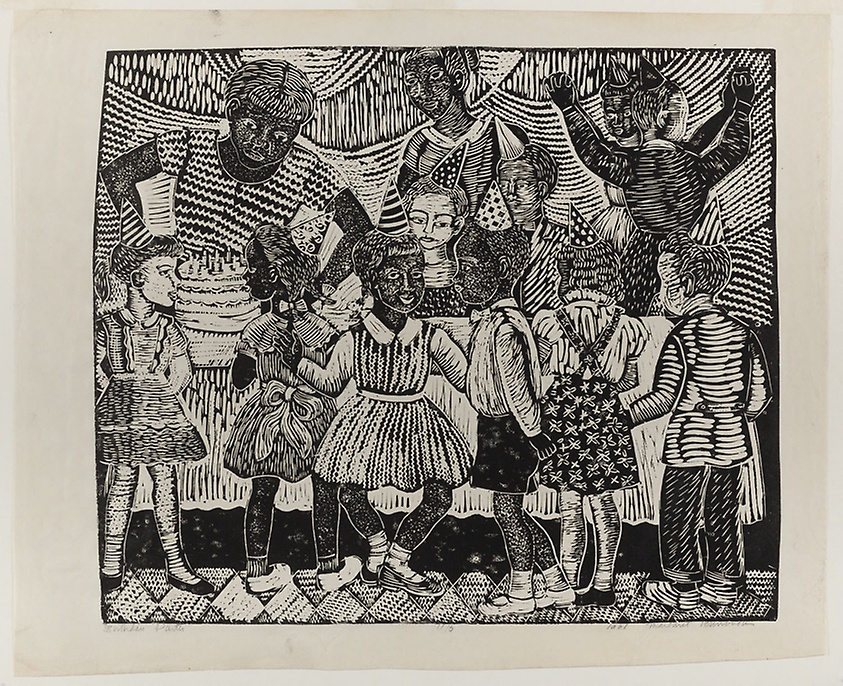
Featured Art: Birthday Party by Margaret Burroughs
Dream-phone rang and I thought: that’s exactly his voice. I haven’t forgotten. Then: but I could forget, because he’s dead. Hi, sorry it’s been so long, but I was sick and the doctors messed everything up. He made that shrug-noise, dismissive but pained, meaning he’s lying or leaving something out. It’s snowing here, and then a click, click, over the line, and a neutral woman’s voice, slightly officious: This recording was intercepted. If you wish to replay this message, dial this number now, and she recited a blizzard of digits while I flailed for a pen then found myself tangled in blankets. The window a bruise beginning to fade.
Here mist wreathes the trunks. In a few months snow will crisp the grass, insulate and numb the oaks with feathery layers that would soak and freeze a human being. When and where is he? Snug, maybe, watching weather through double panes. Or wanting to be. I heard a bead of doubt suspended in his voice, a cool guess he’d missed something, before my operator intervened, reason declaring: This is memory. The line is cut.
Mom called Friday to say Linda died. At least two people I don’t like at work I know better than Aunt Linda. I carried her casket yesterday, because my grandmother asked, along with younger cousins, strangers I recognize from childhood, tough men I see only as the children they were in bony faces, stubble. The babies they were they’ve locked up deep: Dusty on military disability with three kids, and Billy, who used to be Little Billy, with a court date for driving 137. My grandmother looked like a Treasure Troll in tired skin, white broken hair refusing to go down. When I hugged her the life in her was small as a niece, her lineage drained out all around her. She reminded me I was her first grandbaby in that smoky Southern Baptist vibrato. A few days before, on Sunday, when I’d come to her house, she talked like she’d long ago forgiven me for mostly staying away for twenty years. I was glad she didn’t know the trouble I’ve caused, especially because I doubt she’d love me less. My senior picture hung in her living room as if I were as important as all these grandkids and great grandkids who wondered who I was. Soon she’ll be dead and I won’t be so important. So many people took turns holding her the funeral seemed to be hers. I had no right to want to save her from thinking, when I was helping to carry her daughter’s body, that I’d soon be carrying her body, as I’d carried my grandfather’s body just a couple years before, which was actually six years before. We were not sad that, to time, we were like grass under the feet of pallbearers. I was sad because the time I had in common with this side of the family we’d mostly forgotten, another thing my grandmother would die knowing. The last time I saw Aunt Linda was outside the hospital in the courtyard for smoking. I was there visiting someone who’d mixed Vicodin and vodka to find out who cared. I can’t remember why Aunt Linda was there, her heart or her brain. Her brain would cause the most trouble later, a popped vessel, then another, the top of her skull removed, screams from the headaches and so many drugs, according to my grandmother as we smoked outside Sunday morning. She’s at peace, I said. Already we were down to our last words.
When I tell my mother that a man I know pickets the local hospital about what his wife calls “his topic” that is, circumcision and its evils, she tells me this was my grandmother’s specialty as a nurse, and I say, “You’re kidding.” “No. The doctor she worked for couldn’t stand it, so she did all his circumcisions. She loved it!” Loved it? I think—cutting the tips off boys’ penises? Loved what? The precision? The power? The cries? I remember sitting with my mother and grandmother when I was seven or eight, pretending to play, so I could listen to them talk in front of my grandparents’ house in Washington, 328 Maryland Avenue, and down the tree-lined street you could see the Capitol dome looming. A couple were walking on the sidewalk, and they waved at my grandmother, who smiled and waved back. “Are they married?” my mother asked when they passed. “No,” my grandmother answered, “they’re just shacked up.” The cups of my ears gathered around those words like ravenous Venus Fly Traps, because this was just what I had been waiting for, though I had no idea what it meant, and I knew I couldn’t ask or my doll dressing and tuneless singing would be exposed for the subterfuge they were, and I’d be exiled into the house, and this was before my grandfather died, who didn’t think a woman should drive, but my grandmother taught herself, her two little girls in the back seat screaming as the car jerked over the dirt road behind their house in Kentucky, and then after he died, she went to school and became a nurse, but fifty years later I’m chatting with a man on a plane, who’s returning home after spending the day in New York because he is a mohel and has made this long trip to snip the tip off some little boy’s penis, and I think of Mantegna’s painting of the circumcision of Christ at the Uffizi and kosher laws which forbid eating crustaceans, which would mean a sacrifice of gumbo, boullabaisse, cioppino and fish soups the world over, and it was the fried Apalachicola shrimps that broke the back of my vegetarianism, what in Louisiana they call “sramps,” and I’ve heard them called “pinks,” “prawns,” and sometimes when I’m standing over the stove making a roux my life seems to be a kind of gumbo, and if you don’t burn the water-and-flour paste, then it doesn’t much matter what else you throw in, but okra is a must and a couple dozen oysters, andouille sausage, all your dark mistakes mixed in with the brilliant medals and diamond tiaras, and my grandmother told me she went to her wedding in a horse and buggy, a seventeen-year-old girl, probably a virgin, and little did she know where that road would lead her, from canning tomatoes and corn to snipping the tips off thousands of penises to the nursing home where she died, shacked up with all her selves, that particular gumbo stewing in a body withered by 93 years, not knowing anything but that she’d rather be eating ice cream, driving to Memphis, frying chicken, mashing potatoes, baking a cake with blackberries her daughters picked that morning before walking to school.
Observing my boyfriend’s niece and nephew kick each other under the table at Thanksgiving dinner, blasting each other in the shins and knees, bone against bone drawing bruises and welts, done in such fury and with such power yet no sound, faces not affected, not a hint of a wince of pain, so little movement at all, I thought that’s how my sister and her husband love each other, and how my father regards his job and how my mom feels about all of us, and how I see my body. These children with pink Keds and black and green striped Nikes underneath a crisp ironed tablecloth of fall colors, didn’t lie once.
Phil Rizzuto, shortstop, the Yankees’ Scooter & play-by-play announcer & The Money Store’s man of a certifiably trustworthy nature, but invented for me first in war stories told by my father— on a South Pacific island naval air station maybe it’d be fun to put Scooter in the game, brass thinks a sports star visitor to war zone great theater of operations P.R.— but basketball, not civilization-beating baseball, basketball my father’s game— “I could take him, he couldn’t get by me”: sayeth Norman Rivard, testimony of a former All-State point guard 1942 season Mass state champs team captain Durfee High School Fall River; his torpedoed destroyer sunk by a two-man Japanese sub (a sake brewers’ assistant & an Imperial War College ensign?), a few days earlier their suicide mission had sent my father to the base, rescued just in time for Scooter’s morale boosting visit, the two together on an asphalt court in cosmic time Holy Cow! an immortal, lucky accident— but will, pride, intensity count more for Norman—“don’t depend on luck OK, why don’t you just apply yourself?” my father’s question, frustrated by his distracted, blurry son— apply yourself, stay on track, stick to it, that’s the thing, you’ll adhere successfully to whatever you want (not sure I know what the wanting is for even now), you can be an architect, trial lawyer, oncologist, surveyor, if only you apply yourself— like a wing decal on the model of a Mustang P-51 Fighter or whiskey dried in a glass-sized ring on a liquor cart?— skim the ear wax off your eardrums, Dad—here is your poet, & here is your poem.
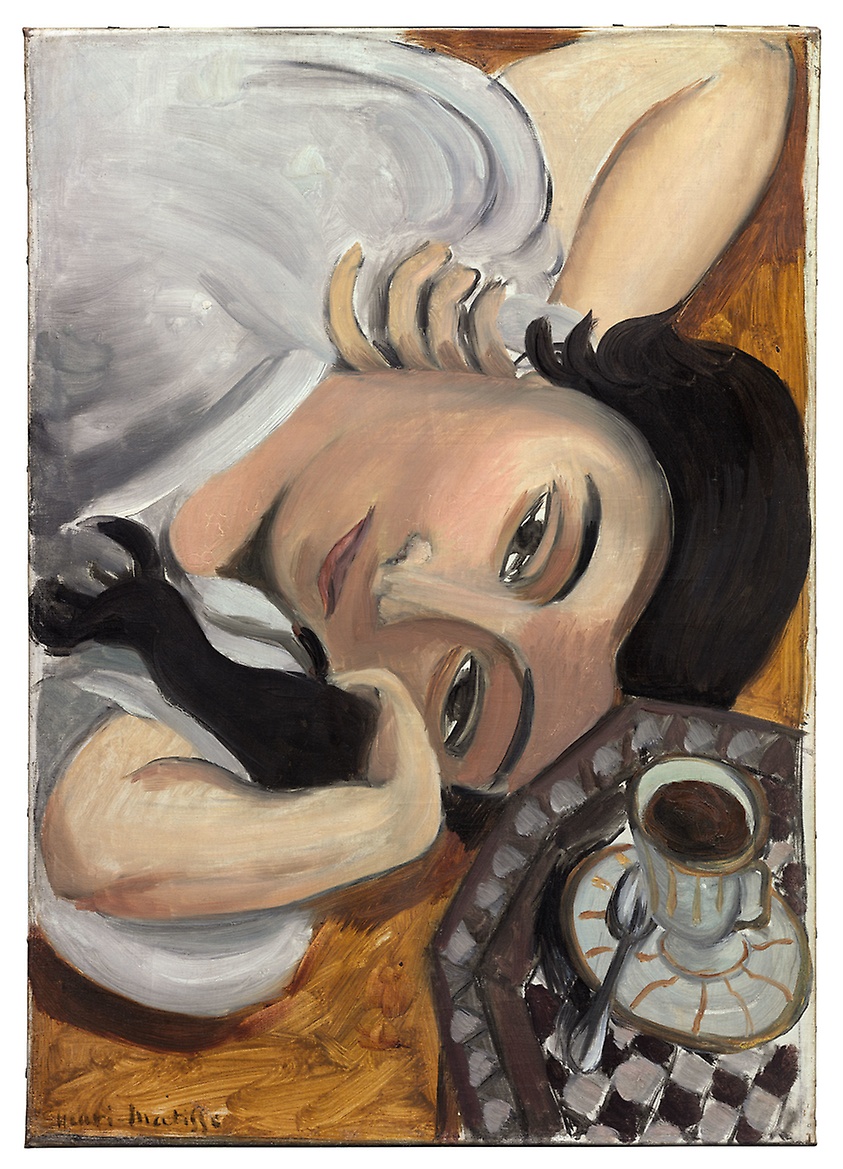
Featured Art: Lorette with a Cup of Coffee by Henri Matisse
After my swim, I sit at a small table at Peet’s with my medium sugar-free, low-fat, vanilla freddo that the barista started as I walked in. I push the whipped cream deep into the cup and worry
about my daughter, who drives a perilously small car on the freeway, and my son in New Orleans, too poor to drive, whose illness frightens me most of all.
My father worried about us until the day he died. When I came home from college, he insisted I take the dog or my ten-year-old brother with me when I drove at night. At eighty-six, he called me daily
from the nursing home to make sure I was okay. I remember how my mother savored half a nickel-box of licorice bits and a single cigarette as she read each evening, waiting for us to come home,
and years later, how she devoured the Hershey bars and Cokes Dad brought her every afternoon, long after she had forgotten us all.
Featured Art:Fruit and Flowers by Orsola Maddalena Caccia
My father has a new woman. He’s 93, the old one is worn out. They used to hold hands and watch TV in his Independent Living cottage, but now there is the new one, to hold hands. The old one is in Assisted Living not 50 feet away but barely able to lift herself to her walker. He sits in her room after dinner, her mind wandering in and out. What if she escapes and comes over while my father is “taking a nap” with this new one? My mother is two miles away beneath her stone, relieved. I bring artificial flowers to her with my sister, who likes to do that when we visit. I am not much for demonstration. I would just stand there and say, oh, mother, he’s at it again. And she’d say, I am sleeping, don’t bother me with him anymore. And we’d commune in that way that knows well enough what we’re not saying. And I’d be lamenting my self-righteous silence in the past, my smart-aleck-motherjust- go-to-a-therapist talk. What I should have said was, was, was, oh, it was like a tower of blocks. Pull one out and all would fall. She would get a divorce and a job and marry some balding man like her father, who would be my ersatz father and would take her dancing and let her wear her hair the way she wanted, and she would cut it short and get it permed and life would quiet down and my father, to her, would morph into the handsome and funny Harvard Man he was in the old days, the way he posed her for his camera, tilting her head to the light with his devouring-passion fingertips and her days would begin to feel like a succession of pale slates to scribble on and erase before the new husband came home from work, while my father would spin off after whoever would “put up with him,” as he says, and would follow his new one around carrying her groceries and complaining that she spends too much, but biting his tongue and thinking how soon she would let him, well, you know, and I would be, what? The same as now, writing this down so that none of the shifting and sifting could get away cleanly without at least this small consequence.
Featured Art: Chrysanthemums by Pierre-Auguste Renoir
1880: John Stine proposes to his dead wife’s sister, Eliza. He is a farmer, about forty, she is a spinster midwife. She accepts, telling him, “I will marry you for the sake of the children, but I will never sleep with you.”
This sounds strange—would she have said sleep with in the nineteenth century?—but these are my grandmother’s words. It is 1993 and we are sitting in her house, which smells like cigarettes and meat. The curtains are drawn. Her second husband has been dead for fifteen years. She hasn’t gone blind yet.
1962: The Orlons sing Baby baby when you do the Twist, never never do you get yourself kissed.
Selected as winner of the 2012 New Ohio Review Poetry Contest by Billy Collins
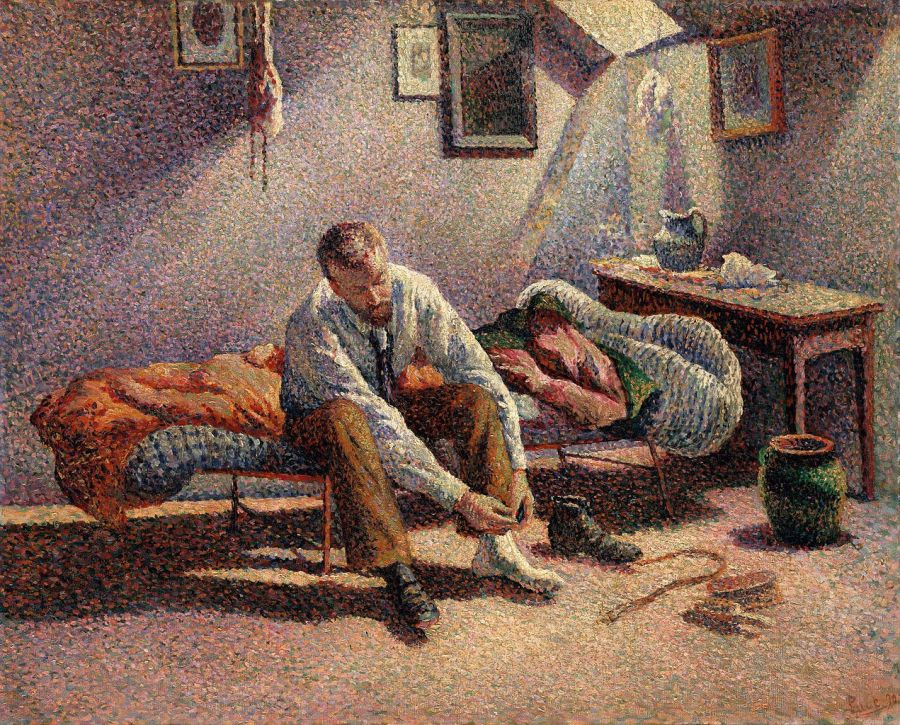
Featured art: Morning, Interior by Maximilien Luce
It’s all there—the stuff no one wants to say is theirs anymore, the single-slate pool table, the six-person tent, a complete professional tattoo set complete with analog power supply.
And my father’s 1988 Corvette. He is no longer sad to see it go, though he does lament, my mother tells me, that young people these days no longer want something like it. They want a car with good mileage, something they can take a child to preschool in, cart around the six-person tent.
Featured Image: “Portrait of Mrs Marie Jeanette de Lange” (1900) by Jan Toorop
If I could choose my muse, she’d have red hair, short, spikey, and green cateye glasses with rhinestones at the tips. She’d wear a sleeveless white blouse, ruffled over shallow scallop-shell breasts. Can you see how young she is? I think she’s the girl Sappho loved, the one with violets in her lap. When she opens the door, a flurry of spring, apple blossoms and plum, sweeps in. But I’ve been assigned the Muse of Work. It turns out she’s a dead ringer for my mother as she scrambles the eggs, sips black coffee, a Marlboro burning in a cut-glass ashtray. Then she opens the store. The wooden shelves shine with amber whiskeys and clear vodkas, bruise-dark wine rising in the slender necks.
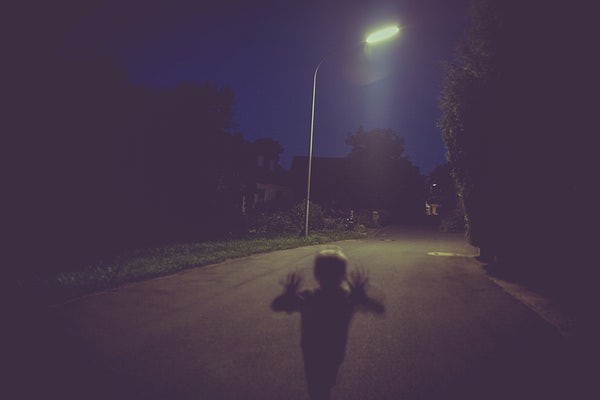
Featured Image: “A Lone Child Walking Down the Street at Night“, Unknown Artist
Like the one where you stumble along happily drunk after closing a bar and reach your car only to find it surrounded by militia who take you in to question you about why you left your son alone in the car so long and you say I lost track of time though that’s not true and Can I see him and they refuse and Is he okay and you’re panicking and thinking What if he died in there or the one the very next night when you find yourself atop some posh hotel listening to some poet speaking and realize you haven’t seen your son since morning when you let him go down to the lobby alone to play despite the warnings you now recall about the natives and you race for the elevator but there is no elevator and so you find the stairs and descend floor by floor and each landing is a shabby apartment living room and though you can sometimes tell someone is home water running for instance or light under a shut door you never see anyone or gain any real insight into this country of ancient dearth and modern resentment what country is this anyway? and after the gauntlet of these empty private foreign lives you emerge at last into a brightly lit and darkly paneled colonial lobby and scramble frantic now through the patrician crowd looking for help but when you ask a giant suited man if he speaks English he replies in the plummiest nasals I don’t just speak it I am it and merely cocks one brow about your son so you race outside where a boy squats alone in the penumbra by a bush and you tilt his face to the light but he isn’t yours too small and dark and you keep looking and see others and scream one name and then oh god you see his hunched familiar shape rise out of the pile of dead leaves he had hidden under and stumble toward you arms extended the pajamas he was wearing this morning now tattered and filthy and when you scoop him up you discover obscenities and anti-American slogans scrawled in black marker on his face and blood or something caking his nostrils and he doesn’t speak or cry and nothing shines forth from those eyes and you carry him cradle him through this endless third-world night trying to comfort him but knowing you will never be able to comfort him but cooing You’re safe now Daddy’s here or the one where
Featured Image: “The Grocer’s Encyclopedia” by an unknown artist
So yeah, we all have these moments that suck because what they mean is like a mystery, like the Mariners last year good a team as any, traded what’s-his-name, the fat one, for that Puerto Rican dude with a wicked right arm and didn’t even make the playoffs. Anyway, I can see you’re a man of the world like me, standing here I don’t know how long and still no damn bus. But like I was saying we all have these moments and last week there I was after work, making a stupid sandwich, the kind of stupid-ass food people like me always make when I can’t figure out what I’m feeling and I feel like being true to myself is about the dumbest thing a man can do, knowing how easy it is for the truth to mess things up.
My mother rolls her walker through the rug like pushing a dull reel mower through high grass. She cannot see, so maybe the simile should be sound instead— like bad jokes from a dull boor. The brittle thread of escape snapped long ago, sewing kit trashed, needles only and constant from pain—knee/back/hip. Blurry edges of God rim her miraged vision. She burns a sandwich on the grill but not herself—thrill enough to earn a pill. Today she’s skipping church, and it’s just next door. She calls me from the kitchen to carry her cup back to her chair—no free hands. She must watch where she lands when it’s all freefall and whiffs of Jesus not happy with her. I’m a tourist with a bad map. She’s a local with time. She waves her hand as she talks, one graceful thing. She flirts with air.
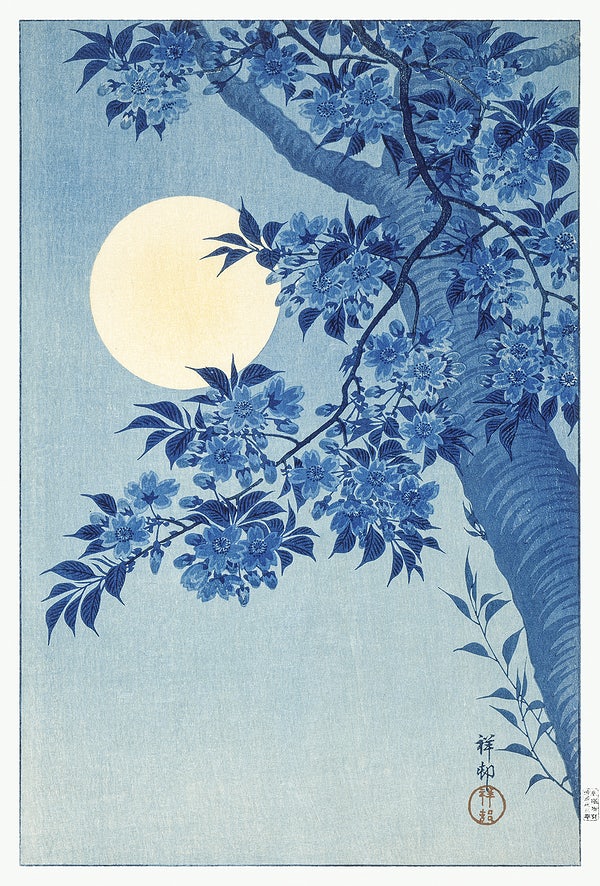
Featured Image: “Blossoming Cherry on a Moonlit Night” by Ohara Koson
Married in Beijing, they had their names carved on a grain of rice. Mai wore a yellow silk gown. He wore a black suit. Embraced in the photo turned sideways they resemble a tiger scrambling through strewn mums. That evening they ate salted mango and shrimp. He can still taste that, see the tortoise-shell clip sun- splintered in her hair. That evening continues, stalled like the sea-filled drapes in their room. For twenty years he worked at a lab that accelerated protons. Here are photographs of their two girls on Lake Michigan, then in Zermatt, standing before the Matterhorn, whose moraines, cirques, and ravines resemble those through two names magnified on a grain of rice, or of that shadow looming through the CAT scan of her brain.
Feature image: Ugo da Carpi. The Sibyl and a Child Bearing a Torch, 1510-1530. The Art Institute of Chicago.
who was given up for adoption early on, when it was clear they couldn’t manage him. It was, says your father, the worst decision they’d ever made. (It’s you and your parents at the kitchen table. Between you, the steam from the teapot uncurls in a kind of breathing statuary.) He was your inverse, your yin: When you went to sleep, that’s when his terrorizing of everyone would begin. He went from home to home to group home, and then to prison, half mad, a drug-addled teen, with your name tattooed over the veins in both forearms. “That’s when we moved to Minnesota,” says your mother, but of course he found you here, at the end of an abbreviated sentence, and slit your throat while you slept. This was last year. You’ve been dead ever since. We know this must be hard for you to hear: but you don’t exist. You’re your own twin brother’s obsession with you. (Can it be? Instinctively, you reach to touch yourself about the shoulders, the neck, but everything’s . . . identical.) It’s like a mad dream— yes, the recurring one you’ve had since you were a child, in which you go from door to door, trying to trade your life for another’s, but nobody will trade, and you go on and on, pounding, until, impossibly, you finally find someone willing, and you wake. Your mother reaches through the figure of steam to lift the teapot and pour from out its only portal a little stream into her cup, her husband’s cup, the cup in front of you. She sets the teapot down, and now there are four apparitions dwindling there, silken, gesturing. One of them says, We love you the same. But you can hardly hear them as you push up your sleeves —one at a time—and read, and reread, your name.
Feature image: Odilon Redon. The Beacon, 1883, reworked c. 1893. The Art Institute of Chicago.
So this young couple, overweight and seriously tattooed, comes into the café, and each of them is actually wearing a baby in one of those tummy-papoose things, and they have two enormous dogs designed to kill elk and wolves, not sit under the table at a coffee shop, and as I watch them smile at their babies which are now screaming bloody murder while the great slobbering mastiffs begin earnestly licking their own privates, something terrible happens to me: it’s like The Manchurian Candidate, when Lawrence Harvey suddenly realizes the reason he’s been acting so strangely is because he’s been brainwashed by Soviet agents:
I let him go. I complied. Adjusted. Saw. Did not see his disappearing act of staying while leaving the body. It felt so familiar. My zombie-mom (on Stelazine, Thorazine to tamp
her paranoia down), would be there/not there to make macaroni and cheese, do the wash, help me with my Spanish. I knew she was sick, I knew she loved me though she lay in bed until noon,
again in the afternoon, comatose with the New York Post, her arm bent at the elbow to cover her face. This was what love could feel like— somnolent, absent. Why be paranoid when he slept in the same pose.
Sometimes cooked dinner, did the wash. Who knew a blunt face could hold so much hate. The child in me saw his numbing out, going to bed early, not as aversion but a version of my mother’s love
and all I had to do—as when she’d be taken away, hospitalized, shocked— was wait for his return. (Is there a Penelope inside every troubled wife?) Didn’t my mom always come back?
Peanut shells crackle beneath your pink slippers as you pace. The players behind routines of a different sort long after the show is over, long after the spectators return home, their caricatures slipping from their grasp as they unlock the front door. Teeny the strongman is calling the torn names in the phone book he ripped in half, as Vasserot listens outside, smoking a cigarette with his left foot, his arms a phantom presence he feels each time he reaches for another can of peaches. Karlov the Great has gone to bed regretting his dinner, three light bulbs & a seven-foot feathered boa, while in the next room Madame Sossman is about to win a red nose & a pair of floppy shoes, unless Noodles can beat three Hangmans. Monsieur LeBeau stands in the big tent, still listening to the cheers of the departed crowd. His daughter won’t return his phone calls, but tomorrow will bring a new town, with a different name & story, where anything is possible, & tonight the stars’ white flames burn on their blue wicks – she’s out there, somewhere, the one you left behind on the Serengeti, in the night that paces in a circle with its one black shoe, beneath wires no one will ever see, the sickle moon’s ivory as beautiful as your tusks once were.
my brother-in-law wrote a letter he never mailed. In it he explained what a dog smells when it smells fear. He described what he saw when he saw blue. He mentioned a moment that afternoon: he was alone in the house, somewhere not too far off was the rumble of heavy equipment, then he heard his name pronounced by a familiar voice he’d never heard before. He gave two options for how things would turn out and wrote “one or the other.” He noticed how “or the” was almost “other.” He mentioned that in the next line of the letter. Why am I telling you this he wondered next. He said Friday was his favorite evening, in the fall, the team just taking the field. He knew he would not mail the letter but wrote it out long hand with the pen he kept by the phone for taking messages. The letter will be found years from now in the back of a drawer that contains a hinge and a set of brass keys to doors that are long gone or I should say now always open. The closing was hood something, the last word smudged, good luck? goodbye? good something, good.
Featured Image: Landscape by Peter von Bemmel 1685-1754
She’s in the first booth left of the planters. She’s been waiting an hour now. She’s been waiting at the Watertown Family Buffet with her little girl who’s dreamed up some kind of a costume: giant glasses, backwards cap, taffeta gown which is clearly for him, for Al who’s just now arriving, finally, and now
he’s seen them, and now he’s walking over, and now he’s standing there, standing there, husband and father, or boyfriend and father, or boyfriend and father figure, except he’s way too late, he’s too late times two and the party’s over thank-you, and, no, they’re not having, not the grin, not the story, not the hug.
The woman gets up, and then, face baggy with patience, she nods to the girl who scoots out too, and they exit together. So over the chips and spilt dip, over the drained Pepsi and the big white cake with “Al” in caps and quotes he watches them go, looks out at the parking lot, opens his book. Here’s the waitress with her pad and pen. And what in hell is he reading?
Under the rusting red metal lid we’re waiting for you—your father’s tools. We always knew you weren’t going to build a doghouse or repair the stairs or tighten a bibcock faucet, but we wanted to be of use as in the old days. Ah, the old days! When we heard your father’s tread on the basement steps, we were thrilled. The hammer clenched its head, the bubble trembled in the level, the pliers stretched its jaws. But after your father died it was worse than we ex- pected. You carted us out to your car, left us for months in the trunk, and then stuck us on the floor of this hall closet next to the vacuum cleaner. Now the hacksaw’s teeth are rusting, the file’s worn down, and the measuring tape sags beside the plane. The poor jackscrew, no longer attached to a work bench, has grown forgetful, and thinks it’s really a micrometer caliper. All you care about is duct tape these days, tearing off flashy shreds to cover your botched work while the tough little nails languish. So watch out! All of us in here are fed up with your disregard for some of mankind’s oldest inventions, so if you ever do open this lid you’re going to get hurt.
In the morning, after much delay, I finally go down to the basement To replace the broken dryer belt.
First, I unbolt the panels And sweep up the dust mice and crumbling spiders. I listen to the sounds of the furnace Thinking things over At the beginning of winter.
Then I stretch out on the concrete floor With a flashlight in my mouth To contemplate the mystery Of the tensioner-pulley assembly.
And finally, with a small, keen pleasure, I slip the new belt over the spindle, rise, And screw everything back together.
Later, we have Thanksgiving dinner With my wife’s grandmother, who is dying Of bone cancer. Maybe, If they dial up the chemo, fine-tune the meds, We’ll do this again next year.
But she’s old, and the cancer Seems to know what it’s doing. Everyone loves her broccoli casserole. As for the turkey, it sits on the table, A small, brown mountain we can’t see beyond.
That night I empty the washer, Throw the damp clothes into the dryer. For half an hour my wife’s blouses Wrestle with my shirts In a hot and whirling ecstasy,
Because I replaced an ancient belt And adjusted the tensioner-pulley assembly.
By Peter Stokes Featured Image: Baby (Cradle) by Gustav Klimt
Lenny’s elbows jut from the sleeves Of his blue barber’s shirt And carve the air about my head In a series of unreadable signs That I trace in the glass of his square barber’s mirror Where I watch myself watching his face give expression To the subtlest whir from his scissors and comb. Or we talk for a moment About a change in the weather And I realize for the first time That Lenny is gay. “So how’s married life?” He says through the silence, The strange edge in his voice Like a barb on a wire In the point-blank talk of our new acquaintance, And I smile a smile that communicates nothing And it’s suddenly clear that Lenny is drunk. How much, then, I wonder, does he want to know About my wife in the hall With the bread knife in her hand, Or the one about me, It was midnight at Tim’s place, Falling down drunk from the top of the stairs, Or the sub-zero talk in the car outside Lena’s And making her cry until 3:00 a.m. And I talk to myself, Three speeches in the silence, And all of this world, On the still point of a pin, Spins through the minutes With nobody talking As we confess to ourselves Everything we conceal And the hair from my head just falls to the floor.
















 New Ohio Review