Samsara

By Matthew Williams

My students wear the name Nirvana and don’t know the band.
I didn’t know Kurt Cobain chose the name for its pretty sound
and, when I was younger, revered him as a tortured genius
until my brother found my mother unconscious
and all the medicine bottles empty. They say
he didn’t want the band’s name to sound angry.
One of my students who loves his Nirvana shirt
lost his mother. He stands and shouts at everyone
and no one and pushes out the classroom door. Despite
my mother becoming a self-avowed Buddhist who listens
to Thích Nhất Hạnh audiobooks and smokes marijuana
for chronic nausea and pain, I still know little of Nirvana
beyond what I’ve gleaned from a few movies and books:
transcendent detachment, cosmic oneness, unbeing.
And yet, with what little I knew, after
the bell rang, after the students
moved through the long hallways
that shook then stilled
as they emptied of their laughter,
I looked for him. I did.
I looked for that boy. 


Read More

The World as It Is

By David O’Connell

Some believe the new math
proves reality is actually

a hologram. And who am I
to argue when I don’t know

the language? I speak pig math.
At times, finger count. Failed

this week to help my daughter
with her fractions. Don’t worry,

you’ll never use it in real life,
remember? But now it seems

this math has always been
presiding over smoke-filled

back rooms of the universe,
invisible mover and shaker

knowing what we want
are answers, and that we want

them now. Outside, the street
is darker for the light rain,

and I’ve cracked the window
to catch the scent of earth

kicked up by water falling
back to us. Nothing is lost,

explained the talking head
last night, asking that we picture

clapped erasers raising
clouds of dust. The math

he detailed says it’s possible
for every molecule of chalk

I smacked out in angry
plumes beside St. Mary’s

one afternoon in 1982
to reverse and gather again

upon the board—faint, then
clearly remaking each mistake

I’d scrawled that day in class.
Implausible, but not. An act

the nuns would’ve taught us
wasn’t math but miracle

on par with the angels
that appeared—like, what?

if not holograms—to trumpet
what they knew was right.


Read More

Sonnet (I Have Two Moms)

By Luciana Arbus-Scandiffio

In the seventh grade we debated gay marriage. I was con.
I stayed home. Kept my hair in a braid and kept my braid
to myself. Tucked my name like a secret up my sleeve.
Wore hideous loafers. Ate full-sized boxes of Twizzlers.
Became rigid, a painting. Still Life with Social Studies.
My skullcap, full of doves. My face, a hot button.
Press it! Pierce my timid ears. In the bathroom eating
a turkey sandwich and Jenny dragging my zipper down
to see what was there. Con: my whole life riding
on a hyphen. Con: my hands blue with luck. An eyelash
on my finger. Two of anything can build a bridge.
The love makes me lonely. The love makes my family.
A slogan of roses. A crown of sugar ants
eating through the gymnasium floor.


Read More

He’s Fine with a Little College (or, All Those Pups)

By Jeff Tigchelaar 

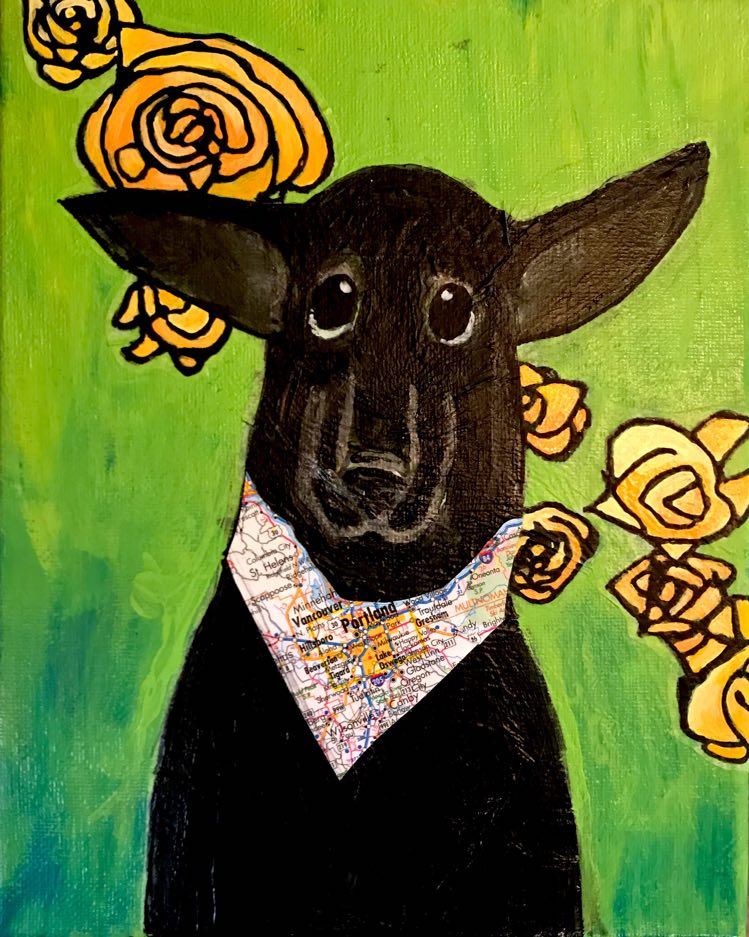
Featured Art: Atlas the Pup by Troy Goins and Mallory Valentour

College is for people who think

they’re too good to work.

Don’t get me wrong: I’m fine

with a little college, as long as it’s

in a Lego set, like.

But the kind with full-size

buildings and professors . . .

that right there’s a different sack of bait.


But you know what? Life’s like a dogsled team.

Unless you’re in the lead, the scene don’t change.

All those pups, yipping and chomping

to get ahead and be up front . . . but

the top dog’s been chosen from the start.

And that one mutt might not have to

have his nose up the asshole in front of him,

but guess what he’s got right behind him. A dog.

And another dog, and another and another. A whole

damn pack, and a few feet back there’s a sled

and you know who’s standing on that sled?

The man.

Read More

Spring

By Lauren Shapiro

Featured Art: The Cock Sparrow by George Edwards

The nice teachers at the kindergarten open house
point out the Unifix cubes and color game;
they are professional in their analysis of play. Later
at Lainy’s party the operators of Jump ’N Bounce
just look away while the kids wrestle into an idyllic
sense of self. A mother tells me, hushed, how
one November morning Jason’s father parked the car
and blew his head off. Then it’s time for cake.
The kids are sweaty, tumbling over each other
for a spot at the table. I search Jason’s face
for a sign, a scar, but don’t find it—he’s waving
a noisemaker in Sean’s face, his mother chatting
pleasantly in the corner. Cue the birthday music.
Next day, we’re late, and I walk my distressed son
into school. “We might miss the eggs hatching!” he yells,
bounding down the stairs. The class is huddled
around the incubator, the glow from the heat lamp
flushing their faces. This must be a rite of passage,
watching a chick’s birth surrounded by friends.
It’s on the docket, tailored to the lesson plan, deemed
developmentally appropriate. It’s March, after all,
when the world glosses over its losses.


Read More

Graduation

By Maria Nazos

Featured Art: Fern Alley by Felicity Gunn

As my father hands me a bouquet of roses
dyed the shade of a dozen sinking suns, my mother grasps
his steady arm, teetering. Her body
has begun its slow revenge for what it begrudged
all along, and she’s afraid to walk since her last fall, which
snapped her hip in half. My father is tired
of holding her up. He scolds, Just take it. Her hand shakes
as she holds the iPhone to get a photo
of me in my mortarboard and hood. Let go
and take it, he says, and she tries a one-handed
snapshot, her trembling arm still looped through his.

I stitch a smile across my face. The phone flashes.
As she grips his wrist, I can hear him in Greek,
the language reserved for anger and, once, for sex.
The language they speak and still think
I don’t understand. Can I live this way, Tia? he asks.

I clutch my bouquet to my chest, trying
to pretend these flowers aren’t lopped off at the stems.
Trying to move into the next phase of realization
that love is unsteady on its feet. That two people
can resent each other, but care for their daughter
and each other enough to stay put.
                                                               Refusing to wilt
into that place I’d go as a child—when I’d hear
their fights and retreat to the backyard to play
with cats, praying to make something else of myself, however
small—I stand tall.
                                 How can I live like this?
he says to her again. Still, I’m posing, smiling
into the face of their slow decline.
And all three of us trying, best we can,
to hold each other shakily, and steadily upright.


Read More

Grammar School

By Mark Belair

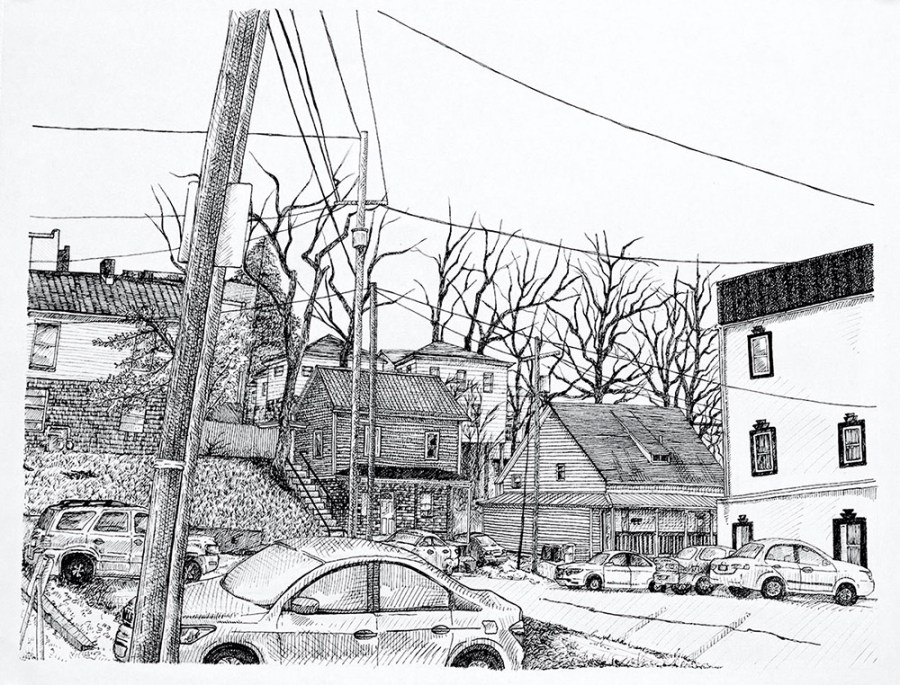
Featured Art: Project for an Overdoor by Carlo Marchionni or Filippo Marchionni

Through the municipal green, overpainted wire mesh
obscuring the grammar school basement windows

comes the spank of a basketball not engaged in any game,
just pounded in place in an empty, echoing cafeteria, then

an outside metal door gets gut-punched open to release
gruff-voiced janitor, belt keys jangling, cursing at the world

while from a first-floor office a stretch of plastic packing tape
screaks off a roll as a phone rings and a copy machine whumps

as if providing a bass line to a class that, upstairs,
bursts into a trebly, mocking laugh, after which,

yet farther up, in a distantly reverberant bathroom, a toilet
flushes and keeps running even after a door slams shut and

all the old, hard memories flood
back enough for me to know

that if a documentary film was made
about daily life in grammar school—

with shot after shot of small, solemn faces
taring out at us—

its scoreless soundtrack
would be this.


Read More