Thinking About My Father’s Erector Set from 1948

By Jen Siraganian

Rarely, my father speaks of the slow rubble piling,
before months sped hotter than his parents expected.
They thought it would pass, unaware of what aches
appear later. He was eight. This was before
walls, checkpoints, talk of two states.

Let’s focus on one wound at a time. I can only tell
a story diluted. I’ll try more softly—my father had toys,
then he didn’t. He had a childhood, then he didn’t.

Here is me at a sunlit kitchen table in California,
doubling as American and something like coarse salt.

How often I hear “it’s complicated” when I mention
my father grew up in Palestine, went to school in Palestine,
immigrated to the U.S. as a Palestinian refugee.

His voicemail last week—don’t post anything online.

For years, he lived in no-man’s-land, and I,
half-Armenian, half-daughter of a man
from half of a land that is half of me.

When I visited, could I call the wall beautiful, but only
the painted side? My grandmother’s friend spit on
for shopping on the wrong street in Jerusalem.
Jews walk on one, Muslims the other.
She’s neither. I started paying a man to do the errands.

Seeing my father’s childhood home, its walls
adorned with sniper fire and a gravity of collisions.
It consumed me, bullet holes as common as commas.

In the Armenian Quarter, the pottery store owner
said he would close before things worsened.
Palestine his home, until it wasn’t. Truths stitched
into my grandmother’s embroidery. Did I tell you
she left that too? Here is an echo no one asked for,
singing of a home in Jerusalem before Armenians evaporated.

At the airport, I, though not yet vapor,
say nothing to the Israeli passport agent.
Not telling him I visited Palestine. Not asking
for the return of the toys my father left behind


Read More

Reading Shackleton During My Husband’s Cancer Treatment

By Michele Bombardier

Selected as winner of the 2024 NORward Prize for Poetry by a panel of previous poetry contributors

After tucking in the kids, we tucked in the house—
dishes, laundry, prepping the next day’s meals.
When the hush finally settled, we’d get in bed
read Endurance out loud to each other.

                         The ship became trapped in ice
the night before his surgery. All that week I tried
to get back from the hospital in time to kiss the boys
but I failed. I sat on their beds, watched them sleep.
The day we got the pathology report,

                         the men, running low on food, put down their dogs.
Radiation all summer. The boys played soccer.
The oncologist told him to join a gym, get a trainer,
go hard because she was going off-label,
tripling the usual dose.

                         They threw everything overboard, but the ship sank anyway.
Anemia turned his skin yellow-gray. His body
became smooth as a seal. I watched
as he denied fatigue, struggled to untie his shoes,
get up the stairs.

                         Shackleton split the crew, sought help: everyone survived.
After we finished the book, we never opened it again.
I wonder where it went. Years it sat on the bedside table
under the clock: last thing we saw at night,
first thing every morning.


Read More

Has this happened to you

By Rebecca Foust

Selected as winner of the 2023 New Ohio Review Poetry Contest by Denise Duhamel

Featured Art by Claire Bateman

You realize you know something
you didn’t know you knew,

like in what modern-day country
lie the ruins

of ancient Troy, or the name of the boy
Achilles loved, or the Trojan

who speared him, or the former Beatle
or first drummer for The Stones

or your sister’s first flame, who drank
milk straight from the carton,

whose name she now—60 years later
& brain-wiped by ALZ—

cannot herself recall. He was a strapping,
young crewcut man, who came

to court my sister & then left with her more
winsome twin—our other sister

now in an ICU after swallowing a full vial
of Tylenol. I knew

before it happened, it would happen like this
& nothing to be done.

There is foresight, & then, its impotence.
Anyway, it was Pat Nicodemus

who courted my sister, not to be confused
with Patroclus, Hector,

Pete Best or Tony Chapman, each doomed
in their way as my sisters are,

as we all are doomed, but each name still
a small ping of pleasure

when I blurt it out, surprising everyone,
especially me, still playing

the game. In the days before Google,
it felt powerful & oracular,

what we didn’t know we knew welling up
on our tongues,

coursing its way out & through, like the body
of a baby after the head is born.

Aristotle demanded surprise & recognition
from good writing,

plus pity & horror, much of which presumes
foreknowledge,

for a time occluded but still operating behind
the scene, unseen,

as a kind of sixth sense, or is it non-sense,
like when you know

without knowing your husband is cheating
again, or what sometimes

pulls your pen across the page like automatic
writing, or your cribbage peg home

ahead of the rest when you’ve all along been,
with immense concentration,

wondering did I close those car windows?
now that you’re hearing rain.

How unknown are we to ourselves, unreadable
code in the end. I never thought

that after nine years of drought it would rain
like the Amazon inside my car,

nor that one sister would wind up living every
hour of every day in the same

Bonanza rerun, nor another so enwombed
in despair, nor that I’d be the one

to leave my marriage after four decades of fear
my husband would leave,

but somehow, I was not surprised
that my car, a sauna inside,

would continue to run, even after I found
that floormat profusion

of mushroom, each pink cup turned up
& open like a wish

or a tiny satellite dish set to receive.


Read More

On Our Way Home

By Jill Michelle

Selected as winner of the 2023 NORward Prize for Poetry by a panel of previous poetry contributors

We speed down the expressway in funeral-thick silence
miles increasing between us

and the hospital, its doctors and nurses
our son, his too tiny body.

Lost in a one-way argument with a god
I can’t quite believe in anymore

flinging how-could-you, how-could-you-nots
at the windshield’s low-slung clouds

I don’t hear my husband ask at first
Where would you like to go?

and when it registers, picture the baby
things, waiting on our dresser at home

that rubber ducky hat I couldn’t resist
the stack of bunny onesies, Christmas presents.

Anywhere but there, I think but ask instead
How about the Starbucks drive-thru by work?

And that is how I end up a grenade
at the intersection of MetroWest and Kirkman

biting my pin of a tongue
while Neil slides into the straight lane

instead of the more efficient left-turn one.
We toddle past the corner BP, take a left

at the tire shop, another left onto a feeder street
where I see what I wouldn’t have

if we’d gone my way—
Meaghan, the Comp. II student from Valencia

the one who’d answered the icebreaker question
one thing she’d do on her last day on Earth

Kiss my son’s ultrasound picture,
tell him, I’ll see him soon.


There in the Starbucks window
where I didn’t know she worked

was the only woman I knew who’d lost her baby
after twenty weeks

who knew without me saying a word
wrapped me in her arms on sight

and while it was far from the miracle we wanted
it was the one we got.


Read More

Lucidity

By Ken Holland
Selected as winner of the New Ohio Review Poetry Contest by Kim Addonizio

Featured Art: Unresolved by Lucy Osborne

It’s not that the sane are sane
and we need talk no more about it . . .
it’s more the question of how insanity hasn’t run rampant.

Please, if I may be an example:

If I were given the choice to suffer in poverty,
or suffer fleeing that poverty,
I would simply say, No thank you.

Or this: if, as the animists believe, even stones have souls,
you’d be mad to think about chain gangs
and what they do with sledgehammers.

More so, if there’s just one god then someone
please explain the saints to me.

Here’s a longer thought: I cannot forget the bands
of feral dogs roaming the streets of Cairo—their
physical kinship, the tawny slope of their haunches,
the wasted musculature. And it seems to me
God was himself conceived in hunger.
But not his own.

Madness is the muzzle of a dog that’s been muzzled
and left with no way to eat.

But it’s not as if the animal can’t breathe.
Even I can smell what’s coming from the kitchen.
The mutterings of sanity are like gospel,
while the mutterings of insanity
bear the stigma of an invasive species;

though some believe the inverse to be true—

as if it were impurities that make water lucid,
that still sadness into the near-notes of a
nearly sung song.

This is perhaps the way dissonance
sometimes resolves into a minor chord.

This is perhaps the way insanity feels
when it is most composed.


Read More

Ode to My Father’s Body

By Jeri Theriault
Selected as winner of the 2022 NORward Prize for Poetry by a panel of previous poetry contributors

Featured Art: Lost Moment by Mallory Stowe

I lose my way in the low-note harmonica
of my father’s absence & unfold the map
of his body in the big window of his barbershop

at the corner of Summer
& Gold    where he    slow    stood all-day
poised to conduct    the chorale    clip-clip

of his trade    shears    razor    hot-towel
talc    brush & tonic    Red Sox radio
my father vaguely tidy & distant    not

dissonant. My everyone-knew-him father.
My year-round-bicycle father. My father’s
body at school nights

or Sunday mass    silent    always
silent but singing in the cellar attic
garage & whistling    as he built back-yard

swing-set    lean-to    edged
garden rows    or hosed night after sub-zero
night    the ice rink where I soothed

afternoons    cold & would-be
wild.    His body hunched in the chair
of my mother’s hospital room that time

we thought she would die    thirty years after
they divorced. My father’s corpuscles
& liver    shins & scapula

his semper fi     tough-guy body    his ear
his good eye my self-taught father in the city
of his body my beige & pastel checked-shirt

father in serviceable shoes & trench coat    who left
his copy of Camus’ The Stranger face-down
on the bed in English though his tongue

his lips    his throat    were French.    He left    too
his body    that night    left
what was left of his body    left

his Iwo Jima    his broken birth family
left his untold    his mystery    left me
his daughter    the wilderness

of my own body    that is to say    left me
half-him left the quiet why or who he was
might have been    what he most

loved    so that sometimes    I still walk
the hallways of my father’s body
half the doors gone    half of them still here.


Read More

What Else the Grapefruit Said

By Sharon D. Kennedy-Nolle
Selected as winner of the 2021 New Ohio Review Poetry Contest by Diane Seuss

At the Primrose Gardens’ group home,
the guys share smokes around the picnic table;
the house itself exhales a heavy Lysoled and linty air.
Confined to an asphalt patch,
under the 24/7 eye of Neighborhood Watch
they slouch under overrated stars.

They have time: no AA tonight.
Under the driveway spotlight,
they lean, listening for the fenced dog’s advice.
Brandon swears, “Horror movies put me here,
that and the drugs.”

Back empty-handed from a ShopRite run, Little James explains,
“The grapefruits were talking.”
Grocery voices again,
“They say, ‘Don’t buy me.’”
Never mind the ice pick in somebody’s eye
that sent him up.

Inside, the house hums clean
as the dryers tumble on cycle “fluff.”
They’re like seven Snow Whites,
worn out after another day
of scrubbing, mopping, vacuuming,
as if conscience could be cleared by a good once-over,
and a well-made bed.

Conned on all counts, I’m here to see my son,
—the witch’s apple of my eye—
but they all greet, “Hiya Mom.”
Big Eric wails, “When you gonna bake that lemon meringue?”
I lie easily,
promising, “Next time, next time.”


Read More

We Don’t Die

By Darius Simpson
Selected as winner of the 2021 NORward Prize for Poetry by a panel of previous poetry contributors

Featured Art: “Candid Sampler” by Amy Pryor

we second line trumpet through gridlock traffic.
we home-go in the back of cadillac limousines. we
wake up stiff in our sunday best. we move the sky.
we escape route the stars. we moonlit conspiracy
against daytime madness. we electrify. we past
due bill but full belly. we fridge empty. we pocket
lint. we make ends into extensions. we multiply
in case of capture. we claim cousins as protection.
we extend family to belong to someone, we siblings
cuz we gotta be. we chicken fry. we greased scalp. we
hog neck greens. we scrape together a recipe outta scraps.
we prophecy. we told you so even if we never told you nothin.
we omniscient except in our own business. we swallow a
national anthem and spit it out sweet. make it sound like
red velvet ain’t just chocolate wit some dye. we bend lies.
we amplify. we laugh so hard it hurts. we hurt so quiet we
dance. we stay fly. we float on tracks. we glide across
linoleum like ice. we make it look like butter. we melt
like candle wax in the warmth of saturday night liquor sweat.
we don’t die. we dust that colonies couldn’t settle. we saltwater
city built from runaway skeletons. we organize. we oakland in ’66.
we attica in ’71. we ferguson before and after the camera crews we
won’t die we won’t die we won’t die we won’t die we won’t


Read More

Ruthless

By Emily Lee Luan
Winner, New Ohio Review Poetry Contest: selected by Ada Limón

Featured Art: The Dance by George Grey Barnard

My friend lowers his foot into the stony
runoff from the mountain, lets out a burst
of frantic laughter. This, I think, is a happiness.

When I don’t feel pain, is it joy that pours
in? A hollow vessel glows to be filled.
無 , my father taught me, is tangible—

an emptiness held. It means nothing, or to not have,
which implies there was something to be had
in the first place. It negates other characters:

無心 , “without heart”;
無情 , “without feeling”;
heartless, ruthless, pitiless.

Is the vacant heart so ruthless?

The ancient pictogram for 無 shows a person
with something dangling in each hand. Nothingness
the image of yourself with what you once had,

what you could have. And the figure is dancing,
as if to say nothingness is a feeling, maybe even
a happiness—dancing with what is gone from you.

When I ask myself what am I missing? I think
of how much I loved to dance, arms awash
with air, the outline of loss leaping on the wall.


Read More

Polar Bear

By George Bilgere
Winner, Editors’ Prize in Poetry: selected by J. Allyn Rosser

Featured Art: Mounted Model of a Polar Bear from United States National Museum Photographic Laboratory

A father died heroically in some Alaskan park
while trying to save his kids from a polar bear.

Long ago, when his mother gave birth
one summer afternoon in Bakersfield, California,
could anyone have prophesied,
as in an old myth, that the baby crying
at her breast would one day be killed
and partially eaten by a polar bear?

Has anyone from Bakersfield, California been killed
and partially eaten by a polar bear? Yet her son
was. He looked up from making camp,
pitching the tent or lighting his Coleman stove,
and there it was, white and immense. His fate.

And he died heroically and was partially eaten.

Of course, the bear had to be killed. The rangers shot it,
which makes sense. You can’t have polar bears
running around in the wilderness!
The wilderness is a place for dads and kids
and Coleman stoves. Polar bears just . . .
they just kind of ruin the whole thing.

As for the bear, it didn’t die heroically.
It just got shot and fell over
and was sent to a lab for testing.


Read More

The Scar

By George Bilgere

My son slipped on the concrete
by the pool and smacked his head.
Blood cauling on his small shoulders.
The doctor stitching him whole.
Three years on, after a haircut,
the scar still rises, a quarter moon
a woman will ask about
as they lie there one night,
her fingers in his hair,
her voice in his ear, the secret
delight of him—a bit
like burnt toast—in her nostrils
as she takes his strangeness
into her. What she won’t know
is how the frail, Phidian skull
I held that day in my hands
resounded on the hot concrete.
It echoed all summer, less
like an egg cracking in a bowl,
or a world breaking, than the wild
knocking of love against my heart.
Dear girl who will one day win him,
that part of the boy is mine.


Read More

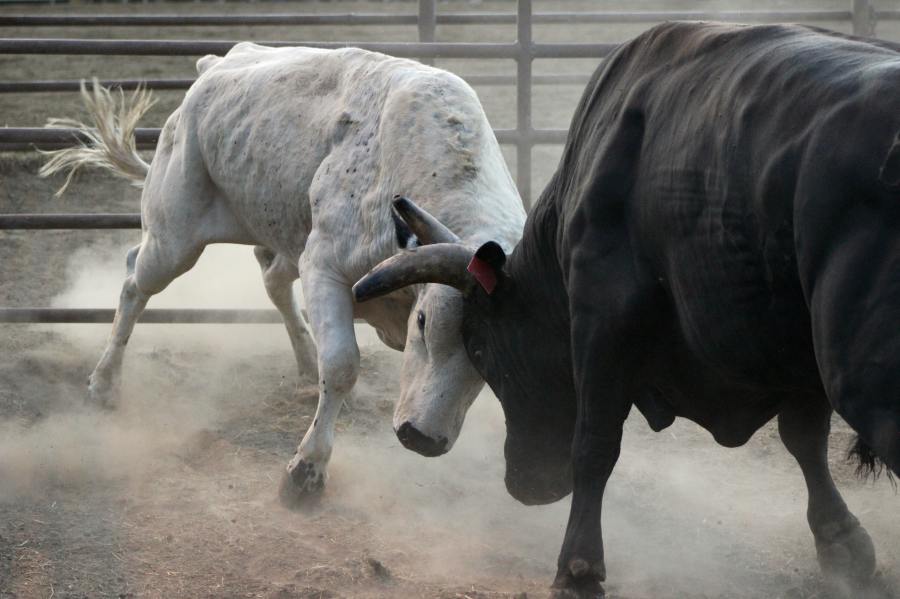
Rodeo

By Sunni Brown Wilkinson

Selected as winner of the 2020 NORward Prize by a panel of previous poetry contributors

Featured Art: by 2 Bull Photography

Tonight is a rodeo night, the announcer blaring his bull
and clown doctrine so loud it carries two miles
east to our block, where just now a hummingbird
hawk-moth drinks from the pink phlox
with its long wand
and I’m alone for a moment and the sky
is bleeding itself out over the train tracks and the brick
abandoned factories. The lights
of the carpet store by the mall flicker carpe
and I wonder just what I can seize.
The homeless shelter bearing some saint’s name
fills up every night and spills
downtown next morning,
wings of strange creatures brush our flowers
while we sleep, and a hapless moose wanders
a schoolyard before it’s caught,
tranquilized. Everyone’s looking for it:
a warmth, a softness in the belly, in a bed
of grass. Take it when you can. Seize it.

Lately sleep is a myth and my brain
is so hard-wired for worry my whole body
crackles, then a deep fog rolls in and all day
I’m lost. Unlike this moth, greedy in its guzzling,
drinking sweetness without asking,
and now the buzzer of the bull riding sounds.
I think of the grace of that single man,
one hand on the saddle
and the other a flag waving violently
above him. A wild show of surrender.

Some days it’s like this: one part
anchored while the other begs for mercy.
And some days it’s the other, the posture
he begins with: both hands together, holding tight.
Sometimes you hold your own hand.
That’s all there is to take.


Read More

The Flash

By Jennifer Givhan

My 11-yr-old son has forgotten not to eat on my bed            He loves watching The Flash
from my room with the widest windows, the warmest place in our house each winter,

& with the coneflower warmth of his brown skin veiled in his bright red suit, he tucks
his kinky curls under the cap & ghosts from room to room undetected, sneaking

cookies            till I climb beside him into piles of crumbs            You’re grounded I echo
& he is sobbing            but what he says catches

the pit of wax burning always inside me            We got him
into special ed classes last year after years of fighting with teachers & breakdowns

over homework & his father yelling You’ve got to learn to listen            & I kept insisting
he’s trying, he just doesn’t understand             & here he slides onto my floor,

tears & mucus streaming down his cheeks, onto the superhero costume he wears
24/7, the toddlers at the park following him around perennially because he’s Iron

Man, Flash, Capt. America—            Mama I don’t know what’s wrong with me
between hiccupping sobs            I forgot

I was hungry & your bed is so warm            & I’m afraid I’ll go to jail
when I’m a grownup       
      I’m afraid I’m bad            because I always do the wrong thing

         & I’m hugging him on the floor where I’ve joined him
as sirens flick onscreen            thinking of how his little sister ties his shoes            how years

back his best friend said You have to learn to tie your shoes—do you want your mom
to tie them for you when you’re twenty? & we laughed            before we realized

we should not have been laughing            how at night I watch him breathing            & pray
because when I screamed at his father for screaming at him he said He has to learn

to listen! I’m trying to keep him safe

                         Much later I ask our boy with a milkshake in his hand
what he would do if the police, like they did to his daddy—

He beeps. Electronic Jeremiah is not here right now. Please leave a message.
He flashes so quick, I never see him vanish.


Read More

Quail on the Airfield

By Ellen Seusy

Winner, Editors’ Prize for Poetry, selected by Bianca Lynne Spriggs

In Texas, near the Gulf, a man wakes up
and pulls on coveralls and heavy boots.
He drives his truck along a narrow road
to the strip where jets line up for fuel,
heat already shimmering near the ground.

He works alone all day in the exhaust
and roar of jets, as planes take off and land.
He’s paid to save their engines from the birds.
All day, the heat accumulates; his clothes
go dark with grime and sweat, while sickening

fumes waver in the air. He knows this dance;
the quail softly tumble in his net.
He closes it to carry them across
the runway to where the tarmac ends, then
frees them in the sedge where he knows they nest.

Some mornings, when I would rather sleep
than go to work, I remind myself that
in Texas, near the Gulf, a man wakes up
and pulls on regulation boots, then goes
to sweep the quail gently in a net.


Read More

My Babysitter Karen B Who Was Sent to Willard Asylum

Winner, New Ohio Review Poetry Contest
selected by Kevin Prufer

By Jessica Cuello

There are only two photos of me as a child.
She took them, she had no child.

She had Kool Cigarettes and a job at the drugstore.
She gave me the Crayola box with the built-in sharpener.

Four hundred suitcases were stored in the attic
of Willard Asylum for the Chronic Insane.

She joined her twin brother there.
She wore her black hair down.

A child could admire it.
She bought me an Easter basket,

a stuffed rabbit whose fur rubbed off.
She walked everywhere.

She painted circles of blush on her cheeks.
Loony, people said so,

I mean grown-ups who saw signs
who passed her on our street before she

started to call and say Remember,
on the phone she said Remember,

Remember the date we killed her brother,
forgetting he’d been committed.

I took her hand and tagged along like an animal.
She was perfect to a child.

Read More

Where the Stars Are Hived

By James Lineberger 
Winner, New Ohio Review Poetry Contest selected by Rosanna Warren

Featured Art: Beautiful woman portrait from Messiah by Samuel Johnson, LL.D

That Saturday, when The ABC’s
of Beekeeping arrived UPS,
he was already a very sick man, survivor
of several major surgeries, all of which were
successful, within limits, but what
could they do, all those
doctors and technicians, to halt the inevitable, which
he knew, of course, we all do, even in those
moments of temporary triumph
when we feel we have won something or other, when
that dratted parathyroid thing
gets plucked and dropped in the bucket, the scar artfully
hidden in a crease of skin, or the triple bypass pains have subsided
and become one of those historical blips
on the mind-screen, these and all the others
will have taken their toll, but when the book arrived
he was nonetheless grateful, knowing full well
he would never get around to the bees or a score
of other projects, but the pride was still there, and some
stubborn sense of accomplishment
that had nothing to do with the rest of his life, the marriages,
the lawyers, the pre-nuptials, and the money,
the money, all that goddamn money, and what did it mean,
any of it, next to this hillside filled with row
upon row of Silver Queen, and the praying mantids
and ladybugs, the chalcid wasps and the pungent
scent of the marigolds, how to speak
of these things or make anyone understand that the garden
is not a weapon against Death,
but a doorway to invite her in, a private place
where they can talk undisturbed
with a growing closeness and affection he never
dreamed possible,
he and this little girl in her denim coveralls with
the bear appliqué and the bottoms
rolled up, the way she holds his fingers in her tiny hand, and her shining face,
upturned, her lips parted in a daughter’s trusting smile.


Read More

Convocation

By James Lineberger

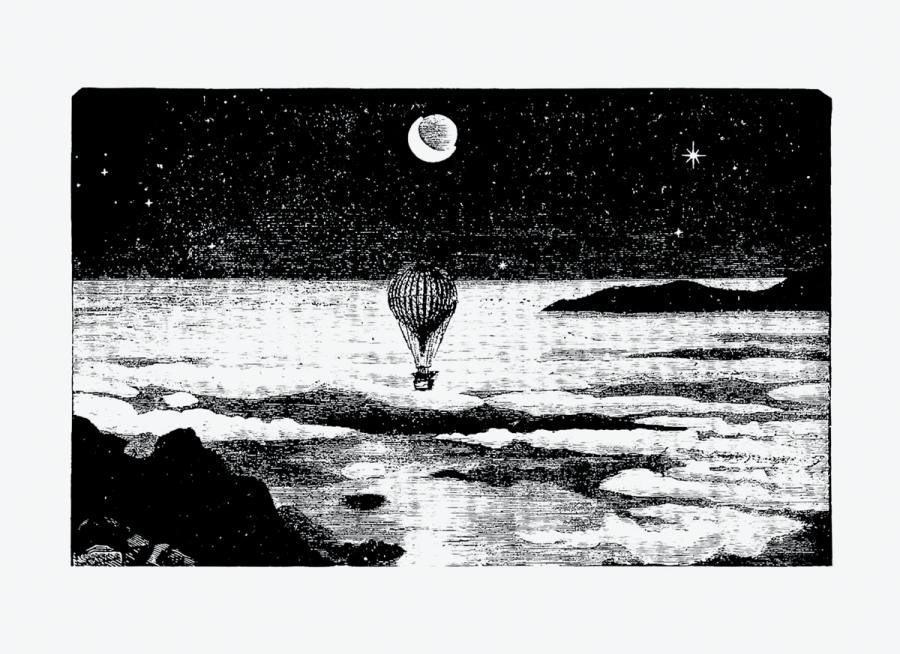
Featured Art: Hot air balloon by James Nisbet & Co.

Perhaps you’ll find it strange
you no longer appear in my dreams,
but on the other hand
it may serve
to fuel your belief that I never loved you
at all, that we were little
more than a scattering of pixels
in the ether,
the kind of momentary disturbance
a thrush will make
stabbing its bill into the leaves
and tossing them
about in search of food, shaking its head
to clear away the debris
and take whatever sustenance the god of thrushes
has promised
before the world settles back again,
asleep in the wake of a need
more primal than heaven and hell;
yet even when I think of us in that sense, as only
the leftovers at some Olympian event where we were not guests,
but mere canapés, nibbled at
and tossed aside,
left in the dead grass for worms to eat,
still it seems that even
birds and grubs, yea, our very comminuted dust, are cursed
with the memory
of a time when nothing could ever
go wrong,
and we knew all the words to every song.


Read More

Henry’s Horses

Winner, New Ohio Review Poetry Contest
selected by Tony Hoagland

By Michael Pearce

Featured Art: In the Valley of Wyoming, Pennsylvania (Interior of a Coal Mine, Susquehanna) by Thomas Addison Richards, 1852

The old barrel warehouse across the street
had a ceiling so high there was weather inside.
Henry Gutierrez lived there—they said
he’d been there since before the war,
though they never said which war.
He worked at Anger’s garage all day
rebuilding engines, then came home
and slept a few hours, and when
he woke up after dark he’d knock back
a bowl of cereal and a couple beers.

If you looked over there at midnight you’d see
brilliant flashes coming from inside,
silent explosions, like lightning
trapped in a thunderless cage.
But it was only Henry’s arc welder,
he worked all night fusing together
sheets and scraps of steel until
they seemed to breathe and shake
and prance and strike a noble pose.
He built animals, mostly horses,
and he said he knew he’d finished one
when he found himself talking to it.

One time Uncle Jack, my father’s brother,
invited Henry to his church, the one
where they forgive you for anything
as long as you let Jesus into your heart
and drop a twenty in the basket.
But Henry knew there was no forgiving
his sins, and it made him sick
to talk about the people he’d injured
then listen to the other craven souls
tell him he was absolved. He said
he had his own way of atoning that
was mostly about wrestling with steel.

Read More

The Pale Man

By Michael Pearce

Featured Art: We Both Saw a Large Pale Light, plate 2 of 6 by Odilon Redon, 1896

Last time I saw my dad was at
the cemetery on Pilgrim Hill,
pale as a ghost but he wasn’t dead.
He stood over the grave of his grandfather,
the hero of our family.
I called out to him and waved and
he turned my way—he looked sad
and then he looked ashamed and
I felt bad for him until I understood
that his shame was directed at me.

No point in pondering his disappointment,
I know I’m a failure in his eyes and
there’s no way back to the sunshine of his pride—
the boy of great promise is long dead and here I am.
And there he was—he turned away from me
and peered right through the gravestone
and into a glorious dream of the past
where a brave man stood against the mob
and brought reason to our torn-up town.

I tried to smile because I love him so much
and because I know he’ll be the next to go—
that’s why he was there on Pilgrim Hill
and in fact as I stood there watching
he got even paler and I could see
the silhouette of a fencepost behind him,
dim x-ray of a thick dead spine.

A full moon rose in the afternoon sky.
Oh Daddy, said the scream inside my head,
oh Papa, please don’t go without giving me
your blessing, the sweet sneeze of your blessing.
And then I knew that he didn’t have it in him
and never had, that he was too faint and frail
and too scared to issue blessing or curse.
And I forgave him, I did my best to forgive him
and when I wake up on these fullmoon nights
that’s what I do, I forgive him as best I can
because now I can’t see him anymore
that’s how pale he’s gotten but I know
he’s alive and still walks this town.


Read More

The Boy on the Ridge

By Michael Pearce

Featured Art: Precarious Glimmering, a Head Suspended from Infinity, plate 3 of 6 by Odilon Redon, 1891

I rode my bike down from Pilgrim Hill
toward the river that splits our town.
Along the way I waved to Sheriff Roy
and Mildred Floss, then wondered what
they were saying about me and my family.

It was fall and the road was littered
with goose shit and hyena shit and
shit-shadows shrinking in the rising sun,
and Estelle was bringing milk and muffins
to Mayor Bob’s bedside and pretending
his soul was alive inside its doltish husk
and my Noni was sitting in the bathtub
like a pile of wet clothes while Grappa
lay in bed dreaming of blood-hungry Cossacks
cruising the Steppe on thundering horses
and the town was still quiet enough
that you could hear the river’s bashful giggle.
I was headed to my shop
to build a desk for McElroy.

Up on Pilgrim Hill my mother’s voice
had spoken to me from her grave
in the Jewish section, had told me
about a little boy of few delights
and many sorrows who roams the high ridge
where Dorsell Quivers chases fox and deer.
My mother’s voice said only she
can see that little boy right now,
but he’ll saunter down and climb into
the belly of a comely maiden
as soon as I’m ready to be his dad.

I don’t want a boy of many sorrows,
I was such a boy and my heart
isn’t big enough to bear another,
to blaze the cul-de-sac of his youth
or watch his terror of his own hungry body
and the other demons of his undoing
hound him from his destiny.

Read More

Not Holding the Gun

Selected as winner of the 2015 New Ohio Review Poetry Contest by Robert Pinsky

By Keith Kopka

Featured Art: Spring Flowers by Claude Monet

Knowledge of crime is a crime
even if one is not committed
by participation. At this cookout,
in a parallel universe, a version
of me lifts the gun, considers
its weight a handful of peanuts.
Another variant lets off a shot
into Godless sky, a traditional
celebration of manhood, in
the dimension of Texas oil barons.
I have a self who understands
breech-bolt action, another
who can separate grip cap
and butt stock, put them back
blindfolded, turn shotgun into
sawed off. In our current rotation
of speed and light, his pump
action is between us on the table.
The cookout has been great,
and I’m glad his sister, my date,
invited me. His mother is grilling
cow tongue. The whole gang’s
here to celebrate Marshmallow’s
release after three years in prison,
he’s at the grill asking for a fourth
helping. The word Rascal carved
in his chest like a pacemaker scar.
In the universe of wooden nickels,
I am best friends with this blunt
instrument. Of course, this isn’t
the universe where we live. My date’s
brother is asking if I’m interested
in a job, simple robbery, I get a part
of the product, but he needs me
because I’m white, because it won’t
get back to his gang, or the black
gangs, if a white man robs a white
man of some drugs. I’ve noticed
I’m the only guy at the cookout
wearing a shirt. Her brother
has a tattoo of two devils balanced
on the top of a mountain range.
It covers his whole stomach.
He tells me if I shoot the guy,
when I rob him, it’s okay, but if I kill
there’s nothing in this world
he can do to help me. Marshmallow
settles himself in a deck chair,
eyes closed, the meat on the grill
smells like warm wood. Hungry
is the only word I can think of.


Read More

You, Strung

By Keith Kopka

Selected as winner of the 2015 New Ohio Review Poetry Contest by Robert Pinsky

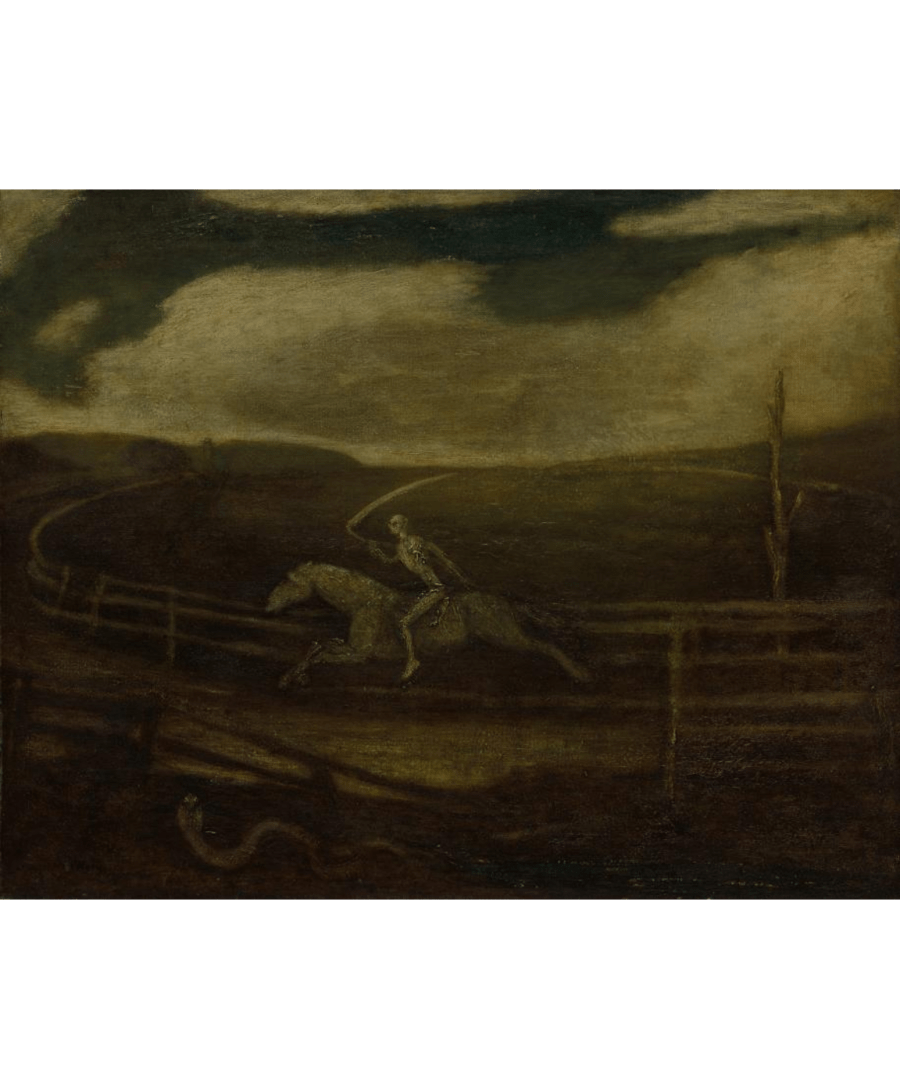
Featured Art: The Race Track (Death on a Pale Horse) by Albert Pinkham Ryder

Young John Wayne leaps, without effort,
onto the back of a Palomino, and I know
he’ll catch the leader of the Taylor Gang
for what he’s done to his woman. He’ll swing
for this one. Wayne is ruthless, but it’s hard

to forget him cut open for cancer research,
the forty pounds of meat wadding through
his colon like a saddle strap. You and Wayne
have a lot in common: doctor’s hands

searched the mineshaft of your stomach,
catalogued what they took, then fastened
you with a wandering stitch. Still, nothing
extracted from anyone can explain why
the body takes revenge on the body.

                             ***
Hanging is the ninth most popular
suicide method behind gunshot to chest;
it has an almost seventy-eight percent

success rate, and takes seven minutes.
In the west, thousands gathered
to watch hanging judges size bight

and neck, and after the bags dropped
some took pieces of the scaffold or rope
as keepsakes. You hung, too.

I still have the pair of shoes you loaned
me in gym class on a nail hook
in the back of my closet.

Read More

The Wall

By Christopher Kempf

Selected as runner-up for the 2015 New Ohio Review Poetry Contest by Robert Pinsky

Featured Art: Ruins of an Ancient City by John Martin

                At mile twenty, roughly, the muscles
of the legs will collapse. Calves
                 twitching at random. The hamstrings’
                                                    sacked meat seizing. Scarry,
in The Body in Pain, explains
                                             that language too, tasked
                    with conveying affliction, fails. That pain,
   she argues, obliterates
                                                          discourse. I limped

                           past the drunk undergrads
of Boston College, my body’s stock-
                                                           pile of glycogen finally
                                       exhausted. The wall, runners
               call it.  The bonk.  The blowing
                                                                                         up. & after,
             the body in pain will make
                                                       of its own fat fuel. I followed

               the shimmering column of runners right
                                     onto Boylston Street. In three
                                                                                            hours two
           coinciding explosions would themselves
                                                                   leave the city—except
    for its sirens—speechless. The limes, Latin

        for boundary line, signified
                                         to ancient Romans the most remote
                              walls of the sacred Empire. Lie-
     
  meez Arabicus for instance.
                                                         Limit.
                                                                      The legions
                           Caesar trusted most though & therefore
    dreaded, he kept
               stationed on the Plain of Mars a mile only
                                      west from the city walls. He watched
     from the seventh hill the drilling
                                                                    columns, consulted
                                          each morning in the sky above him
             the wheeling birds.  A body,
                                                                            he knew well, will
                      at sometime or other, hungry
                                                                                for blood, break
               in on itself & eat.


Read More

Before the Storm

By Christopher Kempf

Selected as runner-up for the 2015 New Ohio Review Poetry Contest by Robert Pinsky

Featured Art: Storm Clouds by John Henry Twachtman

Birds fled. The city fell
quiet. Across
the night the neighbors raised
their glasses & together, gathered
on our porches, forms
in a Japanese landscape, we stared
up. Or was it
Turner the sky resembled? How every
late seascape became
for him, given
to opium & with his father’s
death, depression, a tempest
of motion & color. Clouds
roiling. The oils
of his tiny boats bleeding
out. Only,
he knew, the frame’s gilt edge
splits beauty from terror. Airplanes,
that night, climbed
from the city & steeply, fleeing
too the ruinous
wall of rain, banked
south. Schools, a step
ahead of the looming cataclysm,
closed. Newscasters
leaned forward into the wind & we, raising
our own glasses to the neighbors
drank. Dark
& Stormies. Sazeracs. We imagined
the city flooding. Mudslides
on Foothill Parkway. Prospero, fallen
from his dukedom, does it
all for pleasure he says, every
shipwrecked Milanese aristocrat, every
extravagant clipper cast
up in the pitch & tumult his rough
magic fashioned. That,
we know, is mostly
what the groundlings came for. To fancy
a world they would never see struck
low, & so
close, sometimes, as to feel even
on their faces the great
king’s spit. There is,
in catastrophe, a satisfaction
exceeding sex, psychologists
believe. Before
the storm the city
bristled. Bells
tolled. Before
the last helicopters cleared
Saigon, operatives
burned in a rooftop incinerator
the state’s documents. We watched
from our porches the planes
shudder & mount. On Merritt
Lake, the pelicans, frenzied,
fed.


Read More

A Theory of Violence

By Jennifer Perrine

Selected as runner-up of the 2014 New Ohio Review Poetry Contest by Alan Shapiro

In the museum of sex, the video loops
its cycle of common bonobo behavior:
penis fencing, genital rubbing, whole groups

engaged in frenzied pairs, their grinds and shrieks
playing for the edification of each patron
passing through the room. We all summon

our best poker faces. One woman speaks
softly, reads from the sign that describes
all the various partner combinations,

the multitude of positions, how relations
lower aggression, increase bonding within tribes.
We linger over this way of making peace,

wonder to each other if we would cease
our litany of guns, bombs, missile strikes
if we spent more time in wild embrace.

The exhibit doesn’t mention our other cousins,
chimpanzees, who form border patrols, chase
strangers in their midst, leave mangled bodies as lessons.
That’s the story we already know

and want to forget through the release
of these erotic halls, where we seek the thrill, the bliss

of these animals who hold us captive
while we lament what traits we’ve found adaptive.


Read More

Embarrassment: from baraço (halter)

By Jennifer Perrine

Selected as runner-up for the 2014 New Ohio Review Poetry Contest by Alan Shapiro

All he found when he came looking for us was the home my mother wanted to leave behind: newspapers stacked knee-deep in the hallways, every corner redolent of cat piss, linoleum caked with dried mud and dust, tangles of hair matted to the tub, dried scabs of meals coating plates and bowls piled high in the sink, on counters. Everywhere: the stink, the rot and mold, the great heaps of unwashed clothes, all the filth my mother never let anyone see. No friends allowed inside. Even her dates didn’t get in the door. She spent her nights at their dubious dens, leaving me alone to toss hamburger wrappers and soda cups on the living room floor, our one trashcan so full I couldn’t empty it. My father, finding all this mess, assumed the worst, took photos, jotted notes, thinking the house had been ransacked, that we’d been robbed, killed or kidnapped, though police assured him there were no signs of struggle. How she’d let the house go, he couldn’t imagine. Before the divorce, I heard her shout: I’m no one’s maid. Years later, when my father asks how we lived in such squalor, I tell him I never noticed at the time, though once I did: My best friend, Heather, and I were playing outside when a sudden shower drove us to huddle under the eaves. Soaked, I took pity, opened the door, disobeying my mother’s one rule. Inside, Heather didn’t ask questions about the mildew, the crumpled paper bags she had to brush aside to sit. She refused the towel I handed her to undo the work of the rain. I saw it then: tatty, gray, stained. Heather left, and later, when my mother found the couch still wet, I told the truth. Her face flushed; I tried to bolt. She reined me in with one hand, unfastened her belt. If they see this, they’ll take you from me, she screamed through the volley of blows. My back grew a rope of welts. They’ll call me unfit. Is that what you want? I tell my father none of this, judge it best not to show him the last bits of how his ex fell apart once they were unhitched. I don’t say how I, too, was the mess, tether she yearned to slip, so she could careen unimpeded through life, how I held tight as she zoomed away, raced toward a place where she’d be no one’s mother, no one’s wife.


Read More

Feeling Sorry for Myself While Watching a Really Bad World War II POW Movie on TV

Selected as winner of the 2013 New Ohio Review Poetry Contest by Barbara Hamby

By Michael Derrick Hudson

The rest of them pinwheeled out of the dirty sky somewhere
over Schweinfurt. They burned as I clung

to my shroud lines huffing in a panic through the slobbery
fog of my oxygen mask, the frost stiffening

my collar’s wet fur. Three years later, what have I to show
for my long time in the bag? Bleeding gums,

a hacking cough, another button sewn? I thumb silk maps

and compasses that’ll tuck into a nutshell, learn to curse
in tunnel-rat’s German: Achtung, Fünf!

Dummkopf! Amerikaner Schweinhund. Schnell, buddy . . .

Not once did I try to make it over the wire, into the forest
and its perils where the beautiful Slovak partisan

lugs basketfuls of her beer bottle grenades
hip-deep through the snow. I never spent the night thawing

my boots while she sang old peasant songs and poked a rag

down the bore of her revolver. Ach du! The tarnished brass
of my captain’s bars will never in the firelight

glint for her! She’ll never grant me tomorrow’s password
or love me in my Army Air Corps leather, sleeves

scorched and pockets stuffed with the chocolate
I’d toss godlike and American to all the kids in her village . . .

Damn all my Switzerlands! Damn all of these neutral years!


Read More

Ambassador of the Dead

By George Kalogeris

Selected as runner-up of the 2013 New Ohio Review Poetry Contest by Barbara Hamby

Featured Art: The Artist in His Studio by James McNeill Whistler

My parents were never crazy about Cavafy—
They didn’t know much about poetry, at all,
And barely had time to read anything but the papers;

Though sometimes a poem they liked would appear in their
Beloved Hellenic Voice. (A poem that was always
In rhyming stanzas, and deeply nostalgic.) Or else

I’d show them one of the Modern Greek poets that I
Was trying to translate, and ask for their advice
About a line. “Is this for school?” they’d say.

My parents were never crazy about Cavafy—
To them he was too refined, too ALEX-AN-
DRIAN, and they were only peasants, xhoríates.

And there was no Ithaka for them to go back to.
When I’d beg them to read the Greek, they’d balk when they got
To his purist kátharévousa diction—they just

Couldn’t stomach its formalist starch. His poems were never
Demotic enough, never trapέzeiká:
Songs to be sung across the kitchen table.

And if I read them Elytis, Odysseus Elytis
Too was too elitist to trust, too drunk
On the island sun of his own Ionian vision.

To people for whom elevation meant being raised
In the steepening shadows of Peloponnesos.
(“The great Odysseus,” my father would chide.)

And if Yannis Ritsos spoke their working-class language,
And his poems weren’t hard to follow, still, once they heard
That Ritsos was Marxist that’s all they needed to know.

Read More

Craigslist

By Maya Jewell Zeller

Selected as winner of the 2012 New Ohio Review Poetry Contest by Billy Collins

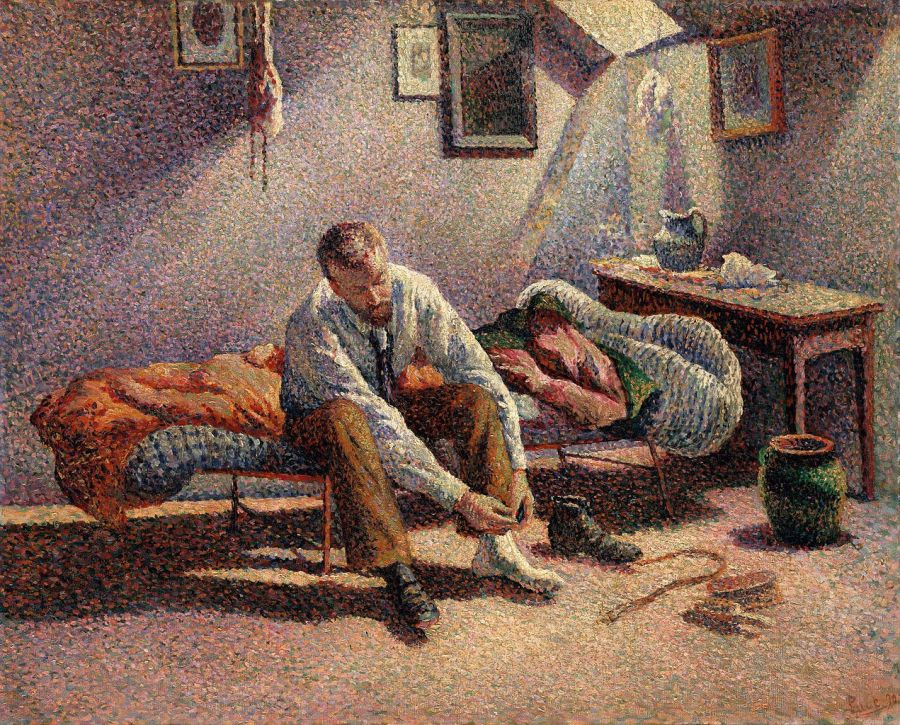
Featured art: Morning, Interior by Maximilien Luce

It’s all there—the stuff
no one wants to say is theirs anymore,
the single-slate pool table, the six-person
tent, a complete professional tattoo set
complete with analog power supply.

And my father’s 1988 Corvette.
He is no longer sad
to see it go, though he does lament,
my mother tells me, that young people
these days no longer want something like it.
They want a car with good
mileage, something they can take
a child to preschool in, cart around
the six-person tent.

Read More

A Mile In

By Julie Hanson

Selected as winner of the 2011 New Ohio Review Poetry Contest by Nancy Eimers

Feature image: Claude Lorrain. View of Delphi with a Procession, 1673. The Art Institute of Chicago.

The snow had been with us for awhile
and was dingy and not well lit.
But the sun promised to come out.
The light fog lifting
against the skinny tree trunks
and the grounded limbs they’d lost
and the thick, half-detached vines
would lift off,
dissolved, by the end of our walk.
We’d taken the footbridge
across the creek and followed the bend
away from traffic and toward the west ridge.
We’d gone a mile in,
to where usually I begin to listen to
our progress in the twigs and gravel of the path,
and past this, and past my own
periodic reminders to the dog
to the short, uncomplicated songs
of winter birds. And there,
near the spill of rocks in the creek
where the fog was still passing through branches
and a little farther and to the right
where a stretch of tall grasses
received a wide gift
of sunlight and several cows,
the air that stood still
between the trees and shimmered
over the grasses filled with sound—
a big voice moving through
a hundred thousand habitats—
and it said, “Attention in this area.
The following is a regular monthly
test of the Outdoor Warning System . . .”
It spoke from the west first,
sounding closer than it could be.
And it spoke from the southeast next.
“This is a test,” it said, “only a . . .
“This is a test . . . ” it began again
from somewhere else.
The dog returned to me, cowering.
I’d wondered before
without much curiosity,
where were those speakers housed,
were they towered, did they revolve?
Ordinarily heard in the yard
while I stood pinning laundry to the line,
the broadcast soon plunged and sank
into the noise of passing cars
and blown and rolling garbage cans
and faded like the little ringing
that emanates from construction sites.
But here, it seemed full minutes long
before my breath was back again in my chest,
and my dog’s breath,
steady and rough, was back in hers,
when the voice had left the air
between the trees, as had the fog.
At last a bird sounded from a twig.
At last a squirrel came down
and sent the dog. And then,
made up of other sounds
I could not have singled out,
a normalcy rolled in.
Infinitesimal bits is all it was
—quick beaks breaking up the peat,
the slow collision of a leaf landing, scooting
half an inch along a big flat rock,
a splat of excrement in white,
a flinch, a flap, a flick. But as it came it felt
to be a counter-vigilance. Or like
the sound of consciousness. The is.


Read More

Pretending to be Asleep

by Angie Mazakis

Selected as runner-up of the 2011 New Ohio Review Poetry Contest by Nancy Eimers

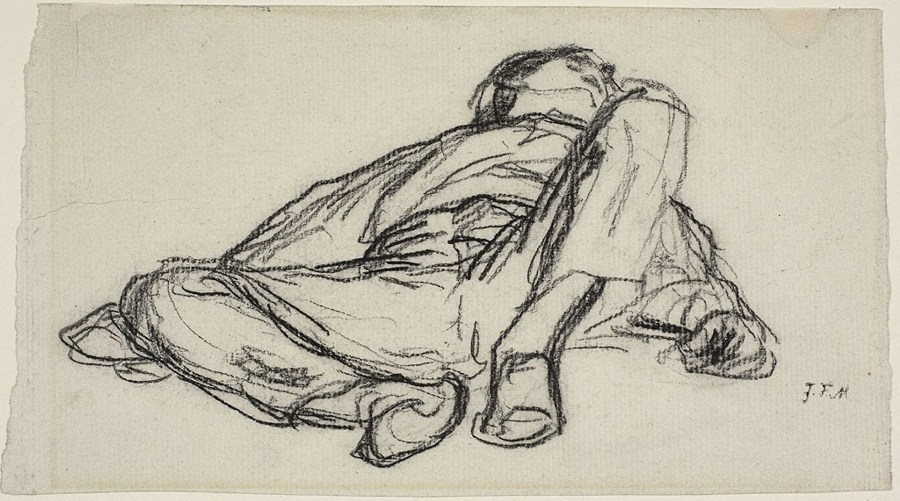
Feature image: Jean François Millet. Sleeping Peasant, c. 1865. The Art Institute of Chicago.

is like knowing exactly what you
are saying to me, but nodding,
yes, what else? anyway, as though,
I have never heard what you are saying before.

I have to purify from my appearance
appraisal and purpose,
my face distilled to stillness.
I have to guess when to genuinely tremble,
never having seen myself in sleep,
moving aimlessly beneath
awareness—I wager one
hand from the sheets,
toward nothing.
How does one believably breathe?

It’s like hearing words I was not
supposed to hear and just turning
in my chair as though I needed to reach
my arm this way, toward this phone,
toward anything, as if to say,
I am occupied; I was before.
It is all now exactly as I meant it.

Read More

Owen and Paul

by Angie Mazakis

Selected as runner-up of the 2011 New Ohio Review Poetry Contest by Nancy Eimers

Feature image: Sir John Everett Millais. Study for the Head of the Rescuing Lover in Escape of the Heretic, 1857. The Art Institute of Chicago.

It’s any two strangers’ conversation.
The proportions of the tall one’s face
make him look like an Owen.
The other one, easily a Paul.
Owen makes a face, a gesture—
his forced half-smile squints one eye,
as he barely shrugs in a way that falsely
means tentative, in a way that pejoratively
leans and says, I’ll give you that much,
a gesture which says entirely,
You know, it’s like this. Maybe I’m wrong,
but it’s something to think about.
The maybe I’m wrong suggested by some
softening of his eyes that kept him from
a face that said, nice try or dubious—
something he had to lose.

I catch my eye just beginning to imitate
the gesture, try it out, here in this coffee shop.
Maybe I’ll start wearing this look after saying things like,
Yeah, I’m pretty sure that’s the city rock ‘n’ roll was built on.
Or after anything ending in most people don’t know that.

Read More

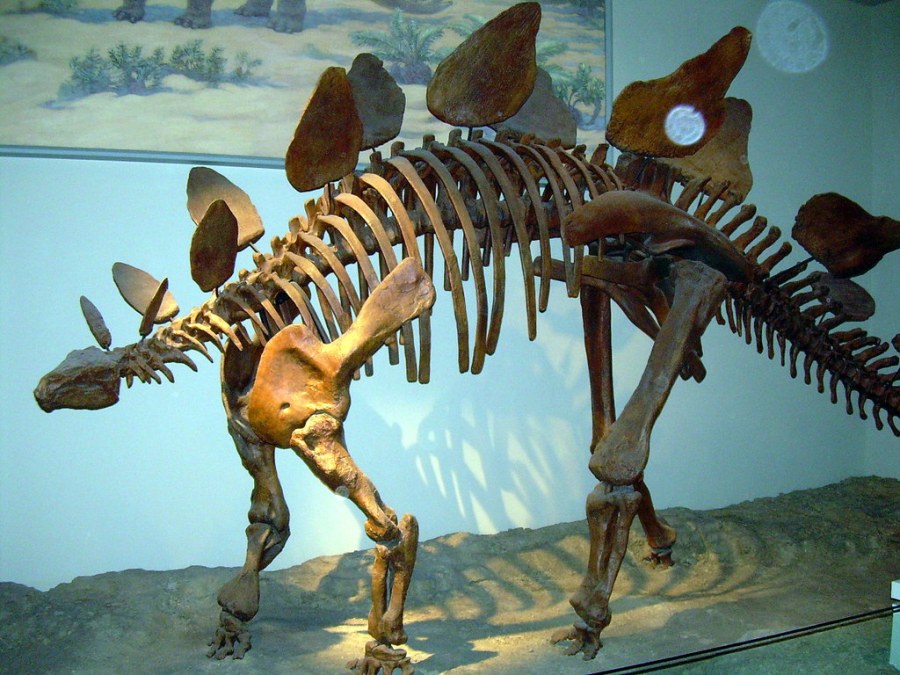
Feeling Sorry for Myself While Standing Before the Stegosaurus at the Natural History Museum in London

By Michael Derrick Hudson

Oh yes my friend, I’ve been there; the insects battering at
the armored lids of your yellowish eyes

the moment you pecked your way out of that rotten shell
and dug out from your sandpit nets . . .

And I’ve experienced the thud thud thud of your days,
the indigestible monotony

of everything’s spiny orangy-green husk. How the sun
gets daily whiter and hotter and just

a little bit closer. The week spent gobbling down your

own weight’s worth of whatever. One stumpy
footprint after another, tracking the trackless, squelching

across last night’s marsh into a volcano-spattered today
hip-deep in ash and yawning

a muzzleful of sulfur. Swishing through stiff fronds,

we drag an unbearable load of tombstones on our back
and a fat lugubrious tail, shit-smutched and

spiked. The flattening of the razor grass. The forgotten
clutch of eggs. Our shrill yaps

and groans. That tiny gray walnut
for a brain and the fat black tongue tough as a bootsole . . .

They’ve explained us away a dozen times: some passing
meteorite or anther, the rat-like mammals

eating our pitiful young, all kinds
of new weather. Issueless, but far too stupid to be forlorn,

we trundle along the pink quartz shore
to sip at the lukewarm edge of yet another evaporating sea.


Read More

Disintegration of Purpose at Cocoa Beach, Florida (Part 1)

By Michael Derrick Hudson

A pelican divebombs the same shimmery-shammery silver stripe
of the horizon. The pale yellow and presumably

bloodless crabs scuttle to their holes, terrified by my shadow

all over again. Again! They’ll never figure it out,
but of course every moment for them is nothing but the fretful

expectation of imminent death. They’re expendable. Fecund.

Edible. Fuck ’em. So where’s my hero? My old conquistador
my Castilian grandee terrible with purpose . . .

Señor! Over here, por favor! But what if he did come, feverish

and bedraggled, this Spaniard wading hip-deep through the surf
cumbered by his mildewed ruffles

and waterlogged boots, in silver salt-pitted
spurs and a rust-bucket helmet? He’d spout nonsense, bragging

about the usual claptrap: solid gold wigwams, diamonds bigger
than pumpkins and an obsidian-eyed princess

festooned with raccoon tails. There’d be those outrageous lies,

poison darts tinking off his armor while tramping the Everglades
and living these five hundred years fetched

off death’s front stoop by a few quavering, toothless sips from

the Fountain of Youth. With the point of his cutlass he’d scratch
the beach with treasure maps and schemes, telling tales

of the cannon-shattered fo’c’sle and those desolate, bone-littered
passageways. I’d put up with it for as long

as I could. ¡Hola! History stops here, Señor! Everything does!

Read More

The Businessman Cleans a Mermaid for His Supper

By Michael Derrick Hudson

Yeah I snagged her, I snagged her good and then I shucked her
out of her shimmy, killed off that last twitch

of hers in the sink. And those labials, all of her wet slobbery

labials I reduced to a dried-out oxygen-starved O. I flensed
her down to the bone and chopped

away her emerald green flukes. I got wet to the elbows in her
and scraped at her dime-sized translucent scales

until they spangled the tops of my greasy boots
and clogged the drains. But her filets were worth it, redolent

of ambergris with a tincture of seaweed. In her eyes I found

tiny discs of abalone, the secret of their weird yellowish glint
like a cat’s in poor light. And then I brought her

to a resinous sizzle. But what a fight! Such fabulous breaches

How she resisted my hooks and gaffs, the vast tangle and bulge
of my nets. She couldn’t believe the multitude

of knots I’d mastered or these chains and rudders and screws or
my hand-over fist desires and

the way I whistled at my work. Or my inevitable appetite . . .


Read More

Valuable Lessons Learned on Delaware Bay After the Horseshoe Crabs Came Ashore to Spawn

By Michael Derrick Hudson

They look like the Devil’s codpiece.
They look like the Shield of Achilles.
They look like George Washington’s last boot heel.

Oh sure, noggins get cracked, the meat tweezed out

in a glut of shrieking seagulls. Always sun-vexed
throughout their frantic scrabblings

they suffer the dried-out gill, the blotted eye,
the heartbreakingly feeble clench

of an expiring mouthpart. But still they deposit
what they can of their sorry clutches,

their dabs and globs of purpose, spotting the world
with their gluey yeses. Satiated,

doomed, happily they nibble
at their own nutritious backwash, feel around with

their feelies. Tipped-over. Busted. They look like
The Battle of Berlin. They look like the Last Days
of Brontosaurus. But they persist.

You know, they persist.


Read More