SELF-PORTRAIT AT THIRTY-THREE 

By S.J. Stover
Featured Art by Rachel Hall

Jesus never looked so jittery— 
jacked up on caffeine and testosterone,  
sporting a backyard haircut and home-sewn mask.  
I walked the same two-and-a-half-mile circuit 
every day: up Sunrise to McCombs, McCombs 
to Radnor, Radnor to Wingate, Wingate to Antioch, Antioch 
to the Bi-Rite grocery and Our Lady of Guadalupe 
and back down Sunrise again.   
The blue blooms of the hydrangeas and the pink blooms  
of the dogwoods came and went.  
I played “Losing My Religion” on repeat. I voted.  
I went to bed each night with yesterday’s cold  
coffee ringing the coffee table. 
I crucified time. 


Read More

Acquainted with the Night  

By Erin Redfern

Featured art by Jordyn Roderick

At the all-girls school they taught us  
don’t fight back: the rapist might get mad.  

Against my will, I remember this  

when I need to take a walk to clear my head.  
When I fear the sound of feet, a distance  

closing. When I drop my eyes in passing,  

my neck for decades bending. On the train  
a man asks me what I’m reading. Show me  

the Great American Writer; I’ll show you  

a man who finds by walking out alone 
what freedom is,  

and, so, America, I want to be  

the kind of woman who walks into night,  
a fine rain, her own thoughts.  

If at dusk I hear a clutch of cries 

and rush of wings from powerlines.  
If I love a spread of stars, dark wind in trees. 

If walking is a bodied way of thinking. 

If I love a subway map, a screech of trains. 
If walking out and back intact is luck. 

If I have been a long time without thinking. 

If I wanted to go there by myself

thinking. If I just wanted to go somewhere.  


Quoted phrases and lines are from Robert Frost, “Acquainted With the Night”; Judy Grahn, “A Woman Is Talking to Death”; Kim Moore, “On the train a man asks me what I’m reading”; June Jordan, “Power”; Lisa Shen, “Sixteen Seconds”  


Read More

Relics

By John Bargowski

It was only a steak knife their mother screamed at the cops
after Jimmy stabbed his twin who’d crawled into the hallway

from the apartment across from ours. I thought Joey was going
to die there, bleeding from the gut on the top step of the flight.

A few years older, they treated me like a kid brother, but led
a gang who stole freight from the Erie Lackawanna yard,

so the cops wanted to cuff both and take them downtown to book
and lock up. The judge gave the brothers a choice, so they enlisted

and were shipped off to the green hell we watched every night
on the news. Their mother, heart-ruined, moved away,

and we never heard from any of them again. Years later I walked
The Wall in DC, thinking about justice and what it takes to be a man

in America as I read down the names of the lost hoping to find
neither brother cut into the polished face of that sacred black granite,

unable to forget what brother could do to brother, how a boy’s blood
seeped into the grain of a worn marble step and left a stain

neighbors gathered around, like those bloody chips of martyr bone
we bowed and genuflected before on the holiest days.


Read More

My Mother Meets the Cast of Hair

By Adam Grabowski

Featured Image: Rush by Sam Warren

                                              -Ludlow, Ma.  May 1970

                                             Let the sunshine
                                             Let the sunshine in…

Smoking against the façade of a moon-
bleached gas station she listens
with a waitress’s patience to the local boy’s prattle
—her senior year of high school

& already the air stinks of coveralls.
Her hair is black. Brushed out long. Flyaways.
The occasional breeze & his good blue eyes.
A mile from here the highway shakes.

Read More

How to Choose a Mattress

By Leslie Morris

Featured Image: Forget the Flowers by Tanner Pearson

Twenty-six years have passed since you tried
out mattresses at Macy’s, hands folded over
your chests as if laid out for a viewing. No,
that was not how you lay on a mattress at home.
You had read in the paper that couples who rated
their marriages “satisfying,” slept spooning
and those who rated their marriages “highly satisfying”
slept spooning with their hands cupping their spouse’s
breast or penis, so nightly you wrapped your hand around
his sturdy cock believing that you secured a happy marriage
in your grasp. But after googling “how to” diagrams
of spooning on the web, you’ve learned that as the smaller spoon
you should have been the spoonee all those years.
So now you are shopping for mattresses by yourself
and the sleep expert at Slumberland wants to upsell you
a queen even though you are still weepy and lost
in your own trough within a double, a sinkhole
of busted continuous coils. He asks how you sleep.
Badly. You need something supportive, he says,
but with plenty of give. Yes, absolutely!
Memory foam, he says. Oh God, no. Knock me out
on horsehair or kapok, sheep fleece or pea shucks.
Give me a nightcap of nepenthe. Certainly not memory.


Read More

What Is There To Do in Akron, Ohio?

By Darius Simpson

Featured Art: Open Lock, Akron, Ohio by James Henry Moser

complain about the weather. wait five minutes
watch the boys you grew up with outgrow you
bury your cousin. go sledding on the tallest hill you can find
keep a family warm until their son thaws out of prison
ice skate between the skyscrapers downtown
inherit an emergency exit sign from your father
spray-paint your best friend’s brother on a t-shirt
daydream your way through a semester-long funeral
watch jeans and sleeves and family portraits unravel
play soccer with the black boys who almost evaporated
with the icicles. kick it outside with the skeletons
from your childhood. go to columbus and pretend
to be a grown-up. spend a weekend at kalahari resort
and call it a vacation. go back home. leave. shoot dice
with the dead boys playing dress up. stay long enough
to become a tourist attraction in a city nobody stops in
mount bikes and ride until the sun dribbles
out of the sky’s mouth. wade through the oatmeal july makes
of morning air. swim in a public pool where everyone
is drowning and no one knows how to survive
what happened last month. stop runnin in and out unless
you got somethin’ on the gas bill. seal yourself with cold air
while the trees melt. bet the boy down the street, who’ll have
the best first day fit. come out amid orange leaves lookin fresher
than all the food in a five-mile radius of granny’s house.
eat jojos from rizzi’s on sunday after pastor guilt trips you
on your way past the pulpit. dream about a city
where headstones don’t show up to dinner unannounced
where fried chicken isn’t on speed dial and diabetes
isn’t the family heirloom. where grief isn’t so molasses
root for lebron in whatever he’s wearing. become
an athlete as a way out of corner sales. never escape.
start a pickup game that never ends. rake leaves
with a rusted afro pick your older brother left you in his will.
let the leaf bags melt into the chimney on the side of the house.
play basketball with the ghosts who don’t know what year it is
volunteer at your local funeral home. open a cemetery
across the street from the playground. mow green.
cut ties with your grass-seller. survive the summer.


Read More

My IRS

By Adam O. Davis

I am two vowels strung twenty years long.
                                                                                            My life a ransom
letter written by a cardiogram, tympanic as traffic & the lights of traffic

that renew the tercets of Esso stations standing violent as macaws
in the ululative night.
                                                      I need lithium or language, nurse.

I need words to fall like ricin from an envelope.
Clearly, my synapses need seeing to.
                                                                      So, please, repo the verb of me.

                                        Conduct me swiftly
through the conjunction of Tennessee where nouns loiter like limbs
languid with Quaaludes, where daylight breaks

like a mouthful of fentanyl over the teeth of a country that cares not
for such news.
                           Should a poem be the pill or the pharmacy?

Should I pledge myself to this business as if it were Gerard Manley Hopkins
or Jesus Christ?
                            Here I am, Lord, earnest as a rice cooker, lively as Superman

in his leotard, my spiritual fizz empirical as Pepsi & just as cheap.
                                                                                                           Jesus, Gerard—
who will irrigate these ears from error?

                                                                   Who will whisper that in the empire
of swans the black cygnet is Elvis?
                                                    All around me the malady of my unmaking

unmans me: roadside trash, unrecycled recyclables, my shadow laid
like a new suit over the bus bench & birds behind it.
                                                                                    All this urban tumbleweed,

all these words for worse.
                                           When whoever’s kingdom it is comes calling for it
will the last televangelist of grammar go angled like an angel in the direction

of their god?
                            Or will America just eat my opioids as it like Nemo poisons
its seas to peace?

When I was a verb I thought as a verb so I did as a verb, just like the police.
Tonight the moon slouches in its straitjacket of stars.
                                                                                            There’s a multinational

wind afoot, some merry beast loose, all pronoun without surcease.
                                What rooky woods will it rouse first?
                                                       What islands will it make of our bodies yet?


Read More

Mango Languages

By Linda Bamber

Featured Art: Still Life with Birds and Fruit by Giovanna Garzoni

—For Chris Bullock (in memoriam) and Carolyn Bernstein

In that world people are not discussing The End of the American Experiment.

Yo soy de los Estados Unidos. ¿De dónde es usted?
(I am from the United States. Where are you from?)

In that world people are not in a rage at their relatives for voting wrong and sticking to it.

Read More

American Horror

By Jessica Alexander

You should have seen me then, under those yellow stadium bulbs, my lips so
full they’d burst in your fingers. I had this top on: a floral print and ruffles, red,
to match my lips, and my tight Levi jeans. And my sun-kissed cheekbones and
the sun-kissed bridge of my nose. And my smile was just like America—like
a cornfield stunned by its own golden beauty—my gorgeous delight! I went
braless, wore no makeup. It rained and the grass was slick. The way it goes is
that something happens next. It happens by a lake or in a parked car. You take
one look and know I’ll never survive it. My teeth were like a horse’s. A feeling
they mistake for a girl. A feeling they write songs for. The kind of songs that
played in pickup trucks and there’s me standing in the bed of one, hurling my
top into traffic. Could be a hitchhiker. Some guys carry knives. What is it about
blonde girls and America? Blonde girls and wherever? I was so all–American.
So cute I could have murdered my own goddamn self. What is it about a blonde
girl that breaks the world’s heart? I miss those days. Not Bobby or Leo or
James. Just miss that particular ache, which was not unlike a bulge in shorts,
that summer rage that could break my chest apart and hurl my beating heart
into the bleachers. Like them I could not keep myself. There is the stadium
again. There is Bobby, cheering. Isn’t that how it happens in America? Topless
in Texas. My little red shorts. In the back of a pickup, again. The window
breaks. In Tennessee? In Indiana? The sound of a power drill, a chainsaw. The
sound of summer. The bleachers, those bright white lights waiting to throw 
my shadow to the ground, and there I am, arriving, and it’s always like what
happens to me next has everything to do with every one of us.


Read More

I Should Know a Millionaire

By Erik Wilbur

Featured Art: Family by Harry Grimm, Nancy Dick, and Carolyn Williams 

two-jobs-having-scrubbers-of-piss-stains-from-pitted-grout-in-fast-food-bathrooms.

I’ve met my fair share of honest hunched-over-the-dish-pit-scraping-
nibbled-on-fork-fucked-duck-confit-into-trash-bins-SOBs.

You’ve hauled that trash to the alley tons of times. I’ve seen beads of sweat
on many American faces. I’ve seen a bead of sweat catch the right light        

on a man’s brow and then fall into a scrap-metal bin like a lost diamond.
Each of us should have how-we-made-it stories, instead of stories about waiting          

all day in a line that runs down a city sidewalk for nothing. Man, I’m tired
of only knowing broke-ass-just-tryin-to-get-by-motherfuckers,         

tired of seeing skinny dudes my age at intersections twirling cardboard arrows
or watching mothers put items back on grocery shelves after silently adding up     

the contents of their shopping carts. America, by now I thought
I’d know one millionaire, at least, ‘cause I’ve seen enough bootstrap-pulling     

to pull whole ghettos out of crab grass and chain link, enough to pull the bars off
every window and every kid off stray-bullet-stray-chihuahua-streets—

if no one were pushing down on them, I mean.


Read More

Lap Dance with No Ending

By Kathleen Balma

There’s a bouncer in this poem, watching
you read it. His name is Vic. Vic won’t make
eye contact, won’t bug you unless I signal
distress. I’ve never had to do that in poetry
yet. He was in the army. Discreet as a landmine.
As long as you keep still and do nothing
while I work, he won’t interrupt this lit
experience. Vic may or may not have killed.
He may or may not use meth. He does work out.
He does know my routine. He’s seen me do it
dozens of nights. He knows all the words
to the money songs. His peripheral vision
is muscular. It sees every crook and swerve
of me, though he and I don’t speak and I
have never touched him. It’s crucial that you
fear him while my naked’s in your face.
Only sometimes you need more. The dog
tags looped through my shoe strap, those
aren’t Vic’s. I can defuse a bomb with my teeth.


Read More

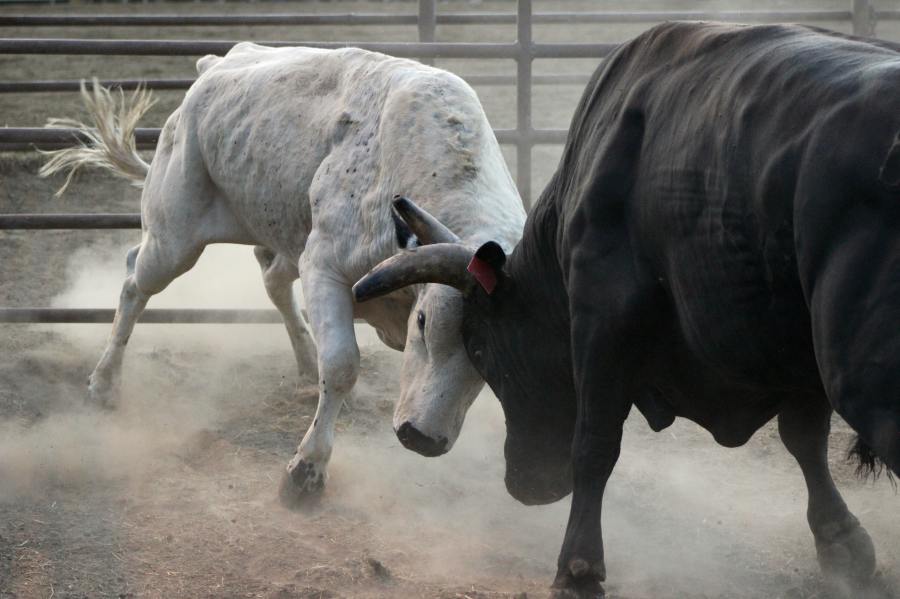
Rodeo

By Sunni Brown Wilkinson

Selected as winner of the 2020 NORward Prize by a panel of previous poetry contributors

Featured Art: by 2 Bull Photography

Tonight is a rodeo night, the announcer blaring his bull
and clown doctrine so loud it carries two miles
east to our block, where just now a hummingbird
hawk-moth drinks from the pink phlox
with its long wand
and I’m alone for a moment and the sky
is bleeding itself out over the train tracks and the brick
abandoned factories. The lights
of the carpet store by the mall flicker carpe
and I wonder just what I can seize.
The homeless shelter bearing some saint’s name
fills up every night and spills
downtown next morning,
wings of strange creatures brush our flowers
while we sleep, and a hapless moose wanders
a schoolyard before it’s caught,
tranquilized. Everyone’s looking for it:
a warmth, a softness in the belly, in a bed
of grass. Take it when you can. Seize it.

Lately sleep is a myth and my brain
is so hard-wired for worry my whole body
crackles, then a deep fog rolls in and all day
I’m lost. Unlike this moth, greedy in its guzzling,
drinking sweetness without asking,
and now the buzzer of the bull riding sounds.
I think of the grace of that single man,
one hand on the saddle
and the other a flag waving violently
above him. A wild show of surrender.

Some days it’s like this: one part
anchored while the other begs for mercy.
And some days it’s the other, the posture
he begins with: both hands together, holding tight.
Sometimes you hold your own hand.
That’s all there is to take.


Read More

Palacios

By Mark Alan Williams

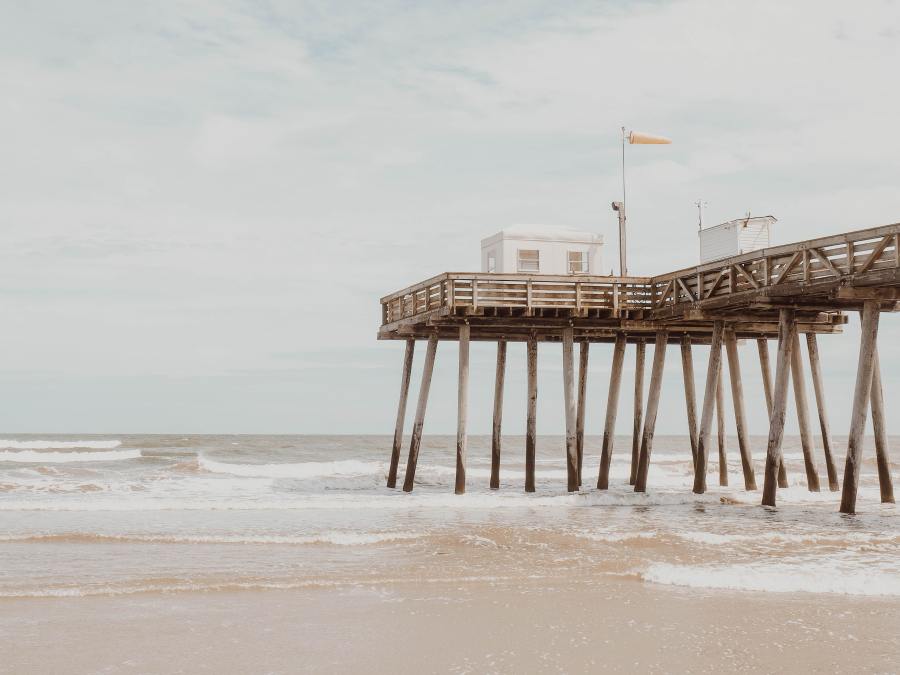
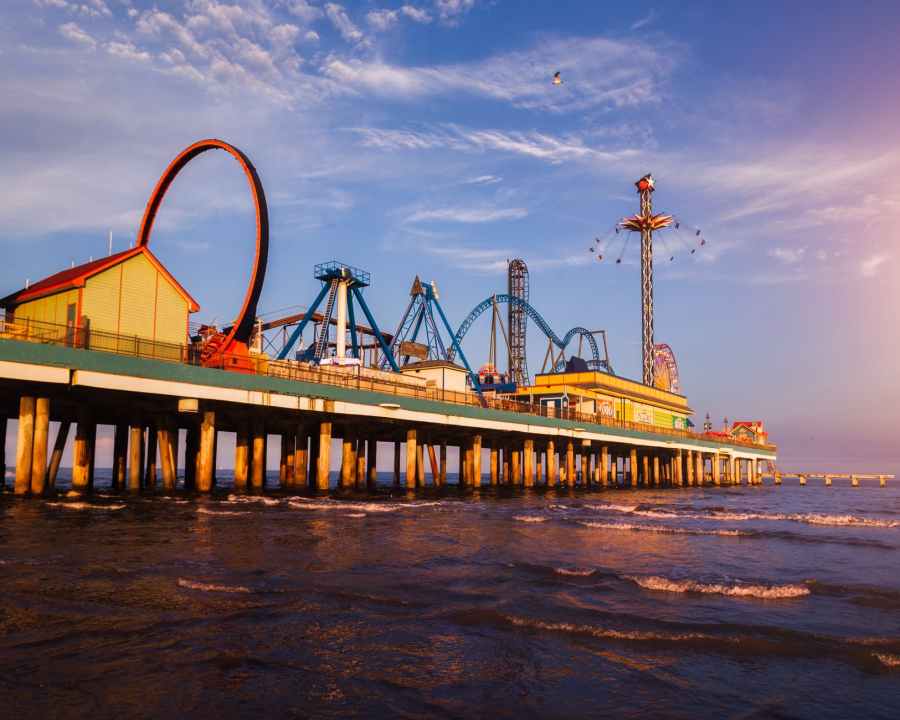
Featured Art: by Katie Manning

We buy hot dogs at a gas station
of broken pumps and eat them
on the pier, watching ratty shrimpers
limp in for new bandages,
sit there in the cold for hours,
thinking sunset will fill the bay
with the blood of the Brazos,
do something holy to us.

This is after Ganado,
and Victoria, and Refugio,
and Point Comfort, and Blessing.

We’re newlyweds,
willing to burn fuel on skywriting
if it can make marriage
feel less like living in Houston.

Sunset hangs around
like a towel that won’t dry,
and when we tire of waiting,
we leave the dim, fuming galaxy
of refineries for home,
bright and deadly as a hospital
circled by ambulances, the music off.


Read More

American Bachelor Party

By Conor Bracken

Featured Art: Star and Flag Design Quilt by Fred Hassebrock

Here I am inside a firing range.

Loading and holding and aiming a pistol

the way America has taught me.

Hitting the paper target in

the neck the mullet the arm the arm.

The old-growth pines inside me

do not burst into orange choruses of flame.

I am disappointed I’m not making

a tidy cluster center mass.

Around me fathers and offspring

as plain as stop signs give

each other tips while they reload.

A man one stall over cycles between a revolver and a rifle

while another draws a Glock

from a hidden waistband holster

over and over again, calibrating

his shift from civilian to combat stance

with the dead-eyed focus of a Christmas shopper.

These could be my people.

If I never talked

about the stolid forest inside me

planted by those I do and do not know

who died because America allows you

however many guns and rounds you can afford—

if I never talked about my manliness

that runs cockeyed through the forest

trying to evolve into an ax or flame or bulldozer

so it can be the tallest, most elaborate apparatus

taming local wind into breath,

they might give me a nickname.

I could practice training my fear with them

like ivy across a soot-blacked brick façade

and they might call me The Ruminator.

Virginia Slim.

Spider, even.

We’d grow so close that they would call me late at night

asking for an alibi again

and if I asked groggily ‘who’s this’

they’d say ‘you know who’

and I would.

Their name blooming from my mouth

like a bubble or a muzzle flash.

A flower

fooled out of the ground

by the gaps in winter’s final gasps.


Read More

In the Borderlands

By Kateri Kosek

Today on the back-roads, where Connecticut
and Massachusetts bleed together unnoticed—
the large, gangly silhouettes of two llamas
weaving across the road ahead of me, not
where they are supposed to be, where I always
pass them, stoic and shaggy amid a spread
of crumbling outbuildings.

A young woman has stopped.
She gets out of the car and I stop too,
and more llamas rush out from the broken gate,
ears erect like horns on their pert pedestal heads.

I wonder for a moment, could they hurt us?
These animals we usually see standing still,
chewing dumbly while we gawk?
We forget their long legs, forget
they can move.

But they head for the field
and there’s something exhilarating
about their sudden temporary glory,
the larger world asserting itself
in the form of llamas on the loose, llamas
spreading through a whitened February field
and no one around who can stop them.
I should mention, I had been crying.

Starting for the door of the farmhouse,
I hear someone coming out.
Fucking cocksuckers, he drawls, this older man
we can’t see, as if the llamas plotted this breakout
on a regular basis. Jesus Christ Almighty—
adding a new dimension to my image of the cluttered
farmyard, hushed and exotic, too much to take in
though I always slow down, riveted
as I am now, but I drive away
and leave him to it, lifted.


Read More

Train Prayer

By Steven Dawson

Featured Art: Indulge by Felicity Gunn

In Denver all days end standing up
packed like dried fish dry-humping
each other on the H Line. Some
passengers in their drunken wobble
or even in their haze of sobriety
pull down hard on the rubber handles,
the ones meant for standing,
the ones that swing dumbly above
our heads. They think this action
stops the locomotive but the train
is automated, stopping itself
at Broadway then Osage, Lincoln Blvd.
Since the train, as it always does, stops—
the travelers learn to keep tugging
& I can’t help but think this is how
prayer works. Like when I prayed
to a god I don’t believe in that your
morphine drip might soothe the wounds
that chemotherapy would not
& how I swear it worked sometimes
but didn’t others & yet in my drunken
sobriety I believe that it was me
who eased your pain, that it was my
failed pleas that bleached your blood.


Read More

Europeans Wrapping Knickknacks

By David Kirby

Featured Art: by Gustave Caillebotte

                                  They’re so meticulous, aren’t they? They take such care
             that I am ashamed for my country, that impatient farm boy,
      that factory hand with the sausage fingers. First there’s
                        the fragile object itself—vase, jewel, ornament—then tissue,
                      stiff paper, bubble wrap, tissue again, tape, a beautiful bag
      made from something more like gift wrap than the stern brown
                        stuff we use here in the States, then the actual carry bag

                         that has a little string handle but which is, in many ways,
                    the loveliest part of the package except for the object
    you can barely remember, it’s been so long since
                        you’ve seen it. In America, we just drop your trinket
                      in a sack and hand it to you. Oh, that’s right. We have cars
     in this country: whereas Stefano or Nathalie has to elbow his
                                or her way down a crowded street and take the bus or subway,

                        you get in the car, put the bag on the seat next to you,
                      and off you go, back to your bungalow in Centralia or Eau Claire.
      Of course, this doesn’t mean you’re culturally inferior
                        to Jacques or Magdalena just because, as Henry James
                    said in his book-length essay on Hawthorne, we have no sovereign
     in our country, no court, no aristocracy, no high church,
                        no palaces or castles or manors, no thatched cottages,

                        no ivied ruins. No, we just do things differently here:
                    whereas Pedro and Ilsa take the tram or trolley,
     you have your car, and now you’re on your way home
                        to Sheboygan or Dearborn, probably daydreaming
                   as you turn the wheel, no more aware of your surroundings
   than 53-year-old Michael Stepien was in 2006 when
                        he was walking home after work in Pittsburgh, which

                        is when a teenager robbed him and shot him in the head,
                    and as Mr. Stepien lay dying, his family decided
     “to accept the inevitable,” said his daughter Jeni,
                        and donate his heart to one Arthur Thomas
                    of Lawrenceville, NJ, who was within days of dying.
                That’s one thing you can say about life in the U.S.:
                        we have great medicine. Mr. Thomas recovered nicely

                        after the transplant, and he and the Stepiens
                        kept in touch, swapping holiday cards and flowers
               on birthdays. And then Jeni Stepien gets engaged to be
                        married and then thinks, Who will walk me down the aisle?
                        No cathedrals in America, says Henry James,
              no abbeys, no little Norman churches, no Oxford nor Eton
                        nor Harrow, no sporting class, no Epsom nor Ascot.

Read More

Los Angeles, 1990

By Jerry Williams

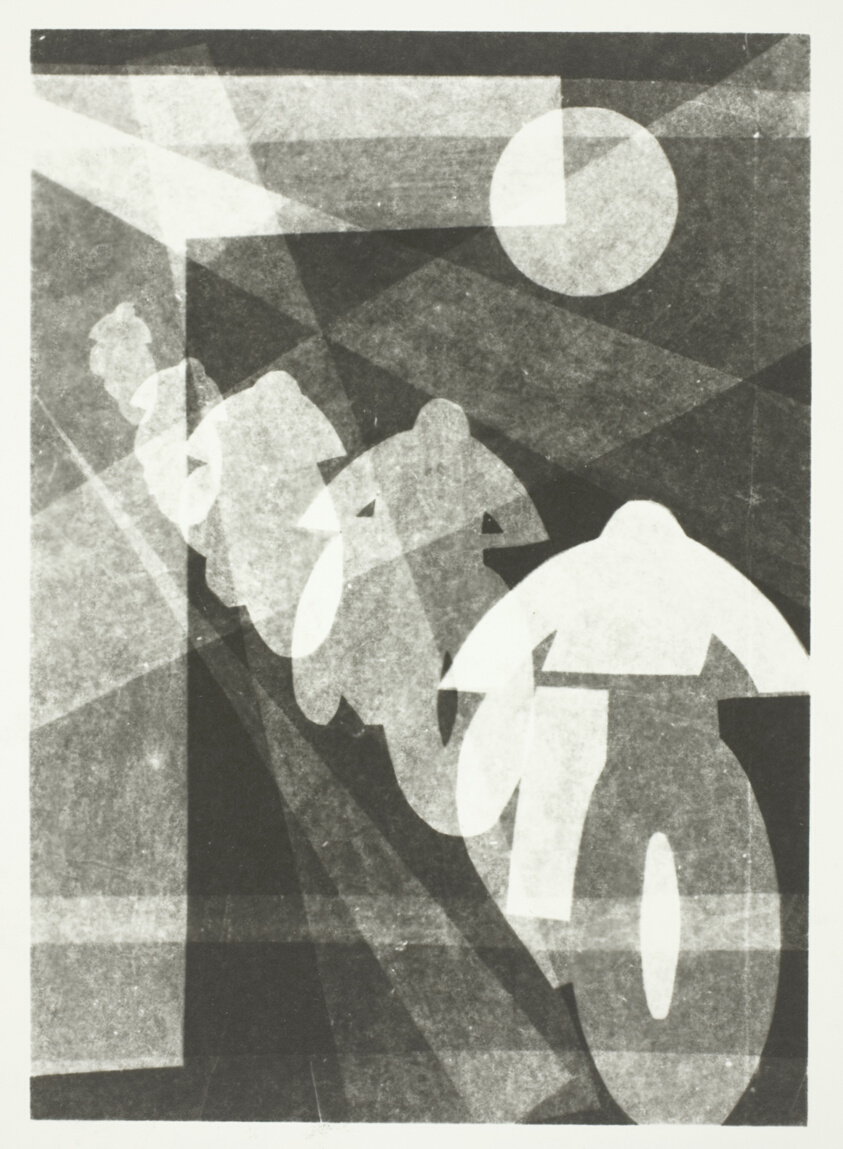
Featured Art: Motorcycle Race (Motorradrennen) by Oskar Nerlinger

I can recall riding a Kawasaki 750
down Sunset Boulevard
on a Saturday afternoon in light traffic.
Cruising along at thirty mph in fourth gear,
I let go of the handlebars,
braced myself on the fuel tank,
and slowly rose to my feet.
Helmetless, I stood like a surfer in the wind
on the imitation leather seat,
my longish hair blown back,
sunshine bursting through my goggles.
A thin membrane of fear lined
the inside of an urn made of pure joy.
After about an eighth of a mile,
I returned to the legal sitting position
and only then did I notice my runaway pulse.
When you’re twenty-three years old
the saddle of a thousand-pound motorcycle
feels as firm as the ground you walk on.
You get full access to your inner maniac.
Nowadays, doctors and sounder reasoning
have rescued me from worldly vices
and a rapid heartbeat often provokes alarm.
But I miss the brash torque of myself,
the quality of light in that urban desert,
all the midnights and years out in front of me
like the beautiful stupid jewels of infinity.


Read More

Waitress in an All-Night Diner, West Virginia

By Rebecca Baggett

Featured Art: A small portion of the Fanny Bennett Hemlock Grove on one side of Spruce Knob, West Virginia. Old Mammoth Road by Carol M. Highsmith

Angels visit sometimes, close to dawn.
They cluster by the door, seem to scan the cars
as they turn in, as if waiting for something—
what, she doesn’t have a clue.

She’s forty-three, a bad cough (first cigarette
at fourteen), two divorces, a dragonfly tattoo
on her left shoulder blade. Tumble
of chestnut curls—not a gray hair yet—
imprisoned in a net, magnificent when released.
Terrible feet. She hasn’t told a soul
about the angels, not even her sister,
who knows everything else worth telling.

They aren’t as glorious as she’d imagined.
Their wings, in particular—tight-folded
against their backs—surprise her by their drabness,
dusty-brown as the sparrows that hop around
the parking lot and gorge on stale biscuits
she crumbles on her break. The angels’ eyes—
washed-out blues and greens with strange,
cat-like pupil-slits—track her as she winds
through tables, a pot of coffee in each hand,
or delivers platters heaped with pancakes, sausages,
fries.
                       Why me? she wonders,
her back tickling under their eerie gaze,
but can’t imagine. Until the night the boy—
he can’t be more than boy yet—plunges
through the door, white as biscuit dough
except two spots, fever-red, high on either cheek.
The pistol he grips trembling with every
shuddering breath.

The cook’s whistling an old Alabama tune
she almost recognizes. The trucker
in the back booth drops his toast, lunges
to his feet. The pistol wavers toward him,
and then the angel by the door lifts its hand
to beckon her. She feels her lips curl
into the smile she offers worn-out mothers,
fractious teens, men who look as though
they can’t endure another night alone.
Yanks off the net. Shakes down her waterfall
of hair. Takes the first step
toward whatever’s come to her.


Read More

Laundromat

By Ted Kooser

Although it’s abandoned at two in the morning,
an empty white carton of buzzing fluorescence,
there’s always the feeling that someone was there
until only a moment before you walked in,
someone who reached up and popped a soap bubble
of fragrance, the last shimmer of color afloat
in this otherwise colorless storefront, then strolled past
the choir of top-loaders and opened their lids,
leaving them open, each of them holding its breath
before singing, two dollars in quarters per song.


Read More

At Milward Funeral Home, Lexington, KY

By Jeff Worley

Featured Art: Bloemenzee by Theo van Hoytema

Someone has to identify the body.
The funeral facilitator, Jeanne,
gestures me into the room and clicks
the door shut behind me.

You finally got your wish,
I say to my mother.
She’s wearing a shade of lipstick
that unbecomes her, a subtle peach
she would have hated. Her face
is her face and of course is not,
her hair parted in the middle,
a new look. Her hands, composed
across her sternum, are the color
of parchment, skin thin as vellum.

I don’t stroke her arm. I don’t kiss
her forehead, as I thought I would.
Instead, I wonder, oddly, if the funeral
people use the same gorgeous quilt
that covers my mother now,
with its sunbursts and bluebirds,
for everybody.

When I think I have stayed long enough,
Brahms trailing off in the corners,
Jeanne is sitting outside the door,
her long fingers forming a steeple.
I want to say to her I have no idea
who that is, I’m sorry, but levity
isn’t encouraged here. Although
I would only be speaking the truth:
Alzheimer’s riddled her brain
and sucked the marrow from her spirit;
she became a stranger and a stranger
to herself. What else was there to do
but believe along with her that Hoss
and his Bonanza brothers were indeed
aliens from another planet, that Pat Sajak
was “in on it,” along with everyone else
who came and went in Mom’s room,
stealing her clothes, her makeup,
the nursing home grand conspiracy . . .

I’m sorry it’s taking me so long,
Mom said in a rare lucid moment
last week, and I had nothing to say,
and I tugged the blanket snugly
under her chin, and I handed her
the plastic cup full of water which
she waved away.


Read More

You Are My Sunshine

By Alpay Ulku

Featured Art: Landscape by Paul Nash

We’re in the Taqueria Uptown. People are eating, or gazing out of windows, or talking to each other. The food is delicious and the coffee hot and fresh. A man walks in with a cheap guitar and pleads for our attention, then fumbles through three mangled songs.

You can hear the pain in his voice. If he were drowning in Lake Michigan, he would flail and grab the lifeguard in a bear hug.

How much do we owe this guy, who’s interrupted us at dinner? What is it we owe each other? Nothing at all?

Bless you all, I hope I’ve brought some sunshine to our lives. He looks around. All that playing has made me hungry for a nice steak taco.

Everyone tenses and ignores him.

It’s my dream to be a paid musician.

A jornalero says something in Spanish. The waitress shrugs and writes the order.

Could I have a side of sour cream with that? he asks her. You see, the peppers burn my mouth. He looks over to the jornalero. My mouth is very soft and sensitive.

The jornalero ducks his head, embarrassed and a little pissed. He nods okay.

It’s terrible to be so lonely, he says to no one in particular.

The waitress has laugh lines around her eyes, she likes to laugh. But her face is neutral now. She brings him the sour cream in a saucer with a plastic spoon, and the taco.

Everyone is hoping that nothing more is going to happen next.


Read More

Florida Man Throws Alligator into Wendy’s Drive-Thru Window

By Mitchell Jacobs

Featured Art: Alligators by John Singer Sargent

The attendant hands him a soda and turns her back, thinking
of straws—how she’s running low, and their candy-red stripes,
and the way everything here comes wrapped up in paper, and

then a 3½-foot alligator is clawing the air.
                                                                          As if she pressed
the wrong button on the register. Or maybe, during lunch rush,
she’d ignored an oncoming hurricane tossing them about.

In any case, she shrieks, finding for this alligator non sequitur
no earthly explanation. Back when the heavens functioned
with less subtlety, she might have turned to the logic of myth.

The god of rapacity took the shape of a lizard
to penetrate the food hall’s oil-glossed aperture.

Perhaps the oracle of Jupiter, FL on his faux-leather throne
delivers this cold-blooded message to confront corporate greed
teeth to teeth.
                        Not that the police have succeeded

in extracting a motive. The culprit’s Frosty-smeared lips are sealed.
His charge: assault with a deadly weapon. Yet it rings untrue.
For Florida Man, we need a more particular punishment:

accused of wielding a projectile reptile,
the defendant shall be flung naked
into the Loxahatchee Slough.

If indeed he is a criminal, there will be no proper dunking.
If he is a hero, he will don no duckweed laurel as he rises
from the mud. But the surveillance camera remembers:

it’s not so wide, the gap between the actual and the possible.
About the space from Nissan Frontier to take-out window
where an alligator, bewildered, sees the kitchen’s steam

like fog over a marsh in red bloom, smells the billows
of meaty fragrance, hears the gatekeeper’s yodel of welcome,
and for a moment
                                 flies.


Read More

Void Unfilled

By George Bilgere
Featured Art: Long Exposure Couple by Jr Korpa

I walk past Erin’s house at dusk
and there she is at her kitchen table,
working on her book about the Reformation.

She needs to finish it if she wants to get tenure,
but it’s slow going because being a single mom
is very difficult what with child care and cooking dinner
and going in to teach her courses on the Reformation,
which I can see her writing about right now,
her face attractive yet harried in the glow
of her laptop as she searches for le mot juste.

Meanwhile Andrew, her nine-year-old son,
shoots forlorn baskets in the driveway
under the fatherless hoop bolted to the garage
by the father now remarried and living in Dayton,
as Andrew makes a move, a crossover dribble,
against the ghost father guarding him, just as I did
when I was nine, my daddy so immensely dead,
my mother inside looking harried and scared,
studying thick frightening books for her realtor’s exam.

And although I hardly know Erin,
I feel I should walk up, knock on her door,
and when she opens it (looking harried,
apologizing for the mess) ask her to marry me.
And she will smile with relief and say
yes, of course, what took you so long,
and she’ll finish her chapter on the Reformation
and start frying up some pork chops for us

as I walk out to the driveway and exorcise
the ghost father with my amazing Larry Bird jump shot,
and tomorrow I’ll mow the lawn and maybe
build a birdhouse with the power tools slumbering
on the basement workbench where the ghost
father left them on his way to Dayton.

I will fill the void, having left voids of my own,
except that my own wife and son are waiting
down the street for me to come home for dinner,
and so I just walk on by, leaving the void unfilled,
as Erin brushes her hair from her face and types out
a further contribution to the body of scholarship
concerning the Reformation, and Andrew
sinks a long beautiful jumper in the gloom.


Read More

Mitigation

By Craig van Rooyen

Featured Art: by Romina Farías

Somehow it’s good to know
the wildfires have not touched the face
of our local TV anchor
delivering her lines
with a touch of sadness that never approaches
despair, even as her bangs cascade
onto her forehead like evening clouds
descending the Coast Range.
I think of her in her dressing room
before she offers her face to us
the one that will help us fall asleep
while a line of flames somewhere far away
descends the ridge and licks into a kitchen,
melting the refrigerator magnets,
popping cans of spray oil, and setting
the dog out back to howling, jerking
against its chain.
I see her in front of the mirror,
surrendering to the ministrations of tiny brushes— 
a makeup artist leaning in like a lover.
Foundation first, an A-side attack
on brow furrows and laugh lines.
Then concealer to suppress the advance
of crow’s feet into the Botox buffer zone.
Within a half-hour, the spread of creases
and fissures 95% contained.
The brushes flit across her face
like prayer flags, and I can almost smell
the warm breath of the girl who sticks out
the tip of her tongue, leaning close
to line the boundary
where the fullness of a lower lip
begins its concave plunge
into smooth white chin.
Our TV anchor practicing her lines,
mastering her face.
We need to love her for this.
For the way she shows us how to keep
a chin from trembling, an eye from twitching
even while the chained dog
curls in on itself in the burning.


Read More

Red Beans and Rice

By James Sprouse

Featured Art: ‘Modes et Manières de Torquat

The medium said you were not coming back.
So I ate my red beans and rice
same as on our wedding day
down in Algiers, Louisiana.

The next day you rode
off with the Russian, Porshenokov,
in a little MG, your long straw hair
whipping in the streets

in the wind of the French Quarter
and down on the bayous, where it’s
too hot to sleep. The cemetery on Ramparts
was a forest of stone, the dead

above ground. On account of
the hurricanes, they said, and high water
on the Mississippi that stirs underneath
and raises them up.

That time you came back,
in heat, in sweat, with cotton-mouth
and juju. The South was our
time to be hot.

Next day you shipped out
lithe as a dolphin
rolling and tumbling down to the delta
on whiskey and water we called our lives.

Beautiful dreamer, awake unto me . . .
on Lake Pontchartrain, in the boat
of our nights, your prodigal smile
alive with fabulous poison.


Read More

Midnight Snack with Leon

By Darren Morris

Featured Art: by nrd

I ran into the boxer Leon Spinks in 1992.
Spinks had won the heavyweight belt 14 years before
from Muhammad Ali. He had also won bronze
in the Olympics and gone to the penitentiary
for possession. By the time he got to me
he was all done with fame and fortune.
But he still scrapped with life, just trying to be.
At that time, I was staying with my brother
in Springfield, Missouri. He ran a pool hall
and kept an apartment in back of the place.
I snuck into the kitchen late one night for a slice
of that industrial orange cheese that I was
addicted to. I flipped on a light and
there was a large man sleeping on a cot
in the middle of the white-tiled room. But
I went ahead and opened the fridge because
when you are visiting someone, nothing is
unusual. It should all be that way, every day,
everything new, but it rarely is. I reached in and
lifted out a long orange sleeve. That’s when
the sleeping man said, “Leon hungry,” and instantly
I remembered my brother telling me that Spinks
had started coming into the bar, but I did not
believe him. It had been so matter-of-fact
that I barely retained the anchor to the info.
I made sloppy towers of tomato and cheese
sandwiches for Spinks and me and we ate them
in silence except for all the tooth-sucking
that bread and cheese promoted, especially
for Spinks who had more than a few teeth missing.
I cleaned up and Spinks lay back down. There
was nothing really to say. But when I turned off
the light, as if still a boy, Spinks said, Nigh-night.
They call it American cheese because it is processed
from nothing much. In 1978, Ali taunted him
and Leon beat his ass in one of the biggest upsets ever.
I met a ton of people back then who ceased to matter.
But that did not stop them and they persisted.


Read More

In a Year of Drought, I Drink Wine in a Los Angeles Hot Tub

By Christopher Kempf

Selected as runner-up in the 2015 New Ohio Review Poetry Contest by Robert Pinsky

Featured Art: Interior of the Pantheon, Rome by Giovanni Paolo Panini

So too on Troy’s final afternoon
the doomed children of the city sang. Such
      was their joy, Virgil tells us, such

was their simple awestruck wonder
at the great beast even
      the Achaeans, cramped, standing

on each other’s shoulders inside
the close wood, wept. What
      he means, of course, is that inside

of the other’s suffering, one
can imagine always aspects
      of a wild beauty refusing

negation. Or no. Not
that it exists, this
      beauty, but that

it can be made so. Rome
Virgil says, springing
      from Ilion’s ashes. Elsewhere

Orpheus. This
is not my home. Here
      for the weekend only, I float

out into the hot tub’s bubbling, bleach-
& salt-scoured water. I watch
      the few stars the city permits

still flicker on, the long
avenues of light below them—Cienaga
      & Sunset, Ventura—burn

& spangle in the mountains’ dark bowl. The bottle
of La Marca prosecco sweats. To secure
      for their desert metropolis water

enough to nourish all this, city
developers—circa
      the arrival, reports suggest, of something

Read More

Blood Buzz, AZ

By Shane Lake

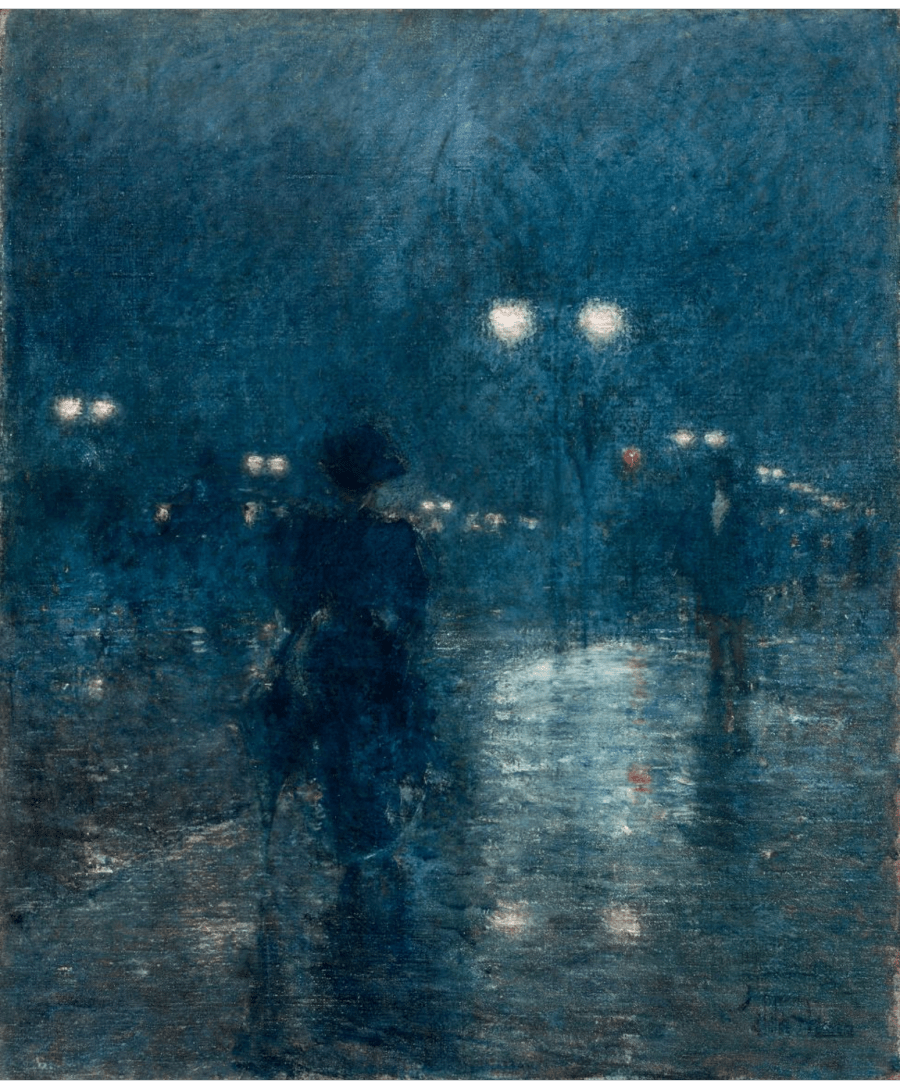
Featured Art: Fifth Avenue Nocturne by Childe Hassam

A Red Cross bus gets hit by a truck
and lands on its side, the driver unconscious.

Blood spills from the broken glass,
coats the pavement in bubbling rust.

It is 1977 and the theme for summer is .44 caliber.
It is one hundred fifteen degrees.

A crowd forms in the contagious heat,
pulls back as the red pool expands.

I watch from the ailing shade of a palm tree,
the sweet taste of blood in the air, on my tongue.

Someone tries to rescue the driver
but the mix is slippery. He lands on his back.

His impact speckles the closest few,
who scream and cover their mouths with their hands.

Sirens sound, and soon the fire trucks are here,
hosing donations into the street drain.

Secretly, we all enjoy this,
being here at the scene of the crash

where news vans make stars of us all.
We want our trauma to trump everyone else’s.

We want to be able to say:

“You weren’t there. You wouldn’t understand.”

Read More

Grace

By Craig van Rooyen

Featured Art: Pine Tree by Giovanni Segantini

The History Channel’s playing “The Gold Rush” again.
All those bearded men looking at reflections
of themselves on the surfaces of creeks and rivers and lakes.
They’re so beautiful coming out of ramshackle cabins,
thumbs tucked into suspenders, wading into streams
the color of cheap whiskey. That golden light
on their shoulders, in their beards, dripping
from the brims of their hats, high on
“howdy” and “rough and ready,”
around every bend in the river, expecting
life to begin. The flash of light in a silver pan
full and overflowing. All that hope. Out of
the river, there’s always more earth.
There’s always the scooping and sifting and
throwing away. Everything left behind—out of
frame: The women in their calico, waving goodbye.
The steaming cows in their barns. Now just
the sloshing desire of this moment and the next.
Sure, you have to be willing to kill a few Indians.
But as long as you’ve got a pan and a river
to dip it in, you can forget the rest.
At least that’s what I tell myself before the first
commercial break. Before those attractive
late-middle-aged people clutch each other
in honey light and the baritone voice-over tells me
to go to the emergency room if I experience
an erection that lasts more than four hours. I wonder
if anyone ever panned for gold in terrycloth—
my fabric of choice for watching “The Gold Rush”
in bed at 10 a.m. on a Wednesday. I wonder
if any of those bearded men had a bottle of
Prozac back in the cabin next to the straight-blade
razor underneath the cracked mirror—something
to take the edge off all that failure, something
to dull the regret of walking out on their women
and cows. Of course they’d have another name
for Prozac, like maybe “nerve pills,” as in:
“Durn near forgot to take my nerve pills this morning, Jake.
Christing Jesus, sure don’t want to start sawing
at my wrists again, now do I?” I love the way
there’s no word for shame in the language
of gold miners. All that hope is contagious.
In fact, I believe if I really tried, I could get up
and shuffle to the bathroom and brush my teeth
during the next commercial break. I love
the History Channel! It’s so inspirational.
Right now, the sad banjo music is playing—
the plinking of catgut string over doe-skin,
a sound so Californian it makes you weep for
the all-night diner in Auburn where it’s 6 a.m.
and the sun is lighting up the foothills and
the American River is still frothing to get wherever
it’s been trying to go all night long. All the gold’s dug out
of the hills but the waitress is calling you “love” as she
puts down a cup of awful coffee and sits in your booth—
night shift done. It’s as if she knows you. As if she’s
made the same mistakes and she’s telling you it’s okay.
Now she’s taking out a bobby pin.
Now she’s letting down all that golden hair.


Read More

My Grandmother the Mohel

By Barbara Hamby

Featured Art: Study of a Baby by Fredrick Goodall

When I tell my mother that a man I know pickets the local hospital
              about what his wife calls “his topic” that is, circumcision
and its evils, she tells me this was my grandmother’s specialty
              as a nurse, and I say, “You’re kidding.” “No. The doctor
she worked for couldn’t stand it, so she did all his circumcisions.
              She loved it!” Loved it? I think—cutting the tips off
boys’ penises? Loved what? The precision? The power? The cries?
              I remember sitting with my mother and grandmother
when I was seven or eight, pretending to play, so I could listen
              to them talk in front of my grandparents’ house
in Washington, 328 Maryland Avenue, and down the tree-lined street
              you could see the Capitol dome looming. A couple
were walking on the sidewalk, and they waved at my grandmother,
              who smiled and waved back. “Are they married?”
my mother asked when they passed. “No,” my grandmother
              answered, “they’re just shacked up.” The cups of my ears
gathered around those words like ravenous Venus Fly Traps,
              because this was just what I had been waiting for,
though I had no idea what it meant, and I knew I couldn’t ask
              or my doll dressing and tuneless singing would be exposed
for the subterfuge they were, and I’d be exiled into the house,
              and this was before my grandfather died, who didn’t think
a woman should drive, but my grandmother taught herself,
              her two little girls in the back seat screaming
as the car jerked over the dirt road behind their house in Kentucky,
              and then after he died, she went to school and became a nurse,
but fifty years later I’m chatting with a man on a plane, who’s returning
              home after spending the day in New York because
he is a mohel and has made this long trip to snip the tip off
              some little boy’s penis, and I think of Mantegna’s painting
of the circumcision of Christ at the Uffizi and kosher laws which
              forbid eating crustaceans, which would mean a sacrifice
of gumbo, boullabaisse, cioppino and fish soups the world over,
              and it was the fried Apalachicola shrimps that broke
the back of my vegetarianism, what in Louisiana they call
              “sramps,” and I’ve heard them called “pinks,” “prawns,”
and sometimes when I’m standing over the stove making a roux
              my life seems to be a kind of gumbo, and if you don’t burn
the water-and-flour paste, then it doesn’t much matter what else
              you throw in, but okra is a must and a couple dozen
oysters, andouille sausage, all your dark mistakes mixed in
              with the brilliant medals and diamond tiaras,
and my grandmother told me she went to her wedding
              in a horse and buggy, a seventeen-year-old girl,
probably a virgin, and little did she know where that road
              would lead her, from canning tomatoes and corn
to snipping the tips off thousands of penises to the nursing home
              where she died, shacked up with all her selves,
that particular gumbo stewing in a body withered by 93 years,
              not knowing anything but that she’d rather be eating
ice cream, driving to Memphis, frying chicken, mashing
              potatoes, baking a cake with blackberries
her daughters picked that morning before walking to school.


Read More

Royalty

by George Bilgere

Feature image: Odilon Redon. The Beacon, 1883, reworked c. 1893. The Art Institute of Chicago.

So this young couple, overweight
and seriously tattooed, comes into the café,
and each of them is actually wearing a baby
in one of those tummy-papoose things,
and they have two enormous dogs
designed to kill elk and wolves,
not sit under the table at a coffee shop,
and as I watch them smile at their babies
which are now screaming bloody murder
while the great slobbering mastiffs
begin earnestly licking their own privates,
something terrible happens to me:
it’s like The Manchurian Candidate,
when Lawrence Harvey suddenly realizes
the reason he’s been acting so strangely
is because he’s been brainwashed by Soviet agents:

Read More

Ocean State Job Lot

By Stephanie Burt

No one is going to make
     much more of this stuff now, or ever again.

Graceless in defeat
     but beautiful, harmless and sad
on shelves that overlap like continents,

these Cookie Monster magnets, miniature
     monster trucks, scuffed multiple Elmos, banners

that say NO FEAR
     and A GRILL FOR EVERY BOY
are a feast for every sense.

Some would be bad manners
     to give or bring home-

Read More

A Discreet Charm

By Stephen Dunn

Featured Art: Luncheon Still Life by John F. Francis

Our good friends are with us, Jack and Jen, 
old lefties with whom we now and then share
what we don’t call our wealth. We clink our
wine glasses, and I say, Let’s drink to privilege . . .

the privilege of evenings like this.
All our words have a radical past, and Jack
is famous for wanting the cog to fit the wheel,
and for the wheel to go straight

down some good-cause road. But he says
No, let’s drink to an evening as solemn
as Eugene Debs demanding fair wages—
his smile the bent arrow only the best men

can point at themselves. I serve the salad
Barbara has made with pine nuts, fennel,
and fine, stinky cheese. It’s too beautiful to eat,
Jen says, but means it only as a compliment.

Read More

Constant Craving

By Kathy Fagan

Featured Art: Café Concert (The Spectators) by Edgar Degas

When Peter Byrne of the 80s synthpop duo, Naked Eyes, played for me his acoustic cover of k.d. lang’s “Constant Craving” in his studio over-looking Los Angeles, the peacock—not the NBC peacock but a real peacock among the many on the grounds—opened his fan as if the music were a potential mate. He strutted and shirred. He shimmied his many eyes. He’d been drawn to the music, then spotted himself in the sliding glass doors. He leaned in and turned for us like a Vegas show girl. He brought tears to my eyes. When the song was over I could barely muster, “What a tender version, Peter,” though tender wasn’t the word for the primitive if aimless seduction on the lawn.

Read More

The Night I Proposed

By Peter Stokes
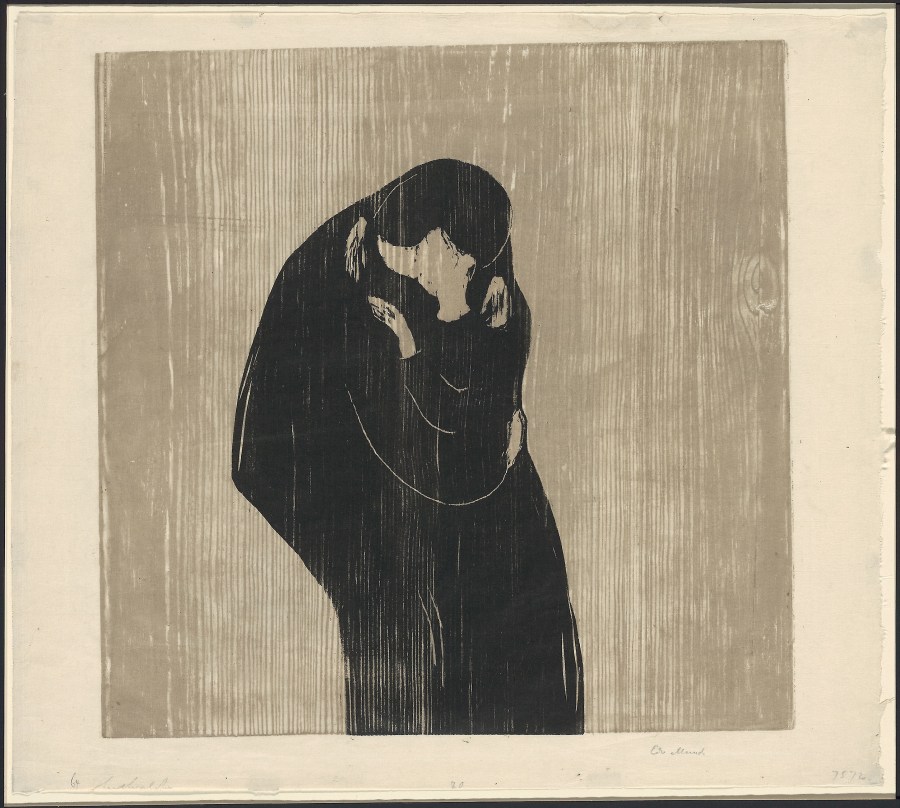
Featured Image: The Kiss IV by Edvard Munch

This is a whole new world to us, and
We drove up to some rooftop parking garage
To look out on the Western night
There up above the Terminal Bar & Grill
And later moving on down darkened East Colfax
Past all the whores with their narrow old asses
And bars wide open with their doors bent back
I thought I saw Bo Diddley
At the wheel of a cream-colored Cadillac
Like out of some wet dream from my Visions of Kerouac
And I knew that at last we had arrived.

Read More