Flying into Darkness 

By Mary Cross

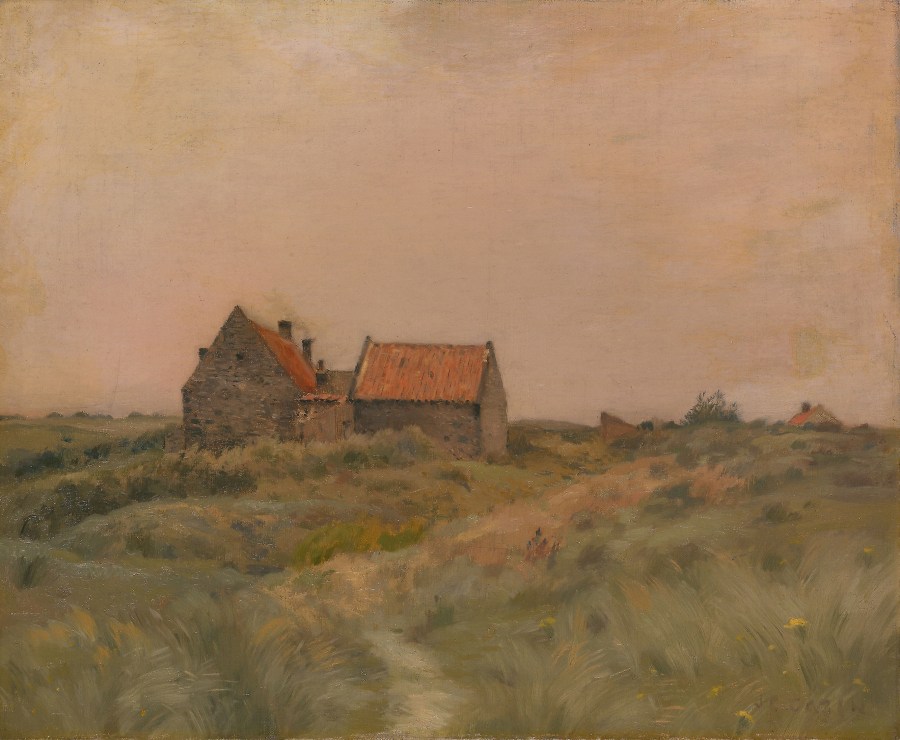
Featured Art by Jordyn Roderick

Sometimes in the middle of the summer when it was so hot that the tar on the road stuck, like Juicy Fruit gum, to the bottom of my tennis shoes, I’d see a mirage in front of me and think of my grandmother—imagine her a painting. She loved the heat in the summer, and she told me that she even chewed a hunk of tar when she was a little girl. I’d imagine her head was a wide stripe of white across a green-colored canvas, and her hips were shimmering shades of red and caramel; but the craziest of all were her lips—they were yellow buttons, the same kind on my spring coat. At night in our room we shared, I’d think of this painting when I’d watch her remove her Junior Petite coffee-colored stockings, rub her shins with the clinical expertise of a practiced masseuse at the Y, then rest her feet in a bucket of Epsom salts, while I studied the gap between my front teeth with her compact mirror. She’d repeat the story about her sixteen-year-old daughter who died; “Molly, there is nothing worse than losing a child.” She kept a lock of her daughter’s hair in the second drawer of her dresser, along with fortunes from Ray’s Chinese takeout. On the night table, her top teeth sat in a jelly jar painted with the outline of Fred Flintstone. Without her dentures, she sounded as if her tongue were swollen. 

Read More

Baby Suits

By Jonathon Atkinson

Selected as winner of the 2023 New Ohio Review Fiction Contest by Megan Giddings

Infants develop the ability to see during their first months of life. They can’t discern figures against a background until they’re two or three months old, a milestone whose achievement comes as a shock. The resolution of so much detail out of that myopic blur is overwhelming, frightening; hence, at least in part, their characteristic astonished stare. Their field of vision remains cloudy until they are about a year old, at which point—setting aside the effects of our immersion in language and concepts, the coursing rush of lived life—a child’s vision reaches typical adult levels.

Read More

Sevens

By Deborah Thompson

I.

“Watch out for the number seven,” my mother tells me at the start of my recent visit to her Florida apartment; I’ve just mentioned that I will soon turn 57. “You know sevens are big in our family, right?”

I’m still getting used to how old my mother has gotten. A chaos of cross-hatched wrinkles nest her graying eyes. She’s convinced those wrinkles were caused by her cataract surgery, but more likely she just wasn’t able to see them before. She huddles in her powder blue bathrobe even though it’s 80 degrees outside and she doesn’t use the air conditioner. She’s been wearing the same robe since I was in high school, the blue now paler and more powdery. Because of the arthritis in her fingers, she can no longer button it, so she does without.

 “Sevens? Big?” I ask. “What do you mean?” Am I witnessing my 82-year-old mother’s fall into dementia? Without her dentures, she slurs her words, which doesn’t reassure me. I know, though that when she says something nutty, it’s often because she’s now nearly deaf. Not hearing a question properly, she makes up her own question and then answers it. This time, however, she’s watching my over-enunciating lips and guesses correctly. Read More

The Terms of Agreement

By Patrick J. Murphy

Featured art: Untitled by Sue-Yeon Ryu

It was getting late and her grandson Buddy wasn’t back, so Vera decided to brave the heat and go with Alicia to find him. She’d wanted to talk to her daughter in private, anyway, but when she stepped outside, though the sun was low, the light still bounced with a glaring intensity off the pale houses, the plastered walls. Vera felt her skin growing damp, the small shock as the heat hit her body. It just took time to adapt to a Florida retirement, she thought, and remembered Little Rock and the parks along the river, the evening fireflies above deep grass.

It irritated her that Alicia, walking placidly beside her, didn’t seem to mind the climate, or much of anything else. Her daughter was overweight and wore long, black, wrinkled cotton dresses. Her left ear was pierced in five places, and she sometimes wore a silver ring through her right eyebrow. She was making a statement, she said, and didn’t care what anyone thought.

“Then why bother making a statement?” Vera asked once, only to meet with an uncomprehending stare.

Read More

Devil’s Advocate

By Becky Hagenston

His kid doesn’t want a smartphone. His fourteen-year-old flute-playing boy is saying, “Nah, I don’t really need one.” Mitch’s wife Shelley says, “No one’s forcing you, honey.” She beams. The boy beams. Mitch feels a faint nausea. There’s something wrong with his kid, who still likes Legos and watches network TV and keeps his room clean and calls his two nerd friends on the landline.

“Well, that’s fine,” says Mitch. For some reason, he’s pitched his voice like an actor from a 1950s movie. He tries it again: “That’s just fine, son!” He’s speaking like a man wearing a fedora, a man carrying a briefcase. But nobody seems to notice. “So what do you want for Christmas?”

His kid, Ernie, frowns as if Mitch has just asked him to poke a kitten in the eye. “I can’t think of anything at the moment,” he says. “Can I go practice flute now?”

“Yes!” says Shelley. She rises from the sofa and kisses Ernie on the ear. “I’ll let you know when dinner’s ready. I’m making your favorite.”

“Brussels sprouts?” he asks brightly. “And Salisbury steak?”

“You bet,” she says. When Ernie has disappeared down the hall, she turns to Mitch. “Don’t force him to grow up before he’s ready.”

Mitch knows better than to argue, but he can tell that his thoughts—not grow up, just join the 21st century like a normal kid!—might as well be floating above his head like a comic book bubble. Not that Ernie would get such a reference, because he doesn’t read comic books, either.

“Okay,” he says, but Shelley has stomped down the hall to prepare the kid’s Brussels sprouts.

Read More

The Getaway

By Rebecca McClanahan

Featured Art: Haverstraw Bay by Sanford Robinson Gifford

“Is that our car?” my mother asks. She has rolled her walker over to the window and is pointing to the Buick LeSabre parked outside their condo. I keep it there so that Dad can see it from his recliner, where he spends most of his days and evenings. He hasn’t driven for several years and never will again, but he likes knowing the car is there, likes sitting in the co-pilot seat when I take them for doctor appointments or Sunday drives. The Buick has rarely moved from the space in the three years since my husband and I relocated them from Indiana, to a condo twenty feet from our own. But each day is a new day for my mother; thus, the question, which she will keep asking until I answer.

“Yes, Mother. That’s your car.”

“Mine?” Her brown eyes light up, her eyebrows lift.

“Yours and Dad’s.”

“Dad’s?”

“Paul’s, I mean.” Lately I’ve been trying to break my lifelong habit of calling my dad “Dad.” “Dad” only encourages her confusion: that her husband is her father, or sometimes her grandfather. No matter that her father has been dead nearly thirty years and her grandfather, over seventy. She still sometimes sets a place for them at the table, and worries when they’re late for dinner.

Read More

The Stability of Floating Bodies

By Craig Bernardini

Featured Art: Dublin Pond, New Hampshire by Abbott Handerson Thayer

It was never my intention, when my father came to live with us, that he would live in the pond. Things just worked out that way. This was shortly after my mother died. My wife and I had never really spoken about what we would do in the event that one of our parents died. It had always seemed a little premature to have that discussion, at least where my parents were concerned. They were in their mid-seventies, enviably lucid, and as healthy, according to their physicians, as most Americans ten years their junior. But then maybe it always seems too early to have that discussion. Or maybe it was just that I could never imagine them apart. They had done everything together, my parents, gone everywhere together. There had been something almost tyrannical in their solicitousness about each other’s welfare. One day, it occurred to me that I didn’t have a single picture with just one of them in it. Were I ever to try to crop one of them out, the other would remain in the shape of the border traced by my scissors. Growing together, my mother had said to me not long before she passed, was the key to a healthy relationship; and grow together they had, like skinny trees, the trunks of which wound round each other in acts of mutual strangulation.

Read More

Stick Season

By Sydney Lea

-For Peter Gilbert

The one that precedes my season is the one that always shows
in those quaint calendar photographs, the one that brings the tourists
to a scene that is sumptuous, granted—exorbitant on the sidehills,
most of the leaves incandescent, drifting or plunging downward
to scuttle along the roadbeds like little creatures reluctant
to be seen, yet wanting us to notice them after all.

But give me this: middle November, season of sticks,
of stubborn oak and beech leaves, umber and dun, which rattle
in gusts that smell so elemental they stab your heart.
The trees—the other, unclothed ones—are standing there,
gaunt but dignified, and you can look straight through them
to the contours of the mountains, stark, perhaps, but lovely

in their apparent constancy. That gap-toothed barn
houses space alone since its owner died. Do you remember
Studebakers? That’s one over there, a pickup truck,
flat-footed among the sumacs. Painted green way back,
these days it has taken the hue of these later leaves I love.
Old age has changed the mountains too. They’re rounder now

than once, worn smoother. Everything is for a time.


Read More

Chemistry

By Micheal George

Featured Art: Steps by Manierre Dawson

Sunday at one o’clock, my sister Denise arrives at my father’s house in Elizabeth, New Jersey. We don’t hug; I know that many siblings engage in this ritual, but it’s never been our way. Instead we share a kind of wry, shy smile, a brief flash of eye contact that’s almost like flirting. I ask her how she’s doing, and she says she’s great.

“And Dad?” She nods toward our father, who is reclined in his La-Z-Boy, watching the Cooking Channel.

“He’s great too.”

Denise doesn’t ask about me; such questions we probably both understand as unnecessary formalities. I can see through the window of my father’s one- story bungalow that her camera crew has arrived behind her, and are unloading equipment.

Read More

Old Married Couple

By Robin Messing

Featured Art: (Untitled–Group of Flowers) by Mary Vaux Walcott

They couldn’t part with things, so in the end, they lived with everything. Two toaster ovens, two coffee makers, two waffle irons, two sets of dishes, two couches, two coffee tables, two beds. Their former spouses would not have tolerated it. But together, something different happened.

Ben toasted an English muffin in his toaster oven, and Sophie toasted a piece of leftover challah in hers. Ben poured coffee from the percolator pot that his former wife, Edna, had bought decades before at a hardware store on Avenue J. Sophie brewed coffee in a Mr. Coffee pot that her former husband, Sam, had purchased after their glass percolator pot, slippery with soap, splintered in the sink when Sophie dropped it.

Sam died first, four years earlier. Six months later, Edna passed, both from cancer. Two years ago, Sophie and Ben married—a small ceremony in a shul on Coney Island Avenue.

Read More

Coins for the Ferryman

By David Denny

Marlene and Ralph walked up Kaanapali Beach about half a mile from their hotel. They sat in a corner of an outdoor restaurant with a floor of sand. Each of the small, round tables was shaded by an umbrella made of palm leaves. A row of tropical greenery, punctuated with orange and red hibiscus, separated the restaurant from the boardwalk. They could hear the waves hitting the sand about forty feet away. 

Marlene slipped off her sandals and wiggled her toes in the cool sand as she looked over the menu. Mahi was her new favorite; however, she’d eaten it two days in a row and thought she should try something else. Up next to the bar, a local singer was nearing the end of his lunchtime set. He took a slug of water, traded his guitar for a ukulele, and began crooning the popular island version of “Somewhere Over the Rainbow.” Marlene wasn’t all that hungry. A shrimp cocktail and a Diet Coke might do the trick. Her husband had his cell phone out on the table in front of him, checking their reservation for the dinner cruise out of Lahaina harbor. He had decided before he left the hotel that he would order a burger; he was tired of fish already. 

Read More

The Skirts and Blouses are Hatched

By  Tam Lin Neville

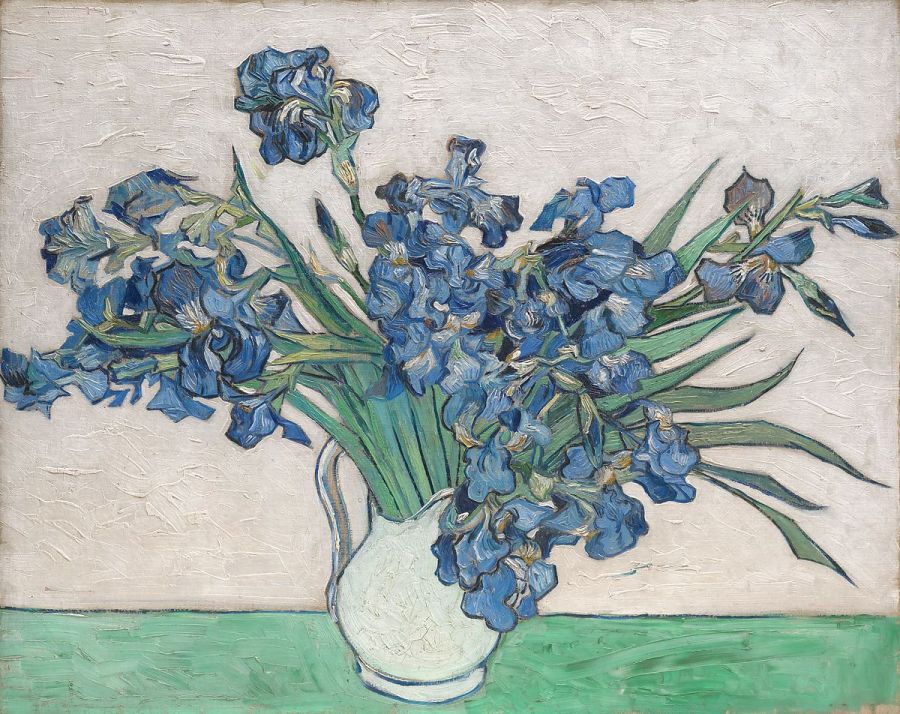
Featured Art: Irises by Van Gogh

My mother had been failing for several years, slowly, but minimized the signs. We, her five grown children, were not to worry or be diverted from our lives. When it came, the time of her dying seemed to open of its own accord, its span neither too short nor too long. We had several weeks to talk, to tie up loose ends before the illness closed in and became a kind of weather we could no longer work around. On December 14, l997 she died at home in the company of her children and grandchildren. Snow was falling in Keene Valley, the small town in the Adirondack Mountains where she had lived for thirty-five years.

Emily Neville, my mother, was a well-known writer for young adults, and my relationship with her, as the oldest, a daughter, and also a writer, is complicated. Sometimes it seems like a difficult poem I have memorized but don’t yet understand. During her lifetime I was wary of such a strong, capable figure so close to me. My Aunt Mary, the sibling closest to my mother in age, once remarked, “As a child there was no point in doing anything—Emily could always do it better.” But she was a gentle person with no heavy-handed ways an oldest child could legitimately dispute, though I did resist her increasingly as I entered my teens. Since she was almost universally liked and respected my opposition put me at odds, not only with my mother, but with everyone I knew.

Read More

The Last Speaker of the Language

by Carol Anshaw

Featured image: Fernand Lungren. In the Café c. 1882-1884. The Art Institute of Chicago.

All right. Here we go.

Darlyn teeters high on a swayback wooden ladder she has dragged in from her mother’s garage. From here she can reach around blindly on top of the kitchen cabinets. She has struck pay dirt—a tidy arrangement of small, flat bottles. She doesn’t have to look to know they will all be pints of 5 O’Clock vodka.

She backs down the ladder, finds a grocery bag, goes back up and tosses in every bottle she can reach. Then she moves the ladder further along the way and clears out the bottles above those cabinets. She pours the liquor down the drain in the sink. 5 O’Clock is not for the amateur drinker. When she has the presence of mind, Darlyn’s mother filters it through a Brita, then mixes it with lime juice and ice and ginger ale, her version of a Suffering Bastard. After a while, though, she drops the lime and the niceties and in the end skips even the glass.

Read More

Times Pieces

by Susan Morehouse

Feature image: Jean Charles Cazin. October Day 1890-1891. The Art Institute of Chicago.

My husband is walking out the door with an expensive watch, carrying it in the box it came in. “Are you getting it fixed,” I ask.

“I’m going to see what it’s worth at the pawnshop on Main,” he says. “You could just get a Timex,” I say, “if you want to know what time it is.”

“Sure,” he says, “or I have that watch you gave me. It just needs—”

“Batteries,” I say.

“Yeah,” he agrees, “and a band.”

The expensive watch was a gift from a man whose biography he wrote on spec, a book no editor has taken yet, even though Henry, the man behind the success of a major tabloid, implied it was a done deal. That was before the financial collapse. Henry gives these watches to anyone he needs a gift for. He buys them in bulk. Need something for a sheik? Here’s a Millage.

We’re broke.

Read More

Soul Patch

By Tom Noyes

Featured Art: Two Nudes in a Room by Ernst Ludwig Kirchner

Fresno, Fargo, Toledo. Albany, Tallahassee, Boise. I hit every town in a tux. When the crew and I crash the wedding—I try to time it so I’m rushing the aisle just as the bride and groom lean in for their kiss—the church erupts in confused gasps and worried whispers. Eugene, my best friend and agent, himself a three-time groom, holds the opinion that, in terms of nerves and anxiety, weddings are worse than funerals. With a funeral, what’s done is done. With a wedding, futures are at stake.

E’s theory of weddings could explain why things get hairy sometimes for the show and me. Three seasons ago in Dallas, the bride’s stepfather, an off-duty ATF agent, stood and drew his service revolver just as I reached the altar. Last season at a synagogue in Baltimore, one of the groomsmen, a former D-1 linebacker, took a running start and squared me up, yarmulke to sternum, knocking me flat and breathless. Usually, though, the spectators, ushers, bridesmaids and clergy recognize me, and relief sets in, and then euphoria. Kingsley Carter and his show New Digs for Newlyweds is in the house, and it’s all good.

Read More